Dogs wouldn’t treat other members of their pack like this.
(I realise how the heading and the sub-heading don’t appear to have any correlation but stay with me please!)
It’s widely known, I’m sure, that the wolf, from which the wild dog and the domesticated dog evolved, lives in packs of around 50 animals. The size of the pack offers a cohesive, stable structure for the wolf, and other pack species, ensuring group survival and well-being. In a very real sense the way that wolves live is a fabulous example of the power of community.
My understanding of early hominids is pretty basic but if ‘Homo habilis‘ represents the evolution of modern man then our species goes back less than 3 million years.
The Dog linage began 37 million years ago in North America in predators that had distinctive pairs of shearing teeth and ran down prey. Early canids reached Europe seven million years ago.
Thirty-seven million years! Now that’s what I call an example of “group survival and well-being“. The power of community.
As stated elsewhere on this blog,
Dogs are part of the Canidae, a family including wolves, coyotes and foxes, thought to have evolved 60 million years ago. There is no hard evidence about when dogs and man came together but dogs were certainly around when man developed speech and set out from Africa, about 50,000 years ago. See an interesting article by Dr. George Johnson.
The ten dogs we have here at home are split into two groups of five. What we call the bedroom group: Pharaoh, Cleo, Sweeny, Hazel and Dhalia, and the kitchen group consisting of Lily, Casey, Ruby, Paloma and Loopy. Both groups are separated by wooden fences so are more than aware of each other.
Something that is clear is that whenever one of the dogs is hurt, all the other dogs take notice. Others in the same group will come up to their hurt ‘buddy’ and offer comfort in a variety of ways. Sadly, I can’t give you a better example than our poor Loopy who is suffering badly from the dog equivalent of dementia.
Here’s a picture taken of Loopy on Wednesday afternoon. You will notice the strange sleeping position that she frequently adopts. That’s an aspect of her dementia.
The other dogs in her group all give her special attention. Such as not grabbing her sleeping bed, not pushing or shoving near her, giving her a wide space in general. The other dogs sense there is something badly awry with Loopy and accommodate that.
So what on earth has this to do with yesterday’s post Who owns the World? Keep hanging in there!
A recent link in Naked Capitalism‘s daily news summary was to a story in the British Guardian newspaper. Written by the Guardian’s Kevin McKenna, it was about the likelihood of Scotland breaking away from the United Kingdom.
Scottish independence is fast becoming the only option
Even to a unionist like me, an Alex Salmond-led government is preferable to one that rewards greed and corruption
It’s an interesting article and I recommend you read it directly. But what jumped off the page at me were these paragraphs. Please focus deeply on the words and ponder on how foreign they are to the concept of community.
Yet we conveniently overlook the fact that London has already broken away from the United Kingdom and now exists as a world super-state governed by the greed of unhindered capitalism and recognisable as British only by its taxis and bad service. As the world’s most newly minted oligarchs continue to colonise the independent state of London, it becomes almost impossible for families on less than £250k to live decently there. Poor London families made homeless by the coalition benefit cuts are being evacuated as far north as Middlesbrough.
Last week, Goldman Sachs, one of the banks with its fingers in the till when global economic meltdown occurred, awarded an average bonus of £250,000 to each of its employees. The gap between the richest in our society and the poorest stretched a little more and we were reminded yet again that the UK government, despite its promises, allows greed, incompetence and corruption to be rewarded. (How many people do you think will go to jail for the Libor rate-fixing scandal?) Meanwhile, Westminster politicians are dividing the poor into categories marked “deserving” and “scum”.
Think a dog is just a cuddly animal that gives you a chance to do some dog-walking? Again, written elsewhere on Learning from Dogs.
value and cherish the ‘present’ in a way that humans can only dream of achieving
are, by eons of time, a more successful species than man.
Now compare that with the last sentence in Noam Chomsky’s essay from yesterday, “As long as the general population is passive, apathetic, diverted to consumerism or hatred of the vulnerable, then the powerful can do as they please, and those who survive will be left to contemplate the outcome.”
“Hatred of the vulnerable“; “those who survive will be left to contemplate the outcome” are not expressions that resonate with the values of loving communities. If we humans want “group survival and well-being” we had better learn from species lupus and canid. Pronto!
Once again, I am indebted to Tom Engelhardt of TomDispatch fame for granting me permission to republish yet another fascinating essay.
In fact, this post was scheduled for Learning from Dogs very shortly after Tom’s essay appeared on TomDispatch some 5 months ago. For reasons that escape me now, I parked it and then forgot about it. But what is striking is that, as Tom points out in his introduction, the essay from Noam Chomsky was originally published on Tom Dispatch in April 2011, the thick end of 21 months ago. It reads as if it was off the press today. What a truly strange world we all live in.
I include a link to Noam Chomsky’s website after the essay, so now to Tom’s introduction:
oooOOOooo
The Persian Gulf
In Noam Chomsky’s “Who Owns the World?” — the most popular TomDispatch post of all time (which means the last 10 years) — he wrote of one key imperial principle: “The U.S. cannot tolerate ‘any exercise of sovereignty’ that interferes with its global designs.” Hence, the under-reported but staggering U.S. build-up in the Persian Gulf.
Of late, most “build-up” publicity has gone to the Obama administration’s “pivot” to Asia (to “contain” China), including an announcement that 60% of U.S. naval power will sooner or later be deployed to Asian waters. But much of this remains a promise for the future. The real “pivot” focus of the moment, if it can even be called that after all these years, remains Iran.
That country is largely surrounded by American military bases continually being built up, including a new missile defense radar station at a secret site in Qatar, part of a developing U.S. regional anti-missile system. In addition, there is an ongoing build-up of U.S. commando forces; of the military power of U.S. regional allies, thanks to new weapons systems of all sorts regularly being put on offer by Washington; of U.S. naval forces in the Persian Gulf, already enormous and still growing, including not one but two aircraft carrier battle groups, minesweepers, a new “floating base” for possible special operations forces, and tiny drone submersibles being “rushed” to the region. And don’t forget a similarly large-scale build-up of U.S. air power, including the deployment of the most advanced U.S. fighter plane, the F-22, to a base in the United Arab Emirates.
Add this to a series of warlike acts, including ever-tightening oil sanctions against Iran, the release of cyber worms meant to infect Iranian computer systems connected to its nuclear program, and an evident Israeli campaign to assassinate Iranian nuclear scientists, and you have quite a “pivot” in what is, let’s not forget, the oil heartlands of the planet. Much of this is being covered in a scattered, almost absentminded way in the mainstream media. Yet anyone familiar with how World War I began knows that massive military build-ups or mobilizations — and a rickety Iranian regime is doing its best to respond regionally with its own mini-military build-up — can lead to war, whether either side actually intends it or not. A U.S. ship recently firing on an Indian boat — and killing one fisherman — near Iran is a reminder of where such inherently trigger-happy situations can lead.
Add to all this the fact that the planet’s former self-proclaimed “sole superpower” is visibly decaying and increasingly desperate to maintain its pretensions to global dominance, and you have a formula for future disaster. Isn’t it sad in its own way that Chomsky’s piece, first posted at this site in April 2011 (like the 2004 Chalmers Johnson piece reposted last Sunday), is in no way outmoded? It’s not faintly ready for the dustbin of history, and in fact, it remains ahead of its moment. In this sense, the United States is a Chomskyan nation, eerily following the path he’s laid out for it and so, undoubtedly, heading for something ugly indeed. Tom
Is the World Too Big to Fail?
The Contours of Global Order
By Noam Chomsky
The democracy uprising in the Arab world has been a spectacular display of courage, dedication, and commitment by popular forces — coinciding, fortuitously, with a remarkable uprising of tens of thousands in support of working people and democracy in Madison, Wisconsin, and other U.S. cities. If the trajectories of revolt in Cairo and Madison intersected, however, they were headed in opposite directions: in Cairo toward gaining elementary rights denied by the dictatorship, in Madison towards defending rights that had been won in long and hard struggles and are now under severe attack.
Each is a microcosm of tendencies in global society, following varied courses. There are sure to be far-reaching consequences of what is taking place both in the decaying industrial heartland of the richest and most powerful country in human history, and in what President Dwight Eisenhower called “the most strategically important area in the world” — “a stupendous source of strategic power” and “probably the richest economic prize in the world in the field of foreign investment,” in the words of the State Department in the 1940s, a prize that the U.S. intended to keep for itself and its allies in the unfolding New World Order of that day.
Despite all the changes since, there is every reason to suppose that today’s policy-makers basically adhere to the judgment of President Franklin Delano Roosevelt’s influential advisor A.A. Berle that control of the incomparable energy reserves of the Middle East would yield “substantial control of the world.” And correspondingly, that loss of control would threaten the project of global dominance that was clearly articulated during World War II, and that has been sustained in the face of major changes in world order since that day.
From the outset of the war in 1939, Washington anticipated that it would end with the U.S. in a position of overwhelming power. High-level State Department officials and foreign policy specialists met through the wartime years to lay out plans for the postwar world. They delineated a “Grand Area” that the U.S. was to dominate, including the Western hemisphere, the Far East, and the former British empire, with its Middle East energy resources. As Russia began to grind down Nazi armies after Stalingrad, Grand Area goals extended to as much of Eurasia as possible, at least its economic core in Western Europe. Within the Grand Area, the U.S. would maintain “unquestioned power,” with “military and economic supremacy,” while ensuring the “limitation of any exercise of sovereignty” by states that might interfere with its global designs. The careful wartime plans were soon implemented.
It was always recognized that Europe might choose to follow an independent course. NATO was partially intended to counter this threat. As soon as the official pretext for NATO dissolved in 1989, NATO was expanded to the East in violation of verbal pledges to Soviet leader Mikhail Gorbachev. It has since become a U.S.-run intervention force, with far-ranging scope, spelled out by NATO Secretary-General Jaap de Hoop Scheffer, who informed a NATO conference that “NATO troops have to guard pipelines that transport oil and gas that is directed for the West,” and more generally to protect sea routes used by tankers and other “crucial infrastructure” of the energy system.
Grand Area doctrines clearly license military intervention at will. That conclusion was articulated clearly by the Clinton administration, which declared that the U.S. has the right to use military force to ensure “uninhibited access to key markets, energy supplies, and strategic resources,” and must maintain huge military forces “forward deployed” in Europe and Asia “in order to shape people’s opinions about us” and “to shape events that will affect our livelihood and our security.”
The same principles governed the invasion of Iraq. As the U.S. failure to impose its will in Iraq was becoming unmistakable, the actual goals of the invasion could no longer be concealed behind pretty rhetoric. In November 2007, the White House issued a Declaration of Principles demanding that U.S. forces must remain indefinitely in Iraq and committing Iraq to privilege American investors. Two months later, President Bush informed Congress that he would reject legislation that might limit the permanent stationing of U.S. Armed Forces in Iraq or “United States control of the oil resources of Iraq” — demands that the U.S. had to abandon shortly after in the face of Iraqi resistance.
In Tunisia and Egypt, the recent popular uprisings have won impressive victories, but as the Carnegie Endowment reported, while names have changed, the regimes remain: “A change in ruling elites and system of governance is still a distant goal.” The report discusses internal barriers to democracy, but ignores the external ones, which as always are significant.
The U.S. and its Western allies are sure to do whatever they can to prevent authentic democracy in the Arab world. To understand why, it is only necessary to look at the studies of Arab opinion conducted by U.S. polling agencies. Though barely reported, they are certainly known to planners. They reveal that by overwhelming majorities, Arabs regard the U.S. and Israel as the major threats they face: the U.S. is so regarded by 90% of Egyptians, in the region generally by over 75%. Some Arabs regard Iran as a threat: 10%. Opposition to U.S. policy is so strong that a majority believes that security would be improved if Iran had nuclear weapons — in Egypt, 80%. Other figures are similar. If public opinion were to influence policy, the U.S. not only would not control the region, but would be expelled from it, along with its allies, undermining fundamental principles of global dominance.
The Invisible Hand of Power
Support for democracy is the province of ideologists and propagandists. In the real world, elite dislike of democracy is the norm. The evidence is overwhelming that democracy is supported insofar as it contributes to social and economic objectives, a conclusion reluctantly conceded by the more serious scholarship.
Elite contempt for democracy was revealed dramatically in the reaction to the WikiLeaks exposures. Those that received most attention, with euphoric commentary, were cables reporting that Arabs support the U.S. stand on Iran. The reference was to the ruling dictators. The attitudes of the public were unmentioned. The guiding principle was articulated clearly by Carnegie Endowment Middle East specialist Marwan Muasher, formerly a high official of the Jordanian government: “There is nothing wrong, everything is under control.” In short, if the dictators support us, what else could matter?
The Muasher doctrine is rational and venerable. To mention just one case that is highly relevant today, in internal discussion in 1958, president Eisenhower expressed concern about “the campaign of hatred” against us in the Arab world, not by governments, but by the people. The National Security Council (NSC) explained that there is a perception in the Arab world that the U.S. supports dictatorships and blocks democracy and development so as to ensure control over the resources of the region. Furthermore, the perception is basically accurate, the NSC concluded, and that is what we should be doing, relying on the Muasher doctrine. Pentagon studies conducted after 9/11 confirmed that the same holds today.
It is normal for the victors to consign history to the trash can, and for victims to take it seriously. Perhaps a few brief observations on this important matter may be useful. Today is not the first occasion when Egypt and the U.S. are facing similar problems, and moving in opposite directions. That was also true in the early nineteenth century.
Economic historians have argued that Egypt was well-placed to undertake rapid economic development at the same time that the U.S. was. Both had rich agriculture, including cotton, the fuel of the early industrial revolution — though unlike Egypt, the U.S. had to develop cotton production and a work force by conquest, extermination, and slavery, with consequences that are evident right now in the reservations for the survivors and the prisons that have rapidly expanded since the Reagan years to house the superfluous population left by deindustrialization.
One fundamental difference was that the U.S. had gained independence and was therefore free to ignore the prescriptions of economic theory, delivered at the time by Adam Smith in terms rather like those preached to developing societies today. Smith urged the liberated colonies to produce primary products for export and to import superior British manufactures, and certainly not to attempt to monopolize crucial goods, particularly cotton. Any other path, Smith warned, “would retard instead of accelerating the further increase in the value of their annual produce, and would obstruct instead of promoting the progress of their country towards real wealth and greatness.”
Having gained their independence, the colonies were free to ignore his advice and to follow England’s course of independent state-guided development, with high tariffs to protect industry from British exports, first textiles, later steel and others, and to adopt numerous other devices to accelerate industrial development. The independent Republic also sought to gain a monopoly of cotton so as to “place all other nations at our feet,” particularly the British enemy, as the Jacksonian presidents announced when conquering Texas and half of Mexico.
For Egypt, a comparable course was barred by British power. Lord Palmerston declared that “no ideas of fairness [toward Egypt] ought to stand in the way of such great and paramount interests” of Britain as preserving its economic and political hegemony, expressing his “hate” for the “ignorant barbarian” Muhammed Ali who dared to seek an independent course, and deploying Britain’s fleet and financial power to terminate Egypt’s quest for independence and economic development.
After World War II, when the U.S. displaced Britain as global hegemon, Washington adopted the same stand, making it clear that the U.S. would provide no aid to Egypt unless it adhered to the standard rules for the weak — which the U.S. continued to violate, imposing high tariffs to bar Egyptian cotton and causing a debilitating dollar shortage. The usual interpretation of market principles.
It is small wonder that the “campaign of hatred” against the U.S. that concerned Eisenhower was based on the recognition that the U.S. supports dictators and blocks democracy and development, as do its allies.
In Adam Smith’s defense, it should be added that he recognized what would happen if Britain followed the rules of sound economics, now called “neoliberalism.” He warned that if British manufacturers, merchants, and investors turned abroad, they might profit but England would suffer. But he felt that they would be guided by a home bias, so as if by an invisible hand England would be spared the ravages of economic rationality.
The passage is hard to miss. It is the one occurrence of the famous phrase “invisible hand” in The Wealth of Nations. The other leading founder of classical economics, David Ricardo, drew similar conclusions, hoping that home bias would lead men of property to “be satisfied with the low rate of profits in their own country, rather than seek a more advantageous employment for their wealth in foreign nations,” feelings that, he added, “I should be sorry to see weakened.” Their predictions aside, the instincts of the classical economists were sound.
The Iranian and Chinese “Threats”
The democracy uprising in the Arab world is sometimes compared to Eastern Europe in 1989, but on dubious grounds. In 1989, the democracy uprising was tolerated by the Russians, and supported by western power in accord with standard doctrine: it plainly conformed to economic and strategic objectives, and was therefore a noble achievement, greatly honored, unlike the struggles at the same time “to defend the people’s fundamental human rights” in Central America, in the words of the assassinated Archbishop of El Salvador, one of the hundreds of thousands of victims of the military forces armed and trained by Washington. There was no Gorbachev in the West throughout these horrendous years, and there is none today. And Western power remains hostile to democracy in the Arab world for good reasons.
Grand Area doctrines continue to apply to contemporary crises and confrontations. In Western policy-making circles and political commentary the Iranian threat is considered to pose the greatest danger to world order and hence must be the primary focus of U.S. foreign policy, with Europe trailing along politely.
What exactly is the Iranian threat? An authoritative answer is provided by the Pentagon and U.S. intelligence. Reporting on global security last year, they make it clear that the threat is not military. Iran’s military spending is “relatively low compared to the rest of the region,” they conclude. Its military doctrine is strictly “defensive, designed to slow an invasion and force a diplomatic solution to hostilities.” Iran has only “a limited capability to project force beyond its borders.” With regard to the nuclear option, “Iran’s nuclear program and its willingness to keep open the possibility of developing nuclear weapons is a central part of its deterrent strategy.” All quotes.
The brutal clerical regime is doubtless a threat to its own people, though it hardly outranks U.S. allies in that regard. But the threat lies elsewhere, and is ominous indeed. One element is Iran’s potential deterrent capacity, an illegitimate exercise of sovereignty that might interfere with U.S. freedom of action in the region. It is glaringly obvious why Iran would seek a deterrent capacity; a look at the military bases and nuclear forces in the region suffices to explain.
Seven years ago, Israeli military historian Martin van Creveld wrote that “The world has witnessed how the United States attacked Iraq for, as it turned out, no reason at all. Had the Iranians not tried to build nuclear weapons, they would be crazy,” particularly when they are under constant threat of attack in violation of the UN Charter. Whether they are doing so remains an open question, but perhaps so.
But Iran’s threat goes beyond deterrence. It is also seeking to expand its influence in neighboring countries, the Pentagon and U.S. intelligence emphasize, and in this way to “destabilize” the region (in the technical terms of foreign policy discourse). The U.S. invasion and military occupation of Iran’s neighbors is “stabilization.” Iran’s efforts to extend its influence to them are “destabilization,” hence plainly illegitimate.
Such usage is routine. Thus the prominent foreign policy analyst James Chace was properly using the term “stability” in its technical sense when he explained that in order to achieve “stability” in Chile it was necessary to “destabilize” the country (by overthrowing the elected government of Salvador Allende and installing the dictatorship of General Augusto Pinochet). Other concerns about Iran are equally interesting to explore, but perhaps this is enough to reveal the guiding principles and their status in imperial culture. As Franklin Delano Roosevelt’s planners emphasized at the dawn of the contemporary world system, the U.S. cannot tolerate “any exercise of sovereignty” that interferes with its global designs.
The U.S. and Europe are united in punishing Iran for its threat to stability, but it is useful to recall how isolated they are. The nonaligned countries have vigorously supported Iran’s right to enrich uranium. In the region, Arab public opinion even strongly favors Iranian nuclear weapons. The major regional power, Turkey, voted against the latest U.S.-initiated sanctions motion in the Security Council, along with Brazil, the most admired country of the South. Their disobedience led to sharp censure, not for the first time: Turkey had been bitterly condemned in 2003 when the government followed the will of 95% of the population and refused to participate in the invasion of Iraq, thus demonstrating its weak grasp of democracy, western-style.
After its Security Council misdeed last year, Turkey was warned by Obama’s top diplomat on European affairs, Philip Gordon, that it must “demonstrate its commitment to partnership with the West.” A scholar with the Council on Foreign Relations asked, “How do we keep the Turks in their lane?” — following orders like good democrats. Brazil’s Lula was admonished in a New York Times headline that his effort with Turkey to provide a solution to the uranium enrichment issue outside of the framework of U.S. power was a “Spot on Brazilian Leader’s Legacy.” In brief, do what we say, or else.
An interesting sidelight, effectively suppressed, is that the Iran-Turkey-Brazil deal was approved in advance by Obama, presumably on the assumption that it would fail, providing an ideological weapon against Iran. When it succeeded, the approval turned to censure, and Washington rammed through a Security Council resolution so weak that China readily signed — and is now chastised for living up to the letter of the resolution but not Washington’s unilateral directives — in the current issue ofForeign Affairs, for example.
While the U.S. can tolerate Turkish disobedience, though with dismay, China is harder to ignore. The press warns that “China’s investors and traders are now filling a vacuum in Iran as businesses from many other nations, especially in Europe, pull out,” and in particular, is expanding its dominant role in Iran’s energy industries. Washington is reacting with a touch of desperation. The State Department warned China that if it wants to be accepted in the international community — a technical term referring to the U.S. and whoever happens to agree with it — then it must not “skirt and evade international responsibilities, [which] are clear”: namely, follow U.S. orders. China is unlikely to be impressed.
There is also much concern about the growing Chinese military threat. A recent Pentagon study warned that China’s military budget is approaching “one-fifth of what the Pentagon spent to operate and carry out the wars in Iraq and Afghanistan,” a fraction of the U.S. military budget, of course. China’s expansion of military forces might “deny the ability of American warships to operate in international waters off its coast,” the New York Times added.
Off the coast of China, that is; it has yet to be proposed that the U.S. should eliminate military forces that deny the Caribbean to Chinese warships. China’s lack of understanding of rules of international civility is illustrated further by its objections to plans for the advanced nuclear-powered aircraft carrier George Washington to join naval exercises a few miles off China’s coast, with alleged capacity to strike Beijing.
In contrast, the West understands that such U.S. operations are all undertaken to defend stability and its own security. The liberal New Republic expresses its concern that “China sent ten warships through international waters just off the Japanese island of Okinawa.” That is indeed a provocation — unlike the fact, unmentioned, that Washington has converted the island into a major military base in defiance of vehement protests by the people of Okinawa. That is not a provocation, on the standard principle that we own the world.
Deep-seated imperial doctrine aside, there is good reason for China’s neighbors to be concerned about its growing military and commercial power. And though Arab opinion supports an Iranian nuclear weapons program, we certainly should not do so. The foreign policy literature is full of proposals as to how to counter the threat. One obvious way is rarely discussed: work to establish a nuclear-weapons-free zone (NWFZ) in the region. The issue arose (again) at the Non-Proliferation Treaty (NPT) conference at United Nations headquarters last May. Egypt, as chair of the 118 nations of the Non-Aligned Movement, called for negotiations on a Middle East NWFZ, as had been agreed by the West, including the U.S., at the 1995 review conference on the NPT.
International support is so overwhelming that Obama formally agreed. It is a fine idea, Washington informed the conference, but not now. Furthermore, the U.S. made clear that Israel must be exempted: no proposal can call for Israel’s nuclear program to be placed under the auspices of the International Atomic Energy Agency or for the release of information about “Israeli nuclear facilities and activities.” So much for this method of dealing with the Iranian nuclear threat.
Privatizing the Planet
While Grand Area doctrine still prevails, the capacity to implement it has declined. The peak of U.S. power was after World War II, when it had literally half the world’s wealth. But that naturally declined, as other industrial economies recovered from the devastation of the war and decolonization took its agonizing course. By the early 1970s, the U.S. share of global wealth had declined to about 25%, and the industrial world had become tripolar: North America, Europe, and East Asia (then Japan-based).
There was also a sharp change in the U.S. economy in the 1970s, towards financialization and export of production. A variety of factors converged to create a vicious cycle of radical concentration of wealth, primarily in the top fraction of 1% of the population — mostly CEOs, hedge-fund managers, and the like. That leads to the concentration of political power, hence state policies to increase economic concentration: fiscal policies, rules of corporate governance, deregulation, and much more. Meanwhile the costs of electoral campaigns skyrocketed, driving the parties into the pockets of concentrated capital, increasingly financial: the Republicans reflexively, the Democrats — by now what used to be moderate Republicans — not far behind.
Elections have become a charade, run by the public relations industry. After his 2008 victory, Obama won an award from the industry for the best marketing campaign of the year. Executives were euphoric. In the business press they explained that they had been marketing candidates like other commodities since Ronald Reagan, but 2008 was their greatest achievement and would change the style in corporate boardrooms. The 2012 election is expected to cost $2 billion, mostly in corporate funding. Small wonder that Obama is selecting business leaders for top positions. The public is angry and frustrated, but as long as the Muasher principle prevails, that doesn’t matter.
While wealth and power have narrowly concentrated, for most of the population real incomes have stagnated and people have been getting by with increased work hours, debt, and asset inflation, regularly destroyed by the financial crises that began as the regulatory apparatus was dismantled starting in the 1980s.
None of this is problematic for the very wealthy, who benefit from a government insurance policy called “too big to fail.” The banks and investment firms can make risky transactions, with rich rewards, and when the system inevitably crashes, they can run to the nanny state for a taxpayer bailout, clutching their copies of Friedrich Hayek and Milton Friedman.
That has been the regular process since the Reagan years, each crisis more extreme than the last — for the public population, that is. Right now, real unemployment is at Depression levels for much of the population, while Goldman Sachs, one of the main architects of the current crisis, is richer than ever. It has just quietly announced $17.5 billion in compensation for last year, with CEO Lloyd Blankfein receiving a $12.6 million bonus while his base salary more than triples.
It wouldn’t do to focus attention on such facts as these. Accordingly, propaganda must seek to blame others, in the past few months, public sector workers, their fat salaries, exorbitant pensions, and so on: all fantasy, on the model of Reaganite imagery of black mothers being driven in their limousines to pick up welfare checks — and other models that need not be mentioned. We all must tighten our belts; almost all, that is.
Teachers are a particularly good target, as part of the deliberate effort to destroy the public education system from kindergarten through the universities by privatization — again, good for the wealthy, but a disaster for the population, as well as the long-term health of the economy, but that is one of the externalities that is put to the side insofar as market principles prevail.
Another fine target, always, is immigrants. That has been true throughout U.S. history, even more so at times of economic crisis, exacerbated now by a sense that our country is being taken away from us: the white population will soon become a minority. One can understand the anger of aggrieved individuals, but the cruelty of the policy is shocking.
Who are the immigrants targeted? In Eastern Massachusetts, where I live, many are Mayans fleeing genocide in the Guatemalan highlands carried out by Reagan’s favorite killers. Others are Mexican victims of Clinton’s NAFTA, one of those rare government agreements that managed to harm working people in all three of the participating countries. As NAFTA was rammed through Congress over popular objection in 1994, Clinton also initiated the militarization of the U.S.-Mexican border, previously fairly open. It was understood that Mexican campesinos cannot compete with highly subsidized U.S. agribusiness, and that Mexican businesses would not survive competition with U.S. multinationals, which must be granted “national treatment” under the mislabeled free trade agreements, a privilege granted only to corporate persons, not those of flesh and blood. Not surprisingly, these measures led to a flood of desperate refugees, and to rising anti-immigrant hysteria by the victims of state-corporate policies at home.
Much the same appears to be happening in Europe, where racism is probably more rampant than in the U.S. One can only watch with wonder as Italy complains about the flow of refugees from Libya, the scene of the first post-World War I genocide, in the now-liberated East, at the hands of Italy’s Fascist government. Or when France, still today the main protector of the brutal dictatorships in its former colonies, manages to overlook its hideous atrocities in Africa, while French President Nicolas Sarkozy warns grimly of the “flood of immigrants” and Marine Le Pen objects that he is doing nothing to prevent it. I need not mention Belgium, which may win the prize for what Adam Smith called “the savage injustice of the Europeans.”
The rise of neo-fascist parties in much of Europe would be a frightening phenomenon even if we were not to recall what happened on the continent in the recent past. Just imagine the reaction if Jews were being expelled from France to misery and oppression, and then witness the non-reaction when that is happening to Roma, also victims of the Holocaust and Europe’s most brutalized population.
In Hungary, the neo-fascist party Jobbik gained 17% of the vote in national elections, perhaps unsurprising when three-quarters of the population feels that they are worse off than under Communist rule. We might be relieved that in Austria the ultra-right Jörg Haider won only 10% of the vote in 2008 — were it not for the fact that the new Freedom Party, outflanking him from the far right, won more than 17%. It is chilling to recall that, in 1928, the Nazis won less than 3% of the vote in Germany.
In England the British National Party and the English Defence League, on the ultra-racist right, are major forces. (What is happening in Holland you know all too well.) In Germany, Thilo Sarrazin’s lament that immigrants are destroying the country was a runaway best-seller, while Chancellor Angela Merkel, though condemning the book, declared that multiculturalism had “utterly failed”: the Turks imported to do the dirty work in Germany are failing to become blond and blue-eyed, true Aryans.
Those with a sense of irony may recall that Benjamin Franklin, one of the leading figures of the Enlightenment, warned that the newly liberated colonies should be wary of allowing Germans to immigrate, because they were too swarthy; Swedes as well. Into the twentieth century, ludicrous myths of Anglo-Saxon purity were common in the U.S., including among presidents and other leading figures. Racism in the literary culture has been a rank obscenity; far worse in practice, needless to say. It is much easier to eradicate polio than this horrifying plague, which regularly becomes more virulent in times of economic distress.
I do not want to end without mentioning another externality that is dismissed in market systems: the fate of the species. Systemic risk in the financial system can be remedied by the taxpayer, but no one will come to the rescue if the environment is destroyed. That it must be destroyed is close to an institutional imperative. Business leaders who are conducting propaganda campaigns to convince the population that anthropogenic global warming is a liberal hoax understand full well how grave is the threat, but they must maximize short-term profit and market share. If they don’t, someone else will.
This vicious cycle could well turn out to be lethal. To see how grave the danger is, simply have a look at the new Congress in the U.S., propelled into power by business funding and propaganda. Almost all are climate deniers. They have already begun to cut funding for measures that might mitigate environmental catastrophe. Worse, some are true believers; for example, the new head of a subcommittee on the environment who explained that global warming cannot be a problem because God promised Noah that there will not be another flood.
If such things were happening in some small and remote country, we might laugh. Not when they are happening in the richest and most powerful country in the world. And before we laugh, we might also bear in mind that the current economic crisis is traceable in no small measure to the fanatic faith in such dogmas as the efficient market hypothesis, and in general to what Nobel laureate Joseph Stiglitz, 15 years ago, called the “religion” that markets know best — which prevented the central bank and the economics profession from taking notice of an $8 trillion housing bubble that had no basis at all in economic fundamentals, and that devastated the economy when it burst.
All of this, and much more, can proceed as long as the Muashar doctrine prevails. As long as the general population is passive, apathetic, diverted to consumerism or hatred of the vulnerable, then the powerful can do as they please, and those who survive will be left to contemplate the outcome.
Noam Chomsky is Institute Professor emeritus in the MIT Department of Linguistics and Philosophy. He is the author of numerous best-selling political works. Recent books include a new edition of Power and Terror, The Essential Chomsky(edited by Anthony Arnove), a collection of his writings on politics and on language from the 1950s to the present, and Hopes and Prospects, also available as an audiobook. His web site is http://www.chomsky.info. To catch Timothy MacBain’s latest Tomcast audio interview in which Chomsky discusses the recent shredding of the principles of the Magna Carta, click here or download it to your iPod here. This piece is adapted from a talk given in Amsterdam in March 2011.
Copyright 2011 Noam Chomsky
As I indicated in my introduction, Noam’s website is here. Hope you can call back tomorrow as I continue with a look at the world we now live in.
Our beautiful young German Shepherd is one year old today.
How time flies! How life moves on!
On the 8th April, 2012, I wrote a piece about the arrival of Cleo into our home in Payson, Arizona. Then on the 26th April, I added a few more pictures to say how well Cleo was setting in. (I include the links in case you want to look at the pictures in those posts.)
Cleo was born on the 23rd January, 2012. Thus today is her first birthday. She has grown into the most loving, friendly dog and she is adored by all who meet her.
Here’s a picture of Cleo from last year.
Cleo, just 71 days old.
Now two pictures taken this week. This first one showing Cleo lifting her head to the camera.
The next one showing Cleo and Sweeny having one of their frequent ‘kiss ins‘.
Finally, a picture of Cleo enjoying our recent snows.
We are so fortunate to share our lives with these beautiful creatures.
Powerful words from President Obama; now we the people must act.
I’m taking the liberty of reproducing in full the item that was published by Bill McKibben of 350.org yesterday. As I wrote on the 17th this year has to be the year that we make a difference, a call to every man, woman and child on the planet. This is a snippet from that post.
With these in mind, Doherty proposes a new grand strategic concept: “The United States must lead the global transition to sustainability.“
What a vision for the United States of America. That this Nation will be the most wonderful example of how man can learn, adapt and change.
Here’s what President Obama said about climate change during his address today:
With words like that, it’s easy to let ourselves dream that something major might be about to happen to fix the biggest problem the world has ever faced.
But we know that even if the President is sincere in every syllable, he’s going to need lots of backup to help him get his point across in a city dominated by fossil fuel interests. And, given the record of the last four years, we know that too often rhetoric has yielded little in the way of results.
That’s why we need you — very badly — to take a trip to our nation’s capital on Feb. 17th. We’ll gather on the National Mall, in what is shaping up to be be the largest environmental rally in many years.
Together we’ll send the message loud and clear: ‘If you’re serious about protecting future generations from climate change, stop the Keystone XL tar sands pipeline. If you can do that, Mr. President, we can all work together to help build a climate legacy that will be a credit to your critical eight years in office.’
Look — numbers count. If 20,000 of us show up on February 17th, it will be noticed. We need you in that number. The President may have given us an opening, but it’s up to us to go through it, and we need to do it together.
Thanks for all you’ve done to bring us this far, friends. Let’s keep it up — this is our chance.
Bill
oooOOOooo
Even if you are unable to be there in person on the 17th., do what you can to circulate this just as far and wide as possible.
Icebergs calved from Jakobshavn Glacier float to sea near Illulissat. This glacier dumps more ice into the global ocean than any other glacier in the Northern Hemisphere, and is thus Greenland’s single biggest contributor to the global sea level rise of one-eight inch per year. Photograph: James Balog/Extreme Ice Survey
When researching material for that article, I came across the official trailer for the film Chasing Ice. The fact that this film is being shown in cinemas and movie theaters across the world is highly relevant.
Because it demonstrates that there is a public appetite for such a film otherwise it would never had made it as a film project.
But not only that, read some of the reviews mentioned on the Chasing Ice website.
Jeff Orlowski’s documentary begins as a straightforward biographical profile, before shifting up into something more urgent, impassioned and compelling. Its subject, James Balog, is a photographer who goes to extremes to prove the existence of global warming: his latest expedition involves descending Arctic cliff faces to fit time-lapse cameras with which to monitor glacial erosion.
The review concludes, thus:
If any film can convert the climate-change sceptics, Chasing Ice would be it: here, seeing really is believing.
Jeff Orlowski’s first-rate documentary begins with complacently smug anti-global-warming clips from Fox News and from the owner of America’s weather channel. It then introduces the persuasive environmentalist James Balog, a celebrated photographer working for National Geographic, who became fascinated with what glaciers can teach us about our changing planet.
In 2007 he set up the Extreme Ice Survey (EIS), a well-funded project to monitor glaciers in Greenland, Iceland, Montana, the Alps, Canada and Bolivia, and the results – photographed using state-of-the-art time-lapse cameras – are sensational in their beauty, terror and the irrefutable evidence they provide of the rapidity with which age-old ice packs are melting away. It’s like watching our world disappear.
“Chasing Ice” aims to accomplish, with pictures, what all the hot air that has been generated on the subject of global warming hasn’t been able to do: make a difference.
The documentary by Jeff Orlowski follows nature photographer James Balog as he documents melting glaciers, beginning in 2007, in Alaska, Iceland, Greenland and Montana. Called the Extreme Ice Survey, the project works like this: Balog sets up still cameras that have been programmed to take a picture, once every hour, for three years, of the same glacier from a fixed spot.
Concluding:
“Chasing Ice” will make an impact, that’s for sure. Whether it can be said to have been effective remains to be seen. This portrait of a man on a mission moves us, not by showing us what we’ve already lost, but what’s still at stake.
My final dip into the review pot is from America Magazine – The National Catholic Review.
Anyone with a desire to preserve our planet has no choice but to see Chasing Ice, the gorgeous, inventive documentary released last month. As of this writing it has been shown to selected audiences but has yet to reach the popularity of a film like “An Inconvenient Truth.” Give it time, however, and hopefully further promotion, because it is truly revelatory. Produced by Paula DuPré Pesmen and Jerry Aronson and directed by Jeff Orlowski, the film is a unique pictorial about global warming, which left me impressed, thoughtful and sad.
Wil Lepkowski closes with these words,
Take the time to see “Chasing Ice,” even if it is not the type of film you would typically see. These are not typical times. We must begin to act. In the wake of a devastating hurricane on the East Coast of the United States, the United States may finally be taking steps to address climate change. Ordinary citizens must take on a greater role too. We cannot dwell on our sadness, but work to provide hope for our children, who will suffer the most if we continue to ignore the disaster on the horizon.
So you get the message!
Here’s that film trailer. And make a note to go to the website of the Extreme Ice Survey and ponder on what you can do to make a difference. That’s the broad ‘you’ by the way. The one that includes you and me and all those on this planet that want to make a difference.
Back on the 10th we had a few days of cold, overcast weather that brought temperatures down below freezing and some snow.
Here’s a scene looking towards the North-East corner of the property, taken just before 11 am.
Then a few days later, on the 14th, the sun was out while the temperatures remained below freezing. Shown clearly as the sunlight catches the frost on the tree.
A few minutes later I swung the camera to take a picture of Dancer munching away in the morning sunshine, just a day after we collected her and Grace.
The horses settled in quickly, adapting to the dogs who were very curious.
Grace and Cleo being nonchalant with each other.
Jean unable to get her fill of her new companions.
And in a very different vein, a sneak photograph taken of yours truly who had collapsed in front of the fire early evening last Friday, quickly becoming a cushion for Hazel.
Forwarded to me by Cynthia – a very brave lady indeed.
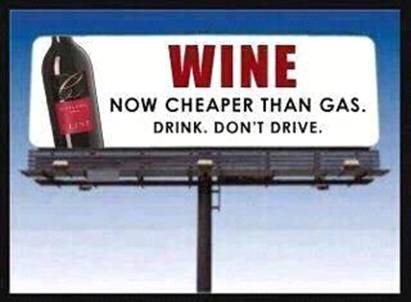
It seems to have been a tough week in various ways so why not open a bottle of your favourite vintage and raise a glass to all the brave persons in the world.
—-
—-
—-
—-
—-
—-
—-
—-
—-
—-
—-
—-
—-
oooOOOooo
Let me close with a quotation reputed to be from the lips of Joan Collins:
Age is just a number. It’s totally irrelevant unless, of course,
A week ago I published a post called On quietness. It was predominantly comprised of a republication of a much earlier item written by Jon Lavin.
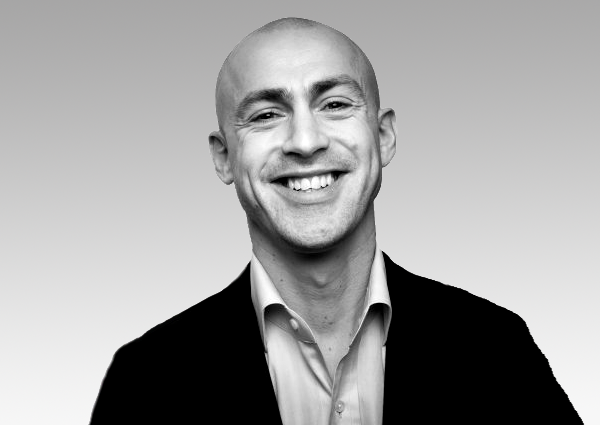
However, in the way that things happen, shortly after that post (last Friday’s one) was published I came across this TED video of Andy Puddicome.
I’ll say no more – enjoy the video. (Beautifully delivered in ten minutes, by the way!)
When is the last time you did absolutely nothing for 10 whole minutes? Not texting, talking or even thinking? Mindfulness expert Andy Puddicombe describes the transformative power of doing just that: Refreshing your mind for 10 minutes a day, simply by being mindful and experiencing the present moment. (No need for incense or sitting in strange positions.)
oooOOOooo
“Most people assume that meditation is all about stopping thoughts, getting rid of emotions, somehow controlling the mind. But actually it’s … about stepping back, seeing the thought clearly, witnessing it coming and going.” (Andy Puddicombe)
Andy Puddicombe wants you to take a break — not just from work, but from your own mind, which is so full of anxieties about the world and anxieties about its own anxieties. To help you do that, Puddicombe, a former Buddhist monk, co-founded Headspace, a project to make meditation more accessible to more people in their everyday lives. Puddicombe also writes prolifically for the Huffington Post and the Guardian, on the benefits of mindful thinking for healthy living.
oooOOOooo
So as someone who seems to have real trouble relaxing, I mean real relaxation in the letting go sense, I’m flirting with the idea of committing 10 minutes of meditation each day. Andy offers a charmingly easy way of doing this, as you will discover if you go to his website Headspace. Here’s a quote from the ‘What is Headspace‘ page.
Here at Headspace we’re on a mission to get as many people in the world as possible to take 10 minutes out of their day, to practice a simple and easy-to-learn meditation technique. And if you like the way it makes you feel, then we’d love to show you how to make that a life-long skill.
This is meditation for modern life – simple, scientifically-proven techniques, that you can use every day to experience a healthier and happier mind.
Those articles published by the Guardian as referred to above may be found here: The Guardian, if you want to browse around some more.
Stay tuned as to the outcome of me and meditation; I’ll share with it you via Learning from Dogs. Let’s face it, dogs are very good at chilling out for ten minutes! Oh dear, something else to learn from our doggies!
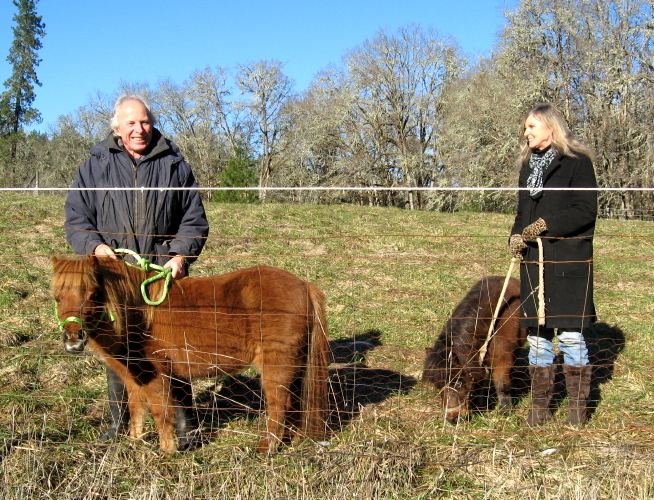
Today’s title came from a recent chat ‘across the garden fence’ with our neighbours, Dordie and Bill. At their request we had walked our two horses over to the fence-line between our two properties so Dordie and Bill could meet and fondle them. The warm afternoon sunshine was beautiful and while the horses munched the newly-found grass, we grown-ups talked about this and that and generally tried to put the world to rights!
Paul with Dancer; Jean with Grace.
We talked about the strangeness of present times. Not just in the USA but across the world. Bill thought 2013 would be the year of separation. I queried what he meant by that.
Bill replied, “I sense that by the end of the year, the vast majority of people will have decided if climate change is or is not a significant issue.” There would be few who remained neither unconcerned nor undecided.
That resonated with me and neatly put the framework to today’s post. Stay with me while I journey to the destination that this year will be the year of hope.
I am one of many who subscribe to the online magazine Grist. They describe themselves, thus:
Laugh now — or the planet gets it.
You know how some people make lemonade out of lemons? At Grist, we’re making lemonade out of looming climate apocalypse.
It’s more fun than it sounds, trust us!
Grist has been dishing out environmental news and commentary with a wry twist since 1999 — which, to be frank, was way before most people cared about such things. Now that green is in every headline and on every store shelf (bamboo hair gel, anyone?), Grist is the one site you can count on to help you make sense of it all.
The weekly Grist digest that arrived in my in-box that same day as when we were chatting with Dordie and Bill included a number of key stories.
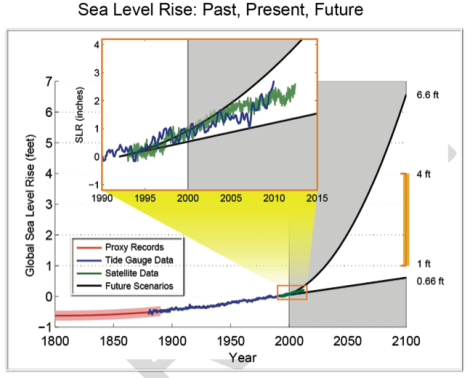
Now I’m not going to republish all 32 charts but will include just these two, because the message is clear.
It’s possible that sea levels could only rise eight inches. It is also possible that they could rise over six-and-a-half feet.
—-
Sea-level rise will affect different areas to different degrees — but note the map at lower right. On the Georgia coast, “hundred year” floods could happen annually.
OK, that first chart takes a while to absorb the full implications. The second one doesn’t!
The full range of charts is chilling. While they refer to the USA, the messages apply to the whole world.
Then in that same Grist weekly summary was this story.
If you aren’t alarmed about climate, you aren’t paying attention
There was recently another one of those (numbingly familiar) internet tizzies wherein someone trolls environmentalists for being “alarmist” and environmentalists get mad and the troll says “why are you being so defensive?” and everybody clicks, clicks, clicks.
I have no desire to dance that dismal do-si-do again. But it is worth noting that I find the notion of “alarmism” in regard to climate change almost surreal. I barely know what to make of it. So in the name of getting our bearings, let’s review a few things we know.
We know we’ve raised global average temperatures around 0.8 degrees C so far. We know that 2 degrees C is where most scientists predict catastrophic and irreversible impacts. And we know that we are currently on a trajectory that will push temperatures up 4 degrees or more by the end of the century.
David then works his way through those ‘things we know’ in a powerful manner. Do read the full article, please! This is his conclusion:
All this will add up to “large-scale displacement of populations and have adverse consequences for human security and economic and trade systems.” Given the uncertainties and long-tail risks involved, “there is no certainty that adaptation to a 4°C world is possible.” There’s a small but non-trivial chance of advanced civilization breaking down entirely.
Now ponder the fact that some scenarios show us going up to 6degrees by the end of the century, a level of devastation we have not studied and barely know how to conceive. Ponder the fact that somewhere along the line, though we don’t know exactly where, enough self-reinforcing feedback loops will be running to make climate change unstoppable and irreversible for centuries to come. That would mean handing our grandchildren and their grandchildren not only a burned, chaotic, denuded world, but a world that is inexorably more inhospitable with every passing decade.
Take all that in, sit with it for a while, and then tell me what it could mean to be an “alarmist” in this context. What level of alarm is adequate?
So am I stark staring mad for having hope in my mind? Stay with me for just a little longer. Then form your own judgment.
Recall the post that I published on Tuesday hitting out at the British newspaper The Daily Mail. Towards the end of that post, in discussing the recently released American National Climate Assessment, I wrote this:
That’s why this report is to be encouraged, nay embraced. Of all the nations in the world, the one that should be setting the lead is the United States of America. As the banner on that globalchange.gov website proclaims: Thirteen Agencies, One Vision: Empower the Nation with Global Change Science
So go and read the report. For your sake and all our sakes.
Because the more informed you and I are, the better the chances of real political leadership taking place in this fine nation.
Let’s just accept it: America’s current political and economic systems are incapable of responding adequately to climate change. As things stand, reducing carbon emissions — or more broadly, shifting to sustainability — is a kind of add-on, a second-tier consideration, bolted onto systems and institutions that were built for other purposes.
A little later, David writes:
So what would a new U.S. grand strategy built around sustainability look like? That’s the question tackled by “A New U.S. Grand Strategy,” a piece in Foreign Policy by Patrick Doherty, director of the Smart Strategy Initiative at the New America Foundation.
It’s a hugely ambitious and wide-ranging piece, far too much to even summarize adequately here. Bookmark it. Instapaper it. Pinterest it to your iCloud, or whatever kids do these days. But let’s take a quick look.
Doherty identifies four central challenges facing the U.S.:
Economic inclusion: People are swarming out of poverty around the world (especially in China). Over the next 20 years, the global middle class will welcome around 3 billion new members. That’s going to put intense stress on natural, economic, and political systems that are already showing signs of strain.
Ecosystem depletion: Pretty sure Grist readers are familiar with this one.
Contained depression: Rather than a recession, the U.S. faces a “constrained depression,” with the full effects of low aggregate demand and high debt being masked by policy. No amount of fiscal or economic stimulus will revive a system that has exhausted itself.
Resilience deficit: Our industrial supply lines and value chains are efficient, but lack redundancy; they are brittle. Our infrastructure is old and crumbling, $2.2 trillion in the hole, and that’s just for the aging Cold War stuff, never mind building water, power, and transportation systems suited to an era of climate disruption.
“These four challenges,” Doherty says, “are the four horsemen of the coming decades.” And they are inter-dependent. They must be solved together. It’s a rough situation.
With these in mind, Doherty proposes a new grand strategic concept: “The United States must lead the global transition to sustainability.“
What a vision for the United States of America. That this Nation will be the most wonderful example of how man can learn, adapt and change. David Roberts concludes:
Here are Doherty’s main suggestions for how to realign the U.S. economic engine:
Walkable communities: More and more Americans want to live in dense, walkable areas; get rid of regulations that hamper them and start building them.
Regenerative agriculture: Farmers can produce “up to three times the profits per acre and 30 percent higher yields during drought” with agricultural techniques that also clean water and restore soils. America must “adopt modern methods that will bring more land into cultivation, keep families on the land, and build regional food systems that keep more money circulating in local economies.”
Resource productivity: “Energy and resource intensity per person will have to drop dramatically.” That imperative can drive “innovation in material sciences, engineering, advanced manufacturing, and energy production, distribution, and consumption.”
Excess liquidity: Channel all the corporate cash that’s sitting around in funds into long-term investments in America by taxing waste and creating regional growth strategies.
Stranded hydrocarbon assets: Figure out how to devalue the immense amount of carbon that’s still sitting underneath the ground without unduly traumatizing the economy.
Obviously the devil is in the details on this stuff, but at a broad level, this is about as eloquent and forward-thinking as it gets. I love the idea of using sustainability in a muscular way, to revive regional economies and nurture the middle class. I recommend reading the whole thing.
I, too, recommend reading “A New U.S. Grand Strategy – Why walkable communities, sustainable economics, and multilateral diplomacy are the future of American power.” (NB: You will have to register with Foreign Policy before access to the report is possible, but it’s free.)
So, the wall-to-wall stream of information that is shouting out how quickly the planet is changing is the fuel that is going to feed the fires of hope.
Let me leave you with the most beautiful words of an ancient philosopher – Aristotle.
My reasoning was that the NCA report was such a stunning indictment of the madness, the myopic madness of mankind these last 100 years, that this appreciation of the wonder of dogs must act as a beacon for us all. I use the word ‘beacon’ because the qualities demonstrated by these nine dogs are just the qualities that we need to adopt.
Every living person on Planet Earth has to embrace the stark choice coming up on us like a runaway train. If we don’t change our values, our behaviours and our relationship with this one, finite planet, in the next ten years, at most, then the consequences will be beyond imagination; a world of unimaginable terror and chaos.
Forgive me if I repeat what the Home page of Learning from Dogs offers:
As man’s companion, protector and helper, history suggests that dogs were critically important in man achieving success as a hunter-gatherer. Dogs ‘teaching’ man to be so successful a hunter enabled evolution, some 20,000 years later, to farming, thence the long journey to modern man. But in the last, say 100 years, that farming spirit has become corrupted to the point where we see the planet’s plant and mineral resources as infinite. Mankind is close to the edge of extinction, literally and spiritually.
On the 30th December, 2012 The Week magazine published an item written by Editor Lauren Hansen. I ask Lauren if I might republish the article in full but that was denied. However, I was given permission to refer extensively to the piece. I will use it to underline just what we have to learn from dogs.
The 9 most newsworthy dogs of 2012
Dogs are the best. Here’s the proof… if you even need it
The K-9 Parish Comfort dogs (and their handlers) who helped the residents of Newtown, Conn., through their grief.
If you’re reading this, then you’re probably aware: Dogs rule. This year, a handful of canines rose above the rest, making headlines for their actions — whether facing imminent danger to save lives, enduring unimaginable physical hardships, or simply making us laugh. A look at nine of the year’s most newsworthy pups:
1. Chicago’s comfort dogs After the unimaginable events that befell Newtown, Conn., on Dec. 14 that left 27 people, including 20 children, dead at the hands of suspected gunman Adam Lanza, a team of golden retrievers was deployed from Chicago to the picturesque town. About 10 specially trained dogs, including Chewie, Ruthie, and Luther, made the 800-mile journey to sit with children and adults during masses and funerals. “Dogs are nonjudgmental. They are loving. They are accepting of anyone,” says one handler. “It creates the atmosphere for people to share.” The Chicago comfort dogs are notable not only for this caring venture but also for helping those who suffered through Hurricane Sandy and the tornado that hit Joplin, Mo., in 2011.
The next story was about the puppies that kept a lost boy warm.
That was followed by the hero dog that lost its snout saving two girls.
One dog’s heroism so disfigured her sweet little face that her photo is often preceded by a warning. This canine’s story started with a motorcycle careening through the streets of Zamboanga City, Philippines, earlier this year. Young cousins Dina Bunggal, 11, and Princess Diansing, 3, stepped unknowingly into its path. A mutt named Kabang came out of nowhere and jumped in front of the motorbike, stopping it in its tracks, and saving the little girls from serious injury. The driver and the girls emerged with superficial wounds, but Kabang wasn’t so lucky. Her head landed on the motorcycle’s front wheel and as the wheel rolled forward, Kabang’s upper snout was ripped right off. Her story quickly went viral and when local doctors could do no more to help her, specialty surgeons from the University of California, Davis, flew Kabang to their facilities, where she’ll endure six to eight weeks of treatment to repair her face. The cost of her surgeries, which could top $20,000, will be covered by her many supporters who have started an online fundraising campaign.
Vets at William R. Pritchard Veterinary Medical Teaching Hospital don’t plan to fullyy reconstruct Kabang’s snout, or fit her with a prosthetic. Instead, they are attempting to close the gaping wound on her face, preventing further infections.
Then my last dip into Lauren’s article is dog story eight.
8. The dog that saved its own life by calling the police
We’ve often heard the tale of the puppy that proves its “man’s best friend” status by saving its owner’s life. But this year, there was George, a 2-year-old basset hound in West Yorkshire, England, who reworked the well-worn script a bit, literally calling for help to save himself. Home alone, George had knocked the phone to the floor and was strangling himself with the handset’s cord when he apparently dialed 999 — England’s 911 equivalent — in a panic. The operator heard only frantic gasps and, assuming someone was desperately sick or reeling from an attack, sent police to the house. The dog was found and rescued from the cord. “Incredibly, you could see where his paw print was on the phone,” said the neighbor, “he literally saved his own life.”
Now, what fun-loving toddler can walk past a puddle without stopping for a little splash? Not this one!
Little Arthur was out for a stroll with his best mate, Watson the dog, when he noticed a tempting puddle. So he put down the leash and plunged straight in. And Watson? Well, he’s a more mature 12 years old, so he didn’t partake himself. But he was more than happy to wait while Arthur had his fun.
You know what this video is, don’t you? That’s right. Too. Cute. For. Words.
Here’s the video, seen over 4,800,000 times!
Finally, there’s the beautiful story of the dog befriending a Down’s Syndrome boy.
So what does this all add up to? That the qualities of the dog; integrity, unconditional love, patience, loyalty, and their ability to live in harmony with nature really do send us humans a message for the future.




























 Learning from Dogs