We have a visit to our property in a little over 2 hours time from the other students, Rhianna, our teacher, and mentors from the Land Stewardship course that Jean and I undertook at Oregon State University in the Spring.
I seemed to have picked up a Summer head cold that is making me more grumpy than usual!
Plus I have to focus on an interesting ‘project’ that I will write about early next week.
So there!
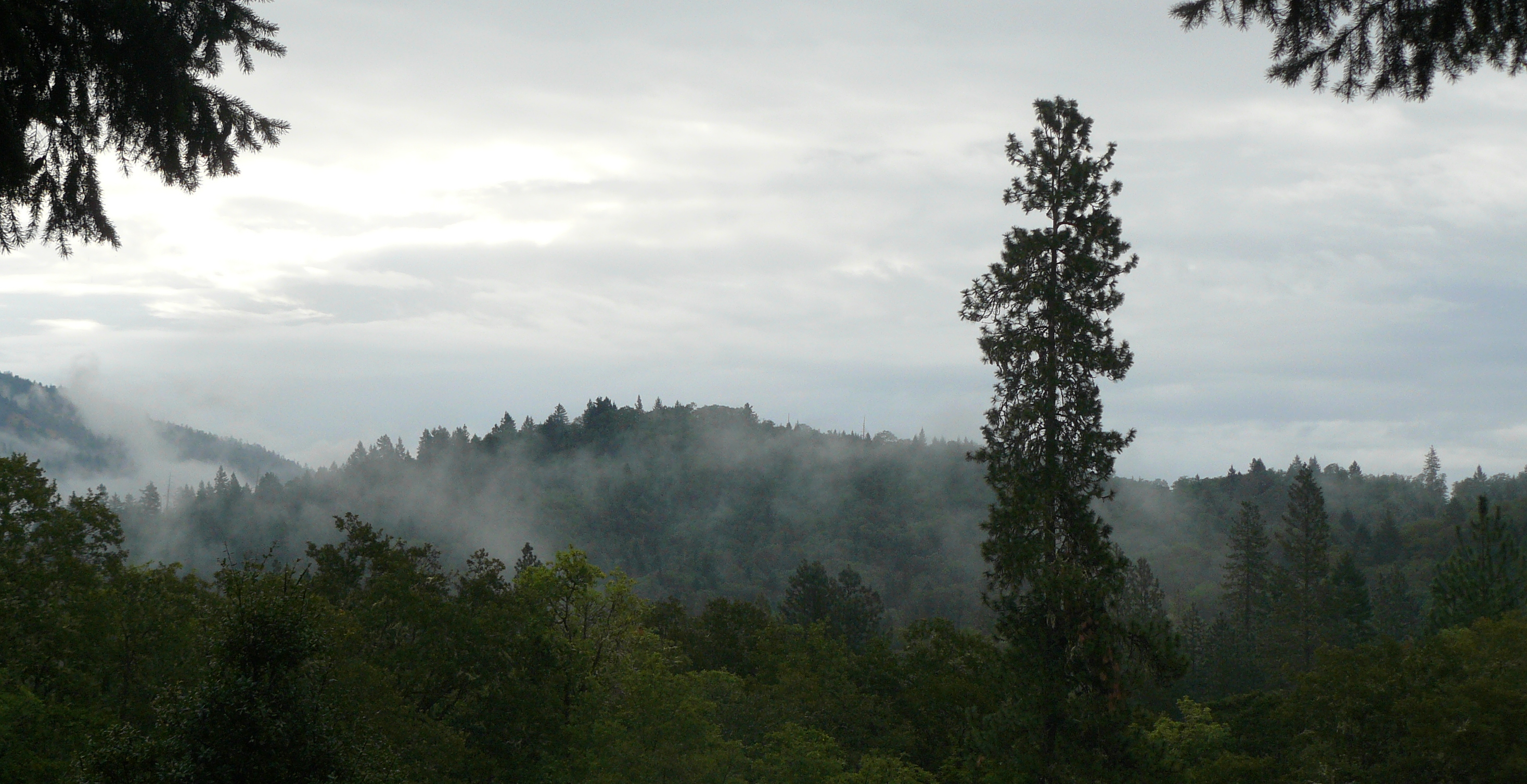
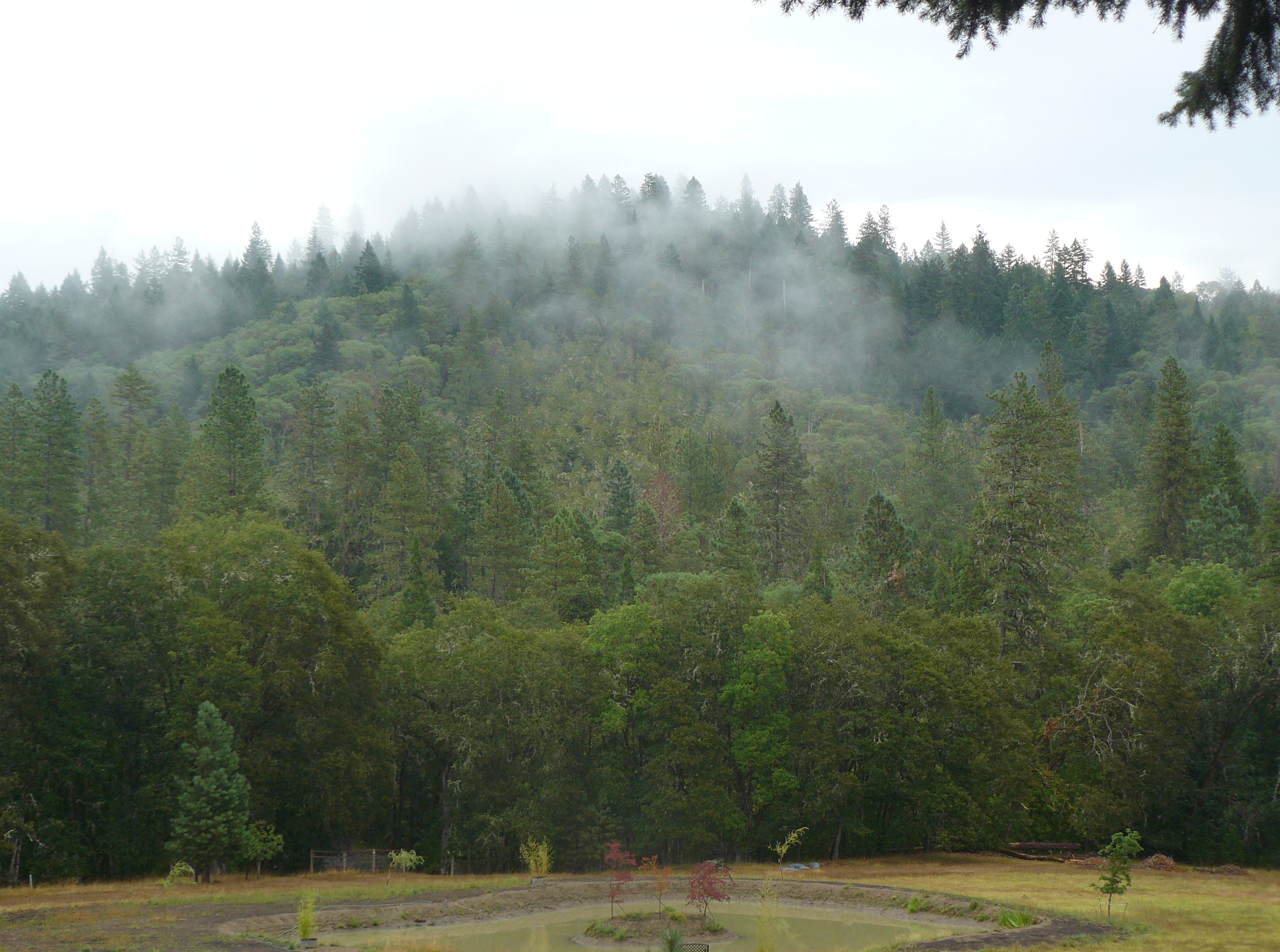
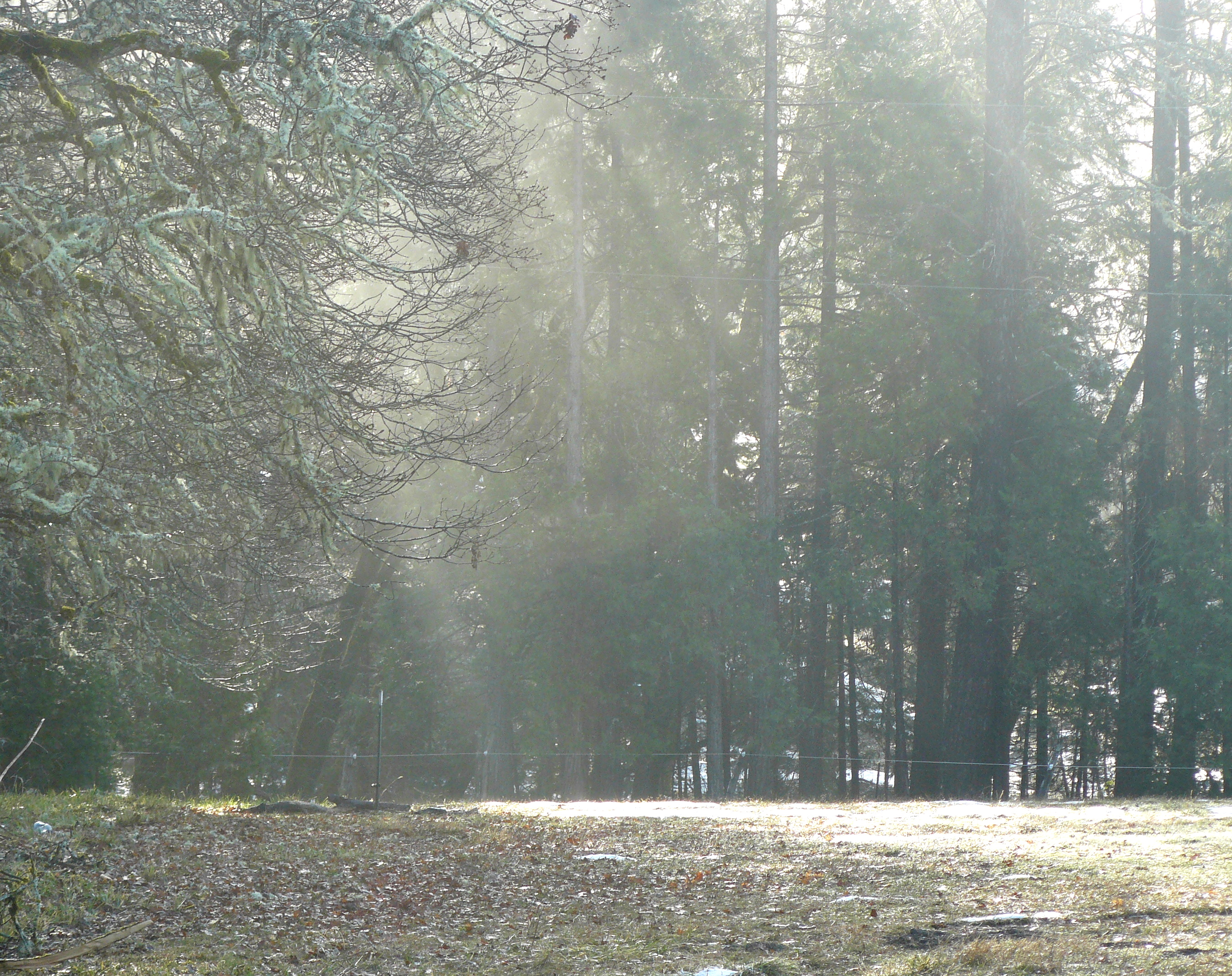
Let me leave you with these two pictures of the softness of cloud and low mist that brought some much-needed rain to us a few days ago.
Looking out to the North-East with Sexton Mountain, some 5 miles away, just off picture to the left.
oooo
Looking East across our fields to the forest beyond.
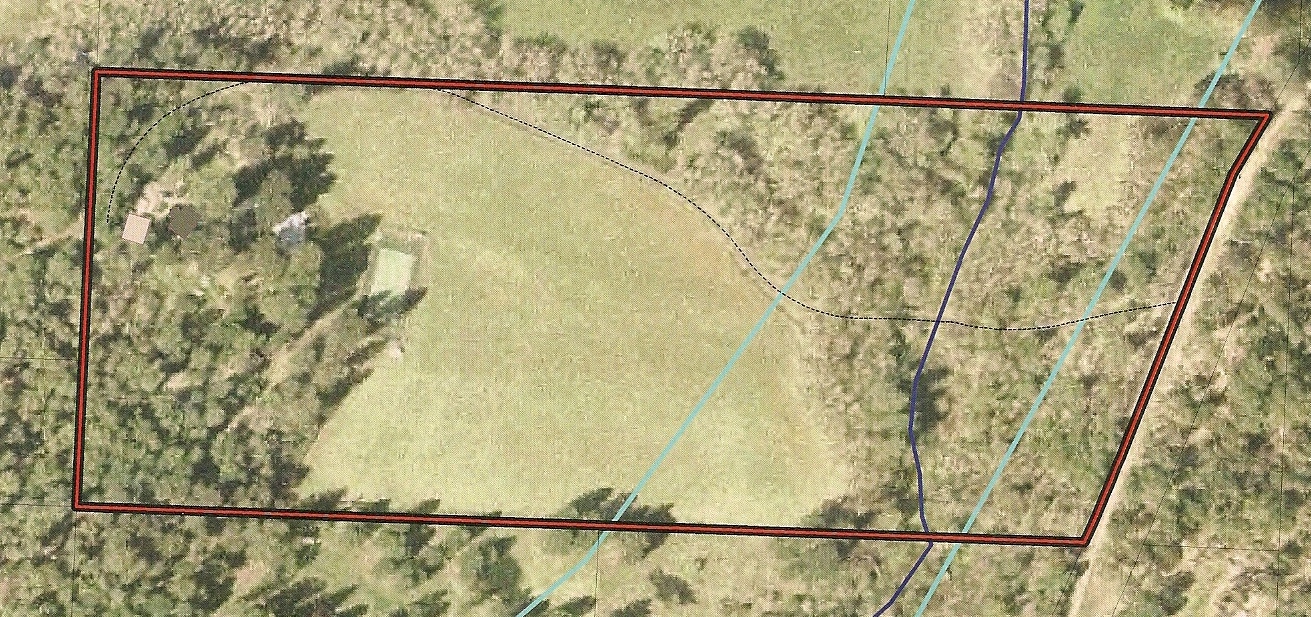
If anyone wants to put these pictures into context, there was a property map published in the LfD post of the 22nd, Sing for the trees.
My name is Noella and I am a writer and dog enthusiast from Portland, Maine. I am reaching out to you in hopes of contributing to Learning from Dogs as a guest blogger. I have an original, unpublished piece about Top Five Reasons to Pet a Pitbull Today, that I think would fit nicely with the current offering of blog topics you post. I would also be open to writing you a new piece, if there’s a specific topic you’d like covered.
Please let me know if you’d be interested in having a look at my piece and hopefully fitting it into your editorial calendar.
I hope to hear back from you soon!
Thanks,
Noella
Now to be honest, this type of writing offer is not that rare but almost without exception is connected to some form of commercial organisation seeking to advance their profile. My responses are ‘not interested’! Initially, that was my first impression of this email from Noella. But in reply to my query along that vein, Noella sent me this:
Paul,
You’re right, there will be revenue earned from dog friendly businesses that want to get involved and have ads featured on Harry’s Picks. As you can see, presently we have one dog bakery featured. The idea is to keep the website running and give back to the canine community. We are not affiliated with any brand or company.
Thank you,
Noella
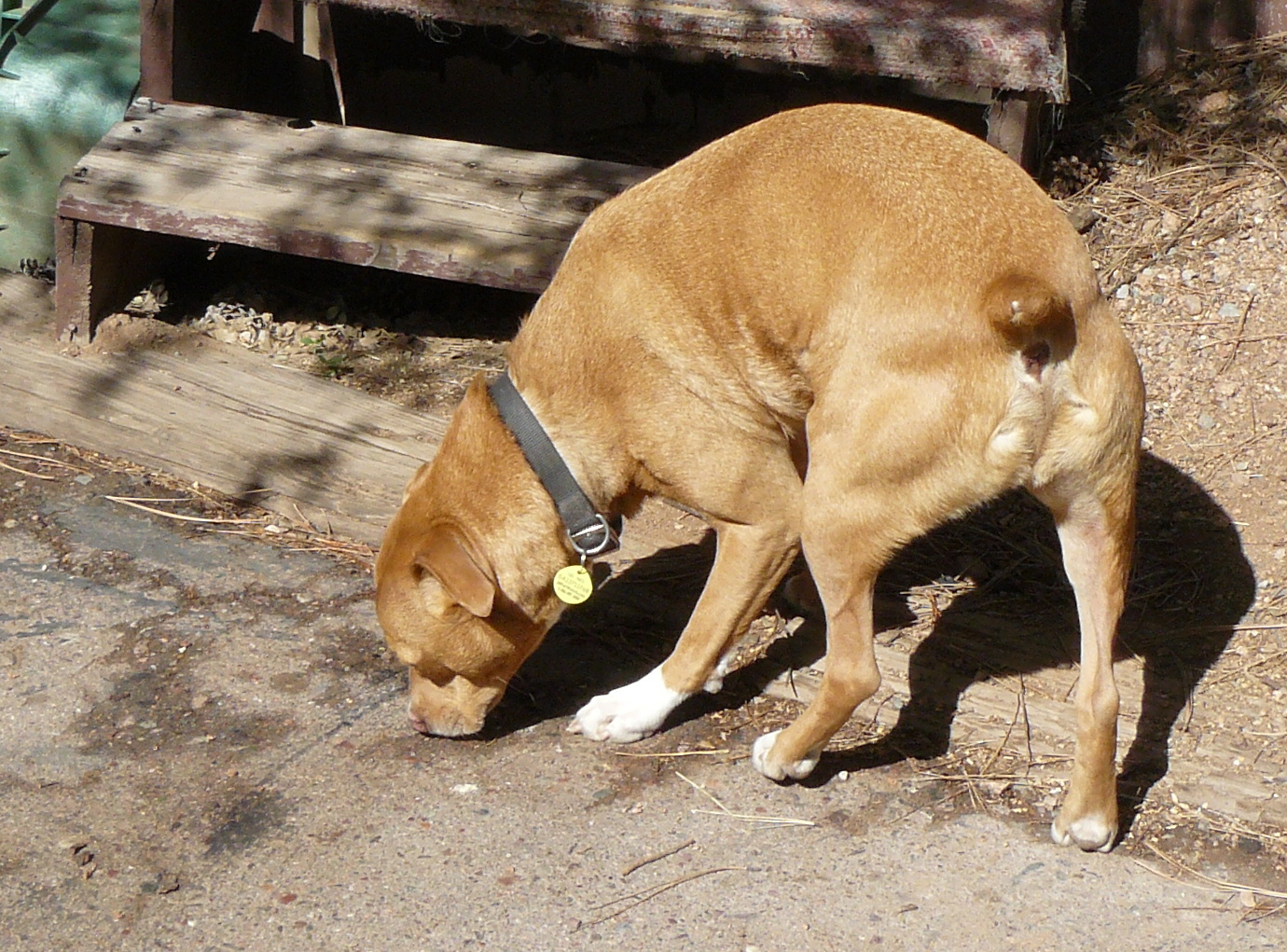
Thus on that basis I was happy to go ahead with the guest post. Influenced in great part by the gorgeous temperament of our Casey, a Pit Bull that we adopted February, 2012 when we were still living in Payson, Arizona. Casey, as he was named, had been living in the Humane Centre for nearly a year with no-one taking a liking to him, and his days as a rescue dog were running out.
Jean loved Casey from first sight and in due course brought him home. He quickly settled into the most wonderful, caring and gregarious dog one could imagine. He continues to be a happy, warm dog with all of us here in Oregon.
Casey doing what dogs do so well – picking up scents of his new home. (28th February, 2012)
So with all that, let me turn to Noella’s guest post.
oooOOOooo
Top 5 Reasons To Love a Pittie
Sweet Addie.
This is Addie. She is my best friend. She is a Pit Bull mix and the sweetest dog I have ever known. I really didn’t know much about Pit Bulls when I adopted her. I hadn’t been spoiled by tales of their viciousness and I had not yet been brought into the fold by a devotee. So I had to learn fast!
Everything I know about Pit Bulls now has been through her or inspired by her.
Here are the top 5 things I love about Addie and Pit Bulls:
5) They are incredibly strong and athletic. They come in pretty small packages but they are dynamos. Addie can jump five feet straight up in the air from standing still. It’s awe inspiring to watch.
4) You will always be missed! They fuss when you come home. I’m sure lots of dogs do this, but I’ve noticed it in a lot of pitties. They whine and wiggle and snort in the most adorable way. They love people and are always ecstatic to see you. I’m lucky to get a raised eyebrow from my hound dog.
3) They love to play. Pitties are a very determined breed. They will play until you are completely worn out and they will be fully engaged and inquisitive the entire time.
2) THEY LOVE PEOPLE. In my experience Pit Bulls are the most affectionate breed. They are snuggle monsters and will use their gigantic noggins to nose their way into your personal space whether you are seeking their attention or not.
1) THEY NEED THE LOVE. Sadly Pit Bulls and Pit Bull mixes makeup 30%-40% of shelter intakes nationwide and that number goes up in urban areas (interesting article on the subject here). Pit Bulls are misunderstood and often times fall into the hands of the wrong people. They need good owners that have the love and patience to provide them solid training and safe homes.
Noella Schink, writes from Portland, Maine, where she lives and plays with her 3-year-old pit bull mix, Addie, 8-year old shih-tzu, Brutus, and 2-year old hound, Lula. For great tips and reviews about dog friendly businesses around the country, she recommends Harry’s Picks, a new online community for dog lovers.
I have often noticed how ideas come along and are then reinforced by other materials and comments. This struck me (again) as follows. In my post about the fabulous, loving bond between Jeff Guidry and his eagle Freedom one of the comments was from Patrice Ayme, and I quote:
Birds have completely different brains. Still, the smartest birds are more clever than most primates. And many parrots speak (although we have not learned their language yet).
Then going on to add:
Parrot language studies have progressed enough to tell us that there is something huge going on. They apparently use names, as dolphins do.
Certainly Jean would verify the amount of talking that goes on between our two budgerigars here at home!
Mr. Green and Mr. Blu!
Then in yesterday’s post The knowing of dogs, I referred to research that indicated that empathy between those that we know and trust, (a) can be measured, and (b) that “our minds are partly defined by their intersections with other minds.” I went on in that post to speculate that maybe dogs ‘reading’ the minds of humans that they know and trust wasn’t so far-fetched.
Wolves Howl Because They Care: Social Relationship Can Explain Variation in Vocal Production
Aug. 22, 2013 — When a member of the wolf pack leaves the group, the howling by those left behind isn’t a reflection of stress but of the quality of their relationships. So say researchers based on a study of nine wolves from two packs living at Austria’s Wolf Science Center that appears in Current Biology, a Cell Press publication, on August 22.
The findings shed important light on the degree to which animal vocal production can be considered as voluntary, the researchers say.
“Our results suggest the social relationship can explain more of the variation we see in howling behavior than the emotional state of the wolf,” says Friederike Range of the Messerli Research Institute at the University of Veterinary Medicine Vienna. “This suggests that wolves, to a certain extent, may be able to use their vocalizations in a flexible way.”
Scientists have known very little about why animals make the sounds that they do. Are they uncontrollable emotional responses? Or do animals have the ability to change those vocalizations based on their own understanding of the social context?
At the Wolf Science Center, human handlers typically take individual wolves out for walks on a leash, one at a time. On those occasions, they knew, the remaining pack mates always howl.
To better understand why, Range and her colleagues measured the wolves’ stress hormone levels. They also collected information on the wolves’ dominance status in the pack and their preferred partners. As they took individual wolves out for long walks, they recorded the reactions of each of their pack mates.
Those observations show that wolves howl more when a wolf they have a better relationship with leaves the group and when that individual is of high social rank. The amount of howling did not correspond to higher levels of the stress hormone cortisol.
“Our data suggest that howling is not a simple stress response to being separated from close associates but instead may be used more flexibly to maintain contact and perhaps to aid in reuniting with allies,” Range says.
For those that want to read the original research paper then it is available over at Current Biology, a Cell Press publication.
Wolf Howling Is Mediated by Relationship Quality Rather Than Underlying Emotional Stress
We investigated the influence of social and physiological factors on wolf howling
Wolves howl more to keep contact with affiliated partners and with pack leaders
Howling is mediated by the social relationship not cortisol level of the howlers
This pattern indicates that wolves have some voluntary control of their howling
Summary
While considerable research has addressed the function of animal vocalizations, the proximate mechanisms driving call production remain surprisingly unclear. Vocalizations may be driven by emotions and the physiological state evoked by changes in the social-ecological environment [1,2], or animals may have more control over their vocalizations, using them in flexible ways mediated by the animal’s understanding of its surrounding social world [3,4]. While both explanations are plausible and neither excludes the other, to date no study has attempted to experimentally investigate the influence of both emotional and cognitive factors on animal vocal usage. We aimed to disentangle the relative contribution of both mechanisms by examining howling in captive wolves. Using a separation experiment and by measuring cortisol levels, we specifically investigated whether howling is a physiological stress response to group fragmentation [5] and whether it is driven by social factors, particularly relationship quality [6,7]. Results showed that relationship quality between the howler and the leaving individual better predicted howling than did the current physiological state. Our findings shed important light on the degree to which animal vocal production can be considered as voluntary.
So, don’t know about you, but it all seems to be suggesting how little we know about how animals communicate with the world around them.
A fascinating study on human empathy strikes a chord with man and dog, perhaps.
Let me start with a true account from the evening of Monday, 19th August.
That evening, at 7pm, I had an appointment with my doctor in Grants Pass. Jean stayed at home looking after our guests and preparing the evening meal.
The journey from the doctor’s clinic back to home, a distance of 20 miles, takes a little over half-an-hour. The last 3 miles are along Hugo Road; about 6 minutes including opening and closing the gate across our driveway.
Anyway, according to Jean shortly after 8pm Pharaoh sprang up barking and went across to put his nose against one of the windows that looks out over our front drive and garden. Jeannie looked at the clock on the kitchen wall and made a note of the time: it was 8:10pm. She also came over to the window that Pharaoh was looking out of and searched for any reason for his outburst of barking: squirrels, deer, any kind of wildlife or other distraction. There was none.
A little before 8:20pm Jeannie saw the headlights of my car pull up and moments later I came in through the front door.
It appeared that Pharaoh had sensed the point where I had turned into Hugo Road.
One could easily dismiss this, perhaps by thinking that Jean had unconsciously signalled to Pharaoh that I was on my way home. But Jean had only the vaguest idea of when I might be back.
Or one could be drawn to the research undertaken by Dr. Rupert Sheldrake, as this extract from a post back in May, 2011 explains.
What an amazing book this is.
Amazing!
I have written about Dr Rupert Sheldrake a few times on Learning from Dogs for pretty obvious reasons! You can do a search on the Blog under ‘sheldrake’ but here are a couple of links. Serious Learning from Dogs on January 10th, 2011 and Time for a rethink on the 14th April, 2011.
Anyway, I am now well towards the end of Sheldrake’s revised book, Dogs That Know When Their Owners Are Coming Home and it is more than fascinating. Bit short of time just now so please forgive me if I do no more than show this video which sets out some of the background to the book. Sheldrake’s website is here, by the way.
Anyway, what’s this all leading up to?
I can’t recall where it was that I read about a report posted on the Forbes website about the new findings of the power of human empathy.
Study: To The Human Brain, Me Is We
A new study from University of Virginia researchers supports a finding that’s been gaining science-fueled momentum in recent years: the human brain is wired to connect with others so strongly that it experiences what they experience as if it’s happening to us.
This would seem the neural basis for empathy—the ability to feel what others feel—but it goes even deeper than that. Results from the latest study suggest that our brains don’t differentiate between what happens to someone emotionally close to us and ourselves, and also that we seem neurally incapable of generating anything close to that level of empathy for strangers.
The research revealed:
“The correlation between self and friend was remarkably similar,” said James Coan, a psychology professor in U.Va.’s College of Arts & Sciences who co-authored the study. “The finding shows the brain’s remarkable capacity to model self to others; that people close to us become a part of ourselves, and that is not just metaphor or poetry, it’s very real. Literally we are under threat when a friend is under threat. But not so when a stranger is under threat.”
The findings back up an assertion made by the progenitor and popularizer of “Interpersonal Neurobiology,” Dr. Daniel Siegel, who has convincingly argued that our minds are partly defined by their intersections with other minds. Said another way, we are wired to “sync” with others, and the more we sync (the more psycho-emotionally we connect), the less our brains acknowledge self-other distinctions.
Later in that Forbes article Professor Coan is reported:
“A threat to ourselves is a threat to our resources,” said Coan. “Threats can take things away from us. But when we develop friendships, people we can trust and rely on who in essence become we, then our resources are expanded, we gain. Your goal becomes my goal. It’s a part of our survivability.”
So if science is discovering that our subconscious minds are connecting “psycho-emotionally” with the minds of others whom we trust, then it doesn’t seem like too great a leap to embrace human minds psycho-emotionally connecting with the animals that we trust, and vice versa. Because for thousands upon thousands of years, the domesticated dog and man have depended on each other for food, protection, warmth, comfort and love.
Footnote.
References for those who wish to follow up on this article are:
Professor Robin Ian MacDonald Dunbar, British anthropologist, evolutionary psychologist and a specialist in primate behaviour. His theory known as Dunbar’s Numberexplained here.
Back in July, I published a post reviewing Traveling Light, the novel by Andrea Thalasinos. At the end of that post, I made the following offer.
Now here’s an offer.
Wiley has offered a free copy of Andrea’s book as a ‘give-away’ from Learning from Dogs. Here’s the plan.
Would you like to write a story about any aspect of the relationship that dogs can have with humans?
Any length, truth or fiction; it doesn’t matter. Email your story to me to be received by the end of Wednesday, 31st July 2013, Pacific Daylight Time …… [and] I will publish every one received.
Just one story was received, from Wendy, and the promised free copy of Andrea’s book has been mailed to her.
So here is that short story.
oooOOOooo
I Am Leader
The water was angry today. I watched as it tore the tall trees from their roots, thundering, roaring, snapping them, toppling them.
I watched as the angry water shredded the shore. I watched as its fury snatched my pup, my baby, sweeping her away like a dying twig torn from the mother tree.
I am hunter. I am leader.
But now I am nothing.
I ran after my pup, tried to grab her by the nape, take her back. But I failed. I saw her paddle in the froth, scramble atop a long gnarled broken bole that was once a tree. My pup shook, her ears flattened, her tail tucked. She cried. I watched the cold, angry froth take her.
My mind sang with the cry of my little grey pup that I could not save, the little one who would never learn about the hunter, the leader.
I picked my way, shivering, along a path — it used to be our way to good hunting, to the forest edge where the deer grazed as near as yesterday. Now…
My left shoulder ached where the water nearly took me, hurled a branch at me in frustration. I fell and dragged myself away from the collapsing shore, to higher ground. The rain poured and sleeted to drench the shambles left by water that continued to roar and foam. Mud slid through my feet, gusts took my breath.
It was very cold. My ears twitched, hearing nothing beyond the roar of the fury. Water is very noisy when it is angry. The others, my sisters, my mate, I could not scent them, hear them, see them.
The day retreated. I blinked to see better, my eyes wide, but they saw nothing that I could recognise. My nose and ears twitched and twisted — nothing. I could hear my little grey one, my pup; she shivered and cried in my mind, but my eyes and ears, my nose … she was gone.
I stumbled over broken branches, a drowned fox, mice flushed from their holes, a broken-necked bird, bushes overturned and torn apart, walls of fallen trees. Daylight was lost in a twilight.
Now, I scented a 2-legged. I stilled. Crackling. Smoke, deep and hard to breath. Rabbit, burnt. These were the smells I knew of the 2-leggeds. One was near.
I crouched and crept. Yellow-orange light bounced and throbbed through the jumble of once-forest. I remained low, but now I could hear. The 2-legged rustled. It was noisy and careless while its fire snapped. And the rabbit smell was very faint, distorted.
I could see it now, this 2-legged, seated in that foolish way 2-leggeds have, crossing one foot over the other. It rustled again and held a big stick over its fire — the stick jabbed through the rabbit. The rabbit’s fur was gone from its blackened body, abandoned near the 2-legged’s thigh.
My stomach twitched. My mouth filled with hunger. I took another step.
The 2-legged looked up and over. He saw me, then quickly looked away.
I am hunter, I am leader — you do not meet my gaze unless you want to be punished.
I crouched, readied myself to spring.
The 2-legged stood. I eased back. My back paws met the tangled once-forest left of the water’s anger and stopped me. I tensed.
But the 2-legged lifted the big stick with its rabbit, tore a haunch with its hand. It looked directly at me again — no, I am hunter, I am leader — and threw the haunch at me. The burnt meat landed close to my feet.
The 2-legged looked away and returned to its foolish, awkward sitting. It tore ragged bites from the burnt rabbit, holding the big stick between the paws of its upper limbs.
My stomach demanded food. I scented the burnt rabbit, the smell of blood faint and smoky. I did not hunt the rabbit, I am not like the vultures and scavengers … but I was hungry. I nosed it, picked it up and turned away from the 2-legged. The flesh was warm. It sated. I licked my paws, swiped my whiskers and jowls to groom.
For a moment, my mind tricked me. I heard my pup. I scented my mate, my others, we were sated, we curled together, our warm bodies close, to sleep through the long cold night.
I opened my eyes. I was alone.
Except the 2-legged. Its odour was unmistakable, deer hide, rabbit, something sweetly sour I thought must be its own scent, not the ones borrowed by the other animals it ate or draped over its body.
I studied the 2-legged. It had curled on its side. The fire beside it throbbed yellow and orange, throwing strange shadows where they should not be. When I looked away, my sight was poor. I would not look directly at the fire again.
All was silent, save the angry water behind us. We lived. Nothing else lived. The water took everything.
I dreamed of my mate, his powerful howls alerting our cousins of our hunt; the deer was warm, its blood and flesh giving us another day of life. The deer was old and slow, an easy hunt. Its time had come; we knew that, understood it, this deer and our pack.
I dreamed of my sisters, nipping at my pup, teasing her to chase them in mock hunts. I dreamed of my brothers, circling and securing our family. My pack. My life.
We slept.
The day hung low and grey. Overnight, the angry water had become a sussurrating hiss behind us.
With its strange flat feet and its big stick, the 2-legged was tossing dirt and wet leaves over the ash where the fire and the rabbit had been. The old fire flared briefly. A cool damp gust caught some of the sparks and swept them high. A bird swooped near to see, then lost interest, flapped its wings to gain height.
The smell in the air was smoke and faint rabbit scent. It was upturned earth and rot and rain.
The 2-legged’s odour wore the smoke and long-dead deer.
The 2-legged came close. It looked at me — no — I am hunter, I am leader, you do not meet my gaze. But it was stupid and foolish, this 2-legged, like a pup that had not yet learned. It neared me. I growled, prepared to attack.
Surely it could see my flattened ears, my lowered shoulders?
No, it was stupid. It walked passed me.
I watched. The 2-legged paused and turned. It swung one of its upper limbs down low, then away, a sweeping motion. Strange language. It did not lower its ears, or roll on its belly. It made noises with its mouth. The noises were terrible, low, rumbling, but they were not threatening. I watched.
It made the motion again, then turned and walked on.
I sat on my haunches.
I am leader, I am hunter. But this 2-legged did not understand. It had not learned from its pack.
We two were the only ones I scented. We were alone. The angry water had taken the others.
The 2-legged stopped, made the strange sweeping motion and noises again. I took a step in its direction.
I am hunter. I am leader.
My pup cries in my mind. My mate howls. My sisters tease, my brothers scout. But around me is silence, the scents dirty and empty, the forest destroyed, the deer gone. We two are alone.
The 2-legged’s head bobs up and down. I take another step.
We walk on, stepping carefully over the tangled mess that was once our home, our feet slipping in mud, scratched in dying brambles, struggling in the unfamiliar path before us. 2-legged uses the big stick as if it were a third leg.
It is learning. I am patient.
I am hunter. I am leader.
oooOOOooo
Don’t know about you but I found that story by Wendy more than compelling. Found it hauntingly beautiful. A ancient account of the first meeting between man and wolf.
Therefore, can’t close without again reproducing this short extract and images of the grey wolf posted on the 20th May Musings on love.
oooo
While we were looking at the animals, along the pathway came a couple of the volunteer staff walking a Grey Wolf (Canis Lupus).
An afternoon walk for Tundra.
I was utterly captivated by this beautiful animal. Her story was that she was born in captivity and owned by an individual who soon decided he didn’t want her! Not long thereafter Tundra, as she became named, was brought to the Sarvey Wildlife Center in Washington and thence to Wildlife Images when she was just 8 weeks old.
Tundra turned to look at me. I stood perfectly still and quiet. Tundra seemed to want to come closer. As one would with a strange dog, I got down on my knees and turned my eyes away from Tundra’s. I sensed she was coming towards me so quickly held up my camera and took the picture below.
Wolf greets man.
I kept my gaze averted as I felt the warm breath of this magnificent animal inches from my face. Then the magic of love across the species! Tundra licked my face! The tears came to my eyes and were licked away. I stroked her and became lost in thought.
Was this an echo of how thousands and thousands of years ago, a wolf and an early man came together out of trust and love and started the journey of the longest animal-human relationship, by far?
The widely reported but nonetheless wonderful story of a man and an eagle.
This was sent to me by Dan Gomez but I very quickly found information all over the ‘web’. After reading many accounts, I decided to use the version of the story that was in Dan’s email.
oooOOOooo
Freedom and Jeff Guidry
Love and trust across the species gap.
Freedom and I have been together 11 years this summer. She came in as a baby in 1998 with two broken wings. Her left wing doesn’t open all the way even after surgery, it was broken in 4 places. She’s my baby.
When Freedom came in she could not stand and both wings were broken. She was emaciated and covered in lice. We made the decision to give her a chance at life, so I took her to the vet’s office. From then on, I was always around her. We had her in a huge dog carrier with the top off, and it was loaded up with shredded newspaper for her to lay in. I used to sit and talk to her, urging her to live, to fight; and she would lay there looking at me with those big brown eyes. We also had to tube feed her for weeks.
This went on for 4-6 weeks, and by then she still couldn’t stand. It got to the point where the decision was made to euthanize her if she couldn’t stand in a week. You know you don’t want to cross that line between torture and rehab, and it looked like death was winning. She was going to be put down that Friday, and I was supposed to come in on that Thursday afternoon. I didn’t want to go to the center that Thursday, because I couldn’t bear the thought of her being euthanized; but I went anyway, and when I walked in everyone was grinning from ear to ear. I went immediately back to her cage; and there she was, standing on her own, a big beautiful eagle. She was ready to live. I was just about in tears by then. That was a very good day.
We knew she could never fly, so the director asked me to glove train her. I got her used to the glove, and then to Jesse’s, and we started doing education programs for schools in western Washington.
We wound up in the newspapers, radio (believe it or not) and some TV. Miracle Pets even did a show about us.
In the spring of 2000, I was diagnosed with non-Hodgkin’s lymphoma. I had stage 3, which is not good (one major organ plus everywhere), so I wound up doing 8 months of chemo. Lost the hair – the whole bit. I missed a lot of work. When I felt good enough, I would go to Sarvey and take Freedom out for walks. Freedom would also come to me in my dreams and help me fight the cancer. This happened time and time again.
Fast forward to November 2000.
The day after Thanksgiving, I went in for my last checkup. I was told that if the cancer was not all gone after 8 rounds of chemo, then my last option was a stem cell transplant. Anyway, they did the tests; and I had to come back Monday for the results. I went in Monday, and I was told that all the cancer was gone.
So the first thing I did was get up to Sarvey and take the big girl out for a walk. It was misty and cold. I went to her flight and we went out front to the top of the hill. I hadn’t said a word to Freedom, but somehow she knew. She looked at me and wrapped both her wings around me to where I could feel them pressing in on my back (I was engulfed in eagle wings), and she touched my nose with her beak and stared into my eyes, and we just stood there like that for I don’t know how long. That was a magic moment. We have been soul mates ever since she came in. This is a very special bird.
On a side note: I have had people who were sick come up to us when we are out, and Freedom has some kind of hold on them. I once had a guy who was terminal come up to us and I let him hold her. His knees just about buckled and he swore he could feel her power course through his body. I have so many stories like that..
I never forget the honor I have of being so close to such a magnificent spirit as Freedom.
don’t consider myself an envious type, but I have to admit to being jealous of your location there, Paul. Deer in the back garden! Amazing. I guess I’m lucky to see the odd squirrel. But (as usual) I digress…
Trees… yes. Were I King of the Earth my first edict would be to make it illegal to chop down any more trees anywhere for any reason, and to reward true reforestation efforts (while banning old-forest lumbering dressed up as ‘reforestation’).
As I’m not, the extent of my singing for the trees is limited to pledges on such worthy projects as Who Bombed Judi Bari? (less than subtle hint: just 39 hours to go, as I write).
Your first image above is wonderful, and is a terrific, healing counterpoint to the images I see elsewhere, such as in the clip below, of what we’re doing to our home, out of sight of most people. Thank you.
That comment also included this video:
I thought readers would be interested in learning more by visiting the Kickstarter Campaign page and just possibly offering whatever pledge you can afford.
The importance of this campaign was underlined by the fact that just last Wednesday my daughter Maija, son-in-law Marius, and grandson Morten visited the Redwood Forest as part of their holiday with us in Oregon. Here are three of their pictures taken just two days ago.
Life-giving Redwoods.
oooo
That need lots of loving.
oooo
From young and old alike.
oooo
So do whatever you can, please! There are just 26 hours to go at the time of posting this: 9:10 am PDT.
Thanks to Pedantry for bringing this to the attention of LfD readers and followers.
Jon Lavin reflects on the Four Noble Truths of Buddhism.
Last week, I republished a number of Jon’s posts from way back and was delighted at how many of you enjoyed his writings. Jon and his family are taking a well-earned vacation which clearly includes reading posts on Learning from Dogs: Poor soul! This was made clear from an email Jon sent me yesterday afternoon.
Jon had read the essay from George Monbiot that was published three days ago under my post title of Dichlorodiphenyltrichloroethane (DDT) all over again? So hopefully, this introduction puts Jon’s email into proper context. The subject title of Jon’s email was DDT 2.0.
oooOOOooo
Hi Paul!
Hope you guys are well on your lovely farm! We’re in sunny Falmouth for the week staying in our Ben’s student flat slowly working our way through his food supplies.
In my current chilled state, I read your reproduced article and I got to thinking; so you might pick out the odd bit of coherence in these ramblings!
I am reminded of David Hawkins’ ‘Scale of Human Consciousness’. If 80 percent of us are below the level of Integrity, and therefore truth, and the average level of integrity in business is below this level, it is no wonder that money comes before the greater good. Think of the banking crisis as a good example.
I guess we move forward at the speed of the slowest. We certainly seem to learn through the pain and suffering of our own making. I can understand now why this world is perfect for our development and advancement. We are exposed to every opportunity to better ourselves and not everyone has enough of what it takes to hit the mark. We just have to keep going until we get it, even if this means pain and suffering.
The Four Noble Truths of Buddhism talk about suffering and how we create it.The First Noble Truth states that life is suffering. The 2nd Noble Truth talks about our craving for things: money, possessions, etc.; cravings that create suffering. The Third Noble Truth talks of a cure and a way out of hopelessness and suffering and finally, the Fourth Noble Truth gives guidance on walking the path out of suffering.
So, although your article is awful, it is to be expected that we keep being attracted to these sorts of schemes and are attracted to money. We have to learn through pain and suffering until we get it right.
People frequently ask, “What can I do to help?”. Unfortunately or fortunately, there is a way out! The best way to help is to work on ourselves! Sounds a bit silly but by working and developing ourselves we raise the overall level of human consciousness. This means that when companies and individuals attempt to do things that are not integrous, there is less likelihood of them being successful.
Heady stuff really and I wouldn’t describe myself as Buddhist but I have to admit there seems to be some truth in this.
I hope some of this makes sense.
Warm wishes,
Jon.
oooOOOooo
Well, of course it makes sense; perfect sense! Reminds me of the old adage that one cannot truly help another without first helping oneself.
Thus what I read in Jon’s words is that by living a life of integrity we help bring up the overall level of human consciousness, right across our planet. Let me stay with that for a moment longer. Jon mentioned David Hawkins’ ‘Scale of Human Consciousness’. It was included in a post in January 2012 The evolution of the domestic dog but to save you going there, here it is again:
Map of Consciousness, copyright Dr. David Hawkins
One might argue that the column headed ‘LEVEL’ is a pseudonym for ‘Behaviour’. In other words, those behaviours from Courage and up represent integrity.
So when Jon writes, “The best way to help is to work on ourselves!“, what he is saying that by consciously abandoning levels below 200 we open ourselves to being a force for good beyond ourselves. Just run your eye down the emotions from Ineffable to Affirmation and reflect on how others that offer those emotions affect us in such a positive and inspiring way. Indeed, no better than reflecting on how a dog makes us feel when offering unconditional love!
Of course it’s not easy! Nothing great ever is. There is so much around us that we can hate (score 150), so much to create anxiety (score 100), and so many examples of despair (score 50).
But remember the beginning of integrity is 200.
Which is why trust (score 250) and optimism (score 310) and forgiveness (score 350) and especially love (score 500) are truly the tools of healing our planet.
You can start right now by hugging a dog (dogs score 210!).
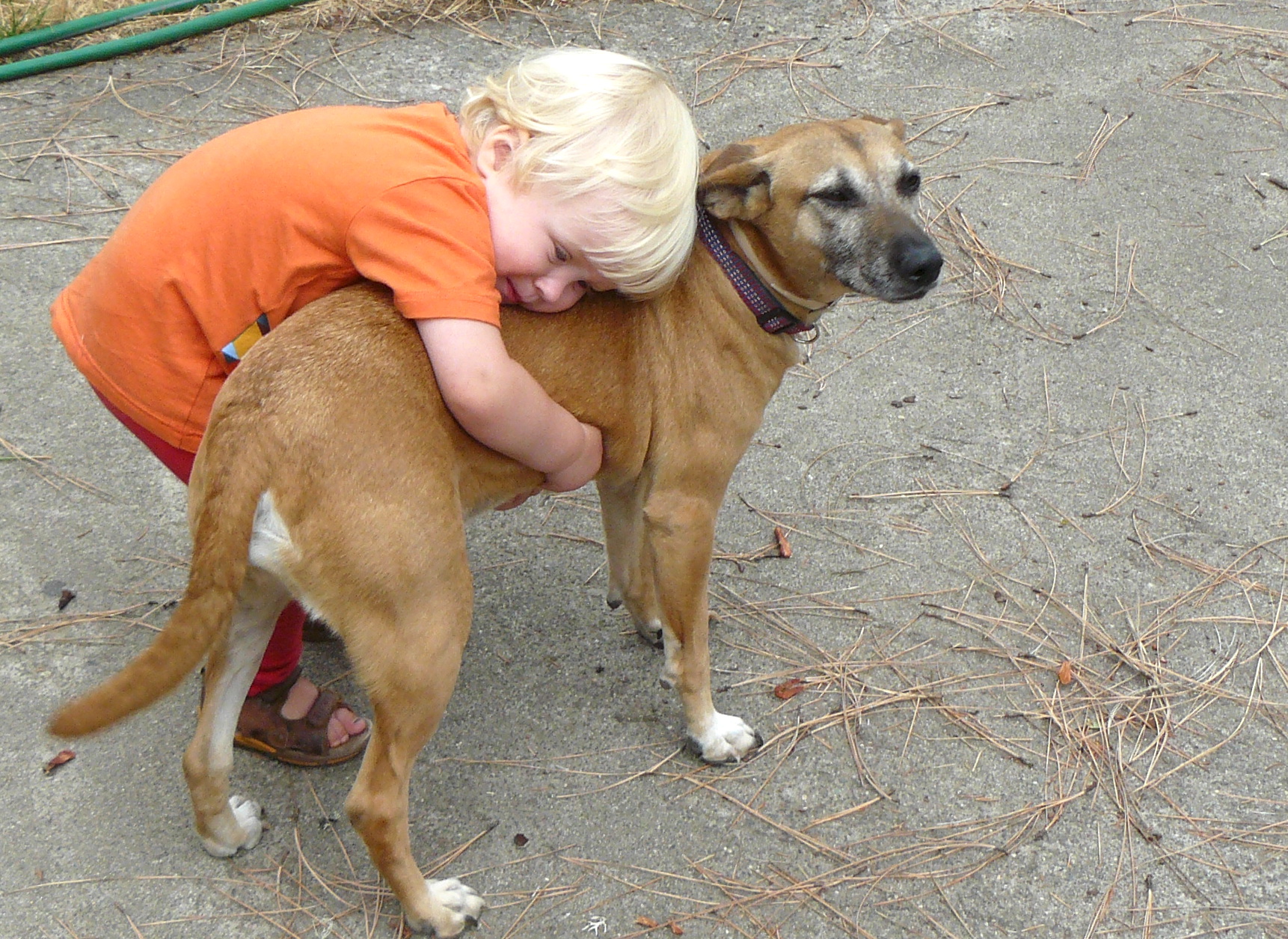
Love and Trust – Grandson Morten hugging Dhalia.
Thank you, Jon.
Some content on this page was disabled on August 23, 2017 as a result of a DMCA takedown notice from Susan Hawkins. You can learn more about the DMCA here:
Winter sunlight filtering through the trees. Oregon, January 2013.
We don’t subscribe to television services here at home. The only way I stay partially informed is via the BBC News website. Thus it was a few days ago I saw the headline, “European forests near ‘carbon saturation point’” This was a report by Mark Kinver, Environment reporter, BBC News. It made me sit up and take notice. For Mark Kinver wrote:
European forests are showing signs of reaching a saturation point as carbon sinks, a study has suggested.
Since 2005, the amount of atmospheric CO2 absorbed by the continent’s trees has been slowing, researchers reported.
Carbon sinks play a key role in the global carbon cycle and are promoted as a way to offset rising emissions.
Many of Europe’s forests are reaching an age where growth, and carbon uptake, slows down.
Writing in their paper, the scientists said the continent’s forests had been recovering in recent times after centuries of stock decline and deforestation.
The growth had also provided a “persistent carbon sink”, which was projected to continue for decades.
However, the team’s study observed three warnings that the carbon sink provided by Europe’s tree stands was nearing a saturation point.
It would be wrong to republish the full report but do go and read it here. It contains much information, some of it counter-intuitive. Such as Dr. Gert-Jan Nabuurs from Wageningen University and Research Centre, Netherlands saying of Europe’s forest;
“These forests have now reached 70-80 years old and are starting a phase in the life of a tree where the growth rate starts to come down,” he explained.
“So you have large areas of old forest and even if you add these relatively small areas of new forest, this does not compensate for the loss of growth rate in the old forests.”
The report includes the glaringly obvious, “However, mature woodlands have been recognised as a key habitat for supporting and conserving biodiversity.”!
The issue of knowing what is best for the wildlife, of all types and sizes, of balancing doing nothing to the forest or undertaking beneficial husbandry is one that is going to be in our minds here at home this coming Winter.
For much of our 13 acres is forest, as the following property map shows.
Assessor’s Map 4000 Hugo Road.
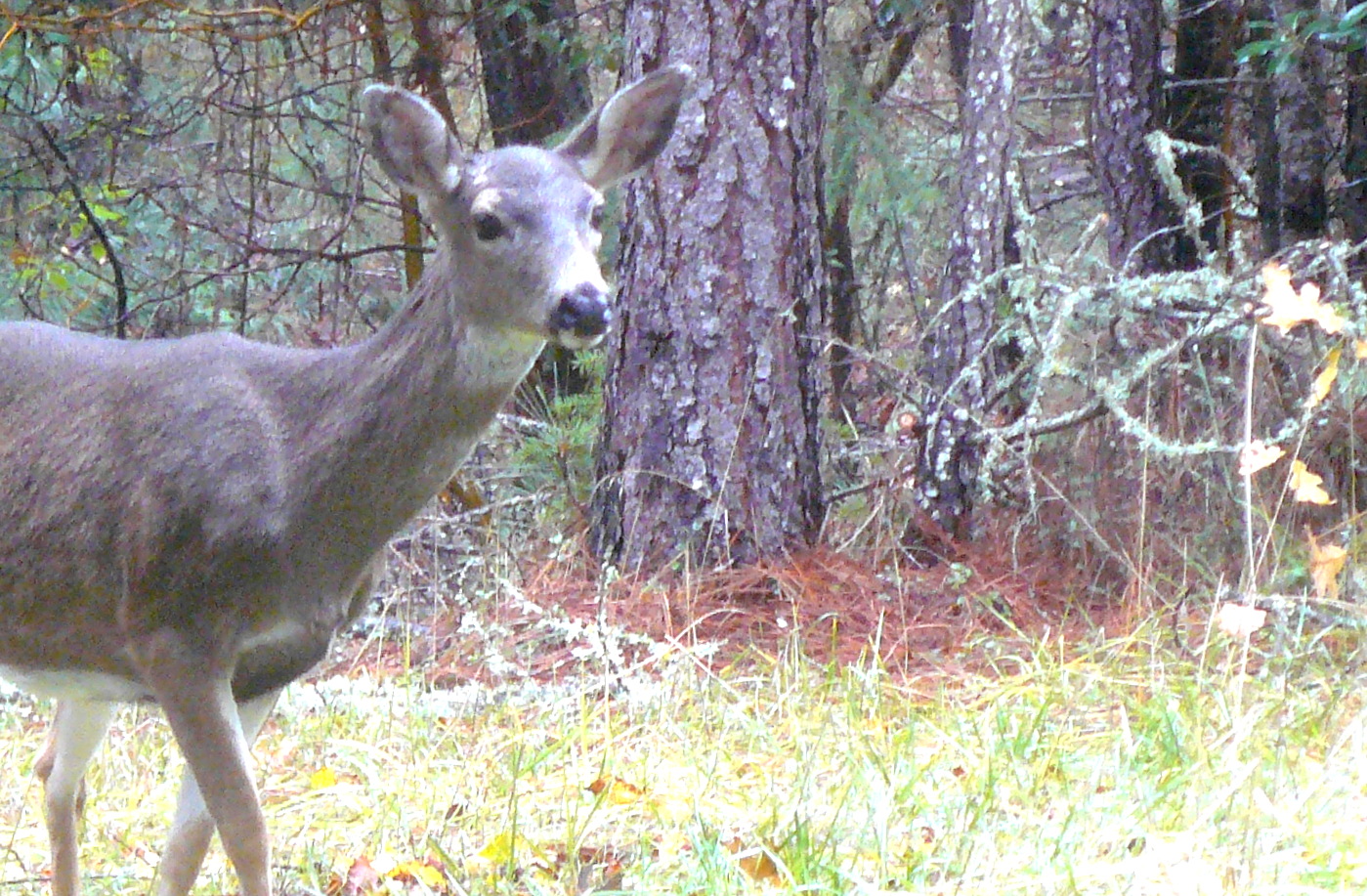
When we first moved in to the house last October, the most common wild large creatures around were the deer. The only way one could get close enough to take a photograph was when there wasn’t a dog in sight. Even then, the slightest sudden sound or movement had a deer dashing into the forest.
Deer very cautiously meets new humans on the block! (Early November 2012)
Yet over the following weeks, the healthy grass made an irresistible Winter meal and the deer settled down to being regular visitors. But always within a few leaps and bounds of the edge of the trees.
Nevertheless, the deer remained very cautious of feeding during the daytime as they soon became aware that without warning dogs could come rushing out from the house; as happened numerous times! It seemed clear that having the forest close by enabled them to scatter as soon as the first bark was heard.
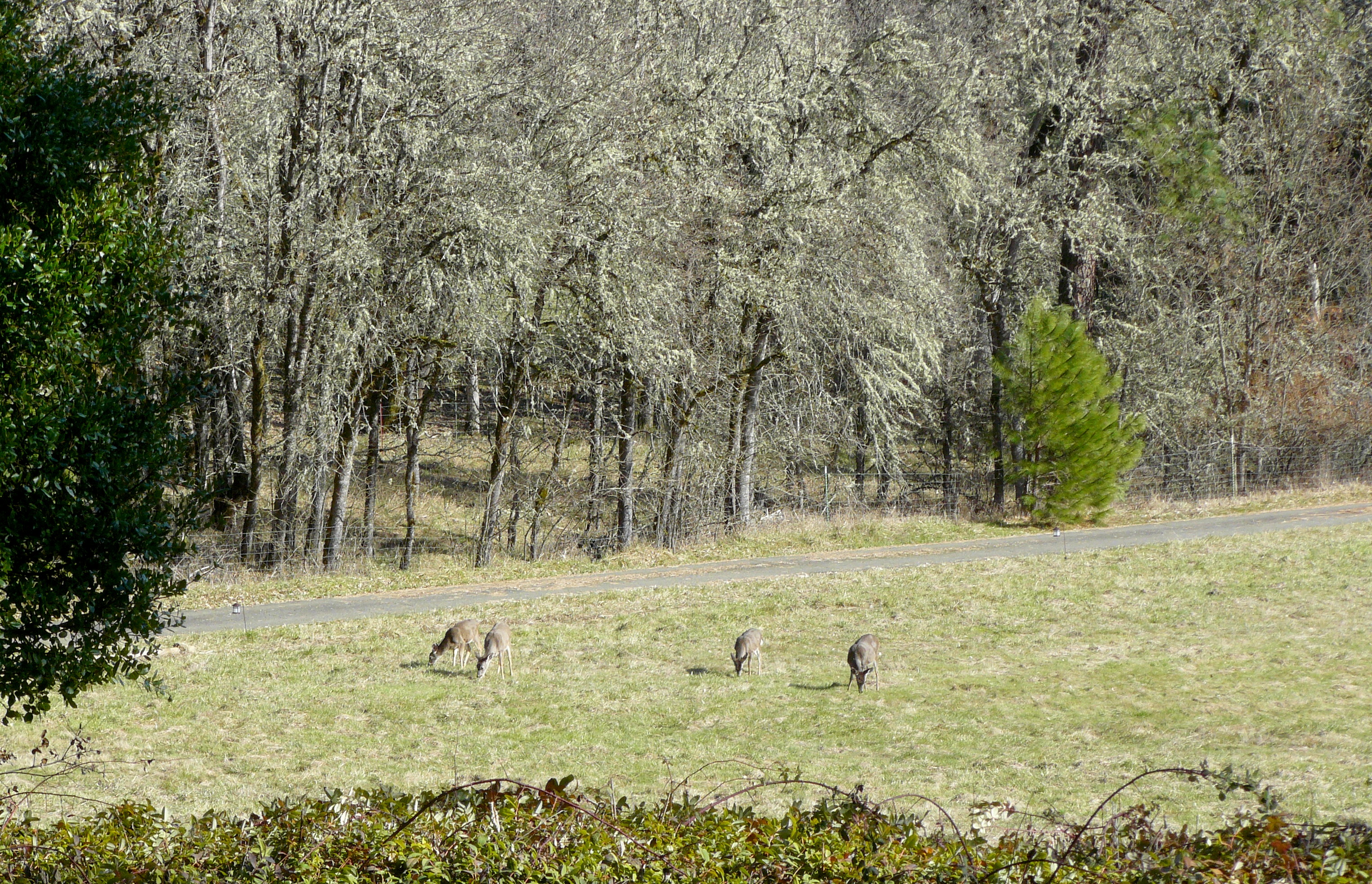
Months later, shown by this photograph taken early afternoon just a couple of weeks ago, these four wild deer still grazed close to the forest.
Wild deer feeding on the grass.
So this Autumn/Fall we shall be coming up with a plan to ensure that the forests on our property are reinvigorated to the best of our abilities.