The impending ‘banquet of consequences’.
The Welcome page of this blog includes this:
Dogs ‘teaching’ man to be so successful a hunter enabled evolution, some 20,000 years later, to farming, thence the long journey to modern man. But in the last, say 100 years, that farming spirit has become corrupted to the point where we see the planet’s plant and mineral resources as infinite. Mankind is close to the edge of extinction, literally and spiritually.
I continue that theme in Part Two of my book (Chapter 7: This Twenty-First Century)
Bad news sells! Bad news also causes stress and worry. In my previous explanation, I explained that the last thing you want is a catalogue of all the things that have that power to cause you stress and worry. However, I do see three fundamental aspects of this new century that have their roots in that loss of principles that I referred to in the previous chapter. They are
1. the global financial system,
2. the potential for social disorder, and
3. the process of government.Because they are at the heart of how the coming years will pan out.
The first aspect, our global financial system, was selected because it underpins all our lives in so many ways. When I was living in southwest England I was a client of Kauders Portfolio Services[1]. The founder of the company, David Kauders, published[2] a book, The Greatest Crash, in 2011. It was an obvious read for me at that time and I still have the book on my shelves here in Oregon.
David explained that whether we like it or not, our lives are inextricably caught up in the twin dependencies of the global financial system: credit and debt. As he wrote in his opening chapter:Households can barely afford their existing debts, let alone take on more. Since households now prefer not to borrow, indeed some even choose to pay back debt, it follows that those who have already borrowed, as a group, can no longer contribute to economic expansion.
People can be divided into borrowers and savers. With existing borrowers unable to afford or unwilling to take on extra debt, can new borrowers be found instead? Those who do not need to borrow are unlikely to volunteer. Except for the young wishing to buy houses, facing the reality that house prices are beyond their pockets, where are the new borrowers?
Businesses are also under pressure. There has been an inadequate recovery from recession, business prospects are poor as households cut back their spending. Lack of bank lending is a symptom rather than a cause, for if existing businesses were to be given more credit, they would probably be unlikely to find profitable growth opportunities in a world of austerity.Later on in the book David describes this as “the financial system limit”. In other words, the period of growth and expansion, especially of financial and economic expansion, has come to an end in a structural sense. This was his perspective from 2011.
Recently, I chose to reread The Greatest Crash. What struck me forcibly, reading the book again some four years later on, was how visible this “system limit” appeared in the world today. Everywhere there are signs that the era of growth has come to an end. Many countries are now indebted to a point that reinforces the proposition of there being a financial system limit. The United States is greatly in debt[3] but the only thing mitigating that situation, for the time being anyway, is that the American dollar is the quasi dominant global currency.
The changing nature of the global population is also reinforcing the fact that this is the end of a long period of growth. Even without embracing the question of how much longer we can increase the number of people living on a finite planet, the demographics spell out a greater-than-even chance of a decline in consumption and economic activity. Simply because in all regions of the planet, except for India where there is still a growing youth element in the country, people are ageing. To state the obvious, ageing persons do not consume as much as middle-aged and younger persons.
Thus, the world’s economy that is just around the corner is certainly going to be very different to what it has been in the past. It is not being widely discussed. Worse than that, there is a widespread assumption adopted by many governments that a return to the “normal” economic growth of previous times is a given. Many do not share that assumption.The second aspect that isn’t being spoken about is the potential for massive, widespread social disorder. All summed up in just three words: greed, inequality, and poverty. Just three words that metaphorically appear to me like a round, wooden lid hiding a very deep, dark well. That lifting this particular lid, the metaphorical one, exposes an almost endless drop into the depths of where our society appears to have fallen.
Even the slightest raising of awareness of where this modern global world is heading is scary. I have in mind the author Thomas Piketty who warned[4] that, “the inequality gap is toxic, dangerous.” Then there was the news in 2015[5] that, “Billionaires control the vast majority of the world’s wealth, 67 billionaires already own half the world’s assets; by 2100 we’ll have 11 trillionaires, while American worker income has stagnated for a generation.”The third and final aspect that isn’t being widely discussed is the process of government. Not from the viewpoint of “left” or “right”, Labour or Conservative, Democratic or Republican (insert the labels appropriate to your own country), that is being discussed ad nauseum, but from the viewpoint of good government. It might be a terrible generalisation but it is still a fair criticism to say that many peoples of many countries have lost faith in their governments.
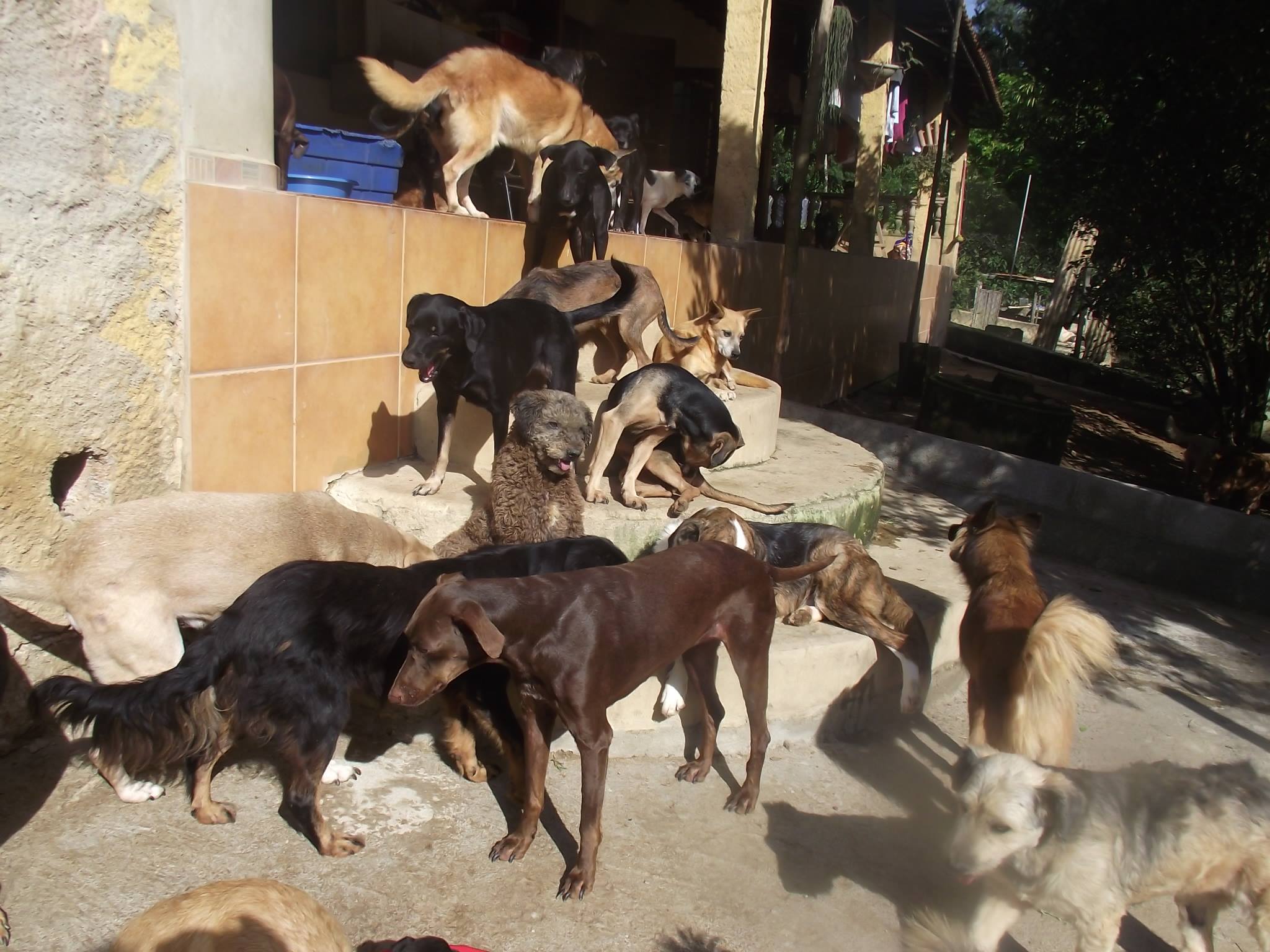
There appears to be a chronic absence of open debate about the need for good government, what that good government would look like, and how do societies bring it about.If we were a dog pack, then our leader, our female mentor dog, would have moved us all to a new, pristine territory!

[1] My relationship was terminated when I became a resident of the United Staes in 2011.
[2] 2011, Sparkling Books.
[3] http://www.usgovernmentdebt.us offers on the 14th November, 2014 that the Federal Debt of the United States was about $18,006,100,032,000.
[4] In his book Capital in the Twenty-First Century (Belknap Press, 2014).
[5] http://www.marketwatch.com/story/capitalism-is-killing-americas-morals-our-future-2015-05-22.
Yes, these are indeed very interesting times!
So, dear reader, you can understand why a recent article over on Naked Capitalism spoke to me. It was penned by Satyajit Das, a former banker and the author of a number of books. Both Satyajit and Yves, of Naked Capitalism, were delighted to offer me permission to republish the full post.
ooOOoo
Satyajit Das: Age of Stagnation or Something Worse?
Yves here. If you’ve read Das regularly, one of the characteristics of his writing is wry detachment. The shift to a sense of foreboding is a big departure.
By Satyajit Das, a former banker and author whose latest book, The Age of Stagnation, is now available. The following is an edited excerpt from Age of Stagnation (published with the permission of Prometheus Books)
If you look for truth, you may find comfort in the end; if you look for comfort you will not get either comfort or truth, only . . . wishful thinking to begin, and in the end, despair. C.S. Lewis
The world is entering a period of stagnation, the new mediocre. The end of growth and fragile, volatile economic conditions are now the sometimes silent background to all social and political debates. For individuals, this is about the destruction of human hopes and dreams.
One Offs
For most of human history, as Thomas Hobbes recognised, life has been ‘solitary, poor, nasty, brutish, and short’. The fortunate coincidence of factors that drove the unprecedented improvement in living standards following the Industrial Revolution, and especially in the period after World War II, may have been unique, an historical aberration. Now, different influences threaten to halt further increases, and even reverse the gains.
Since the early 1980s, economic activity and growth have been increasingly driven by financialisation – the replacement of industrial activity with financial trading and increased levels of borrowing to finance consumption and investment. By 2007, US$5 of new debt was necessary to create an additional US$1 of American economic activity, a fivefold increase from the 1950s. Debt levels had risen beyond the repayment capacity of borrowers, triggering the 2008 crisis and the Great Recession that followed. But the world shows little sign of shaking off its addiction to borrowing. Ever-increasing amounts of debt now act as a brake on growth.
Growth in international trade and capital flows is slowing. Emerging markets that have benefited from and, in recent times, supported growth are slowing.
Rising inequality and economic exclusion also impacts negatively upon activity.
Financial problems are compounded by lower population growth and ageing populations; slower increases in productivity and innovation; looming shortages of critical resources, such as water, food and energy; and manmade climate change and extreme weather conditions.
The world requires an additional 64 billion cubic metres of water a year, equivalent to the annual water flow through Germany’s Rhine River. Agronomists estimate that production will need to increase by 60–100 percent by 2050 to feed the population of the world. While the world’s supply of energy will not be exhausted any time soon, the human race is on track to exhaust the energy content of hundreds of millions years’ worth of sunlight stored in the form of coal, oil and natural gas in a few hundred years. 10 tons of pre-historic buried plant and organic matter converted by pressure and heat over millennia was needed to create a single gallon (4.5 litres) of gasoline.
Europe is currently struggling to deal with a few million refugees fleeing conflicts in the Middle East. How will the world deal with hundreds of millions of people at risk of displacement as a resulting of rising sea levels?
Extend and Pretend
The official response to the 2008 crisis was a policy of ‘extend and pretend’, whereby authorities chose to ignore the underlying problem, cover it up, or devise deferral strategies to ‘kick the can down the road’. The assumption was that government spending, lower interest rates, and the supply of liquidity or cash to money markets would create growth. It would also increase inflation to help reduce the level of debt, by decreasing its value.
It was the grifter’s long con, a confidence trick with a potentially large payoff but difficult to pull off. Houses prices and stock markets have risen, but growth, employment, income and investment have barely recovered to pre-crisis levels in most advanced economies. Inflation for the most part remains stubbornly low.
In countries that have ‘recovered’, financial markets are, in many cases, at or above pre-crisis prices. But conditions in the real economy have not returned to normal. Must-have latest electronic gadgets cannot obscure the fact that living standards for most people are stagnant. Job insecurity has risen. Wages are static, where they are not falling. Accepted perquisites of life in developed countries, such as education, houses, health services, aged care, savings and retirement, are increasingly unattainable.
In more severely affected countries, conditions are worse. Despite talk of a return to growth, the Greek economy has shrunk by a quarter. Spending by Greeks has fallen by 40 percent, reflecting reduced wages and pensions. Reported unemployment is 26 percent of the labour force. Youth unemployment is over 50 percent. One commentator observed that the government could save money on education, as it was unnecessary to prepare people for jobs that did not exist.
Future generations may have fewer opportunities and lower living standards than their parents. A 2013 Pew Research Centre survey conducted in thirty-nine countries asked whether people believed that their children would enjoy better living standards: 33 percent of Americans believed so, as did 28 percent of Germans, 17 percent of British and 14 percent of Italians. Just 9 percent of French people thought their children would be better off than previous generations.
The Deadly Cure
Authorities have been increasingly forced to resort to untested policies including QE forever and negative interest rates. It was an attempt to buy time, to let economies achieve a self-sustaining recovery, as they had done before. Unfortunately the policies have not succeeded. The expensively purchased time has been wasted. The necessary changes have not been made.
There are toxic side effects. Global debt has increased, not decreased, in response to low rates and government spending. Banks, considered dangerously large after the events of 2008, have increased in size and market power since then. In the US the six largest banks now control nearly 70 percent of all the assets in the US financial system, having increased their share by around 40 percent.
Individual countries have sought to export their troubles, abandoning international cooperation for beggar-thy-neighbour strategies. Destructive retaliation, in the form of tit-for-tat interest rate cuts, currency wars, and restrictions on trade, limits the ability of any nation to gain a decisive advantage.
The policies have also set the stage for a new financial crisis. Easy money has artificially boosted prices of financial assets beyond their real value. A significant amount of this capital has flowed into and destabilised emerging markets. Addicted to government and central bank support, the world economy may not be able to survive without low rates and excessive liquidity.
Authorities increasingly find themselves trapped, with little room for manoeuvre and unable to discontinue support for the economy. Central bankers know, even if they are unwilling to publicly acknowledge it, that their tools are inadequate or exhausted, now possessing the potency of shamanic rain dances. More than two decades of trying similar measures in Japan highlight their ineffectiveness in avoiding stagnation.
Heart of the Matter
Conscious that the social compact requires growth and prosperity, politicians, irrespective of ideology, are unwilling to openly discuss the real issues. They claim crisis fatigue, arguing that the problems are too far into the future to require immediate action. Fearing electoral oblivion, they have succumbed to populist demands for faux certainty and placebo policies. But in so doing they are merely piling up the problems.
Policymakers interrogate their models and torture data, failing to grasp that ‘many of the things you can count don’t count [while] many of the things you can’t count really count’. The possibility of a historical shift does not inform current thinking.
It is not in the interest of bankers and financial advisers to tell their clients about the real outlook. Bad news is bad for business. The media and commentariat, for the most part, accentuate the positive. Facts, they argue, are too depressing. The priority is to maintain the appearance of normality, to engender confidence.
Ordinary people refuse to acknowledge that maybe you cannot have it all. But there is increasingly a visceral unease about the present and a fear of the future. Everyone senses that the ultimate cost of the inevitable adjustments will be large. It is not simply the threat of economic hardship; it is fear of a loss of dignity and pride. It is a pervasive sense of powerlessness.
For the moment, the world hopes for the best of times but is afraid of the worst. People everywhere resemble Dory, the Royal Blue Tang fish in the animated film Finding Nemo. Suffering from short-term memory loss, she just tells herself to keep on swimming. Her direction is entirely random and without purpose.
Reckoning Postponed
The world has postponed, indefinitely, dealing decisively with the challenges, choosing instead to risk stagnation or collapse. But reality cannot be deferred forever. Kicking the can down the road only shifts the responsibility for dealing with it onto others, especially future generations.
A slow, controlled correction of the financial, economic, resource and environmental excesses now would be serious but manageable. If changes are not made, then the forced correction will be dramatic and violent, with unknown consequences.
During the last half-century each successive economic crisis has increased in severity, requiring progressively larger measures to ameliorate its effects. Over time, the policies have distorted the economy. The effectiveness of instruments has diminished. With public finances weakened and interest rates at historic lows, there is now little room for manoeuvre. Geo-political risks have risen. Trust and faith in institutions and policy makers has weakened.
Economic problems are feeding social and political discontent, opening the way for extremism. In the Great Depression the fear and disaffection of ordinary people who had lost their jobs and savings gave rise to fascism. Writing of the period, historian A.J.P. Taylor noted: ‘[the] middle class, everywhere the pillar of stability and respectability . . . was now utterly destroyed . . . they became resentful . . . violent and irresponsible . . . ready to follow the first demagogic saviour . . .’
The new crisis that is now approaching or may already be with us will be like a virulent infection attacking a body whose immune system is already compromised.
As Robert Louis Stevenson knew, sooner or later we all have to sit down to a banquet of consequences.
ooOOoo
 Very interesting times indeed!



















 Learning from Dogs