Year: 2017

Picture Parade One Hundred and Eighty-Five

The last set of the beautiful Everyone Needs a Friend pictures.

The previous set is here and the first set here.

d15oooo

d16oooo

d17oooo

d18oooo

d19oooo

d20oooo

d21oooo

In conclusion let me repeat what I said when introducing these pictures back on the 19th February:

With many thanks to dear neighbour Dordie who passed these on to me to share with you all.

Blue Buffalo Dog Food Recall

This came in to me some four hours ago.

ooOOoo

March 2, 2017 — Blue Buffalo has issued a voluntary market withdrawal of 17 varieties of its Blue Divine Delights and Blue Wilderness Trail Trays due to quality issues with the foil seals on the top of the cups.

No other Blue Buffalo products (including any variety of Divine Delights not listed below) are impacted by this issue.

The company is not aware of any dogs becoming ill from these products.

What’s Recalled?

The following products are affected by the recall:

blue-buffalo-wet-dog-food-recall

  • BLUE Divine Delights Filet Mignon Flavor in Gravy
    3.5 oz cup
    84024312035
  • BLUE Divine Delights New York Strip Flavor in Gravy
    3.5 oz cup
    84024312037
  • BLUE Divine Delights Prime Rib Flavor in Gravy
    3.5 oz cup
    84024312039
  • BLUE Divine Delights Rotisserie Chicken Flavor in Gravy
    3.5 oz cup
    84024312041
  • BLUE Divine Delights Pate Filet Mignon Flavor
    3.5 oz cup
    84024312043
  • BLUE Divine Delights Pate Porterhouse Flavor
    3.5 oz cup
    84024312045
  • BLUE Divine Delights Pate Grilled Chicken Flavor
    3.5 oz cup
    84024312047
  • BLUE Divine Delights Pate Top Sirloin Flavor
    3.5 oz cup
    84024312049
  • BLUE Divine Delights Pate Angus Beef Flavor
    3.5 oz cup
    84024312051
  • BLUE Divine Delights Pate Roasted Turkey Flavor
    3.5 oz cup
    84024312053
  • BLUE Divine Delights Pate with Bacon, Egg and Cheese
    3.5 oz cup
    84024312057
  • BLUE Divine Delights Pate Sausage, Egg and Cheese Flavor
    3.5 oz cup
    84024312059
  • BLUE Divine Delights Pate Steak and Egg Flavor
    3.5 oz cup
    84024312061
  • BLUE Wilderness Trail Trays Duck Grill
    3.5 oz cup
    84024312071
  • BLUE Wilderness Trail Trays Beef Grill
    3.5 oz cup
    84024312073
  • BLUE Wilderness Trail Trays Chicken Grill
    3.5 oz cup
    84024312075
  • BLUE Wilderness Trail Trays Turkey Grill
    3.5 oz cup
    84024312077

What to Do?

Blue Buffalo has asked consumers to stop feeding the affected product to pets and bring any remaining cups affected by the withdrawal to their place of purchase for a full refund.

Consumers with questions about this market withdrawal are invited to contact Blue Buffalo at 877-870-7363.

U.S. citizens can report complaints about FDA-regulated pet food products by calling the consumer complaint coordinator in your area.

Or go to http://www.fda.gov/petfoodcomplaints.

Canadians can report any health or safety incidents related to the use of this product by filling out the Consumer Product Incident Report Form.

Get Dog Food Recall Alerts by Email

Get free dog food recall alerts sent to you by email. Subscribe to The Dog Food Advisor’s emergency recall notification system.

ooOOoo

This company issued another Blue Buffalo Food Recall a little over two week’s ago. It’s here if you missed that!

Please stay safe out there!


No shortage of love and caring.

For that most treasured pet companion: The Dog

What with one thing and another this has been a bit of a week.

So when recently I came across a wonderful story on the Care2 site of how a Fire Department put so much energy into saving a dog’s life it seemed an automatic action to share it with all you good people out there.

ooOOoo

How Rescuers Freed This Dog From a Tire Truck Rim

3201628-largeBy: Laura S.   March 1, 2017

About Laura

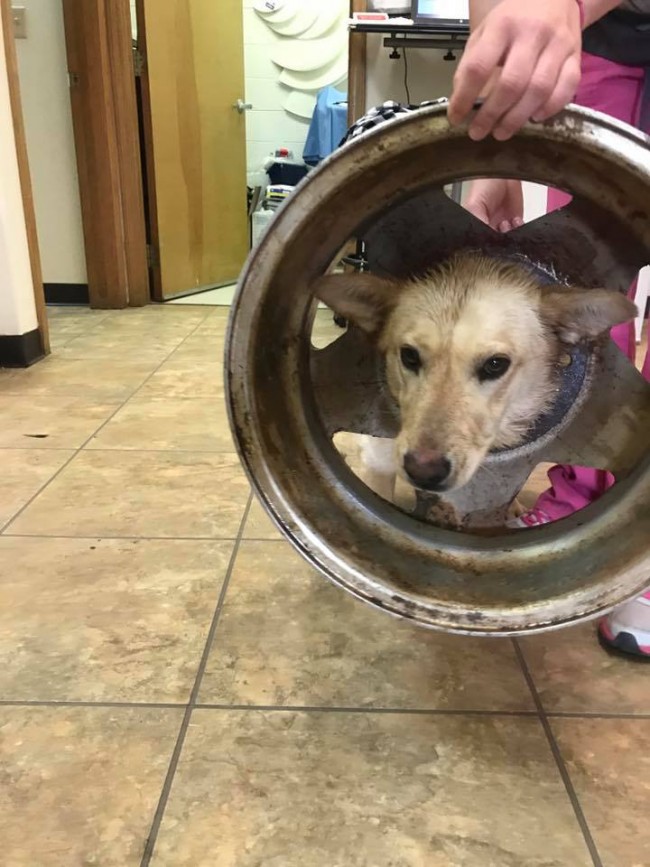
Any fire chief will tell you that a fire department’s role is not just fighting fires, but sometimes helping community members out of a tight spot. And for the McDowell County Rescue Squad in North Carolina, that form of service required a delicate touch last week when they were called upon to free a dog named Sadie from the grips of a truck tire rim.

Sadie’s family told rescuers that they believe she may have been chasing another animal when she got wedged inside the Ford F-350 tire rim.

Credit: Kristi Sisk/ Facebook

Sadie was taken to the Animal Hospital of Marion where she showed everyone her new necklace with her characteristic charm. But for her own safety, Sadie would have to be sedated.

credit: Kristi Sisk/ Facebook
Credit: Kristi Sisk/ Facebook

“The tire rim probably weighed 20 or 30 pounds so she couldn’t even lift her head up when she came in,” hospital staffer Kristi Sisk said.

“We used hydraulic cutters as well as a couple of other power tools,”  McDowell County Rescue Squad Captain Jordan Harrell told Fredericksburg.com. “It was a lot of trial and error. It was very big, it was a tough metal, and not the text book type extrication.”

Credit: Kristi Sisk/ Facebook

“Thank you so much McDowell rescue squad and volunteers that showed up, took their time, and put the animals safety first getting this tire rim off!” Sisk said. “Happy to say miss Sadie had a happy ending. Went home tail wagging. I love my job!”

Credit: McDowell County Rescue Squad/ Facebook

ooOOoo

Time and time again, we see how dogs bring out so much good in us!

The Cave of Crystal Giants

This will take us away from the daily beat of life!

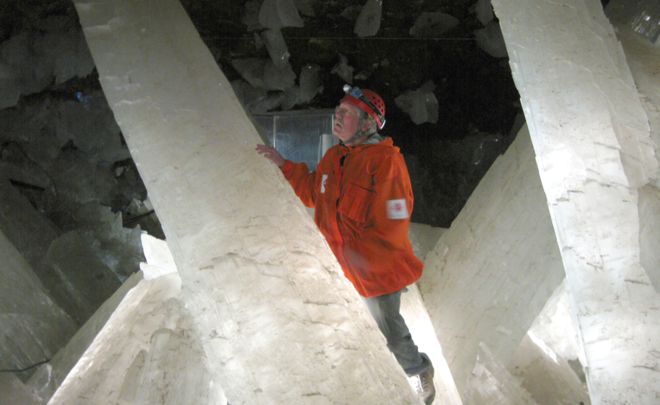
On the 18th. February the BBC News website carried an article that I found incredible. It was the story of Naica’s crystal caves in Mexico.

oooo

Naica’s crystal caves hold long-dormant life

By Jonathan Amos, BBC Science Correspondent, Boston, 18 February 2017.

 The caves were discovered by miners 100 years ago
The caves were discovered by miners 100 years ago. Picture credit: Penelope J. Boston

It is a remarkable discovery in an amazing place.

Scientists have extracted long-dormant microbes from inside the famous giant crystals of the Naica mountain caves in Mexico – and revived them. [Ed: my emphasis]

The organisms were likely to have been encased in the striking shafts of gypsum at least 10,000 years ago, and possibly up to 50,000 years ago.

It is another demonstration of the ability of life to adapt and cope in the most hostile of environments.

“Other people have made longer-term claims for the antiquity of organisms that were still alive, but in this case these organisms are all very extraordinary – they are not very closely related to anything in the known genetic databases,” said Dr Penelope Boston.

The new director of Nasa’s Astrobiology Institute in Moffett Field, California, described her findings here at the annual meeting of the American Association for the Advancement of Science (AAAS).

oooo

I was delighted to find more details in many other places on the ‘web’.

Such as this one on the National Geographic website:

By Victoria Jaggard

PUBLISHED February 17, 2017

Boston, Massachusetts

Creatures that thrive on iron, sulfur, and other chemicals have been found trapped inside giant crystals deep in a Mexican cave. The microbial life-forms are most likely new to science, and if the researchers who found them are correct, the organisms are still active even though they have been slumbering for tens of thousands of years.

If verified, the discovery adds to evidence that microbial life on Earth can endure harsher conditions in isolated places than scientists previously thought possible. (See “Life Found Deep Under Antarctic Ice for First Time?”)

“These organisms have been dormant but viable for geologically significant periods of time, and they can be released due to other geological processes,” says NASA Astrobiology Institute director Penelope Boston, who announced the find today at a meeting of the American Association for the Advancement of Science. “This has profound effects on how we try to understand the evolutionary history of microbial life on this planet.”

Then there’s another article on that NatGeo website: (Apologies for some duplication in the message.)

By Neil Shea, National Geographic Staff
In a nearly empty cantina in a dark desert town, the short, drunk man makes his pitch. Beside him on the billiards table sits a chunk of rock the size of home plate. Dozens of purple and white crystals push up from it like shards of glass. “Yours for $300,” he says. “No? One hundred. A steal!” The three or four other patrons glance past their beers, thinking it over: Should they offer their crystals too? Rock dust on the green felt, cowboy ballads on the jukebox. Above the bar, a sign reads, “Happy Hour: 8 a.m. to 9 p.m.”

This remote part of northern Mexico, an hour or so south of Chihuahua, is famous for crystals, and paychecks at the local lead and silver mine, where almost everyone works, are meager enough to inspire a black market. “Thirty dollars.” He leans in. “Ten.” It’s hard to take him seriously. Earlier in the day, in a cave deep below the bar, I crawled among the world’s largest crystals, a forest of them, broad and thick, some more than 30 feet long and half a million years old. So clear, so luminous, they seemed extraterrestrial. They make the chunk on the pool table seem dull as a paperweight.

Nothing compares with the giants found in Cueva de los Cristales, or Cave of Crystals. The limestone cavern and its glittering beams were discovered in 2000 by a pair of brothers drilling nearly a thousand feet below ground in the Naica mine, one of Mexico’s most productive, yielding tons of lead and silver each year. The brothers were astonished by their find, but it was not without precedent. The geologic processes that create lead and silver also provide raw materials for crystals, and at Naica, miners had hammered into chambers of impressive, though much smaller, crystals before. But as news spread of the massive crystals’ discovery, the question confronting scientists became: How did they grow so big?

It takes 20 minutes to get to the cave entrance by van through a winding mine shaft. A screen drops from the van’s ceiling and Michael Jackson videos play, a feature designed to entertain visitors as they descend into darkness and heat. In many caves and mines the temperature remains constant and cool, but the Naica mine gets hotter with depth because it lies above an intrusion of magma about a mile below the surface. Within the cave itself, the temperature leaps to 112 degrees Fahrenheit with 90 to 100 percent humidity—hot enough that each visit carries the risk of heatstroke. By the time we reach the entrance, everyone glistens with sweat.

That article continues here.
Finally, lose yourself in this video. (If the voice doesn’t get to you!)

How to close today’s post?

Both by embracing the power of the natural order of things, life and death, and by reminding us all that there are in the order of over two billion stars in this universe.

That universe must be teeming with life, current and dormant, and the day when we truly confirm that will put everything into perspective!

oooo

Talk about synchronicity!

For yesterday, around 10am PST, the BBC News website carried this big news item: Earliest evidence of life on Earth ‘found’.

Here’s how that article opens:

Earliest evidence of life on Earth ‘found’

By Pallab Ghosh Science correspondent, BBC News
Scientists have discovered what they say could be fossils of some of the earliest living organisms on Earth.
They are represented by tiny filaments, knobs and tubes in Canadian rocks dated to be up to 4.28 billion years old.
That is a time not long after the planet’s formation and hundreds of millions of years before what is currently accepted as evidence for the most ancient life yet found on Earth.

The researchers report their investigation in the journal Nature.

As with all such claims about ancient life, the study is contentious. But the team believes it can answer any doubts.

The scientists’ putative microbes from Quebec are one-tenth the width of a human hair and contain significant quantities of haematite – a form of iron oxide or “rust”.

Matthew Dodd, who analysed the structures at University College London, UK, claimed the discovery would shed new light on the origins of life.

Do read the full article including viewing some wonderful photographs.

In memory of Casey

Casey: September, 2005 – February, 2017

Dear Casey was put to sleep yesterday morning.

I am going to republish a ‘Meet the dogs” essay that was written and first published February 25th, 2014.

But before doing so, Jean and I would like to extend our very great thanks to all the staff at the Southern Oregon Vet Specialty Center (SOVC) who have been so professional and so loving and caring.

Here is that essay. It is worth noting that we moved from Payson, AZ to Merlin, OR in 2012.

ooOOoo

Casey

by Jean Handover.

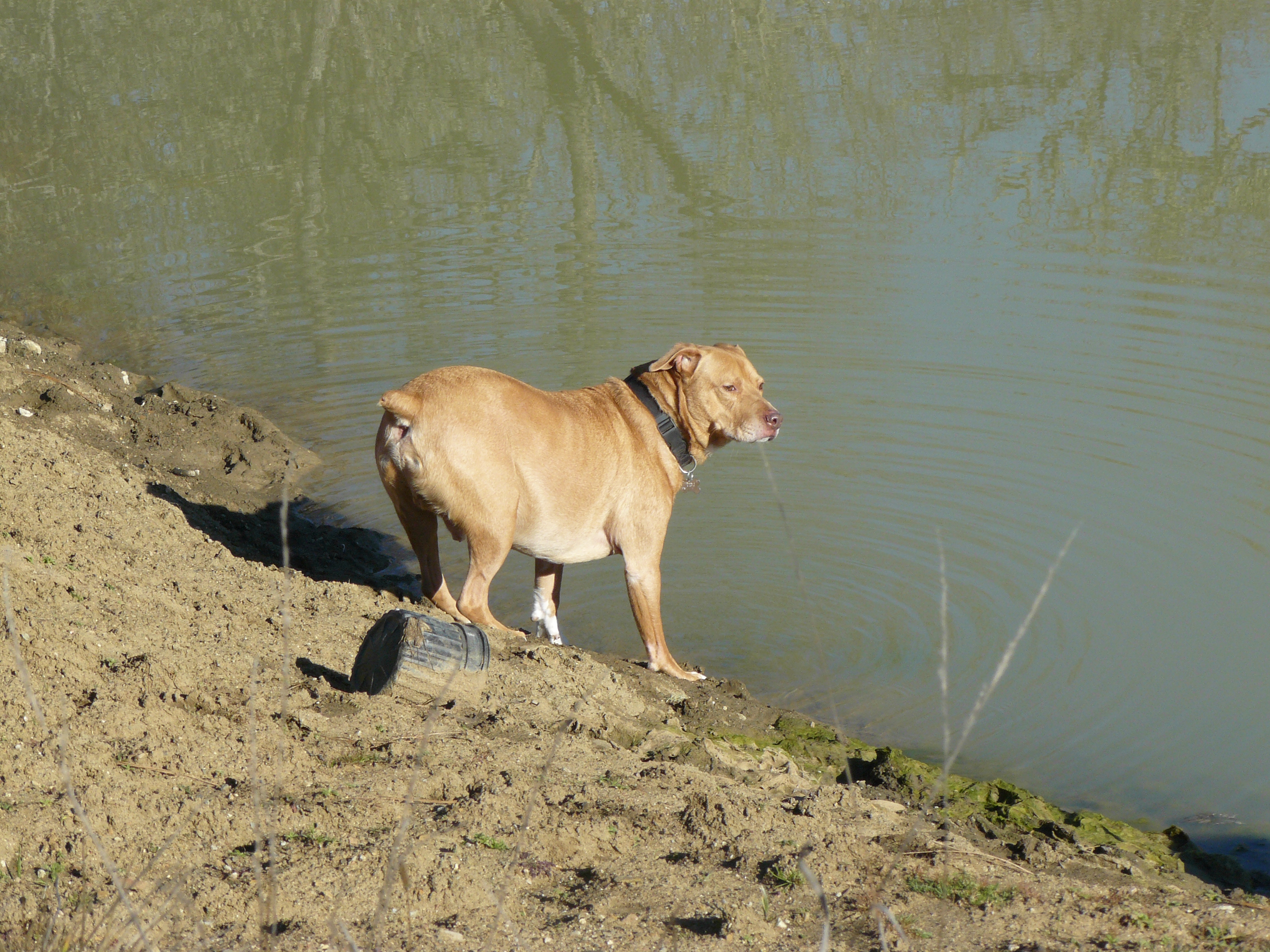
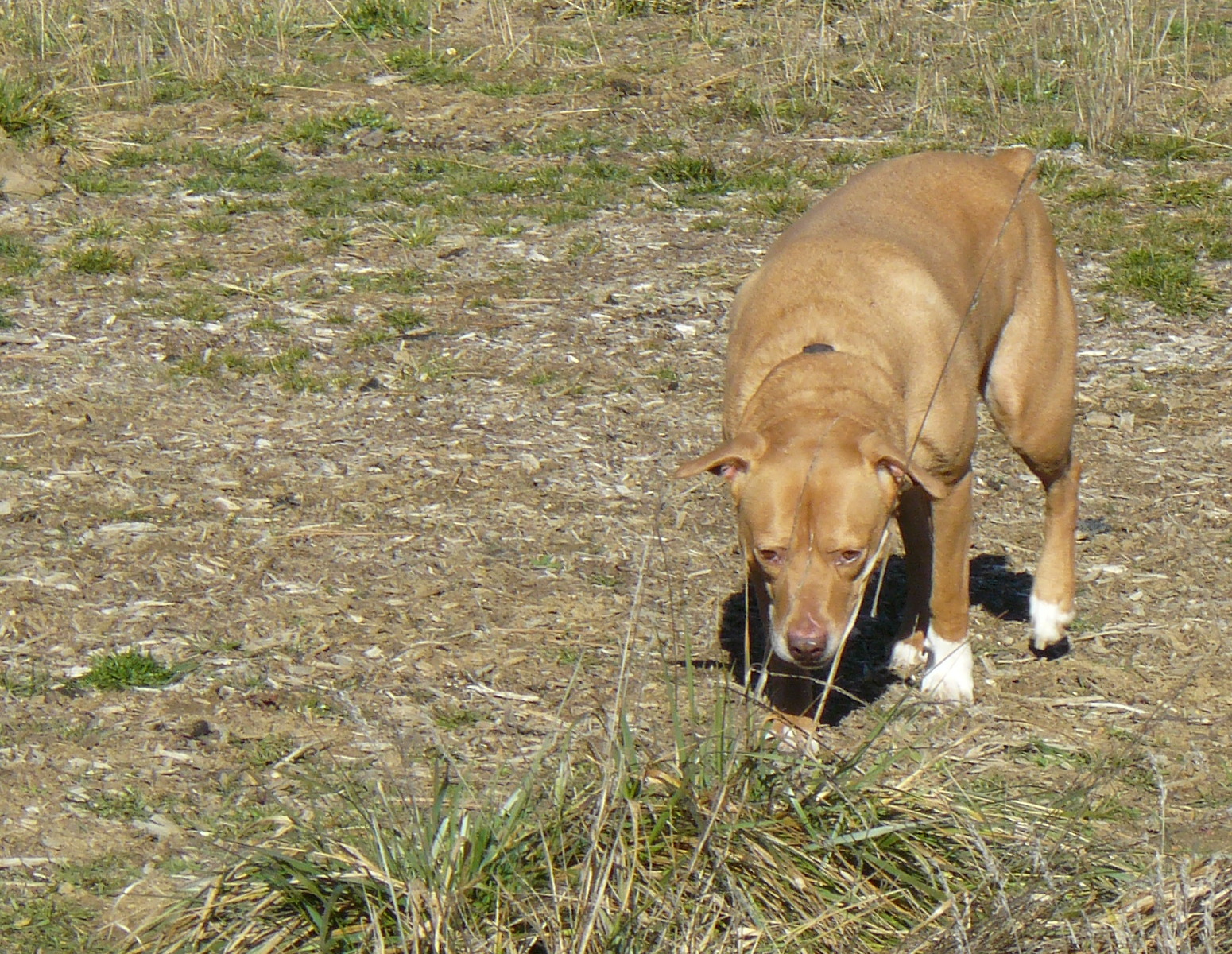
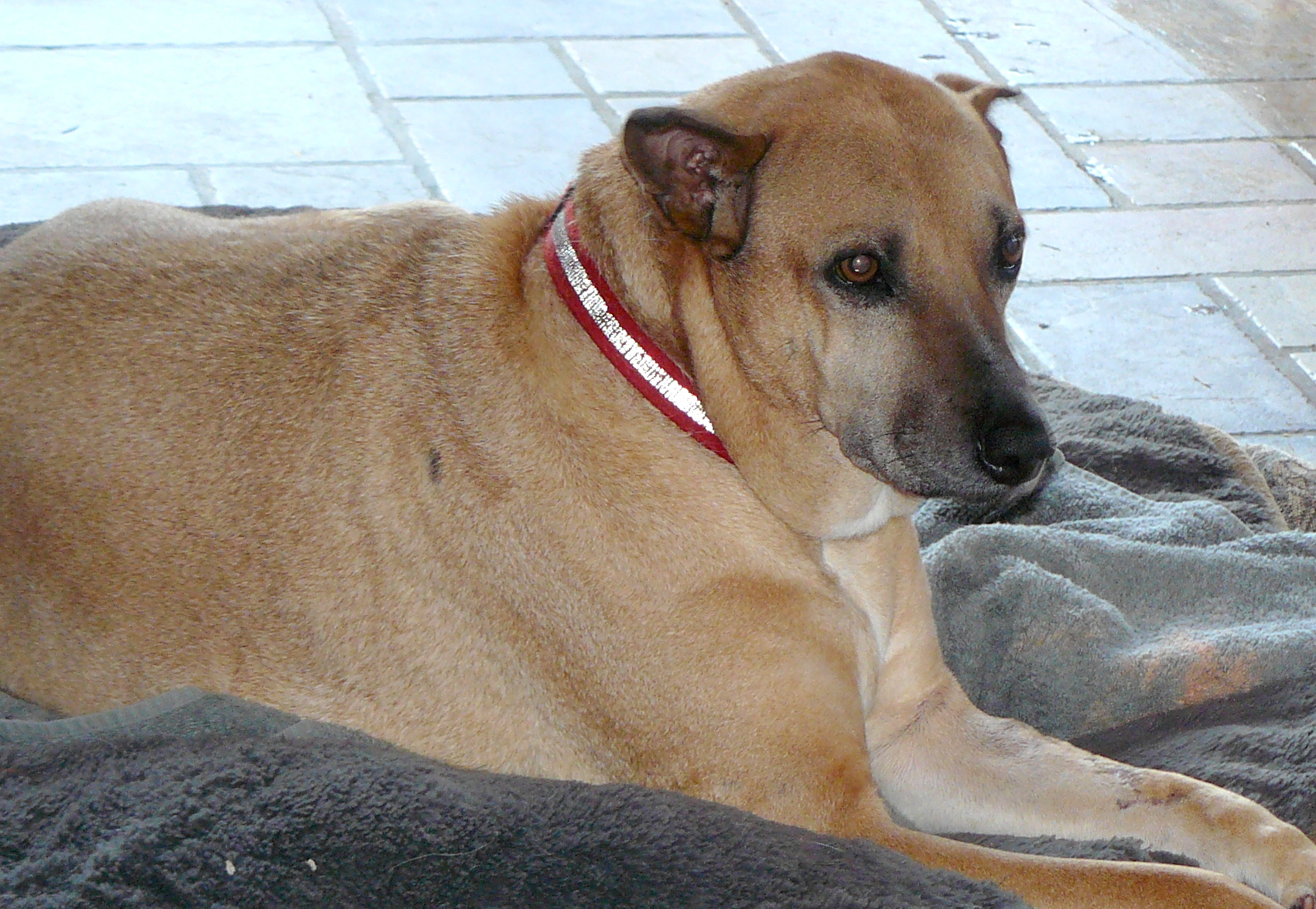
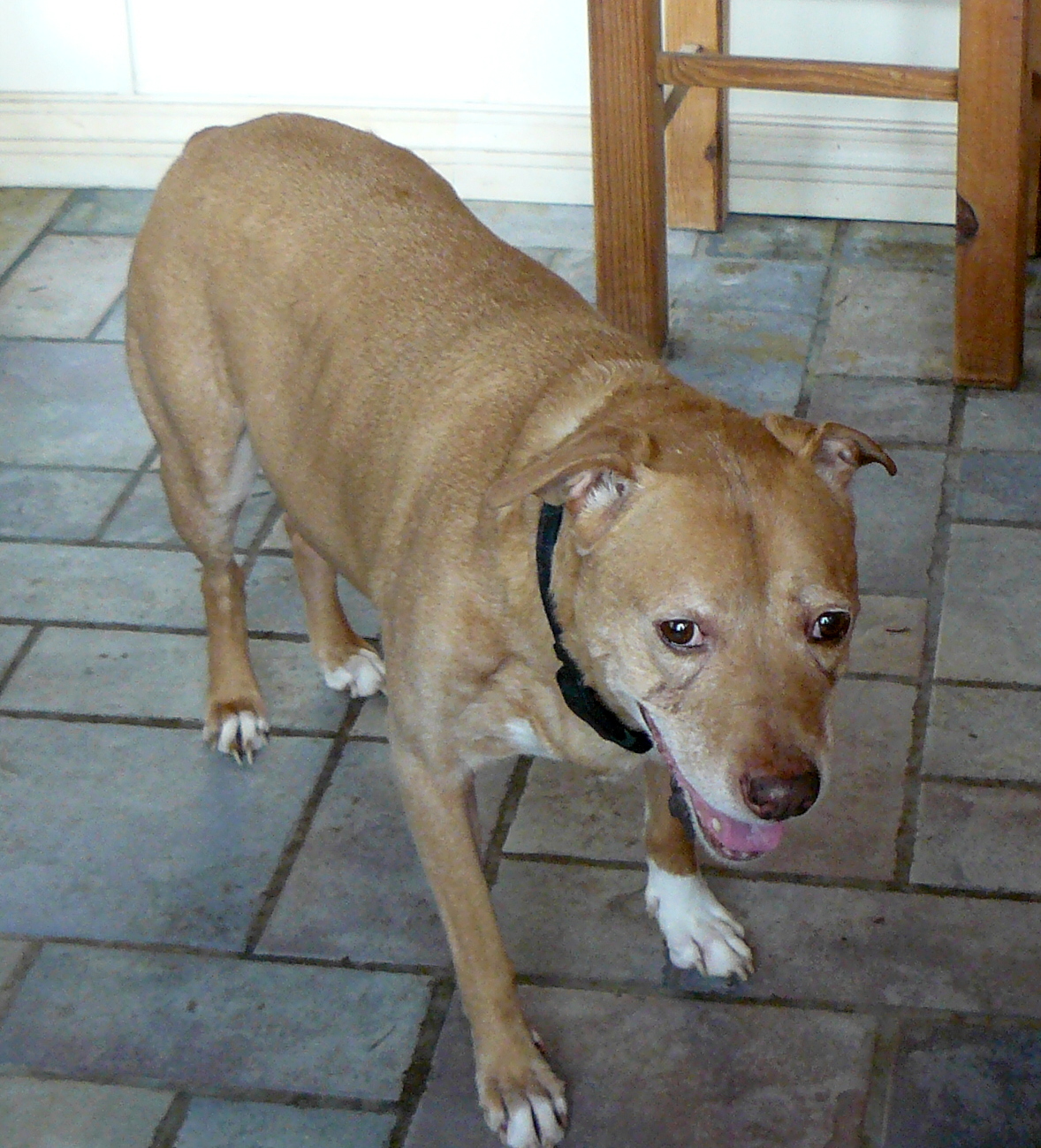
Casey, at home; picture taken a month ago.

It is 2011.

Every Friday, the Payson Roundup newspaper would devote a full page to the Humane Society, displaying some of the cats and dogs they had for adoption. I would read about each animal and quietly wish I could bring them all home.

I was particularly taken with one dog that had appeared several times in this Friday page. His name was Casey and he was a six-year-old Pit Bull mix. Unfortunately, at home we were ‘maxed out’ with a total of 14 dogs in three different sections of our house. We just couldn’t take Casey.

I had volunteered to be a dog-walker at the Humane Society dog shelter. But after two sessions walking dogs, I just couldn’t look at these sad little faces without breaking down in tears. I switched my efforts to working at the Society’s Thrift Store. That was great fun and, at least, it felt as though I was still helping the animals. Nonetheless, I was very impressed with the animal shelter. They did their utmost to re-home the animals in their care.

Ruby’s ‘pack’ here at home included Phoebe and Tess, rescue dogs from Mexico. Recently, Phoebe had died with leukaemia and Tess with bone cancer leaving Ruby on her own. Ruby was a dog that didn’t mix at all well with the other dogs, as was explained in last week’s post.

The next Friday, the Payson Roundup showed the Society’s ‘lonely hearts club’, highlighting animals that had been in care for a long time. The first dog shown was Casey. I telephone Chandra, the lady responsible for adoptions, and asked if Paul and I could bring Ruby to the shelter to find a companion for her. When we were at the shelter, Chandra asked us if we had anything against Pit Bulls. Of course we didn’t. Ruby was introduced to Casey and, as they say, the rest was history. Casey and Ruby right from the start were just wonderful together.

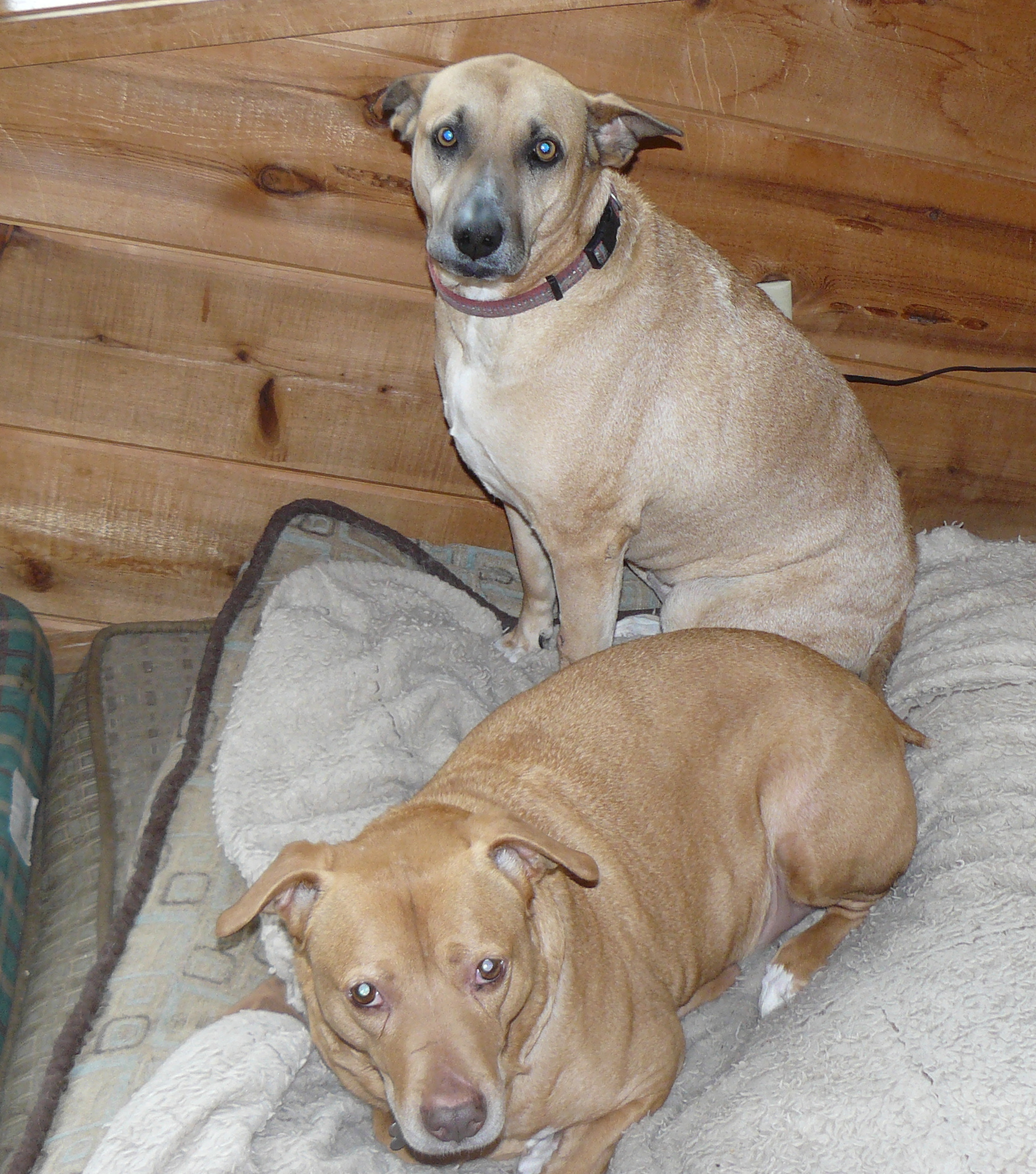
Ruby behind Casey.
Ruby behind Casey.

Subsequently, I learned from Chandra that Casey had been in care for over a year and, had we not taken him home, his days were numbered at the shelter. There were many cheers and tears when I signed the adoption paper for Casey.

Fast forward to the year 2012 to when we are now living at Merlin, OR.

Casey now lives in the kitchen group here in Oregon: Paloma, Ruby, Lilly and Casey. As with all our dogs, Casey is so happy to have our 14 acres to play in. He is also the sweetest natures of dogs and will try to climb on to your lap at the first opportunity. I have always been a great advocate of Pit Bulls and Pit Bull mixes and have never come across a mean one.

Thus, if you are in the position to adopt a dog, please consider Pit Bulls and Pit Bull mixes for the Pit Bull is a much-maligned breed.

Casey demonstrating a dog's focussing skills!
Casey demonstrating a dog’s focussing skills!

ooOOoo

This is how Casey will be remembered.

Finally, recalling how close and good friends Ruby was with Casey, one couldn’t see a clearer expression on a dog’s face that Casey was being missed than on the face of Ruby. The picture was taken just before 6pm yesterday evening.

p1160918Trust me, Ruby’s normal face truly has a smile on it.

Latest on Casey

The ebb and flow of events.

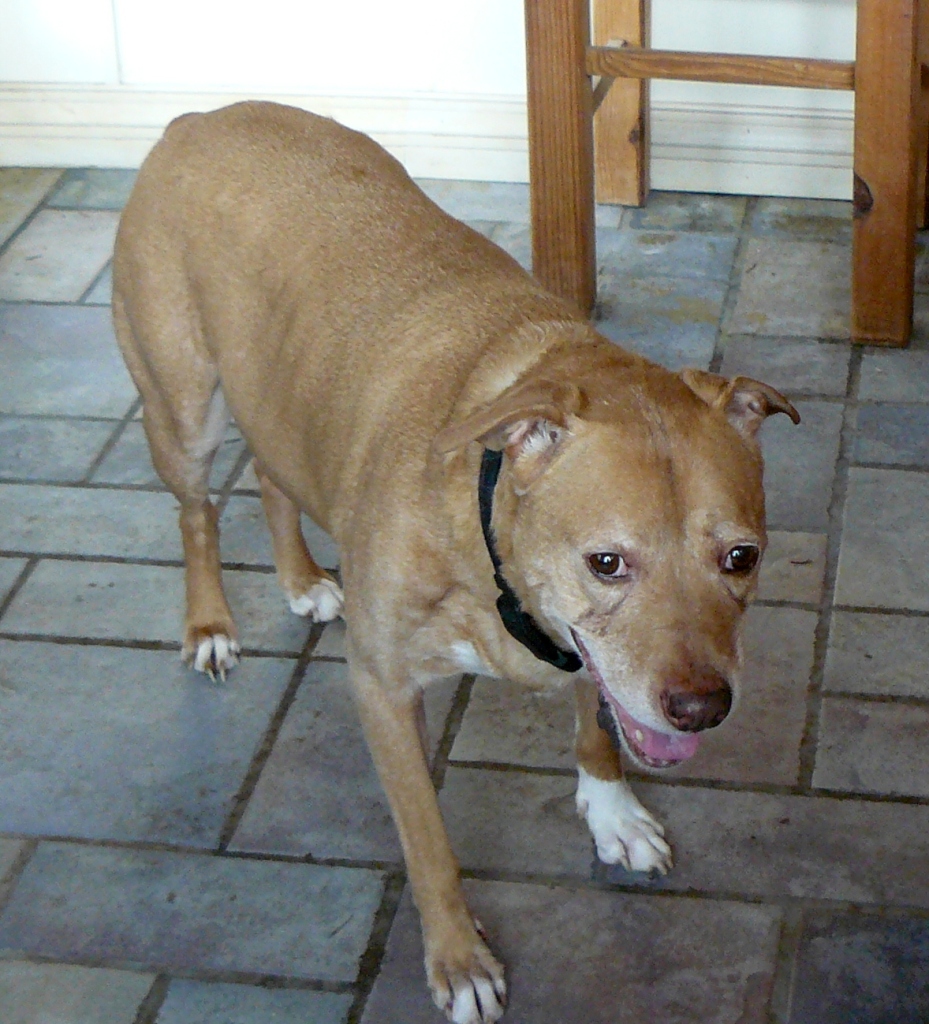
As many of you have gathered from my post on the 22nd. Casey was in a relatively stable situation. From that post:

For dear, sweet Casey he is facing a very long haul. Dr. Jim, our vet neighbour and close friend, recommended that Casey start taking a steroid and he is now on Prednisone.
p1160892

Indeed, Dr. Jim came by last Friday evening and said that even though there was little sign of a positive change in Casey’s condition it was still very early days.

Then on Saturday morning, when Jean went into the kitchen where Casey is with Ruby and Paloma, there had been an unexpected and sudden turn for the worse. For Casey could not adequately stand because his neck pain was too great and his front legs were giving way.

We rang immediately Southern Oregon Vet Specialty Center (SOVC) and they recommended that we take Casey straight there. SOVC operate 24-hours a day. Or in their words:

At Southern Oregon Veterinary Specialty Center, we understand the special bond between a pet and their human family. Our team of highly trained doctors, certified technicians and support staff partner with your family veterinarian to provide specialized diagnostics, surgery and emergency care for your pet upon a referral or emergency basis. Our clinic is staffed 24 hours-a-day, 7 days a week, to receive emergency cases and to monitor our critical care patients. The clinic’s board-certified veterinary specialists and staff are committed to providing exceptional compassionate care utilizing state-of-the-art technology and treatments.

The relationships we have with partner veterinarians are vital to the success of treating your pet. We will keep them apprised of the patient’s status to provide a smooth and cohesive experience.

SOVC had no doubt that we had done the right thing and that the pain meds we  were giving Casey Tramadol and two muscle-relaxers, just were not strong enough. Their prognosis was that Casey be admitted to SOVC so he could be given more appropriate pain control, via an IV, and that as soon as possible he be scanned using an MRI.
Luckily, not too far away from where SOVC are located, near Medford, there is a specialist animal imaging unit: Sage Veterinary Imaging:

About SVI

Sage Veterinary Imaging was founded in 2007 to provide the highest quality diagnostic imaging services to animals in the Southern Oregon area.  When I moved to the Rogue Valley, I was saddened to hear that animals needing advanced diagnostic imaging had to be driven hundreds of miles to get the care they needed.  Now we provide the only ACVR board-certified veterinary imaging services right here in Southern Oregon, serving patients from Redding, to Eugene.  Our administrative offices are located in Jacksonville and diagnostic services, including MRI, are provided in partnership with imaging centers in communities throughout Southern Oregon.

Even better, Dr. Jim knows Jamie Sage and speaks highly of her.

1505482Jaime Sage, is a veterinarian who is board-certified by the American College of Veterinary Radiology.  She holds a DVM from Texas A&M, an MS from The Ohio State University, and is licensed to practice in Oregon and California. Dr. Sage has issued reports for over 1,000 MRI studies in her career, and has personally performed nearly 100 onsite MRI procedures in Southern Oregon in just the past three years. Dr. Sage also works as a radiologist for MR Vets, founded by WSU Professor Emeritus Patrick R. Gavin, DVM, PhD, DACVR/RO, author of Practical Small Animal MRI, and one of the early pioneers in veterinary MRI.

Thus this morning, as in Monday morning Oregon time, SOVC will have the analysis from Jaime Sage followed by the surgical analysis by Dr. Steve Ferreira, the SOVC surgeon, who would conduct the surgery.

So more news just as soon as we have it.

Thank you all for your care and concern.

ooOOoo

UPDATE as at 12:40 PST

The surgeon, Steve Ferreira, called us to pass on the findings:

  • The MRI showed there to be several lesions that are not disc related,
  • There is an area of large compression, 50%-70% in some spots, in the lower cervical chord,
  • Separately, changes were noted in the C2 vertebra that suggested localised bone inflammation,
  • Lastly, there was an increased density pattern in the muscles associated with the cervix.

Dr. Steve said that the next step was to use a spinal tap to withdraw some spinal fluid. If it was cloudy that might indicate infection that could be treated with antibiotics. If the fluid was clear then it would be sent to an external lab for analysis. Possibilities include infection or cancer or an auto-immune issue, even possibly meningitis.

Apparently, surgery in that lower part of the spine would be very difficult to undertake. Likewise, removing a tumour that would simply regrow.

The cost of the anesthesia for the spinal tap, the insertion of the tap and the analysis would be in the order of several hundred dollars.

(Please accept that my understanding of what Dr. Steve said might not be 100% accurate. So use caution if any of this is relevant for your animal.)

ooOOoo

 UPDATE as at 17:20 PST

Steve Ferreira rang following the drawing of a sample of Casey’s spinal fluid.

  • The fluid “didn’t look too bad”, as in it was clear,
  • In other words, it was not immediately indicating an infectious disease, that would cause the fluid to appear cloudy,
  • Dr. F. will await further results from an external laboratory later this evening,
  • If both the white-cell count and proteins are more-or-less normal, then,
  • It will suggest that the problem is not an infection,
  • And, therefore, most probably related to a tumour on or around C6 where the MRI recorded the excessive compression,
  • Casey is comfortable owing to the strong pain medication being given to him via an IV.

Jean and I will be speaking with Dr. F. in the morning but it is more likely than not that Casey is terminally ill.

This post will, therefore, be updated in the morning.

UPDATE as at 08:40 Tuesday, 28th

Dr. Steve rang us at 08:30 this morning.

  • He started Casey on antibiotics yesterday evening in case the lab came back with evidence of infection in the spinal fluid, but,
  • The lab reported that the fluid was normal in terms of blood-cell counts and protein levels, therefore,
  • the probability is that Casey has a tumour,
  • or possibly an infection  inside the spinal column but outside the spinal fluid.
  • If such an infection, called an “empyema” then the degree of compression to the spine suggests it could be 3 to 4 weeks before Casey would be walking again.
  • More probable is that it is a tumour.
  • Casey is most definitely suffering and very miserable.

Jean and I then quickly, and very sadly, were of the opinion that Casey’s quality of life was too low for it to be fair to Casey for his life to be prolonged. We rang Dr. Steve back and asked that Casey be euthanised, cremated and that the ashes be returned to us.

In that return call, Dr. Steve quietly confirmed his support for our decision.

Casey will be very badly missed. I will be publishing an obituary tomorrow.

Thank you all for your friendship, love and caring!