I am indebted to neighbours Janet and Jim for sending these to me.
 oooo
oooo
 oooo
oooo
 oooo
oooo
 oooo
oooo
 oooo
oooo
 oooo
oooo
 oooo
oooo
 oooo
oooo
More of these next week.
Thanks Janet and Jim.
Dogs are animals of integrity. We have much to learn from them.
Year: 2017
I am indebted to neighbours Janet and Jim for sending these to me.
oooo
oooo
oooo
oooo
oooo
oooo
oooo
oooo
More of these next week.
Thanks Janet and Jim.
It has been a bit of a week weather-wise!
During the heavy rains this last week we had an oak tree come down in front of the house. Luckily not doing any collateral damage.
But cutting it up into rounds and then splitting them ready for the wood tent took up most of yesterday (and Michael and Stanley many thanks for your help).
For today’s post I wanted to share two photographs with you. Two very different views of the world as seen from our property.
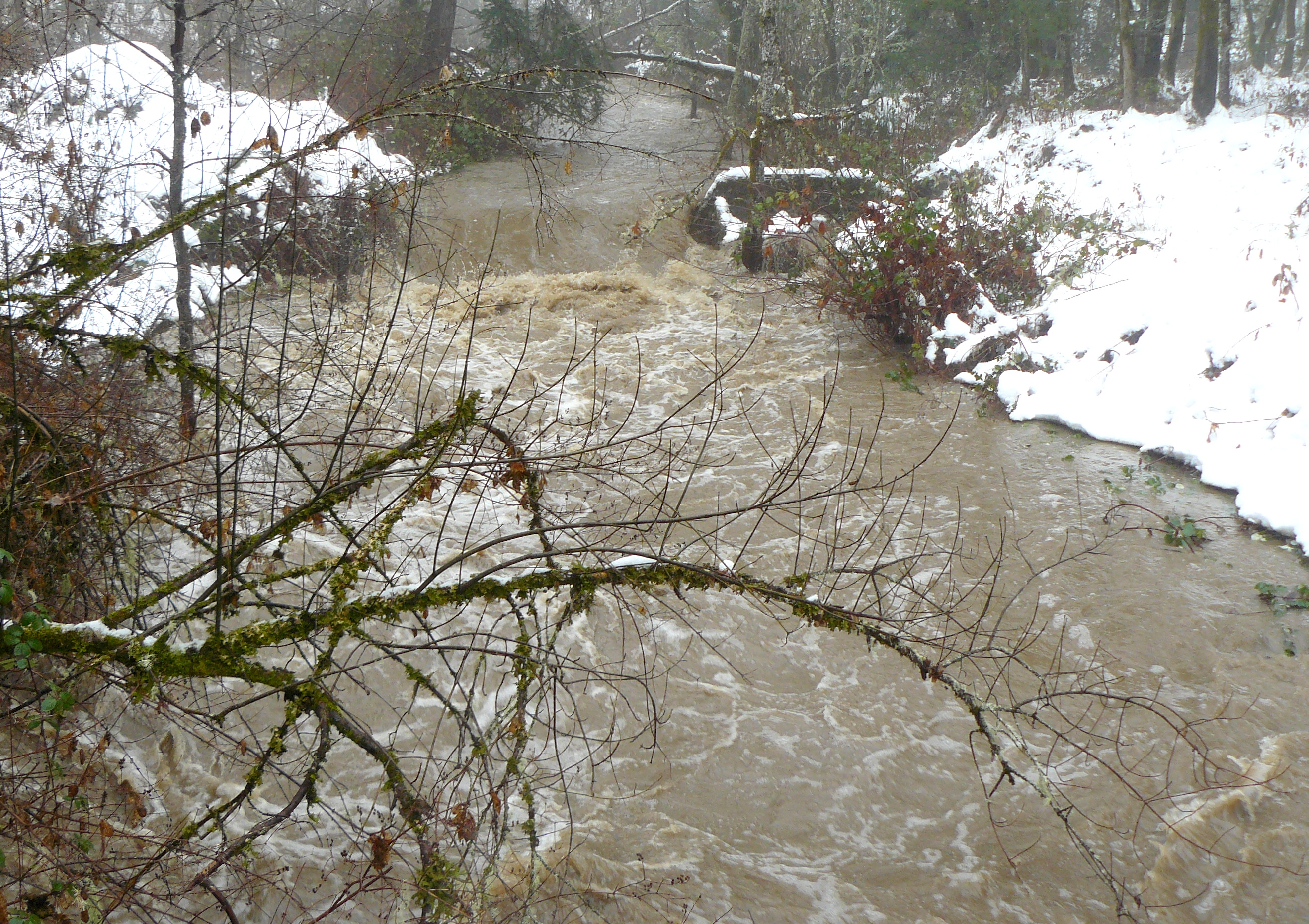 The first photograph above is of Bummer Creek that runs through our property. The view is upstream and the picture was taken last Sunday from our driveway bridge that crosses the creek. The flood waters were as high as we have ever seen them.
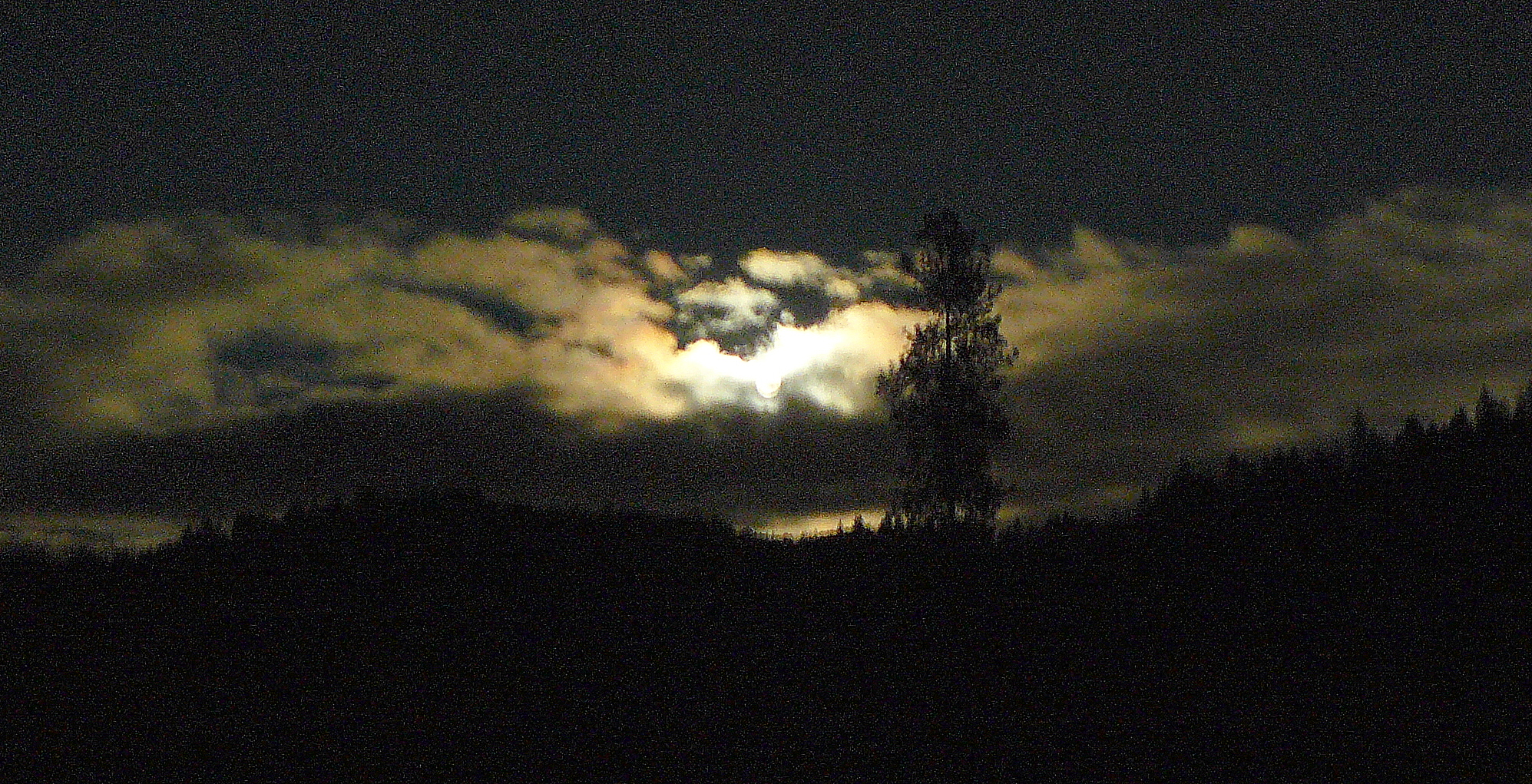 Please accept the slight fuzziness of the second photograph. But it is a shot of the full moon just as it appeared above the line of hills to the North-East. I dashed out to our deck and took the shot. Moments later the moon had been hidden by clouds. This was Thursday evening.
The picture doesn’t even get close to recording the magic of the dark night sky, stars shining so brightly, and the glorious full moon. Apparently a moon in orbit closer to planet Earth than is usual.
Nonetheless, the two photographs represent two very different and contrasting faces of our natural world.
You all have a very relaxing weekend.
Friday the 13th!
We are on course for a warm, sunny day. We were starting to wonder what they felt like!
But there’s never any question what the love of a dog feels like!
 I am now going to follow this image up with a video made in England by Sophie Hannah Richardson recording her experience of welcoming to her home a new puppy.
Enjoy (and please read my footnote!).
Say hello to Luna the french bulldog everyone! How cute is she?!
We’ve had our little Luna just over a month now and we absolutely adore her. She’s playful, loving and very sociable! And she’s slowly learning to love the camera!
Follow Luna’s adventure right here: https://www.instagram.com/luna_thefrenchbulldog/
Footnote: In the last couple of days the number of good people who are following this blog has gone over 2,000. I am truly lost for words and will just leave it like this: Thank you from the bottom of my heart!
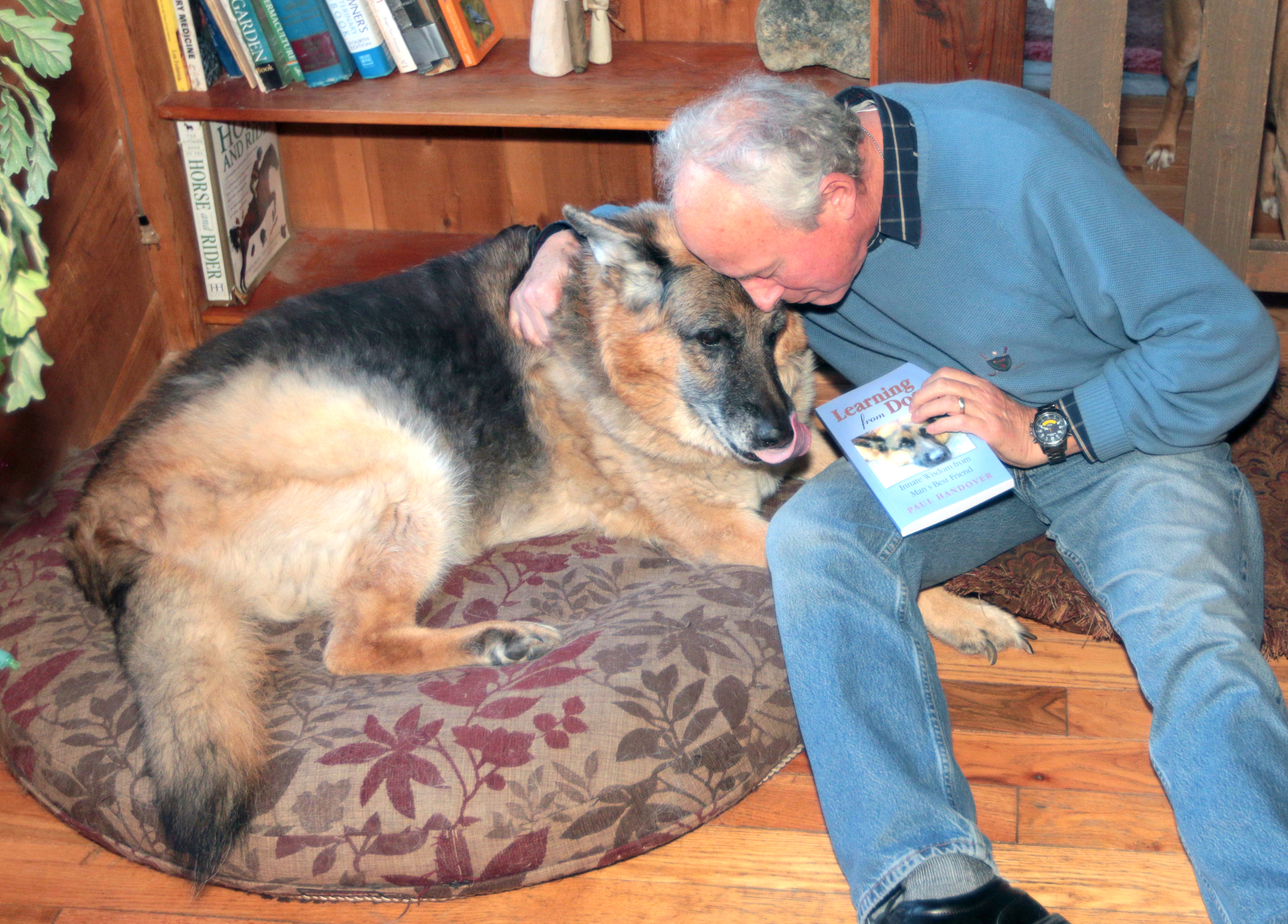
That is the language of love spoken by our beautiful dogs.
The present unreliability of our internet connection prompted me to think about re-posting whatever I had posted exactly a year ago. It only took me a minute to look it up and, bingo, what a perfect topic for these wintry days.
ooOOoo
As our dear dogs speak it.
You will recall that last Friday I featured an item under the title of Private First Class Lingo. The item had been brought to my attention by Constance Frankland.
Well here’s another really special story that Constance came across on a website called Arditor and I wanted to share it with you.
ooOOoo
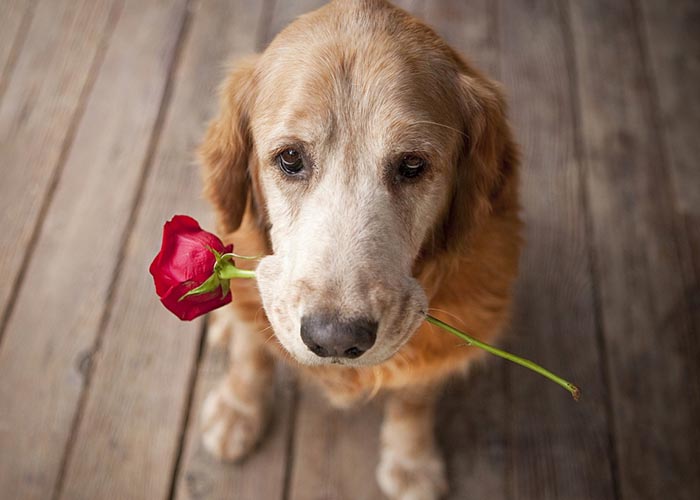 8 Ways Your Dog is Saying “I Love You“
Although dogs don’t speak our language, they are constantly trying to tell us that they love us and always showing love through their actions. Unfortunately, many shrug their shoulders or get annoyed over their dogs’ love gestures.
Here are 8 ways your dog is saying “I love you”…
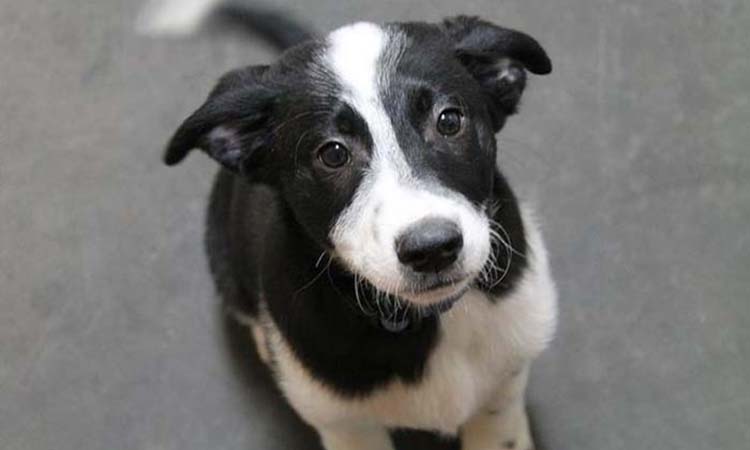 Tail Wagging
Similar to a cat, a dog’s tail is a communication tool. In fact it is sometimes more accurate in translating its emotions than barking. Held at different positions, a dog’s wag could communicate excitement, fear, threat or submission. If your dog’s tail is held in a relaxed position and wagging all together with its entire butt, it means it is very happy to see you.
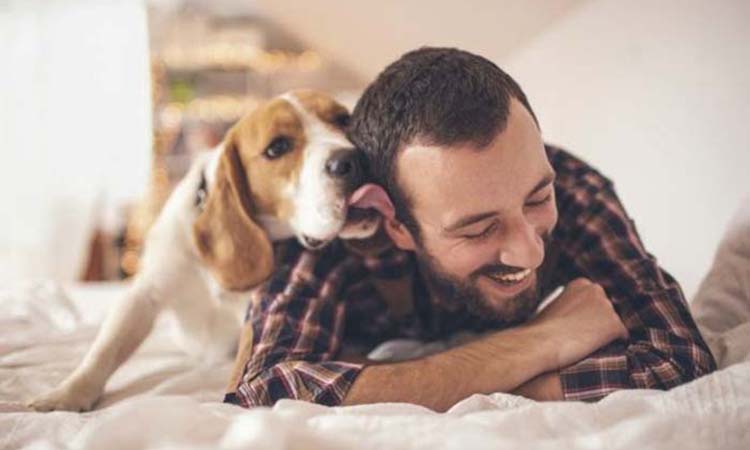 Face Licking
Warm, sticky, wet and stinky! We know this can get annoying but licking a person’s face is a love gesture from a dog. Dogs lick faces for a few reasons. Mainly, if your pet dog is licking your face, he is trying to groom you! Grooming is an intimate gesture only done after a strong connection is made between dogs (so now you know he sees you as one of his kind). On the other hand, if a stranger dog licks your face, it is simply trying to say that he is harmless and friendly.
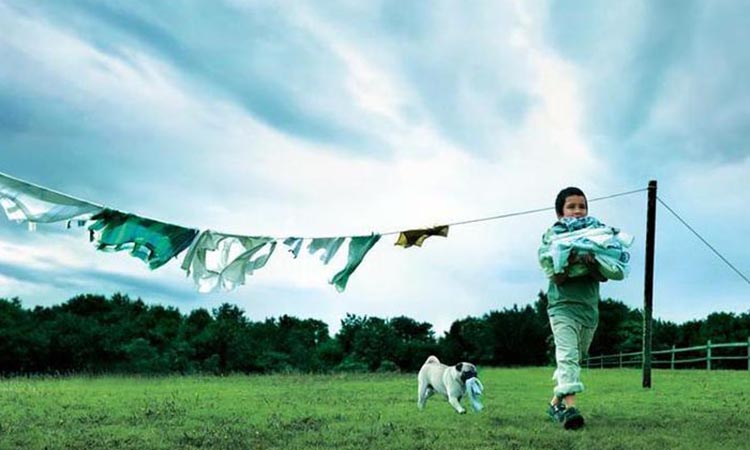 Following You Wherever You Go
This is another behaviour that can get on your nerves, especially when your dog attempts to follow you to work! However, it is only a dog’s way to show his love, devotion and loyalty to you. Wherever you are, that is where your dog wants to be. Dogs are extreme social creatures and unlike humans, there is no need for solitude.
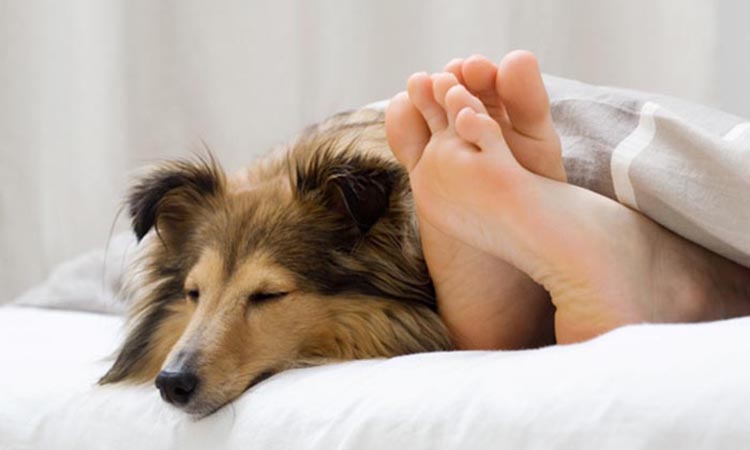 Sleeping with You
Similar to wild wolve packs, wild dogs curl up together to sleep in the night. Rather than sleeping alone in his designated corner, your dog prefers to snuggle right next to you in your bed. If you catch your dog sneaking onto your bed or falling asleep next to you in your couch, it implies that you are his family.
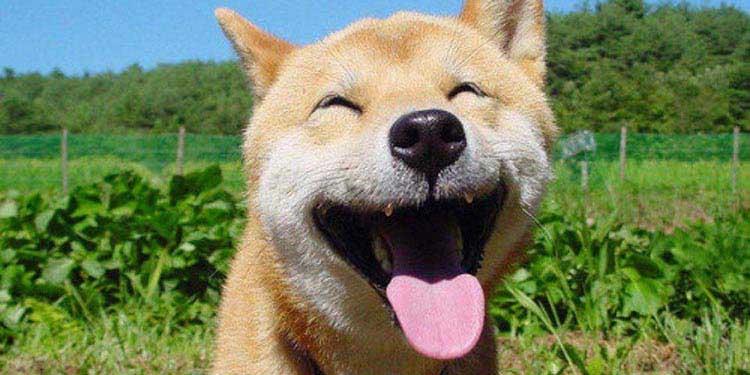 Smiling
It is no surprise when you see something like a smile on your dog. Dogs do smile too! Research has found that dogs can also show and use facial expressions similar to how humans do. A dog’s smile is another way of showing his love and joy to his owner. Having said that, most of us are guilty of not recognizing our dog’s smile.
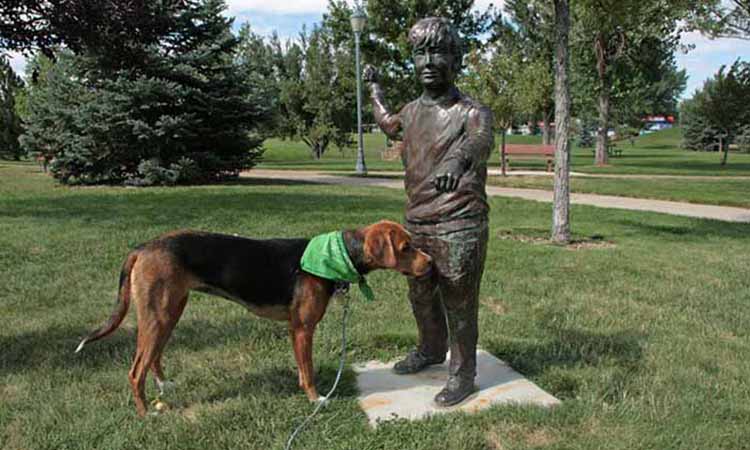 Crotch Sniffing
Argh, this is an embarrassing one and how we wished our dogs can quit going around sniffing crotches. But before you start screaming at your dog, try to understand it. This behaviour is in fact a dog’s perculiar way of greeting. More importantly, apart from a hello, it allows the dog to understand and remember you through your scent.
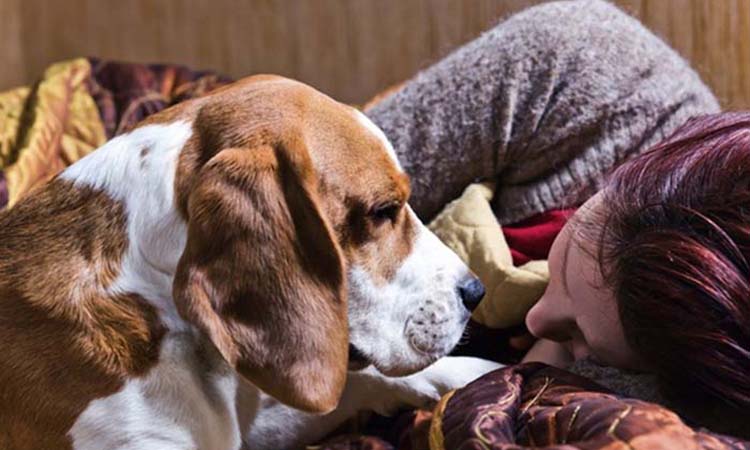 Taking Care of You When You are Sick
Does your dog stay by your bed and watch you the whole time while you are nursing a flu? This is its natural instinct to care for a sick or wounded family member, just as they would in the wild. A dog extends its love and care to its sick or injured owner by quietly and patiently watching over him/her. But make sure you hide any superficial wounds away from your dog! It might actually lick your wound as its form of first aid.
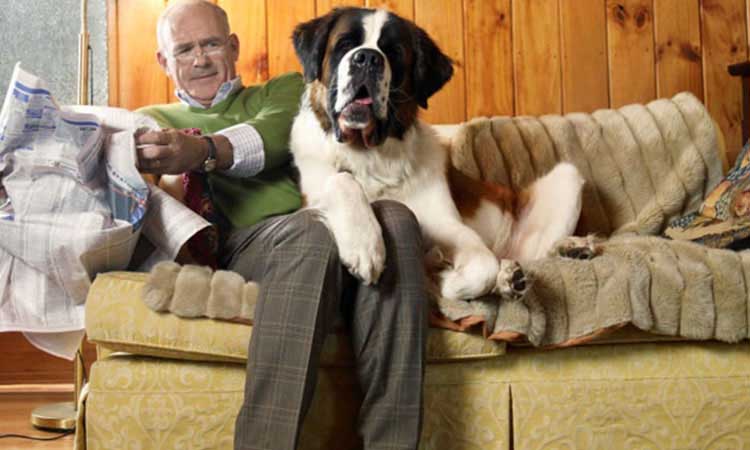 Leaning on You
Whether you are sitting or standing, your dog is leaning on you and wouldn’t budge. You can’t move and you can’t get on with your daily routine. While you are wondering what they are up to, your dog has already got what they needed: your attention. Getting your attention and giving you their attention by leaning on you is their way of showing affection. Next time this happens, stop what you are doing and reciprocate with some love.
oooooooo
This turned out to be more of a Sunday Picture Parade but it seemed too special to hold it from you until the weekend.
No, our dogs don’t speak a language that we humans would recognise as such but, nonetheless, our dogs communicate in ways that still are as magical and special as our human poetry.
Speaking of poetry, let me close today’s post with this.
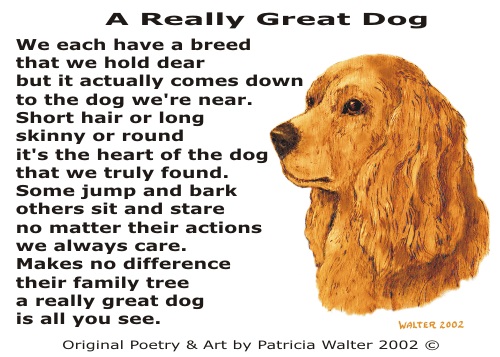 ooOOoo
Wherever you are in the world, with or without a dog in your life, please embrace the power of love.
More heavy snow brought down electricity power lines resulting in us losing power around 8pm on Monday evening.
The power was restored a little before midnight. In other words just over 5 hours ago.
Be back up to speed later on today, assuming there are no further outages.
Footnote at 06:20.
Our internet connection is very slow and I am not confident it will stay up.
The philosophy of hunting in terms of it being ‘right’ or ‘wrong’.
Anyone who comes here for more than a couple of visits will know that both Jean and I are opposed to hunting completely. Period!
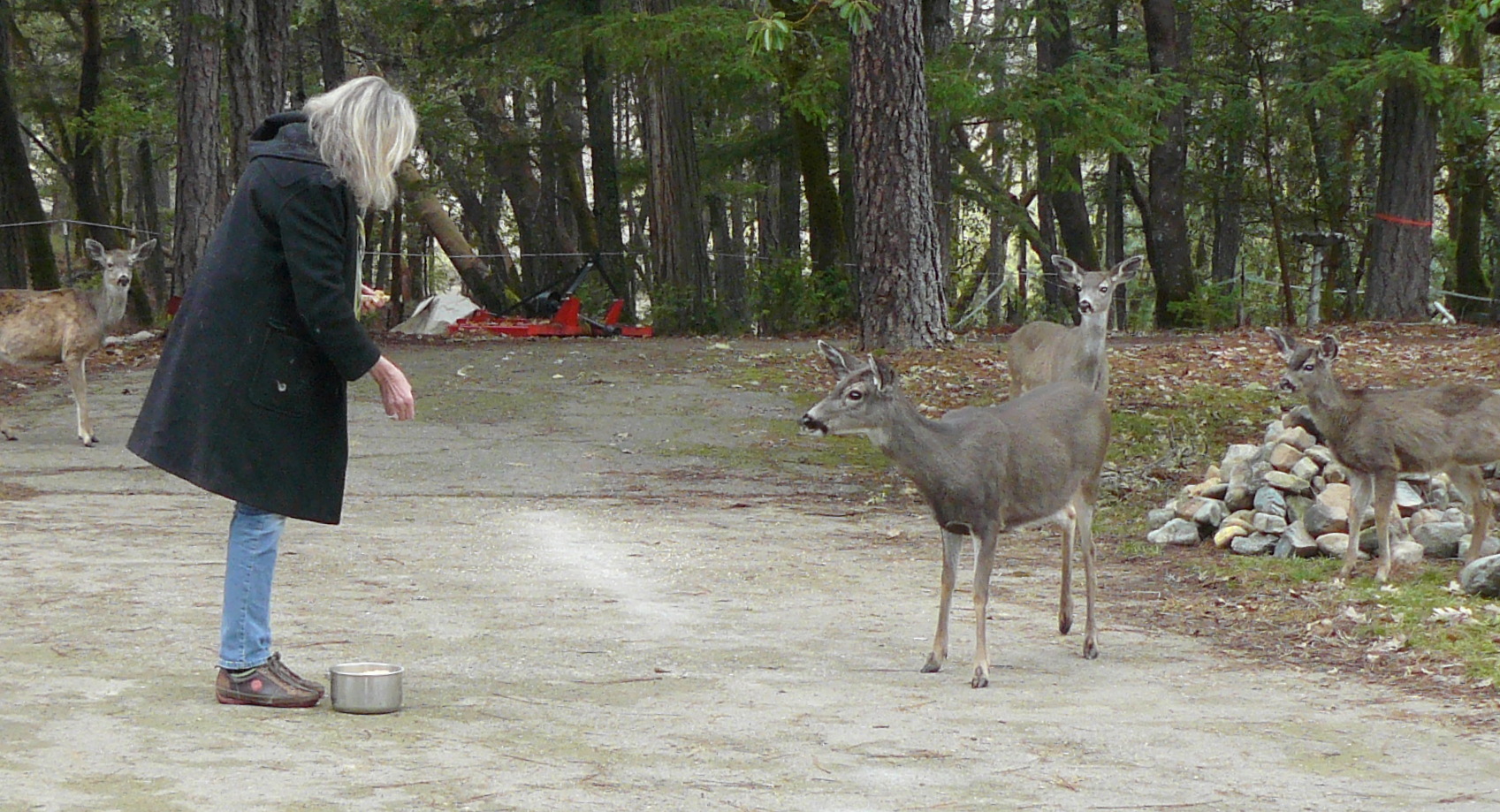
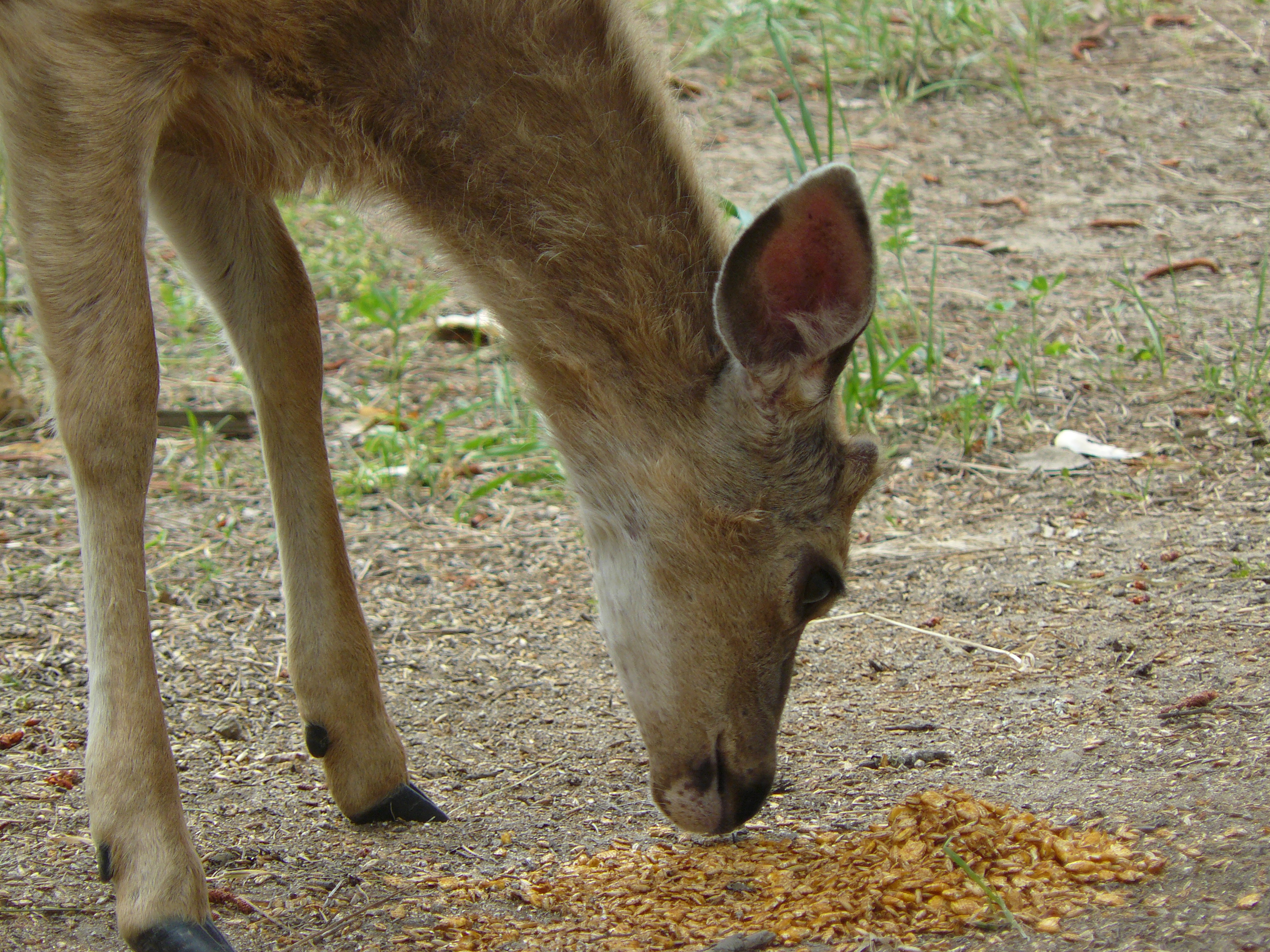
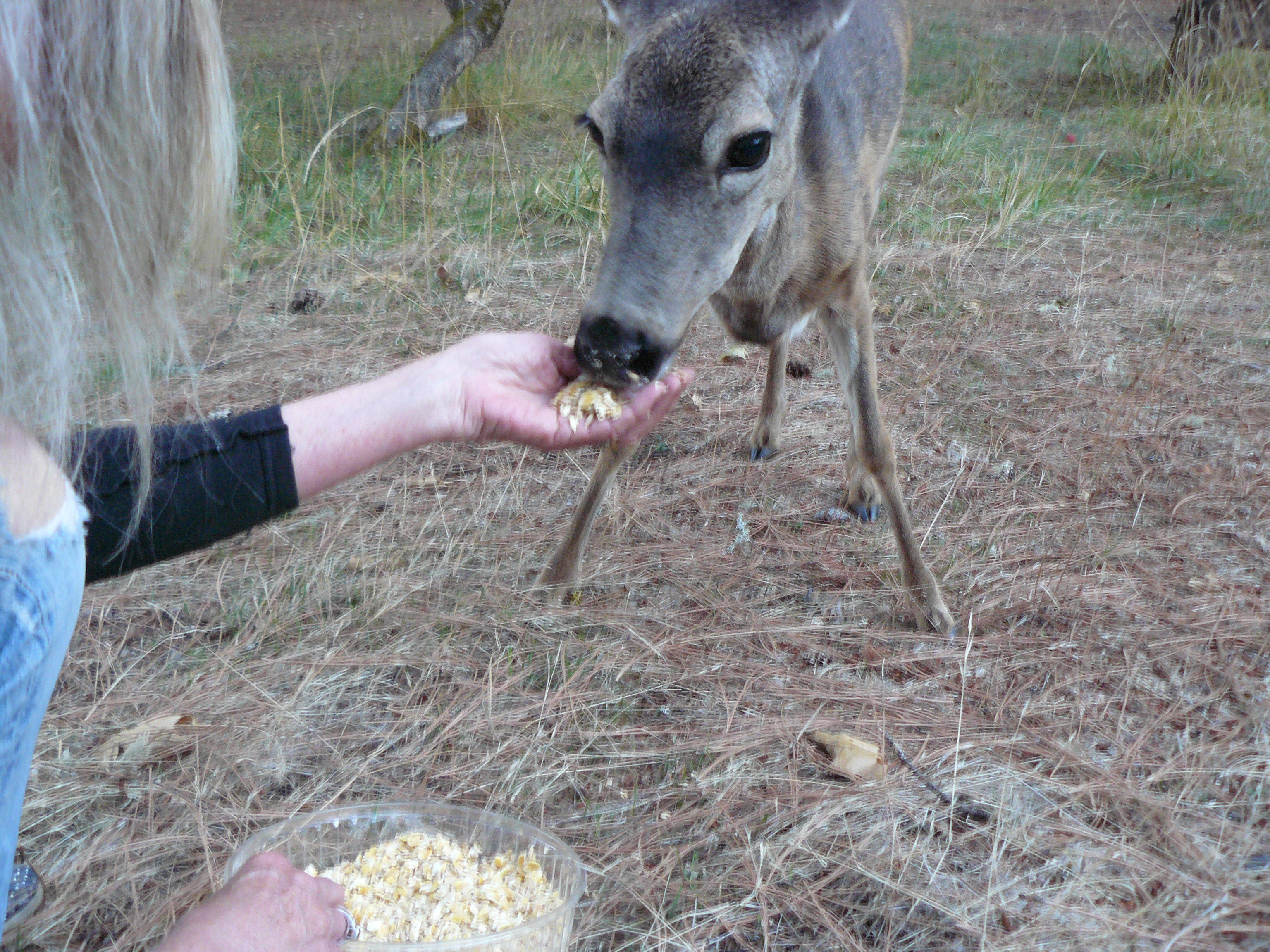
That’s not surprising as there have been a number of posts over the years describing how we feed the wild deer. Here’s three more photographs that haven’t previously been shared with you.
 oooo
oooo
 oooo
oooo
 But, of course, the opinions of Jean and me are not, and should not be, the rule for the wider population of this part of Oregon.
All I would ask is that there is a proper, mature discussion as to the pros and cons of hunting wild animals in this, the twenty-first century.
All of which leads me to a recent essay posted on The Conversation site and republished here within the terms of that site.
ooOOoo
January 4, 2017 8.37pm EST

Every year as daylight dwindles and trees go bare, debates arise over the morality of hunting. Hunters see the act of stalking and killing deer, ducks, moose and other quarry as humane, necessary and natural, and thus as ethical. Critics respond that hunting is a cruel and useless act that one should be ashamed to carry out.
As a nonhunter, I cannot say anything about what it feels like to shoot or trap an animal. But as a student of philosophy and ethics, I think philosophy can help us clarify, systematize and evaluate the arguments on both sides. And a better sense of the arguments can help us talk to people with whom we disagree.
One central question is why people choose to hunt. Environmental philosopher Gary Varner identifies three types of hunting: therapeutic, subsistence and sport. Each type is distinguished by the purpose it is meant to serve.
Therapeutic hunting involves intentionally killing wild animals in order to conserve another species or an entire ecosystem. In one example, Project Isabella, conservation groups hired marksmen to eradicate thousands of feral goats from several Galapagos islands between 1997 and 2006. The goats were overgrazing the islands, threatening the survival of endangered Galapagos tortoises and other species.
Subsistence hunting is intentionally killing wild animals to supply nourishment and material resources for humans. Agreements that allow Native American tribes to hunt whales are justified, in part, by the subsistence value the animals have for the people who hunt them.

In contrast, sport hunting refers to intentionally killing wild animals for enjoyment or fulfillment. Hunters who go after deer because they find the experience exhilarating, or because they want antlers to mount on the wall, are sport hunters.
These categories are not mutually exclusive. A hunter who stalks deer because he or she enjoys the experience and wants decorative antlers may also intend to consume the meat, make pants from the hide and help control local deer populations. The distinctions matter because objections to hunting can change depending on the type of hunting.
Critics often argue that hunting is immoral because it requires intentionally inflicting harm on innocent creatures. Even people who are not comfortable extending legal rights to beasts should acknowledge that many animals are sentient – that is, they have the capacity to suffer. If it is wrong to inflict unwanted pain and death on a sentient being, then it is wrong to hunt. I call this position “the objection from harm.”
If sound, the objection from harm would require advocates to oppose all three types of hunting, unless it can be shown that greater harm will befall the animal in question if it is not hunted – for example, if it will be doomed to slow winter starvation. Whether a hunter’s goal is a healthy ecosystem, a nutritious dinner or a personally fulfilling experience, the hunted animal experiences the same harm.
But if inflicting unwanted harm is necessarily wrong, then the source of the harm is irrelevant. Logically, anyone who commits to this position should also oppose predation among animals. When a lion kills a gazelle, it causes as much unwanted harm to the gazelle as any hunter would – far more, in fact.

Few people are willing to go this far. Instead, many critics propose what I call the “objection from unnecessary harm”: it is bad when a hunter shoots a lion, but not when a lion mauls a gazelle, because the lion needs to kill to survive.
Today it is hard to argue that human hunting is strictly necessary in the same way that hunting is necessary for animals. The objection from necessary harm holds that hunting is morally permissible only if it is necessary for the hunter’s survival. “Necessary” could refer to nutritional or ecological need, which would provide moral cover for subsistence and therapeutic hunting. But sport hunting, almost by definition, cannot be defended this way.
Sport hunting also is vulnerable to another critique that I call “the objection from character.” This argument holds that an act is contemptible not only because of the harm it produces, but because of what it reveals about the actor. Many observers find the derivation of pleasure from hunting to be morally repugnant.
In 2015, American dentist Walter Palmer found this out after his African trophy hunt resulted in the death of Cecil the lion. Killing Cecil did no significant ecological damage, and even without human intervention, only one in eight male lions survives to adulthood. It would seem that disgust with Palmer was at least as much a reaction to the person he was perceived to be – someone who pays money to kill majestic creatures – as to the harm he had done.
The hunters I know don’t put much stock in “the objection from character.” First, they point out that one can kill without having hunted and hunt without having killed. Indeed, some unlucky hunters go season after season without taking an animal. Second, they tell me that when a kill does occur, they feel a somber union with and respect for the natural world, not pleasure. Nonetheless, on some level the sport hunter enjoys the experience, and this is the heart of the objection.
In discussions about the morality of hunting, someone inevitably asserts that hunting is a natural activity since all preindustrial human societies engage in it to some degree, and therefore hunting can’t be immoral. But the concept of naturalness is unhelpful and ultimately irrelevant.
A very old moral idea, dating back to the Stoics of ancient Greece, urges us to strive to live in accordance with nature and do that which is natural. Belief in a connection between goodness and naturalness persists today in our use of the word “natural” to market products and lifestyles – often in highly misleading ways. Things that are natural are supposed to be good for us, but also morally good.
Setting aside the challenge of defining “nature” and “natural,” it is dangerous to assume that a thing is virtuous or morally permissible just because it is natural. HIV, earthquakes, Alzheimer’s disease and post-partum depression are all natural. And as The Onion has satirically noted, behaviors including rape, infanticide and the policy of might-makes-right are all present in the natural world.
Head-Smashed-In Buffalo Jump, a UNESCO World Heritage Site in Alberta, Canada, commemorates a place where indigenous peoples of the North American Plains killed buffalo for more than 6,000 years by driving them over a cliff.
There are many other moral questions associated with hunting. Does it matter whether hunters use bullets, arrows or snares? Is preserving a cultural tradition enough to justify hunting? And is it possible to oppose hunting while still eating farm-raised meat?
As a starting point, though, if you find yourself having one of these debates, first identify what kind of hunting you’re discussing. If your interlocutor objects to hunting, try to discover the basis for their objection. And I believe you should keep nature out of it.
Finally, try to argue with someone who takes a fundamentally different view. Confirmation bias – the unintentional act of confirming the beliefs we already have – is hard to overcome. The only antidote I know of is rational discourse with people whose confirmation bias runs contrary to my own.
ooOOoo
This is a very important essay from Joshua. Well done, that man!
I will just leave you all with this further image.

Best wishes to each of you; irrespective of your view on hunting!
 Learning from Dogs