Year: 2009

Banks are being paid to NOT LEND!

It’s a funny old world just now!

The President of the United States recently pressured the heads of the nations’ largest banks to increase lending to

Pres. Obama

small business and home-owners.  Obama claimed that the banks, as recipients of federal bailout funds, had an unusually heavy responsibility to take such measures in order to create more jobs and help nurse the economy back to health.  All of this was done very publicly and with much fanfare.  Worldwide press coverage was universally favorable.

Seems reasonable, doesn’t it?

But it is not.  You are being duped.  I can’t tell whether whoever writes this stuff for Obama knows the truth and skilfully skirts it, or just writes flowing prose with no connection to the truth that curries voter buy-in by blaming Wall Street and Corporate America for all that’s wrong in the world.

Read more of this Post

The Future of Video Stores

Economics in the real world!

Tim Clodfelter of the local Winston-Salem Journal wrote a very interesting piece on the future of brick-and-mortar

Tim Clodfelter

video stores and video rental places such as NetFlix and Red Hat.

I happened to be quoted in the article as an economist (the comment about “reducing the average cost every time we watch a purchased video” was supposed to be a joke!), but actually met up with Tim in my role as mom and pseudo-agent!  Let me explain.

My 15-year-old daughter was standing in a very long line of young ladies waiting to audition for the Coen Brother’s remake of True Grit. Tim was there to get the story on the open casting.  I asked him over hoping he would talk to my daughter.  He and I got to talking instead; he found out that I was an economics teacher, and pulled out his notes on the Video Store story.  He ended up talking to me and several other parents in line, all of whom had a different approach to viewing movies.  The resulting article follows with permission to publish on Learning from Dogs.

By Sherry Jarrell

Read the Video Store story

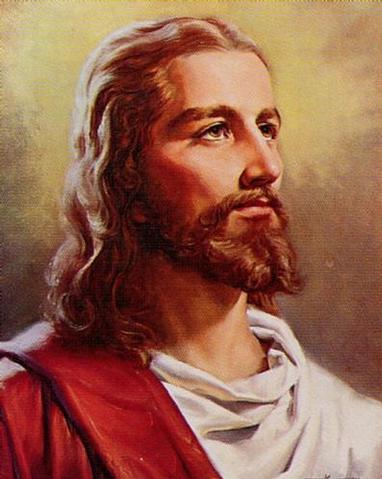
What Jesus means to me.

I was recently asked this question:

“If you don’t believe in God, why will you be celebrating the birth of his son on 25th December?”

This was my answer:

Christmas was, I believe, celebrated long before Christ appeared. But quite apart from that, the story of Christ is totally and absolutely wonderful and inspirational. He is a sublime role model. He encapsulates all that is most pure and admirable about the human spirit.

Role model

He understood our frailty and did not condemn us for it but tried to show us a better way through his own example. He shied not from difficult questions, but always spoke what I take to be “the truth”, and he taught it with astonishing examples, in particular through his own actions and relations with others, friends or strangers.

He was not greedy or selfish in any way; he truly loved people and treated them all as his beloved brothers.

Personally, I love Jesus and I am more than happy to celebrate his life, to remember how remarkable he was, to get once more inspiration from his selflessness, purity and love for his fellow men. I celebrate his life also for his ability to inspire others to to write such wonderful stories, even if all are not totally true (who knows?).

Sadly, it’s just the extra-terrestrial bit that is a problem. But I can celebrate his life without that, can’t I?

I wish there were a God, that he’d sort the mess out, that he’d end our pain, that he’d speak to me. I wish this quite deeply. But that doesn’t mean I should invent him if he isn’t there, does it?

What IS completely clear to me is that if we could all follow Jesus’ example, (which can be summed up in the sublime message “Love thy neighbour as thyself.”) then we would indeed enjoy “Heaven on Earth”. That would be more than enough to be going on with ….

Does that answer your question?

By Chris Snuggs

The Singular Importance of Good Writing

“The time to begin writing an article is when you have finished it to your satisfaction.  By that time you begin to clearly and logically perceive what it is you really want to say.” ~Mark Twain

It is a bit intimidating to try to write a piece on the importance of good writing.  I feel self-conscious about my writing as I write about good writing.  After all, a post on good writing should be written especially well. Then again, maybe a poorly written post will do even more to illustrate the importance of good writing. I will have to leave that up to you, the reader.

I have been teaching graduate and undergraduate students for over twenty years now. I have read and graded thousands of papers and essays during that time. I can count on two hands the number that were exceptionally well written.  In each case, I sought out the students to compliment their writing, and to encourage them to keep honing their writing skills.

I doubt my words of encouragement had much effect.  This, I know from personal experience.

Years ago, in my third year of graduate school, I got a paper back from a professor with the words “You write well” written in the margin.  I was crushed.  I had worked so hard on that paper: reviewing the existing literature, developing the research design, and trying to make a substantive contribution to my field.  I yearned to hear something tangible about the quality of the research, the cleverness of the method, or the importance of the findings.  Instead, I got “you write well.” I honestly thought that the professor had said that because he couldn’t think of anything positive to say about the content of the paper.

Years later, something happened that made me realize how wrong I was.  I had taken a teaching job at Southern Methodist University in Dallas, Texas, even though I had yet to defend my doctoral thesis; it’s called “ABD,” or “all but

Merton Miller

dissertation.”  I had traveled to Chicago to meet with Merton Miller, my thesis chairman, about polishing up my dissertation and scheduling the defense.  As I waited outside his office door, I couldn’t help but notice how distracted Professor Miller seemed. He had always stood at a tall wooden lectern to write, but this day he paced to and from that lectern, rubbing his head, adjusting his shirt sleeves, writing, erasing, then erasing some more.

He was at the lectern when I entered his office for our meeting. I congratulated him again for winning the first Nobel Prize in financial economics and asked him about the upcoming trip to Stockholm.  He was taking his wife and daughters on the trip, who were very excited. He, on the other hand, was not ready for the trip.  He was worried, he said, because he was not going to have sufficient time to revise his acceptance speech.   He had only edited it seven times thus far, and his magic number was eight.  Not six, not seven, but eight rewrites were what he needed to be satisfied with his writing.

Professor Miller was known as one of the most gifted writers in all of economics.  His writing was disarmingly simple and clear. It flowed like a piece of music. It seemed effortless.  Everyone, myself included, assumed that he was just a naturally talented writer, lucky to have been blessed with that skill. Everyone was wrong.  I learned that day that Professor Miller worked hard at writing well.  He was well into his 60’s, had written hundreds of articles and had won the Nobel Prize, but he was still working at writing well.

Then I remembered the comment that a teacher had written in the margin of my paper years earlier. The teacher was Merton Miller.  And now I knew how much it really meant, coming from him.   So now when I see the rare student who writes really well, I make it a point to tell them.  Not that it means as much coming from me as it did coming from Professor Miller.  But it still means something, because good writing is very important, and it’s worth working for.

By Sherry Jarrell

Dark Matter

Not really understanding but knowing it’s important!

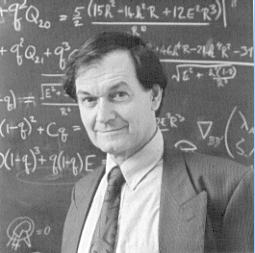
I recently read a glowing review of the latest book by Sir Roger Penrose, the eminent mathematical physicist, called The Road To Reality. Having previously read his book The Emperors’ New Mind and just understanding it, I thought

Roger Penrose

his next one would be a welcome companion for long winter evenings.  Wrong!

I managed to the bottom of the third page of the preface before “According to the mathematician’s “equivalence class” notion …..” had me grasping for meaning.  Well over a 1,000 pages of content was destined to gather dust on the bookshelf.

But wrong again!

The idea of matter out there in the universe that is essential to the universe as we know it but is unseen has been sufficiently fascinating for the popular media to refer to it from time to time.  Most people are familiar with the term even if like me don’t really have a clue as to what dark matter is all about.

So a recent press release in a popular English newspaper suggesting that dark matter has been ‘discovered’, if discover is the appropriate term, had me reaching out for Penrose’s book again.  There under the chapter headed Speculative theories of the early universe was, on page 773, a few sentences that almost made sense.  Let me quote them:

For many years, it had become clear that the dynamics of stars within galaxies does not make sense, according to standard theory unless there is a good deal of more material in the neighbourhood of the galaxy than is directly seen in stars.  A similar comment applies to the dynamics of individual galaxies within clusters.  Overall, there seems to be about 10 times more matter than is perceived in ordinary baryonic form.  This is the mysterious dark matter whose actual nature is still not agreed upon by astronomers, and which may even be of some material different from any that is definitely known to particle physicists – though there is much speculation about this at the present time.

Read more about Dark Matter

Fractional Reserves of the U.S. Banking System Explained

What are Fractional Reserves?

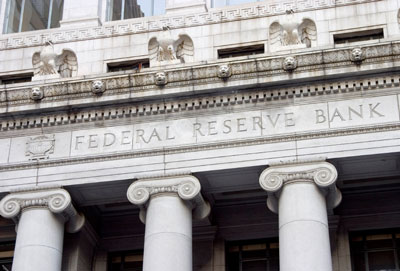
The US Federal Reserve, or Central Bank, is the banking system’s bank. It is the lender of last resort.

It is through the Central Bank that banks settle their accounts with each other. The central bank serves as a clearinghouse for checks written by depositors, and it holds the commercial banks’ reserves.

Bank reserves (vault cash, and deposits by banks at the Central Bank or the Fed) are monies held out of circulation by banks to satisfy the Fed’s reserve requirements and the currency demand by the public. Excess reserves are those held above the legal reserve requirements to handle uncertain demand.  Bank deposits not held in (required plus excess) reserves are used to make loans and earn interest.

When banks make loans, they do not actually lend out the equivalent in cash but instead create on their balance sheet a loan asset and an equal liability called a demand deposit.  Such lending by banks is limited only by reserve requirements (set by the Fed) and the cash they need to satisfy cash withdrawal demand by their customers.

As these loans are then re-deposited by the borrower, the multiplier process continues as fractional reserves are held back and the balance is “lent” out again.

By Sherry Jarrell

“Don’t worry, it’s only an old man!”

A passer by invokes a lesson for us all.

.

Recently while busy in the garden our two dogs started barking. This in itself is not unusual because they sit at the front gate waiting for passers by to stop and talk to them. It can be a horse, or cyclist that sometimes causes them to bark, and our children have grown to show the same awareness as the dogs in who is passing.  I didn’t see the cause this time but our young daughter did.

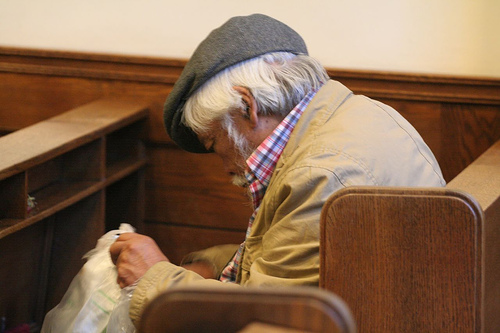
Don’t worry, Daddy, it’s only an old man!

Stephanie is only 8 years old, but without meaning any harm had given sufficient information to explain the risk to us and paint a quick picture in a few words as to why the dogs were barking.

Of late for some reason I have been more aware of people who are ageing. This generation do not normally stand around telling stories, this is left to the young who always seem to have something to shout about.

However all older people will have many interesting tales, often almost unbelievable, yet true. They have lived through war, happy, sad, interesting, and hard times. Each has learnt about life through experience that we can not buy.

Recently my ex Mother-in-law passed away. I thought I knew her very well, but it wasn’t until family stories started coming out that we all found out there had been much more in the life of this modest lady.

How it should be.

Christmas is coming and probably there will be family gatherings. This year I am going to try and turn the attention to the older generation, and see if they will open up and give us an insight into their childhood days and memories so that we can give them the respect they deserve, ask them to read stories to the children, ask them to tell their own tales.

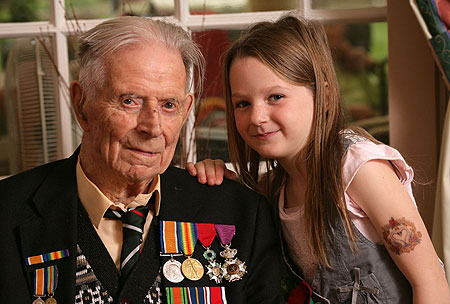
Oh and the old man? Yes I did see him again, in church at a Remembrance service, and he had some medals under his coat, so did have a story to tell!

By Bob Derham

Parenting the Government

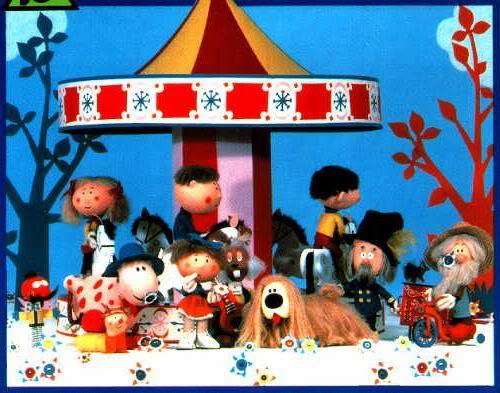
Governments version of the Magic Roundabout.

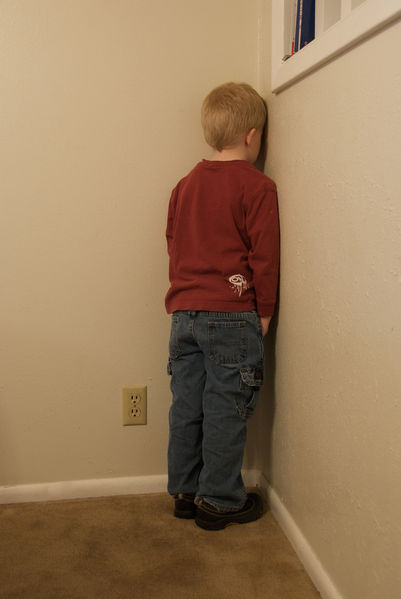
Okay. If you tried this ploy on your parents, you wouldn’t get away with it.  If your kids tried it on you, you wouldn’t fall for it either.  So why are the American people letting the Government get away with this ploy?  I don’t know. And I don’t get it.  Maybe there is just so much going on that it gets lost in the mix. Maybe it’s because of the deceptive and disingenuous way it’s being presented by Pelosi, Reid, and Obama.

Here’s the ruse:  “Give us more of your money today, and we will reduce tomorrow’s health care costs. We will increase efficiency.  And we will do all of this without increasing the budget deficit!”

Yeah, right.

What exactly is stopping them from reducing health care costs and improving the efficiency of health care delivery now? Why do they need more money today to accomplish these things tomorrow? What magical powers does the next dollar of tax collections have that the current ones don’t?

Exactly.  None.  So when Congress asks to increase taxes and the deficit in order to fix health care tomorrow, let’s respond to them as we would our clever but errant children: Ask to see some proof today first.

You know how that will turn out. And so does Congress.  That’s why they just keep promising the moon.  What I don’t get is why we continue to let them get away with it.

[Not just the US Government plays on the roundabout – I’m sure they learnt from the Brits! Ed.]

By Sherry Jarrell

Crimes and accidents: the extent of responsibility

How bad can a car accident be?

On 28 February 2001 a vehicle came off the M62 motorway at Great Heck, near Selby, [North Yorkshire, England. Ed] ran down the railway embankment and onto the East Coast Main Line, where it was struck by a passenger train. The passenger train was derailed and then struck by a freight train travelling in the opposite direction. 6 passengers and 4 staff on the trains were killed. The driver of the vehicle was found guilty of causing the deaths of 10 people by dangerous driving.

So begins the report “Managing the accidental obstruction of the railway by road vehicles” from the UK Department for Transport (DfT).

If you were aware of this incident at the time, you might remember that it attracted considerable discussion and press coverage, here are  some examples.

At the time,  a variety of causes were cited for the accident and for the failure of various mechanisms to prevent the accident.

“Whose fault was it?”

Most of the discussion seemed to be based on trying to find someone to blame for everything that happened and the main target was the driver of the vehicle who was alleged to have been driving while unfit to drive due to lack of sleep, and to have fallen asleep at the wheel.

However, I thought that the public response to the incident was a matter of considerable concern; and I continue to think so.

Clearly people can expect to be held responsible for their actions. When their action or lack of action causes damage, they can expect to be held responsible for that damage. However, there are surely limits to that responsibility.

Also, it is interesting that this incident was described at the beginning of the DfT report which was otherwise entirely about ways of reducing incursion of road vehicles onto railways. So, if it is accepted that insufficient fences, banks, ditches or other obstructions had been provided, the implication is that the motorist could expect some protection to exist and is therefore not wholly responsible for the consequences of it not existing.

Level of responsibility

If, as alleged, the driver was unfit to drive then he can expect to be held responsible for his actions. But, in much of the discussion about this incident, there was very little importance attached to the issue that the probability was infinitesimally small that he would fall asleep at exactly the location which resulted in his vehicle entering a railway line, and at the time when not one but two trains were about to pass that point. I would hazard a guess that he could not have planned it so accurately if he had intended to cause the incident!

Having, by extremely bad lack, ended up on a railway line and before the railway collision occurred, he was aware of the danger of collision and was already using this mobile phone to attempt to warn the authorities of the situation. But even if he had been injured and unable to warn anyone, to what extent was he responsible for the full range of consequences of this extremely unlikely incident?

According to one of the press reports:

The HSE report described the accident as ‘wholly exceptional’ and concluded: ‘There was nothing the railway industry could reasonably have done to prevent the collisions.’

Chief Inspector of Railways Vic Coleman said: ‘It’s clear that the chain of events that led to this catastrophe were determined by sheer chance.’

The DfT report, and the fact that the work to generate it was instigated, suggests that the Department for Transport did not agree with the Health and Safety Executive (HSE) that there ‘There was nothing the railway industry could reasonably have done to prevent the collisions.’

Distinguishing the criminal from the accident elements

How do we distinguish crimes from accidents? In particular, in complex incidents such as this, how do we distinguish the criminal elements from the accidental elements of an incident?

In my opinion, there is no benefit in penalising, or even reprimanding, people for actions which led to consequences which either they were completely unable to foresee or which were so improbable as to be bordering on fantasy. On the contrary, it is an opportunity to learn more about the consequences of one’s actions; this can be a positive process of extending one’s understanding, rather than a negative process of “not doing that again”.

In particular, in cases like the Selby incident, clearly someone should be penalised if it is determined that they were driving dangerously; but it seems to me that the severity of the penalty should be based on the severity of crime, which relates to the severity of the likely consequences of their actions and, presumably, whether this is a recurrence of this or other offences.

It also seems to me that the severity of crime is largely independent of the actual consequences of the incident. In other words, someone should expect to be penalised just as severely when there were no consequences as when there were.

I understand that many people would like to find someone to blame for all damage which occurs. But is this reasonable? There are, after all, such things as accidents!

Our blame culture

My view is not that held by the authorities, at least not in the UK. The sentencing guidelines of the Crown Prosecution Service in cases of dangerous driving take the view that the consequences are relevant.

As is probably apparent, I respectfully disagree. This blame culture does not, in my view, serve any purpose and may even reduce safety. Safety experts in the aviation industry seem to take a completely different view from that in the motoring world and reap the long term benefits of improved safety as a consequence.

You may take a different view!

By John Lewis

The Poor Pay Czar

Pity the poor Czar.

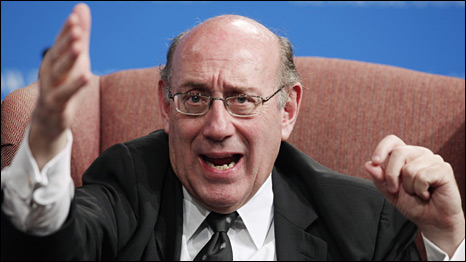
Kenneth Feinberg, pay czar

The US poor pay czar is lamenting his task: how to limit the pay of executives at companies receiving a bailout without undercutting the ability of the firm to secure talented management.  “It’s a delicate balance!  Very difficult indeed.”  Well, Mr. Czar, difficult for you, maybe, but a piece of cake for the labor market.  That’s exactly what the labor market does, day in and day out, quite naturally.

Compensation should not be the purview of an appointed administrator serving at the pleasure of the executive branch of the U.S. Government.

By Sherry Jarrell

[Market forces difficult to stamp on. Ed.]