A fascinating article!
I may be the wrong side of old but I still enjoy immensely the process of learning new things. Some of these new memories actually stay with me!
That is why it gives me great pleasure in republishing an article from The Conversation about our brains creating new memories.
ooOOoo
How does your brain create new memories? Neuroscientists discover ‘rules’ for how neurons encode new information
William Wright, University of California, San Diego and Takaki Komiyama, University of California, San Diego
Every day, people are constantly learning and forming new memories. When you pick up a new hobby, try a recipe a friend recommended or read the latest world news, your brain stores many of these memories for years or decades.
But how does your brain achieve this incredible feat?
In our newly published research in the journal Science, we have identified some of the “rules” the brain uses to learn.
Learning in the brain
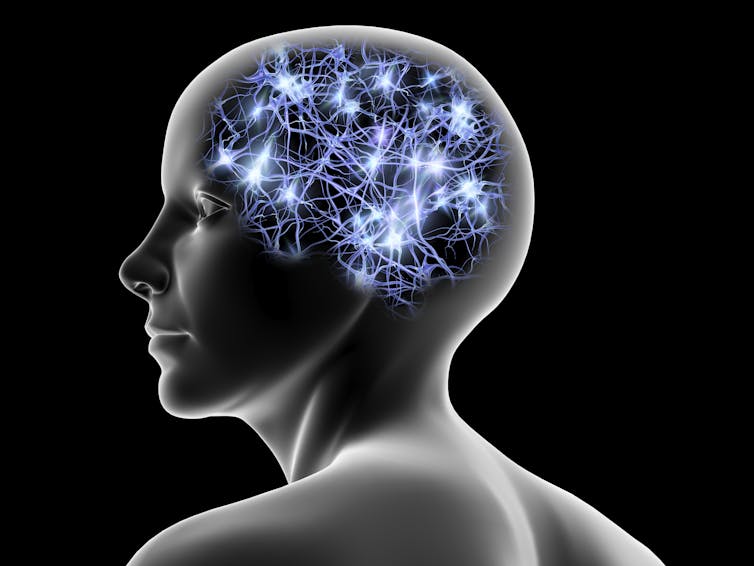
The human brain is made up of billions of nerve cells. These neurons conduct electrical pulses that carry information, much like how computers use binary code to carry data.
These electrical pulses are communicated with other neurons through connections between them called synapses. Individual neurons have branching extensions known as dendrites that can receive thousands of electrical inputs from other cells. Dendrites transmit these inputs to the main body of the neuron, where it then integrates all these signals to generate its own electrical pulses.
It is the collective activity of these electrical pulses across specific groups of neurons that form the representations of different information and experiences within the brain.

For decades, neuroscientists have thought that the brain learns by changing how neurons are connected to one another. As new information and experiences alter how neurons communicate with each other and change their collective activity patterns, some synaptic connections are made stronger while others are made weaker. This process of synaptic plasticity is what produces representations of new information and experiences within your brain.
In order for your brain to produce the correct representations during learning, however, the right synaptic connections must undergo the right changes at the right time. The “rules” that your brain uses to select which synapses to change during learning – what neuroscientists call the credit assignment problem – have remained largely unclear.
Defining the rules
We decided to monitor the activity of individual synaptic connections within the brain during learning to see whether we could identify activity patterns that determine which connections would get stronger or weaker.
To do this, we genetically encoded biosensors in the neurons of mice that would light up in response to synaptic and neural activity. We monitored this activity in real time as the mice learned a task that involved pressing a lever to a certain position after a sound cue in order to receive water.
We were surprised to find that the synapses on a neuron don’t all follow the same rule. For example, scientists have often thought that neurons follow what are called Hebbian rules, where neurons that consistently fire together, wire together. Instead, we saw that synapses on different locations of dendrites of the same neuron followed different rules to determine whether connections got stronger or weaker. Some synapses adhered to the traditional Hebbian rule where neurons that consistently fire together strengthen their connections. Other synapses did something different and completely independent of the neuron’s activity.
Our findings suggest that neurons, by simultaneously using two different sets of rules for learning across different groups of synapses, rather than a single uniform rule, can more precisely tune the different types of inputs they receive to appropriately represent new information in the brain.
In other words, by following different rules in the process of learning, neurons can multitask and perform multiple functions in parallel.
Future applications
This discovery provides a clearer understanding of how the connections between neurons change during learning. Given that most brain disorders, including degenerative and psychiatric conditions, involve some form of malfunctioning synapses, this has potentially important implications for human health and society.
For example, depression may develop from an excessive weakening of the synaptic connections within certain areas of the brain that make it harder to experience pleasure. By understanding how synaptic plasticity normally operates, scientists may be able to better understand what goes wrong in depression and then develop therapies to more effectively treat it.

These findings may also have implications for artificial intelligence. The artificial neural networks underlying AI have largely been inspired by how the brain works. However, the learning rules researchers use to update the connections within the networks and train the models are usually uniform and also not biologically plausible. Our research may provide insights into how to develop more biologically realistic AI models that are more efficient, have better performance, or both.
There is still a long way to go before we can use this information to develop new therapies for human brain disorders. While we found that synaptic connections on different groups of dendrites use different learning rules, we don’t know exactly why or how. In addition, while the ability of neurons to simultaneously use multiple learning methods increases their capacity to encode information, what other properties this may give them isn’t yet clear.
Future research will hopefully answer these questions and further our understanding of how the brain learns.
William Wright, Postdoctoral Scholar in Neurobiology, University of California, San Diego and Takaki Komiyama, Professor of Neurobiology, University of California, San Diego
This article is republished from The Conversation under a Creative Commons license. Read the original article.
ooOOoo
Our human brains are incredible. Billions of nerve cells. Yet we are still getting to know the science of our brains and as that last sentence was written: “Future research will hopefully answer these questions and further our understanding of how the brain learns.”
Roll on this future research.
 Learning from Dogs
Very interesting article. I’ll read in depth shortly. Hope you are all doing well.
LikeLike
Thanks Marlene. One can’t imagine our brains with their billions of nerve cells, well from a non-professional point of view, but the research will, presumably, come across a cure for such diseases as Parkinson’s and other neurological disorders.
LikeLiked by 1 person
I know that CRISPER Gene editing scientists are working on those things first. They just aren’t fast enough. One of my neighbors has Parkinson”s and I’ve known others with it. My son has always been concerned about it because he has hand tremors. It’s another one of those really unkind illnesses.Crossing my fingers here.
LikeLike
Thank you, Marlene. My fingers are too very tightly crossed but I suspect that I will have died before a cure for Parkinson’s is available to those who require it.
LikeLike
Dear Paul! Thanks for pointing out this fascinating article! (I have a life subscription to Science, but still miss many interesting articles).
***
Are We Realizing The Full Human Neurobiological Potential?
Or are we understimulating our neurobiology, thus causing deep pathologies?
Neural network research, as presently implemented in AI, assumed that the nodes were simple. However, it has long been known that neurons are IMMENSELY complex. The interaction structures of neurons do not reduce to a single axon. They have thousands of dendrites, themselves so very complex. that they are nonlinear computers, all by themselves.
It is also philosophically certain that each neuron is a QUANTUM COMPUTER. We have zero idea how that could work out…but room temperature Quantum Computers are now known to be feasible, using plain old quantum optics! Consciousness no doubt arises that way. The Quantum.
***
One of the fundamental simplifications in artificial neural networks (ANNs):
When neural networks were first developed, especially in the McCulloch-Pitts model and later in perceptrons, the biological neuron was radically simplified. Each “node” in an ANN typically:
This is a far cry from the immensely intricate behavior of real biological neurons. Here’s how real neurons diverge:
***
In essence, what we call “neural networks” are inspired more by the conceptual metaphor of neurons reduced to their simplest non trivial expression… rather than by their actual biological implementation as we know it today
There’s ongoing research into biologically plausible learning, spiking neural networks (SNNs), and neuromorphic hardware, which try to close this gap. But we’re still far from capturing the true richness of a real neuron.
***
Philosophically, what we are facing is immensely complex machinery.
Morality? The richness of experiences human beings can experience has been underestimated. Much depression, “hyper activity”, perhaps “autism”, “depression”, anorexia, phobias and the like are probably related to the PAUCITY of the experiences people experience. We are meant, by evolution, to be chased by lions and kill bison. Anything less is not following the owners’ manual! …
This, by the way, is one of the reasons for wars: people are just otherwise too bored, and war is a force that gives meaning to the full operative manual of the human brain…
So, instead of avoiding wars and great efforts (what Islam calls “jihad”), pain, passion and ravenous pleasure, we should concentrate instead on indulging in variants stimulating the entire brain, while staying as optimally innocuous as possible. A good example is making another war on Mars…the first one was made, and won, by Kepler, who called this way his multidecadal effort to figure out what we now know as Kepler’s laws… This time we want to land there and colonize…
***
Realizing the full potential of humanity means excitement guaranteed. And it’s a neurobiological necessity, Any reduction from this full potential is a form of abuse…
LikeLike
Patrice, I have just read your incredible, informative response. I need to read it again to fully comprehend your words and will do that later; it’s 04:40 PDT here.
LikeLike