Year: 2022

We are getting close to it being too late!

As in we humans living on this planet.

Next Saturday I am giving a talk to our local Freethinkers and Humanists group on climate change. As a result of this I was doing some research on the subject and I thought that I would share what I found with you.

But first may I say that the new King of the United Kingdom, King Charles III, may not have ages and ages on the throne but he is a committed environmentalist. In a recent VoA article the Prince of Wales, as he was then, reported that when Charles opened the COP26 climate summit, held in Scotland last year, and gave the opening speech, urging world leaders seated in front of him to redouble their efforts to confront global warming, he warned: “Time has quite literally run out.”

It is us!

The UN’s Intergovernmental Panel on Climate Change (IPCC) kicked off its 2021 report with the following statement: “It is unequivocal that human influence has warmed the atmosphere, ocean and land.

A little later the article says: It took a while, but climate modelling is now refined enough to predict how things would go without human influence, within a margin of error. What we are observing today, however, is beyond that margin of error, therefore proving that we have driven the change.

It is getting hot

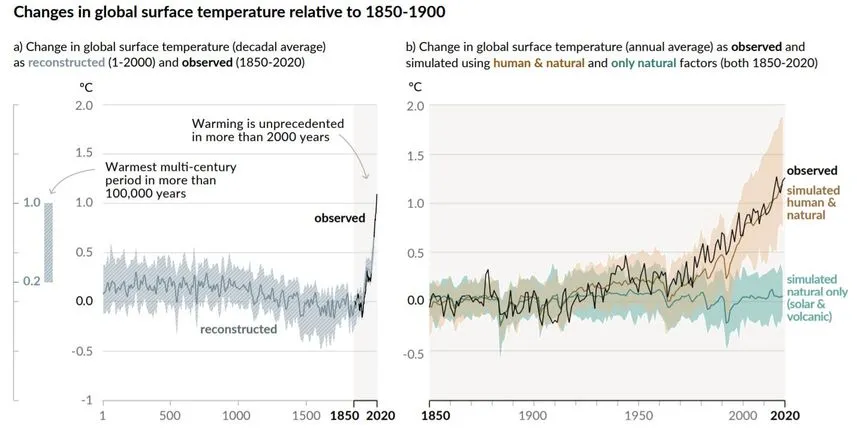
The last decade was the hottest in 125,000 years. There are a number of graphs to support this. Here is one:
The oceans

One of the facts of having a water world, 71% of the Earth’s surface is water-covered, and the oceans hold about 96.5% of all Earth’s water, is that a 2019 study found that oceans had sucked up 90% of the heat gained by the planet between 1971 and 2010. Another found that it absorbed 20 sextillion joules of heat in 2020  – equivalent to two Hiroshima bombs per second.

Carbon-dioxide

In fact CO2 levels are now the highest that they have been in 2 million years. Today, they stand at close to 420 parts per million (ppm). To put that into context pre-industrial levels, before 1750, had CO2 levels around 280 parts per million.

We are losing ice big time

I can do no better than to quote from Earth.org: Since the mid-1990s, we’ve lost around 28 trillion tons of ice, with today’s melt rate standing at 1.2 trillion tons a year. To help put that into perspective, the combined weight of all human-made things is 1.1 trillion tons. That’s about the same weight as all living things on earth.

I repeat: Every single year we are losing 1,200,000,000,000 tons of ice!

Extreme weather

We can now attribute natural disasters to human-driven climate change with certainty. We can now say with precision how much likelier we made things like the North American summer 2021 heatwave, which the World Weather Attribution says was “virtually impossible” without climate change as well as the Indian heatwave, which experts believe it was made 30 times more likely because of climate change.

Climate change mitigation

There is a long and comprehensive article on the above subject on WikiPedia. I will quote from the paragraph Needed emissions cuts.

If emissions remain on the current level of 42 GtCO2, the carbon budget for 1.5 °C could be exhausted in 2028. (That’s 42 gigatones, as in 1 gigaton is a unit of explosive force equal to one billion (109) tons of trinitrotoluene (TNT).

In 2022, the Intergovernmental Panel on Climate Change (IPCC) released its Sixth Assessment Report on climate change, warning that greenhouse gas emissions must peak before 2025 at the latest and decline 43% by 2030, in order to likely limit global warming to 1.5°C (2.7°F). Secretary-general of the United Nations, António Guterres, clarified that for this “Main emitters must drastically cut emissions starting this year”.

Then just before that paragraph WikiPedia reports that: The UNFCCC aims to stabilize greenhouse gas (GHG) concentrations in the atmosphere at a level where ecosystems can adapt naturally to climate change, food production is not threatened, and economic development can proceed in a sustainable fashion. Currently human activities are adding CO2 to the atmosphere faster than natural processes can remove it.

We need to act now, otherwise…

… it will be too late for billions of us.

This may be the most catastrophic of our climate change facts. As of now, only 0.8% of the planet’s land surface has mean annual temperatures above 29°C, mostly in the Sahara desert and Saudi Arabia (solid black in the map below).

study by Xu et al. (2020) called “Future of the Human Niche” found that by 2070, under a high emissions scenario, these unbearable temperatures could expand to affect up to 3 billion people (dark brown areas).

Doing nothing is much worse than doing something

On the current path, climate change could end up costing us 11 to 14% of the global GDP by mid-century. Regression into a high emissions scenario would mean an 18% loss, while staying below 2°C would reduce the damage to only 4%. 

It has been proposed that ending climate change would take between $300 billion and $50 trillion over the next two decades. Even if $50 trillion is the price tag, that comes down to $2.5 trillion a year, or just over 3% of the global GDP. 

Climate change is an incredibly complex phenomenon, and there are many other things happening that were not covered above.

These are the facts. There is no disputing them. Jean and I are relatively immune from the effects, because of our ages, but not entirely so. The last few weeks with the imminent risk of our property being damaged by wildfires is one example. The last three winters being below average rainfall is another. But it is the youngsters I fear most for. On a personal note, my daughter and husband have a son and he is now 12. What sort of world is he growing up in?

So here is a view of the global population of young people.
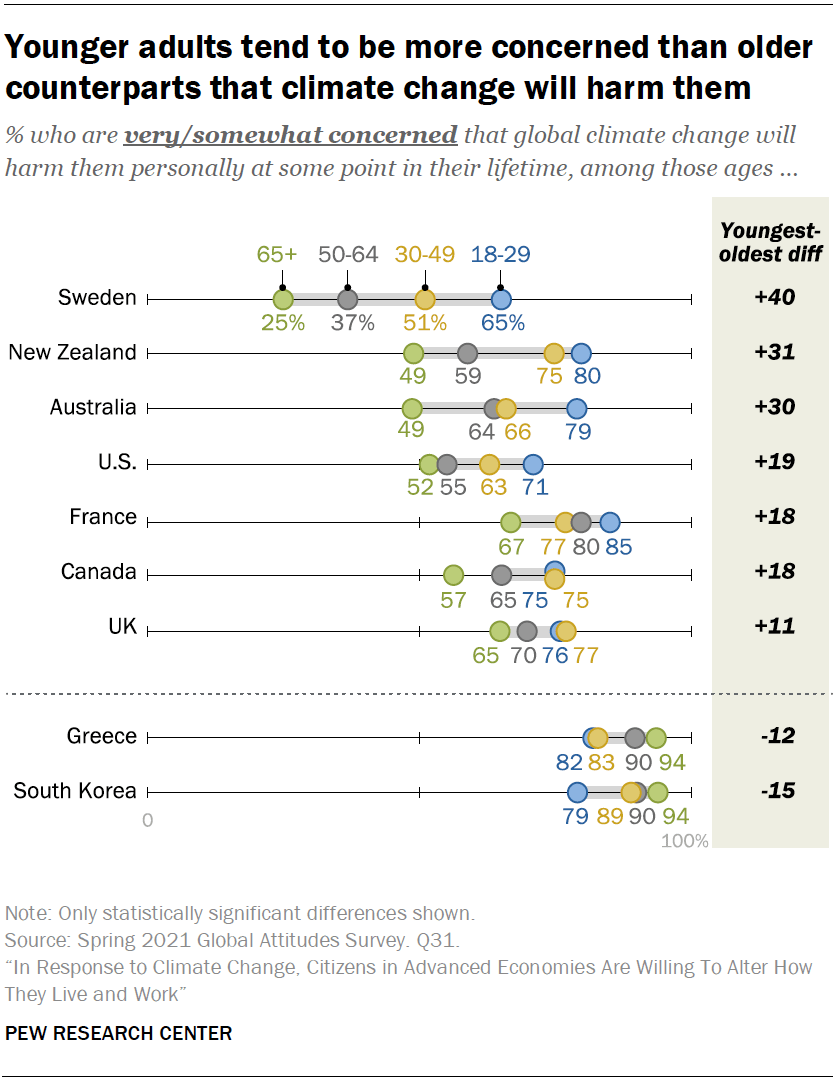
Just before I close let me show you my final chart. It goes to show our attitudes.

I am not a political animal. However I recognise that it is our leaders, globally, but especially in the top 10 countries in the world, who have to be leaders! Here are the top 10 countries.

So, please, dear leader, make this the number one priority for your country and for the world (areas of their country in square kilometres): Russia. 17,098,242, Canada. 9,984,670, United States. 9,826,675, China. 9,596,961, Brazil. 8,514,877, Australia. 7,741,220, India. 3,287,263 and Argentina. 2,780,400.

An alternative to the Picture Parade

It just seemed too soon to continue another Picture Parade!

So I chose this video. It is short but conveys the essence of the late Queen Elizabeth II.

Almost no post today.

We have a guest with us.

Plus, there is the potential for strong winds and possible spot fires in our neighbourhood. But I want to share the update from Inciweb issued yesterday morning:

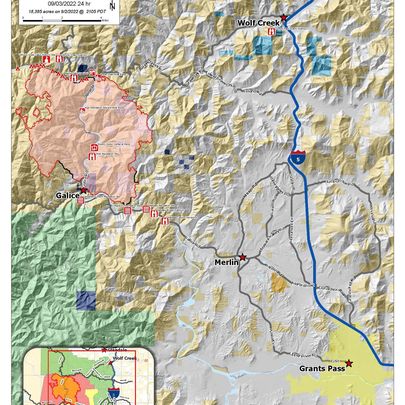
Rum Creek Fire morning update for Monday, Sept. 5

Firefighters prepare for another windy dry spell

MERLIN, Ore. – Tomorrow’s weather will provide a test for the fire lines. If the fire stays within the current footprint, fire managers can be more confident that it will not escape the fire lines in the future. Rum Creek Fire will be under a Haines 6 tomorrow, the highest level on the index, indicating the greatest potential for rapid fire growth. Also, the National Weather Service has issued a Fire Weather Watch for Tuesday afternoon and evening for the Rum Creek Fire area. The forecast calls for high temperatures, gusty winds and low relative humidity. 

The Haines Index is a tool used to estimate the effect of atmospheric dryness and stability on fire growth potential. When the atmosphere is unstable, windy conditions allow mixing of air near the ground with air higher in the atmosphere. This mixing provides ample fresh air flow to a fire, allowing it to burn freely and potentially grow rapidly and develop a smoke plume. These conditions are more likely to allow a fire to run or spot past fire lines.

In advance of this weather change, firefighters are working aggressively to contain more of the fire. Sunday night, crews completed the last of the planned tactical firing operations on the west side, tying lines from Mount Peavine north to the Rogue River. The large areas of unburned fuels between this primary line and the natural fire edge in the Rum Creek drainage are being closely monitored. At this time, the fire is steadily burning through this area, reducing the chance of fire running across the primary line or spotting north across the Rogue River.

On the east side, tactical firing is expected to be completed today near McKnabe Creek. Firefighters continue to mop up around the fire perimeter and near any structures, reducing the chance for fire to cross the primary lines. This hard work is reflected in the increase in containment to 34%.

Office of State Fire Marshal resources continue to mop up remaining hot spots near structures, cutting hazard trees, and patrolling areas along Galice Road. Firefighters are also working on structure assessment and pre-planning to the north and southeast of the fire. 

Fire personnel found three more burned structures, bringing the losses to two homes and four minor structures. These were destroyed during the fire’s rapid spread on August 26th and are in an area previously inaccessible to firefighters.

Evacuations: Existing evacuation orders and notifications remain in place. An interactive map showing evacuation levels according to address can be found at //JosephineCounty.gov/FireMap. For the most current evacuation information and resources, go to Josephine County Incident Information (rvem.org).

Road control: Josephine County Sheriff’s Office has established traffic access points around the fire zone. Road blocks are located at Galice Road near Crow Road; Galice Store; Bear Camp Road at Peavine (top intersection); Lower Grave Creek Road at Angora Creek (Grays Ranch); Quartz Creek Road about 3 miles up (end of County maintenance); Dutch Henry Road near Kelsey Creek (42 44’56.2/123 40’35.4); and Hog Creek at Galice Road. The National Guard is staffing the roadblocks. Only residents (must show proof of residency) and permitted users will be allowed through.

River status: The Wild section of the Rogue River below Grave Creek will remain open unless fire conditions warrant closure. River status is determined on a day-to-day basis. Please call 541-471-6535 for more information regarding Rogue River permits. No new boating permits will be issued at this time.

Picture Parade Four Hundred and Fifty.

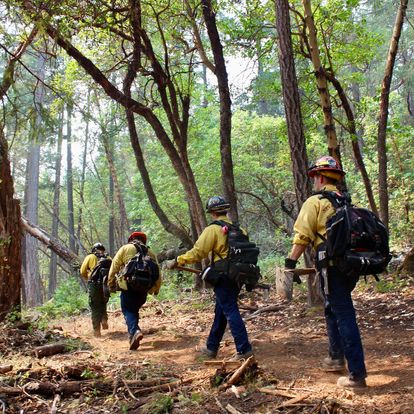
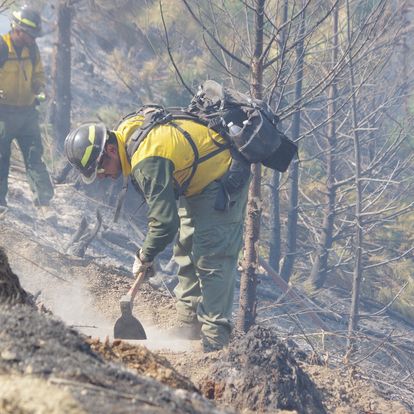
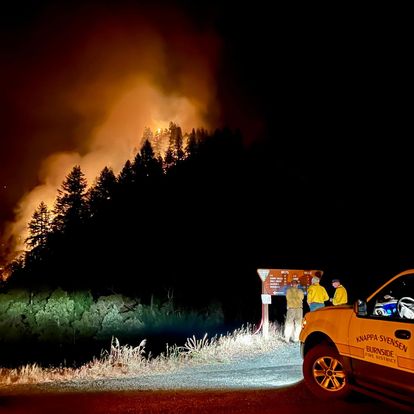
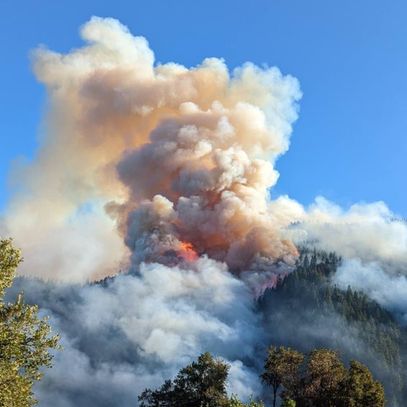
Photos of Rum Creek Fire!

Not all that are available by any means! These were copied from the Facebook page.

oooo

oooo

oooo

oooo

oooo

oooo

oooo

oooo

Well done all those actively involved. We will see what the next week brings.

Still uncertain!

Just a brief update!

Rum Creek fire two days ago.

We have had gentle winds for Tuesday and Wednesday and there is good progress on the curtailment. So long as we don’t get more winds in the next 24 hours (writing this yesterday morning) then the firefighters will be able to keep up the good work.

The smoke has been bad and the whole area of Merlin and Grants Pass is affected.

But hopefully conditions will improve later on Thursday and more so on Friday.

The fire update, released around 10am yesterday, says:

MERLIN, Ore. – Overnight, the Rum Creek Fire pushed across the line on the east side of the fire near McKnabe Creek, burning several hundred acres. Resources are being shifted to this area to corral the slop-over and establish new control lines. An increase in fire activity is expected through Friday as the weather shifts to a hotter, drier pattern. Inversions are expected to lift earlier in the day, increasing temperatures and winds while reducing relative humidity.  

As of early this morning, the fire was already burning actively on the ridges. Firefighters are expecting potential spot fires, and have shifted resources to continue alternate contingency fire lines to the east.

Last night firefighters successfully conducted burnouts on the south edge of the fire near Taylor Creek, eliminating remaining fuels between the control lines and the fire’s edge. Today, they will work to secure the southeast corner of the fire working toward the north. Hose lays and pumps have been set up along many control lines, including those constructed near Stratton Creek.

On the west edge of the fire, burnout operations near Mount Peavine and the 34 road have secured more of the western edge, and crews built line from Taylor Gulch toward Chrome Ridge. Today, fire personnel will tie the line from Chrome Ridge north to Bear Gulch, and are working near Ridge Gulch. North of the Rogue River, the line tying to the Dad Creek Fire scar is expected to be completed today.

Firefighters working with the OSFM are assisting with active fire suppression as needed. They are also extinguishing all remanent heat spots found within 100 feet of buildings, and continuing to assess structures. Also they are making preparations to include clearing brush and installing sprinklers, to further develop structure protection.

It is starting to look as though an evacuation for us at Hugo Road is more and more unlikely.

Just one of those days!

There is no post for today!

Although I admit that having this come out at the usual time for a Tuesday rather flies in the face of that sub-heading!

But on Sunday evening Merlin was placed in the first zone of the evacuation instructions. This follows the rapidly expanding Rum Creek Fire that is just West of us. Depending on what defines as the actual location of the fire we are anything from 5 to 9 miles away. Our home is on Hugo Road, Merlin.

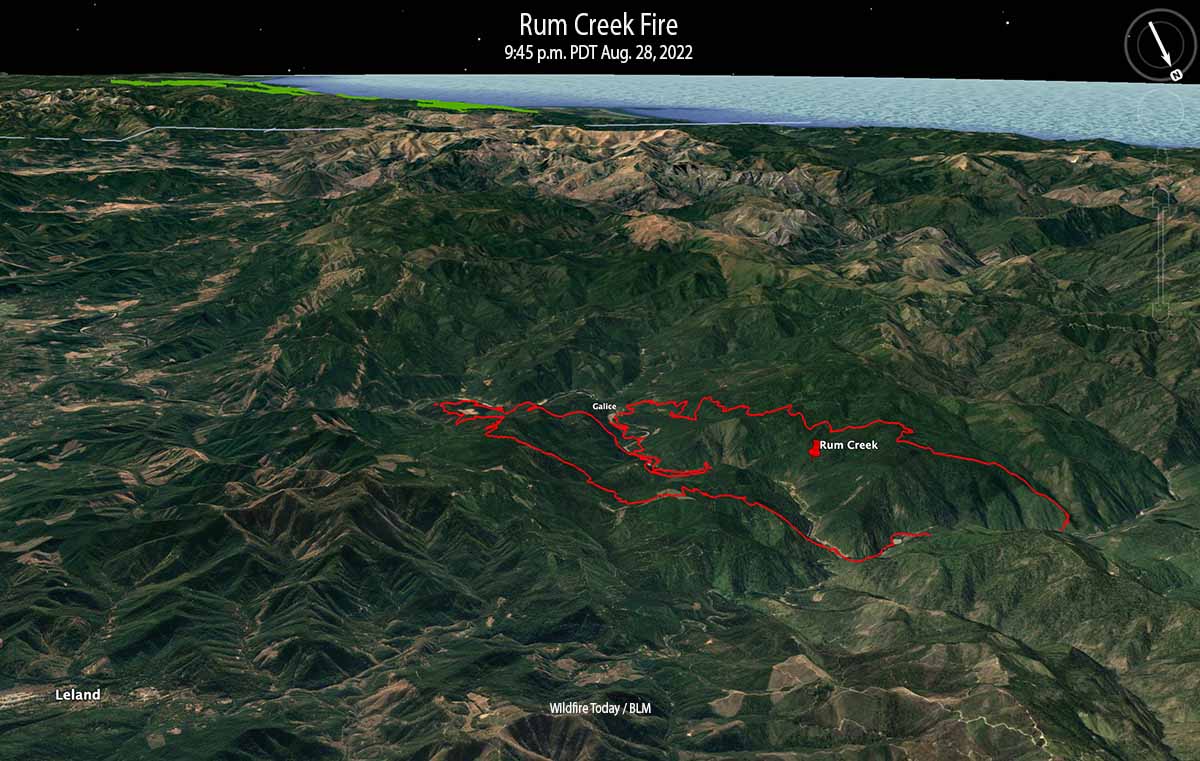
3-D map of the Rum Creek Fire, looking south-southwest at 9:45 p.m. Aug. 28, 2022.

The Rum Creek Fire 14 miles northwest of Grants Pass, Oregon has grown to 10,709 acres since it started from lightning on August 17. The fire is burning in very steep, remote, rugged terrain on both sides of the Rogue River. It has spread upriver to Galice and east to Stratton Creek. Spot fires have occurred two miles down range.

(Copied from Wildfire Today.)

So there you are!

Picture Parade Four Hundred and Forty-Nine

You have guessed it! More Unsplash!

oooo

oooo

oooo

oooo

oooo

oooo

They are all wonderful and the photographers are all located at the Unsplash website.

From Jess

This is so very cute!

Jess, a longtime follower of this blog sent me recently the following email: Paul, I thought you’d really enjoy this one.  I hope you are having a great day.  JESS

It is called Military Dog and is offered for your pleasure.

(We watched it yesterday evening and it is incredible!)

Aren’t our dogs more than wonderful! They are better than precious!

Thank you, Jess, from the bottom of our hearts!

Sir David Attenborough.

There are not many who achieve so much, but Sir David most definately has!

This is our planet. It is the only one we have (stating the obvious!).

This beautiful photograph taken from the Apollo 11 mission says it all. That Commander Neil Armstrong and lunar module pilot Buzz Aldrin landed the Apollo Lunar Module Eagle on July 20, 1969 changed everything.

But one thing that was not on anyone’s mind then; the state of the planet!

This view of Earth rising over the Moon’s horizon was taken from the Apollo 11 spacecraft. The lunar terrain pictured is in the area of Smyth’s Sea on the nearside. Coordinates of the center of the terrain are 85 degrees east longitude and 3 degrees north latitude.
While astronaut Neil A. Armstrong, commander; and Edwin E. Aldrin Jr., lunar module pilot, descended in the Lunar Module (LM) “Eagle” to explore the Sea of Tranquility region of the moon, astronaut Michael Collins remained with the Command and Service Modules (CSM) “Columbia” in lunar orbit.
Image Credit: NASA

How that has changed since 1969.

David Attenborough is a giant of a man, and I say this out of humility and respect for what he has done in his long life, he was born in May, 1926, and he is still fighting hard to get us humans to wake up to the crisis that is upon us.

Wikipedia has an entry that lists all the television shows, and more, that David Attenborough has made. As is quoted: “Attenborough’s name has become synonymous with the natural history programmes produced by the BBC Natural History Unit.”

Please take 45 minutes and watch this film. It is so important.

But before you do please read this extract taken from this site about the film:

For decades David Attenborough delighted millions of people with tales of life on Earth, exploring wild places and documenting the living world in all its variety and wonder. Now, for the first time he reflects upon both the defining moments of his lifetime as a naturalist and the devastating changes he has seen.

Honest, revealing and urgent, the film serves as a witness statement for the natural world – a first-hand account of humanity’s impact on nature, from Australia’s Great Barrier Reef to the jungles of central Africa, the North Pole and Antarctica. It also aims to provide a message of hope for future generations.

“I’ve had a most extraordinary life. It’s only now I appreciate how extraordinary,” Sir David says in the film’s trailer, in which he also promises to tell audiences how we can “work with nature rather than against it”.

The film retraces Sir David’s career, his life stages and natural history films, within the context of human population growth and the loss of wilderness areas. “I don’t think that the theoretical basis for the reason why biodiversity is important is a widely understood one,” he told the Guardian in September.

This autumn, a series of publications warned that “humanity is at a crossroads” in its relationship with nature, culminating in a UN report that the world has failed to meet a single target to stop the destruction of nature in the past decade.

Sir David has been vocal about the threat of climate change in recent years, calling on politicians to take their “last chance” to act rather than continue to “neglect long-term problems”.

We need to learn how to work with nature, rather than against it”, according to Sir David. In the film, he is going to tell us how.

Now watch the film. Please!

As you can see, in the film Sir David states that the only way out of this mess is a massive focus on rewilding.

Coincidentally, Patrice Ayme last Sunday wrote about rewilding: California Grizzly: Rewilding Is A Moral Duty. In the latter half of that essay, he wrote: “One should strive to reintroduce American megafauna, starting with the more innocuous species (and that includes the grizzly). By the way, I have run and hiked in grizzly country (Alaska), with a huge bear pepper spray cannister at the ready. I nearly used the cannister on a charging moose (with her calf which was as big as a horse). The calf slipped off, and I eluded the mom through a thicket of very closely spaced tough trees. But I had my finger on the trigger, safety off. Moose attack more humans than grizzlies and wolves combined (although a bear attack is more dangerous). In any case, in the US, stinging insects kill around 100, deer around 200 (mostly through car collisions), and lightning around three dozen people, per year.

As it is, I run and hike a lot in California wilderness, out of rescue range. I generally try to stay aware of where and when I could come across bears, lions and rattlers. My last close call with a large rattlesnake, up a mountain slope, was partly due to hubris and not realizing I was moving in dangerous terrain. Fortunately I heard the slithering just in time. Dangerous animals make us aware of nature in its full glory, and the real nature of the human condition. They keep us more honest with what is real, what humanity is all about.

And that should be the primordial sense.

I will close by offering you this photograph. May it inspire you to rewild, in small ways and also, if you can, in bigger ways. All of us must be involved. Otherwise…

Photo by Cosmic Timetraveler on Unsplash

…otherwise… (sentence left unfinished).