More dogs from Unsplash.

oooo

oooo

oooo

oooo

oooo

oooo

Again, I have to say, and I know many will agree with me, that these photographs from Unsplash are perfectly gorgeous.
You all have a good week ahead!
Dogs are animals of integrity. We have much to learn from them.
Year: 2022
More dogs from Unsplash.
oooo
oooo
oooo
oooo
oooo
oooo
Again, I have to say, and I know many will agree with me, that these photographs from Unsplash are perfectly gorgeous.
You all have a good week ahead!
An article read on Sunday is the motivation for today’s post.
The article, published by The Conversation blog site, was made public last Wednesday week.
I make no apologies for banging the climate change gong again, it is in my opinion the most important subject going.
Enough from me; now to the article.
(And it had been planned for last Tuesday but because of Pedi it is now today.)
ooOOoo
By Professor Shuang-Ye Wu
This article was written by Professor Shuang-Ye Wu. It is very good.

Professor Wu is the Professor of Geology and Environmental Geosciences at the University of Dayton, USA.
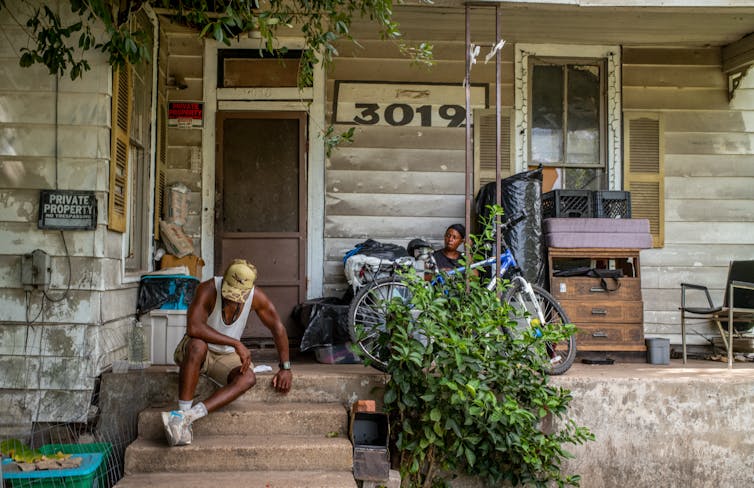
The summer of 2022 started with a historic flood in Montana, brought on by heavy rain and melting snow, that tore up roads and caused large areas of Yellowstone National Park to be evacuated.
It ended with a record-breaking heat wave in California and much of the West that pushed the power grid to the breaking point, causing blackouts, followed by a tropical storm that set rainfall records in southern California. A typhoon flooded coastal Alaska, and a hurricane hit Puerto Rico with more than 30 inches of rain.
In between, wildfires raged through California, Arizona and New Mexico on the background of a megadrought in Southwestern U.S. that has been more severe than anything the region has experienced in at least 1,200 years. Near Albuquerque, New Mexico, a five-mile stretch of the Rio Grande ran dry for the first time in 40 years. Persistent heat waves lingered over many parts of the country, setting temperature records.
At the same time, during a period of five weeks between July and August, five 1,000-year rainfall events occurred in St. Louis, eastern Kentucky, southern Illinois, California’s Death Valley and in Dallas, causing devastating and sometimes deadly flash floods. Extreme rainfall also led to severe flooding in Mississippi, Virginia and West Virginia.
The United States is hardly alone in its share of climate disasters.
In Pakistan, record monsoon rains inundated more than one-third of the country, killing over 1,500 people. In India and China, prolonged heat waves and droughts dried up rivers, disrupted power grids and threatened food security for billions of people.
In Europe, heat waves set record temperatures in Britain and other places, leading to severe droughts and wildfires in many parts of the continent. In South Africa, torrential rains brought flooding and mudslides that killed more than 400 people. The summer may have come to an end on the calendar, but climate disasters will surely continue.
This isn’t just a freak summer: Over the years, such extreme events are occurring in increasing frequency and intensity.
The most recent international climate assessment from the United Nations’ Intergovernmental Panel on Climate Change found significant increases in both the frequency and intensity of extreme temperature and precipitation events, leading to more droughts and floods.
A recent study published in the scientific journal Nature found that extreme flooding and droughts are also getting deadlier and more expensive, despite an improving capacity to manage climate risks. This is because these extreme events, enhanced by climate change, often exceed the designed levels of such management strategies.
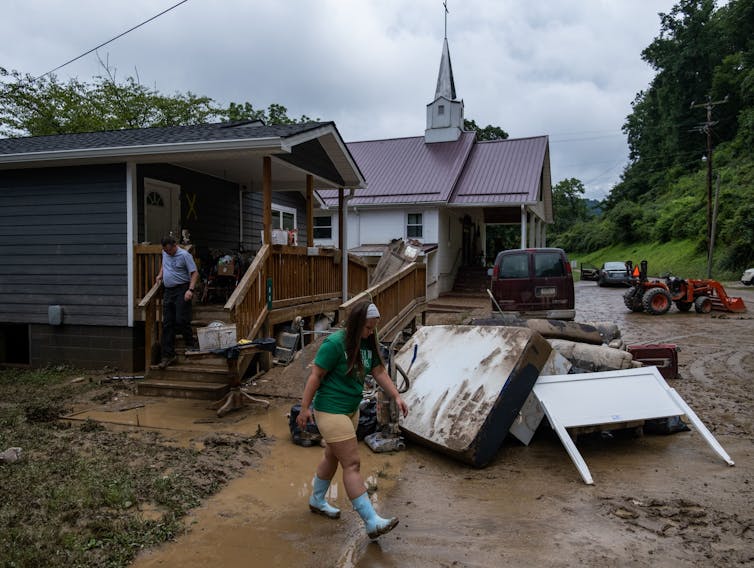
Extreme events, by definition, occur rarely. A 100-year flood has a 1% chance of happening in any given year. So, when such events occur with increasing frequency and intensity, they are a clear indication of a changing climate state.
The term “global warming” can sometimes be misleading, as it seems to suggest that as humans put more heat-trapping greenhouse gases into the atmosphere, the world is going to get a bit warmer everywhere. What it fails to convey is that warming temperatures also lead to a more violent world with more extreme climate disasters, as we saw this past summer.
Much of this is well-understood and consistently reproduced by climate models.
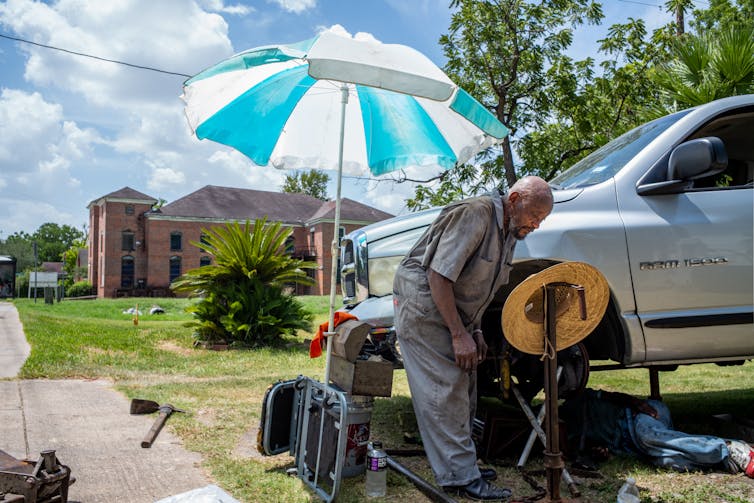
As the climate warms, a shift in temperature distribution leads to more extremes. The magnitudes of changes in extreme temperature are often larger than changes in the mean. For example, globally, a 1 degree Celsius increase in annual average temperature is associated with 1.2 C to 1.9 C (2.1 Fahrenheit to 3.4 F) of increase in the annual maximum temperature.
In addition, global warming causes changes in the vertical profile of the atmosphere and equator-to-pole temperature gradients, leading to changes in how the atmosphere and ocean move. The temperature difference between equator and the poles is the driving force for global wind. As the polar regions warm at much higher rates then the equator, the reduced temperature difference causes a weakening of global winds and leads to a more meandering jet stream.
Some of these changes can create conditions such as persistent high-pressure systems and atmosphere blocking that favor more frequent and more intense heat waves. The heat domes over the Southern Plains and South in June and the West in September are examples.
The initial warming can be further amplified by positive feedbacks. For example, warming increases snow melt, exposing dark soil underneath, which absorbs more heat than snow, further enhancing the warming.
Warming of the atmosphere also increases its capacity to hold water vapor, which is a strong greenhouse gas. Therefore, more water vapor in the air leads to more warming. Higher temperatures tend to dry out the soil, and less soil moisture reduces the land’s heat capacity, making it easier to heat up.
These positive feedbacks further intensify the initial warming, leading to more heat extremes. More frequent and persistent heat waves lead to excessive evaporation, combined with decreased precipitation in some regions, causing more severe droughts and more frequent wildfires.
Higher temperatures increase the atmosphere’s capacity to hold moisture at a rate of about 7% per degree Celsius.
This increased humidity leads to heavier rainfall events. In addition, storm systems are fueled by latent heat, or the large amount of energy released when water vapor condenses to liquid water. Increased moisture content in the atmosphere also enhances latent heat in storm systems, increasing their intensity. Extreme heavy or persistent rainfall leads to increased flooding and landslides, with devastating social and economic consequences.
Even though it’s difficult to link specific extreme events directly to climate change, when these supposedly rare events occur with increasing frequency in a warming world, it is hard to ignore the changing state of our climate.
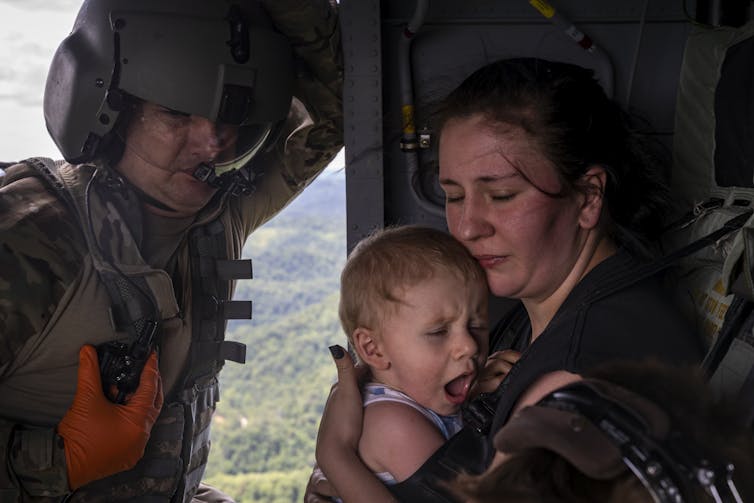
So this past summer might just provide a glimpse of our near future, as these extreme climate events become more frequent.
To say this is the new “normal,” though, is misleading. It suggests that we have reached a new stable state, and that is far from the truth.
Without serious effort to curb greenhouse gas emissions, this trend toward more extreme events will continue. Things will keep getting worse, and this past summer will become the norm a few years or decades down the road – and eventually, it will seem mild, like one of those “nice summers” we look back on fondly with nostalgia.
This article is republished from The Conversation under a Creative Commons license. Read the original article.
ooOOoo
There is growing evidence that things are really changing globally. I used to say that I would be dead before the impacts of climate change really hit home. As in, it would be a good twenty years before things really took a hold. But it is now much more likely that the next five years are going to see a continuation of the changes and that there isn’t time to hang around.
I may not be as sharp as I used to be but the changing climate will affect me and Jean and all those in our area. Will our leaders grasp this nettle now? I wish I knew.
On this occasion it was the loss of our Pedi that had hearts ‘speaking’.
When it comes to dogs millions of people open their hearts to the love that exists between a dog and a dog’s close human. And I am not sure that I have cracked it yet; I know what is felt but putting it into words is more difficult.
So I shall turn to Jess and the guest post she sent to me. But just before sending me the story of Scruffy Jess sent me this email: “Sorry for the loss. Dogs have always been an important part of my life. I’ve cried like a baby every time I lost one. Truly man’s best friend. “
ooOOoo
Scruffy is getting up there in years and it breaks my heart to even think of losing him. He’s been my best friend for the past twelve years. He does everything that I do.
I never paint in my studio that he isn’t there beside me.
He will be 13 in February. I only hope that I can get a couple more years out of him. He is one of those special dogs. If someone said, “If there was one thing you would change about Scruffy, what would it be?” The only thing in this world I would change about him is to give him a longer life.
He minds me better than my kids ever minded and I’ve never laid an angry hand on him. I talk to him like I would a human, and he seems to understand everything that I say. I just bought another Schnauzer puppy, only four months old, hoping that some of Scruffy will rub off on him as he grows up. So far Scruffy is not too happy about sharing me with another dog, but hopefully time will change that.
So this is Scruffy at age 12. He still is full of life.

oooo
And this is Tux below, because of the Tuxedo that he always wears. He’s also a Miniature Schnauzer, but in an exotic color, and he has one blue eye that I love!

Yes, you should get another puppy to fill the hole in your heart. It seems, you are never sorry about it! You guys have a wonderful day! JESS
ooOOoo
Beautiful!
Poor Pedi finally succumbed to his failing liver at 5:30 pm yesterday.
It was also the reason why I didn’t have the stomach to post this for midnight yesterday.
On the 8th July, this year, Pedi was diagnosed with having diabetes and a failing liver. This was a photo taken at the time.
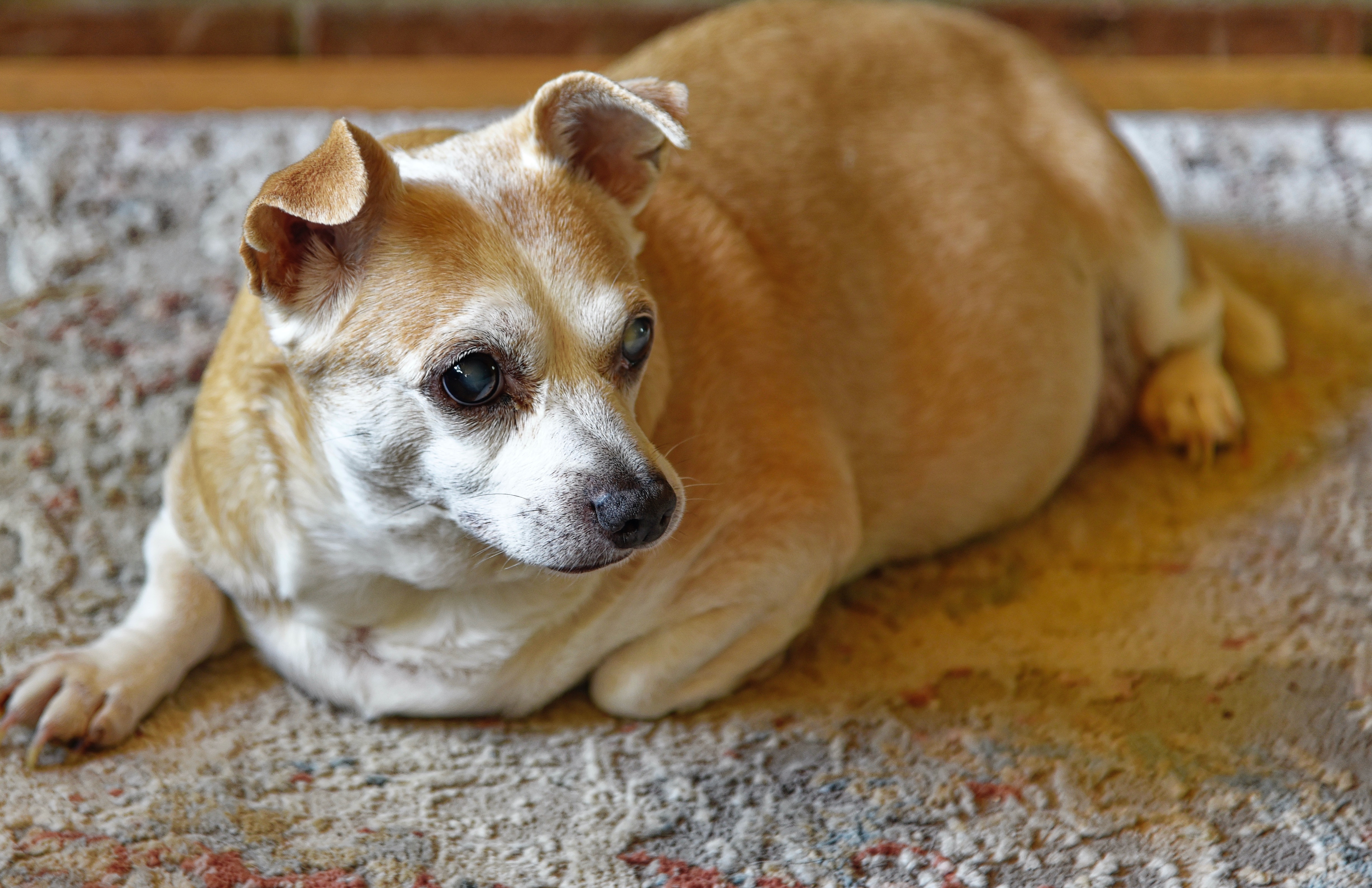
Dr Codd, of Lincoln Road Vet, suggested that Pedi might be put down immediately but Jean wouldn’t hear of it. Thus every day, at 06:30 and 18:30 (PDT), Jeannie applied an injection of Insulin; the amount depending on what Pedi had eaten.
Jeannie went beyond anything that I have ever seen before. This morning, the 27th, I was talking to her and Jean said that she had been rescuing dogs since 1980. That’s over 40 years! No wonder that Jean was taking this so very hard.
Now my opinion is that we should get a replacement for Pedi and keep the minimum number of dogs to four. But it is too soon to make that decision and part of the issue is that we are getting reasonably close, probably in the next ten years, to selling up and going into a care home of some sorts. We have seen a couple and we need to do a proper examination of the total market to find the right one.
In the meantime we both grieve for Pedi but Jean much, much more so than me. I shall have my guts kicked out of me when Oliver goes, but that’s for another time.
 Learning from Dogs