But to be honest the answer is just as interesting for those a tad older than a kid!
ooOOoo
When dogs bark, are they using words to communicate?
By Clive Wynne
Professor of Psychology, Arizona State University
February 8th, 2021
When dogs bark, do they have words? – Sarah W., age 9, Clinton, New York
Does your dog bark a lot? Or is he one of those quiet pooches who barks only when things get really exciting? Most dogs bark at least a little.
Dog barks are not words. But although your dog will never tell you about his parents or the weather or the amazing bone he had yesterday, his barks still communicate important information.
Dog barks are much closer to the noises people make when they accidentally hit their thumb with a hammer – “Ow!” – or open a fantastic present – “Wow!” These sounds convey how someone feels, but not why they feel that way. When other people hear these kinds of sounds, they often come over to see what has happened: How did you hurt yourself? What is this wonderful gift you received?
Dog barking also brings groups together – but it’s not a beautiful sound. It is a much more urgent noise, just like the sounds you make when you are hurt or very pleased. Many smaller animals, like scrub jays, meerkats and California ground squirrels, make such noisy sounds. They do this when they feel frightened by something. In dogs, barking can bring a group together to defend against a danger that can’t be coped with alone.
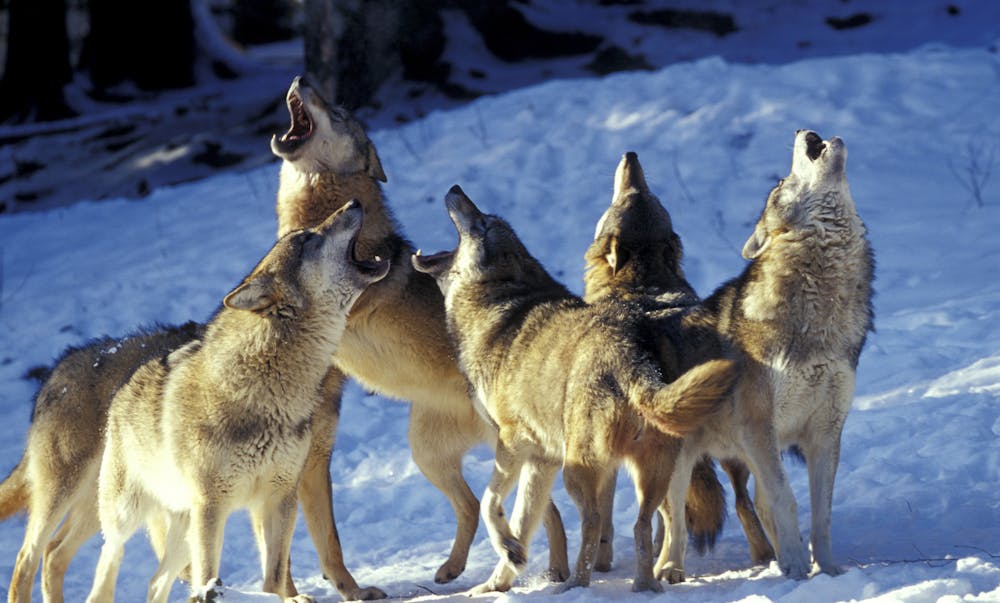
Wolves don’t need to make sounds like this because they are big and fearsome and don’t often feel threatened. Dogs, on the other hand, are much smaller and weaker than their wolf ancestors – and often need to call the group together.
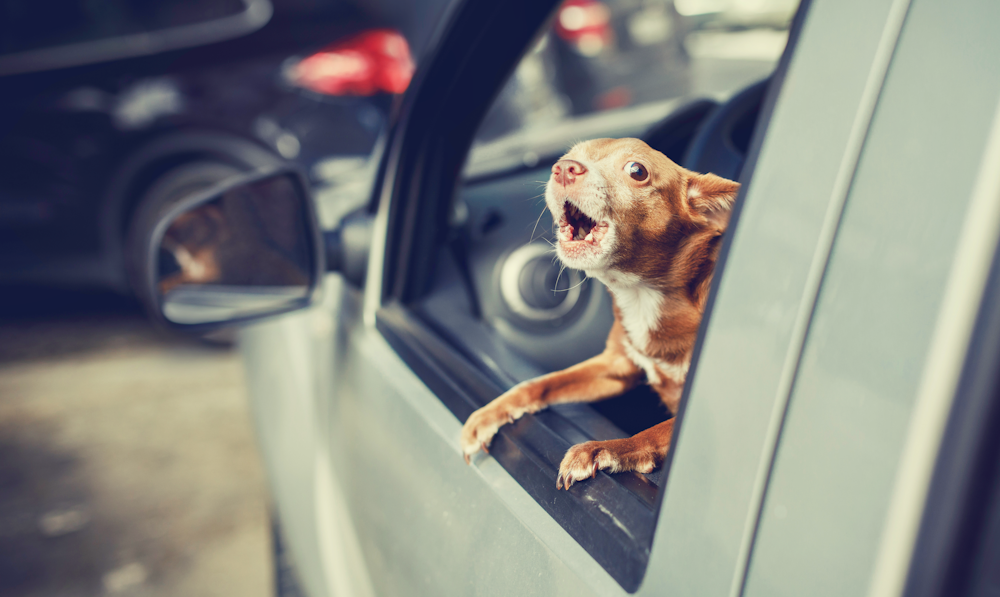
A call for assistance. Seregraff/iStock/Getty Images Plus
This is why dogs bark. They are calling their group to get help with something they are not confident they can handle on their own. This doesn’t mean a barking dog is always frightened. He may just be very excited. He badly needs the family to know that there is a stranger coming to the door, or another dog coming close to the house.
Your dog’s barks may not be words, but he probably barks a little differently depending on what kind of thing has got him excited. If you listen closely, you may find you can tell the difference between a bark directed at a package deliverer and one directed toward a friend at the door. The bark to a passing dog may be different than the bark at a passing car.
Your dog doesn’t understand much of what you say, but he listens hard to try to make sense of human language. If you return the compliment and listen hard to his sounds, you may find you can also understand him better, and the two of you will have a richer life together.
ooOOoo
This touches on something that I saw elsewhere; the business of dogs having emotions (which they really do!).
I will try and find the article and see if I have permission to republish it.
Ancient DNA shows that dogs probably came from Siberia.
There has been much discussion recently that Siberia may have been the site of dog domestication. In that a research team examining the origins of the domestic dog via the genetic past found that all American dogs carried a genetic signature.
This signature, dubbed A2b, in dogs descended from a canine ancestor that lived in Siberia some 23,000 years ago. An article in the January 2021 issue of Science went on to say:
That ancestral dog probably lived with people who belonged to a genetic grouping known as the ancient north Siberians, the team speculates. The group, which appeared more than 31,000 years ago, lived in a relatively temperate part of northeastern Siberia for thousands of years, and they shared this refuge with the gray wolf, the direct ancestor of today’s dogs.
The assumption being that this group of people brought the dogs with them when, about 15,000 years ago, they splintered into four groups as they spread around North America and Europe.
Dingo relative discovered in remote highlands of New Guinea. From abc.net.au
I wish I could say more but all the texts and pictures that I have come across have all been protected by copywrite.







 Learning from Dogs