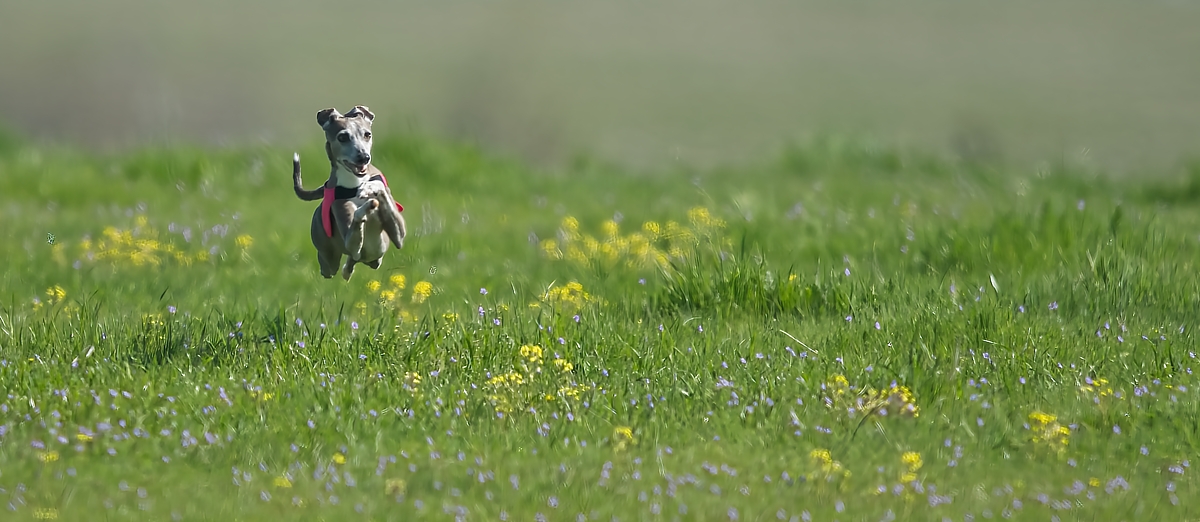
The last of the dog photographs from David Bozsik.
oooo
oooo
oooo
oooo
oooo
That is it, I am afraid. They have been a beautiful set of photographs and we have to thank David Bozsik for them.
I near forgot to mention that, again, these fabulous photographs are Copyright David L Bozsic. I have been given permission by David to republish them.
A recent new item in the Daily Courier caught our eye.
Like many who live in this corner of the world we read the Grants Pass Daily Courier. On Wednesday, November 3rd at the bottom of the front page was an article entitled: “A shelter dog for 22 months now, Manny continues on comeback trail“
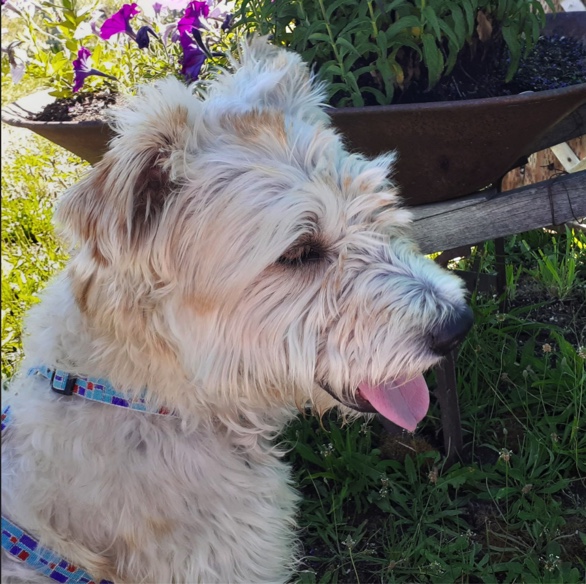
It was a story of a wheaten terrier found in January 2020 abandoned, suffering from wounds both old and new, and the Rogue Valley Humane Society (RVHS) took him in.
Margaret Varner, executive director of RVHS, who helped Manny said that he: “He came in with so many wounds”.
Manny eventually went to an animal trainer near Eugene, Roman Gottfried.
I have chosen to republish an article that appeared on the RVHS website about Roman Gottfried and Manny. Here it is.
ooOOoo
Training Sessions Can Make A Big Difference
Roman Gottfried, our trainer from Holistic Dog Traning, recently hosted another training session with Manny and Noodles. Manny is about 4 years old, loves people, likes to keep busy and is crazy about water! He has had an incredibly difficult past but that hasn’t stopped his zest for life. He’s been moving forward throughout his healing process both physically and emotionally. Our team works daily to provide the stimulation he needs and love he craves.
Manny is still waiting for his forever family
Noodle has since been adopted, but during his stay we learned he had some separation anxiety. His owner named him Noodle because of how he just melts when he is shown affection. When Roman worked with him he helped us determine that Noodle was able to get along well with young children, other dogs and farm animals. Noodle hadn’t had interactions with cats so we couldn’t say how he felt about them, but during his work with Roman we saw he had a lot of energy and absolutely loved his people. Noodle’s previous owners wanted to make sure we knew his perfect home would be with someone who could be with him most of the day, and that is the kind of forever family he found. Soon after getting adopted he began enjoying hikes with his new family and loving it.
Noodles has found his forever family!
During his Q and A that same afternoon, Roman answered common questions from dog owners such as what to do if your dog has separation anxiety, resource guarding or excessive barking issues. Owners wrote in their dog’s behaviors in the live session comments and Roman was able to respond with helpful advice.
ooOOoo
Back to the Courier.
The last two paragraphs of the story are as follows:
And watching him last week, one could see that “calm” is now part of Manny’s behavioural menu. This is an exceptional dog,” Gottfried said, “I’ve worked with a lot of weirdos. This one is a keeper.”
Please can someone soon be Manny’s forever family home. Anyone interested in having Manny please call RVHS on 541-479-5154.
I have long followed George Monbiot and was delighted to find that he is the narrator on this video. The film was shot by Sustainable Human, an organisation that I hadn’t come across before. But I will look more closely at their website.
It is not long but it is full of surprises.
When wolves were reintroduced to Yellowstone National Park in the United States after being absent nearly 70 years, the most remarkable “trophic cascade” occurred. What is a trophic cascade and how exactly do wolves change rivers? George Monbiot explains.
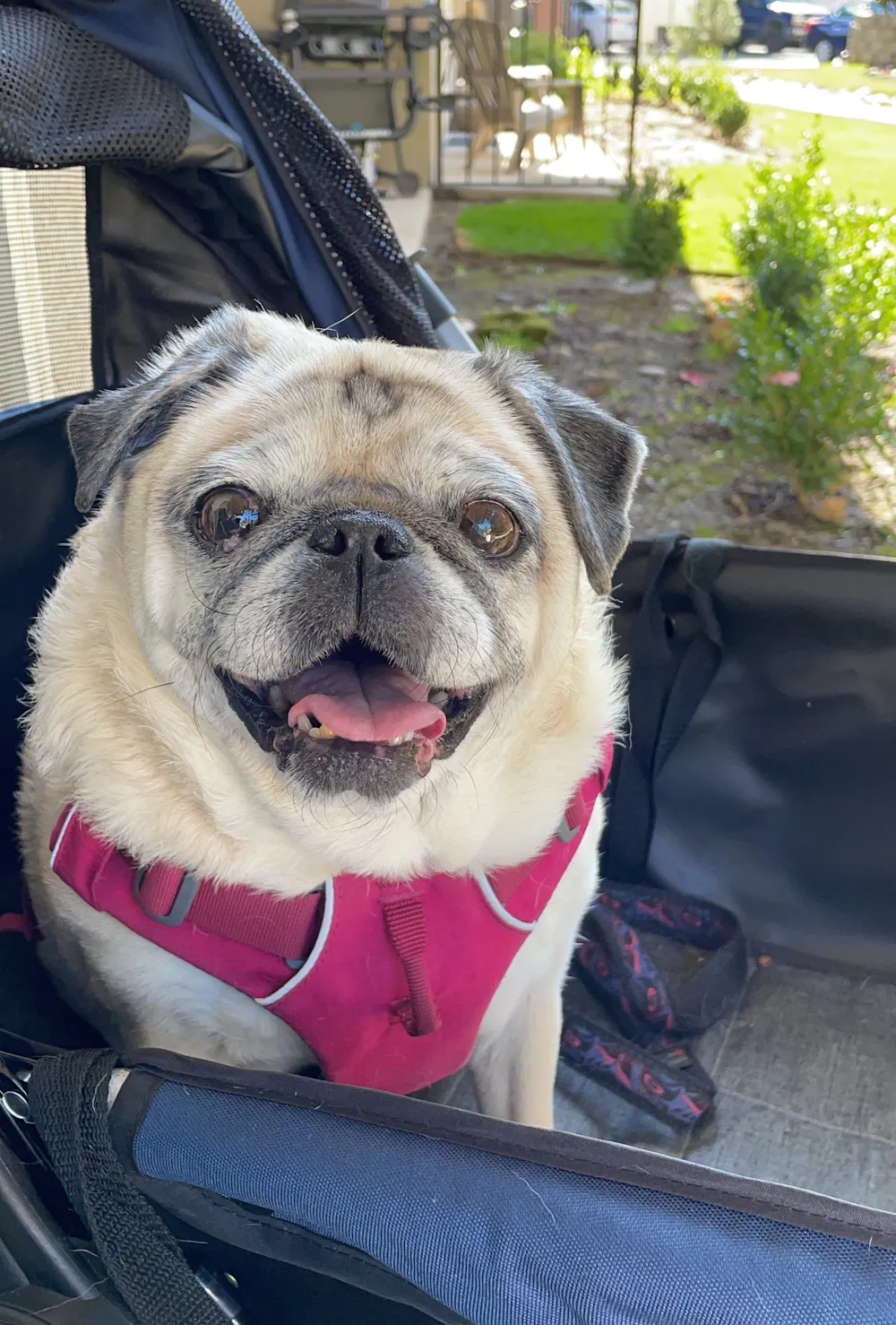
A pup out for a stroll, without paws touching the ground. Shelly Volsche, CC BY-ND
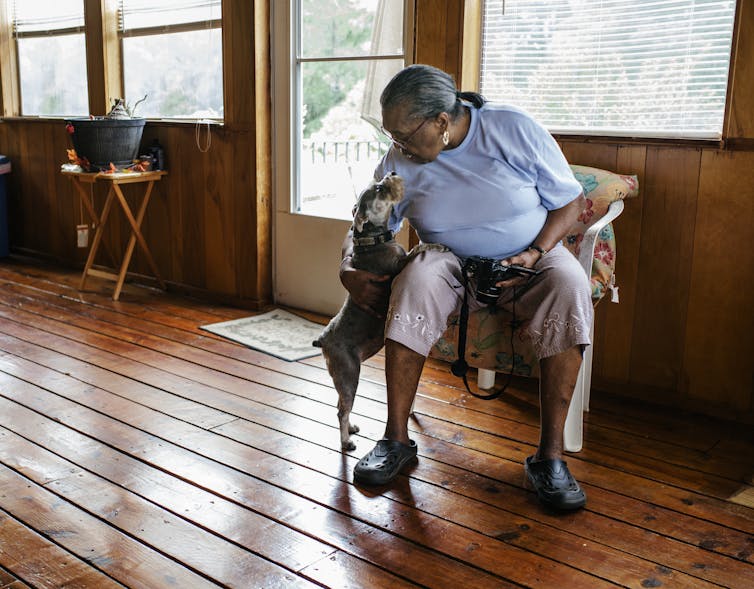
Have you noticed more cats riding in strollers lately? Or bumper stickers that read, “I love my granddogs”? You’re not imagining it. More people are investing serious time, money and attention in their pets.
It looks an awful lot like parenting, but of pets, not people.
Can this kind of caregiving toward animals really be considered parenting? Or is something else going on here?
I’m an anthropologist who studies human-animal interactions, a field known as anthrozoology. I want to better understand the behavior of pet parenting by people from the perspective of evolutionary science. After all, cultural norms and evolutionary biology both suggest people should focus on raising their own children, not animals of a completely different species.
More child-free people, more pet parents
The current moment is unique in human history. Many societies, including the U.S., are experiencing major changes in how people live, work and socialize. Fertility rates are low, and people have more flexibility in how they choose to live their lives. These factors can lead people to further their education and value defining oneself as an individual over family obligations. With basics taken care of, people can focus on higher order psychological needs like feelings of achievement and a sense of purpose.
The scene is set for people to actively choose to focus on pets instead of children.
In earlier research, I interviewed 28 self-identified child-free pet owners to better understand how they relate to their animals. These individuals pointedly shared that they had actively chosen cats and dogs instead of children. In many cases, their use of parent-child relational terms – calling themselves a pet’s “mom” for instance – was simply shorthand.
They emphasized fulfilling the species-specific needs of their dogs and cats. For example, they might fulfill the animal’s need to forage by feeding meals using a food puzzle, while most children are fed at the table. These pet owners acknowledged differences in the nutrition, socialization and learning needs of animals versus children. They were not unthinkingly replacing human children with “fur babies” by treating them like small, furry humans.
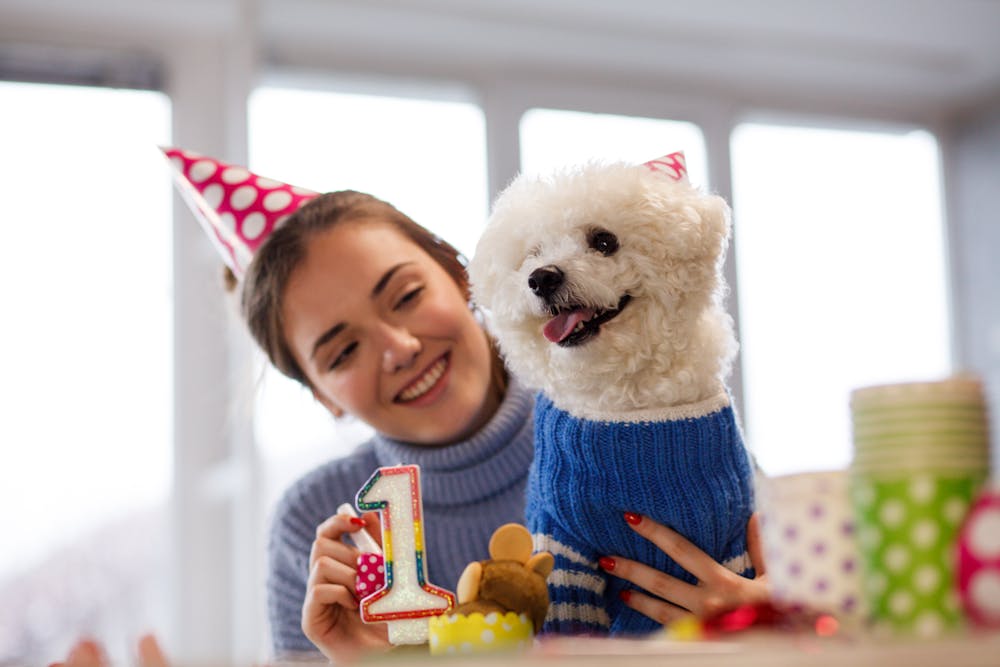
Pet parents might celebrate their dog’s big day – but with a doggy treat and not chocolate cake. fotostorm/E+ via Getty Images
Yet, these findings still do not answer this question: Are people who choose pets over children truly parenting their pets? To answer, I turned to the evolution of parenting and caregiving.
Evolutionary anthropologist Sarah Hardy wrote in 2009 that humans are cooperative breeders. This means it is literally in our DNA and our ancestral history to help care for offspring who are not our own. Anthropologists and biologists call this trait alloparenting. It is an evolutionary adaptation that helped human beings who cooperatively raised children survive. For early humans, this ancient environment was likely made up of small, foraging societies in which some people exchanged child care for food and other resources.
I propose that it is this evolutionary history that explains pet parenting. If people evolved to alloparent, and our environment is now making caring for children more difficult or less appealing to some, it makes sense for people to alloparent other species entering their homes. Alloparenting companion animals can offer a way to fulfill the evolved need to nurture while reducing the investment of time, money and emotional energy compared to raising children.
To further understand this phenomenon of child-free adults parenting pets, I launched an online survey via social media, seeking responses from U.S.-based dog and cat owners over the age of 18. The survey included questions about attachment and caregiving behaviors using the Lexington Attachment to Pets Scale. It also asked a series of questions I developed to probe specific human caretaking behaviors oriented toward pets – things like feeding, bathing and training – as well as how much autonomy companion animals had in the home.
The final sample of 917 respondents included 620 parents, 254 nonparents and 43 people who were undecided or did not answer. Most of the respondents were also married or in a domestic partnership for over one year (57%), between the ages of 25 and 60 (72%) and had at least a bachelor’s degree (77%). They were also mostly women (85%) and heterosexual (85%), a common situation in human-animal interactions research.
Both parents and nonparents reported high amounts of training and play with their pets. This finding makes sense given that all pet owners need to help their dogs and cats learn how to navigate a human world. Survey respondents reported socializing, training and enrichment, including play, for their animals.
Nonparents were more likely to be the one providing general care for the animal. This finding also makes sense since parents often adopt or purchase companion animals as a way to help their children learn responsibility and to care for others. Child-free animal owners invest time, money and emotional energy directly in their pets.
Nonparents reported higher rates of general attachment to their animals. They more frequently viewed their pets as individuals. Nonparents were also more likely to use family terms such as “parent,” “child,” “kids” and “guardians” when referring to their relationships with their pet.
It is this difference, combined with the evidence from my earlier research that these individuals address the species-specific needs of the dogs and cats in their care, that suggests pet parenting is, truly, parenting pets. Though the details may look quite different – attending training classes instead of school functions, or providing smell walks for dogs instead of coloring books for children – both practices fulfill the same evolved function. Whether child or pet, people are meeting the same evolved need to care for, teach and love a sentient other.
My colleagues and I continue to collect data from all over the world about how people live with animals. For now, this study provides evidence that, perhaps rather than being evolved to parent, humans are evolved to nurture. And as a result, who and when we parent is much more flexible than you might initially believe.
Shelly does a fabulous job of looking more closely at the science and it is a science that has a very wide appeal. For in the UK, according to the RSPCA, “In the UK, it’s estimated that 12 million (44 percent of) households have pets with around 51 million pets owned.“
Here in America The Washington Post reported that: “Google the U.S. pet population, and you’re quickly confronted with two oft-cited, and contradictory, sources. The American Pet Products Association (APPA) found that 68 percent of U.S. households owned some sort of pet in 2016 — “equal to the highest level ever reported,” it gushed in the executive summary. Among those pets were about 90 million dogs and 94 million cats, the group said.“
That is just two countries. The worldwide population of dogs and cats must be gigantic.






 Learning from Dogs