Month: Jun 2019

Reflections on the future

Father’s Day ….

….. was OK in the morning but for some reason I was in a dark mood in the afternoon.

(And if you want to skip today’s post I don’t blame you at all. This is not my usual style albeit it is important.)

I was reflecting on the state of the world. Global population was well in excess of seven billion people. The longevity of those people was increasing. That’s good news. The health standards were increasing. That’s also good news.

However, the pressure on farming is intense. More and more land is required. The natural world is under supreme pressure. Extinction rates of many natural species are soaring.

Planet Earth has far too many people!

OK, maybe in time the population level will come down but right now it is too high.

Then in came Tom Engelhardt’s latest essay. I read it and reflected. Is it too dark to post? Then Jeannie said that if you really want to share it then publish it.

Here it is, published with Tom’s kind permission.

ooOOoo

Tomgram: Engelhardt, Trump Change

Posted by Tom Engelhardt at 4:23pm, June 16, 2019.
Follow TomDispatch on Twitter @TomDispatch.

If Donald Trump Is the Symptom…
Then What’s the Disease?

By Tom Engelhardt
Don’t try to deny it! The political temperature of this country is rising fast. Call it Trump change or Trump warming, if you want, but grasp one thing: increasingly, you’re in a different land and, whatever happens to Donald Trump, the results down the line are likely to be ever less pretty. Trump change isn’t just an American phenomenon, it’s distinctly global. After all, from Australia to India, the Philippines to Hungary, Donald Trumps and their supporters keep getting elected or reelected and, according to a recent CNN poll, a majority of Americans think Trump himself will win again in 2020 (though, at the moment, battleground-state polls look grim for him).

Still, whether or not he gets a second term in the White House, he only seems like the problem, partially because no president, no politician, no one in history has ever gotten such 24/7 media coverage of every twitch, tweet, bizarre statement, falsehood, or fantasy he expresses (or even the clothes he wears). Think of it this way: we’re in a moment in which the only thing the media can’t imagine saying about Donald Trump is: “You’re fired!” And believe me, that’s just one sign of a media — and a country — with a temperature that’s anything but 98.6.

Since you-know-who is always there, always being discussed, always @(un)realdonaldtrump, it’s easy enough to imagine that everything that’s going wrong — or, if you happen to be part of his famed base, right (even if that right isn’t so damned hot for you) — is due to him. When we’re gripped by such thinking and the temperature’s rising, it hardly matters that just about everything he’s “done” actually preceded him. That includes favoring the 1%, deporting record numbers of illegal immigrants, and making war (unsuccessfully) or threatening to do so across significant parts of the planet.

Here, then, is the question of the day, the sort you’d ask about any patient with a rising temperature: If Donald Trump is only the symptom, what’s the disease?

Blowback Central

Let me say that the late Chalmers Johnson would have understood President Trump perfectly. The Donald clearly arrived on the scene as blowback — the CIA term of tradecraft Johnson first put into our everyday vocabulary — from at least two things: an American imperium gone wrong with its never-ending wars, ever-rising military budgets, and ever-expanding national security state, and a new “gilded age” in which three men (Bill Gates, Jeff Bezos, and Warren Buffett) have more wealth than the bottom half of society and the .01% have one of their own, a billionaire, in the Oval Office. (If you want to add a third blowback factor, try a media turned upside down by new ways of communicating and increasingly desperate to glue eyes to screens as ad revenues, budgets, and staffs shrank and the talking heads of cable news multiplied.)

Now, I don’t mean to sell Donald Trump short in any way. Give that former reality TV star credit. Unlike either Hillary Clinton or any of his Republican opponents in the 2016 election campaign, he sensed that there were voters in profusion in the American heartland who felt that things were not going well and were eager for a candidate just like the one he was ready to become. (There were, of course, other natural audiences for a disruptive, self-promoting billionaire as well, including various millionaires and billionaires ready to support him, the Russians, the Saudis… well, you know the list). His skill, however, never lay in what he could actually do (mainly, in these years, cut taxes for the wealthy, impose tariffs, and tweet his head off). It lay in his ability to catch the blowback mood of that moment in a single slogan — Make America Great Again, or MAGA — that he trademarked in November 2012, only days after Mitt Romney lost his bid for the presidency to Barack Obama.

Yes, four years later in the 2016 election, others began to notice the impact of that slogan. You couldn’t miss the multiplying MAGA hats, after all. Hillary Clinton’s advisers even briefly came up with the lamest response imaginable to it: Make America Whole Again, or MAWA. But what few at the time really noted was the crucial word in that phrase: “again.” Politically speaking, that single blowback word might then have been the most daring in the English language. In 2016, Donald Trump functionally said what no other candidate or politician of any significance in America dared to say: that the United States was no longer the greatest, most indispensable, most exceptionable nation or superpower or hyper-power ever to exist on Planet Earth.

That represented a groundbreaking recognition of reality. At the time, it didn’t matter whether you were Barack Obama, Hillary Clinton, or Marco Rubio, you had to acknowledge some version of that formula of exceptionalism. Trump didn’t and, believe me, that rang a bell in the American heartland, where lots of people had felt, however indirectly, the blowback from all those years of taxpayer-funded fruitless war, while not benefitting from infrastructure building or much of anything else. They experienced blowback from a country in which new billionaires were constantly being created, while the financial distance between CEO salaries and those of workers grew exponentially vaster by the year, and the financing of the political system became a 1% affair.

With that slogan, The Donald caught the spirit of a moment in which both imperial and economic decline, however unacknowledged by the Washington political elite, had indeed begun. In the process, as I wrote at that time, he crossed a psychologically taboo line and became America’s first declinist candidate for president. MAGA captured a feeling already at large that tomorrow would be worse than today, which was already worse than yesterday. As it turned out, it mattered not at all that the billionaire conman spouting that trademarked phrase had long been part of the problem, not the solution.

He caught the essence of the moment, in other words, but certainly didn’t faintly cause it in the years when he financed Trump Tower, watched his five Atlantic City casinos go bankrupt, and hosted The Apprentice. In that election campaign, he captured a previously forbidden reality of the twenty-first century. For example, I was already writing this in June 2016, five months before he was elected president:

“In its halcyon days, Washington could overthrow governments, install Shahs or other rulers, do more or less what it wanted across significant parts of the globe and reap rewards, while (as in the case of Iran) not paying any price, blowback-style, for decades, if at all. That was imperial power in the blaze of the noonday sun. These days, in case you hadn’t noticed, blowback for our imperial actions seems to arrive as if by high-speed rail (of which by the way, the greatest power on the planet has yet to build a single mile, if you want a quick measure of decline).

“Despite having a more massive, technologically advanced, and better funded military than any other power or even group of powers on the planet, in the last decade and a half of constant war across the Greater Middle East and parts of Africa, the U.S. has won nothing, nada, zilch. Its unending wars have, in fact, led nowhere in a world growing more chaotic by the second.”

Mind you, three years later the United States remains a staggeringly powerful imperial force, with hundreds of military bases still scattered across the globe, while its economic clout — its corporations control about half the planet’s wealth — similarly remains beyond compare. Yet, even in 2016, it shouldn’t have been hard to see that the American Century was indeed ending well before its 100 years were up. It shouldn’t have been hard to grasp, as Donald Trump intuitively did, that this country, however powerful, was already both a declining empire — thank you, George W. Bush for invading Iraq! Mission Accomplished! — and a declining economic system (both of which still looked great indeed, if you happened to be profiting from them). That intuition and that slogan gave Trump his moment in… well, dare I call it “the afternoon sun”? They made him president.

MTPGA

In a sense, all of this should have been expectable enough. Despite the oddity of Donald Trump himself, there was little new in it, even for the imperial power that its enthusiasts once thought stood at “the end of history.” You don’t need to look far, after all, for evidence of the decline of empires. You don’t even have to think back to the implosion of the Soviet Union in 1991, almost three decades ago in what now seems like the Stone Age. (Admittedly, Russian President Vladimir Putin, a brilliant imagineer, has brought back a facsimile of the old Soviet Union, even if, in reality, Russia is now a rickety, fraying petro-state.)

Just take a glance across the Atlantic at Great Britain at this moment. And imagine that three-quarters of a century ago, that modest-sized island nation still controlled all of India, colonies across the planet, and an impressive military and colonial service. Go back even further and you’ll find yourself in a time when it was the true superpower of planet Earth. What a force it was — industrially, militarily, colonially — until, of course, it wasn’t.

If you happen to be looking for imperial lessons, you could perhaps say that some empires end not with a bang but with a Brexit. Despite all the pomp and circumstance (tweeting and insults) during the visit of the Trump royal family (Donald, Melania, Ivanka, Jared, Donald Jr., Eric, and Tiffany) to the British royals, led by a queen who, at 93, can remember better days, here’s something hard to deny: with Brexit (no matter how it turns out), the Earth’s former superpower has landed in the sub-basement of history. Great Britain? Obviously that adjective has to change.

In the meantime, across the planet, China, another once great imperial power, perhaps the greatest in the long history of this planet, is clearly on the rise again from another kind of sub-basement. That, in turn, is deeply worrying the leadership, civilian and military, of the planet’s “lone superpower.” Its president, in response, is wielding his weapon of choice — tariffs — while the U.S. military prepares for an almost unimaginable future war with that upstart nation, possibly starting in the South China Sea.

Meanwhile, the still-dominant power on the planet is, however incrementally, heading down. It’s nowhere near that sub-basement, of course — anything but. It’s still a rich, immensely powerful land. Its unsuccessful wars, however, go on without surcease, the political temperature rises, and democratic institutions continue to fray — all of which began well before Donald Trump entered the Oval Office and, in fact, helped ensure that he would make it there in the first place.

And yet none of this, not even imperial decline itself, quite captures the “disease” of which The Donald is now such an obvious symptom. After all, while the rise and fall of imperial powers has been an essential part of history, the planetary context for that process is now changing in an unprecedented way. And that’s not just because, since the 1945 atomic bombings of Hiroshima and Nagasaki, growing numbers of countries have come to possess the power to take the planet down in a cataclysm of fire and ice (as in nuclear winter). It’s also because history, as we’ve known it, including the rise and fall of empires, is now, in a sense, melting away.

Trump change, the rising political temperature stirred by the growing populist right, is taking place in the context of (and, worse yet, aiding and abetting) record global temperatures, the melting of ice across the planet, the rise of sea levels and the future drowning of coastlines (and cities), the creation of yet more refugees, the increasing fierceness of fires and droughts, and the intensification of storms. In the midst of it all, an almost unimaginable wave of extinctions is occurring, with a possible million plant and animal species, some crucial to human existence, already on the verge of departure.

Never before in history has the rise and decline of imperial powers taken place in the context of the decline of the planet itself. Try, for instance, to imagine what a “risen” China will look like in an age in which one of its most populous regions, the north China plain, may by century’s end be next to uninhabitable, given the killing heat waves of the future.

In the context of both Trump change and climate change, we’re obviously still awaiting our true transformative president, the one who is not a symptom of decline, but a factor in trying to right this country and the Earth before it’s too late. You know, the one who will take as his or her slogan, MTPGA (Make The Planet Great Again).

Tom Engelhardt is a co-founder of the American Empire Project and the author of a history of the Cold War, The End of Victory Culture. He runs TomDispatch.com and is a fellow of the Type Media Center. His sixth and latest book is A Nation Unmade by War (Dispatch Books).

Follow TomDispatch on Twitter and join us on Facebook. Check out the newest Dispatch Books, John Feffer’s new dystopian novel (the second in the Splinterlands series) Frostlands,Beverly Gologorsky’s novel Every Body Has a Story, and Tom Engelhardt’s A Nation Unmade by War, as well as Alfred McCoy’s In the Shadows of the American Century: The Rise and Decline of U.S. Global Power and John Dower’s The Violent American Century: War and Terror Since World War II.

Copyright 2019 Tom Engelhardt

ooOOoo

I’m 74. I don’t know how long I’ve got.

Part of me wants to live for a long time. That’s why I am vegan and trying to stay as fit as I can. (I’m also aware that Jeannie’s Parkinson’s Disease is a terminal disease and that in the latter stages she will need me to look after her.)

But then again I’m not sure I want to live in a world that continues to degrade especially continues to degrade in natural ways.

What’s the answer?

What do others who are on or around my age think about it?

What is the disease?

Offering a clue

A republication of an earlier post from The Smithsonian

Those who read yesterday’s post will find today’s post highly interesting.

A copy of an article from two years ago in The Smithsonian.

ooOOoo

New Study Has a Bone to Pick With Dog Domestication Findings

Contrary to past research, a new DNA study suggests fido was only tamed once

One wave of domestication or two? The debate rages on. (Dageldog/iStock)
By Jason Daley
smithsonian.com
July 19, 2017

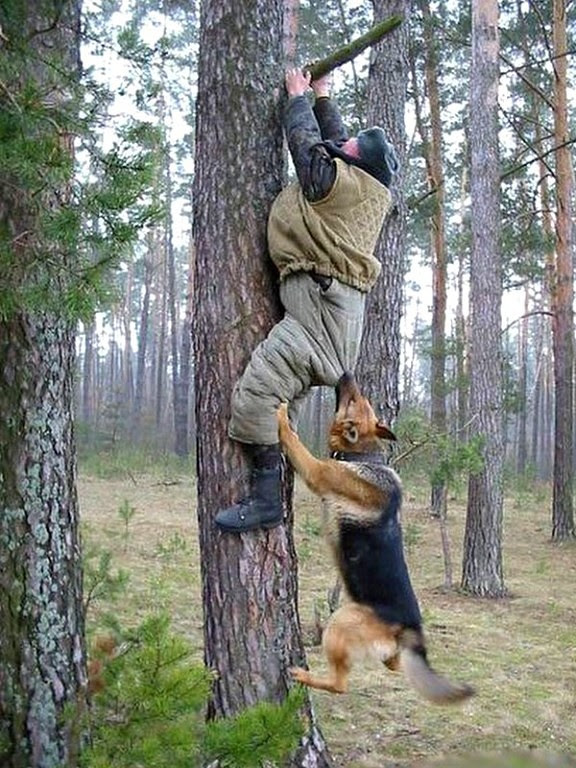
Though dogs are humanity’s oldest and most consistent animal friend, scientists have long struggled to figure out just how Canis familiaris came to be. Though researchers agree dogs are descended from wild wolves, they aren’t sure when and where domestication occurred. And as Tina Hesman Saey at Science News reports, a new study has revived the debate, suggesting that dogs were domesticated one time between 20,000 and 40,000 years ago.

Dog domestication has gotten a lot of attention in recent years. In 2016, researchers looked at the mitochondrial DNA of modern and ancient dog species, determining that dogs come from two different wolf populations, one found in Europe and one found in Asia. That means that wolves would have been domesticated in two different places, with the two lineages eventually mixing in modern dogs.

But this latest research contradicts the double-domestication hypothesis. According to Ben Guarino at the Washington Post, researchers looked at the well-preserved DNA of two ancient dogs found in Germany, one 7,000 years old and one 4,700 years old, as well as the complete genomes of 100 modern dogs and snippets of DNA from 5,600 other wolves and dogs.

They traced the rate of mutations in the over time in the dog genomes. This technique, which creates a “molecular clock,” indicates that dogs diverged from wolves 36,900 years ago to 41,500 years ago in a single domestication event. But they can’t determine exactly where the split occurred. About 20,000 years later, the molecular clock indicates dogs split into European and Asian groups. They published their results in the journal Nature Communications

Not everyone is convinced by the study. Greger Larson, Oxford evolutionary biologist and author of the earlier domestication study, tells Guarino that the latest research does not explain the “ridiculously deep split” between the genetics of ancient European and Asian dogs. He also points out that while ancient dog bones have been found in far eastern Asia and western Europe, the middle of Eurasia seems to be empty of dog bones, suggesting that there were two ancient populations, separated by vast distances.

Krishna Veeramah, a palaeogeneticist at Stony Brook University and author of the new study says he doesn’t anticipate that the paper will put the issue to rest. “More ancient dog DNA from genomes will ultimately solve the problem,” he tells Rachael Lallensack at Nature. Researchers are hoping to find more geographically diverse DNA from dogs as well as samples from different time periods.

Whether it happened once or twice, how and why did domestication occur?

As Veeramah​ tells Helen Briggs at the BBC that it’s likely dogs evolved from wolves that began hanging around human camps, scavenging their scraps. ”Those wolves that were tamer and less aggressive would have been more successful at this,” he says. “While the humans did not initially gain any kind of benefit from this process, over time they would have developed some kind of symbiotic relationship with these animals, eventually evolving into the dogs we see today.”

One early benefit of domesticated dogs may have been that they could help transport meat from carcasses or hunt dangerous game like cave bears and cave lions, Saey writes in an earlier Science News article.

For now, however, exactly when and where Fido first approached humans will remain a mastiff question.

ooOOoo

For my money the origins of the domestic dog are as Krishna Veeramah puts it: ”Those wolves that were tamer and less aggressive would have been more successful at this,” he says. “While the humans did not initially gain any kind of benefit from this process, over time they would have developed some kind of symbiotic relationship with these animals, eventually evolving into the dogs we see today.

When did we come together?

A cache of animal bones 11,500 years old suggests an answer.

Brigit Katz of The Smithsonian wrote an article in January that revealed that dogs and humans hunted together many thousands of years ago.

Here it is:

ooOOoo

Humans and Dogs May Have Hunted Together in Prehistoric Jordan

Bones at a settlement called Shubayqa 6 show clear signs of having been digested—but were much too large to have been eaten by humans

Selection of gazelle bones from Space 3 at Shubayqa 6 displaying evidence for having been in the digestive tract of a carnivore. ( Credit: University of Copenhagen)

By Brigit Katz
SMITHSONIAN.COM
JANUARY 17, 2019

When and where dogs came to be domesticated is a subject of scientific debate, but there is a wealth of research that attests to the long, intertwined history of humans and their best animal buddies. One theory about the early origins of this relationship posits that dogs were used to help early humans hunt. And, as Ruth Schuster reports for Haaretz, a new study suggests that this may have been the case among prehistoric peoples of what is now Jordan.

A team of archaeologists from the University of Copenhagen and University College London studied a cache of animal bones at an 11,500-year-old settlement called Shubayqa 6, which is classified as “Pre-Pottery Neolithic A,” or belonging to the first stage of Neolithic culture in the Levant. In the Journal of Anthropological Archaeology, the researchers write that they found bones from a canid species, though they could not identify which one because the remains were poorly preserved. They also unearthed the bones of other animals that had been butchered. But perhaps most intriguing were the bones of animals—like gazelle, for instance—that bore clear signs of having passed through a digestive tract.

These bones were too big for humans to have eaten, leading the researchers to surmise that they “must have been digested by dogs,” says lead study author Lisa Yeomans, a zooarchaeologist at the University of Copenhagen. And the researchers don’t think this was a case of wild carnivores sneaking into the settlement to grab a bite.

For one, archaeological evidence indicates that Shubayqa 6 was occupied year-round, suggesting that “dogs were allowed to freely roam around the site picking over the discarded waste, but also defecating in the vicinity of where humans were inhabiting,” the study authors write.

There was also a noticeable surge in hare bones around the time that dogs started to appear at the site, and the researchers think this may be because the dogs were helping humans hunt small prey. Previously, the people of Shubayqa 6 might have relied on tools like netting to catch hares and other animals, says Yeomans, but it wouldn’t have been very effective. Dogs, on the other hand, could selectively target elusive prey.

Humans and dogs thus appear to have forged a reciprocal relationship in Jordan more than 11,000 years ago. There is in fact evidence to suggest that dogs were domesticated by humans in the Near East as early as 14,000 years ago, and some of that evidence seems to point to dogs being used during hunts. Rock art from a site near Shubayqa, for instance, seems to show dogs driving gazelle into a trap.

In light of such archaeological finds, “it would be strange not to consider hunting aided by dogs as a likely explanation for the sudden abundance of smaller prey in the archaeological record,” Yeomans says. Among the ancient peoples of Jordan, in other words, the complex history of dog domestication may have been well underway.

ooOOoo

That scientific debate mentioned in the first line of the article has been published in this place before. But I’m going to republish it tomorrow as it so perfectly goes with today’s post.

Picture Parade Two Hundred and Ninety-Two

The final set of photographs from Dordie.

oooo

oooo

oooo

oooo

oooo

oooo

oooo

oooo

oooo

oooo

oooo

oooo

oooo

What a wonderful collection of photographs. I would have a great deal of trouble picking out by favourite even for this week let alone the whole of the series.

Happy days!

This is just beautiful!

Change of mind!

I wasn’t going to do a post for today.

But that was before I saw Flying With Birds!

Then I changed my mind.

This is the post (and I trust I can share it with you!)

ooOOoo

If you have ever wondered what it must be like to be a bird flying alongside them is about as close as you can come.

Christian Moullec takes us some amazing flights with his birds in this wonderful video. He has been helping birds migrate from Germany to Sweden since 1995. His efforts have raised awareness about the disappearance of migratory birds in Europe. I hope you enjoy this beautiful video as much as I did!

ooOOoo

Enjoy!

It is just beautiful!

Rafting the Rogue River, Conclusion

The last day of our experience of rafting downstream the Rogue River.

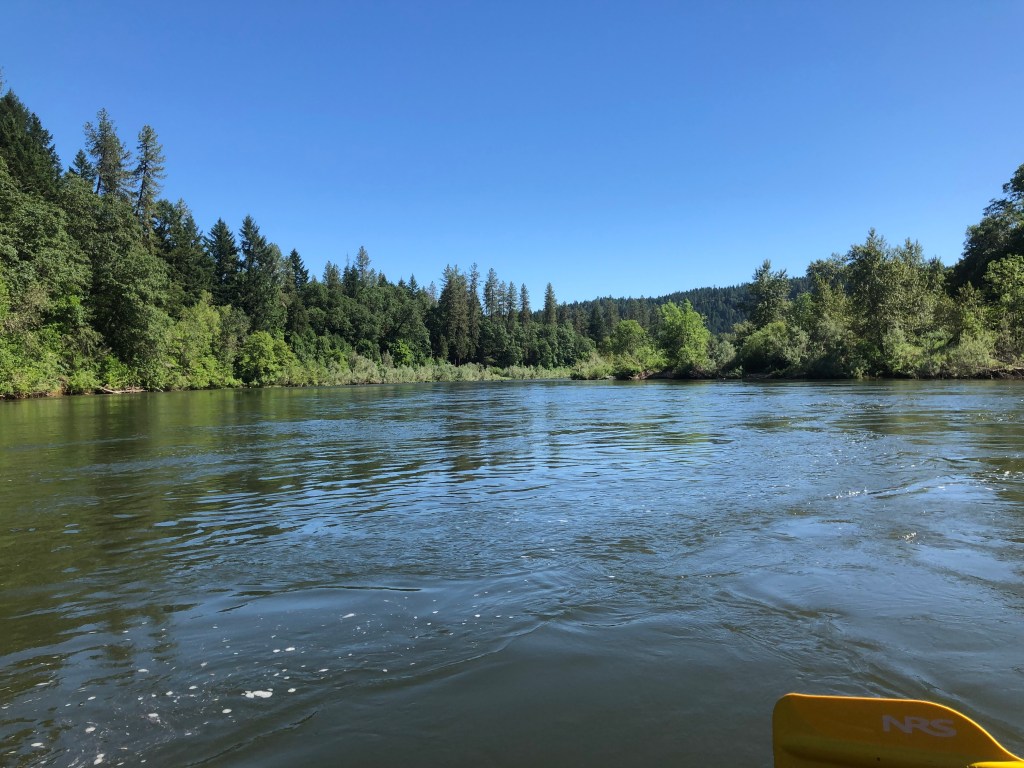
We are into the section of the Rogue River where it narrows and ‘white water’ appears. (In case you wondering why there are no photographs of real white-water it’s because I had to hang on with both hands and the iPhone stayed in my pocket!)

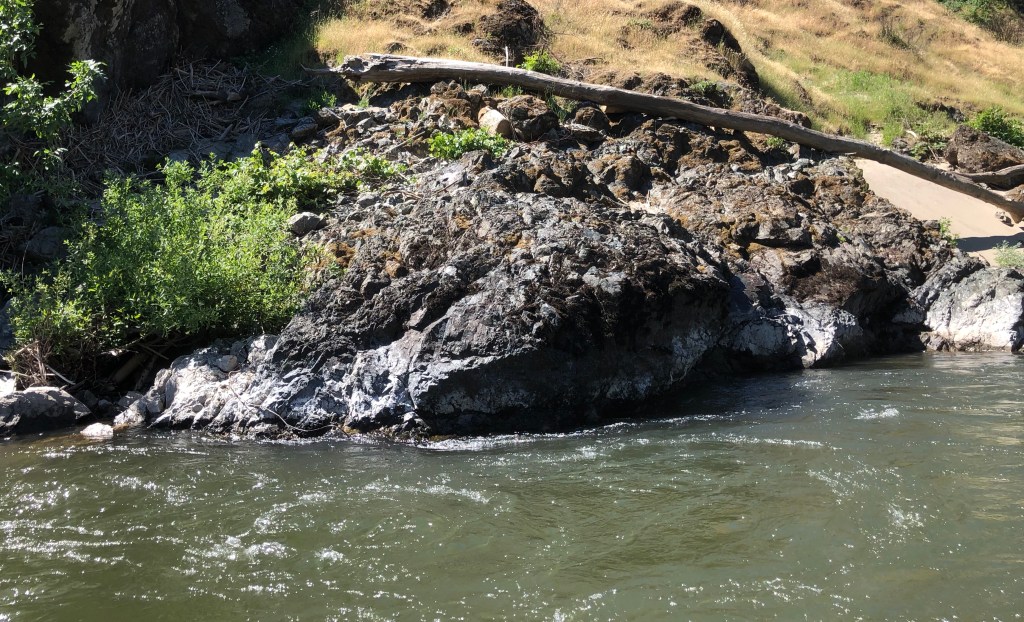
And there are times when we are being carried down by the flow very close to the rocks.

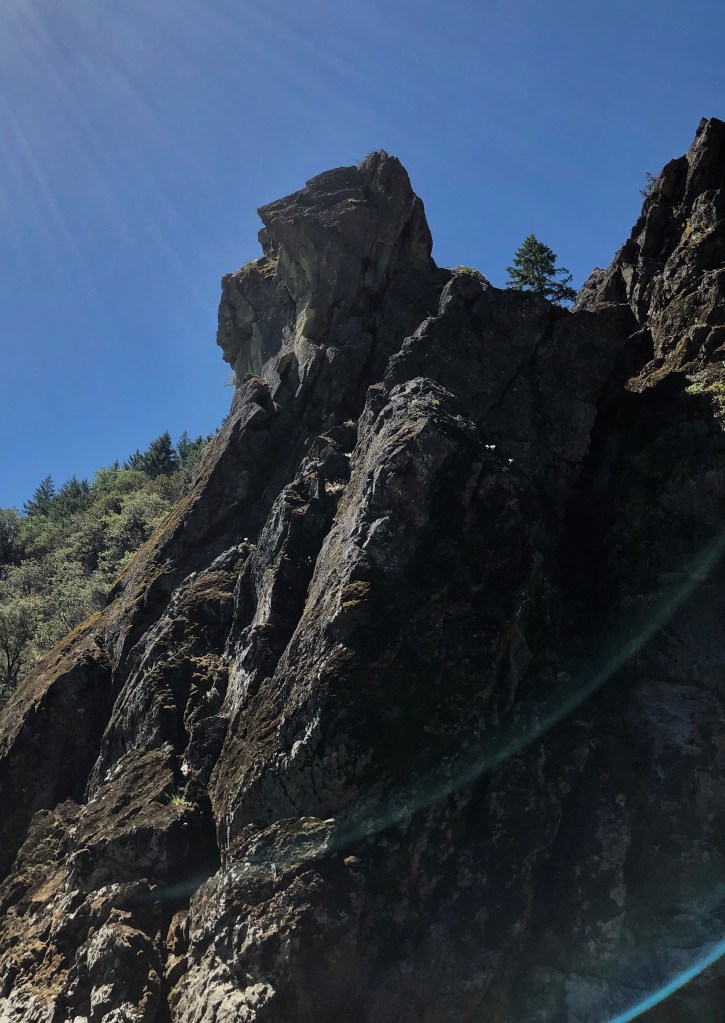
Some of the scenery is dramatic; ergo this rock towering over the edge of the river.

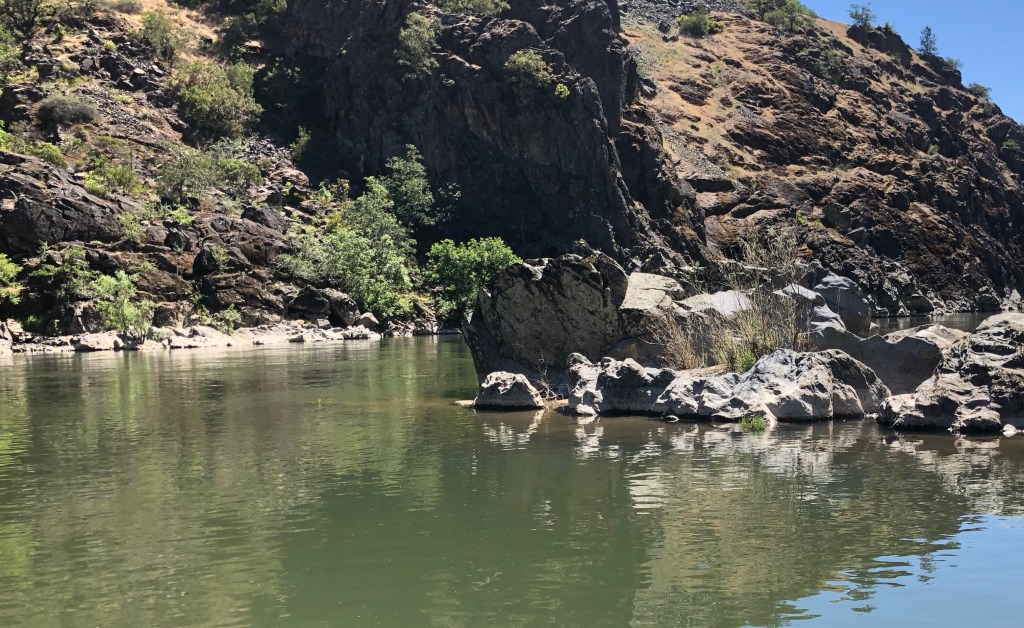
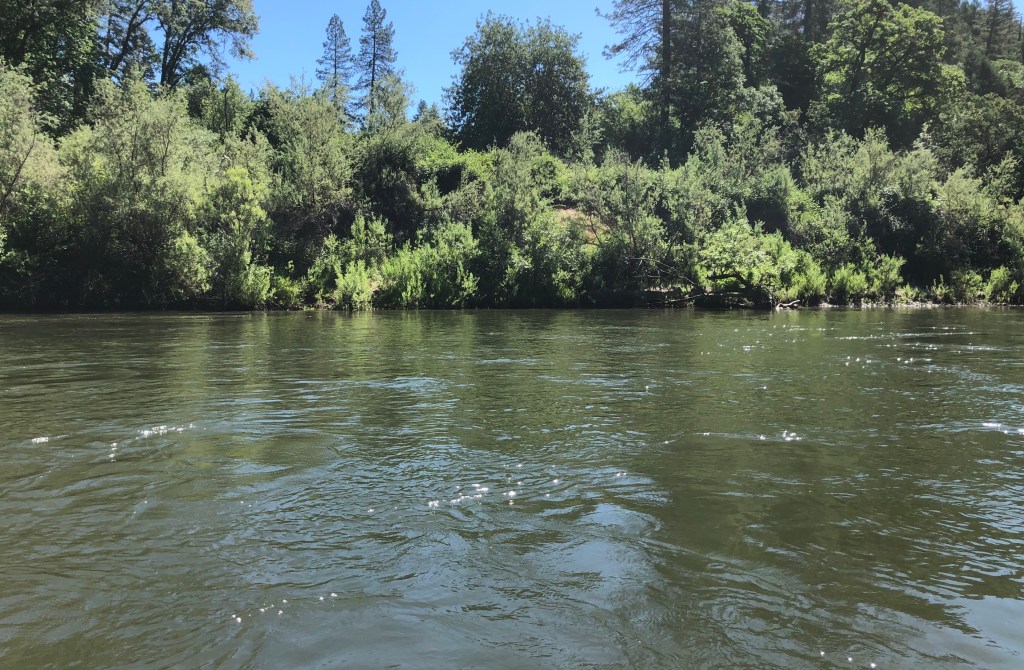
Another detail of the shoreline.

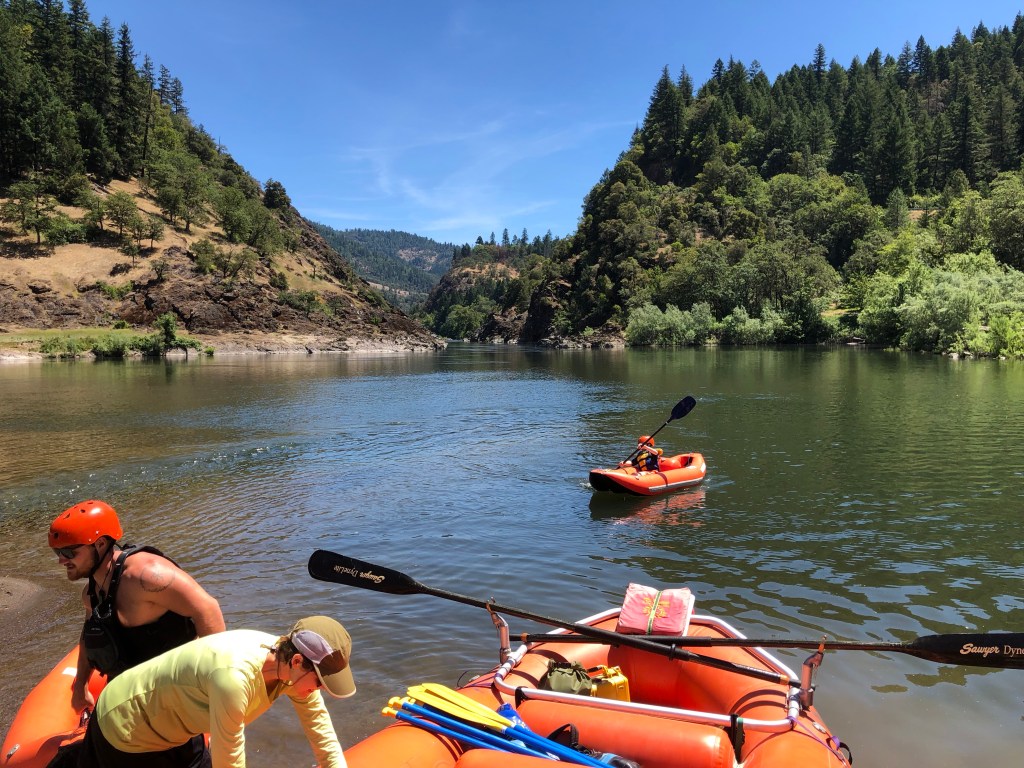
Then it was time for another to enter the kayak. We nudged the dinghy into a quiet edge of the river.

It was a 12-year-old girl who wanted to have a go in the kayak. She was excellent!

Once again, we moved out from the ‘resting’ area to join the main river.

And before we know it we had arrived at our destination.

We are at Morrisons Rogue River Lodge where there is a stop for lunch while Jean and I are to return by coach back to Grants Pass. We have only drifted 9 miles!

But it has been a wonderful 9 miles!

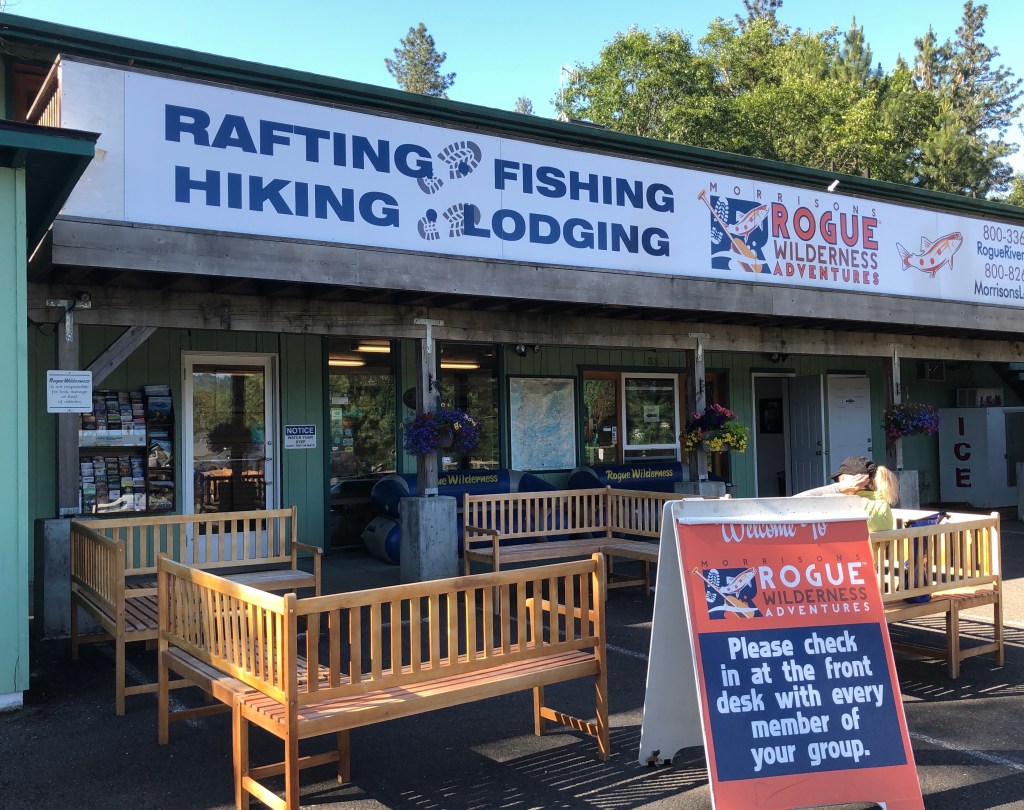
And for the close a picture of Morrisons Rogue River Lodge halt from the Morrisons website.

P.S. There is an interesting article on the total Rogue River in Wikipedia that is worth reading. It starts:

The Rogue River (Tolowa: yan-shuu-chit’ taa-ghii~-li~’,[7] Takelma: tak-elam[8]) in southwestern Oregon in the United States flows about 215 miles (346 km) in a generally westward direction from the Cascade Range to the Pacific Ocean. Known for its salmon runs, whitewater rafting, and rugged scenery, it was one of the original eight rivers named in the Wild and Scenic Rivers Act of 1968. Beginning near Crater Lake, which occupies the caldera left by the explosive volcanic eruption of Mount Mazama, the river flows through the geologically young High Cascades and the older Western Cascades, another volcanic province. Further west, the river passes through multiple exotic terranes of the more ancient Klamath Mountains. In the Kalmiopsis Wilderness section of the Rogue basin are some of the world’s best examples of rocks that form the Earth’s mantle. Near the mouth of the river, the only dinosaur fragments ever discovered in Oregon were found in the Otter Point Formation, along the coast of Curry County.

That’s all folks!

Rafting the Rogue River, Part Two

Continuing our journey downstream the Rogue River.

Now we are rafting!

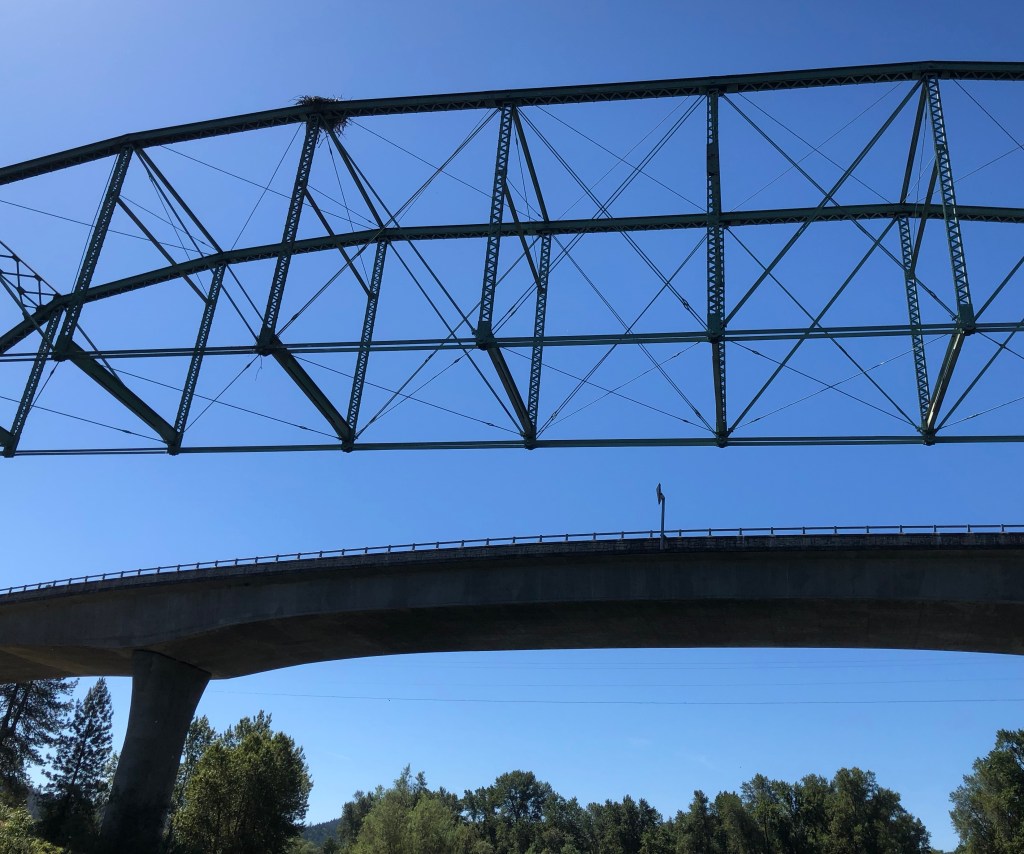
Fairly quickly we pass under Robertson Bridge.

In fact there are two bridges; the old metal one and the modern concrete one.

But way on top of the metal bridge is an osprey’s nest.

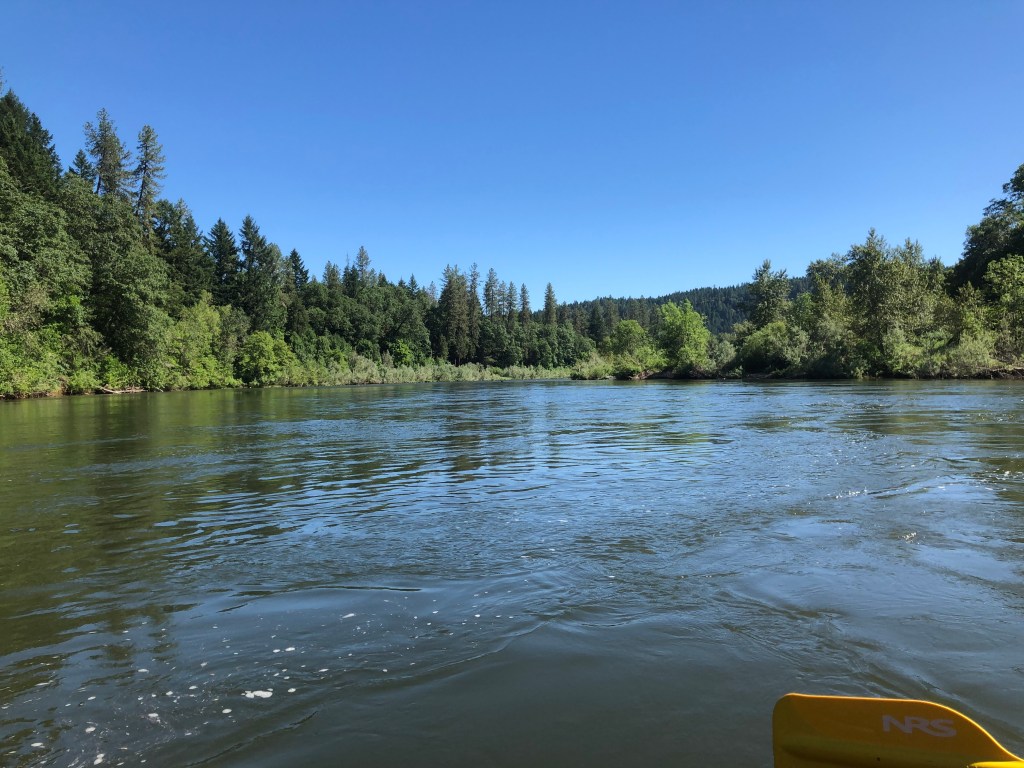
We continue.

The river, flowing at 2,800 cubic feet per second we are told, flows into the gorge.

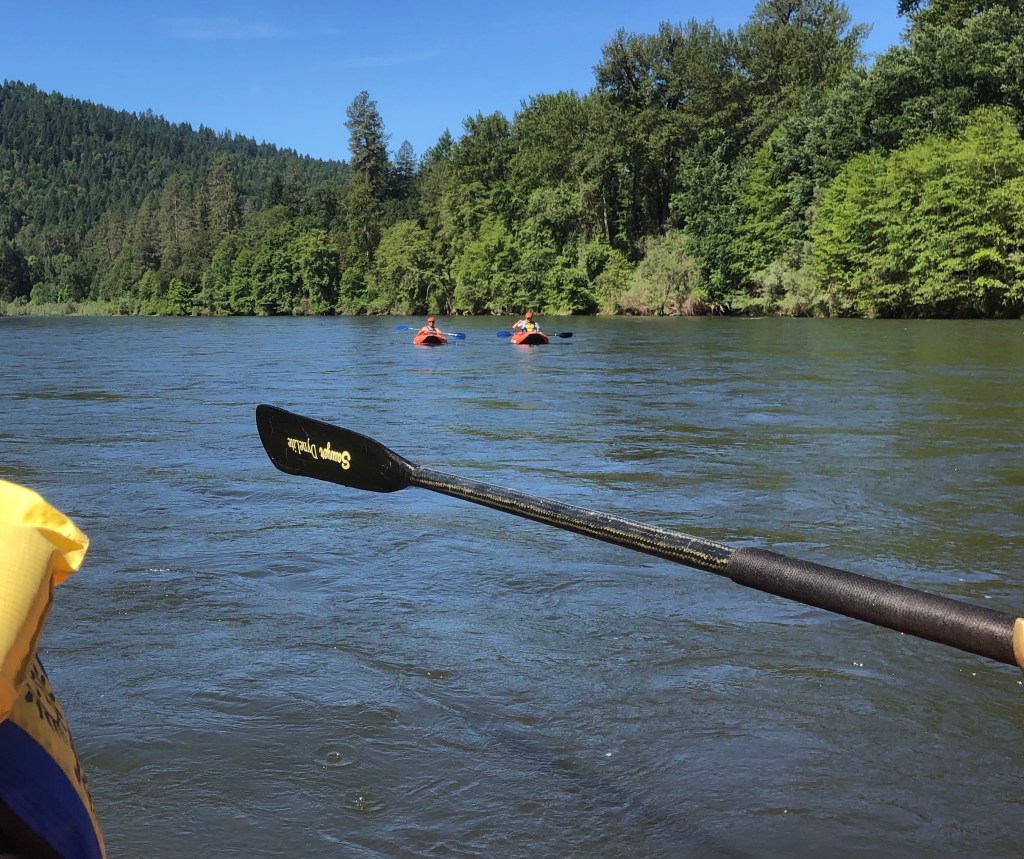
Behind us are the two kayaks. The one on the left is permanently manned by Christian, one of the guides, and the other one is available for anyone who wants to have a go.

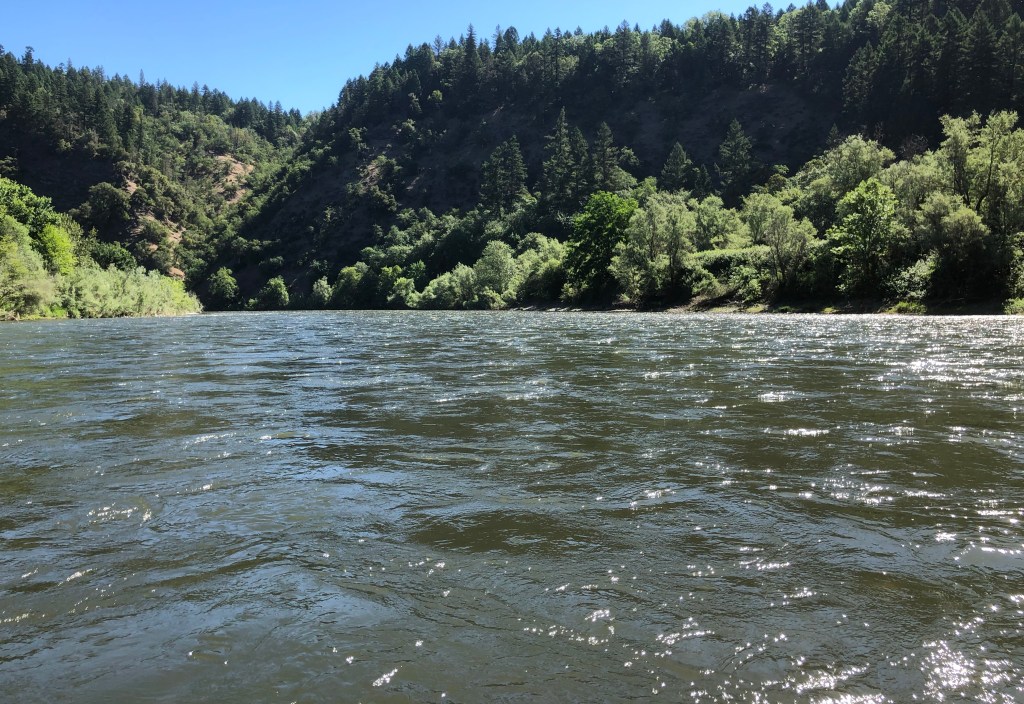
Deeper into the gorge we go.

It is wild country.

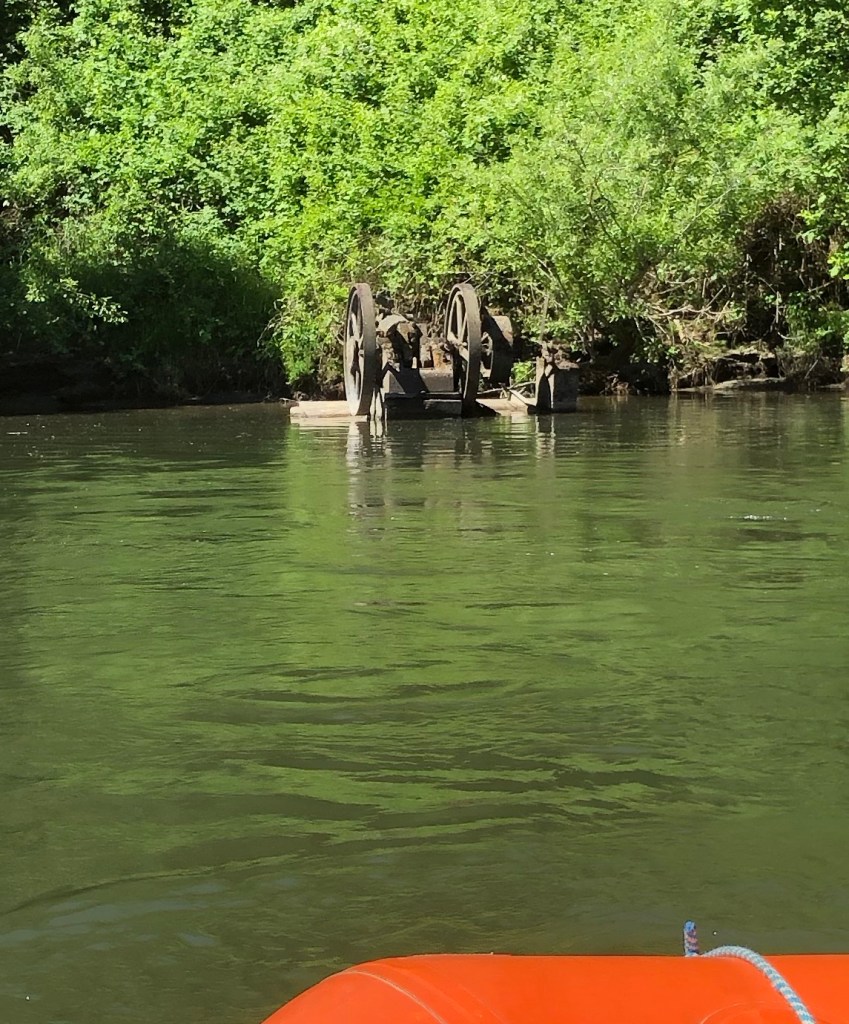
We pass an old pump that some years ago was displaced by a flooding Rogue!

And as the gorge narrows the flow of the river becomes more agitated and the start of the white-water section beckons.

The final post tomorrow!

Rafting the Rogue River, Part One

The experience of rafting downstream the Rogue River.

It is Tuesday, 4th June. It is 08:45.

We are early because we are excited and because the location that we have to go to is just four miles from home.

Morrisons Rafting

Neither of us have done anything like this before. But we decided to book just a half-day trip because a) the weather was warm but not roasting, and b) it was a local event and we would be back home by lunchtime to let the dogs out.

Inevitably we are early so I can’t resist wandering around the back to where the guides were loading up the truck.

Then it is time to check in.

Almost immediately we are fitted with the appropriately sized personal buoyancy protector.

Jean is ready to go!

At first we thought we were the only people going on the 9:30 trip but then a family booked in but they were going for an all-day rafting trip. But all of us on the same first raft.

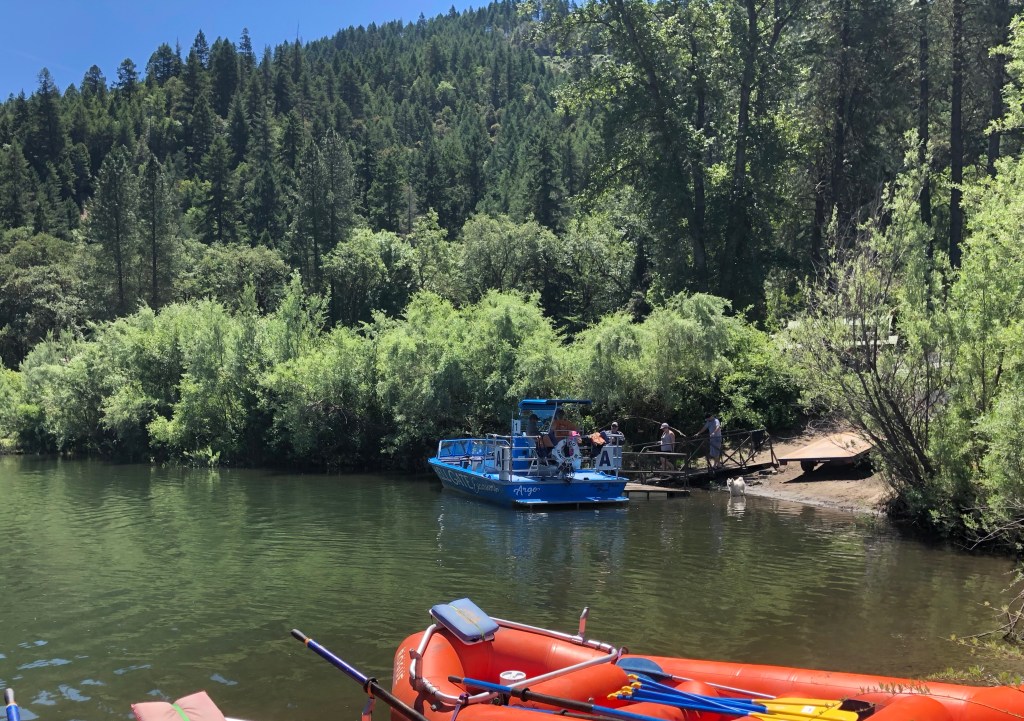
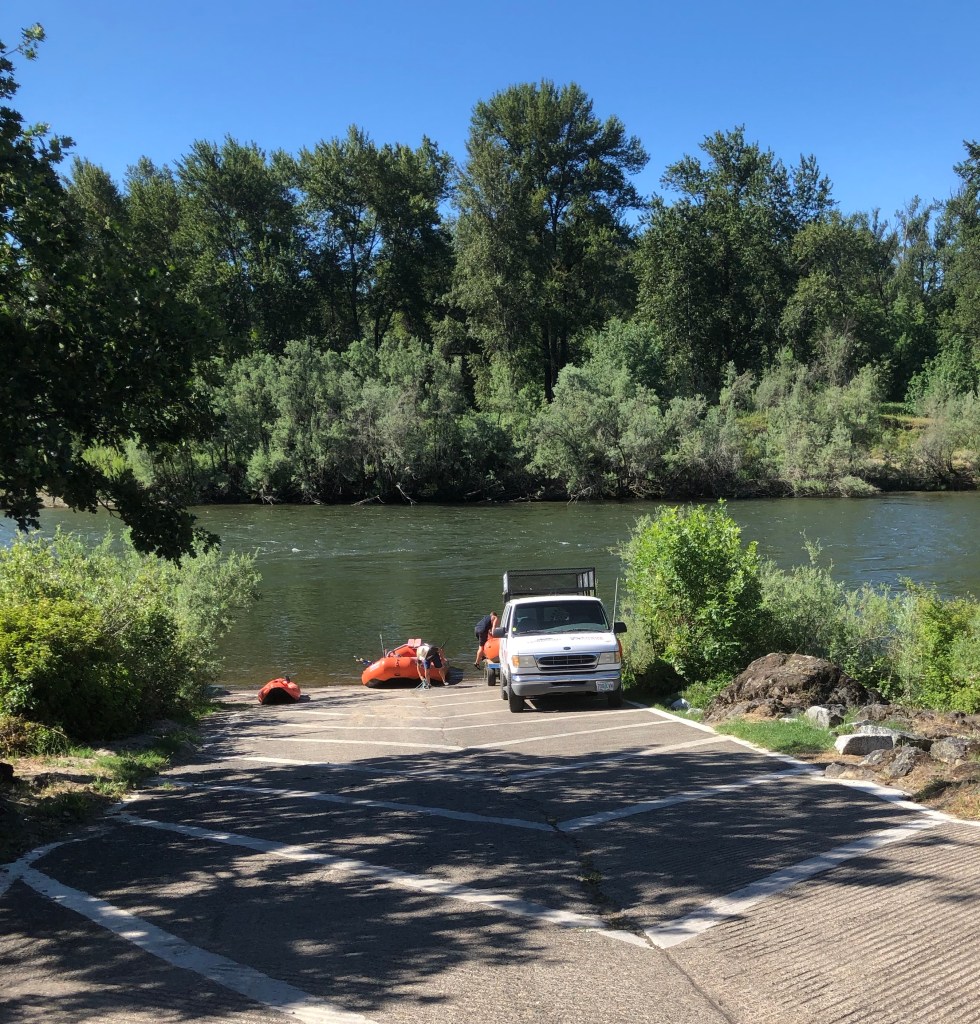
The coach towing the dinghies and kayaks, and carrying all of us, left Merlin and in about 15 minutes time came down to Robertson Bridge boat jetty where we all stepped out and assembled  at the head of the ramp while the crew unshipped the dinghies and kayaks and got them ready for boarding.

oooo

We were all going in a single dinghy and the other one was, I guess, a spare. It was put to one side. But the two kayaks were coming.

Then it was time to board.

And we were off!

More of our adventure tomorrow!

Picture Parade Two Hundred and Ninety-One

As promised, more from Dordie.

oooo

oooo

oooo

oooo

oooo

oooo

And, yes, another set from Dordie in a week’s time.

Stay safe out there!

Protect dogs in this hot weather.

It’s all too easy to forget that a dog can’t cope with hot weather.

As in too hot. Especially in a car!

I want to republish a post that appeared on The Dodo blog site recently. It is about a dog trapped in a car when it was far too hot.

ooOOoo

Guy Sees Puppy In Hot Car And Realizes What He Has To Do

Photo Credit: Jason Minson

Jason Minson, an Army veteran who runs a landscaping business, was out on a job in Norfolk, Virginia, on Tuesday when the first of several unusual things happened.

Minson was inspecting a tree in a yard when he heard a bang on the street.

When he went to check, he realized that a car driving by had bumped another car parked on the street. If that hadn’t happened, Minson probably never would have approached the parked car and discovered what was inside.

A black Labrador puppy was sprawled out on the floor of the vehicle — the noise and shudder seemed to have woken him up for a moment.

And he was incessantly panting.

“It was the kind of panting that was the last effort a dog does to try to cool himself off,” Minson told The Dodo.

Photo Credit: Jason Minson

Minson immediately called 911.

The police dispatched a unit to come help the dog — but they also informed Minson that breaking the window of the car to free the dog is a crime. (The law varies depending where you are.)

Minson watched the panting puppy from behind the pane of glass. He brought one bottle of water to the sliver of opened window and the dog jumped up on the seat and started drinking from it.

The dog went through the whole bottle. And then another.

“I’m usually a pretty cool, level-headed person but I was kind of fed up,” Minson said.

Photo Credit: Jason Minson

An animal control officer arrived and she started to try to pry the door open, but it wasn’t working. And nearly 20 minutes had passed since Minson had found the dog — and he was worried they were already out of time.

“The dog had laid back down on the floor of the car and wasn’t panting as quickly,” Minson said.

“I honestly didn’t think this pup was going to make it,” Minson wrote.

That’s when he took matters into his own hands.

“Charge me,” he can be heard saying in one of the videos he shot, “I don’t give a sh*t at this point.”

Using the baton from the animal control officer, Minson smashed the window and opened the door.

The animal control officer rushed the dog over to her van and took him to the vet for urgent care. And the owner of the dog was charged by the police. Minson received a call from the police, too — but to be a witness at the hearing about the incident.

The following day, Minson went to visit the pup at the facility where he’s recovering. Already, the dog seemed to be much stronger.

Photo Credit: Jason Minson

Minson, who has a Great Dane, hopes that if someone saw his dog in trouble in any way that they would do something about it.

“This is REAL talk people,” Minson wrote on Facebook after the dog was saved. “It’s hot out and if you leave an animal in your car [he’s] going to die from the heat … Take care of your fur babies.”

ooOOoo

I can’t think of a more dramatic way of telling you about the perils of dogs in cars in hot weather!

It really does kill dogs!