Gobsmackingly powerful writing!
Back on the 28th October, Tom Engelhardt published over on TomDispatch: Tomgram: Studs Terkel on Death and Forgiveness in America. I read the essay early on that morning and was blown away by it; to use the modern venacular. I checked with Tom that it was alright for me to republish here but decided to delay that for a couple of weeks.
The Tomgram included two essays by Studs Terkel, an author I hadn’t come across, and a terrible omission for this amateur author. His website provides this biographical overview:
Studs Terkel, prize-winning author and radio broadcast personality was born Louis Terkel in New York on May 16, 1912. His father, Samuel, was a tailor and his mother, Anna (Finkel) was a seamstress. He had three brothers. The family moved to Chicago in 1922 and opened a
rooming house at Ashland and Flournoy on the near West side. From 1926 to 1936 they ran another rooming house, the Wells-Grand Hotel at Wells Street and Grand Avenue. Terkel credited his knowledge of the world to the tenants who gathered in the lobby of the hotel and the people who congregated in nearby Bughouse Square, a meeting place for workers, labor organizers, dissidents, the unemployed, and religious fanatics of many persuasions. In 1939 he married Ida Goldberg and had one son.
Terkel attended University of Chicago and received a law degree in 1934. He chose not to pursue a career in law. After a brief stint with the civil service in Washington D.C., he returned to Chicago and worked with the WPA Writers Project in the radio division. One day he was asked to read a script and soon found himself in radio soap operas, in other stage performances, and on a WAIT news show. After a year in the Air Force, he returned to writing radio shows and ads. He was on a sports show on WBBM and then, in 1944, he landed his own show on WENR. This was called the Wax Museum show that allowed him to express his own personality and play recordings he liked from folk music, opera, jazz, or blues. A year later he had his own television show called Stud’s Place and started asking people the kind of questions that marked his later work as an interviewer.
In 1952 Terkel began working for WFMT, first with the “Studs Terkel Almanac” and the “Studs Terkel Show,” primarily to play music. The interviewing came along by accident. This later became the award-winning, “The Studs Terkel Program.” His first book, Giants of Jazz, was published in 1956. Ten years later his first book of oral history interviews, Division Street: America, came out. It was followed by a succession of oral history books on the 1930s Depression, World War Two, race relations, working, the American dream, and aging. His last oral history book, Will the Circle Be Unbroken: Reflections on Death, Rebirth, and Hunger for a Faith, was published in 2001.
Late into his life Terkel continued to interview people, work on his books, and make public appearances. He was the first Distinguished Scholar-in-Residence at the Chicago Historical Society. His last book, P.S.: Further Thoughts from a Lifetime of Listening was released in November 2008. Terkel died on October 31, 2008 at the age of 96.
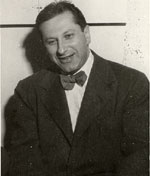
Although the TomGram includes two essays from Stud, I’m going to split it and republish the first essay, together with Tom’s introduction.
Prepare to be very moved!
ooOOoo
Tomgram: Studs Terkel on Death and Forgiveness in America
Posted by Studs Terkel at 8:00am, October 28, 2014.
Follow TomDispatch on Twitter @TomDispatch.
Studs Terkel, who put oral history on the American map with one spectacular book after another, was a small man who had a knack for making everyone around him feel larger than life. He taught me the first significant lesson I learned as a book editor — and he didn’t even know it. I stumbled into Pantheon Books in the summer of 1976, hired (on the basis of remarkably little) by André Schiffrin, who ran that pioneering publishing outfit. I had only the most minimal idea of what a book editor was or did, but on one thing I was clear: I was going to put new voices between covers. (I would later start calling them “voices from elsewhere, even when the elsewhere is here.”) I couldn’t have been less interested in well known or famous writers. I was, that is, something of a reverse snob.
Nonetheless, one day that first fall André came into my office with the manuscript of Stud Terkel’s memoir, Talking to Myself, which was to be published the following spring. He asked me to read it because Studs — he claimed — wanted my reaction. A longtime Chicago radio personality, who had even hosted an early, unscripted TV show, “Studs’ Place,” set in a fictional bar (the “Cheers” of its era), he was well known indeed. The first book he and André had done together, Division Street: America, had broken into bestsellerdom and neither of them had ever looked back.
Studs didn’t know me from a hole in the wall, so I didn’t take the request seriously until André returned a few days later to ask whether I had read the manuscript. I hadn’t. He said, “Please do. Studs is waiting anxiously.” Anxiously? That was hard to imagine, but when your boss insists… so I went home, read it, and two days later let him know what I thought. (What could you think, given that Studs was fantastic at what he did?) Soon after, he put me on the phone with Studs to tell him just how good it was and make a few modest, last-minute suggestions.
So many years later, I still remember that unforgettable voice (possibly the last on Earth out of which a cigar emerged) saying something like, “Do you really mean it, Tom?” What I’ll specifically never forget was the quaver in it, the shiver that seemed like a caricature of fear. After all, he was the best-known author I’d ever talked to and, as a young man with enough doubts of my own, it had never crossed my mind that a successful writer might feel vulnerable when it came to his latest work or give a damn about the opinion of a total nobody. In a way, that moment taught me everything I needed to know about the essential vulnerability of the writer and, thanks to Studs, I never looked back.
For years, André, who was his editor, would call me in to take a final look at his oral histories. (It was like sending in the second team.) Only after I left Pantheon did I became Studs’ primary editor. It was the experience of a lifetime. Just to give you a little taste of the man, I’m including excerpts from the only letter of his I still have, typed by hand, filled with X’d out words, and further hand-corrected in pen. It came with the first batch of rough interviews for the final book we worked on together, an oral history of political activism aptly titled Hope Dies Last. By that time, Studs was in his early nineties and still a human dynamo. Maxwell Perkins, whom he mentions, was a famed editor who joined the venerable firm of Scribner’s wanting to publish vibrant young voices and ended up working with, among others, F. Scott Fitzgerald, Ernest Hemingway, and most famously the novelist Thomas Wolfe who simply couldn’t stop writing, which meant that his books involved marathon bouts of editing. Here, then, are the first two paragraphs of that letter in his telegraphese.
“Post-election day,” Studs began. “A hell of a time to write about hope… The ton of stuff — good and less than good. Since what you have is the raw stuff — I have already tossed aside about 20 [interviews] — I shall, of course, begin my cuts shortly after you receive this messy letter.
“You’ll be my Maxwell Perkins, though you don’t wear a hat, and I’m your Thomas Wolfe, though a foot and a half shorter than he was…”
And here’s how he ended: “I’m eagerly looking forward to your reactions when you get this bundle. Horrified [though] you may be by its bulk, remember you’re my Maxwell Perkins. If it works out, I’ll buy you a hat.”
What a guy (even if I never got that hat)! I always considered it appropriately Studsian that the book preceding Hope Dies Last was his oral history of death, Will the Circle Be Unbroken?: Reflections on Death, Rebirth, and Hunger for a Faith. Studs himself died in 2008. Circle has just been reissued in paperback with a new Jane Gross introduction by the New Press, the publishing house that André, who died last December, set up after he was forced out of Pantheon by Sy Newhouse, the right-wing owner of its parent company, Random House.
Given the grim panorama of death these days — from beheadings to pandemics — and the hysteria accompanying it all, I thought it might be both a relief and a change of pace at TomDispatch to turn back to Studs’ oral history of death, which as its editor I can testify is moving and uncannily uplifting. That, of course, is not as odd as it sounds from the man who was the troubadour for the extraordinary ordinary American. Thanks to the kindness of his publisher, the New Press, I’ve chosen two interviews from that book which stayed in my mind these last 13 years: the first focuses on an impulse that may be among the hardest to understand and yet most moving to encounter, forgiveness; and the second, from this country’s medical front lines, centers on a subject that, unfortunately, is still all too timely: the trauma deaths of young Americans from gunshot wounds. This is the only book I ever remember editing while, in some cases, crying. Tom
“You Got Into My Heart Violently, But You’re There”
Trauma, Death, and Forgiveness on the Front Lines of American Life
By Studs Terkel[The following is excerpted from the new paperback edition of Studs Terkel’s oral history of death, Will The Circle Be Unbroken?: Reflections on Death, Rebirth, and Hunger for a Faith, with special thanks to his publisher, the New Press.]
“The Other Son”
Maurine YoungIn contrast to her husband’s introspective nature, she is outgoing, a large-boned woman, overflowing with gusto and ebullience. She frequently laughs out loud.
I’m a forty-six-year-old woman of Jewish-Gentile descent — my father’s a Jew, my mother’s a Gentile. My parents divorced when I was young, and I was raised by my stepfather — raised Catholic. He was a truck driver. My younger brother, Mark, became a truck driver. I went to public school. But I went to the Catholic catechism every Wednesday. I did the confirmation and all that kind of stuff. I got close to age twelve, thirteen, and I began to see what I was saved from. I was saved from Hell. But what Catholicism wasn’t teaching me was what I was saved to. They didn’t tell me how to live with God and experience a taste of Heaven on Earth, now. So I began to pull away from the Church. It just didn’t meet my needs.
If I read my Bible I saw that it said very clearly to worship God, then why were people worshiping statues? To me that looked like idolatry. So, as a young teenager, I started asking questions. Then I began to wonder what is this all about? I know that there’s a God, and I know that He loves me, but what else is there? How do you live now? I lived in a very difficult, alcoholic home, and early in my teens began to experiment with drugs — do whatever I felt like doing. In the one sense, I had the Ten Commandments ingrained in me, so I knew what was right and wrong — but I didn’t really care about the consequences. I didn’t really understand the value of a God who loves me, and that because He loves me, I should act loving towards him, which means act loving towards everybody else. I was very, very selfish.
I had been working part-time jobs since I was fourteen. A couple of weeks after I graduated from high school, my dad said, “Get out of the backyard, sitting in your bikini, and get your butt downtown and find a job.” So I went downtown and found a secretarial position. I was seventeen. And then I moved out when I was eighteen, to live with my boyfriend. That didn’t work out. Moved back home and met Steve not that long afterwards, in March of 1975. We moved up here to Rogers Park and had a family. We had twins in May of 1977, Andrew Needham and Samuel Richard, born on different days — May 7 and May 8. And then in 1982, in August, we had Philip; and then in 1987, December, we had Clinton. I was working as a floral designer, part-time, in Skokie. Steve was tuning pianos.
Andrew went out to cash a check with his brother and didn’t come back. He was shot by a young man who had easy access to a handgun and who had graduated from high school the day before and was looking to move up in the gang that he was in, the Latin Kings. He shot Andrew, probably because Andrew didn’t back down with his mouth. He knew that gang members were idiots and didn’t mind telling them what he thought of them when they made signs at him. He was in our car.
When I got to the hospital and found out that he was gone, and I asked the boys what happened and they told me, I said, “Well, you know what? There’ll be no retaliation for this. I just want to make that clear.” Men usually want revenge; women, too, but men usually much quicker. Women will stew for a while. I knew that revenge was wrong, but I also knew that I hated what these kids had done and knew that they deserved to be punished. I pulled out some old journals from that time. These notebooks. Here’s an entry that I wrote July 13th of 1996. Andrew was murdered June 10th of 1996. It reads: “It’s been sixty days since Andrew left us. Forced out of his body by Mario and Roberto. Please, Lord, let justice be served. Plus, punish them. Let them not have a free life.” That’s how I felt. I did not want them to be free, and I was real glad that the police had seen what had happened.
I’m going to backtrack a tiny bit. My twins were three months old. I was sitting on the beach with them. Somebody came up to me and said, “Could we talk to you about Jesus?” And I said, “It’s a public park, it’s a free country, you can sit down.” So they started talking to me about Jesus. This lady turns to me and she says, “So how’s your life?” And her words shot into my chest like a sword. I’m thinking, Oh my God, what does she know? I had just had the twins. I was not coping. I was smoking massive amounts of marijuana. I was up twenty-four hours a day, not knowing how to keep these little babies on a schedule. I was fantasizing throwing one of them out the window. I was having what now I understand to be severe post-partum psychosis. I didn’t have any help. I was really just trying to hold on… So I began to tell this lady and her friends how poorly I was doing. She said, “Would you like to commit your life to Christ again?” And I said, “I really would. Because I realize I’m not doing very well by myself. Something is missing.” So I did that and I prayed that day. Since that day, I’ve been learning how to parent, and to let God love me, and to love and forgive others.
Nineteen years later, when this happened with Andrew being murdered, I said, “OK, I know who I’m following.” What would Jesus do? It was pretty clear. He says: Love your enemies — I consider these little guys my enemies that killed my son. Pray for those who use you, forgive as God has forgiven you. So I thought, OK, what does that mean? Looking back at another journal… this is from January of 1997. I wrote: “What are the obstacles to forgiveness? How can forgiveness free us? How can it free me? Well, first I needed to know that I must face my own pain and grieve. And not keep anger on, sort of as a suit of armor. Admit the wrong that was done to me and experience the rage. But be honest with God about my pain and why. Releasing my anger to him and pardoning the offender makes me feel vulnerable, even out of control. But what’s my choice? If I hold my anger, it will destroy me.” And then I also wrote, “It’s OK to be afraid of being hurt again.” So, obviously, the whole idea of forgiveness was there in the back of my mind the whole time, and I kept thinking: I want to kill them, I want to see them fry. But God says forgive… And I kept going back and forth thinking, How do you do this? Scratching my head. Then I realized I could make the choice and trust that the power to do it would be there. Because I know that my faith, which is just my yes, is the glue that holds God’s power to his promises. And He’s promised that He would do what I ask, He would do the right thing in my life. I’m going to have the faith and forgive and trust that He’s going to take care of it all. So I finally did that about July of 1997, about six months after what I just read to you. I forgave and wrote Mario in prison a letter. He was eighteen, my son was nineteen. I told him about my life. I just wanted him to know how I was raised, and that I had done plenty of things that needed forgiving and God forgave me. So how could I withhold forgiveness from him? I couldn’t. That I love him and God loves him and I forgave him.
I didn’t know that at the same time, he was writing me a letter. As I remember, he was begging forgiveness, saying how sorry he was, how he wished he could bring Andrew back, even trade places. And I believed his letter was sincere. But his letter was unnecessary for my forgiveness. I had been asking to see him.
It’s one thing to write to someone and say you forgive them — it’s another to physically touch them and say you forgive them. It would help me in my healing and him in his, I knew. I felt compelled to do it. I had been asking through his priest when was a good time. Mario kept saying, “I’m not ready. Mrs. Young is pushing too much. I’m not ready.” He was terrified. He thought I might hit him or something. He was not ready to face me. That was July of 1997. I didn’t get to see him until December 17th of 1998. So it took more than a year and a half before he was ready. And I waited. We did correspond. And then I went to visit him with Father Oldershaw, and a retired schoolteacher by the name of Arlene Bozack. She had been visiting him.
When we first got there, the assistant warden, who was Hispanic, was crying. He said, “Mrs. Young, why are you here?” I said, “Well, I’m here to offer forgiveness to the young man who killed my son.” And he said, “Why?” And I said, “Because I care about him, I love him. It’s the right thing to do. I want to do it in person.” He said, “In all my years, this is the first time I’ve ever seen this happen. I really commend what you’re doing.” He was this big, tough-looking Hispanic warden.
I see Mario for the first time. He couldn’t look at me. He had his head hanging down. They sat us around a small round table with four attached seats, told us where to sit. Everybody kept looking at me very suspiciously, like I was going to just jump on this kid and beat the hell out of him. Mario’s got his head hanging down, and all of a sudden he kind of looks, and he can’t make eye contact. I saw that his whole body was starting to shake. All four of us prayed. It was me, Father Oldershaw on my right, Mario was across from me, and Arlene Bozack was to his right.
I grabbed both Mario’s hands from across the table, and I looked at him in the eye, and I said, “I just want you to know that I’m glad to be here.” I knew I had to go first. He just shook his head. Slowly, but surely, the conversation started. Little chitchat, we all took turns talking. I wanted to know about his family and how they were doing. Because the shame that he brought on them — especially being an Hispanic family — that’s so important. And then the conversation changed a bit because I felt like, OK, it’s time for this little guy to hear what he’s done to us. The consequences of his actions. I began to tell him the difficulties that each of our family members was having. As I went through, person by person, saying, one young man’s suicidal, the other one can’t focus, or whatever the problems were for each of us, he listened. He held Arlene’s hand and he trembled and he wept, but he listened.
At some point in the conversation I said, “I love you like you’re my son, like you’re one of mine.” And I was like, “I can’t figure out how this happened!” [Laughs] I thought I was nuts. I didn’t tell him that. I was thinking, I gotta be crazy. So I said, “I love you like you’re my own son. You got into my heart violently, but you’re there. So this has to be a miracle. God did this. Because I didn’t do this. But, as a son, you have responsibilities to know what’s going on and to pray for us, to communicate with us regularly. You’re part of the family now.” Then he pulled out his Bible. I said, “Mario, there’s a Scripture that meant a lot to me and helped me take this step. I wanted to tell you what it is. It’s in Romans, in the twelfth chapter. It says, ‘Never pay back evil for evil to anyone. Respect what is right in the sight of all men. If possible, so far as it depends on you, be at peace with all men.’” I said, “My reaching out and extending and forgiving was my responsibility, and it didn’t depend on whether or not you accepted that forgiveness. I had to do that.” It also says, “Never take your own revenge, but leave room for the wrath of God.” Then I said what was really important was when I got to verse 21. It says, “Do not be overcome by evil, but overcome evil with good.” I said, “Mario, that really meant a lot to me. Because I wanted to win. I did not want this evil thing that you and Roberto did to us to win. I wanted good to win. So that’s why I forgave you and that’s why I love you.”
He was speechless. He looked at me like I had two heads. [She roars with laughter.] He stared at me like: I don’t know what she’s talking about — she’s from another planet. It wasn’t quite sinking in. But he was listening. I heard later that he was confused and didn’t understand it, but it was beginning to make sense. He was actually holding his Bible open to this spot, looking at it over and over and over again. We talked, and then I got to hold him. That was really, really special. Here’s another reason I thought I was crazy: I’m sitting across this little table from him, and it’s all I can do to stay in my seat. I’m thinking: What’s wrong with me? Am I having a nervous breakdown? Everything in me wanted to leap over the table, grab hold of this kid, and rock him like a baby, just hold him. The urge was so overwhelming. The compulsion was so overwhelming, I was afraid that if I couldn’t keep control, I’d be in really big trouble with the guards and the warden. So I resisted that urge the whole time.
On the way back home, I was thinking about it, and then I talked to Arlene and Father Oldershaw. I said, “I’ve got it! I know what was happening. I was getting a taste in my body of how much God loves us. He loves us so much that He wants to leap over the table, grab hold of us, and just rock us because we’re his children.” That love, that forgiveness — I got a taste of what it must have been like for Jesus when he was here and walked the Earth among people that he loved so desperately, so wonderfully. I got a taste of it!
As time went on and we kept corresponding, I did go see him again there, and it was good. I really began to see him maturing, through his letters and through visiting him. I was training him, I was mentoring him — to help him to grow up, to help him in his spiritual walk. His letters changed. They became clearer, he became more willing to take total responsibility. I saw no excuses anymore, I saw a person that was squarely saying: This is where I am and this is where I should be, and God’s changing me right here, and probably being here saved my life. He’s working as a chaplain’s assistant now… [Sighs]… I’m convinced that if I did not forgive and I held on to my anger, that I probably would have become mentally ill. Maybe killed myself, maybe hurt someone else. I felt like God’s hand was on me and he was squashing me into a pancake: You gotta do this — this is the right thing.
I knew that there were great things ahead, although they terrified me, the thought of going out into new territory. Because, I’ll tell ya, I was not a very forgiving person most of my life. I used to hold things against whoever did what to me. It really took the murder of my son and the forgiving of his killer to teach me how to forgive everybody around me. I began to realize: My husband’s not going to be Mr. Perfect. My parents haven’t been perfect parents. My children are not perfect children. My friends are going to let me down. That’s a given. Because they’re human, like I am. There is one perfect, that is God, and He loves me. And that’s good enough for me. So, by forgiving them, like I did Mario, it freed me to really love. My love was, like, stopped up in a bottle or something. It came out in little bits. But for the most part, it was stopped up until I forgave this kid. And then it was like whoosh — this is what I’ve been missing my whole life. [Belly laugh]
I saw Mario just this last month. I’ve met his mom and his dad. They don’t speak any English, but usually one of his sisters is there to interpret. Most of the time, all his mother can do is hold on to me and cry. She’s a very sweet person.
ooOOoo
Did warn you about being very moved!
 Learning from Dogs