Month: Apr 2010

A Teen’s Reflections

This is the second Guest post from AJ Easton, a 13-year-old girl from North Carolina, USA. AJ first wrote about Learning from Horses on January 17th this year. This is a more reflective essay that would have been a credit to someone with many, many more years.

Trust is a complicated thing…

You have to learn to trust, but it is not something that can be taught in schools. You also have to earn trust, by keeping secrets and not spreading rumors.

With the people you trust, you do things you wouldn’t do with other people . Your true self comes out with the people you trust. You don’t worry about being judged; you don’t worry about people disliking you for who you are.

AJ Easton

But, in our modern-day world, it seems as if everyone judges.

People seem to hate for reasons as stupid as one’s appearance. People don’t trust people anymore because it seems that we are constantly warned to avoid strangers because they might hurt you, murder you, or completely mess up your life in some way, shape, or form.

And in school, if you trust someone enough to tell them a secret, they don’t keep it. And then, in your point of view, the world has ended.

All because of some secret that got out about who you like, or what you did with the person you were dating, or something else that, in the end, isn’t all that important.

Then everyone will judge you based on that rumor until you leave the school or graduate. They do this to make themselves feel “cool” and “important.”  And you learn not to trust.

Social status has become such a big factor in everything we do these days. Everyone feels as though they have to be highly ranked socially to mean anything to the world.

But, truly, all you have to do is love what you do and respect yourself, to follow your dream and be determined. We should make decisions that help us move forward, not dwelling on the past.  Every second is different; everything is unique. Nothing is the same. Not a single person, or tree, or moment.  Each moment represents a new opportunity.

Don’t have regrets. What has happened has already happened and you can’t change it. Time travel is fictitious, not a reality. You can’t rewind your life to change what you have already done. There is a reason behind everything: remember this when you are having doubts about what you have done.  Learn from your past but don’t let it eat at you.

Live your own life. And learn to trust yourself, and those who love you.

By AJ Easton

Today’s Quiz

The British General Election is really hotting up, with mud flying in all directions.

Mr Pott. Your proposal to keep NI (National Insurance contributions for employers and employed)  as it is rather than putting it up as we propose (as usual) will leave a black hole in the country’s finances.

Mr Kettle: a Black hole? YOU are worried about a black hole??? Ha, Ha, Ha ……

Your quiz question: Who are the real Mr Pott and Mr Kettle?

Answers soon …..

The Hawker Hunter aircraft

What a beautiful aircraft!

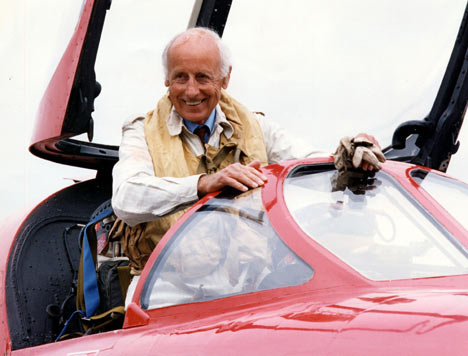
On April 2nd, I published an account of a flight in a Hawker Hunter that my dear cousin, Richard, experienced in 2003, the 50th anniversary of Neville Duke’s breaking of the existing world speed record on September 7th, 1953.  Neville Duke died in 2007 at the age of 85.

Squadron Leader Neville Duke, 85, flew 485 operational sorties during the war

It seemed fitting to add a little more information about this marvellous aircraft from an era when Britain built some of the best aircraft in the world.

As always, WikiPedia has an excellent account of the history of the aircraft.  So this Post will just present a few images for readers to ooh, aah over!

Thunder and Lightnings has some excellent images of all the different types including WB188 that Duke broke the speed record in.

Copyright 2009 Damien Burke

F.3 WB188, Hawker Aircraft, RAF Tangmere, 1953; author
As at 7th September 1953, when World Absolute Speed Record of 722.2 mph gained by Neville Duke; pointed nose, reheated engine, additional curved/raked windscreen
Later scheme of Scarlet Red

There is also a distant connection with our erstwhile editor, Paul.  Paul used to fly a TB2o from Exeter Airfield in SW England which is where the Hunter Club is based.  Jonathan Whaley, who commanded the Hunter that Richard flew in, has his own personal Hunter – Miss Demeanour – registration G-PSST so during the summer months it was not uncommon to see Hunters in the sky above Exeter.

Hawker Hunter 'Miss Demeanour'

Finally, a couple of videos to drool over.

and a lovely display at RAF Waddington in rather unpleasant weather conditions

Wonderfully nostalgic!

By Bob Derham

Today’s Quickie

Thomas Friedman of the Intl Herald Tribune

“Son, your ego’s writing checks your body can’t cash.”

Well, this may be old hat for specialists but it surprised me. Is the same true for Britain? In either case, as Friedman says, it suggests we should explore more forcefully the ways we could aid business startups.

I always find Thomas Friedman excellent value for the time invested in reading him! See here:

“Here’s my fun fact for the day, provided courtesy of Robert Litan, who directs research at the Kauffman Foundation, which specializes in promoting innovation in America: “Between 1980 and 2005, virtually all net new jobs created in the U.S. were created by firms that were 5 years old or less,” said Litan. ‘That is about 40 million jobs. That means the established firms created no new net jobs during that period.’”

And if you want to know where the opening quote comes from, read the Friedman article!

By Chris Snuggs

Should you invest in U.S. bonds? Part 4

This is the concluding part four of a multipart series on the factors that drive U.S. and foreign bond prices and yields.

[Part One is here, Part Two here, Part Three here Ed.]

Bond’s in a weak or faltering economy will generate a lower return to lenders than bonds in a strong economy, absent inflation or any other material changes in the purchasing power of the currency.  Weak demand for goods and services means weak demand for financial capital which means low rates of return on financial capital.

The policies of the government can increase the borrowing costs of private industry.  Fiscal policy that increases taxes reduces the profitability of projects and undermines the ability of companies to pay coupons and repay principal.  Monetary policy that increases the money supply may lead to inflation, which also increases the cost of borrowing and reduces economic activity.

Lastly, and of the greatest concern of late, is the level of borrowing by the U.S. government.   Debt levels are at record highs, with no relief in sight. The AAA rating of U.S. debt is reportedly in jeopardy (Chicago Tribune editorial).

Moody's Corporate Logo

Both existing and new lenders worry about the ability of the U.S. government to repay. Yes, the can simply roll over existing debt by raising taxes or creating money to retire old debt and replace it with new, but the interest rate required by new lenders goes up as the ability of the private economy to sustain tax revenues falls and the risk of inflation rises (Moody’s explains U.S. bond ratings).

Both factors are in play now: an anemic economy with little hope that this administration will undertake policies that support business, and a ballooning money supply and weak dollar that undermine the purchasing power of the returns to lenders.  The returns to U.S. debt may still be healthy relative to those one can earn in other countries, but the spread is shrinking. The private economy remains fundamentally strong, thanks to the work ethic of the American people and the profit motive of the capitalistic system, but the policies of the U.S. government are straining those resources.

By Sherry Jarrell

Perkins and the Dodgy Expenses

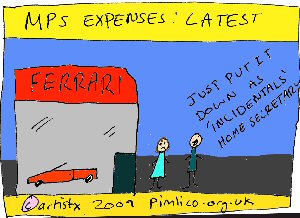
It’s not really the public’s money, is it!

MP's expenses
[This cartoon is licensed under a Creative Commons Attribution-Noncommercial-No Derivative Works 3.0 Unported License.You can use it on your own site under the relevant useage rule.]

Good morning, Sir ….

Is it, Perkins?

Oh Dear …. what’s happened now, Sir?

It’s this dratted expenses nonsense.

Nonsense, Sir? Then why are the police involved again?

Again?

Yes, Sir. They’re also investigating the mysterious unthinking think-tank remember?

Oh yes, I’d forgotten that.

There’s a rumour going round the canteen that the police are going to set up an incident room on the terrace of the House of Commons, Sir.

On the terrace?

Yes Sir. The idea is to save time going to and fro’ the house; deal with the criminals, sorry MPs, in batches – benefit from economies of scale sort of thing ….

Perkins! That’s the kind of silly rumour started by malicious gossips. I’m surprised you even listen to such tittle-tattle.

But you must admit it’s a rum do, Sir – using public money to finance his son’s university education!

But Perkins, it was only his expenses that he used!

That money is supposed to be used – if I may say so – for expenses, Sir.

But those WERE expenses, Perkins! Goodness, you are being obtuse, today. When your son goes to university you certainly have expenses, I can tell you!

I meant his parliamentary expenses, Sir.

Oh really, Perkins. If we’re going to start nit-picking over every pound in every expense account in the House of Commons then where will we be?

I don’t know where we’ll be, Sir, but I know where the police will be and where half of our illustrious MPs will end up ……..

But Perkins, we’re talking about money already earmarked for expenses. Once it’s allocated then it doesn’t really exist any more; it’s virtually spent!

Well, it seems this money was actually spent, Sir – and after all, it was public money, Sir!

Public money? What on earth are you talking about, Perkins! It was the government’s money!

But it came from the public, Sir!

Aha! Got you there, Perkins. Granted it WAS the public’s money originally but once it left their bank accounts it became Government money! Surely you can see the distinction?

I’m sorry, Sir. I didn’t go to public school ….

By Chris Snuggs

Science is Us (2)

Amazing Statistics

The expression “mind-boggling” seems most appropriate here.

After reading my book, The Ascent of Science, referred to yesterday, I gathered together just a few of the randomly-miscellaneous statistics which most struck me. No doubt there are plenty more! PLEASE SEND ME YOUR MOST AMAZING NATURAL STATISTICS!

We are carbon-based creatures. EVERY SINGLE CARBON ATOM in our bodies
was created in a supernova explosion of a giant star. We are truly “Children of the Stars”.

The “Nature” of our world and existence is indeed almost unbelievable.

MOLECULES: They are extremely small: a teaspoonful of water contains about 200,000,000,000,000,000,000,000 molecules. If everyone on the planet set out to count these molecules one per second it would take over ONE MILLION YEARS.

  • A molecule of hydrogen in a steel cylinder travels at about 3,800 mph.
  • Molecules NEVER stop moving. A molecule in the air makes 6,000 MILLION collisions with other molecules PER SECOND.
  • The above two facts explain why the progress of molecules through space is extremely slow unless assisted by an external force (e.g. the wind)
  • Every second, your skin is subject to bombardment by 2*10 to the power 24 (200,000,000,000,000,000,000,000,000) blows from molecules in the air.

ELECTRONS: When you switch on a light bulb, approximately 3*10 to the power 19 (30 million million million) electrons flow through your lamp EVERY SECOND

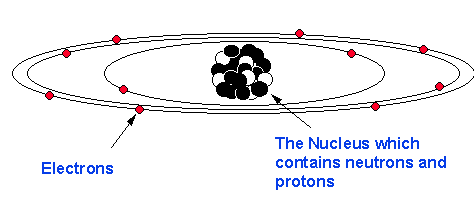
THE ATOM

NOT drawn in "real" proportions
  • A man is about 10 BILLION times larger than an oxygen atom. If an atom were the size of a golf ball then a man would stretch from earth to the moon.
  • A teaspoonful of solid nuclei of atoms would weigh about 500 million tons.
  • The nucleus of a typical atom contains about 99.8% of the total mass of the atom.
  • The diameter of an atom is about 100,000 times the diameter of the central nucleus.
  • Most of an atom is empty space. Imagine a sphere of FIVE MILES to represent an atom. The nucleus on the same scale would be the size of a tennis ball.
  • Most of your body is empty space …..
  • A black hole is supposed to consist entirely of material from the nucleus; all the “empty space” has been stripped away. A black hole of the mass of the earth would be ONE CENTIMETER in diameter.

COLLAPSED STARS

  • There is believed to be a black hole at the centre of our galaxy with the mass of ONE MILLION times that of our Sun.
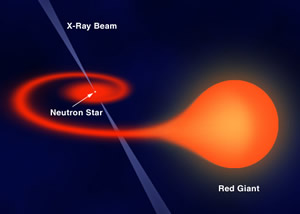
  • A pulsar or neutron star is a collapsed star that spins on its axis up to three or four thousand times per second.
  • A pulsar is ONE HUNDRED TIMES DENSER than a white dwarf, which is what our Sun will become once its nuclear fuel has been used up.
  • Pulsars sometimes send out gigantic amounts of visible light, equivalent to many times the total light emitted by the Milky Way.
  • A tablespoon of material from a neutron star would weigh about 3 BILLION TONS.

THE HUMAN EAR

  • can distinguish around 400,000 different sounds.
  • can detect sounds so quiet that the vibratory movement induced in the eardrum is not much more than the width of a calcium atom.

By Chris Snuggs

Science is Us!

A plea for science education.

a science class at Woolverstone Hall School, late 50s - click to see more

Apart from hearing and knowing that many people are suffering terrible hardships in this world, I find few things more depressing than to hear young people say “I’m not interested in science”.

We are part of Nature. Science is the study of Nature.

How can it possibly NOT be the most interesting and endlessly-fascinating of subjects? There is a shortage of well-trained science teachers in Britain. There are too many students doing courses on “Football Management”, “Media Studies” or even “sociology”.

Why is this? I can’t explain it. Can anyone else?

I am not a scientist, having had to abandon the study of physics and biology – two subjects I loved – because I was better at languages.  Too many youngsters have to drop science at the age of 16. What an absolute folly in the technological age, even 50 years ago.

My point is not just that science is important but that it is so interesting. Is the problem that some kids find it “too hard”? That must be poor teaching, surely? You gear your lessons to your students.

One positive point about British schools – at least in my distant experience – was the great use made of practical work. I so looked forward to that in physics: boiling up water in calorimeters, mucking about with levers and pulleys, passing electrical currents through each other …. I looked on physics lessons as a game, not a boring school subject.

Yes, science CAN be hard, especially for those not that good at maths. Some of the most brilliant minds on the planet do science; we cannot hope to understand all they do. But this doesn’t matter, does it?

ISBN: 0-19-511699-2

As for maths, I have recently been reading a most stupendous book, one that I cannot recommend too highly to any layman interested in science. Shown right, this was written by Brian Silver, former Professor of Physical Chemistry at the Technicon Institute of Technology in Israel.

I read and re-read this book every night, each time hoping – somewhat in vain – that I will  eventually understand what quantum mechanics and relativity really are. But I read it, too, with a tinge of sadness, for Brian Silver died in 1997, just prior to the publication of his book, which I personally feel is a masterpiece of its kind.

In this book Professor Silver takes us through the history of science from Antiquity and before right up to the end of the 20th century.  As well as chapters on all the major fields and discoveries of science from Pythagoras to Hawking we have fascinating snippets of biographical information about the science greats: Galileo, Copernicus, Newton, Herschel, Boyle, Hooke, Faraday, Lavoisier, Maxwell, Mendel, Darwin, Planck, Bohr, Heisenberg, Schrödinger, Einstein, Rutherford, Crick and so many more.

Their biographies themselves make fascinating reading, let alone their discoveries.

I read a book some years ago about Joseph Salk and the development of the polio vaccine. This was a hundred times more exciting than the most classy whodunnit, recounting the story of one of the greatest triumphs of medicine. Do you know anyone with polio? Nor do I, though I did when I was a kid in the 50s and of course there are many in “developing” nations still today, as we spend billions on CERN and not enough on medicine for the deprived of this world. Interwoven with the factual accounts of science and scientists considerable attention is given to philosophy and the placing of scientists and their discoveries in their historical context. A dry, purely factual book this isn’t, with the final chapters on cosmology, the origin of the universe and the meaning of life. (But don’t expect any answers to the last two!!)

Maths? Well, Professor Silver puts Michael Faraday right up there among the immortals. An astounding practical scientist/technologist, he made major discoveries in the field of electricity that affect the lives of everyone on the planet today. But his maths wasn’t too good! So much so that he pleaded with James Clerk Maxwell to write his equations in a more understandable way!

So you don’t have to be a great mathematician to do good things in science. If only I’d realized that before, I could have been another Faraday!

This book should be a standard textbook for all 6th formers, not just those doing science. I salute the brilliant and too-soon departed author.

By Chris Snuggs

Papal spokesman loses marbles

Not quite the best way to manage one’s ‘news’.

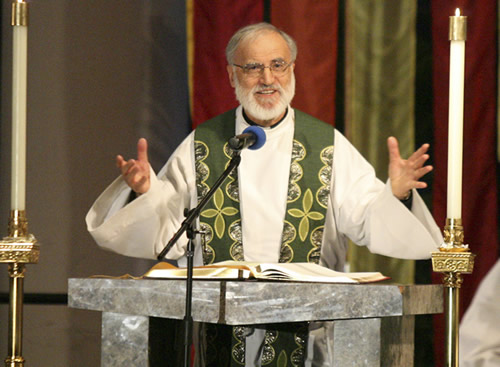
Fr Raniero Cantalamessa

I’ve been trying to think of the right word, and I think I’ve finally managed it – “stupefying”. This is in connection with Fr Cantalamessa’s remarks comparing the current criticism of the Roman Catholic church hierarcy with anti-semitism, this in relation to the on-going child-abuse scandals that are rocking the Roman Empire.

I don’t like to kick a man when he is down, and Fr Cantalamessa is clearly challenged on a wide number of fronts, including cerebrally.

The Catholic Church is in a totally indefensible position on the abuse front; the Pope himself is accused of failing to take action (always the easy course) in his earlier career when presented with clear evidence of wrong-doing.

No, the only possible reaction was to assume great humility and sorrow and issue grovelling apologies.  No doubt the usual politicians’ standby soundbite would not have gone amiss: “Lessons have been learned.”

I give  Fr Cantalamessa some credit for saying what he thinks instead of passing his comments through a gruesome PR spin merchant, but unfortunately he has got it completely wrong. And it’s no good the Vatican claiming that these remarks “did not represent its official view”. They were after all printed in full on the front page of the Vatican’s own newspaper “L’Osservatore Romano.”

As Peter Isely of SNAP (survivors Network of those Abused by Priests) put it much better than I could:

“They’re sitting in the papal palace, they’re experiencing a little discomfort, and they’re going to compare themselves to being rounded up … and sent in cattle cars to Auschwitz? You cannot be serious.”

Porr old Fr Cantalamessa should get out and about into the real world a bit more.  Someone should send him a copy of Mother Theresa’s biography or “Five Chimneys”

Has he seen “Schindler’s List”, even though what was shown there was extremely mild compared to the horror of the reality?

Sorry Fr Cantalamessa, you score nul points on this one ….

By Chris Snuggs

Alistair Cooke

A tribute to Alistair Cooke of Letter from America

Many, many people of a certain age will remember with very fond affection the weekly BBC Radio broadcasts of Alistair Cooke under the title of Letter from America.

Alistair’s broadcast title, Letter from America, came to mind because I have been thinking for a couple of weeks about what to call my impressions about moving to Payson in Arizona.

Payson Perceptions? Pictures of Payson? Payson Profile?  No!  They all seemed naff!

But would it be too presumptuous to echo Cooke’s hugely famous programme title?  Hopefully not.

(And regular readers will know that yesterday, the first Letter from Payson was published.)

I did a Google search on Alistair Cooke and immediately found the BBC web page devoted to him.  For those that don’t know Cooke here are a few details from WikiPedia.

Born in 1908 in Salford, Lancashire, England, Cooke first started broadcasting for the BBC in 1946 and continued until the 20th February, 2004, a total of 58 years and making Letter from America the longest-running speech radio show in the world.

I hope the BBC will forgive me in reproducing here on Learning from Dogs the obituary that is on the Alistair Cooke website.  He was a wonderfully interesting man and his weekly Letter from America seems to have been part of my complete life (in a sense it was).

——————-

Reading Letter from America in the 1950s

He read his Letter from America for 58 years

Esteemed writer and BBC broadcaster Alistair Cooke, famed for his programme Letter From America, has died aged 95. BBC News Online looks back at his long and respected career.

For more than half a century, Alistair Cooke’s weekly broadcasts of Letter from America for BBC radio monitored the pulse of life in the United States and relayed its strengths and weaknesses to 50 countries.

His retirement from the show earlier this month after 58 years, due to ill health, brought a flood of tributes for his huge contributing to broadcasting.

Born in Salford, near Manchester, northern England, Alistair Cooke’s father was an iron-fitter and Methodist lay-preacher.

Alistair Cooke

Alistair Cooke: Consummate broadcaster

Winning a scholarship to Jesus College, Cambridge he read English, edited the undergraduate magazine, Granta, and founded the Cambridge University Mummers.

Alistair Cooke made his first visit to the United States in 1932, on a Commonwealth Fund Fellowship which took him to both Yale and Harvard universities.

Following his return to Britain, he became the BBC’s film critic and, in 1935, London correspondent for America’s National Broadcasting Corporation.

He returned to the United States in 1937 to work as a commentator on American affairs for the BBC. He made his home there and, in 1941, became an American citizen.

Alistair Cooke

A passion for jazz

March 1946 saw the first edition of American Letter, which became Letter from America in 1949.

The series was the longest-running series in history to be presented by a single person.

Alistair Cooke never decided what he was going to talk about until he wrote the script, made no notes during the preceding week and preferred to rely on his memory.

In an interview given at the time of the 3,000th edition of Letter from America, he appeared to have mixed feelings about the future of the United States.

“In America,” he said, “the race is on between its decadence and its vitality, and it has lots of both.”

Addressing Congress in 1973

He addressed Congress in 1973

Cooke led his listeners through the American vicissitudes of Korea, Kennedy, Vietnam, Watergate, Nixon’s resignation and Clinton’s scandals.

In all of this, Cooke pulled no punches. The lyricism of his broadcasting and the urbanity of his voice did not disguise his fears for America which he saw becoming a more violent society.

A liberal by nature, he reserved particular dislike for what he saw as the shallow flag-waving of the Reagan presidency.

Alongside working for the BBC and The Guardian, for which he wrote from 1945 to 1972, he developed a passion for jazz and golf and, as a film critic, he mixed with Hollywood stars.

As a commentator on history, Cooke was sometimes an eyewitness too. He was just yards away from Senator Bobby Kennedy when the latter was assassinated in 1968.

He was never as comfortable on television as radio but, by the 1970s, his hugely successful television series America recounted his personal history of his adopted homeland and won international acclaim, two Emmy Awards and spawned a million-selling book.

British or American?

The Queen awarded him an honorary knighthood in 1973 and the following year, for a journalist, he received the ultimate recognition – he was asked to address the United States Congress on its 200th anniversary.

He told his audience he felt as if he was in a dream, standing naked before them and there was only one thing he could find to say.

Teasing, he exclaimed to the assembled legislators, “I gratefully accept your nomination for President of the United States!”

Naturally, he brought the house down.

Many Britons thought he was American, but to the Americans he was the quintessential Brit, the man who brought them the best of British television as presenter of Masterpiece Theatre. For his part, he explained, “I feel totally at home in both countries.”

He impressed both audiences with his high quality work. With his unquenchable curiosity, Alistair Cooke remained for decades the consummate broadcaster, an elegant writer and a man of enormous wit and charm who made sense of the American Century.

By Paul Handover (still missing Letter from America on the radio.)