On February 26th Jean and I, and a caravan of dogs and cats, arrived at our new home in Payson, Arizona.
We chose Payson simply because we wanted seasons. Payson is about an hour NE of Phoenix up at 5,000 feet and has very distinct seasons!
Snow in the garden - late March!
Both of us for different reasons thought we knew America pretty well. Jean was married to an American for nearly 30 years and I had been doing business in the US for a long time, even having my own (small) US company based in New Jersey.
But what neither of us anticipated was the wonderful warmth and friendliness of the Payson inhabitants. Despite the fact that Payson is hurting big time as a result of the economic situation, the majority of people that we met were happy, smiling and wonderfully accepting of a couple of Brits turning up in their town.
Indeed, Jean spoke to this stranger in the local supermarket, a tall guy complete with the boots and Stetson hat, and asked simply, “Why are so many people in Payson smiling?”
His reply was simply, “Ma’am, it’s only a small cow town!”
Well here’s a couple of newcomers to this small cow town who like it!
The yield on a bond is made up of several components. Some think of the return on a bond as the sum of the risk-free rate of interest (how impatient we are to get our money back, or how much we need to be compensated to delay consumption) and a risk premium (the additional return we require to compensate us for the risk of default, the risk the bond will be called, the risk of inflation reducing the purchase power of the repaid dollars, and many other sources of risk as outlined in the most recent article in this series).
Another useful way of thinking of the return on a bond is as the sum of the real rate of interest and the expected rate of inflation. But what is the real rate of interest? We never actually observe that rate, unless of course the inflation rate is zero and then the real rate is just the nominal rate set in the market.
It is useful, however, to think about what drives the ability of a company to generate a real rate of return to lenders, for this is essence of capitalism and risk-taking and creating economic value and growth.
Bond traders
A firm’s asset cash flows support the real returns to its lenders – all kinds of lenders (debt, equity, hybrid, and derivative security holders). A firm will want to borrow more, and is willing to pay a higher interest rate for those funds, the more profitable are the projects they want to undertake, or the greater the number of profitable projects. Profitability, in turn, is determined by the relationship between demand and supply: how much does society value a good or service, and how many resources does the business use in producing the good or service. As the marginal productivity or efficiency of a business goes up, it can afford to profitably fund more projects. So the core driver of the real return on bonds is the strength of the underlying economic activity of the private economy.
Or, when viewed from the investor’s side, note that an investor will purchase a bond, or lend money to a company, if they expect to earn a return sufficient to compensate them, first, for delaying consumption and, second, for bearing the various sources of risk or uncertainty associated with the bond’s cash flows or return.
A dream that, perhaps, one day politicians will be truthful.
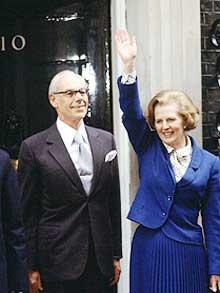
British General Elections are always fascinating occasions. On the one hand they are deadly serious. Mrs Thatcher’s win in 1979 set up the country for 18 years of Tory rule with massive changes and frequent social conflict whose effects are still felt today.
It was either a total social and economic disaster or a great leap forward into modernity depending on your point of view. Her victory of course also consigned Labour to 18 years of impotent pfaffing about in the political wilderness.
But on the other hand they always cause a great deal of hilarity to the student of human behaviour, as day after day nonsensical, fatuous, spinladen pronouncements are made by those desperate to get their hands on power.
And these pronouncements of future intentions (often delivered with the word “pledge” attached – as if that were somehow more weighty than “promise”) are often based not on reason or good planning but on how they will go down with the public!
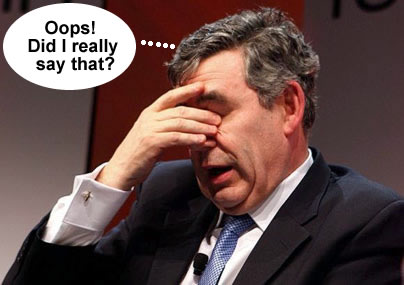
And amazingly, they often seem to be made without any great thought about the consequences. Brown has got some stick only today because he promised (or if you like “pledged”) that there would be no VAT imposed on the Simon Cowell charity record for Haiti, yet EU rules prohibit such gestures and so the Treasury is having after all to charge VAT and is now promising to pay this back with increased aid as a workaround.
Foot in mouth - again!
The increased aid could have been given in the first place without his headline-grabbing “pledge” to make it VAT-free.
As ex Chancellor, Brown should have KNOWN that removing VAT from individual items on a whim is not allowed, but he clearly spoke without thinking, the headline-potential of declaring the record VAT-free being irresistible.
Gordon Brown has also got himself into “another fine mess” by trying out a variation of his trick of the 1994 election.
During the pre-election campaign then he solemnly pledged NOT to raise income tax. No, not he. He was not the man to steal the public’s hard-earned cash by raising income tax; that would be most unsporting.
Meanwhile the poor old honest and hopelessly-naive spinfree Lib-Dems promised to put one measly pence onto income tax to pay for more education. Naturally, in the election they got slaughtered as wild spenders. You couldn’t make it up!
As for Gordon Brown, he kept his word. Income Tax remained as untouched as the virgin snow. But he had a cunning plan; as soon as he got his hands on our money, he vastly raised National Insurance (NI) instead. It actually comes down to the same thing, but of course the SPIN was different. That was how Brown’s management of our finances began, and so it has gone ever since.
Well, it’s hard not to repeat a winning formula, as many crooks have found out to their cost. Putting up National Insurance of course (even if this time you TELL the people you’re going to do it) can be sold as much more socially responsible than simply putting up income tax. The former can be spun as essential to pay for hospitals, pensions and the like whereas the latter seems more often like Robin Hood in reverse. The silly thing is that it’s ALL MONEY TAKEN FROM OUR PAYPACKETS, so what difference does it make?
Well, to the wage-earner, none at all, but to the employer quite a lot, and this is where Brown is batting on a sticky wicket. Increasing National Insurance certainly IS a “tax on jobs”. Let’s look across the English Channel ……
They have a VERY high level of NI (French = “charges”) in France. The result is that:
Employers bend over backwards NOT to employ anyone; it is so expensive.
Productivity in France is very high (higher than in the US – fewer workers than in many other countries do the same amount of work).
Unemployment is also consistently very high.
In Denmark it is much cheaper and easier to hire and fire people than in France. Oh Dear! Horrible, nasty, capitalist, Denmark and wonderful, caring, socialist France!!
Errmmm … No, actually; unemployment in Denmark is usually around 4% (I just checked; it is TODAY despite all the economic chaos just 4.1%) and in France endemically nearer 10%.
Rocket science it ain’t. Sad for the otherwise-could-be-employed it certainly is.
Well, even the plebs are not quite as gullible as 25 years ago. The negative effects on employment are blindingly-obvious to employers but as it is such an easy thing to understand (though not apparently for the entire French government or for Mr Brown) ordinary people are beginning to understand it, too. Brown’s statement that he will raise NI isn’t doing his election campaign any good at all.
However, as it is currently business leaders in particular who are bleating about this, perhaps it will be spun as: “Don’t worry chaps – it’s just those capitalist business-chief bastards whinging again”. That’s one thing you can rely on in an election; there will be endless spinning, quoting of statistics and rubbishing of the enemy ….
I have hit a man only once in my adult life. Only once, but this was a full-out, closed-fist, knock-you-off-your-feet slug that dared him to come back for more. And he didn’t. One slug did it! How empowering!
Bob (name changed) took me and George (my then-fiancé and now ex-husband) for a ride in a four-seat plane above the skyline in downtown Dallas, Texas late one summer night when the skies were dark and the stars were bright.
Private Plane
Bob was a friend of Allen, who was a very good friend of mine and an accomplished private pilot who had introduced me to the joys of flying. Allen trusted Bob and I trusted Allen, so I was not unusually concerned about Bob’s ability to get us back down safely. But I hadn’t factored in Bob’s judgment, or lack thereof.
I think, in hindsight, that Bob had hoped I would show up for the ride alone despite the fact that I had arranged it as a surprise for George. The plan was for George to sit up front and play co-pilot. Upon arrival at the hanger, however, Bob promptly stuck George in the back seat of the plane and then turned his full attention to me. I’m usually fairly dense to these things, but it was apparent even to me that Bob considered this to be a “date.” He was charming, animated and very friendly, while virtually ignoring George’s very existence. We reviewed the safety measures, checked out the plane, and away we went.
Bob was showing me a series of maneuvers, swooping and banking and it was all lovely and exciting until…..a sudden plunge…..and everything instantly blacked out. It was very disorienting — even though my eyes were wide open and I was totally conscious, I could not see a thing.
The sirens started blaring; a recorded voice shouted “Stall! Stall! Stall!” I called to George but he didn’t answer. Either he was unconscious or couldn’t hear me over the noise, but I wasn’t sure which. I reached out to Bob, but he was unresponsive and felt limp. Now I was really worried. Momentarily terrified, actually, with that cold feeling of raw fear in the pit of my stomach. I thought to myself, “If I am blacked out and cannot see, then HE, the, um, PILOT, might be blacked out as well!”
I had what seemed like a very long time to ponder what I could do to survive this emergency, and keep George alive, who was there because of me! I tried to feel my way along the control panel to find the radio to call out “May Day,” but that wasn’t going too well. Somehow — I don’t know how because I still could not see! — Bob got us out of the descent, pulling the nose up and righting the plane. The sirens and warnings stopped. After a few more moments, my vision came back, and my stomach returned to its rightful place. We landed in one piece.
But when ole’ Bob got out of the pilot’s seat and walked around the plane to help me exit, I had a little surprise for him. Actually, it was a surprise for me, too, because I didn’t plan it and didn’t “see” or “feel” it coming. The next thing I knew I had drawn my right arm back, made a fist, and threw it into his left shoulder with everything I had. POW!
He stumbled, grabbed his arm, and said “Ow! What did you do THAT for?” Well, I didn’t think I had to explain how I thought he had just put my life and that of a friend in danger just to show off. I didn’t think he would see it the way I did, that he had flown that plane beyond his ability to control it. And even if he was in control the entire time, which I doubted, he scared the bajeebees out of me which was reason enough for me to sock him one!
I don’t recommend physical violence, even if the assailant is half the size of the perpetrator, but I have to tell you that to my knowledge, Bob never took another unsuspecting victim up for a little spin around the tops of buildings in downtown Dallas. And I know that if I ever really need to wind it up and let her go, I do have it in me.
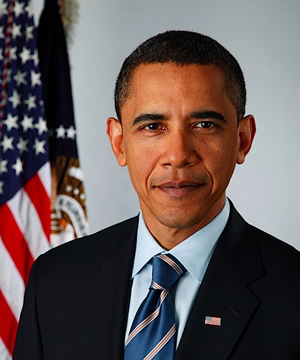
Dr Sherry Jarrell commented recently on her disappointment with President Obama, with two specific criticisms:
A) the way he speaks to the people, or perhaps to some of the people
B) his handling of the economy
With this in mind and given that the President has now been in office for long enough for a judgement to be made, here is a view from this side of the water.
HOME
How he speaks to the people. I can’t judge this; I don’t currently have a television, let alone one with access to all the US media; And “yes”, I know this is a bit bizarre, but there you go …
What does surprise me is that during the election he showed himself to be an orator of considerable talent. Indeed, without this talent to inspire people it seems unlikely that he could have got elected in the first place. So what has gone wrong? Do the people he is speaking badly to perhaps deserve it?
The economy? Dr Jarrell is the expert. However, I just caught sight of a headline about US growth, which seems to be picking up surprisingly well.
Surely it is not all gloom, even if unemployment is high at nearly 10%. However, if you think this is bad you should visit Spain.
Health? As a European, one struggles to understand why he has been criticized by some on this issue. The US can’t afford it? Well, perhaps the bankers should be giving up some of their vast salaries and bonuses to help pay for it.
Priorities? How can the USA possibly NOT have a universal health system, when poor little Cuba has one? As I understand it, health consumes about 17% of US GDP, which is WAY above other comparable nations.
Something is wrong here. Have the medical profession and pharmaceutical companies got Americans by the short and curlies? And even this 17% didn’t until now include tens of millions of people. I would really like to have someone’s take on this.
The Republicans? Well, are we seeing a great party beginning to implode? The hysteria over the health reforms is astonishing. The “Tea Party” group has issued all kinds of threats and complaints that even senior members of the Republican party have not criticized. What is going on here?
Do they have no understanding of how modern, civilised societies work? As a friend of mine put it (as it happens a strong supporter of the Cuban regime, which I certainly am NOT) “You judge a society by the way it treats its poorest and weakest members.” On this score, the Republicans are living on another planet.
I read a fascinating take on this the other day in the New York Times. In essence, Frank Rich claims that the Tea Party hysteria is nothing to do with the health system, but concerns the fact that WASPs feel threatened as they will soon be in a minority in the USA.
Yup – hard to believe for a British kid brought up on John Wayne, the Pilgrim Fathers, New England and all that … but true. Even so, if the Republicans are not to become a laughing-stock they need to find some more statesmanlike leaders. Sarah Palin just doesn’t cut the mustard I’m afraid.
Oil & Energy? Well, he is cracking down on gas-guzzlers. He has to have points there, surely? It is both essential and long overdue. On the other hand, he has sanctioned oil exploration in hitherto off-limits areas, the idea being to reduce dependency on imported oil. Very commendable, but the aim of all nations is to reduce consumption, isn’t it?
AWAY
As a European, whatever impression one has of the USA has to be tempered by remembering that one does not live there. One simply cannot pick up the real mood of the country unless one has feet on the ground, and so all the above comments are impressions, possibly misplaced.
But on INTERNATIONAL affairs one is on slightly firmer ground, and of course what the US does internationally also concerns us more directly. When he took office, I decided I would judge him on one thing in particular ……
Palestine: There has been precious little movement since 9/11. Lots of “talks”, “negotiations” and proposals of course, but underlying it all the feeling that the Israelis are not going to give up anything at all.
The present government in particular seems like an immovable object on many key issues that must – frankly – be resolved by compromise on all sides. This is where an irresistible force comes in, and this can only be Obama.
Well, there have been positive signs, but I have yet to see evidence that pressure on Israel will be both real and sustained. Sometimes “negotiations” and “frank-talking” are just NOT enough, and this is one of them. The jury has retired with some recent positive feelings, but it is still out, and very sceptical.
Iran/China?: Obama has tried to be nice to these people, but – as with Israel – being nice sometimes doesn’t do it. There is I feel serious trouble ahead with China, one way or the other. Will Obama be tough enough to deal with it? The jury is still out on that one, too.
SUMMARY: Humans tend to be optimistic folk: we believe there is a solution out there somewhere. We believed Obama might be it.
We were as ever hopelessly-idealistic. Nevertheless, I am mindful that this is an extremely inexperienced President, chosen by Americans for his youth, optimism and charisma more than his long experience as a statesman.
He will need time. Unlike some Americans – who already think he is the anti-Christ (those strange Republicans again) – I am prepared to wait a bit longer to make a final judgement.
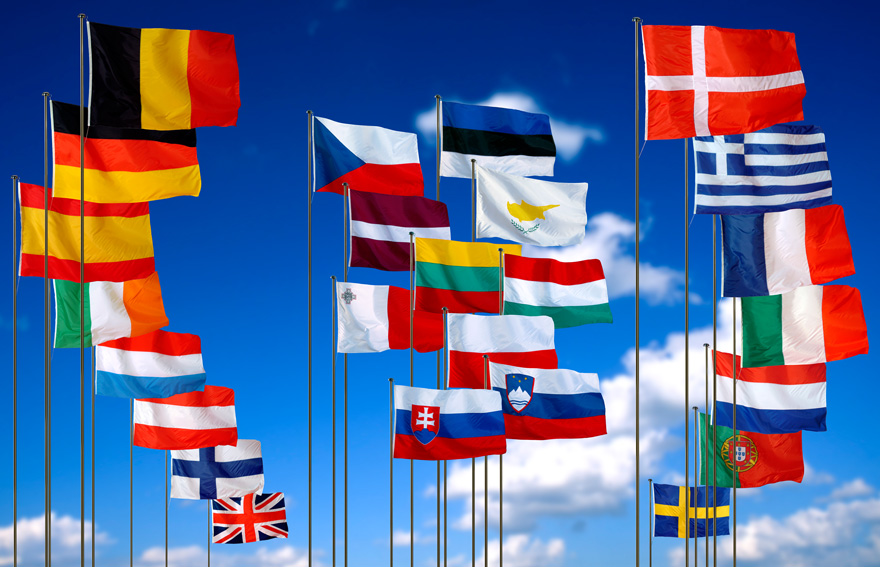
The euro, long in planning by some European institutions, was introduced minimally, namely without the governmental apparatus generally associated to a currency. This is the way Europeans have found to progress peacefully towards greater harmony: do what is necessary, and nothing more than that, and do it with total consensus.
Everybody knew that a currency without a government to create and anchor it had never happened before, and was unlikely to endure.
The European Union
Part Two continues
That fit the European federalists just right, and could not have escaped the understanding of Paris and Berlin. As it turned out, the PIIGS’ crisis is putting back Paris and Berlin, the historical engine of Europe, back on top, and this, for an excellent reason.
“PIIGS” stand for Portugal Ireland Iceland Greece Spain. All of them ran bubble economies, partially propelled by taxes from the richest European countries (including France and Germany). It became ridiculous as, for example, Ireland was getting European subsidies while the Irish were already way richer than those subsidizing them. (OK Iceland is not in the EU, yet, but it begged to enter the Eurozone, and it has disappeared the savings of countless Brits and Dutch, which means it has some outstanding business with the rest of Europe, that it will have to sort out, after executing a few more whales, guilty as charged.)
Some acknowledge the convenience of a common European currency and easier border transits, while remaining obsessed by what they view as gigantic differences between European countries. Those quaint nationalists and parochial types obsess that core differences between countries are so strong and deep-rooted that any form of real European union is a ridiculous concept. This is triply erroneous.
The official unemployment rate of the U.S. economy remains at 9.7%, and the underemployment rate increased to 16.9%. These numbers represent a real tragedy for many Americans.
While the White House tries to celebrate the creation of 162,000 new jobs last month, at least 48,000 of these new jobs are government jobs, specifically temporary census workers, who are doing unproductive work and are being paid with taxes collected from the rest of the private economy.
Unemployment
Employment also increased in temporary help services and healthcare, but continued to decline in financial activities and in information, which is interesting given the recent comments by President Obama that the government takeover of the student loan program tucked into the health care bill “took $68 billion from banks and financial institutions.”(Obama’s April 1 remarks) That’s a lot of jobs, Mr. President.
Seems like there is more concrete evidence that, rather than creating jobs, the President’s policies are costing the economy jobs.
Now come on Perkins. You know that these things happen down there in the underclass.
But this is more than the usual knocking-about of wives and kids that goes on Sir.
But it doesn’t do to over-sentimentalize things, Perkins.
I’m sorry, Sir, but do you actually know the details?
Details? Good God, man! I’m far too preoccupied with the broad sweep of politics to worry about details!
But it seems this tyrannical father actually starved several of his kids to death …
Goodness me, and there were we thinking New Labour had abolished poverty.
And there were apparently three other kids locked up in perpetuity; one of them subjected to horrendous torture ….
Locked up? What had they done?
They apparently answered back, Sir?
Answered back?
Yes, Sir …. and there’s more ….
There usually is with you Perkins.
Those who weren’t starved to death or locked up were subjected to a life of deprivation, misinformation and misery, Sir.
You mean they were British voters? (just a joke, Perkins …)
It’s not a laughing matter Sir. They had no access to proper food or health provision.
Sounds pretty normal for the mob to me, Perkins …
And then they were brainwashed; they could only see and hear what their father wanted them to see … they have no idea what is going on in the outside world, Sir ….
But the mob have always lived like that, Perkins – they do read “The Daily Mail” after all …
But you haven’t heard the worst, Sir!
Oh dear …
Last week two of the kids ran away. They managed to climb across the fence into the grounds of a major company on a neighbouring industrial estate. But a guardcaught them and took them back to the tyrannical father, even though they were crying, emaciated and showed signs of malnutrition and harsh punishment ….
Goodness Perkins …. this does sound bad.
I’ve been investigating, Sir, and it seems that it is this has happened before and it is company’s policy to hand the kids back instead of trying to help them.
Well, one can’t interfere in private family matters, Perkins …. come on, let’s have a cup of tea and get on with the preparations for the election …
But I found out more, Sir …
Oh Dear, Perkins …. all right, tell me the worst!
Well Sir, it was all very well concealed, but I discovered that this large company that handed back the cruelly-treated children is the government’s largest supplier of cheap, rubbishy goods ……
Perkins! For goodness sake! They are NOT cheap and rubbishy … cheap perhaps …
So you KNOW about this company, Sir?
Of course Perkins …. as you said, they are our main supplier.
But they connive with child abuse, Sir …
Look Perkins, if we were to have a crisis of conscience over every single case of abuse we’d hardly be able to import anything, except from Canada, Switzerland, Germany and Sweden, and have you seen their prices?
But it’s not moral, Sir …
We try to avoid using this word in politics, Perkins. We would be on a sticky wicket on thin ice if we didn’t ….
But back in 1994 Robin Cook said that the new Labour Government would have an ethical policy on abuse …
Perkins, let me explain the difference between heady, overblown, post-election rhetoric and the real world of pragmatism … besides, Robin Cook died …..
So our pragmatism outweighs our morality?
Well, doing it the other way would only mean shooting ourselves in the wallet, Perkins ….
But it’s very sad, Sir!
Indeed, Perkins, but not for us, and that’s the main thing after all …. come on – put the kettle on ….
[For Gulagova family read North Korea; for large trading company read China, Ed.]
On the 22nd March, Learning from Dogs had the pleasure of a Post from our first Guest Author, Elliot Engstrom. We were then doubly delighted to have Per Kurowski join us as our second Guest Author with his introductory Post.
Now we have the additional honour of welcoming Patrice Ayme to the growing ranks of Guest Author to Learning from Dogs.
Patrice, like Elliot and Per, also is a prolific blogger. He describes himself as:
I was born in Europe, raised in Africa, and lived in America. So doing, I learned to compare different cultures, even during my early childhood, and to appreciate superiority of many of their traits, even the most surprising. I consider myself Senegalese, and proudly so.I studied, and know, several languages, not just Latin, and several cultures, deeply, by living through and inside them for years. I have done formal studies in mathematics and physics at three leading Universities receiving the highest degrees, and putting me in a good position to learn to differentiate between hard knowledge and wishful thinking, differently from many a common philosopher. I am a specialist of non commutative geometry, arguably the most abstract field of knowledge in existence (even hard core logic, model theory, is used in my approach).
Here is Patrice’s first Guest Post for Learning from Dogs.
——————————
GREEK TROJAN HORSE TO CONQUER BETTER EUROPEAN UNION
Abstract:
The European currency, the euro, is, foremost, a solution to a problem. War. All other problems, and the euro solves many, pale in significance relative to this one.
Many talk about “problems” with the euro, and, oozing with glee all over, perceive weakness. They are right, there is weakness, but it is not European weakness. Just the opposite.
What those skeptics are seeing with their uncomprehending neurology is the further construction of the European imperium, according to its core principle: fix what needs to be fixed, but with complete consensus of the parties concerned, which means do it just so. It appears messy, because it’s democratic, and before the people (demos) can use its kratos (power), it needs to think right, which means it has to argue thoroughly. It looks like squabbling, but it is thinking aloud. Europe is not built for some parties to gain advantage anymore (as it was with Napoleon, or Hitler), but to solve problems and gain opportunities for all.
The euro is, for the first time, used as a weapon against Europe’s enemies. Hence all the squealing. Far from weakening Franco-German resolve, the recourse to the IMF adds another layer of authority to the European Communities. When the IMF, speaking in the name of Franco-German taxpayers, tell restive exploiters in Greece that they have to pay more taxes (only 6 plutocrats declare more than one million euro income in Greece, and more than 500 professions can retire at 50 years of age, whereas Germany just brought up the retirement age to 67!), they will have to submit under orders (imperare, to use the Roman notion)
Crazy, outdated concept – adjusting clocks twice a year!
The whole concept of adjusting the clocks with the seasons, “Daylight Saving” as the Americans call it, seems increasingly ludicrous the more that one thinks about it. In the UK, it is called British Summer Time and is abbreviated to BST; I call it British Silly Time.
The expensive consequences for computer systems, airlines, railways and many other systems and organisations having to mess about with times and schedules are completely unnecessary. And I have lost count of the number of times I have heard of people missing calls or online meetings due to misinterpretations of time zones and distortions in the name of “daylight saving”.
One would have thought that people who spend the most time involved with nature would find it the most ludicrous and that among those would be farmers. However, it seems that this is not the case as there is a discussion about introducing permanent BST or even “double BST” on the UK National Farmers Union (NFU) website.
The news article is titled “Should we change the clocks?”. My answer is a simple “no”. In case the answer is unclear, I mean “no”! That is “do not change the clocks”! That is “leave the clocks alone”! That is “stop messing with the clocks”! In the UK that means “leave the clocks on GMT, the correct time”!
Does no one else understand this? Well, thankfully, many people do. For example, the whole of the aviation industry uses Zulu time (UTC) worldwide. Let’s be clear what that means. When pilots get a weather reports from any airport in the world (whether it is Heathrow or Los Angeles airport), the times are in Zulu time which is UTC/GMT. Yes everyone uses UTC.
The really funny part is that the NFU news article even states “analysts have claimed an extra hour’s daylight could be worth £3.5 billion a year to the economy”. This is the ultimate fallacy.
Let us be clear about something, in case you had not noticed: THERE IS NO EXTRA DAYLIGHT!! Where, on earth, did farmers get the idea that there is?!







 Learning from Dogs