How much is “too much” Unemployment?
How much unemployment “should” our economy have? How much unemployment is too much, and how much is just right? How high does the unemployment rate have to go before significant changes are made in government policy and approaches?
The question of the optimal level of unemployment has generally been answered by reference to the so-called “natural rate” of unemployment. The natural rate of unemployment is measured as the long-run average rate of actual unemployment in an economy over time; it is a “trend line,” as seen in this graph below:
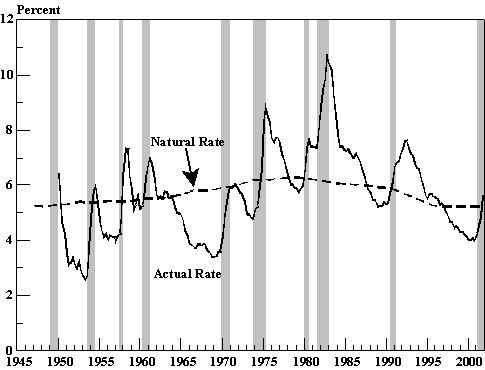
This graph is from the US Congressional Budget Office and taken from a paper, “The Effect of Changes in Labor Markets on the Natural Rate of Unemployment.” [See Figure 2].
So, generally, when you hear policymakers say that the unemployment rate is “too high,” they are generally comparing the current rate to the natural rate of unemployment.
I have two very big issues with using the natural rate of unemployment to inform or critque policy. One, the natural rate of unemployment is based on the long-run average of “where we have been,” and should not limit where we think we can go.
Why not set a policy goal of the natural rate of unemployment?
Why should the experiences of the past limit what we as an economy aspire to do?
My second issue with using the natural rate of unemployment to inform policy is its inability to distinguish between long-term structural sources of unemployment, which are costly and detrimental to our economy and should be the focus of government policy, and unemployment that results from the search activities of employees and employers alike, which tends to short-term in nature and often leads to better matches between labor and business.
By focusing our national resources on retraining our labor force to fill the needs of emerging industries, we could eradicate much of the most harmful type of unemployment: structural, long-term, chronic unemployment that leads workers to simply give up and leave the labor force, which actually reduces the reported unemployment rate, yet masks a significant cost to our economy in terms of wasted human resources.
By Sherry Jarrell
 Learning from Dogs