Sharpest views of Betelgeuse reveal how supergiant stars lose mass
Most of this Post is from a recent press release by ESO.
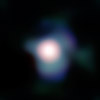
The strangeness of outer space is almost beyond comprehension.
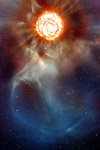
Just a few extracts from the Release.
Betelgeuse — the second brightest star in the constellation of Orion (the Hunter) — is a red supergiant, one of the biggest stars known, and almost 1000 times larger than our Sun [1]. It is also one of the most luminous stars known, emitting more light than 100 000 Suns. Such extreme properties foretell the demise of a short-lived stellar king. With an age of only a few million years, Betelgeuse is already nearing the end of its life and is soon doomed to explode as a supernova. When it does, the supernova should be seen easily from Earth, even in broad daylight.
Red supergiants still hold several unsolved mysteries. One of them is just how these behemoths shed such tremendous quantities of material — about the mass of the Sun — in only 10 000 years.
“Thanks to these outstanding images, we have detected a large plume of gas extending into space from the surface of Betelgeuse,” says Pierre Kervella from the Paris Observatory, who led the team. The plume extends to at least six times the diameter of the star, corresponding to the distance between the Sun and Neptune.
“Two things awe me most, the starry sky above me and the moral law within me.”
Immanuel Kant
By Paul Handover
 Learning from Dogs