Tag: United States

The last 484 feet!

Some milestones on the age of the solar system.

Forgive me, dear readers, but something light and simple for today.  I don’t mean in the sense of the content, far from it, just easy for me to put the post together as it is from a presentation that I gave a year ago.

Here’s a picture of our solar system.

Most of us are reasonably familiar with this visual concept of our solar system, but what of it’s age?  That’s much more difficult to embrace in a way that we can relate to.

So let’s use something to represent the age of our solar system, the distance from Phoenix to Payson.

In round terms, Payson is 80 miles North-East from Phoenix.  Put another way, that’s 422,400 feet!

So if those 80 miles represented the age of our solar system, what would be the significant milestones on this metaphorical journey?

Phoenix represents the start, the ‘start’ of our solar system some 4.54 billion years ago

It was 1,075,000,000 years before Blue-green algae appeared.  That is the equivalent of travelling 18.94 miles from Phoenix North-East along Highway 87.  Or looking back, those algae appeared some 3.465 billion years ago.

But on we travel, metaphorically an unimaginable 3,459,800,000 years after the arrival of Blue-green algae until the next milestone; the earliest hominids.  In terms of our Highway that’s a further 60.97 miles.  Again, looking back that was 5,200,000 years ago.

The sharp-eyed among you will see that 18.94 miles added to 60.97 miles is 79.91 miles.  Goodness that’s awfully close to the total distance of 80 miles between Phoenix and Payson!  In fact, the 0.09 miles to run is the equivalent of 484 feet!

So let’s look at those last 484 feet.

The first 465.20 feet represents the approximately 5 million years after the earliest hominids appeared before H. sapiens arrived, some 200,000 years ago.

The appearance of Homo sapiens brings us to just 18.6 feet from Payson.

But first, we travel 9.3 feet and see the arrival of dogs, generally regarded to have separated, in DNA terms, from the Grey Wolf 100,000 years ago.

And are you 60 years old?  You were born just 0.0669 inches or 7/100ths of an inch from Payson!  If my maths is correct (someone please check!) 0.0669 inches is about 34 times the thickness of the human hair!  That’s very close to Payson!

Don’t know about you but it puts the age of our solar system into a perspective one might be able to get one’s arms around.

On the scale used above, one inch represents 895.68 years, one foot the equivalent of 10,748.11 years and a mile represents 56,750,000 years.

Anybody want to hazard a guess as to the state of our planet in one further inch?

The difference an inch makes! 895.68 years!

OK, let me stay more or less on topic and just round things off.

EarthSky website seems to have some great items, including this one.

Ten things you may not know about the solar system

9 ) Pluto is smaller than the USA
The greatest distance across the contiguous United States is nearly 2,900 miles (from Northern California to Maine). By the best current estimates, Pluto is just over 1400 miles across, less than half the width of the U.S. Certainly in size it is much smaller than any major planet, perhaps making it a bit easier to understand why a few years ago it was “demoted” from full planet status. It is now known as a “dwarf planet.”

Go here for the full list of ten items.

Finally, just how far does it all go?

How far do the stars stretch out into space? And what’s beyond them? In modern times, we built giant telescopes that have allowed us to cast our gaze deep into the universe. Astronomers have been able to look back to near the time of its birth. They’ve reconstructed the course of cosmic history in astonishing detail.

From intensive computer modeling, and myriad close observations, they’ve uncovered important clues to its ongoing evolution. Many now conclude that what we can see, the stars and galaxies that stretch out to the limits of our vision, represent only a small fraction of all there is.

Does the universe go on forever? Where do we fit within it? And how would the great thinkers have wrapped their brains around the far-out ideas on today’s cutting edge?

For those who find infinity hard to grasp, even troubling, you’re not alone. It’s a concept that has long tormented even the best minds.

Over two thousand years ago, the Greek mathematician Pythagoras and his followers saw numerical relationships as the key to understanding the world around them.

But in their investigation of geometric shapes, they discovered that some important ratios could not be expressed in simple numbers.

Take the circumference of a circle to its diameter, called Pi.

Computer scientists recently calculated Pi to 5 trillion digits, confirming what the Greeks learned: there are no repeating patterns and no ending in sight.

The discovery of the so-called irrational numbers like Pi was so disturbing, legend has it, that one member of the Pythagorian cult, Hippassus, was drowned at sea for divulging their existence.

A century later, the philosopher Zeno brought infinity into the open with a series of paradoxes: situations that are true, but strongly counter-intuitive.

In this modern update of one of Zeno’s paradoxes, say you have arrived at an intersection. But you are only allowed to cross the street in increments of half the distance to the other side. So to cross this finite distance, you must take an infinite number of steps.

In math today, it’s a given that you can subdivide any length an infinite number of times, or find an infinity of points along a line.

What made the idea of infinity so troubling to the Greeks is that it clashed with their goal of using numbers to explain the workings of the real world.

To the philosopher Aristotle, a century after Zeno, infinity evoked the formless chaos from which the world was thought to have emerged: a primordial state with no natural laws or limits, devoid of all form and content.

But if the universe is finite, what would happen if a warrior traveled to the edge and tossed a spear? Where would it go?

It would not fly off on an infinite journey, Aristotle said. Rather, it would join the motion of the stars in a crystalline sphere that encircled the Earth. To preserve the idea of a limited universe, Aristotle would craft an historic distinction.

On the one hand, Aristotle pointed to the irrational numbers such as Pi. Each new calculation results in an additional digit, but the final, final number in the string can never be specified. So Aristotle called it “potentially” infinite.

Then there’s the “actually infinite,” like the total number of points or subdivisions along a line. It’s literally uncountable. Aristotle reserved the status of “actually infinite” for the so-called “prime mover” that created the world and is beyond our capacity to understand. This became the basis for what’s called the Cosmological, or First Cause, argument for the existence of God.

Think I need to lie down now!

Moved to help?

A plea to take action to preserve the Western Arctic Reserve in Alaska.

I received the following email from the Center for Biological Diversity the other day.

Dear Paul,

caribouThe Western Arctic Reserve, also known as the National Petroleum Reserve-Alaska, is the largest tract of unprotected, relatively pristine public land in the United States. But Big Oil has the reserve in its sights and will not hesitate to turn this vast wilderness into a sprawling industrial complex to drum up massive profits.

The 23.5 million-acre reserve is home to imperiled polar bears, seabirds and one of the densest populations of nesting raptors in the world. Its shores and lagoons harbor beluga whales, seals, walruses and other marine mammals.

In the rapidly warming Arctic, short-sighted oil and gas development will further stress the remarkable wildlife that lives and breeds there.The Bureau of Land Management (BLM) is now collecting comments on a planning document that will set the stage for oil and gas leasing in the western Arctic for decades to come.

You can help save this national treasure: Take action to tell the BLM to protect the Western Arctic Reserve from dirty fossil fuel development.

The action that is requested is to email or mail the following to the BLM  (the link is here.)  The email address for Bob Abbey, taken from the relevant BLM webpage is Director: Bob Abbey E-mail: Director@blm.gov

Director Bob Abbey
Bureau of Land Management
NPR-A IAP/EIS Comments, AECOM Project Office
1835 South Bragaw Street, Suite 490
Anchorage, AK 99508
US

Subject: Comments Regarding the BLM’s National Petroleum Reserve-Alaska Integrated Activity, DEIS

The National Petroleum Reserve-Alaska, or Western Arctic Reserve, comprises the largest unprotected tract of public land in the United States. It provides habitat for a wide variety of Arctic species, and its wilderness values are second to none. While the most environmentally protective alternative analyzed by the Bureau of Land Management (Alternative B) is an improvement over previous plans, it still allows over 11 million acres of ecologically intact wilderness-quality lands to be leased for oil development. As the BLM develops the “integrated activity plan” and “final environmental impact statement” for the reserve, I urge you to provide maximum protection for areas with high-value habitats by designating all of the Special Area contained in Alternative B, and to create additional protections for all other areas in the reserve that contain ecologically intact and/or wilderness-quality lands.

The BLM must also consider the long-term impacts of greenhouse gas emissions from oil and gas development, and any future impacts of climate change on the low-lying western Arctic. Arctic animals are already stressed by a melting and warming Arctic, and none of the alternatives considered go far enough to protect these species from the wide array of impacts from oil and gas development.

Among other things, the BLM must account for sea-level rise due to ice melt, permafrost collapse, coastal erosion and increased high-energy storm events that will degrade, or wipe out, critical coastal habitat, including the Teshekpuk Lake area. The BLM must also consider the impacts of ocean acidification, changes in circulation, increased freshening due to sea ice melt, and shifts in productivity to the marine environment and to marine species, including polar bears, ice seals, walruses, bowhead whales, and beluga whales.

Congress has required that “maximum protection” be given to Special Areas in the reserve. I encourage the BLM to adopt an alternative that provides protections for these areas, which include Teshekpuk Lake, the Colville River, Kasegaluk Lagoon, and the Utukok River Uplands. The BLM must also protect the Dease Inlet-Meade River area, Peard Bay and adjacent wetlands, and the Ikpikpuk River and adjacent wetlands.

I implore the BLM to adopt a management alternative that includes the strongest possible protections for the Western Arctic Reserve. This means designating Alternative B as the preferred alternative, and adding additional protective measures for important wildlife habitat and wilderness areas so they are not destroyed by ecologically devastating oil and gas development, or from the long-term impacts of greenhouse gas emissions and climate change.

Thank you.

But if that doesn’t work then there is a full webpage offering detailed information and which also has links relevant to letting the BLM know your views.  That webpage starts,

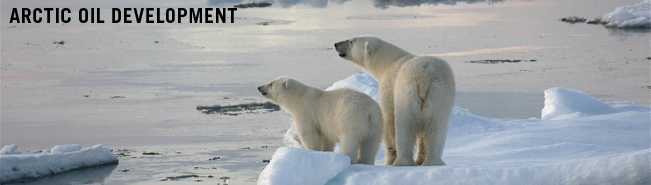
ARCTIC OIL DEVELOPMENT

Alaska’s north coast and ocean waters are teeming with species found in few other places, and many of them are now under threat. The Western Arctic Reserve and the Arctic National Wildlife Refuge provide critical denning areas for polar bears, support vast caribou herds and are essential nesting grounds for thousands of bird species, including threatened eiders and yellow-billed loons. The sea ice of the Arctic Ocean is hunting and denning habitat for polar bears and a foraging platform for Pacific walrus and numerous Arctic ice seal species. Under the sea ice, endangeredbowhead whales and other whale species live off the biological richness of the Arctic Ocean.
Nearly all Arctic species are at risk from global warming. But that’s not the only problem: In a drastically changing environment, Arctic species must now contend with dirty, industrial fossil fuel development.

Please go here, read the the full information and do your little bit.  It all makes a difference.

Joining the dots?

A guest post from Perfect Stranger.

Introduction

Yesterday, I had the pleasure of publishing a guest post from Patrice Ayme about the important subject of Energy Question For The USA

One of the comments on that Post was from Per Kurowski, a former Executive Director of the World Bank.  He reported about a letter he wrote that was published in the Financial Times back in April, 2005.  That letter set out the case for,

A sensible country would raise tax on petrol, so what is US waiting for?

Sir, it is hard to understand the United States of America! It has a huge fiscal deficit; it has a huge current-account deficit; it is by far the world’s biggest oil consumers both in absolute and in relative terms; now willing to explore for oil and gas in Alaska, it shows itself to be aware of the difficult energy outlook the world faces; it seems aware and resolute about the environmental problems (ignore the Alaska part) as it imposes other expensive environmental regulations, such as recycling—which, as no one likes to do it, requires the hiring of Salvadoreans; it speaks all over the place about having to reduce the vulnerabilities of its oil supplies.

As any other sensible country would, in similar circumstances, increase the taxes on petrol consumption and substantially help to solve all the above-mentioned problems; and as the US has always shown willingness to pull together as a nation, recently even to the extent of going to war on shaky grounds, the big question remains: why is it that the leaders of the US do not even want to talk about a substantial tax on petrol?

The letter struck me as eminently sensible.  Then a while later Perfect Stranger emailed an equally valid alternative approach and that now follows as a guest post.

oooOOOooo

Many years ago while working for Lehman Bros I did a spreadsheet relating to oil profits based on government taxes, I can assure you that having the USA government (or any other government) raise taxes on oil will do the complete opposite to what everyone expects it will do.

Any taxes raised will only end up in the federal coffers, they will not harm the oil companies because they will simply marginally raise the price of fuel meaning they will still receive the same profits while the government gets even more. The consumers will hurt in the pocket and nothing else will happen.

If for some reason the government found a way to stop the oil companies from any marginal increases then the oil companies would simply raise their fuel transportation costs and lump the entire loss on the Petrol Station operators meaning the operators would lose out, the oil companies would still receive the same profit and the government would still end up with more money in their coffers.

But oil consumption would remain the same, in other words .. raising taxes (or lowering them ) will do no good whatsoever

So the answer to using less fossil fuels, as I keep on saying, is not up to any government nor is it up to the oil companies nor is it up to science, the blame lies entirely on the people who choose to drive to the shops to buy their bread and milk instead of walking whatever short distance that might require.

This is something I have found throughout the entire global warming movement, everybody tends to expect that it is up to governments and science to find solutions when in reality it is we who cause the problems and it is we who should be fixing them … THE GOVERNMENTS CANNOT HELP THOSE WHO WILL NOT HELP THEMSELVES, as long as we keep demanding the same lifestyle they have no choice but to provide us with it.

It is the same with coal, gas and oil in power plants, they only get burnt because we as consumers draw the power from the grid, in other words, we demand it, and if the companies don’t provide enough we get all sorts of blackouts,then we whinge, the companies get fined, directors get jailed for failing in their duty to the public and still .. more coal, gas and oil gets delivered to the power plants.

Spending less Energy and Wasting less Heat is actually the “only” solution that will work, anything else, any other form of debate or discussion on the issue is just another way of extending a debate that should have been over decades ago .. because that is the only possible solution, there really is no other solution, none whatsoever, there are no other answers.

The truth of the matter is that nobody wants to do anything about it except to continue the debate all the while expecting others to resolve the issue while they sit on their butts and talk about how things are going ever so slowly and that it must all be the fault of somebody else.

The oil companies cannot stop producing fuel nor should they be stopped as this would destroy our entire civilization, I am amazed at the ignorance in even discussing such an issue, it’s as if people imagine that by stopping oil and other fossil fuels over, say the next 10 years, that somehow some magical system would suddenly develop to replace them.

Do you realize that it took over a hundred years to build our existing fossil fuel based society and that currently only 3% of that has been replaced by alternative energy sources and that it has taken 3 decades for that to occur, all over the world?

There is no miracle technology that can be implemented fast enough to save us, there never has been, EVER, even nuclear power cannot be produced fast enough for our needs, we have to save ourselves.

So use some common sense and realize that the only possible solution to the global warming issue is for all of us to get into conserving energy and wasting less heat and above all … educating others into doing the same thing.

You leave it too long and we are all going to die ,,,,,, and it’s a guarantee we shall blame some else for it 😦

Footnote: This is a warning given to us by one of the greatest scientists who ever lived, comparable only to both Issac Newton and Albert Einstein.

Lord Kelvin

Within a finite period of time past, the Earth must have been, and within a finite period of time to come the Earth must again be, unfit for the habitation of man as at present constituted, unless operations have been, or are to be performed, which are IMPOSSIBLE under the laws to which the known operations going on at present in the material world are subject.” – Lord William Kelvin.

As they say, the solutions to the problems of the future may always be found in the lessons of the past.  As we can see by Lord Kelvin’s warning, this problem has never had a technical solution and we have little time to learn that one lesson.

oooOOOooo

As much as I respect Per’s opinion, indeed I wrote yesterday, “The points you make seem complete common sense.” the argument put forward by Perfect Stranger really does ‘join the dots’ for me and, I suspect, for many others.  Indeed, as Wen Scott commented on last Tuesday’s Post,

For my own personal experience, my husband and I have concluded that the only way we can make a contribution is to make our own grass-roots changes. We are solar, heat with wood (carbon neutral), composting toilets and kitchen scraps, and lately are choosing as much local food, goods and services as possible. The Transitions movements are a great example and well worth emulating for all of us.

I think it’s pretty clear that waiting around for governments and big business to solve environmental problems is dangerous to our health and well-being — it’s important to hear voices directly from our scientists, but I think we are very foolish (insane) to refuse to take action now. What are people waiting for, and at this date, does it really make much difference who or what is causing such environmental and climate devastation?

What’s the saying…. walk softly and leave nothing behind but your footprints. Even that may be too little, too late, but let’s hope not.

And it is thanks to Wen’s blogsite that I was linked to the following video,

We are living in exceptional times. Scientists tell us that we have 10 years to change the way we live, avert the depletion of natural resources and the catastrophic evolution of the Earth’s climate.

The stakes are high for us and our children. Everyone should take part in the effort, and HOME has been conceived to take a message of mobilization out to every human being.

For this purpose, HOME needs to be free. A patron, the PPR Group, made this possible. EuropaCorp, the distributor, also pledged not to make any profit because Home is a non-profit film.

HOME has been made for you : share it! And act for the planet.

Yann Arthus-Bertrand

HOME official website
http://www.home-2009.com

PPR is proud to support HOME
http://www.ppr.com

HOME is a carbon offset movie
http://www.actioncarbone.org

More information about the Planet
http://www.goodplanet.info

Questions are never stupid!

A powerful guest post from Patrice Ayme on where next for American energy.

Introduction.

I must have spent an age musing over what to call this Post.  Patrice called it simply ‘Energy Question For The USA’ and it’s a highly appropriate question.  But in the end I chose the title ‘Questions are never stupid’ because I was mindful of the well-known saying, “There is no such thing as a stupid question, only a stupid answer!

So the smart question raised by Patrice is not only very highly appropriate for 2012, it’s also a question that just has to have a smart answer.  Because we are on the brink of it being too late to be flirting with stupid answers.  What many scientists are saying, in one form or another, is that if we don’t embrace the journey of moving away from carbon-based sources of energy for society now and find those alternate sustainable sources by the end of this decade then the laws of unintended consequences will kick in with a vengeance.  The end of the decade is eight years away!

Here’s a picture of my grandson who was one-year-old just a week ago.

Trusting his elders!

That picture reminds me of the comment early on in James Hansen’s book, Storms of my Grandchildren, where he writes ‘I did not want my grandchildren, someday in the future, to look back and say, “Opa understood what was happening, but he did not make it clear.

So on to the Guest post from Patrice.  It’s not an easy, quick read but I’ll tell you what it is!  It’s the sort of ‘wake-up’ call this fine Nation and this even finer Planet should be getting from countless politicians and leaders.  So do read it and, even better, add your comments, and wonder why we seem so content on fiddling while Rome burns!

oooOOOooo

Energy Question For The USA

THE AGE OF OIL PRODUCED THE AMERICAN CENTURY. NOW WHAT?

No Vision, No Mission, No Energy

***

Another editorial of Paul Krugman firing volleys at republican “paranoia” for accusing Obama of driving up oil prices. As he observes in “Paranoia Strikes Deeper“: …“the president of the United States doesn’t control gasoline prices, or even have much influence over those prices. Oil prices are set in a world market, and America, which accounts for only about a tenth of world production, can’t move those prices much. Indeed, the recent rise in gas prices has taken place despite rising U.S. oil production and falling imports.”

American households tend to borrow as much as they can. Thus, when oil prices increase markedly, Americans have to cut in crucial budgets, such as house payments. I said at the time that it would lead to a peak in housing prices, and it did.

Why such a drastic influence of oil prices on the economy of the USA? Because Americans, except in a few places such as New York, commute by private car to work. So Americans have to feed the car, if they want to feed themselves.

It was not this way a century ago, or so. At the time public transportation systems using electric tramways and trains were found all over, even in Los Angeles. Car companies put an end to that outrage in the late fifties by buying, and then destroying, all the public transportation system they could put their greedy hands on.  Fossil fuel plutocrats were delighted.

But let’s set aside Krugman’s fake indignation. He is smart enough to know that Romney will do what Romney needs to do to win the Obama, I mean, the election. Waxing lyrical about Romney doing as Obama, does not beat going lyrical about sunrise.

Gasoline prices in the USA are way down in real dollars to what they used to be, decades ago. And so is the gas tax. This means that, far from adapting to the gathering multiply-pronged world ecological and energy crisis, the USA has gone the other way, denying there is any crisis. “What? Me worry?” That’s got to be anti-American indeed.  No, real blooded Americans are all into strip searches and the death panel at the White House.

In Europe, gas prices are more than twice that of the USA, thanks to heavy taxes (stations in France have sported two euros a liter, that is 8 euros per gallon, or more than $10.50). [UK unleaded petrol price, as of today, is the equivalent of $8.70 per gallon, Ed.]

This means that far from being down and out, Europe is efficient enough to operate at that high price level. It also means that Europe is much more motivated than the USA to get much more efficient. In other words, high gasoline prices in Europe are a safety margin. The high prices force the European free market to adapt to a situation that the free market of the USA will encounter someday. Adaptation takes decades: new energies take on the average, historically speaking, 50 years to become dominant. Same, one would guess, for energy efficiencies.

Basically, if oil prices doubled from here, gasoline prices would double in the USA. Whereas, even if the Europeans decided to keep the same high taxes, gasoline prices would only augment by 50%. And, in the much more efficient European economy, with plenty of public electric transportation available, the noxious effects on the European economy would be much less than one would expect from a 50% oil price rise.

The world gets 55 × 1018 joules of useful energy from 475 × 1018 joules of primary energy produced by fossil fuels, biomass and nuclear power plants. That tremendous inefficiency (less than 13%!)  needs to be corrected. It will be, if, and only if, prices are kept high. Thus energy taxes are necessary to adapt to the looming penury.

Why looming penury? Because the reserves of other fossil fuels may have been vastly overestimated (by a factor of 5 in the case of coal). Various fossil fuel lobbies have an interest to over-estimate the reserves (because it keeps the world addicted, as they present their industry as a long range solution, which it is not).

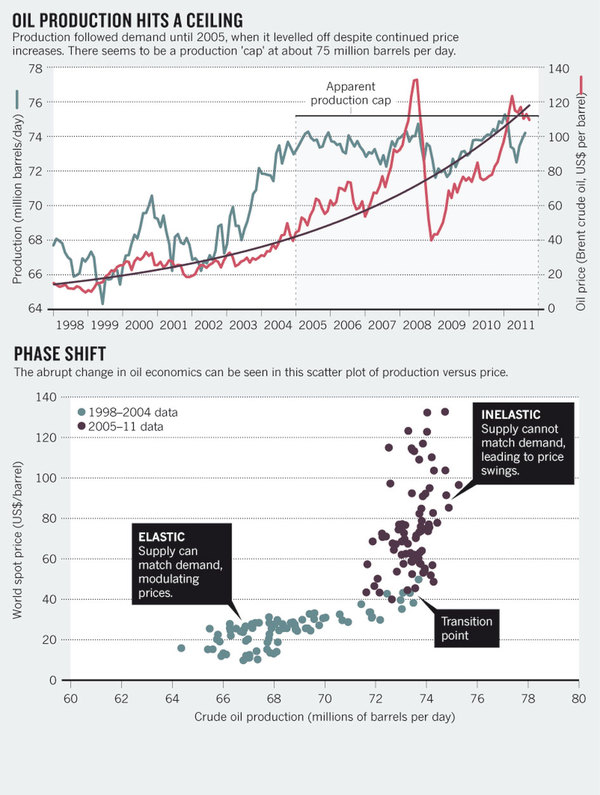
Looking at the raw production numbers, as exhibited below in the graphs, paints a completely different story: production from existing fields is going down dramatically (at 5% rate, per year).  In other words we are in the treachorous waters between the catastrophe of CO2 poisoning and the disaster of running out of energy to burn.

The unavoidable rise of fuel prices will be less grave in Europe than in the USA, because many Europeans would opt for the available electric-based public transportation system (the combination of much more efficient electric motors and central generation is much more efficient than distributing oil to put in SUVs all over, as done in the USA; SUVs, because there are too many holes in the asphalt. A problem partly related to high oil prices!).

Yet, the increase of the cost of imported oil corresponds exactly to the Italian deficit ($55 billion). Although that deficit increase had many causes, oil price increase was by far the most important. And the same for other Southern European countries. So the rise of oil prices was the barrel that broke the back of European debt.

In the USA, ten out of 11 post WWII recessions were followed by oil price spikes. Why are American minds so closed up to the looming strangulation of their economy by oil? Because the fossil fuel plutocracy is on a rampage in the USA. It uses a red hot propaganda to persuade the vast American public of undifferentiated sheep that there is no CO2 ecological crisis, and no energy crisis. (Although the latest polls indicate that two thirds of the public, in a splendid turn-around, believe that there is indeed a man-made climate change crisis; never mind that the New York Times had the latest tornado rampage, with 40 dead, presented as discreetly as possible.)

Why are the fossil plutocrats hysterical? Well we are past Peak Cheap Oil. Moreover, the “majors“, the world’s largest oil companies, have been pushed out of more and more countries, and replaced by national oil companies. Desperate, the majors have gone for riskier and riskier drilling in the deep ocean. Now Chevron, and Transocean, after a 4-day leak off Brazil, see prosecutors asking for lengthy prison sentences and enormous fines.

Most of these oil companies are American, so they have pushed forfracking (destroying the underground with poisons to extract fossil fuels). Superficially, it works: USA imports of fossil fuels went quickly from 60% down to 40%.

However, that did not make a dent in the world price situation, because the demand keeps rising, but the world, overall, is PAST PEAK OIL (as I have long argued and the Nature article alluded to below confirmed, using the obvious argument found in the graphs).

So, basically, American fracking finances Chinese oil consumption. Here are some graphs extracted from Nature and the USA government:

When the horrid sun of diminishing resources rises over the parched American oil desert, while fracking reveals itself to be an unfathomable catastrophe, the howling is going to be very great, and one more reason for a depression will blossom.

Much of the USA’s superiority, in the last 150 years, has come from abundant and cheap oil. First in the North-East, then down to Oklahoma, Texas, Colorado, California. Compare with Western Europe, which had basically no oil.

Oil was not just a question of cheap, convenient energy. Oil has, short of nuclear energy, the highest energy density of any material (OK, nuclear energy is millions of time more energy dense).

Oil gave the USA enormous diplomatic and conspiratorial leverage. American oil plutocrats helped Lenin and Stalin develop their colossal fields in the Caucasus and Caspian. One of those plutocrats, Harriman, son of a railroad magnate, and brother of another Harriman, was one of the main operators of the democratic party. Let alone banker to Hitler. He was decorated both by Stalin, and by Hitler. He then went on as U.S. ambassador to major European capitals, and stayed one the main operators of the government of the USA for decades. “Democrats” have long been impure.

Interestingly, I searched the Internet for a document mentioning Harriman’s Stalino-Hitlerian decorations, but could not find it (I have seen the pictures in the past). All I could read is how much Harriman resisted Stalin each time they met, and that was all the time (a total lie that Harriman resisted Hitler, or Stalin: Harriman was an accomplice of Stalin, and helped give him half of Europe, in exchange for manganese and other stuff. But now Internet agents are obviously paid to reconstruct a truth where American plutocrats look good,  knights in shining armor, fighting Stalin or Hitler, each time they met for tea, dinner, lunch, breakfast, and interminable conferences, for years on end, decade after decade).

A famous example of the clout oil provided the USA with: Texaco fueled Hitler’s conquest of the Spanish republic (this one is hard to hide, because the U.S. Congress slapped Texaco with a symbolic fine, well after the deed was done). That used to amuse Hitler a lot (Hitler gave elaborated reasons to his worried supporters for being in bed with American plutocrats; as the Nazi Party was officially socialist, and anti-plutocratic, that awkward situation may have led him to declare war to the USA on December 11, 1941, to ward off the German generals’ argument that he was just a little corporal in above his head).

Another example: Mussolini was hanged from an American gas station in Milan. Italian communists hanged him from his sponsors’ works.

The fueling of the fascists by American fossil fuel companies helped bring the American Century to the world in general, and Europe in particular. Without Stalin and American plutocratic oil, Hitler’s Panzers could not have moved in 1939 or 1940.

The dignified Elie Wiesel, instead of crying crocodiles tears, wondering how such a thing as Auschwitz was possible, should ask how and why the Nazi extermination machine was fuelled by American plutocrats, and how come he, himself, never talks about that.

Wiesel got the Nobel Peace Prize, just as Jimmy Carter (who launched the American attack on Afghanistan). Was it for disinformation? (And how come waging war in Afghanistan is a big plus for the Peace Prize? Is it related to the same mood which made Sweden help Hitler before and during WWII, and never having a serious look at that, ever since? I know the prize is ostensibly given by Norwegians.)

Wikipedia is big on the notion of “weasel words“, and rightly so. Deeper than that is what I would call weasel logic. And ever deeper, weasel worlds. To talk about Hitler without ever wondering who his sponsors were, and what they were after, is to live in a weasel world.

I like Elie Wiesel personally. Yet, just as I like Krugman, Obama, and countless others, such as the infamous Jean-Paul Sartre, he likes power even more than truth. OK, It is unfair to put Sartre, who really espoused the most abject terrorism, with the others… As long as individuals prefer power to truth, the spontaneous generation of infamy is insured.

Total oil sales, per day are about 100 million barrels (in truth the cap is lower, see graph above), at, say $100, so ten billion dollars a day, 3.6 trillion a year. The USA uses about 25% of that. Some have incorporated the price of the part of the gigantic American war machine and (what are truly) bribes to feudal warlords insuring Western access to the oil fields, and found a much higher cost up to $11 a gallon.

Ultimately, and pretty soon, in 2016, specialists expect oil prices to explode up, from the exhaustion of the existing oil fields. Then what?

Moreover, in 2016, the dependence upon OPEC, or, more exactly Arab regimes, is going to become much greater than now. What’s the plan of the USA? Extend ever more the security state, and go occupy the Middle East with a one million men army? To occupy, or not to occupy, that is the question.

Is it time for a better plan? And yes, any better plan will require consumers to pay higher energy prices. As consumers apparently want the army to procure the oil, they ought to pay for it.

***

Patrice Ayme

***

Note 1: Flying cost at least ten times more in CO2 creation than taking a train. And jet fuel is not taxed, at least until the carbon plan of the European Union starts charging next year, in 2013. In spite of the screaming from the USA and its proxies: it’s funny how attached to subsidies American society can be.

Note 2: Refusing to pay for necessary military expenses through taxation and mobilization, was a big factor in the downfall of the Roman Principate.

The Principate then tried to accomplish defense on the cheap, by using more and more mercenaries. Many of these mercenaries or their children and descendants were poorly integrated in Roman republican culture (say emperors Diocletian or Constantine, let alone Stilicho the Vandal, a century later), so they established theDominate, itself a negation of the Roman republic. Amusingly the Western Franks, those salt water (“Salian“) Franks remembered the Roman republic better than all these imports from the savage East… who could not remember it, they, and their ancestors, having never known it.

Guess what? The USA’s army presently employs 300,000 “private contractors” (aka, mercenaries). Curiously, in that case, it’s not so much to save money, than to extract more money from the system (but that’s another story). Still, it will have the same effect.

oooOOOooo

Pebble Bay in Alaska

The challenge of what to ‘farm’ from our planet.

Last Sunday, after the mid-morning service, one of the congregation passed me a letter she had received from the Natural Resources Defense Council.  It was all about the proposed mine in Alaska known as the Pebble Mine.  She asked if I might write about it on Learning from Dogs.  WikiPedia introduces the project thus,

Pebble Mine is the common name of an advanced mineral exploration project investigating a very large porphyry copper, gold, and molybdenum mineral deposit in the Bristol Bay region of Southwest Alaska, near Lake Iliamna and Lake Clark. The proposal to mine the ore deposit, using large-scale operations and infrastructure, is controversial. Proponents argue that the mine will create jobs, provide tax revenue to the state of Alaska, and reduce American dependence on foreign sources of raw materials. Opponents argue that the mine would adversely affect the entire Bristol Bay watershed; and that the possible consequences to fish populations, when mining effluents escape planned containments, are simply too great to risk. Much of this debate concerns the tentative plan to impound large amounts of water, waste rock, and mine tailings behind several earthen dams at the mine site.

Proposed mine location

My instinct is to join the side of those protesting because, once again, it seems like another example of mankind working hard to exhaust every natural jewel in the planet’s crown.

Yet, I was also conscious that I’m sitting in front of a computer that will have it’s fair share of copper inside it and that we, as in Jean and me, use a whole range of sophisticated materials in our daily lives, ergo leading a life that genuinely reduces our footprint on Planet Earth is easier said than done.

Here’s one ‘protest’ website that sets out the reasons for not proceeding with this mine,

1. Bristol Bay is home to the world’s largest sockeye salmon run.
2. Pebble mine would generate toxic waste in a seismically active region.
3. A majority of the people of Bristol Bay do not want the mine.
4. Native people live in Bristol Bay, and they subsist off the land.
5. Bristol Bay is home to an abundance of animals that need pristine habitat.
6. Bristol Bay has thousands of rivers and streams that would be degraded.
7. Commercial and sport fishing jobs would be jeopardized.
8. Wild salmon provide us with omega-3 fatty acids.
9. The Pebble Limited Partnership is untrustworthy.
10. Future generations depend on us to protect their most important and lasting legacy–the land.

There is a website that supports the project, where you will read their ‘core value’ expressed as, “Responsible mining technologies that actively support a healthy, respectful and sustainable co-existence with the environment and Southwest Alaska culture.

Ultimately, it all comes down to there being too many people competing for too few resources.  Nay, worse than that.  It comes down to too many people living on this small planet, over-consuming what the planet can deliver and running out of time.  There are millions who instinctively feel very uncomfortable about the future but, as yet, no global movement with real political power to make a difference.

That, I regret, is the core issue for humanity.

The three amigos

Big thanks to Suzann for forwarding this to me.

Despite the fact that this has been widely circulated on the Web, I hadn’t come across it and it makes a lovely week-end item.

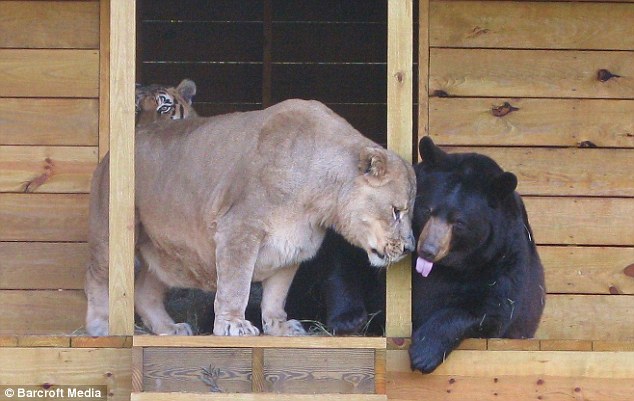
They make an unlikely trio but Baloo the bear, Leo the lion and Shere Khan the tiger have forged an unusually strong bond.

Considering that they would be mortal enemies if they ever were to meet in the wild, it is stunning to see their unique and genuine friendship in these intimate pictures.

Rescued eight years ago during a police drugs raid in Atlanta , Georgia , the three friends were only cubs at the time at barely two months old.  They had been kept as status symbol pets by the drug barons.

Living with the zoo's founders for the past eight years, Shere Khan, Baloo and Leo have now moved to a purpose built habitat Photo: BARCROFT

Delivered to the Noah’s Ark Animal Rescue Centre in Locust Grove, Georgia, the decision was made to keep the youngsters together, because of their budding rapport. ‘We could have separated them, but since they came as a kind of family, the zoo decided to keep them together,’ said Diane Smith, assistant director of Noah’s Ark. ‘To our knowledge, this is the only place where you’ll find this combination of animals together.’

Living with the zoo’s founders for the past eight years, Shere Khan, Baloo and Leo have now moved to a purpose-built habitat where the US public can now witness first hand their touching relationships.

We didn’t have the money to move them at first,’ said Diane.  ‘Now their habitat is sorted and they have been moved away from the children’s zoo areas where the public couldn’t really get a good look.’

It is possible to see Baloo, who is a 1000lb bear, Shere Khan, a 350lb tiger and Leo the Lion, who is also 350lbs, messing around like brothers.  ‘They are totally oblivious to the fact that in any other circumstance they would not be friends.’

Handled by Charles and Jama Hedgecoth, the zoo’s owners and founders, the three friendly giants appear to have no comprehension of their animal differences.

Baloo and Shere Khan are very close,’ says Diane, ‘That is because they rise early, and as Leo is a lion, he likes to spend most of the day sleeping.  It is wonderful and magical to see a giant American Black Bear put his arm around a Bengal and then to see the tiger nuzzle up to the bear like a domestic cat.  When Leo wakes up the three of them mess around for most of the day before they settle down to some food.’

Surprisingly for three apex predators with the power to kill with a single bite or swipe of their paw, they are very relaxed around each other.

They eat, sleep and play together,’ said Jama.  ‘As they treat each other as siblings they will lie on top of each other for heat and simply for affection.  At the moment they are getting used to their new habitat.  Shere Khan is being quite reticent about the move, but Baloo, the bear, is very good at leading him on and making him feel comfortable and safe.’

Explaining that the three ‘brothers’ have always seemed to share a unique bond, Charles said: ‘Noah’s Ark is their home and they could not possibly be separated from each other.  You just have to remember who you’re dealing with when you are with them, though.  It’s when you forget that these fellows are wild animals that you get yourself in trouble.’

The trio’s new habitat had to be constructed carefully, in order to accommodate its occupants.

Jama said: ‘The clubhouse had to be very sturdy for the guys, because they all sleep in it together.’

She added: ‘We had to include a creek, because the tiger and the bear both like to be in water.’

Random Notes 1.

A lovely collection of humour and reflective thoughts.

Good friend, John H. here in Payson, recently sent me an email with a delightful collection of, as the sub-heading put it, humour and reflective thoughts.

I decided to offer one every so often as an additional post for the day.  So here’s the first, accompanying my Post about Satish Kumar.  Enjoy!

Whoops!


Truth, love and laughter are a good way of life.

Life is a journey we share as if we knew the answers.

We can’t do anything right and we can’t do anything wrong.

Somewhere out there!

A delightful play on our preconceptions of nationalities.

Many thanks to Bob D. who sent this to me a few days ago.

SOMEWHERE …….. IN THE MIDDLE OF NOWHERE!

On a group of beautiful deserted islands in the middle of nowhere, the following people are suddenly stranded by, as you might expect, a shipwreck:

2 Italian men and 1 Italian woman

2 French men and 1 French woman

2 German men and 1 German woman

2 Greek men and 1 Greek woman

2 English men and 1 English woman

2 Bulgarian men and 1 Bulgarian woman

2 Japanese men and 1 Japanese woman

2 Chinese men and 1 Chinese woman

2 American men and 1 American woman

2 Irish men and 1 Irish woman

One month later on these same absolutely stunning deserted islands in the middle of nowhere, the following things have occurred:

One Italian man killed the other Italian man for the Italian woman.

The two French men and the French woman are living happily together in a ménage-a-trois.

The two German men have a strict weekly schedule of alternating visits with the German woman.

The two Greek men are sleeping with each other and the Greek woman is cleaning and cooking for them.

The two English men are waiting for someone to introduce them to the English woman.

The two Bulgarian men took one long look at the endless ocean, and another long look at the Bulgarian woman, and started swimming.

The two Japanese men have faxed Tokyo and are awaiting instructions.

The two Chinese men have set up a pharmacy, a liquor store, a restaurant and a laundry, and have got the woman pregnant in order to supply employees for their stores.

The two American men are contemplating the virtues of suicide because the American woman keeps endlessly complaining about her body, the true nature of feminism, how she can do everything they can do, the necessity of fulfilment, the equal division of household chores, how sand and palm trees make her look fat, how her last boyfriend respected her opinion and treated her nicer than they do, how her relationship with her mother is improving and how at least the taxes are low and it isn’t raining.

The two Irish men have divided the island into North and South and set up a distillery. They do not remember if sex is in the picture because it gets sort of foggy after the first few litres of coconut whisky.   But they’re satisfied because at least the English aren’t having any fun!

Just wonderful – big thanks to Bob for finding that!

The truth about (pet) food!

We are what we eat! A sobering assessment of the food industry this Friday, the 13th!

This saying, which has been around for some time, reminds us that the foods we eat break down into elements that our bodies absorb. What we eat literally becomes part of us, and not just us humans but our dogs and cats as well.  That’s why I haven’t differentiated between us humans and our pets in this Post.

Let’s start off with our pets.

On the 28th December, just a couple of weeks ago, I wrote an article about the possible harm to dogs from Jerky treats coming in to the USA from China.  Kenneth Bryant of TriPom Chews added a comment that included a link to a news story about 353 dogs possibly being made sick.  Since then he and I have been in email correspondence including Ken passing the web address of Susan Thixton’s website Truth about Pet Food.  If you have a pet, go to this website!

I’m sure Susan wouldn’t mind me giving you a flavour (pardon the pun!) of what she has on this important website.  Try this.

Is there Chicken in Chicken Pet Foods?

One of the newest trends of pet food marketing is a tag line something like ‘Chicken is the first ingredient’.  Sounds good doesn’t it?  Chicken, first or second on the ingredient list surely means this pet food contains lots of quality meat doesn’t it?  No wonder this ‘chicken’ pet food is a little more expensive – it contains more meat.  Right?  Maybe not.

Just because petsumers think meat when the ingredient ‘chicken’ is listed on a label, doesn’t mean the pet food actually contains chicken meat.  Pet food can have a very different definition of ‘chicken’.  Thanks to very broad Association of American Feed Control Officials (AAFCO) ingredient definitions, the ingredient ‘chicken’ listed on a pet food label could be nothing more than skin, bone, cartilage, and maybe a few tiny fragments of meat.

Here is the AAFCO definition of poultry (quoting the 2011 AAFCO Official Publication): “Poultry is the clean combination of flesh and skin with or without accompanying bone, derived from the parts or whole carcasses of poultry or a combination thereof, exclusive of feathers, heads, feet and entrails.  It shall be suitable for use in animal food.  If it bears a name descriptive of its kind, it must correspond thereto.”

Problems with this pet food ingredient definition…
#1  This ingredient (which includes all types of poultry including chicken) can be “a combination thereof” of any part of poultry.  This means that a pet food, proudly claiming Chicken as the #1 ingredient, can include ONLY chicken bones and/or skin (left over from the human food industry).

#2  “It shall be suitable for use in animal food” means that animals rejected for use in human food for reasons including (but not limited to) disease and drug residues are approved for use in pet food.  This we can thank the FDA for.  Federal Food Safety Laws should make it illegal for pet food to include whole or parts of diseased or rejected animals, but FDA Compliance Policies tell pet food it is acceptable to use diseased and drugged animals in pet food [My emboldening, PH.] (“it shall be suitable for use in animal food”).

Chicken Meal/Poultry Meal is very similarly defined – except ‘meal’ implies moisture removed.  However the very same end result can apply – the meal can consist of little more than skin and bones — no meat.

Other pet food meat ingredient definitions are a bit more descriptive, however all meat pet food ingredient definitions include the “it shall be suitable for use in animal food” disclaimer.  Thus any pet food meat ingredient – thanks to FDA Compliance Policies and AAFCO ingredient definitions – can be the same quality as human meats or can be sourced from diseased, rejected animals.  But, regulations do NOT provide petsumers with a means to determine which is which.

Read the rest of this article on Susan’s website.  Even better subscribe to her newsletters.

I could go on and on but will close this section by saying ‘thanks’ to Ken of TriPom for providing this awareness of what we all may be feeding our beloved cats and dogs.

So, humans next!

Just a few days ago there was an article on The Atlantic magazine website about The Very Real Danger of Genetically Modified Foods.  It’s a detailed article that, nonetheless, needs to be read by the widest possible audience.  Here are some extracts,

Chinese researchers have found small pieces of ribonucleic acid (RNA) in the blood and organs of humans who eat rice. The Nanjing University-based team showed that this genetic material will bind to proteins in human liver cells and influence the uptake of cholesterol from the blood.

The type of RNA in question is called microRNA, due to its small size. MicroRNAs have been studied extensively since their discovery ten years ago, and have been linked to human diseases including cancer, Alzheimer’s, and diabetes. The Chinese research provides the first example of ingested plant microRNA surviving digestion and influencing human cell function.

Should the research survive scientific scrutiny, it could prove a game changer in many fields. It would mean that we’re eating not just vitamins, protein, and fuel, but information as well.

Later on the article says,

Monsanto’s claim that human toxicology tests are unwarranted is based on the doctrine of “substantial equivalence.” This term is used around the world as the basis of regulations designed to facilitate the rapid commercialization of genetically engineered foods, by sparing them from extensive safety testing.

According to substantial equivalence, comparisons between GM and non-GM crops need only investigate the end products of DNA translation: the pizza, as it were. “There is no need to test the safety of DNA introduced into GM crops. DNA (and resulting RNA) is present in almost all foods,” Monsanto’s website reads. “DNA is non-toxic and the presence of DNA, in and of itself, presents no hazard.”

The Chinese RNA study threatens to blast a major hole in that claim. It means that DNA can code for microRNA, which can, in fact, be hazardous.

And the closing two paragraphs,

The OECD’s 34 member nations could be described as largely rich, white, developed, and sympathetic to big business. The group’s current mission is to spread economic development to the rest of the world. And while that mission has yet to be accomplished, OECD has helped Monsanto spread substantial equivalence to the rest of the world, selling a lot of GM seed along the way.

The news that we’re ingesting information as well as physical material should force the biotech industry to confront the possibility that new DNA can have dangerous implications far beyond the products it codes for. Can we count on the biotech industry to accept the notion that more testing is necessary? Not if such action is perceived as a threat to the bottom line.

Please read the whole article as my extracts do not give justice to the importance of these findings.

Finally, let me turn to a recent item on the BBC website about the decline of brain function from as soon as age 45!  (I’m 67!)  The item starts,

The brain’s ability to function can start to deteriorate as early as 45, suggests a study in the British Medical Journal.

University College London researchers found a 3.6% decline in mental reasoning in women and men aged 45-49.

What caught my eye were these concluding paragraphs,

Dr Simon Ridley, head of research at Alzheimer’s Research UK, said he wanted to see similar studies carried out in a wider population sample.

He added: “Previous research suggests that our health in mid-life affects our risk of dementia as we age, and these findings give us all an extra reason to stick to our New Year’s resolutions.

“Although we don’t yet have a sure-fire way to prevent dementia, we do know that simple lifestyle changes – such as eating a healthy diet, not smoking, and keeping blood pressure and cholesterol in check – can all reduce the risk of dementia.”

Professor Lindsey Davies, president of the Faculty of Public Health, said that people should not wait until their bodies and minds broke down before taking action.

“We need only look at the problems that childhood obesity rates will cause if they are not addressed to see how important it is that we take ‘cradle to grave’ approach to public health.”

Let me repeat this sentence, “we do know that simple lifestyle changes – such as eating a healthy diet, not smoking, and keeping blood pressure and cholesterol in check – can all reduce the risk of dementia.”

Understanding what food is healthy for us and our animals ought to be straightforward.  But it’s not, when one understands the terrible lack of integrity in the industries that make our food!

Keystone XL pipeline

Spread the word as far and wide as possible!

Yesterday I received an email from 350.org as part of their mailing to all 350.org supporters.  I have previously written a number of times, for example see here and here, about this proposed project and why it is so important to have it rejected.

Yesterday I published a lecture given in Melbourne by Britain’s eminent Astronomer Royal, Lord Martin Rees.  Lord Rees concluded his lecture with the call for us to take better care of our own planet. He, like many others, recognises the unique place in history that we occupy. For the first time a single species is capable of exerting profound changes on the Earth’s natural and physical environments.

Over and over again, scientists are reporting the rise in climate temperature of Planet Earth and the implications thereof if we do not wakeup soon to changing our ways.  The Keystone pipeline is a huge potential mistake!

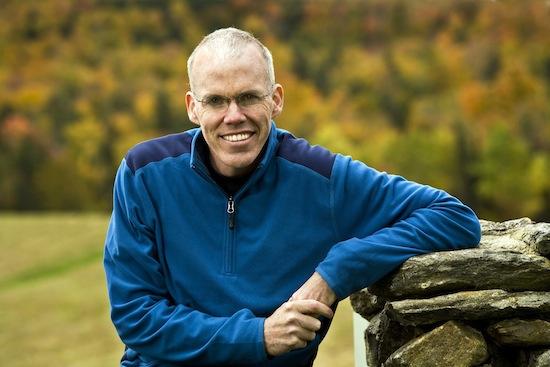
Bill McKibben of 350.org

Anyway, to the letter issued by 350.org – note the link to send a message to President Obama works – please use it!

Direct threats from Big Oil over Keystone XL

01/05/12, 11:43am

Here’s the email that Bill McKibben just sent to US 350.org supporters who have been working on Keystone XL:

Just in case you thought there was anything subtle about the Keystone battle, you need to hear what the president of the American Petroleum Institute — the oil industry’s #1 front group — said yesterday: if the President doesn’t approve the project there will “huge political consequences.”

That’s as direct a threat as you’re ever going to hear in DC, and it shows just how mad you made the oil industry last year by exposing Keystone for the climate-killing danger it is.  And the oil industry can obviously make good on their threats — they’ve got all the money on earth, and thanks to Citizens United they can use it without restriction in our elections. They’re not used to ever losing.So far the Obama administration is standing firm in the face of Big Oil’s bullying — the White House made it completely clear last month that if the oil industry and its harem in Congress forced a speeded-up review, it would lead to an outright rejection of the permit for the pipeline. We expect they’ll keep their word.

Here’s what I think we need to do.

1- Let the president know you’ve got his back when he rejects the pipeline. Tell him that addressing climate change is the key to our future, and that you’re glad he’s not bending.

2- Take the offensive against the oil industry. If they’re going to try and ram Keystone down our throats we’re going to try and take away something they hold dear, the handouts that Congress gives them each and every year. They’re the richest industry on earth, they’re doing great damage to the planet — and they expect us to pay for it with our tax dollars.

Can you send a quick note to President Obama covering those two key points? 

Click here to send a message to the President: www.350.org/stand-strong

Here’s the note I’m sending:

President Obama: Thank you for opposing the rushed Keystone XL pipeline permit. Responding to climate change is critical to preserving our collective future, and I hope this is a first step towards the dramatic changes we need to avoid catastrophe. PS: Please take handouts for the fossil fuel industry out of next year’s budget. There are people in America who need that money more.

There’s lots more to be done, of course. In the slightly longer run, we’ve got to take on the greatest subsidy of all: the special privilege that Congress gives the fossil fuel industry to use the atmosphere as an open sewer into which to dump its carbon for free.But today — right now, in the face of this kind of straight-up bullying — it’s time to punch back. We’re nonviolent, but we’re not wimps.

Bill