Tag: The Prince’s Trust

An insight into religious leaders who do not have a religion.

I would not have believed this had I not read it with my own eyes.

I have been an atheist all my life. My mother and father were all those years ago when being an atheist was not something one promoted.

But a recent article from The Conversation told a very surprising account: “These spiritual caregivers can be found working in hospitals, universities, prisons and many other secular settings, serving people of all faiths and those with no faith tradition at all.

Here’s the full article.

ooOOoo

Religious leaders without religion: How humanist, atheist and spiritual-but-not-religious chaplains tend to patients’ needs

Chaplains talk with anyone, regardless of whether or not the patient has a religious affiliation – and some chaplains themselves are not religious. Jacob Wackerhausen/iStock via Getty Images Plus

Amy Lawton, Brandeis University

Published: September 7th, 2023

In times of loss, change or other challenges, chaplains can listen, provide comfort and discuss spiritual needs. These spiritual caregivers can be found working in hospitals, universities, prisons and many other secular settings, serving people of all faiths and those with no faith tradition at all.

Yet a common assumption is that chaplains themselves must be grounded in a religious tradition. After all, how can you be a religious leader without religion?

In reality, a growing number of chaplains are nonreligious: people who identify as atheist, agnostic, humanist or “spiritual but not religious.” I am a sociologist and research manager at Brandeis University’s Chaplaincy Innovation Lab, where our team researches and supports chaplains of all faiths, including those from nonreligious backgrounds. Our current research has focused on learning from 21 nonreligious chaplains about their experiences.

A changing society

Thirty percent of Americans are religiously unaffiliated. Research suggests that people who are atheists or otherwise nonreligious sometimes reject a chaplain out of wariness, or shut down a conversation if they feel judged for their beliefs. But this research has not accounted for a new, increasingly likely situation – that the chaplain might also be nonreligious.

No national survey has been done, so the number of nonreligious chaplains is unknown. But there is plenty of reason to think that as more Americans choose not to affiliate with any particular religion, so too do more chaplains.

Nonreligious chaplains have been a part of hospital systems and universities for years, but they came into the national spotlight in August 2021 when Harvard University’s organization of chaplains unanimously elected humanist and atheist Greg Epstein as president. Humanists believe in the potential and goodness of human beings without reference to the supernatural.

Other recent reporting on humanist chaplains has also focused on school campuses, but nonreligious chaplains are not limited to colleges and universities. Eighteen of the 21 nonreligious chaplains we spoke with in our study work in health care, including hospice. The Federal Bureau of Prisons allows nonreligious chaplains, but we were unable to find any of them to participate in the current study.

A middle-aged man and woman seated in a row of chairs turn around to talk with a handful of college-age kids.
Humanist chaplain Bart Campolo, center, and his wife, Marty, right, mingle with students at the University of Southern California in 2015. AP Photo/Jae C. Hong

Not all settings allow nonreligious chaplains, however, including the U.S. military.

Authentic calling

The idea of a “call” from God is central to many religious vocations: a strong impulse toward religious leadership, which many people attribute to the divine.

Chaplains who are atheists, agnostics, humanists or who consider themselves spiritual but not religious also can feel called. But they do not believe that their calls come from a deity.

Joe, for example, an atheist and a humanist whom we interviewed, has worked as a chaplain in hospitals and hospices. He says that his “light bulb moment” came after a history professor told him that beliefs are the source of a community’s power. While atheists do not believe in God or gods, many do have strong beliefs about ethics and morality, and American atheists are more likely than American Christians to say they often feel a sense of wonder about the universe. Joe’s call was not “from a divine source,” but nonetheless, he says this experience “kind of filled me with a sense of control, and confidence, and presence” in his life that grounded his sense of a calling.

Sunil, another chaplain our team interviewed, was inspired by his college chaplain, whom he calls “a really influential presence.” The chaplain helped Sunil answer questions about identity and values without “necessarily having any religious or spiritual leanings to it,” and encouraged him to go to divinity school.

Today, Sunil tries to help others answer those same questions in his work as a health care chaplain – and to offer deeply thoughtful, meaningful spiritual care to people who aren’t religious.

Education and training

Most chaplaincy jobs require a theological degree. Along with coursework in sacred scriptures and religious leadership, chaplaincy training usually involves clinical pastoral education, where students learn about hands-on, care-oriented aspects of their profession. This involves learning to provide care to everyone, regardless of their religious background.

Although coursework is broadly the same for all students, religious or nonreligious, the actual experience of earning a degree is very different for nonreligious students. In the United States, Christian students are easily able to enroll in a seminary or divinity school that shares their faith identity and spend their years of study learning about their own tradition.

Chaplaincy programs that focus on non-Christian traditions are available, but scarcer, and our team does not know of an overtly nonreligious chaplaincy program. In recent years, more seminaries have welcomed nonreligious students, but nonetheless, nonreligious students often find themselves focusing their study on traditions to which they have no personal connection.

Yet there is a surprising bright side.

‘I am here to support you’

Being deeply immersed in traditions that are not one’s own is one of the reasons that nonreligious chaplains can be so effective.
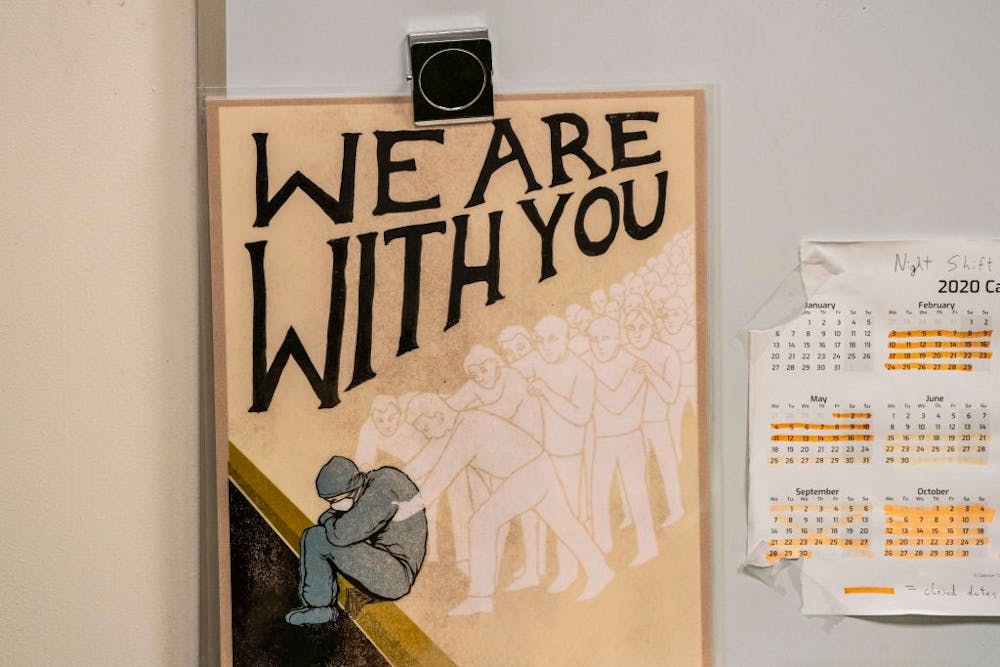
A poster that says 'We are with you,' with an illustration of someone sitting in scrubs as dozens of ghostly figures hold them.
Artwork posted by a chaplain in a break room in the trauma surgery ICU at Harborview Medical Center in Seattle. David Ryder/Getty Images

For example, our team asked Kathy, a health care chaplain, how she approaches prayer with religious and nonreligious patients. “My goal is to try to meet that person where they are and pray in a way that’s helpful and comforting for them, or meets whatever the need is that’s arisen during the conversation that we’ve had,” she said. Like all chaplains, Kathy is there to accompany, not proselytize. While she herself prays to the “great mystery,” she is comfortable facilitating whatever prayer is needed.

Claire, a chaplaincy student, agreed with Kathy and described her own first experience meeting an evangelical Christian patient. It was easy, she said, because “you’re not trying to fix anything. You’re just trying to meet them where they are. So that’s it.”

Nonreligious chaplains are used to thinking outside the box. Having learned about major world religions, many of them can find overlapping values and beliefs with their patients, such as finding beauty and meaning in the natural world or finding strength in their conviction that human beings are inherently good.

Cynthia works in the palliative care department in a hospital and tells her patients, “I am here to support you in whatever is meaningful to you right now and whatever is most important in your life in this moment.” She asks patients: “What are you struggling with right now? What are your goals? What do you hope for? What are you afraid of?” – trying to “unpack that with a spiritual lens rather than a medical lens.”

Cynthia is an example of why spiritual care by nonreligious chaplains may be surprising, but is likely here to stay. Based on our research, nonreligious chaplains are as capable as religious chaplains of meeting a person in their darkest hour and taking them by the hand.

Amy Lawton, Research Manager, Chaplaincy Innovation Lab, Brandeis University

This article is republished from The Conversation under a Creative Commons license. Read the original article.

ooOOoo

That last sentence may be opened up even more. In that the article speaks of chaplains, both religious and nonreligious. But as someone who was a counsellor with the Prince’s Youth Business Trust some years ago, now The Prince’s Trust, it is my opinion that anyone who is an active listener can undertake the role.

The article has many fine points including one that I had not considered before. “That American atheists are more likely than American Christians to say they often feel a sense of wonder about the universe.” I am certain that this isn’t confined to Americans.
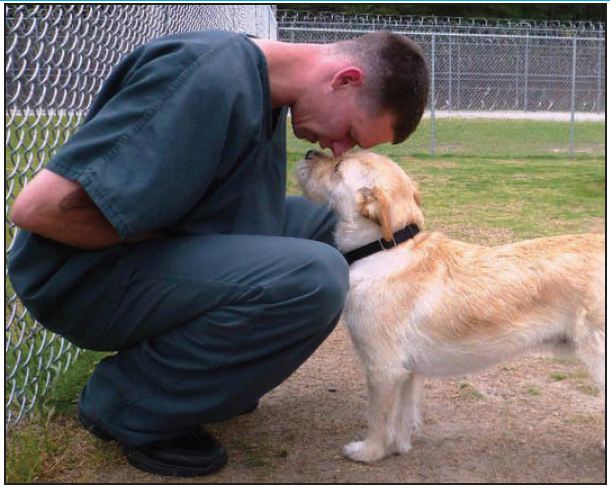
Dogs and the inside of our souls!

The role of dogs in helping young offenders.

In these times of terrible inequality, if there is one thing that has the power to crush a young person’s chances in life it is a criminal record, even a minor one. This is well-known in the UK. For a number of years I was a mentor with what was then called the Prince’s Youth Business Trust (PYBT) and now is just simply called The Prince’s Trust.

What was discovered, courtesy of the PYBT, was that if one taught disadvantaged youngsters the principles of forming and running your own business there were two positive outcomes. The first was that the young person performed much better at job interviews, and increased his or her odds of getting a job offer, and some young persons decided to start their own business; some very successfully so.

Thus with that background it was natural that an article in the US edition of The Economist caught my eye. It was called Pups and perps.

Pups and perps

What has four legs, a wet nose and helps young thugs grow up?

Dec 6th 2014 | LOS ANGELES | From the print edition

WHEN Jordan entered juvenile detention shortly after his 17th birthday, following a conviction for assault and robbery, all he could think about was getting out. The rowdy teenager from Anaheim, California, struggled to control his temper. But when he began working with Lulu, a poodle mix, he got a new leash on life. “I was too busy taking care of the dog to get into fights,” he says.

Jordan was taking part in “Pups and Wards”, a programme that pairs shelter dogs with young inmates. The perps train the pups and, with luck, learn something about personal responsibility. Other programmes allow prisoners to train dogs to be adopted by people with disabilities, such as traumatised veterans. Such training often requires full-time care—but prisoners have plenty of time on their hands.

The Economist article later on reports:

“All the research about the human-animal bond has buoyed these programmes,” says Gennifer Furst, a professor of criminal justice. “We have discovered that prisoners often identify with rescue dogs—they have both experienced trauma—and they are eager to become their protectors.” Crystal Wood, an officer at a maximum-security prison in Lancaster, California, says that several inmates on her yard—who are in prison for life—wept after interacting with dogs. “Many of these guys haven’t seen an animal in decades. It’s been striking to see how much working with a dog has reduced their anxiety levels.”

It was easy to find more information on Professor Gennifer Furst from the William Paterson University website:

Gennifer Furst received her B.A. in psychology (with a sociology minor) from Connecticut College and her M.A. in psychology (with a concentration in evaluation methodology) from Claremont Graduate University. She received her doctorate in criminal justice (with a concentration in corrections) from CUNY Graduate Center.

Dr. Furst is the Department of Sociology’s Criminal Justice Director. Dr. Furst’s research interests focus on issues of incarceration. She published the first national survey of prison-based animal programs in the US. A book based on that work was recently published. Additionally, she is interested in race and the administration of criminal justice, the death penalty, the use of animals in the criminal justice system, and the relationship between drugs and crime.

Read the rest of the good Professor’s background here.

Imagine my pleasure in finding that there is a film Dogs on the Inside and that YouTube carries an official trailer.

As the film website states: “Everyone deserves a second chance.

So if you are motivated to get involved then don’t hesitate to return to the film’s website and read the Get Involved page.

The power of love.
The power of love.

Running on empty!

Is it just me?

It is my usual pattern to awake around 5am, sit upright in bed and browse the latest news on my tablet computer. Jean sleeps on most times next to me.

Thus it was last Friday morning that I am sitting in bed reading the latest goings on around the world.

But, unusually, that morning’s wanderings left a bleak mark on me. See if you feel the same way when I share the stories that I read.

From Naked Capitalism.

The Tragedy of the Soma Mine-Workers: A Crime of Peripheral Capitalism Unleashed

Posted on May 16, 2014 by Yves Smith

Yves here. This post explains how the horrific mine explosion in Western Turkey, which has officially claimed nearly 300 lives as the death count continues to rise, was not an accident but the direct result of privatization and circumvention of safety standards. And unlike the West, where industrial and mining accidents are met with short-term sympathy but little if any real change in working conditions, protests have broken out, not just in the mine town of Soma but also in major cities. As Mark Ames has pointed out, American has airbrushed out much of the history of labor’s struggles for safe workplaces and better pay. Violence against efforts to organize workers was common. Henry Ford had a private army of thugs for just this purpose. The tragedy in Turkey should serve as a reminder of what has been won, and how fragile those gains are.

By Erinç Yeldan, Dean of the faculty of Economics and Administrative Sciences, Yasar University and an executive directors of the International Development Economics Associates. Cross posted from Triple Crisis

One of the greatest work-crimes in mining industry occurred in Soma, a little mining village in Western Turkey. At noon-time on Tuesday, May 13, according to witnesses, an electrical fault triggered a transformer to explode causing a large fire in the mine, releasing carbon monoxide and gaseous fumes. (The official cause of the “accident” was still unknown, at this writing, after nearly 30 hours.) Around 800 miners were trapped 2 km underground and 4 km from the exit. At this point, the death toll has already reached 245, with reports of another 100 workers remaining in the mine, yet unreached.

Turkey has possibly the worst safety record in terms of mining accidents and explosions in Europe and the third worst in the world. Since the right-wing Justice and Development Party (AKP) assumed power in 2002, and up to 2011, a 40% increase in work-related accidents has been reported. The death toll from these accidents reached more than 11,000.

(Read the rest here.)

From the BBC News website:

In just over five years Britain will have run out of oil, coal and gas, researchers have warned.

A report by the Global Sustainability Institute said shortages would increase dependency on Norway, Qatar and Russia.

There should be a “Europe-wide drive” towards wind, tidal, solar and other sources of renewable power, the institute’s Prof Victor Anderson said.

The government says complete energy independence is unnecessary, says BBC environment analyst Roger Harrabin.

The report says Russia has more than 50 years of oil, more than 100 years of gas and more than 500 years of coal left, on current consumption.

‘Decisive action’

By contrast, Britain has just 5.2 years of oil, 4.5 years of coal and three years of its own gas remaining.

France fares even worse, according to the report, with less than year to go before it runs out of all three fossil fuels.

(Read the rest here)

Again from Naked Capitalism:

UK Survey Finds High Levels of Depression and Desperation Among the Young

Posted on May 16, 2014 by Yves Smith

If you’ve been keeping half an eye on economic news, the UK has of late been looking pretty spiffy relative to its advanced economy peers, with 2014 growth forecast at 3%. Even though unemployment in the UK is at its lowest level in five years, the young and the long-term unemployed haven’t benefitted to the same degree.

One issue that doesn’t get the attention that it merits is the destructive psychological impact of being out of work. Work doesn’t just provide money, as critical as that is. It provides a way of organizing your time, social interaction, and a place in society, even if that place is not really where you’d like to be. Being unanchored is extremely taxing. Recall that the Japanese get people to quit by giving them a desk and nothing to do. The lack of legitimacy, the implicit shaming of being isolated is sufficiently punitive as to induce workers to give up their pay and being able to tell their families they have a job.

The BBC reports on the results of a survey by the Prince’s Trust called the Macquarie Youth Index, which is based on a survey of roughly 2200 16 to 25 year olds. 13% were what the survey called Neet: not in employment, education, or training.

I will return to the terrible implications of this report after I declare a past interest.  Before I left England in 2008, I was an active volunteer with the Prince’s Trust. My years of being associated with the Trust taught me that helping young persons discover their strengths, enable them to maintain and defend a positive self-image, and offer them real hope for their future lives, was and is the most important role of society; without doubt!

Now back to that report:

The survey found high levels of suicidal thoughts and self harm among this group, and high levels of stress among the young generally. Key excerpts from the article:

The report found 9% of all respondents agreed with the statement: “I have nothing to live for”…

Among those respondents classified as Neet, the percentage of those agreeing with the statement rose to 21%.

The research found that long-term unemployed young people were more than twice as likely as their peers to have been prescribed anti-depressants.

One in three (32%) had contemplated suicide, while one in four (24%) had self-harmed.

The report found 40% of jobless young people had faced symptoms of mental illness, including suicidal thoughts, feelings of self-loathing and panic attacks, as a direct result of unemployment.

Three quarters of long-term unemployed young people (72%) did not have someone to confide in, the study found.

Martina Milburn, chief executive of the Prince’s Trust, said: “Unemployment is proven to cause devastating, long-lasting mental health problems among young people.

(Read the full report here and the BBC report here.)

Then there was the report from the NASA study team that key glaciers in West Antarctica are in an irreversible retreat. First seen by me on the BBC News website, from where the following photograph was taken.

Thwaites Glacier is a huge ice stream draining into the Amundsen Bay.

To really understand the message that Planet Earth is sending out to us humans, I would recommend reading Antarctica’s Glaciers Disintegrating over on Patrice Ayme’s blog.  Here’s how Patrice finishes that essay:

We imparted acceleration to the biosphere. We are pushing the biosphere around. And we know that the force we are applying is only augmenting. That means the acceleration, and even more the speed of the change, is going to get worse quick. That’s basic dynamics, first quarter of undergraduate physics.

Of course, neither the leaders of France, Great Britain, or the USA has taken such a course: they are basically ignoramuses at the helm (and Angela Merkel, who knows plenty of physics, made a risky bet she seems to be losing).

Clearly, we should instead apply the brakes to the maximum (instead of flooring the accelerator). What would be the price of this cautious? None, for common people: hard work to de-carbonize the world economy would require dozens of millions to be employed that way, in the West alone.

That, of course, is a scary thought for plutocrats, who much prefer us unemployed, impotent, and despondent.

Patrice Aymé

All of this is sending out a message. The message that if we are not very, very careful this could be the end-game for human civilisation on this Planet.

But do you know what really puzzles me?

It’s that this message is increasingly one that meets with nods of approval and words of agreement from more and more people that one sees going about one’s normal life.  Perhaps, because there’s more and more reporting from a wider and wider range of sources. Like The Permaculture Research Institute website recently publishing This Collapse is a ‘Crisis of Bigness’.  Like Grist publishing Walmart is the last place Obama should be making a clean energy speech.

Like Ian Welsh publishing Equal Rights to Profit from Impoverishing People and Causing a Great Extinction Event. Like Patrice in an essay last Friday about the way in which Main Stream Media is Manipulated. Viz:

Main Stream Media (MSM) has been the instrument of control of the People ever since there were oligarchies. It used to be about temples and priests, now it’s more about controlling papers, radio, TV, and the Internet.

and later on:

This crudeness, and vigilance of censorship by the owners [of the New York Times], is why the Obamas, Clintons, Krugmans, and Stiglitzs have to be careful. After all, they are just employees enjoying the perks of the system. Yes, they don’t own it. Ownership is everything. If the servants want to keep on thriving, those “leaders” will have to please the owners. So they “lead” where the real owners are willing us all, the herd, to be led.

Patrice rounds his essay off, thus:

The plutocracy focuses on direct control of the world imperial system, and that means controlling the giants (especially the three military leaders of the West). This is where the propaganda is the thickest.

The New York Times is considered to be the “newspaper of record” in the USA. However, the bottom line is that this is the third century during which it is owned and controlled by a particular family. How can these two elements be compatible? Why is that particular family “of record”?

Even in the Middle Ages, the most absolute kings there were, those of France, actually owned relatively little property. Francois I himself may have worn expensive clothes, but Italian bankers paid for his trips around France. Francois I did not own the media of the time.

What we have now is different. We have an ascending plutocracy that tries to grab the minds ever more. What Putin is doing in Russia is just a particular case, part of a whole.

Hopefully, people will see through this, and get their news from somewhere else than plutocratically owned media, thus bankrupting the MSM (the Internet can support journalists directly: see the successful Mediapart in France).

But I haven’t answered my earlier rhetorical question.  “But do you know what really puzzles me?” Implying that a growing number of people sense there is a problem with today’s world.

That question will be answered tomorrow. Do please return.