Zola’s always known she was a big dog in a small dog’s body. The 2-year-old corgi refuses to let her short legs hold her back from getting what she wants.
And what Zola really wants is to play with her neighbor, Rocky.
Haley Smith
About three weeks ago, Haley Smith noticed that whenever Zola went out in the yard, she’d make a beeline for the fence.
“She started really going crazy and barking at the fence, and we weren’t sure why,” Smith told The Dodo. “She would sit by the door and we would let her out, and she would sprint to the fence and start jumping. We thought it was odd.”
Haley Smith
Smith didn’t understand what was so attractive about the cinder block barrier until she caught a glimpse of a sweet black and white spotted face looking over. But no matter how high Zola jumped, she couldn’t reach the dog on the other side.
“We peeked outside and lo and behold, she was just trying to talk to the big paws and head that were peering over at her,” Smith said. “She really wants to get to Rocky. She will take a running leap at the fence and try to jump to his height.”
Haley Smith
Rocky and Zola’s meetings have since become a nightly affair. The two have yet to meet without the barrier, but that just makes the pups even more interested in each other.
“Rocky is very gentle,” Smith said. “At first he barked back at her. Now, he jumps up and just watches her quietly. He seems very curious about her.”
But Zola doesn’t seem to like that their meetings are a little one-sided. “One theory I have is that she’s a little jealous that Rocky can see into her yard but she can’t see into his,” Smith said. “She probably wants to know how to get to him so they can sniff and play.”
Zola loves other dogs and always pulls to sniff each one she sees on her walks. The fact that she hasn’t been able to reach Rocky is the ultimate challenge, and she’s constantly trying to figure out how to get to his level.
Haley Smith
Smith has no doubt that Zola will soon reach him, and the two will finally be together.
“Zola is too smart for her own good,” Smith said. “She’s pretty sure she will figure out a way to get to the top of the fence.”
ooOOoo
In a way dogs are so human but then again dogs are a very different species. We know from years of personal experience that dogs have pure unconditional love for their doggy friends and for us humans. That is what makes them so special!
A more informative way to do something most of us don’t think about!
The Dodo recently had an article about petting a dog. I was about to ignore it and then decided to read the article. I am glad I did because The Dodo went to a veterinarian in New York City for the answers.
Here’s the article.
ooOOoo
These Are The Best Places To Pet A Dog, According To A Dog
Some dogs love all the pets from all the people, while others can definitely be more finicky.
When it comes to where she’s petted (and who’s petting her), your dog probably has some personal preferences —so it’s important that you learn her boundaries.
Typically, most dogs share safe zones that are OK to pet — as well as areas on their bodies that are totally off-limits.
To help, The Dodo reached out to Dr. Stephanie Austin, a veterinarian at Bond Vet in New York City, who explained the best places to pet a dog — and where to avoid.
Where do dogs love to be petted?
As a general rule of thumb, the neck, chest and shoulders are places that many dogs like to be petted.
But it’s important to keep in mind that not all dogs are created equal when it comes to where they like to be touched. “For example, some pups love belly scratches or petting on the rump area, while others may be more guarded about those parts of their body,” Dr. Austin told The Dodo.
How to pet a dog the right way
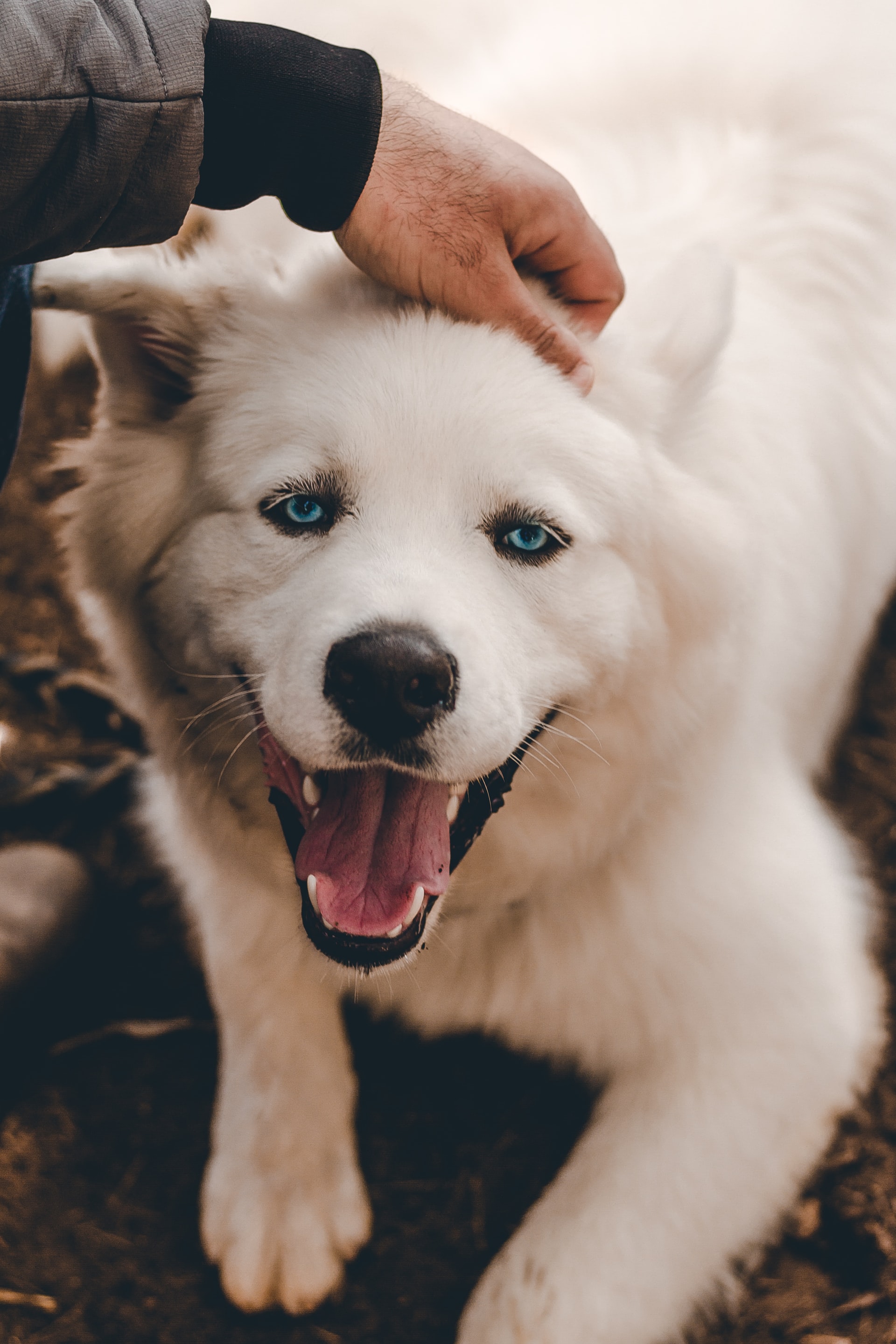
If you’re not sure what a dog likes or doesn’t like when you first meet her, your best strategy is to let her come to you and sniff your hand.
“If the dog is friendly and relaxed, try gently petting the neck, chest or shoulders. Don’t reach for their head from above, as this could appear threatening to a dog,” Dr. Austin suggested.
You can usually tell if a dog is enjoying being petted because she’ll get closer to you, act relaxed and happy and even lean into your hand where you are petting.
“If a dog becomes tense or standoffish, this may be a warning that they aren’t comfortable with the petting,” Dr. Austin said.
Where to not pet a dog
According to Dr. Austin, there are some places — in general — where dogs might be uncomfortable with someone touching.
Questionable spots include:
Paws
Legs
Tail
Face
“And even though many pups appreciate a good belly rub, they may also be protective of their belly and the underside of their body,” Dr. Austin said.
And be wary of any areas on the body that might be particularly sensitive.
“Some dogs may have areas of the body that are sensitive due to underlying health conditions — for example, if a dog’s hips are painful due to arthritis, they might not like someone pressing on or near their hips,” Dr. Austin said.
It’s also important to keep in mind that some dogs just don’t like to be touched by strangers. So if your dog prefers to warm up to people, advocate for her and let others know that she just needs time. Don’t force her to be uncomfortable by accepting unwanted interactions from other pets!
Of course, the best thing you can do when getting to know a dog is to start off slow and check in with her body language. She’ll usually tell you exactly what she’s comfortable with.
And once you figure it out together, your bond will be even stronger!
ooOOoo
Now Jeannie and I are biased because our six dogs love being fondled in so many ways including much of what is cautioned by Dr. Austin. But we certainly agree with the last few word about the bond being even stronger!
This is still good advice because there are so many different personalities with our six dogs and many just have a single dog.
But Dr. Austin’s advice applies to Jeannie and me and we would never be as relaxed when we have visitors. Then the strong advice is to let the dogs chose in their own time when and how to approach the guests.
Adopting a dog is one of the most exciting ways to grow your family.
But you might be wondering if certain dog breeds are better for living with families than others.
The Dodo spoke with Iris Ulbrich, a behavior consultant and owner at Trust Your Dog in Los Angeles, who explained why you should actually pay more attention to a pup’s personality than his breed.
The best dog breeds for families
While there are some dog breeds that tend to be a bit more inclined for family life, it’s super important to remember that breed is not everything.
“Yes, there are characteristics that are tied to dog’s breed, but a lot has to do with the quality of breeding as well as the first few months of a puppy’s life,” Ulbrich told The Dodo.
What’s most important is an individual dog’s personality because, ultimately, that will determine whether or not he will work great in a family environment, regardless of his breed.
With that in mind, here are some dog breeds that — on average — tend to have traits that make them good family pets:
Labradors
Golden retrievers
Collies
Wheaten terriers
“Both [Labradors and golden retrievers] are very friendly, active, good with kids and eager to please,” Ulbrich explained.
As for wheaten terriers, they don’t shed. So if someone in your family has allergies, these terriers could be a good fit.
“Collies are very devoted family dogs and can be both very active but also know how to relax and be calm at home,” Ulbrich said.
That being said, these are just generalizations! There are some labs out there who are absolutely terrible with kids — and literally millions of individual dogs from breeds not on this list who are perfect family pets.
Which is why your best bet is to go to a rescue center, where adoption counselors can match you with a pup who has the exact personality you’re looking for.
Personality traits that make a dog the best fit for a family
Since personality is far more important than breed when finding your perfect pup, you should know which traits to look for in your family’s potential new addition.
After all, a rescue is going to help you find a dog that’ll vibe with you and your loved ones, since you’ll be able to pick a pup with a fully formed personality. If you get a puppy from a breeder, on the other hand, you’ll have no idea if he’ll grow up to be a good match for your family.
When it comes to finding the best dog for your family, here’s the personality traits Ulbrich recommends you look for.
“A healthy amount of energy in combination with eagerness to please their owner is usually a great combination,” Ulbrich said.
And since families are all different, it’s actually most important to look for a dog that’ll mesh with your family’s interests, hobbies and lifestyles.
“An active and outdoorsy family with slightly older kids that live in a house would pick a different dog to a family that lives in an apartment and has twin toddlers,” Ulbrich explained.
In those cases, both of those potential pups might not even be any of the breeds listed above, since it all boils down to each individual pup’s personality.
“A dog’s demeanor also plays a big role in [a] successful family integration,” Ulbrich said. “I try and recommend people ask a trainer to temperament test a puppy before making a final decision on breed and particular puppy within a litter.”
And since that individual temperament is so important, any dog breed can be the best dog breed for your family.
ooOOoo
I hadn’t thought of it before but Iris Ulbrich stating that personality was far more important than the breed of the dog. Of course! Perfect sense! And always take in a rescue dog!
Yet another article about a sweet dog! Keep them coming!
I know Jeannie and I are very biased but so are millions, literally, of other good folk around the world. I am speaking of people who love dogs. And thank goodness that is the case because The Dodo is just one of a number of doggie websites and in the absence of such websites Learning from Dogs would have never got started!
So I am pleased to present another story from The Dodo about Levi. Read on:
ooOOoo
Very Sweet Dog Always Welcomes Mom Home With A Gift
Levi knows to never greet someone empty-handed. The Lab mix gets so excited every time his mom comes home that he immediately has to find the perfect gift to show his love.
However, when it comes to Levi’s presents, his mom knows it’s the thought that counts.
LORI EDDINS
“The very first thing that stands out was when he brought me an open, half-chewed box of screws,” Lori Eddins, Levi’s mom, told The Dodo. “So I took him to the vet for X-rays.”
Thankfully, Levi hadn’t snacked on any of the hardware and got a clean bill of health, but Eddins’ reaction to the “gift” encouraged Levi to start an adorable routine.
“I think my begging and baby-talking for him to surrender the box of screws might be what inspired his deliveries,” Eddins said. “He thought it was great!”
LORI EDDINS
Now, the rescue dog always gives his mom something special when she comes home after a hard day’s work.
LORI EDDINS
“He has brought everything from his toys, to bones and blankets, to clumps of grass, pieces of cardboard or paper (I call them ‘cards’) and landscape timber,” Eddins said. “My favorite was when he found where the flower bed had been cleaned out and he brought me flowers.”
“If he meets me at the gate empty-handed, I let him carry my keys to the door, and he is so proud,” she added.
LORI EDDINS
Some of Levi’s gifts are not necessarily what Eddins would pick out for herself. Occasionally, he’ll bring her clumps of horse manure or try to pick up one of the chickens on the property to deliver to his mom.
LORI EDDINS
Though Eddins’ chickens aren’t so fond of this gift-giving, Eddins is so grateful to have such a generous, happy-go-lucky dog bringing joy to her life — and she makes sure Levi knows it.
“I give him huge hugs and thank him as if he brought me the winning lottery ticket,” Eddins said. “Most things I give back to him, some end up in the trash. I did keep the flowers!”
ooOOoo
It is a delightful story and one that rings true for so many people. Lori knows the golden rule in the way that she praises Levi.
Always make a dog feel as though he or she is such a special animal that life wouldn’t work without that dog. Always praise them and when a dog does something negative do not punish them. Just don’t praise them.
Time and time again stories surface about the very special bond between humans and dogs.
I would like to say that this is very unusual but it isn’t. Maybe Lorenzo did something for his dog that many would not but that is not to say that Lorenzo’s love for Myles is unique or even close to unique. There is something very special about the bond between us humans and our dogs. We all have mystical moments with our dogs!
Have a read of this story recently published by The Dodo.
ooOOoo
Guy Buys A Cabin In The Woods As A Retirement Home For His Dog
Lorenzo met his dog, Myles, 13 years ago completely by accident, and that’s how he knows they were meant to be together. A local shelter used to take their dogs to the park on Fridays, and Lorenzo would always watch from afar, his heart breaking knowing that none of the dogs had loving homes. One afternoon, though, Lorenzo locked eyes with one of the dogs — and he knew he had to take him home.
“I saw him and he saw me, and his ears went straight up,” Lorenzo (who asked that his last name not be included) told The Dodo. “I knew he chose me!”
Lorenzo
Ever since then, Lorenzo and Myles have been best friends. They love doing everything together, from hiking and swimming to napping together and playing with toys. Myles has always been such a happy dog and just loves being able to enjoy life with his dad by his side.
Lorenzo
As Myles has gotten older, it’s become a lot harder for him to get around. Slowly, the diagnoses started to come in. Cataracts, arthritis, heart failure. Through it all, though, Myles was still enjoying life, just at a much slower pace. Lorenzo wanted to make Myles’ life as easy and comfortable as possible — so he decided to find the perfect “retirement home.”
Lorenzo
“I had always told him I would give him land and retire him to the woods,” Lorenzo said. “I always figured by my mid-30s, I would have left the city. The pandemic really showed me what I value and that both he and I need to move towards a simpler life.”
Lorenzo
Lorenzo found and bought the perfect cabin in the woods, named it “Camp Myles” and set about renovating it to make it into the perfect home for him, Myles and his two cats, Tofu and Mama. Now the whole little family is all settled in, and so far, everyone is absolutely loving cabin life — especially Myles.
“I think [his favorite part is] both being lazy on the deck or porch and relaxing in nature, as well as roaming the property and going on walks,” Lorenzo said. “So much to smell, no cars, no sirens — it’s perfect for both of us!”
Lorenzo
Since moving, Myles has been responding incredibly well to his meds, new foods and all the fresh air that cabin life provides. He’s been there for his dad for 13 years now, and Lorenzo has vowed that in return, he’ll be with him until the very end.
“We are both so happy,” Lorenzo said.
oooOOoo
It is a beautiful tale and many of us know what Lorenzo is feeling. Indeed what Myles is also feeling albeit in the special way that dogs feel.
Now I have republished items about this subject before but not for some time. This article which appeared on The Dodo was thorough in my opinion and, therefore, worthy of a republication.
Turns out, dogs totally can. And it’s important that you know what to look out for when trying to figure out if your dog does have anxiety.
According to Dr. Walter Burghardt, Jr., a veterinarian at BluePearl Specialty and Emergency Pet Hospital in San Antonio, Texas, there’s a spectrum of anxiety-related behaviors in dogs, ranging from mild to severe (just like in humans).
These are some of the most common signs that your dog has anxiety, according to Dr. Burghardt.
Signs your dog is experiencing mild anxiety
She’s lip-licking
A common sign of mild anxiety — or just being plain uncomfortable — lip-licking usually means that your dog feels uncertain about whatever situation she’s in.
She’s yawning more than usual
Dogs don’t only yawn because they’re tired. If you’re noticing your pup is yawning more than usual, or not anywhere close to bedtime, it could be because she’s feeling anxious.
She’s more inactive (or active) than usual
If you notice your dog is keeping to herself more than usual — or, on the other hand, if she’s more hyper than normal — this could be a sign that she’s feeling anxious and unsure of how to deal with those feelings.
Signs your dog is experiencing moderate anxiety
She’s tucking her tail
If you notice your dog’s tail is tucked, that’s a sign that she could be experiencing a more moderate case of anxiety.
Her ears are flattened
If you see your dog’s ears are pinned back, it could be a sign that she’s experiencing increased anxiety.
Other signs of moderate anxiety include an increased heart rate, respiration and dilated pupils.
Signs your dog is experiencing severe anxiety
She’s trying to escape
If your dog seems to be doing everything she can to escape or get away from a situation, it could mean she’s feeling severely anxious.
She’s hiding
If you’ve noticed your dog is trying to hide from a scary situation, it could be a sign that her anxiety is severe.
She’s being aggressive
If your dog is showing signs of aggressive behavior, it could mean that she’s feeling very fearful or stressed.
Other signs of very severe anxiety could be that your dog freezes, or just doesn’t move at all.
How to help an anxious dog
If your dog is diagnosed with anxiety, her treatment could depend on a few things:
The source of the anxiety
The intensity and duration of the anxiety
How often your dog’s behavior is affected by anxiety
“For more severe and more frequent cases, anxiety is usually treated with one or more medications to help reduce distress and physiological arousal, environmental changes to reduce the distressing characteristics of a scary event, and behavior modification aimed at improving the patient’s confidence in the scary situation,” Dr. Burghardt said.
If your dog is experiencing more mild anxiety, this can usually be treated by desensitizing your dog to the scary situation and working on building your pup’s confidence — all with the help and advice of your vet or dog behaviorist.
If you suspect your dog is suffering from anxiety, contact your vet to see what you can do to help her feel better.
ooOOoo
Now I left out of the post three recommendations “You can also try some tried-and-true tricks to help calm down an anxious dog” (my italics) because I didn’t think you wanted products from Amazon.
But I would love to hear how common it is to have a dog that shows anxiety. Do you want to leave me a comment?
All dogs have a brilliant sense of smell. That comes from them having many times more scent receptors. As CareCredit write:
Dogs have a strong sense of smell Scientists guess the dog’s sense of smell is somewhere between 10,000 to 100,000 times more acute than ours. One of the reasons a dog has such better smelling ability than us is the number of scent receptors. For every scent receptor a human has, a dog has about 50.
So here is a story of a Husky using her sense of smell to good effect!
ooOOoo
Dog On Her Morning Walk Discovers A Cooler With Someone Inside
“Koda wouldn’t leave it. She was like, ‘There’s something in there. I want in there! Mom, look!’”
When a husky named Koda set out on her morning walk earlier this month, she had no idea she was about to save a life.
Around 5:45 a.m., Koda and her mom were walking on their regular route past the Fearless Kitty Rescue building. Koda usually stops to sniff around the area, but this time something was different.
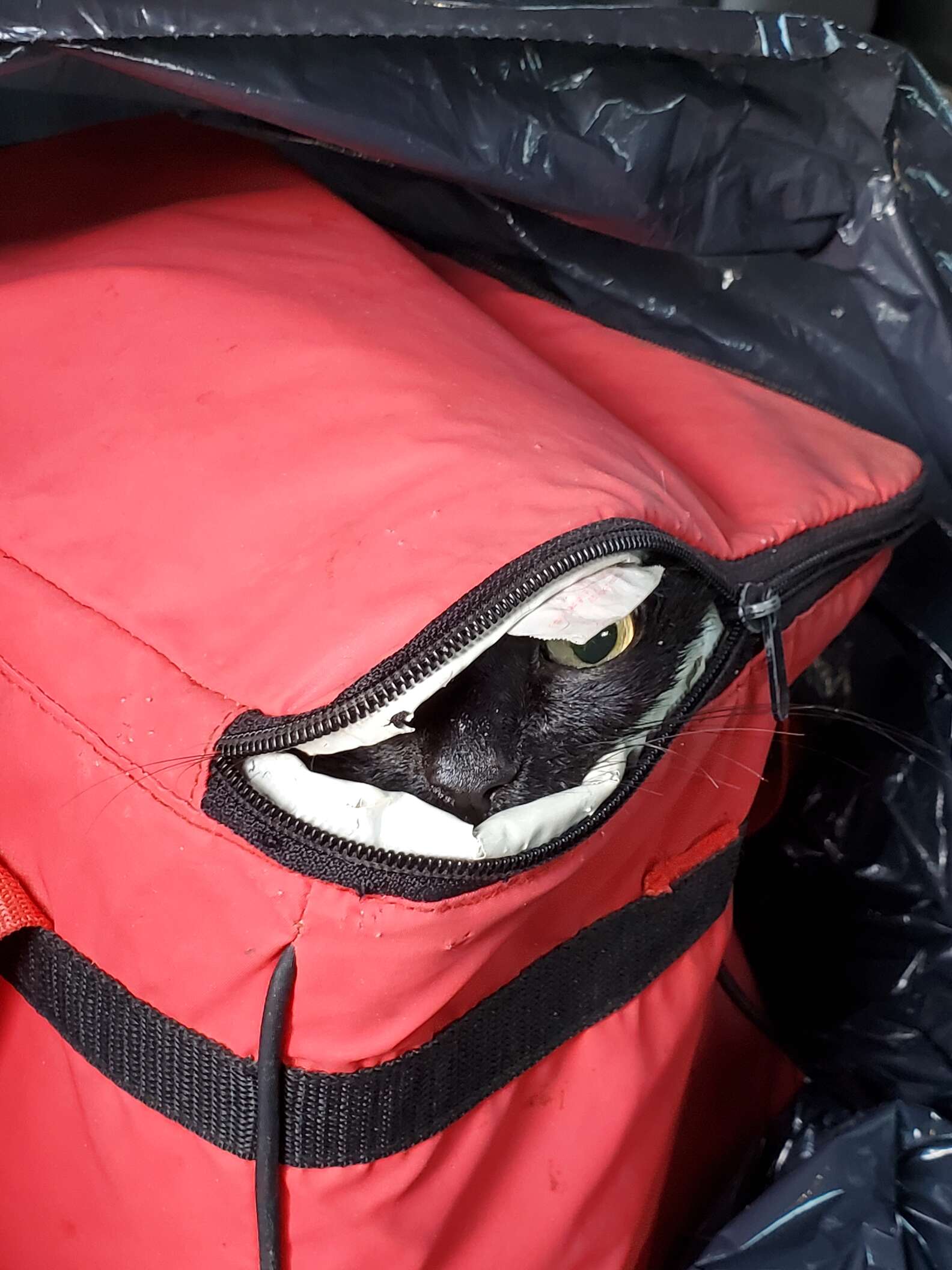
“She made a beeline to our donation bench,” Teryn Jones, events and marketing coordinator at Fearless Kitty Rescue, told The Dodo. “On our donation bench was a cooler that was zipped up, no holes, and then wrapped up in a garbage bag. Koda wouldn’t leave it. She was like, ‘There’s something in there. I want in there! Mom, look!’”
Koda’s mom was startled by her pup’s excited reaction and unzipped the cooler. A black cat popped her head out and began to gasp for air. Even though it was still early, it was already getting hot outside, and the cat seemed relieved to be free.
Koda’s mom contacted a volunteer at the rescue, who rushed over to welcome the cat inside and out of the sun.
“She was just shaken up and was kind of in freeze-mode,” Jones said. “And that’s how she’s been since.”
The little black cat, now known as Juliane, has been slowly acclimating to life at the rescue.
“She’s so sweet and very nervous and shy,” Jones said. “But she loves being pet — she purrs and rolls around on her belly. The resilience of her, in going through, what she went through is really amazing.”
“In the Danish culture, the name Juliane means ‘Fearless,’” Fearless Kitty Rescue wrote on Facebook. “And Fearless she is!”
But Juliane isn’t out of the woods just yet. A vet exam found a large mass on Juliane’s tail, which will require surgery. Once she’s healed and feeling better, Juliane will be ready to start her search for a loving forever home
“She’s very sweet and very clean — so she’s your ideal cat,” Jones said. “She sits and does her own thing, she doesn’t make a mess … She’s just very dainty.”
Thanks to Koda, Juliane has a second chance at a happy life — proving that guardian angels come in all shapes and sizes.
ooOOoo
I want to add another small remark that was on the website:
Did you just adopt a new dog and now you’re super excited to introduce her to all the awesome people and animals in your life?
While you might want to bring her everywhere you go right away, it’s also important to take the right steps inorder to set her up for success — especially when it comes to dog training and socialization skills.
To understand how to socialize your dog, The Dodo reached out Juliana Willems, head trainer at JW Dog Training in Washington, D.C., for some insight.
What does it mean to socialize a dog?
Socialization is the process of helping a dog enjoy and feel comfortable with people, other animals, places, novel objects and environments.
It means bringing your dog out into the world and introducing her to various kinds of people and situations — which helps to make sure she learns how to be a happy, friendly pup (with manners!), and can reduce fear in unknown situations.
It also helps to give your dog the skills she needs to learn about boundaries — meaning she’s not running around and bulldozing other dogs who clearly just want to sleep whenever she’s around them.
What’s the best age to socialize a dog?
According to Willems, the best age to socialize your dog is when she’s a puppy — because there’s a critical socialization window in a dog’s life between 3 and 16 weeks.
“This is the age where puppies are like sponges, soaking up information and using the experiences during this time to determine how they feel about the world later in life,” Willems said.
Experiences — or a lack of experiences — during this critical socialization window can have a direct impact on a dog’s behavior as an adult.
So what happens if you adopt an older dog outside of the socialization window?
Unless you adopt a puppy who’s 4 months old or younger, Willems said that the dog you’re bringing home is well outside the critical socialization period.
“What this means is you won’t be able to undo what did or didn’t happen during that window when they were a puppy,” Willems said. “That being said, a goal with newly adopted rescue dogs is always to introduce them to new people, animals, places and activities in a positive way.”
Of course, there’s a good chance your pup was already socialized, especially if she was living happily with a foster family before she went up for adoption. But no matter what stage she’s in socially, it doesn’t hurt to be aware of what to look out for.
As with puppies, being exposed to people, animals and places isn’t enough if you’re hoping to get your pup to truly love and be comfortable with these experiences. You should be paying attention to how she’s reacting to these situations as well.
According to Willems, simple exposure without looking at if your dog is having fun, feeling comfortable and enjoying herself leaves the door open for a negative experience.
That means it’s important you don’t overwhelm your dog by going to too many new places — or meeting too many new people — when she first comes home.
How to socialize your dog
According to Willems, the best way to socialize a new rescue dog is to go at her pace, use treats and always pay attention to body language.
“When you let your new rescue dog approach situations at their pace — allowing them to approach or retreat when they need to — you’re giving them choice in the interaction and you’re decreasing the chances that your dog will feel overwhelmed and scared,” Willems said.
And make sure you have some of your dog’s favorite treats ready to go during the process!
If you give your dog high-value treats when she meets new people or new animals or goes somewhere new, you’re increasing the chances that she ends up really liking those experiences. Why? Because she’s learning that new people, animals or places equal tasty treats!
While you’re keeping her happy with yummy treats, make sure you’re also paying attention to how she might be feeling in this new situation — and always give her the opportunity to take a breather if she needs one.
She should always have the option to leave a new situation if she’s uncomfortable — especially when it comes to meeting new people and dogs.
How can you tell if your dog’s uncomfortable?
According to Willems, your best bet is to look at your pup’s body language — and it’s helpful to be able to understand what certain signals mean.
Obvious ones include:
A tucked tail
Trying to move away
Avoiding interactions
Growling or barking
More subtle stress signals include:
Lip licking
Yawning
Ears back
Stiffening
If your dog exhibits stress signals like these, it’s important you advocate for her and move her out of the situation.
What should you do if your dog’s uncomfortable?
If you find yourself in a situation that’s making your dog uncomfortable, you’ll want to get her some relief by moving away — and you can also try adding something your dog loves to the equation.
“The most effective tool here is high-value treats — something squishy and stinky that your dog really enjoys,” Willems suggested.
Keep in mind, though, that you won’t want to give your pup a high-value treat or toy around a dog she isn’t comfortable with, to avoid sparking any possessive aggression.
Take your time — and socialize her slowly
It’s definitely worth it to put in the work with your new dog to help her get comfortable with her new life — but make sure to resist the urge to take her to tons of new places or introduce her to a bunch of new people or animals right away.
“Aggressive behaviors are rooted in fear, so all the more reason to be very intentional, patient and positive in your socialization practice to help your dog learn their world with you is not a scary place!” Willems said.
Your new dog has been through so many changes — so let her decompress and get acclimated to her new home, routine and family.
All those couch snuggles will be worth it.
ooOOoo
I don’t know about you but I found this article very useful and very informative. Now many books have been written on the subject and the odd blogpost or twenty.
But I hope that some readers found it informative. It would be lovely to hear from you if you are one of those people.









 Learning from Dogs