Tag: The Conversation

An insight into religious leaders who do not have a religion.

I would not have believed this had I not read it with my own eyes.

I have been an atheist all my life. My mother and father were all those years ago when being an atheist was not something one promoted.

But a recent article from The Conversation told a very surprising account: “These spiritual caregivers can be found working in hospitals, universities, prisons and many other secular settings, serving people of all faiths and those with no faith tradition at all.

Here’s the full article.

ooOOoo

Religious leaders without religion: How humanist, atheist and spiritual-but-not-religious chaplains tend to patients’ needs

Chaplains talk with anyone, regardless of whether or not the patient has a religious affiliation – and some chaplains themselves are not religious. Jacob Wackerhausen/iStock via Getty Images Plus

Amy Lawton, Brandeis University

Published: September 7th, 2023

In times of loss, change or other challenges, chaplains can listen, provide comfort and discuss spiritual needs. These spiritual caregivers can be found working in hospitals, universities, prisons and many other secular settings, serving people of all faiths and those with no faith tradition at all.

Yet a common assumption is that chaplains themselves must be grounded in a religious tradition. After all, how can you be a religious leader without religion?

In reality, a growing number of chaplains are nonreligious: people who identify as atheist, agnostic, humanist or “spiritual but not religious.” I am a sociologist and research manager at Brandeis University’s Chaplaincy Innovation Lab, where our team researches and supports chaplains of all faiths, including those from nonreligious backgrounds. Our current research has focused on learning from 21 nonreligious chaplains about their experiences.

A changing society

Thirty percent of Americans are religiously unaffiliated. Research suggests that people who are atheists or otherwise nonreligious sometimes reject a chaplain out of wariness, or shut down a conversation if they feel judged for their beliefs. But this research has not accounted for a new, increasingly likely situation – that the chaplain might also be nonreligious.

No national survey has been done, so the number of nonreligious chaplains is unknown. But there is plenty of reason to think that as more Americans choose not to affiliate with any particular religion, so too do more chaplains.

Nonreligious chaplains have been a part of hospital systems and universities for years, but they came into the national spotlight in August 2021 when Harvard University’s organization of chaplains unanimously elected humanist and atheist Greg Epstein as president. Humanists believe in the potential and goodness of human beings without reference to the supernatural.

Other recent reporting on humanist chaplains has also focused on school campuses, but nonreligious chaplains are not limited to colleges and universities. Eighteen of the 21 nonreligious chaplains we spoke with in our study work in health care, including hospice. The Federal Bureau of Prisons allows nonreligious chaplains, but we were unable to find any of them to participate in the current study.

A middle-aged man and woman seated in a row of chairs turn around to talk with a handful of college-age kids.
Humanist chaplain Bart Campolo, center, and his wife, Marty, right, mingle with students at the University of Southern California in 2015. AP Photo/Jae C. Hong

Not all settings allow nonreligious chaplains, however, including the U.S. military.

Authentic calling

The idea of a “call” from God is central to many religious vocations: a strong impulse toward religious leadership, which many people attribute to the divine.

Chaplains who are atheists, agnostics, humanists or who consider themselves spiritual but not religious also can feel called. But they do not believe that their calls come from a deity.

Joe, for example, an atheist and a humanist whom we interviewed, has worked as a chaplain in hospitals and hospices. He says that his “light bulb moment” came after a history professor told him that beliefs are the source of a community’s power. While atheists do not believe in God or gods, many do have strong beliefs about ethics and morality, and American atheists are more likely than American Christians to say they often feel a sense of wonder about the universe. Joe’s call was not “from a divine source,” but nonetheless, he says this experience “kind of filled me with a sense of control, and confidence, and presence” in his life that grounded his sense of a calling.

Sunil, another chaplain our team interviewed, was inspired by his college chaplain, whom he calls “a really influential presence.” The chaplain helped Sunil answer questions about identity and values without “necessarily having any religious or spiritual leanings to it,” and encouraged him to go to divinity school.

Today, Sunil tries to help others answer those same questions in his work as a health care chaplain – and to offer deeply thoughtful, meaningful spiritual care to people who aren’t religious.

Education and training

Most chaplaincy jobs require a theological degree. Along with coursework in sacred scriptures and religious leadership, chaplaincy training usually involves clinical pastoral education, where students learn about hands-on, care-oriented aspects of their profession. This involves learning to provide care to everyone, regardless of their religious background.

Although coursework is broadly the same for all students, religious or nonreligious, the actual experience of earning a degree is very different for nonreligious students. In the United States, Christian students are easily able to enroll in a seminary or divinity school that shares their faith identity and spend their years of study learning about their own tradition.

Chaplaincy programs that focus on non-Christian traditions are available, but scarcer, and our team does not know of an overtly nonreligious chaplaincy program. In recent years, more seminaries have welcomed nonreligious students, but nonetheless, nonreligious students often find themselves focusing their study on traditions to which they have no personal connection.

Yet there is a surprising bright side.

‘I am here to support you’

Being deeply immersed in traditions that are not one’s own is one of the reasons that nonreligious chaplains can be so effective.

A poster that says 'We are with you,' with an illustration of someone sitting in scrubs as dozens of ghostly figures hold them.
Artwork posted by a chaplain in a break room in the trauma surgery ICU at Harborview Medical Center in Seattle. David Ryder/Getty Images

For example, our team asked Kathy, a health care chaplain, how she approaches prayer with religious and nonreligious patients. “My goal is to try to meet that person where they are and pray in a way that’s helpful and comforting for them, or meets whatever the need is that’s arisen during the conversation that we’ve had,” she said. Like all chaplains, Kathy is there to accompany, not proselytize. While she herself prays to the “great mystery,” she is comfortable facilitating whatever prayer is needed.

Claire, a chaplaincy student, agreed with Kathy and described her own first experience meeting an evangelical Christian patient. It was easy, she said, because “you’re not trying to fix anything. You’re just trying to meet them where they are. So that’s it.”

Nonreligious chaplains are used to thinking outside the box. Having learned about major world religions, many of them can find overlapping values and beliefs with their patients, such as finding beauty and meaning in the natural world or finding strength in their conviction that human beings are inherently good.

Cynthia works in the palliative care department in a hospital and tells her patients, “I am here to support you in whatever is meaningful to you right now and whatever is most important in your life in this moment.” She asks patients: “What are you struggling with right now? What are your goals? What do you hope for? What are you afraid of?” – trying to “unpack that with a spiritual lens rather than a medical lens.”

Cynthia is an example of why spiritual care by nonreligious chaplains may be surprising, but is likely here to stay. Based on our research, nonreligious chaplains are as capable as religious chaplains of meeting a person in their darkest hour and taking them by the hand.

Amy Lawton, Research Manager, Chaplaincy Innovation Lab, Brandeis University

This article is republished from The Conversation under a Creative Commons license. Read the original article.

ooOOoo

That last sentence may be opened up even more. In that the article speaks of chaplains, both religious and nonreligious. But as someone who was a counsellor with the Prince’s Youth Business Trust some years ago, now The Prince’s Trust, it is my opinion that anyone who is an active listener can undertake the role.

The article has many fine points including one that I had not considered before. “That American atheists are more likely than American Christians to say they often feel a sense of wonder about the universe.” I am certain that this isn’t confined to Americans.
Dogs learn things in a way we may not realise.

A fascinating article in The Conversation.

I was very short of time yesterday so my apologies for going straight into this post. Plus, it is a post that talks about the learning process for dogs and, as such, looking more thoroughly will discover more material.

ooOOoo

Canines go to college in this class that seeks to give shelter dogs a fresh start

By Shlomit Flaisher-Grinberg

Associate Professor of Psychology, Saint Francis University

Published August 24th, 2023

Shelter animals often display problematic behaviors. Can they be retrained? Shlomit Flaisher-Grinberg

What prompted the idea for the course?

When I was growing up, my love for animals led me to volunteer at animal shelters. But it wasn’t until I started teaching psychology that I found another way to support the well-being of shelter animals. During my first year of teaching a psychology course about learning, I realized that the course’s content could be used to train shelter dogs.

Since some shelter dogs display problematic behaviors, such as fearfulness, destructiveness and disobedience, they are less likely to get adopted. I wanted my students to use their knowledge, passion and care to train shelter dogs and improve their chances of finding a permanent home.

What does the course explore?

The course teaches students how to apply behavioral analysis and modification techniques toward the training of shelter dogs. Students work with dogs on learning to follow cues such as “sit,” “down,” “stay” and “come”; perform tricks such as “high-five,” and “roll over”; and complete agility courses made of tunnels, hoops and weaving poles.

The course also explores the emotional, psychological and physiological benefits of the human-animal bond, such as reduced stress, by integrating the dogs into educational and therapeutic environments. For instance, the students train the dogs to sit by them calmly for the entire duration of a lecture. This skill may be important for future adopters who work within an educational setting or need their dog to accompany them into the classroom.

The students also train the dogs to visit our clinical educational facility, the Experiential Learning Commons, which was built as a mock hospital. Within our simulated emergency room, intensive care room, patient room, maternity room and exam room, students train the dogs to walk next to simulated patients’ wheelchairs, sit by patients’ beds and provide them with affectionate and nurturing companionship.

Finally, the course instructs students on how to apply for grants for nonprofits, with the idea being to secure funding to support animal shelters.

Why is this course relevant now?

This course creates a collaborative and reciprocal partnership between a university and the community in which it is located. Focusing on the care for shelter dogs, it allows for faculty, students and a shelter’s staff and volunteers to exchange knowledge and resources. As such, it uses an instructional approach known as community engagement.

What’s a critical lesson from the course?

Working alongside our animal shelter community partners, and under the direction of my co-instructor, talented dog trainer Megan Mills, students learn that they can make a true and visible impact on society, one dog at a time.

What materials does the course feature?

Michael Domjan’s “The Principles of Learning and Behavior

Cynthia K. Chandler’s “Animal-Assisted Therapy in Counseling

Handbook on Animal-Assisted Therapy,” edited by Aubrey H. Fine

What will the course prepare students to do?

Students will learn to use psychological learning principles to work effectively with shelter dogs – and this knowledge can later be translated to other domains of their lives. I believe that by training shelter dogs and learning to write nonprofit grant proposals, my students will develop into ethical and responsible citizens – both locally and globally.

Shlomit Flaisher-Grinberg, Associate Professor of Psychology, Saint Francis University

This article is republished from The Conversation under a Creative Commons license. Read the original article.

ooOOoo

Further to my introduction I want to explore the links in the article for I’m sure they have a great deal more to say about dogs.

The more that we explore what dogs mean to us humans the more I find out about the incredible qualities of Canis familiaris or Canis lupus familiaris.

These Heat Waves?

What is the truth?

Today, August 14th, here in Southern Oregon we are expecting 111 degrees Fahrenheit or 43.8 degrees C. That is really hot! (And at home it reached 108 deg. F. at 3pm.)

So it seems pertinent to republish a post from The Conversation that was published on July 21st, 2023.

ooOOoo

Is it really hotter now than any time in 100,000 years?

By Darrell Kaufman

Professor of Earth and Environmental Sciences, Northern Arizona University

As scorching heat grips large swaths of the Earth, a lot of people are trying to put the extreme temperatures into context and asking: When was it ever this hot before?

Globally, 2023 has seen some of the hottest days in modern measurements, but what about farther back, before weather stations and satellites?

Some news outlets have reported that daily temperatures hit a 100,000-year high. 

As a paleoclimate scientist who studies temperatures of the past, I see where this claim comes from, but I cringe at the inexact headlines. While this claim may well be correct, there are no detailed temperature records extending back 100,000 years, so we don’t know for sure.

Here’s what we can confidently say about when Earth was last this hot.

This is a new climate state

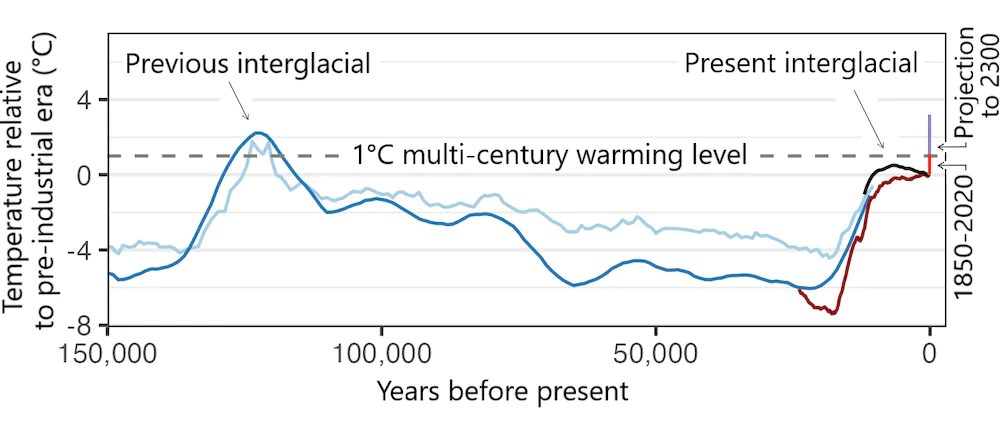
Scientists concluded a few years ago that Earth had entered a new climate state not seen in more than 100,000 years. As fellow climate scientist Nick McKay and I recently discussed in a scientific journal article, that conclusion was part of a climate assessment report published by the Intergovernmental Panel on Climate Change (IPCC) in 2021.

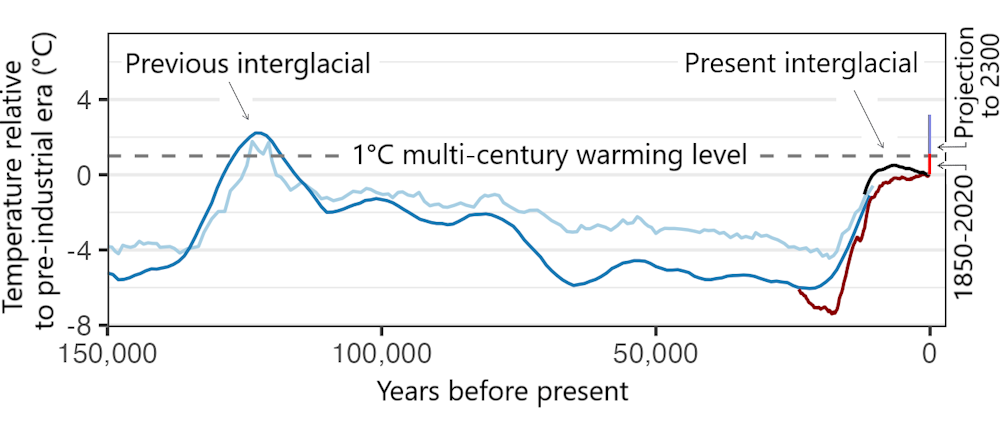
Earth was already more than 1 degree Celsius (1.8 Fahrenheit) warmer than preindustrial times, and the levels of greenhouse gases in the atmosphere were high enough to assure temperatures would stay elevated for a long time.

Earth’s average temperature has exceeded 1 degree Celsius (1.8 F) above the preindustrial baseline. This new climate state will very likely persist for centuries as the warmest period in more than 100,000 years. The chart shows different reconstructions of temperature over time, with measured temperatures since 1850 and a projection to 2300 based on an intermediate emissions scenario. D.S. Kaufman and N.P. McKay, 2022, and published datasets, Author provided

Even under the most optimistic scenarios of the future – in which humans stop burning fossil fuels and reduce other greenhouse gas emissions – average global temperature will very likely remain at least 1 C above preindustrial temperatures, and possibly much higher, for multiple centuries.

This new climate state, characterized by a multi-century global warming level of 1 C and higher, can be reliably compared with temperature reconstructions from the very distant past.

How we estimate past temperature

To reconstruct temperatures from times before thermometers, paleoclimate scientists rely on information stored in a variety of natural archives.

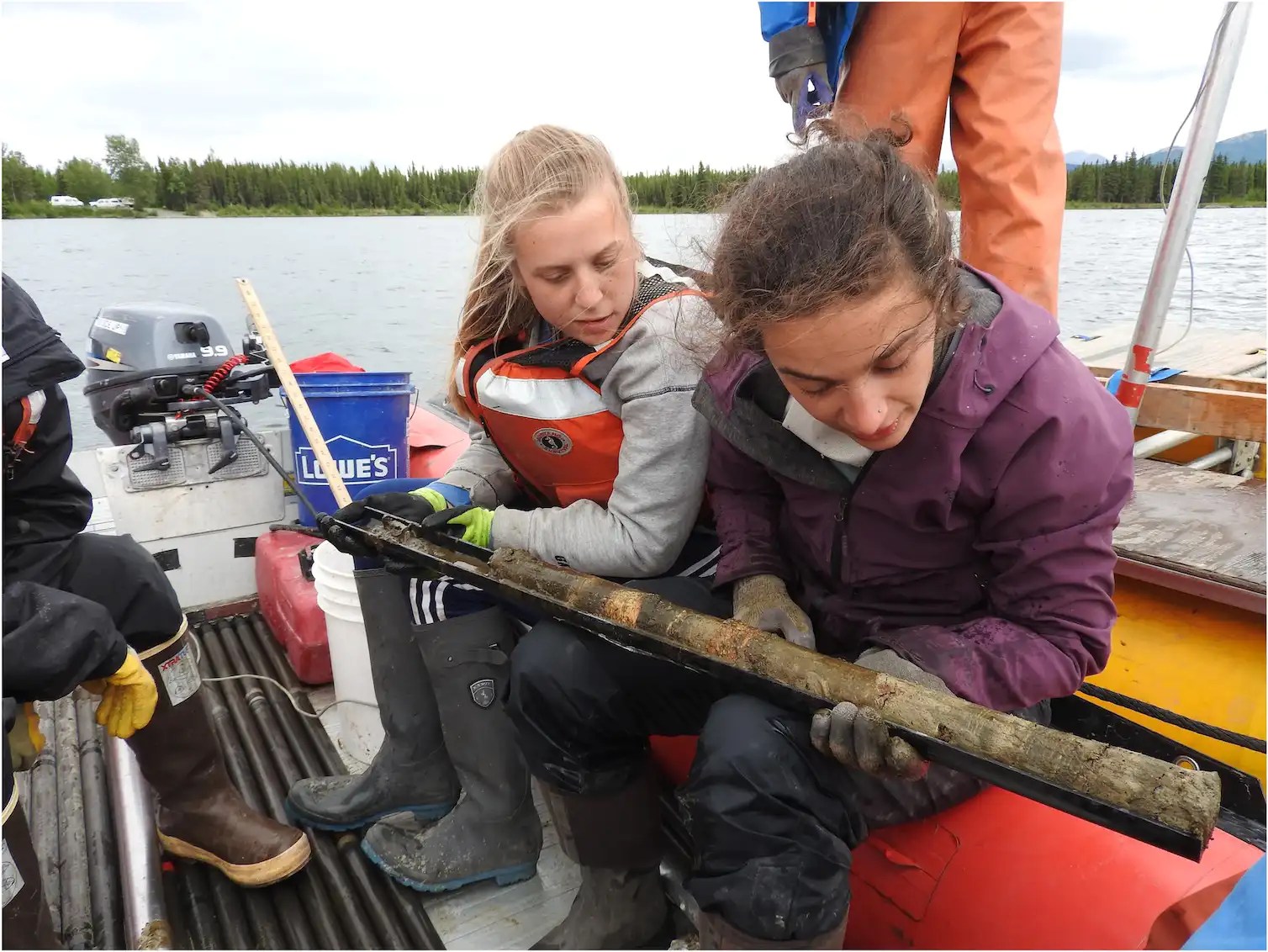
The most widespread archive going back many thousands of years is at the bottom of lakes and oceans, where an assortment of biological, chemical and physical evidence offers clues to the past. These materials build up continuously over time and can be analyzed by extracting a sediment core from the lake bed or ocean floor.

University of Arizona scientist Ellie Broadman holds a sediment core from the bottom of a lake on Alaska’s Kenai Peninsula. Emily Stone

These sediment-based records are rich sources of information that have enabled paleoclimate scientists to reconstruct past global temperatures, but they have important limitations.

For one, bottom currents and burrowing organisms can mix the sediment, blurring any short-term temperature spikes. For another, the timeline for each record is not known precisely, so when multiple records are averaged together to estimate past global temperature, fine-scale fluctuations can be canceled out.

Because of this, paleoclimate scientists are reluctant to compare the long-term record of past temperature with short-term extremes.

Looking back tens of thousands of years

Earth’s average global temperature has fluctuated between glacial and interglacial conditions in cycles lasting around 100,000 years, driven largely by slow and predictable changes in Earth’s orbit with attendant changes in greenhouse gas concentrations in the atmosphere. We are currently in an interglacial period that began around 12,000 years ago as ice sheets retreated and greenhouse gases rose.

Looking at that 12,000-year interglacial period, global temperature averaged over multiple centuries might have peaked roughly around 6,000 years ago, but probably did not exceed the 1 C global warming level at that point, according to the IPCC reportAnother study found that global average temperatures continued to increase across the interglacial period. This is a topic of active research.

That means we have to look farther back to find a time that might have been as warm as today.

The last glacial episode lasted nearly 100,000 years. There is no evidence that long-term global temperatures reached the preindustrial baseline anytime during that period.

If we look even farther back, to the previous interglacial period, which peaked around 125,000 years ago, we do find evidence of warmer temperatures. The evidence suggests the long-term average temperature was probably no more than 1.5 C (2.7 F) above preindustrial levels – not much more than the current global warming level.

Now what?

Without rapid and sustained reductions in greenhouse gas emissions, the Earth is currently on course to reach temperatures of roughly 3 C (5.4 F) above preindustrial levels by the end of the century, and possibly quite a bit higher.

At that point, we would need to look back millions of years to find a climate state with temperatures as hot. That would take us back to the previous geologic epoch, the Pliocene, when the Earth’s climate was a distant relative of the one that sustained the rise of agriculture and civilization.

ooOOoo

It is difficult to know what to say other than one hopes that Governments and country leaders recognise the situation and DO SOMETHING!

As Dr. Michael Mann put it in the last issue of The Humanist: “The only obstacles aren’t the laws of physics, but the flaws in our politics.

I have a son and a daughter in their early 50’s and a grandson who is 12. They, along with millions of other younger people, need action now.

Please!

The Earth became very quiet!

An essay from The Conversation aimed at our youngsters but highly relevant to us all!

I sense we are living in very strange times. As an extract from recent essay from George Monbiot said:

Above all, our ability to adapt to massive change depends on what practitioners call “metacognition” and “meta-skills”. Metacognition means thinking about thinking. In a brilliant essay for the Journal of Academic Perspectives, Natasha Robson argues that while metacognition is implicit in current teaching – “show your working”, “justify your arguments” – it should be explicit and sustained. Schoolchildren should be taught to understand how thinking works, from neuroscience to cultural conditioning; how to observe and interrogate their thought processes; and how and why they might become vulnerable to disinformation and exploitation. Self-awareness could turn out to be the most important topic of all.

Thinking about Thinking

That is why I want to share a recent post from The Conversation with you.

ooOOoo

If humans went extinct, what would the Earth look like one year later?

A glimpse of a post-apocalyptic world. Bulgar/E+ via Getty Images

Carlton Basmajian, Iowa State University


If humans went extinct, what would the Earth look like one year later? – Essie, age 11, Michigan


Have you ever wondered what the world would be like if everyone suddenly disappeared?

What would happen to all our stuff? What would happen to our houses, our schools, our neighborhoods, our cities? Who would feed the dog? Who would cut the grass? Although it’s a common theme in movies, TV shows and books, the end of humanity is still a strange thing to think about.

But as an associate professor of urban design – that is, someone who helps towns and cities plan what their communities will look like – it’s sometimes my job to think about prospects like this.

So much silence

If humans just disappeared from the world, and you could come back to Earth to see what had happened one year later, the first thing you’d notice wouldn’t be with your eyes.

It would be with your ears.

The world would be quiet. And you would realize how much noise people make. Our buildings are noisy. Our cars are noisy. Our sky is noisy. All of that noise would stop.

You’d notice the weather. After a year without people, the sky would be bluer, the air clearer. The wind and the rain would scrub clean the surface of the Earth; all the smog and dust that humans make would be gone.

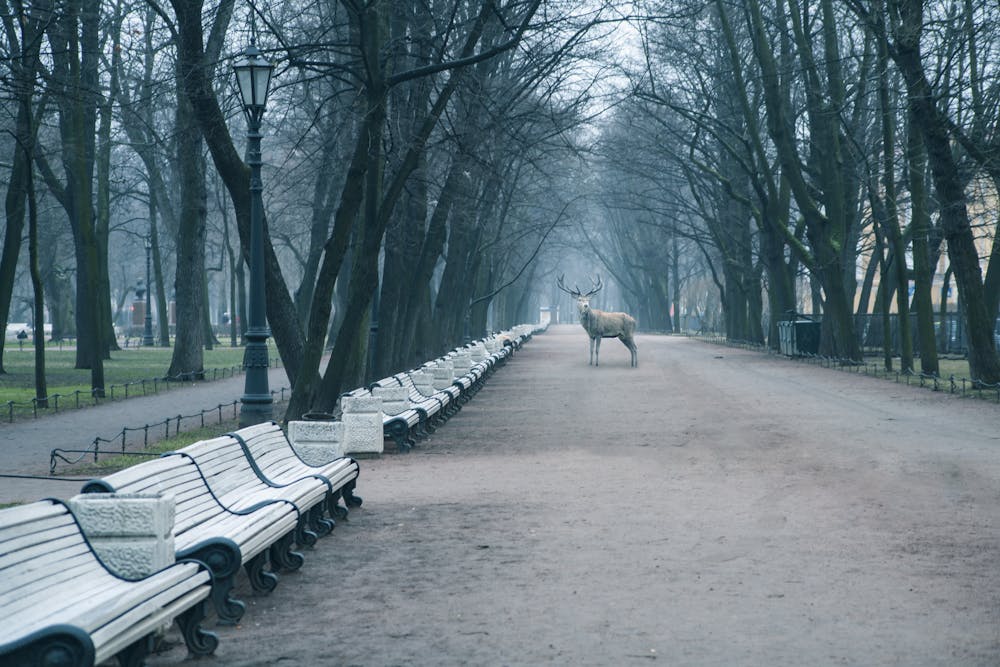
An illustration of a large city park with a deer standing in the middle of a tree-lined path.
It wouldn’t be long before wild animals visited our once well-trodden cities. Boris SV/Moment via Getty Images

Home sweet home

Imagine that first year, when your house would sit unbothered by anyone.

Go inside your house – and hope you’re not thirsty, because no water would be in your faucets. Water systems require constant pumping. If no one’s at the public water supply to manage the machines that pump water, then there’s no water.

But the water that was in the pipes when everyone disappeared would still be there when the first winter came – so on the first cold snap, the frigid air would freeze the water in the pipes and burst them.

There would be no electricity. Power plants would stop working because no one would monitor them and maintain a supply of fuel. So your house would be dark, with no lights, TV, phones or computers.

Your house would be dusty. Actually, there’s dust in the air all the time, but we don’t notice it because our air conditioning systems and heaters blow air around. And as you move through the rooms in your house, you keep dust on the move too. But once all that stops, the air inside your house would be still and the dust would settle all over.

The grass in your yard would grow – and grow and grow until it got so long and floppy it would stop growing. New weeds would appear, and they would be everywhere.

Lots of plants that you’ve never seen before would take root in your yard. Every time a tree drops a seed, a little sapling might grow. No one would be there to pull it out or cut it down.

You’d notice a lot more bugs buzzing around. Remember, people tend to do everything they can to get rid of bugs. They spray the air and the ground with bug spray. They remove bug habitat. They put screens on the windows. And if that doesn’t work, they swat them.

Without people doing all these things, the bugs would come back. They would have free rein of the world again.

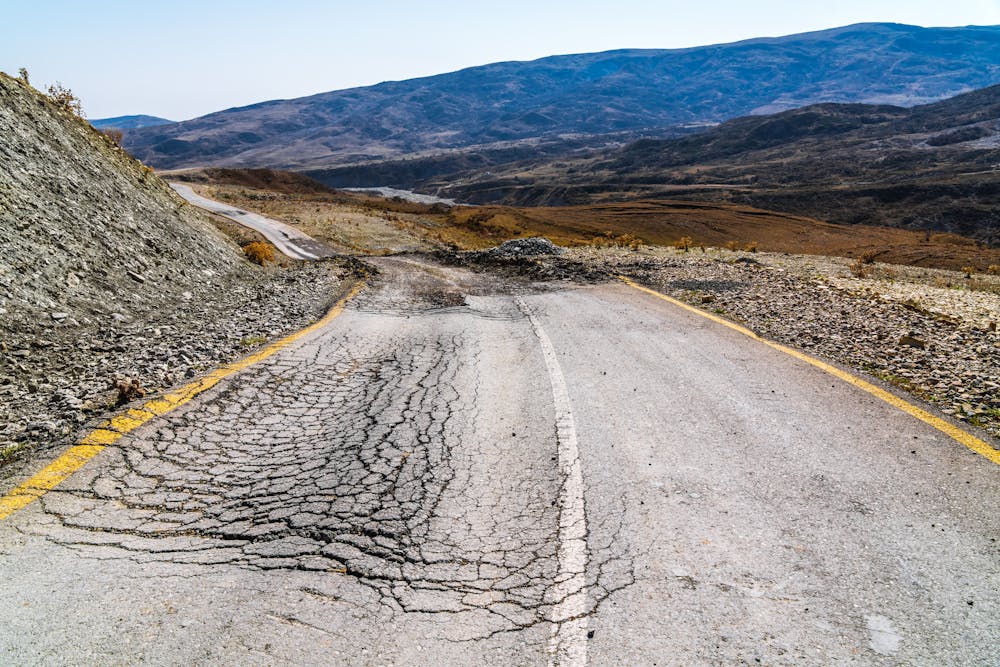
Surrounded by hills and mountains is an isolated two-lane road, cracked and crumbling.
Given enough time, roads would start to crumble. Armastas/iStock via Getty Images Plus

On the street where you live

In your neighborhood, critters would wander around, looking and wondering.

First the little ones: mice, groundhogs, raccoons, skunks, foxes and beavers. That last one might surprise you, but North America was once rich with beavers.

Bigger animals would come later – deer, coyotes and the occasional bear. Not in the first year, maybe, but eventually.

With no electric lights, the rhythm of the natural world would return. The only light would be from the Sun, the Moon and the stars. The night critters would feel good they got their dark sky back.

Fires would happen frequently. Lightning might strike a tree or a field and set brush on fire, or hit the houses and buildings. Without people to put them out, those fires would keeping going until they burned themselves out.

Around your city

After just one year, the concrete stuff – roads, highways, bridges and buildings – would look about the same.

Come back, say, a decade later, and cracks in them would have appeared, with little plants wiggling up through them. This happens because the Earth is constantly moving. With this motion comes pressure, and with this pressure come cracks. Eventually, the roads would crack so much they would look like broken glass, and even trees would grow through them.

Bridges with metal legs would slowly rust. The beams and bolts that hold the bridges up would rust too. But the big concrete bridges, and the interstate highways, also concrete, would last for centuries.

The dams and levees that people have built on the rivers and streams of the world would erode. Farms would fall back to nature. The plants we eat would begin to disappear. Not much corn or potatoes or tomatoes anymore.

Farm animals would be easy prey for bears, coyotes, wolves and panthers. And pets? The cats would go feral – that is, they would become wild, though many would be preyed upon by larger animals. Most dogs wouldn’t survive, either.

An asteroid hit and a solar flare are two of the ways the world could end.

Like ancient Rome

In a thousand years, the world you remember would still be vaguely recognizable. Some things would remain; it would depend on the materials they were made of, the climate they’re in, and just plain luck. An apartment building here, a movie theater there, or a crumbling shopping mall would stand as monuments to a lost civilization. The Roman Empire collapsed more than 1,500 years ago, yet you can see some remnants even today.

If nothing else, humans’ suddenly vanishing from the world would reveal something about the way we treated the Earth. It would also show us that the world we have today can’t survive without us and that we can’t survive if we don’t care for it. To keep it working, civilization – like anything else – requires constant upkeep.


Hello, curious kids! Do you have a question you’d like an expert to answer? Ask an adult to send your question to CuriousKidsUS@theconversation.com. Please tell us your name, age and the city where you live.

And since curiosity has no age limit – adults, let us know what you’re wondering, too. We won’t be able to answer every question, but we will do our best.

Carlton Basmajian, Associate Professor of Community and Regional Planning, Urban Design, Iowa State University

This article is republished from The Conversation under a Creative Commons license. Read the original article.

ooOOoo

Returning to that George Monbiot essay and his closing paragraphs:

Meta-skills are the overarching aptitudes – such as self-development, social intelligence, openness, resilience and creativity – that help us acquire the new competencies that sudden change demands. Like metacognition, meta-skills can be taught. Unfortunately, some public bodies are trapped in the bleak and narrow instrumentalism we need to transcend. For example, after identifying empathy as a crucial meta-skill, a manual by Skills Development Scotland reports that: “Empathy has been identified as a key differentiator for business success, with companies such as Facebook, Google and Unilever being recognised as excelling in this area.” I’ve seldom read a more depressing sentence.

Schooling alone will not be enough to lead us out of the many crises and disasters we now face. Those who are adult today must take responsibility for confronting them. But it should at least lend us a torch.

Thinking about Thinking

We live in a very strange world now. One truly wonders how those who are younger will respond to the demands.

When the music stops!

One of the few things that is common to us all!

Death!

Hate to say it but it is the great leveller. Some believe in some form of afterlife but not me (nor Jeannie). But how we all get to that final state is far from being simple or straightforward.

That’s why I am republishing, with permission, a recent article in The Conversation.

ooOOoo

Aging is complicated – a biologist explains why no two people or cells age the same way, and what this means for anti-aging interventions

While some people may be older in chronological age, their biological age might be much younger. FangXiaNuo/E+ via Getty Images

Ellen Quarles, University of Michigan

Assistant Professor in Molecular, Cellular, and Developmental Biology.

You likely know someone who seems to age slowly, appearing years younger than their birth date suggests. And you likely have seen the opposite – someone whose body and mind seem much more ravaged by time than others. Why do some people seem to glide though their golden years and others physiologically struggle in midlife?

I have worked in the field of aging for all of my scientific career, and I teach the cellular and molecular biology of aging at the University of Michigan. Aging research doesn’t tend to be about finding the one cure that fixes all that may ail you in old age. Instead, the last decade or two of work points to aging as a multi-factoral process – and no single intervention can stop it all.

What is aging?

There are many different definitions of aging, but scientists generally agree upon some common features: Aging is a time-dependent process that results in increased vulnerability to disease, injury and death. This process is both intrinsic, when your own body causes new problems, and extrinsic, when environmental insults damage your tissues.

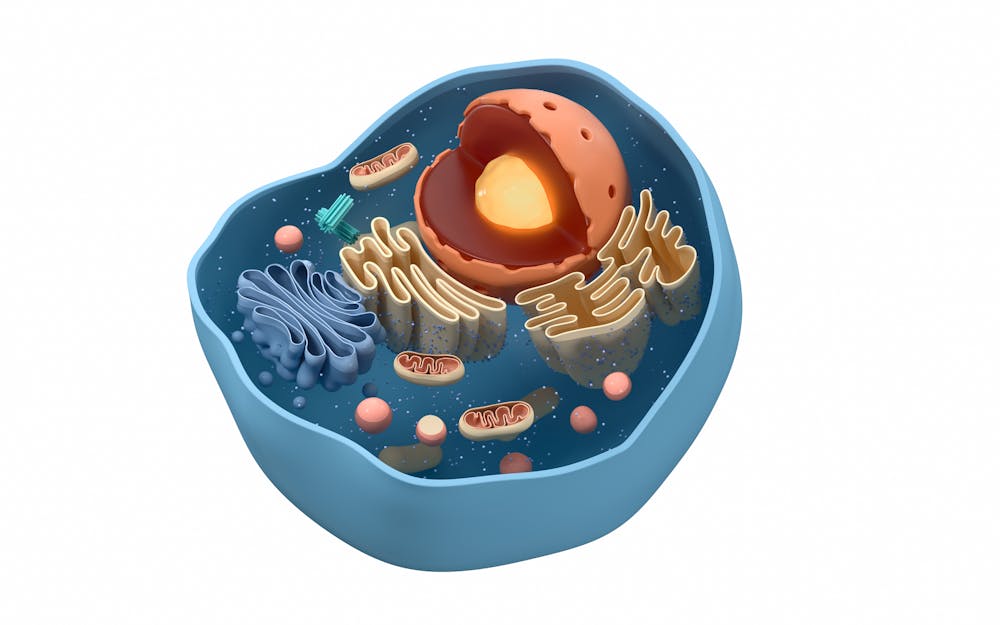
Your body is comprised of trillions of cells, and each one is not only responsible for one or more functions specific to the tissue it resides in, but must also do all the work of keeping itself alive. This includes metabolizing nutrients, getting rid of waste, exchanging signals with other cells and adapting to stress.

The trouble is that every single process and component in each of your cells can be interrupted or damaged. So your cells spend a lot of energy each day preventing, recognizing and fixing those problems.

Aging can be thought of as a gradual loss of the ability to maintain homeostasis – a state of balance among body systems – either by not being able to prevent or recognize damage and poor function, or by not adequately or rapidly fixing problems as they occur. Aging results from a combination of these issues. Decades of research has shown that nearly every cellular process becomes more impaired with age.

Repairing DNA and recycling proteins

Most research on cellular aging focuses on studying how DNA and proteins change with age. Scientists are also beginning to address the potential roles many other important biomolecules in the cell play in aging as well.

One of the cell’s chief jobs is to maintain its DNA – the instruction manual a cell’s machinery reads to produce specific proteins. DNA maintenance involves protecting against, and accurately repairing, damage to genetic material and the molecules binding to it.

Proteins are the workers of the cell. They perform chemical reactions, provide structural support, send and receive messages, hold and release energy, and much more. If the protein is damaged, the cell uses mechanisms involving special proteins that either attempt to fix the broken protein or send it off for recycling. Similar mechanisms tuck proteins out of the way or destroy them when they are no longer needed. That way, its components can be used later to build a new protein.

Aging disrupts a delicate biological network

The cross-talk between the components inside cells, cells as a whole, organs and the environment is a complex and ever-changing network of information.

When all processes involved in creating and maintaining DNA and protein function are working normally, the different compartments within a cell serving specialized roles – called organelles – can maintain the cell’s health and function. For an organ to work well, the majority of the cells that make it up need to function well. And for a whole organism to survive and thrive, all of the organs in its body need to work well.

Aging can lead to dysfunction at any of these levels, from the sub-cellular to the organismal. Maybe a gene encoding an important protein for DNA repair has become damaged, and now all of the other genes in the cell are more likely to be repaired incorrectly. Or perhaps the cell’s recycling systems are unable to degrade dysfunctional components anymore. Even the communication systems between cells, tissues and organs can become compromised, leaving the organism less able to respond to changes within the body.

Random chance can lead to a growing burden of molecular and cellular damage that is progressively less well-repaired over time. As this damage accumulates, the systems that are meant to fix it are accruing damage as well. This leads to a cycle of increasing wear and tear as cells age.

Anti-aging interventions

The interdependence of life’s cellular processes is a double-edged sword: Sufficiently damage one process, and all the other processes that interact with or depend on it become impaired. However, this interconnection also means that bolstering one highly interconnected process could improve related functions as well. In fact, this is how the most successful anti-aging interventions work.

There is no silver bullet to stop aging, but certain interventions do seem to slow aging in the laboratory. While there are ongoing clinical trials investigating different approaches in people, most existing data comes from animals like nematodes, flies, mice and nonhuman primates.

One of the best studied interventions is caloric restriction, which involves reducing the amount of calories an animal would normally eat without depriving them of necessary nutrients. An FDA-approved drug used in organ transplantation and some cancer treatments called rapamycin seems to work by using at least a subset of the same pathways that calorie restriction activates in the cell. Both affect signaling hubs that direct the cell to preserve the biomolecules it has rather than growing and building new biomolecules. Over time, this cellular version of “reduce, reuse, recycle” removes damaged components and leaves behind a higher proportion of functional components.

Other interventions include changing the levels of certain metabolites, selectively destroying senescent cells that have stopped dividing, changing the gut microbiome and behavioral modifications.

What all of these interventions have in common is that they affect core processes that are critical for cellular homeostasis, often become dysregulated or dysfunctional with age and are connected to other cellular maintenance systems. Often, these processes are the central drivers for mechanisms that protect DNA and proteins in the body.

There is no single cause of aging. No two people age the same way, and indeed, neither do any two cells. There are countless ways for your basic biology to go wrong over time, and these add up to create a unique network of aging-related factors for each person that make finding a one-size-fits-all anti-aging treatment extremely challenging.

However, researching interventions that target multiple important cellular processes simultaneously could help improve and maintain health for a greater portion of life. These advances could help people live longer lives in the process.

Ellen Quarles, Assistant Professor in Molecular, Cellular, and Developmental Biology, University of Michigan

This article is republished from The Conversation under a Creative Commons license. Read the original article.

ooOOoo

I was born in London towards the tail end of 1944. I was the product of an affair between my father and mother. I came before my younger sister, Elizabeth, born in 1948. Then my father died on December 20th, 1956 and eventually my mother remarried my stepfather but he died in 1979 and then my mother died in 2016.

Elizabeth is still alive and so is my step-sister, Eleanor. I also had two half-sisters, Rhona, Corinne, born of my father and his first wife, but they are long dead.

But my family still continue and with a bit of luck I have a few years left; I shall be 80 in November, 2024.

When the music stops it will have been a fabulous life!

And speaking of music:

Thank you, Alan!

Meditation

About keeping oneself mentally healthy.

I follow the website The Conversation and read most of their posts on a very regular basis. Back in May they published the following. It caught my eye because my own mental health is drifting downwards, or so it seems, due to age, I shall be 80 in November, 2024, plus a couple of brain bleedings that occurred in 2017 that were attended to by the Regional Trauma Center in Eugene.

I then had two sub-durnal (sp?) operations overnight before being put onto the ICU ward. The lead surgeon explained that I was within 24 hours of dying! As in if I had not gone back to hospital.

I find that difficult to realise that it was 6 years ago! Anyway, to the post published by The Conversation.

ooOOoo

Mindfulness, meditation and self-compassion – a clinical psychologist explains how these science-backed practices can improve mental health

Studies show that consistent meditation practice is key. pixdeluxe/E! via Getty Images

Rachel Goldsmith Turow, Seattle University

Mindfulness and self-compassion are now buzzwords for self-improvement. But in fact, a growing body of research shows these practices can lead to real mental health benefits. This research – ongoing, voluminous and worldwide – clearly shows how and why these two practices work.

One effective way to cultivate mindfulness and self-compassion is through meditation.

For more than 20 years, as a clinical psychologist, research scientist and educator, I taught meditation to students and clinical patients and took a deep dive into the research literature. My recent book, “The Self-Talk Workout: Six Science-Backed Strategies to Dissolve Self-Criticism and Transform the Voice in Your Head,” highlights much of that research.

I learned even more when I evaluated mental health programs and psychology classes that train participants in mindfulness and compassion-based techniques.

Defining mindfulness and self-compassion

Mindfulness means purposefully paying attention to the present moment with an attitude of interest or curiosity rather than judgment.

Self-compassion involves being kind and understanding toward yourself, even during moments of suffering or failure.

Both are associated with greater well-being.

But don’t confuse self-compassion with self-esteem or self-centeredness, or assume that it somehow lowers your standards, motivation or productivity. Instead, research shows that self-compassion is linked with greater motivation, less procrastination and better relationships.

Could mindfulness meditation be the next public health revolution?

Be patient when starting a meditation practice

I didn’t like meditation – the specific practice sessions that train mindfulness and self-compassion – the first time I tried it as a college student in the late ‘90s. I felt like a failure when my mind wandered, and I interpreted that as a sign that I couldn’t do it.

In both my own and others’ meditation practices, I’ve noticed that the beginning is often rocky and full of doubt, resistance and distraction.

But what seem like impediments can actually enhance meditation practice, because the mental work of handling them builds strength.

For the first six months I meditated, my body and mind were restless. I wanted to get up and do other tasks. But I didn’t. Eventually it became easier to notice my urges and thoughts without acting upon them. I didn’t get as upset with myself.

After about a year of consistent meditation, my mind seemed more organized and controllable; it no longer got stuck in self-critical loops. I felt a sense of kindness or friendliness toward myself in everyday moments, as well as during joyful or difficult experiences. I enjoyed ordinary activities more, such as walking or cleaning.

It took a while to understand that anytime you sit down and try to meditate, that’s meditation. It is a mental process, rather than a destination.

How meditation works on the mind

Just having a general intention to be more mindful or self-compassionate is unlikely to work.

Most programs shown to make meaningful differences involve at least seven sessions. Studies show these repeated workouts improve attention skills and decrease rumination, or repeated negative thinking.

They also lessen self-criticism, which is linked to numerous mental health difficulties, including depression, anxiety, eating disorders, self-harm and post-traumatic stress disorder.

Meditation is not just about sustaining your attention – it’s also about shifting and returning your focus after the distraction. The act of shifting and refocusing cultivates attention skills and decreases rumination.

Trying repeatedly to refrain from self-judgment during the session will train your mind to be less self-critical.

An interconnected group of brain regions called the default mode network is strikingly affected by meditation. Much of this network’s activity reflects repetitive thinking, such as a rehash of a decadeslong tension with your sister. It’s most prominent when you’re not doing much of anything. Activity of the default mode network is related to rumination, unhappiness and depression.

Research shows that just one month of meditation reduces the noise of the default mode network. The type of meditation practice doesn’t seem to matter.

Don’t be discouraged if your mind wanders as you meditate.

Establishing the formal practice

A common misconception about mindfulness is that it’s simply a way to relax or clear the mind. Rather, it means intentionally paying attention to your experiences in a nonjudgmental way.

Consider meditation the formal part of your practice – that is, setting aside a time to work on specific mindfulness and self-compassion techniques.

Cultivating mindfulness with meditation often involves focusing on paying attention to the breath. A common way to start practice is to sit in a comfortable place and bring attention to your breathing, wherever you feel it most strongly.

At some point, probably after a breath or two, your mind will wander to another thought or feeling. As soon as you notice that, you can bring your attention back to the breath and try not to judge yourself for losing focus for five to 10 minutes.

When I was just getting started meditating, I would have to redirect my attention dozens or hundreds of times in a 20-to-30-minute session. Counting 10 breaths, and then another 10, and so on, helped me link my mind to the task of paying attention to my breathing.

The most well-established technique for cultivating self-compassion is called loving-kindness meditation. To practice, you can find a comfortable position, and for at least five minutes, internally repeat phrases such as, “May I be safe. May I be happy. May I be healthy. May I live with ease.”

When your attention wanders, you can bring it back with as little self-judgment as possible and continue repeating the phrases. Then, if you like, offer the same well wishes to other people or to all beings.

Every time you return your focus to your practice without judging, you’re flexing your mental awareness, because you noticed your mind wandered. You also improve your capacity to shift attention, a valuable anti-rumination skill, and your nonjudgment, an antidote to self-criticism.

These practices work. Studies show that brain activity during meditation results in less self-judgment, depression and anxiety and results in less rumination.

Mindfulness also occurs when you tune into present-moment sensations, such as tasting your food or washing the dishes.

An ongoing routine of formal and informal practice can transform your thinking. And again, doing it once in a while won’t help as much. It’s like situps: A single situp isn’t likely to strengthen your abdominal muscles, but doing several sets each day will.

When thoughts pop up during meditation, no worries. Just start again … and again … and again.

Meditation reduces self-criticism

Studies show that mindfulness meditation and loving-kindness meditation reduce self-criticism, which leads to better mental health, including lower levels of depression, anxiety and PTSD. After an eight-week mindfulness program, participants experienced less self-judgment. These changes were linked with decreases in depression and anxiety.

One final point: Beginning meditators may find that self-criticism gets worse before it gets better.

After years or decades of habitual self-judgment, people often judge themselves harshly about losing focus during meditation. But once students get through the first few weeks of practice, the self-judgment begins to abate, both about meditation and about oneself in general.

As one of my students recently said after several weeks of mindfulness meditation: “I am more stable, more able to detach from unhelpful thoughts and can do all of this while being a little more compassionate and loving toward myself.”

Rachel Goldsmith Turow, Adjunct Assistant Professor in Population Health Science and Policy, Seattle University

This article is republished from The Conversation under a Creative Commons license. Read the original article.

ooOOoo

I do not meditate; have never done so.

In reading this article I think I should try and find a way to start the process. There are a great number of articles and websites. I will share my journey with you.

Time will tell!

There’s more to water than one might think.

This post attracted me and I wanted to share it with you.

Here in Oregon we are lucky because the ground water is of a high quality and there is plenty of it. At home we drink our water straight from our well without any filtering or chlorination. Have been doing that ever since we moved in back in 2012.

But water is a much deeper subject than I tend to think of and this article is an in-depth review of the topic. It is an article from The Conversation.

ooOOoo

Water in space – a ‘Goldilocks’ star reveals previously hidden step in how water gets to planets like Earth

The star system V883 Orionis contains a rare star surrounded by a disk of gas, ice and dust.
A. Angelich (NRAO/AUI/NSF)/ALMA (ESO/NAOJ/NRAO), CC BY

John Tobin, National Radio Astronomy Observatory

Without water, life on Earth could not exist as it does today. Understanding the history of water in the universe is critical to understanding how planets like Earth come to be.

Astronomers typically refer to the journey water takes from its formation as individual molecules in space to its resting place on the surfaces of planets as “the water trail.” The trail starts in the interstellar medium with hydrogen and oxygen gas and ends with oceans and ice caps on planets, with icy moons orbiting gas giants and icy comets and asteroids that orbit stars. The beginnings and ends of this trail are easy to see, but the middle has remained a mystery.

I am an astronomer who studies the formation of stars and planets using observations from radio and infrared telescopes. In a new paper, my colleagues and I describe the first measurements ever made of this previously hidden middle part of the water trail and what these findings mean for the water found on planets like Earth.

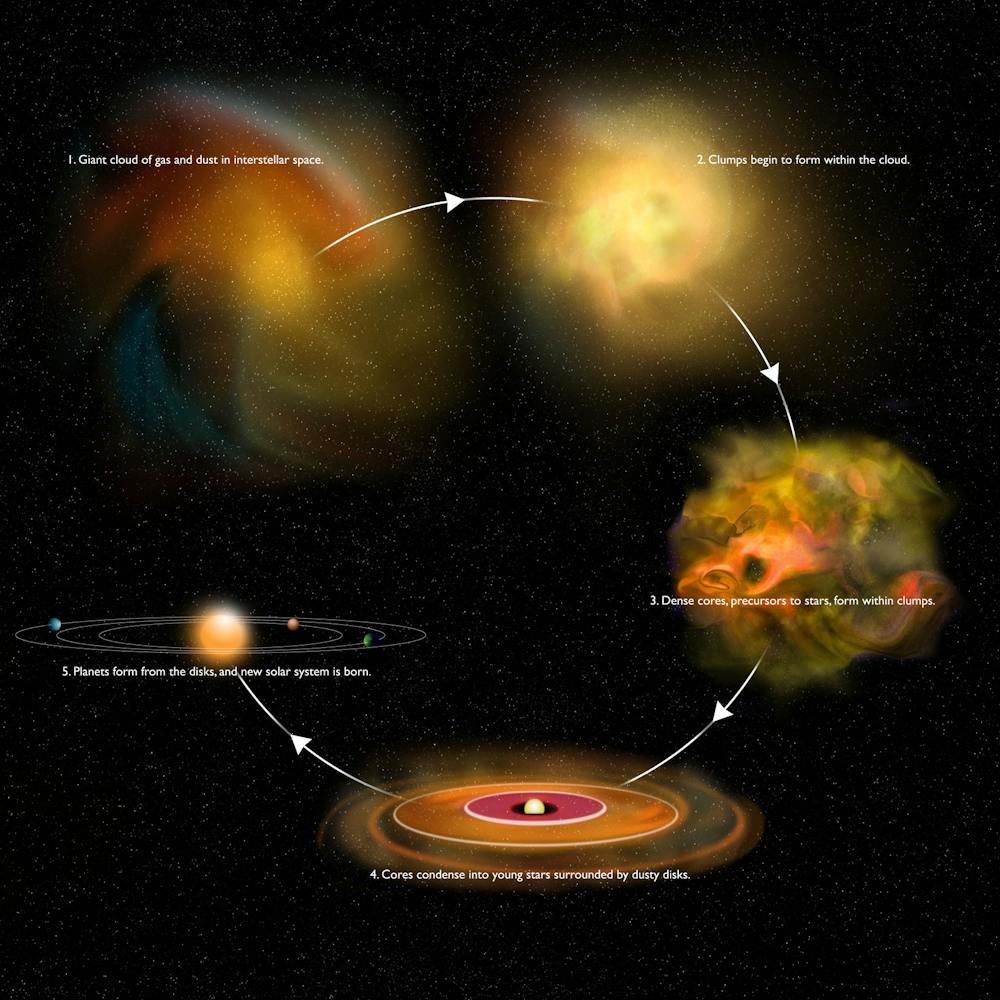
The progression of a star system from a cloud of dust and gas into a mature star with orbiting planets.

Star and planet formation is an intertwined process that starts with a cloud of molecules in space.
Bill Saxton, NRAO/AUI/NSF, CC BY

How planets are formed

The formation of stars and planets is intertwined. The so-called “emptiness of space” – or the interstellar medium – in fact contains large amounts of gaseous hydrogen, smaller amounts of other gasses and grains of dust. Due to gravity, some pockets of the interstellar medium will become more dense as particles attract each other and form clouds. As the density of these clouds increases, atoms begin to collide more frequently and form larger molecules, including water that forms on dust grains and coats the dust in ice.

Stars begin to form when parts of the collapsing cloud reach a certain density and heat up enough to start fusing hydrogen atoms together. Since only a small fraction of the gas initially collapses into the newborn protostar, the rest of the gas and dust forms a flattened disk of material circling around the spinning, newborn star. Astronomers call this a proto-planetary disk.

As icy dust particles collide with each other inside a proto-planetary disk, they begin to clump together. The process continues and eventually forms the familiar objects of space like asteroids, comets, rocky planets like Earth and gas giants like Jupiter or Saturn.

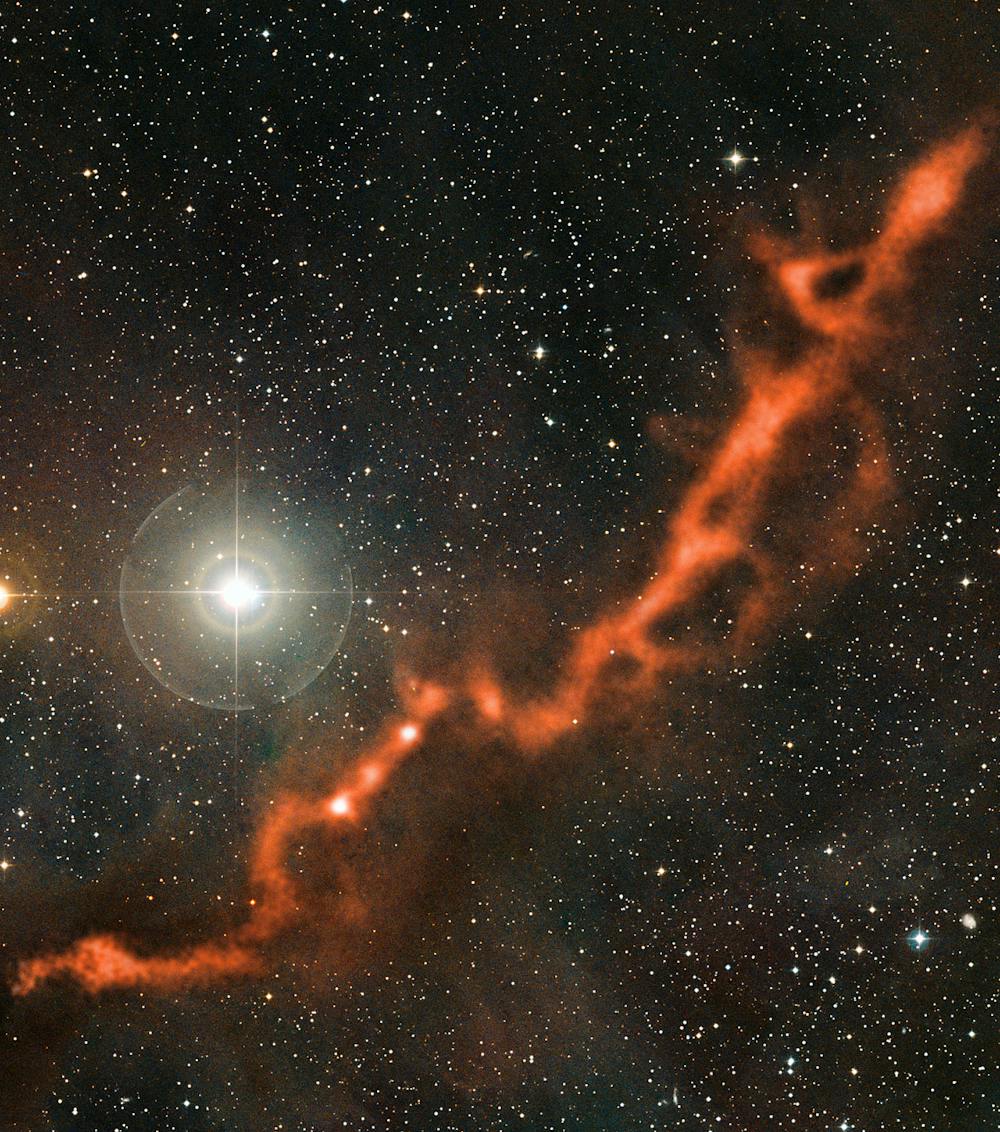
A cloudy filament against a backdrop of stars.

Gas and dust can condense into clouds, like the Taurus Molecular Cloud, where collisions between hydrogen and oxygen can form water.
ESO/APEX (MPIfR/ESO/OSO)/A. Hacar et al./Digitized Sky Survey 2, CC BY

Two theories for the source of water

There are two potential pathways that water in our solar system could have taken. The first, called chemical inheritance, is when the water molecules originally formed in the interstellar medium are delivered to proto-planetary disks and all the bodies they create without going through any changes.

The second theory is called chemical reset. In this process, the heat from the formation of the proto-planetary disk and newborn star breaks apart water molecules, which then reform once the proto-planetary disk cools.

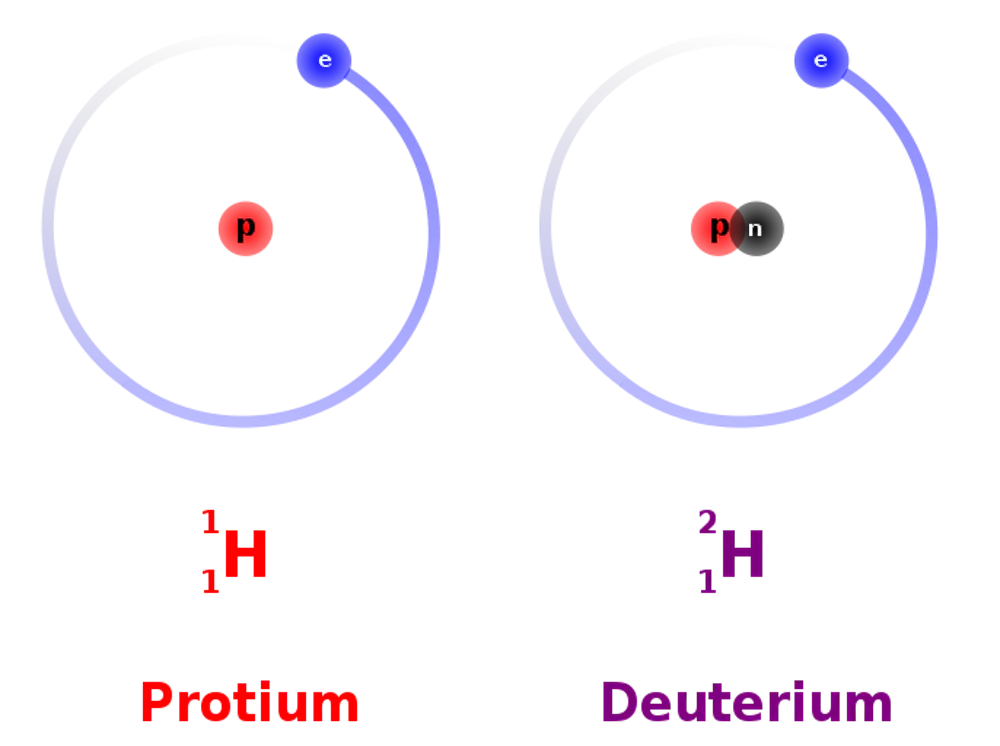
Models of protium and deuterium.

Normal hydrogen, or protium, does not contain a neutron in its nucleus, while deuterium contains one neutron, making it heavier.
Dirk Hünniger/Wikimedia Commons, CC BY-SA

To test these theories, astronomers like me look at the ratio between normal water and a special kind of water called semi-heavy water. Water is normally made of two hydrogen atoms and one oxygen atom. Semi-heavy water is made of one oxygen atom, one hydrogen atom and one atom of deuterium – a heavier isotope of hydrogen with an extra neutron in its nucleus.

The ratio of semi-heavy to normal water is a guiding light on the water trail – measuring the ratio can tell astronomers a lot about the source of water. Chemical models and experiments have shown that about 1,000 times more semi-heavy water will be produced in the cold interstellar medium than in the conditions of a protoplanetary disk.

This difference means that by measuring the ratio of semi-heavy to normal water in a place, astronomers can tell whether that water went through the chemical inheritance or chemical reset pathway.

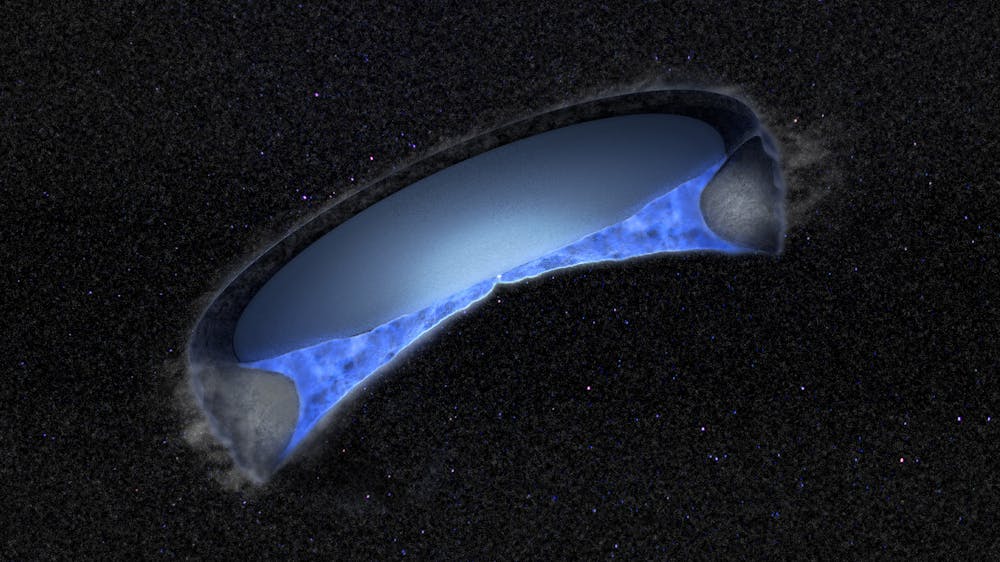
A star surrounded by a ring of gas and dust.

V883 Orionis is a young star system with a rare star at its center that makes measuring water in the proto-planetary cloud, shown in the cutaway, possible.
ALMA (ESO/NAOJ/NRAO), B. Saxton (NRAO/AUI/NSF), CC BY

Measuring water during the formation of a planet

Comets have a ratio of semi-heavy to normal water almost perfectly in line with chemical inheritance, meaning the water hasn’t undergone a major chemical change since it was first created in space. Earth’s ratio sits somewhere in between the inheritance and reset ratio, making it unclear where the water came from.

To truly determine where the water on planets comes from, astronomers needed to find a goldilocks proto-planetary disk – one that is just the right temperature and size to allow observations of water. Doing so has proved to be incredibly difficult. It is possible to detect semi-heavy and normal water when water is a gas; unfortunately for astronomers, the vast majority of proto-plantary disks are very cold and contain mostly ice, and it is nearly impossible to measure water ratios from ice at interstellar distances.

A breakthrough came in 2016, when my colleagues and I were studying proto-planetary disks around a rare type of young star called FU Orionis stars. Most young stars consume matter from the proto-planetary disks around them. FU Orionis stars are unique because they consume matter about 100 times faster than typical young stars and, as a result, emit hundreds of times more energy. Due to this higher energy output, the proto-planetary disks around FU Orionis stars are heated to much higher temperatures, turning ice into water vapor out to large distances from the star.

Using the Atacama Large Millimeter/submillimeter Array, a powerful radio telescope in northern Chile, we discovered a large, warm proto-planetary disk around the Sunlike young star V883 Ori, about 1,300 light years from Earth in the constellation Orion.

V883 Ori emits 200 times more energy than the Sun, and my colleagues and I recognized that it was an ideal candidate to observe the semi-heavy to normal water ratio.

A radio image of the disk around V883 Ori.

The proto-planetary disk around V883 Ori contains gaseous water, shown in the orange layer, allowing astronomers to measure the ratio of semi-heavy to normal water.
ALMA (ESO/NAOJ/NRAO), J. Tobin, B. Saxton (NRAO/AUI/NSF), CC BY

Completing the water trail

In 2021, the Atacama Large Millimeter/submillimeter Array took measurements of V883 Ori for six hours. The data revealed a strong signature of semi-heavy and normal water coming from V883 Ori’s proto-planetary disk. We measured the ratio of semi-heavy to normal water and found that the ratio was very similar to ratios found in comets as well as the ratios found in younger protostar systems.

These results fill in the gap of the water trail forging a direct link between water in the interstellar medium, protostars, proto-planetary disks and planets like Earth through the process of inheritance, not chemical reset.

The new results show definitively that a substantial portion of the water on Earth most likely formed billions of years ago, before the Sun had even ignited. Confirming this missing piece of water’s path through the universe offers clues to origins of water on Earth. Scientists have previously suggested that most water on Earth came from comets impacting the planet. The fact that Earth has less semi-heavy water than comets and V883 Ori, but more than chemical reset theory would produce, means that water on Earth likely came from more than one source.The Conversation

John Tobin, Scientist, National Radio Astronomy Observatory

This article is republished from The Conversation under a Creative Commons license. Read the original article.

ooOOoo

Now this was a long article and I hope some of you stayed with John’s piece until the very end.

It really shows how the water trail is a much greater and longer journey than I assumed.

The relationship between us and wild animals.

In this particular case looking at the wolf.

So many times a particular article from a website that allows republishing is not only a good and relevant article but also is a quick way of me publishing a post when, as I was yesterday, a bit pressed for time.

So here is that article from The Conversation.

ooOOoo

Wolf restoration in Colorado shows how humans are rethinking their relationships with wild animals

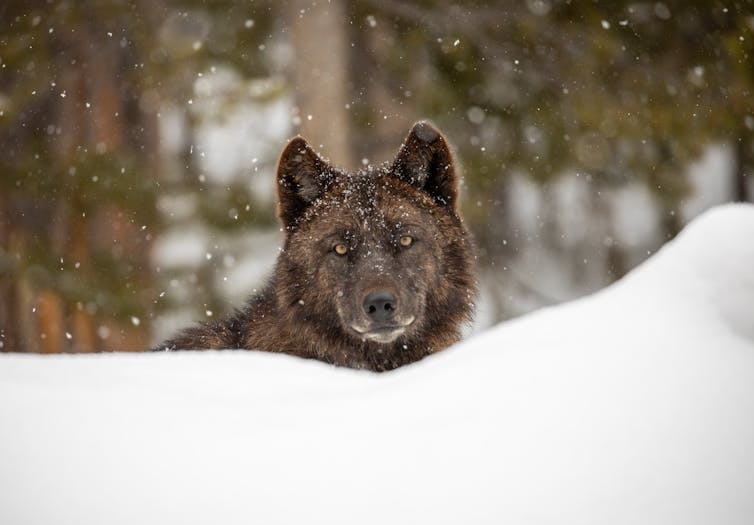
A gray wolf in Yellowstone National Park. NPS/Jim Peaco

Christopher J. Preston, University of Montana

From sports to pop culture, there are few themes more appealing than a good comeback. They happen in nature, too. Even with the Earth losing species at a historic rate, some animals have defied the trend toward extinction and started refilling their old ecological niches.

I’m a philosopher based in Montana and specialize in environmental ethics. For my new book, “Tenacious Beasts: Wildlife Recoveries That Change How We Think About Animals,” I spent three years looking at wildlife comebacks across North America and Europe and considering the lessons they offer. In every case, whether the returnee is a bison, humpback whale, beaver, salmon, sea otter or wolf, the recovery has created an opportunity for humans to profoundly rethink how we live with these animals.

One place to see the rethink in action is Colorado, where voters approved a ballot measure in 2020 mandating the reintroduction of gray wolves west of the Continental Divide. Colorado’s Parks and Wildlife Agency has released a draft plan that calls for moving 30 to 50 gray wolves from other Rocky Mountain states into northwest Colorado over five years, starting in 2024.

Aldo Leopold, the famed conservationist and professor of game management at the University of Wisconsin, believed that moral beliefs evolve over time to become more inclusive of the natural world. And what’s happening in Colorado suggests Leopold was right. Human attitudes toward wolves have clearly evolved since the mid-1940s, when bounties, mass poisoning and trapping eradicated wolves from the state.

Recovering animals encounter a world that is markedly different from the one in which they declined, especially in terms of how people think about wildlife. Here are several reasons I see why societal attitudes toward wolves have changed. The importance of keystone species

Wolves released in northwest Colorado will wear GPS collars that enable wildlife managers to track them.

The idea that certain influential species, which ecologists call keystone species, can significantly alter the ecosystems around them first appeared in scientific literature in 1974. Bison, sea otters, beavers, elephants and wolves all exert this power. One way in which wolves wield influence is by preying on coyotes, which produces ripple effects across the system. Fewer coyotes means more rodents, which in turn means better hunting success for birds of prey.

Wolves also cause nervous behaviors among their prey. Some scientists believe that newly returned predators create a “landscape of fear” among prey species – a term that isn’t positive or negative, just descriptive. This idea has shifted thinking about predators. For example, elk avoid some areas when wolves are around, resulting in ecological changes that cascade down from the top. Vegetation can recover, which in turn may benefit other species.

Insights into pack dynamics

Animal behavioral science research has provided pointers for better wolf management. Studies show that wolf packs are less likely to prey on livestock if their social structure remains intact. This means that ranchers and wildlife managers should take care not to remove the pack’s breeding pair when problems occur. Doing so can fragment the pack and send dispersing wolves into new territories.

Wildlife agencies also have access to years of data from close observation of wolf behavior in places like Yellowstone National Park, where wolves were reintroduced starting in 1995. This research offers insights into the wolf’s intelligence and social complexity. All of this information helps to show how people can live successfully alongside them.

Predators provide economic value

Research has also demonstrated that wolves provide economic benefits to states and communities. Wisconsin researchers discovered that changes in deer behavior due to the presence of wolves have saved millions of dollars in avoided deer collisions with cars. These savings far exceed what it costs the state to manage wolves.

Wolf recovery has been shown to be a net economic benefit in areas of the U.S. West where they have returned. The dollars they attract from wolf-watchers, photographers and foreign visitors have provided a valuable new income stream in many communities.

Predators do kill livestock, but improved tracking has helped to put these losses in perspective. Montana Board of Livestock numbers show that wolves, grizzly bears and mountain lions caused the loss of 131 cattle and 137 sheep in the state in 2022. This is from a total of 2,200,000 cattle and 190,000 sheep. Of the 131 cattle, 36 were confirmed to be taken by wolves – 0.0016% of the statewide herd.

According to the U.S. Department of Agriculture, dogs, foxes and coyotes in Montana all killed more sheep and lambs than wolves did in 2020. Even eagles were three times more deadly to sheep and lambs than wolves were.

Actual costs to ranchers are certainly higher than these numbers suggest. The presence of wolves causes livestock to lose weight because the animals feed more nervously when wolves are around. Ranchers also lose sleep as they worry about wolves attacking their livestock and guard dogs. And clearly, low statewide kills are small comfort to a rancher who loses a dozen or more animals in one year. Margins are always tight in the livestock business.

t

A northern Colorado rancher discusses options for protecting his cattle from wolves, which already are naturally present in the state.

What’s more, predators’ economic impacts don’t end with ranching. In Colorado, for example, elk numbers are likely to decline after wolves are reintroduced. This may affect state wildlife agency budgets that rely on license fees from elk hunters. It may also affect hunting outfitters’ incomes.

In my view, voters who supported bringing wolves back to Colorado should remain deeply aware of the full distribution of costs and support proactive compensation schemes for losses. They should be mindful that support for wolf reintroduction varies drastically between urban and rural communities and should insist that effective mechanisms are in place ahead of time to ensure fair sharing of the economic burdens that wolves generate.

A new ethical playing field

Despite these complexities, the idea of the “big bad wolf” clearly no longer dominates Americans’ thinking. And the wolf is not alone. Social acceptance of many other wildlife species is also increasing. For example, a 2023 study found that between 80% and 90% of Montanans believed grizzly bears – which are recovering and expanding their presence there – have a right to exist.

Aldo Leopold famously claimed to have experienced an epiphany when he shot a wolf in New Mexico in the 1920s and saw “a fierce green fire” dying in her eyes. In reality, his attitude took several more decades to change. Humans may have an ingrained evolutionary disposition to fear carnivorous predators like wolves, but the change ended up being real for Leopold, and it lasted.

Leopold, who died in 1948, did not live to see many wildlife species recover, but I believe he would have regarded what’s happening now as an opportunity for Americans’ moral growth. Because Leopold knew that ethics, like animals, are always evolving.

Christopher J. Preston, Professor of Philosophy, University of Montana

This article is republished from The Conversation under a Creative Commons license. Read the original article.

ooOOoo

Those last few paragraphs under the sub-heading of ‘A new ethical playing field’ show how many other wildlife species have gained a real advantage, a social acceptance as the article said. Long may it continue.

The clue to making us human

A really fascinating article from The Conversation on Imagination.

The website The Conversation had another very interesting link to something that sorts out the humans from all other life forms. It is imagination!

I have pleasure in republishing it!

ooOOoo

Imagination makes us human – this unique ability to envision what doesn’t exist has a long evolutionary history

Your brain can imagine things that haven’t happened or that don’t even exist. agsandrew/iStock via Getty Images Plus

Andrey Vyshedskiy, Boston University

Published February, 23rd, 2023

You can easily picture yourself riding a bicycle across the sky even though that’s not something that can actually happen. You can envision yourself doing something you’ve never done before – like water skiing – and maybe even imagine a better way to do it than anyone else.

Imagination involves creating a mental image of something that is not present for your senses to detect, or even something that isn’t out there in reality somewhere. Imagination is one of the key abilities that make us human. But where did it come from?

I’m a neuroscientist who studies how children acquire imagination. I’m especially interested in the neurological mechanisms of imagination. Once we identify what brain structures and connections are necessary to mentally construct new objects and scenes, scientists like me can look back over the course of evolution to see when these brain areas emerged – and potentially gave birth to the first kinds of imagination.

From bacteria to mammals

After life emerged on Earth around 3.4 billion years ago, organisms gradually became more complex. Around 700 million years ago, neurons organized into simple neural nets that then evolved into the brain and spinal cord around 525 million years ago.

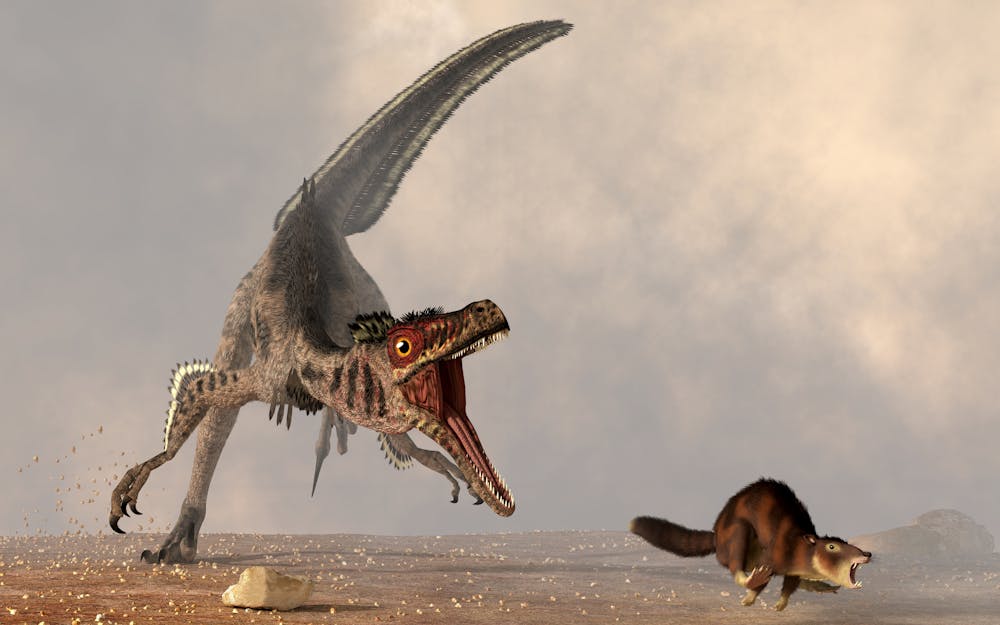
Velociraptor chasing a furry critter
It was to mammals’ advantage to hide out while cold-blooded dinosaurs hunted during the day. Daniel Eskridge/Stocktrek Images via Getty Images

Eventually dinosaurs evolved around 240 million years ago, with mammals emerging a few million years later. While they shared the landscape, dinosaurs were very good at catching and eating small, furry mammals. Dinosaurs were cold-blooded, though, and, like modern cold-blooded reptiles, could only move and hunt effectively during the daytime when it was warm. To avoid predation by dinosaurs, mammals stumbled upon a solution: hide underground during the daytime.

Not much food, though, grows underground. To eat, mammals had to travel above the ground – but the safest time to forage was at night, when dinosaurs were less of a threat. Evolving to be warm-blooded meant mammals could move at night. That solution came with a trade-off, though: Mammals had to eat a lot more food than dinosaurs per unit of weight in order to maintain their high metabolism and to support their constant inner body temperature around 99 degrees Fahrenheit (37 degrees Celsius).

Our mammalian ancestors had to find 10 times more food during their short waking time, and they had to find it in the dark of night. How did they accomplish this task?

To optimize their foraging, mammals developed a new system to efficiently memorize places where they’d found food: linking the part of the brain that records sensory aspects of the landscape – how a place looks or smells – to the part of the brain that controls navigation. They encoded features of the landscape in the neocortex, the outermost layer of the brain. They encoded navigation in the entorhinal cortex. And the whole system was interconnected by the brain structure called the hippocampus. Humans still use this memory system for remembering objects and past events, such as your car and where you parked it.

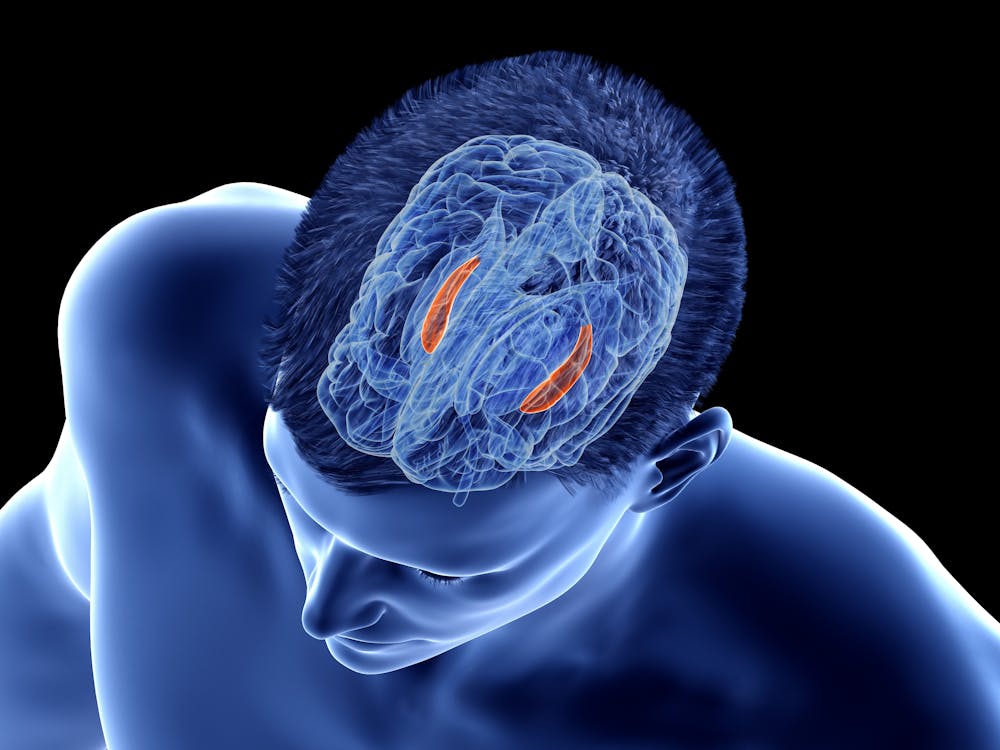
two bits of human brain are highlighted, one on each side
An interior brain structure called the hippocampus helps synthesize different kinds of information to create memories. Sebastian Kaulitzki/Science Photo Library via Getty Images

Groups of neurons in the neocortex encode these memories of objects and past events. Remembering a thing or an episode reactivates the same neurons that initially encoded it. All mammals likely can recall and re-experience previously encoded objects and events by reactivating these groups of neurons. This neocortex-hippocampus-based memory system that evolved 200 million years ago became the first key step toward imagination.

The next building block is the capability to construct a “memory” that hasn’t really happened.

Involuntary made-up ‘memories’

The simplest form of imagining new objects and scenes happens in dreams. These vivid, bizarre involuntary fantasies are associated in people with the rapid eye movement (REM) stage of sleep.

Scientists hypothesize that species whose rest includes periods of REM sleep also experience dreams. Marsupial and placental mammals do have REM sleep, but the egg-laying mammal the echidna does not, suggesting that this stage of the sleep cycle evolved after these evolutionary lines diverged 140 million years ago. In fact, recording from specialized neurons in the brain called place cells demonstrated that animals can “dream” of going places they’ve never visited before.

In humans, solutions found during dreaming can help solve problems. There are numerous examples of scientific and engineering solutions spontaneously visualized during sleep.

The neuroscientist Otto Loewi dreamed of an experiment that proved nerve impulses are transmitted chemically. He immediately went to his lab to perform the experiment – later receiving the Nobel Prize for this discovery.

Elias Howe, the inventor of the first sewing machine, claimed that the main innovation, placing the thread hole near the tip of the needle, came to him in a dream.

Dmitri Mendeleev described seeing in a dream “a table where all the elements fell into place as required. Awakening, I immediately wrote it down on a piece of paper.” And that was the periodic table.

These discoveries were enabled by the same mechanism of involuntary imagination first acquired by mammals 140 million years ago.

young professionals looking at glass wall with post-it notes
Intentionally brainstorming ideas depends on being able to control your imagination. Goodboy Picture Company/E+ via Getty Images

Imagining on purpose

The difference between voluntary imagination and involuntary imagination is analogous to the difference between voluntary muscle control and muscle spasm. Voluntary muscle control allows people to deliberately combine muscle movements. Spasm occurs spontaneously and cannot be controlled.

Similarly, voluntary imagination allows people to deliberately combine thoughts. When asked to mentally combine two identical right triangles along their long edges, or hypotenuses, you envision a square. When asked to mentally cut a round pizza by two perpendicular lines, you visualize four identical slices.

This deliberate, responsive and reliable capacity to combine and recombine mental objects is called prefrontal synthesis. It relies on the ability of the prefrontal cortex located at the very front of the brain to control the rest of the neocortex.

When did our species acquire the ability of prefrontal synthesis? Every artifact dated before 70,000 years ago could have been made by a creator who lacked this ability. On the other hand, starting about that time there are various archeological artifacts unambiguously indicating its presence: composite figurative objects, such as lion-man; bone needles with an eye; bows and arrows; musical instruments; constructed dwellings; adorned burials suggesting the beliefs in afterlife, and many more.

Multiple types of archaeological artifacts unambiguously associated with prefrontal synthesis appear simultaneously around 65,000 years ago in multiple geographical locations. This abrupt change in imagination has been characterized by historian Yuval Harari as the “cognitive revolution.” Notably, it approximately coincides with the largest Homo sapiens‘ migration out of Africa.

Genetic analyses suggest that a few individuals acquired this prefrontal synthesis ability and then spread their genes far and wide by eliminating other contemporaneous males with the use of an imagination-enabeled strategy and newly developed weapons.

So it’s been a journey of many millions of years of evolution for our species to become equipped with imagination. Most nonhuman mammals have potential for imagining what doesn’t exist or hasn’t happened involuntarily during REM sleep; only humans can voluntarily conjure new objects and events in our minds using prefrontal synthesis.

Andrey Vyshedskiy, Professor of Neuroscience, Boston University

This article is republished from The Conversation under a Creative Commons license. Read the original article.

ooOOoo

There we are! As the author of the article says: “Most nonhuman mammals have potential for imagining what doesn’t exist or hasn’t happened involuntarily during REM sleep; only humans can voluntarily conjure new objects and events in our minds using prefrontal synthesis.

It has been a very long journey for us humans to be equipped with imagination. One wonders what the next ten or twenty years will bring? Any thoughts you want to leave as comments?

Plastics in the ocean

A fascinating insight into recovered plastic.

Like so many others we do our little bit regarding plastic but do not properly think about the issue. I have to admit that I am not even sure if all plastics are harmful or just some.

But I comprehend art!

That is why I am republishing, with permission, this article from The Conversation.

ooOOoo

My art uses plastic recovered from beaches around the world to understand how our consumer society is transforming the ocean

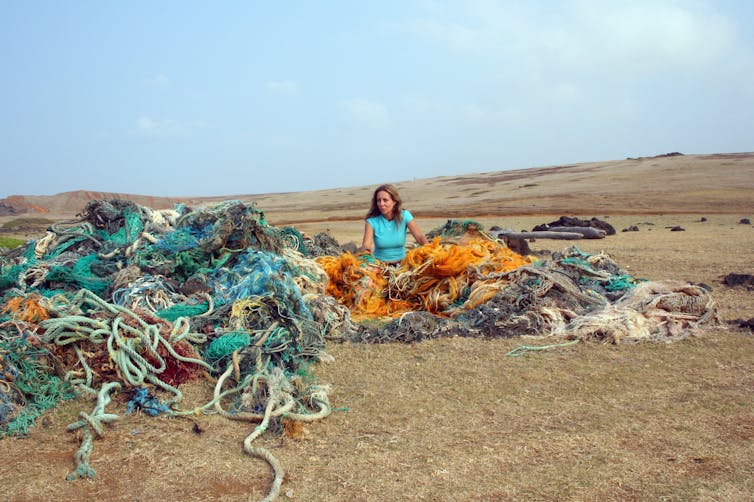
Pam Longobardi amid a giant heap of fishing gear that she and volunteers from the Hawaii Wildlife Fund collected in 2008. David Rothstein, CC BY-ND

Pam Longobardi, Georgia State University

I am obsessed with plastic objects. I harvest them from the ocean for the stories they hold and to mitigate their ability to harm. Each object has the potential to be a message from the sea – a poem, a cipher, a metaphor, a warning.

My work collecting and photographing ocean plastic and turning it into art began with an epiphany in 2005, on a far-flung beach at the southern tip of the Big Island of Hawaii. At the edge of a black lava beach pounded by surf, I encountered multitudes upon multitudes of plastic objects that the angry ocean was vomiting onto the rocky shore.

I could see that somehow, impossibly, humans had permeated the ocean with plastic waste. Its alien presence was so enormous that it had reached this most isolated point of land in the immense Pacific Ocean. I felt I was witness to an unspeakable crime against nature, and needed to document it and bring back evidence.

I began cleaning the beach, hauling away weathered and misshapen plastic debris – known and unknown objects, hidden parts of a world of things I had never seen before, and enormous whalelike colored entanglements of nets and ropes.

Three large plastic art installations, the central one a cornucopia spilling plastic objects onto the floor.
‘Bounty Pilfered’ (center), ‘Newer Laocoön’ (left) and ‘Threnody’ (right). All made of ocean plastic from the Atlantic, Pacific and Gulf of Mexico, installed at the Baker Museum in Naples, Fla., 2022. Pam Longobardi, CC BY-ND

I returned to that site again and again, gathering material evidence to study its volume and how it had been deposited, trying to understand the immensity it represented. In 2006, I formed the Drifters Project, a collaborative global entity to highlight these vagrant, translocational plastics and recruit others to investigate and mitigate ocean plastics’ impact.

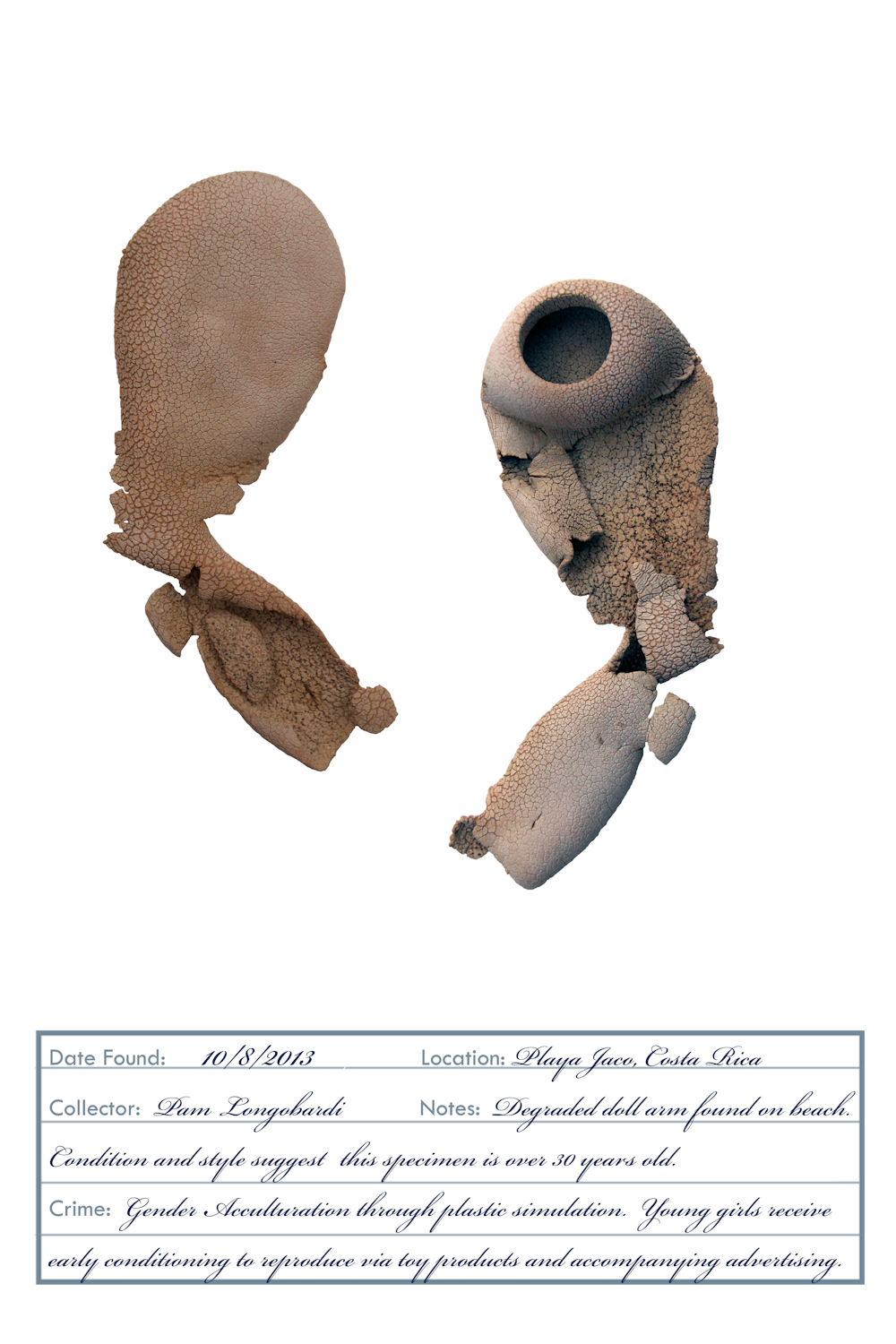
My new book, “Ocean Gleaning,” tracks 17 years of my art and research around the world through the Drifters Project. It reveals specimens of striking artifacts harvested from the sea – objects that once were utilitarian, but have been changed by their oceanic voyages and come back as messages from the ocean.

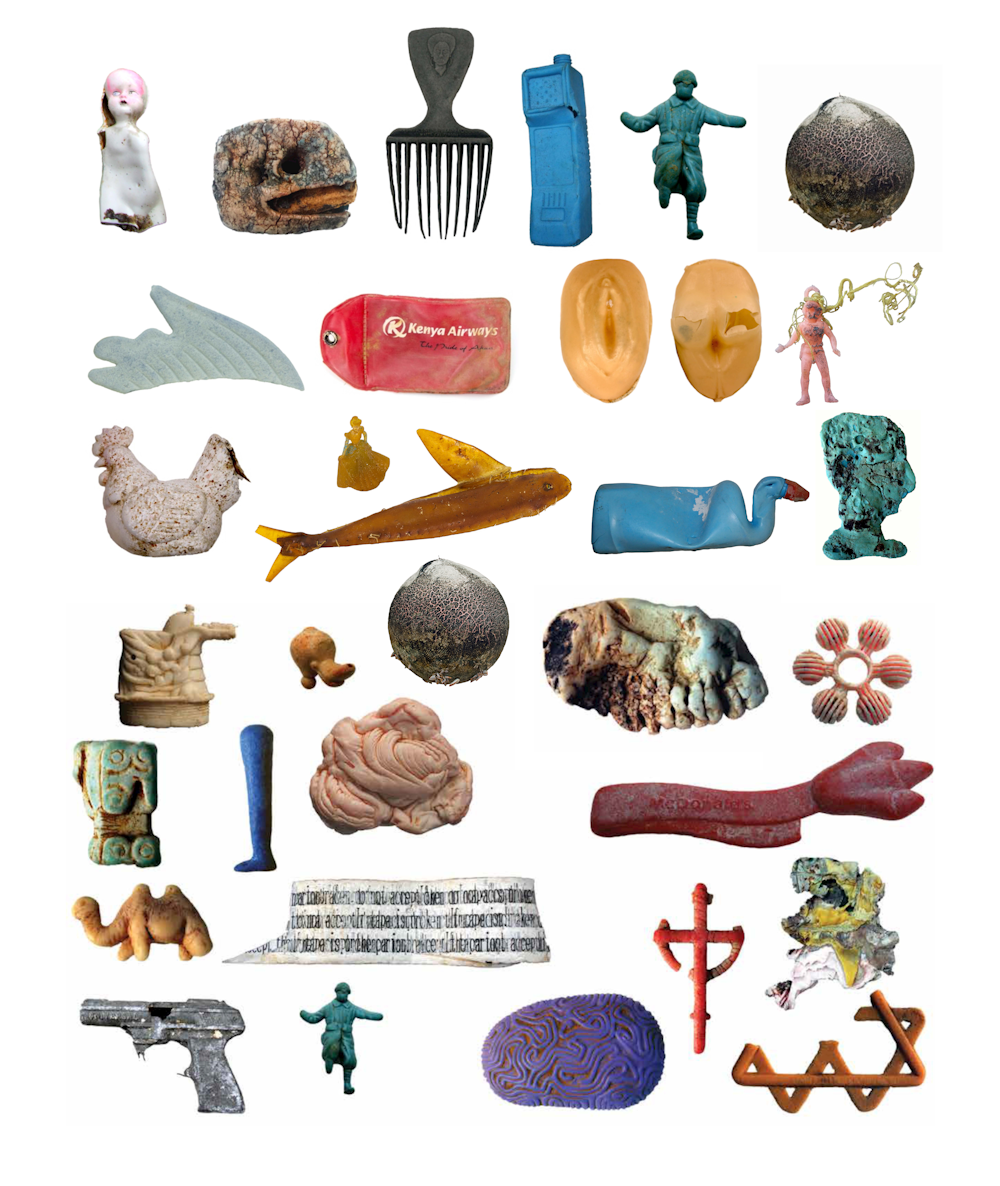
Array of plastic objects, including toys, action figures and fragments of larger objects.
‘Drifters Objects,’ a tiny sample of the plastic artifacts Pam Longobardi has collected from beaches worldwide. Pam Longobardi, CC BY-ND

Living in a plastic age

I grew up in what some now deem the age of plastic. Though it’s not the only modern material invention, plastic has had the most unforeseen consequences.

My father was a biochemist at the chemical company Union Carbide when I was a child in New Jersey. He played golf with an actor who portrayed “The Man from Glad,” a Get Smart-styled agent who rescued flustered housewives in TV commercials from inferior brands of plastic wrap that snarled and tangled. My father brought home souvenir pins of Union Carbide’s hexagonal logo, based on the carbon molecule, and figurine pencil holders of “TERGIE,” the company’s blobby turquoise mascot.

On the 2013 Gyre Expedition, Pam Longobardi traveled with a team of scientists, artists and policymakers to investigate and remove tons of oceanic plastic washing out of great gyres, or currents, in the Pacific Ocean, and make art from it.

Today I see plastic as a zombie material that haunts the ocean. It is made from petroleum, the decayed and transformed life forms of the past. Drifting at sea, it “lives” again as it gathers a biological slime of algae and protozoans, which become attachment sites for larger organisms.

When seabirds, fish and sea turtles mistake this living encrustation for food and eat it, plastic and all, the chemical load lives on in their digestive tracts. Their body tissues absorb chemicals from the plastic, which remain undigested in their stomachs, often ultimately killing them.

Two piles of tiny particles of virtually identical sizes.
Plastic ‘nurdles,’ (left), tiny pellets that serve as raw materials for manufacturing plastic products, and herring roe, or eggs (right). These visually analogous forms exemplify how fish can mistake plastic for food. Pam Longobardi, CC BY-ND

The forensics of plastic

I see plastic objects as the cultural archaeology of our time – relics of global late-capitalist consumer society that mirror our desires, wishes, hubris and ingenuity. They become transformed as they leave the quotidian world and collide with nature. By regurgitating them ashore or jamming them into sea caves, the ocean is communicating with us through materials of our own making. Some seem eerily familiar; others are totally alien.

Two views of a degraded arm from a plastic doll, found on Playa Jaco in Costa Rica.
A degraded plastic doll arm, from the series ‘Evidence of Crimes.’ Pam Longobardi, CC BY-ND

A person engaging in ocean gleaning acts as a detective and a beacon, hunting for the forensics of this crime against the natural world and shining the light of interrogation on it. By searching for ocean plastic in a state of open receptiveness, a gleaner like me can find symbols of pop culture, religion, war, humor, irony and sorrow.

A rolling landscape covered with thousands of life vests.
‘Division Line,’ 2016. This photograph shows the ‘life-jacket cemetary’ in Lesvos, Greece. Traumatized asylum-seekers and migrants arriving by boat from Türkiye leave the life vests on shore as they stagger inland. Most of the waste is plastic. © Pam Longobardi, CC BY-ND

In keeping with the drifting journeys of these material artifacts, I prefer using them in a transitive form as installations. All of these works can be dismantled and reconfigured, although plastic materials are nearly impossible to recycle. I display some objects as specimens on steel pins, and wire others together to form large-scale sculptures.

A plastic bottle cap inscribed 'Endless' and a photograph of a beach littered with plastic objects.
From the series ‘Prophetic Objects,’ a plastic cap from a Greek manufacturer of cleaning products, found on the Greek island of Kefalonia. Pam Longobardi, CC BY-ND

I am interested in ocean plastic in particular because of what it reveals about us as humans in a global culture, and about the ocean as a cultural space and a giant dynamic engine of life and change. Because ocean plastic visibly shows nature’s attempts to reabsorb and regurgitate it, it has profound stories to tell.

A large sculpted anchor in the center of an art gallery, with ties to life preservers mounted on the ceiling.
‘Albatross’ and ‘Hope Floats,’ 2017. Recovered ocean plastic, survival rescue blankets, life vest straps and steel. Pam Longobardi, CC BY-ND

I believe humankind is at a crossroads with regards to the future. The ocean is asking us to pay attention. Paying attention is an act of giving, and in the case of plastic pollution, it is also an act of taking: Taking plastic out of your daily life. Taking plastic out of the environment. And taking, and spreading, the message that the ocean is laying out before our eyes.

Pam Longobardi, Regents’ Professor of Art and Design, Georgia State University

This article is republished from The Conversation under a Creative Commons license. Read the original article.

ooOOoo

Pam at one point describes the ocean plastic”… because of what it reveals about us as humans in a global culture, and about the ocean as a cultural space and a giant dynamic engine of life and change …”. It raises questions that I can only ponder the answer. Ultimately, are there too many inhabitants on this planet? What does the next generation think? Is there an answer?