We have a guest staying with us for twenty-four hours and the last thing I wanted to do was to spend time at a keyboard composing a new post for today.
So just for fun, I thought of reposting what appeared on this blog five years ago: August 18th, 2010.
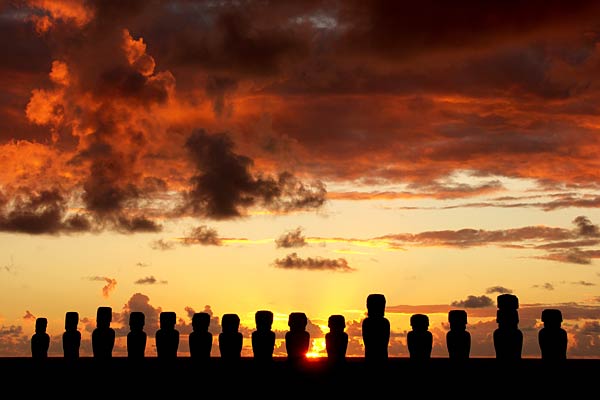
It’s almost unimaginable that Planet Earth could go the same way. Then again, anyone over the age of, say 60, would find where we are today, in terms of mankind’s long-term survival, equally unimaginable from how the world looked 40 years ago.
I have long been a subscriber to CASSE, The Center for the Advancement of the Steady State Economy. As Casse’s home page sets out, “Perpetual economic growth is neither possible nor desirable. Growth, especially in wealthy nations, is already causing more problems than it solves. Recession isn’t sustainable or healthy either. The positive, sustainable alternative is a steady state economy.” Do take a minute to see the sense and power of this fundamentally and obvious position by reading a little more here.
But as the title of today’s post sets out, all the ideas and actions and commitments come to naught if the outcomes aren’t delivered. This recent essay by Michael Lewis on the CASSE website explores the issue of outcomes and I am very grateful for being granted permission to republish it here on Learning from Dogs.
oooOOOooo
The Resilience Imperative and Civil Disobedience
by Michael Lewis
As I was making a speech in Alberta, Canada, to a business audience, mainly from the finance and energy industries, a fully engaged participant in the front row caught my eye. He was the first to approach me after the question period and the first to get my autograph on The Resilience Imperative: Cooperative Transitions to a Steady-State Economy, the book that I co-authored with Pat Conaty.
During my talk, I had argued that economic growth and a casino-like financial system were taking us to the edge of a deadly precipice. I made the case that societies urgently need to navigate the turn to a steady-state economy, based on local and regional trade. I also offered suggestions on how we might accomplish this. The thesis has a bit of an edge to it, especially in a business crowd accustomed to globalization and growth, so I was anxious to learn more about the front-row enthusiast.
He turned out to be a warm, charming, and open senior manager at Cenovus Energy, a large player in the Athabasca Tar Sands. The corporation seems to be respected in Alberta and Saskatchewan because of its health and safety, community, and environmental initiatives. He rapidly brought the discussion to the issue of “social license,” a condition he acknowledged was a big problem for the tar sands operators. But his view, after many years around boardroom tables, is that the industry is becoming more transparent and responsible, and its performance is improving.
I believe this to be true; certainly Cenovus has been doing a lot of things right. However, I argued that he was missing the point; social license in this industry could only be understood in a global context, and it is not going to be forthcoming for two simple reasons: (1) economic growth produces carbon and (2) carbon is going to kill a lot of us and thousands of other creatures.
If the oil and gas sector wants to explore the potential for broadening its social license, it would have to stand shoulder to shoulder with scientists, governments, businesses, and civil society and argue for a stiff tax on carbon. Only by taking such responsibility can Cenovus and its fellow corporations expand their social license. At the same time they would be helping to set the stage for the transition to a steady-state economy.
“Nothing less would do,” I proclaimed.
“Well you know, Mike,” he replied, “I have not seen much evidence of such a move afoot.”
Why am I not surprised? “I know,” I said. “Shareholder interests are framed by the ideology of growth and profit maximization, and even when these interests are complemented by an ethic of corporate social responsibility, the ideology does not exactly encourage this vital and necessary conversation.”
A few days later I attended the launch conference of the New Economics Institute at Bard College in Upstate New York. It was a remarkable convergence of practitioners, researchers, and activists engaged in debates about economics, analysis of mindboggling challenges (both local and planetary in scale), and exploration of hopeful transformational pathways.
Bill McKibben delivered a Friday evening keynote speech to a packed audience. His laser focus on greenhouse gas emissions was at once absorbing, terrifying, and hopeful, precisely the kind of dynamic that is motivating more and more people to step up to the front lines of civil disobedience, including many scientists and even a few economists. Mark Jaccard, a well-known energy economist in Vancouver, is hardly considered to be a radical, but he joined the front-line battle as part of a 350.org action. He was arrested in May of this year [Ed: 2012] for blocking a coal train headed north to Vancouver’s coal port.
McKibben and Jaccard are picking up on the analysis of James Hansen et al. that oil and gas are a problem, but we do not have enough of it left to take us over 450 parts per million of carbon dioxide in the atmosphere. Coal is the real threat. Unless we phase out coal completely by 2050, we will blast beyond this concentration, and that’s an event that many climate scientists believe will trigger catastrophic consequences. What are we to do?
McKibben and Jaccard are showing us part of the answer. But to make real progress, we need to pay much more attention to Herman Daly, the outstanding chronicler of our economic and ecological lunacy. He concluded one recent essay with this strident statement befitting of our circumstances:
Even though the benefits of further growth are now less than the costs, our decision-making elites have figured out how to keep the dwindling extra benefits for themselves, while “sharing” the exploding extra costs with the poor, the future, and other species. The elite-owned media, the corporate-funded think tanks, the kept economists of high academia, and the World Bank — not to mention Gold Sacks and Wall Street — all sing hymns to growth in perfect unison, and bamboozle average citizens.
Dr. Daly has clarified and expanded the arguments for a steady-state economy that go back to John Stuart Mill, John Ruskin, Frederick Soddy, Kenneth Boulding, and Ghandi. In the same essay referenced above, Daly also noted that in spite of all the evidence of the growing crisis, “our economists, bankers, and politicians still have unrealistic expectations about growth. Like the losing gambler they try to get even by betting double or nothing on more growth.”
Well then, perhaps we need to follow the leads of McKibben, Jaccard, and Hansen, and go get arrested. Perhaps we need to breathe deeply and act courageously to make hope more concrete and despair less convincing. Perhaps those of us in the 50 to 90-year-old set need to commit to civil disobedience to honor our children, grandchildren and our hopes for their survival. The time has arrived for all of us, but especially the post-war “growth generation” to break out of our too-comfortable zones. Stopping carbon emissions is a pre-condition, but nothing will change unless we are prepared to put ourselves on the line.
Of course, this is not enough. We have many questions to answer. How are we going to meet basic needs for energy, food, and shelter? How are we going to finance the economic transition? How do we restructure property rights to overcome the pervasive me-first culture? How do we achieve more local and democratic ownership of the means of production? How do we share jobs and income in a transition that will require less stuff and thus less making of stuff?
These are the questions we concentrate on in The Resilience Imperative. Pat Conaty and I put 42 months of serious forehead pressing into the book, and the early results are gratifying. People as divergent as John Fullerton, former managing director of JP Morgan whose focus is now on resilience and transition (good-bye Wall Street), and Robin Murray from the London School of Economics have endorsed it — they believe we have presented hopeful ideas for getting the transition going.
After presenting numerous positive examples of how people are changing the economy today, we end the book on this note:
The tasks of transition are many. The challenges are daunting. The outcomes are uncertain. Our courage remains untested. But we are a resilient species. We are not alone; there is “blessed unrest” all about. If we but open our eyes, we will SEE change is possible. If we act in ways that recognize we are interdependent, we will continue to innovate co-operative transitions to a steady-state economy.
There is one key question we need to ask ourselves. What stories will we be able to tell our loved ones about what we did to advance the Great Transition?
oooOOOooo
One sentence really jumped out at me from Michael’s essay and it was this one, “Perhaps we need to breathe deeply and act courageously to make hope more concrete and despair less convincing.” Reminds me of the quotation ascribed to Napoleon Bonaparte:
Courage isn’t having the strength to go on, it is going on when you don’t have strength.
A President with more speech writers than one could imagine.
Got a vested interest or a strong view? Then draft a speech for the President of the United States of America. Many do. Some are clearly very tongue-in-cheek, some are pertinent. The following from CASSE fits into the latter category. Enjoy.
President Obama’s (Hoped for) “Amaze Speech”
Speechwriter: Brian Czech
President Obama’s hoped-for speech first appeared in the Daly News on August 7. We reprint it this week in anticipation of the President’s September 8th speech.
Pres. Obama
Fellow Americans, this evening I have a special message for you. It’s an unprecedented and surprising message, but ultimately it will resonate with your common sense, good will, and patriotic spirit. It turns out that the recessionary cloud we’re under does have an extremely valuable silver lining. I know; it sounds like something only a politician would say, but wait. I think you’ll be surprised to hear my explanation.
Now before I elaborate on the silver lining, I want to make it clear that the cloud has some rain, too. As a nation, we are struggling with debt, credit ratings, and worst of all, the painful experience of unemployment. The last thing I want is to mislead you into thinking these are problems I take lightly, or problems that will be automatically solved by the markets or policy makers. These problems were many years in the making — decades in fact — and it’s going to take years of diligence and readjustment to solve them.
Yet none of these problems can deny us the silver lining, which is this: the economic turmoil we experience today will change the course of history in such a way as to secure the future for American posterity, starting with our children and grandchildren. Let me reiterate, our own kids and grandkids — the most precious American treasure — will have a secure future as a result of the problems we face today. Here’s why…
Far from the trading floors of Wall Street and the policy meetings of the Federal Reserve, crucial discoveries have been made by scientists, economists, anthropologists, historians, and others collaborating under a broad umbrella called “sustainability science.” No, they haven’t discovered an unlimited energy source, a pollution-free car, or a method to stabilize our climate at optimum conditions. They’ve discovered something far more important and exciting: the key to permanent economic security.
For the past few years, as time has allowed, I and my economic advisors, with the assistance of numerous scholars, have studied this key to economic security. The theory and evidence for it is absolutely irrefutable. The only reason this key to security hasn’t broken into public dialog is because it serves no short-term vested interests; no wealthy corporations, think tanks, or political parties that would stand to profit before the next shareholders meeting or election cycle. But that’s also the beauty of it: the key to security is a non-partisan, scientifically sound approach to the long-run interests of all, especially our kids and grandkids. Fortunately for us, it’s surprisingly simple as well.
What is this key to a secure future? We could coin a new phrase to get credit for the idea or to improve its political flavor, but I believe the clearest term is what the scientists already call it: the “steady state economy.” Political advisors think it’s a bit on the dry side, but after what we’ve been through – stock market crashes, insurance crises, banker bailouts, panic over the debt ceiling, having our credit downgraded — doesn’t a “steady state economy” sound like just what the doctor ordered?
In the coming weeks and months, I and my Cabinet will be helping to introduce fellow Americans to the basics of steady state economics, especially what it means for producers, consumers, and public policy. We’ll do this through a series of public announcements, publications, and townhall meetings. Meanwhile, this evening, I’ll provide a brief summary, first by noting what a steady state economy is not.
A steady state economy is not communism, Marxism, or anything at odds with the Constitution of the United States. A steady state economy is not a stagnant, flat-lined economy but is rather continuously dynamic and creative. A steady state economy is not established overnight with draconian policies; instead it evolves as a matter of consumer preference and prudent policy. Most importantly, a steady state economy is in no way opposed to jobs and full employment. To the contrary, a steady state economy is the only economy that can ensure full employment, for your kids and theirs.
The most fundamental feature of the steady state economy is stability. The idea is to stabilize good conditions; stable agriculture, stable manufacturing, stable services, stable production and consumption, stable currency, stable markets, stable international trade, stable impact on the environment, stable air and water, stable climate… You get the picture, and remember, all this stability is at a good level — a level that ensures life, liberty and happiness for us and future generations. At this point in history, the steady state economy is the right goal, and the first step in getting there is recognizing it.
Perhaps you find this amazing. I think you should be amazed. After all, I haven’t said a word about economic growth; in fact I’ve called growth into question. The closest thing to this in presidential history is when President Carter encouraged Americans to consume a little less after the OPEC oil embargo. But President Carter was before his time, and his speech was maligned as the “malaise speech.”
Well, at this point in history, we can no longer afford — literally or figuratively — to pull out all the stops for economic growth. Therefore, tonight you’re hearing the “amaze speech,” the speech that introduces our nation to steady state economics, the alternative to growth.
I understand the adjustment in thinking that this will entail. I’ve gone through it myself. With the exception of President Carter in 1979, my predecessors for over 50 years have prioritized economic growth in their speeches, campaigns, and policies. None even mentioned steady state economics in a speech. Yet with every new president, the pursuit of economic growth has become less realistic, less sustainable, and even less desirable.
Earlier I mentioned the profound developments in sustainability science. Among the sustainability scholars are behavioral scientists and psychologists who have found compelling evidence that economic growth stopped contributing to a happier United States somewhere from the 1950′s to the 1970′s. After that, our gross domestic product continued to rise, but our happiness did not. If you’re like me — meaning old enough to remember — this probably resonates with you. Somewhere along the line the brighter lights, bigger houses and fancier cars stopped making us better off. In fact, all the new “stuff” started working against us. Now we struggle to find enough oil, water, “green space,” solitude, free time, and the peace of mind that comes with a stable climate. It’s all the sign of an economy grown too big.
They say the definition of insanity is doing the same thing over and over again and expecting a different result. I think we’ve all done some crazy things in life, but I don’t want to go down in history as the insane president who kept trying every trick in the book to “stimulate the economy,” when stimulating the economy was neither bound to work nor even desirable by that point in history. I don’t want to oversee more banker bailouts, more stimulus spending, more loosening of environmental protections in a vain attempt to increase GDP growth. That would be insane. Instead, I’m going to tell it like it is: the pursuit of economic growth has become a dangerous obsession that we must overcome. I say this with the backing of sound science, the lessons I’ve learned, and the concern I have for the future of America.
I’m going to test your common sense now. Do you think there is a limit to economic growth? Remember, economic growth is increasing production and consumption of goods and services. It means more and more people, more and more stuff. It takes more energy, water, space to operate in, and places to put out the trash.
Now as a politician, I can assure you that, in the coming days, well-paid pundits will conjure up magical concepts of perpetual growth based on “dematerializing” the economy. Well when they’re ready to dematerialize it, maybe they can beam us up. Meanwhile, the rest of us in the real economy know what perpetual GDP growth would take: evermore people, evermore stuff. And we know we’re running out of evermore room, resources, and patience for unreal notions of evermore growth.
I know that for some, and perhaps for many, this is hard to swallow. For decades we Americans have been encouraged to believe in the notion of continual economic growth. But look at it this way: to think there is no limit to economic growth on Earth is like thinking we could fit a stabilized economy into a perpetually shrinking area. For example, with computers, robots, nanotechnology and the like, we could squish the $70 trillion global economy into North America, then the United States, then Iowa, then into the foyer of the Des Moines Chamber of Commerce, leaving the rest of the world as a designated wilderness area! It’s a ludicrous notion, and it’s precisely as ludicrous as thinking there’s no limit to economic growth in Des Moines, the United States, or Earth.
Now, let’s consider some of the problems we will face if we continue pulling out all the stops for economic growth. The first is inflation. Typically we use monetary policy — such as increasing the money supply — to stimulate growth. But when the real economy isn’t meant to grow as easily as increasing the money supply, the result is inflation. Nothing could be more harmful to our economy at this point than inflation, which is like a devastating tax on the nation.
Another problem is debt. As you know, my Administration injected a major fiscal stimulus into the economy. It helped somewhat and spun off some jobs, but it did not produce the wave of jobs we’d get in an economy with plenty of room to grow. Meanwhile, it added to our deficit and ultimately our debt. Now our credit is coming into question, as with so many nations in a global economy bumping up against the limits to growth.
Of course, there is no shortage of special interests to pounce on the news of faltering fiscal policy. The answer, they say, is to turn over as much as possible to Wall Street. “Take care of national security,” they say, “and let the markets take care of the economy.” The problem with that approach is that national security is about more than having the biggest military. National security starts with a sustainable economy, which requires a stable environment to support the agricultural, fishing, logging, mining, and ranching activities that have always been and always will be the foundation of the American and global economy. Our manufacturing and service sectors — the best in the world — are the best because we have the biggest and best agricultural and extractive sectors. And we have those because we have protected the environment from overuse, pollution, and displacement.
Consider what will happen if we take an unbalanced approach and prioritize economic growth even more over environmental protection. Does anyone really question whether we will have more environmental problems, including devastating problems? More oil spills in the Gulf of Mexico and Gulf of Alaska, more mountaintop mining in the Appalachians, more scraping for shale oil in the Rockies, more nuclear waste, more endangered species, more greenhouse gas emissions, and all the while less water, less fish and wildlife, less wilderness, less nature, less beauty. Does anyone question whether such trends diminish the quality of life for future generations? No, the problems caused by economic growth are unquestionable. It’s just that, for much of American history, the benefits of increasing GDP outweighed the costs. That’s no longer the case, and I’m confident that most of us can sense it.
In fact, the more I thought about this speech, the more amazed I became. Why did it take us so long, in America, to have an open discussion of limits to growth and alternatives to growth? The principles are irrefutable. Neither growth nor recession is sustainable in the long run; a steady state economy is the obvious policy for long-run security. Yet based on the politics of the past 50 years, you’d think economic growth had supplanted apple pie as the companion to motherhood.
Well, now we’re entering a new era of dealing squarely with sustainability. It turns out that economic growth was not a good companion to motherhood, not in the long run. We want apple pie back. We want loving homes for our children, quality time with family and friends, the occasional escape to the great outdoors, and peace. That’s the American dream in a nutshell, and it’s too valuable to sacrifice for economic growth.
So let’s roll up our sleeves and wash our hands of the dirty business of growth at all costs. We know what the right goal is, and malaise won’t get us there. We have work to do to stabilize the economy for our children and grandchildren. Our decisions — what we eat, what we drive, what we build, and frankly how many kids we have — all these will determine the quality of life for the kids that we do have. Meanwhile, those of us privileged to hold public office are responsible for developing the policies to help you thrive in a steady state economy, and for avoiding the policies that force us onto an unsustainable pathway of evermore growth. You could say we are tasked now with “steady statesmanship.”
To conclude, my fellow Americans, do stay tuned. In the coming days and weeks we’ll be discussing the details of transitioning from growth to a steady state. We’ll be talking with you about employment, population growth, stock markets, the banking system, and more. Don’t fear any shocks to the system; you’ve seen most of the shocks already as the policies of economic growth have failed. One by one, we’re going to turn these “failures” into steady state successes.
Trust all Learning from Dogs readers and their families had a wonderful Christmas Day.
Here’s a little distraction, with a serious under-message, courtesy of CASSE.
Top 10 Songs for the Steady State
by Rob Dietz
I have a friend who sees the end of the world coming soon. When he ponders the limits to economic growth, climate destabilization, and other ecological and economic problems, he tends to fall into a state of malaise. I understand to some degree where he’s coming from – I’m not one to hide my head in the sand and ignore or deny the profound problems we face. But given the amount of time that I spend contemplating the limits to growth, I can’t afford to get mired in the swamps of doom and gloom. The main way I keep a positive perspective is by working to change the root cause (i.e., pursuit of growth everlasting) of our ecological overshoot. A steady state economy that can meet people’s needs and exist within healthy environmental systems is a truly inspiring idea.
I also do some other things to keep a positive perspective. For example, I like to play and listen to music regularly. Music speaks to most of us in a way that no other art form can – we all have special songs that touch our souls. Before I go any further with this line of thought, I need to provide a brief disclaimer about my musical taste. I grew up in the 1980s on Casey Kasem’s American Top 40 radio program.
Besides indoctrinating me on some suspect styles, songs and sounds, American Top 40 taught me a lesson. It demonstrated how fun and addictive countdowns can be. In the spirit of keeping things light-hearted, I thought it would be interesting to compose a top-ten list of songs with a steady state theme. In descending order below, I’ve listed the title of the song, the performer, the album on which the song appears, and some choice lyrics. I’m sure that I’ve missed some good ones, so please feel free to comment on your favorites. I have also made a YouTube playlist in case you find yourself in a steady state mood. And now, on with the countdown…
10. The Finest Worksong
R.E.M.
Document (1987)
Take your instinct by the reins
Your better best to rearrange
What we want and what we need
Has been confused, been confused
9. Can’t Buy Me Love
by The Beatles
(1964)
Say you don’t need no diamond ring and I’ll be satisfied
Tell me that you want the kind of thing that money just can’t buy
I don’t care too much for money, money can’t buy me love
8. Excuse Me Mr.
by Ben Harper
Fight for Your Mind (1995)
Excuse me Mr.
But isn’t that your oil in the sea
And the pollution in the air Mr.
Whose could that be
So excuse me Mr.
But I’m a mister too
And you’re givin’ Mr. a bad name
Mr. like you
7. All U Can Eat
by Ben Folds
Sunny 16 (2003)
Son, look at all the people in this restaurant
What do you think they weigh
And out the window to the parking lot
At their SUV’s taking all the space
They give no @#%!
They talk as loud as they want
They give @#%!
Just as long as there’s enough for them
6. Nothing but Flowers
by The Talking Heads Naked (1988)
I miss the honky tonks
Dairy Queens, and 7-Elevens
You got it, you got it
And as things fell apart
Nobody paid much attention
You got it, you got it
5. Paradise
by John Prine
John Prine (1971)
Then the coal company came with the world’s largest shovel
And they tortured the timber and stripped all the land
Well, they dug for their coal till the land was forsaken
Then they wrote it all down as the progress of man
4. Fake Plastic Trees
by Radiohead
The Bends (1995)
She lives with a broken man
A cracked polystyrene man
Who just crumbles and burns
He used to do surgery
For girls in the eighties
But gravity always wins
3. Big Yellow Taxi
by Joni Mitchell
Ladies of the Canyon (1970)
They paved paradise and put up a parking lot
With a pink hotel, a boutique, and a swinging hot spot
Don’t it always seem to go
That you don’t know what you’ve got till it’s gone
They paved paradise and put up a parking lot
2. Society
by Eddie Vedder and Jerry Hannan
Into the Wild motion picture soundtrack (2007)
It’s a mystery to me
We have a greed with which we have agreed
And you think you have to want more than you need
Until you have it all you won’t be free
1. Imagine
by John Lennon
Imagine (1971)
Imagine no possessions
I wonder if you can
No need for greed or hunger
A brotherhood of man
Imagine all the people
Sharing all the world
Bonus Track: Corporation Day
by Dan O’Neill, CASSE Director of European Operations
Perpetual economic growth is neither possible nor desirable. Growth, especially in wealthy nations, is already causing more problems than it solves.
Recession isn’t sustainable or healthy either. The positive, sustainable alternative is a steady state economy.
These are the opening sentences that one sees when going to the CASSE website. CASSE is an acronym for Centre for the Advancement of the Steady State Economy. More on this organisation as I spend more time getting to know the background. But my instinct is to support it, hence the reason it is the subject of a Post on Learning from Dogs.
With the permission of CASSE I am re-publishing something that was on the CASSE Blogsite recently. Well worth signing up to, in my humble opinion.
Rethinking Consumer Spending and Enjoying the Holidays
by Brent Blackwelder
The day following Thanksgiving Day in the United States is called Black Friday. For retailers the day marks the beginning of the Christmas shopping season. While the origin of the term is debated, it is today associated with special sales and extraordinary promotions that retailers use to induce shoppers into spending the holiday weekend on a shopping spree.
Our modern economy is structured such that its stability depends upon ever increasing consumer spending. In my first economics course in college in 1961, the professor told the class to go out and shop because it is good for the gross national product (GNP). Then and now, mainstream economics continues to treat the Earth as if it were a business in a liquidation sale.
At a time of high unemployment in the United States, it may seem like an act of madness to question the growth economy, but relentless pursuit of growth has failed to deliver again and again on the promise of economic stability and security. Its recipes are not making people any happier, and it is undermining the ecological life support systems of our planet. It has failed about one third of the world’s population who live on less than $2 per day, while simultaneously producing an exclusive club of gratuitously wealthy individuals. Those of us advocating a steady state economy seek a new way to maintain full employment that does not incentivize employers to seek dirt-cheap labor or to replace people with machines.
Professor Tim Jackson’s 2009 report to the UK Sustainable Development Commission entitled Prosperity without Growth provides an outstanding foundation for any discussion of consumerism and the growth economy. For those interested in a steady state economy, it is worthwhile to think in this holiday season about the nature of shopping in such an economy.
Throughout history religious leaders have expressed concerns about the accumulation of stuff. Two thousand years ago Jesus cautioned about excessive attention to material possessions, saying: “Lay not up for yourself treasures on earth where moth and rust doth corrupt and where thieves break through and steal.”
Over 100 years ago the economist and philosopher John Stuart Mill recognized that eventually humanity would have to move toward a stationary state of capital and wealth, but that condition need not entail a stagnation of human improvement.
Two centuries ago the poet William Wordsworth expressed alarm at the consumerism he witnessed in England: “The world is too much with us, late and soon. Getting and spending we lay waste our powers. Little we see in nature that is ours. We have given our hearts away…”
Today’s economy is five times bigger than in the 1950s, and at current growth rates stimulated by commercial promotions, it is headed to a global economy 80 times as large.
The consumer rampage is in part fueled by slick advertising for novel consumer products, and much of this advertising is targeted at youth. Ralph Nader questions who is watching what young people worldwide are being enticed to buy? He writes: “Undermining parental authority with penetrating marketing schemes and temptations, companies deceptively excite youngsters to buy massive amounts of products that are bad for their safety, health and minds.”
Excessive packaging accompanying today’s products attracts ecological criticism, but it is only the tip of the iceberg in terms of waste. The volume of raw resource extraction required in the manufacture of products dwarfs the packaging waste. For example, many mining operations for valuable metals leave behind as waste over 90% of the material excavated, and such rocky rubble often releases a mass of toxicity onto the land and into the water.
Has happiness been improved by having all these products? Studies over the past two decades have suggested that a certain amount of material comfort and ease provided by various products increases one’s happiness, but beyond a certain point – one study suggested $75,000 income – more stuff doesn’t produce more happiness. In fact, it can yield the perverse result of adding stress, worry and depression.
It is amazing that times of holiday celebration in the United States are frequently the very times of peak stress. What should be a fun and cheerful experience becomes a week or even a month of worry.
The holiday season is a good time to reexamine the kinds of purchases we make to see whether they are reducing the use of natural resources and encouraging more sustainable ways of growing food and conducting commercial business.
Many religious congregations are looking toward a different approach to reclaim the holidays from preoccupation with material gifts. Some offer ways to reduce the volume of purchasing and to make different kinds of purchases that reduce throughput and pollution.
For example, Interfaith Power and Light seeks to get religious congregations to purchase renewable energy and to reduce energy use in their homes and their places of worship. Through Greater Washington Interfaith Power and Light, our family now purchases all our electricity, sourced from wind farms, at a surcharge of about $130 a year.
By voting with their food dollars many Americans have already sent powerful signals in favor of local farm markets and organic food. With some due diligence, people can determine whether their purchases lend further support to child labor and slave conditions, whether the purchases harm women or empower women, and whether the product came from an animal-slum factory farm operation. The Fair Trade label allows consumers to identify imported products that avoid harmful labor and environmental degradation in their manufacture.
We have options. We can do better than liquidating our natural bounty for consumer novelty, we can refrain from pitching unnecessary products to our children, and we can stop pursuing growth for growth’s sake. The steady state economy is a better choice than continuous pursuit of economic growth, but the transition starts with better choices about what and how we consume.
If you didn’t read yesterday’s Post touching on the second bitterly cold winter in Europe, then you may care to read it and ponder.
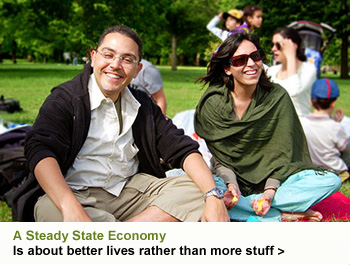
The Center for the Advancement of Steady State Economy
My post published a short while ago contained a contribution from Carla. This, in part, is what she said:
We have to try to work constructively for change. I keep urging people to check out the potential for an economy based not on constant growth, which is impossible on a finite planet, but on some sane principles of equity and sustainability.
If you go to http://www.steadystate.org and look at their position statement, you can see that people from all over the world are signing on–yes, just three or four people a day–but they are from every continent and just about every country.
Now, can you help this “go viral”?
I spent sufficiently long at the CASSE website to be comfortable that it is well worth supporting. Here are the members of the Executive Board. Here are the staff and here are their advisors. Here’s their Mission:
The mission of CASSE is to advance the steady state economy, with stabilized population and consumption, as a policy goal with widespread public support. We pursue this mission by:
educating citizens, organizations, and policy makers on the conflict between economic growth and (1) environmental protection, (2) ecological and economic sustainability, and (3) national security and international stability;
promoting the steady state economy as a desirable alternative to economic growth;
studying the means to establish a steady state economy.
Even if you don’t want to make a financial subscription to CASSE you can still register your support. Here is their Position Statement:
The CASSE position sets the record straight on the conflict between economic growth and environmental protection. Climate change, biodiversity loss, and pollution are just three powerful examples. And how will the next generation find jobs when the planet can’t support our overgrown economy? The CASSE position calls for a desirable solution – a steady state economy with stabilized population and consumption – beginning in the wealthiest nations and not with extremist tactics. Join the likes of E. O. Wilson, Jane Goodall, and David Suzuki; fill in the information below to sign the position and support a healthy, sustainable economy.
Go for it. After all, one of the definitions of madness is to continue doing the same thing and expect a different result.
It’s almost unimaginable that Planet Earth could go the same way. Then again, anyone over the age of, say 60, would find where we are today, in terms of mankind’s long-term survival, equally unimaginable from how the world looked 40 years ago.


 Learning from Dogs