The Economist is a newspaper. It was first published in September 1843 which, of itself, makes it a notable newspaper. Many years ago, more than I can recall just now, I became a subscriber to the newsprint version of this weekly paper. It has become such a companion, so to speak, that when I left the UK in September 2008 to come to Mexico I made arrangements to continue receiving The Economist each week.
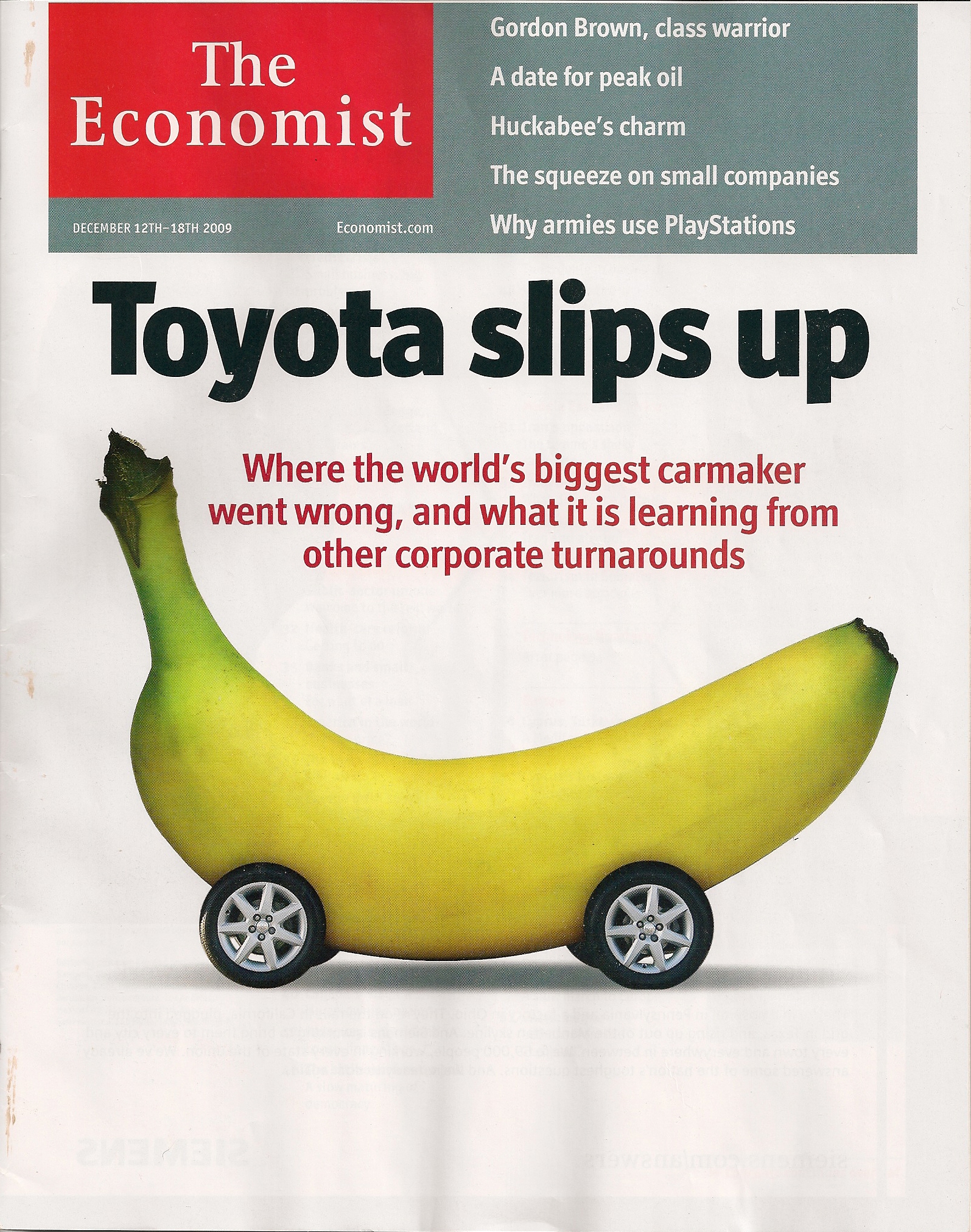
However, the Mexican postal system, despite being thoroughly reliable, is rather slow and, rather logically if you muse on it, the postman always only delivers when there is more than one item. Thus the particular copy of The Economist that carried the story about Toyota arrived late and with three other editions!
Actually I don’t watch the television at home, so when I am away and staying in a hotel it is novel to turn on the TV.
I am amazed at the similarity between productions, whatever country you are in. The practice now seems to use 4-second clips, with movement across the screen, together with a moving strip, rotating bill board, and a moving back drop, moving camera, and to cap it all constant music.
I have no need for this, in fact I have little use for any of it! Am I informed? – well yes to a point, but beyond a certain amount of scrambled information my own brain becomes confused.
Shopping is another area where a wealth of choice confuses me, but yet I lack nothing.
So often we are faced with pressure to have something. Well I have found that the less I have, the less I have to worry. Indeed, more to the point, I work on the principle: if it hasn’t been used for two years it can go. I have made a conscious choice to keep certain items, those which I believe are of use, but the rest is sold, given away, or recycled.
In this modern world, we have so much thrust upon us forgetting however that our parents were happy with what they had. I am also learning that our children are far more healthy, as a result of having love and time to do all manner of things together, being free of modern extras.
It is interesting to write down what you think you need, or what you would take with you if you had half a day to vacate your house.
Health and happiness come as a result of different things, but keeping up a program of work, or living a lifestyle that is gruelling will take it’s toll.
An expression that I recall being said by a friend once was: ”It was time to stop and smell the roses.” Well of course they will always smell, but it takes time to throw away other time consuming things to realise simple pleasures.
A quiet walk, time for a chat, slowing the pace down, some reading, music: I am happy.
Approaching that big boundary between learning and earning.
It seems like only yesterday that my first daughter Natalie was born. Now Natalie is approaching 17, going to college and will soon be learning to drive. She did very well in her GCSE [UK exams taken around the age of 16. Ed] exams, but at the moment has no real idea of what she wants to do.
Perhaps not what you would expect her Dad to say but I think that is great. Because she can continue with a broad based approach to learning and from this she will eventually channel her interests and knowledge in a particular direction.
For A levels [University entrance exams taken around the age of 18. Ed] she is taking French, Psychology, Law, and Textiles!
Clearly for a young person another language enhances the ability to communicate with the wider world. Psychology is an interesting and a useful insight into fellow humans. Law will help to make her aware of what she will be expected to deal with but textiles, that was an initial puzzle to me.
The college were very unhappy about Natalie taking up textiles because she had not done art at school but, to be honest, that was because the school, at the time, had put pressure on her to drop art in favour of another subject that fitted into the weekly program of lessons.
But in just three months Natalie has shown great flair for textiles and I am amazed by the work she has produced. However, when I called her this evening from abroad (I’m currently in the Middle East), she was feeling very unsure because her form master has been putting pressure on her to decide what she wants to do when she leaves college.
If you are lucky enough to know your career path then life is easy but actually I am pleased that my daughter is building her knowledge in an open way. I only ask that she does her best.
Exam results might seem important on the day of announcement, and they may well be of serious consideration when applying for jobs in competition with other applicants, but who is the person?
Social awareness is hugely important, and trying different jobs earning money in the school holidays has given her an insight into various ways that people earn their living.
My suggestion is for her to not even worry about exams. Just enjoy the information she is learning. In France last year she was chatting away to locals in French, and laughing, because the level of understanding was already there.
Take the pressure off ! Make learning fun. Take the subjects you want. Enjoy education. There is greater variety with regard to work these days. Natalie will not end up in an office as she fears. Her general level of education and happy disposition will guide her to something different.
It is difficult to try an explain all this, but success in adult life is not a multitude of qualifications and lots of money, it is a balance of finding something that is of interest, pays a suitable wage, and makes you happy.
When I was at school nobody suggested making stained glass windows, or restoring paintings, or moving to Greece and working with different textiles but many things are possible now.
I only hope that she will trust herself, and then when she finally discovers something she really likes, she will be happy.
Today is my 54th birthday. I am now the age that my mother was when she died, on January 8th, 1985. I knew then that she died too young, that she had so much more living to do.
Two weeks before her death, I visited her in the convalescent hospital where she had been for months. She was going home! The doctors had given her a clean bill of health. She ordered a new skirt to celebrate and had it shipped to her home. We got out maps of London and made plans to take a trip there together, as adults, as friends, the following summer. I went back to school, happy to have had such a nice visit, happy she would soon be going home.
About ten days later, on January 5th, 1985, I got a call from my brother, telling me that mother had septic shock, that she might not make it, and that I needed to get there, fast. I bought a one-way ticket and packed a dark suit. She was still alert when I finally arrived. The nurses remembered me, and let me stay with her, even when visiting hours were over. I got to talk to her, and ask her what she wanted me to do for her, what she wanted the doctors to do for her, what measures she wanted taken. She wanted to live. She was getting weak, working to breath, waiting for the antibiotics to work. Or not. The doctors recommended a ventilator, to help her conserve her strength. Before they put it in, she had one last thing to say: “I love my children.” She died that night.
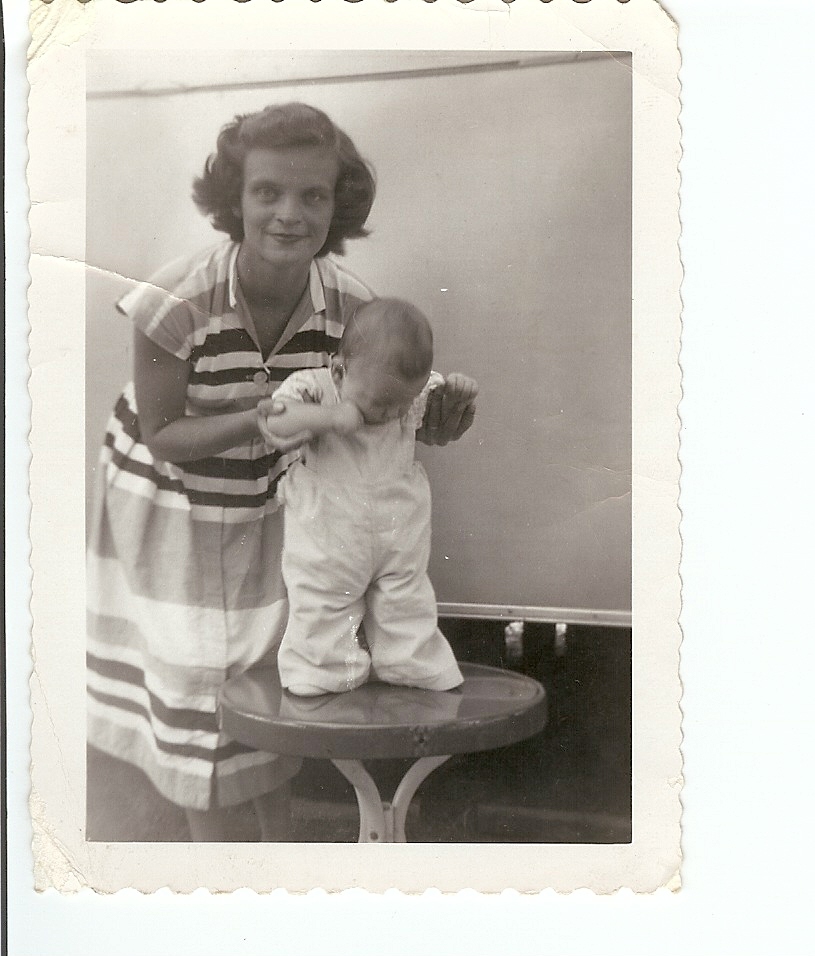
Lillian Harris, Sherry's mother, at age 20 with her first child Brenda
I remember thinking at the time how sad it was that she had never gone to college, never had a career, never fulfilled her dreams. That she had fallen in love at 18, gotten married, and devoted her entire adult life to her children. That her last thought was of her children. I was single and doing odd jobs while earning a doctorate. I had a cat and helped take care of my 90-year-old neighbor, but having children was the furthest thing from my mind.
Fast forward to today, January 12, 2010. I am now the age my mother was when she died. I did go to college, I do have a career, and I have chipped away at those dreams. But those are the side bars of my life. Like every parent out there, the moment my first child was born, I understood what my mother meant. I understood how much you could love someone, how you could put their interests ahead of your own, and how you could not be happy unless they were okay. And, as the years go by and I get older, I understand what a precious gift my mother gave me when she said those last words. She taught me that time flies, and you never know what day might be your last. She taught me to treasure every second with your children because, before you know it, they have grown up and are out the door. Just yesterday, they were toddlers; blink, and they are turning 30.
Time passes so fast. Make it worth it.
By Sherry Jarrell
[Readers may find that an earlier Post by Sherry fits very beautifully with this moving account published today. Ed.]
I’ve just about had it with the media interviewing lawyers and judges about the courtroom developments in the case against the “underwear” bomber. They all, without exception, end up circling around to the apparently “happy” fact that this individual will be found guilty of the charges against him (none of which includes any reference to terrorism, by the way), and will spend the rest of his life in jail.
My reaction? SO WHAT???? The mere fact that the likely verdict is a topic of discussion is insanity! Finding him guilty is not the point; it is precisely beside the point! He is not a criminal — he is an enemy combatant, a willing participant in an on-going war with the United States. And he should be treated as such. There is a reason we don’t fight wars in courtrooms.
EVEN Obama had to finally admit that fact when he used the word “war” for the first time in discussing this issue.
The best place to live? It’s all down to your neighbors!
No offense to anyone else, but I live in the perfect neighborhood.
My neighborhood is not big; it consists of only one street, a circle; where you enter the street is the same place you exit. There are only about 30 homes on my street. None of them are very fancy or very big. Most of the houses are older. Some need repair. One or two are empty now. No, it isn’t the size of the neighborhood or the grandeur of the houses.
I live close to the University where I work. I could walk to work if I needed to. But I haven’t needed to, except for the one time, when the Presidential debate was held on campus and security closed it down to all but pedestrian traffic. Although it is certainly convenient, proximity to work is not the reason my neighborhood is perfect.
My girls are unlikely to agree just yet with my assessment of our neighborhood. But they are still young, and there are no kids their age on our street. One neighbor does have grandchildren their age who visit sometimes, but that doesn’t really count, they tell me. Off and on, they complain and say they want to move. My 15-year-old wants to live in a city, the bigger the better, the more people the better; my 13-year-old wants to live on a horse farm, the bigger the better, the more horses the better.
But I tell them that some day, when they are married and have children and are busy with life, they will look back on this time in our neighborhood, and will understand what I meant when I told them how very lucky we are to live here.
Because we have neighbors; real neighbors!
They welcome new families with home-baked bread; take in your mail when you are away; call to check on you when you are sick; give you a ride to get your car out of the shop; lend you their extra tall ladder. All without hesitation and without expecting anything in return. And they let me do what I can for them. There’s genuine warmth and support between neighbors on my street. It’s like an extended family.
Maybe even a little better! Why? Because they do all of this without pushing, without invading your privacy, without crossing into your personal space. They are supportive without being nosy. How totally wonderful: to have support when you need it but, as important, perhaps more important, you also have your privacy. I can’t imagine a better combination. I can’t imagine feeling safer. I can’t imagine a more wonderful neighborhood. I can’t imagine a better home. My neighbors are the best.
A few years ago I saw an advert for a small piano sized electric organ in our local shop window.
Great I thought, that will be a good way to introduce some music into the home, and see if I can add pedals to the idea of playing the piano.
It didn’t take long to track down the owner, but unfortunately the organ was in a back room, down two sets of stairs, round a corner, in a house which was isolated and difficult to find. Whereas I should have gone along with a team of
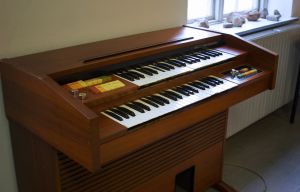
Typical electric organ
people, there were only three of us to move the instrument, but we eventually managed to move the thing out of the house, and into a trailer which we used to transport it to our house.
My wife thought I was mad, but I really liked it because it only had the sound of an organ, not a choice of sounds. It even had stops, not buttons to choose the different pipes you wanted to use.
Actually we were undertaking a great deal of building work at the time thus when our local church’s organ came to the end of it’s life, it seemed a good idea to offer them the chance to have this piece. It was ten times better than the original and sounded wonderful: job done!
However, last year some kind soul left money to the church and it was decided that the churcch could afford a new organ.
It duly arrived and our old one was moved to an alcove at the back of the church: I was asked to remove it.
Where was I going to put it? By chance we had acquired an almost new one ourselves and nobody seemed to want this old but wonderful piece.
We tried Ebay – no luck. Adverts – again no interest. The pressure started to grow.
People were asking me to move that old organ of mine. Letters started to arrive. Could I please take it away – I became the bad guy.
Eventually, I made contact with a man in London who would be happy to take it away for free, but he wanted to hear it play. Whoops! It was already loaded on my trailer!
But I managed to position trailer and load near an electric socket and in broad daylight, with the aid of the mobile phone, I stood and played a range of music! Our customer was happy.
He agreed to come at about eight o’clock one Saturday morning, but actually arrived two hours ahead of time at six in the morning!
A church in Ghana
The man brought his wife, dressed in her national dress, explaining that they wanted the organ for a church in their village back in Ghana. They had never ventured outside London, so this visit to the country was a major event. They joined us for breakfast and we showed our children a map depicting where the organ would eventually go.
The man was built like an ox and he and his wife together were quite happy to lift the instrument and put it in the back of their vehicle.
The President of the United States recently pressured the heads of the nations’ largest banks to increase lending to
Pres. Obama
small business and home-owners. Obama claimed that the banks, as recipients of federal bailout funds, had an unusually heavy responsibility to take such measures in order to create more jobs and help nurse the economy back to health. All of this was done very publicly and with much fanfare. Worldwide press coverage was universally favorable.
Seems reasonable, doesn’t it?
But it is not. You are being duped. I can’t tell whether whoever writes this stuff for Obama knows the truth and skilfully skirts it, or just writes flowing prose with no connection to the truth that curries voter buy-in by blaming Wall Street and Corporate America for all that’s wrong in the world.
“The time to begin writing an article is when you have finished it to your satisfaction. By that time you begin to clearly and logically perceive what it is you really want to say.” ~Mark Twain
It is a bit intimidating to try to write a piece on the importance of good writing. I feel self-conscious about my writing as I write about good writing. After all, a post on good writing should be written especially well. Then again, maybe a poorly written post will do even more to illustrate the importance of good writing. I will have to leave that up to you, the reader.
I have been teaching graduate and undergraduate students for over twenty years now. I have read and graded thousands of papers and essays during that time. I can count on two hands the number that were exceptionally well written. In each case, I sought out the students to compliment their writing, and to encourage them to keep honing their writing skills.
I doubt my words of encouragement had much effect. This, I know from personal experience.
Years ago, in my third year of graduate school, I got a paper back from a professor with the words “You write well” written in the margin. I was crushed. I had worked so hard on that paper: reviewing the existing literature, developing the research design, and trying to make a substantive contribution to my field. I yearned to hear something tangible about the quality of the research, the cleverness of the method, or the importance of the findings. Instead, I got “you write well.” I honestly thought that the professor had said that because he couldn’t think of anything positive to say about the content of the paper.
Years later, something happened that made me realize how wrong I was. I had taken a teaching job at Southern Methodist University in Dallas, Texas, even though I had yet to defend my doctoral thesis; it’s called “ABD,” or “all but
Merton Miller
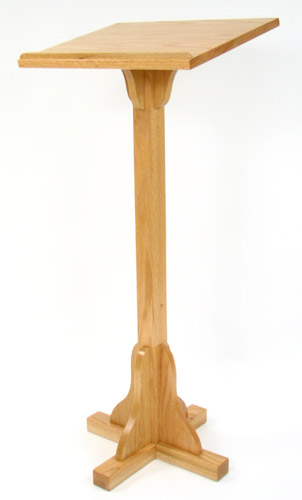
dissertation.” I had traveled to Chicago to meet with Merton Miller, my thesis chairman, about polishing up my dissertation and scheduling the defense. As I waited outside his office door, I couldn’t help but notice how distracted Professor Miller seemed. He had always stood at a tall wooden lectern to write, but this day he paced to and from that lectern, rubbing his head, adjusting his shirt sleeves, writing, erasing, then erasing some more.
He was at the lectern when I entered his office for our meeting. I congratulated him again for winning the first Nobel Prize in financial economics and asked him about the upcoming trip to Stockholm. He was taking his wife and daughters on the trip, who were very excited. He, on the other hand, was not ready for the trip. He was worried, he said, because he was not going to have sufficient time to revise his acceptance speech. He had only edited it seven times thus far, and his magic number was eight. Not six, not seven, but eight rewrites were what he needed to be satisfied with his writing.
Professor Miller was known as one of the most gifted writers in all of economics. His writing was disarmingly simple and clear. It flowed like a piece of music. It seemed effortless. Everyone, myself included, assumed that he was just a naturally talented writer, lucky to have been blessed with that skill. Everyone was wrong. I learned that day that Professor Miller worked hard at writing well. He was well into his 60’s, had written hundreds of articles and had won the Nobel Prize, but he was still working at writing well.
Then I remembered the comment that a teacher had written in the margin of my paper years earlier. The teacher was Merton Miller. And now I knew how much it really meant, coming from him. So now when I see the rare student who writes really well, I make it a point to tell them. Not that it means as much coming from me as it did coming from Professor Miller. But it still means something, because good writing is very important, and it’s worth working for.
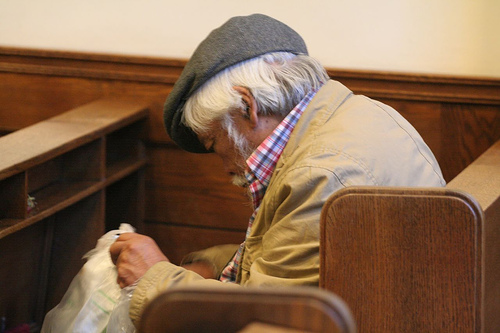
Recently while busy in the garden our two dogs started barking. This in itself is not unusual because they sit at the front gate waiting for passers by to stop and talk to them. It can be a horse, or cyclist that sometimes causes them to bark, and our children have grown to show the same awareness as the dogs in who is passing. I didn’t see the cause this time but our young daughter did.
“Don’t worry, Daddy, it’s only an old man!”
Stephanie is only 8 years old, but without meaning any harm had given sufficient information to explain the risk to us and paint a quick picture in a few words as to why the dogs were barking.
Of late for some reason I have been more aware of people who are ageing. This generation do not normally stand around telling stories, this is left to the young who always seem to have something to shout about.
However all older people will have many interesting tales, often almost unbelievable, yet true. They have lived through war, happy, sad, interesting, and hard times. Each has learnt about life through experience that we can not buy.
Recently my ex Mother-in-law passed away. I thought I knew her very well, but it wasn’t until family stories started coming out that we all found out there had been much more in the life of this modest lady.
How it should be.
Christmas is coming and probably there will be family gatherings. This year I am going to try and turn the attention to the older generation, and see if they will open up and give us an insight into their childhood days and memories so that we can give them the respect they deserve, ask them to read stories to the children, ask them to tell their own tales.
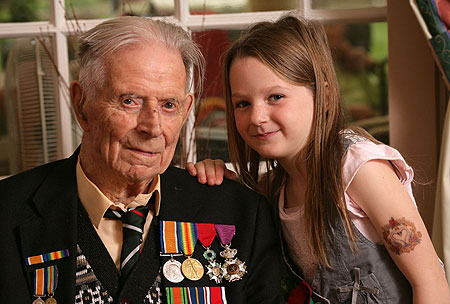
Oh and the old man? Yes I did see him again, in church at a Remembrance service, and he had some medals under his coat, so did have a story to tell!








 Learning from Dogs