Tag: Politics

From Environmentalism to Ecologism, Part One.

A guest essay for today and the next two days.

A few days ago, I remarked that for the time being posts on Learning from Dogs were frequently going to be based on the material of others.  It was the only way that I could keep this blog going yet at the same time edit (code for re-write!) a 60,000-word novel that was completed, as a first pass, last November.

Martin Lack is one major step ahead of yours truly.  Not because he, too, writes a blog but because, unlike yours truly, he is a published author!  His book is called The Denial of Sciencehe blogs under the name of Lack of Environment.
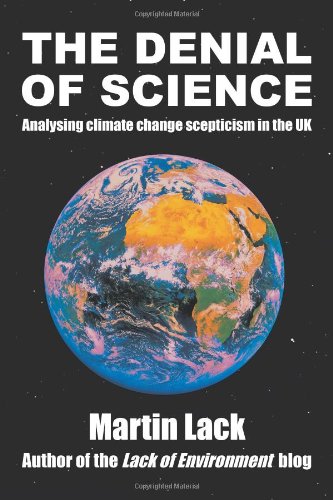
DenialofScience

Thus I was extremely grateful when a short while ago, Martin offered a major essay of his as a guest post for Learning from Dogs.  Better than that, Martin happily accepted my recommendation to send me his essay in three parts.

It may not be the easiest read out in the ‘blogosphere’ but, trust me, Martin’s essay is profoundly important.

ooOOoo

Can ecologism be regarded as an ideology in its own right? (Part 1)

Introduction

Although it might well be assumed that one does not have to define what is meant by ‘socialists’ or – in UK terms at least – ‘conservatives’, it is certainly necessary to define ‘ecologism’: For the purposes of answering the above question, therefore, the latter should be understood as including thinking, behaviour, and the pursuit of policies that are concerned with the environment; but which are not merely or predominantly anthropocentric (i.e. those concerned with human needs and interests).

In a way, the question is nonsensical because use of the term ‘ecologism’, as coined by Andrew Dobson, appears to pre-suppose that ecological politics is indeed a “new political ideology” (2000: 163). If so, to respond to the above question by saying, in effect, ‘just because both socialists and conservatives (can) lay claim to ecological politics does not change the fact that ecologism is a distinctive political ideology in its own right’, would clearly be tautological. Therefore, to provide a defensible answer “Yes” to the above question – as is the intent herein – it is necessary to explain how and why:

  1. both socialists and conservatives can lay claim to ecological politics;
  2. the majority of both socialists and conservatives do not do so; and
  3. the ‘ecologism’ that both find so challenging must therefore be considered as a distinctive political ideology in its own right.

The Socialist claim

One does not have to be an eco-socialist in order to believe or appreciate that there is a great deal of common ground shared by socialist and environmental politics. Socialism is a broad left-of-centre church that, it could be argued, includes everything from social democrats to communists. However, if socialism can be summed-up in the tripartite “Liberté, égalité, fraternité” motto of France (with its origins in the French Revolution of 1789-99), whose English translation would be “Freedom, equality, and brotherhood”, then it is not hard to see why socialists would find common cause with those whose goal is, in effect, to seek equal rights for the environment.

The “four pillars” of ecological politics are – as cited by Neil Carter – those devised by the German Green Party in 1983: ecological responsibility, grassroots democracy, social justice, and non-violence (Carter 2007: 48). Clearly, grassroots democracy and social justice are part of the socialist agenda. Therefore, despite the global dominance of free-market economics, Mary Mellor has asserted that far from being a challenge to socialism, “ecology greatly enhances the case for a redefined and refocused socialism” (Mellor 2006: 35).

The Conservative claim

Although by no means a monolithic entity, environmental politics is usually seen as being a predominantly left-of-centre entity (e.g. Carter 2007: 78); and it is often seen as being easier to define what it opposes than to define what it seeks. If so, ecological politics is essentially a reaction against anthropocentric thinking and the selfish pursuit of individual gain without regard for others or the environment. However, some philosophers such as Roger Scruton have therefore tried to distinguish between such selfish, libertarian, goals and those of traditional conservatives who, as their name suggests, seek the preservation of the status quo for the benefit of both the current generation and those that will follow (Scruton 2006: 7-8). Indeed, as early as 1993, in the wake of the Rio Earth Summit, Scruton was advocating the need for a radical re-think of right-wing politics:

Conservatives need to explore, with greens and others, as yet unthought-of dilemmas of life in societies which are no longer buoyed up by the prospect of incessant economic growth or by modernist pseudo-religions of endless world improvement” (Scruton 1993: 173).

However, in 1993, the idea that there might be limits to growth was hardly new; being based on Garrett Hardin’s Tragedy of the Commons article (1968); the Massachusetts Institute of Technology (MIT) Limits to Growth report for the Club of Rome (Meadows et al., 1972); E. F. Schumacher’s highly influential book Small is Beautiful (1973). For example:

The illusion of [mankind’s] unlimited powers, nourished by astonishing scientific and technological achievements, has produced the concurrent illusion of having solved the problem of production… based on the failure to distinguish between income and capital where this distinction matters most… A businessman would not consider a firm to have solved its problems of production and to have achieved viability if he saw that it was rapidly consuming its capital… (Schumacher 1974: 11).

Therefore, although the dilemmas were not “as yet unthought-of”, Scruton had, nevertheless, identified the source of the challenge that does indeed, it is here argued, begin to transform ecological politics into the distinctive political ideology that is ecologism.

Limits to Growth – a political and economic challenge

Although much disputed (by those that point to the fact that commodity prices have generally fallen over time, or that dire predictions have not yet come true), the Limits to Growth argument is based on the reality of the physical constraints of the planet on which we live.

For example: “Infinite growth is impossible in a closed system. With continued growth in production, the economic subsystem must eventually overwhelm the capacity of the global ecosystem to sustain it” (Daly & Farley 2004: 64). However, this is merely a comparatively recent re-statement of (former World Bank economist) Herman E Daly’s longstanding belief in the need for steady-state growth.

Furthermore, Daly and Farley cite Rudolf Clausius has having “coined the term ‘entropy’ for the Second Law [of Thermodynamics], derived from the Greek word for transformation, in recognition of the fact that entropy was a one-way street of irreversible change; a continual increase in the disorder of the universe” (Daly & Farley 2004: 65).

This is a fundamental tenet of modern physics; one that Daly has been repeating (like a “voice in the wilderness” proclaiming a message that nobody wants to hear) for a long time: It was over 35 years ago that he began an article entitled ‘The Economics of the Steady State’ with a quote from the famous scientist Sir Arthur Eddington, who once said, “But if your theory is found to be against the Second Law of Thermodynamics, I can give you no hope; there is nothing for it but to collapse in deepest humiliation” (as cited in Daly 1974: 15).

With this in mind, perhaps, the Union of Concerned Scientists (UCS) issued the “World Scientists’ Warning to Humanity” on 18 November 1992, from which the following excerpt is taken:

The earth is finite. Its ability to absorb wastes and destructive effluent is finite. Its ability to provide food and energy is finite. Its ability to provide for growing numbers of people is finite. And we are fast approaching many of the earth’s limits. Current economic practices which damage the environment, in both developed and underdeveloped nations, cannot be continued without the risk that vital global systems will be damaged beyond repair (UCS 1992).

Today, we are now well beyond these limits. According to the Global Footprint Network (GFN), humanity is now using the resources of at least 1.5 Earth’s (GFN, 2010). The most recent update to the Limits to Growth report was produced in 2005 and, in a section entitled “why technology and markets alone can’t avoid overshoot”, the authors suggested that:

…the more successfully society puts off its limits through economic and technical adaptations, the more likely it is in the future to run into several of them at the same time… the [model] does not run out of land or food or resources or pollution absorption capacity, it runs out of the “ability to cope” [i.e. too much industrial output has to be diverted to solving problems]… Given enough time, we believe humanity possesses nearly limitless problem solving abilities. [However] exponential growth… shortens the time for effective action. It loads stress on a system faster and faster, until coping mechanisms that have been adequate with slower rates of change finally begin to fail (Meadows et al 2005: 223).

Arguably, it could be said that the evidence for this is already becoming clear in the form of widespread social unrest around the globe, as a result of the increasing cost of – or difficulty in gaining access to – food, water, and energy.

For Robyn Eckersley, the reality of limits to growth and the magnitude of the ecological challenge is something from which we need to be emancipated; and it is also the raison d’être for environmentalism:

The environmental crisis and popular environmental concern have prompted a transformation of Western politics… Whatever the outcome of this realignment… the intractable nature of the environmental problems will ensure that environmental politics… is here to stay (Eckersley 1992: 7).

The latest UN projections for global population (published on 3 May 2011) suggests that stabilisation at about 10 billion by 2100AD is still most likely; but use probabilistic methods to account for the uncertainty in future fertility trends. Therefore, depending on changes in fertility rates in differing countries, the press release also indicates that global population could also peak at 8 billion in 2050 and then fall to 6 billion in 2100, or reach 10 billion by 2050 and continue to rise to 15 billion by 2100 (UN 2011: 1).

The key question the UN press release does not address is, “How many humans is too many?” Furthermore, although it depends on average rates of resource consumption, it is quite probable that there are already too many. However, this raises philosophical and/or ethical issues that form the other main aspect of ecological politics, which ensures that ecologism is a distinct political ideology in its own right.

From Environmentalism to Ecologism – the philosophical and ethical challenge

What’s in a name?

In the introduction above, ‘ecological politics’ was, in effect, defined as being environmentally-friendly and ecocentric (i.e. ecologism). For the avoidance of any doubt, therefore, it should be noted that this implies that it is possible to be concerned for the environment but be anthropocentric (i.e. environmentalism). It is precisely because the two things are not the same that Dobson has asserted that “…environmentalism and liberalism are compatible, but ecologism and liberalism are not” (2000: 165). The reason for this is examined below. (Ed. As in tomorrow!)

References

Carter, N. (2007), The Politics of the Environment (2nd edition). Cambridge: Cambridge University Press.

Daly, H. & Farley, J. (2004), Ecological Economics: Principles and Applications. Washington DC: Island Press.

Daly, H. (1974), ‘The Economics of the Steady State’, The American Economic Review, 64(2), pp.15-21.

Dobson, A. (2000), Green Political Thought, (3rd edition). London, Routledge.

Eckersley, R. (1992), Environmentalism and Political Theory. London: UCL Press.

GFN (2010), Living Planet Report 2010: Biodiversity, Biocapacity, and Development. [Online] GFN. Available at http://www.footprintnetwork.org/en/index.php/GFN/page/2010_living_planet_report/> [accessed 18 April 201].

Hardin, G. (1968), ‘The tragedy of the commons’, Science, 168, pp.1243-8.

Meadows D, et al (1972), The Limits to Growth. New York: Universe Books.

Meadows D, et al (2005), Limits to Growth: the 30-Year Update, London: Earthscan.

Mellor, M. (2006), ‘Socialism’, in Dobson, A. and Eckersley, R., Political Theory and the Ecological Challenge. Cambridge: Cambridge University Press, pp.35-50.

Schumacher, E.F. (1974), Small is Beautiful: A study of Economics as if Small People Mattered, London: Abacus.

Scruton, R. (1993), Beyond the New Right. London: Routledge.

Scruton, R. (2006), ‘Conservatism’, in Dobson, A. and Eckersley, R., Political Theory and the Ecological Challenge. Cambridge: Cambridge University Press, pp.7-19.

UCS, (1992), World Scientists’ Warning to Humanity. [Online] UCS. Available at <http://www.ucsusa.org/about/1992-world-scientists.html> [accessed 14/04/2011].

UN (2011), World Population Prospects: The 2010 Revision – Press Release. [Online] UN. Available at <http://esa.un.org/wpp/index.htm> [accessed 11/05/2011].

One couldn’t make it up!

Stop the world, I want to get off.

Cars travel through flood water in Helston, south-west Cornwall - Daily Mail August, 2013
Cars travel through flood water in Helston, south-west Cornwall – Daily Mail August, 2013


You can tell, undoubtedly, from the title and sub-title to today’s post that I am feeling somewhat forlorn about the way that we humans work things out!  As the old saying goes, “Question: Why has Planet Earth never been visited by an alien species? Answer: Because they have seen no signs of intelligent life!

This feeling is a result of reading a recent essay from George Monbiot, Drowning in Money.  It is republished here within his terms of sharing.

Now before you read it, if you are not living in the UK it would be easy to reject the messages as being only relevant to the United Kingdom.  But when you do read it, you will agree that this level of government policy stupidity is not the sole reserve of the UK.  The ‘virus’ is alive and well elsewhere!

ooOOoo

George Monbiot
George Monbiot

Drowning in Money

January 13, 2014

The hidden and remarkable story of why devastating floods keep happening.
By George Monbiot, published in the Guardian 14th January 2014.

We all know what’s gone wrong, or we think we do: not enough spending on flood defences. It’s true that the government’s cuts have exposed thousands of homes to greater risk, and that the cuts will become more dangerous as climate change kicks in (1).  But too little public spending is a small part of problem. It is dwarfed by another factor, which has been overlooked in discussions in the media and statements by the government: too much public spending.

Vast amounts of public money – running into the billions – are spent every year on policies that make devastating floods inevitable. This is the story that has not been told by the papers or the broadcasters, a story of such destructive perversity that the Guardian has given me twice the usual space today in which to explain it.

Flood defence, or so we are told almost everywhere, is about how much concrete you can pour. It’s about not building houses in stupid places on the floodplain, and about using clever new engineering techniques to defend those already there (2). None of that is untrue, but it’s a small part of the story. To listen to the dismal debates of the past fortnight you could be forgiven for believing that rivers arise in the plains; that there is no such thing as upstream; that mountains, hills, catchments and watersheds are irrelevant to the question of whether or not homes and infrastructure get drowned.

The story begins with a group of visionary farmers at Pontbren, in the headwaters of Britain’s longest river, the Severn. In the 1990s they realised that the usual hill farming strategy – loading the land with more and bigger sheep, grubbing up the trees and hedges, digging more drains – wasn’t working. It made no economic sense, the animals had nowhere to shelter, the farmers were breaking their backs to wreck their own land.

So they devised something beautiful. They began planting shelter belts of trees along the contours. They stopped draining the wettest ground and built ponds to catch the water instead. They cut and chipped some of the wood they grew to make bedding for their animals, which meant that they no longer spent a fortune buying straw. Then they used the composted bedding, in a perfect closed loop, to cultivate more trees (3).

One day a government consultant was walking over their fields during a rainstorm. He noticed something that fascinated him: the water flashing off the land suddenly disappeared when it reached the belts of trees the farmers had planted. This prompted a major research programme, which produced the following astonishing results: water sinks into the soil under the trees at 67 times the rate at which it sinks into the soil under the grass (4). The roots of the trees provide channels down which the water flows, deep into the ground. The soil there becomes a sponge, a reservoir which sucks up water then releases it slowly. In the pastures, by contrast, the small sharp hooves of the sheep puddle the ground, making it almost impermeable: a hard pan off which the rain gushes.

One of the research papers estimates that, even though only 5% of the Pontbren land has been reforested, if all the farmers in the catchment did the same thing, flooding peaks downstream would be reduced by some 29% (5). Full reforestation would reduce the peaks by around 50% (6). For the residents of Shrewsbury, Gloucester and the other towns ravaged by endless Severn floods, that means, more or less, problem solved.

Did I say the results were astonishing? Well, not to anyone who has studied hydrology elsewhere. For decades the British government has been funding scientists working in the tropics, and using their findings to advise other countries to protect the forests or to replant trees in the hills, to prevent communities downstream from being swept away. But we forgot to bring the lesson home.

So will the rest of the Severn catchment, and those of the other unruly waterways of Britain, follow the Pontbren model? The authorities say they would love to do it (7). In theory. Natural Resources Wales told me that these techniques “are hard wired in to the actions we want land managers to undertake.” (8) What it forgot to say is that all tree planting grants in Wales have now been stopped. The offices responsible for administering them are in the process of closing down (9). If other farmers want to copy the Pontbren model, not only must they pay for the trees themselves; but they must sacrifice the money they would otherwise have been paid for farming that land.

For – and here we start to approach the nub of the problem – there is an unbreakable rule laid down by the Common Agricultural Policy. If you want to receive your single farm payment – by the far biggest component of farm subsidies – that land has to be free from what it calls “unwanted vegetation” (10). Land covered by trees is not eligible. The subsidy rules have enforced the mass clearance of vegetation from the hills.

Just as the tree planting grants have stopped, the land clearing grants have risen. In his speech to the Oxford Farming Conference, made during the height of the floods, the environment secretary Owen Paterson boasted that hill farmers “on the least-productive land” will now receive “the same direct payment rate on their upland farmland as their lowland counterparts.” (11) In other words, even in places where farming makes no sense because the land is so poor, farmers will now be paid more money to keep animals there. But to receive this money, they must first remove the trees and scrub that absorb the water falling on the hills.

And that’s just the start of it. One result of the latest round of subsidy negotiations – concluded in June last year – is that governments can now raise the special mountain payments, whose purpose is to encourage farming at the top of the watersheds, from €250 per hectare to €450 (12). This money should be renamed the flooding subsidy: it pays for the wreckage of homes, the evacuation of entire settlements, the drowning of people who don’t get away in time, all over Europe. Pig-headed idiocy doesn’t begin to describe it.

The problem is not confined to livestock in the mountains. In the foothills and lowlands, the misuse of heavy machinery, overstocking with animals and other forms of bad management can – by compacting the soil – increase the rates of instant run-off from 2% of all the rain that falls on the land to 60%(13).

Sometimes, ploughing a hillside in the wrong way at the wrong time of the year can cause a flood – of both mud and water – even without exceptional rainfall. This practice has blighted homes around the South Downs (that arguably should never have been ploughed at all). One house was flooded 31 times in the winter of 2000-2001 by muddy floods caused by ploughing (14). Another, in Suffolk, above which the fields had been churned up by pigs, was hit 50 times (15). But a paper on floods of this kind found that “there are no (or only very few) control measures taken yet in the UK.” (16)

Under the worst environment secretary this country has ever suffered, there seems little chance that much of this will change. In November, in response to calls to reforest the hills, Owen Paterson told parliament “I am absolutely clear that we have a real role to play in helping hill farmers to keep the hills looking as they do.” (17) (Bare, in other words). When asked by a parliamentary committee to discuss how the resilience of river catchments could be improved, the only thing he could think of was building more reservoirs (18).

But while he is cavalier and ignorant when it comes to managing land to reduce the likelihood of flooding, he goes out of his way to sow chaos when it comes to managing rivers.

Many years ago, river managers believed that the best way to prevent floods was to straighten, canalise and dredge rivers along much of their length, to enhance their capacity for carrying water. They soon discovered that this was not just wrong but counterproductive. A river can, at any moment, carry very little of the water that falls on its catchment: the great majority must be stored in the soils and on the floodplains.

By building ever higher banks around the rivers, by reducing their length through taking out the bends and by scooping out the snags and obstructions along the way, engineers unintentionally did two things. They increased the rate of flow, meaning that flood waters poured down the rivers and into the nearest towns much faster. And, by separating the rivers from the rural land through which they passed, they greatly decreased the area of functional floodplains (19, 20, 21).

The result, as authorities all over the world now recognise, was catastrophic. In many countries, chastened engineers are now putting snags back into the rivers, reconnecting them to uninhabited land that they can safely flood and allowing them to braid and twist and form oxbow lakes. These features catch the sediment and the tree trunks and rocks which otherwise pile up on urban bridges, and take much of the energy and speed out of the river. Rivers, as I was told by the people who had just rewilded one in the Lake District – greatly reducing the likelihood that it would cause floods downstream – “need something to chew on” (22, 23).

There are one or two other such projects in the UK: Paterson’s department is funding four rewilding schemes, to which it has allocated a grand total of, er, £1 million (24). Otherwise, the secretary of state is doing everything he can to prevent these lessons from being applied. Last year he was reported to have told a conference that “the purpose of waterways is to get rid of water” (25). In another speech he lambasted the previous government for a “blind adherence to Rousseauism” in refusing to dredge (26). Not only will there be more public dredging, he insists: but there will also be private dredging: landowners can now do it themselves (27).

After he announced this policy, the Environment Agency, which is his department’s statutory adviser, warned that dredging could “speed up flow and potentially increase the risk of flooding downstream.” (28) Elsewhere, his officials have pointed out that “protecting large areas of agricultural land in the floodplain tends to increase flood risk for downstream communities.” (29) The Pitt Review, commissioned by the previous government after the horrible 2007 floods, concluded that “dredging can make the river banks prone to erosion, and hence stimulate a further build-up of silt, exacerbating rather than improving problems with water capacity.” (30) Paterson has been told repeatedly that it makes more sense to pay farmers to store water in their fields, rather than shoving it off their land and into the towns.

But he has ignored all this advice and started seven pilot projects in which farmers will be permitted to drag all that messy wildlife habitat out of their rivers, to hurry the water down to the nearest urban pinch point (31). Perhaps we shouldn’t be surprised to discover that Paterson has demanded massive cuts at the Environment Agency, including many of the staff responsible for preventing floods (32).

Since 2007, there has been a review, a parliamentary enquiry, two bills, new flood management programmes (33), but next to nothing has changed. Floods, because of the way we manage our land and rivers, remain inevitable. We pay a fortune in farm subsidies and river-mangling projects to have our towns flooded and homes and lives wrecked. We pay again in the form of the flood defences necessitated by these crazy policies, and through the extra insurance payments – perhaps we should call them the Paterson tax – levied on all homes. But we also pay through the loss of everything else that watersheds give us: beauty, tranquility, wildlife and, oh yes, the small matter of water in the taps.

In the Compleat Angler, published in 1653, Izaac Walton wrote this. “I think the best Trout-anglers be in Derbyshire; for the waters there are clear to an extremity.” (34) No longer. Last summer I spent a weekend walking along the River Dove and its tributaries, where Walton used to fish. All along the river, including the stretch on which the fishing hut built for him by Charles Cotton still stands, the water was a murky blueish brown. The beds of clean gravel he celebrated were smothered in silt: on some bends the accretions of mud were several feet deep.

You had only to raise your eyes to see the problem: the badly-ploughed hills of the mid-catchment and above them the drained and burnt moors of the Peak District National Park, comprehensively trashed by grouse shooting estates. A recent report by Animal Aid found that grouse estates in England, though they serve only the super-rich, receive some £37m of public money every year in the form of subsidies (35). Much of this money is used to cut and burn them, which is likely to be a major cause of flooding (36). Though there had been plenty of rain throughout the winter and early spring, the river was already low and sluggish.

A combination of several disastrous forms of upland management has been helping Walton’s beloved river to flood, with the result that both government and local people have had to invest heavily in the Lower Dove flood defence scheme (37). But this wreckage has also caused it to dry up when the rain doesn’t fall.

That’s the flipside of a philosophy which believes that land exists only to support landowners, and waterways exist only “to get rid of water”. Instead of a steady flow sustained around the year by trees in the hills, by sensitive farming methods, by rivers which are allowed to find their own course and their own level, to filter and hold back their waters through bends and braiding and obstructions, we get a cycle of flood and drought. We get filthy water and empty aquifers and huge insurance premiums and ruined carpets. And all of it at public expense.

www.monbiot.com

References:

1. https://www.foe.co.uk/blog/camerons-claims-flood-defences-dont-stack

2. http://www.architecture.com/SustainabilityHub/Designstrategies/Water/1-3-2-5-SUDS.aspx

3. Coed Cadw and Coed Cymru, no date given.The Pontbren Project
A farmer-led approach to sustainable land management in the uplands. http://www.coedcymru.org.uk/images/user/5472%20Pontbren%20CS%20v12.pdf

4. M. R. Marshall et al, 2013. The impact of rural land management changes on soil hydraulic properties and runoff processes: results from experimental plots in upland UK. Hydrological Processes, DOI: 10.1002/hyp.9826. http://onlinelibrary.wiley.com/doi/10.1002/hyp.9826/abstract

5. Howard Wheater et al, 2008. Impacts of upland land management on flood risk: multi-scale modelling methodology and results from the Pontbren experiment. FRMRC Research Report UR 16. http://nora.nerc.ac.uk/5890/1/ur16_impacts_upland_land_management_wp2_2_v1_0.pdf

6. As above.

7. See for example Natural England, Environment Agency, Defra, Welsh Government et al, 2012. Greater working with natural processes in flood and coastal erosion risk management. http://a0768b4a8a31e106d8b0-50dc802554eb38a24458b98ff72d550b.r19.cf3.rackcdn.com/geho0811buci-e-e.pdf

8. NRW, 9th January 2014, by email.

9. I talked to one of the employees over the weekend: everyone is being made redundant as all funding has ceased.

10. Official Journal of the European Union, 31st January 2009. Council Regulation (EC) No 73/2009 of 19 January 2009, establishing common rules for direct support schemes for farmers under the common agricultural policy and establishing certain support schemes for farmers, amending Regulations (EC) No 1290/2005, (EC) No 247/2006, (EC) No 378/2007 and repealing Regulation (EC) No 1782/2003. Annex III. http://eur-lex.europa.eu/LexUriServ/LexUriServ.do?uri=OJ:L:2009:030:0016:0016:EN:PDF

This rule remains unchanged in the current round.

11. https://www.gov.uk/government/speeches/opportunity-in-agriculture

12. European Commission, 26th June 2013. CAP Reform – an explanation of the main elements. http://europa.eu/rapid/press-release_MEMO-13-621_en.htm

13. Natural England, Environment Agency, Defra, Welsh Government et al, 2012. Greater working with natural processes in flood and coastal erosion risk management. http://a0768b4a8a31e106d8b0-50dc802554eb38a24458b98ff72d550b.r19.cf3.rackcdn.com/geho0811buci-e-e.pdf

14. John Boardman and Karel Vandaele , 2010. Soil erosion, muddy floods and the need for institutional memory. Area (2010) 42.4, 502–513 doi: 10.1111/j.1475-4762.2010.00948.x http://onlinelibrary.wiley.com/doi/10.1111/j.1475-4762.2010.00948.x/pdf

15. R. Evans, 2010. Runoff and soil erosion in arable Britain: changes in perception and policy since 1945. Environmental Science and Policy 13, pp 1 4 1 – 1 4 9. doi:10.1016/j.envsci.2010.01.001

16. John Boardman and Karel Vandaele , 2010. Soil erosion, muddy floods and the need for institutional memory. Area (2010) 42.4, 502–513 doi: 10.1111/j.1475-4762.2010.00948.x http://onlinelibrary.wiley.com/doi/10.1111/j.1475-4762.2010.00948.x/pdf

17. http://www.theyworkforyou.com/debates/?id=2013-10-10b.289.1&m=40459

18. Owen Paterson, 2013. In evidence to the Environment, Food and Rural Affairs Committee. Managing Flood Risk, Volume I. http://www.publications.parliament.uk/pa/cm201314/cmselect/cmenvfru/330/330.pdf

19. I am grateful to Dr Richard Hey and to Charles Rangely-Wilson for the discussions we had about these issues.

20. Natural England, Environment Agency, Defra, Welsh Government et al, 2012. Greater working with natural processes in flood and coastal erosion risk management. http://a0768b4a8a31e106d8b0-50dc802554eb38a24458b98ff72d550b.r19.cf3.rackcdn.com/geho0811buci-e-e.pdf

21. Sir Michael Pitt, 2008. Learning lessons from the 2007 floods. The Pitt Review.

Click to access pitt_review_full%20pdf.pdf

22. See http://www.wildennerdale.co.uk/

23. I hope before long to write up the extraordinary story I was told by a representative of United Utilities about the sharply differing responses of the rewilded River Liza in Ennerdale and the still-canalised St John’s Beck in Thirlmere
to the famous 2009 downpour.

24. Natural England, Environment Agency, Defra, Welsh Government et al, 2012. Greater working with natural processes in flood and coastal erosion risk management. http://a0768b4a8a31e106d8b0-50dc802554eb38a24458b98ff72d550b.r19.cf3.rackcdn.com/geho0811buci-e-e.pdf

25. http://anewnatureblog.wordpress.com/2014/01/07/have-we-reached-peak-paterson/comment-page-1/

26. http://www.policyexchange.org.uk/modevents/item/improving-the-environment-and-growing-the-economy-can-we-have-it-all

27. http://charlesrangeleywilson.com/2013/04/26/a-storm-cloud-for-rivers/

28. Judy England and Lydia Burgess-Gamble, August 2013. Evidence: impacts of dredging. https://dl.dropboxusercontent.com/u/72349203/Evidence%20-%20impacts%20of%20dredging%20-%20August%2013%20%282%29.pdf

29. Environment Agency, 2009. River Severn Catchment Flood Management Plan.
Summary Report.

Click to access gemi0909bqym-b-e.pdf

30. Sir Michael Pitt, 2008. Learning lessons from the 2007 floods. The Pitt Review.

Click to access pitt_review_full%20pdf.pdf

31. https://www.gov.uk/government/news/river-maintenance-pilots-begin

32. http://www.theguardian.com/environment/2014/jan/07/england-floods-budget-cuts

33. Defra and the Environment Agency, 2011. Understanding the risks, empowering communities, building resilience: the national flood and coastal erosion risk management strategy for England. http://www.official-documents.gov.uk/document/other/9780108510366/9780108510366.pdf

34. Chapter XVII.

35. Animal Aid, 2013. Calling the Shots: the power and privilege of the grouse-shooting elite. http://www.animalaid.org.uk/images/pdf/booklets/callingtheshots.pdf

36. See also the Upper Calder Valley Ban the Burn campaign. http://www.energyroyd.org.uk/archives/tag/ban-the-burn

37. https://www.gov.uk/government/case-studies/flood-defences-south-derbyshire-residents-help-protect-their-homes

ooOOoo

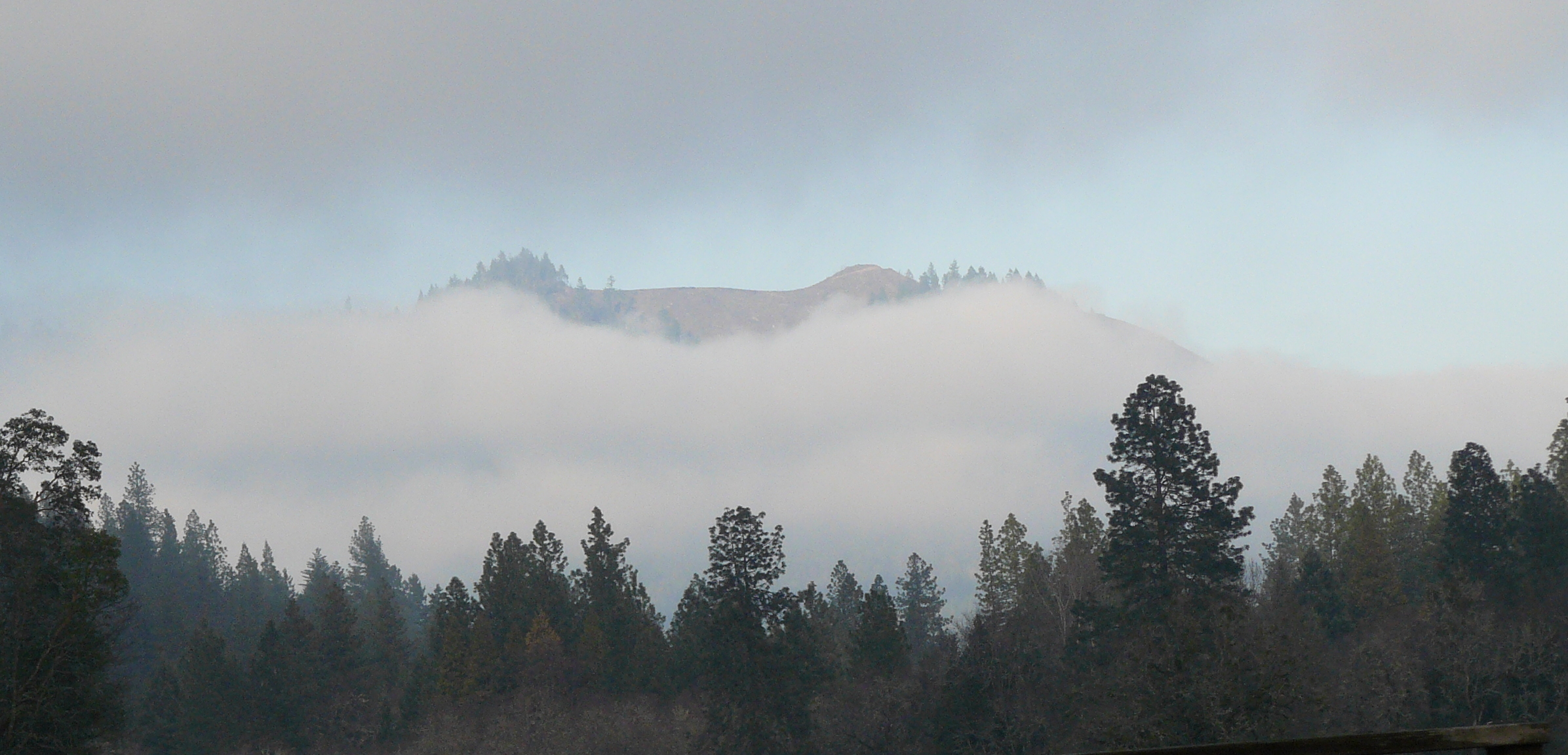
Just to underline that message of it not being only the UK with crazy policies, the photograph below is of a forest ridge within sight of the house here in Oregon.

A local ridge demonstrating 'clear-cutting' mania poking above the valley mist.
A local ridge demonstrating ‘clear-cutting’ mania poking above the valley mist.

Rather underlines the message contained in last Saturday’s post about rewilding: Restore large carnivores to save struggling ecosystems

Synchronicity of minds, part one.

A collection of essays and ideas that unite in a common theme.

Back in those times before dogs became the domesticated friends of man, the leader of the pack, the alpha female, had two key pack roles.  One of them was having first pick of the males, for mating purposes, and the other was knowing when their territory was no longer conducive to her pack’s interests.  When that happened the ‘boss lady’ was the one to signal that the pack had to find another, more beneficial, homestead.

While mankind is in desperate need of learning so many of the qualities of dogs the one example that is beyond us is finding a new homestead. This planet is the only homestead we have.

This basic and fundamental concept seems to be missing from the minds of leaders and power-brokers.  Missing big time!

Coincidentally, over recent days there have been three essays from three different authors that scream out the madness, to put it nicely, of the way of our world just now. Let me dip into those three essays.

First, to a recent essay from Tom Engelhardt over at TomDispatch.

American Jihad 2014 
The New Fundamentalists 
By Tom Engelhardt

In a 1950s civics textbook of mine, I can remember a Martian landing on Main Street, U.S.A., to be instructed in the glories of our political system.  You know, our tripartite government, checks and balances, miraculous set of rights, and vibrant democracy.  There was, Americans then thought, much to be proud of, and so for that generation of children, many Martians were instructed in the American way of life.  These days, I suspect, not so many.

Still, I wondered just what lessons might be offered to such a Martian crash-landing in Washington as 2014 begins.  Certainly checks, balances, rights, and democracy wouldn’t top any New Year’s list.  Since my childhood, in fact, that tripartite government has grown a fourth part, a national security state that is remarkably unchecked and unbalanced.  In recent times, that labyrinthine structure of intelligence agencies morphing into war-fighting outfits, the U.S. military (with its own secret military, the special operations forces, gestating inside it), and the Department of Homeland Security, a monster conglomeration of agencies that is an actual “defense department,” as well as a vast contingent of weapons makers, contractors, and profiteers bolstered by an army of lobbyists, has never stopped growing.  It has won the undying fealty of Congress, embraced the power of the presidency, made itself into a jobs program for the American people, and been largely free to do as it pleased with almost unlimited taxpayer dollars.

The expansion of Washington’s national security state — let’s call it the NSS — to gargantuan proportions has historically met little opposition.  In the wake of the Edward Snowdenrevelations, however, some resistance has arisen, especially when it comes to the “right” of one part of the NSS to turn the world into a listening post and gather, in particular, American communications of every sort.  The debate about this — invariably framed within the boundaries of whether or not we should have more security or more privacy and how exactly to balance the two — has been reasonably vigorous.  The problem is: it doesn’t begin to get at the real nature of the NSS or the problems it poses.

If I were to instruct that stray Martian lost in the nation’s capital, I might choose another framework entirely for my lesson.  After all, the focus of the NSS, which has like an incubus grown to monumental proportions inside the body of the political system, would seem distinctly monomaniacal, if only we could step outside our normal way of thinking for a moment.  At a cost of nearly a trillion dollars a year, its main global enemy consists of thousands of lightly armed jihadis and wannabe jihadis scattered mainly across the backlands of the planet.  They are capable of causing genuine damage — though far less to the United States than numerous other countries — but not of shaking our way of life.  And yet for the leaders, bureaucrats, corporate cronies, rank and file, and acolytes of the NSS, it’s a focus that can never be intense enough on behalf of a system that can never grow large enough or be well funded enough.

It’s a long, deeply thoughtful essay that deserves your full read.  This is how it closes:

After 12 long years in Afghanistan and an Obama era surge in that country, the latest grim National Intelligence Estimate from the U.S. intelligence community suggests that no matter what Washington now does, the likelihood is that things there will only go from bad enough to far worse.  Years of a drone campaign against al-Qaeda in the Arabian Peninsula hasstrengthened that organization; an air intervention in Libya led to chaos, a dead ambassador, and a growing al-Qaeda movement in northern Africa — and so it repetitively goes.

Similarly, intelligence officials brag of terrorist plots — 54 of them! — that have been broken up thanks in whole or in part to the National Security Agency’s metadata sweeps of U.S. phone calls; it also claims that, given the need of secrecy, only four of them can be made public.  (The claims of success on even those four, when examined by journalists, have proved less than impressive.)  Meanwhile, the presidential task force charged with reviewing the NSA revelations, which had access to a far wider range of insider information, came to aneven more startling conclusion: not one instance could be found in which that metadata the NSA was storing in bulk had thwarted a terrorist plot. “Our review,” the panel wrote, “suggests that the information contributed to terrorist investigations by the use of section 215 telephony meta-data was not essential to preventing attacks.” (And keep in mind that, based on what we do know about such terror plots, a surprising number of them were planned or sparked or made possible by FBI-inspired plants.)

In fact, claims of success against such plots couldn’t be more faith-based, relying as they generally do on the word of intelligence officials who have proven themselves untrustworthy or on the impossible-to-prove-or-disprove claim that if such a system didn’t exist, far worse would have happened.  That version of a success story is well summarized in the claim that “we didn’t have another 9/11.”

In other words, in bang-for-the-buck practical terms, Washington’s national security state should be viewed as a remarkable failure.  And yet, in faith-based terms, it couldn’t be a greater success.  Its false gods are largely accepted by acclamation and regularly worshiped in Washington and beyond.  As the funding continues to pour in, the NSS has transformed itself into something like a shadow government in that city, while precluding from all serious discussion the possibility of its own future dismantlement or of what could replace it.  It has made other options ephemeral and more immediate dangers than terrorism to the health and wellbeing of Americans seem, at best, secondary.  It has pumped fear into the American soul.  It is a religion of state power.

No Martian could mistake it for anything else.

Tom Engelhardt, a co-founder of the American Empire Project and author of The United States of Fear as well as a history of the Cold War, The End of Victory Culture, runs the Nation Institute’s TomDispatch.com. His latest book, co-authored with Nick Turse, is Terminator Planet: The First History of Drone Warfare, 2001-2050.

Follow TomDispatch on Twitter and join us on Facebook or Tumblr. Check out the newest Dispatch Book, Ann Jones’s They Were Soldiers: How the Wounded Return From America’s Wars — The Untold Story.

Copyright 2014 Tom Engelhardt

Now let’s move from the USA to the UK.  George Monbiot penned an essay on the 6th January about the growing loss of freedoms in my old home country.  He opens:

Dead Zone

January 6, 2014

A shocking new bill threatens to make this country feel like a giant shopping mall.

By George Monbiot, published in the Guardian 7th January 2014

Until the late 19th Century, much of our city space was owned by private landlords. Squares were gated, streets were controlled by turnpikes. The great unwashed, many of whom had been expelled from the countryside by acts of enclosure, were also excluded from desirable parts of town.

Social reformers and democratic movements tore down the barriers, and public space became a right, not a privilege. But social exclusion follows inequality as night follows day, and now, with little public debate, our city centres are again being privatised or semi-privatised. They are being turned by the companies that run them into soulless, cheerless, pasteurised piazzas, in which plastic policemen harry anyone loitering without intent to shop.

Streetlife in these places is reduced to a trance-world of consumerism, of conformity and atomisation, in which nothing unpredictable or disconcerting happens, a world made safe for selling mountains of pointless junk to tranquilised shoppers. Spontaneous gatherings of any other kind – unruly, exuberant, open-ended, oppositional – are banned. Young, homeless and eccentric people are, in the eyes of those upholding this dead-eyed, sanitised version of public order, guilty until proven innocent.

Then a few paragraphs later, the essay continues:

The existing rules are bad enough. Introduced by the 1998 Crime and Disorder Act, anti-social behavour orders (Asbos) have criminalised an apparently endless range of activities, subjecting thousands – mostly young and poor – to bespoke laws. They have been used to enforce a kind of caste prohibition: personalised rules which prevent the untouchables from intruding into the lives of others.

You get an Asbo for behaving in a manner deemed by a magistrate as likely to cause harassment, alarm or distress to other people. Under this injunction, the proscribed behaviour becomes a criminal offence. Asbos have been granted which forbid the carrying of condoms by a prostitute, homeless alcoholics from possessing alcohol in a public place, a soup kitchen from giving food to the poor, a young man from walking down any road other than his own, children from playing football in the street. They were used to ban peaceful protests against the Olympic clearances.

Inevitably, over half the people subject to Asbos break them. As Liberty says, these injunctions “set the young, vulnerable or mentally ill up to fail”, and fast-track them into the criminal justice system. They allow the courts to imprison people for offences which are not otherwise imprisonable. One homeless young man was sentenced to five years in jail for begging: an offence for which no custodial sentence exists. Asbos permit the police and courts to create their own laws and their own penal codes.

All this is about to get much worse. Tomorrow the Anti-social Behaviour, Crime and Policing Bill reaches its report stage (close to the end of the process) in the House of Lords. It is remarkable how little fuss has been made about it, and how little we know of what is about to hit us.

The bill would permit injunctions against anyone of 10 or above who “has engaged or threatens to engage in conduct capable of causing nuisance or annoyance to any person.” It would replace Asbos with Ipnas (Injunctions to Prevent Nuisance and Annoyance), which would not only forbid certain forms of behaviour, but also force the recipient to discharge positive obligations. In other words, they can impose a kind of community service on people who have committed no crime, which could, the law proposes, remain in force for the rest of their lives.

The bill also introduces Public Space Protection Orders, which can prevent either everybody or particular kinds of people from doing certain things in certain places. It creates new dispersal powers, which can be used by the police to exclude people from an area (there is no size limit), whether or not they have done anything wrong.

Please read the original essay in full as well as refer to background links that were included in that original.  I will offer the closing paragraphs.

The Home Office minister, Norman Baker, once a defender of civil liberties, now the architect of the most oppressive bill pushed through any recent parliament, claims that the amendments he offered in December will “reassure people that basic liberties will not be affected”(11). But Liberty describes them as “a little bit of window-dressing: nothing substantial has changed.”(12)

The new injunctions and the new dispersal orders create a system in which the authorities can prevent anyone from doing more or less anything. But they won’t be deployed against anyone. Advertisers, who cause plenty of nuisance and annoyance, have nothing to fear; nor do opera lovers hogging the pavements of Covent Garden. Annoyance and nuisance are what young people cause; they are inflicted by oddballs, the underclass, those who dispute the claims of power.

These laws will be used to stamp out plurality and difference, to douse the exuberance of youth, to pursue children for the crime of being young and together in a public place, to help turn this nation into a money-making monoculture, controlled, homogenised, lifeless, strifeless and bland. For a government which represents the old and the rich, that must sound like paradise.

www.monbiot.com

The last of the three essays was about Europe, being an essay on Naked Capitalism two days ago.

Written by Don Quijones, a freelance writer and translator based in Barcelona, Spain who also publishes the blog Raging Bull-Shit, the essay was originally posted at Testosterone Pit.

Death By A Thousand Cuts: The Silent Assassination Of European Democracy

As is gradually dawning on more and more people across the old continent, the European Union is riddled with fatal flaws and defects. Chief among them is the single currency which, rather than serving as the Union’s springboard to global dominance, could well be its ultimate undoing.

Another huge problem with the EU is its acute lack of transparency. Staggering as it may seem, in the last 20 years the Union has not passed a single audit. Indeed, so opaque is the state of its finances that in 2002 Marta Andreasen, the first ever professional accountant to serve as the Commission’s Chief Accountant, refused to sign off the organization’s 2001 accounts, citing concerns that the EU’s accounting system was “open to fraud.” After taking her concerns public, Andreasen was suspended and then later sacked by the Commission.

However, by far the EU’s greatest — and certainly most dangerous — structural flaw is its gaping democratic deficit. To paraphrase Nigel Farage, the stridently anti-EU British MEP, not only is the EU undemocratic, it is fundamentally anti-democratic.

Yet again, the essay must be read in full.  As with the others, I will include the closing paragraphs:

Of course none of this would be possible if it weren’t for the abject failure of modern nation-state democracy — not only in Europe, but across the globe. As Mair wrote in the first paragraph of his book, although the political parties themselves remain, “they have become so disconnected from the wider society, and pursue a form of competition that is so lacking in meaning, that they no longer seem capable of sustaining democracy in its present form.”

The European elites have masterfully exploited this crisis of representative democracy and the resultant voter disaffection and apathy to enshrine a new system of rule by bureaucrats, bankers, technocrats and lobbyists (as I reported in Full Steam Ahead For the EU Gravy Train, Brussels is home to the second biggest lobby industry in the world, just behind Washington). If anything, we can expect this trend to accelerate in 2014 as the Eurocrats seek to consolidate their power grab through the imposition of EU-wide banking and fiscal union. Once that’s done, the quest for the holy grail of full-blown political union will begin in earnest.

Whether the EU is able to pull of this ultimate coup de grace in its decades-long coup d’état will depend on two vital factors: its ability to continue preventing economic reality from impacting the financial markets; and the willingness of hundreds of millions of European people to be herded and corralled into a new age of technocracy.

oooo

the abject failure of modern nation-state democracy — not only in Europe, but across the globe.

Don Quijones wrote that with a focus on Europe.  But also a recognition that right across the world the rights and safeguards of everyday citizens are being dangerously undermined.  I will return tomorrow with Part Two and an insight into the growing power of those everyday citizens.


Voices of reason.

Tried hard to avoid a grim reality post, but failed!

As last week, I thought that wall-to-wall book chapters were a bit much and that Wednesdays should be a break.  Ideally, a light-hearted break.  But failed!  Sorry!

For a long time, I have followed George Monbiot’s writings.  Like a number of other correspondents that come to mind, Mr. Monbiot writes with a clarity and intellect that takes some beating.  Rather tentatively I wrote to him asking if I might republish some of his essays, including those that are published in the UK newspaper, The Guardian.  To my great pleasure, George replied that so long as his essays did not appear in print then permission was given.
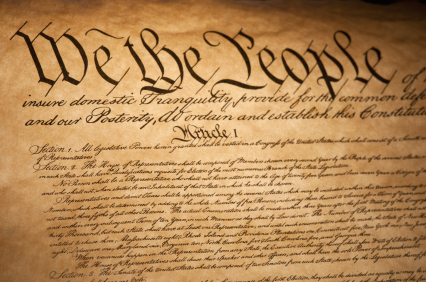
us-constitution

Before going on, it may do no harm to remind me and so many millions of others, of the opening preamble of the US Constitution:

We the People of the United States, in Order to form a more perfect Union, establish Justice, insure domestic Tranquility, provide for the common defence, promote the general Welfare, and secure the Blessings of Liberty to ourselves and our Posterity, do ordain and establish this Constitution for the United States of America.

Whatever the country, the concept of ‘by the people, of the people, for the people’ takes one hell of a lot of beating.

So to the essay. I was struck by a recent essay from George Monbiot that seemed to touch on something that more and more ordinary folk sense; that many so-called democratic political systems are not functioning in the interests of the people. Thus with no further ado, here it is.

oooOOOooo

Why Politics Fails

November 11, 2013
Nothing will change until we confront the real sources of power.

By George Monbiot, published in the Guardian 12th November 2013

It’s the reason for the collapse of democratic choice. It’s the source of our growing disillusionment with politics. It’s the great unmentionable. Corporate power. The media will scarcely whisper its name. It is howlingly absent from parliamentary debates. Until we name it and confront it, politics is a waste of time.

The political role of corporations is generally interpreted as that of lobbyists, seeking to influence government policy. In reality they belong on the inside. They are part of the nexus of power that creates policy. They face no significant resistance, from either government or opposition, as their interests have now been woven into the fabric of all three main parties.

Most of the scandals that leave people in despair about politics arise from this source. On Monday, for example, the Guardian revealed that the government’s subsidy system for gas-burning power stations is being designed by an executive from the company ESB, who has been seconded into the energy department(1). What does ESB do? Oh, it builds gas-burning power stations.

On the same day we learnt that a government minister, Nick Boles, has privately assured the gambling company Ladbrokes that it needn’t worry about attempts by local authorities to stop the spread of betting shops(2). His new law will prevent councils from taking action.

Last week we discovered that G4S’s contract to run immigration removal centres will be expanded, even though all further business with the state was supposed to be frozen while allegations of fraud are investigated(3). Every week we learn that systemic failures on the part of government contractors are no barrier to obtaining further work, that the promise of efficiency, improvements and value for money delivered by outsourcing and privatisation have failed to materialise(4,5,6). The monitoring which was meant to keep these companies honest is haphazard(7), the penalties almost non-existent(8), the rewards stupendous, dizzying, corrupting(9,10). Yet none of this deters the government. Since 2008, the outsourcing of public services has doubled, to £20bn. It is due to rise to £100bn by 2015(11).

This policy becomes explicable only when you recognise where power really lies. The role of the self-hating state is to deliver itself to big business. In doing so it creates a tollbooth economy: a system of corporate turnpikes, operated by companies with effective monopolies.

It’s hardly surprising that the lobbying bill – now stalled by the Lords – offered almost no checks on the power of corporate lobbyists, while hogtying the charities who criticise them. But it’s not just that ministers are not discouraged from hobnobbing with corporate executives: they are now obliged to do so.

Thanks to an initiative by Lord Green, large companies have ministerial “buddies”, who have to meet them when the companies request it. There were 698 of these meetings during the first 18 months of the scheme, called by corporations these ministers are supposed be regulating(12). Lord Green, by the way, is currently a government trade minister. Before that he was chairman of HSBC, presiding over the bank while it laundered vast amounts of money stashed by Mexican drugs barons(13). Ministers, lobbyists – can you tell them apart?

That the words corporate power seldom feature in the corporate press is not altogether surprising. It’s more disturbing to see those parts of the media that are not owned by Rupert Murdoch or Lord Rothermere acting as if they are.

For example, for five days every week the BBC’s Today programme starts with a  business report in which only insiders are interviewed. They are treated with a deference otherwise reserved for God on Thought for the Day. There’s even a slot called Friday Boss, in which the programme’s usual rules of engagement are set aside and its reporters grovel before the corporate idol. Imagine the outcry if Today had a segment called Friday Trade Unionist or Friday Corporate Critic.

This, in my view, is a much graver breach of BBC guidelines than giving unchallenged airtime to one political party but not others, as the bosses are the people who possess real power: those, in other words, whom the BBC has the greatest duty to accost. Research conducted by the Cardiff school of journalism shows that business representatives now receive 11% of airtime on the BBC’s 6 o’clock news (this has risen from 7% in 2007), while trade unionists receive 0.6% (which has fallen from 1.4%)(14). Balance? Impartiality? The BBC puts a match to its principles every day.

And where, beyond the Green Party, Plaid Cymru, a few ageing Labour backbenchers, is the political resistance? After the article I wrote last week, about the grave threat the transatlantic trade and investment partnership presents to parliamentary sovereignty and democratic choice(15), several correspondents asked me what response there has been from the Labour party. It’s easy to answer: nothing.

Blair and Brown purged the party of any residue of opposition to corporations and the people who run them. That’s what New Labour was all about. Now opposition MPs stare mutely as their powers are given away to a system of offshore arbitration panels run by corporate lawyers.

Since Blair’s pogroms, parliament operates much as Congress in the United States does: the lefthand glove puppet argues with the righthand glove puppet, but neither side will turn around to face the corporate capital that controls almost all our politics. This is why the assertion that parliamentary democracy has been reduced to a self-important farce has resonated so widely over the past fortnight.

So I don’t blame people for giving up on politics. I haven’t given up yet, but I find it ever harder to explain why. When a state-corporate nexus of power has bypassed democracy and made a mockery of the voting process, when an unreformed political funding system ensures that parties can be bought and sold, when politicians of the three main parties stand and watch as public services are divvied up by a grubby cabal of privateers, what is left of this system that inspires us to participate?

http://www.monbiot.com

References:

1. http://www.theguardian.com/environment/2013/nov/10/gas-industry-employee-energy-policy

2. http://www.theguardian.com/society/2013/nov/10/planning-law-changes-help-bookmakers-minister

3. http://www.theguardian.com/business/2013/nov/08/g4s-expand-contract-freeze-government-work

4. http://www.theguardian.com/commentisfree/2013/aug/05/privatisation-public-service-users-bill

5. http://www.telegraph.co.uk/news/politics/9742685/Total-chaos-after-pet-dog-counted-on-translators-database.html

6. http://www.theguardian.com/society/2013/jul/22/disabled-benefits-claimants-test-atos

7. http://www.theguardian.com/society/2013/nov/07/government-outsourcing-problems-g4s-serco-a4e

8. http://www.theguardian.com/public-leaders-network/2013/jul/17/ifg-government-outsourcing-privatisation-skills

9. http://www.theguardian.com/commentisfree/2013/jan/09/financial-transparency-privatised-nhs

10. http://www.theguardian.com/commentisfree/2013/nov/04/rail-privatisation-train-operators-profit

11. http://www.theguardian.com/commentisfree/2013/feb/07/public-sector-outsourcing-shadow-state

12. http://www.theguardian.com/politics/2013/jan/18/buddy-scheme-multinationals-access-ministers

13. http://www.theguardian.com/business/2012/jul/24/lord-green-hsbc-scandal

14. http://downloads.bbc.co.uk/bbctrust/assets/files/pdf/our_work/breadth_opinion/content_analysis.pdf

15. http://www.theguardian.com/commentisfree/2013/nov/04/us-trade-deal-full-frontal-assault-on-democracy

oooOOOooo

Nothing that I can add to Mr. Monbiot’s essay, that’s for sure.

In Defence of Politics.

A guest post from Chris Snuggs.

Regular readers of Learning from Dogs will know that Chris often pops up on these pages. Most recently with Now this is a dog! and before that with Reflections on pain and peace.

I first met Chris many years ago when he was working for a French educational college with the name of ISUGA, based in Quimper, France. As a result of being introduced to Chris, I had the very good fortune of becoming a guest teacher at ISUGA.

Classroom picture taken at ISUGA.

Anyway, Chris has his own blog Nemo Insular Est. If the title doesn’t immediately say very much to you, try Chris’ sub-title: Truth, Justice, Sanity & Brotherhood.

Thus it is with great pleasure I offer this guest post from Chris.

oooOOOooo

In Defence of “Politics”

by Chris Snuggs.

The most depressing thing I ever heard at school was: “I’m not interested in politics.” Even at the age of 10, this seemed to me bizarre, for politics is at the heart of everything. It decides what we can eat, how much money we have, what sort of shelter we have, health, education, defence, what it takes to get locked up, EVERYTHING – including in the USA of course gun control …….

“Politics” completely arranges the environment of our existence, within which we can be individuals and lead some kind of “private life”, but nothing can function in a civilised manner without politics.

There is only one circumstance I can imagine when the statement: “I’m not interested in politics.” might possibly be justified, and that is if you lived in a society where everything was perfect: no injustice, hunger, or discomfort; excellent health, education, shelter and sustenance in a peaceful environment with nothing to worry about ….

There remains a niggling doubt about whether such a society would be just a teensy bit boring. However, the point is, has there ever been one? Does anyone KNOW one? Are they accepting immigrants?

If we accept that politics decides everything, then there are certain conclusions to be drawn. If it is so fundamentally important, is it not then legitimate to oblige everyone to vote, as they do in Australia for example? Then again, is it acceptable that we so easily tolerate as “democracy” elections where only 30% of eligible voters actually vote? And is it acceptable that the teaching of “politics” and all it involves holds such little place in our schools?

I would say “NO!!” And in fact, the study of politics involves so many branches of knowledge. You can’t (or shouldn’t) be taught “politics” without teaching psychology. Why is X saying that? What are his motivations? What is the psychology of voting groups. Or without studying logic, so as to recognize false arguments, of which there is no lack. You need to study what evidence is, since a political policy should be based on evidence, not fantasy or demagoguery.

In fact, just as politics decides everything then a study of politics involves just about every branch of knowledge, too. You cannot vote sensibly for party X which wants to build zillions of windfarms or go full-steam ahead on shale-fracking if you don’t have a reasonable understanding of the science, and of course environmental consequences. You can’t sensibly vote for or against grammar schools without a sound knowledge of the social and psychological rationale behind them or indeed of their history. The same applies to religion of course, and almost any other area you care to mention.

No, politics as a subject of study, discussion and involvement is vastly undervalued in our society. And the fact that politicians are often venal and incompetent liars is not a reason to be LESS interested in politics but a compelling reason to be MORE involved!! If you don’t get informed and involved, the politicians will do it THEIR way, and you have to ask yourself one final question: Do you REALLY trust them to do it in YOUR interests?

oooOOOooo

(Sorry about the late delivery!)

Dogma, Lies and Truth ….

Humans are often both so funny and tragic at the same time  that one does not know whether to laugh or cry on hearing a particular news item. Thus it was for me when reading about Cuba’s apparent ideological U-turn.

The Cuban dogma of the last 50 years has been “State good; private bad.” This is familiar “Communist” territory, so Cubans have been born, grown up and died while being told that “capitalism” was evil, private ownership was bad and that the state was best suited to running everything.

This then was “the truth” for 50 years. But suddenly, amazingly, it seems that this was NOT the truth after all, since now entrepreneurship is to be encouraged in a bid to breathe life into the dinosauric Cuban economy. So, for 50 years Cuba was living a lie? And if so, will those responsible take the blame for these lies?

Errrrmmmm … the heirs and cronies of the apparent lie of over 50 years are the very same people (apart from the conveniently-sidelined Fidel himself, who can of course take the blame whether explicitly or implicitly) who are now proclaiming a new “truth”. So are they admitting their lie, or to be charitable – since XMAS is approaching – their total wrongness?

This is of course the big problem for those enforcing dogma. If there comes a time when the dogma is so manifestly absurd that it has to be changed then the long-time enforcers of the ridiculous are clearly seen to have been wrong for as long as the dogma has been enforced. And of course, the LONGER the dogma has gone on the MORE wrong the enforcers of same are seen to be. So for the dogma-enforcers there is every incentive to NEVER admit the nonsensicality of the dogma, whatever the evidence. Hence the ossification of dogma, when in the end enforcing the dogma is seen as more important than the actual dogma itself.

This is also one reason for the extraordinary conservatism that Humans are often “guilty” of. “Why do we do it that way?” -> “Errrmmmm … we’ve ALWAYS done it that way …”

Well, some credit has to go to the Cuban regime for admitting – tacitly or otherwise – that the last 50 years’ dogma was wrong. Kind as I am,  I do not use the word “idiotic”, though some would say that would be more appropriate …… Kind? Am I too kind in giving them any credit at all? After all, in a dictatorship, the only true definition of “truth” is “that which the leadership says is true.”

I haven’t worked out yet whether they are using the common ploy of dogma-changers, the only one in fact that gets them off the hook. This is to say: “Yes, we’ve always believed A was good and B was evil and now we believe the opposite. This is because CIRCUMSTANCES HAVE CHANGED.” Has anyone worked that out yet? The problem with the “Circumstances have changed” argument is of course that circumstances are ALWAYS changing and so dogma PER SE would seem to be a ludicrous way to manage our lives.

Well whatever, the latest pronouncements could have been made by the British centre-right Coalition Party rather than the old-style Cuban Communist Party:

“Our state cannot and should not continue maintaining companies, productive entities, services and budgeted sectors with bloated payrolls [and] losses that hurt the economy,” said the official Cuban labour federation, which announced the news.

George Osbourne, rightist British Chancellor of the Exchequer, would have been quite proud of that newsbite.

One has to wonder how this redefining of “the truth” will go down with the Cuban people. As has been argued, the main problem with changing the dogma is that you have to admit being wrong before, and often massively and for many years. And the longer-term ticking time-bomb is that once you allow questioning of the dogma then you open a door to the questioning of everything. This is why people who enforce dogma don’t really like any sort of questioning whatsoever. Encouraging it is like opening Pandora’s box; where will it all end? And the most hideous question of all of course is: “Don’t we deserve more say in our own government.” or – in the case of a “world-religion”, “Is the whole basis of our “beliefs” (for which we are prepared to kill people for) plain WRONG? Have we been living a LIE for over 1500 years? ” This question is a terrible one for individuals to face, so terrible that their leaders will do ANYTHING to prevent them ever facing it, including of course kill them if the questioning becomes too loud.

This is the real reason why dictatorships don’t like questioning of any kind; mindless sheep would be their preferred populace. A populace that asks too many questions is – frankly – to be avoided like the plague. They are currently plagued in Iran by sheep with very much a mind of their own, which is why oppression is great and increasing of course.

Anyway, I for one rejoice at the Cuban change of direction, even though one has often seen leaders tempted to open Pandora’s box only to violently slam it shut again when they see what starts to happen.

I always admired the Cuban revolution; chucking out a nauseating “Capitalist” mafiosi-style American-backed regime. The problem has been the extreme ossification of Cuban political and economic thought and development since the day Castro took over. Are better days ahead and will Cuba one day end up as a role-model for South America, much as Scandinavia is for the world in general?

The comic in all this? Listening to previous apologists for the former “lie” having to find linguistic justifications for their previous wrongness. This is marvellous for lovers of language as the arts of spin are brought fully into play justifying the previously unjustifiable.

The tragic? Knowing that the livers of the previous lie suffered both from living a lie and from the practical consequences of it, in Cuba’s case a quite unnecessarily high level of poverty in many areas even if there were some compensating factors. As Cuban apologists often say (said?) “The people may be poor but they are happy.” We might say (I assume): “Better to be much better-off and also happy ….”

PS Is the Pope watching all this (and the Islamic hierarchy come to that?) There is plenty of room for dogma change in the Vatican and Mecca …..

By Chris Snuggs

Unintended Consequences

A modern Greek tragedy – that could have been foreseen.

As I tried to point out in a recent Learning From Dogs post, foreign policy is an extremely complicated thing.  This sounds self-evident, but it’s amazing the extent to which certain officials think they can control events occurring around the world.

I like to characterize US foreign policy in the Middle East as throwing rocks at a hornet’s nest, and then expecting to be

Unintended consequences

able to control the hornets when they emerge.  The consequences of intervention are so many, so widespread, so complicated, and so unforeseen that no one can hope to be able to manage them, without inevitably intervening even more and thus fueling even more unintended consequences.  (You can see a strong parallel between the overconfidence of government officials in the area of foreign policy and their attitude in areas of attempted economic control.  But, that’s a separate discussion.)

Thanks to the wonderful (in my opinion) people at WikiLeaks, we have been able to see a much more realistic picture of the war in Afghanistan than has so far been available.  CNN reports on one element of these reports that is none other than one of these most unintended of consequences — some of the most advanced military technology in our country’s arsenal falling into the hands of…well we’re not really sure who.  CNN reports:

When unmanned aircraft crash in Afghanistan, scavenger hunters frequently aren’t far behind, U.S. military incident reports published by WikiLeaks suggest.

On several occasions, military units sent to recover the aircraft — known as tactical unmanned aerial vehicles — have arrived to find the aircraft stripped of valuable parts.

In April 2007, a parachute deployed on one that had maintenance issues, one report says. Troops sent to recover the aircraft couldn’t reach it until the next day, when they discovered it was missing some of its electronic components and its payload.

Is this a surprise?  For me, no!

For those who oversimplify foreign policy to international powers moving on a chess board, yes.  Government officials often forget that at the end of the day we are not dealing simply with “the Taliban” or “Al Qaeda” — we are dealing with individual human beings.

And while the Taliban and Al Qaeda as groups may seem predictable, individual human beings are essentially the most advanced supercomputers ever to exist on this planet.  To think that one can predict the actions of human beings on the other side of the world, especially human beings whose culture and background one hardly understandings, is nothing but the highest form of hubris.

And, just like in Greek tragedy, the hubris comes just before the fall, when it turns out that the prideful character did not have everything under control, and in fact is the victim of consequences that he was too prideful to foresee or even consider as a possibility.

By Elliot Engstrom

Realism as an argument against war

Let’s be real about Realism.

Usually when I talk with supporters of America’s current wars in the Middle East, those who discover that I am vehemently opposed to an American presence in the region find me to be naïve.  In their minds, I just do not understand realism or how power politics actually functions.  My anti-war sentiments are the idealistic notions of an inexperienced youth who thinks that everyone should just get along.

The great irony here is that when followed to its logical end, the realist school of internationalist relations which so

The 'fog' of war.

many use to justify the American presence all over the world is in fact one of the greatest arguments against our current foreign policy.  I do not argue against America’s wars in Iraq, Afghanistan, and Pakistan because I think that we would all just get along if these wars ceased to happen.  I argue against these wars because I come from a perspective that sees the people we are fighting as human beings with the same base motivations as myself, and when these people see their livelihood threatened, they take the best course of action that they can find, which unfortunately often involves siding with whatever group holds the most regional power.

The great mistake in logic made by many advocates of an interventionist foreign policy is to merely think of the world in terms of the international stage.  Such people look at the world in terms of what Iran, Al Qaeda, Russia, China, OPEC, or other entities have done or might do, rather than considering actions based on their effects on individuals, and what these individuals are likely to do in response.

Read more of this post

Greece and America — Similar crises?

Fiddling with gravity!

Financial crises can be very difficult events to understand.  Even for those who have spent a great deal of time studying such areas as finance and economics, comprehension of these disasters can be elusive.  However, analyzing shared elements in the recent American and Greek financial crises can help give even the economic layman insight into their common causes.

One word can be used to sum up the basic concept behind both of these crises – overextension.  Both the American and Greek governments attempted to take on a much heavier economic load than either could handle.  While, in both cases, this has been painted by some as a noble, humanitarian effort to help those in need, methods such as inflationary monetary policy tantamount to theft and the disguising of massive budgetary deficits (in both cases with the help of Goldman Sachs) would not justify the means employed even had these efforts been successful, and certainly should be taken to task considering the disastrous ramifications of these actions.

In both cases, many are citing unrestrained spending as the source of the problem.  For example, CNN wrote of the Greek crisis that “years of unrestrained spending, cheap lending and failure to implement financial reforms…whisked away a curtain of partly fiddled statistics to reveal debt levels and deficits that exceeded limits set by the Eurozone.”

Without suggesting that CNN was attempting to be deceptive in this explanation, as the points made certainly are important, it must be noted that things like unrestrained spending, cheap lending, and fiddled statistics are merely symptoms of the deeper disease.  Instead of asking the government to spend less, tighten lending laws, and implement financial reform, one should instead ask the deeper question – how does the government even have the power to cause such problems in the first place, and why are the results of such government power so often much more hurtful than helpful?

This deeper problem, whose symptoms we are now dealing with, is central banking.  The Federal Reserve System and its Greek counterpart, the Bank of Greece, each had a heavy hand in their respective nations’ financial collapses.  This is due to these banks’ attempts at economic manipulation – the Federal Reserve directly sets interest rates, while the Greek system uses more indirect methods to do nearly the same thing.   Note that it is due to their attempts at economic manipulation, as attempting to set economic law is about as useful as attempting to set gravity.

Consider this metaphor of setting gravity.  A man claims to be able to set the force of gravity on the earth.  He tells a stunt biker that he can set gravity to be half as much as normal.  So, the biker attempts to jump a distance that is much longer than he normally would attempt.  Upon jumping, the biker finds that, obviously, the first man never was able to set the nature of gravity at all, and he falls to the ground long before reaching his destination.

This is exactly what happened due to the actions of central banks in the cases of both the United States and Greece.  Interest rates and other natural economic restrictions were said to be more flexible than they truly were. Thus, individuals who based their actions on this information ended up engaging in activities that were far more risky than usual.  However, once they had “jumped,” so to speak, they found that, in fact, economic law was as strict as ever, and they “fell.”

However, if the answer is so obvious, why are we not hearing more about it?  Each of these financial crises is extremely complicated, and the above described scene is, it must be admitted, an oversimplification.  This is not to say that it is not accurate, but rather that this nature of the crises’ root cause is not immediately apparent to all upon examining the situation.

For example, a person who has been educated their entire life in an economic school that praises central banking, deficit spending, and government action in general would certainly seek to find another cause for the crisis, perhaps by blaming business owners for making risky investments or stating that government controls were not strict enough.  However, a person who has studied and understands the damage done by central banking and government economic controls will be quick to realize what has occurred.

People with such knowledge are becoming more and more common in both the United States and around the world.  “Even today, with an economic crisis raging, the response by our government and the Federal Reserve has been characteristic,” Ron Paul writes in his recent book, End the Fed.  “Interest rates are driven to zero and trillions of dollars are pushed into the economy with no evidence that any problems will be solved.  The authorities remain oblivious to the fact that they are only making our problems worse in the long run.”

While he may be one of the most popular adversaries of central banking, it is not just Ron Paul, or even Austrian economists, who are calling out government for its role in these financial crises.  In an e-mail to supporters, Democratic congressman Dennis Kucinich cited “the 1913 Federal Reserve Act, the banks’ fractional reserve system and our debt-based economic system” as major factors in the American crisis.

Such complex and important issues as economic crises need all the attention we can give them, and it is impossible here to provide the in-depth analysis that these situations merit.  It also must be noted that while both the United States and Greece have to an extent both engaged in central banking to their detriments, each country does have a different system.  Still, the general principles hold, always returning us to that first word – overextension.  As long as nations attempt to manipulate the laws of economics to engage in far grander pursuits than they can sustain, we can expect to see such economic crises as have been seen in the United States and Greece in the future.

By Elliot Engstrom

The Foreign Policy Handbook

An outsider’s view of the European Union

Recently Young Americans for Liberty, a libertarian organization that I write for, published the second issue of the Foreign Policy Handbook, a magazine on foreign policy written by and for students.

However, the fact that it’s “for students” does not mean that others aren’t encouraged to check it out!  (Who says you need to be in school to be a student, anyways?)

The European Union

My article in this issue, “The European Union: Eurocrats and the Eurosphere,” discusses a few problems that I see with the European Union.  The article begins:

During the 19th and early 20th centuries, European governments came under attack for their colonial policies in the African continent.  One of the primary claims made by pan-Africanists and other anti-European individuals was that such European policies denied the peoples of Africa the right of self-determination.  For example, the Declaration of Rights of the Negro Peoples of the World, drafted at a 1920 convention of the Universal Negro Improvement Association led by Marcus Garby, stated, “We believe in the self-determination of all peoples.”  Through policies ranging from direct rule via military force to indirect rule via forced economic dependency, European governments were holding African countries back from determining their own course.

While the modern “third world” certainly is not free from the tethers of traditional western powers, the situation has greatly improved from what it was a hundred years ago.  However, the modern European governments now are directly denying the right of self-determination not to the peoples of other continents, but to the peoples of Europe itself.  Considering the rhetoric surrounding the European Union, such as a commitment to “sustainable development” and the goals of “peace, prosperity and freedom” for the people of Europe, this is a sad irony indeed.

Other articles in this issue of the FPH include:

  • “The War on Terror and Sun Tzu: Is American Strategy Sound?”,
  • “Why Conservatives Should Hate Our Foreign Policy,” and
  • “Law or Hoax? Disproving Democratic Peace Theory.”

Check out an entire digital copy for free here.

By Elliot Engstrom