This is a beautiful planet and it’s the only one we have.
Yes, I know it’s not original but these pictures still have a haunting beauty about them.
Dogs are animals of integrity. We have much to learn from them.
Tag: Planet Earth
This is a beautiful planet and it’s the only one we have.
Yes, I know it’s not original but these pictures still have a haunting beauty about them.
The International Space Station passed directly overhead the storm.
Here’s what a hurricane looks like from 300 miles above. It has to be described as beautiful.
Here’s what a hurricane looks like from 30 feet away. It has to be described as ugly.
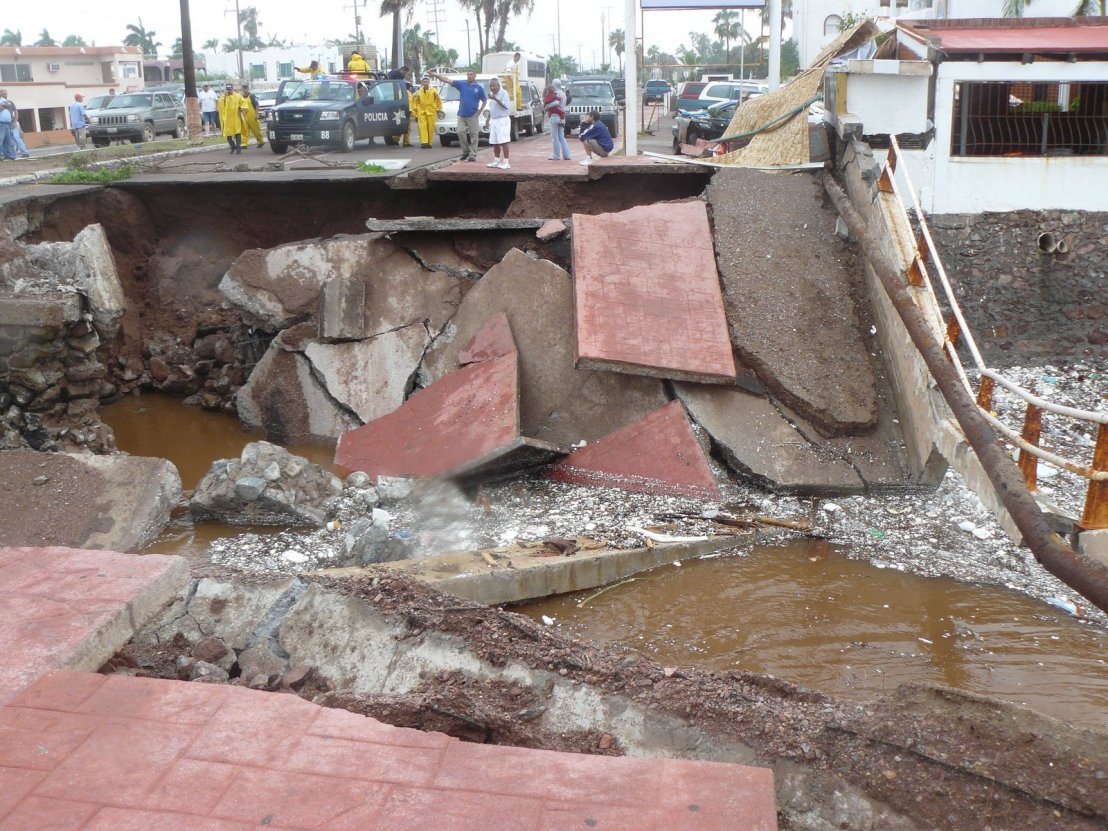
Wednesday, 9th – still no mains water or public sewerage services.
By Paul Handover

Bermeja (Mexican Gulf) – anyone seen my island?
There’s a wonderful story in last week-end’s The Sunday Times, a British newspaper, written by Matthew Campbell concerning the loss of an important island that has been used previously to define the limits of Mexico’s maritime

border (read oil!). Here’s an extract:
The mystery has come to haunt Mexico as unrelentingly as one of its beloved soap operas: where is Bermeja, an island off the Yucatan coast that appears to have vanished without trace?
The disappearance of Bermeja is no laughing matter – it would allow Mexico to extend its maritime border some 55 miles further north, helping it to fight off what it sees as American encroachment on its claims to potentially vast oil reserves in the Mexican Gulf.
It’s the little things that seem to stick
This is the first time in my life where a major natural disaster has happened around me, so to speak. Now some 2 days later, here are some reflections. The small stories have so much more power to affect one.
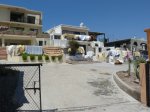 That knowing that hundreds of homes here in San Carlos and in nearby Guaymas have been flooded out doesn’t have such a powerful affect as seeing an individual’s possessions spread out in the sun.
People of all sorts and backgrounds love to spread rumours. There seems to be a human need to be the spreader of new information, even if it is far from correct. Just about anything that one wanted to know, or even more importantly needed to know, had to be very carefully sieved. Better to find out yourself because the chances are that whomsoever is saying this or that has got their facts wrong. Amazingly, some of the worst gossip was coming from people who weren’t even in the area!
That knowing that we had 28 inches of rain fall wasn’t as powerful as seeing our neighbour’s swimming pool fill up from

empty!
The electricity workers were marvellous. They came in from far and wide and worked all  the daylight hours available. It made me realise that, ultimately, we don’t accord sufficient money and status to the guys who keep the electricity flowing and too much status and money to those that have jobs that would cease instantly in a world without electricity, clean water and public sewerage systems.
The small acts of generosity were powerfully touching! Charlie and Tracy had a large leg of lamb that wasn’t going to keep without a functioning freezer. So they cooked it up and invited three other couples to share it. Thanks guys!
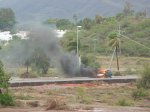 Within hours of the rain ceasing on the 3rd (Thursday) and people started venturing out and about, either to find provisions or just to stare open-mouthed at the effect of Nature, some poor sod had his car catch fire. You really had to feel sorry for him – this was not a great time!
And on a very personal note, Jean worked with me in mopping up rain water from 2am on Wednesday 2nd (the height of the storm) and still managed to serve a beautiful hot meal of tasty baked chicken legs in the evening. She is a special lady.

By Paul Handover
The end of a tough and arduous few days.
Just a quick note to say that ‘normal’ service will be resumed in the morning, local time here in Mexico.
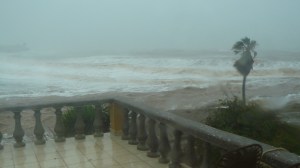
Jimena struck San Carlos, where we are presently living, late afternoon on the 1st September. Electricity was restored a couple of hours ago. (I write these few words at 6.30 pm on Sunday, 6th.)
Jean and I are very tired!
Lots to report….
Where the capital city is called Edinburgh of the Seven Seas
My great buddy of 30 years, Dan, Californian born and bred, recently emailed me saying that he had spent a fascinating hour reading the website of Tristan da Cunha. Most British people will have some odd recollection about this very remote community living in the South Atlantic because the islands are part of the United Kingdom. TDCU 1ZZ is, in fact, the UK postcode for Tristan da Cunha.

This is not a place which has a habit of making main-stream news! Indeed, one could not imagine a more distant part of the planet. Well you won’t imagine a more distant place. Tristan da Cunha is the most remotely inhabited archipelago on Planet Earth. Indeed, only one island, Tristan, is inhabited and, according to the website there are just 264 British citizens there today.
Earlier it was mentioned that most British will have some vague recollection of Tristan. More likely, that will be those British who were born before, say, 1950.
Why?
Patrick’s landscapes are breath-taking.

The only real voyage of discovery consists not in seeking new landscapes
but in having new eyes. Marcel Proust (1871-1922)
By Paul Handover
Shuttle Discovery launches without a hitch.
At 23.59 EDT, Shuttle Discovery lifts off from launch pad 39-A at the Kennedy Space Centre.
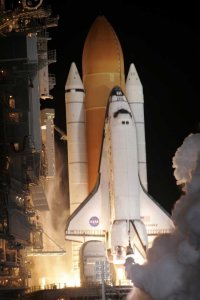
America frequently gets a bad press around the world but events like this are a reminder of the pioneering spirit of the American people. Long may that continue.
By the way, ever wondered what it is like to be inside the Shuttle during a launch?
This virtual world has so much to share.
The photography of Patrick Smith is breathtaking. So much so, it seemed important to promote his talents to the widest possible audience.
He has been very generous in giving Learning from Dogs written permission to reproduce his pictures. Thus from time to time, we will do just that.
Thank you, Patrick.
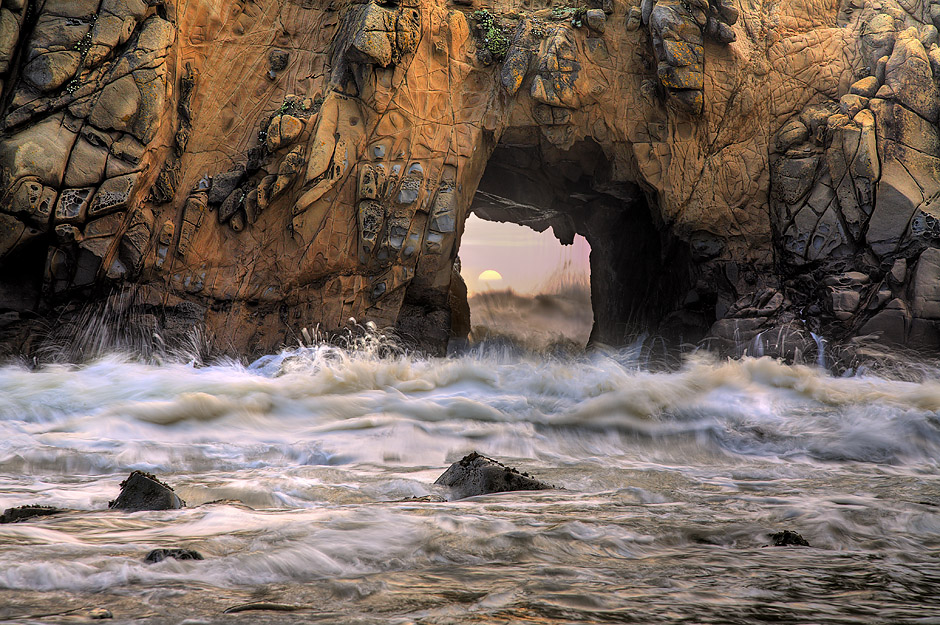
Published with the written permission of Patrick Smith Photography.
Copyright (c) 2009, all rights reserved. Please do not use this picture without permission.
By Paul Handover
The amino acid glycine is found on a comet.
There’s a fascinating article on Reuters, published on the 18th. It is that scientists have finally proved that an amino
acid found on a comet is extraterrestrial in origin and, therefore, supports the theory that life came to Planet Earth from the stars.
Microscopic traces of glycine were discovered in a sample of particles retrieved from the tail of comet Wild 2 by the NASA spacecraft Stardust deep in the solar system some 242 million miles (390 million km) from Earth, in January 2004.
Samples of gas and dust collected on a small dish lined with a super-fluffy material called aerogel were returned to Earth two years later in a canister that detached from the spacecraft and landed by parachute in the Utah desert.
There’s a fuller and more scientific description of the NASA Stardust spacecraft mission here. That site is well worth a visit if you are in the slightest way interested in space.
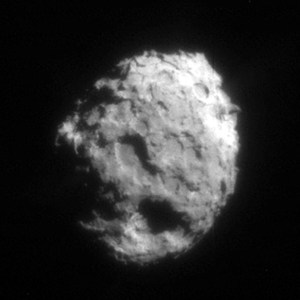
Stardust completed its 2.88 billion mile round-trip journey to a comet and back, bringing comet and interstellar dust particles back to Earth on January 15, 2006.
So when you next look into the eyes of your loved one,
and see starlight there,
it may not be entirely a romantic notion!
By Paul Handover

