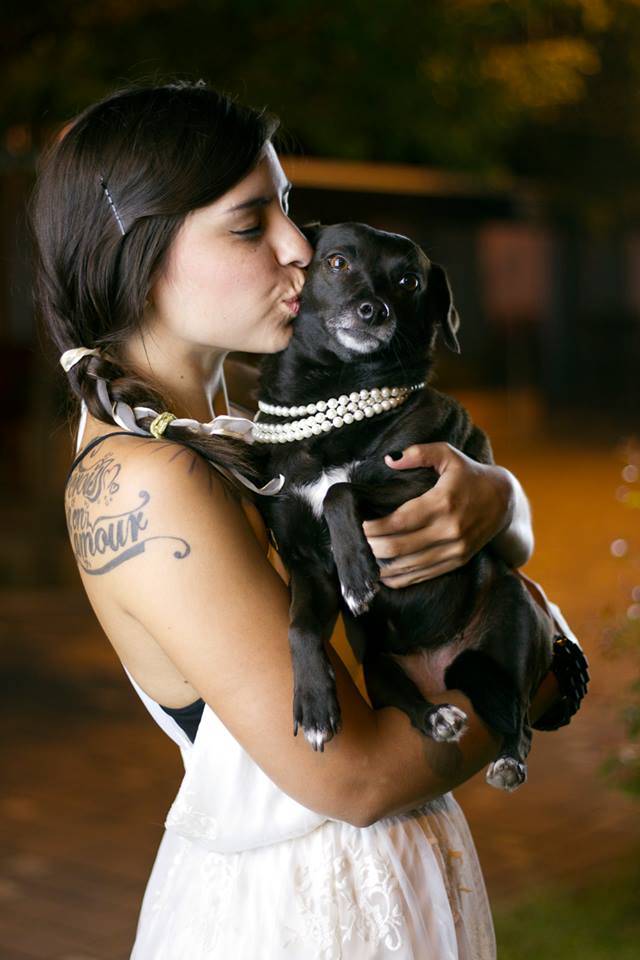
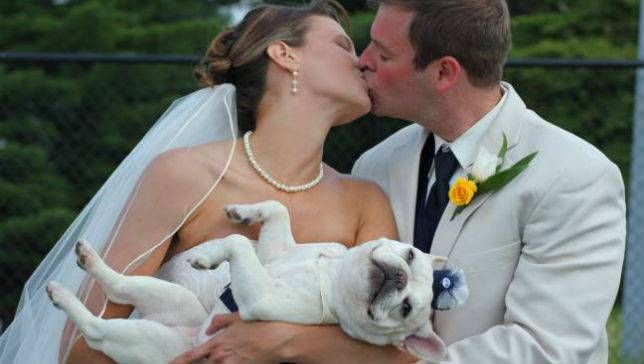
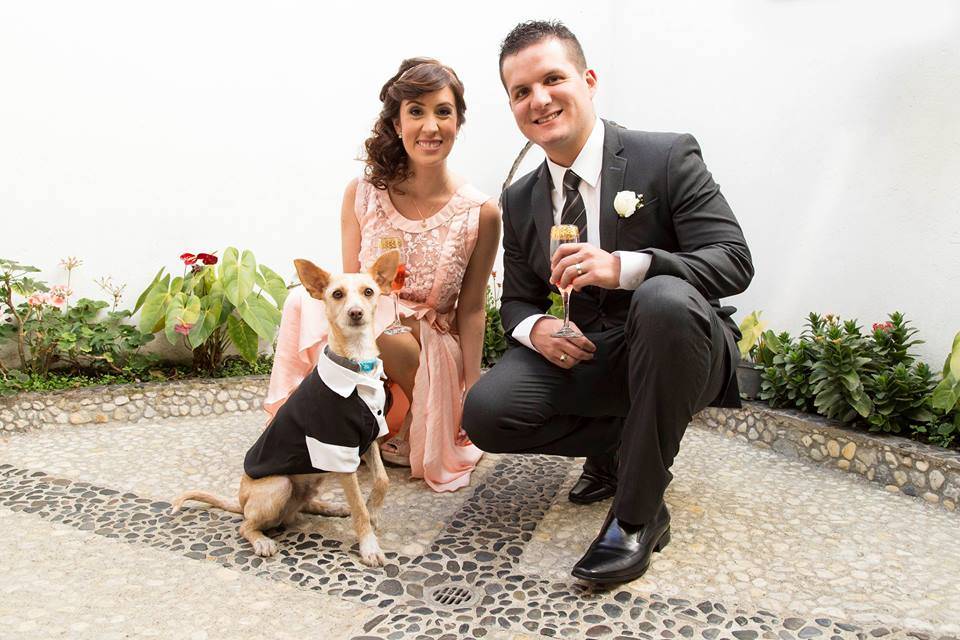
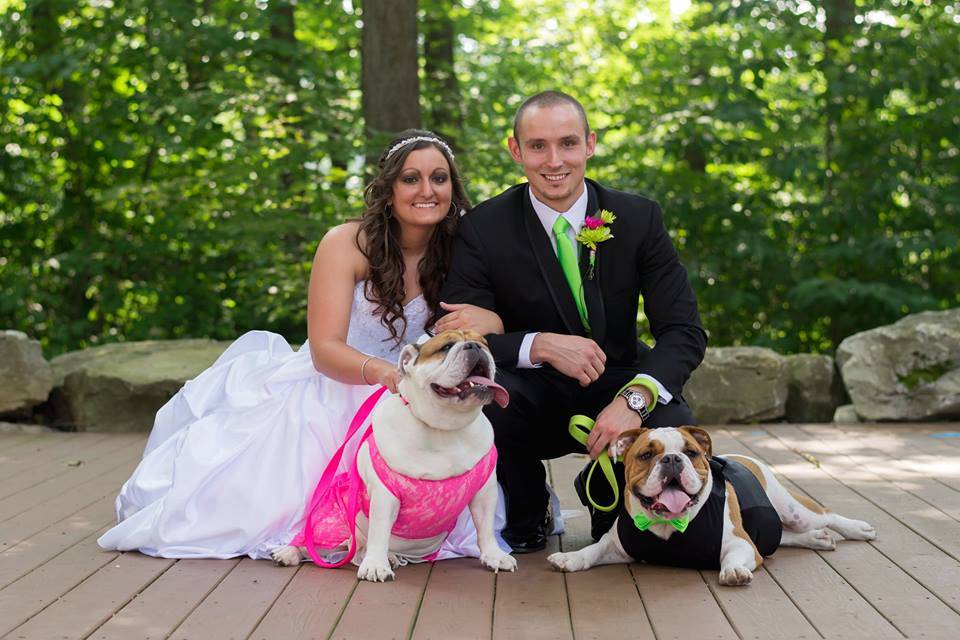
When putting together yesterday’s post, based heavily on a recent article over on Mother Nature Network, I couldn’t help noticing a link on that MNN item to this: 13 photos of dogs that got invited to the wedding. Wanted to share some of the photographs with you for today’s picture parade.
Final picture for today is the one of Jean and me at our anniversary lunch taken at The Twisted Cork in Grants Pass on Friday. Not quite newly-weds but still not that long ago!
Those that read my post from yesterday will understand that it was both a busy and wonderful day. Topped off beautifully by arriving home to find four proof copies of The Book!
Four copies of The Book rather hastily assembled under my desk light.
So it was well after 5pm yesterday when I sat down to publish today’s post.
It seemed very appropriate to offer a recent item that appeared on Mother Nature Network and is republished here within MNN’s terms.
(Please note that I didn’t have the time to copy and insert the many interesting links in the original but have coloured the words or phrases to indicate that by going here you can access those links.)
ooOOoo
The science behind how dogs play
When dogs bow or let another dog ‘win’ the wrestling match, there’s a good reason.
By: Laura Moss, October 29, 2015.
If a dog plays too rough, other dogs may exclude him from play. (Photo: Brad Armentor/flickr)
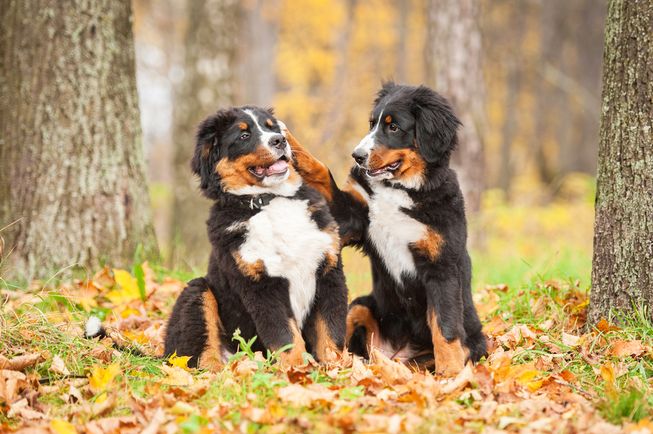
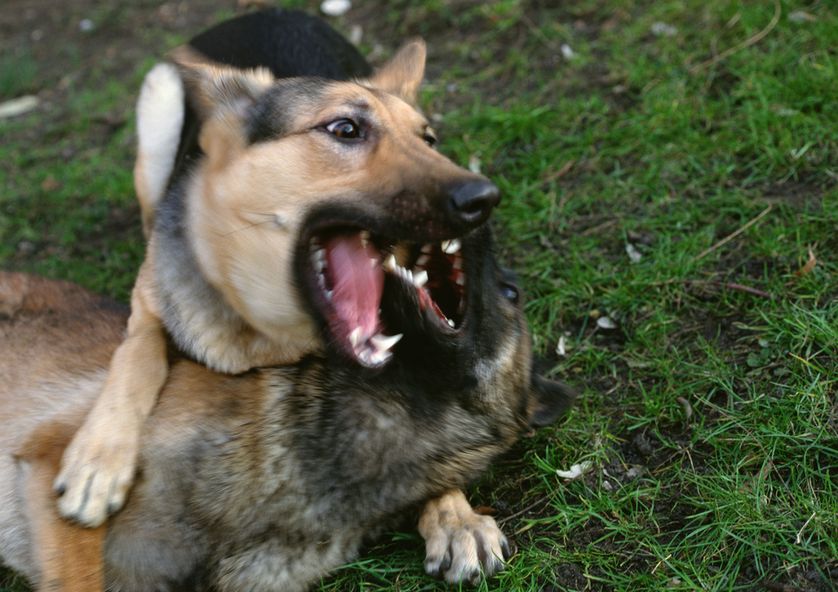
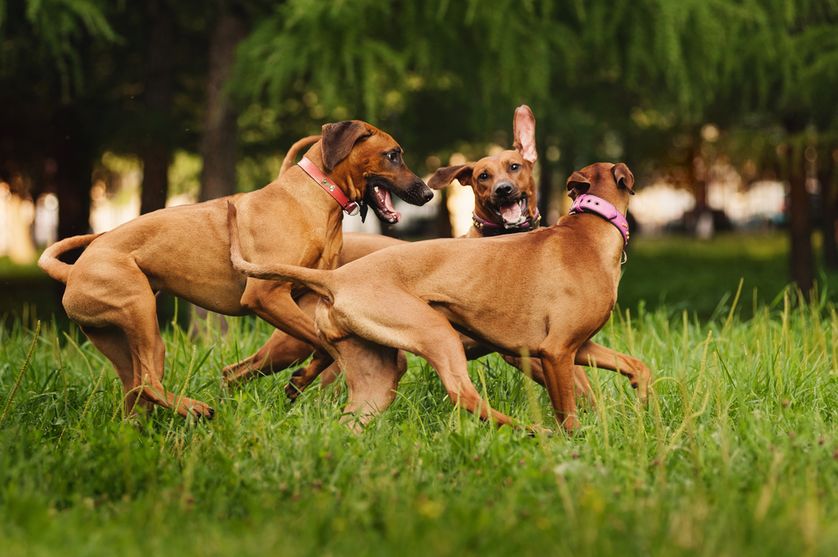
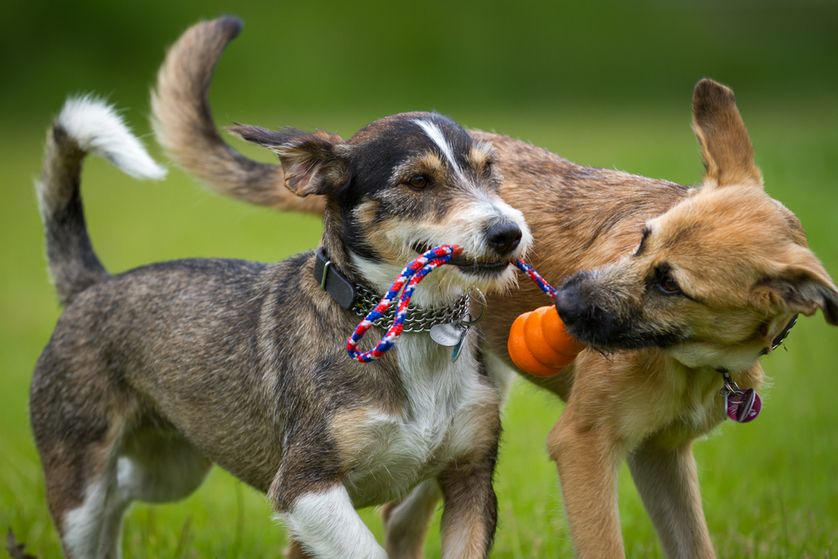
Dogs play by chasing, tackling and nipping at each other, but there’s more to their lively antics than meets the eye. The way dogs interact with one another reveals that dogs have a language as well as a moral code, and they don’t engage in play simply to establish dominance.
Marc Bekoff, professor emeritus at the University of Colorado at Boulder, has been studying animal behavior for more than 40 years. After reviewing four years’ worth of footage of dogs, wolves and coyotes, he discovered that even dogs’ wild relatives play by chasing each other, rolling over and jumping on one another.
“Play is a major expenditure of energy, and it can be dangerous,” Bekoff told The Washington Post. “You can twist a shoulder or break a leg, and it can increase your chances of being preyed upon. So why do they do it? It has to feel good.”
Bekoff and other researchers have conducted numerous studies on how these animals play and what their actions mean. What they’ve found is that dogs’ behavior during play is a language all its own, and every shift of the eyes or wag of the tail is a form of communication.
Play even has a set of rules, and if a dog breaks them — by playing too rough, for example — that dog may be excluded from group play. Bekoff says this response suggests that dogs enforce moral conduct, which means they’re capable of experiencing a range of emotions and even of recognizing these emotions in other canines.
What exactly do their different play behaviors mean?
The bow is a signal for play to commence — but there’s more to it than that. (Photo: Mike McCune/flickr)
Play bow
When a dog lowers the front of its body in a bow-like stance, this is an invitation to play. If your dog often bows to other canines you meet while out on a walk, it’s a good indication that your pup would like a playmate.
However, this stance doesn’t only invite play. It also communicates to other dogs that the jump, nip or roughhousing that follows the bow isn’t an act of aggression. It’s simply a dog’s way of saying, “I’m just playing around.”
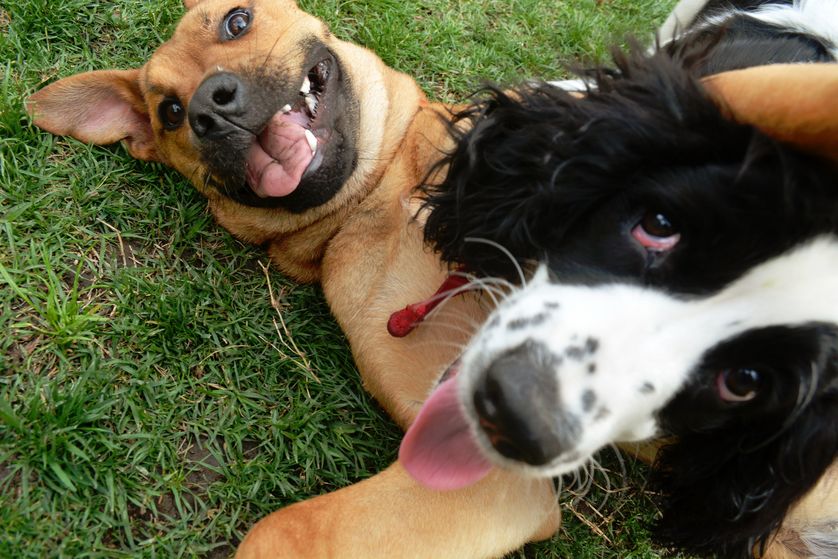
See my belly? That has meaning too. (Photo: Eric Sonstroem/flickr)
Rolling over
When a dog rolls over onto its back during play, it’s often considered a submissive gesture; however, research suggests it could mean something else entirely.
Earlier this year, scientists at the University of Lethbridge and the University of South Africa observed 33 play sessions between two dogs, and they also studied 20 YouTube videos of dogs playing together.
While not all the dogs rolled over during play, those that did weren’t necessarily the smaller or weaker of the two dogs, nor were the dogs that rolled over exhibiting submissive behaviors such as decreasing play.
In fact, smaller dogs were no more likely to roll over than larger ones, and the pups that did roll over used the position to evade a nip or to get into position to playfully bite the other dog.
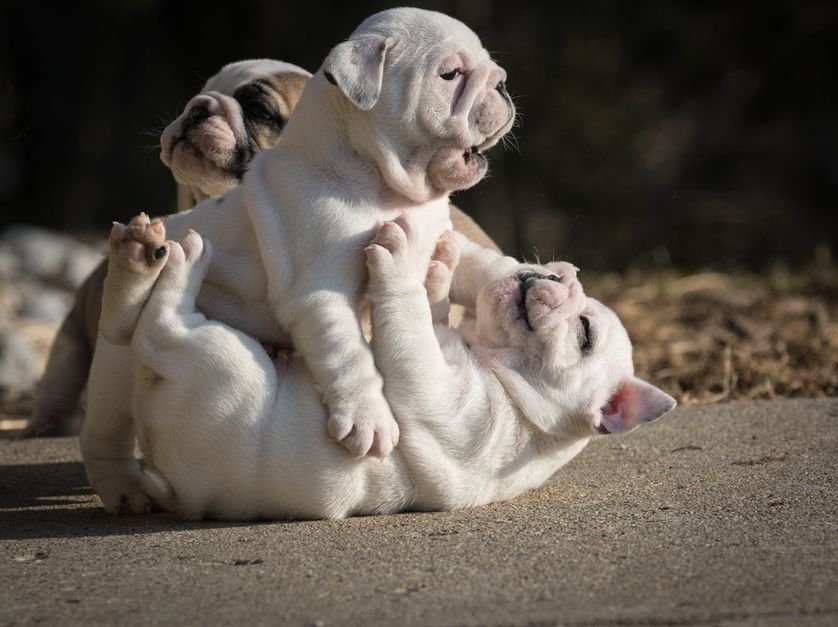
The researchers found that none of the 248 rollovers were submissive during play and concluded that rolling over is actually meant to facilitate play.
There’s a lot of communication going on here — though to human watchers it may simply induce giggles. (Photo: WilleeCole Photography/Shutterstock)
Letting female puppies win
A 2008 study found that male puppies frequently let their female puppy playmates win during play, even when the males were bigger and stronger.
The male dogs would even put themselves in positions that left them vulnerable to attack. For example, the male puppies would occasionally lick their playmates’ muzzles, which provided the female puppies with an opportunity to easily bite in return.
Why? Researchers say the act of playing may be more important to the male dogs than winning.
“Perhaps males use self-handicapping with females in order to learn more about them and to form close relationships with them — relationships that might later help males to secure future mating opportunities,” Camille Ward, lead author of the study, told NBC News.
ooOOoo
How lucky we are in this modern world to read and share such interesting essays.
Another day that almost disappeared as a result of my impending book launch soaking up so much time.
The book should be available for sale by the end of the month, with the launch and book signing taking place locally in Grants Pass on Saturday, December 12th. Followers of this blog will be offered a special discount on the ebook versions once they are released shortly. So if that “rocks your boat” then sign up to follow this blog. Here’s a description of the book:
About the book
There’s a tiny amount of domesticated wolf in all of us. The relationship between canids and humans goes back nearly 40,000 years, when dogs split away from wolves. With our dogs, we have traveled the ancient track from hunter-gatherers to modern humans. However, this track now seems to offer an uncertain future for humankind and society.
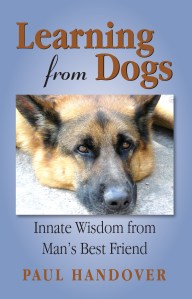
Learning from Dogs shows how and why now, more than ever, we humans need to learn from our dogs. At times the book relates personal stories through autobiography, diary, and blog entries. Other times it reinforces a point with speculative and imaginative fictional narrative. Throughout the book, there is a foundation about the history of wolves, dogs, and humans, as the author injects factual research to assist us to more fully understand the importance of this unique relationship.
With just the right blend of humor, story-telling, perception, compassion, and insight, the author shares his unusual perspective and how he came to share what he’s learned through a lifetime of observation and interaction with dogs.
Readers who love dogs, or any animals, will connect with this book and become more fully aware of why our animal friends are valuable to learn from to help us heal the challenges of the 21st century. Occasionally launching into intellectual tangents that will provide intrigue and inspiration for the heart and soul, the book ultimately returns to the central thesis: “What we can (and should) learn from dogs.”
Pat Shipman, retired adjunct professor of anthropology at The Pennsylvania State University, and the author of The Animal Connection and The invaders; How Humans and Their Dogs Drove Neanderthals to Extinction, described the book as, “both wise and thoughtful. It also includes some of the best writing about the intimate and special relationship between dogs and humans I have ever read.”
The Foreword to the book is by well-known local vet, James R. Goodbrod, Master’s Degree, Doctor of Veterinary Medicine.
So with no further ado, here is an informative article that was recently published by Mother Nature News and is republished here with their kind permission.
ooOOoo
Is your dog a playground bully?
What starts out as rambunctious play can quickly turn into a toothy problem.
By: Jaymi Heimbuch, November 12, 2015.
I’m the boss and you’ll do as I say! (Photo: Rita Kochmarjova/Shutterstock)
You’re at the park with your dog as he finds another four-legged buddy to play with. The two dogs seem to be having fun, but something feels amiss. Your dog is extra rambunctious and is really pushing the other dog around. Maybe the other dog is handling your dog’s overly rough-and-tumble attitude with patience. Or perhaps the other dog begins to hide behind or between his owner’s legs, looking for a break from your bossy dog.
Been in this situation? You just might have a bully on your hands.
Bullying behavior is a bigger problem than simply having a rude dog. In the immediate situation, it can lead to an attack or a fight, and in the long run it can cause the dog’s unappreciative play partner to become fear-aggressive, thinking all dogs are bullies. That’s why it’s important to stop bullying behavior the second you see it and train your dog to play appropriately.
Signs of bullying behavior include:
Being overly demanding about getting a toy, attention from people, or other resources
Continually standing over or pinning another dog to the ground
Ignoring signals from a play partner that the play is too rough or unwanted
An escalating intensity when the other dog pushes back or tries to leave
If you have a dog that behaves like a bully on the playground, there are steps you can take to fix the situation, which will benefit both your dog and all the other dogs he wants to play with.
Play can quickly escalate into bullying behavior. Here’s how to keep an eye out for it. (Photo: Photick/Shutterstock)
What causes bullying behavior?
“Over-stimulation often leads to bossy behavior,” says Erin Kramer, an expert dog trainer who specializes in rehabilitating fearful, anxious and aggressive dogs. “This means that as the energy level rises, such as during chasing games, tug of war, or even just enthusiastic wrestling, dogs often become too stimulated and start to ignore signals from other dogs that they are playing too rough or that their interaction is not welcome. Dogs also feed off of each others’ energy, so a group of playing dogs can escalate into over stimulation and bullying behavior faster than a dog would with just one play partner.”
Kramer adds that simply watching how another dog is responding to your dog can tell you if your dog is being a bully. “If the other dogs are attempting to move and stay away, overly submitting by rolling on their backs, or are showing signs of stress or avoidance, that is a good indication your dog may be getting too rough.”
If you aren’t certain if your dog is bullying or if that’s just the play style of the two dogs, Kramer suggests getting a hold of your dog and seeing what happens when you make him take a break from play. If the other dog runs to your dog for more, then the two are getting along fine. But if the other dog maintains space, then the other dog is likely not really enjoying your dog’s rough play behavior and your dog needs to tone it down.
What to do if your dog is the bully
The old advice of letting dogs “work it out themselves” is the source of many problematic behaviors that can take years of training to overcome. Bullies will simply get better at bullying, and the dogs being picked on will likely develop increasingly intense fears about your dog and other dogs. Humans need to step in immediately to break up play that isn’t fun for both dogs, and prevent a bad situation — and bad behavior — from getting worse.
Once you’ve identified that your dog is being unappreciatively assertive with other dogs, it’s important to interrupt the behavior in the moment, then begin training to end the behavior in the long run.
In the moment, call your dog away and have him sit or lie down until he calms down. This can take a long time for a dog easily aroused in a dog park. Your dog is not calm until he can look away from other dogs playing, focus on you and exhibit relaxed body language. If after several minutes, your dog can’t seem to take his eyes off the other dogs and just wants to dive back in, then it’s time to leave the play area as it’s likely your dog won’t be able to tone down his play style.
The next thing is to begin setting your dog up for successful play sessions in such a way that you can easily step in to interrupt bullying behavior the moment it happens.
“If your dog does not have the advanced obedience it takes to perform an off leash ‘come’ out of play — and let’s face it, that’s a really challenging time to respond — then you need to set up your dog to deal with their bullying issues,” advises Kramer. “Have the dog wear a long leash, select a small play area where it’s easy to get control, and practice your obedience training so you are prepared to handle your dog correctly.”
Watch for things that might set your dog into bully mode, including the energy level, the play partner’s personality, and other factors. (Photo: Ksenia Raykova/Shutterstock)
During play, look for the timing of your dog’s bullying behavior and see if there are patterns. Kramer notes to watch if it’s a certain type of play partner, such as a high-energy or confident dog, that brings out the bully in your dog, or perhaps it’s simply that your dog bullies more when he hasn’t had as much exercise or training practice.
“If you can find a pattern to what creates or worsens their bullying behavior, then you can take steps to reduce it from happening and set them up for success by choosing more appropriate play partners or getting them increased exercise before play,” says Kramer.
Taking steps to train your dog to end bullying behavior is important, and Atlanta Humane Society has a great article outlining one way to interrupt and retrain your dog to end bullying over the course of many weeks. In addition to solid training addressing bullying during play, it’s important to have other tools to help your dog take the lessons beyond the dog park.
One lesson that Kramer notes is essential for pushy dogs is concept “Nothing In Life Is Free.” Teach your dog that he only gets the rewards he wants most in life when he thinks about what his human wants. Your dog will then continually check in with you, so he can earn what he wants.
“Demanding dogs are often dogs who need to know, ‘what’s in it for me?'” says Kramer. “Start making an asset list of all the things your dog sees as valuable. Remember that there are things that should go on the list outside of just treats and toys such as going through the front door, playing with friends, greeting strangers, even tummy rubs and snuggle time. Instead of giving away all those valuable rewards, ask your dog to earn them by performing commands like sit, down, stay, come, or doing a trick. Your dog will still get access to all of the things he likes, but he’ll have to earn those things from humans and in doing so, he’ll learn that pushy behavior doesn’t get rewarded. Once they learn this skill, they will be less bully-ish in general, and much more willing to listen to people when you need to get their attention.”
You can also implement a “no reward marker” or NRM, which works in the same way as clicker training, but rather than the marker indicating that a reward is coming, the marker indicates a loss of something is coming. Pat Miller writes in Whole Dog Journal, “My preferred NRM, the one I teach and use if/when necessary, is the word ‘Oops!’ [which] simply means, ‘Make another behavior choice or there will be an immediate loss of good stuff.’ An NRM is to be delivered in a non-punitive tone of voice … Timing is just as important with your NRM as it is with your reward marker. You’ll use it the instant your dog’s bully behavior appears, and if the bullying continues for more than a second or two more, grasp his leash … and remove him from play. Don’t repeat the NRM. Give him at least 20 seconds to calm down, more if he needs it, then release him to go play again.”
Sharing is caring! (Photo: Bildagentur Zoonar GmbH/Shutterstock)
What to do if your dog is being bullied
You may have an issue with a bullying dog, but it isn’t your dog causing the strife. It’s just as important to step in to interrupt your dog getting picked on. Again, letting dogs “work it out themselves” leads to significant behavioral problems, including a bullied dog becoming excessively fearful or reactive to other dogs because of the bad experience of being bullied.
“This mindset is just much too risky!” says Kramer. “We the humans very often do not know the social skill level of the other dogs involved nor can we successfully know exactly how stressed or scared our own dog is in that situation. I would much rather a dog learn that his humans step in when he is showing signs of discomfort rather than him learning he is forced to defend himself, and that being fear-aggressive is a good strategy to keep himself safe.”
If you see that your dog is getting picked on or is uncomfortable in a play situation, calmly but confidently step in. You can leash your dog and leave, or step between your dog and the other dog to break up play. Staying calm but assertive is key, since your reaction sends a message to your dog. Screaming and yelling at the dogs to break it up tells your dog that this is a scary situation, where as firmly stepping in lets your dog knows that what happened was uncomfortable but nothing to be scared about.
“By demonstrating to your dog that you are responsible and actively engaged in keeping them safe, they will gain confidence in handling tricky social situations and will be less fearful and reactive when negative experiences arise,” says Kramer.
“As a trainer who does a lot of aggression rehabilitation work with dogs who have been bullied or attacked by other dogs, there is a particular joy I get in watching fearful dogs learn that they are no longer responsible for protecting themselves, and that I as their human handler will observe the body language messages they send me and will then take the steps needed to alleviate their discomfort. There is a bond that comes with such a system of partnership that makes a dog a more confident, social, and happy being. Allowing your dog to bully or be bullied means that you are undermining that system, and teaching your dog that they are on their own in learning how to make successful social decisions. With just a bit of observation, intervention and repetition you can help your dog learn the boundaries of positive social interaction and you will not only have a dog who is a better playmate, you will also have a stronger relationship altogether.”
ooOOoo
To my mind, this is a very helpful article and all the links offer a wealth of supporting information.
Pharaoh demonstrating his benevolent status with puppy Cleo. April 2012.
Tonight (Friday): A 30 percent chance of rain after 11pm. Mostly cloudy, with a low around 53. West wind around 6 mph becoming calm after midnight.
Saturday: Rain before 11am, then showers likely after 11am. High near 71. Calm wind becoming west southwest around 5 mph. Chance of precipitation is 80%. New precipitation amounts between a tenth and quarter of an inch possible.
Saturday Night: A 20 percent chance of showers before 11pm. Partly cloudy, with a low around 50. West wind around 6 mph becoming calm in the evening.
As the crow flies, here in Merlin we are a tad over 10 miles to the North-West of the centre of Grants Pass. So we are holding our breath that we receive a decent wetting over this coming weekend.
All of which creates a wonderful lead-in to a recent item published over on Mother Nature News, that I am delighted to share with you.
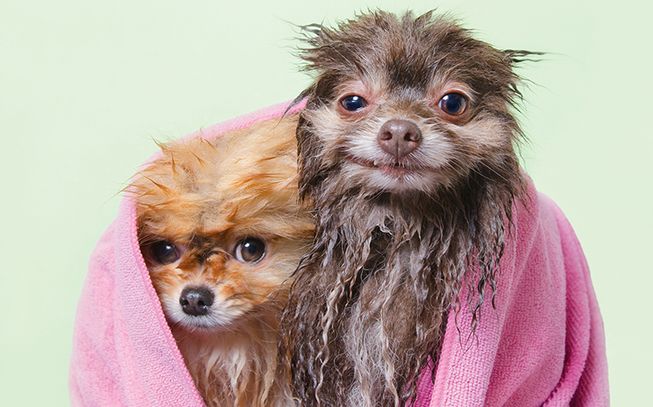
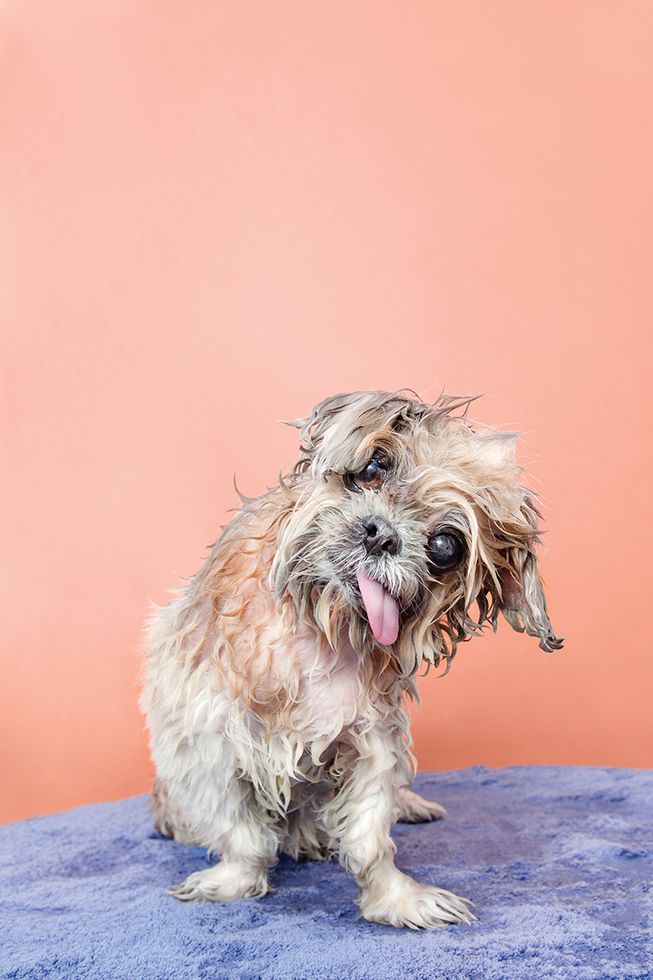
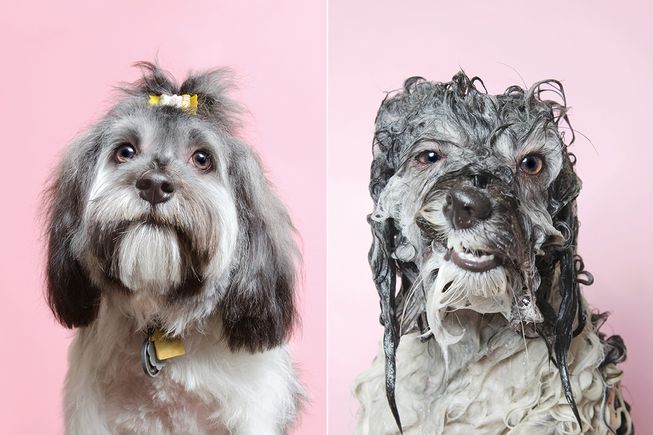
Bath time may not be a pup’s favorite activity, but if these comical “Wet Dog”‘ portraits are any indication, there may be a silver lining to this necessary evil.
The dog lover behind this endearing series is Sophie Gamand, a New York-based photographer who regularly focuses her lens on canines to examine the relationship they have with humans.
“Wet Dog is a series of dogs captured at the groomer during their least favorite activity: Bath time,” Gamand writes on her website. “I chose this activity because it is a very unnatural one for the dogs, yet it is a direct consequence of their cohabitation with humans.”
Seeing our best friends in such a vulnerable state can be comical and heart-wrenching — especially because canine facial expressions possess an uncanny resemblance to our own.
Gamand began photographing soggy doggies a while back, but after some of the images went viral, she felt compelled to put together a complete “Wet Dog” photo book.
(Photo: Sophie Gamand)
The comical coffee table book, which is now available for purchase, is filled with 120 photos of these soaked doggies — each sporting his own unique post-bath expression.
Continue below for a look at just a few of the images featured in the book.
Benji (Photo: Sophie Gamand)Marnie (Photo: Sophie Gamand)Wanda (Photo: Sophie Gamand)
Exploring the range of emotions felt and displayed by our dogs.
Like so many bloggers, I subscribe to the writings of many others. Indeed, it’s a rare day when I don’t read something that touches me, stirring up emotions across the whole range of feelings that we funny humans are capable of.
Such was the case with a recent essay published on Mother Nature Network. It was about dogs and whether they are capable of complex emotions. Better than that, MNN allow their essays to be republished elsewhere so long as they are fully and properly credited.
Exactly what emotions do dogs feel, and are they capable of all the same emotions as humans? (Photo: Pressmaster/Shutterstock)
Joy, fear, surprise, disgust, sadness. These are the basic emotions dogs feel that are also easy enough for humans to identify. But what about more complex emotions?
Many dog owners are convinced their dogs feel guilty when they’re caught misbehaving. In the same way, many owners are sure their dogs feel pride at having a new toy or bone. But it gets tricky when you assign these sorts of emotions to a dog. These are definitely emotions felt by humans, but are they also felt by dogs?
(see footnote)
Why we question the presence of complex emotions is wrapped up in the way we get to those emotions. The American Psychological Association explains, “Embarrassment is what’s known as a self-conscious emotion. While basic emotions such as anger, surprise or fear tend to happen automatically, without much cognitive processing, the self-conscious emotions, including shame, guilt and pride, are more complex. They require self-reflection and self-evaluation.”
Essentially we’re comparing our behavior or situation to a social expectation. For instance, guilt comes when we reflect on the fact that we’ve violated a social rule. We need to be aware of the rule and what it means to break it. So, can dogs feel guilt? Well, exactly how self-reflective and self-evaluative are dogs?
Among humans, children begin to experience empathy and what are called secondary emotions when they are around 2 years old. Researchers estimate that the mental ability of a dog is roughly equal to that of an 18-month-old human. “This conclusion holds for most mental abilities as well as emotions,” says Stanley Coren in an article in Modern Dog Magazine. “Thus, we can look to the human research to see what we might expect of our dogs. Just like a two-year-old child, our dogs clearly have emotions, but many fewer kinds of emotions than found in adult humans.”
In other words, if 18-month-old children can’t yet experience these emotions, and dogs are roughly equal to them in cognitive and emotional ability, then dogs can’t feel these self-reflective emotions either. At least, that’s what researchers have concluded so far.
Is that guilt or fear?
This little puppy might feel guilty for chewing on clothes, or he could just be worried about getting in trouble. The two aren’t the same emotion. (Photo: InBetweentheBlinks/Shutterstock)
The evidence for primary emotions like love and happiness in dogs abounds, but empirical evidence for secondary emotions like jealousy and guilt is sparse. And this is partially because it’s difficult to create tests that provide clear-cut answers. When it comes to guilt, does a dog act guilty because she knows she did something wrong, or because she’s expecting a scolding? The same expression can come across as guilt or fear. How do we know which it is?
“In wolves, it is thought that guilt-related behaviors serve to reinforce social bonds, as in primates, by reducing conflict and eliciting tolerance from other members of the social group. The same could be true of dogs, though their social groups would primarily include humans. The problem is that the display of the associated behaviors of guilt are not, themselves, evidence of the capacity to emotionally experience guilt… It may still be some time before we can know for certain whether dogs can experience guilt, or whether people can determine if a dog has violated a rule prior to finding concrete evidence of it.”
Guilt, and other secondary emotions, are complicated. That’s exactly why cognitive awareness and emotional capacity in dogs is still a topic under study. In fact, it’s an area that has grown significantly in recent years. We may discover that dogs have a more complex range of emotions than we’re aware of today.
Dogs are highly social animals, and social animals are required to navigate a range of emotions in themselves and those around them to maintain social bonds. It wasn’t so long ago that scientists thought that dogs (and other non-human animals) didn’t have any feelings at all. Perhaps our understanding of dog emotions is simply limited by the types of tests we’ve devised to understand their emotions. After all, we’re trying to detect a sophisticated emotional state in a species that doesn’t speak the same language.
There’s a lot we don’t know
Dogs experience a range of emotions, but researchers are still trying to figure out exactly what those emotions are. (Photo: Hysteria/Shutterstock)
Marc Bekoff makes the argument for leaving the possibility open. In an article in Psychology Today he writes, “[B]ecause it’s been claimed that other mammals with whom dogs share the same neural bases for emotions do experience guilt, pride, and shame and other complex emotions, there’s no reason why dogs cannot.”
Keeping the possibility open is more than just an emotional animal rights issue. There is a scientific basis for continuing the research. A recent study showed that the brains of dogs and humans function in a more similar way than we previously thought.
Scientific American reports that “dog brains have voice-sensitive regions and that these neurological areas resemble those of humans. Sharing similar locations in both species, they process voices and emotions of other individuals similarly. Both groups respond with greater neural activity when they listen to voices reflecting positive emotions such as laughing than to negative sounds that include crying or whining. Dogs and people, however, respond more strongly to the sounds made by their own species.”
Until recently, we had no idea of the similar ways human and dog brains process social information.
So do dogs feel shame, guilt and pride? Maybe. Possibly. It’s still controversial, but for now, there seems to be no harm in assuming they do unless proven otherwise.
ooOOoo
Footnote: At this point in the MNN article there was a link to a series of gorgeous photographs of dogs. If you dear readers can wait, then I will publish them this coming Sunday. If you can’t wait, then go here!
A smart partnership introduces hard-to-home dogs to high-energy humans.
Note to Readers
Last week I completed the final edit of my book of the same name as this blog, Learning from Dogs. I am learning the truth of what one experienced author said to this new author and that was that writing the book is the easy part! For the next stage is the professional editing of the manuscript. I was previously referred to Joni Wilson and I am so pleased that she is undertaking the task. Well, I think I am pleased! 😉 That last sentence comes from me utterly misjudging just how much work is being created for me as I start to go through hundreds, literally, of ‘recommendations’ from Joni. Dear readers, we are talking hours of revisions that I need, and want, to make.
All of which is my way of saying that if my posts over the next couple of weeks more strongly lean on the republishing of other material then you will understand why. In all cases I will endeavour to republish articles that are likely to interest you, of course!
So with those words in mind, here is another article from Mother Nature Network that stays with yesterday’s theme of adopting those dogs that are not necessarily the easiest to so do.
ooOOoo
Outdoorsy dogs find their perfect matches
A smart partnership introduces hard-to-home dogs to high-energy humans.
By: Jaymi Heimbuch, September 11, 2015
Anniston is on her way to her new home, thanks to a brilliant campaign to match high-energy dogs with high-energy humans. (Photo: Ruffwear)
A couple weeks ago, Outdoor Retailer held an adoption event for shelter dogs. But it wasn’t just any event — this was specifically for high-energy, adventure-loving dogs seeking high-energy, adventure-loving humans. This matchup can be tough to find at a rescue or shelter, but what if the adoption event takes place where outdoorsy folks shop? Wouldn’t the potential for love at first wag be higher? It turns out that’s exactly what happens.
Ruffwear and Best Friends Animal Society created the Ruff Adventure Dog Adoption Program to place usually hard-to-home dogs — dogs that need a lot of exercise and outdoor activity and require a home with someone who wants a companion for trail runs, hiking, camping and other fun activities. They put the program to the test at Outdoor Retailer.
Among those who found a home are:
Jennifer finds Krone
Jennifer and Krone bond after meeting at an Outdoor Retailer event. (Photo: Ruffwear)
Huck finds Gerald
It’s a match made in outdoor-loving heaven for Huck the dog and Gerald, his new owner. (Photo: Ruffwear)
Niko finds his future parents
A future of happy tail-wagging adventure awaits for Niko, the black and white dog pictured at left. (Photo: Ruffwear)
“Over the course of two days, Best Friends’ Salt Lake City partner, Rescue Rovers, brought in eight fresh air-seeking, adventure-ready dogs to the Salt Palace. [I]t wasn’t long before people stopped by the Ruffwear booth to hand in their adoption requests. Of the eight dogs who attended, six were adopted,” says the press release from Ruffwear.
“People expect us to have dogs at the booth, and they’re always a draw. But we had no idea how receptive show attendees would be to actually adopting these dogs. Rescue Rovers did a great job bringing dogs that would pair well with our active, outdoorsy crowd. I think the first application came in just hours after the dogs arrived and by the end of the first day, nearly all dogs present had applications pending; it was amazing,” said Greg Freyberg, Ruffwear’s Brand Manager.
The happy tale doesn’t end with this event. Ruffwear and Best Friends continue to match these trail-loving dogs with their perfect humans. Since the program launched in May, 13 dogs have been matched, with Ruffwear covering the cost of adoption fees as well as airfare to get the dogs to their new homes.
Check out this super feel-good video explaining the adoption partnership and the wonderful service it provides to high-energy dogs:
ooOOoo
Once again, remember: Don’t Shop: Adopt!
Now where was I an hour ago???
“they” is plural, but in the previous sentence you have “dog” which is singular, so I changed this to be singular.
—
The word “over” usually has to do with physical properties—the cow jumped over the Moon, or standing over something.
—
Fast forward without a hyphen is a noun, while the hyphen makes it a verb
Ernest Hemingway apparently stated, “There is nothing to writing. All you do is sit down at a typewriter and bleed.” Well, Mr. Hemingway is correct in that while the apparatus of typing has changed out of all recognition since his days, the bleeding has not!
We have always adopted dogs on the basis of their need, never letting age come into it. In the years before I knew Jean she was rescuing dogs off the streets of Mexico, again without regard to breed, age, condition or temperament.
So this recent article on Mother Nature Network struck me as important. Please share it.
ooOOoo
Don’t be afraid to adopt an older dog, says photographer
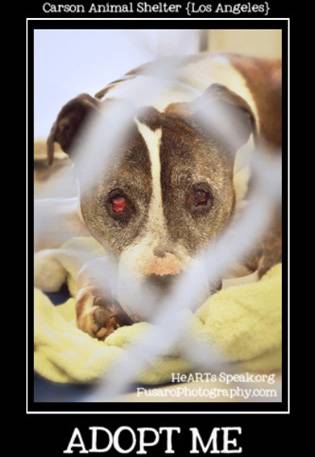
An abandoned dog named Sunny made Lori Fusaro realize that ‘no dog should die alone’ and inspired her to start a photography project to benefit senior pets.
By: Laura Moss, July 22, 2013
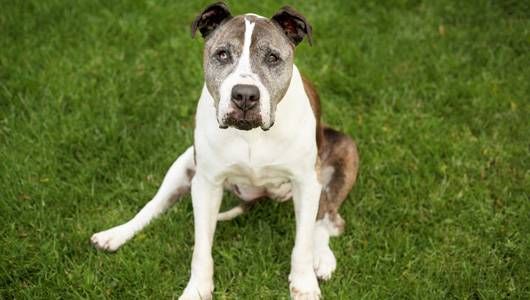
Photo: Lori Fusaro
The hardest part of loving a pet is having to say goodbye. That’s why the idea of adopting an older animal made dog lover Lori Fusaro so uneasy.
“I thought it would just be too sad and painful,” Fusaro told Today.com, “I didn’t think my heart could take it, so I wasn’t willing to open myself up.”
But that all changed in June 2012 when Fusaro met Shady while she was photographing dogs at the South Los Angeles Animal Shelter. Shady was 16 years old with infected eyes and a large cancerous tumor on her leg.
“She was so sad and depressed. She wouldn’t even lift her head for a treat. I didn’t think I could adopt her and I left the shelter without her. But her face never left my mind. She kept popping into my thoughts.”
As she contemplated adoption, Fusaro sought out more information on the dog.
“I thought Shady was a stray that found her way into the shelter,” she wrote on her blog. “Turns out I was wrong. Living her entire life with a family and then dumped because she was too old. With this new information, her face haunts me even more.”
Fusaro couldn’t stand the idea of the gentle dog dying alone, so she took her home and changed her name to Sunny.
“I always come back to the idea that no dog should have to die alone. Even if she got just two months of joyous, happy life, it’s worth it for my heartbreak,” she said.
Watching Sunny transform from an anxious shelter dog into the happy family member she is today inspired Fusaro to start Silver Hearts, a photography project that showcases senior pets and the joy they bring to people’s lives.
“When I realized that there were probably hundreds of Sunnys languishing in shelters, I knew I had to do something about it. Silver Hearts became a way that I could use my photography to show these dogs as loving, happy souls that have a zest for living and deserve to spend their golden years in a loving home.”
Fusaro visited families across the United States to photograph their dogs and share their compelling stories. Many of the dogs were taken to shelters because they got sick or old or because the families could no longer afford to care for them.
Although older dogs are often calmer — and already house-trained — they’re typically the highest-risk animals in a shelter. Fusaro hopes her photographs can help change that.
She launched a Kickstarter campaign to try to raise money to self-publish the book, but failed to make the fundraising goal. Fusaro is now considering other methods of publication.
“When I look back at my unwillingness to adopt an older dog, it was more about my own selfishness — about not wanting to feel that pain, not wanting to make hard decisions,” Fusaro said. “But every dog is important. Every dog deserves a home. I finally just boiled it down to love. That’s the most important thing.”
Lori explains why she photographs senior dogs in the video below.
ooOOoo
Abandoned and homeless dogs so desperately need the love of caring owners.














 Learning from Dogs