A really clever and innovative idea – the gravity light.
Saw this item on the Australian Permaculture Research website on the 18th.
Lighting in much of the ‘developing’ world is provided via expensive and polluting kerosene. Kerosene lamps are dangerous, require constant replenishment, and come with significant negative health impacts.
So, for the potential benefit of millions of people, London based designers, Martin Riddiford and Jim Reeves, have spent four years working on an inexpensive, safe and health-neutral alternative — a gravity powered LED light! It’s clever, and well intentioned. Nice!
Martin and Jim initially looked at creating a light that would be powered by solar, as would most of us. But the idea of utilising gravity took hold of them — where the end user can do away with the need for expensive solar panels and batteries, which use a lot of resources in their manufacture — and the gravity light was born. The gravity light will work whether it’s day or night, sunny or cloudy.
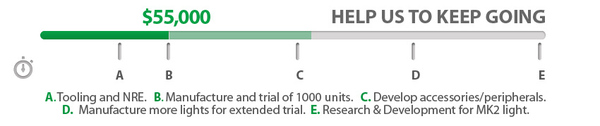
At time of writing, Martin and Jim’s Indiegogo campaign to raise funds has already surpassed its basic goal of $55,000, but if you wish to donate it’ll help them further their goal of refining the design to make it even more useful, efficient and inexpensive.
Then it was only a moment to track down the project on a website called Indiegogo, from which one reads,
GravityLight is a revolutionary new approach to storing energy and creating illumination. It takes only 3 seconds to lift the weight which powers GravityLight, creating 30 minutes of light on its descent. For free.
Following the initial inspiration of using gravity, and years of perspiration, we have refined the design and it is now ready for production. We need your help to fund the tooling, manufacture and distribution of at least 1000 gravity powered lights. We will gift them to villagers in both Africa and India to use regularly. The follow-up research will tell us how well the lights met their needs, and enable us to refine the design for a more efficient MK2 version. Once we have proved the design, we will be looking to link with NGOs and partners to distribute it as widely as possible. When mass produced the target cost for this light is less than $5.
Why GravityLight?
Did you know that there are currently over 1.5 billion people in the World who have no reliable access to mains electricity? These people rely, instead, on biomass fuels (mostly kerosene) for lighting once the sun goes down.
Go here and read the information in full and admire the photographs. But I will include this from the end of the item.
Credentials
We are Martin Riddiford and Jim Reeves, London based designers who have spent 4 years developing GravityLight as an off-line project. We work for therefore.com, which has over 20 years of experience in designing and developing hand held computing and communication products for a host of pioneers including Psion, Toshiba, NEC, TomTom, Inmarsat, ICO, Sepura, Racal Acoustics, Voller Energy, FreePlay and SolarAid.
We’re using a tried and tested manufacturer who has the right expertise to make GravityLight. We have some links to partner organisations in Africa and need to do the same for India. If you’re part of an organisation and would like to get involved then please contact us. We are particularly looking for contacts in South America.
Today, Jean and I together with our 11 dogs and 5 cats start the 1,200 mile journey to Merlin, Oregon. While we have only lived in Payson since February, 2010, it has been a time of fantastic experiences. I had to work through the long process of getting a fiancee visa from the American Embassy in London. Until that was issued my ‘residence’ in Payson was that of a British tourist with me having to leave the USA every 90 days.
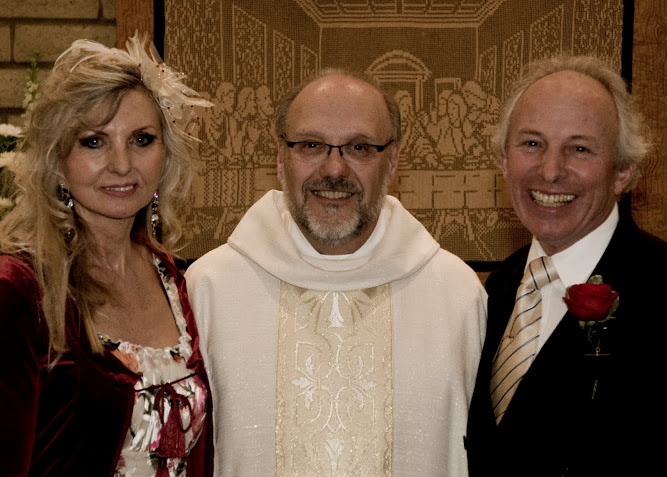
The visa was issued in October, 2010 and I flew immediately to Arizona. On the 8th November, 2010 Jean and I were issued with a Marriage License Certificate and we were married on the 20th November at St. Paul’s Episcopal Church in Payson.
Fr. Dan Tantimonaco with the newly weds!
We have made many very dear friends here in Payson but Oregon feels like the start of our home in every sense of the word, not just because it is the first home that Jean and I have bought jointly.
One of those dear friends here in Payson has been John Hurlburt, a devoutly spiritual man. A little over a week ago, he sent me a very thoughtful essay and I wanted to include it today as a guest post in recognition of the way that John and many, many others have embraced these couple of Brits over the last 32 months. Thank you all.
oooOOOooo
Unity
Everything fits together
The species of animals we know as human beings is a part of everything that exists. We are a very young consciously-aware species that does not begin to know all the answers. What little we do know has a Natural pattern. It would seem that there’s a lamplighter and a navigator in all of us. The lamplighter is our fundamental awareness of being and provides nature’s guidance along life’s pathways.
Our natural navigator is designed for evolutionary competition. There’s a biological survival kit in our DNA. Extreme demand for limited resources generates deadly combat; both within and between species. As a result of competition taken to wretched excess, our global economy is leveraged 22 times beyond any earthly foundation. The unspoken intent to destroy each other over what remains of our planet is becoming increasingly evident.
The human species is engaged in a global war over money, ideals and disappearing finite resources. Ninety-seven percent of the world scientific community has confirmed that the natural effects of heat and discharges generated by human machines and related human activities are the primary cause of recent rapid climate change.
These dedicated scientists are opposed in the media by three percent of their corporate energy-financed peers. An oppressive worldwide network of often offensive politicians is similarly supported and managed accordingly. Nature couldn’t care less about politics, emotions or idealistic arguments.
Human squabbles mean very little in the totality of universal life. The drumbeat of local natural disasters increases steadily. There are no two ways about it. No amount of human ifs or buts can or will change reality. Our human species is in deep serious trouble.
It has been six million years since the first humanoids emerged and two million years since the rise of human civilization. What a sorrow it is to realize what we have done to the earth in just the past two hundred and fifty years. We’ve reached the moon and are exploring Mars. It’s well past time to clean house and re-grow our local garden.
As an old navigator, there’s a sense of urgency regarding the course life on earth has taken. For those who continue to care about facts, the prognosis is not encouraging. We have the know-how for an alternative. We can avoid the perfect storm of going over the edge of an economic cliff and the crush of an environmental crisis in the midst of a war-fuelled, profit-driven, global, corporate fight to the end. The alternative is that we have the know-how to transition rapidly to a reality-based economy and a way of living that’s gentle to the earth. The solution is global, it’s industrial, it’s natural and it’s our best hope. It may well be our only hope. It’s time to light some lamps.
Conscious human awareness emerges as we relax, contemplate, meditate, and communicate openly. These are levels of awareness beyond the limits of our daily human musings. The wisdom which flows from enlightened awareness embraces humility, experience, knowledge, understanding, and faith. Life has never been easy. We’re fragile biological beings. Our mutual growth is the result of sustained efforts over millions of years.
Yet despite attaining a higher level of conscious awareness our human culture continues to operate on a material basis rather than a moral basis. We have become confused by our own importance or the apparent lack thereof. We all too often retreat into a rut, furnish it and turn on the electronics.
By definition, natural processes support species growth in harmony with all natural life. Those natural processes are indistinguishable from the planetary support systems within which all life interacts. Human interaction is local. We spend much of our lives unaware that we are unaware; initially as infants and throughout our lives in deep sleep. When caught up in the pressures of our daily lives, it’s easy to be unaware of being unaware.
It’s time to wake up. Cosmology is an eternal spring from which the waters of the earth still flow. When we turn ourselves inside-out and achieve higher awareness, we discover who, what and where we really and truly are. In a trinity of spirituality, nature and science, we’re cosmically energized beings; spiritual beings sharing a transitory human existence.
Ninety-eight percent of the human population believes in a power beyond species and self. The simplest understanding of this belief is that we humans did not originally create ourselves. All human wisdom and understanding leads to the conclusion that human beings don’t own the earth. We’re caretakers and we’re only passing through. Given that we have a systemic crisis, what do we have to work with?
We have a species that’s squabbling over diminishing resources, an environment and an infrastructure which both desperately require attention, a sustaining objective of equitable global employment, a world economy that’s about to collapse for lack of any real foundation, a burgeoning population which further strains the system and the clear need for a unifying purpose.
Put it all together and what do we have? The navigator is our guide to growth. The navigator shares our wholeness. The lamplighter is our guide to unity. Everything fits together. Each of us is a part of the unity of life. Unity has a natural purpose. It’s time to build a life boat.
John Hurlburt is a former U.S. Navy aviator and successful corporate executive who presently serves as a senior Christian educator and a founding member of an international Transition Town in Payson, Arizona.
oooOOOooo
Don’t know about you, dear reader, but I find those incredibly powerful words. Words that provide the truth. A truth the whole world needs. John set out in a personal email to me the three simple fundamentals of our lives. Just a few more words to sum up the truth.
“There’s an environmental crisis. There’s an inevitable global economic abyss touching us all on a daily basis. The need for a green economic transformation is obvious.“
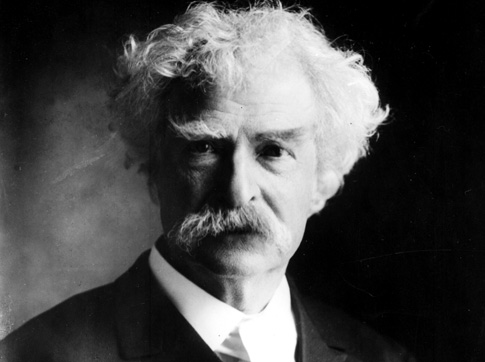
Mark Twain quotation after hearing that his obituary had been published in the New York Journal.
Mistaken publications of obituaries aren’t as rare as you might expect. A recent example is of Dave Swarbrick, the British folk/rock violinist, who was killed off mistakenly by the Daily Telegraph in April 1999 when they reported that his visit to hospital in Coventry had resulted in his death. He did at least get the opportunity to read a rather favourable account of his life, not something we all get to do, and to deliver the gag “It’s not the first time I have died in Coventry”.
So why have I opened with this quote from Mark Twain? Read on and I hope all will be clear.
Integrity is always about getting to the truth!
A little under a week ago I published a couple of posts that proposed that the United States of America is an empire in decline. The first was What goes up? and the second Might just come down! As a Brit I well know that aspect of British history!
However a recent conversation with a friend of many years back in England, who has also been a shrewd and wise entrepreneur for longer than I care to remember, argued that the evidence for the ‘end of the USA’ could be challenged.
He cited five reasons why he thought the USA would remain, more or less, in its dominant position. They were:
Spirit of innovation
Relaxed labour laws
The importance of Mexico
The uncertainty of China in terms of the next ’empire’
The likely energy self-sufficiency for the USA in the near-term.
So let me expand on each of those points.
Spirit of innovation
Let me quote from an article in TIME Magazine of the 5th June, 2011,
Innovation is as American as apple pie. It seems to accord with so many elements of our national character — ingenuity, freedom, flexibility, the willingness to question conventional wisdom and defy authority. But politicians are pinning their hopes on innovation for more urgent reasons. America’s future growth will have to come from new industries that create new products and processes. Older industries are under tremendous pressure. Technological change is making factories and offices far more efficient. The rise of low-wage manufacturing in China and low-wage services in India is moving jobs overseas. The only durable strength we have — the only one that can withstand these gale winds — is innovation.
Now there are plenty to argue both ways in terms of the future innovation potential for the USA, as a recent article in The Atlantic does, see American Innovation: It’s the Best of Times and the Worst of Times. But the spirit of innovation will be a powerful economic potential for the USA for many years to come.
Relaxed labour laws.
Definitely an area that I have little knowledge of except for the subjective notion that compared to many other nations, the laws in the USA are much less of a restraint on economic productivity than elsewhere.
The importance of Mexico.
Importance in the context of providing the USA with a source of cheaper manufacturing facilities. My English friend thought that this was a significant competitive advantage for the USA. Now, as it happens, we had a couple staying with us over the week-end of the 6th/7th October. The husband is a senior manager of Horst Engineering, an American firm based in Guaymas, Sonora County, Mexico. Here’s a picture from their website,
We are a contract manufacturer of precision machined components and assemblies for aerospace, medical, and other high technology industries. Our core processes include Swiss screw machining, turning, milling, thread rolling, centerless grinding, and assembly. Our extensive supply chain offers our customers a full service logistics solution for managing their precision product requirements. We are ISO9001:2008 and AS9100 registered and proud of our 66 year, three-generation legacy of quality and performance.
I was told that many American and British firms were using Mexico rather than China for a number of reasons. Not least because Chinese suppliers require full payment before shipment. Plus that taking into account that financial aspect together with shipping costs and other logistical issues, China wasn’t as ‘cheap’ over all. Here’s a recent announcement from Rolls Royce,
Rolls-Royce plans new Sonora hub
The burgeoning aerospace industry in Guaymas had its efforts validated recently when the venerable Rolls-Royce chose it as the site for its newest global purchasing office.
Surrounded by several of its aerospace manufacturing suppliers, London-based Rolls-Royce will move into a Guaymas industrial park owned by Tucson-based The Offshore Group to develop a supply hub for commercial jets and military aircraft around the globe.
“Rolls-Royce has very robust booking orders for the next 10 years,” said Joel Reuter, director of communications for Rolls-Royce in North America. “We need to double our production.”
Because a number of Rolls-Royce suppliers already operate in Guaymas, the city was a logical choice, Reuter said.
The uncertainty of China in terms of the next ’empire’
The point made in terms of China taking over ’empire’ status from the USA, as Simon Johnson argues over at Baseline Scenario, is countered by the fact that politically China is an unknown quantity. Until China endorses some form of democratic process, that unknowingness is not going to disappear.
The likely energy self-sufficiency for the USA in the near-term.
I can’t do better than to ask you to watch this video! Just 27-minutes long, it is a very interesting review of the energy future of the USA.
As the TED website suggests in terms of why you should listen to Amory Lovins,
Amory Lovins was worried (and writing) about energy long before global warming was making the front — or even back — page of newspapers. Since studying at Harvard and Oxford in the 1960s, he’s written dozens of books, and initiated ambitious projects — cofounding the influential, environment-focused Rocky Mountain Institute; prototyping the ultra-efficient Hypercar — to focus the world’s attention on alternative approaches to energy and transportation.
His critical thinking has driven people around the globe — from world leaders to the average Joe — to think differently about energy and its role in some of our biggest problems: climate change, oil dependency, national security, economic health, and depletion of natural resources.
So, don’t know about you, but I found those five points deeply convincing. How about you? Are the reports of the death of the USA greatly exaggerated? Do leave a comment.
I do not believe that civilizations have to die because civilization is not an organism. It is a product of wills. Arnold J Toynbee
Yesterday, I explored a number of ideas around the proposition that the USA is in decline. The case is by no means clear but there does seem to be a preponderance of support for the notion that, as with all great empires, this could be an ‘end time’ for the USA.
One needs to go no further than A. J. Toynbee himself to reflect on that idea. Who was Arnold J Toynbee? Here’s his biography as presented on the Gifford Lectures website, ( Note: A fabulous series of lectures available on YouTube!)
Arnold J Toynbee
The British historian Arnold Joseph Toynbee was born in London on 14 April 1889 and died on 22 October 1975 in York, North Yorkshire, England. He was educated at Winchester College and Balliol College, Oxford. He was the nephew of economic historian Arnold Toynbee, with whom he is sometimes confused. His first marriage to Rosalind Murray, with whom he had three sons, ended in divorce in 1946. Professor Toynbee then married Veronica M. Boulter, his research assistant.
From 1919 to 1924 Arnold J. Toynbee was professor of modern Greek and Byzantine history at King’s College, London. From 1925 until 1955 Professor Toynbee served as research professor and Director of Studies at the Royal Institute of International Affairs. During both world wars he worked for the British Foreign Office. He was a delegate to the Paris Peace Conference in 1919.
While Professor Toynbee’s Gifford Lectures were published as An Historian’s Approach to Religion (1956) he is best known for his 12-volume A Study of History (1934-1961). This massive work examined the growth, development and decay of civilizations. He presented history as the rise and fall of civilizations rather than nation-states or ethnic groups. According to his analysis of civilizations the well-being of a civilization depends on its ability to deal successfully with challenges.
Professor Toynbee oversaw the publication of The Survey of International Affairs published by Oxford University Press under the auspices of the Royal Institute of International Affairs from 1925 to 1977.
A Study of History is the longest book in the English language, described in Wikipedia as, “the 12-volume magnum opus of British historian Arnold J. Toynbee, finished in 1961, in which the author traces the development and decay of all of the major world civilizations in the historical record. Toynbee applies his model to each of these civilizations, detailing the stages through which they all pass: genesis, growth, time of troubles, universal state, and disintegration.”
Back to the theme of the essay. One might propose, therefore, that a decline in the USA could be the ‘leading edge’ of a decline not only of the empire of the USA but of the whole of our present civilisation; the ‘universal rhythm of rise, flowering and decline‘.
It is axiomatic among most of our Washington elite that the United States cannot lose its preeminent global role, at least not in the foreseeable future. This assumption is implicit in all our economic policy discussions, including how politicians on both sides regard the leading international role of the United States dollar. In this view, the United States is likely to remain the world’s financial safe haven for international investors, irrespective of what we say and do.
Expressing concerns about the trajectory of our federal government debt has of course become fashionable during this election cycle; this is a signature item for both the Tea Party movement in general and vice presidential candidate Paul D. Ryan in particular.
Then later, in a reference to my own British history, writes,
Threatening to shut down the government or refusing to budge on taxes is seen by many Republicans as a legitimate maneuver in their campaign to shrink the state, rather than as something that could undermine the United States’ economic recovery and destabilize the world. This approach is more than unfortunate, because the perception of our indefinite preeminence – irrespective of how we act – is completely at odds with the historical record. In his widely acclaimed book, “Eclipse: Living in the Shadow of China’s Economic Dominance,” Arvind Subramanian places the rise of the dollar in its historical context and documents how economic policy mistakes, World War II and the collapse of empire undermined the British pound and created space for the United States dollar to take over as the world’s leading currency.
Then Simon endorses the key point made by Arvind Subramanian, namely,
But Dr. Subramanian also asserts that two other factors were important: the sheer size of the American economy, which overtook Britain’s, probably at some point in the late 19th century, and the United States current account surplus. In particular, American exports were far larger than imports during World War I and by the end of World War II the United States had amassed almost half the gold in the world (gold at that time was used to settle payments between countries.)
In effect, the United States dollar pushed aside the British pound in part because the United States became the world’s largest creditor.
Simon’s essay closes thus, (and you do need to read the full essay, by the way, many important ideas are expressed)
The dollar became strong because American politicians were responsible, careful and willing to compromise. Fiscal extremism, confrontation and a refusal to consider tax increases over any time horizon will undermine the international role of the dollar, destabilize the world and make it much harder for all of us to achieve any kind of widely shared prosperity.
Finally, in a call with my son, Alex, just 30 minutes ago (I’m writing this on the morning of the 4th October), he mentioned an item he had read in today’s Guardian newspaper No recovery until 2018, IMF warns.
The International Monetary Fund’s chief economist has warned that the global economy will take a decade to recover from the financial crisis as the latest snapshot of the UK economy suggested that growth in the third quarter will be at best anaemic.
Olivier Blanchard said he feared the eurozone crisis, debt problems in Japan and the US, and a slowdown in China meant that the world economy would not be in good shape until at least 2018. “It’s not yet a lost decade,” he said. “But it will surely take at least a decade from the beginning of the crisis for the world economy to get back to decent shape.
2018! That leaves plenty of time for any number of global ‘surprises’ geopolitical and environmental alike! But my final message is one of caution. I am as vulnerable as the next person in seeing ‘doom and gloom’ ahead. However, drop in to Learning from Dogs next Tuesday and watch something that may surprise you.
So on that note, the closing quote is going be one that I have loved for a long time:
“Prediction is very difficult, especially if it’s about the future. “ Niels Bohr
The amazing development of electronics over 50 years.
(A republication of a post first shown on the 13th August, 2009)
The calendar reliably informs me that this is my 65th year. My brain, of course, lags somewhat in accepting this!
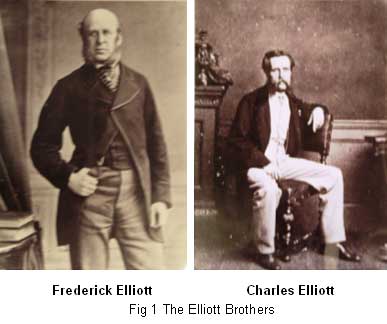
My step-father during my early teenage years worked for Elliott Brothers (the link goes to an interesting history of the firm that started in 1804) in Borehamwood, just north of London. He encouraged me to fiddle with ‘steam’ radios and
try and understand how these basic circuits worked. It was then a small step to deciding to become a radio amateur, popularly known as a radio ham! In those days it was a case of some pretty intensive studying to pass a Theory exam as well as being able to pass an exam in sending and receiving Morse code.
So joining the local radio society seemed like a sensible idea. That was (and still is!) called the Radio Society of Harrow. That it is still in existence after all these years is truly delightful. Those Friday night sessions at the Society and extra-curricular classes on Sunday morning at Ron Ray’s (G2TA) house, an hour’s bicycle ride away from home, ensured that shortly after my 16th birthday I was granted a Licence, G3PUK. It was a very proud moment.
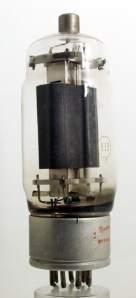
Anyway, once granted a licence it was time to build my own radio transmitter. Most of the details have been lost in the mists of time but what is recalled was that the final amplifier was a pair of 803s driving an 813 (These are radio valve numbers). It sounds like something from the ark! But again ploughing the inexhaustible files of the Web, it’s possible to see what these radio valves looked like. Thanks to the National Valve Museum.
Here are pictures, courtesy of the National Valve Museum of those two radio valves:
803 – The substantial wide glass tube envelope is 58 mm in diameter (2 1/4 in) and, excluding the special five pin base pins, is 216 mm tall (8 1/2 in).
813 The classic envelope is substantial at 60 mm diameter (2 1/3 in) and 170 mm (6 2/3 in) long excluding the special base pins. The anode is 53 mm long and 48 mm wide. The metal is 1 mm thick.
803 radio valve813 radio valve
It’s difficult, today, to imagine devices which are essentially diodes (well, technically the 803 was a pentode and the 813 a tetrode) being between 6 and 8 inches tall!
My own self-build transmitter had not really been successful emitting more heat than light, so to speak. Literally, in the sense that these large radio valves kept me warm in my converted garden shed at the bottom of the garden. They also completely wiped out TV reception for those households with a 1/4 mile range that had invested in early television sets! It was time to move on to the R1155.
Around this era, less than 20 years after the end of the War in Europe in 1945, war-surplus equipment was widely available including ‘compact’ transmitter-receiver units.
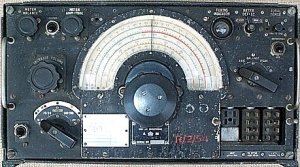
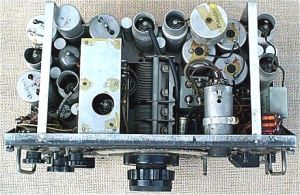
One popular one was the RAF R1155 which had been fitted to RAF Lancaster bombers and RAF marine craft. It was also fitted to the Sunderland flying boat. This information plus the photos below is from this fascinating web site for those wishing to be ‘geeky’ about this.
RAF R1155B transreceiverInternal view of the R1155B
Just compare the view on the right to the inside of your domestic radio or your cell phone.
A lot happens in 50 years!
My personal journey now leaps to 1978 and I have just left IBM UK having had 8 fabulous years with them as an Office Products salesman. My fledging company, Dataview Ltd, has just become the 8th Commodore Computer (CBM) dealer in the UK, based in a small office in Colchester, Essex, about 50 miles north-east of London.
The CBM PET (Personal Electronic Transactor) released in 1977 initially with a calculator type keyboard was useless for any business application but soon came out with a typewriter sized keyboard, making it a more viable business
CBM computer, circa 1978
machine. Today, as this is typed on an ‘old’ laptop with 2GB RAM, it seems unbelievable that these CBMs were sold with between 4k and 96k of RAM (memory) and no hard disk, although one could purchase an add-on that comprised dual 5 1/2 inch floppy disk drives.
YouTube obligingly finds a short video on the Commodore PET for those really wishing to enjoy the nostalgia!
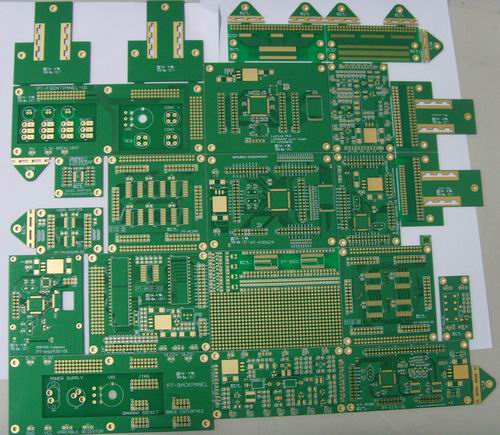
So to turn to the 21st century and to run out of understanding. We appear to live in a world of multi-later printed circuit boards of unimaginable (to me) component density, assuming that the word ‘component’ is even relevant today.
Haven’t a clue what this is but it’s very modern.
What an amazing period it has been!
A long way from yesterday!
Now let me see was it Pin 920 to Pin 140, or Pin14 to Pin 860 connected to Pin 56 ………?
A small tribute from two of Her Majesty’s subjects!
Best wishes for many years ahead as our Queen!
Jean and I managed to watch the hour-long tribute by Prince Charles to his mother’s wonderful Diamond Jubilee week-end.
Here’s a small extract of that programme that appeared on ITN News.
Then thanks to Martin Lack’s latest Post, I discovered that You Tube have the full programme as well. Here it is – do watch it if you can, it is a lovely, personal and intimate reflection by Prince Charles.
At the end of the programme, both Jean and I felt very nostalgic about the long reign of Her Majesty Queen Elizabeth II. However much we appreciate the life that we have here in Payson, Arizona, these two old Londoners still feel proud to be British.
There’s a great website here full of all the details of this very special time for Britain.
Finally, the extreme dry conditions of our forest mean that lighting a Jubilee Beacon here at home is out of the question. The following is our alternative:
Beltane Fire Ritual, Edinburgh, Scotland
It’s what Jean and I do most Sunday evenings anyway!
How lady luck brought joy for a ‘down-and-out’ Londoner and a cat called Bob!
I was chatting with my son yesterday and he happened to mention that perhaps I should write about a cat for a change! Alex mentioned a book recently published in the UK called A Street Cat Named Bob: How One Man and His Cat Found Hope on the Streets.
This is how the book is described on Amazon (UK site),
When James Bowen found an injured, ginger street cat curled up in the hallway of his sheltered accommodation, he had no idea just how much his life was about to change. James was living hand to mouth on the streets of London and the last thing he needed was a pet. Yet James couldn’t resist helping the strikingly intelligent tom cat, whom he quickly christened Bob. He slowly nursed Bob back to health and then sent the cat on his way, imagining he would never see him again. But Bob had other ideas. Soon the two were inseparable and their diverse, comic and occasionally dangerous adventures would transform both their lives, slowly healing the scars of each other’s troubled pasts. A Street Cat Named Bob is a moving and uplifting story that will touch the heart of anyone who reads it.
A quick web search found volumes of material, so let’s start with this video,
The local London newspaper the Islington Tribune wrote this back in 2010,
Two cool cats… the Big Issue seller and a stray called Bob
Inseparable: musician James Bowen with Bob
Down-on-his-luck musician teams up with ‘wonderful loyal friend’ he rescued from streets
Published: 24 September, 2010
by PETER GRUNER
NOT since the legendary Dick Whittington has a man and his cat become such unlikely celebrities on the streets of Islington.
Big Issue seller James Bowen and his docile ginger cat Bob, who go everywhere together, have been attracting comments since they first appeared outside Angel Tube station.
The story of how they met – widely reported in blogs on the internet – is one of such extraordinary pathos that it seems only a matter of time before we get a Hollywood film.
James, 31, who lives off Seven Sisters Road, Holloway, is a musician who has fallen on hard times.
He ekes out a basic living selling the homeless people’s magazine Big Issue at Angel and Covent Garden.
Bob was a stray discovered by James outside his accommodation one day.
The cat was limping after apparently being attacked by another animal, possibly a fox.
After failing to discover the cat’s owner, James took him to the RSPCA hospital at Finsbury Park, which prescribed a course of antibiotics.
“I kept him for two weeks until he was well enough to go on his way,” said James. “But when I opened the front door to let him out Bob wouldn’t move. He seemed to me to be saying: ‘I want to stay with you.’
“Now we go everywhere together. I even have a cat harness when we go out and Bob gets really excited when I show it to him.”
Read the rest of the article here and if you want more information, a web search on Bob the Cat will finds loads more.
It’s a fabulous story with a great message of hope for not just for James and Bob but for all of us that find ourselves ‘up a creek without a paddle’ at points in our lives.
Here’s how the newspaper The Daily Mail wrote about it on their website,
[last half of the story]
But then Bob started following him and it became increasingly difficult to shoo him away, especially as there were dangerous roads to be crossed. One day there was nothing for it but to put Bob on a makeshift lead and take him along. Bob travelled sitting on James’s shoulders.
The trouble was, so many cat-mad passers-by stopped him to stroke the animal that James arrived late at his pitch, secretly cursing Bob for thereby costing him some of his usual £25-a-day takings. He couldn’t have been more wrong.
Within minutes, people who would normally have walked by without giving James a second glance were lingering to make a fuss of the cat sitting sedately in his guitar case, and most made a donation. By the end of the day, he’d racked up more than £60.
It was the beginning of a phenomenon as tourists and commuters befriended Bob and James, many bringing titbits for the cat. People were amazed at how placidly Bob would sit all day, quite happily watching the world go by while James earned a living. Not that it was always without a hitch; on a couple of occasions Bob bolted when startled, leading to a frantic chase through the crowded streets.
Bob’s popularity continued when James switched from busking to selling the Big Issue, the magazine produced and sold by homeless people. This change in direction was part of James’s growing sense of a need to get his life in order, which he puts down to the responsibility of looking after Bob, and the example the cat offered of the possibility of a second chance.
It enabled James to make the final push to end his drug dependency, going through the necessary cold turkey to get off heroin substitutes, and to mend broken contacts with his family. The final result of Bob’s influence came when a literary agent who passed the duo every day and had seen them on YouTube suggested James tell their story in a book. The result is this heart-warming tale with a message of hope that will appeal especially to the many cat obsessives out there.
On April 14th, 1912, at 23.40 ships time, the Titanic struck an iceberg and the rest is history. I’m not going to add to the wealth of information available on this sad centenary except to say that 1,514 people lost their lives and they and their descendants should be held in our prayers. And to recognise that one of those who lost his life was young ‘Jack’ Phillips, Senior Wireless Operator, who persisted in sending out distress messages by Morse Code to the very last, thus enabling the RMS Carpathia to rescue 710 souls.
Rest In Peace
Below are some local times to assist you in offering up a quiet thought as one hundred years ago to the moment the sound of a liner hitting an iceberg reverberated around the world.
RMS Titanic Ships Time April 14th 2340 – 11.40 PM
GMT/UTC April 15th 0240 – 2.40 AM
British Summer Time April 15th 0340 – 3.40 AM
Arizona/California April 14th 1940 – 7.40 PM
New York April 14th 2240 – 10.40 PM
London April 15th 0340 – 3.40 AM
Paris April 15th 0440 – 4.40 AM
Moscow April 15th 0640 – 6.40 AM
Singapore April 15th 1040 – 10.40 AM
Sydney, Australia April 15th 1240 – 2.40 PM
More world times may be calculated from this website.
Charles Dickens was born on the 7th February, 1812.
Just a short item from me today.
Charles Dickens
Inevitably, the bicentenary of someone as well known as Charles Dickens is going to be widely celebrated. WikiPedia has a nice summary for someone, such as me, who isn’t too familiar with the writings or life history of Charles Dickens, from which I quote,
Charles John Huffam Dickens (7 February 1812 – 9 June 1870) was an English novelist, generally considered the greatest of the Victorian period. Dickens enjoyed a wider popularity and fame than had any previous author during his lifetime, and he remains popular, having been responsible for some of English literature’s most iconic novels and characters.
Many of his writings were originally published serially, in monthly instalments, a format of publication which Dickens himself helped popularise. Unlike other authors who completed novels before serialisation, Dickens often created the episodes as they were being serialised. The practice lent his stories a particular rhythm, punctuated by cliffhangers to keep the public looking forward to the next instalment. The continuing popularity of his novels and short stories is such that they have never gone out of print.
From the BBC website, there is a podcast that can be downloaded, introduced thus,
Docs: Dreaming Dickens: Feb 03 12
Fri, 3 Feb 12
Duration: 24 mins
In this documentary-fantasy we bring the danger back to Dickens. Slipping in and out of his weird and brilliant imagination, we see modern London as he might have done, travelling through the city’s streets at night to crack dens and strip-joints as the police sirens wail. We meet characters from his novels and characters who would be in his novels if he were still alive today.
By Bryony Jones, CNN
updated 9:16 AM EST, Mon February 6, 2012
London (CNN) — Charles Dickens is one of the world’s best-loved writers, whose books — and the countless film and TV adaptations they inspire — still keep readers (and viewers) on the edge of their seats.
Now, 200 years on from his birth, his genius is to be feted with a host of events marking the bicentenary of one of Britain’s most famous sons.
Dickens 2012 will see everything from readings to royal visits, celebrating the man who gave the world “Oliver Twist,” “David Copperfield” and “Great Expectations.”
In London, the special events will begin with a celebrity performance, by actors Simon Callow and Joanna Lumley, at the Dickens family’s graves in Highgate Cemetery on Monday.
And on Tuesday, the anniversary of Dickens’ birth, the Prince of Wales will lay a wreath at Dickens’ grave in Poet’s Corner, Westminster Abbey, while actor Ralph Fiennes, Dickens’ biographer Claire Tomalin and the author’s great-great-grandson, Mark Dickens give readings.
So, quite rightly, a broad appreciation for the great man.
We had to put one of our dogs to sleep on Friday, not a GSD, but one of Jean’s rescued dogs from way back. At this moment in time (11am US Mountain Time, Saturday) I’m writing a piece about this wonderful dog that will appear tomorrow.
Thus not in the mood to post my usual light-hearted item for a Sunday. So I resorted to looking up an appropriate dog video on YouTube.
Came across this,
Of course, that reminded me of how precious our Pharaoh is and it only took a few moments to find a couple of earlier pics of him.
Here’s Pharaoh the day I collected him from GSD breeders Jutone‘s in Dartmoor, SW England. That’s Sandra Tucker, the owner of Jutone, with Pharaoh; the date being 12th August 2003 when Pharaoh was then just over 8 weeks old.
Sandra Tucker holding young Pharaoh
The next photograph was taken on the 11th March, 2008 at London’s Heathrow Airport. The occasion being the time that Jean came across to England from her home in Mexico. Jean came to see if the romance that had blossomed between us at Christmas in 2007 in San Carlos, Mexico was alive and well. Luckily, it was!
Jean meeting Pharaoh for the very first time!
Thus it came to pass that in September, 2008, Pharaoh and I travelled out from Devon, England to Mexico where we lived until February, 2010, when Jean and I, Pharaoh and 12 other dogs and 6 cats relocated to Payson, Arizona.








 Learning from Dogs