Tag: Jessica Brody

When the sun is low in the sky!

What dogs mean to us whatever our age!

I chose the title for today’s post deliberately. Wanting it to act as a metaphor for our senior years, as the dear Americans like to put it, or leaning on my English roots, preferring the metaphor of the sinking sun for the Autumnal years of our lives.

We live in a part of the world where “The median age was 47.3 years.”

Josephine County, Oregon

As of the 2010 United States Census, there were 82,713 people, 34,646 households, and 22,498 families residing in the county.[20] The population density was 50.4 inhabitants per square mile (19.5/km2). There were 38,001 housing units at an average density of 23.2 per square mile (9.0/km2).[21] The racial makeup of the county was 92.4% white, 1.4% American Indian, 0.8% Asian, 0.4% black or African American, 0.2% Pacific islander, 1.5% from other races, and 3.2% from two or more races. Those of Hispanic or Latino origin made up 6.3% of the population.[20] In terms of ancestry, 26.3% were German, 15.6% were Irish, 15.5% were English, 5.5% were Italian, and 5.5% were American.[22]

Of the 34,646 households, 25.5% had children under the age of 18 living with them, 49.2% were married couples living together, 11.0% had a female householder with no husband present, 35.1% were non-families, and 28.3% of all households were made up of individuals. The average household size was 2.34 and the average family size was 2.82. The median age was 47.3 years.[20]

Yet in the rural areas of this County one does see a fair number of people who, as with Jean and me, are the wrong side of 65!!

But one very frequent observation of those ‘senior’ people is that they have a dog in their lives.

On April 10th, I posted a guest article written by Jessica Brody. It was very well received and I closed that post by saying: “I know many will agree with me when I say that it would be good to receive some more articles from Jessica.”

Our wishes have been granted. Here is Jessica’s second guest article.

ooOOoo

The Wonderful Benefits of Pet Ownership for Seniors

by Jessica Browdy. May 3rd., 2017
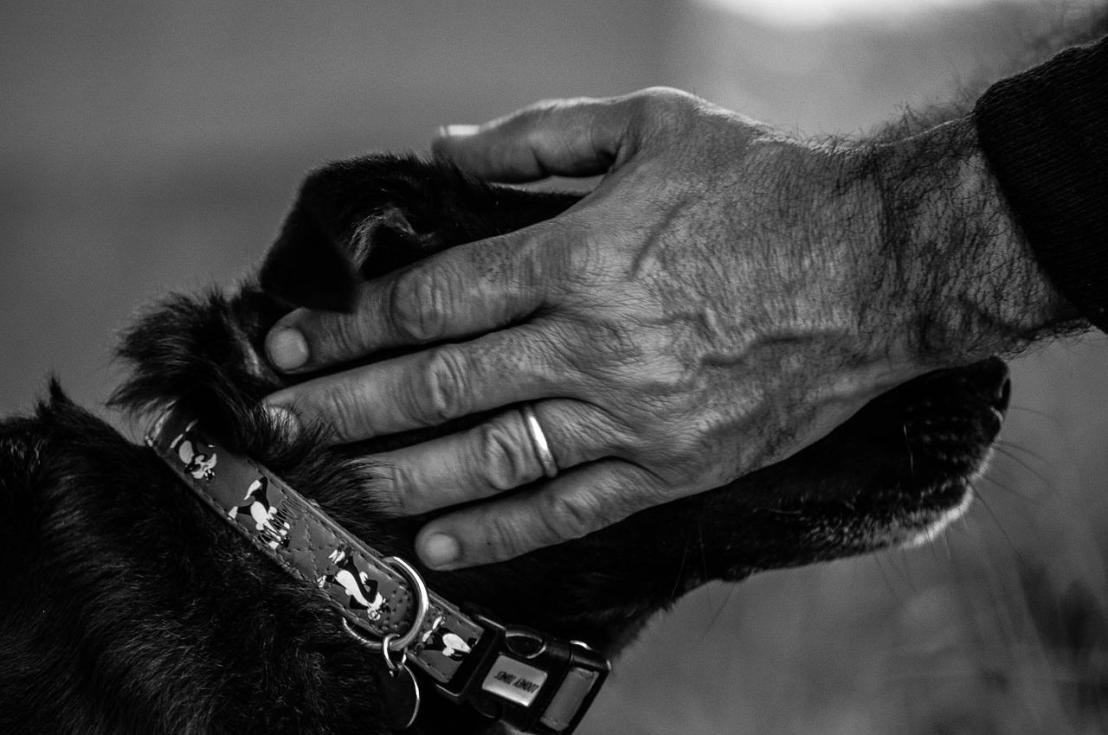
It’s no mystery that pet ownership can bring joy to people’s lives, but it turns out that having a pet may benefit seniors in ways that reach far beyond the pleasures of companionship. For elderly people who live alone or in senior care facilities, owning a pet can improve mental and physical health, paving the way for longer, healthier, and happier lives. Here are five ways that having a critter companion can benefit senior health.
Pets Improve Senior Mental Health
One of the greatest benefits of pet ownership for people of any age is the unconditional friendship and love that a pet provides. This support is especially important for elderly people, who are prone to loneliness and isolation as they leave the workforce, children move away, and friends and loved ones begin to pass on. Isolation is one of the biggest risks to senior health; isolation can cause depression (and related issues), cognitive decline, and even early death. The company of a beloved pet can help seniors stave off loneliness and preserve their mental health. Caring for a pet can also give seniors something to focus on other than negative thoughts about grief, physical ailments, and aging, thereby reducing their overall stress levels.

Pets Keep Seniors Social

Pets do more than provide a social outlet for seniors — they can actually lead the elderly to be more social with their peers as well. People are naturally drawn to dogs, and a senior who is out walking a pet is more likely to meet new people than if walking alone. Pets can help bring people together in senior living facilities, too. Dogs, cats, and other animals give people a common interest over which they can come together, share stories, and develop friendships.

Pets Reduce Heart Attack Risk

Companion animals like dogs, cats, birds, and even fish can improve heart health by lowering blood pressure. One study showed that being in the presence of your dog can even have a greater impact on your blood pressure than some medications. And by lowering blood pressure, pets can reduce heart attack risk in seniors.
Pets Keep Seniors Active
The daily routine of caring for a pet helps seniors maintain functional mobility. Giving food and water, cleaning a litter box, and letting the dog outside makes a sedentary senior get up and get moving. These simple activities can support an elderly person’s ability to complete the activities of daily living like bending, preparing meals, bathing, and dressing. Older people who own dogs are also more likely to stay active into their later years. Not only do they get out to walk the dog, but they’re also more likely to be involved in other active hobbies like gardening.
Pets Improve Senior Personal Care
A senior who has a daily pet care routine is more likely to adhere to a daily personal care routine. Having a routine gives structure to a senior’s days, making it easier to adhere to medication schedules, meal times, and personal care. Maintaining a daily routine can even help seniors sleep better.

Seniors can be saviors to pets, too. When older people adopt adult or senior pets, they provide a loving, stable home to an animal that may not have found a home otherwise. Dogs and cats aged seven and older are adopted at staggeringly low rates, even though they still have years of love to give. Many shelters and rescues even offer discounts for seniors adopting senior pets, so be sure to ask if you might be able to adopt your new friend at a reduced rate.

Image viaPixabay by marmax

Author: Jessica Brody

ooOOoo

Keep them coming, Jessica. (Well that’s the view from this senior!)

Being a great pet owner

Again and again the connections are wonderful!

On the 21st March, I received an email. It read:

Hello!

According to the ASPCA, animal shelters take in 7.6 million dogs and cats each year. Unfortunately, only 2.7 million animals are adopted each year. I’d love to see that number increase.

I’ve been a pet owner for decades. I know the seemingly infinite joy and love that comes from having a pet. But I also remember how nervous I was when I adopted my first dog.

To ease first-time and potential pet owners’ anxiety about caring for a pet, I would love to offer advice on how to be a great pet parent. Tips will be culled from my own experience and the experience of my blog’s (OurBestFriends.pet) contributors.

Can I write a guest article for your readers? My hope is that the piece will encourage folks to adopt a loving animal. The content will be completely original and free of charge. Please let me know if you’d like to take part.

Hope to hear from you soon!

Jessica

Jessica Brody

Ourbestfriends.pet

What a wonderful email and, of course, I was only too pleased to receive Jessica’s article.

Here it is:

ooOOoo

Survival Guide for First-Time Pet Owners: How to Be a Great Pet Parent

By Jessica Brody, 6th April, 2017

If you’re considering adopting a four-legged friend for the first time, you’re about to embark on an amazing journey. From learning your new pet’s unique personality traits to navigating the demands of providing the best care for your new family member, adopting a pet is a learning experience, but an enriching one. Here are a few essential tips to help you transition your new furry friend seamlessly into your family.

Make Arrangements for Regular Exercise

Dogs, in particular, require regular exercise. They say that a tired dog is a well-behaved dog. If you work long hours, consider hiring a dog walker who can take your pup out for a mid-day potty break and walk. Make sure your new pet – dog or cat – has plenty of toys to keep them occupied while you’re working or otherwise unable to devote your full attention to them while you’re at home.

From bones and dental chews to balls, bells, and feathers, there’s no shortage of unique and intriguing toys on the market to keep your pet entertained and healthy.

If you own your own home, you might also consider installing a fence around a section of your yard. That way your new pet will have a place to run and play without having to be on a leash. You can also use the space for training.

Choose a Veterinarian You Trust

First and foremost, your new pet will need to see a veterinarian. If you’re adopting from a shelter or rescue organization, your pet may come with veterinary records and may already be spayed or neutered. If you’re adopting a new pet from a pet store or breeder, however, you’ll most likely need to take care of initial vetting on your own.

Ask friends and family members for vet recommendations and call around to inquire about office policies and prices to make an informed decision. It’s important that you find a veterinarian that you trust to provide top-notch care for your beloved pet.

Choose a Quality Pet Food

All pet food is not created equal. If you want your pet to live a long, healthy life, you should choose a top-quality pet food that contains healthy ingredients and has a solid track record. There have been many pet food recalls in recent years, with some causing serious illness and even death in pets.

Do your research to determine what foods are the best and safest for your dog’s stage of life and health history. Puppies require different food than older dogs, for instance, and dogs with certain health conditions have special dietary requirements. Talk to your vet if you’re uncertain.

Establish Rules and Routines

Adopting a new pet for the first time requires a bit of playing by ear, as you don’t know exactly what your pet’s quirks will be. However, it’s a good idea to establish some general ground rules from the start. For example, what will you do to keep your pet out of storage areas where dangerous substances, such as yard care chemicals, anti-freeze, or pool chemicals are kept? Will you allow your dog on the furniture? Will your dog or cat sleep in your bed with you? Will you crate your dog while you’re at work?

Your pet will surely have a mind of her own, but knowing what general boundaries you want to set before introducing her to your home will help you be consistent with training.

Give Your Pet Plenty of Affection

While all of these tips are essential steps for being the best pet parent you can be, perhaps the most important is to give your pet plenty of love and affection. Dogs thrive on attention, while cats tend to be quite varied in their preferences. Some are lap cats, hopping on the nearest warm lap they can find; others are loners and generally prefer to be left to their own devices. Get to know your pet’s personality and make sure to shower him with as much love and affection as he wants.

Being a great pet parent isn’t hard, but these important tips will help you integrate your new furry friend into your family with ease. Setting boundaries and rules from the beginning with consistent reinforcement, making sure your pet gets plenty of exercise and has enough toys and activities to keep her engaged, and choosing top-quality pet food and a veterinarian you can trust will ensure that you and your pet can enjoy many joyful years together.

Image via Pixabay by OrsiO

ooOOoo

Naturally, I asked Jessica to write a few words about herself. This is what she sent me.

Jessica is the creator of OurBestFriends.pet. Jessica lives in Dallas, Texas with her loving family (which includes 2 dachshunds and a black lab). She is a certified dog lover, and believes dogs are just about the greatest creatures on earth. She loves collecting and sharing photos of them.

I know many will agree with me when I say that it would be good to receive some more articles from Jessica.