Tag: Hunting

The rights and wrongs of hunting!

The philosophy of hunting in terms of it being ‘right’ or ‘wrong’.

Anyone who comes here for more than a couple of visits will know that both Jean and I are opposed to hunting completely. Period!

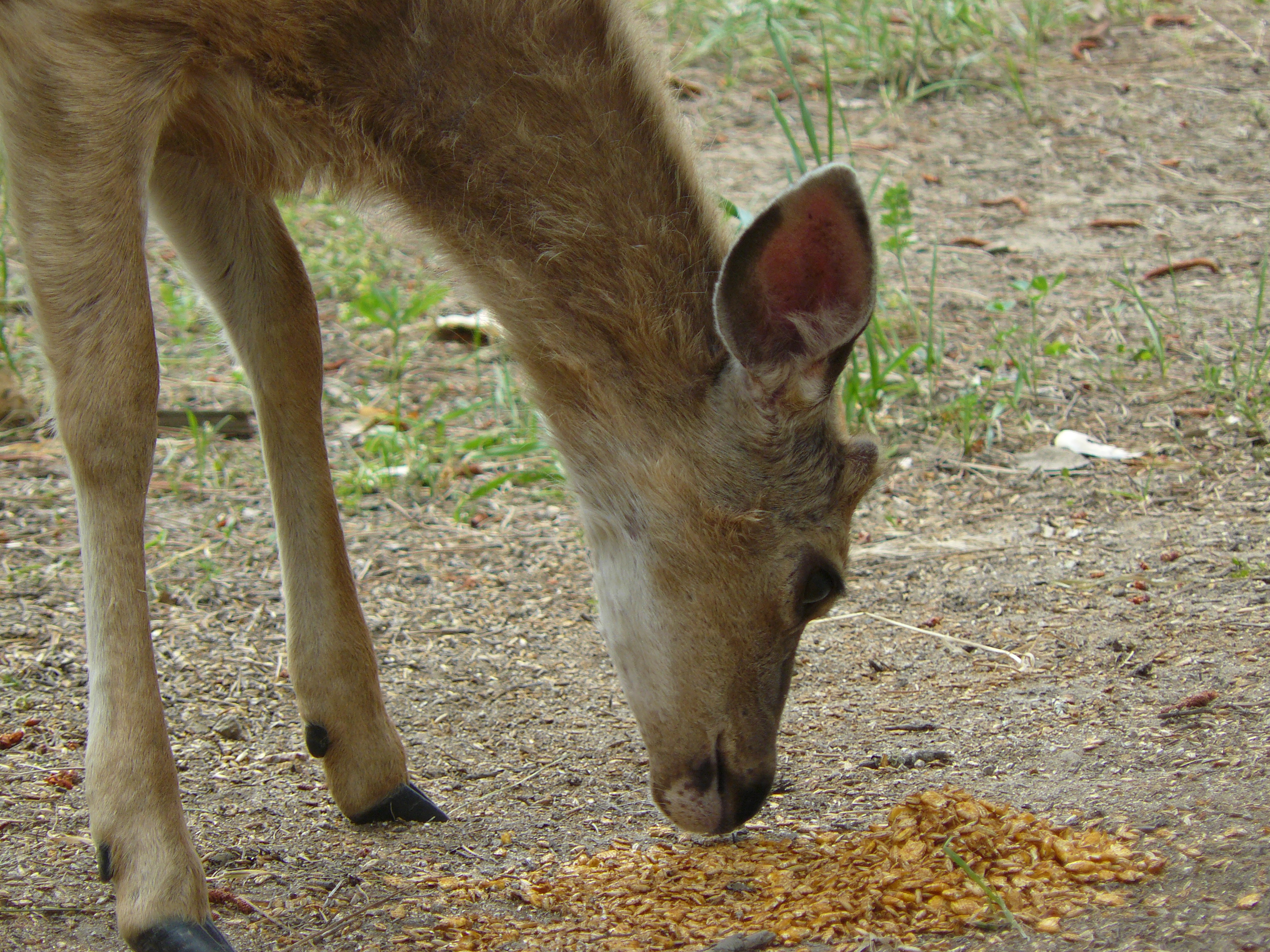
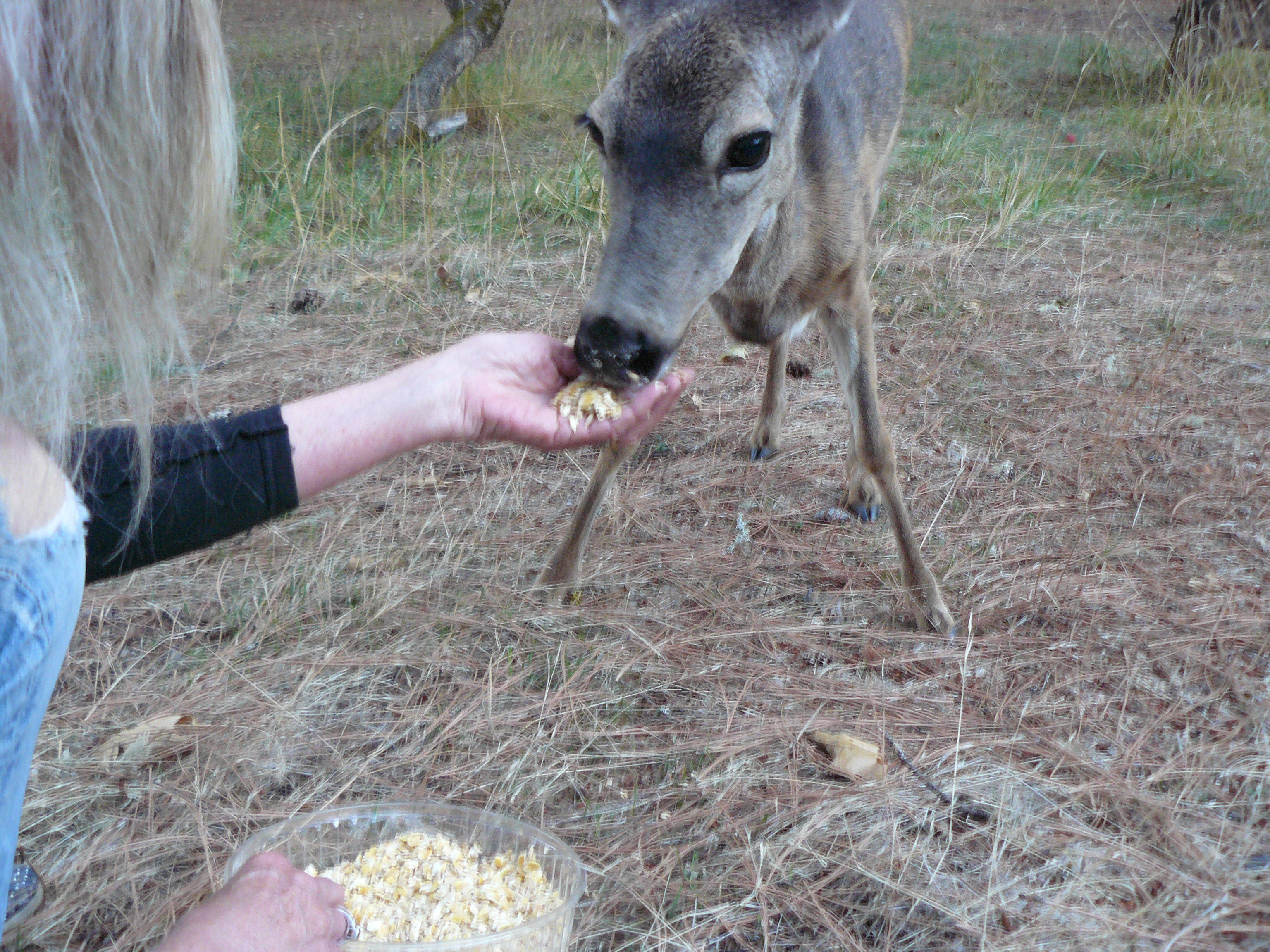
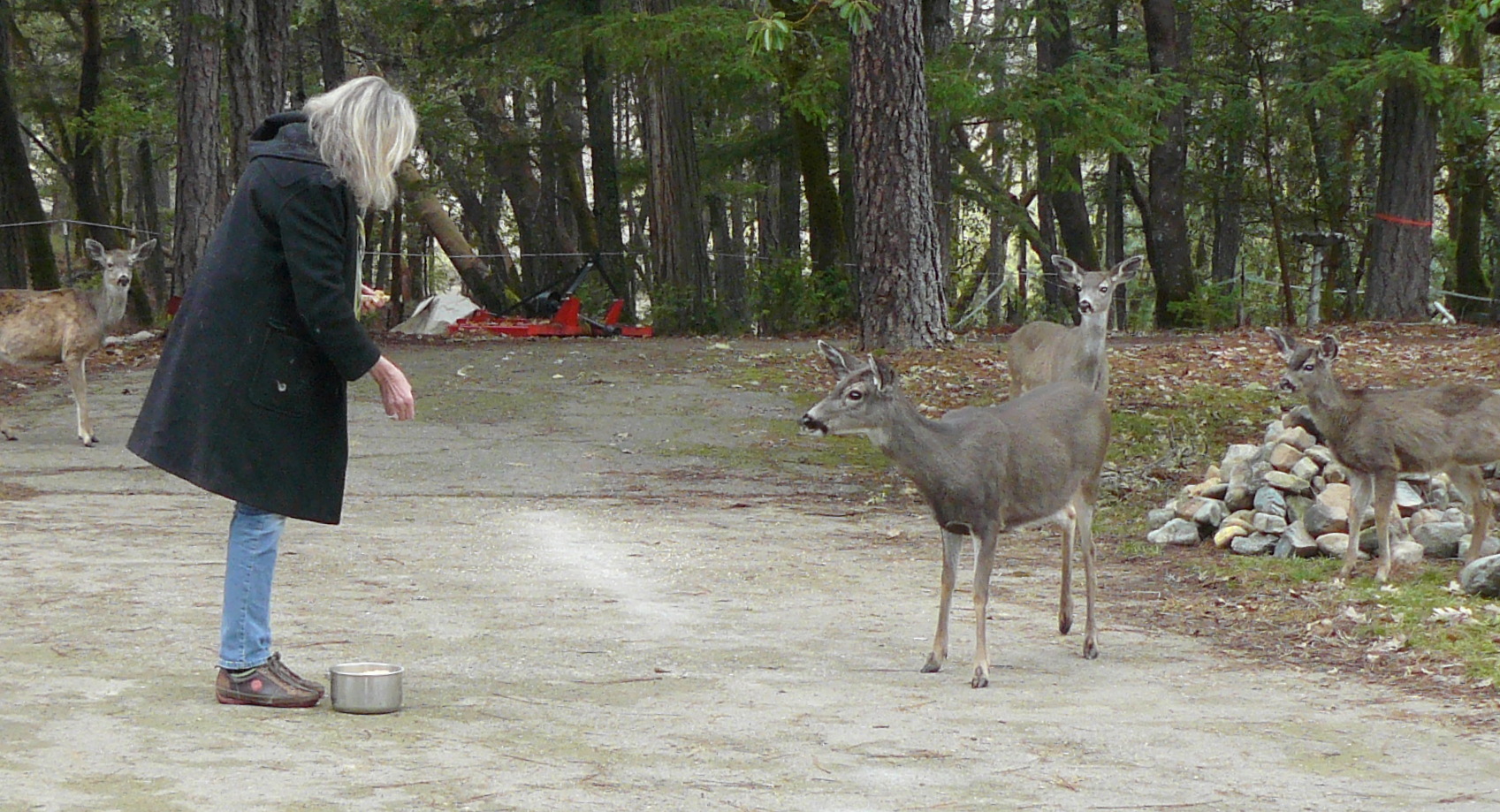
That’s not surprising as there have been a number of posts over the years describing how we feed the wild deer. Here’s three more photographs that haven’t previously been shared with you.
p1140238oooo

p1160189oooo

p1150179But, of course, the opinions of Jean and me are not, and should not be, the rule for the wider population of this part of Oregon.

All I would ask is that there is a proper, mature discussion as to the pros and cons of hunting wild animals in this, the twenty-first century.

All of which leads me to a recent essay posted on The Conversation site and republished here within the terms of that site.

ooOOoo

Is hunting moral? A philosopher unpacks the question

January 4, 2017 8.37pm EST

by
Three generations of a Wisconsin family with a nine-point buck. Wisconsin Department of Natural Resources/Flickr, CC BY-ND

Every year as daylight dwindles and trees go bare, debates arise over the morality of hunting. Hunters see the act of stalking and killing deer, ducks, moose and other quarry as humane, necessary and natural, and thus as ethical. Critics respond that hunting is a cruel and useless act that one should be ashamed to carry out.

As a nonhunter, I cannot say anything about what it feels like to shoot or trap an animal. But as a student of philosophy and ethics, I think philosophy can help us clarify, systematize and evaluate the arguments on both sides. And a better sense of the arguments can help us talk to people with whom we disagree.

Three rationales for hunting

One central question is why people choose to hunt. Environmental philosopher Gary Varner identifies three types of hunting: therapeutic, subsistence and sport. Each type is distinguished by the purpose it is meant to serve.

Therapeutic hunting involves intentionally killing wild animals in order to conserve another species or an entire ecosystem. In one example, Project Isabella, conservation groups hired marksmen to eradicate thousands of feral goats from several Galapagos islands between 1997 and 2006. The goats were overgrazing the islands, threatening the survival of endangered Galapagos tortoises and other species.

Subsistence hunting is intentionally killing wild animals to supply nourishment and material resources for humans. Agreements that allow Native American tribes to hunt whales are justified, in part, by the subsistence value the animals have for the people who hunt them.

 Crawford Patkotak, center, leads a prayer after his crew landed a bowhead whale near Barrow, Alaska. Both revered and hunted by the Inupiat, the bowhead whale serves a symbol of tradition, as well as a staple of food. AP Photo/Gregory Bull
Crawford Patkotak, center, leads a prayer after his crew landed a bowhead whale near Barrow, Alaska. Both revered and hunted by the Inupiat, the bowhead whale serves a symbol of tradition, as well as a staple of food. AP Photo/Gregory Bull

In contrast, sport hunting refers to intentionally killing wild animals for enjoyment or fulfillment. Hunters who go after deer because they find the experience exhilarating, or because they want antlers to mount on the wall, are sport hunters.

These categories are not mutually exclusive. A hunter who stalks deer because he or she enjoys the experience and wants decorative antlers may also intend to consume the meat, make pants from the hide and help control local deer populations. The distinctions matter because objections to hunting can change depending on the type of hunting.

What bothers people about hunting: Harm, necessity and character

Critics often argue that hunting is immoral because it requires intentionally inflicting harm on innocent creatures. Even people who are not comfortable extending legal rights to beasts should acknowledge that many animals are sentient – that is, they have the capacity to suffer. If it is wrong to inflict unwanted pain and death on a sentient being, then it is wrong to hunt. I call this position “the objection from harm.”

If sound, the objection from harm would require advocates to oppose all three types of hunting, unless it can be shown that greater harm will befall the animal in question if it is not hunted – for example, if it will be doomed to slow winter starvation. Whether a hunter’s goal is a healthy ecosystem, a nutritious dinner or a personally fulfilling experience, the hunted animal experiences the same harm.

But if inflicting unwanted harm is necessarily wrong, then the source of the harm is irrelevant. Logically, anyone who commits to this position should also oppose predation among animals. When a lion kills a gazelle, it causes as much unwanted harm to the gazelle as any hunter would – far more, in fact.

 Lions attack a water buffalo in Tanzania. Oliver Dodd/Wikipedia, CC BY
Lions attack a water buffalo in Tanzania. Oliver Dodd/Wikipedia, CC BY

Few people are willing to go this far. Instead, many critics propose what I call the “objection from unnecessary harm”: it is bad when a hunter shoots a lion, but not when a lion mauls a gazelle, because the lion needs to kill to survive.

Today it is hard to argue that human hunting is strictly necessary in the same way that hunting is necessary for animals. The objection from necessary harm holds that hunting is morally permissible only if it is necessary for the hunter’s survival. “Necessary” could refer to nutritional or ecological need, which would provide moral cover for subsistence and therapeutic hunting. But sport hunting, almost by definition, cannot be defended this way.

Sport hunting also is vulnerable to another critique that I call “the objection from character.” This argument holds that an act is contemptible not only because of the harm it produces, but because of what it reveals about the actor. Many observers find the derivation of pleasure from hunting to be morally repugnant.

In 2015, American dentist Walter Palmer found this out after his African trophy hunt resulted in the death of Cecil the lion. Killing Cecil did no significant ecological damage, and even without human intervention, only one in eight male lions survives to adulthood. It would seem that disgust with Palmer was at least as much a reaction to the person he was perceived to be – someone who pays money to kill majestic creatures – as to the harm he had done.

The hunters I know don’t put much stock in “the objection from character.” First, they point out that one can kill without having hunted and hunt without having killed. Indeed, some unlucky hunters go season after season without taking an animal. Second, they tell me that when a kill does occur, they feel a somber union with and respect for the natural world, not pleasure. Nonetheless, on some level the sport hunter enjoys the experience, and this is the heart of the objection.

Is hunting natural?

In discussions about the morality of hunting, someone inevitably asserts that hunting is a natural activity since all preindustrial human societies engage in it to some degree, and therefore hunting can’t be immoral. But the concept of naturalness is unhelpful and ultimately irrelevant.

A very old moral idea, dating back to the Stoics of ancient Greece, urges us to strive to live in accordance with nature and do that which is natural. Belief in a connection between goodness and naturalness persists today in our use of the word “natural” to market products and lifestyles – often in highly misleading ways. Things that are natural are supposed to be good for us, but also morally good.

Setting aside the challenge of defining “nature” and “natural,” it is dangerous to assume that a thing is virtuous or morally permissible just because it is natural. HIV, earthquakes, Alzheimer’s disease and post-partum depression are all natural. And as The Onion has satirically noted, behaviors including rape, infanticide and the policy of might-makes-right are all present in the natural world.

Head-Smashed-In Buffalo Jump, a UNESCO World Heritage Site in Alberta, Canada, commemorates a place where indigenous peoples of the North American Plains killed buffalo for more than 6,000 years by driving them over a cliff.

Hard conversations

There are many other moral questions associated with hunting. Does it matter whether hunters use bullets, arrows or snares? Is preserving a cultural tradition enough to justify hunting? And is it possible to oppose hunting while still eating farm-raised meat?

As a starting point, though, if you find yourself having one of these debates, first identify what kind of hunting you’re discussing. If your interlocutor objects to hunting, try to discover the basis for their objection. And I believe you should keep nature out of it.

Finally, try to argue with someone who takes a fundamentally different view. Confirmation bias – the unintentional act of confirming the beliefs we already have – is hard to overcome. The only antidote I know of is rational discourse with people whose confirmation bias runs contrary to my own.

ooOOoo

This is a very important essay from Joshua. Well done, that man!

I will just leave you all with this further image.

Two young stags keeping it together. (xxx)
Two young stags keeping it together. (Taken here at home in July, 2016.)

Best wishes to each of you; irrespective of your view on hunting!

I Am Leader

A short story from author Wendy Scott.

Back in July, I published a post reviewing Traveling Light, the novel by Andrea Thalasinos.  At the end of that post, I made the following offer.

Now here’s an offer.

Wiley has offered a free copy of Andrea’s book as a ‘give-away’ from Learning from Dogs.  Here’s the plan.

Would you like to write a story about any aspect of the relationship that dogs can have with humans?

Any length, truth or fiction; it doesn’t matter.  Email your story to me to be received by the end of Wednesday, 31st July 2013, Pacific Daylight Time …… [and] I will publish every one received.

Just one story was received, from Wendy, and the promised free copy of Andrea’s book has been mailed to her.

So here is that short story.

oooOOOooo

I Am Leader

The water was angry today. I watched as it tore the tall trees from their roots, thundering, roaring, snapping them, toppling them.

I watched as the angry water shredded the shore. I watched as its fury snatched my pup, my baby, sweeping her away like a dying twig torn from the mother tree.

I am hunter. I am leader.

But now I am nothing.

I ran after my pup, tried to grab her by the nape, take her back. But I failed. I saw her paddle in the froth, scramble atop a long gnarled broken bole that was once a tree. My pup shook, her ears flattened, her tail tucked. She cried. I watched the cold, angry froth take her.

My mind sang with the cry of my little grey pup that I could not save, the little one who would never learn about the hunter, the leader.

I picked my way, shivering, along a path — it used to be our way to good hunting, to the forest edge where the deer grazed as near as yesterday. Now…

My left shoulder ached where the water nearly took me, hurled a branch at me in frustration. I fell and dragged myself away from the collapsing shore, to higher ground. The rain poured and sleeted to drench the shambles left by water that continued to roar and foam. Mud slid through my feet, gusts took my breath.

It was very cold. My ears twitched, hearing nothing beyond the roar of the fury. Water is very noisy when it is angry. The others, my sisters, my mate, I could not scent them, hear them, see them.

The day retreated. I blinked to see better, my eyes wide, but they saw nothing that I could recognise. My nose and ears twitched and twisted — nothing. I could hear my little grey one, my pup; she shivered and cried in my mind, but my eyes and ears, my nose … she was gone.

I stumbled over broken branches, a drowned fox, mice flushed from their holes, a broken-necked bird, bushes overturned and torn apart, walls of fallen trees. Daylight was lost in a twilight.

Now, I scented a 2-legged. I stilled. Crackling. Smoke, deep and hard to breath. Rabbit, burnt. These were the smells I knew of the 2-leggeds. One was near.

I crouched and crept. Yellow-orange light bounced and throbbed through the jumble of once-forest. I remained low, but now I could hear. The 2-legged rustled. It was noisy and careless while its fire snapped. And the rabbit smell was very faint, distorted.

I could see it now, this 2-legged, seated in that foolish way 2-leggeds have, crossing one foot over the other. It rustled again and held a big stick over its fire — the stick jabbed through the rabbit. The rabbit’s fur was gone from its blackened body, abandoned near the 2-legged’s thigh.

My stomach twitched. My mouth filled with hunger. I took another step.

The 2-legged looked up and over. He saw me, then quickly looked away.

I am hunter, I am leader — you do not meet my gaze unless you want to be punished.

I crouched, readied myself to spring.

The 2-legged stood. I eased back. My back paws met the tangled once-forest left of the water’s anger and stopped me. I tensed.

But the 2-legged lifted the big stick with its rabbit, tore a haunch with its hand. It looked directly at me again — no, I am hunter, I am leader — and threw the haunch at me. The burnt meat landed close to my feet.

The 2-legged looked away and returned to its foolish, awkward sitting. It tore ragged bites from the burnt rabbit, holding the big stick between the paws of its upper limbs.

My stomach demanded food. I scented the burnt rabbit, the smell of blood faint and smoky. I did not hunt the rabbit, I am not like the vultures and scavengers … but I was hungry. I nosed it, picked it up and turned away from the 2-legged. The flesh was warm. It sated. I licked my paws, swiped my whiskers and jowls to groom.

For a moment, my mind tricked me. I heard my pup. I scented my mate, my others, we were sated, we curled together, our warm bodies close, to sleep through the long cold night.

I opened my eyes. I was alone.

Except the 2-legged. Its odour was unmistakable, deer hide, rabbit, something sweetly sour I thought must be its own scent, not the ones borrowed by the other animals it ate or draped over its body.

I studied the 2-legged. It had curled on its side. The fire beside it throbbed yellow and orange, throwing strange shadows where they should not be. When I looked away, my sight was poor. I would not look directly at the fire again.

All was silent, save the angry water behind us. We lived. Nothing else lived. The water took everything.

I dreamed of my mate, his powerful howls alerting our cousins of our hunt; the deer was warm, its blood and flesh giving us another day of life. The deer was old and slow, an easy hunt. Its time had come; we knew that, understood it, this deer and our pack.

I dreamed of my sisters, nipping at my pup, teasing her to chase them in mock hunts. I dreamed of my brothers, circling and securing our family. My pack. My life.

We slept.

The day hung low and grey. Overnight, the angry water had become a sussurrating hiss behind us.

With its strange flat feet and its big stick, the 2-legged was tossing dirt and wet leaves over the ash where the fire and the rabbit had been. The old fire flared briefly. A cool damp gust caught some of the sparks and swept them high. A bird swooped near to see, then lost interest, flapped its wings to gain height.

The smell in the air was smoke and faint rabbit scent. It was upturned earth and rot and rain.

The 2-legged’s odour wore the smoke and long-dead deer.

The 2-legged came close. It looked at me — no — I am hunter, I am leader, you do not meet my gaze. But it was stupid and foolish, this 2-legged, like a pup that had not yet learned. It neared me. I growled, prepared to attack.

Surely it could see my flattened ears, my lowered shoulders?

No, it was stupid. It walked passed me.

I watched. The 2-legged paused and turned. It swung one of its upper limbs down low, then away, a sweeping motion. Strange language. It did not lower its ears, or roll on its belly. It made noises with its mouth. The noises were terrible, low, rumbling, but they were not threatening. I watched.

It made the motion again, then turned and walked on.

I sat on my haunches.

I am leader, I am hunter. But this 2-legged did not understand. It had not learned from its pack.

We two were the only ones I scented. We were alone. The angry water had taken the others.

The 2-legged stopped, made the strange sweeping motion and noises again. I took a step in its direction.

I am hunter. I am leader.

My pup cries in my mind. My mate howls. My sisters tease, my brothers scout. But around me is silence, the scents dirty and empty, the forest destroyed, the deer gone. We two are alone.

The 2-legged’s head bobs up and down. I take another step.

We walk on, stepping carefully over the tangled mess that was once our home, our feet slipping in mud, scratched in dying brambles, struggling in the unfamiliar path before us. 2-legged uses the big stick as if it were a third leg.

It is learning. I am patient.

I am hunter. I am leader.

oooOOOooo

Don’t know about you but I found that story by Wendy more than compelling. Found it hauntingly beautiful.  A ancient account of the first meeting between man and wolf.

Therefore, can’t close without again reproducing this short extract and images of the grey wolf posted on the 20th May Musings on love.

oooo

While we were looking at the animals, along the pathway came a couple of the volunteer staff walking a Grey Wolf (Canis Lupus).

An afternoon walk for Tundra.

I was utterly captivated by this beautiful animal.  Her story was that she was born in captivity and owned by an individual who soon decided he didn’t want her!  Not long thereafter Tundra, as she became named, was brought to the Sarvey Wildlife Center in Washington and thence to Wildlife Images when she was just 8 weeks old.

Tundra turned to look at me. I stood perfectly still and quiet.  Tundra seemed to want to come closer.  As one would with a strange dog, I got down on my knees and turned my eyes away from Tundra’s.  I sensed she was coming towards me so quickly held up my camera and took the picture below.

Wolf greets man.
Wolf greets man.

I kept my gaze averted as I felt the warm breath of this magnificent animal inches from my face.  Then the magic of love across the species!  Tundra licked my face!  The tears came to my eyes and were licked away.  I stroked her and became lost in thought.

Was this an echo of how thousands and thousands of years ago, a wolf and an early man came together out of trust and love and started the journey of the longest animal-human relationship, by far?

oooo