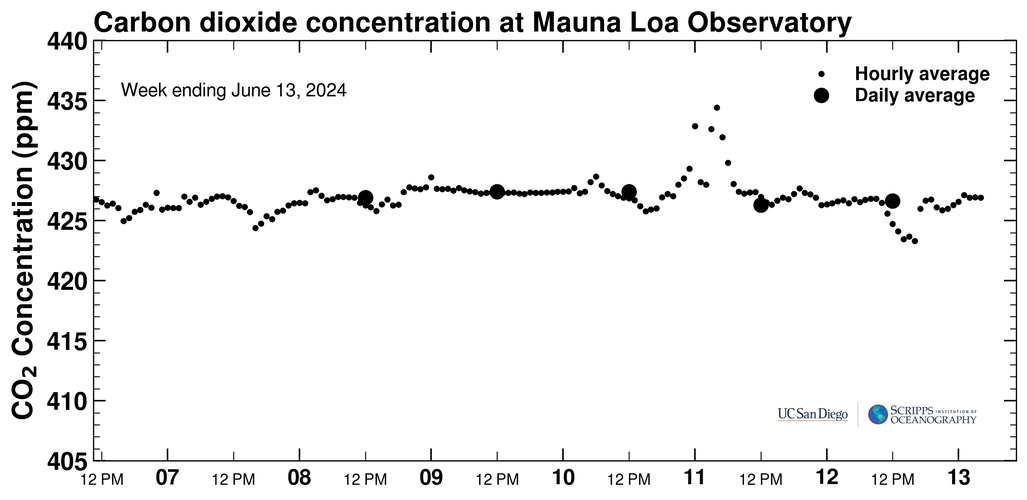
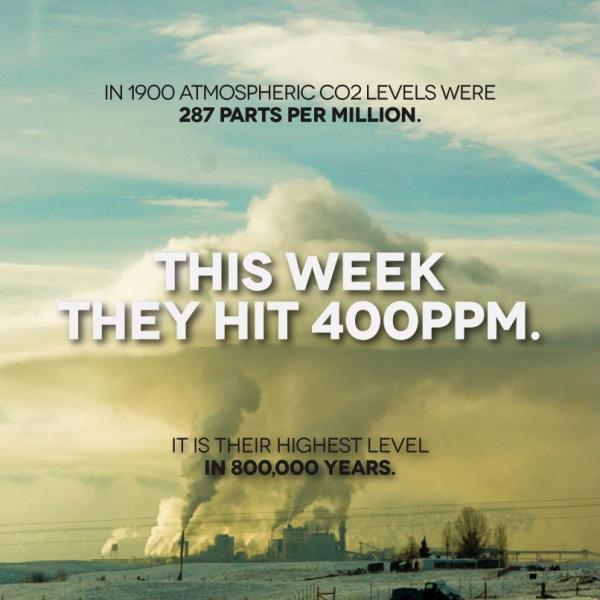
Staying with the terrible news that we are now above 400 ppm atmospheric CO2.
If there is anything of comfort to be drawn from the news that we are above 400 ppm CO2 it is that the mainstream media are running with it. I shall focus on the reportage from the BBC News website.
First, there was the news of the passing of that “symbolic mark”.
10 May 2013Last updated at 11:39 ET
Carbon dioxide passes symbolic mark
Key measurements are made on top of the Mauna Loa volcano
Carbon dioxide levels in the atmosphere have broken through a symbolic mark.
Daily measurements of CO2 at a US government agency lab on Hawaii have topped 400 parts per million for the first time.
The station, which sits on the Mauna Loa volcano, feeds its numbers into a continuous record of the concentration of the gas stretching back to 1958.
The last time CO2 was regularly above 400ppm was three to five million years ago – before modern humans existed.
Scientists say the climate back then was also considerably warmer than it is today.
Carbon dioxide is regarded as the most important of the manmade greenhouse gases blamed for raising the temperature on the planet over recent decades.
Then David Shukman, Science editor BBC News added this further background, that I am going to republish in full:
David Shukman
Near the summit of the Mauna Loa volcano, the carbon dioxide monitors stand amid one of the world’s remotest huddles of scientific instruments. To reach them you have to leave the steamy Hawaii coast and climb through barren lava-fields.
At the top, above 11,000ft, the air is thin and the sun piercing. During my visit, I watched rain clouds boiling in the valleys below me. Charles David Keeling chose this otherworldly spot because the air up here is neither industrial nor pristine; it is “well-mixed” which means it can serve as a useful guide to changes in the atmosphere.
Despite their global significance, the devices he installed back in 1958 do not look impressive. But he battled bureaucratic objections to fund them and his legacy is the longest continuous record of a gas, linked to much of global warming, that just keeps rising.
Scientists are calling on world leaders to take action on climate change after carbon dioxide levels in the atmosphere broke through a symbolic threshold.
Daily CO2 readings at a US government agency lab on Hawaii have topped 400 parts per million for the first time.
Sir Brian Hoskins, the head of climate change at the UK-based Royal Society, said the figure should “jolt governments into action”.
China and the US have made a commitment to co-operate on clean technology.
But BBC environment analyst Roger Harrabin said the EU was backing off the issue, and cheap fossil fuels looked attractive to industries.
The laboratory, which sits on the Mauna Loa volcano, feeds its numbers into a continuous record of the concentration of the gas stretching back to 1958.
‘Sense of urgency’
Carbon dioxide is regarded as the most important of the manmade greenhouse gases blamed for raising the temperature on the planet over recent decades.
Human sources come principally from the burning of fossil fuels such as coal, oil and gas.
Ministers in the UK have claimed global leadership in reducing CO2 emissions and urged other nations to follow suit.
But the official Climate Change Committee (CCC) last month said that Britain’s total contribution towards heating the climate had increased, because the UK is importing goods that produce CO2 in other countries.
Rest of that news article is here. But I can’t resist the picture and quote from Professor Sir Brian Hoskins, director of the Grantham Institute for Climate Change at Imperial College London.
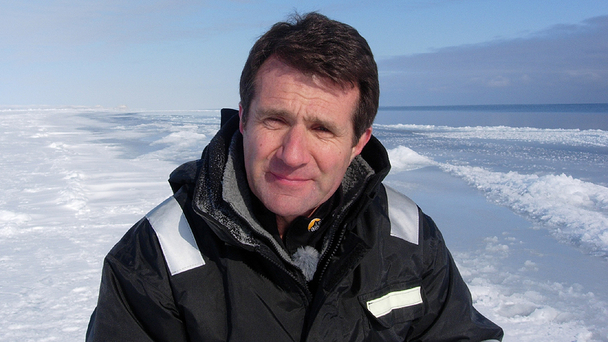
Sir Brian Hoskins said a greater sense of urgency was needed
“A greater sense of urgency was needed.” I’m going to be emotional! Frankly, those wishy-washy words are pathetic.
We need the sort of words that George Monbiot penned a few days ago. Those I will share with you tomorrow.
I started writing this early morning last Friday, 10th May. It was prompted by a post then just in from Christine’s blog 350 or bust. I didn’t have the heart to republish it for a few days.
Then as the news of the atmospheric CO2 concentration passing 400 parts per million (ppm) moved more and more into mainstream news, I found myself morphing from sadness and puzzlement into anger and then into some form of determination to ‘do something‘, however insignificant that might be.
Because if humanity does not turn back from our carbon-based lifestyle pretty damn soon then those who are, say, 20 years or more younger than me (I’m 68), are in for some very tough, very rough times indeed.
So over the next two or three days, I shall focus on this topic simply from the motivation of wanting to join the numerous others around the world who are also recognising this moment in the history of man.
Ergo, for today that post from Christine. But I make no apologies for staying with the theme for much of this week.
oooOOOooo
Rolling The Dice: CO2 Concentration Hits Record High Amid Global Inaction On Climate Change
Readings at the US government’s Earth Systems Research laboratory in Hawaii, are not expected to reach their 2013 peak until mid May, but were recorded at a daily average of 399.72ppm on 25 April. The weekly average stood at 398.5 on Monday.
“I wish it weren’t true but it looks like the world is going to blow through the 400ppm level without losing a beat. At this pace we’ll hit 450ppm within a few decades,” said Ralph Keeling, a geologist with the Scripps Institution of Oceanography which operates the Hawaiian observatory.
*
*
Source: Scripps Institute of Oceanography
*
For more on the awful implications of this milestone in human history, check out the links below (hint: it isn’t good news for humans or animals or the ocean).
A few days ago, dear friend Dan Gomez sent me a link to an article in the March/April edition of Maui Magazine (must admit not heard of it before).
It was a story written by Shannon Wianecki under the title of ‘Eight Tiny Steps for Tardigrades‘. Here’s how it opened;
Eight Tiny Steps for Tardigrades
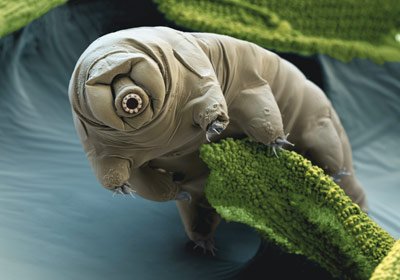
It might sound like a fairy tale, but it’s fact: Haleakala National Park is home to a troupe of tiny bears. But don’t bother searching for these wee creatures. Tardigrades, better known as water bears, are miniscule, ranging from 50 to 1,200 microns. Which means a couple of water bears could fit into the period ending this sentence.
Water bears are so named for their appearance and form of locomotion. Like microscopic grizzlies, they pad along on eight stumpy legs, brandishing claws and short snouts. Another name — moss piglet — refers to the animal’s most common habitat. Tardigrades are aquatic, but to creatures of their size, suitable swimming holes include the moisture clinging to mosses, or the capillary water between grains of sand. They are found all over the globe: in the arctic, desert, deep sea, and — most of all — in Hawai‘i.
Now if I blow the dust off my aged brain, I recall that a micron is a millionth of a metre (or meter in American speak). Whatever the spelling, that is small.
So even if this little creature can be up to 1,200 microns ‘big’ that would still only be 1.2 thousandths of a metre.
The article is well-worth reading in full. However, I will take the small liberty of republishing the final paragraph;
In 2007, water bears joined astronauts in space to see how they handled cosmic rays. Exposed for ten days to the vacuum of space, without oxygen, water, or heat, and zapped by intense solar radiation, water bears became the first animals to survive in space.
Back on Earth, the mini-cosmonauts continued to breed successfully. Investigating the molecular makeup of these amazing creatures may show humans how to survive future space explorations.
Now without wishing to be too basic, I would love to have this question answered: How does something that small breed? Indeed, how could they ever find each other?
So if you are a pet owner and a bit worried about the costs of feeding and looking after your beloved animal, don’t worry! There’s something else in town a little bit smaller!
I love taking photographs but this takes the cake!
(Note: there’s an option in WordPress to insert a ‘read more‘ link, the effect of which is to limit what you, dear reader, can see when you first come to a Blog article. I prefer normally not to insert that link. But for reasons that will soon be very obvious, it has to be used in this Post.)



 Learning from Dogs