Much as I respect Mr. Monbiot’s views, I hope he is wrong in this respect.
I have long admired the writings of George Monbiot and, as often as not, have republished his essays in this place.
But an essay by George that was published in the UK Guardian newspaper yesterday portrays a frightening picture of modern-day Britain. It was called Falling Apart and is republished, with George’s permission, today.
I want to offer a personal response to the essay, that immediately follows George’s piece.
ooOOoo
Falling Apart
October 14, 2014
Competition and individualism are forcing us into a devastating Age of Loneliness
By George Monbiot, published in the Guardian 15th October 2014
What do we call this time? It’s not the information age: the collapse of popular education movements left a void now filled by marketing and conspiracy theories(1). Like the stone age, iron age and space age, the digital age says plenty about our artefacts but little about society. The anthropocene, in which humans exert a major impact on the biosphere, fails to distinguish this century from the previous twenty. What clear social change marks out our time from those that precede it? To me it’s obvious. This is the Age of Loneliness.
When Thomas Hobbes claimed that in the state of nature, before authority arose to keep us in check, we were engaged in a war “of every man against every man”(2), he could not have been more wrong. We were social creatures from the start, mammalian bees, who depended entirely on each other. The hominims of East Africa could not have survived one night alone. We are shaped, to a greater extent than almost any other species, by contact with others. The age we are entering, in which we exist apart, is unlike any that has gone before.
Three months ago we read that loneliness has become an epidemic among young adults(3). Now we learn that it is just as great an affliction of older people. A study by Independent Age shows that severe loneliness in England blights the lives of 700,000 men and 1.1m women over 50(4), and is rising with astonishing speed.
Ebola is unlikely ever to kill as many people as this disease strikes down. Social isolation is as potent a cause of early death as smoking 15 cigarettes a day(5); loneliness, research suggests, is twice as deadly as obesity(6). Dementia, high blood pressure, alcoholism and accidents – all these, like depression, paranoia, anxiety and suicide, become more prevalent when connections are cut(7,8). We cannot cope alone.
Yes, factories have closed, people travel by car instead of buses, use YouTube rather than the cinema. But these shifts alone fail to explain the speed of our social collapse. These structural changes have been accompanied by a life-denying ideology, which enforces and celebrates our social isolation. The war of every man against every man – competition and individualism in other words – is the religion of our time, justified by a mythology of lone rangers, sole traders, self-starters, self-made men and women, going it alone. For the most social of creatures, who cannot prosper without love, there is now no such thing as society, only heroic individualism. What counts is to win. The rest is collateral damage.
British children no longer aspire to be train drivers or nurses, more than a fifth now say they “just want to be rich”: wealth and fame are the sole ambitions of 40% of those surveyed(9). A government study in June revealed that Britain is the loneliness capital of Europe(10). We are less likely than other Europeans to have close friends or to know our neighbours. Who can be surprised, when everywhere we are urged to fight like stray dogs over a dustbin?
We have changed our language to reflect this shift. Our most cutting insult is loser. We no longer talk about people. Now we call them individuals. So pervasive has this alienating, atomising term become that even the charities fighting loneliness use it to describe the bipedal entities formerly known as human beings(11). We can scarcely complete a sentence without getting personal. Personally speaking (to distinguish myself from a ventriloquist’s dummy), I prefer personal friends to the impersonal variety and personal belongings to the kind that don’t belong to me. Though that’s just my personal preference, otherwise known as my preference.
One of the tragic outcomes of loneliness is that people turn to their televisions for consolation: two-fifths of older people now report that the one-eyed god is their principal company(12). This self-medication enhances the disease. Research by economists at the University of Milan suggests that television helps to drive competitive aspiration(13). It strongly reinforces the income-happiness paradox: the fact that, as national incomes rise, happiness does not rise with them.
Aspiration, which increases with income, ensures that the point of arrival, of sustained satisfaction, retreats before us. The researchers found that those who watch a lot of television derive less satisfaction from a given level of income than those who watch only a little. Television speeds up the hedonic treadmill, forcing us to strive even harder to sustain the same level of satisfaction. You have only to think of the wall-to-wall auctions on daytime TV, Dragon’s Den, the Apprentice and the myriad forms of career-making competition the medium celebrates, the generalised obsession with fame and wealth, the pervasive sense, in watching it, that life is somewhere other than where you are, to see why this might be.
So what’s the point? What do we gain from this war of all against all? Competition drives growth, but growth no longer makes us wealthier. Figures published this week show that while the income of company directors has risen by more than a fifth, wages for the workforce as a whole have fallen in real terms over the past year (14). The bosses now earn – sorry, I mean take – 120 times more than the average full-time worker. (In 2000, it was 47 times). And even if competition did make us richer, it would make us no happier, as the satisfaction derived from a rise in income would be undermined by the aspirational impacts of competition.
The top 1% now own 48% of global wealth(15), but even they aren’t happy. A survey by Boston College of people with an average net worth of $78m found that they too are assailed by anxiety, dissatisfaction and loneliness(16). Many of them reported feeling financially insecure: to reach safe ground, they believed, they would need, on average, about 25% more money. (And if they got it? They’d doubtless need another 25%). One respondent said he wouldn’t get there until he had $1 billion in the bank.
For this we have ripped the natural world apart, degraded our conditions of life, surrendered our freedoms and prospects of contentment to a compulsive, atomising, joyless hedonism, in which, having consumed all else, we start to prey upon ourselves. For this we have destroyed the essence of humanity: our connectedness.
Yes, there are palliatives, clever and delightful schemes like Men in Sheds and Walking Football developed by charities for isolated older people(17). But if we are to break this cycle and come together once more, we must confront the world-eating, flesh-eating system into which we have been forced.
Hobbes’s pre-social condition was a myth. But we are now entering a post-social condition our ancestors would have believed impossible. Our lives are becoming nasty, brutish and long.
As closing sentences go, that’s about as tough as it gets.
Nevertheless, I’m going to offer a perspective, something that George doesn’t mention. That is the importance of community.
Back in 2008 BBC Timewatch screened a programme about the revelations that came from the latest archaeological dig at Stonehenge, near Amesbury in Wiltshire in England. I wrote about the programme over four years ago: Stonehenge – a place of healing.
Stonehenge is one of Britain’s most famous historical sites, deservedly so because Stonehenge was one of the most important places in ancient Europe.
Stonehenge
But evidence from a dig that was authorised in 2008 has shown that not only is Stonehenge a much older site of human habitation but that it’s purpose is altogether different to what has been assumed. It was, indeed, a healing place, possibly the most important in Europe.
Professors Tim Darvill and Geoff Wainwright are the world-renowned archaeologists who believe they have cracked the conundrum of Stonehenge’s original purpose.
If you would like to watch that Timewatch episode, and it is highly recommended, then someone has neatly uploaded it to YouTube.
The programme clearly offers evidence from the carbon-dating of seeds buried under the famous blue stones that dates this settlement to some 9,000 years BP. The detailed examination of ancient humans buried nearby indicates they came to Stonehenge with a range of diseases, many terminal in nature.
So back to George Monbiot’s essay and the element that screams out at me.
We have lost sight of the huge healing benefits that come from old-fashioned, shoulder-to-shoulder communities.
Not to mention the healing properties of a loving dog or two in one’s life!
Let’s start with the Ebola outbreak with the latest news from the BBC suggesting:
The death toll from the Ebola virus outbreak has risen to 4,447, with the large majority of victims in West Africa, the World Health Organization (WHO) says.
WHO assistant director-general Bruce Aylward also said there could be up to 10,000 new cases a week within two months if efforts were not stepped up,
But the rate of new infections in some areas has slowed down, he added.
Next up.
I’ve been musing as to whether or not I was going to republish a recent essay from George Monbiot. The one in question being The Kink in the Human Brain. It opens, thus:
Pointless, joyless consumption is destroying our world of wonders.
By George Monbiot, published in the Guardian 2nd October 2014
This is a moment at which anyone with the capacity for reflection should stop and wonder what we are doing.
If the news that in the past 40 years the world has lost over 50% of its vertebrate wildlife (mammals, birds, reptiles, amphibians and fish) fails to tell us that there is something wrong with the way we live, it’s hard to imagine what could. Who believes that a social and economic system which has this effect is a healthy one? Who, contemplating this loss, could call it progress?
In fairness to the modern era, this is an extension of a trend that has lasted some two million years. The loss of much of the African megafauna – sabretooths and false sabretooths, giant hyaenas and amphicyonids (bear dogs), several species of elephant – coincided with the switch towards meat eating by hominims (ancestral humans). It’s hard to see what else could have been responsible for the peculiar pattern of extinction then.
My spirits continued downward, especially when I clicked on that first link and read this from the Guardian website:
Rubbish dumped on the tundra outside llulissat in Greenland stand in stark contrast to icebergs behind from the Sermeq Kujullaq or llulissat Ice fjord – a Unesco world heritage site. Photograph: Global Warming Images/WWF-Canon
The number of wild animals on Earth has halved in the past 40 years, according to a new analysis. Creatures across land, rivers and the seas are being decimated as humans kill them for food in unsustainable numbers, while polluting or destroying their habitats, the research by scientists at WWF and the Zoological Society of London found.
“If half the animals died in London zoo next week it would be front page news,” said Professor Ken Norris, ZSL’s director of science. “But that is happening in the great outdoors. This damage is not inevitable but a consequence of the way we choose to live.” He said nature, which provides food and clean water and air, was essential for human wellbeing.
“We have lost one half of the animal population and knowing this is driven by human consumption, this is clearly a call to arms and we must act now,” said Mike Barratt, director of science and policy at WWF. He said more of the Earth must be protected from development and deforestation, while food and energy had to be produced sustainably.
Then a few days ago, one of our neighbours sent me an email with his latest news about ISIS. This is what he sent:
Got this from one of my closest friends today, it came from his brother so I’m pretty confident that it’s true. There is some really bad stuff on the horizon and it’s probably gonna come this way like a runaway train!! Everybody better start thinking about where they want to stand when push comes to shove!
With “this’ being in part:
Missionaries who are in the areas that are being attacked by ISIS. ISIS has taken over the town they are in today. He said ISIS is systematically going house to house to all the Christians and asking the children to denounce Jesus. He said so far not one child has. And so far all have consequently been killed. But not the parents. The UN has withdrawn and the missionaries are on their own. They are determined to stick it out for the sake of the families – even if it means their own deaths. They are very afraid, have no idea how to even begin ministering to these families who have had seen their children martyred. Yet he says he knows God has called them for some reason to be His voice and hands at this place at this time. Even so, they are begging for prayers for courage to live out their vocation in such dire circumstances. And like the children, accept martyrdom if they are called to do so. These brave parents instilled such a fervent faith in their children that they chose martyrdom. Please surround them in their loss with your prayers for hope and perseverance.
One missionary was able to talk to her brother briefly by phone. She didn’t say it, but I believe she believes it will be their last conversation. Pray for her too. She said he just kept asking her to help him know what to do and do it. She told him to tell the families we ARE praying for them and they are not alone or forgotten — no matter what. Please keep them all in your prayers.
Love the poem/verse Illusion. The lines, Following the herd, bleating like sheep, Held captive, half asleep. hit a strong note with me.
As we often wonder why people can’t think for themselves outside the box but then again maybe that is part of being human. Life is a mystery isn’t it? Enjoyed the post,
Maria’s comment about life being a mystery was interpreted by me as humans being a mystery and the realisation that it has ever been so. For it resonated with a recent programme over on the BBC that included information on the ancient Teotihuacan people who ruled in what is present-day Mexico some 2,000 years ago. From Wikipedia:
View of the Avenue of the Dead and the Pyramid of the Sun, from Pyramid of the Moon (Pyramide de la Luna).
Teotihuacan /teɪˌoʊtiːwəˈkɑːn/, also written Teotihuacán (Spanish About this sound teotiwa’kan (help·info)), was a pre-Columbian Mesoamerican city located in the Valley of Mexico, 30 miles (48 km) northeast of modern-day Mexico City, known today as the site of many of the most architecturally significant Mesoamerican pyramids built in the pre-Columbian Americas. Apart from the pyramids, Teotihuacan is also anthropologically significant for its complex, multi-family residential compounds, the Avenue of the Dead, and the small portion of its vibrant murals that have been exceptionally well-preserved. Additionally, Teotihuacan exported a so-called “Thin Orange” pottery style and fine obsidian tools that garnered high prestige and widespread utilization throughout Mesoamerica.
The city is thought to have been established around 100 BC, with major monuments continuously under construction until about AD 250. The city may have lasted until sometime between the 7th and 8th centuries AD, but its major monuments were sacked and systematically burned around 550 AD. At its zenith, perhaps in the first half of the 1st millennium AD, Teotihuacan was the largest city in the pre-Columbian Americas, with a population estimated at 125,000 or more, making it at minimum the sixth largest city in the world during its epoch. Teotihuacan began as a new religious center in the Mexican Highland around the first century AD. This city came to be the largest and most populated center in the New World. Teotihuacan was even home to multi-floor apartment compounds built to accommodate this large population. The civilization and cultural complex associated with the site is also referred to as Teotihuacan or Teotihuacano.
That BBC programme also included the fact that almost on a daily basis the Teotihuacan authorities viewed the assassinations of often hundreds of lower class people as perfectly normal.
In other words, despicable cruelty of man upon man, not to mention an utter disregard for the natural world, has been going on for thousands of years!
Thus it underlined to me, in spades, that what ‘other people’ get up to is, to a very great extent, irrelevant. Because whatever the circumstances we have a choice: we always have a choice. Or if you will forgive me for repeating my closing sentences in yesterday’s post:
Whatever is going on in the world, whatever has the power to create fear in our minds, in the end it comes down to another power, the power of thought, and our choice of the behaviors that we offer the world.
That is why dogs are so important. Because they almost predominantly love sharing and living their lives in the company of humans.
Two days ago I published a rather introspective post called The temptation to turn ever inwards. It was the result of reading three disturbing essays about the ‘affairs of man’; essays by Tom Engelhardt, Jim Wright and George Monbiot. Frankly, I wasn’t expecting a great response either in the form of ‘Likes’ or written replies. However, the first reply, a long reply, came in from Patrice Ayme. I made the decision to reply to Patrice via a new post; ergo today’s post. Since making that decision a further comment came in from Sue Dreamwalker, also republished today.
What I am going to do is to reproduce Patrice’s comment but interspersed with my replies.
oooo
The biosphere evolved over billions of years. Now it is taken over by critters who live for just a few years. Solution? Make it so that said critters live longer, thus attaching a greater value upon survival.
I presume that the ‘said critters’ refer to humans? The average lifespan of humans has increased hugely. From a life expectancy of 30 years [1] at birth in Medieval Britain, back in the 13th Century, to an average of 67.2 years for humans worldwide in 2010. [2]
That’s an increase of 124% in a little over 700 years. Yet despite that incredible increase in lifespan, humans have shown no interest in attaching a greater value to their survival: far from it! One might even muse that humans have attached a greater value to those things that actively harm our survival.
For all the (over-) elaborate set-up of dear Monbiot, it’s simpler than that. Instead of going back to Baby Thatcher, Baroness god save the queen knows what, let’s grab a clear and present example.
I’m unclear as to what is meant by “the over-elaborate set-up” but as a long-time reader of Mr. Monbiot‘s essays I applaud both his commitment to the highest standards of journalism and to the UK’s Guardian newspaper for publishing so many of them over the years. I would invite Patrice to give an example of over-elaboration coming from the pen of George Monbiot.
Britain, and many of the Brits, say our dear friend Chris Snuggs, a participant to your, and my, site, have said that they hated Europe, because Europe was not democratic enough. However, one of the latest improvement of the European Constitution is now effective: the head of the EC, the European Commission, is now to be elected by the just elected European PARLIAMENT. Guess what?
Chris Snuggs is more than a participant to Learning from Dogs, he is a close friend of many years. Yes, he has strong views about Europe but those views are expressed in a declared, personal manner.
Chameleon Cameron, came out of the woodworks to bark, in the clearest way, that it was out of the question to do things differently from before, and now dare to have the European Parliament to elect (what is basically) the European Prime Minister.
Never mind that Britain voted for that European Constitutional change.
Never mind that in representative democracies, the leaders of the executive are elected by Parliament.
So what do we see here?
Contradiction within moods and thoughts systems (Britain agreed to the democratic change, and now does not). We also see erroneous ideas imposed (leaders of the executive says Cameron should be nominated undemocratically, that’s erroneous).
The same sort of things is also perking up in Iraq: the USA caused the mess there, committing several major war crimes in the process. Precisely because those war crimes were not prosecuted, a strong push has been exerted on Obama to duplicate Bush, and go back to attack Iraq some more.
Thus, it is simple: there bad ideas out there, and they need to be destroyed. And bad moods too (an example of bad moods is the enormity that the American population was made, by Bush, Cheney, Rumsfeld, etc., into an accomplice of the most major war crime there is, war of aggression. Now that this war is in the process of being lost, some clamor to have the war pursued with renewed vigor.
We are now the stewards of the biosphere, whether we like it, or not. We can’t just sit on our rumps, strokes dogs, and whine we will attend to our garden (Voltaire style). By doing nothing, we leave criminals such as Bush, or their spirit, or their mood, in power. And thus we become accomplices.
There is total agreement for the idea that humans are the stewards of the biosphere. But if the “sit on our rumps, strokes dogs and whine we will attend to our garden” is aimed at me, as it appears to be, then I strongly disagree. Living as simple a life as we can is a long way from “doing nothing”.
So go out there, and engage in combat, bad moods, and bad ideas. That’s what even very old alpha monkeys, covered with age spots, do. We don’t want to let very old monkeys be examples of moral rectitude we cannot emulate.
A last point: Monbiot does not realize the contradiction he engages in. In the guise of criticising the opposition, he puts it on a pedestal, and engages in its very propaganda. Monbiot, and many like him, bemoan a “shift towards conservatism”. Nothing could be more false. People who destroy the biosphere are NOT conservatives. They play conservatives on TV. In truth, they are just the opposite. They are destructionists.
I am of the opinion, totally so, that George Monbiot is not playing at conservatism.
oooo
So, dear reader, there is little in the comment from Patrice that has me nodding my head. Don’t get me wrong! Patrice Ayme is an individual of extreme intellect as even a dip into his blog will confirm. I am a regular reader of the writings over at that place.
However, there is one major stumbling block for me, one that I have communicated privately to the said Patrice, and that is the issue of anonymity. Because Patrice Ayme is a nom-de-plume. Despite following ‘his’ writings for some time and sharing the occasional private email, I have almost no idea about who the person is. Yes, ‘his’ writings are often very strong and highly critical of many aspects of modern life, especially the American political system. But that is not unique. There is a long line-up of writers doing the same, and doing the same over their signatures: Tom Engelhardt, Jim Wright and George Monbiot and many, many others
For me, hiding one’s identity so securely behind a ‘virtual’ mask yet writing so passionately about many of the issues critically affecting the future of mankind, doesn’t work. If one can’t or won’t be honest about who they are, then better, perhaps, that they keep their thoughts and ideas close to them. There is no shortage of people openly being critical about the American Government and much else across the world, and being critical openly.
Later, Sue of Sue Dreamwalker added a comment. That resonated perfectly with me and it, too, is reproduced in full.
Paul sometimes I despair at how Mankind plays out his life in the world Paul… We bemoan lots as we sit in our homes as the virus of hate, greed, and disaster pours into our living rooms via the BLACK BOX of FEAR tricks… Which helps depress, make us anxious, fearful,…. It insights anger, aggression and the spiral of thought escalates out via the Web… Internet at our fingertips- instant reactions…
Some times I wonder as I ponder… at the soup being remixed… as only this week we hear of ISIS another branch of the terrorists we are now supposed to fear… As the UK now makes friends with its long time enemy Iran.. reinstating diplomatic relationships again.. The Saga runs on an on… With Oil as the major players .
That’s why turning inward is sometimes Paul the only thing we can do… As we can only live our lives… While I so want to save the world.. The world has also got to want to save itself…
I can only live my own life and stop the petty squabbles, the judgements, the criticisms as I mend my own world to live at peace within it…
Once we all realise its our thoughts which in fact we send out, in fear, in anger, as we judge and condemn that are reflected back …
WE create the world.. We consume its products, We want to live in the lifestyles that demand this World to exploit others for riches.. And yet condemn the conditions of the haves and have nots…
We have lost sight of our basic values in life Paul…
So yes I often retreat inwards… I have too.. Because I worry too much about the kind of Earth we are leaving our Grandchildren to grow up in…
~Sue
In final reply to Patrice, I shall reproduce this well-known quotation [3]:
“I disapprove of what you say, but I will defend to the death your right to say it.“
3.This saying is widely attributed to Voltaire, but cannot be found in his writings. With good reason. The phrase was invented by a later author as an epitome of his attitude. It appeared in The Friends of Voltaire (1906), written by Evelyn Beatrice Hall under the pseudonym Stephen G. Tallentyre.
On May 11th, Patrice Ayme published an essay entitled Science: Progressing Wisdom. I found it deeply engaging. At the same time, I was frustrated because there was a part of me that wanted to know more about “Patrice”.
For some time, I had known that Patrice Ayme was a nom-de-plume and that his, or her, identity was carefully protected. Still that part of me that wanted to relate to the real person, for want of a better description, still wouldn’t quieten down. I offered the following comment:
Patrice, you have demonstrated an amazing breadth of knowledge across your many essays. However, I did wonder if you would be happy to declare your educational experience? As in your specialisation at a degree or Doctorate level (I suspect you do hold a PhD!)? Best wishes, Paul
Patrice’s reply, which you are encouraged to read in full, opened, thus:
You are so funny, Paul! You have an Obsession-Compulsion about “qualifications”.
One of my main ideas, idea #956, is that the authority principle is severely abused. People with Philosophiae Doctor have nothing sacred about them. Goebbels had one (in humanities).
Do you think Goebbels’ authority in humanities is to be “declared”? There were even not just PhDs, but Nobel Laureates, who became Nazis, BEFORE Hitler (who had been sent to spy on them).
No doubt Hitler, a simple caporal, and gifted painter (he lived off it), was super-impressed when he met some of the most educated people in the world, and they were Nazis… Full of PhDs.
One should not confuse the message’s content and her bearer.
This site is about learning to think better. That’s why I go back to the basics.
The idea that, say, those with PhDs is Idionomics, are the only ones qualified to speak about idiocy, is, well, idiotic.
Another reader of Patrice’s essay, gmax, said this, in part:
You have to learn to judge knowledge, not just follow oligarchs like a bleating sheep to learn what’s true and what is not.
That really made me sit up and think! For the first time in my life (I’m 70 later this year), I realised that my own ragged educational experience, as offered yesterday, had left in its wake a personal insecurity over my education, and a consequential weakness in evaluating knowledge with me somehow needing to know the identity of anonymous authors. When Patrice wrote, “Please do not hesitate to make it a post, Paul! I was thinking of it myself, but, as it is, right now, I don’t seem to have the time.“, I couldn’t resist.
Here is my essay.
ooOOoo
Wisdom, knowledge and authority.
Abstract: Wisdom requires clarity of knowledge; no more and no less.
On Tuesday evening, Jean and I rented a movie. We watched the film American Hustle.
The film tells the story of brilliant con man Irving Rosenfeld, who along with his equally cunning and seductive British partner Sydney Prosser is forced to work for a wild FBI agent Richie DiMaso. DiMaso pushes them into a world of Jersey powerbrokers and mafia that’s as dangerous as it is enchanting. Jeremy Renner is Carmine Polito, the passionate, volatile, New Jersey political operator caught between the con-artists and Feds. Irving’s unpredictable wife Rosalyn could be the one to pull the thread that brings the entire world crashing down.
The film has received rave reviews (here’s a typical one in the Guardian newspaper) and was fun to watch; albeit somewhat confusing for much of the first half. At one point towards the end, the hero of the film, Irving Rosenfeld, reflects that, “People see and hear what they want to believe!“.
Bingo!
That is the challenge about accruing wisdom. How to be analytical and wise in learning new thinking and new ideas. In other words, in acquiring knowledge!
If the subject is simple (well on the surface!) as, for example, the effect of the Earth’s gravitational field then that’s fine and dandy. It’s easy to become wise to the fact that falling off a tall building is likely to kill you.
But take an extremely complex, and highly current matter, that of Planet Earth’s changing climate, and it is extremely difficult for the average person without a scientific background to determine the truth. Really, when I use the phrase “to determine the truth” in the context of this essay I should have written ‘to gain knowledge‘.
To illustrate that, my good Californian friend of more than 35 years, Dan Gomez, is highly sceptical about climate change as a product of man’s activities. Recently, I sent him an email with a link to the NBC News report: American Doomsday: White House Warns of Climate Catastrophes. This was Dan’s email reply:
Think about it, Paul.
1. Consider the source and the timing of these new headlines i.e. the left-thinking Obama regime and current unfavorable political challenges.
2. A deflection from mainline issues confronting us today i.e., jobs, economy, healthcare, upcoming elections, Benghazi and IRS political issues.
3. Major opportunity to raise taxes unilaterally without Congress involved.
4. Major opportunity to redistribute corporate wealth from private sector to public sector.
5. Refocus of competitive, free-market energy sector to controlled renewables managed by a few very wealthy political contributors. A lot of money at stake.
6. Man, is empowered via a political party to “save the world” by changing the Weather. The only problem is, there is no solution, no global will and no participants to make anything significant happen i.e., China, Southeast Asia and another billion people scattered about.
7. Euro Zone and USA have already cut CO2 emissions by over 30% each to no avail. In fact, they say it is getting worse after hundreds of billions of dollars already diverted from private sector to public sector with no results. They are now asking for trillions.
8. Average person is not willing to give up his car, nor spend more for battery power (peel back the onion on the battery manufacturing and recycling industry vis a vis CO2 contributions). Much fewer cars, trains, tractors, jets, etc. to make anything work. Sacrifice begins at home.
9. Cows vent 20 times the CO2 emissions in the form of methane than man-made artifacts. Just saying….
10. Check out the bacteria challenge facing Man. This will help put priorities in order for you.
As always, follow the money and you’ll get your answers…..
I am unable to respond to Dan in an analytical and precise manner. I am not sufficiently knowledgeable to so do. Having an emotional response is fine – but it does not advance my personal wisdom.
On the 6th May, I posted an item that featured a TED Talk by scientist Gavin Schmidt, a climate scientist no less. His view is that, “You can’t understand climate change in pieces. It’s the whole, or it’s nothing.” The TED Talk explains how the big picture of climate change illustrates the endlessly complex interactions of small-scale environmental events.
Just a few days ago, Jean and I had the pleasure of a couple of hours at the home of Leon Hunsaker, renowned meteorologist who has claimed that the 1862 Californian flood could happen again.
Leon Hunsaker has done the math, and he thinks Sacramento isn’t prepared for another series of storms like the ones that hit the state in January 1862.
Leon lives less than 5 minutes from us here in Southern Oregon. I asked him what he thought of climate change and he said that the planet’s atmosphere was like a large chocolate cake and man’s activities were no more than the icing on the cake.
So there you are: a range of opinions about this particular, potentially very important, subject. Although in my own (emotional) mind the weight of evidence is in favour of the argument that man is having a deepening and worsening effect on our planet.
Take, for example, the report issued yesterday about significant melting of Antarctica’s glaciers now unstoppable. (Patrice has just released an informative post on the subject!)
“People see and hear what they want to believe!” comes immediately back to mind. Dan wants to believe that the planet is going through normal cycles of change. I want to believe that mankind can make a difference; for the sake of my children and grandson.
Let me turn to the subject of anonymous authors, my Obsession-Compulsion about qualifications!
I have admitted the flaw in my thinking. Here’s the rationale for my change of opinion.
On December 1, 2012, I received my first communication from Edward Snowden, although I had no idea at the time that it was from him.
The contact came in the form of an email from someone calling himself Cincinnatus, a reference to Lucius Quinctius Cincinnatus, the Roman farmer who, in the fifth century BC, was appointed dictator of Rome to defend the city against attack. He is most remembered for what he did after vanquishing Rome’s enemies: he immediately and voluntarily gave up political power and returned to farming life. Hailed as a “model of civic virtue,” Cincinnatus has become a symbol of the use of political power in the public interest and the worth of limiting or even relinquishing individual power for the greater good.
The world now knows what Glenn Greenwald (and Laura Poitras, the documentary filmmaker) knew long before. That Snowden’s anonymity was critically important in the run-up to his knowledge being made widely known.
I was convinced. What is important is not the name and identity of the author of knowledge. What is important is the knowledge itself. No one would deny Snowden’s right to privacy. Indeed, millions of us would opt for email privacy if we fully realised the ease and extent with which our emails, indeed our communications in general, can be intercepted.
Many know that Patrice is a frequent, outspoken voice about the dangers of plutocracy and the slip-sliding away of democracy in the United States. His, or her, personal safety is the highest need of all. Patrice has a perfect right to privacy.
Which leads on to the final, obvious question. If we do not know the identity of the author of knowledge then how can we be certain that the knowledge is valid?
Answer: Through testing!
Of course!
In the best traditions of research, especially scientific research, testing the validity of a claim is the only certain way of determining the validity of knowledge; of being able to derive wisdom from that knowledge.
Let me give you a clear example.
Commercial aviation is incredibly safe. Many countries operate an equivalent to the UK’s Air Accidents Investigation Branch. That UK AAIB website proclaims:
The purpose of the AAIB is:
To improve aviation safety by determining the causes of air accidents and serious incidents and making safety recommendations intended to prevent recurrence …It is not to apportion blame or liability.
Keith Conradi, Chief Inspector
Critical to that purpose of improving safety (aka improving knowledge) is looking for trends. Any trends or patterns would be impossible to discover without testing and debate.
Thus what makes aviation safer is no different to what makes all of knowledge reliable: the testing of ideas and of the hypotheses behind those ideas. The identity of the author of those ideas, per se, is irrelevant.
Thus it is clear to me, clear now beyond doubt, that wisdom is the application of knowledge disconnected from the person who is the author of that knowledge. One might see it as a marriage of knowledge and intellect. Nothing more and nothing less!
All aspects of wisdom depend on trust, on the confidence that the knowledge is ‘reliable‘. Reliability gained from debate and testing.
Never forgetting that in the final analysis, as Patrice wrote it:
“Nature is the only authority worth respecting always.”
ooOOoo
In every which way that one can imagine, we have to return to the principles of fairness and balance so beautifully demonstrated to man by the breadth of Nature. We have to embrace Nature’s wisdom.
Probably just now the most important lesson to be learnt from dogs! (read to the end!)
I have frequently written about the many growing stresses in societies so, in a sense, today’s post is nothing new. But the power of a recent essay over on TomDispatch was such that I couldn’t ignore it. Especially as Tom Engelhardt has given me permission to republish it. I’m referring to the essay by Peter Van Buren under the title of Regime Change in America.
However, while that essay is published wholly as one by Tom, I’m going to break it down into two posts; today and next Monday. Simply because it resonates so strongly with other items that I want to refer to.
But let me get started by offering you Tom’s introduction to Peter Van Buren’s essay.
The old words are on the rebound, the ones that went out in the last century when the very idea of a Gilded Age, and the plutocrats and oligarchy of wealth that went with it, left the scene in the Great Depression. Now, those three classic terms that were never to return (or so it once seemed) are back in our vocabularies. They’ve been green-lighted by society. (If they’re not on SAT tests in the coming years, I’ll eat my top hat.)
Of course, an inequality gap has been widening into an abyss for decades now, but when it comes to the present boom in old-fashioned words that once went with being really, really, obscenely wealthy and powerful, give the Occupy movement of 2011 credit. After all, they were the ones who took what should already have been on everyone’s lips — the raging inequality in American society — out of the closet and made it part of the national conversation. 1%! 99%!
Now, the stats on national and global inequality are everyday fare (and looking worse all the time). Meanwhile, the book of a French (French!) economist about how the U.S. is leading the way when it comes to inequality and possibly creating the basis for a future… yes!… oligarchy of inherited wealth is on the bestseller list and the talk of the town. And if that weren’t enough, a new study out of Princeton University suggests that, as Talking Points Memo put it, “Over the past few decades America’s political system has slowly transformed from a democracy into an oligarchy, where wealthy elites wield most power.” As the two authors of the study write, “The central point that emerges from our research is that economic elites and organized groups representing business interests have substantial independent impacts on U.S. government policy, while mass-based interest groups and average citizens have little or no independent influence.”
In an America where, when it comes to the political system, the Supreme Court has now granted the dollar the full right to speak its mind, and ever more of those dollars can be found in the pockets of… well, not to put a fine point on it, plutocrats, we need a new (that is, old) vocabulary to fit our changing circumstances.
In all of this, one thing missing has been the classic American observer, the keen reporter setting out on the road to catch the new look of a land in pain and misery. Today, TomDispatch aims to remedy that. Peter Van Buren, former State Department whistleblower and author of a new book on American inequality, Ghosts of Tom Joad: A Story of the #99Percent, has been traveling the ever-expanding, ever-rustier Rust Belt taking the temperature of a land with a significant fever. Here’s his account. Tom
But if you think this is an American problem, let me take you back a couple of days to my post that reflected the feeling that it was all getting too much: I just want to throw up! Reason? Because in that post I referred to a recent essay by George Monbiot called The Shooting Party. Here are the opening chapters (and you will have to go here to read the numbered references):
As the food queues lengthen, the government is giving our money to the super-rich.
By George Monbiot, published in the Guardian 29th April 2014
So now you might have to buy your own crutches, but you’ll get your shotgun subsidised by the state. A few days after False Economy revealed that an NHS group is considering charging patients for the crutches, walking sticks and neck braces it issues (1), we discovered that David Cameron has intervened to keep the cost of gun licences frozen at £50: a price which hasn’t changed since 2001 (2).
The police are furious: it costs them £196 to conduct the background checks required to ensure that shotguns are issued only to the kind of dangerous lunatics who use them for mowing down pheasants, rather than to the common or garden variety. As a result they – sorry we – lose £17m a year, by subsidizing the pursuits of the exceedingly rich (3). The Country Land and Business Association – the armed wing of the Conservative party – complains that it’s simply not fair to pass on the full cost of the licence to the owners of shotguns (4); unlike, say, the owners of passports or driving licences, who are charged on the basis of full cost recovery.
Three days later – on Friday – the government announced that it will raise the subsidy it provides for grouse moors from £30 per hectare to £56 (5). Yes, you read that right: the British government subsidises grouse moors, which are owned by 1% of the 1% and used by people who are scarcely less rich. While the poor are being forced out of their homes through government cuts, it is raising the payments – across hundreds of thousands of hectares – that some owners use to burn and cut the land (helping to cause floods downstream), shoot or poison hen harriers and other predators, and scar the hills with roads and shooting butts (6). While the rest of us can go to the devil, the interests of the very rich are ringfenced.
So with no further ado, back to the first half of Peter Van Buren’s essay.
ooOOoo
This Land Isn’t Your Land, This Land Is Their Land
An Empire in Decline (City by City, Town by Town)
By Peter Van Buren
As America’s new economy starts to look more like the old economy of the Great Depression, the divide between rich and poor, those who have made it and those who never will, seems to grow ever starker. I know. I’ve seen it firsthand.
Once upon a time, I worked as a State Department officer, helping to carry out the occupation of Iraq, where Washington’s goal was regime change. It was there that, in a way, I had my first taste of the life of the 1%. Unlike most Iraqis, I had more food and amenities than I could squander, nearly unlimited funds to spend as I wished (as long as the spending supported us one-percenters), and plenty of U.S. Army muscle around to keep the other 99% at bay. However, my subsequent whistleblowing about State Department waste and mismanagement in Iraq ended my 24-year career abroad and, after a two-decade absence, deposited me back in “the homeland.”
I returned to America to find another sort of regime change underway, only I wasn’t among the 1% for this one. Instead, I ended up working in the new minimum-wage economy and saw firsthand what a life of lousy pay and barely adequate food benefits adds up to. For the version of regime change that found me working in a big box store, no cruise missiles had been deployed and there had been no shock-and-awe demonstrations. Nonetheless, the cumulative effects of years of deindustrialization, declining salaries, absent benefits, and weakened unions, along with a rise in meth and alcohol abuse, a broad-based loss of good jobs, and soaring inequality seemed similar enough to me. The destruction of a way of life in the service of the goals of the 1%, whether in Iraq or at home, was hard to miss. Still, I had the urge to see more. Unlike in Iraq, where my movements were limited, here at home I could hit the road, so I set off for a look at some of America’s iconic places as part of the research for my book, Ghosts of Tom Joad.
Here, then, are snapshots of four of the spots I visited in an empire in decline, places you might pass through if you wanted to know where we’ve been, where we are now, and (heaven help us) where we’re going.
On the Boardwalk: Atlantic City, New Jersey
Drive in to Atlantic City on the old roads, and you’re sure to pass Lucy the Elephant. She’s not a real elephant, of course, but a wood and tin six-story hollow statue. First built in 1881 to add value to some Jersey swampland, Lucy has been reincarnated several times after suffering fire, neglect, and storm damage. Along the way, she was a tavern, a hotel, and — for most of her life — simply an “attraction.” As owning a car and family driving vacations became egalitarian rights in the booming postwar economy of the 1950s and 1960s, all manner of tacky attractions popped up along America’s roads: cement dinosaurs, teepee-shaped motels, museums of oddities, and spectacles like the world’s largest ball of twine. Their growth paralleled 20 to 30 years of the greatest boom times any consumer society has ever known.
Between 1947 and 1973, actual incomes in the United States rose remarkably evenly across society. Certainly, there was always inequality, but never as sharp and predatory as it is today. As Scott Martelle’s Detroit: A Biography chronicles, in 1932, Detroit produced 1.4 million cars; in 1950, that number was eight million; in 1973, it peaked at 12 million. America was still a developing nation — in the best sense of that word.
Yet as the U.S. economy changed, money began to flow out of the working class pockets that fed Lucy and her roadside attraction pals. By one count, from 1979 to 2007, the top 1% of Americans saw their income grow by 281%. They came to control 43% of U.S. wealth.
You could see it all in Atlantic City, New Jersey. For most of its early life, it had been a workingman’s playground and vacation spot, centered around its famous boardwalk. Remember Monopoly? The street names are all from Atlantic City. However, in the economic hard times of the 1970s, as money was sucked upward from working people, Boardwalk and Park Place became a crime scene, too dangerous for most visitors. Illegal drug sales all but overtook tourism as the city’s most profitable business.
Yet the first time I visited Atlantic City in the mid-1980s, it looked like the place was starting to rebound in the midst of a national economy going into overdrive. With gambling legalized, money poured in. The Boardwalk sprouted casinos and restaurants. Local business owners scrambled to find workers. Everyone and everything felt alive. Billboards boasted of “rebirth.”
Visit Atlantic City in 2014 and it’s again a hollowed-out place. The once swanky mall built on one of the old amusement piers has more stores shuttered than open. Meanwhile, the “We Buy Gold” stores and pawnshops have multiplied and are open 24/7 to rip off the easy marks who need cash bad enough to be out at 4 A.M. pulling off their wedding rings. On a 20-story hotel tower, you can still read the word “Hilton” in dirt shadow where its name had once been, before the place was shuttered.
Trump Plaza, a monument to excess and hubris created by a man once admired as a business magician and talked about as a possible presidential candidate, is now a catalog of decay. The pillows in the rooms smell of sweat, the corners of doors are chipped, many areas need a new coat of paint, and most of the bars and restaurants resemble the former Greyhound bus terminal a few blocks away. People covered with the street gravy that marks the homeless wander the casino, itself tawdry and too dimly lit to inspire fun. There were just too many people who were clearly carrying everything they owned around in a backpack.
Outside, along the Boardwalk, there are still the famous rolling chairs. They are comfortable, bound in wicker, and have been a fixture of Atlantic City for decades. They were once pushed by strong young men, maybe college students earning a few bucks over the summer break. You can still ride the chairs to see and be seen, but now they’re pushed by recent immigrants and not-so-clean older denizens of the city. Lots of tourists still take rides, but there’s something cheap and sad about paying workers close to my own age to wheel you around, just a step above pushing dollars into the G-strings of the strippers in clubs just off the Boardwalk.
One of the things I did while in Atlantic City was look for the family restaurant I had worked in 30 years earlier. It’s now a dollar store run by an angry man. “You buy or you leave,” he said. Those were the last words I heard in Atlantic City. I left.
Dark Side of the Moon: Weirton, West Virginia
The drive into Weirton from the east takes you through some of the prettiest countryside in Maryland and Western Pennsylvania. You cross rivers and pass through the Cumberland Gap along the way and it’s easy going into the town, because the roads are mostly empty during typical business hours. There’s nothing much going on. The surrounding beauty just makes the scarred remains of Weirton that much more shocking when you first come upon them. Take the last turn and suddenly the abandoned steel mills appear like a vision of an industrial apocalypse, nestled by the Ohio River.
In 1909, Ernest T. Weir built his first steel mill next to that river and founded what later became the Weirton Steel Corporation. In the decades to come, the town around it and the mill itself were basically synonymous, both fueled by the industrial needs of two world wars and the consumer economy created following the defeat of Germany and Japan. The Weirton mill directly contributed to wartime triumphs, producing artillery shells and raw steel to support the effort, while Weirton’s sons died on battlefields using the company’s products. (A war memorial across the street from the mill sanctifies the dead, the newest names being from the battlefields of Iraq and Afghanistan.)
At its peak, the Weirton Steel Corporation employed more than 12,000 people, and was the largest single private employer and taxpayer in West Virginia. The owners of the mill paid for and built the Weirton Community Center, the Weirton General Hospital, and the Mary H. Weir Library in those glory days. For years the mill also paid directly for the city’s sewers, water service, and even curbside garbage pickup. Taxes were low and life was good.
In the 1970s and early 1980s, however, costs rose, Asian steel gained traction and American manufacturing started to move offshore. For the first time since the nineteenth century, the country became a net importer of goods. Some scholars consider the mid-1970s a tipping point, when Congress changed the bankruptcy laws to allow troubled companies an easier path to dumping existing union contracts and employee agreements. It was then that Congress also invented individual retirement accounts, or IRAs, which were supposed to allow workers to save money tax-free to supplement their retirements. Most corporations saw instead an opportunity to get rid of expensive pensions. It was around then that some unknown steelworker was first laid off in Weirton, a candidate for Patient Zero of the new economy.
The mill, which had once employed nearly one out of every two people in town, was sold to its employees in 1984 in a final, failed attempt at resuscitation. In the end, the factory closed, but the people remained. Today, the carcass of the huge steel complex sits at one end of Main Street, rusting and overgrown with weeds because it wasn’t even cost-effective to tear it down. Dinosaur-sized pieces of machinery litter the grounds, not worth selling off, too heavy to move, too bulky to bury, like so many artifacts from a lost civilization. A few people do still work nearby, making a small amount of some specialty metal, but the place seems more like a living museum than a business.
Most of the retail shops on Main Street are now abandoned, though I counted seven bars and two strip clubs. There’s the Mountaineer Food Bank that looks like it used to be a hardware store or maybe a dress shop. The only still-thriving industry is, it seems, gambling. West Virginia legalized “gaming” in 1992 and it’s now big business statewide. (Nationally, legal gambling revenues now top $92.27 billion a year.)
Gambling in Weirton is, however, a far cry even from the decaying Trump Hotel in Atlantic City. There are no Vegas-style casinos in town, just what are called “cafes” strung along Main Street. None were built to be gambling havens. In fact, their prior history is apparent in their architecture: this one a former Pizza Hut, that one an old retail store with now-blacked out windows, another visibly a former diner.
One sunny Tuesday, I rolled into a cafe at 7 A.M., mostly because I couldn’t believe it was open. It took my eyes a minute to adjust to the darkness before I could make out three older women feeding nickels into slot machines, while another stood behind a cheap padded bar, a cigarette tucked behind her ear, another stuck to her dry lips. She offered me a drink, gesturing to rows of Everclear pure grain, nearly 99% pure alcohol, and no-name vodka behind her. I declined, and she said, “Well, if you can’t drink all day, best anyway that you not start so early.”
Liquor is everywhere in Weirton. I talked to a group of men drinking out of paper bags on a street corner at 8 A.M. They hadn’t, in fact, been there all night. They were just starting early like the cafe lady said. Even the gas stations were stocked with the ubiquitous Everclear, all octane with no taste or flavor added because someone knew that you didn’t care anymore. And as the state collects tax on it, everyone but you wins.
Booze is an older person’s formula for destruction. For the younger set, it’s meth that’s really destroying Weirton and towns like it across the Midwest. Ten minutes in a bar, a nod at the guy over there, and you find yourself holding a night’s worth of the drug. Small sizes, low cost, adapted to the market. In Weirton, no need even to go shopping, the meth comes to you.
Meth and the Rust Belt were just waiting for each other. After all, it’s a drug designed for unemployed people with poor self-images and no confidence. Unlike booze or weed, it makes you feel smart, sexy, confident, self-assured — before the later stages of addiction set in. For a while, it seems like the antidote to everything real life in the New Economy won’t ever provide. The meth crisis, in the words of author Nick Reding in Methland: The Death and Life of an American Small Town, is “as much about the death of a way of life as the birth of a drug.”
The effects of a lifetime working in the mill — or for the young, of a lifetime not working in the mill — were easy enough to spot around town. The library advertised free diabetes screening and the one grocery store had signs explaining what you could and could not buy with SNAP (food stamps, which have been called the Supplemental Nutrition Assistance Program since 2008). The local TV channels were chock-a-block full of lawyers’ ads urging you to call in if you have an asbestos-related illness. A lot of health was left behind in those mills.
There are some nice people in Weirton (and Cleveland, Detroit, or any of the other industrial ghost towns once inhabited by what Bruce Springsteen calls “steel and stories”). I’m sure there were even nicer parts of Weirton further away from the Main Street area where I was hanging out, but if you’re a stranger, it’s sure damn hard to find them. Not too far from the old mill, land was being cleared to make way for a new Walmart, a company which already holds the distinction of being West Virginia’s largest private employer.
In 1982 at the Weirton mill, a union journeyman might have earned $25 an hour, or so people told me. Walmart pays seven bucks for the same hour and fights like a junkyard dog against either an increase in the minimum wage or unionization.
Copyright 2014 Peter Van Buren
ooOOoo
OK, I opened today’s post with the sub-heading “Probably just now the most important lesson to be learnt from dogs!” Let me expand on that.
Dogs, like many other ‘pack’ animals, have a relatively flat hierarchy across their group. Typically, a wild dog pack numbered upwards of 30 animals although in modern times we have only the African Wild dog left to study. Nevertheless, the African Wild dog offers mankind the key lesson about cooperation and social equality. Here’s an extract from a National Geographic article [my emphasis]:
African Wild Dog Lycaon pictus
Known as African wild, painted, or Cape hunting dogs, these endangered canines closely resemble wolves in their pack-oriented social structure. Photograph by Chris Johns
The African wild dog, also called Cape hunting dog or painted dog, typically roams the open plains and sparse woodlands of sub-Saharan Africa.
These long-legged canines have only four toes per foot, unlike other dogs, which have five toes on their forefeet. The dog’s Latin name means “painted wolf,” referring to the animal’s irregular, mottled coat, which features patches of red, black, brown, white, and yellow fur. Each animal has its own unique coat pattern, and all have big, rounded ears.
African wild dogs live in packs that are usually dominated by a monogamous breeding pair. The female has a litter of 2 to 20 pups, which are cared for by the entire pack. These dogs are very social, and packs have been known to share food and to assist weak or ill members. Social interactions are common, and the dogs communicate by touch, actions, and vocalizations.
African wild dogs hunt in formidable, cooperative packs of 6 to 20 (or more) animals. Larger packs were more common before the dogs became endangered.
So back to the domesticated dog. There are just three ‘roles’ to be found: the female alpha dog, the male beta dog and the omega dog that can be of either gender. Even though in a group of dogs (we have eight here at home) the alpha and beta dogs are dominant and will eat first, there is no question of denying the other dogs in the group access to food, water and love from us humans.
The lesson we must learn from dogs is obvious and there’s no need for me to spell it out!
The second half of Peter Van Buren’s essay will be published here on Monday.
An essay from George Monbiot that highlights a world most would rather not think about.
It was past 4pm when I realised that I didn’t have a post for tomorrow (today!). I went through my email folder that I devote for potential blog posts and came across this recent essay from George Monbiot. Some time ago George gave me a general permission to republish his essays here on Learning from Dogs.
The Monsanto/Cargill model of industrial agribusiness is heading toward its Waterloo. As oil and gas deplete, we will be left with sterile soils and farming organized at an unworkable scale. Many lives will depend on our ability to fix this. Farming will soon return much closer to the center of American economic life. It will necessarily have to be done more locally, at a smaller-and-finer scale, and will require more human labor. The value-added activities associated with farming — e.g. making products like cheese, wine, oils — will also have to be done much more locally. This situation presents excellent business and vocational opportunities for America’s young people (if they can unplug their iPods long enough to pay attention). It also presents huge problems in land-use reform. Not to mention the fact that the knowledge and skill for doing these things has to be painstakingly retrieved from the dumpster of history. Get busy.
When I read the full piece it made me feel angry that those in power both sides of ‘The Pond’ display no focus or interest in the future of modern societies over the next 25-years; well none that I can pick up! Yet when you speak to friends, neighbours and people one meets when out-and-about, almost without exception people are nervous about just where it’s all heading – and that’s even before Russia and the Ukraine comes up!
Read George’s essay and see what comes to your mind. Oh, and do leave a comment!
Follow the smoke trails!
ooOOoo
How the media gives Big Tobacco everything it wants.
By George Monbiot, published in the Guardian 18th March 2014
Almost everything is fake. The brave proverbs with which we were brought up – the truth will out, cheats never prosper, virtue will triumph – turn out to be unfounded. For the most part, our lives are run and our views are formed by chancers, cheats and charlatans. [Ed. my emphasis!]
They construct a labyrinth of falsehoods from which it is almost impossible to emerge without the help of people who devote their lives to navigating it. This is the role of the media. But the media drags us deeper into the labyrinth.
There are two kinds of corporate lobbyists in the UK. There are those who admit they are lobbyists but operate behind closed doors, and there are those who operate openly but deny they are lobbyists. Because David Cameron has broken his promise to shine “the light of transparency on lobbying in our country and … come clean about who is buying power and influence” we still “don’t know who is meeting whom. We don’t know whether any favours are being exchanged. We don’t know which outside interests are wielding unhealthy influence. … Commercial interests – not to mention government contracts – worth hundreds of billions of pounds are potentially at stake.” (All that was Cameron in 2010 by the way)(1). At the same time, the media is bustling with people working for thinktanks which refuse to say who is paying them, making arguments which favour big business and billionaires.
Perhaps the most prominent is the Institute of Economic Affairs. Like most groups of this kind, it refuses to disclose its funding. But there’s a trail of smoke. We now know that it has been taking substantial sums from British American Tobacco (BAT), Japan Tobacco International, Imperial Tobacco and Philip Morris International(2,3). BAT has funded the institute since 1963(4). By pure coincidence, the IEA has fiercely defended the tobacco companies from efforts to regulate their products.
In their indispensable new book A Quiet Word, Tamasin Cave and Andy Rowell explain why corporations want other people to front their campaigns. “The third party has the credibility of looking independent; seems to be motivated by something other than self-interest and profit; and therefore has a much greater chance of being believed. Credibility, authenticity and the impression of independence are key. It is about separating the message from the self-interested source.”(5) While many controversial companies use this tactic, it is particularly important for tobacco firms; first because no one trusts them; secondly because they are banned from seeking to influence public health policy, under the Convention on Tobacco Control, which the UK has ratified(6).
Last year a presentation made in 2012 by Philip Morris International (which sells Marlboro and other brands) was leaked(7). It explained how the company intended to fight the proposed plain packaging rules in the UK. Plain packaging is a misnomer: the packs show only horrible photographs of medical conditions caused by smoking. The evidence suggests that they’re a powerful deterrent(8). Philip Morris listed the arguments that should be made in the media to try to prevent the government from introducing plain packaging, identified the BBC as a key outlet, and named the Institute of Economic Affairs and the Tax Payers’ Alliance as potential “media messengers”(9).
So you might imagine that the media – and the BBC in particular – would exercise a certain amount of caution when interviewing think tanks funded by tobacco companies about the regulation of tobacco. Such as disclosing that they are, er, funded by tobacco companies. You would of course be wrong.
At the end of last year the BBC’s Today programme interviewed Mark Littlewood, the head of the Institute of Economic Affairs, about plain packaging(10). It failed to inform listeners that the IEA has received funding from tobacco companies. Mark Littlewood used two of the arguments recommended by Philip Morris in that leaked document: there’s no evidence that plain packaging affects the number of people who smoke, and it stimulates a black market in cigarettes.
I encouraged readers to complain, on the grounds that the BBC’s failure to disclose his interests in the issue he was discussing flatly contravenes three of its editorial guidelines. The BBC’s responses astonished me. First it claimed that it was not “appropriate or necessary” to include this information, on the grounds that the IEA doesn’t publish it(11). In other words, if you’re not candid about who funds you, you’re off the hook. Then, as the complaints continued, it maintained that “all we have to go on are newspaper reports. In the absence of any independent verification therefore, it remains an allegation”(12).
When the BBC was told that tobacco companies have admitted funding the IEA, the reasoning changed again. Now it argues that it would be wrong to assume “that an organisation adopts a particular position on an issue because it receives funding from an interested party”: it might have formed the position first and received the money as a consequence(13). That’s true, though it’s hard to see what difference it makes: if think tanks survive and prosper because their position just happens consistently to align with the grimmest of corporate interests, the politics of the relationship don’t change very much. In either case, surely listeners should be allowed to make up their own minds. Who would not wish to be told that an organisation whose spokesperson is defending Big Tobacco on the Today programme receives money from Big Tobacco? What kind of broadcaster does not see that as relevant information?
Since then, the IEA’s staff have been interviewed by the BBC about tobacco eight more times(14). In none of the interviews I have listened to are their interests declared. It’s all about to blow up again, as the government’s review of plain packaging reports at the end of this month, and the thinktanks will be trundling all over the media(15). The petition I published on change.org, calling on the BBC to disclose its contributors’ financial interests, has 11,000 signatures so far(16). If they reach 20,000, I’ll present it.
Stories like this remind me that much of life is a struggle against disappointment. Perhaps I’m an idiot, but I expected a world that was so much better. I still believe it’s possible. But getting there requires a daily struggle against those who would mislead us.
8. Crawford Moodie et al, no date give. Plain Tobacco Packaging: A Systematic Review. Report for the Department of Health by the Centre for Tobacco Control Research, University of Stirling. http://phrc.lshtm.ac.uk/papers/PHRC_006_Final_Report.pdf.
Won’t be the first time, nor the last time, that I mention the need, the critical need, for human society to learn the value of integrity: the quality that we see coming from our animals day-in; day-out!
Yesterday’s post here on Learning from Dogs looked at the utter insanity, the greed, the short-sightedness of extracting oil in greater and more varied ways; as if the future for all of life on this planet just didn’t matter. I guess the truth is that for those who stand to benefit from this wealth, the future of the planet just doesn’t matter.
Revealing the obvious!
The recent interview on BBC Newsnight by Jeremy Paxman of British comedian Russell Brand has gone viral. At the time of writing this post, YouTube report 7,661,280 viewings! It’s not surprising because what Russell Brand is saying is obvious to millions of people all around the world. What Brand is expressing is as clear as a lone, lighted beacon at midnight on the darkest Winter night one could imagine.
During his Wednesday night interview with Jeremy Paxman on BBC Newsnight, comedian and actor Russell Brand said what no politician or pundit would ever dare say: that without dramatic, fundamental change, the prevailing political and economic system is broken, and hell-bent on planetary-level destruction:
With Dr Ahmed, the author of that Guardian article, concluding:
And in doing so, we might begin to realise that it is precisely the lack of a single, top-down manifesto that is our greatest strength – because, unlike the old, dying, fossil fuel dependent paradigm of endless growth for its own sake for the corporate few, the new, emerging post-carbon paradigm will be co-created by people themselves from the ground up.
That is why Brand’s answer for the way forward is so compelling:
“We shouldn’t destroy the planet. We shouldn’t create massive economic disparity. We shouldn’t ignore the needs of the people.”
If we want our children to inherit a habitable planet, rather than bashing Brand for not having a more coherent solution, we need to start being part of it.
You know what! The incredible response to that Paxman-Brand interview shows the millions of us who are already “part of it.” Yes, it really does feel that the time is now. That time that so very many of us, in a myriad of different ways, are fighting for our beautiful planet from the ground up.
Finally, if you want to read that interview between Paxman and Brand in detail, then over on Corrente there is a full transcript of the exchange between them.
Long may this run!
Passion for speaking the truth about our present times!
The Guardian jumps the gun on record June sea ice melt
29 Jun 2012, 11:15 – Verity Payne
The Guardian this week reports that recent rapid melting of Arctic sea ice has seen levels reach a “record low for June”. But it’s premature to be heralding June 2012 as having record low Arctic sea ice extent before the month is even over, particularly as sea ice extent is not currently tracking at record low levels.
The Guardian article says Arctic sea ice “has melted faster this year than ever recorded before”, under the online headline “Arctic sea-ice levels at record low for June”.
This headline could be read in two ways. The first interpretation is that Arctic sea ice extent for the month of June is at a record low. But can we know that before the month is out? The second is that at some point in June Arctic sea ice was at a record low. But does highlighting a few days of sea ice behaviour best illustrate what’s happening to the sea ice?
The piece also appeared in the print version of the Guardian yesterday with the headline “Arctic sea ice has melted faster than ever, say scientists”.
Melt season
The Arctic sea ice is in long-term decline due to man made climate change, but it’s not a uniform decline – sea ice cover changes with the seasons, and the weather in the region affects how far the sea ice extends, particularly as it melts towards the ice minimum in late September.
During melt season, Arctic sea ice seems to get a lot of media attention, often with rather confusing results. This Guardian article was prompted by analysis from the US National Snow and Ice Data Center (NSIDC), who provide daily updates and regular analysis of Arctic sea ice conditions.
The mention of that Guardian Newspaper article is worth clicking through to, if only to enjoy the fabulous photograph, as below:
Scientists say Arctic sea ice has plummeted to its lowest levels ever this year. Photgraph: Steven J Kazlowski/Alamy
Back to that embedded link in the Carbon Brief posting to the US National Snow and Ice Data Center. It reveals a wealth of important information. Try this …
Rapid sea ice retreat in June
Arctic sea ice extent declined quickly in June, setting record daily lows for a brief period in the middle of the month. Strong ice loss in the Kara, Bering, and Beaufort seas, and Hudson and Baffin bays, led the overall retreat. Northern Hemisphere snow extent was unusually low in May and June, continuing a pattern of rapid spring snow melt seen in the past six years.
Overview of conditions
Arctic sea ice extent for June 2012 averaged 10.97 million square kilometers (4.24 million square miles). This was 1.18 million square kilometers (456,000 square miles) below the 1979 to 2000 average extent. The last three Junes (2010-2012) are the three lowest in the satellite record. June 2012 ice extent was 140,000 square kilometers (54,000 square miles) above the 2010 record low. Ice losses were notable in the Kara Sea, and in the Beaufort Sea, where a large polynya has formed. Retreat of ice in the Hudson and Baffin bays also contributed to the low June 2012 extent. The only area of the Arctic where sea ice extent is currently above average is along the eastern Greenland coast.
Get your mind around this image that comes from the latest NSIDC report.
Arctic sea ice extent for June 2012 was 10.97 million square kilometers (4.24 million square miles). The magenta line shows the 1979 to 2000 median extent for that month. The black cross indicates the geographic North Pole. Sea Ice Index data. About the data
That old saying that I opened with, the one about There are those that do, etc.
No question in my mind that firmly in the camp of those that do is Mother Nature! Anyone prepared?
For me that quotation sums up how I would like to reply to not only my dear friend, Dan Gomez, who is a denialist of anthropogenic climate change, as last Monday’s Post illustrated, but also to skeptics everywhere else.
I should also add the important qualifier that I am neither a scientist nor have any expert skills in the relevant areas. But, then again, neither does Dan. He and I are both citizens of Planet Earth with a passion for the truth.
So where to go from here? There is no question that the Earth’s climate is complex and endeavouring to understand ’cause and effect’ relies heavily on mathematical models. But many complex aspects of our world are treated similarly, therefore so what! Dan and I share with millions of others a lack of scientific competence, ergo we have to be rely on the scientific views expressed by those who do have the scientific competencies.
Would one challenge the competence of Scientific American magazine, that in an article on March 18, 2007, (five years ago!) opened thus,
Paris–The signs of global climate change are clear: melting glaciers, earlier blooms and rising temperatures. In fact, 11 of the past 12 years rank among the hottest ever recorded.
and continued later with this, [my emboldening]
For example, after objections by Saudi Arabia and China, the report dropped a sentence stating that the impact of human activity on the earth’s heat budget exceeds that of the sun by fivefold. “The difference is really a factor of 10,” says lead author Piers Forster of the University of Leeds in England: compared with its historical output, the sun currently contributes an extra 0.12 watt of energy for each square meter of the earth’s surface, whereas man-made sources trap an additional 1.6 watts per square meter.
Or what ‘influence’ might be at play when the British newspaper The Guardian reported earlier this year that,
Wall Street Journal rapped over climate change stance
The Wall Street Journal has received a dressing down from a large group of leading scientists for promoting retrograde and out-of-date views on climate change. In an opinion piece run by the Journal on Wednesday, nearly 40 scientists, including acknowledged climate change experts, took on the paper for publishing an article disputing the evidence on global warming.
The offending article, No Need to Panic About Global Warming, which appeared last week, argued that climate change was a cunning ploy deployed by governments to raise taxes and by non-profit organisations to solicit donations to save the planet.
It was signed by 16 scientists who don’t subscribe to the conventional wisdom that climate change is happening and is largely man-made – but as Wednesday’s letter points out, many of those who signed don’t actually work in climate science.
Later in that article Suzanne writes, referring to the 40 scientists, [again, my emboldening]
The letter goes on to note that some 97% of researchers who actively publish on climate science agree that climate change is real and caused by humans. It concludes: “It would be an act of recklessness for any political leader to disregard the weight of evidence and ignore the enormous risks that climate change clearly poses.”
There’s much, much more evidence that shows that the science is clear – mankind is risking the future viability of this planet for the species homo sapiens and countless other species!
One of the important points made by Dan in that Post last Monday was about the book, written by Senator James Inhofe, The Greatest Hoax. Dan wrote, “This is all about money and power, not weather.”
There are a number of independent websites across the world where one can quickly research the credentials and background by name of any person. Try Skeptical Science as an example. A quick enquiry using Senator Inhofe’s name came up with this: Quotes by James Inhofe – Climate Myth/What the Science Says. Read It! And read this on the website Think Progress. There are other websites where one can do that type of research.
In an email just a day ago, Dan wrote, “My message/warning remains the same: “Follow the Money”. When the “End-of-the-World” is the message, what politician can resist?” If only it was that easy.
OK, I’m going to start rounding this all off by first asking you to watch this 4-minute video that I came across thanks to Pedantry’s blogsite Wibble.
Next I’m going to repeat something that I have previously mentioned on Learning from Dogs. There’s a saying in the aviation industry, “If there’s any doubt, there’s no doubt!” That saying underpins the culture that has turned commercial air transport into one of the safest means of travel in history.
Let’s ponder that idea of doubt.
There is no question that there is a great deal of doubt. Back in 2010 Gallup Poll reported that “42% of adults worldwide who see global warming as a threat to themselves and their families in 2010 hasn’t budged in the last few years“.
Would you get into a commercial airliner to fly from ‘a’ to ‘b’ if 42% of the passengers saw the flight as a threat to themselves? No, of course not!
So one certainly wouldn’t fly then if 62% thought it was risky! From here,
The newest study from the National Survey of American Public Opinion on Climate Change, which is a biannual survey taken since fall 2008 and organized by the Brookings Institute, shows that 62 percent of Americans now believe that man-made climate change is occurring, and 26 percent do not. The others are unsure.
So back to the theme that started this Post. For the sake of all of us on this planet, for all our children and grandchildren and beyond, we need to start caring deeply about the future, changing our life-styles in as many ways as we can and demanding that our politicians and leaders are similarly committed to the future.
Not because the future is anything like certain – but to reduce the risks of a global catastrophy. I have a grandson who will be one-year-old on March 21st. I want to be certain that he has a viable life ahead of him for many, many years. That means caring ‘a whole awful lot‘, letting hope motivate me to change, and recognising that change is already taking place, as the following trailer so superbly demonstrates.
“Unless someone like you cares a whole awful lot, Nothing is going to get better. It’s not.”
An opportunity to watch a new video of Rupert Sheldrake talking about his new book The Science Delusion
I have written or referred to Rupert Sheldrake many times previously on Learning from Dogs. I have also read the book by Mr. Sheldrake, Dogs That Know When Their Owners Are Coming Home. (The linked title takes you to something I published about the book and the author on the 9th May, 2011 and also links to other articles about Rupert Sheldrake.)
Rupert Sheldrake
Previously, I had written about what Rupert Sheldrake calls morphic resonance and morphic fields, see my article here.
Yesterday, I received an email promoting Sheldrake’s new book. This is what it said,
From Rupert Sheldrake
London January 30th, 2012
In my last newsletter I said that the UK launch of my new book The Science Delusion would be streamed live from Kings College, London University, on January 17, but unfortunately the internet connection at King College broke down, so this did not happen.
Clearly they were able to film that launch and that video link is available, but only until February 7th, 2012! So if you want to watch the video then please go here. I am not able to embed that into this Post. You will be going to the video of this:
THE SCIENCE DELUSION: FREEING THE SPIRIT OF INQUIRY
January 17, 2012, 7pm – 8:30pm (GMT), 2pm – 3:30pm (EST)
Venue: Great Hall King’s College London, Strand, London WC2R 2LS
In addition, that email newsletter carried the link to a review of the new book in the British Guardian newspaper, by Mary Midgley. It starts thus,
The unlucky fact that our current form of mechanistic materialism rests on muddled, outdated notions of matter isn’t often mentioned today. It’s a mess that can be ignored for everyday scientific purposes, but for our wider thinking it is getting very destructive. We can’t approach important mind-body topics such as consciousness or the origins of life while we still treat matter in 17th-century style as if it were dead, inert stuff, incapable of producing life. And we certainly can’t go on pretending to believe that our own experience – the source of all our thought – is just an illusion, which it would have to be if that dead, alien stuff were indeed the only reality.
If you want to read the review in full then it is here. (If you are a follower of Rupert Sheldrake, best not to take the comments to Mary’s article too seriously!)
Also, the Guardian blog carried a piece by Mark Vernon, that opened thus,
Werner Heisenberg, one of the founding fathers of quantum physics, once observed that history could be divided into periods according to what people of the time made of matter. In his book Physics and Philosophy, published in the early 60s, he argued that at the beginning of the 20th century we entered a new period. It was then that quantum physics threw off the materialism that dominated the natural sciences of the 19th century.
“[This] frame was so narrow and rigid that it was difficult to find a place in it for many concepts of our language that had always belonged to its very substance, for instance, the concept of mind, of the human soul or of life. Mind could be introduced into the general picture only as a kind of mirror of the material world.”
Today we live in the 21st century, and it seems that we are still stuck with this narrow and rigid view of the things. As Rupert Sheldrake puts it in his new book, published this week, The Science Delusion: “The belief system that governs conventional scientific thinking is an act of faith, grounded in a 19th-century ideology.”
Mark Vernon closes the fascinating piece with these tantalising words.
The analogy has the benefit of naturalising extrasensory perception, Watts notes. But it also raises problems. For example, how would it be possible mentally “to touch” objects that don’t exist, as would happen when contemplating a centaur? Watts concludes: “An adequate account of the mind must encompass both first- and third-person description whereas the idea of a ‘field’, along with the other spatial descriptions that Sheldrake uses, seem to be exclusively third-person type descriptions.” Oddly, this is a strikingly 19th century attitude to have.
Nonetheless, Sheldrake must welcome such serious engagement with his work. He may not be right in the details. But he is surely right, with Heisenberg, in insisting that the materialist world view must go.
Don’t rely on my short excerpts, read the article in full here.
For my money, this will be a book that I won’t miss reading!




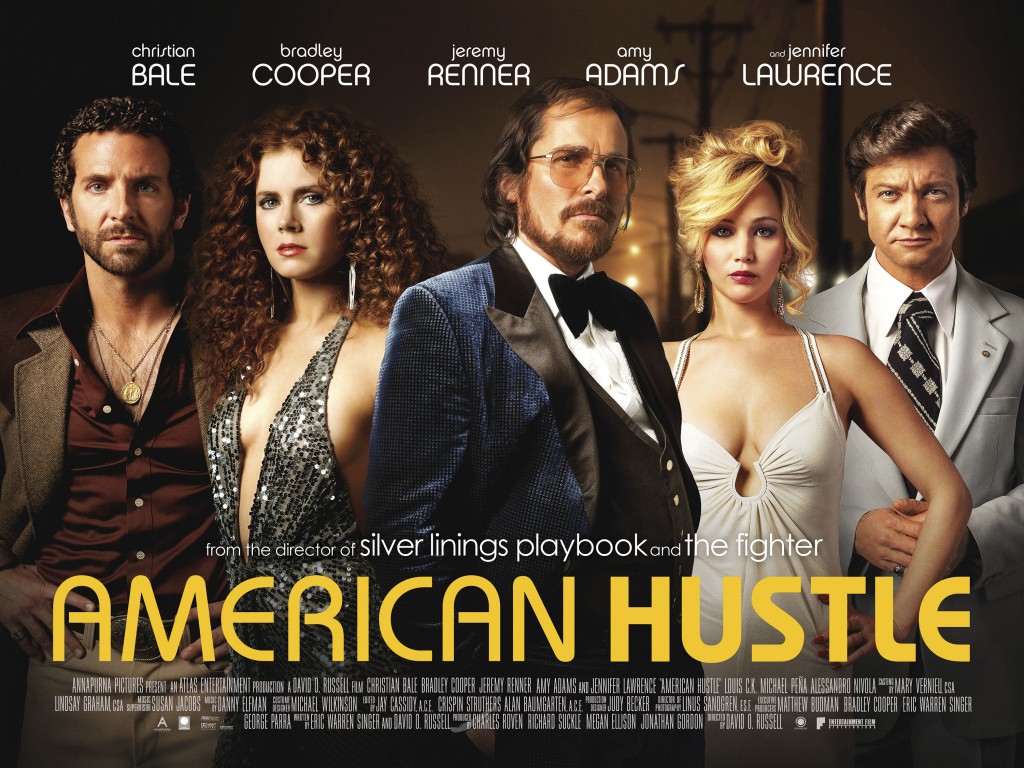
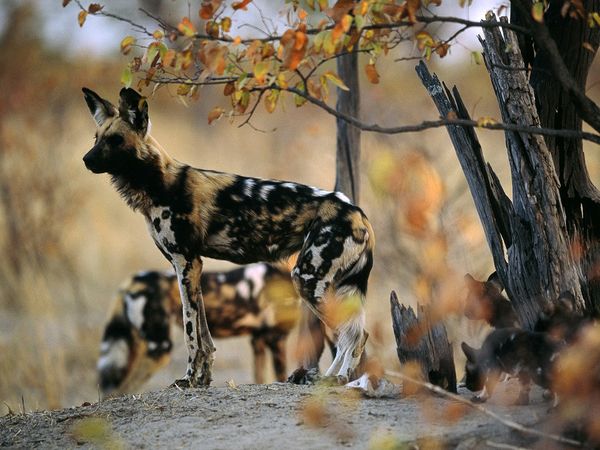

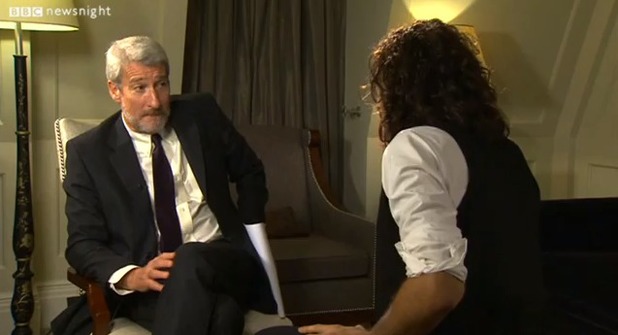
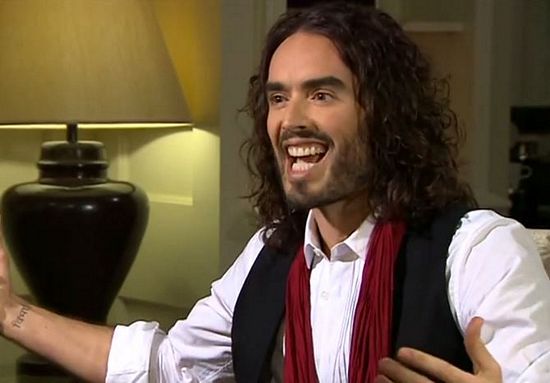


 Learning from Dogs