Tag: George Monbiot

Who am I, Part Two!

Trying to make sense of our place in the world – and probably failing!

Yesterday’s post, Making sense of who we are?, was built upon a recent essay from George Monbiot: A Small and Shuffling Life. It is a terrific essay, in the very best tradition of George Monbiot. I really hope you read it in yesterday’s post because today’s introspective jaunt is built on that essay. Two particular paragraphs of his essay really ‘spoke’ to me.

The opening paragraph:

Live free or die: this is the maxim of our age. But the freedoms we celebrate are particular and limited. We fetishise the freedom of business from state control; the freedom not to pay taxes; the freedom to carry guns and speak our minds and worship whom we will. But despite – in some cases because of – this respect for particular freedoms, every day the scope of our lives appears to contract.

Later:

We carry with us the psychological equipment, rich in instinct and emotion, required to navigate that world. But our survival in the modern economy requires the use of few of the mental and physical capacities we possess. Sometimes it feels like a small and shuffling life. Our humdrum, humiliating lives leave us, I believe, ecologically bored.

In that second paragraph I sense something from Mr. Monbiot that is felt by me and Jean and appears to be shared very widely. A sense that something about today’s society is broken. That the last, say fifty years, of increasing living standards, health and prosperity, albeit not universally embraced, have brought us no closer to a golden future. That, as so clearly voiced in the preceding paragraph, “… our survival in the modern economy requires the use of few of the mental and physical capacities we possess.

My guess is that George Monbiot and Terry Hershey have never met. One might suggest that their backgrounds are as different as two people might be. Take their respective ‘About’ pages on their blogsites. Here are their closing paragraphs.

First, George:

George Monbiot Guardian Staff Byline

My work is more sedentary than it used to be, so I temper it with plenty of physical activity: sea kayaking, ultimate frisbee, running and some heavy duty gardening: growing my own vegetables and much of my own fruit.

Here are some of the things I love: my family and friends, salt marshes, arguments, chalk streams, Russian literature, kayaking among dolphins, diversity of all kinds, rockpools, heritage apples, woods, fishing, swimming in the sea, gazpacho, ponds and ditches, growing vegetables, insects, pruning, forgotten corners, fossils, goldfinches, etymology, Bill Hicks, ruins, Shakespeare, landscape history, palaeoecology, Gavin and Stacey and Father Ted.

Here are some of the things I try to fight: undemocratic power, corruption, deception of the public, environmental destruction, injustice, inequality and the misallocation of resources, waste, denial, the libertarianism which grants freedom to the powerful at the expense of the powerless, undisclosed interests, complacency.

Here is what I fear: other people’s cowardice.

I still see my life as a slightly unhinged adventure whose perpetuation is something of a mystery. I have no idea where it will take me, and no ambitions other than to keep doing what I do. So far it’s been gripping.

Now, Terry:

terry-hershey

I used to ask of myself and others: what have you accomplished? Where are your credentials? What does your job and your bank account say about who you are?

Now, my questions are different:
Are there butterflies in your garden?
What are the color of loved ones’ eyes, when they are looking at you with hope?
And when was the last time your house smelled of paper-white narcissus?
Do sunsets make you smile?
When was the last time you stood in stocking feet just to stare at the rising moon?
Have you ever seen a sunflower bloom?
Does the laughter of children do your heart good?
At what angle does the sun enter your house?

Do I understand that life is full of complications, obligations and distractions? Yes. I do. My wife and I raise a teenage son. We run two businesses. So, yes, I know a bit about down-to-earth realities.

But this, too, is reality:

I love to watch the hummingbirds dance.
I love that my son likes to put on his dancing shoes.
I love to join him when we play
old-time rock and roll.
I love to stretch out on a garden bench on a
warm summer day.
I love a hot shower and drying with an expensive,
oversized cotton towel.
I love books, delight in poetry,
and find sustenance in writing.
I treasure the certainty that grace
gives us all many second chances.
I value the times I can simplify life by letting go of my need to validate my humanity through productivity.
And I love to lose track of time in a garden.

I also know that sharing this with you – offering my practices for pausing, resources for doing less and living more, reflections in my blog —feeds me.

So I invite you, too, to join us — and together we’ll share, remind, and support each other, to “do less, live more.

Yet, despite the differences in backgrounds, cultures and much more, to me there is a common openness, an honesty shared, and a passion for the truth.

All of which is a very long introduction to this week’s Sabbath Moment from Terry; republished in full.

ooOOoo

Finding sanctuary and grace

January 19, 2015

Today I am sitting in a café (and bar) in Vaison-la-Romaine, in the Provence region of France, nursing my espresso. The old men of the village (actually all of them are about my age) gather. They unload, swap stories, sip pastis, and watch petanque on TV. Some read the newspaper–with stories about Charlie Hebdo and photos of “Somme Nous Charlie“–carrying reminders of hope in our fragile and broken world.

I am glad to be here. Today. In this place. There is an air of familiarity among the men, and comfort in their ritual. I am grateful for reminders and invitations to live well into a place. Not just a physical space, but a tonic and sanctuary to the spirit. The invitation is a permission to settle down. (In the words of Jesus, “to come away and rest awhile.”) A sanctuary is a place that restores us, replenishes us, nourishes us. In this renewal, we are reminded, once again, of what really is important.

I agree that it is easy to sentimentalize. But living into the moment doesn’t smooth the edges of our life. It allows us to pay attention. I like to think that we can name the edges, to welcome and invite them into the sanctuary.

Outside a bicycle club gathers in the village center parking lot, ready for their weekend excursion. Their spirit is eager, their uniform bearing homage to their journey to the top of Mont Ventoux.

Sitting in the café, my thoughts meander, with no agenda or responsibilities to tether them. So I let them wander, a gift to embrace. But my reverie is interrupted with worry … I need a Sabbath Moment. And I don’t have a clue (I tell myself). It’s not easy on vacation. Especially without wi-fi.

I am on my annual trip to Europe with my good friend Bill McNabb to taste wine. He’s a wine writer (and pastor) in the San Francisco area. But mostly, he’s a friend. I’m his aide-de-camp and connoisseur.
We travel to wine regions and are blessed to taste beverages that we cannot afford, but offer us a glimpse of heaven.
Yes I’m biased. But then wine is not a beverage here; it is an experience. Your choice is to savor and take delight.

We visited wineries harvesting grapes from vines 100 years old. These are businesses passed down through the generations, grandfather to father to son (and now thankfully, often to daughter). A world where terroir is king, the personality of the soil. Meaning that this wine is born of a place, a very specific place. Here in the Rhone Valley, I’m honored to be in the company of crafts people. Like being with a great gardener. The men and women I met coddle their vines–they call them trees–lovingly.
Unlike Peter Mayle, I don’t have “A Year in Provence.” I only have a few days. But that’ll do… It is my first visit and I’m sure won’t be my last.

We’re in our gite–a rural rental property in France–we relish the evening light, a layer of bruised purple (pourple) above the slopes in Provence (Cotes du Rhone). Below the hills, vineyards roll through the landscape, the vines–still in winter and pruned–pose as menorah renderings in the dusk light.

Yes, this scene is a tonic. There is something about these moments that carry significance, because they are reminders, and they are sacraments. Partial, yes, but containing the full sustenance of grace.
And I think of the question a friend asks me, “What holds you?”
In other words… What sustains you, and carries you gently through your days?

Ryoken, a Zen master, lived the simplest kind of life in a little hut at the foot of a mountain. One evening a thief visited the hut, only to discover there was nothing in it to steal. Ryoken returned and caught him in the act.
“You may have come a long way to visit me,” he told the disillusioned prowler, “and you should not return empty-handed. Please take my clothes as a gift.”
The thief was bewildered. But he took the clothes and slunk away.
Ryoken sat naked, watching the moon, “Poor fellow,” he mused. “I wish I could have given him this beautiful moon.”

Sometimes I feel like that thief. Standing–in my own home, or in front of an audience, or in a crowd, or all alone–I am looking for something, for whatever ails me or creates a hole or emptiness; but, like that thief, not finding it. “What am I missing?” I ask myself. What am I wanting, yearning for, that I find myself in such a pell-mell-hurry or weighted down… hoping to fix it, or find it, or mend it. So I run and race and call on God, or the sky, or roll the dice with some prayer from my childhood. This will solve it, I tell myself. But the more I push, the more I ask, the more I beseech, the further I move from the center.

Here’s the deal: In my state of distraction, I cannot see that the core of my identity, the place where I stand in this moment (even at times without clarity, or stability, or faith, or answers)… I stand smack dab in the center of an awesome and illogical grace. Smack dab in the center of the sacred present.

If I do have the permission to see that place, I know that I am grounded.
I am now able to breathe in
and out,
and rest in this acceptance.

Last night, above the slopes to the south, a slivered crescent moon rests, the sky a cobalt blue canvas. It is visceral, arresting, piercing. And for whatever reason, reassuring. This snapshot is imprinted, and I know in my heart that it is in some way essential, indispensable. I accept this gift of the moon, even though I don’t yet know why.

I don’t know what to tell you to do, exactly. Only that I too, wish I could give you the gift of that crescent moon.
I know this for certain: when we do not pay tribute, we are like the thief in the Zen story–without even knowing it–and we settle for less. So much less. So it is not just a question of what hold us, but of what holds us back… from being wholehearted, true to our self, fully alive, unafraid of uncertainty, and grateful for the gift of this moment.

Lord knows we look for ways to bottle it and sell it, when I reckon we should just get out of the way.

Our gite sits squarely in a vineyard and a working farm. A perfect setting to replenish. For years I’ve been writing about sanctuary and the need for restoration. And I’m my own worst enemy. There’s not a week that goes by that a Sabbath Moment friend doesn’t remind me to follow my own advice to pause… and let my soul catch up with my body. Gladly, this week I did.

ooOOoo

My penultimate reflection to today’s post is with a short, six-minute video from Professor Dan Gilbert. The video is entitled: The psychology of your future self. I hope you see it as offering a calming perspective to two days of inner psychological ramblings!

Published on Jun 3, 2014
“Human beings are works in progress that mistakenly think they’re finished.” Dan Gilbert shares recent research on a phenomenon he calls the “end of history illusion,” where we somehow imagine that the person we are right now is the person we’ll be for the rest of time. Hint: that’s not the case.

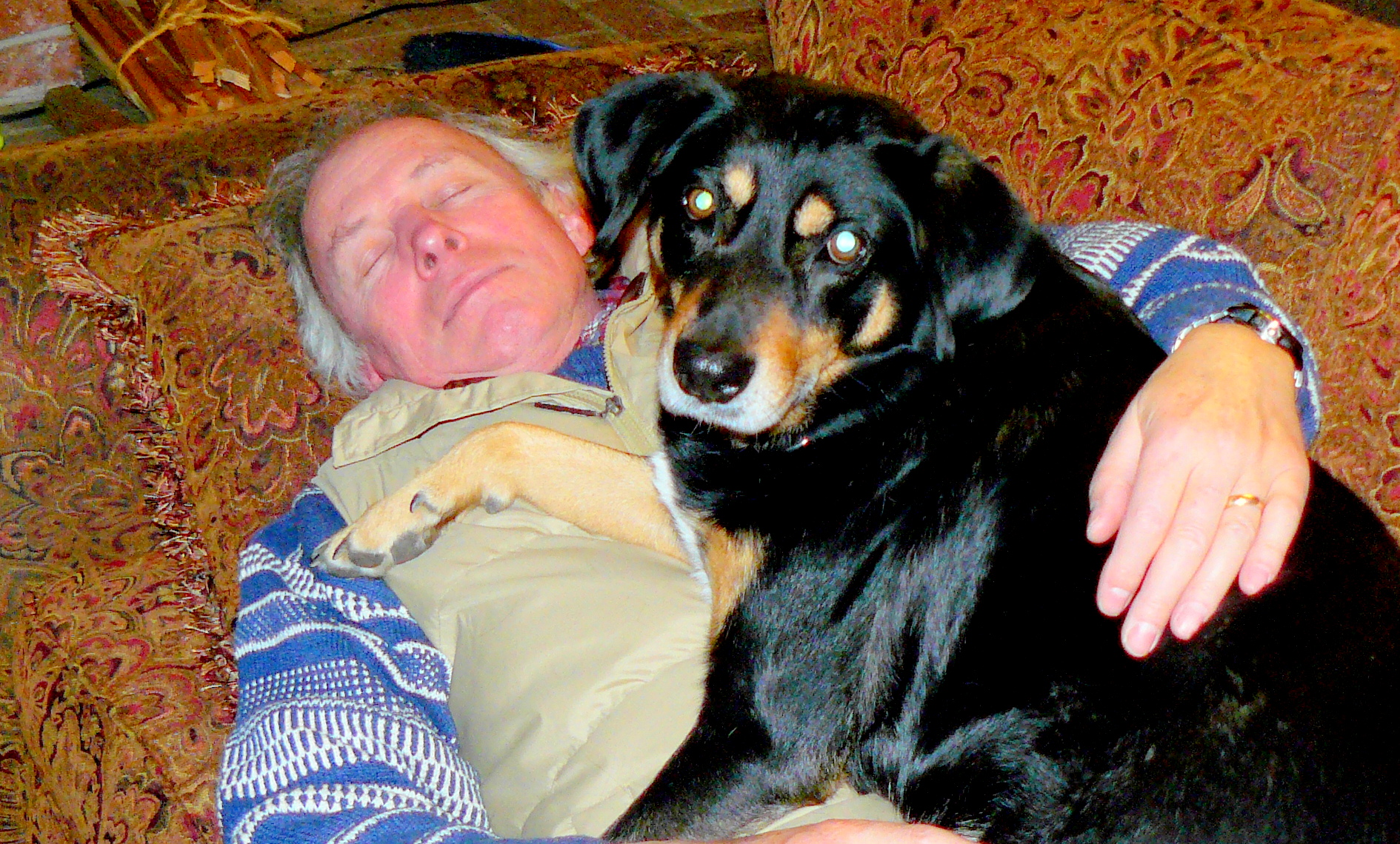
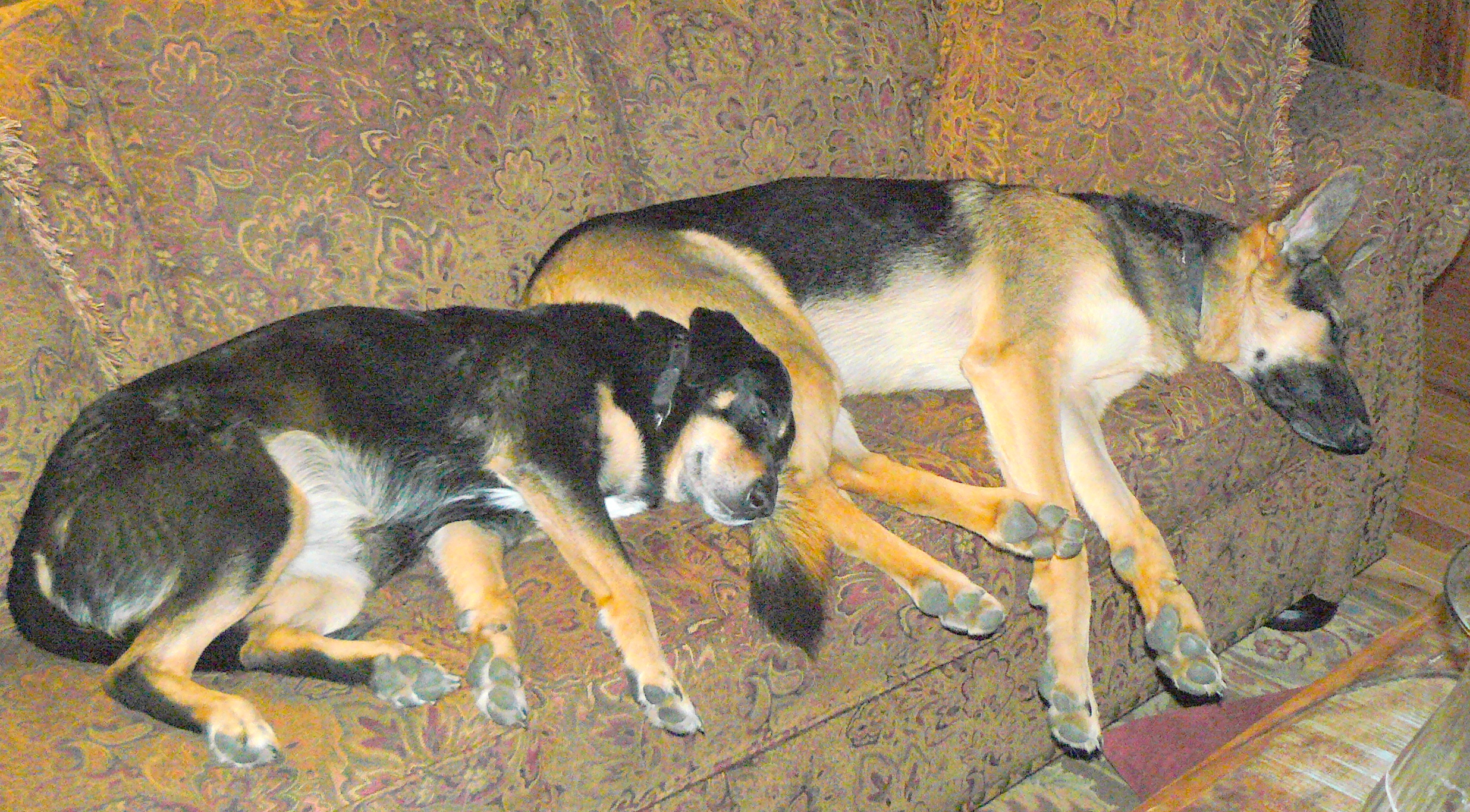
My final reflection is the lesson that dogs teach us; that one about living in the present.

Cleo living, and sleeping, in the present moment.

Making sense of who we are?

The psychology of self.

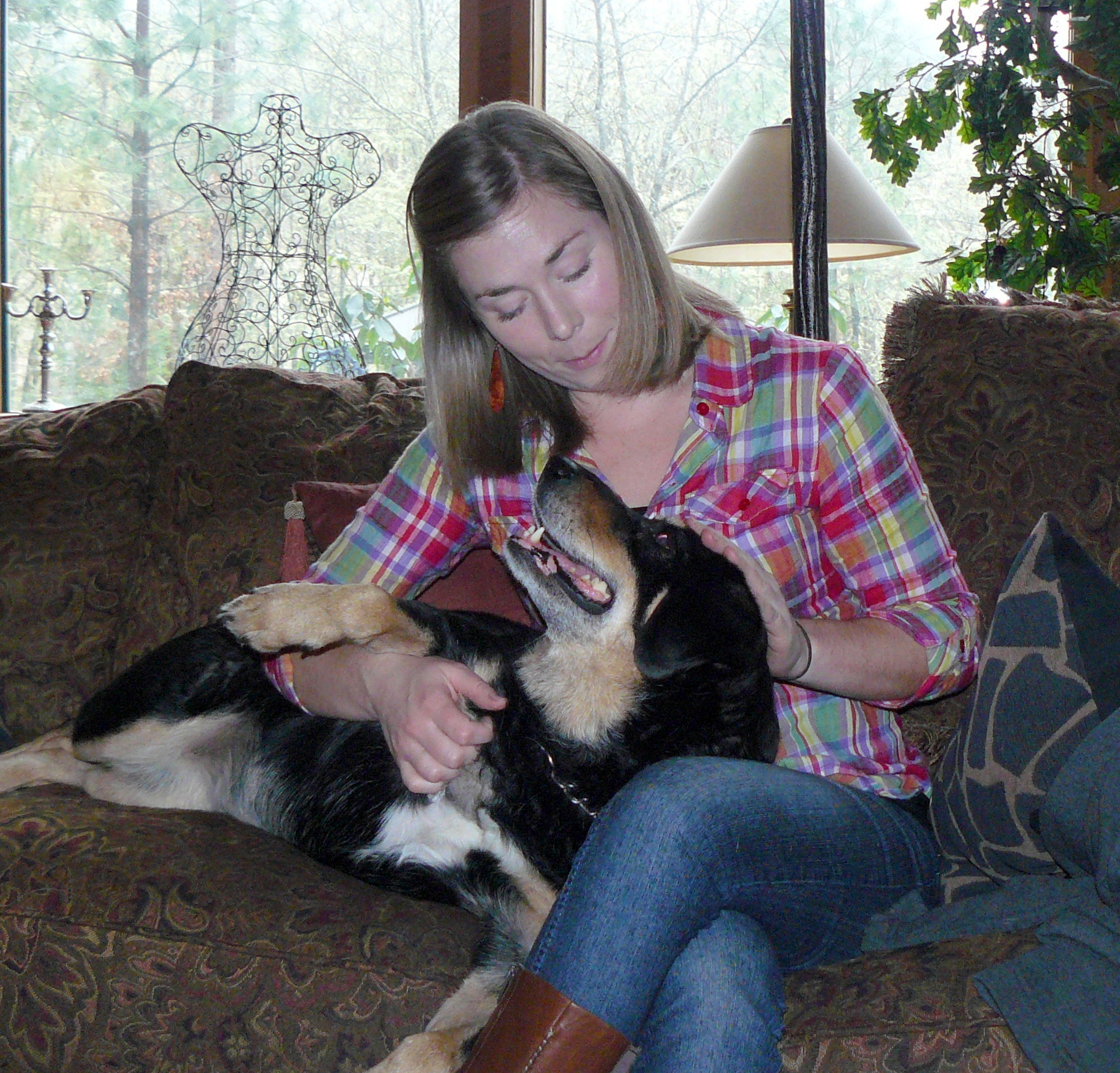
One of the huge differences between humans and our beloved dogs is that dogs live entirely in the present and do not engage in abstract thinking. Indeed, one of the most glorious aspects of owning a dog is being able to lose oneself in those moments of intimacy between yourself and your dog. Here’s a wonderful example of that when Bridget from Oregon Wild visited us recently and enjoyed a moment of bliss with Hazel.

P1150348

So with that in mind, I am now going to be very un-dog-like and very human by offering an essay that is most abstract in manner.  Not my essay, I should hasten to add, but a recent essay from George Monbiot, republished here with his kind permission. Then tomorrow, I want to stay with the abstract theme and include a recent essay from Terry Hershey.

ooOOoo

A Small and Shuffling Life

Why, in this age of freedom, are we so confined? And what can we do to reclaim our lives?

By George Monbiot, published in the New York Times, 19th January 2015

Live free or die: this is the maxim of our age. But the freedoms we celebrate are particular and limited. We fetishise the freedom of business from state control; the freedom not to pay taxes; the freedom to carry guns and speak our minds and worship whom we will. But despite – in some cases because of – this respect for particular freedoms, every day the scope of our lives appears to contract.

Half a century ago, we were promised that rising wealth would mean less work, longer vacations and more choice. But our working hours rise in line with economic growth, and they are now governed by a corporate culture of snooping and quantification, of infantilizing dictats and impossible demands, which smothers autonomy and creativity. Technologies that promised to save time and free us from drudgery (such as email and smartphones) fill our heads with a clatter so persistent it stifles the ability to think.

Public spaces in our cities are reduced to pasteurised piazzas, in which loitering without intent to shop is treated as suspicious. Protest is muted by dozens of constraining laws. Young people, who have no place in this dead-eyed, sanitised landscape, scarcely venture from their bedrooms. Political freedom now means choosing between alternative versions of market fundamentalism.

Even the freedoms we do possess we tend not to exercise. We spend hours every day watching other people doing what we might otherwise be doing: dancing, singing, playing sport, even cooking. We venture outdoors to seek marginally different varieties of stuff we already possess. “Getting and spending, we lay waste our powers / Little we see in Nature that is ours,” wrote William Wordsworth (1), and it is truer today than it was then.

We entertain the illusion that we have chosen our lives. Why, if this is the case, do our apparent choices differ so little from those of other people? Why do we live and work and travel and eat and dress and entertain ourselves in almost identical fashion? It’s no wonder, when we possess and use it so little, that we make a fetish out of freedom.

Perhaps we have forgotten the bitter complaint made by Benjamin Franklin in 1753. “When an Indian Child has been brought up among us, taught our language and habituated to our Customs, yet if he goes to see his relations and make one Indian Ramble with them, there is no perswading him ever to return.”(2) But when European Americans “have been taken prisoners young by the Indians, and lived a while among them, tho’ ransomed by their Friends, and treated with all imaginable tenderness to prevail with them to stay among the English, yet in a Short time they become disgusted with our manner of life … and take the first good Opportunity of escaping again into the Woods, from whence there is no reclaiming them.” In 1785 Hector de Crèvecoeur asked two European refuseniks why they would not come home. “The reasons they gave me would greatly surprise you: the most perfect freedom, the ease of living, the absence of those cares and corroding solicitudes which so often prevail with us.”(3)

We arose in a thrilling, terrible world. The African savannahs on which the first hominims evolved were dominated by sabretooth and false sabretooth cats, giant hyaenas and bear dogs. When human beings arrived in the Americas, 14,000 years ago, they found ground sloths the weight of elephants; a beaver eight feet from nose to tail; armadillos like small cars; giant lions and sabretooths; short-faced bears whose shocking armoury of teeth and claws suggests they drove giant lions and sabretooths off their prey. A bird in Argentina had a wingspan of 26 feet. Fanged salmon nine feet long migrated inland from the Pacific coast.

We carry with us the psychological equipment, rich in instinct and emotion, required to navigate that world. But our survival in the modern economy requires the use of few of the mental and physical capacities we possess. Sometimes it feels like a small and shuffling life. Our humdrum, humiliating lives leave us, I believe, ecologically bored.

At times this sensation has overwhelmed me. It happened in a newly-discovered bone cave in southern England. The walls and floor were encrusted with calcite crystals, that glittered in the torchlight. One of the archaeologists with whom I was exploring it handed me the atlas vertebra of a Bronze Age cow. Then he picked up another bone, this time with both hands: another atlas vertebra, but monstrous. “It’s the same species as the first one. But this is the wild version. The aurochs.” As I turned it over in my hands, feeling its great weight, I experienced what seemed like an electric jolt of recognition. It felt raw, feral, pungent, thrilling. The colour seemed to drain from modern life.

I felt it again when stalking up a tidal channel with a trident, trying to spear flounders. After two hours scanning the sand intently for signs of the fish, I was suddenly transported by the fierce conviction that I had done it a thousand times before. I felt it most keenly when I stumbled across the fresh corpse of a deer in a wood. I hoisted it onto my shoulders. As soon as I felt its warmth on my back, my skin flushed, my hair stood on end and I wanted to roar. Civilisation slid off like a bathrobe. I believe that in these cases I accidentally unlocked a lumber room in the mind, in which vestigial faculties shaped by our evolutionary past are stored. These experiences ignited in me a smouldering longing for a richer and rawer life than the one I lead.

Unless we are prepared to reject civilization altogether and live in the woods, there is no complete answer to this predicament. But I think there is a partial one. Across many rich nations, especially the United States, global competition is causing the abandonment of farming on less fertile land. Rather than trying to tame and hold back the encroaching wilds, I believe we should help to accelerate the process of reclamation, removing redundant roads and fences, helping to re-establish missing species, such as wolves and cougars and bears, building bridges between recovering habitats to create continental-scale wildlife corridors, such as those promoted by the Rewilding Institute(4).

This rewilding of the land permits, if we choose, a partial rewilding of our own lives. It allows us to step into a world that is not ordered and controlled and regulated, to imagine ourselves back into the rawer life from which we came, to discover, perhaps, the ecstasy I experienced when I picked up that deer. We don’t have to give up our washing machines and computers and spectacles and longevity to shed our ecological boredom and recover some measure of the freedom that has been denied to us. Perhaps we do need to remember who we are.

George Monbiot’s book Feral: rewilding the land, the sea and human life is published this month by the University of Chicago Press.

References:

1. http://www.bartleby.com/145/ww317.html

2. Benjamin Franklin, 9th May 1753. The Support of the Poor. Letter to Peter Collinson.

http://www.historycarper.com/1753/05/09/the-support-of-the-poor/

3. J. Hector St. John de Crèvecoeur, 1785. Letters from an American Farmer and Other Essays. Letter 12. Edited by Dennis D. Moore. Harvard University Press.

4. http://rewilding.org/rewildit/

ooOOoo

So tomorrow, the second part with Terry Hershey and a short talk by Professor Dan Gilbert, Professor of Psychology at Havard University.

We are in and of nature itself!

Yet another powerful essay from George Monbiot.

I wonder at times why the most obvious things about us humans can be so easily overlooked. I have in mind that we humans are a product of a natural world, that we cannot survive without nature; however we examine our lives.

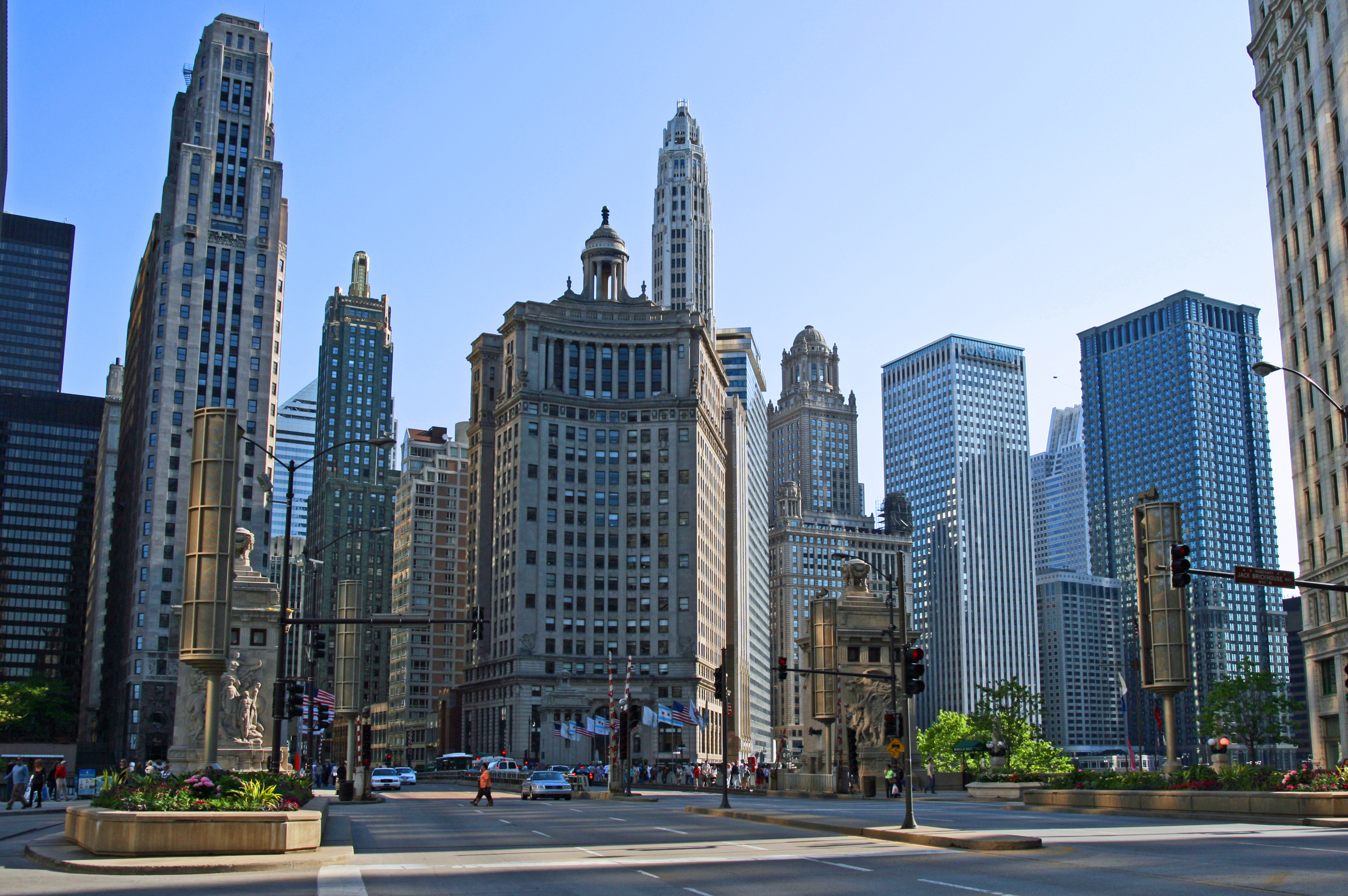
Take, for example, this picture of a city spread, in this case Chicago, where one might expect the natural world to be practically out of sight, reduced to a single point, metaphorically speaking. Yet nature is still hanging on, albeit courtesy of some local gardeners, I don’t doubt.

Chicago_cityscape_(5253757001)

All of which is my introduction to yet another powerful essay from George Monbiot, republished here with his very kind permission.

ooOOoo

Civilisation is Boring

December 9, 2014

We are pre-tuned to the natural world; wired to respond to nature.

By George Monbiot, published on BBC Earth, 8th December 2014

This is the first of BBC Earth’s longform essays about our relationship with the natural world.

One of the penalties of an ecological education is that one lives alone in a world of wounds,” the pioneering conservationist Aldo Leopold wrote. “An ecologist must either harden his shell and make believe that the consequences of science are none of his business, or he must be the doctor who sees the marks of death in a community that believes itself well and does not want to be told otherwise.”(1)

I remembered that when I read the news that the world has lost 52% of its vertebrate wildlife over the past 40 years(2). It’s a figure from which I’m still reeling. To love the natural world is to suffer a series of griefs, each compounding the last. It is to be overtaken by disbelief that we could treat it in this fashion. And, in the darkest moments, it is to succumb to helplessness, to the conviction that we will keep eroding our world of wonders until almost nothing of it remains. There is hope – real hope – as I will explain later, but at times like this it seems remote.

These wounds are inflicted not only on the world’s wildlife but also on ourselves. Civilisation is but a flimsy dust sheet that we have thrown over a psyche rich in emotion and instinct, shaped by the living planet. The hominims from whom we evolved inhabited a fascinating, terrifying world, in which survival depended on constant observation and interpretation. They contended not only with lions and leopards, but with sabretooths and false sabretooths, giant hyaenas and bear dogs (monstrous creatures with a huge bite radius).

As the work of Professor Blaire van Valkenburgh at UCLA suggests, predators in the pre-human past lived at much greater densities than they do today(3). The wear and breakage of their teeth show that competition was so intense that they were forced to consume the entire carcasses of the animals they killed, bones and all, rather than just the prime cuts, as top carnivores tend to do today. In other words, the animals with which we evolved were not just bigger than today’s predators; they were also hungrier.

Navigating this world required astonishing skills. Our ancestors, in the boom-and-bust savannahs, had to travel great distances to find food, through a landscape shimmering with surprise and hazard. Their survival depended upon reacting to the barest signals: the flicker of a tail in the grass, the scent of honey, a change in humidity, tracks in the dust. We still possess these capacities. We carry with us a ghost psyche, adapted to a world we no longer inhabit, which contains – though it remains locked down for much of the time – a boundless capacity for fear and wonder, curiousity and enchantment. We are pre-tuned to the natural world; wired to respond to nature.

In computer games and fantasy novels, we still grapple the monsters of the mind. In the film of Lord of the Rings: the Two Towers, the orcs rode on giant hyaenas(4). In the first Hunger Games film, bear dogs were released into the forest to prey on the contestants(5). I don’t believe these re-creations were accidental: the directors appear to have known enough of our evolutionary history to revive the ancestral terror these animals provoke. The heroic tales that have survived – tales of Ulysses, Sinbad, Sigurd, Beowulf, Cú Chulainn, St George, Arjuna, Lạc Long Quân and Glooskap – are those that resonate with the genetic memories lodged in our minds. I suspect that their essential form has remained unchanged for hundreds of thousands of years; that the encounters with monsters recorded in writing were a consolidation of stories we have been telling since we acquired the capacity to use the past tense.

You can see how such tales might have originated in a remarkable sequence in the BBC’s Human Planet series(6). Three men in southern Kenya, described by the programme as Dorobo people (though this is not a designation many ethnographers accept) stalk to within about 50 metres of a lion kill. Fifteen lions, blood dripping from their jaws, are eating the carcass of a wildebeest. The men suddenly stand and walk towards the pride. Rattled by their astonishing confidence, the lions flee. They watch from the bushes, puzzled and indecisive, as the three men walk up to the carcass, hack off one of the hind legs, then saunter away. That night, the adventurers roast the meat in their cave. “We really robbed those lions”, one of them boasts. “How many do you think there were?”, another asks. “Fifteen, but there might have been more.”

This, surely, is how sagas begin. Those men, led by a veteran of such ruses, are heroes of the old stamp. They outwitted a party of monsters, using guile and audacity, much as Ulysses did. A few hours later, they tell the first version of a story that might echo down the generations, every time with new flourishes and embellishments. Now imagine that, thousand of years hence, lions are long extinct, and the descendants of the Dorobo have only the haziest notion of what they were. They have become monsters even bigger and more dangerous than they were in life, and the feat becomes even more outrageous and unlikely. The saga remains true to its core, but the details have changed. We are those people, still telling the old stories, of encounters with the beasts that shaped us.

The world lives within us, we live within the world. By damaging the living planet we have diminished our existence.

We have been able to do this partly as a result of our ability to compartmentalise. This is another remarkable capacity we have developed, which perhaps reflects the demands of survival in the ever more complex human world we have created. By carving up the world in our minds we have learnt to shut ourselves out of it.

One of the tasks that parents set themselves is to train their children in linearity. Very young children don’t do linearity. Their inner life is discursive, contingent, impulsive. They don’t want to walk in a straight line down the pavement, but to wander off in the direction of whatever attracts their attention. They don’t begin a task with a view to its conclusion. They throw themselves into it, engage for as long as it’s exciting, then suddenly divert to something else.

This is how all animals except adult humans behave. Optimal foraging, the term biologists use to describe the way animals lock onto the best food supply, involves pursuing a task only for as long as it remains rewarding. Our own hunting and gathering would have followed a similar pattern, though it was complicated by our ability to plan and coordinate and to speculate about imagined outcomes. Broadly speaking, ours was a rambling and responsive existence, in which, by comparison to the way we live today, we had little capacity or inclination to impose our will on the world, to lay out a course of action and to follow it without deviation or distraction.

Only with the development of farming did we have to discipline ourselves to think linearly: following a plan from one point to another across weeks or months. Before long we were ploughing in straight lines, making hedges and ditches and tracks in straight lines, building houses and then towns in straight lines. Now almost every aspect of our lives is lived within grids, either concrete or abstract. Linearity, control and management dominate our lives. We fetishise progress: a continuous movement in the same direction. We impose our lines on the messy, contradictory and meandering realities of the human world, because otherwise we would be completely lost in it. We make compartments simple enough, amid the labyrinths we have created, to navigate and understand.

Thus we box ourselves out of the natural world. We become resistant to the experiences that nature has to offer; its spontaneity and serendipity, its unscripted delights, its capacity to shake us out of the frustrations and humiliations which are an inevitable product of the controlled and ordered world we have sought to create. We bully the living world into the grids we impose on ourselves. Even the areas we claim to have set aside for nature are often subjected to rigid management plans, in which the type and the height of the vegetation is precisely ordained and, through grazing or cutting or burning, nature is kept in a state of arrested development to favour an arbitrary assemblage of life over other possible outcomes. Nothing is allowed to change, to enter or leave. We preserve these places as if they were jars of pickles.

The language we use to describe them is also rigid and compartmentalised. In the UK we protect “sites of special scientific interest”, as if the wildlife they contain is of interest only to scientists. The few parts of the seabed which are not ripped up by industrial trawling are described as “reference areas”, as if their only value is as a baseline with which to compare destruction elsewhere. And is there a more alienating term than “reserve”? When we talk about reserve in people, we mean that they seem cold and remote. It reminds me of the old Native American joke: “we used to like the white man, but now we have our reservations.” Even “the environment” is an austere and technical term, which creates no pictures in the mind.

It’s not that we have banished our vestigial psychological equipment from our minds, or lost our instinct for engagement with wildlife. The tremendous popularity of nature programmes testifies to its persistence. I remember sitting in a café listening to a group of bus drivers talking, with great excitement and knowledge, about the spiders they had seen on television the night before, and thinking that, for all our technological sophistication, for all the clever means by which we shield ourselves from our emotions, we remain the people we have always been.

But we have suppressed these traits, and see the world through our fingers, shutting out anything that might spoil the view. We eat meat without even remembering that it has come from an animal, let alone picturing the conditions of its rearing and slaughter. We make no connection in our compartmentalised minds between the beef on our plates and the destruction of rainforests to grow the soya that fed the cattle; between the miles we drive and the oil wells drilled in rare and precious places, and the spills that then pollute them.

In our minds we have sanitised the world. WH Auden’s poem Et in Arcadia Ego describes how “Her jungle growths / Are abated, Her exorbitant monsters abashed, / Her soil mumbled,” while “the autobahn / Thwarts the landscape / In godless Roman arrogance”(7). But the old gods, the old fears, the old knowledge, have not departed. We simply choose not to see. “The farmer’s children / Tiptoe past the shed / Where the gelding knife is kept.”

Civilisation is boring. It has many virtues, but it leaves large parts of our minds unstimulated. It uses just a fraction of our mental and physical capacities. To know what comes next has been perhaps the dominant aim of materially-complex societies. Yet, having achieved it, or almost achieved it, we have been rewarded with a new collection of unmet needs. Many of us, I believe, need something that our planned and ordered lives don’t offer.

I found that something once in Cardigan Bay, on the west coast of Wales. I had stupidly launched my kayak into a ten-foot swell to fish a couple of miles from the shore. As I returned to land, I saw that the tide had risen, and ugly, jumbled breakers were smashing on the seawall. From where I sat, two hundred metres from the shore, I could see that the waves were stained brown by the shingle they flung up. I could hear them cracking and soughing against the wall. It was terrifying.

Behind me I heard a monstrous hiss: a freak wave was about to break over my head. I ducked and braced the paddle against the water. But nothing happened. Then a hooked grey fin, scarred and pitted, rose and skimmed just under the shaft of my paddle. I knew what it was, but the shock of it enhanced my rising fear. I glanced around, almost believing that I was under attack.

Then, from the stern, I heard a different sound: a crash and a rush of water. A gigantic bull dolphin soared into the air and almost over my head. As he flew past, he fixed his eye on mine. I stared at the sea into which he had disappeared, willing him to emerge again, filled with a wild exaltation, and a yearning of the kind that used to afflict me when I woke from that perennial pre-adolescent dream of floating down the stairs, my feet a few inches above the carpet. I realised at that moment that I had been suffering from a drought of sensation which I had come to accept as a condition of middle age, like the loss of the upper reaches of hearing.

I found that missing element again in the Białowieża Forest in eastern Poland. I was walking down a sandy path between oak and lime trees that rose for perhaps one hundred feet without branching. Around them the forest floor frothed with ramsons, celandines, spring peas and May lilies. I had seen boar with their piglets, red squirrels, hazel grouse, a huge bird that might have been an eagle owl, a black woodpecker. As I walked, every nerve seemed stretched, tuned like a string to the forest I was exploring. I rounded a curve in the path and found myself face to face with an animal that looked more like a Christian depiction of the Devil than any other creature I have seen.

I was close enough to see the mucus in her tear ducts. She had small, hooked black horns, heavy brows and eyes so dark that I could not distinguish the irises from the pupils. She wore a neat brown beard and an oddly human fringe between her horns. Her back rose to a crest then tapered away to a narrow rump, from which a black tail, slim as a whip, now twitched. She flared her nostrils and raised her chin. I fancied I could smell her sweet, beery breath. We watched each other for several minutes. I stayed so still that I could feel the blood pounding in my neck. Eventually the bison tossed her head, danced a couple of steps then turned, trotted back down the path then cantered away through the trees.

Experiences like these are the benchmarks of my life, moments in which dormant emotions were rekindled, in which my world was re-enchanted. But such unexpected encounters have been far too rare. Most of the lands in which I walk and the seas in which I swim or paddle my kayak are devoid of almost all large wildlife. I see deer, the occasional fox or badger, seals, but little else. It does not have to be like this. We can recharge the world with wonder, reverse much of the terrible harm we have done to it.

Over the past centuries, farming has expanded onto ever less suitable land. Even places of extremely low fertility have been cultivated or grazed, and the result has been a great disproportion between damage and productivity: the production of a tiny amount of food destroys the vegetation, the wild animals, the soil and the watersheds of entire mountain ranges. In the face of global trade, farming in such areas is becoming ever less viable: it cannot compete with production in fertile parts of the world. This has caused a loss of cultural diversity, which is another source of sadness.

But at the same time it means that the devastated land could be restored. In Europe, according to one forecast, 30 million hectares – an area the size of Poland – will be vacated by farmers by 2030(8). In the United States, two thirds of those parts of the land which were once forested, then cleared, have become forested again(9), as farming and logging have retreated, especially from the eastern half of the country. Rewilding, the mass restoration of ecosystems, which involves pulling down the redundant fences, blocking the drainage ditches, planting trees where necessary, re-establishing missing wildlife and then leaving the land to find its own way, could reverse much of the damage done to these areas. Already, animals like lynx, wolves, bears and moose, on both continents, are moving back into their former ranges.

There are also possibilities of restoring large parts of the sea. Public disgust at a fishing industry that has trashed almost every square metre of seabed on the continental shelves is now generating worldwide demands for marine parks. These are places in which commercial extraction is forbidden and the wildlife of the seas can recover. Even fishing companies can be persuaded to support them, when they discover that the fish migrating out of these places greatly boost their overall catches, a phenomenon known as the spillover effect. Such underwater parks are quickly recolonised by sessile life forms. Fish and crustacea proliferate, breeding freely and growing to great sizes once more. Dolphins, sharks and whales move in.

In these places we can leave our linearity and confinement behind, surrender to the unplanned and emergent world of nature, be surprised once more by joy, as surprise encounters with great beasts (almost all of which, despite our fears, are harmless to us) become possible again. We can rediscover those buried emotions that otherwise remain unexercised. Why should we not have such places on our doorsteps, to escape into when we feel the need?

Rewilding offers something else, even rarer than lynx and wolves and dolphins and whales. Hope. It offers the possibility that our silent spring could be followed by a raucous summer. In seeking to persuade people to honour and protect the living planet, an ounce of hope is worth a ton of despair. We could, perhaps, begin to heal some of the great wounds we have inflicted on the world and on ourselves.

George Monbiot is the author of Feral: rewilding the land, sea and human life. There’s an archive of his articles at http://www.monbiot.com

References:

1. Aldo Leopold, 1949. A Sand County Almanac. Oxford University Press.

2. http://www.theguardian.com/environment/2014/sep/29/earth-lost-50-wildlife-in-40-years-wwf

3. http://www.eci.ox.ac.uk/news/events/2014/megafauna/valkenburgh.pdf

4. https://www.youtube.com/watch?v=F3GFYKIwJ9Y

5. http://www.imdb.com/title/tt1392170/

6. http://vimeo.com/22616099

7. http://www.nybooks.com/articles/archives/1965/jun/03/et-in-arcadia-ego/

8. http://www.rewildingeurope.com/assets/uploads/Downloads/Rewilding-Europe-Brochure-2012.pdf

9. http://articles.chicagotribune.com/2012-11-16/features/ct-prj-1118-book-of-the-month-20121116_1_wild-animals-wildlife-wild-game-meat/2

ooOOoo

I’m sure that you will agree with me that this is a wonderful essay from Mr. Monbiot, an essay that speaks to us in ways that we all intuitively know makes huge sense.

There is hope for us!


A breath of common-sense.

George Monbiot perfectly spells it out.

Regular readers of this place will know that it is a rare couple of weeks without a republication of a George Monbiot essay.  His voice seems so often to be a ray of common-sense shining into a dark cave of present-day madness. None more obvious than this essay that was published last Monday under the title of There Is An Alternative.

It’s a huge honour to be able to share this with you, dear readers.

ooOOoo

There Is An Alternative

December 8, 2014

The great political question of our age is what to do about corporate power. It’s time we answered it.
By George Monbiot, published in the Guardian 8th December 2014

Does this sometimes feel like a country under enemy occupation? Do you wonder why the demands of so much of the electorate seldom translate into policy? Why the Labour Party, like other former parties of the left, seems incapable of offering effective opposition to market fundamentalism, let alone proposing coherent alternatives? Do you wonder why those who want a kind and decent and just world, in which both human beings and other living creatures are protected, so often appear to find themselves confronting the entire political establishment?

If so, you have already encountered corporate power. It is the corrupting influence that prevents parties from connecting with the public, distorts spending and tax decisions and limits the scope of democracy. It helps to explain the otherwise inexplicable: the creeping privatisation of health and education, hated by almost all voters; the private finance initiative, which has left public services with unpayable debts(1,2); the replacement of the civil service with companies distinguished only by their incompetence(3); the failure to re-regulate the banks and to collect tax; the war on the natural world; the scrapping of the safeguards that protect us from exploitation; above all the severe limitation of political choice in a nation crying out for alternatives.

There are many ways in which it operates, but perhaps the most obvious is through our unreformed political funding system, which permits big business and multimillionaires effectively to buy political parties. Once a party is obliged to them, it needs little reminder of where its interests lie. Fear and favour rule.

And if they fail? Well, there are other means. Before the last election, a radical firebrand said this about the lobbying industry(4): “It is the next big scandal waiting to happen … an issue that exposes the far-too-cosy relationship between politics, government, business and money. … secret corporate lobbying, like the expenses scandal, goes to the heart of why people are so fed up with politics.” That, of course, was David Cameron, and he’s since ensured that the scandal continues. His lobbying act restricts the activities of charities and trade unions, but imposes no meaningful restraint on corporations(5).

Ministers and civil servants know that if they keep faith with corporations while in office they will be assured of lucrative directorships in retirement. Dave Hartnett, who, as head of the government’s tax collection agency HMRC, oversaw some highly controversial deals with companies like Vodafone and Goldman Sachs(6,7), apparently excusing them from much of the tax they seemed to owe, now works for Deloitte, which advises companies like Vodafone on their tax affairs(8). As head of HMRC he met one Deloitte partner 48 times(9).

Corporations have also been empowered by the globalisation of decision-making. As powers but not representation shift to the global level, multinational business and its lobbyists fill the political gap. When everything has been globalised except our consent, we are vulnerable to decisions made outside the democratic sphere.

The key political question of our age, by which you can judge the intent of all political parties, is what to do about corporate power. This is the question, perennially neglected within both politics and the media, that this week’s series of articles will attempt to address. I think there are some obvious first steps.

A sound political funding system would be based on membership fees. Each party would be able to charge the same fixed fee for annual membership (perhaps £30 or £50). It would receive matching funding from the state as a multiple of its membership receipts. No other sources of income would be permitted. As well as getting the dirty money out of politics, this would force political parties to reconnect with the people, to raise their membership. It will cost less than the money wasted on corporate welfare every day.

All lobbying should be transparent. Any meeting between those who are paid to influence opinion (this could include political commentators like myself) and ministers, advisers or civil servants in government should be recorded, and the transcript made publicly available. The corporate lobby groups that pose as thinktanks should be obliged to reveal who funds them before appearing on the broadcast media(10,11), and if the identity of one of their funders is relevant to the issue they are discussing, it should be mentioned on air.

Any company supplying public services would be subject to freedom of information laws (there would be an exception for matters deemed commercially confidential by the information commissioner). Gagging contracts would be made illegal, in the private as well as the public sector (with the same exemption for commercial confidentiality). Ministers and top officials should be forbidden from taking jobs in the sectors they were charged with regulating.

But we should also think of digging deeper. Is it not time we reviewed the remarkable gift we have granted to companies in the form of limited liability? It socialises the risks which would otherwise be carried by a company’s owners and directors, exempting them from the costs of the debts they incur or the disasters they cause, and encouraging them to engage in the kind of reckless behaviour that caused the financial crisis. Should the wealthy authors of the crisis, like Fred Goodwin or Matt Ridley, not have incurred a financial penalty of their own?

We should look at how we might democratise the undemocratic institutions of global governance, as I outlined in my book The Age of Consent(12). This could involve the dismantling of the World Bank and the IMF, which are governed without a semblance of democracy, and cause more crises than they solve, and their replacement with a body rather like the international clearing union designed by John Maynard Keynes in the 1940s, whose purpose was to prevent excessive trade surpluses and deficits from forming, and therefore international debt from accumulating.

Instead of treaties brokered in opaque meetings between diplomats and transnational capital (of the kind now working towards a Transatlantic Trade and Investment partnership), which threaten democracy, the sovereignty of parliaments and the principle of equality before the law, we should demand a set of global fair trade rules, to which multinational companies would be subject, losing their licence to trade if they break them. Above all perhaps, we need a directly elected world parliament, whose purpose would be to hold other global bodies to account. In other words, instead of only responding to an agenda set by corporations, we must propose an agenda of our own.

This is not only about politicians, it is also about us. Corporate power has shut down our imagination, persuading us that there is no alternative to market fundamentalism, and that “market” is a reasonable description of a state-endorsed corporate oligarchy. We have been persuaded that we have power only as consumers, that citizenship is an anachronism, that changing the world is either impossible or best effected by buying a different brand of biscuits.

Corporate power now lives within us. Confronting it means shaking off the manacles it has imposed on our minds.

www.monbiot.com

References:

1. http://www.dropnhsdebt.org.uk/

2. http://www.monbiot.com/2010/11/22/the-uks-odious-debts/

3. http://www.monbiot.com/2014/05/05/land-of-impunity-2/

4. https://tompride.wordpress.com/2014/10/13/lobbying-camerons-deleted-speech-and-his-jaw-dropping-hypocrisy/

5. http://www.lobbyingtransparency.org/

6. http://www.theguardian.com/commentisfree/2010/oct/22/vodafone-tax-case-leaves-sour-taste

7. http://www.theguardian.com/business/2011/oct/11/goldman-sachs-interest-tax-avoidance

8. http://www.theguardian.com/business/2013/may/27/deloitte-appoints-dave-hartnett-tax

9. http://www.theguardian.com/business/2013/may/27/deloitte-appoints-dave-hartnett-tax

10. http://www.monbiot.com/2013/11/29/hidden-interests/

11. http://www.monbiot.com/2011/10/17/show-me-the-money/

12. http://www.monbiot.com/books/the-age-of-consent/

Breaking the silence

The second essay this week from George Monbiot

Part of me feels that I am being sucked in to too much ‘doom and gloom’ with the republication of this recent essay from George Monbiot.  I guess it’s a fine balance between spreading the word about the reality of life, in this case in the United Kingdom, or living in sweet innocence of the current state of affairs of ‘man’. But I found George Monbiot’s essay so shocking, in terms of the terrible inequality in British life, that it really did deserve the widest promulgation.

All I can offer in mitigation is that in thirty minutes time, I publish the next chapter of my book: How humans view dogs However, because this chapter is nothing more than setting the scene for the main chapters in Part Five, thirty minutes later comes leading chapter, specifically on Love, under the overall theme of Part Five: What we need to learn.

Your feedback, as always, would be wonderful.

ooOOoo

Breaking the Silence

December 2, 2014

It’s time to bring the Highland Spring south, and, like Scotland, introduce democracy to this quasi-feudal nation.

By George Monbiot, published in the Guardian 3rd December 2014

Bring out the violins. The land reform programme announced by the Scottish government is the end of civilised life on earth, if you believe the corporate press. In a country where 432 people own half the private rural land(1), all change is Stalinism. The Telegraph has published a string of dire warnings, insisting, for example, that deer stalking and grouse shooting could come to an end if business rates are introduced for sporting estates(2). Moved to tears yet?

Yes, sporting estates – where the richest people in Britain, or oil sheikhs and oligarchs from elsewhere, shoot grouse and stags – are exempt from business rates: a present from John Major’s government in 1994(3). David Cameron has been just as generous with our money: as he cuts essential services for the poor, he has almost doubled the public subsidy for English grouse moors(4), and frozen the price of shotgun licences(5), at a public cost of £17m a year.

But this is small change. Let’s talk about the real money. The Westminster government claims to champion an entrepreneurial society, of wealth creators and hard-working families, but the real rewards and incentives are for rent. The power and majesty of the state protects the patrimonial class. A looped and windowed democratic cloak barely covers the corrupt old body of the nation. Here peaceful protestors can still be arrested under the 1361 Justices of the Peace Act. Here, the Royal Mines Act 1424 gives the Crown the right to all the gold and silver in Scotland(6). Here the Remembrancer of the City of London sits behind the Speaker’s chair in the House of Commons(7), to protect the entitlements of a Corporation that pre-dates the Norman conquest. This is an essentially feudal nation.

It’s no coincidence that the two most regressive forms of taxation in the UK – council tax banding and the payment of farm subsidies – both favour major owners of property. The capping of council tax bands ensures that the owners of £100 million flats in London pay less than the owners of £200,000 houses in Blackburn(8,9). Farm subsidies, which remain limitless as a result of the Westminster government’s lobbying(10), ensure that every household in Britain hands £245 a year to the richest people in the land(11). The single farm payment system – under which landowners are paid by the hectare – is a reinstatement of a mediaeval levy called feudal aid(12): a tax the vassals had to pay to their lords.

If this is the government of enterprise, not rent, ask yourself why capital gains tax (at 28%) is lower than the top rate of income tax. Ask yourself why principal residences, though their value may rise by millions, are altogether exempt(13). Ask yourself why rural landowners are typically excused capital gains tax, inheritance tax and the first five years of income tax(14). The enterprise society? It’s a con, designed to create an illusion of social mobility.

The Scottish programme for government(15) is the first serious attempt to address the nature of landholding in Britain since David Lloyd George’s budget of 1909. Some of its aims hardly sound radical until you understand the context. For example it will seek to discover who owns the land. Big deal. Yes, in fact, it is. At the moment the owners of only 26% of the land in Scotland have been identified(16).

Walk into any mairie in France or ayuntamiento in Spain and you will be shown the cadastral registers on request, on which all the land and its owners are named. When The Land magazine tried to do the same in Britain(17), it found that there was a full cadastral map available at the local library, which could be photocopied for 70p. But it was made in 1840. Even with expert help, it took the magazine several weeks of fighting official obstruction and obfuscation and cost nearly £1000(18) to find out who owns the 1.4 km2 around its offices in Dorset. It discovered that the old registers had been closed and removed from public view, at the behest of a landed class that wishes to remain as exempt from public scrutiny as it is from taxes. (The landowners are rather more forthcoming when applying for subsidies from the rural payments agency, which possesses a full, though unobtainable, register of their agricultural holdings). What sort of nation is this, in which you cannot discover who owns the ground beneath your feet?

The Scottish government will consider breaking up large land holdings when they impede the prospects of local people(19). It will provide further help to communities to buy the land that surrounds them. Compare its promise of “a fairer, wider and more equitable distribution of land” to the Westminster government’s vision of “greater competitiveness, including by consolidation”(20): which means a continued increase in the size of land holdings. The number of holdings in England is now falling by 2% a year(21), which is possibly the fastest concentration of ownership since the acts of enclosure.

Consider Scotland’s determination to open up the question of property taxes, which might lead to the only system that is fair and comprehensive: land value taxation(22). Compare it to the fleabite of a mansion tax proposed by Ed Miliband, which, though it recoups only a tiny percentage of the unearned income of the richest owners, has so outraged the proprietorial class that some of them (yes Griff Rhys Jones, I’m thinking of you(23)) have threatened to leave the country. Good riddance.

The Scottish government might address the speculative chaos which mangles the countryside while failing to build the houses people need. It might challenge a system in which terrible homes are built at great expense, partly because the price of land has risen from 2% of the cost of a house in the 1930s to 70% today(24). It might take land into public ownership to ensure that new developments are built by and for those who will live there, rather than for the benefit of volume housebuilders. It might prevent mountains from being burnt and overgrazed(25) by a landowning class that cares only about the numbers of deer and grouse it can bag and the bragging rights this earns in London clubs. As Scotland, where feudalism was not legally abolished until 2000(26), becomes a progressive, modern nation, it leaves England stuck in the pre-democratic past.

Scotland is rudely interrupting the constructed silences that stifle political thought in the United Kingdom. This is why the oligarchs who own the media hate everything that is happening there: their interests are being exposed in a way that is currently impossible south of the border.

For centuries, Britain has been a welfare state for patrimonial capital. It’s time we broke it open, and broke the culture of deference that keeps us in our place. Let’s bring the Highland Spring south, and start discussing some dangerous subjects.

http://www.monbiot.com

References:

1. http://bit.ly/1vi0kuK

2. http://www.telegraph.co.uk/news/uknews/scotland/11262856/Future-bleak-for-grouse-shooting-and-deer-stalking.html

3. http://www.andywightman.com/?p=3975

4. Defra has tried to pass this off as payments for “moorland farmers”, but all owners of grazed or managed moorlands, of which grouse moors are a major component, are eligible. https://www.gov.uk/government/news/cap-boost-for-moorland

5. http://www.theguardian.com/uk-news/2014/apr/22/cameron-blasted-battle-shotgun-licence-fees

6. The Land Reform Review Group, 2014. The Land of Scotland and the Common Good.
http://www.scotland.gov.uk/About/Review/land-reform/events/FinalReport23May2014

7. http://www.monbiot.com/2011/10/31/wealth-destroyers/

8. http://www.theguardian.com/commentisfree/2014/mar/29/why-do-we-pay-more-council-tax-than-knightsbridge-oligarchs

9. This assumes that a house in Blackburn valued at £69,000 in 1991 would cost around £200,000 today. http://www.blackburn.gov.uk/Pages/Council-tax-charges.aspx

10. http://www.monbiot.com/2014/03/03/the-benefits-claimants-the-goverment-loves/

11. Defra, 31st August 2011, by email.

12. http://en.wikipedia.org/wiki/Feudal_aid

13. http://www.theguardian.com/business/2014/sep/22/charge-capital-gains-tax-main-residencies-says-housing-expert

14. http://www.ft.com/cms/s/2/99ae5756-1d89-11df-a893-00144feab49a.html#ixzz3Kexs2dL2

15. http://www.scotland.gov.uk/Publications/2014/11/6336

16. http://www.andywightman.com/?p=3816

17. http://www.thelandmagazine.org.uk/issue/land-issue-14-summer-2013

18. http://www.thelandmagazine.org.uk/issue/land-issue-14-summer-2013

19. http://www.scotland.gov.uk/Publications/2014/11/6336

20. http://archive.defra.gov.uk/foodfarm/policy/capreform/documents/110128-uk-cap-response.pdf

21. Compare the figures, Agriculture in the United Kingdom 2013: http://bit.ly/1vLQSi4
to the figures in the 2011 version: https://www.gov.uk/government/statistics/agriculture-in-the-united-kingdom-2011

22. http://www.theguardian.com/commentisfree/2013/jan/21/i-agree-with-churchill-shirkers-tax

23. http://www.theguardian.com/commentisfree/2014/nov/04/griff-rhys-jones-mansion-tax-soft-option

24. The Land Reform Review Group, 2014. The Land of Scotland and the Common Good. http://www.scotland.gov.uk/About/Review/land-reform/events/FinalReport23May2014

25. http://www.theguardian.com/commentisfree/2014/may/19/vote-yes-rid-scotland-of-feudal-landowners-highlands

26. http://www.scotland.gov.uk/Topics/Justice/law/17975/Abolition

A Vision for Nature

Another powerful essay from George Monbiot.

Despite this now being December and NaNoWriMo is behind me, all 53,376 words of it, the next few weeks are still going to be demanding.

I have three more chapters to write plus adding a guest preface and an overhaul of Part One of the book.  In other words, December is still a busy book month, albeit without the word-count pressures of NaNoWriMo.

All a long-winded way of me saying that I will present articles seen elsewhere if I think they are of interest to all of you readers.

Which brings me to another powerful essay from George Monbiot that he published a few days ago and is republished here with George’s very kind permission.

ooOOoo

A Vision for Nature

November 27, 2014

As governments tear down the rules that defend our wildlife from extinction, here’s a positive attempt to stop the wreckage.

By George Monbiot. posted on the Guardian’s website, 21st November 2014

One of the fears of those who seek to defend the natural world is that people won’t act until it is too late. Only when disasters strike will we understand how much damage we have done, and what the consequences might be.

I have some bad news: it’s worse than that. For his fascinating and transformative book, Don’t Even Think About It: why our brains are wired to ignore climate change, George Marshall visited Bastrop in Texas, which had suffered from a record drought followed by a record wildfire, and Sea Bright in New Jersey, which was devastated by Hurricane Sandy. These disasters are likely to have been caused or exacerbated by climate change. He interviewed plenty of people in both places, and in neither case – Republican Texas or Democratic New Jersey – could he find anyone who could recall a conversation about climate change as a potential cause of the catastrophe they had suffered. It simply had not arisen.

The editor of the Bastrop Advertiser told him “Sure, if climate change had a direct impact on us, we would definitely bring it in, but we are more centred around Bastrop County.” The mayor of Sea Bright told him “We just want to go home, and we will deal with all that lofty stuff some other day.” Marshall found that when people are dealing with the damage and rebuilding their lives they are even less inclined than they might otherwise be to talk about the underlying issues.

In his lectures, he makes another important point that – in retrospect – also seems obvious: people often react to crises in perverse and destructive ways. For example, immigrants, Jews, old women and other scapegoats have been blamed for scores of disasters they did not create. And sometimes people respond with behaviour that makes the disaster even worse: think, for instance, of the swing to UKIP, a party run by a former City broker and funded by a gruesome collection of tycoons and financiers, in response to an economic crisis caused by the banks.

I have seen many examples of this reactive denial at work, and I wonder now whether we are encountering another one.

The world’s wild creatures are in crisis. In the past 40 years the world has lost over 50% of its vertebrate wildlife. Hardly anywhere is spared this catastrophe. In the UK, for example, 60% of the 3,000 species whose fate has been studied have declined over the past 50 years. Our living wonders, which have persisted for millions of years, are disappearing in the course of decades.

You might expect governments and officials, faced with a bonfire of this magnitude, to rush to the scene with water and douse it. Instead they have rushed to the scene with cans of petrol.

Critical to the protection of the natural world are regulations: laws which restrain certain activities for the greater public good. Legal restrictions on destruction and pollution are often the only things that stand between species and their extinction.

Industrial interests often hate these laws, as they restrict their profits. The corporate media denigrates and demonises the very concept of regulation. Much of the effort of those who fund political parties is to remove the regulations that protect us and the living planet. Politicians and officials who seek to defend regulation will be taken down, through campaigns of unrelenting viciousness in the media. Everywhere the message has been received.

The European Commission has now ordered a “review” of the two main pillars of the protection of our wildlife: the Birds Directive and the Habitats Directive. It’s likely to be the kind of review conducted by a large tracked vehicle with a steel ball on the end of a chain. The problem, the Commission says, is that these directives could impede the “fitness” of business in Europe.

But do they? Not even Edmund Stoiber, the conservative former president of Bavaria who was appointed by the Commission to wage war on regulation, thinks so. He discovered that European environmental laws account for less than 1% of the costs of regulation to business: the lowest cost of any of the regulations he investigated. “However, businesses perceive the burden to be much higher in this area.” So if these crucial directives are vitiated or scrapped, it will not be because they impede business, but because they are wrongly perceived to impose much greater costs than they do.

The UK chancellor, George Osborne, claimed in 2011 that wildlife regulations were placing ridiculous costs on business. But a review by the environment secretary, Caroline Spelman, concluded the claim was unfounded.

In the United Kingdom, whose leading politicians, like those of Australia and Canada, appear to be little more than channels for corporate power, we are facing a full-spectrum assault on the laws protecting our living treasures.

The Small Business, Enterprise and Employment Bill, now passing through the House of Commons, would oblige future governments to keep deregulating on behalf of business, regardless of the cost to the rest of society. The government’s Red Tape Challenge at first insisted that no new regulation could be introduced unless an existing one is scrapped. Now two must be scrapped in exchange for any new one.

Cameron’s government has set up what it calls a “Star Chamber”, composed of corporate executives and officials from the business department, before which other government departments must appear. They must justify, in front of the sector they regulate, any of the rules these business people don’t like. If they are deemed insufficiently convincing, the rules are junked.

Usually, governments go to some lengths to disguise their intent, and to invent benign names for destructive policies. Not in this case. A Star Chamber perfectly captures the spirt of this enterprise. Here’s how a website about the history of the Tudors describes the original version (my emphasis):

“The power of the court of Star Chamber grew considerably under the Stuarts, and by the time of Charles I it had become a byword for misuse and abuse of power by the king and his circle. … Court sessions were held in secret, with no right of appeal, and punishment was swift and severe to any enemy of the crown. Charles I used the Court of Star Chamber as a sort of Parliamentary substitute during the years 1628-40, when he refused to call Parliament. Finally, in 1641 the Long Parliament abolished the hated Star Chamber, though its name survives still to designate arbitrary, secretive proceedings in opposition to personal rights and liberty.”

Yes, that is exactly what we’re looking at. I suspect the government gave its kangaroo court this name to signal its intent to its corporate funders: we are prepared to be perfectly unreasonable on your behalf, trampling justice, democracy and rational policy-making to give you what you want. We are putting you in charge. So please keep funding us, and please, dear owners of the corporate press, don’t destroy our chances of winning the next election by backing UKIP instead.

Then there’s the Deregulation Bill, which has now almost run its parliamentary course. Among the many ways in which it tilts the balance even further against defending the natural world is Clause 83, which states this:

“A person exercising a regulatory function to which this section applies must, in the exercise of the function, have regard to the desirability of promoting economic growth.”

So bodies such as the Environment Agency or Natural England must promote economic growth, even if it directly threatens the natural wonders they are charged with protecting. For example, companies could save money by tipping pollutants into a river, rather than processing them or disposing of them safely. That means more funds for investment, which could translate into more economic growth. So what should an agency do if it is supposed to prevent pollution and promote economic growth?

Not that the government needs to bother, for it has already stuffed the committees that oversee these bodies.

Look, for example, at the board of Natural England. Its chairman, Andrew Sells, is a housebuilder and major donor to the Conservative Party, who was treasurer of the thinktank Policy Exchange, which inveighs against regulation at every opportunity. Its deputy chairman, David Hill, is also chairman of a private company called the Environment Bank, whose purpose is ”to broker biodiversity offsetting agreements for both developers and landowners.” Biodiversity offsetting is a new means of making the destruction of precious natural places seem acceptable.

The government has recently appointed to this small board not one but two Cumbrian sheep farmers – Will Cockbain and Julia Aglionby – who, my encounters with them suggest, both appear to be fanatically devoted to keeping the uplands sheepwrecked and bare. There’s also a place for the chief executive of a group that I see as a greenwashing facility for the shooting industry, the Game and Wildlife Conservation Trust. And one for a former vice-president of Citibank. The board members with current or former interests in industries that often damage the natural world outnumber those who have devoted their lives to conservation and ecology.

So what do we do about this? You cannot fight assaults of this kind without producing a positive vision of your own.

This is what the RSPB and the Wildlife Trusts have done with the publication of their Nature and Wellbeing Green Paper. It’s a proposal for a new act of parliament modelled on the Climate Change Act 2008. It obliges future governments to protect and restore the living world. It proposes targets for the recovery of species and places, a government agency (the Office for Environmental Responsibility) whose role is to ensure that all departments help to defend wildlife, and Local Ecological Networks, which devolve power to communities to protect the places they love most.

I have problems with some aspects of this proposal, not least its enthusiastic embrace of the Natural Capital Agenda, which seeks to persuade us to value nature by putting a price on it. This strategy is, I believe, astonishingly naïve. To be effective, you must open up political space, not help to close it down by accepting the premises, the values and the framing of your opponents. But I can see what drove them to do it. If the government accepts only policies or regulations that contribute to economic growth, it’s tempting to try to prove that the financial value of wildlife and habits is greater than the financial value to be gained by destroying them, foolish and self-defeating as this exercise may be.

But I’ll put this aside, because their proposal is the most comprehensive attempt yet to douse the bonfire of destruction on which the government is toasting our wildlife like marshmallows. The Climate Change Act and its lasting commitments are just about the only measures that oblige this government to restrict greenhouse gases. It remains a yardstick against which the efforts of all governments can be judged. Should we not also have similar, sustained protection for wildlife and habitats? Only lasting safeguards, not subject to the whims and fads of passing governments, can defend them against extinction.

The Nature and Wellbeing Act is a good example of positive environmentalism, setting the agenda, rather than merely responding to the policies we don’t like. We must do both, but while those who love wildlife have often been effective opponents, we have tended to be less effective proponents.

It will be a struggle, as the times have changed radically. In 2008 the Climate Change Act was supported by the three main political parties. So far the Nature and Wellbeing Act has received the support of the Liberal Democrats (so after the election both their MPs will promote it in parliament) and the Green Party. The Conservatives, despite the green paper’s desperate attempts to speak their language, are unreachable. And where on earth is Labour? So far it has shown no interest at all.

If you care about what is happening to the living world, if you care about the assault on the enthralling and bewitching outcome of millions of years of evolution for the sake of immediate and ephemeral corporate profits, join the campaign and lobby your MPs. The Nature and Wellbeing Act will succeed only through a movement as big as the one that brought the Climate Change Act into existence. Please join it.

www.monbiot.com

ooOOoo

Sometimes, I wonder if such essays, as powerful and well-written as they are, are not just too terrible a commentary on how things are just now.  My justification for republishing them is simply from the point of view that the more the awareness of good ordinary people is enhanced as to these present times, the better the odds that there will be a sufficient social and political reaction to bring this madness to a halt.

The God of Growth.

A grim reminder of these mad times.

I am conscious that in thirty minutes, my latest draft chapter of the book of the same name as this blog is published. Published under the heading of Faith in goodness.

It seems entirely at odds with the theme of today’s post, the reposting of a recent essay from George Monbiot.  But in a sense the two posts are compatible. Because what George Monbiot writes about, so elegantly in my opinion, is a window into the lives of those in power, politics, and in money.  Whereas, down at street level, so to speak, down where ordinary people lead ordinary lives, one finds a huge gap between the ambitions of the ‘top table’ and decent, everyday folk who are basically good people.

So with that in mind, on to George Monbiot’s essay of the 18th November, published in this place with his kind permission.

ooOOoo

The Insatiable God

The blind pursuit of economic growth stokes a cycle of financial crisis, and wrecks our world.
By George Monbiot, published in the Guardian 19th November 2014

Another crash is coming. We all know it, now even David Cameron acknowledges it (1). The only questions are what the immediate catalyst will be, and when it begins.

You can take your pick. The Financial Times reports today that China now resembles the US in 2007 (2). Domestic bank loans have risen 40% since 2008, while “the ability to repay that debt has deteriorated dramatically”. Property prices are falling and the companies that run China’s shadow banking system provide “virtually no disclosure” of their liabilities. Just two days ago, the G20 leaders announced that growth in China “is robust and is becoming more sustainable” (3). You can judge the value of their assurances for yourself.

Housing bubbles in several countries, including Britain, could pop at any time. A report in September revealed that total world debt (public and private) has reached 212% of GDP (4). In 2008, when it helped to cause the last crash, it stood at 174%. The Telegraph notes that this threatens to cause “renewed financial crisis … and eventual mass default.” (5) Shadow banking has gone beserk, stocks appear to be wildly overvalued, the Eurozone is bust again. Which will blow first?

Or perhaps it’s inaccurate to describe this as another crash. Perhaps it’s a continuation of the last one, the latest phase in a permanent cycle of crisis, exacerbated by the measures (credit bubbles, deregulation, the curtailment of state spending) which were supposed to deliver uninterrupted growth. The system the world’s governments have sought to stabilise is inherently unstable, built on debt, fuelled by speculation, run by sharks.

If it goes down soon, as Cameron fears, in a world of empty coffers and hobbled public services, it will precipitate an ideological crisis graver than the blow to Keynesianism in 1970s. The problem that then arises – and which explains the longevity of the discredited ideology that caused the last crash – is that there is no alternative policy, accepted by mainstream political parties, with which to replace it. They will keep making the same mistakes while expecting a different outcome.

To try to stabilise this system, governments behave like soldiers billeted in an ancient manor, who burn the furniture, the panelling, the paintings and the stairs to keep themselves warm for a night. They are breaking up the post-war settlement, our public health services and social safety nets, above all the living world, to produce ephemeral spurts of growth. Magnificent habitats, the benign and fragile climate in which we have prospered, species that have lived on earth for millions of years, all are being stacked onto the fire, their protection characterised as an impediment to growth.

David Cameron boasted on Monday that he will revive the economy by “scrapping red tape” (6). This “red tape” consists in many cases of the safeguards defending both people and places from predatory corporations. Today, the Small Business, Enterprise and Employment Bill is passing through the House of Commons (7), spinelessly supported, as ever, by Labour. The bill seeks to pull down our protective rules to “reduce costs for business”, even if that means increasing costs for everyone else, while threatening our health and happiness. But why? As the government boasted last week, the UK already has “the least restrictive product market regulation and the most supportive regulatory and institutional environment for business across the G20.” (8) And it still doesn’t work. So let’s burn what remains.

This bonfire of regulation is accompanied by a reckless abandonment of democratic principles, not least of equality before the law. In the House of Commons on Monday, Cameron spoke for the first time about the Transatlantic Trade and Investment Partnership (9). If this treaty between the EU and the US goes ahead, it will grant corporations a separate legal system to which no one else has access, through which they can sue governments passing laws that might affect their profits. Cameron insisted that “it does not in any way have to affect our national health service” (10). (Note those words “have to”.) Pressed to explain this, he cited the former EU trade commissioner, who claimed that “public services are always exempted” (11).

But I have read the EU’s negotiating mandate(12), and it contains no such exemption, just plenty of waffle and ambiguity on this issue. When the Scottish government asked Cameron’s officials for an “unequivocal assurance” that the NHS would not be exposed to such litigation, they refused to provide it(13). This treaty could rip our public services to shreds for the sake of a short and (studies suggest (14,15)) insignificant fizzle of economic growth.

Is it not time to think again? To stop sacrificing our working lives, our prospects, our surroundings to an insatiable god (16)? To consider a different economic model, which does not demand endless pain while generating repeated crises?

Amazingly, this consideration begins on Thursday. For the first time in 170 years, parliament will debate one aspect of the problem: the creation of money (17). Few people know that 97% of our money supply is created not by the government (or the central bank), but by commercial banks in the form of the loans they issue (18). At no point was a democratic decision made to allow banks to do this. So why do we let it happen? This, as Martin Wolf has explained in the Financial Times (19), “is the source of much of the instability of our economies”. The parliamentary debate won’t stop the practice, but it represents the opening of a long-neglected question.

This, though, is just the beginning. Is it not also time for a government commission on post-growth economics? Drawing on the work of thinkers like Herman Daly, Tim Jackson, Peter Victor, Kate Raworth, Rob Dietz and Dan O’Neill, it would investigate the possibility of moving towards a steady state economy: one that seeks distribution rather than blind expansion; that does not demand infinite growth on a finite planet. It would ask the question that never gets asked: why?

Why are we wrecking the natural world and public services to generate growth when that growth is not delivering contentment, security or even, for most of us, greater prosperity? Why have we enthroned growth, regardless of its utility, above all over outcomes? Why, despite failures so great and so frequent, have we not changed the model? When the next crash comes, these questions will be inescapable.

http://www.monbiot.com

References:

1. http://www.theguardian.com/commentisfree/2014/nov/16/red-lights-global-economy-david-cameron

2. http://www.ft.com/cms/s/0/e13e2cf8-6e48-11e4-bffb-00144feabdc0.html#ixzz3JP5QF3et

3. G20, November 2014. Brisbane Action Plan. http://bit.ly/1xk6mLR

4. Luigi Buttiglione et al, September 2014. Deleveraging? What Deleveraging? Geneva Reports on the World Economy 16. http://www.voxeu.org/content/deleveraging-what-deleveraging-16th-geneva-report-world-economy

5. http://www.telegraph.co.uk/finance/economics/11129108/Mass-default-looms-as-world-sinks-beneath-a-sea-of-debt.html

6. http://www.theguardian.com/commentisfree/2014/nov/16/red-lights-global-economy-david-cameron

7. http://services.parliament.uk/bills/2014-15/smallbusinessenterpriseandemployment.html

8. G20, November 2014. Comprehensive Growth Strategy – United Kingdom. http://bit.ly/1yPuIv7

9. http://www.theguardian.com/commentisfree/2014/nov/04/british-government-leading-gunpowder-plot-democracy-eu-us-trade

10. http://www.publications.parliament.uk/pa/cm201415/cmhansrd/cm141117/debtext/141117-0001.htm#14111713000002

11. http://www.bbc.co.uk/news/health-29181332

12. http://bit.ly/1xYr3L6

13. http://www.scotsman.com/news/uk/scottish-government-demands-nhs-ttip-guarantees-1-3589393

14. http://www.theguardian.com/commentisfree/2013/jul/15/us-trade-deal-with-europe-hype

15. http://www.newscientist.com/article/mg22429932.800-ttip-beware-the-treatys-empty-economic-promises.html

16. http://pollystreaming.com/South-Park-Season-13-Episode-3-Margaritaville_v5905

17. http://www.positivemoney.org/2014/11/uk-parliament-debate-money-creation-first-time-170-years/

18. https://www.positivemoney.org/wp-content/uploads/2014/11/Backbench-Briefing-Note.pdf

19. http://www.ft.com/cms/s/0/7f000b18-ca44-11e3-bb92-00144feabdc0.html#ixzz2zsutuZis

Never looking backwards!

“They didn’t bring us here to change the past!”

That quote is from the film Interstellar.  Last Thursday, Jean and me, with our neighbours Dordie and Bill, went into Grants Pass to watch the film.  Speaking for myself, even after three days have passed, I still haven’t settled on a clear opinion of the film. Don’t get me wrong, it was a magnificent production and held one’s attention for every minute of the three-hour performance.

All of which is a preamble for an insightful essay from George Monbiot published on November 11th and republished here with George’s kind permission.

ooOOoo

Better Dead Than Different

Our visions of the future are defined, like the film Interstellar, by technological optimism and political defeatism.

By George Monbiot, published in the Guardian 12th November 2014

“It’s like we’ve forgotten who we are,” the hero of Interstellar complains. “Explorers, pioneers, not caretakers … We’re not meant to save the world. We’re meant to leave it.” It could be the epigraph of our age.

Don’t get me wrong. Interstellar is a magnificent film, true to the richest traditions of science fiction, visually and auditorally astounding. See past the necessary silliness and you will find a moving exploration of parenthood, separation and ageing. It is also a classic exposition of two of the great themes of our age: technological optimism and political defeatism.

The Earth and its inhabitants are facing planetary catastrophe, caused by “six billion people, and every one of them trying to have it all”, which weirdly translates into a succession of blights, trashing the world’s crops and sucking the oxygen out of the atmosphere. (When your major receipts are in the US, you can’t afford to earn the hatred of the broadcast media by mentioning climate change. The blight, an obvious substitute, has probably averted millions of dollars of lost takings).

The civilisational collapse at the start of the film is intercut with interviews with veterans of the Dust Bowl of the 1930s. Their worn faces prefigure the themes of ageing and loss. But they also remind us inadvertently of a world of political agency. Great follies were committed but big, brave things were done to put them right: think of the New Deal and the Civilian Conservation Corps (1). That world is almost as different from our own as the planets visited by Interstellar’s astronauts.

They leave the Earth to find a place to which humans can escape or, if that fails, one in which a cargo of frozen embryos can be deposited. It takes an effort, when you emerge, to remember that such fantasies are taken seriously by millions of adults, who consider them a realistic alternative to addressing the problems we face on Earth.

NASA runs a website devoted to the idea (2). It claims that gigantic spaceships, “could be wonderful places to live; about the size of a California beach town and endowed with weightless recreation, fantastic views, freedom, elbow-room in spades, and great wealth.” Of course, no one could leave, except to enter another spaceship, and the slightest malfunction would cause instant annihilation. But “settlements in earth orbit will have one of the most stunning views in our solar system – the living, ever-changing Earth.” We can look back and remember how beautiful it was.

And then there’s the money to be made. “Space colonization is, at its core, a real estate business. … Those that colonize space will control vast lands, enormous amounts of electrical power, and nearly unlimited material resources. [This] will create wealth beyond our wildest imagination and wield power – hopefully for good rather than for ill.”(3) In other words, we would leave not only the Earth behind but also ourselves.

That’s a common characteristic of such fantasies: their lack of imagination. Wild flights of technological fancy are accompanied by a stolid incapacity to picture the inner life of those who might inhabit such systems. People who would consider the idea of living in the Gobi Desert intolerable – where, an estate agent might point out, there is oxygen, radiation-screening, atmospheric pressure and 1g of gravity – rhapsodise about living on Mars. People who imagine that human life on Earth will end because of power and greed and oppression imagine we will escape these forces in pressure vessels controlled by technicians, in which we would be trapped like tadpoles in a jamjar.

If space colonisation is impossible today, when Richard Branson, for all his billions, cannot even propel people safely past the atmosphere(4), how will it look in a world that has fallen so far into disaster that leaving it for a lifeless, airless lump of rock would be perceived as a good option? We’d be lucky in these circumstances to possess the wherewithal to make bricks.

Only by understanding this as a religious impulse can we avoid the conclusion that those who gleefully await this future are insane. Just as it is easier to pray for life after death than it is to confront oppression, this fantasy permits us to escape the complexities of life on Earth for a starlit wonderland beyond politics. In Interstellar, as in many other versions of the story, space is heaven, overseen by a benign Technology, peopled by delivering angels with oxygen tanks.

Space colonisation is an extreme version of a common belief: that it is easier to adapt to our problems than to solve them. Earlier this year, the economist Andrew Lilico argued in the Telegraph(5) that we can’t afford to prevent escalating climate change, so instead we must learn to live with it. He was challenged on Twitter to explain how people in the tropics might adapt to a world in which four degrees of global warming had taken place. He replied: “I imagine tropics adapt to 4C world by being wastelands with few folk living in them. Why’s that not an option?”(6)

Re-reading his article in the light of this comment, I realised that it hinged on the word “we”. When the headline maintained that “We have failed to prevent global warming, so we must adapt to it” (7), the “we” referred in these instances to different people. We in the rich world can brook no taxation to encourage green energy, or regulation to discourage the consumption of fossil fuels. We cannot adapt even to an extra penny of tax. But the other “we”, which turns out to mean “they” – the people of the tropics – can and must adapt to the loss of their homes, their land and their lives, as entire regions become wastelands. Why is that not an option?

The lives of the poor appear unimaginable to people in his position, like the lives of those who might move to another planet or a space station. So reducing the amount of energy we consume and replacing fossil fuels with other sources, simple and cheap as these are by comparison to all other options, is inconceivable and outrageous, while the mass abandonment of much of the inhabited surface of the world is a realistic and reasonable request. “It is not contrary to reason to prefer the destruction of the whole world to the scratching of my finger”, David Hume noted (8), and here we see his contemplation reified.

But at least Andrew Lilico could explain what he meant, by contrast to most of those who talk breezily about adapting to climate breakdown. Relocating cities to higher ground? Moving roads and railways, diverting rivers, depopulating nations, leaving the planet? Never mind the details. Technology, our interstellar god, will sort it out, some day, somehow.

George: this is a formula for the deferment of hard choices to an ever-receding neverland of life after planetary death.

No wonder it is popular.

www.monbiot.com

References:

1. http://www.cityprojectca.org/blog/archives/5392

2. http://settlement.arc.nasa.gov

3. http://settlement.arc.nasa.gov/

4. http://www.theguardian.com/science/2014/nov/01/sir-richard-branson-space-tourism-project-doubt

5. http://www.telegraph.co.uk/finance/economics/10644867/We-have-failed-to-prevent-global-warming-so-we-must-adapt-to-it.html

6. http://www.businessgreen.com/bg/james-blog/2337458/climate-adaptation-lobby-is-reckless-dangerous-and-partly-right

7. http://www.telegraph.co.uk/finance/economics/10644867/We-have-failed-to-prevent-global-warming-so-we-must-adapt-to-it.html

8. https://ebooks.adelaide.edu.au/h/hume/david/h92t/B2.3.3.html

ooOOoo

Do go and see Interstellar!

Wherein lays the truth?

It is said that the first casualty in war is truth!

Ansel Adams

In yesterday’s post Vested interests, perhaps, I featured an article brought to my attention by dear friend, Dan Gomez. Namely an article featured in the UK’s Daily Mail newspaper that was headlined: ‘There is NO climate crisis’: Man-made global warming is a lie and not backed up by science, claims leading meteorologist.

Dan’s strong belief is that labelling the natural change in the world’s climate as anthropogenic global warming (AGW) serves governments and many large institutions incredibly well because it offers greater leverage to raise taxes.  In other words, Dan has no doubt that the climate is changing, but as a result of natural forces that go back long before the days of man.  In other words, it is being ‘sold’ as the direct result of man’s activities because it makes it easier to apply taxes and levies for purposes not related to climate matters.

As John Coleman was reported as saying:

John Coleman, who co-founded the Weather Channel, claims that the belief humans are causing climate change is not backed up by science.

In an open letter attacking the UN, the 80-year-old from San Diego, said that what ‘little evidence’ there is for global warming points to natural cycles in temperature.

‘There is no climate crisis,’ he wrote. ‘The ocean is not rising significantly. The polar ice is increasing, not melting away. Polar bears are increasing in number. ‘Heat waves have actually diminished, not increased. There is not an uptick in the number or strength of storms.

‘I have studied this topic seriously for years. It has become a political and environment agenda item, but the science is not valid.’

Now I am as sceptical about the workings of governments as the next man. But I find it incredibly difficult to believe that AGW is a myth, hoax or conspiracy.  There is a wall of science to say that we, as in man, are dangerously close to going over the edge, going beyond ‘tipping points’ from which there is no returning.

A quick dip into Wikipedia tells us [my emphasis]:

Scientific understanding of the cause of global warming has been increasing. In its fourth assessment (AR4 2007) of the relevant scientific literature, the Intergovernmental Panel on Climate Change (IPCC) reported that scientists were more than 90% certain that most of global warming was being caused by increasing concentrations of greenhouse gases produced by human activities. In 2010 that finding was recognized by the national science academies of all major industrialized nations.

Affirming these findings in 2013, the IPCC stated that the largest driver of global warming is carbon dioxide (CO2) emissions from fossil fuel combustion, cement production, and land use changes such as deforestation.

Only last Wednesday there was an item on Naked Capitalism that opened [again, my emphasis]:

J.D. Alt: Have We Passed the Tipping Point of Biological Collapse?

alt1The squiggle illustrated here may look like the Ebola virus, but it isn’t. The resemblance is just an eerie coincidence. It’s actually a graphical snapshot of the classic “Predator-Prey Model.” This mathematical exercise, first developed in the 1920s, serves as the introductory basis for a more recent NASA funded effort which produced—amidst a brief flurry of news and commentary last spring—the startling conclusion that a complete collapse of modern civilization may now be “irreversible.”

The NASA study involved the creation and running of a more elaborate model—HANDY (Human and Nature Dynamics)—which simulates the human consumption of naturally replenishing systems, as well as (intriguingly, given today’s news cycle) wealth and income inequality between two classes of citizens: “Elites” and “Commoners.” Now a new study, just released by the World Wildlife Fund, reports a grim statistic suggesting the abstract mathematics of the HANDY Model may be more than just a theoretical exercise. According to the WWF, in the last forty years—from 1970 to 2010—the Earth has lost over HALF (52%) of its wildlife population.

There are yards and yards of solid information all over the internet about our changing climate. The loss of wildlife, the destruction of forests and wild lands is beyond argument, and those aspects of this ‘modern’ world are most certainly the direct result of man’s activities!  Our inability to stop growing as a global population is insane.  Our inability to stop seeing continual economic and material growth as a ‘good thing’ is insane. We need massive change  – now!

Therein lays the problem.  Because, whether or not there is an approaching climate catastrophe as a result of man’s activities is, in a very real sense, irrelevant. If that seems a bizarre thing to write, I mean it is irrelevant in terms of what you and I, ordinary people trying to lead civilised lives, can do to make a difference.

Patrice Ayme recently published a post under the title of Total Plutocracy covering the death of Christophe de Margerie when his jet hit a snow plough on a Moscow runway at midnight, flipped on its back, caught fire, and skidded across. All four on board died.

Now the accidental death of any person is a tragedy, make no mistake, but as Patrice revealed in his post, this particular accident did raise some interesting aspects.  Here’s a little of what Patrice wrote:

With 200 billion Euros in revenue, TOTAL SA is not far behind the French government budget. TOTAL’s profits are 14 billion Euros (“Soyons serieux!” laughed Margerie). It pays nearly no tax in France, having concentrated there its money losing refineries.

Other countries get nearly all their fuel from French refineries; TOTAL has also a green light to frack in Britain. So this is not just a French situation. TOTAL is one of the five great oil companies concentrating the fossil fuel firepower. Those companies have the best technology. Some of TOTAL’s specialties are very deep water drilling, and using steam to extract tar oil in Canada.

What was de Margerie doing at midnight? Flying back to France, after meeting with Putin and Medvedev, late at night.

That’s how these guys are: great fun. Putin was recently invited to Milan for a big time European meeting. He arrived several hours late to visit with Merkel, who was not amused. After keeping her up past midnight, he motored to Berlusconi’s mansion, and the two plutocrats reveled together until 4 am. (We don’t know how many female teenagers were in attendance to further their studies.)

The next European meeting was at 8am, and Putin showed up.

Supposedly Margerie had just told Medvedev and Putin to cool it with Ukraine. At least that’s the massaging message Margerie’s minions floated after his death.

Why was Margerie so important to the Russian dictators? Because the six “supermajor” oil companies have the advanced technology. After all, they recruit from the best universities in the world (that’s paid by taxpayers). TOTAL SA was the spearhead of high tech development for hydrocarbon production in Russia. Among other things, it’s helping to build a gas liquefaction plant in the far north, to load special ships with methane (something TOTAL does with Qatar, in the world’s largest such installation).

Once a ship is fully loaded, it has several times the explosive power deployed at Hiroshima (such a catastrophic accident has not happened yet, but it’s just a matter of time).

When citizen Lambda dies, Mr. Anybody, nobody official cares. When a major plutocrat dies, our leaders, even our socialist leaders, weep, and present the accident as a national, even international tragedy.

Is the death of a plutocrat worth that much more, that all this public weeping has to occur?

And, by the way, who and what has authorized Mr. Margerie to lead his own foreign policy? Who authorized him to make nice with thermonuclear dictators? To the point of allowing their survival?

I recommend that you read it in full for it says so much about what is wrong with these present times: so much inequality and so many abuses of power.

Just the other day the Guardian newspaper published an article under the title of: Richest 1% of people own nearly half of global wealth, says report.

The richest 1% of the world’s population are getting wealthier, owning more than 48% of global wealth, according to a report published on Tuesday which warned growing inequality could be a trigger for recession.

According to the Credit Suisse global wealth report (pdf), a person needs just $3,650 – including the value of equity in their home – to be among the wealthiest half of world citizens. However, more than $77,000 is required to be a member of the top 10% of global wealth holders, and $798,000 to belong to the top 1%.

“Taken together, the bottom half of the global population own less than 1% of total wealth. In sharp contrast, the richest decile hold 87% of the world’s wealth, and the top percentile alone account for 48.2% of global assets,” said the annual report, now in its fifth year.

On October 8th, George Monbiot published an essay in The Guardian newspaper under the title of The Toll-Booth Economy.  The opening lines set the theme.

Corporate power is the real enemy within, but none of the major parties will confront it.

The more power you possess, the more insecure you feel. The paranoia of power drives people towards absolutism. But far from curing them of the conviction that they are threatened and beleaguered, it becomes only stronger.

On Friday, the Chancellor of the Exchequer, George Osborne, claimed that business is under political attack on a scale it has not faced since the fall of the Berlin wall. He was speaking at the Institute of Directors, where he was introduced with the claim that “we are in a generational struggle to defend the principles of the free market against people who want to undermine it or strip it away.” A few days before, while introducing Osborne at the Conservative party conference, Digby Jones, formerly the head of the Confederation of British Industry, warned that companies are at risk of being killed by “regulation from Big Government” and of drowning “in the mire of anti-business mood music encouraged by vote-seekers.” Where is that government and who are these vote-seekers? They are a figment of his imagination.

Read the full essay here.

Yes, one could go on and on.

Indeed, I will. Go on with just one more reference.  From the Smithsonian. An article that started, as follows:

Five Conflicts and Collapses That May Have Been Spurred by Climate Change

Earth’s changing climate has been a spectre in centuries of civil conflict and, at times, the collapse of whole civilizations

By Natasha Geiling
smithsonian.com
October 20, 2014

Is climate change a matter of national security? In a warming world, sea-level rise, drought and soil degradation are putting basic human needs such as food and shelter at risk. In March, the U.S. Department of Defense called climate change a “threat multiplier,” saying that competition for resources “will aggravate stressors abroad such as poverty, environmental degradation, political instability and social tensions—conditions that can enable terrorist activity and other forms of violence.”

Connecting climate change to a global increase in violence is tricky, and attempts to make such a link receive a fair amount of criticism. A hotter planet doesn’t automatically become a more conflict-ridden one. The 2000s, for instance, saw some of the highest global temperatures in recorded history—and some of the lowest rates of civil conflict since the 1970s.

But there are historical examples of civilizations that did not fare well when faced with drastic environmental change, and those examples may offer a window into the future—and even help prevent catastrophe. “We can never know with 100-percent certainty that the climate was the decisive factor [in a conflict],” says Solomon Hsiang, assistant professor of public policy at the University of California, Berkeley. “But there’s a lot of cases where things look pretty conspicuous.”

Read the five historical examples and realise that we are not immune.

Earlier on I ventured the idea that whether or not an approaching climate catastrophe was a result of man’s activities was, in a very real sense, irrelevant.  Because of the lack of individual power to make a real difference, especially a political difference.

What is relevant is improving the way we govern ourselves. The abuses of money and power are too widespread to be ignored.  We need to start with strong local democracies and thence building a system of global governance that really is of the people by the people for the people.

Phew – I need a dog to hug!

The truest of love between a man and a dog!
Hazel providing the ‘love-in’.

The power of stillness

The value of doing nothing!

Like many who read yesterday’s post about this possibly being an age of loneliness I was struck by a terrible sense of sadness in George Monbiot’s words. Take these sentences:

Three months ago we read that loneliness has become an epidemic among young adults. Now we learn that it is just as great an affliction of older people. A study by Independent Age shows that severe loneliness in England blights the lives of 700,000 men and 1.1m women over 50, and is rising with astonishing speed.

Ebola is unlikely ever to kill as many people as this disease strikes down. Social isolation is as potent a cause of early death as smoking 15 cigarettes a day; loneliness, research suggests, is twice as deadly as obesity. Dementia, high blood pressure, alcoholism and accidents – all these, like depression, paranoia, anxiety and suicide, become more prevalent when connections are cut. We cannot cope alone.

It’s my proposition that not being able to cope with being alone derives from being unable to be fully at peace with oneself.

Yet, as dogs remind us so incredibly well, the ability to be on one’s own, to allow the brain to quieten down, to meditate in other words, is essential to our mental well-being.  It is an essential part of the journey to find and like oneself.  (I hasten to add that I write this without the benefit of any relevant professional knowledge!)

Hazel asleep alongside Cleo. (Hazel to the left.)

For a while I have subscribed to the newsletter called Just One Thing published, freely, by Dr. Rick Hanson.  On Dr. Hanson’s About page, he explains:

I am a neuropsychologist and have written and taught about the essential inner skills of personal well-being, psychological growth, and contemplative practice – as well as about relationships, family life, and raising children.Probably like you, there’s been a lot of to-ing and fro-ing in my life these days. Change can be interesting, exciting, and fun – but after awhile you start to long for something quieter, more stable.

A couple of weeks ago, the Just One Thing newsletter was all about stillness.  It is republished below.

ooOOoo

Just One Thing (JOT) is the free newsletter that suggests a simple practice each week for more joy, more fulfilling relationships, and more peace of mind.

A small thing repeated routinely adds up over time to produce big results.

Just one thing that could change your life.

(© Rick Hanson, 2014)

What doesn’t change?

The Practice

Find stillness.

Why?

Things keep changing. The clock ticks, the day unfolds, trees grow, leaves turn brown, hair turns gray, children grow up and leave home, attention skitters from this to that, the cookie is delicious but then it’s all gone, you’re mad about something for awhile and then get over it, consciousness streams on and on and on.

Many changes are certainly good. Most people are glad to put middle school behind them. I’m still happy about shifting thirty years ago from single to married. Painkillers, flush toilets, and the internet seem like pretty good ideas. It’s lovely to watch grass waving in the wind or a river passing. Fundamentally, if there were no change, nothing could happen, reality would be frozen forever. I once asked my friend Tom what he thought God was and he said “possibility.”

On the other hand, many changes are uncomfortable, even awful. The body gets creaky, and worse. We lose those we love and eventually lose life itself. Families drift apart, companies fail, dictators tighten their grip, nations go to war. The planet warms at human hands, as each day we pour nearly a billion tons of carbon into the atmosphere. Countless species go extinct. As William Yeats wrote: “Things fall apart; the centre cannot hold.”

And change itself is often – maybe innately – stressful. When you really open to the fact always in front of our noses that each moment of now decays and disappears in the instant it arises – it can feel rather alarming. Life and time sweep us along. As soon as something pleasant occurs in the mind’s flow we reach for it but whoosh it passes away right through our fingers leaving disappointment behind. Inherently, anything that changes is not a reliable basis for enduring contentment and fulfillment.

Yet it is also true that some things remain always the same. In their stillness you can find a refuge, an island in the stream of changes, a place to stand for perspective and wisdom about events and your reactions to them, a respite from the race, quiet amidst the noise. Perhaps even find a sense of something transcendental, outside the frame of passing phenomena.

How?

Stillness, a sense of the unchanging, is all around, and at different levels. Look for it, explore its effects on you, and let it sink in.

For example, it’s not the ultimate stillness, but there is that lovely feeling when the house is quiet and you’re sitting in peace, the dishes are done and the kids are fine (or the equivalent), and you can really let down and let go. In your character, you have enduring strengths and virtues and values; situations change, but your good intentions persist. In relationships, love abides – even for people who drive you crazy!

More subtly, there is the moment at the very top of a tossed ball’s trajectory when it’s neither rising nor falling, the pause before the first stroke of the brush, that space between exhalation and inhalation, the silence in which sounds occur, or the discernible gap between thoughts when your mind is quiet.

In your mind there is always an underlying calm and well-being that contains emotional reactions, like a riverbed that is still even as the flood rushes over it (if you’re not aware of this, truly, with practice you can find and stabilize a sense of it). There is also the unchanging field of awareness, itself never altered by the thoughts passing through it.

More abstractly, 2+2=4 forever; the area of a circle will always be pi times the radius squared; etc. The fact that something has occurred will never change. The people who have loved you will always have loved you; they will always have found you lovable. Whatever is fundamentally true – including, ironically, the truth of impermanence – has an unchanging stillness at its heart. Things change, but the nature of things – emergent, interdependent, transient – does not.

Moving toward ultimate matters, and where language fails, you may have a sense of something unchangingly transcendental, divine. Or, perhaps related, an intuition of that which is unconditioned always just prior to the emergence of conditioned phenomena.

Wherever you find it, enjoy stillness and let it feed you. It’s a relief from the noise and bustle, a source of clarity and peace. Give yourself the space, the permission, to be still – at least in your mind – amidst those who are busy. To use a traditional saying:

May that which is still
be that in which your mind delights.

ooOOoo

Still-Waters-header