Tag: Endangered Species Act

The US decline in butterflies

The natural world is quite remarkable!

This article was published in The Conversation last Thursday, the 6th March, 2025.

Where we live in rural Southern Oregon is glorious and photos of our locale have been published before. However, I wanted to share this article with you all.

ooOOoo

Butterflies declined by 22% in just 2 decades across the US – there are ways you can help save them
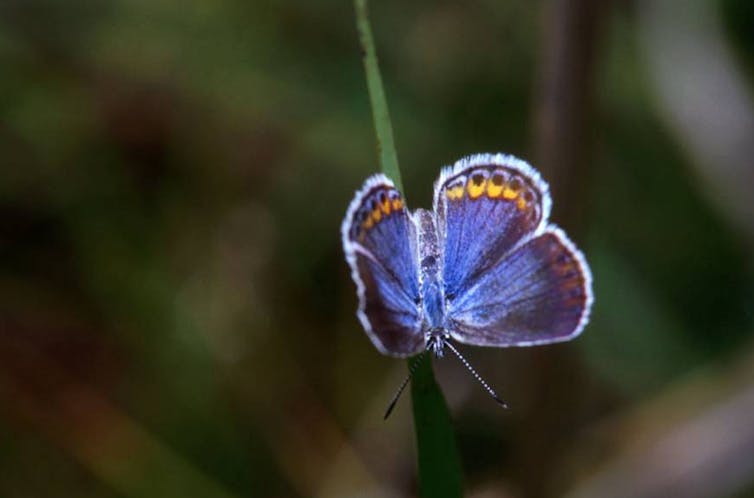
The endangered Karner blue butterfly has struggled with habitat loss. U.S. Fish and Wildlife Service

Eliza Grames, Binghamton University, State University of New York

If the joy of seeing butterflies seems increasingly rare these days, it isn’t your imagination.

From 2000 to 2020, the number of butterflies fell by 22% across the continental United States. That’s 1 in 5 butterflies lost. The findings are from an analysis just published in the journal Science by the U.S. Geological Survey’s Powell Center Status of Butterflies of the United States Working Group, which I am involved in.

We found declines in just about every region of the continental U.S. and across almost all butterfly species.

Overall, nearly one-third of the 342 butterfly species we were able to study declined by more than half. Twenty-two species fell by more than 90%. Only nine actually increased in numbers.

An orange butterfly with black webbing and spots sits on a purple flower.
West Coast lady butterflies range across the western U.S., but their numbers have dropped by 80% in two decades. Renee Las Vegas/Wikimedia Commons, CC BY

Some species’ numbers are dropping faster than others. The West Coast lady, a fairly widespread species across the western U.S., dropped by 80% in 20 years. Given everything we know about its biology, it should be doing fine – it has a wide range and feeds on a variety of plants. Yet, its numbers are absolutely tanking across its range.

Why care about butterflies?

Butterflies are beautiful. They inspire people, from art to literature and poetry. They deserve to exist simply for the sake of existing. They are also important for ecosystem function.

Butterflies are pollinators, picking up pollen on their legs and bodies as they feed on nectar from one flower and carrying it to the next. In their caterpillar stage, they also play an important role as herbivores, keeping plant growth in check.

A closeup of a caterpillar eating a leaf.
A pipevine swallowtail caterpillar munches on leaves at Brookside Gardens in Wheaton, Md. Herbivores help keep plant growth in check. Judy Gallagher/Wikimedia Commons, CC BY

Butterflies can also serve as an indicator species that can warn of threats and trends in other insects. Because humans are fond of butterflies, it’s easy to get volunteers to participate in surveys to count them.

The annual North American Butterfly Association Fourth of July Count is an example and one we used in the analysis. The same kind of nationwide monitoring by amateur naturalists doesn’t exist for less charismatic insects such as walking sticks.

What’s causing butterflies to decline?

Butterfly populations can decline for a number of reasons. Habitat loss, insecticides, rising temperatures and drying landscapes can all harm these fragile insects.

A study published in 2024 found that a change in insecticide use was a major factor in driving butterfly declines in the Midwest over 17 years. The authors, many of whom were also part of the current study, noted that the drop coincided with a shift to using seeds with prophylactic insecticides, rather than only spraying crops after an infestation.

The Southwest saw the greatest drops in butterfly abundance of any region. As that region heats up and dries out, the changing climate may be driving some of the butterfly decline there. Butterflies have a high surface-to-volume ratio – they don’t hold much moisture – so they can easily become desiccated in dry conditions. Drought can also harm the plants that butterflies rely on.

Only the Pacific Northwest didn’t lose butterfly population on average. This trend was largely driven by an irruptive species, meaning one with extremely high abundance in some years – the California tortoiseshell. When this species was excluded from the analyses, trends in the Pacific Northwest were similar to other regions.

A butterfly on a leaf
The California tortoiseshell butterfly can look like wood when its wings are closed, but they’re a soft orange on the other side. Walter Siegmund/Wikimedia Commons, CC BY-SA

When we looked at each species by its historical range, we found something else interesting.

Many species suffered their highest losses at the southern ends of their ranges, while the northern losses generally weren’t as severe. While we could not link drivers to trends directly, the reason for this pattern might involve climate change, or greater exposure to agriculture with insecticides in southern areas, or it may be a combination of many stressors.

There is hope for populations to recover

Some butterfly species can have multiple generations per year, and depending on the environmental conditions, the number of generations can vary between years.

This gives me a bit of hope when it comes to butterfly conservation. Because they have such short generation times, even small conservation steps can make a big difference and we can see populations bounce back.

The Karner blue is an example. It’s a small, endangered butterfly that depends on oak savannas and pine barren ecosystems. These habitats are uncommon and require management, especially prescribed burning, to maintain. With restoration efforts, one Karner blue population in the Albany Pine Bush Preserve in New York rebounded from a few hundred individuals in the early 1990s to thousands of butterflies.

Similar management and restoration efforts could help other rare and declining butterflies to recover.

What you can do to help butterflies recover

The magnitude and rate of biodiversity loss in the world right now can make one feel helpless. But while national and international efforts are needed to address the crisis, you can also take small actions that can have quick benefits, starting in your own backyard.

Butterflies love wildflowers, and planting native wildflowers can benefit many butterfly species. The Xerces Society for Invertebrate Conservation has guides recommending which native species are best to plant in which parts of the country. Letting grass grow can help, even if it’s just a strip of grass and wildflowers a couple of feet wide at the back of the yard.

Butterflies on wildflowers in a small garden.
A patch of wildflowers and grasses can become a butterfly garden, like this one in Townsend, Tenn. Chris Light, CC BY-SA

Supporting policies that benefit conservation can also help. In some states, insects aren’t considered wildlife, so state wildlife agencies have their hands tied when it comes to working on butterfly conservation. But those laws could be changed.

The federal Endangered Species Act can also help. The law mandates that the government maintain habitat for listed species. The U.S. Fish and Wildlife Service in December 2024 recommended listing the monarch butterfly as a threatened species. With the new study, we now have population trends for more than half of all U.S. butterfly species, including many that likely should be considered for listing.

With so many species needing help, it can be difficult to know where to start. But the new data can help concentrate conservation efforts on those species at the highest risk.

I believe this study should be a wake-up call about the need to better protect butterflies and other insects – “the little things that run the world.”

Eliza Grames, Assistant Professor of Biological Sciences, Binghamton University, State University of New York

This article is republished from The Conversation under a Creative Commons license. Read the original article.

ooOOoo

Thank you, Eliza, for promoting this article.

If only one person is inspired to make the changes Eliza recommends then republishing this article has been a success.

In praise of wolves

Three stunning photographs of wolves.

In my post yesterday, A Eulogy for OR-4, I republished a passionate and moving account by Rob Klavins of the killing of a magnificent wolf. It included these words:

He escaped kill orders and poachers. He endured at least 4 collarings and he beat the odds. There aren’t many ten year old wolves out there. Today there is one less.

OR4 was shot and killed today. And it hurts. Anyone celebrating his death, the killing of his likely pregnant partner, and two of his pups, must have a hardened heart indeed.

All I am offering for you today is the contents of a recent email that I received from the Endangered Species Coalition.

ooOOoo

Paul,

We are excited to announce the winning entries in our first-ever Wolves in the Wild photo contest! While we received many beautiful photos of gray wolves, the difficult task of choosing winning submissions was carried out with much deliberation by our panel of judges.

The Grand Prize winner is:

url
Dan Ritzman

Runner ups are:

John Long
John Long

Brenna Burke
Brenna Burke

We are enormously grateful to everyone who participated! Your photos were all amazing and I assure you that choosing a winner was a difficult task for the judges. While the contest was fun, we hope the photos will serve a very serious purpose in helping to show decision makers in the Pacific Northwest that wolves are important not only for their role in a healthy ecosystem, but as a driver of tourism and associated economic benefits.

Thank you for your commitment to disappearing wildlife and wild places.

Sincerely,

Danielle Moser
Pacific Northwest Wolf Organizer
Endangered Species Coalition

ooOOoo

Let me just repeat that key sentence from Danielle, “While the contest was fun, we hope the photos will serve a very serious purpose in helping to show decision makers in the Pacific Northwest that wolves are important not only for their role in a healthy ecosystem, but as a driver of tourism and associated economic benefits.”

Exactly!

Staying with the African Lion

Listing African Lions as an endangered species – you have until 11:59 pm Eastern Time today to so do.

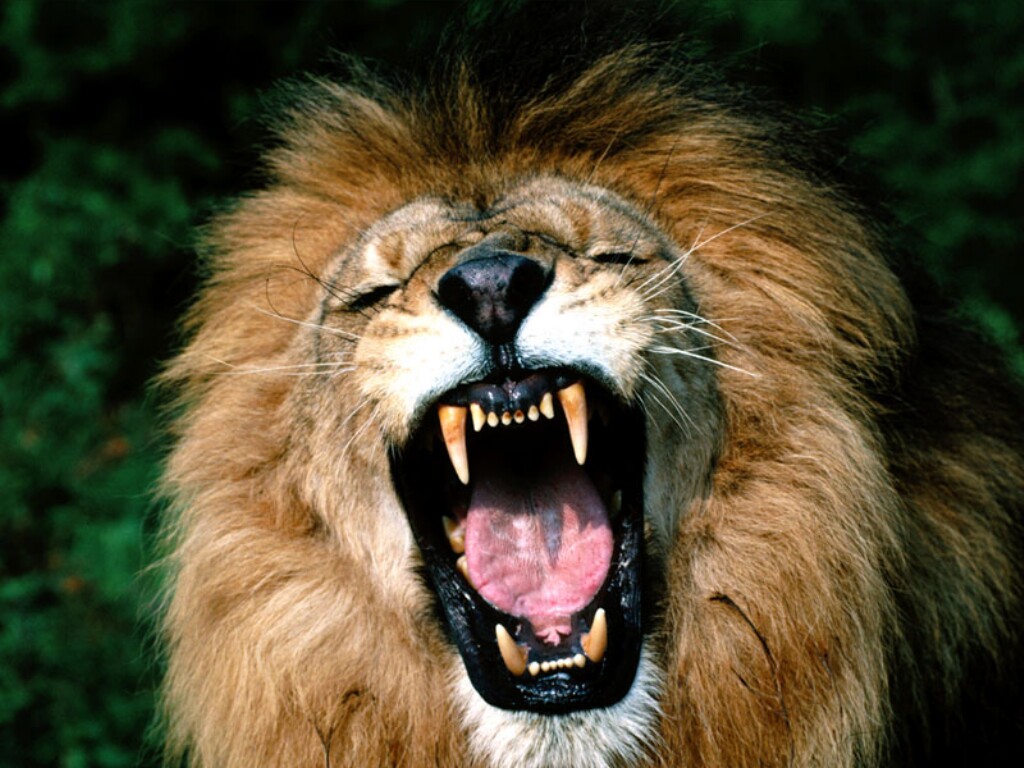
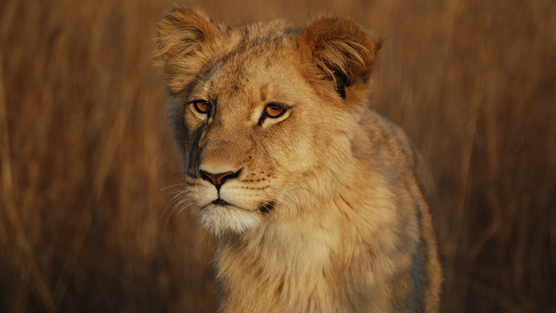
african lions

Yesterday, at 08:25 Pacific Standard Time, I published a second post under the title of  “Yet another vital cause – the African Lion“.

Rather than repeat the plea to support the petition please go here and do all you can to “Save African lions from extinction by listing them as an endangered species.”  As that petition explains:

We’ve lost more than 80-90% of the world’s lion population in recent decades due to massive habitat loss, disease, trophy hunters and the exotic animal trade. Two thirds of lion trophies have ended up in the United States over the last ten years! If listed as endangered, hunters will no longer be able to bring lion trophies into the US therefore saving a large number of the lion population.This is our chance to give these iconic animals the protections they need before they disappear forever.

We only have until the end of the day on Monday, January 28th to tell the government we support endangered species protections for lions!

Please sign my petition in support of listing lions under the Endangered Species Act. Once you’ve signed, I also encourage you to leave a comment on the official proposal at https://www.federalregister.gov/articles/2012/11/27/2012-28310/endangered-and-threatened-wildlife-and-plants-90-day-finding-on-a-petition-to-list-the-african-lion#table_of_contents You will find the comment area on the upper right hand of the page.

To pick up on the deadline again, from that Federal Register website one can read this:

To allow us adequate time to conduct this review, we request that we receive information on or before January 28, 2013. The deadline for submitting an electronic comment using the Federal eRulemaking Portal (see ADDRESSES section, below) is 11:59 p.m. Eastern Time on this date [my emphasis].

So the deadline is as follows:

11:59 pm USA Eastern Time

10:59 pm USA Central Time

9:59 pm USA Mountain Time

8:59 pm USA Pacific Time

4:59 am on the 29th UK time

You don’t have to be resident in the USA in order to sign the petition.

Thank you, good people!

Yet another vital cause – the African Lion

Please save the African Lion from extinction by listing them as an endangered species!

This came into my email in-box earlier this morning US Pacific time.  There is a deadline associated with the petition, hence me publishing this straight away.  While it is primarily aimed at those living in the USA, I believe that for those elsewhere there is still good to be had from supporting this urgent campaign.

First that email.

I think I’m starting to be known as “that Lion Lady”. First, I started a petition to get a restaurant in Kansas to stop serving lion meat (we won!), and then I started another to get the FDA to ban lion meat throughout the country. But I can’t help it — I do this all because lions’ very existence is at risk.

Now, I’m ecstatic: we have an unprecedented chance tosave African lions by getting them on the Endangered Species List. Listing them would not only keep lion meat off American plates but would save thousands of lions by addressing one of the biggest threats to the African lion population — trophy hunting. 

But just like restaurateurs opposed my petition to get lion meat out of a Kansas restaurant, wealthy American hunters are fighting to keep African lions off the Endangered Species List so they can continue to bring their bodies home as trophies. Our time is short — the government body in charge of the list is factoring public opinion into its decision and the public comment period ends on Monday.

In the past fifty years, the African lion population declined by as much as 90%. Many of the lion prides that do exist today are so genetically weak from being small and isolated by international borders that they can’t promise a future for African lions.

Legal trophy hunting is a major cause of African lions’ decline — and two thirds of the African lions killed by trophy hunters end up in the U.S. That’s thousands of lions!

Americans hold the key to saving the African lion. An Endangered Species listing would ban any lion parts or bodies from being imported into the U.S. — a huge deterrent to hunters who want to go on safari and bring back a trophy — as well as stop the sale of lion meat nationwide.

Click here to sign my petition, calling on the U.S. Fish and Wildlife Service to designate the African lion as an endangered species now before its public comment period ends on Monday.

Thank you.

Cheryl Semcer (aka “The Lion Lady”!)
Hoboken, New Jersey

That petition link takes you here.  Here’s what you will read:

African lion

Petitioning Ken Salazar

Save African lions from extinction by listing them as an endangered species

Petition by Cheryl Semcer

Many people already think African lions are protected as an endangered species, but they aren’t listed under the Endangered Species Act. That means the US government doesn’t protect them, and it’s legal to import lion trophies and lion parts and to serve lion meat at restaurants here in the states.

I’ve been to Africa to volunteer with these amazing, social and family oriented animals and it worries me that they might disappear in my lifetime. But there’s hope: Right now, the U.S. Fish and Wildlife Service is considering adding African lions to the endangered species list.

We’ve lost more than 80-90% of the world’s lion population in recent decades due to massive habitat loss, disease, trophy hunters and the exotic animal trade. Two thirds of lion trophies have ended up in the United States over the last ten years! If listed as endangered, hunters will no longer be able to bring lion trophies into the US therefore saving a large number of the lion population.This is our chance to give these iconic animals the protections they need before they disappear forever.

We only have until the end of the day on Monday, January 28th to tell the government we support endangered species protections for lions!

Please sign my petition in support of listing lions under the Endangered Species Act. Once you’ve signed, I also encourage you to leave a comment on the official proposal at https://www.federalregister.gov/articles/2012/11/27/2012-28310/endangered-and-threatened-wildlife-and-plants-90-day-finding-on-a-petition-to-list-the-african-lion#table_of_contents You will find the comment area on the upper right hand of the page.

To:
Ken Salazar, Secretary of Interior
US Fish and Wildlife Service
Dear USFWS,Thank you for reviewing the status of African lions. I strongly urge you to list the African lion as “endangered” under the U.S. Endangered Species Act. (Docket No. FWS-R9-ES-2012-0025)

African lions are among the most iconic animals on the planet and I worry that they might disappear in my lifetime. I’ve read about their devastating habitat loss and threats from disease and hunters. We have lost 80%-90% of the worlds lion population in less than 50 years. It’s especially disturbing to see lion parts and lion meat sold in the United States, when this species has lost so much of its wild population in recent years.

The United States has a huge role to play, as a world leader and a major market for lions and lion parts. Please give African lions the protections they deserve and need by granting them Endangered Species Act protections.

Thank you.

Sincerely,
[Your name]

oooOOOooo

So please, please don’t delay.  Go here and support this vital petition.  While I am unable to access the link, there is a link alongside the address panel for those living outside the US.

Thank you.

UPDATE

If you go to the Federal Register link, this one, you can enter a comment via a Comment button at the top right-hand corner of the webpage.  You will be required to leave your name and address and comments are being accepted from other countries.

So as well as signing the petition, please go to that link:

https://www.federalregister.gov/articles/2012/11/27/2012-28310/endangered-and-threatened-wildlife-and-plants-90-day-finding-on-a-petition-to-list-the-african-lion#table_of_contents

Grandad, tell me what polar bears were like?

Politics, oil and our natural world – tell me it’s all a bad dream!

Note

Yesterday, Thursday, I was really under the cosh in terms of finding time to write a careful and thoughtful Post for today, being involved in meetings both in the morning and afternoon, those meetings all about launching a transition town movement for Payson.

So my apologies for taking a short-cut and reproducing an item that was published on Common Dreams that, fortuitously, linked in with yesterday’s Post Moved to help?

Obama Echoes Bush, Sets Plan for Polar Bear Extinction

“President Obama’s proposal for these magnificent and imperiled animals is a gift to Big Oil”

– Common Dreams staff

The Obama Administration issued a proposed rule yesterday that disregards the effects of greenhouse gases on polar bear habitat leading one conservation group to say that the rule echoes former President George W. Bush’s plan, and that it will lead to the extinction of polar bears.

Kassie Siegel from the Center for Biological Diversity: “President Obama’s proposal for these magnificent and imperiled animals is a gift to Big Oil and an affirmation of the pro-industry policies of the Bush government. (photo: Subhankar Banerjee)

Kassie Siegel from the Center for Biological Diversity: “President Obama’s proposal for these magnificent and imperiled animals is a gift to Big Oil and an affirmation of the pro-industry policies of the Bush government. (photo: Subhankar Banerjee)Noting that polar bears are only on the endangered species list precisely because of loss of habitat caused by greenhouse gases generated from activities outside the Arctic, the proposed rule excluding activities outside the range of polar bears from regulations will lead to the bears’ demise.

Brendan Cummings of the Center for Biological Diversity called the rule “complete doublespeak,” the Associated Press reports.  “It’s saying, ‘Here is a rule necessary for the conservation of the polar bear,’ yet the only thing it does is exempt from regulation the overwhelming threat to the species.”

“If polar bears are to survive we have to directly confront the greatest threat to them: our greenhouse gas emissions,” said Kassie Siegel, director of the Center for Biological Diversity’s Climate Law Institute.

“With their sea-ice habitat rapidly disappearing, polar bears need the full protection of the Endangered Species Act,” said Siegel. “President Obama’s proposal for these magnificent and imperiled animals is a gift to Big Oil and an affirmation of the pro-industry policies of the Bush government. When it comes to saving urgently endangered polar bears, the only ‘change’ Obama has delivered is more climate change.”

The rule, released by the U.S. Fish and Wildlife Service, has 60-day public comment period.

* * *

Center for Biological Diversity: Obama Administration Again Proposes Polar Bear Extinction Plan
New Rule Echoes Bush Plan Ignoring Polar Bears’ Plight Against Global Warming

WASHINGTON – April 17 – The Obama administration announced today that it is reissuing a Bush-era regulation that sharply limits protections for polar bears under the Endangered Species Act. Both the current proposal and the previous Bush rule exclude activities occurring outside the range of polar bears — such as the greenhouse gas emissions of industrial polluters like coal plants — from regulations that could help stop the bear’s extinction. Today’s announcement comes as a result of a court order that struck down the Bush rule in October 2011.

Polar bears were the first species added to the endangered and threatened species list solely because of threats from global warming. Regulations issued under the Endangered Species Act must provide for the “conservation” of threatened species. Notably, the press release issued by the U.S. Fish and Wildlife Service announcing the new proposed rule today did not mention greenhouse gases or climate change at all, while the very purpose of the rule is to exempt greenhouse emissions from the reach of the Act.

“If polar bears are to survive we have to directly confront the greatest threat to them: our greenhouse gas emissions,” said Kassie Siegel, director of the Center for Biological Diversity’s Climate Law Institute. “But the Obama administration seems to be living in a fantasy world where the way to solve a difficult problem is to deny its existence.”

The proposed rule severely undermines protection for polar bears by exempting from portions of the Endangered Species Act all activities that occur outside of the bears’ range. But the species is endangered precisely because of activities occurring outside the Arctic — namely the emission of greenhouse gases and resulting warming that is leading to the rapid disappearance of summer sea ice.

“With their sea-ice habitat rapidly disappearing, polar bears need the full protection of the Endangered Species Act,” said Siegel. “President Obama’s proposal for these magnificent and imperiled animals is a gift to Big Oil and an affirmation of the pro-industry policies of the Bush government. When it comes to saving urgently endangered polar bears, the only ‘change’ Obama has delivered is more climate change.”

The special rule also reduces the protections the bear would otherwise receive in Alaska from oil-industry activities in its habitat.

When the polar bear was listed as a threatened species in May 2008 (following a petition by the Center), the Bush administration simultaneously issued a special rule under section 4(d) of the Endangered Species Act. A similar rule was finalized in December 2008 and defended by the Obama administration in court. On Oct. 17, 2011, a federal district court judge struck it down owing to the Fish and Wildlife Service’s failure to conduct an environmental review of the rule’s impacts.

The challenge was brought by the Center for Biological Diversity, Natural Resources Defense Council, Greenpeace and Defenders of Wildlife. Today’s proposal, in response to the 2011 court order, triggers a 60-day public comment period, with the rule scheduled for finalization by the end of 2012.

So I ponder on how to respond to the question from my grandson, currently one-year-old, when, in a few years time, the polar bears are no longer?