Tag: Economics

Fed Funds Rate and Consumer/Business Costs

Looking more closely at the implications of changes in the Fed rate

Fed funds rate chart_img
Fed Funds rate influences consumer and business interest costs

Does the Fed Funds Rate, the rate charged by the Federal Reserve to make short-term loans to banks, directly influence the interest rate consumers and businesses pay on credit cards, mortgages, and consumer and business loans?  If you took the word of the average business news commentator, you would think not.  But the answer, of course, is yes.

One way to view the market rate of interest, although certainly not the only correct or useful way, is to think of it as a base rate that represents the risk-free rate, a rate that compensates the population for its impatience to consume the goods it would have consumed had it not lent the funds out in the first place. This risk-free rate is also influenced by the efficiency and functioning of the capital markets that bring borrowers and lenders together.

A risk premium is then added to this base rate of risk-free interest, one that varies depending on the degree of uncertainty of the lender getting repaid.  The risk of default, the risk of prepayment, the risk of political uprising, exchange rate risk, and many other sources of uncertainty — including the risk of inflation — raise the level of the risk premium commanded by lenders in the market.  As an example, over the last 100 years or so, the average annual risk-free rate in the U.S. has been about 4%, and the average annual risk premium for equity securities has been about 8%, bringing the average annual observed interest rate or rate of return to about 12% on these securities.

So what happens to the interest rate charged to consumers and businesses when the Fed raises the fed funds rate?  Basically, the level of the risk-free rate in the economy rises and, as debt contracts expire or new lending takes place, this higher base rate gets factored into the market rate of interest charged.

Overall, the demand for loanable funds falls, the aggregate demand curve for the economy falls, and equilibrium output and employment fall, RELATIVE to where they would have been without the rate increase. The bright side is that a reduction in the money supply that accompanies an increase in the fed funds rate is absolutely essential to curtailing inflation, which drives the risk premium, and represents a much greater cost to the economy.

By Sherry Jarrell

Every Economist, Mr. President? No, Sir!

Here’s one person who doesn’t agree with the President.

The President seems to believe that he can say whatever he wants and no one will hold him accountable. He now claims that “every economist, from both sides of the aisle, believes that the stimulus program created jobs.”

I am an economist, Mr. President, and I know, based either on simple first principles of economics, or on a more rigorous controlled study of labor markets in each major sector of the economy, that the unemployment rate would have been much lower today had the stimulus program never occurred.

You are either woefully unaware of the facts, Mr. President, or are purposefully distorting the facts. Neither is good.  When are you going to realize that just because you say something does not make it so? The world does not contort itself to support your version of the truth.

Do not put words in my mouth, sir.

By Sherry Jarrell

Obama’s Farcical Freeze

When is a freeze not a freeze?

President Obama’s proposal to freeze parts of federal government spending over the next three years is a lot like a smoker buying a truckload of cigarettes one year before promising to “freeze spending” on cigarettes the next.  He can keep smoking for years to come without spending another dime.

Federal government spending has increased so much over the last year — by some estimates at a rate of 34% — that in December of 2009 the debt limit had to be raised to $12.4 trillion to help absorb a record-shattering $1.4 trillion deficit.

The promise to freeze spending is actually a guarantee that spending will remain at record high levels for the next three years.  It effectively prevents a reduction in federal spending.

How disingenuous of our President.

By Sherry Jarrell

Fed Sets up unit to Police Itself

Foxes and hen-house?

I’m not quite sure how I feel about this yet.  The Fed recently announced that it has appointed a long-time staffer with the New York Fed to head a newly created branch to oversee the the parts of its balance sheet acquired in efforts to bail out firms like AIG.

These massive asset purchases, orchestrated by Timothy Geithner, the current Treasury Secretary and former New York Fed official, ballooned the Fed’s balance sheet from $800 billion in primarily government bonds to $2.3 trillion in toxic assets.

Now the New York Fed is overseeing the assets brought into the Fed by the Treasury Secretary as he moved from the New York Fed to the Treasury.  All while the Treasury functions are supposed to be isolated from the Federal Reserve’s role in its implementation of monetary policy.Foxhenhouse

Smacks of the fox watching the hen house….

By Sherry Jarrell

We may need a new term for Fed “Profits”

It’s more than semantics to understand what we mean by The Fed’s profits.

The Federal Reserve, it has been reported, earned record “profits” of over $46 billion in the year ending December 31, 2009.  The previous record profit was $34.6 billion in 2007. The Fed earned $31.7 billion in 2008. The financial crisis has apparently been very good for the Fed, although, as a non-profit entity, all its profits are turned over to the Treasury.  As an aside, I wonder what the Treasury plans to do with its windfall?Reduce taxes? Hmmm.

Be careful, however.  “Profits” are a bit of a misnomer for the Fed’s activities, because they pay for what they do by creating money out of thin air.  To buy a financial instrument such a treasury bill or mortgage-backed security, which is added to the left-hand-side of their balance sheet as an asset valued at cost, they create (and I do mean “create,” in the true sense of the word) an equivalent amount of deposits on the right-hand-side of their balance sheet. It does not “cost” them resources as it would you, or me, or a business.  The “expense” is deducts from revenues to arrive at this period’s profits consist mainly of employee salaries.  Fed BS Dec 2009

So if the Fed purchased a bunch of assets with reserves that they created, where do the “profits” come from?  Keep in mind, there are two major drivers of profits.  One is efficiency, or doing more with your resources. The second is pricing power, being able to charge an above-competitive price for a good or service either because you own something scarce or you make up the rules of the game.

First, two minor sources of income to the Fed are the interest and fees it charges for operating the financial system, such as check clearing and interbank electronic payments, and those it charged participants in the emergency loan programs it undertook to support credit cards and auto loans.

By far the largest source of revenue to the fed, however, came from its open market operations and the purchase of toxic assets.  The Fed had about $1.8 trillion in U.S. government debt and mortgage-related securities on its books by the end of 2009, four times the level in 2008, and the interest payments it collected on this huge pile of assets generated much of their (so-called) profits.  But interest payments are only one source of returns on financial assets. The other is “capital gains” or “price appreciation.”  If and when the Fed sells these assets, some of them considered “toxic,” there is a real risk that they will incur significant capital losses.   For example, the central bank recorded a $3.8 billion decline in the value of loans it made in bailing out Bear Stearns and AIG.

So the Fed’s profits are this period’s interest income minus the Fed’s minimal operating expenses; the capital base on which it earns income is basically “free.”  And all of these figures focus on one-period accounting entries, ignoring the huge potential negative stock of value the Fed’s activities are generating.

Don’t misunderstand. The Fed provides an invaluable service to the national and world economies, and they generally execute those services very well.  But when they begin to try to act like a business, replacing existing investment banking with their own activities, and parade around profit figures as if they meant the same thing as private industry profits, we must step back and take a moment to understand that Fed profits mean something entirely different from corporate profits.

By Sherry Jarrell

President Obama: A Tax Increase Does not Reduce Costs!

A novel, and incorrect, way to lower costs.

The latest from Washington on Health Care Reform is the Senate’s version which taxes insurance companies on plans valued at over $8,500 for individuals and $23,000 for couples.

President Obama has defended the tax as a way to drive down health costs.  “I’m on record as saying that taxing Cadillac plans that don’t make people healthier but just take more money out of their pockets because they’re paying more for insurance than they need to, that’s actually a good idea, and that helps bend the cost curve,” the president said in an interview with National Public Radio just before Christmas. “That helps to reduce the cost of health care over the long term. I think that’s a smart thing to do.”

Huh?  Mr. President, you need an Econ 101 primer. Let’s begin now, with supply and demand:Leftward shift in supply

Supply is an upward-sloping marginal cost curve, and includes the taxes and fees a business must pay to the government.  By imposing this tax, the supply curve of insurance companies will shift up and to the left, as shown in the graph, representing a higher cost per unit of insurance coverage.  The demand curve slopes down, so when intersected by a more costly supply curve, the final price to consumers rise and the amount of insurance coverage falls.   Period. End of story.  Indisputable fact.  And nothing Obama or the Senate says will change this fact, though they will try.

By Sherry Jarrell

More Shenanigans on U.S. Health Care Reform

Is this really what the Founding Fathers had in mind for America?

This topic may seem to be more about politics than economics, but anything related to health care reform is squarely rooted in the most important of economic issues:  the costs of doing business, the size of the government, and the potentially oppressive role of government in private industry.

To that end, the following is a must-read, and should make you angry, no matter what your political persuasion.  http://bostonherald.com/business/healthcare/view.bg?articleid=1224249&format=text

In this article, we see how the Senate Democrats are going to do whatever it takes to get their version of health care reform through, even if it comes down to ‘stealing’ votes.  Could the timing of this Massachusetts special election, to replace the temporary replacement put in for the late Senator Edward Kennedy, be one of the reasons that the Senate wants to rush this reform through before the President’s State of the Union Address, typically set for mid-January, though the White House is curiously reluctant to commit to a date….  ?

By Sherry Jarrell

The Troubling U.S. Unemployment Rate

Grim news continues

This isn't funny!

The U.S. unemployment rate remains at a 26-year high.  This is troubling for two reasons. One, the struggle and suffering of the unemployed (and underemployed) and the impact on the world economy.

Two, the mixed signal it gives policy makers.  I worry that the White House will think that it needs to do “more” of what it’s been doing, and dismiss any negative comments about its economic policies as a knee-jerk reaction to the unemployment figure when I, in fact, would be saying the same things if the unemployment figures had improved.  It would be a harder sell, true, but that doesn’t change the facts.

The reason?  Because I believe we would be in a better position today, with lower unemployment — no matter what the current unemployment rate — and higher growth, had the stimulus program never been initiated.  I base this on my understanding of the fundamentals of how the economy works, how businesses create value, and how labor makes itself indispensable to industry.

And none of these areas were helped or improved by the economic policies of this President.

By Sherry Jarrell

U.S. GDP Growth Revised Downward….again!

Lies, damn lies, and statistics!

What a shock.  U.S. GDP is not growing at 3.5% per year, as originally reported, and celebrated with much fanfare from President Obama about how the stimulus program was working.   It is not even growing at the revised 2.8% annualized rate reported a couple of weeks later.  The latest re-revised figure is 2.2%.

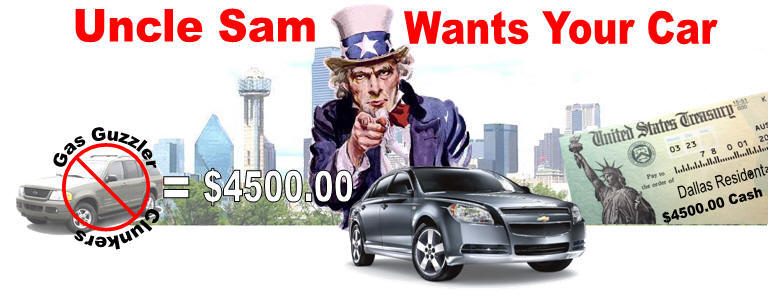
Nearly the entire 2.2% annualized growth, or 3rd quarter growth of 0.55%, is driven by the cash for clunkers program, the government spending program (also called the stimulus program, but I have a big problem with that particular name), and the extended tax credit for first-time home buyers. As a result, this increase in GDP is not only entirely temporary and fleeting, it will cause lower GDP later.

The cash for clunkers program did not create more overall demand for cars; it simply pulled some of the future demand for a new car into today, all the while wasting millions of tax dollars on administering the program, and putting some dealerships out of business in the process.

The spending program simply shifted profits from businesses to support other segments of society, all of which is temporary and destroys the productive capacity of the economy for many periods to come.

The extended tax credit to first-time home buyers is a real head-scratcher.  A curious time to redistribute funds from the producers in the economy to finance a program which lowers the cost to those home buyers who would not have the funds to buy a home in the first place….second wave of home mortgage foreclosures, anyone?

By Sherry Jarrell

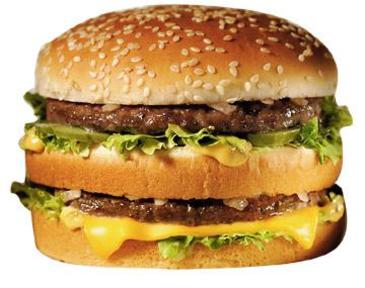
Government Spending is like a Hamburger Store

THERE IS ONLY ONE. 100% TAX. BIG GOVERNMENT!

(with apologies to McDonald’s Big Mac packaging)

At times when money is tight and our resources are stretched to the limit, it pays to spend our money wisely.  That is why it makes so much more sense to reduce the costs imposed on private industry instead of increasing spending by government.  Industry takes their earnings and reinvests them to create sustainable wealth creation: they hire and train workers, conduct research, build and perfect machinery and robotics, and develop brand equity and a reputation for quality. All of these endeavors represent lasting value creation. What is spent on these things this year will continue to create revenues, wages, and profits for years to come.

100% Beef (or is it tax!)

Government spending is pure consumption.  Think of a hamburger store.  While it may taste  good at the time, it is temporary and fleeting, and will likely do more harm than good in the end.   It keeps the beast alive for one period, and then the process has to start all over again next period.

When we approve a massive spending bill, it covers government purchases of goods and services for the next year, maybe less.  In one end; out the other, with nothing left to show for it, except a hungry program that needs to be fed again next year, and the next and the next.

Government programs in and of themselves never produce lasting value; only in conjunction with private industry is any wealth or value created. And even then the government purchases have pushed aside, prevented, crowded out, or priced out purchases that would have been made by the private economy.

So, please, keep this in mind whenever you think of any type of government spending or tax increase: it is here today, gone tomorrow.  Oh, and skip the fries!

By Sherry Jarrell