The official unemployment rate of the U.S. economy remains at 9.7%, and the underemployment rate increased to 16.9%. These numbers represent a real tragedy for many Americans.
While the White House tries to celebrate the creation of 162,000 new jobs last month, at least 48,000 of these new jobs are government jobs, specifically temporary census workers, who are doing unproductive work and are being paid with taxes collected from the rest of the private economy.
Unemployment
Employment also increased in temporary help services and healthcare, but continued to decline in financial activities and in information, which is interesting given the recent comments by President Obama that the government takeover of the student loan program tucked into the health care bill “took $68 billion from banks and financial institutions.”(Obama’s April 1 remarks) That’s a lot of jobs, Mr. President.
Seems like there is more concrete evidence that, rather than creating jobs, the President’s policies are costing the economy jobs.
On the 22nd March, Learning from Dogs had the pleasure of a Post from our first Guest Author, Elliot Engstrom. We were then doubly delighted to have Per Kurowski join us as our second Guest Author with his introductory Post.
Now we have the additional honour of welcoming Patrice Ayme to the growing ranks of Guest Author to Learning from Dogs.
Patrice, like Elliot and Per, also is a prolific blogger. He describes himself as:
I was born in Europe, raised in Africa, and lived in America. So doing, I learned to compare different cultures, even during my early childhood, and to appreciate superiority of many of their traits, even the most surprising. I consider myself Senegalese, and proudly so.I studied, and know, several languages, not just Latin, and several cultures, deeply, by living through and inside them for years. I have done formal studies in mathematics and physics at three leading Universities receiving the highest degrees, and putting me in a good position to learn to differentiate between hard knowledge and wishful thinking, differently from many a common philosopher. I am a specialist of non commutative geometry, arguably the most abstract field of knowledge in existence (even hard core logic, model theory, is used in my approach).
Here is Patrice’s first Guest Post for Learning from Dogs.
——————————
GREEK TROJAN HORSE TO CONQUER BETTER EUROPEAN UNION
Abstract:
The European currency, the euro, is, foremost, a solution to a problem. War. All other problems, and the euro solves many, pale in significance relative to this one.
Many talk about “problems” with the euro, and, oozing with glee all over, perceive weakness. They are right, there is weakness, but it is not European weakness. Just the opposite.
What those skeptics are seeing with their uncomprehending neurology is the further construction of the European imperium, according to its core principle: fix what needs to be fixed, but with complete consensus of the parties concerned, which means do it just so. It appears messy, because it’s democratic, and before the people (demos) can use its kratos (power), it needs to think right, which means it has to argue thoroughly. It looks like squabbling, but it is thinking aloud. Europe is not built for some parties to gain advantage anymore (as it was with Napoleon, or Hitler), but to solve problems and gain opportunities for all.
The euro is, for the first time, used as a weapon against Europe’s enemies. Hence all the squealing. Far from weakening Franco-German resolve, the recourse to the IMF adds another layer of authority to the European Communities. When the IMF, speaking in the name of Franco-German taxpayers, tell restive exploiters in Greece that they have to pay more taxes (only 6 plutocrats declare more than one million euro income in Greece, and more than 500 professions can retire at 50 years of age, whereas Germany just brought up the retirement age to 67!), they will have to submit under orders (imperare, to use the Roman notion)
Well, it is a Chinese saying, “May you live in interesting times”!
A couple of weeks ago on Learning from Dogs, there was an article reminding readers that the web has been around for 20 years and Sir ‘Tim’ Berners-Lee is still hard at it in terms of Internet innovations. And to support this, today accompanying this Post is one on what the BBC is doing to commemorate the event.
The Internet has completely reformed the way that ordinary people get access to information. Stratfor is a great example.
From their web site:
STRATFOR’s global team of intelligence professionals provides an audience of decision-makers and sophisticated news consumers in the U.S. and around the world with unique insights into political, economic, and military developments. The company uses human intelligence and other sources combined with powerful analysis based on geopolitics to produce penetrating explanations of world events. This independent, non-ideological content enables users not only to better understand international events, but also to reduce risks and identify opportunities in every region of the globe.
One can subscribe to a range of free reports and it came to pass that a Stratfor report on China came into my in-box.
Stratfor generously allow free distribution of this report and because the relationship between China and the USA has so many global implications, the report is published in full, as follows:
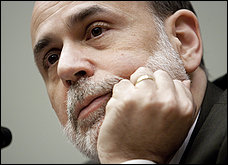
Ben Bernanke, Chairman of the U.S. Federal Reserve, announced that the Fed was likely to begin to sell some of the $1 trillion in mortgages, the so-called “toxic assets,” that it purchased over the last fifteen months to help stave off a total credit market meltdown. Those purchases essentially doubled the U.S. money supply, igniting fears of potential inflation should the underlying real economy recover before the money supply could be drawn back down. See earlier post.
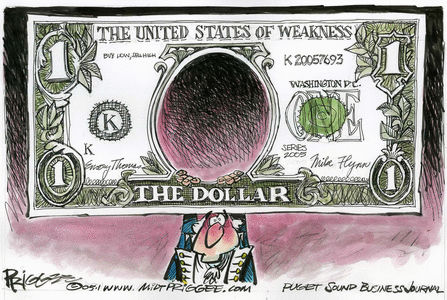
Well, the process of tightening the money supply may be just around the corner. And increases in interest rates and the cost of everything purchased on credit – homes, cars, durable goods, and business capital expenditures – are not far behind. Increases in interest rates dampen economic activity, an unfortunate development given the current lethargic state of the U.S. economy. But it has to be done sometime – we cannot sustain such a huge increase in the money supply without paying an even higher price in terms of inflation and a weak dollar.
It will be interesting to see who buys the toxic assets and how much they will pay. Regardless, the sale will reduce the money supply which, if done in a slow, orderly manner, is a good thing for the economy. Getting the Fed out of the business of buying and selling private market securities will be an even better thing for the U.S. economy. Now more than ever we need a monetary authority that is focused on the best policies for our economy, not those that help Fannie Mae, the White House, or the Treasury Secretary save face.
Learning from Dogs has been publishing on a daily basis since July 15th, 2009. That’s over 460 posts and is a great tribute to the commitment of all the authors of this Blog. We are grateful that our regular readership is also measured in the hundreds and is growing steadily.
Elliot Engstrom
It seemed time to make a small change. We have decided to include articles from Guest Authors on a regular basis. Our first guest is Elliot Engstrom.
Elliot Engstrom is a senior French major at Wake Forest University, and aside from his schoolwork blogs for Young Americans for Liberty and writes at his own Web site, Rethinking the State
Elliot first post for Learning from Dogs is about the US Federal Government and Poverty. This also appeared in The Daily Caller.
————–oooOOOooo—————-
The federal government, which claims to be the greatest supporter of those in need, is anything but a friend of the impoverished.
Often times when conservatives speak of the government treating the rich differently than the poor, the discussion is framed around taxes and welfare, with the argument being made that the government forces the highest earners to pay a massive percentage of all taxes, both punishing success and stifling overall economic productivity and making it all the more difficult for anyone not in the upper echelons to accumulate wealth for themselves. I sincerely hope that I have not constructed a straw man version of this common conservative argument, as I certainly think it has a great deal of credibility. However, I also would like to draw attention to the fact that while government loots the rich through the direct means of taxation, it likewise loots the poor, albeit through a different set of means that is much more difficult to recognize, and thus much more difficult to counteract.
While looting the wealthy can often be construed as some kind of humanitarian effort to aid the poor, looting the impoverished is a much more difficult enterprise to disguise as a moral good. Thus we will find that the government’s means of taking money from the poor are much more difficult to detect, comprehend, and eliminate than the means of direct taxation that is used to extract money from the wealthier members of society.
The dollar in which the majority of Americans receive their wages or salary has no absolute, set value. We see this in the fact that the value of the dollar is constantly fluctuating when compared to gold, silver, or the currencies of other nations (which are all constantly fluctuating in value themselves). “Value” is determined by a wide range of factors, but is based in the fact that human beings are all rational maximizers who are all trying to get what they want while expending the least amount of resources possible to do so. The occurrence of this phenomenon in the mind of every single individual economic actor coordinates the price system in a free market economy.
A given worker making $10.50/hour may see himself as bringing home a constant source of income. However, this is not the case at all due to the constantly shifting value of the dollar. Even in a free and unhindered market, the value of the dollars that this worker takes home each day would fluctuate based on factors like how much liquid currency was actually in existence in the market, how many resources had been invested in banks or stocks, and what amount of resources had been converted into physical capital or products. In the end, the dollar itself has all the value of a flimsy piece of cotton paper – it derives its true value from the productive activities of economic actors who use it as a medium of exchange. In other words, the dollar is a widely accepted “I.O.U.” This would be the case even in the freest of economies. Values of commodities and currencies are always changing based on the effectual demand and effectual supply of the moment.
But, as we all know, we live in anything but a free and unhindered economy. Our supposed “free market” is criss-crossed with a Federal Reserve System that manipulates the value of the dollar at will, a corporate welfare system that socializes the losses of corporations at the expense of the rest of society, and law enforcement policies that weigh the heaviest on those who do not have the time or resources to easily deal with court and lawyer fees, jury duty, and detainments prior to trial, not to mention the fact that the War on Drugs does substantially greater damage to the lower classes of American society than it does good, particularly when speaking of poor African-Americans.
And here’s the scary part – this was all the case before the bailouts and stimulus package that George Bush began and Barack Obama continued and amplified. Not only do these bailouts threaten to massively inflate our currency, spelling disaster for those whose livelihood is based in hourly wages paid in dollars, but it also directly took from all of society, not just the rich or the poor, and gave to a few select corporate entities such as Goldman-Sachs and Wells Fargo. We know this because every new dollar created by the government in the stimulus plan detracted from the value of every dollar already existing in the pre-stimulus economy (or will do so when released into the economy).
Does this sound confusing? It should, because it is, and that’s exactly how the federal government likes it.
While the federal government would tell us that they protect the poor from the exploitation of the rich, economics would tell us that it is in fact the federal government itself that is the greatest exploiter of our nation’s impoverished, and it is this institution that in fact facilitates much of the disparity in wealth between wealthy national corporations and impoverished local communities.
Those of the small government mindset who wish to rally more people to their cause should not go about proclaiming that we should be immediately getting rid of affirmative action and welfare for the poor, but instead should be putting forth a rallying cry against corporate welfare, an inflation-minded Federal Reserve System, and a law enforcement system whose economic penalties weigh heaviest on those with the least money in their savings accounts. It does not have to be out of selfishness that we advocate for a reduction of the federal nanny-state. It can, and should, instead be out of a concern for the poverty and destruction of wealth that is directly generated by this institution’s misguided policies.
Learning from Dogs muses the new book from Yves Smith
ECONned, by Yves Smith
In Econned, Yves Smith, founder of Naked Capitalism, argues that the economy was doing just fine in the regulated environment up to the 1970s. Then began the work of the Chicago economists who challenged Keynesian economics and touted the benefits of deregulation which eventually led to the financial crisis we have today.
Yves argument is internally consistent and well researched, but ignores some factors that I think would change the conclusions drawn from her work.
Yves Smith, author and founder of Naked Capitalism
First, Yves notes that the primary reason that economists are not useful to the real world is that economic research presumes equilibrium. Smith misses the point here, but it is understandable. It took me years of study and contemplation to fully appreciate that an equilibrium simply gives economists a point of reference, a common base, from which to study shocks and movements. In and of itself, equilibrium is not interesting or important. But movements to and from equilibrium are of real interest because they enable us to study and try to predict how individuals will react to incentives and changes in market conditions.
Second, we have to put the contributions of the Chicago economists of the 1970s into context. Up until that time, the only real school of thought in macroeconomics was based on Keynes, who presumed that markets fail and that the government must play an active and large role – primarily through government spending and taxes — for the economy to perform well. Keynes’ work was a reaction to the Great Depression.
Friedman’s monetarism also sought to explain the Great Depression, but focused on the role of monetary policy on the economy. This work showed that the missteps of the Federal Reserve was the primary cause of the depth and length of the Great Depression, and that long-term accommodative monetary policy causes inflation. This body of work did not stress deregulation, although it did lean more heavily on enabling private market solutions than on replacing them with government solutions. Neither theory is complete; Keynes focused on the short run (“In the long run, we are all dead” is a rather famous Keynes quip) and Monetarism focused on the long run.
There was a second large body of work that came out of the University of Chicago during the late 1960s and 1970s. This research documented the tremendous costs of regulation. I know this literature personally and believe that its conclusions are very sound: it shows that any effective regulation limits either the quantity or price of a good or service away from what it would have been without the regulation. In fact, in my view, it was the passage of regulations requiring certain lending behavior that set off the series of events that led to the crisis, which is the exact opposite argument from what Ms. Smith makes.
Growth in final GDP hides disturbing weaknesses in economy
The U.S. GDP grew at an annual rate of 5.9% in the last quarter of 2009 which may look good at first glance, but when we dig a little deeper, we find some concerns about the implications for sustainable growth. A large fraction of this reported growth came from businesses selling off accumulated inventories, which has more to say about past production than current. Exports were also a significant source of fourth quarter growth, driven in large part by a weak dollar.
Weak dollar both helps and hurts the economy
Of course, a weak dollar is a very mixed blessing for the economy, and is hardly a sign of a strong or recovering economy.
Real residential fixed investment increased 5.0 percent, helped along by the extension of the home purchase tax credits from the federal government.
New housing helps spur growth in GDP
Real nonresidential fixed investment increased 6.5 percent. This figure nets out nonresidential structures, which decreased at a troubling rate of 13.9 percent, and equipment and software, which increased 18.2 percent. Investment in equipment and software consists of capital account purchases of new machinery, equipment, furniture, vehicles, and computer software; dealers’ margins on sales of used equipment; and net purchases of used equipment from government agencies, persons, and the rest of the world. Own-account production of computer software is also included, which is production performed by a businesses or government for its own use.
Again, the underlying figures show that those variables most associated with building a sustainable productive capital base for the economy – nonresidential fixed investment –are declining at an alarming rate. This, combined with a 9.7% unemployment rate and the specter of rising debt levels, energy prices, and taxes, paints a picture of a slow to non-existent recovery to a robust economy any time in the next year.
I am always struck by Man’s desperate groping for a Magic Solution to each and every problem. It is a bit pathetic but also of course rather funny, especially if one tries to see things from the perspective of a visiting alien from outer space.
Looking for a Magic Pill?
Let’s take “The Fat Pill”. What we really want is not to eat properly and cut down our vast consumption of just about everything but especially burgers, chips, popcorn swamped in sugar, honey or chocolate, giant steaks and pizzas, crisps, candy, and of course alcohol and simultaneously combine this with a healthy lifestyle involving regular exercise that makes us pant (to get the heart going – nothing to do with sex, though Tiger Woods is clearly pretty fit)!
No, what we prefer is to keep on stuffing ourselves and then take a FAT PILL! Whoever invents this is going to make Bill Gates look like a starving rickshaw- puller in India.
Then there is the ALCOPILL. Rather than drink in moderation to the benefit of all and sundry many of us prefer to binge ourselves to the point of death and then, just before hitting the sack (if we make it that far), grope for the magic pill. I believe pharmaceutical companies worldwide are working furiously on this in the hope of hitting the jackpot. Much more profitable than boring old stuff with malaria, which kills millions every year.
It may be cynical old age, but I’m currently off magic solutions. As a language teacher, I saw the desperate scrambling for nirvana when language laboratories came in. Every school had to have one; every timetable was hacked about; teachers would become redundant ….. Oh dear … most language labs are now broken-down, dusty and abandoned piles of junk at the bottom of some rubbish tip somewhere. Are wind-turbines in the same category?
dot.com? This was the magic pill of the late 1990s! The new paradigm. Everything would be different; billions could be made without doing any real work. Oh, and does this remind us of the banker’s world? Of course, they are an exception because DESPITE everything they can STILL make billions for doing no real work.
As for government finance (a quite different animal), the current British magic pill is to print money and bung it into the economy in the hope of stimulating “growth”. None of this “living within our means”, taking “a bit of strong medicine” stuff. No, we’ll go for the magic pill so we can get back to normal levels of debt and spending. Patience, virtue, moderation and commonsense are much less fun than the magic pill of printing money.
And there is a VERY GOOD reason for this of course: the GENERAL ELECTION is around the corner and we don’t want any pain BEFORE then, do we? After, of course – if we get the right result – we will have a bit of commonsense back. Not that we want to, but it’ll be forced on us by the markets … but then we can blame it all on someone else. In Britain’s case, Mrs. Thatcher will probably still come in for considerable stick, even though she left power nearly twenty years ago.
Magic? Sadly, one can see the same desperate groping for the easy solution in religion. We are metaphysically, morally, spiritually and practically lost, so let’s look for some magic to provide a solution, even if there is not the slightest proof of the existence of God that would stand up in court.
Our epitaph may well be: Homo Sapiens – the Magic Species. Unfortunately, magic is best left to conjurors; it is not a recipe for managing society.
I’ve been asked many times over the years for advice on investing. “What is the market going to do?” “Should I be invested in stocks or bonds?” And, especially in the last few weeks, “Should I hold U.S. or foreign government bonds?”
A U.S. treasury bill
Those are some good questions! The answers are not as “good.” The factors that drive the yields on treasury bills and bonds are complex and, despite Ben Bernanke’s pronouncements to the contrary, less well understood than stock returns, and I don’t have a crystal ball, but I can at least begin to frame an answer to these questions here. I will come back to expand on this topic over time, as markets, economies, and world events evolve.
The return on both bonds and stocks is measured as the percent change between the market price today, and the cash flows received later. The cash flows of a bond, namely coupon payments and principal, are specified in a contract; if they are not paid, the issuer is in default, and the bondholder has the right to take them to court. The cash flows on stock, dividends and capital gains, are residual; they are discretionary, and are paid out only after debt payments and other obligations are paid. For this reason, bonds are considered to be less risky than stocks, and the nominal yields on bonds are generally lower than those of stocks. The risk-adjusted returns on stocks and bonds may be the same, but the nominal yields on bonds are typically lower.
There is an important distinction between the nature of the returns on bonds and stocks. With bonds, the future cash flows are known. Movements in the bond’s yield are determined simultaneously with movements in the bond’s price. Once a bond is issued, only changes in interest rates (yield, risk) drive unexpected changes in its price. Stock prices, on the other hand, fluctuate as either risk or residual cash flows change. As a result, changes in a bond’s price, hypothetically at least, are a much cleaner indicator of the market’s expectations of future market rates of interest than a stock’s price.
One problem that distorts the information about expected future interest rates that is revealed by changes in the bond’s price is that bonds are less frequently traded than stocks, so the price data on bonds is less comprehensive and complete. In addition, the reported price data that form the basis of bond yield models often diverge from actual market-clearing prices, so that bond pricing models may not describe actual market behavior. Lastly, there is such a tremendous volume of economic and policy information, some of it conflicting, that is crammed into this one variable, the bond price which, given the coupon and principal, summarizes the market’s referendum on future interest rates.
by Sherry Jarrell
Next time: Sources and types of risk in U.S. and other bond prices.
“Time and again we see behaviour by people – we are talking highly educated, high income people – who are making less than ideal financial decisions for themselves and their families,” said one source. “Other countries that have developed a strategy have focused on education in high schools. This task force has come to the early conclusion that, while enhanced financial education is vital over the long term, it is insufficient.”
The first sentence is so important, to my mind, that it is worth repeating, “Time and again we see behaviour by people – we are talking highly educated, high income people – who are making less than ideal financial decisions for themselves and their families,”
looking into ways of making Canadians “more savvy” about their personal finances.
The financial industry is very adept at producing complex financial products that are almost beyond the limits of the understanding of good common people. We, the people, need to be much smarter and that’s why this initiative from the Canadians seems, on the surface, to be such an excellent idea.








 Learning from Dogs