Tag: Earth

Adjust your alarm clock!

A fascinating, perhaps even non-trivial, insight into that massive earthquake.

(Thanks to the website Mish’s Global Economic Trend Analysis for giving me a heads-up to this aspect of the ‘quake.)

MISH’s website pointed me to the website Space.com where there was this interesting reflection.

The massive earthquake that struck northeast Japan Friday (March 11) has shortened the length Earth’s day by a fraction and shifted how the planet’s mass is distributed.

A new analysis of the 8.9-magnitude earthquake in Japan has found that the intense temblor has accelerated Earth’s spin, shortening the length of the 24-hour day by 1.8 microseconds, according to geophysicist Richard Gross at NASA’s Jet Propulsion Laboratory in Pasadena, Calif.

Gross refined his estimates of the Japan quake’s impact – which previously suggested a 1.6-microsecond shortening of the day – based on new data on how much the fault that triggered the earthquake slipped to redistribute the planet’s mass. A microsecond is a millionth of a second.

“By changing the distribution of the Earth’s mass, the Japanese earthquake should have caused the Earth to rotate a bit faster, shortening the length of the day by about 1.8 microseconds,” Gross told SPACE.com in an e-mail. More refinements are possible as new information on the earthquake comes to light, he added.

The scenario is similar to that of a figure skater drawing her arms inward during a spin to turn faster on the ice. The closer the mass shift during an earthquake is to the equator, the more it will speed up the spinning Earth.

I was also interested to read in that article more confirmation that the earthquake moved Japan! (I had mentioned it in an earlier post on Learning from Dogs.)

The initial data suggests Friday’s earthquake moved Japan’s main island about 8 feet, according to Kenneth Hudnut of the U.S. Geological Survey. The earthquake also shifted Earth’s figure axis by about 6 1/2 inches (17 centimeters), Gross added.

The Earth’s figure axis is not the same as its north-south axis in space, which it spins around once every day at a speed of about 1,000 mph (1,604 kph). The figure axis is the axis around which the Earth’s mass is balanced and the north-south axis by about 33 feet (10 meters).

“This shift in the position of the figure axis will cause the Earth to wobble a bit differently as it rotates, but will not cause a shift of the Earth’s axis in space – only external forces like the gravitational attraction of the sun, moon, and planets can do that,” Gross said.

So if you are the sort of person that likes to be precisely on time ….. take note!

Magical nature

Big thanks to Dogkisses’ Blog for highlighting this video from National Geographic.

Nothing to add to the video – just watch it, be enthralled and reflect on our need to be in spiritual harmony with our beautiful planet Earth. (N.B. for whatever reason, I was unable to embed the code in this Post so you will have to click here to watch this short video.  But do it’s magical.)

Then if you want more, watch this:

Total, utter madness, Pt 1.

The way we are most likely treating Planet Earth is almost beyond comprehension.

I have mentioned before the Earth Policy Institute and Lester Brown’s latest book, World on the Edge.  Details of the book are here.

At the time of writing this Post (10am US Mountain Time on the 4th Feb.) I have read through to the end of Chapter 5 of the book and will have it completed soon.  It’s opening my eyes hugely!

I have decided over the next week or so to summarise each chapter, hoping that this encourages many readers of Learning from Dogs to reflect, go to the EPI website, buy the book or think about making a difference in any way that you can.

Chapter One, On the Edge, sets the background:

  • Summer of 2010 sees record-high temperates in Moscow, Russia’s grain harvest shrank by 40 million tons (40%) to 60 million tons.
  • Record high temperatures in south-central Pakistan were recorded. Snow and glaciers in the Himalayas melted fast, 20 million Pakistanis were affected by the resultant flooding, 2,000 died, 6 million acres of crops damaged.
  • A 2002 study by Mathis Wackernagel concluded that, “humanity’s collective demands first surpassed the earth’s regenerative capacity around 1980.  By 1999, global demand’s on the earth’s natural systems exceeded sustainable yields by 20 percent.  Ongoing calculations show it at 50 percent in 2007.  Stated otherwise, it would take 1.5 Earths to sustain our current consumption.” [my emphasis]
  • “No previous civilisation has survived the ongoing destruction of its natural supports.  Nor will ours.”

Let’s turn to NOAA.  A few salient points from there State of the Climate – Global Review for 2010.

  • For 2010, the combined global land and ocean surface temperature tied with 2005 as the warmest such period on record, at 0.62°C (1.12°F) above the 20th century average of 13.9°C (57.0°F). 1998 is the third warmest year-to-date on record, at 0.60°C (1.08°F) above the 20th century average.
  • The 2010 Northern Hemisphere combined global land and ocean surface temperature was the warmest year on record, at 0.73°C (1.31°F) above the 20th century average. The 2010 Southern Hemisphere combined global land and ocean surface temperature was the sixth warmest year on record, at 0.51°C (0.92°F) above the 20th century average.
  • The global land surface temperature for 2010 tied with 2005 as the second warmest on record, at 0.96°C (1.73°F) above the 20th century average. The warmest such period on record occurred in 2007, at 0.99°C (1.78°F) above the 20th century average.


Russian forest fires.


From the UK Guardian newspaper.

2010 is becoming the year of the heatwave, with record temperatures set in 17 countries.

Record highs have occurred in Russia, Belarus and Ukraine – the three nations at the centre of the eastern European heatwave which has lasted for more than three weeks – but also African, Middle Eastern and Latin American countries.

Temperatures in Moscow, which have been consistently 20C above normal, today fell to 31C (86F), and President Dmitry Medvedev cancelled a state of emergency in three out of seven Russian regions affected by forest fires.

Thousand of hectares of forest burned in the fires, killing 54 people and leaving thousands homeless. For days, Moscow was shrouded in smog, and environmentalists raised fears that the blaze could release radioactive particles from areas contaminated in the 1986 Chernobyl disaster.

Wildfires have also swept through northern Portugal, killing two firefighters and destroying 18,000 hectares (44,500 acres) of forests and bushland since late July. Some 600 firefighters were today struggling to contain 29 separate fires.

But the extreme heat experienced in Europe would barely have registered in Iraq, Saudi Arabia, Niger, Pakistan and Sudan, all of which have recorded temperatures of more than 47C (115F) since June. The number of record highs is itself a record – the previous record was for 14 new high temperatures in 2007.

The freak weather conditions, which have devastated crops and wildlife, are believed to have killed thousands of elderly people, especially in Russia and northern India. The 2003 European heatwave killed about 15,000 people.

Be worried, be concerned but don’t panic – you and I, all of us, have the collective power to sort this all out.  More about this soon.

So near, so far!

Mixed emotions about those other worlds out there.

In recent times, Learning from Dogs has been reflecting on the magic, and fragility, of the planet we all live on.

There was the photograph of the Earthrise that attracted quite a few comments.  That was followed up by the amazing photograph of the Earth from Voyager 1 taken in 1990 from 3,762,136,324 miles away!  Then the lovely poem from Sue.

So it was interesting to note my mixed emotions to a piece on the BBC News website yesterday.  Here’s a flavour.

Worlds away

Astronomers have identified some 54 new planets where conditions may be suitable for life.

Five of the candidates are Earth-sized.

The announcement from the Kepler space telescope team brings the total number of exoplanet candidates they have identified to more than 1,200.

The data release also confirmed a unique sextet of planets around a single star and 170 further solar systems that include more than one planet circling far-flung stars.

Read the rest of the item here. (and there’s a fuller version on NetworkWorld)

So here are those mixed emotions.

  • Man has been, and still continues to be, wonderfully curious to the point of spending huge sums of money on projects that appear to do nothing more than satisfy that curiosity. (The (Kepler) mission‘s life-cycle cost is estimated at US$600 million, including funding for 3.5 years of operation, from here.)  That’s a beautiful trait, in my humble opinion.
  • Homo Sapiens is a wonderfully innovative and creative species, as so wonderfully presented by Alan Alda on a recent PBS Programme called The Human Spark.  (See the YouTube intro at the end of this Post.)
  • Look at all the inventions and incredible advances to our species that are all around us – including the PC I am using and the World Wide Web that is aiding this message!
  • For such an intelligent species as us, why is it that we are treating Planet Earth in such a suicidal manner through greed, pollution and over-consumption!
  • As was reported yesterday, we could be on the verge of total and utter chaos in terms of food.  Then also yesterday was a small item about food prices reaching a new global record.
  • It always struck me as absurd to conclude that this planet is the only habitable planet in the universe – ‘Astronomers estimate there are 1021 stars in the universe. With a conservative estimate of three planets per star (some could have many more, some would have none at all) this puts the estimated number of planets into millions of billions.‘ From here.
  • So the data coming in from Kepler is truly astounding and, personally, underlines this era as a great time to be alive.
  • But there simply is no choice in that for decades ahead, if not centuries ahead, Planet Earth is all there is for us.  So why do we do it so much harm!
  • Our civilisation is likely to go to the very limits of survivability before the message that the existing ‘model’ is broken is picked up by every major political party in the world.  That is very, very scary to contemplate.
  • So it looks as though, soon, mankind will face the ultimate decision of all time.  Give up and let the chaos overwhelm us all, or … or what?  In other words millions of us will have to live with the consequences of our greed.
  • The ‘or what?’ can only be a faith that it will be OK.
  • A faith that mankind will use the power of dreams, imagination and energy to create a new future that will, at long last, be a new dawn of democratic and just, integrous existence.
  • And maybe, just maybe, that could be the Second Coming and maybe, just maybe, the world’s Churches and religions will be our saving grace.

But of that day and hour knoweth no man, no, not the angels of heaven, but my Father only. Matthew 24:36

Fascinating times – a Chinese proverb, ‘It’s better to be a dog in a peaceful time than be a man in a chaotic period.’

Finally, here’s that video of the series preview to The Human Spark.

Earth, a poem

A lovely comment and a beautiful poem.

On the 28th January, Learning from Dogs posted the second of two articles about Planet Earth.  The first one was here and the second here.  That second piece attracted a lovely comment from Sue of SueDreamwalker.  What follows from this point is all Sue’s work.

A very Good Post Paul.

I thought I might share a Poem of mine about Earth I was inspired to write this in 1995, long before we got the weather we are experiencing today… Appologies for its length..

I agree we need to respect… for we are along longs ways from Space hopping..

Earth


Earth gave her body; she gave it us to share
Her breath once sweet now pollutes the air
Her waterways of veins once were crystal clear
Now they hold our garbage lifeless pools and mires

Earth gave her body; she gave it us to share
She gave us animals for pleasure and yes for food
Not to be hunted to extinction penned up and abused
She gave us her Forests for shelter and for fuel
Not for mass developments using greed for cutting tools

Earth gave us her body; she gave it us to share
The soil she gave for harvest of plants that now are rare
For medicine and minerals, silver bronze and gold
Her treasure chests of beauty, we’ve pillaged raped and sold

Earth gave us her body; she gave it us to share
Now her tears are falling, can’t you see her pain?
The bombs that we are testing, fall out, Floods- the Rain.
Wars between each Nation, like stabbings in her back
Earthquakes——- Thunder, Lightning,
She’s Crying with each Crack..

“Enough” she cries “Enough”, as Planet Earth disrupts
Her breaking heart that Bleeds, Volcanoes then Erupts
Her breath now rages Anger, Tornadoes swirl revenge
Beware the Human Race, Planet Earth could still avenge

Earth gave her body she gave it us to share
The beauty is all around us, forever standing there
Let’s not take her for granted, for some day she will rebel
Treat her with some kindness, our fellow man as well.

Earth gave her body, she gives us Life
Let’s stop all our hating, stop the greed and strife
Earth gave us a garden, she gives us love
Love is the only answer, we are told so from above

Earth gave her body, Give her your respect
For she might rebel, turn her back sooner than you’d expect
So help her through her Torment, Heal her wounded sores,
We can start by healing each other around her windy shores
Love her and those upon her, take away her tears,
Her Promise in return,
Rebirth the “ Golden Years!”

By Dreamwalker..

Beautiful words!

and it’s so insignificant!

Yesterday’s post It’s all we have showing the famous Earthrise picture taken from Apollo 8 generated a lovely follow-up.

One of the comments was from Mike Turner who wrote,

It’s all we have and it’s so insignificant!

The Pale Blue Dot

Mike included a link to an entry on WikiPedia about the tiny, small dot of light in the universe that is Earth, shown in a photograph taken by spaceship Voyager 1 from the edge of the Solar System on February 14th, 1990.  Here’s that photograph,

Planet Earth from 3,762,136,324 miles

Can you see our planet home?  Earth appears as a tiny dot (the blueish-white speck approximately halfway down the brown band to the right) within the darkness of deep space. In a 2001 article by Space.comSTScI‘s Ray Villard and JPL‘s Jurrie Van der Woude selected this photograph as one of the top ten space science images of all time.

Carl Sagan later wrote about his deep feelings about this photograph.  That was almost 20 years ago and, as I reflected just a few days ago, human insanity still seems alive and well; it’s about time that the majority of us recognised the fragility and vulnerability of where we live.

Sagan’s words are reproduced here and should be read by every inhabitant of this planet.

From this distant vantage point, the Earth might not seem of particular interest. But for us, it’s different. Look again at that dot. That’s here, that’s home, that’s us. On it everyone you love, everyone you know, everyone you ever heard of, every human being who ever was, lived out their lives. The aggregate of our joy and suffering, thousands of confident religions, ideologies, and economic doctrines, every hunter and forager, every hero and coward, every creator and destroyer of civilization, every king and peasant, every young couple in love, every mother and father, hopeful child, inventor and explorer, every teacher of morals, every corrupt politician, every “superstar,” every “supreme leader,” every saint and sinner in the history of our species lived there – on a mote of dust suspended in a sunbeam.The Earth is a very small stage in a vast cosmic arena. Think of the rivers of blood spilled by all those generals and emperors so that, in glory and triumph, they could become the momentary masters of a fraction of a dot. Think of the endless cruelties visited by the inhabitants of one corner of this pixel on the scarcely distinguishable inhabitants of some other corner, how frequent their misunderstandings, how eager they are to kill one another, how fervent their hatreds.

Our posturings, our imagined self-importance, the delusion that we have some privileged position in the Universe, are challenged by this point of pale light. Our planet is a lonely speck in the great enveloping cosmic dark. In our obscurity, in all this vastness, there is no hint that help will come from elsewhere to save us from ourselves. [my italics, Ed]

The Earth is the only world known so far to harbor life. There is nowhere else, at least in the near future, to which our species could migrate. Visit, yes. Settle, not yet. Like it or not, for the moment the Earth is where we make our stand.

It has been said that astronomy is a humbling and character-building experience. There is perhaps no better demonstration of the folly of human conceits than this distant image of our tiny world. To me, it underscores our responsibility to deal more kindly with one another, and to preserve and cherish the pale blue dot, the only home we’ve ever known.

You may also wish to watch this video.

Thanks Mike for prompting this piece.

It’s all we have!

A bit tight on time for today’s Post so just feast your eyes on this image.


Earthrise, from the cabin of Apollo 8


This view of the rising Earth greeted the Apollo 8 astronauts as they came from behind the Moon after the lunar orbit insertion burn. The photo is displayed here in its original orientation, though it is more commonly viewed with the lunar surface at the bottom of the photo. Earth is about five degrees left of the horizon in the photo. The unnamed surface features on the left are near the eastern limb of the Moon as viewed from Earth. The lunar horizon is approximately 780 kilometers from the spacecraft. Height of the photographed area at the lunar horizon is about 175 kilometers.

The Apollo 8 mission was the first time man had left the orbit of the Earth.

The photograph was taken on the 24th December 1968 by NASA astronaut William Anders.  Within 18 months of this image being published, the environmental movement had started. Wilderness photographer Galen Rowell called it “the most influential environmental photograph ever taken.”


Approaches to ‘growth’.

Some thought-provoking articles on the need, or otherwise, of continued growth.

Intellectually, most people, if they stopped and thought about it, would not challenge the absurdity of the notion that a finite rock in space, Planet Earth, can handle an infinite increase in the demands and resources of that finite planetary body, our home in space!

Yet the reality is very different.  For many complex reasons, way beyond the competencies of this writer to fully explain, we, as in the peoples of Planet Earth, continue to behave as though there are no limits to the resources of this beautiful planet that is home for all of us.

Here are some extracts from some recent items that have passed across my ‘in-box’.

A piece from the CASSE website:

What If We Stopped Fighting for Preservation and Fought Economic Growth Instead?

by Tim Murray

Seriously.

Each time environmentalists rally to defend an endangered habitat, and finally win the battle to designate it as a park “forever,” as Nature Conservancy puts it, the economic growth machine turns to surrounding lands and exploits them ever more intensively, causing more species loss than ever before, putting even more lands under threat. For each acre of land that comes under protection, two acres are developed, and 40% of all species lie outside of parks. Nature Conservancy Canada may indeed have “saved” – at least for now – two million acres, but many more millions have been ruined. And the ruin continues, until, once more, on a dozen other fronts, development comes knocking at the door of a forest, or a marsh or a valley that many hold sacred. Once again, environmentalists, fresh from an earlier conflict, drop everything to rally its defense, and once again, if they are lucky, yet another section of land is declared off-limits to logging, mining and exploration. They are like a fire brigade that never rests, running about, exhausted, trying to extinguish one brush fire after another, year after year, decade after decade, winning battles but losing the war.

Just read again the sentence, “For each acre of land that comes under protection, two acres are developed, and 40% of all species lie outside of parks.” Powerful ideas.

Anyway, do read the article in full and see if it changes your attitude.  Here’s how it ends.

Sir Peter Scott once commented that the World Wildlife Fund would have saved more wildlife it they had dispensed free condoms rather invested in nature reserves. Biodiversity is primarily threatened by human expansion, which may be defined as the potent combination of a growing human population and its growing appetite for resources. Economic growth is the root cause of environmental degradation, and fighting its symptoms is the Labor of Sisyphus.

The next article is from The Christian Science Monitor writing about how scientists are getting a new idea about the rate of loss of polar ice.

The seasonal cooling effect of light-reflecting snow and ice in the Northern Hemisphere may be weakening at twice the rate predicted by climate models, a new study shows, accelerating the impact of global warming.

By Pete Spotts, Staff writer / January 18, 2011

A long-term retreat in snow and ice cover in the Northern Hemisphere is weakening the ability of these seasonal cloaks of white to reflect sunlight back into space and cool global climate, according to a study published this week.

Indeed, over the past 30 years, the cooling effect from this so-called cryosphere – essentially areas covered by snow and ice at least part of the year – appears to have weakened at more than twice the pace projected by global climate models, the research team conducting the work estimates.

This is a well-constructed article, easy to read with obvious conclusions.  Towards the end, the author writes:

Snow appears to have its maximum cooling effect – reflecting the most sunlight back into space – in late spring, as the light strengthens but snow cover is still near its maximum extent for the year. Sea ice in the Arctic Ocean has its biggest effect in June, before its annual summer melt-back accelerates, explains Don Perovich, a researcher at the US Army Corps of Engineers Cold Regions Research and Engineering Laboratory in Hanover, N.H., and a member of the team reporting the results.

The final article that I want to include is one from the website Foreign Policy. I’m going to take the liberty of reproducing it in full because it strikes me as an extremely intelligent commentary on where mankind is in terms of our attitudes to growth.

Thomas Homer-Dixon
ECONOMIES CAN’T JUST KEEP ON GROWING

Humanity has made great strides over the past 2,000 years, and we often assume that our path, notwithstanding a few bumps along the way, goes ever upward. But we are wrong: Within this century, environmental and resource constraints will likely bring global economic growth to a halt.

Limits on available resources already restrict economic activity in many sectors, though their impact usually goes unacknowledged. Take rare-earth elements — minerals and oxides essential to the manufacture of many technologies. When China recently stopped exporting them, sudden shortages threatened to crimp a wide range of industries. Most commentators believed that the supply crunch would ease once new (or mothballed) rare-earth mines are opened. But such optimism overlooks a fundamental physical reality. As the best bodies of ore are exhausted, miners move on to less concentrated deposits in more difficult natural circumstances. These mines cause more pollution and require more energy. In other words, opening new rare-earth mines outside China will result in staggering environmental impact.

Or consider petroleum, which provides about 40 percent of the world’s commercial energy and more than 95 percent of its transportation energy. Oil companies generally have to work harder to get each new barrel of oil. The amount of energy they receive for each unit of energy they invest in drilling has dropped from 100 to 1 in Texas in the 1930s to about 15 to 1 in the continental United States today. The oil sands in Alberta, Canada, yield a return of only 4 to 1.

Coal and natural gas still have high energy yields. So, as oil becomes harder to get in coming decades, these energy sources will become increasingly vital to the global economy. But they’re fossil fuels, and burning them generates climate-changing carbon dioxide. If the World Bank’s projected rates for global economic growth hold steady, global output will have risen almost tenfold by 2100, to more than $600 trillion in today’s dollars. So even if countries make dramatic reductions in carbon emissions per dollar of GDP, global carbon dioxide emissions will triple from today’s level to more than 90 billion metric tons a year. Scientists tell us that tripling carbon emissions would cause such extreme heat waves, droughts, and storms that farmers would likely find they couldn’t produce the food needed for the world’s projected population of 9 billion people. Indeed, the economic damage caused by such climate change would probably, by itself, halt growth.

Humankind is in a box. For the 2.7 billion people now living on less than $2 a day, economic growth is essential to satisfying the most basic requirements of human dignity. And in much wealthier societies, people need growth to pay off their debts, support liberty, and maintain civil peace. To produce and sustain this growth, they must expend vast amounts of energy. Yet our best energy source — fossil fuel — is the main thing contributing to climate change, and climate change, if unchecked, will halt growth.

We can’t live with growth, and we can’t live without it. This contradiction is humankind’s biggest challenge this century, but as long as conventional wisdom holds that growth can continue forever, it’s a challenge we can’t possibly address.

Thomas Homer-Dixon is the CIGI chair of global systems at the Balsillie School of International Affairs in Waterloo, Canada.

As Rob Dietz of CASSE wrote in a recent email to me, “I’m a big Thomas Homer-Dixon fan.  His book, The Upside of Down, is outstanding.

Economic growth may one day turn out to be a curse rather than a good, and under no conditions can it either lead into freedom or constitute a proof for its existence” Hannah Arendt (1906-1975).


Well said, Hannah!

Solstice Lunar Eclipse

(Again, thanks to Dan G for highlighting this.)

If you want to see this solar eclipse then read the times carefully – to assist, I am publishing this Post much earlier than normal, at 18:00 US Mountain Time (UTC -7hrs) on Monday, 20th December.  Oh, and more information at Spacedex here.

SOLSTICE LUNAR ECLIPSE
by Dr. Tony Phillips
Reprinted from http://science.nasa.gov ( but this link address is better. Ed.)

Dec. 17, 2010:  Everyone knows that “the moon on the breast of new-fallen snow gives the luster of mid-day to objects below.”

That is, except during a lunar eclipse.

The luster will be a bit “off” on Dec. 21st, the first day of northern winter, when the full Moon passes almost dead-center through

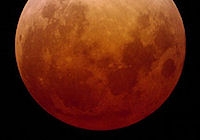
A similar lunar eclipse in Nov. 2003. Credit: Jim Fakatselis.

Earth’s shadow. For 72 minutes of eerie totality, an amber light will play across the snows of North America, throwing landscapes into an unusual state of ruddy shadow.

The eclipse begins on Tuesday morning, Dec. 21st, at 1:33 am EST (Monday, Dec. 20th, at 10:33 pm PST). At that time, Earth’s shadow will appear as a dark-red bite at the edge of the lunar disk. It takes about an hour for the “bite” to expand and swallow the entire Moon. Totality commences at 02:41 am EST (11:41 pm PST) and lasts for 72 minutes.

If you’re planning to dash out for only one quick look — it is December, after all — choose this moment: 03:17 am EST (17 minutes past midnight PST). That’s when the Moon will be in deepest shadow, displaying the most fantastic shades of coppery red.

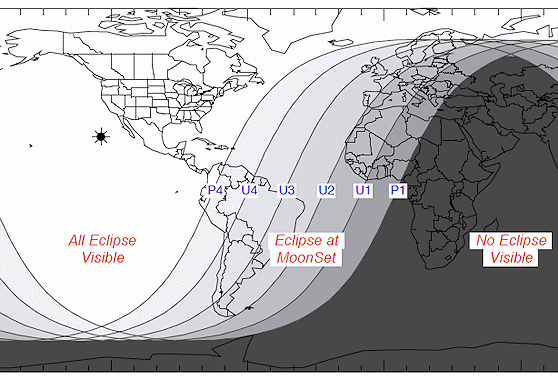
Credit: F. Espenak, NASA/GSFC.

From first to last bite, the eclipse favors observers in North America. The entire event can be seen from all points on the continent. Click to view a world map of visibility circumstances. Credit: F. Espenak, NASA/GSFC.

Why red?

A quick trip to the Moon provides the answer: Imagine yourself standing on a dusty lunar plain looking up at the sky. Overhead hangs Earth, nightside down, completely hiding the sun behind it. The eclipse is underway. You might expect Earth seen in this way to be utterly dark, but it’s not. The rim of the planet is on fire! As you scan your eye around Earth’s circumference, you’re seeing every sunrise and every sunset in the world, all of them, all at once. This incredible light beams into the heart of Earth’s shadow, filling it with a coppery glow and transforming the Moon into a great red orb.

Back on Earth, the shadowed Moon paints newly fallen snow with unfamiliar colors–not much luster, but lots of beauty.

Enjoy the show.

Coincidences (UPDATED): This lunar eclipse falls on the date of the northern winter solstice. How rare is that? Total lunar eclipses in northern winter are fairly common. There have been three of them in the past ten years alone. A lunar eclipse smack-dab on the date of the solstice, however, is unusual. Geoff Chester of the US Naval Observatory inspected a list of eclipses going back 2000 years. “Since Year 1, I can only find one previous instance of an eclipse matching the same calendar date as the solstice, and that is 1638 DEC 21,” says Chester. “Fortunately we won’t have to wait 372 years for the next one…that will be on 2094 DEC 21.

In my lifetime?

Possibly the greatest discovery of all time.

What would that be?  Finding evidence that there is intelligent life on another planet.

With the assumption, of course, that there is intelligent life on Planet Earth 😉

So what prompted this article?

Simply that the British Magazine The New Scientist on its website has a recent article with the intriguing heading of Found: first rocky exoplanet that could host life.

Here are some extracts:

Astronomers have found the first alien world that could support life on its surface. It is both at the right distance from its star to potentially harbour liquid water and probably has a rocky composition like Earth.

“That’s the most exciting exoplanet I’ve seen yet,” says James Kasting of Pennsylvania State University in University Park, who was not involved in the discovery.

The planet orbits a dim red dwarf star 20 light years from Earth called Gliese 581. Four planets were already known around the star, with two lying near the inner and outer edges of the habitable zone, where liquid water – and therefore potentially life – could exist on its surface.

A rocky world has been found squarely in the middle of the star Gliese 581's habitable zone (Image: Lynette Cook)

The article continues:

The discovery suggests habitable planets must be common, with 10 to 20 per cent of red dwarfs and sun-like stars boasting them, the team says. That’s because Gliese 581 is one of just nine stars out to its distance that have been searched with high enough precision to reveal a planet in the habitable zone.

“If you take the number of stars in our galaxy – a few hundred billion – and multiply them by 10 or 20 per cent, you end up with 20 or 40 billion potentially habitable planets out there,” says Vogt. “It’s a very large number.”

For more years than I can imagine, I have always thought that the most amazing scientific find of my lifetime would be the discovery of life on another planet.

I’m 65 at present – wonder what the odds are? But surely this announcement by The New Scientist does increase them?