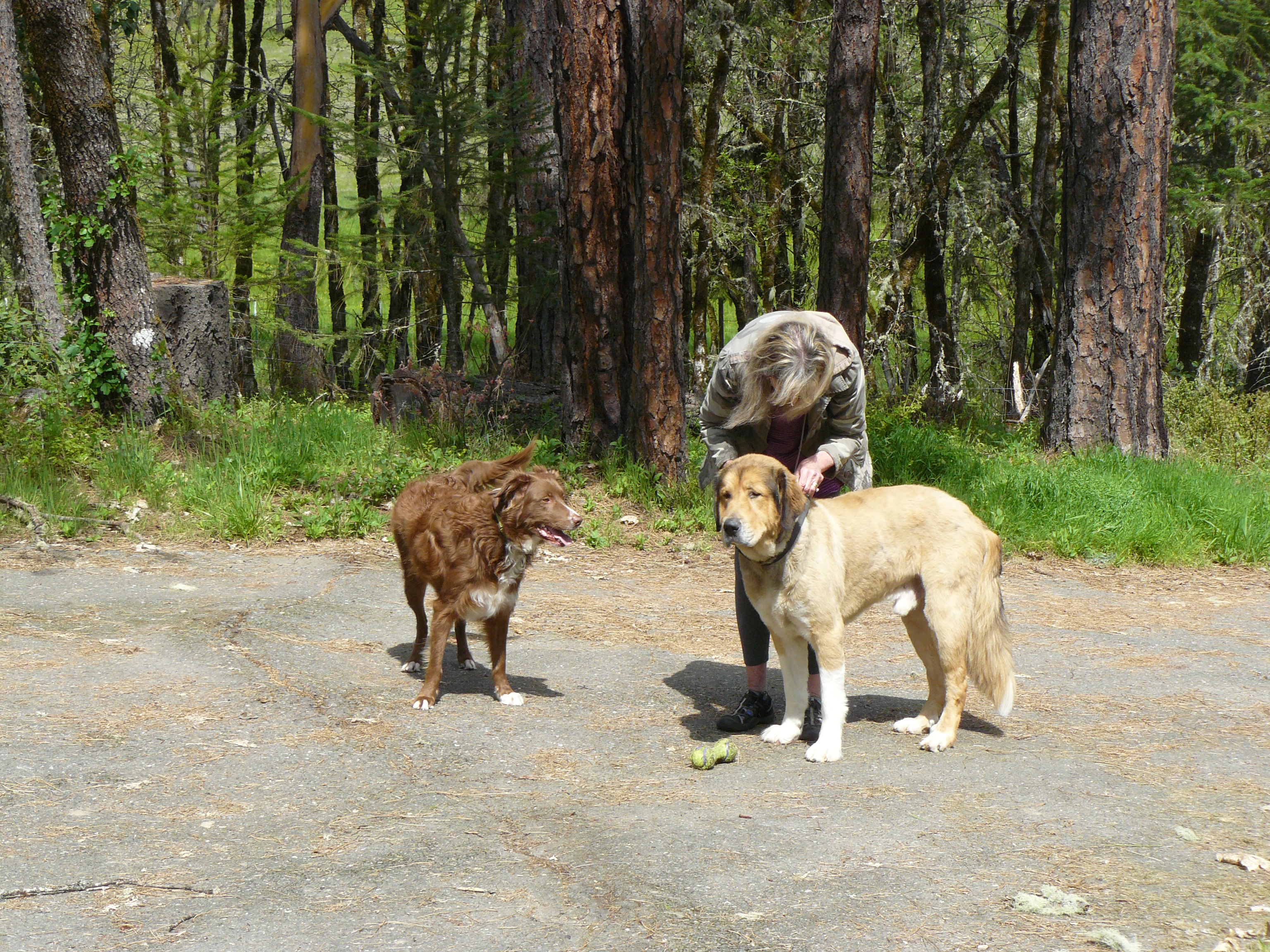
Tag: Dr. Jim Goodbrod

Hazel – Further Update

Only time will provide the definite answer.

(This update would have been brought to you much earlier this week had it not been for our internet problems.)

You will recall that it was a week ago that we took Hazel to see a specialist and I posted Hazel’s Probable Disease. That evening our vet friend, Jim, brought over a supply of Prednisone tablets with the instructions to stop the Fluconazole treatment and switch to Prednisone. We started at a dosage of one 20mg tablet every 12 hours.

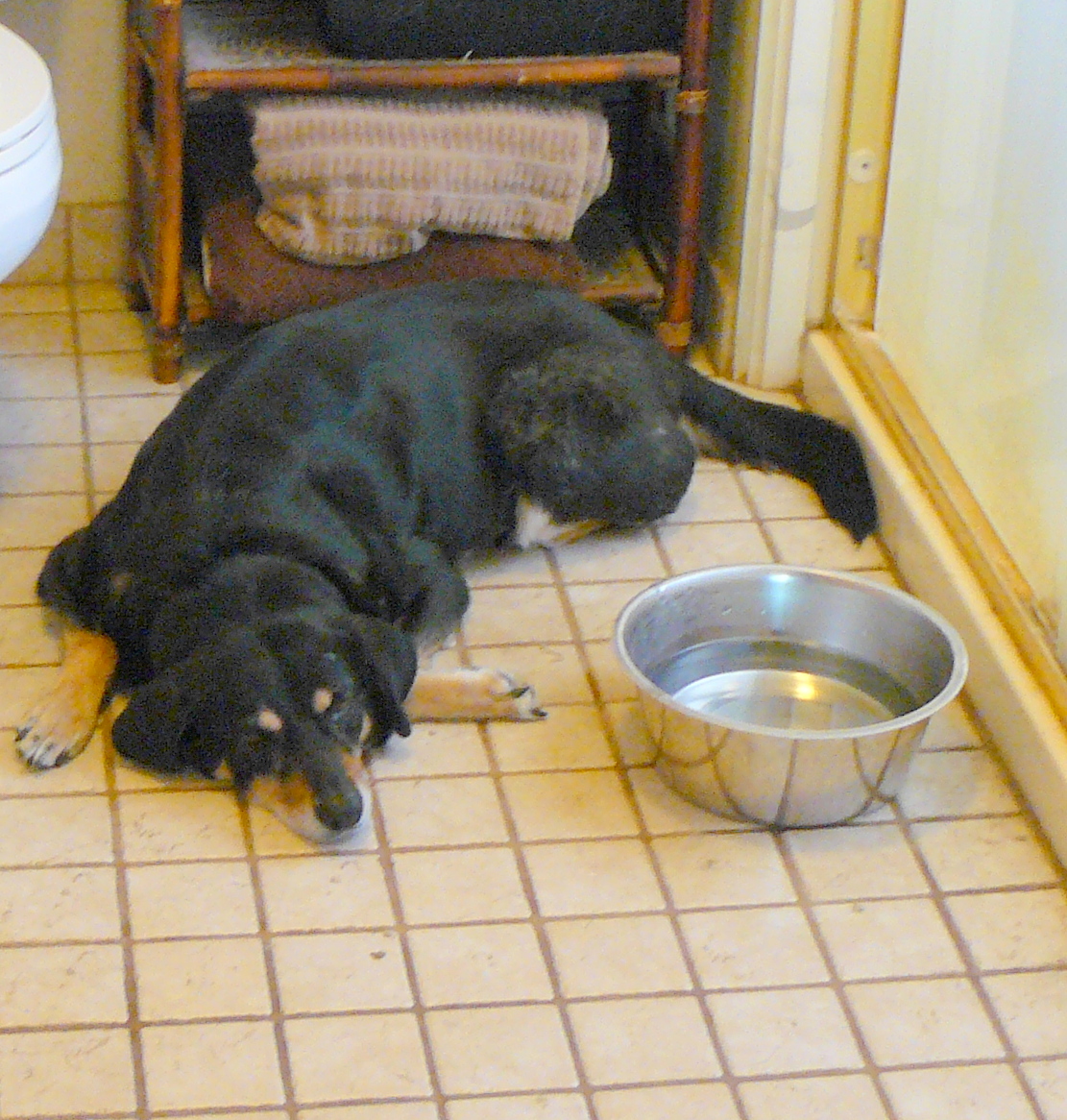
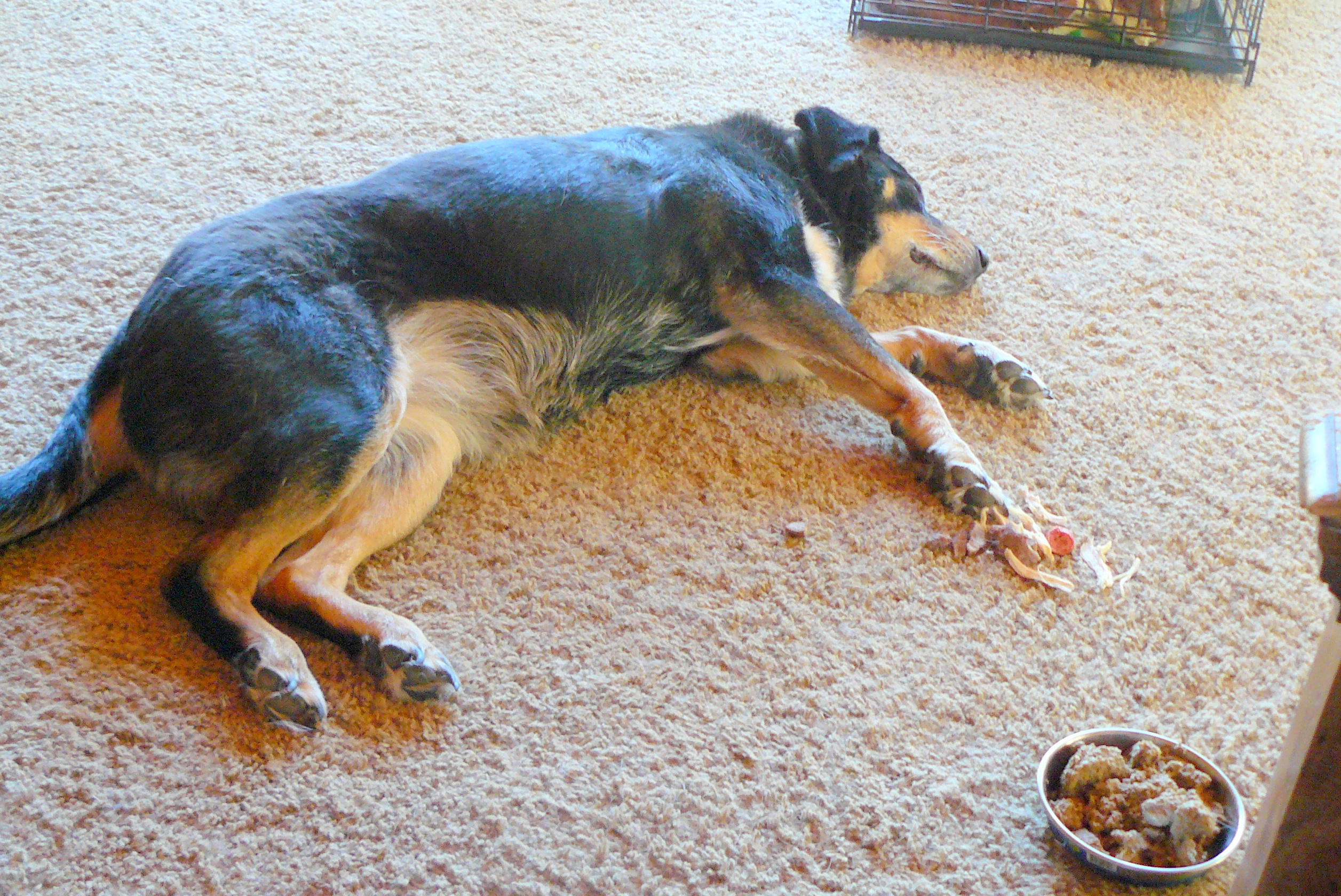
Hazel enjoying the cool floor of our bathroom.
Hazel enjoying the cool floor of our bathroom yesterday afternoon.

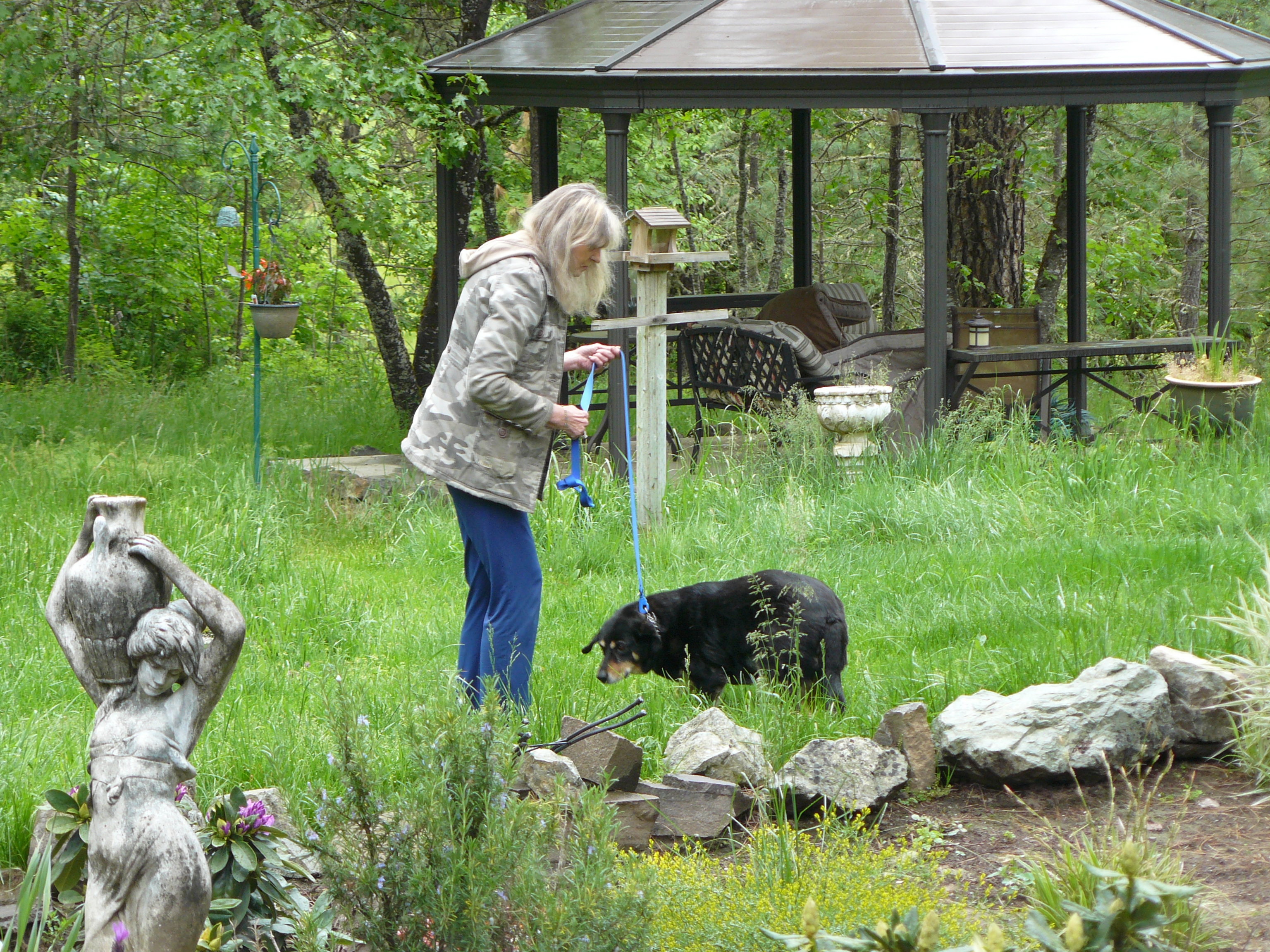
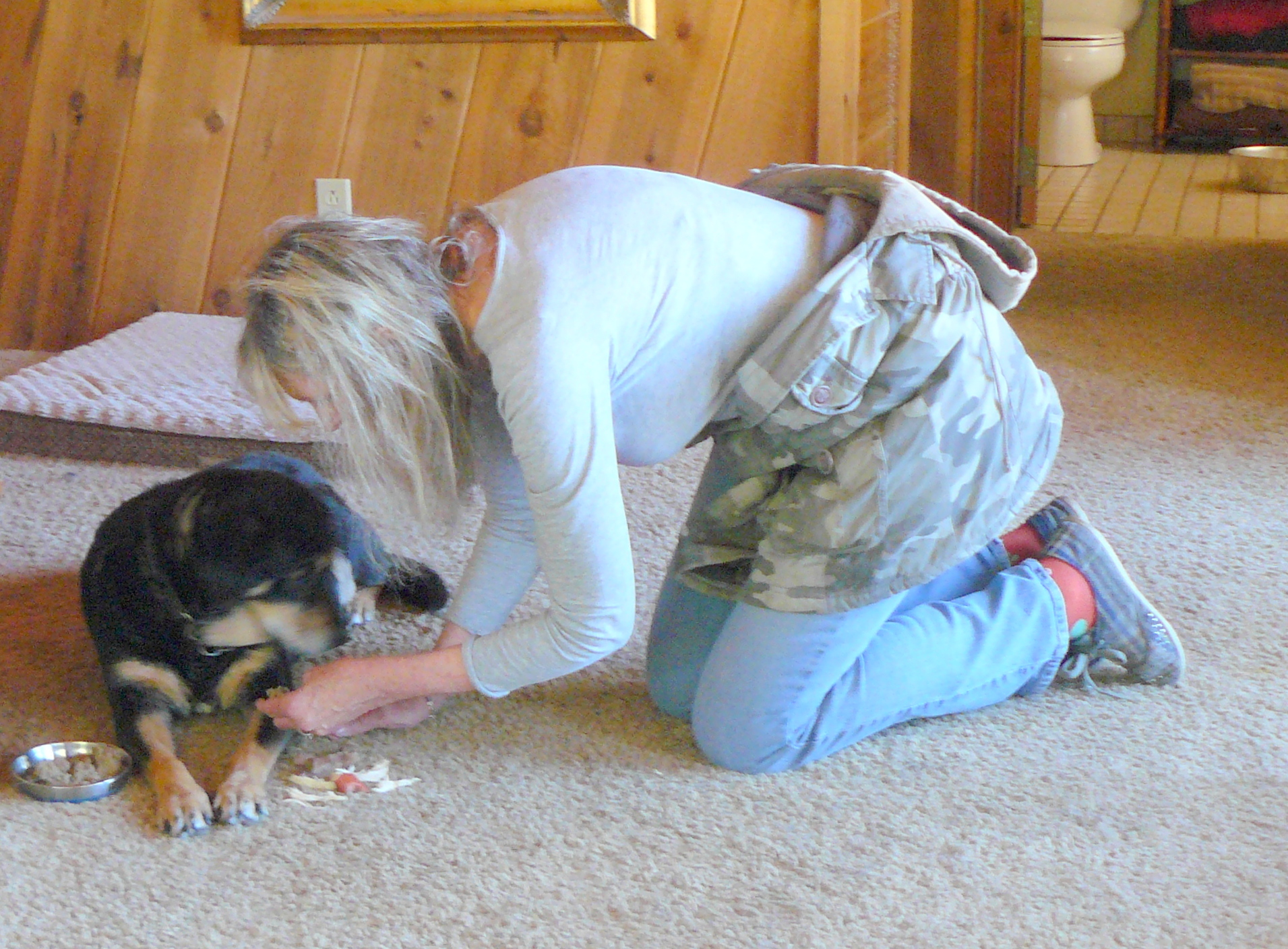
Within twenty-four hours the Prednisone had stimulated a return of Hazel’s appetite and for the last seven days she has been eating very well. Plus she has regained an interest in the world around her and now comes out for walks with the other dogs.

Jim and I went for a short hike yesterday afternoon and we were discussing Hazel. Jim reminded me that while the lung pictures and the other evidence were pointing to it being cancer the actual tumour still hadn’t been found.

If there is no noticeable decline in, say, three or four weeks then it may not be cancer. Certainly, Jim said, if it is cancer then Hazel will not live out another three months.

Time will give us the answer.

Hazel’s probable disease.

And the last thing we wanted to hear.

Dear people, again I must say this:
CAUTION: The following is offered by way of information reaching out to other loving dog owners. Please do not assume I have any specialist veterinarian knowledge and please do not take the following as a replacement for seeing your own vet.

Back on the 4th May I posted the results of Hazel being scanned ultrasonically in a post Hazel’s Sonogram. Here’s a tiny extract:

Dr. Parker, who is a board-certified veterinarian doctor, came to the conclusion that the most likely cause of Hazel’s illness was the fungal lung infection, as Dr. Codd and the radiologist supposed.

But still Hazel showed too many signs that there was no improvement. Her eating was pitiful and the application of the Fluconazole (anti-fungal) medicine was not helping, bearing in mind that she was first seen by Dr. Codd over a month ago.

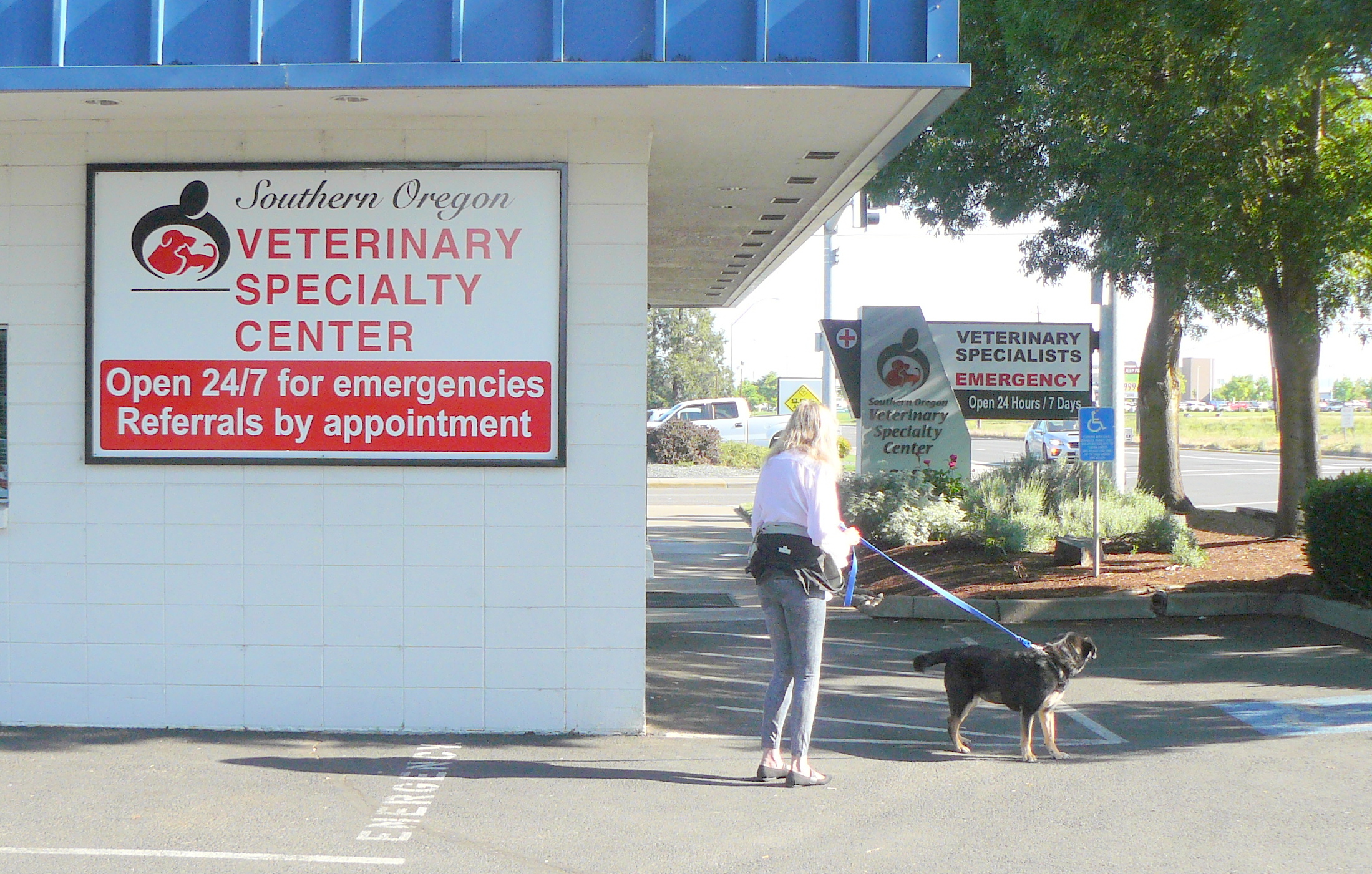
Dr. Codd’s advice was that we seek specialist help and yesterday morning Hazel was seen by Dr. Kimberly Winters, DVM, of Southern Oregon Veterinary Specialty Center (SOVSC) who, in addition, has a further qualification (Diplomate AVCIM) in Internal Medicine.

Based in Medford, about a 40-minute drive South from home.

oooo

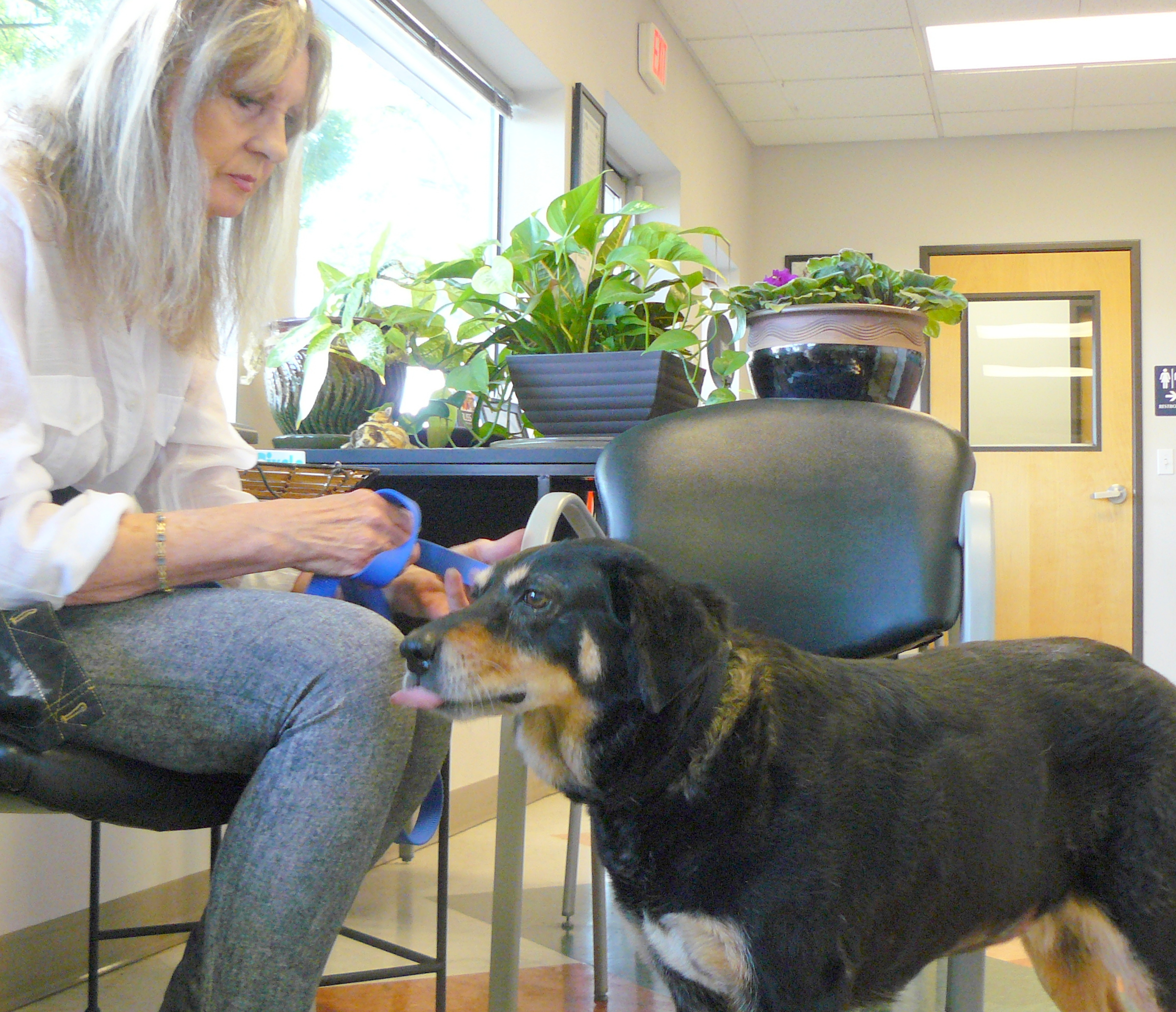
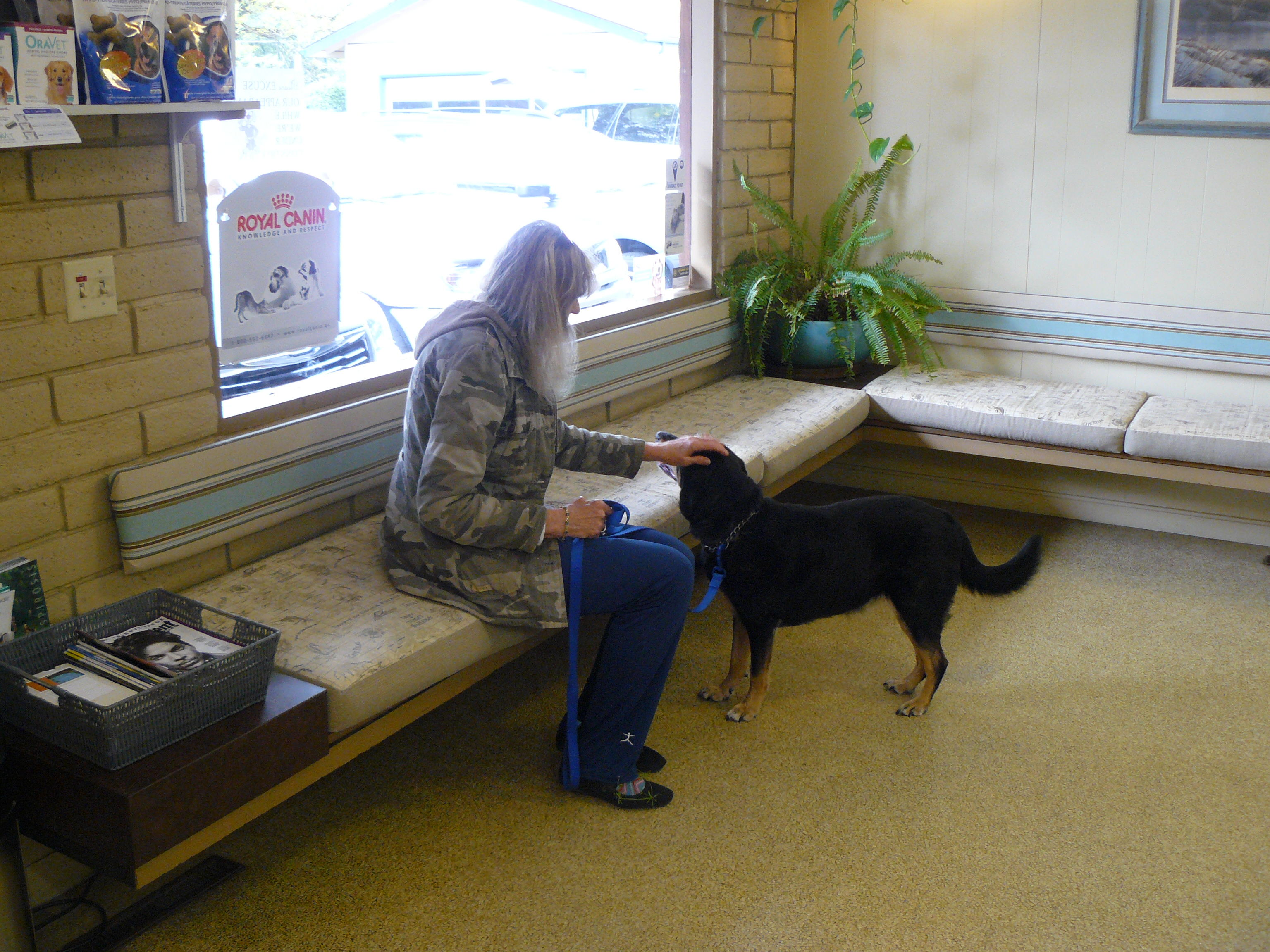
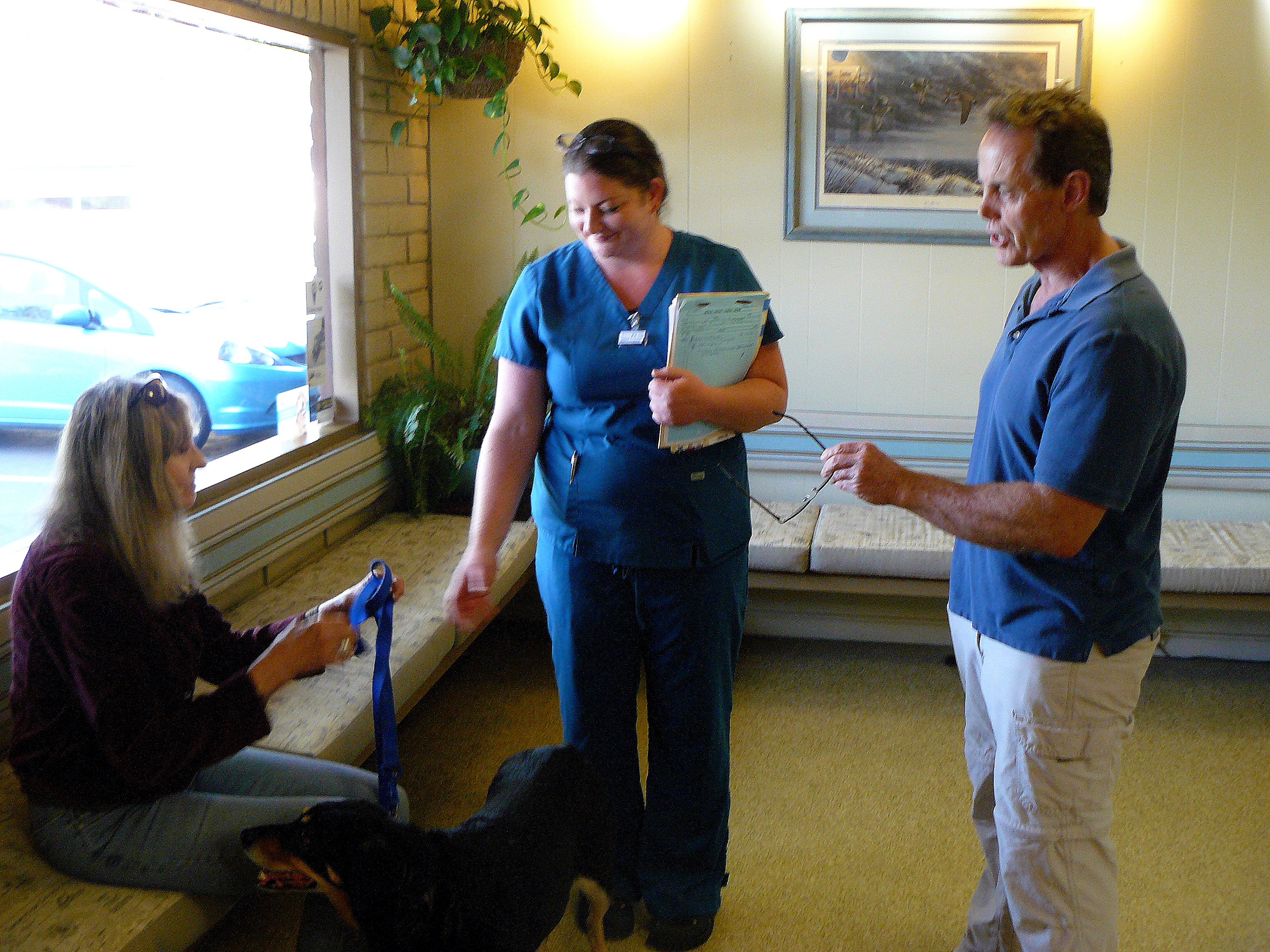
Waiting to be seen by Dr. Winters.

Jean and I were impressed by the way we were received and noted that the clinic, Southern Oregon Veterinary Specialty Center, offered a 24-hour emergency service. Here’s a piece from their home page:

At Southern Oregon Veterinary Specialty Center, we understand the special bond between a pet and their human family. Our team of highly trained doctors, certified technicians and support staff partner with your family veterinarian to provide specialized diagnostics, surgery and emergency care for your pet upon a referral or emergency basis. Our clinic is staffed 24 hours-a-day, 7 days a week, to receive emergency cases and to monitor our critical care patients. The clinic’s board-certified veterinary specialists and staff are committed to providing exceptional compassionate care utilizing state-of-the-art technology and treatments.

Then we were called in and first seen by one of the technicians to record all the details.

Pulse and body temperature normal.

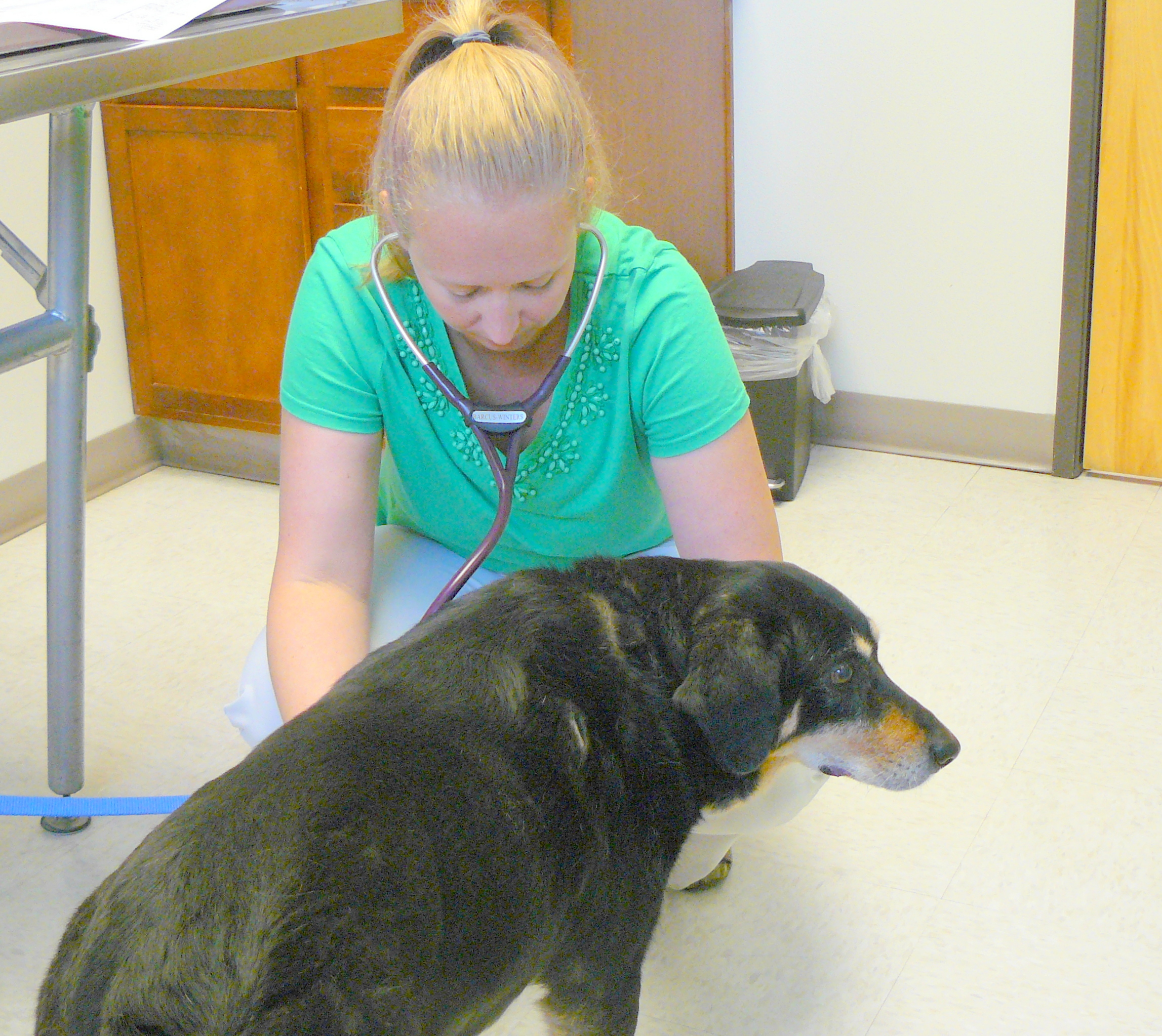
Then a short while later in came Dr. Winters.

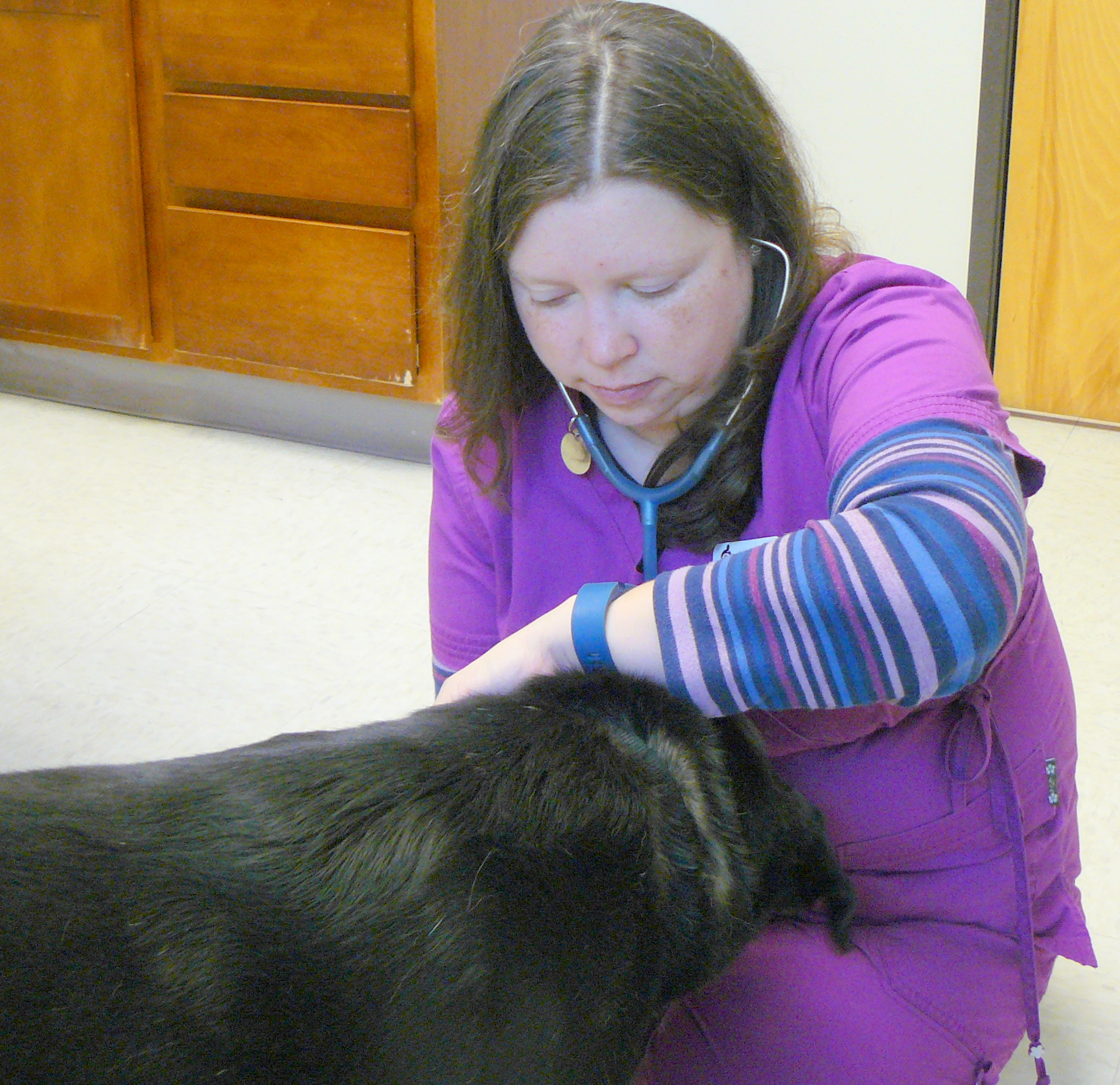
Dr. Winters listening to Hazel's rather laboured breathing.
Dr. Winters listening to Hazel’s rather laboured breathing.

Dr. Winters recommended a further xray of Hazel’s lungs and some blood work.

An hour later we had her analysis.

Dr. Winters said that while the condition of Hazel’s lungs could be an indication of a fungal infection she had her doubts. Or, in the words of her subsequent report:

There are several things that are not consistent with fungal infection – no high globulin level, no elevation in white blood cell count, no fever, negative titers, progression despite fluconazole treatment.

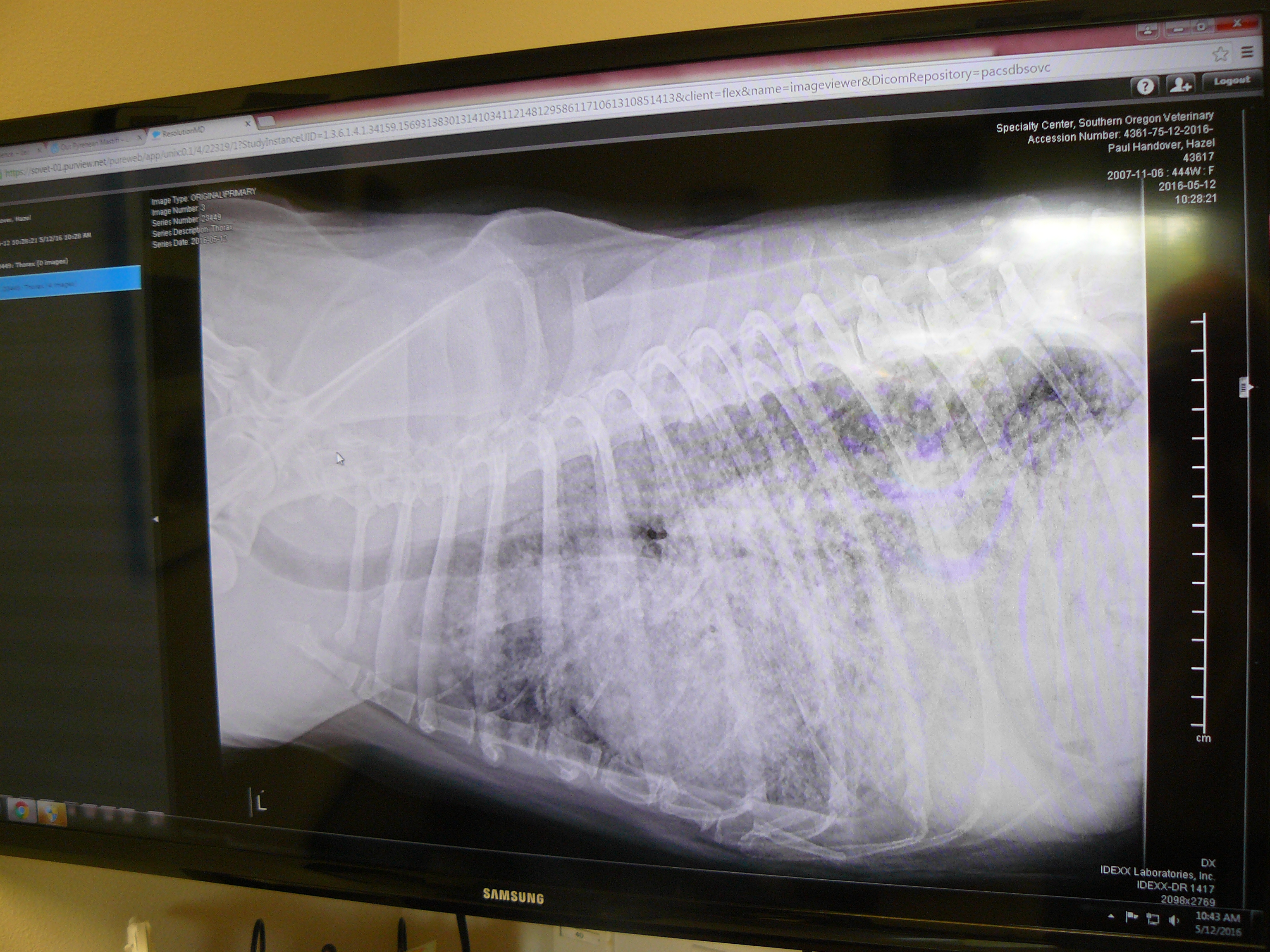
But the most important indicator of it being something other than a fungal infection was that the xray showed Hazel’s lungs to be worse.

My photograph of the clinic's screen display.
My photograph of the clinic’s screen display.

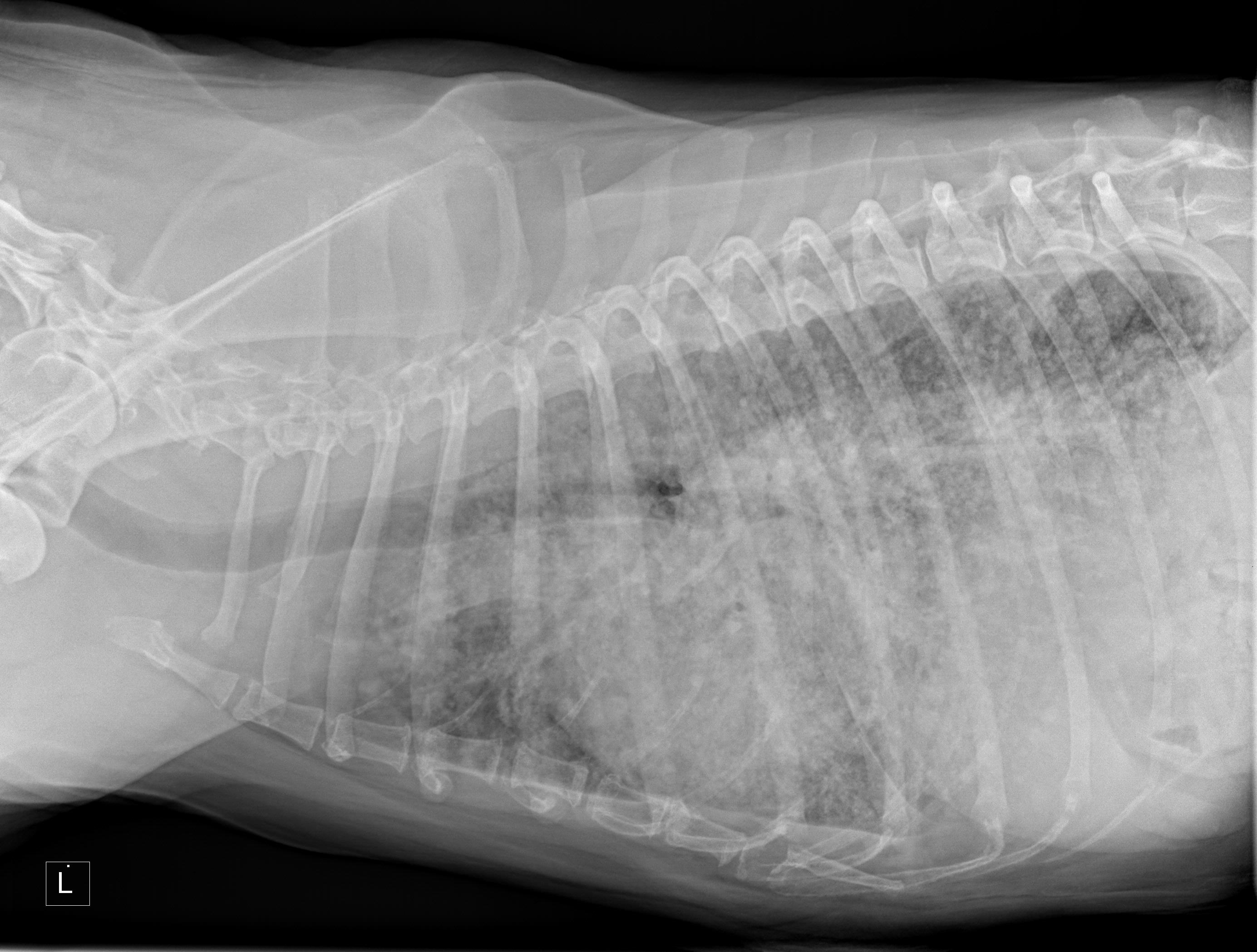
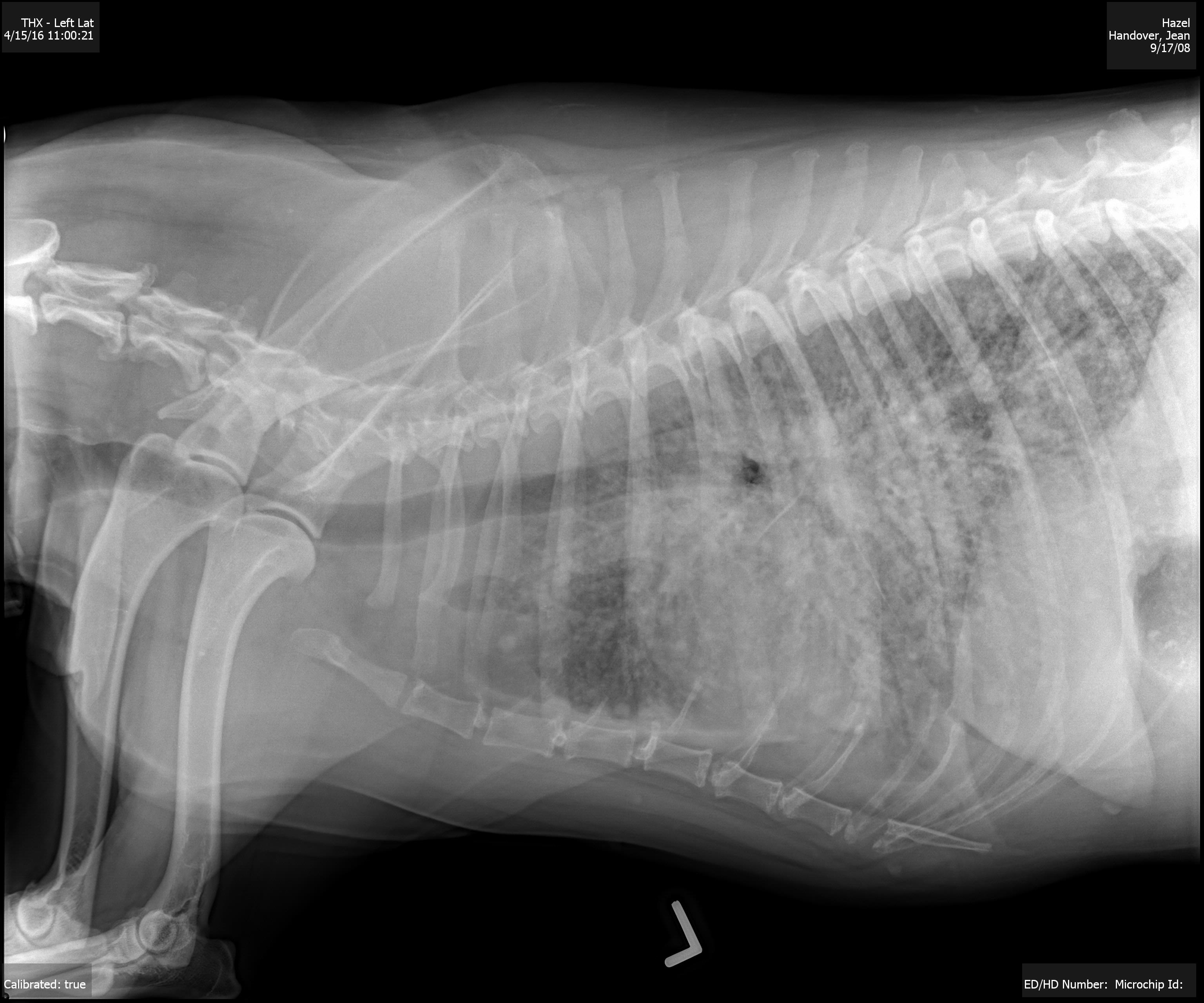
This can be more readily seen if I publish the xray image of yesterday and the image taken on the 15th April; see below.

Xray image as of the morning of May 12th, 2016.
One of the radiographs taken of Hazel.
One of the radiographs taken of Hazel 15th April, 2016.

Despite not truly understanding these images both Jean and I quickly thought the top one, taken yesterday, showed a decline in Hazel’s lungs compared to the lower one, taken on the 15th April.

It was then time to seek Dr. Winters’ opinion.

Essentially, she said that she doubted the diagnosis of it being a fungal infection especially as lung fungal infections were very rare in Oregon. When I queried the fact that it might have been dormant for some time Dr. Winters thought that doubtful because the lungs, even a month ago, were displaying advanced disease.

Dr. Winters couldn’t be sure without a physical examination of the lung tissue but on the balance of probability she believed Hazel was at an advanced stage of cancer with the tumor somewhere in the body and that her lungs were showing that the cancer had metastasized!

A later discussion with Dr. Russ Codd and Jim Goodbrod confirmed this analysis with Russ thinking that the primary tumor might be in Hazel’s arteries. To a very great extent, it has become academic as Russ believes that Hazel will not have that much longer to go and that our main focus should be on keeping her quality of life as high as we can, for as long as we can.

Jean and I are devastated as you can imagine and later on when writing this post my thoughts were on some of the words added to the post Embracing Those Senior Years just last Wednesday. These words:

First from Barb of the blog Passionate about Pets:

Hariod, your comments to Paul about your GSD really touched me because I myself am in that same space now with my almost 17 year old shih-tzu. We have always had a special connection but in the last year, as her age has progressed with it’s usual complications, our relationship has moved to another level – becoming even deeper than anything I have ever experienced; so powerfully in tune with each other, it’s incredible.
As I write this, every day she is with us is a precious bonus.

Then followed by these words from Petspeopleandlife:

Our aging pets can be very troubling. I ‘ve been there and done that many times in about 60 years and even in my years before I left the farm to attend school. It doesn’t get easy and I always hate watching my pets age. It is devastating to lose them.

Then my words:

There are no favorites in our ten dogs but there are some that are more open in expressing and returning affection. It seems those dogs in particular tear us apart when they die.

For Hazel is one of those dogs.

Hazel’s sonogram.

Nothing life-threatening found!

I’m writing this post at 5pm yesterday (Tuesday) shortly after we returned home from collecting Hazel from Lincoln Road Vet Clinic following her earlier examination by Dr. Parker using his mobile sonogram.

Hazel at the clinic shortly before she was taken in by the staff.

The good news is that Dr. Parker did not find any sign of trauma or life-threatening illnesses in Hazel’s body especially focusing on her abdomen.

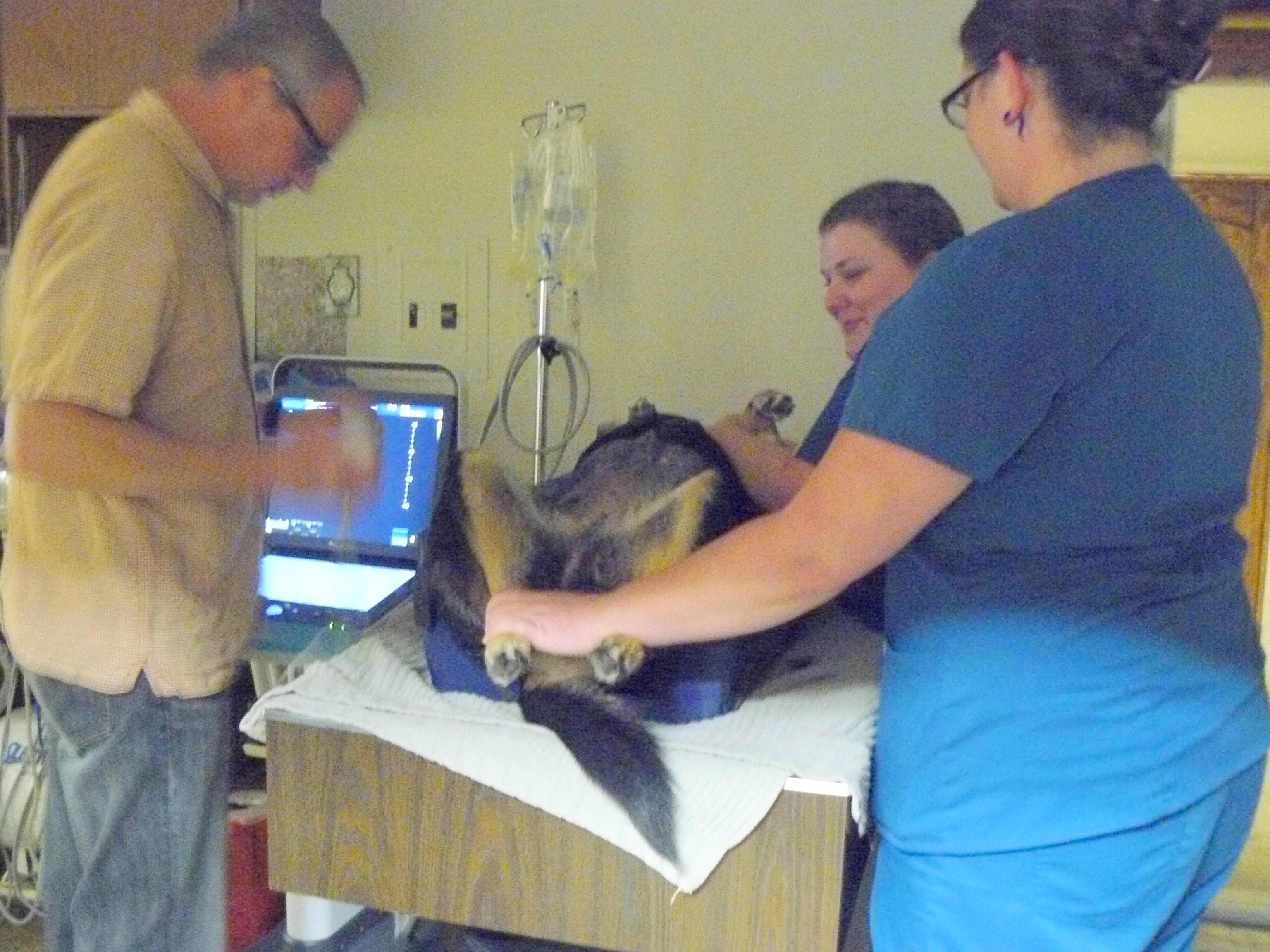
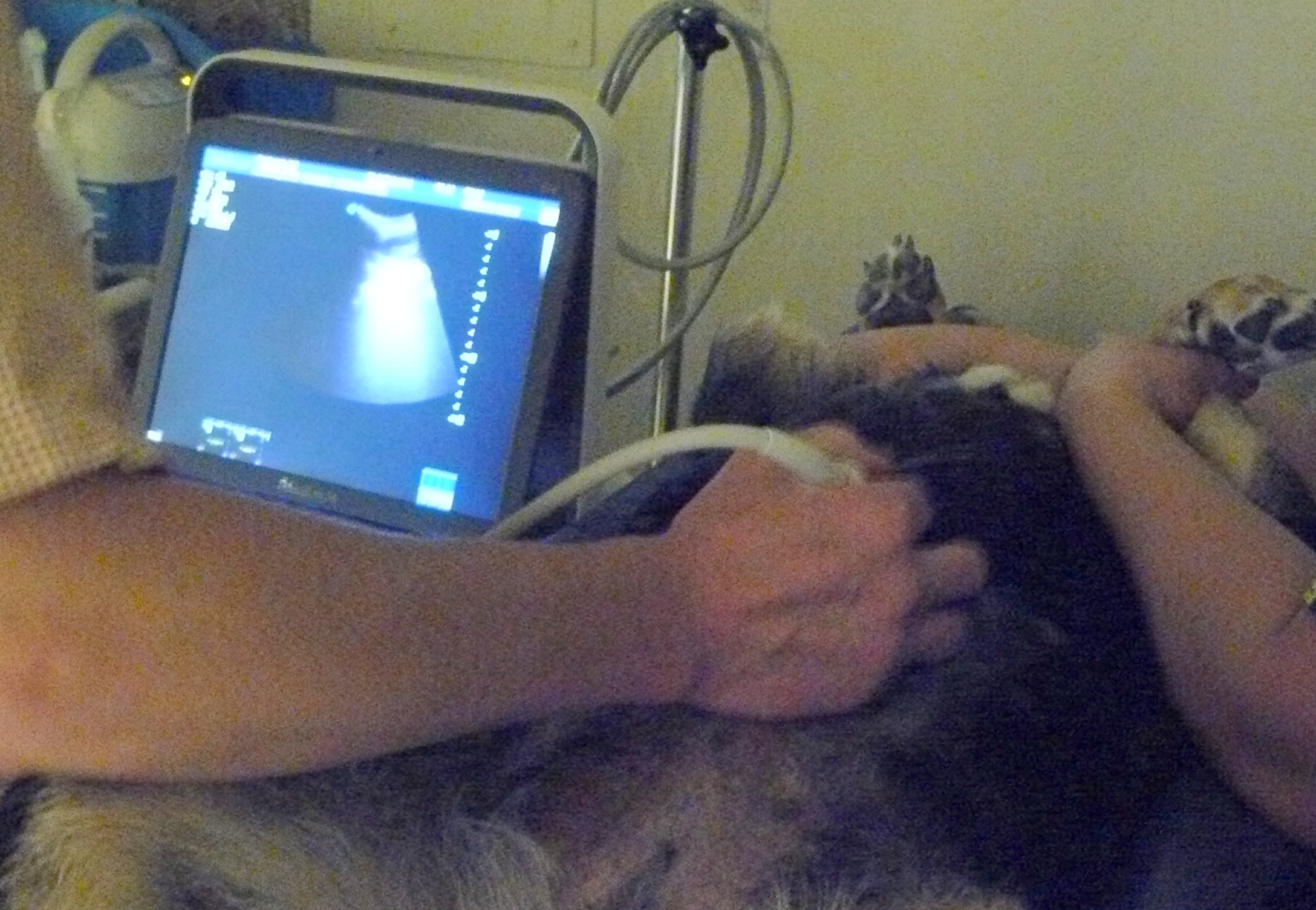
Dr. Parker to the left being assisted by clinic staff as he examines Hazel ultra-sonically.

(I should be quick to say that I left my camera with one of the technicians and wasn’t present. Indeed, Jean and I did not get to meet Dr. Parker.)

Dr. Parker, who is a board-certified veterinarian doctor, came to the conclusion that the most likely cause of Hazel’s illness was the fungal lung infection, as Dr. Codd and the radiologist supposed.

Nothing frightening seen!

To try and narrow down the exact fungal infection a further blood sample was taken and the lab results should be known in three or four days time.

Dr. Codd, in his briefing to Jean and me when we collected Hazel late afternoon, said that his recommendation based on the lack of any notable findings from the scan could be summarised as follows:

  • Regard treating the fungal infection as the number one priority,
  • Hold off from treating the tick fever in the interim,
  • Dose Hazel with 100mg of Fluconazole twice a day even if she is eating hardly anything,
  • The measure is whether Hazel, with a very small food intake, can take that dosage without vomiting,
  • Add a B12 tonic to her diet with immediate effect,
  • Give Hazel appetite stimulant medicine,
  • Consider the hemp oil (as queried by me) if the proper dosage can be determined.

(Petspeopleandlife: Hazel’s current weight is 53 lbs (24 kg). Any advice?)

Back home again albeit still feeling a little drowsy!

Thus while we have not yet got to the bottom of what precisely is the nature of Hazel’s infection at least we know there isn’t anything else silently killing her.

Thank you so much, dear readers, for taking so much interest in Hazel and for sending your love and caring wishes – it’s working! 🙂

Hazel – Change of tack

Still a long way from getting to the bottom of what is ailing Hazel.

In my last post about Hazel I opened by saying:

In the last post on Hazel’s condition, back last Thursday, I passed on Dr. Codd’s observation, “… that by not having Hazel on her meds we were, of course, letting the fungal infection continue its damage.”

Dr. Codd also recommended reducing the dosage of the Fluconazole to lower its side effect of suppressing appetite.

So since then, with outstanding care and patience, Jean has been coaxing Hazel to eat just sufficient food for Hazel to be able to take the Fluconazole, for her fungal infection in her lungs, and Doxycycline, for her tick infection. (Mind you, Hazel is still a long way from eating reliably.)

That was a week ago and while, at best, Hazel is just eating sufficient to take her meds she is far from improving to any noticeable degree. But she is not eating enough food to stabilise her weight and yesterday morning Jean was worried we might lose her if we didn’t rethink what was going on.

Jean is attempting to get Hazel to eat many times each day.

A Sunday morning call to Dr. Jim Goodbrod brought us the advice to re-think the evidence.

  • The titre results were negative but because there are so many variants of fungal infection that was discounted.
  • The film of Hazel’s lungs show what the radiologist described as a clear case of fungal infection.
  • However, if that infection had been in the past, before Hazel was taken in by us down in Mexico, and that infection had ceased, that film could be showing scarring in the lungs.
  • The positive result for Tick Fever showed evidence of antibodies not antigens. That might be interpreted as a previous incident.

Jim liaised with Dr. Codd and it was agreed that further examinations needed to be conducted to obtain a clear, unambiguous diagnosis and that in the interim we stop giving Hazel any medications and offer her body systems a bit of a rest.

One option being discussed is to call in a mobile sonogram or ultra-sonic scanner. There is a very expert doctor in the area who uses such a mobile device and scans can be taken of Hazel’s abdomen and lungs here at home.

Because we will do everything to try and return Hazel to good health.

P1160083More information will be passed to you just as soon as it is to hand.

Hazel is pulling through!

The powerful combination of good medicine and unconditional love.

In the last post on Hazel’s condition, back last Thursday, I passed on Dr. Codd’s observation, “… that by not having Hazel on her meds we were, of course, letting the fungal infection continue its damage.”

Dr. Codd also recommended reducing the dosage of the Fluconazole to lower its side effect of suppressing appetite.

So since then, with outstanding care and patience, Jean has been coaxing Hazel to eat just sufficient food for Hazel to be able to take the Fluconazole, for her fungal infection in her lungs, and Doxycycline, for her tick infection. (Mind you, Hazel is still a long way from eating reliably.)

Yesterday, (Saturday) Hazel was showing clear signs of feeling better but still having to be hand-fed by Jean.

Then this morning (Sunday) she really was perky and readily came out for a walk with the other dogs.

First time in recent days when Hazel has shown an interest in the world around her.

oooo

A return of a gesture unique to Hazel that we haven't seen in ages! :-)
A return of a head gesture unique to Hazel that we haven’t seen in ages! 🙂

More generally, Dr. Jim was trying to track down supporting details to the observation made by Dr. Russ:

Namely, that there was evidence that fungal infections can lay dormat for quite long periods of time.

Jim sent me the following email:

Paul  …
The following article is the one and only reference I have found so far that refers to the possible dormancy of this fungal infection.  In paragraph 2 (Clinical Disease) I have highlighted it in red.  I have to admit, I was skeptical.
Jim

The article was:

Coccidioidomycosis (Zoonotic)
Last updated on 2/4/2011.

Contributors:
Rhea V. Morgan DVM, DACVIM, DACVO

Synonyms:
San Joaquin Valley Fever
Valley Fever

This is that domancy aspect from that paper that Jim highlighted (in red):

The incubation period in the dog is 1 to 3 weeks.1,2 The organism can remain dormant, with exposure preceding the onset of clinical signs by 3 years or more.1,3 Although people may acquire the disease from the same sources as domestic animals and the mycelial forms are highly infectious, with one exception the disease has not been transmitted from animals to people. One published report exists of transmission to a veterinary assistant via the bite of an infected cat.15

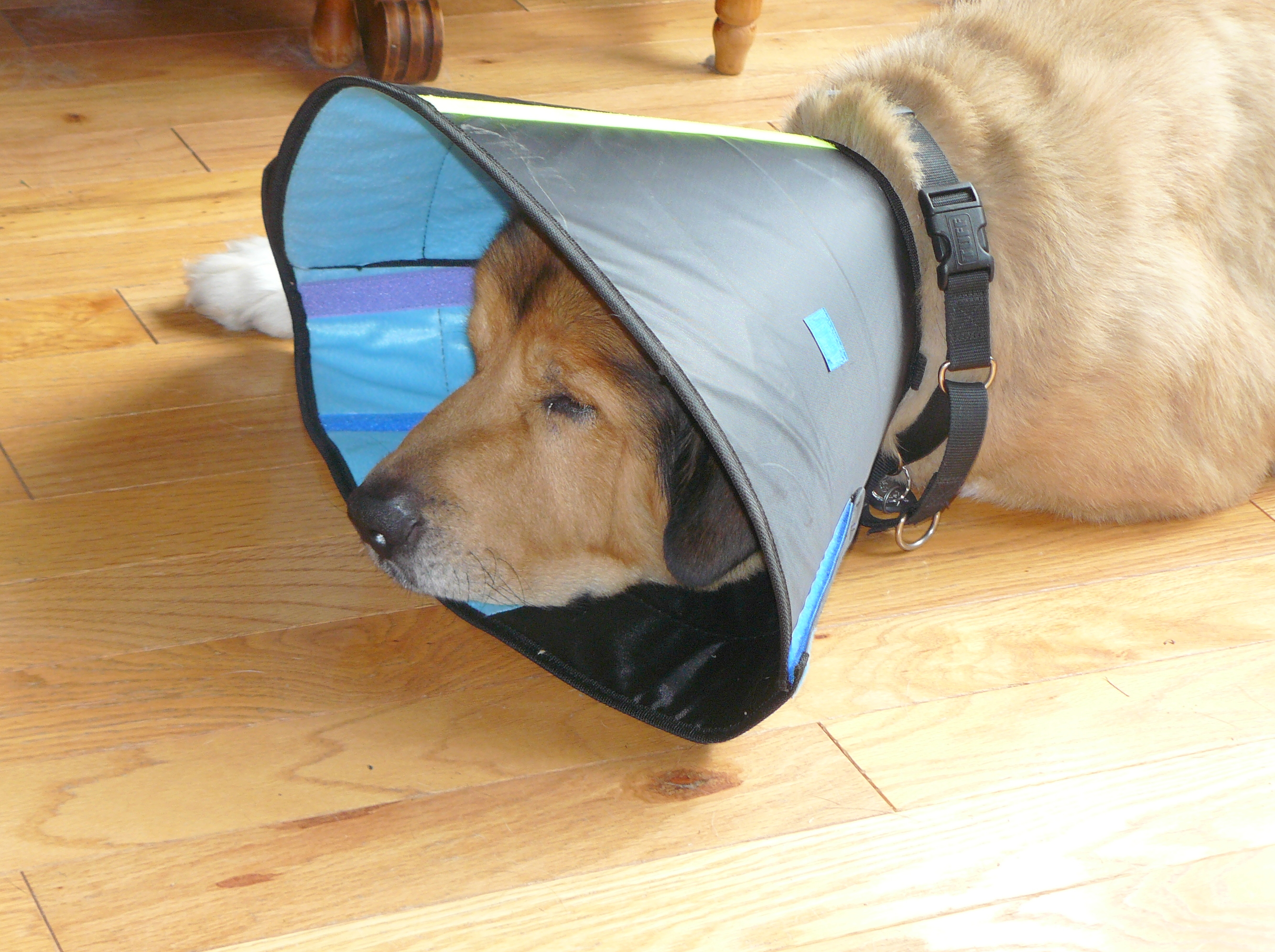
Meanwhile, over in Brandy’s corner, he has very quickly healed after his neutering operation last Thursday. It was fair to say that he was not a happy chappy when he arrived home that day.

Didn't like that!
Didn’t like that!

oooo

And I can't even lick my balls!
And I can’t even lick my balls!

But his cone was off by Saturday and he is back to the wonderful, bouncing dog we all love so much. (Can’t believe that last Saturday was only the second week that Brandy had been with us; he has so quickly woven his way into all our hearts.)

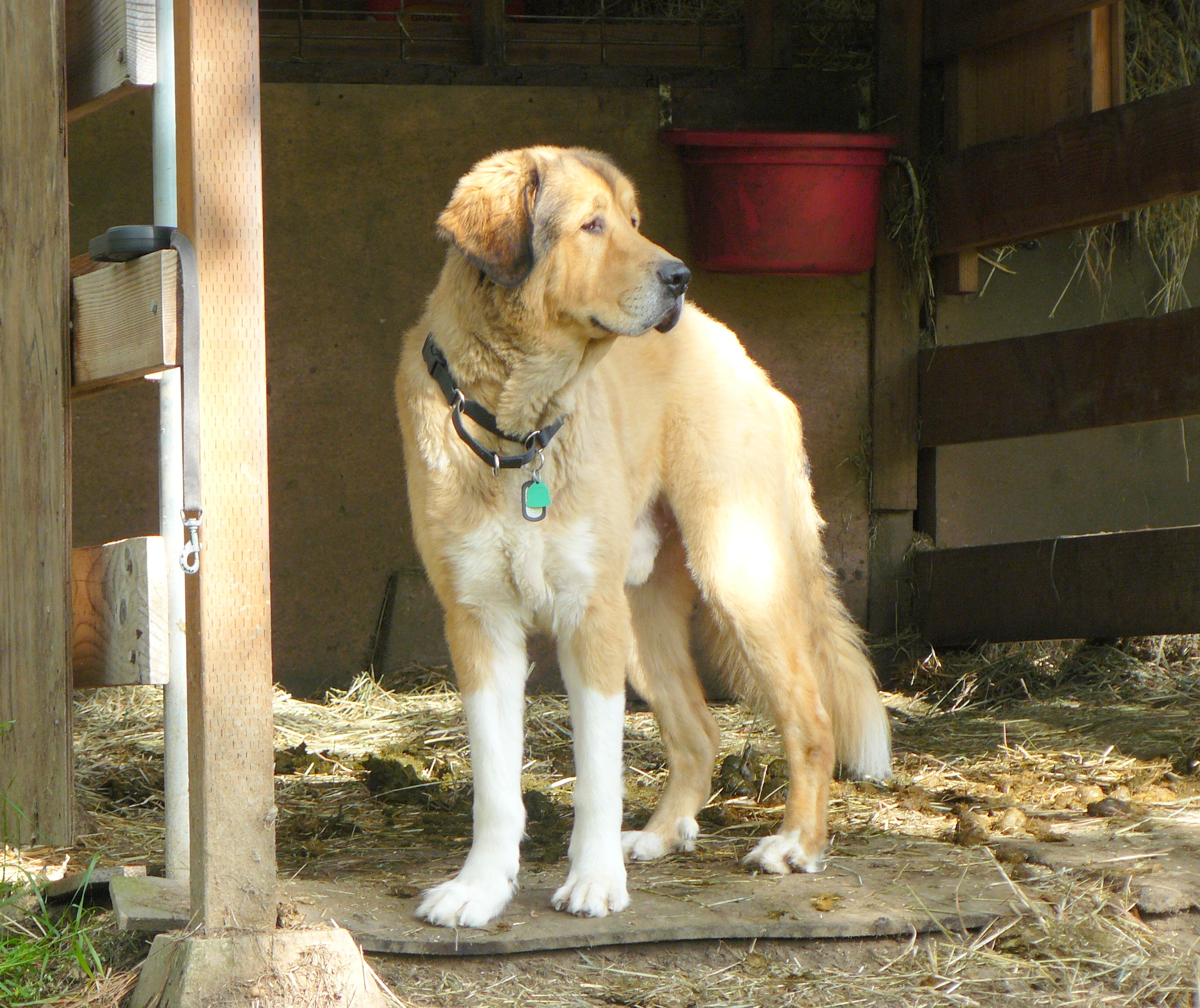
Checking out the stables yesterday (Sunday) morning.

oooo

Behind that placid expression is the most docile, loving brain and heart one could ever wish for!

Returning to Hazel we are still some way from knowing that she has returned to a fully fit dog but the love and caring sent her way by all of you out there has been precious beyond imagination.

Thank You All!

The latest on our beloved Hazel.

“Quick decisions are unsafe decisions.”

So said Sophocles. But too slow a decision, or no decision is, of course, a decision in its own right.
Last Tuesday in my update on Hazel Of art, and science I wrote:

It seemed to make sense that until we had confirmation of whether or not Hazel had a lung fungal infection, for which taking Fluconazole would be an excellent course of action, we should pause in her dose until the results were in.

At 08:45 this morning we had to take Brandy in to Lincoln Road Clinic for his neutering operation (that we heard a short time ago has gone well with no complications – he will be collected in about an hour). Dr. Codd asked after Hazel and we said that she was brighter but still not eating sufficient for her to be taking her medications.

Dr. Codd then made the eminently sensible observation that by not having Hazel on her meds we were, of course, letting the fungal infection continue its damage.

In response to the query as to why a fungal infection from either Mexico or Arizona had taken so long to appear, Dr. Codd added more sense to the situation. Namely, that there was evidence that fungal infections can lay dormat for quite long periods of time. Possibly in Hazel’s case the trigger for the infection becoming active was the additional stress on Hazel’s body systems from her recently contracting an Ehrlichia Infection from a local tick.

The final element for the argument of not delaying any longer Hazel’s healing medications was that the titre results would only be a result of one particular ‘brand’ of fungal infection. Dr. Codd said that it may well have been one of many other fungal infections that took hold of Hazel’s lungs.

So the decision was made to try Hazel on an oral anti-nausea med that would be much easier to administer. It is Ondansetron Orally. Also to cut down the dosage of the Fluconazole so that it doesn’t dampen Hazel’s appetite for food, a known side effect of Fluconazole, in quite such a dramatic fashion. (Note: Fluconazole is the least appetite suppressant compared to alternatives.)

So there we are.

We hang on to the fact that Hazel is still with us and coping with what is ailing her, albeit with a heightened stomach sensitivity that is complicating eating. Time is on our side.

A thousand thanks to all of you that have shown so much love and concern for our dear hazel.

Dear people, I must add this:
CAUTION: The following is offered by way of information reaching out to other loving dog owners. Please do not assume I have any specialist veterinarian knowledge and please do not take the following as a replacement for seeing your own vet.

Finally, Mike Shannon is my guest blogger with a lovely post for Earth Day 2016 that will be published in a little under 10 hours time. That is why this post has been published now.

Of art, and science.

The learning and healing journey continues with Hazel.

The title to today’s post came from Dr. Jim Goodbrod, DVM. When he and I were taking a walk yesterday Jim mentioned that diagnosing exactly what an animal is suffering from is as much an art as it is a science.

Jim and Janet are close friends and neighbours who live a couple of roads away. Jim also attends the Lincoln Road Vet Clinic on a part-time basis. Off his own volition he has been speaking with Dr. Codd (Russ) about the situation with Hazel and the pair of them are showing incredible devotion to getting to the bottom of what is happening.

So, like yesterday’s post, today is being offered to you in the spirit of information. Forgive me if I repeat the caution from yesterday. (This is being written at 4pm on April 19th, 2016.)

CAUTION: The following is offered by way of information reaching out to other loving dog owners. Please do not assume I have any specialist veterinarian knowledge and please do not take the following as a replacement for seeing your own vet.

Late on Sunday afternoon Hazel was becoming so weak and lethargic that Jean and I feared that she wouldn’t make it through the night. So it was wonderful to see that she was alive and still connected to the world at 6am yesterday; Monday. Nonetheless, Hazel had not eaten since Saturday afternoon and was only drinking very small amounts of water. We made the decision to ring the Clinic as soon as they opened on Monday at 8am. They recommended that Hazel be brought in to go on to an IV drip to boost her anti-fungal intake and also to receive an anti-nausea intake to help her regain an appetite. But there was the question hanging over everyone that if this was a fungal infection, as in Coccidioidomycosis, that is not present in the Oregonian soil but is found in the drier parts of the USA and Mexico then why had it been such a long time before it brought Hazel down?

Jean also had this suspicion that Hazel might be suffering from a form of ‘Tick Fever’ that is very common in Mexico.

So off we went to the Clinic again. There were discussions about the whole situation.

Dr. Codd (RHS) speaking with Jean at the Clinic.

Dr. Codd took a quick blood test and, bingo, it revealed that Hazel was showing that she had, or had had in the past, an Ehrlichia Infection; a tick-borne infection.

The lower of the left-hand spots is the indicator of a past or present Ehrlichia Infection.

The cure for that was a course of Doxycycline.

So now we are looking at battling two separate diseases.

The blood that was taken from Hazel last Friday, when she also had radiographs taken of her lungs, had been sent for a ‘titre’ that would confirm one way or another if her lungs were suffering from a fungal infection. Those results will be available on Wednesday or Thursday of this week.

One of the radiographs taken of Hazel.

Back to Hazel’s lack of appetite. One of the side-effects of Fluconazole is that it depresses appetite. Getting Hazel eating again was becoming a priority. It seemed to make sense that until we had confirmation of whether or not Hazel had a lung fungal infection, for which taking Fluconazole would be an excellent course of action, we should pause in her dose until the results were in. To speed up the return of an appetite Dr. Jim prescribed a short course of Mirtazipine.

So that’s about it for the time being. Except for Jean and me to say how much we appreciate the art and the science that is being so skillfully offered by the Clinic. (As of 19:00 PDT yesterday Hazel was eating again! 🙂 )

Great team effort!
Great team effort!

Their “Special Love of Animals” comes over in spades!

A loving welcome to Brandy!

Yes, we are back up to ten dogs.

Funny how things go!

On Saturday morning Jean and two girl friends, Janet and Pam from close by, went to a $1 Clothing Fair. The Fair sold off donated garments raising money for a local charity for abused women. After they had had their fill of clothes Janet suggested going to a garage sale about three miles from home.

It turned out to be a couple and their daughter that were selling off stuff in advance of having to move to a much smaller house including needing to re-home their dog.

There in the garage was the dog, a beautiful tan coloured Great Pyrenees, as they are known in North America. Or as Wikipedia explains:

The Pyrenean Mountain Dog, known as the Great Pyrenees in North America, is a large breed of dog used as a livestock guardian dog. It should not be confused with the Pyrenean Mastiff.

Jean, of course, went up to fondle the dog and enquired as to how they were going to re-home him. Taking the dog to a local dog shelter was mentioned by way of reply.

I heard all about this when Jean returned and we quickly agreed we should offer the dog a new home.

So after a quick lunch we both went to meet the dog.

An hour later Jean and I returned home with Brandy! He is gorgeous and here are some photographs of the first few hours of welcoming Brandy to his new place. Note: Brandy was recently shaved by his owners thus coat-wise doesn’t quite look like the Great Pyrenees that he is (possibly with a slight cross with a Mastiff but Dr. Jim doesn’t think so).

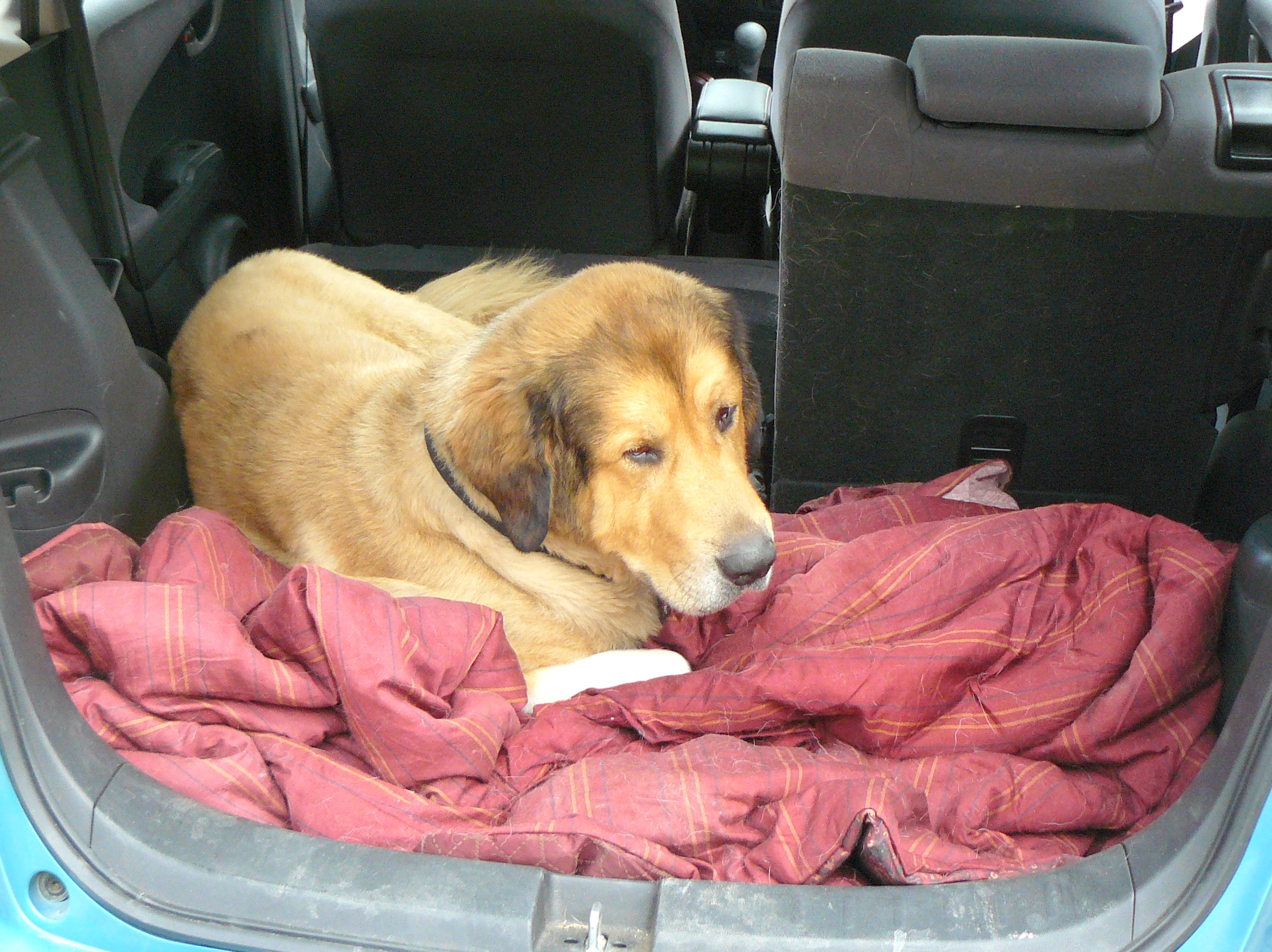
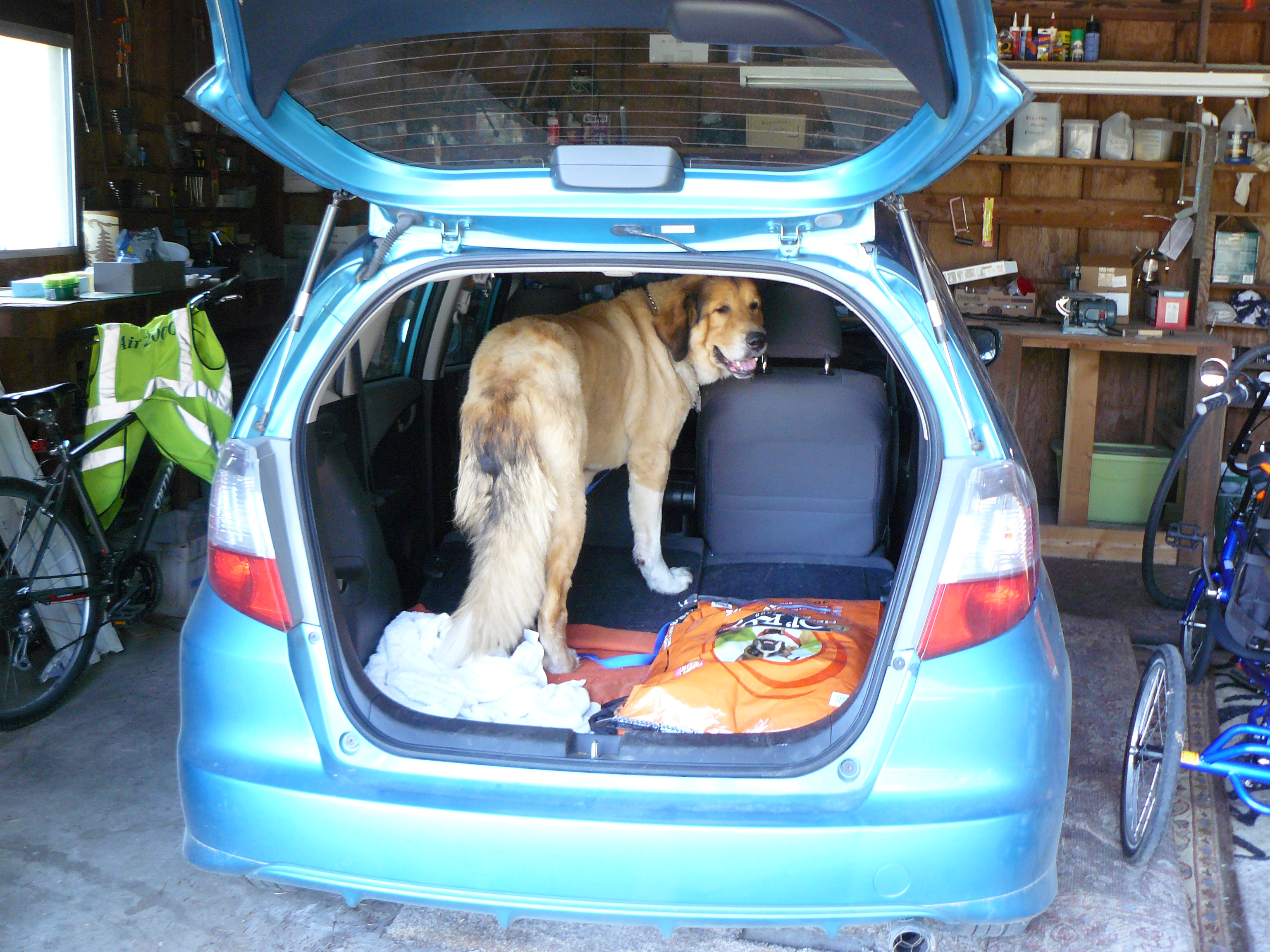
Brandy's first look at his new home from the back of the car in the garage.
Brandy’s first look at his new home from the back of the car in the garage.
Brandy signalling that he is ready for big changes!
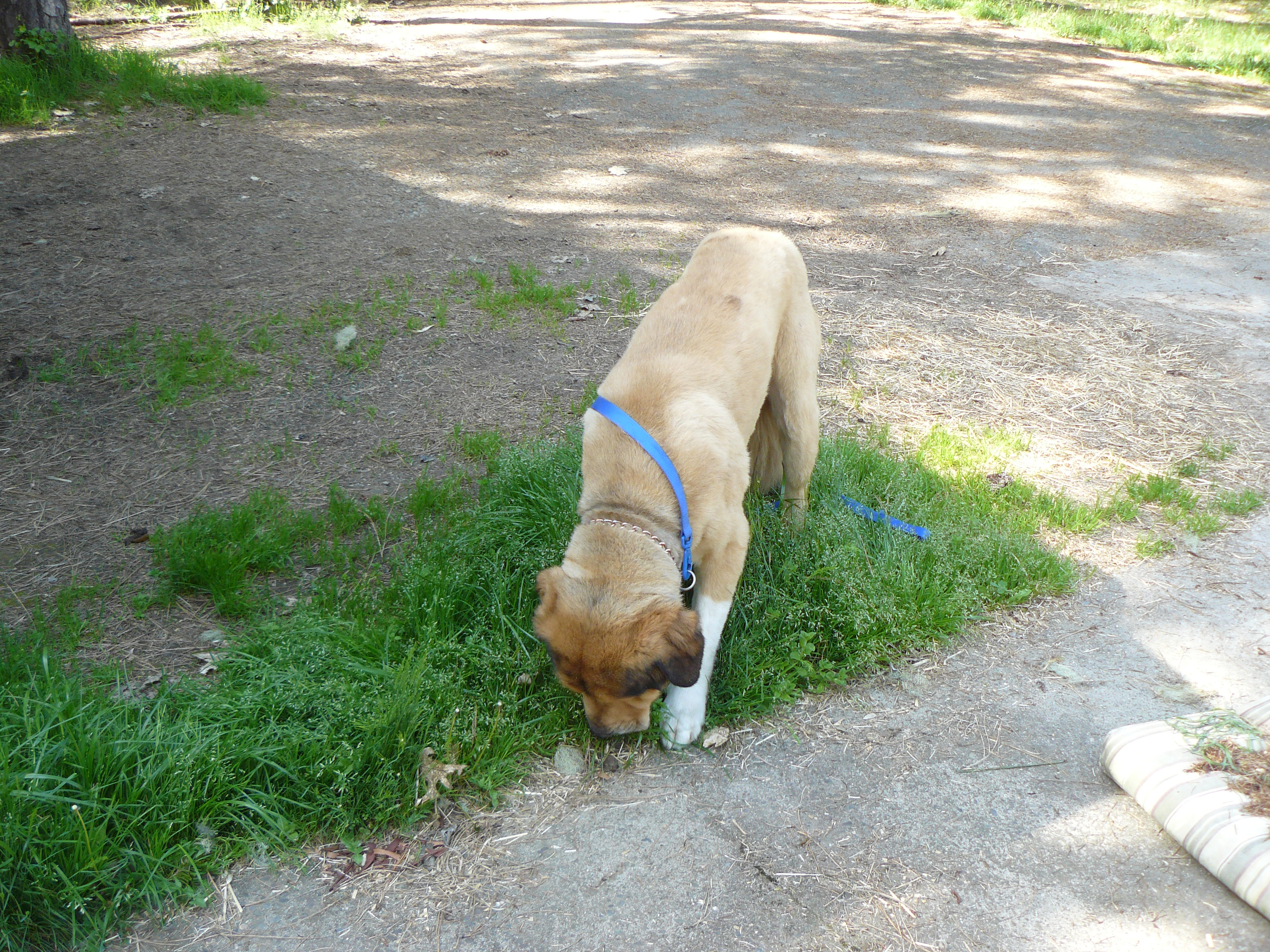
First sniff of our grass.
Brandy, welcome!
Brandy, welcome!
So far, so very good!
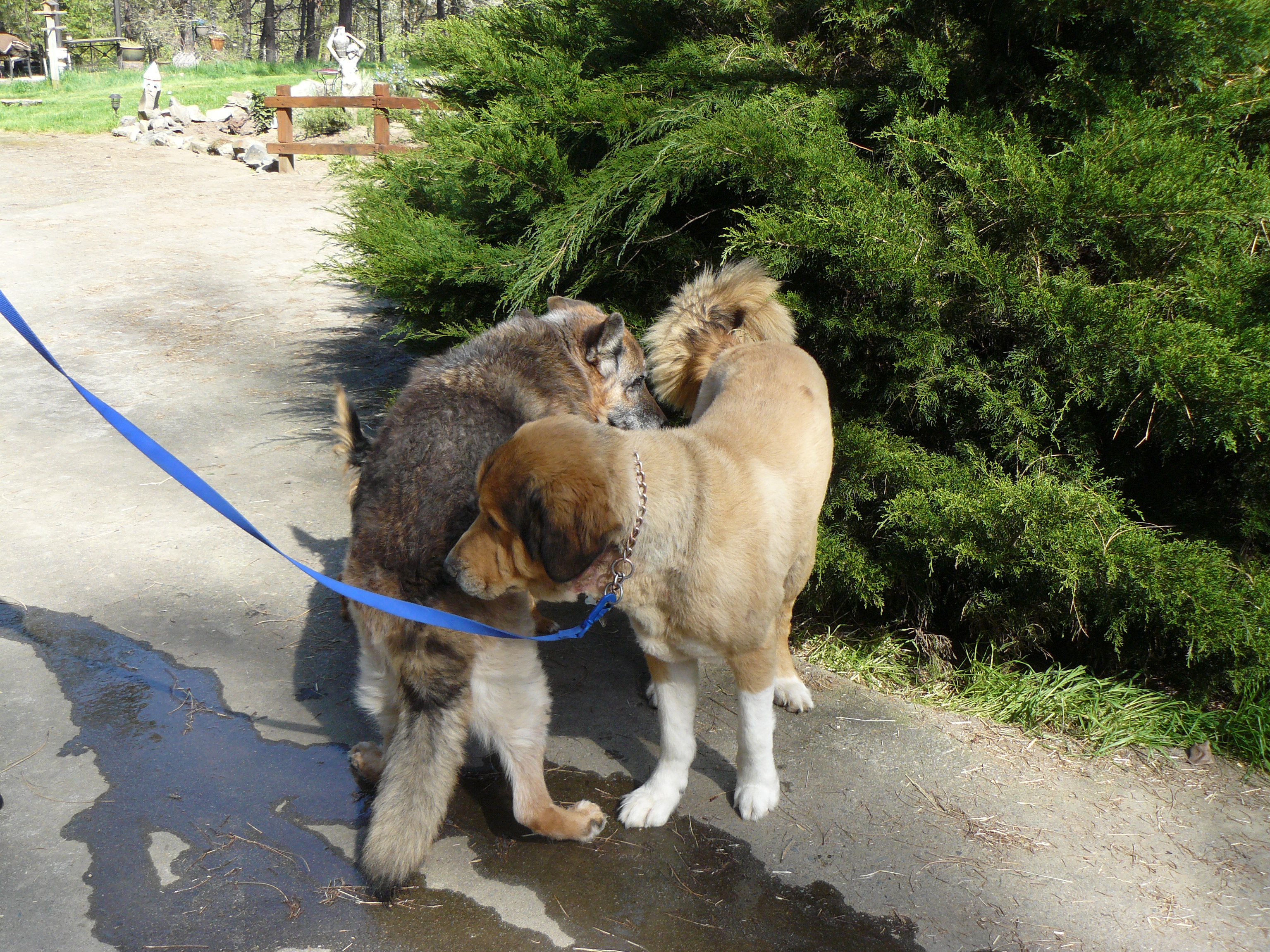
Now the meet and greet with, of course, first up being the old king!
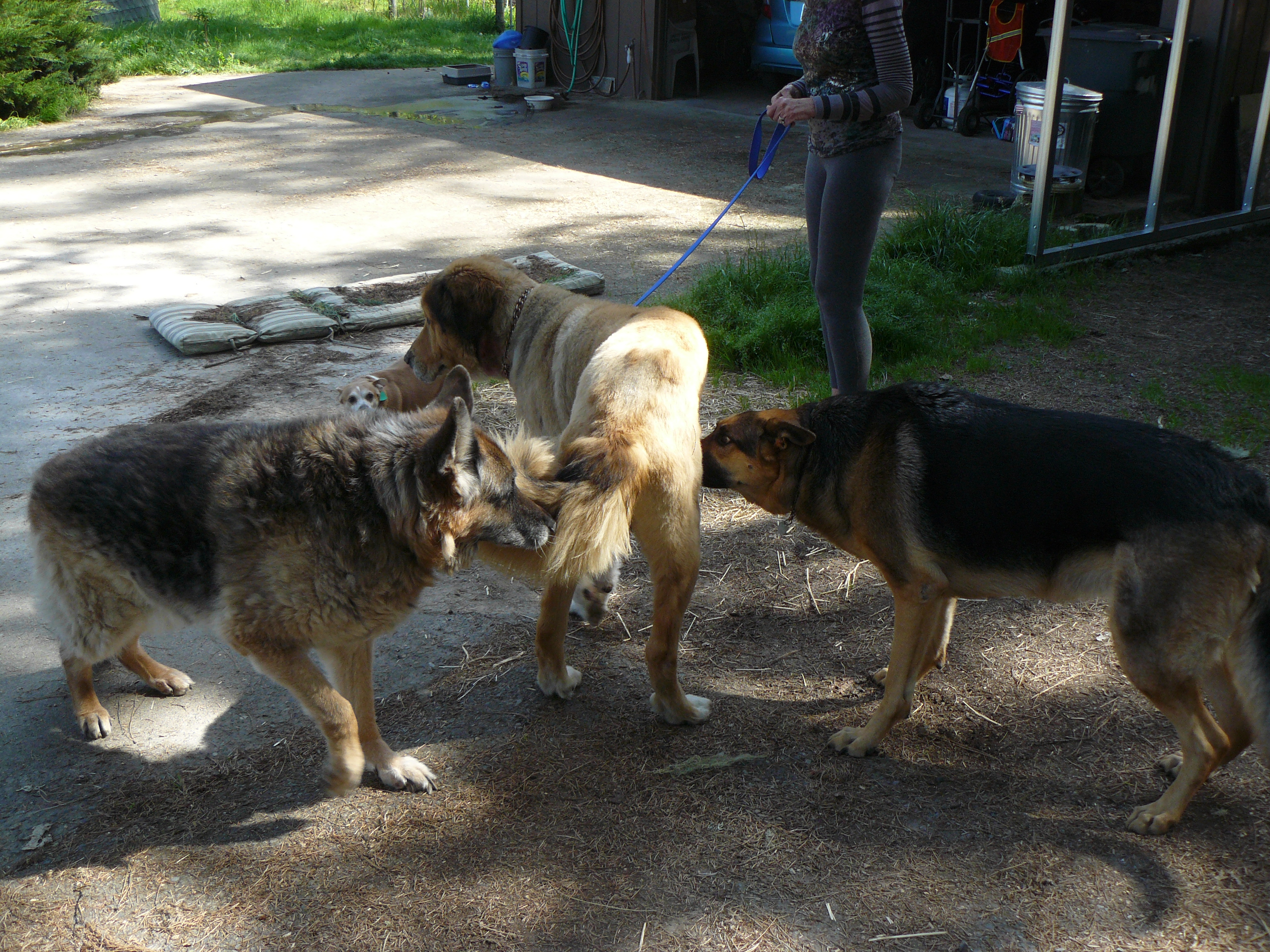
And it didn't stop with Pharaoh!
And it didn’t stop with Pharaoh!
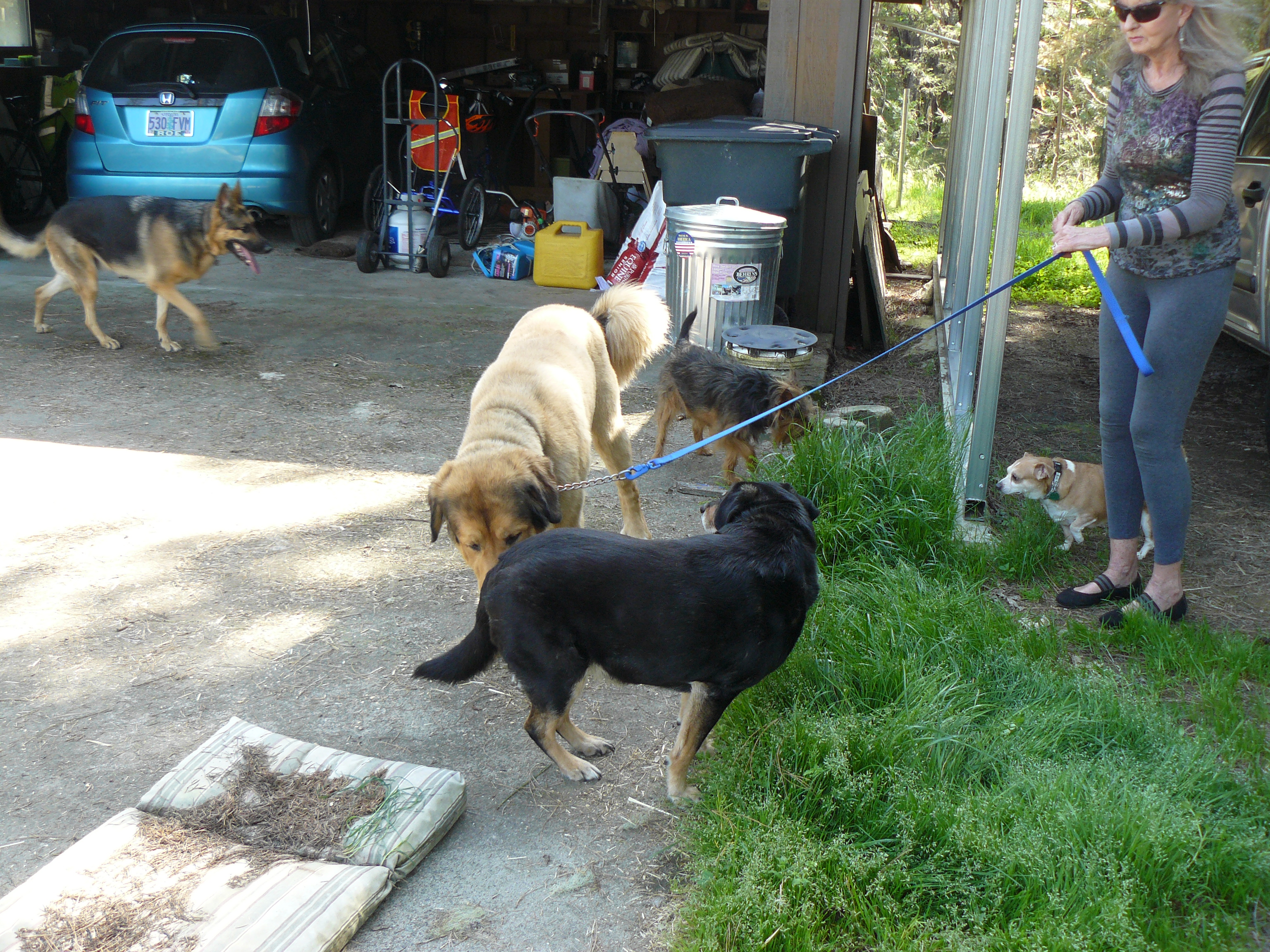
More smells than you could shake a stick at!
Yet more new friends to meet!
Then time to settle down at home.
What an adorable boy he is going to be.
Sunday morning and everything is still going well.
Just another dog for Jeannie to love.
Just another dog for Jeannie and me to love.

Apparently, Brandy is a three-year-old dog but hasn’t yet been neutered. As soon as Brandy has settled down we will get Dr. Jim to check him over thoroughly over at Lincoln Road Vet Clinic, make sure everthing is fine and perform the neutering. (It was neighbour Dr. Jim who wrote the foreword to my book, by the way.)

So that was our weekend – how was yours?

Living on.

They will always live on in our hearts and minds.

I follow the blog belas bright ideas.

Recently, she posted a beautiful poem to commemorate the nine years of having Susami in their lives. It is republished here with Bela’s kind permission.

ooOOoo

dscn0130

There is a presence, here
and now; the bellows of breath,
warmth of blood, the feeling,
even if imagined,
that we are connected, one
to the other.

We each have our memories,
after all.

Your passing removes that utterly,
and somehow the same hand
lying on the same fur and flesh
will sense void, not even spirit,
not even that.

One can forgive the athiest,
or even theist their doubts,
props, religions. For this
at least is real:
This. Here. Now.
Tomorrow it will be gone.

And no matter in visions I linger
in the numinous; despite
in the garden I witness the alchemy
of decay transforming
into green and vibrant,
the loss of a loving companion
is egregious, indeed.

ooOOoo

Bela explained how Susami came to them:

This sweet being has been with us only nine years, since she was about 10-12 weeks old. Her previous steward, a multiply-pierced and -tattooed young woman, had to find a home for her. We were on our way to the east coast to deal with some business, and I had taken our good friend Kevin with me to the local feed store to get the horse stocked up on alfalfa pellets (it was during a long drought). I saw the pup with a bandage on her leg before, and asked the gal what was wrong with her. I later learned from the store owner (who thanked me many, many times for giving Susami a good home) that the dog had been severely abused. (She never did tell me specifics, so I was left to wonder.) The young woman tried her best, but there were forces beyond her control in her environment. When I saw Susami again, we had to take her, but how? I asked Kev if he would watch yet one more animal for us while we were gone, and he happily agreed! So she joined our chocolate Lab who we brought with us to Hawaii from northern Maine (a Non-rescue). He was Thrilled to have that little creature’s companionship.

Going to close with the exquisite words from Suzanne Clothier that Dr. Jim Goodbrod used in the foreword to my book:

There is a cycle of love and death that shapes the lives of those who choose to travel in the company of animals. It is a cycle unlike any other. To those who have never lived through its turnings or walked its rocky path, our willingness to give our hearts with full knowledge that they will be broken seems incomprehensible. Only we know how small a price we pay for what we receive. Our grief, no matter how powerful it may be, is an insufficient measure of the joy we have been given.

(Suzanne Clothier: Bones Would Rain from the Sky: Deepening Our Relationships with Dogs.)

Suzanne’s words cannot be bettered when it comes to the death of a beloved dog.

Susami, you will not be forgotten.

K9 Influenza Postscript.

More information for dog owners.

Jim and Janet are good friends here in Merlin and live just a short distance away. Jim is also a Doctor of Veterinary Medicine (DVM) and he emailed me following my post on Saturday about being more aware of dog flu. This is what Jim said:

Hey Paul …..
I saw on your blog that you had already posted info regarding canine influenza.  I don’t know if you needed any more material, but, if you are interested, attached is a client information sheet and a couple maps indicating the spread of the DZ as of 11/15.

That client information sheet explained these important details.

ooOOoo

Canine Influenza H3N2

Authored by: Dr. Mark Rishniw, ACVIM 
VP Client Information Sheets

What is canine influenza?
Influenza in dogs is caused by canine influenza viruses (CIVs). The two main CIVs in circulation internationally are H3N8 and H3N2. Dogs are occasionally infected with human influenza viruses. These viruses are extremely contagious. 

When did the current U.S. outbreak of H3N2 start?
The outbreak began in the Chicago area in March, 2015.

Where have cases been reported?
Geographic locations expanded in the months after the initial outbreak. To see the latest news on where it has been seen, see regularly updated information from Cornell University College of Veterinary Medicine.

What strain of influenza caused this outbreak?
The 2004 outbreak, which was caused by the H3N8 strain, has remained circulating in the U.S. dog population, causing sporadic disease since that time. However, the current outbreak has been identified as a H3N2 strain of influenza A virus. This strain is closely related to an Asian strain that is circulating in China and South Korea.

Will the influenza vaccines against the H3N8 (old) strain protect against the H3N2 strain involved in the current outbreak?
Probably not. The current commercially available vaccines are not likely cross-protective against the H3N2 strain involved in the current outbreak.

What about the new H3N2 vaccines?
These should reduce the clinical signs if a dog becomes infected. They will also decrease the time that a dog remains “infective” to other dogs. They will not protect against the old (H3N8) strain.

Should I vaccinate my dog with the new vaccine?
That’s a decision for you and your veterinarian. Any place where dogs unknown to you congregate in large numbers confers an increased risk to your dog, such as boarding kennels, shows, traveling, going to dog parks, training classes, and performance competitions. Dogs that have diseases or treatments that suppress the immune system (e.g. corticosteroids, cancer etc.) are at higher risk. The virus does not survive well in the environment, so there is little risk of infection if a dog is mostly at home.

Prevention
For dog owners living in the affected areas, the best prevention is to minimize contact with other dogs. Consider avoiding places such as dog parks, dog day care, grooming facilities, boarding, training classes, and group gatherings. Walking your dog should be fine, but avoid socializing with other dogs.

If your dog in the affected areas has respiratory signs, such as coughing, hacking, gagging or difficulty breathing, call your veterinarian before your appointment to let them know your dog has respiratory signs so that they can take appropriate precautions to minimize the possibility of contaminating the facility. When you get to the clinic, leave your dog in the car and have the veterinary team meet you at the car so they can figure out how to best handle the dog.

What are signs of infection?
Clinical signs range from subclinical infection, or mild fever and malaise to severe, life-threatening pneumonia; however, most clinically affected dogs have signs that are typical of kennel cough. Of approximately 1000 dogs recognized to be infected in the Chicago area, about five have died from the infection. Clinically, influenza infection is not distinguishable from kennel cough caused by other pathogens, such as Bordetella bronchiseptica.

How is canine influenza diagnosed?
Tests that broadly detect influenza A virus (e.g., broadly targeted influenza A real time RT-PCR) should effectively detect both H3N8 and H3N2. However, tests targeted directly at H3N8 are unlikely to identify H3N2 infection because of limited cross-reaction between H3N8 and H3N2 antibodies.

Can other animals or people become infected with this strain?
Currently, there is no evidence that people can contract this virus. However, studies in Asia have shown limited transmission to cats. Whether this can happen with the strain currently involved in the U.S. outbreak is unknown. In Asia, the H3N2 strain that infected cats (and caused disease) was considered to be of avian origin. Current information about the U.S. H3N2 strain suggests that it might be of porcine origin.

How are the dogs treated?
The mild form requires minimal supportive treatment, as is the case with ANY mild upper-respiratory infection (kennel cough). Cough suppresants may be provided. Antibiotic therapy is restricted to high-risk patients. With the severe form, treatment is largely supportive. A rapid onset of disease (4-6 hours) is matched by an equally rapid improvement in clinical signs if treatment is instigated. Fluid support and broad-spectrum antimicrobials that cover both gram-positive and gram-negative bacteria are generally required.


Copyright 2015 – 2016 by the Veterinary Information Network, Inc. All rights reserved.

ooOOoo

Jim also included in his email these following maps in pdf format that I was unable to include in this post. Luckily I also found them as images originally published on the Dog Influenza website.

MAH_CIV-Map_2015_Overall_H3N2oooo

MAH_CIV-Map_2015_Overall_H3N8

Please treat this post as general information. If you have any doubt or queries about the health of your pet animals please see a vet without delay.