Tag: Diabetes

Pedi has diabetes!

A visit to the vet on Tuesday confirmed it.

In recent weeks Pedi, one of our two smaller dogs, ergo Sweeny and Pedi, was peeing without control and drinking lots of water to go with it.

We rang Jim last week, who used to be our neighbour but they then moved to Roseburg, who is a veterinary doctor and he thought it likely when he heard the symptoms that it was diabetes. We had an appointment with Lincoln Road Veterinary Clinic on Tuesday.

At Lincoln Road Veterinary Clinic, we believe pets are a part of the family. Our teamwork philosophy strives to provide the best choices for your pet by keeping you informed of treatment options and recommendations. Our team of skilled professionals apply advanced diagnostic and treatment techniques to provide the best medical and surgical care available for your pet.

Our office is conveniently located on the west edge of Grants Pass in a warm and inviting country setting. We have a dog park so your furry friends can exercise and play!

We were seen by Dr. Karen who also thought that was the case. She took a blood sample and then rang us at home about 2 hours later to confirm.

That gave us enough time to go back into town and to the Walmart pharmacy to purchase the insulin and the needles.

We were under clear instructions from Dr. Karen to inject Pedi with insulin 30 minutes after food and to give him food every 12 hours. We chose to feed Pedi at 04:30 and 16:30 local time every day and then give him his injection at 05:00 and 17:00.

We have an appointment next Wednesday morning, the 9th, to confirm that Pedi is on the ‘right track’. Having insulin injections will be Pedi’s routine for the rest of his life.

The American Kennel Club have quite a long piece on diabetes in dogs, from which I quote:

Treatment of Diabetes in Dogs

  • Diet. Your veterinarian will recommend the best type of diet for your diabetic dog. Usually this will include some good-quality protein, as well as fiber and complex carbohydrates that will help to slow absorption of glucose. Your vet may also recommend a diet with relatively low fat content.
  • Exercise. To help avoid sudden spikes or drops in glucose levels, it is especially important that diabetic dogs maintain a moderate but consistent exercise routine.
  • Injections. Most diabetic dogs will require daily shots of insulin under the skin, something that the owner will have to learn to do. Although it’s understandable to be apprehensive about doing this, it’s not as hard as it might sound. It can become a quick and easy daily routine that isn’t traumatic at all for either dog or owner.

This is a photograph that I took of Pedi yesterday.
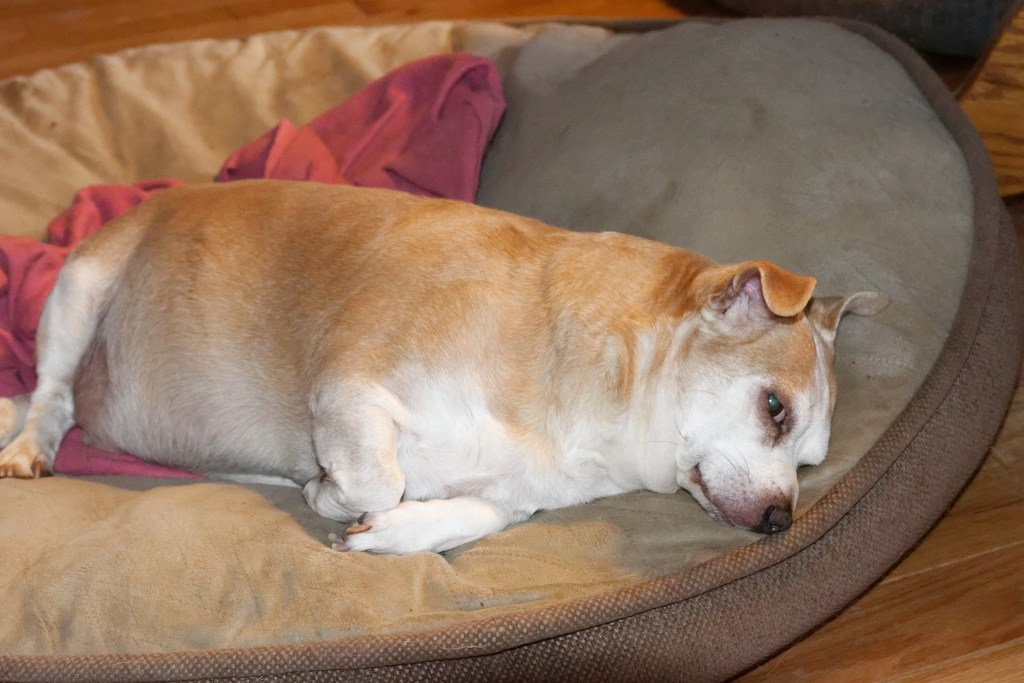
He really is not aware of the disease.

It’s up to Jean and me to administer the insulin and keep him happy!
Learning sleep from our dogs!

Lack of sleep can have a role in obesity and diabetes.

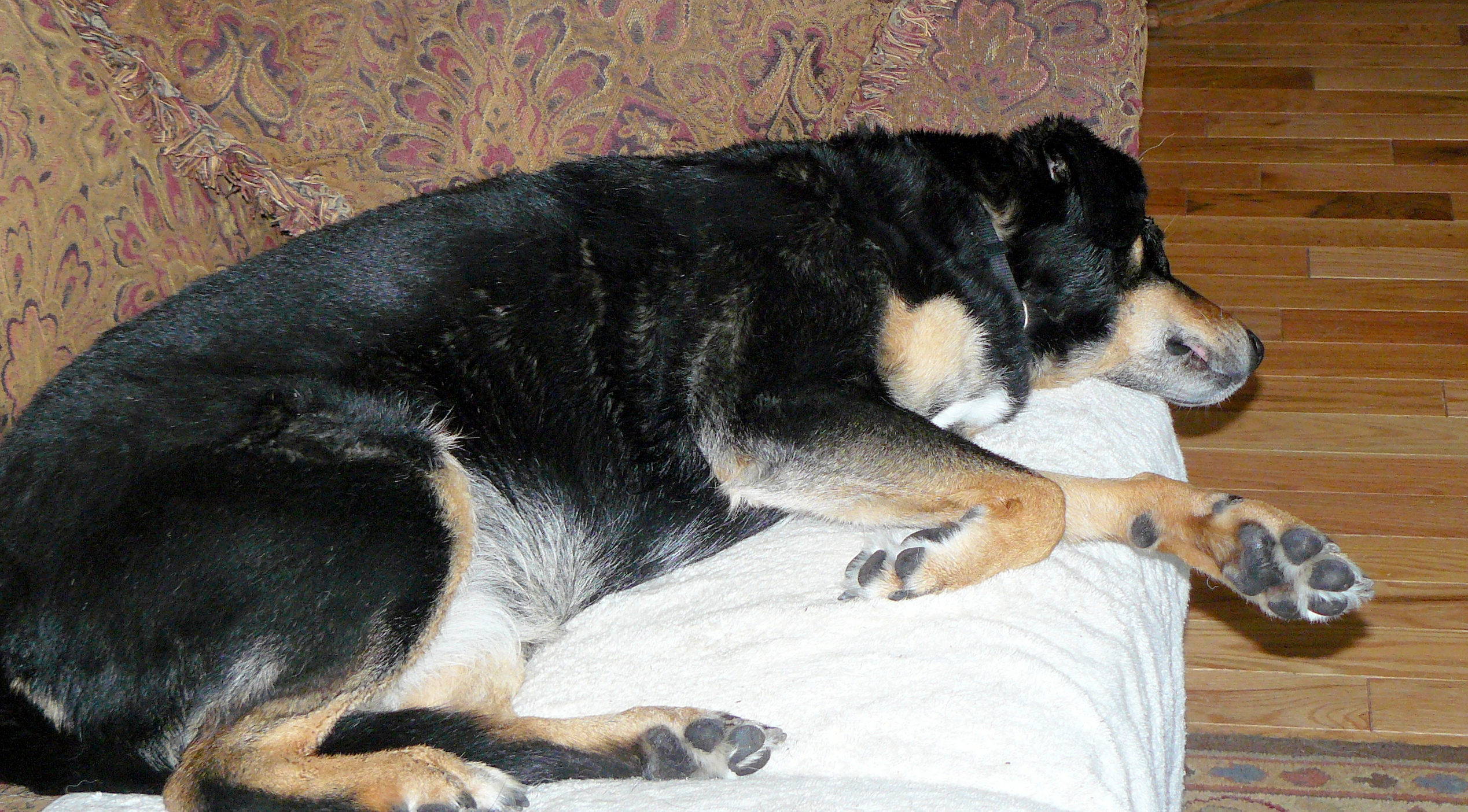
Hazel asleep on the living-room couch at 2pm yesterday.

The sub-heading is taken from an item on the BBC News website that I read yesterday morning. (I’m republishing it in full so that readers are fully informed.)

Lack of sleep can have role in obesity and diabetes, study says

By James Gallagher, Health editor, BBC News website, San Diego

If you need a lie-in at weekends to make up for lack of sleep in the week, you may be at risk of obesity and type 2 diabetes, a study suggests.

The sleeping habits of 522 people found those losing sleep on weekdays were more likely to develop the conditions.

The findings, shown at the Endocrine Society‘s annual meeting, suggested increasing sleep could help patients.

Experts said the findings were interesting and called for the idea to be tested in large trials.

Studies have already shown that shift work can rapidly put healthy people into a pre-diabetic state.

The action of throwing the body clock out of sync is thought to disrupt the natural rhythm of hormones in the body, leading to a host of health problems.

But the pressures of work and social lives mean many people cut their sleep during the week and catch up at the weekend. Researchers are investigating whether there is a health impact.

Widespread

The study, by a team at the University of Bristol in the UK and Weill Cornell Medical College in Qatar, assessed “sleep debt” – a measure of the difference in the nightly hours asleep on weekdays and at the weekend.

“We found that as little as 30 minutes a day sleep debt can have significant effects on obesity and insulin resistance,” said Prof Shahrad Taheri from Weill Cornell.

He added: “Sleep loss is widespread in modern society, but only in the last decade have we realised its metabolic consequences.

“Our findings suggest that avoiding sleep debt could have positive benefits for waistlines and metabolism and that incorporating sleep into lifestyle interventions for weight loss and diabetes might improve their success.”

The study was funded by the UK’s Department of Health, where 10% of healthcare budgets are already spent on treating diabetes.

The disease can lead to blindness, increase the risk of heart attacks and strokes, as well as damaging nerves and blood vessels – dramatically increasing the risk of a foot needing to be amputated.

What the researchers do not know is the impact of improving people’s sleep so they get more on a weeknight and do not need a weekend lie-in.

Dr Denise Robertson, a senior lecturer from the University of Surrey, commented: “This work is interesting and consistent with prospective data found in healthy individuals without type 2 diabetes.

“However, before this association between sleep length, obesity and metabolic status can be used in terms of public health we need the next tier of evidence.

“To date there have been no randomised controlled trials where sleep debt is addressed and a metabolic benefit is observed. However, the potential for such interventions to impact on health is great.”

So while it might be regarded as a little ‘tongue-in-cheek’ to say that we need to learn to sleep more effectively from dogs, the BBC item suggests that it’s not as silly as one might think.

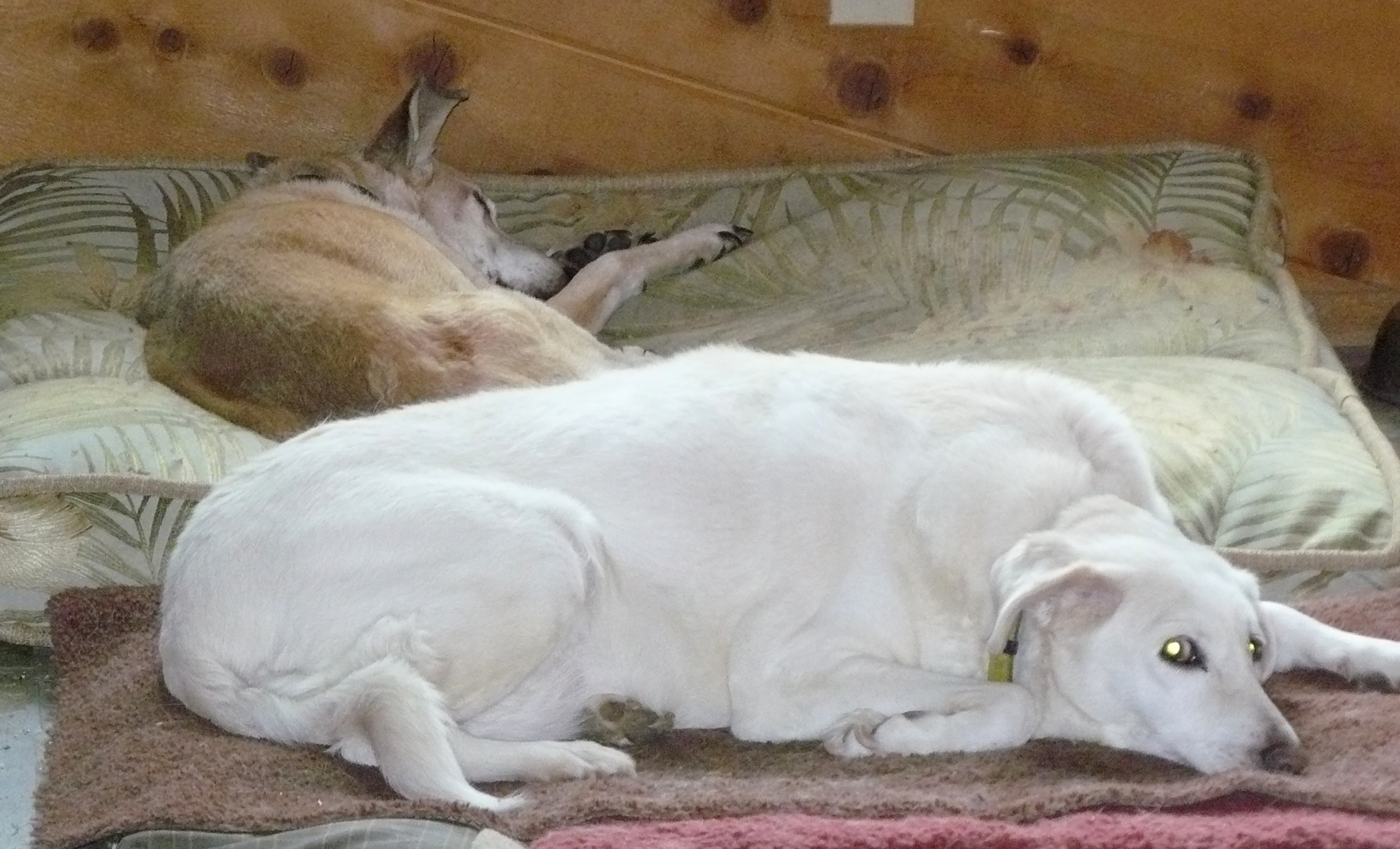
Lilly, to the rear of Paloma, sleeping soundly yesterday afternoon.

In the photograph above of Lilly and Paloma, both Mexican feral dogs rescued by Jean many years ago, sleep and a gentle life have allowed Lilly to achieve the grand old age of 17! In human terms that would be the equivalent of 136-years-old!