Tag: Dataview Ltd

Your start in a vet business

Penny Martin regularly sends me content that I can publish as a post for you kind people.

And so it is with this one.

ooOOoo

Going Green with Fur and Grit: How to Launch an Eco-Friendly Pet Care Business That Actually Work

You’ve been sitting on the idea for a while now. Maybe it started with that pile of single-use plastic baggies after your dog’s walk, or the ingredient list on your cat’s kibble that read more like a chemistry project than actual food. Maybe you just got tired of feeling like you had to choose between loving your pet and loving the planet. Whatever the reason, you’re here now, staring down the reality of launching a business that’s not only built for animals—but built for good. You want to make something that matters. And you can. But you need to know exactly what you’re walking into.

Anchor Yourself in a Real Way
 
You can’t build this kind of business on good vibes and a cool logo. Before anything else—before the business plan, the branding, or the Instagram account—you’ve got to know exactly why you’re doing this. If your reason isn’t rooted in something deeply personal, something that makes your chest tighten when you think about it, you’ll burn out fast. Maybe it’s watching your senior dog react to over-processed treats, or maybe it’s the garbage island growing in the ocean—whatever it is, let that be your compass.

Streamline the Chaos with the Right Tools

When you’re building a mission-driven business from scratch, the backend can get messy fast. That’s where using an all-in-one business platform becomes a game-changer—it keeps your focus on your values instead of your paperwork. Whether you’re forming an LLC, managing compliance, creating a website, or handling finances, this type of platform can provide comprehensive services and expert support to ensure business success. Platforms like ZenBusiness are built for entrepreneurs like you, giving you the structure to stay organized while you pour your energy into the work that really matters.

Get Ruthlessly Local with Sourcing
 
If you’re serious about sustainability, you’ve got to look hard at where your products come from. Local sourcing doesn’t just reduce your carbon footprint—it tells your community that you care about it. Reach out to nearby farms, independent makers, and ethical manufacturers who align with your mission. Not only will this lower your shipping emissions, it’ll also create real relationships with partners who have skin in the game—and people can feel that authenticity the moment they walk through your door.

Know That Packaging Will Be a Battle
 
You’re going to lose sleep over packaging. You’ll try compostable options that fall apart in humid weather. You’ll learn that “recyclable” doesn’t mean the same thing in every city. And somewhere along the way, you’ll realize that the most sustainable solution might be the least convenient one. This is the part where you have to experiment, ask questions, and stay transparent with your customers. No one expects perfection—but they’ll appreciate your effort to figure it out.

Make the Community Your Co-Founders
 
You’re not building this business for yourself. You’re building it for every person who loves their animal and wants to do better by the planet. So bring them in early. Host small events, set up “ask me anything” nights, partner with local shelters, and turn your customer base into a real community. These people won’t just buy your products—they’ll give you feedback, advocate for your brand, and make you feel less alone when the grind gets real.

Ditch the Guilt, Offer Solutions
 
You’re not here to shame anyone. The pet parent buying big-box kibble isn’t your enemy—they’re someone who probably hasn’t been offered a better option yet. So don’t lecture. Instead, educate through action. Make eco-friendly choices feel fun, feel doable, and feel worth it. When you center your messaging on empowerment instead of guilt, people are way more likely to stick around—and tell their friends.

Teach Through Curiosity, Not Preaching
 
People want to learn, but they don’t want to be condescended to. Your job is to become the kind of brand that shares knowledge without turning it into a TED Talk. Drop bite-sized facts on your packaging, start conversations in-store, and use your social platforms to casually open people’s eyes. Think of it like planting seeds—not every customer will bloom overnight, but the ones who do will remember how you made them feel when they were just getting started.

Hire with Heart, Not Just Skill
 
You can train someone to trim nails or restock shelves, but you can’t teach them to care. The team you build needs to believe in the mission as much as you do. They’re the ones explaining the difference between corn-based and petroleum-based bags to a frazzled pet parent who’s late for pickup. If your staff is just collecting paychecks, your message won’t land. But if they’re aligned with your values? That’s when your business becomes a movement.

Don’t Let Perfect Be the Point
 
You will mess up. You’ll stock a “sustainable” product that turns out to be greenwashed. You’ll order packaging that gets held up in customs. You’ll have days where you wonder if any of this actually matters. That’s normal. Progress in this space is messy, nonlinear, and full of trade-offs. The key is to keep going, stay honest, and let your customers come along for the ride. They don’t need you to be flawless—they just need to believe you’re trying.

Starting an eco-conscious pet care business means doing things the hard way on purpose. It means waking up early to answer emails from suppliers and staying up late comparing compostable labels. It means showing up for your customers, your team, your animals—and the planet. But if your heart’s in the right place and your feet stay on the ground, you’ll build something that matters. And really, that’s the kind of work worth doing.

Discover the wisdom of our loyal companions and explore the journey of life with Learning from Dogs, where every post is a step towards understanding and fulfillment.

ooOOoo

As a very ex-entrepreneur, I can tell you that there is much in Penny’s article that applies to starting any business.

And as an ex-salesman, everything starts with the customer. The persons who are attracted to what you are selling. It is hard work but pleasing work. Before I started Dataview I worked for IBM UK in their office products division, as a salesman. I loved the job!
Our modern connected world!

A delightful conversation with Amit Roy.

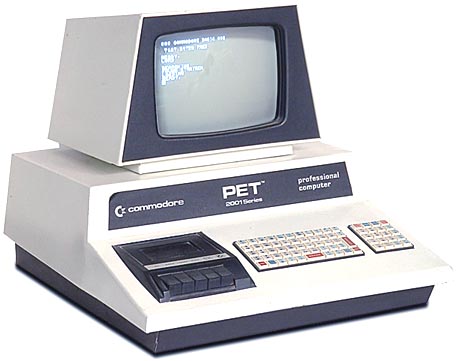
Way back in 1978 I started a company called Dataview. It was based in Colchester, Essex and I sold Commodore Computers; the ‘PET”, standing for Personal Electronic Transactor.

A photograph of a very early PET.

Now I was a word-processing salesman for IBM previously and didn’t know a thing about computers. I operated out of a small shop at first in Church Street and people came into the shop and played around with my demonstration models. Unbelievably I sold some!

Later I got involved with a software program known as Wordcraft. The first comprehensive word processing program for the PET. Indeed, I had the exclusive world distribution rights to Wordcraft. One thing lead to another and soon I was operating from much larger premises down at Portreeves House at East Bay, still in Colchester.

I appointed a Head of Marketing, Amit Roy, and the company grew and grew. I focused on appointing distributors across the world, and that included Dan Gomez in southern California, and he became a close friend being my best man when Jeannie and I were married in 2010.

Anyway, back to the story of Dataview. Eventually I sold out and escaped the country (and taxes) by moving to a yacht in the Greek side of Cyprus before April 15th. I went to Larnaca Marina. That was in 1986.

On Sunday, through a link from a mutual friend, I called Amit, the first time we had spoken since 1986. We had the most delightful of telephone conversations.

Amit was born in Burma, he is now 79, and lost his wife some 13 years ago. The counsellor who saw Amit after the death of his very dear wife said that he had to be strong and to take up something he could become passionate about. Amit joined the Colchester Photographic Society and took up studying again, in photography, and became a very good photographer.

With Amit’s permission I share some of his photographs with you.

The Red Arrows Flying After Dark

oooo

Firstsite At Dusk

oooo

Mischievous Boys of Bengal – India

oooo

Orchid Isabelia Pulchella

oooo

Felixstowe Docks at Dusk

oooo

Horse Study

These are just a few but they are superb; absolutely marvellous.

That is the most welcome of connections – thanks to Roger Davis for suggesting it!

New growth required!

New trees offer a good metaphor!

As regular followers of this place know (and a huge thank-you to you all) much of last Friday was spent planting trees in a grassy meadow just to the East of our house.

P1150940
A part view of the area where the trees were planted: Kentucky Coffeetrees; Northern Catalpas; a Red Maple, Eastern Redcedars.

An hour before I sat down to write this post (now 13:30 PST yesterday) I didn’t have a clue as to what to write. Then I read Patrice Ayme’s latest essay and, wow, it punched me in the face. For it resonated so strongly with a few other recent readings.

Patrice’s essay was called Trump A Demagogue? So What? and it opened thus:

“We empowered a demagogue” laments the New York Times ostensibly bleeding heart liberal, the kind Mr. Kristof, in his false “Mea Culpa” editorial, “My Shared Shame: How The Media Made Trump”. By this, Mr. Kristof means that Mr. Trump is a bad person. However, Mr. Kristof’s choice of the word “demagogue” is revealing. (Actually it’s not really his choice: “demagogue” is not Mr. Kristof’s invention: he just repeats like a parrot the most prominent slogan of the worldwide campaign of insults against Trump).

Trump a demagogue? Is Mr. Sanders a “demagogue”, too? (As much of the financial and right-wing press has it: for The Economist and the Financial Times, Trump and Sanders are both “demagogues” and that’s their main flaw.)

To understand fully the word “demagogue” one has to understand a bit of Greek, and a bigger bit of Greek history.

Then later on in that essay, Patrice goes on to quote Andy Grove:

A hard day may be coming for global plutocrats ruling as they do thanks to their globalization tricks. And I am not exactly naive. Andy Grove, founder of Intel, shared the general opinion that much of globalization was just theft & destitution fostering an ominous future (the Hungarian immigrant to the USA who was one of the founders of Intel). He pointed out, an essay he wrote in 2010 that Silicon Valley was squandering its competitive edge in innovation by neglecting strong job growth in the United States.

Mr. Grove observed that: …”it was cheaper and thus more profitable for companies to hire workers and build factories in Asia than in the United States. But… lower Asian costs masked the high price of offshoring as measured by lost jobs and lost expertise. Silicon Valley misjudged the severity of those losses, he wrote, because of a “misplaced faith in the power of start-ups to create U.S. jobs.”

Silicon Valley makes its money from start-ups. However, that phase of a business is different from the scale-up phase, when technology goes from prototypes to mass production. Both phases are important. Only scale-up is an engine for mass job growth — and scale-up is vanishing in the United States (especially with jobs connected to Silicon Valley). “Without scaling,” Mr. Grove wrote, “we don’t just lose jobs — we lose our hold on new technologies” and “ultimately damage our capacity to innovate…

The underlying problem isn’t simply lower Asian costs. It’s our own misplaced faith in the power of startups to create U.S. jobs. Americans love the idea of the guys in the garage inventing something that changes the world. New York Times columnist Thomas L. Friedman recently encapsulated this view in a piece called “Start-Ups, Not Bailouts.” His argument: Let tired old companies that do commodity manufacturing die if they have to. If Washington really wants to create jobs, he wrote, it should back startups.

Friedman is wrong. Startups are a wonderful thing, but they cannot by themselves increase tech employment.”

Spot on! For in my previous life I was the founder of two businesses. First up was Dataview Ltd, based in Colchester, that was formed in the late 1970s and soon became the global distributor of the word processing software Wordcraft, written by Englishman Pete Dowson. Dataview also initiated the ‘dongle’, a software/hardware security device to protect Wordcraft.

The Wordcraft dongle.

The second company founded by me was Aviation Briefing Ltd ‘AvBrief’ that is still going today, albeit with me no longer involved!

So I can reinforce, with hundreds of hours of lost sleep and tears, that growing a company and increasing employment, especially the employment of great technical people, is a very different matter to the start-up phase.

Frankly, regarding Dataview, it was only the luck of meeting Sid Newman that saved my bacon. For within 12 months of starting trading I was already sinking under the load of trying to be the number one salesman (that I was good at) and being the company general manager (that I was total crap at). Sid had years of experience at general management and very quickly let me get on with what I really loved – opening up Wordcraft distributorships all over the world.

The analogy with planting trees is very apt. For any clown can plant the tree but parenting that young tree into a mature forty-foot high beauty takes professional management.

Clown work! (This is a Red Maple, by the way!)

Tomorrow I will return and offer a viewpoint as to how we, as in society, are currently bereft of professional managers.

Wisdom, nature and philosophy.

The hidden gifts of nature.

I have been a follower of Alex Jones’ blog The Liberated Way for many months; possibly much longer. Frequently, I republish one of Alex’s posts here.

Nearly six months ago, I read a lovely essay of his and made a mental note to republish that in the next few days.  Then the world overtook me and now April 30th, when Alex published this piece, has become September 8th!

Yet it hasn’t lost a heartbeat of meaning.

Read on and you will agree.

ooOOoo

The hidden gifts of nature.

The western education system ignores nature.

Nature is all around us with its gifts of philosophy, wisdom and creativity; qualities the West devalues at its loss.

The holidays are over in the UK, the students return to school, some to their exams. I reflect upon the sad treatment of creativity, wisdom, nature and natural philosophy in education, and in Western society as a whole, treated as worthless and unworthy of consideration.

On most days I walk past the former home of William Gilbert, some consider the father of electricity and magnetism. Born to a wealthy merchant family in my town of Colchester, Gilbert invested his personal wealth in an extensive study of magnetism with view to assisting the explorers of the Elizabethan age when Britain was building an empire in a period of great prosperity and confidence. Gilbert invented the term electricity. Gilbert wrote De Magnete, considered possibly the first work using the scientific method. In addition to being a scientist, a doctor to Elizabeth I, Gilbert was also a natural philosopher who used the empirical method of observation, demonstration and experience of nature to form his theories.

Each day I watch and interact with nature, like Gilbert I am a natural philosopher, and this forms the basis of my business ideas, my scientific understanding and my personal philosophies. Rather than a worthless study nature opens the door to the philosophy of the understanding of self, the world, and the relationship of self to the world. Wisdom is born of action and experience, the interactions with nature gives birth to wisdom. Nature encourages people to do new things in new ways, so rerouting electric signals in the brain causing new connections to form of creativity. The philosophy emerges from nature by causing the mind to question, observe and experiment, the basis of science and success in any discipline.

ooOOoo

Colchester, in the English county of Essex, goes way back to Roman times when the town was called Camulodunon (which was latinised as Camulodunum). That name is believed to date back to the Celtic fortress of “Camulodunon”, meaning Stronghold of Camulos. It served as the first capital of Roman Britain making a claim to be the oldest town in Britain.

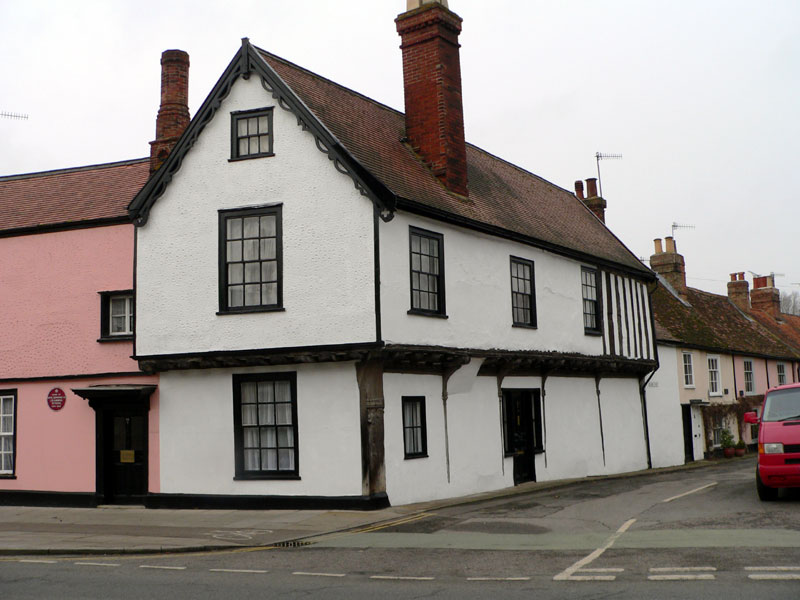
It is where Alex Jones lives, the author of The Liberated Way, and where during the 1980’s I ran a business under the name of Dataview Ltd.  In fact, the business was located in a very old, listed building known as The Portreeve’s House.  It was at the bottom of town near Hythe Quay on the River Colne and the name “Portreeve” is old English for harbour master, i.e. it was originally the harbour master’s house.

The timber-framed building at 1–2 East Bay, Colchester, known as the Portreeve’s House (TM00552525), is situated on the main eastern approach to the town centre. The building is on the junction of Brook Street and East Bay (FIG. 1) and is 375 metres east of the former position of East Gate and 150 metres west of East Bridge, the river Colne and East Mill.
The timber-framed building at 1–2 East Bay, Colchester, known as the Portreeve’s House is situated on the main eastern approach to the town centre. The building is on the junction of Brook Street and East Bay and is 375 metres east of the former position of East Gate and 150 metres west of East Bridge, the river Colne and East Mill.  The building is believed to date back to the 16th Century.

All seems a long way from Southern Oregon!

Trip down memory lane

The amazing development of electronics over 50 years.

(A republication of a post first shown on the 13th August, 2009)

The calendar reliably informs me that this is my 65th year.  My brain, of course, lags somewhat in accepting this!

My step-father during my early teenage years worked for Elliott Brothers (the link goes to an interesting history of the firm that started in 1804) in Borehamwood, just north of London.  He encouraged me to fiddle with ‘steam’ radios and

try and understand how these basic circuits worked.  It was then a small step to deciding to become a radio amateur, popularly known as a radio ham!  In those days it was a case of some pretty intensive studying to pass a Theory exam as well as being able to pass an exam in sending and receiving Morse code.

So joining the local radio society seemed like a sensible idea.  That was (and still is!) called the Radio Society of Harrow.  That it is still in existence after all these years is truly delightful.  Those Friday night sessions at the Society and extra-curricular classes on Sunday morning at Ron Ray’s  (G2TA) house, an hour’s bicycle ride away from home, ensured that shortly after my 16th birthday I was granted a Licence, G3PUK.  It was a very proud moment.

Anyway, once granted a licence it was time to build my own radio transmitter.  Most of the details have been lost in the mists of time but what is recalled was that the final amplifier was a pair of 803s driving an 813 (These are radio valve numbers).  It sounds like something from the ark!  But again ploughing the inexhaustible files of the Web, it’s possible to see what these radio valves looked like.  Thanks to the National Valve Museum.

Here are pictures, courtesy of the National Valve Museum of those two radio valves:

803 – The substantial wide glass tube envelope is 58 mm in diameter (2 1/4 in) and, excluding the special five pin base pins, is 216 mm tall (8 1/2 in).

813 The classic envelope is substantial at 60 mm diameter (2 1/3 in) and 170 mm (6 2/3 in) long excluding the special base pins. The anode is 53 mm long and 48 mm wide. The metal is 1 mm thick.

803 radio valve
803 radio valve

813 radio valve
813 radio valve

It’s difficult, today, to imagine devices which are essentially diodes (well, technically the 803 was a pentode and the 813 a tetrode) being between 6 and 8 inches tall!

My own self-build transmitter had not really been successful emitting more heat than light, so to speak.  Literally, in the sense that these large radio valves kept me warm in my converted garden shed at the bottom of the garden.  They also completely wiped out TV reception for those households with a 1/4 mile range that had invested in early television sets!  It was time to move on to the R1155.

Around this era, less than 20 years after the end of the War in Europe in 1945, war-surplus equipment was widely available including ‘compact’ transmitter-receiver units.

One popular one was the RAF R1155 which had been fitted to RAF Lancaster bombers and RAF marine craft.  It was also fitted to the Sunderland flying boat.  This information plus the photos below is from this fascinating web site for those wishing to be ‘geeky’ about this.

RAF R1155B transreceiver

Internal view of the R1155B

Just compare the view on the right to the inside of your domestic radio or your cell phone.

A lot happens in 50 years!

My personal journey now leaps to 1978 and I have just left IBM UK having had 8 fabulous years with them as an Office Products salesman.  My fledging company, Dataview Ltd, has just become the 8th Commodore Computer (CBM) dealer in the UK, based in a small office in Colchester, Essex, about 50 miles north-east of London.

The CBM PET (Personal Electronic Transactor) released in 1977 initially with a calculator type keyboard was useless for any business application but soon came out with a typewriter sized keyboard, making it a more viable business

CBM computer, circa 1978

machine.  Today, as this is typed on an ‘old’ laptop with 2GB RAM, it seems unbelievable that these CBMs were sold with between 4k and 96k of RAM (memory) and no hard disk, although one could purchase an add-on that comprised dual 5 1/2 inch floppy disk drives.

YouTube obligingly finds  a short video on the Commodore PET for those really wishing to enjoy the nostalgia!

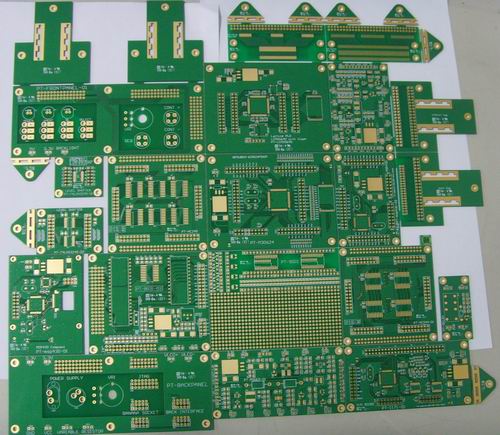
So to turn to the 21st century and to run out of understanding.  We appear to live in a world of multi-later printed circuit boards of unimaginable (to me) component density, assuming that the word ‘component’ is even relevant today.

Haven't a clue what this is but it's very modern.
Haven’t a clue what this is but it’s very modern.

What an amazing period it has been!

A long way from yesterday!

Now let me see was it Pin 920 to Pin 140, or Pin14 to Pin 860 connected to Pin 56 ………?