Pixel, 10-week-old french bulldog, tries to reclaim bed from cat.
Big thanks to Chris Snuggs for sending me the links to these two videos.
10-week-old french bulldog Pixel finally got his revenge on the cat, who keeps stealing his bed, even though she has her own. Fun fact: he drags the bed and puts it back in his corner, where he always sleeps.
Another wonderful dog story, courtesy of Chris Snuggs.
Over four years ago, I published a post under the title of Faithful dog Hachikō. It was the heart-wrenching story of a Japanese Akita dog called Hachi, Hachikō in Japanese, that continued to wait for his master’s return, Hidesaburō Ueno, for years after the professor’s death. Here’s an extract from that post:
In 1924, Hidesaburō Ueno, a professor in the agriculture department at the University of Tokyo took in Hachikō as a pet. During his owner’s life Hachikō saw him out from the front door and greeted him at the end of the day at the nearby Shibuya Station. The pair continued their daily routine until May 1925, when Professor Ueno did not return on the usual train one evening. The professor had suffered from a cerebral hemorrhage at the university that day. He died and never returned to the train station where his friend was waiting. Hachikō was loyal and every day for the next nine years he waited sitting there amongst the town’s folk.
Hachikō was given away after his master’s death, but he routinely escaped, showing up again and again at his old home. Eventually, Hachikō apparently realized that Professor Ueno no longer lived at the house. So he went to look for his master at the train station where he had accompanied him so many times before. Each day, Hachikō waited for Professor Ueno to return. And each day he did not see his friend among the commuters at the station.
The permanent fixture at the train station that was Hachikō attracted the attention of other commuters. Many of the people who frequented the Shibuya train station had seen Hachikō and Professor Ueno together each day. They brought Hachikō treats and food to nourish him during his wait.
This continued for nine years with Hachikō appearing precisely when the train was due at the station
A loyal dog has shown up every day for two years at a hospital where her master passed away.
Masha appears at the Siberian hospital’s reception area every morning, the Siberian Times reports.
Her owner was admitted to the hospital in Novosibirsk region, south western Siberia, two years ago after falling ill.
Masha is well cared for by staff who make sure she has a warm bed and food every night. The faithful canine was the elderly man’s only visitor, staff say, and used to run home every night to stand guard before returning the next morning.
If we then go across to that Siberian Times story, we see that the wonderful Masha is linked to Hachikō.
Heartbroken little dog becomes Siberia’s own ‘Hachiko’
By Kate Baklitskaya and Derek Lambie – 24 November 2014
For past year devoted Masha has been waiting in a hospital for the beloved owner who will never return.
‘One day, and we very much want this day to come soon, our Masha will trust somebody.’ Picture: Svyatoslav Odarenko
A little dog that waits in vain at a Siberian hospital for the owner who has already died has been dubbed Russia’s own Hachiko. Heartbroken Masha has been turning up looking for her beloved master every day since he passed away at the facility in Novosibirsk last year.
It is a tale mirroring that of the famously loyal Akita dog Hachiko in Japan, who arrived at a train station every evening for 10 years to greet its owner even though he had died.
Masha has become a well-known, and much loved, figure at the Novosibirsk District Hospital Number One, where patients and workers ensure she has a warm bed and food to eat.
But, aware of her obvious sadness at being unable to find her owner, staff are hoping an animal lover will come forward to adopt her and give her a new home.
Chief doctor Vladimir Bespalov told Novosibirsk Vesti TV: ‘You see her eyes, how sad they are – it’s not the usual shiny eyes for when a dog is happy. You can see this in animals in the same way as with people.
‘There is nothing medicine can do for her here, but we are still hoping that Masha will be able to find another owner. One day, and we very much want this day to come soon, our Masha will trust somebody.’
Masha, who looks like a dachshund with short legs, has been coming into the reception at the hospital in Koltsovo every day for the past two years since her owner was admitted. The man, a pensioner from the village of Dvurechie several kilometres away, had fallen ill and had turned up with his pet.
There are three heart-rending photographs of Masha that you really must look at. The article then concludes:
Whilst he was staying on the ward, Masha was his only visitor and she even trotted off home to guard the house before returning to the hospital in the morning.
Sadly he died a year ago but the loyal dog has continued to turn up every day, perhaps because she has nowhere to live, or because she believes her master is still there.
Nurse Alla Vorontsova said: ‘She is waiting for him, for her owner. Just recently a family tried to adopt her, but Masha ran away and returned to the hospital. She was taken on Friday evening, and at 3am on Saturday she was back here.’
Masha’s story is similar to that of the famous Japanese dog Hachiko, who used to greet his master on his return from work at the Shibuya train station in Tokyo.
When his owner, agricultural science professor Hidesaburo Ueno, died in 1925 he continued to visit the station every night for 10 years still expecting to meet him off his 4pm train.
In 1935 the dog’s body was found in a Tokyo street and his remains were stuffed, mounted and put on display in Japan’s National Science Museum, while a bronze statue was erected outside Shibuya. A Hollywood movie of the sad story, starring Richard Gere, was released in cinemas in 2010.
There are also similarities to Greyfriars Bobby, a little Scottish terrier who was unwilling to leave his dead master’s grave in Edinburgh, Scotland, for 14 years in the 19th century.
What wonderful, loyal, loving friends dogs are to us humans.
Fascinating article in the UK’s Daily Telegraph newspaper.
This post was written last Monday in the hope that I will be back home from my ‘op’ by today, or more accurately expressed as hoping I was back home yesterday.
Friend, Chris Snuggs, sent me an item that appeared in The Daily Telegraph about measuring the intelligence of your dog. Here’s how it opened:
Quiz: how intelligent is your dog?
Take our special test to gauge your pet’s brainpower
Canine brains: test your dog’s intelligence Photo: Alamy
By Andrew Bake
7:00AM BST 25 Oct 2014
We all love our dogs. They repay us with affection, loyalty, fun and amusement, and we boast of their beauty, athletic prowess and impeccable behaviour. But while we can subtly promote our own academic achievements, and hint heavily at the brightness of our children, it is hard to prove – really prove, beyond reasonable doubt – that our canine companions are as intelligent as we know in our hearts they must be.
There is no doubt that some breeds are more intelligent than others, the result – as so much else about dogs – of selective breeding for many generations. But human classification and stereotyping of breeds has also evolved – not always fairly – and there are exceptions within breeds. So it is perfectly possible for an ostensibly airheaded Chihuahua to perform very well in intelligence tests, while a supposedly sagacious German shepherd will fail to distinguish “sit” from “fetch”.
Behaviour that seems to demonstrate intelligence in dogs is often the result of a combination of breeding and intense training. It is often suggested that Border collies are outstandingly bright, and that may be so: but they have been bred for generations to respond rapidly to complex commands; and sheepdogs – the rock stars of the obedience world – are trained from puppyhood, in many cases at the side of their parents.
Andrew Bake closes his piece, thus:
So how can we arrive at a reasonable estimation of our dog’s mental abilities? The Telegraph canine intelligence test combines observation of the subject’s regular behaviours, some of which may have been influenced by training, habituation and what might loosely be termed upbringing, with a series of simple staged exercises which attempt to measure the dog’s ability to think sequentially and to respond to challenges.
Putting the scores from the two together will produce a fair estimate of general intelligence: good enough, at least, to boast about in the park.
No special equipment is needed — though patience, a new dog-toy and a supply of dog-treats will undoubtedly come in handy.
Then at the bottom of the article is a link ‘Let’s Play‘ that takes you to the test questions.
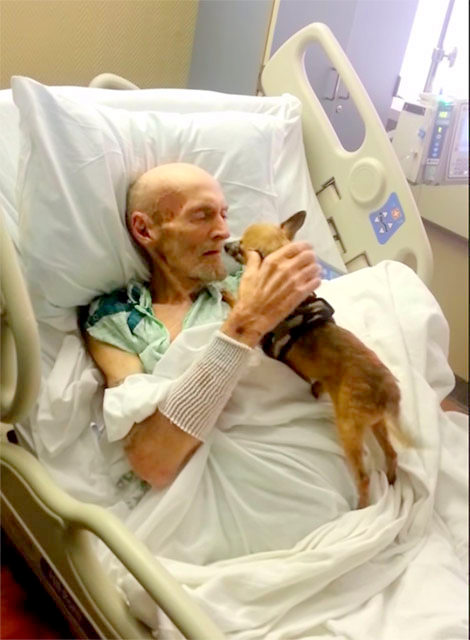
The pensioner was so ill he could barely speak and had stopped eating.
However, all that changed when he managed to whisper to nurses that he was missing his one-eyed Chihuahua Bubba.
His revelation sparked a desperate search for the beloved dog, which was being kept at the Knox-Whitely Animal Shelter.
Pets are banned at the hospital, but nurses managed to sneak Bubba in and then filmed the emotional reunion.
“There wasn’t a dry eye in the room,” the hospital’s chief nursing officer Kimberly Probus told WKTV. In a further twist, Mary-Ann Smyth, from the animal shelter, said the dog had also stopped eating when the pair were separated.
“They didn’t think James was going to make it,” she told NBC. “He [Mr Wathen] has done a complete turnaround. He’s speaking, he’s sitting up, he’s eating.
He doesn’t look like the same guy, and the dog is eating and doing better now, too.”
The hospital has allowed Bubba to visit his owner several times since, with staff saying they have both made a “tremendous recovery”.
It’s what this blog is all about. There is no limit to what our dogs offer us; love being at the top of the list.
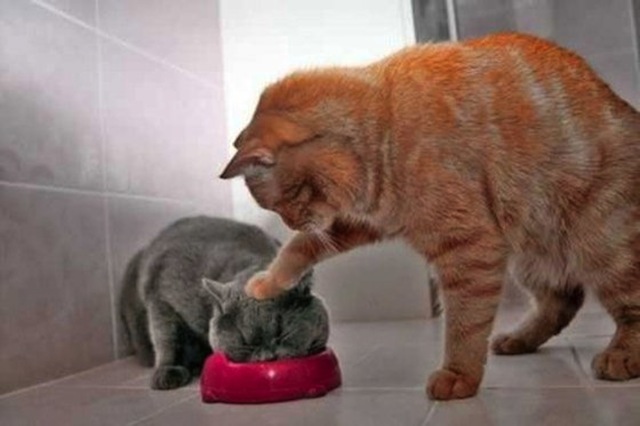
Yes, fifty-two Sundays ago, I had the idea of posting a set of photographs. That first set was published on the 30th June, 2013 and just for fun I’m going to repost them.
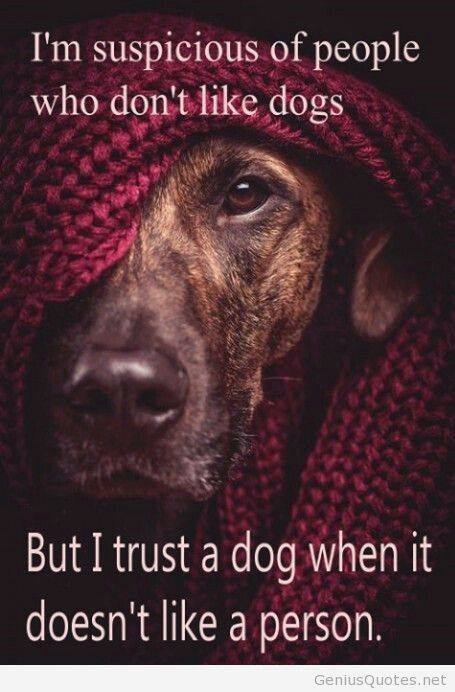
Plus, I can’t resist adding a photograph that Chris Snuggs sent me.
oooo
Sit back and be amazed!
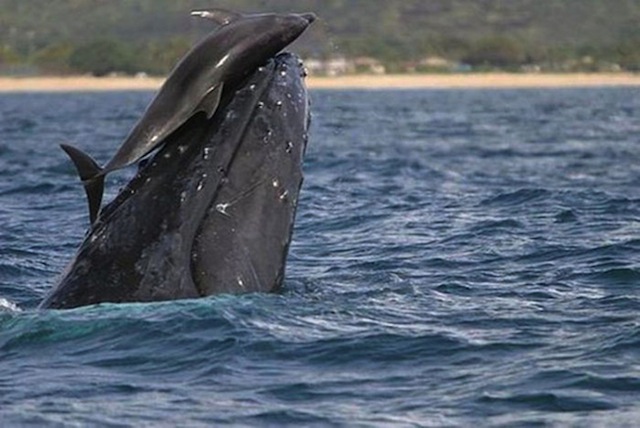
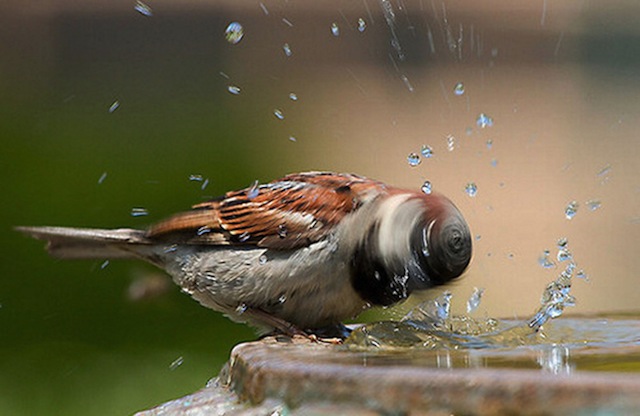
A friend from Payson, Arizona, Lew Levenson, recently sent across a set of 38 astounding photographs, all on the theme of perfectly timed shots.
They are so fabulous that I have decided that for today and the following four Sundays I will post a selection.
So today, the first set of 8 photographs. Trust me you will love them, so a big thank you to Lew. Do say which are your best ones!
oooo
oooo
oooo
oooo
oooo
oooo
oooo
oooo
To close here is that picture courtesy of Chris Snuggs.
By the way, if you would like see again the rest of Lew’s photographs just leave a comment to that effect.
Two days ago I published a rather introspective post called The temptation to turn ever inwards. It was the result of reading three disturbing essays about the ‘affairs of man’; essays by Tom Engelhardt, Jim Wright and George Monbiot. Frankly, I wasn’t expecting a great response either in the form of ‘Likes’ or written replies. However, the first reply, a long reply, came in from Patrice Ayme. I made the decision to reply to Patrice via a new post; ergo today’s post. Since making that decision a further comment came in from Sue Dreamwalker, also republished today.
What I am going to do is to reproduce Patrice’s comment but interspersed with my replies.
oooo
The biosphere evolved over billions of years. Now it is taken over by critters who live for just a few years. Solution? Make it so that said critters live longer, thus attaching a greater value upon survival.
I presume that the ‘said critters’ refer to humans? The average lifespan of humans has increased hugely. From a life expectancy of 30 years [1] at birth in Medieval Britain, back in the 13th Century, to an average of 67.2 years for humans worldwide in 2010. [2]
That’s an increase of 124% in a little over 700 years. Yet despite that incredible increase in lifespan, humans have shown no interest in attaching a greater value to their survival: far from it! One might even muse that humans have attached a greater value to those things that actively harm our survival.
For all the (over-) elaborate set-up of dear Monbiot, it’s simpler than that. Instead of going back to Baby Thatcher, Baroness god save the queen knows what, let’s grab a clear and present example.
I’m unclear as to what is meant by “the over-elaborate set-up” but as a long-time reader of Mr. Monbiot‘s essays I applaud both his commitment to the highest standards of journalism and to the UK’s Guardian newspaper for publishing so many of them over the years. I would invite Patrice to give an example of over-elaboration coming from the pen of George Monbiot.
Britain, and many of the Brits, say our dear friend Chris Snuggs, a participant to your, and my, site, have said that they hated Europe, because Europe was not democratic enough. However, one of the latest improvement of the European Constitution is now effective: the head of the EC, the European Commission, is now to be elected by the just elected European PARLIAMENT. Guess what?
Chris Snuggs is more than a participant to Learning from Dogs, he is a close friend of many years. Yes, he has strong views about Europe but those views are expressed in a declared, personal manner.
Chameleon Cameron, came out of the woodworks to bark, in the clearest way, that it was out of the question to do things differently from before, and now dare to have the European Parliament to elect (what is basically) the European Prime Minister.
Never mind that Britain voted for that European Constitutional change.
Never mind that in representative democracies, the leaders of the executive are elected by Parliament.
So what do we see here?
Contradiction within moods and thoughts systems (Britain agreed to the democratic change, and now does not). We also see erroneous ideas imposed (leaders of the executive says Cameron should be nominated undemocratically, that’s erroneous).
The same sort of things is also perking up in Iraq: the USA caused the mess there, committing several major war crimes in the process. Precisely because those war crimes were not prosecuted, a strong push has been exerted on Obama to duplicate Bush, and go back to attack Iraq some more.
Thus, it is simple: there bad ideas out there, and they need to be destroyed. And bad moods too (an example of bad moods is the enormity that the American population was made, by Bush, Cheney, Rumsfeld, etc., into an accomplice of the most major war crime there is, war of aggression. Now that this war is in the process of being lost, some clamor to have the war pursued with renewed vigor.
We are now the stewards of the biosphere, whether we like it, or not. We can’t just sit on our rumps, strokes dogs, and whine we will attend to our garden (Voltaire style). By doing nothing, we leave criminals such as Bush, or their spirit, or their mood, in power. And thus we become accomplices.
There is total agreement for the idea that humans are the stewards of the biosphere. But if the “sit on our rumps, strokes dogs and whine we will attend to our garden” is aimed at me, as it appears to be, then I strongly disagree. Living as simple a life as we can is a long way from “doing nothing”.
So go out there, and engage in combat, bad moods, and bad ideas. That’s what even very old alpha monkeys, covered with age spots, do. We don’t want to let very old monkeys be examples of moral rectitude we cannot emulate.
A last point: Monbiot does not realize the contradiction he engages in. In the guise of criticising the opposition, he puts it on a pedestal, and engages in its very propaganda. Monbiot, and many like him, bemoan a “shift towards conservatism”. Nothing could be more false. People who destroy the biosphere are NOT conservatives. They play conservatives on TV. In truth, they are just the opposite. They are destructionists.
I am of the opinion, totally so, that George Monbiot is not playing at conservatism.
oooo
So, dear reader, there is little in the comment from Patrice that has me nodding my head. Don’t get me wrong! Patrice Ayme is an individual of extreme intellect as even a dip into his blog will confirm. I am a regular reader of the writings over at that place.
However, there is one major stumbling block for me, one that I have communicated privately to the said Patrice, and that is the issue of anonymity. Because Patrice Ayme is a nom-de-plume. Despite following ‘his’ writings for some time and sharing the occasional private email, I have almost no idea about who the person is. Yes, ‘his’ writings are often very strong and highly critical of many aspects of modern life, especially the American political system. But that is not unique. There is a long line-up of writers doing the same, and doing the same over their signatures: Tom Engelhardt, Jim Wright and George Monbiot and many, many others
For me, hiding one’s identity so securely behind a ‘virtual’ mask yet writing so passionately about many of the issues critically affecting the future of mankind, doesn’t work. If one can’t or won’t be honest about who they are, then better, perhaps, that they keep their thoughts and ideas close to them. There is no shortage of people openly being critical about the American Government and much else across the world, and being critical openly.
Later, Sue of Sue Dreamwalker added a comment. That resonated perfectly with me and it, too, is reproduced in full.
Paul sometimes I despair at how Mankind plays out his life in the world Paul… We bemoan lots as we sit in our homes as the virus of hate, greed, and disaster pours into our living rooms via the BLACK BOX of FEAR tricks… Which helps depress, make us anxious, fearful,…. It insights anger, aggression and the spiral of thought escalates out via the Web… Internet at our fingertips- instant reactions…
Some times I wonder as I ponder… at the soup being remixed… as only this week we hear of ISIS another branch of the terrorists we are now supposed to fear… As the UK now makes friends with its long time enemy Iran.. reinstating diplomatic relationships again.. The Saga runs on an on… With Oil as the major players .
That’s why turning inward is sometimes Paul the only thing we can do… As we can only live our lives… While I so want to save the world.. The world has also got to want to save itself…
I can only live my own life and stop the petty squabbles, the judgements, the criticisms as I mend my own world to live at peace within it…
Once we all realise its our thoughts which in fact we send out, in fear, in anger, as we judge and condemn that are reflected back …
WE create the world.. We consume its products, We want to live in the lifestyles that demand this World to exploit others for riches.. And yet condemn the conditions of the haves and have nots…
We have lost sight of our basic values in life Paul…
So yes I often retreat inwards… I have too.. Because I worry too much about the kind of Earth we are leaving our Grandchildren to grow up in…
~Sue
In final reply to Patrice, I shall reproduce this well-known quotation [3]:
“I disapprove of what you say, but I will defend to the death your right to say it.“
3.This saying is widely attributed to Voltaire, but cannot be found in his writings. With good reason. The phrase was invented by a later author as an epitome of his attitude. It appeared in The Friends of Voltaire (1906), written by Evelyn Beatrice Hall under the pseudonym Stephen G. Tallentyre.
According to the online version of the Merriam Webster dictionary, one of the two definitions of synchronicity is:
: the coincidental occurrence of events and especially psychic events (as similar thoughts in widely separated persons or a mental image of an unexpected event before it happens) that seem related but are not explained by conventional mechanisms of causality —used especially in the psychology of C. G. Jung
That seems sufficiently apt to warrant the choice of title for today’s post.
Here’s why!
Yesterday, Chris Snuggs left a comment to my post Unconditional love. Essentially, Chris made the argument that much of what we see as wrong with the world is not new; not new at all [my insertion of the image of and link to the Great Fire of London].
Great Fire of London. September 2nd-5th, 1666.
What I mean is, the danger of thinking that today’s events are somehow special and different in kind than throughout history, a feeling generated by the fact that WE are living NOW. However, is it not true that ALL ages of Mankind have seen disasters, wars, dangers, catastrophes, including natural ones? How must those have felt who lived through the 30 Years War, the plague, the Great Fire of London, Stalin’s purges and of course the holocaust?
Even in these present times, Chris doubted that mankind had not been here before [my emphasis]:
WHAT then is special about OUR era? Well, Patrice is and rightly very concerned about the kleptocracy. The staggering statistic that emerged the other day about 85 individuals having as much wealth as 3,5 BILLION people was yet another wake-up call, especially as history seems to tell us that A) there have ALWAYS been kleptocracies and B) they ALWAYS end in revolution, dictatorship or social collapse. But the point is, this is nothing NEW. On the contrary, it has in many societies been the normal progression of things for millenia.
So what about Global Warming, as in man-caused? Chris wrote:
No, all my uncertainties lie in the area of GW. It’s pretty clear that there Is global warming, but A) Is it our fault? B) What should we DO about it? and C) Is it too late anyway?
The notion that it is too late to prevent widespread, major consequences from the heating of our planet is widely shared; I sing the siren’s song myself.
So when an item came along yesterday from Transition Network’s blog courtesy of Rob Hopkins pointing out that Chris, me and many others may be wrong to sing the ‘doom and gloom’ song, it naturally caught my eye. A quick call to the Transition Network team in Totnes, Devon gave me permission to republish on Learning from Dogs, so here it is. Thanks TN team. (My thoughts follow the TN piece.)
ooOOoo
Lipkis on Holmgren: “Our job is to make viable the alternative and have it ready”
You know how sometimes someone will just put something you were thinking far more eloquently and clearly than you would have been able to? On Thursday we’ll be posting an interview with Andy Lipkis of TreePeople in Los Angeles. When I talked to Andy last week, it was 80°F, and a state of drought emergency had just been declared (in LA, not Totnes, it was raining here, as usual). At the end of the interview, I asked for his thoughts on the recent debate sparked by David Holmgren’s Crash on Demand article. I asked him “Can we achieve the action on climate change that we need within the existing paradigm, or do we need to deliberately bring the economy down, to deliberately crash it?”. Here’s what he told me.
Andy Lipkis
“This system is so armoured to defend itself from a deliberate crash that much of our resources and intelligence networks are focused on exactly stopping that. On the flip side, the crash is already happening. We don’t have to engineer it: it’s already been engineered into the system. Check it out: Infrastructure systems are in breakdown in major cities around the world, with severe climate exceeding the designed capacity for storms, floods, water shortages, heat events resulting in increasing numbers of people being dislocated, injured or killed. In the US, taxpayers are unwilling or unable to pay for the rapidly inflating costs for upgrading and climate-proofing the outmoded infrastructure systems, all the while, climate change denial campaigns prevent communities from preparing for and protecting themselves from the impacts.
I think our job is to make viable the alternative and have it ready. If we’ve really done our homework, we could scale this thing in a flash in California right now because this crash is upon us. And I hope we’re going to be able, perhaps within months…I invented a cistern that could replace the backyard fence or wall, that could hold 5,000 – 20,000 gallons and could be manufactured locally. The City’s going “hey, maybe we should do that now”. Now. Because it’s going to rain again, even if this drought lasts some years, we could deploy them quickly, just as they did in Australia’s 12 year drought.
I think we’ve been trained to spend time on these battles, on the negativity, and we lose people. We’ve lost precious decades. The crash is on its way. We don’t have to do anything. We need the time to convert people and move people. We need to use examples of Australia and what’s happening now in California to tell those stories, because I agree, denial, defending the system is keeping it pumping. But as you saw from Snowden and all the evidence, for those of us who went through the ‘60s and ‘70s in protest, I don’t think that’s going to succeed. If we focus on that our best leaders are going to end up in jail for too long.
When you look at how fast people change when you add inspiration, when you add attraction, people change on a dime! When we were growing up, there were – I don’t know if you had The Munsters? One of the only people who we all knew who was doing yoga and eating yoghurt was Uncle Fester. But when we started seeing beautiful, sexy male and female bodies doing that, it started selling, moving people by the millions and then billions to choose these lifestyles.
I’m not saying the marketplace is the only answer, I’m just saying that if we choose attraction and inclusion we can create those markets, as you’re starting to do. Your stories over and over again on what’s happening with local currency – it’s time to tell the stories better and use those market forces, because people will choose those because they’re less painful and more attractive. And to be smart, to say wow, yeah.
The Bush administration was ready for all Americans to be protesting to try to stop the Iraq war. They expected that, they built that into their design. I was so amazed that they could say they didn’t care what the people said, that I had to think through why they did not care about that. How did they make it resilient? Because all they cared about was as long as people kept consuming, especially petroleum, their objective was being met. They were counting on no-one changing lifestyles.
The most radical thing sometimes that you can do is actually vote with your feet and vote with your dollars. I was going – “wow, yeah, they’re counting on people complaining”. Protesting and not changing. I started thinking that even the Obama administration is still using the same metrics as the Bush administration was, saying people won’t change on energy. “It’s going to take 35 years to reduce our energy use by 30%”. Well that’s bullshit, because we can choose to do that in a week.
So, I decided that I was going to show that that’s possible even in my own lifestyle. I drive a Prius which is especially fuel efficient, but I’m going to stop driving that car two or three days a week. I told my secretary to book meetings downtown where I could get the bus to. I got out of the car, took the bus, and it actually became a really cool thing. I started investing my dollars in the local bus system. I did it for over two years. I blogged about it. A lot of other people stopped full time car use, and right at the right time as gasoline prices were spiking, a proposal came out to build a new transit system. It’s always been rejected in LA, but the voters at that moment chose to fund 40 billion dollars to build a new subway system in Los Angeles so we could get out of our cars. It’s a radical move, but it’s starting to happen.
So maybe that’s a long complicated answer, but we’ve built the right foundation. Our happiness, our health is the answer. It’s infectious. Our job is to be that much more infectious and inclusive. And don’t put up barriers of titles. Don’t put up barriers of shame and blame. Be open to learning fast and welcoming people in. We’re hacking the system and making it so much better. If we invite that kind of creativity, the generation that’s inheriting this right now is really ready to take this home.
ooOOoo
Don’t know about you but I find that compelling. It’s far too easy to wait for others to fix the problems. Too easy to see the issues as insurmountable. Each of us has the ability and the common-sense to make a change in our lives. Whether it is a small, medium or large change in your behaviour, you will make a difference.
So if you have been inspired by this, as Jeannie and I have been, commit to making a difference.













 Learning from Dogs