This is the concluding part four of a multipart series on the factors that drive U.S. and foreign bond prices and yields.
[Part One is here, Part Two here, Part Three here Ed.]
Bond’s in a weak or faltering economy will generate a lower return to lenders than bonds in a strong economy, absent inflation or any other material changes in the purchasing power of the currency. Weak demand for goods and services means weak demand for financial capital which means low rates of return on financial capital.
The policies of the government can increase the borrowing costs of private industry. Fiscal policy that increases taxes reduces the profitability of projects and undermines the ability of companies to pay coupons and repay principal. Monetary policy that increases the money supply may lead to inflation, which also increases the cost of borrowing and reduces economic activity.
Lastly, and of the greatest concern of late, is the level of borrowing by the U.S. government. Debt levels are at record highs, with no relief in sight. The AAA rating of U.S. debt is reportedly in jeopardy (Chicago Tribune editorial).
Moody's Corporate Logo
Both existing and new lenders worry about the ability of the U.S. government to repay. Yes, the can simply roll over existing debt by raising taxes or creating money to retire old debt and replace it with new, but the interest rate required by new lenders goes up as the ability of the private economy to sustain tax revenues falls and the risk of inflation rises (Moody’s explains U.S. bond ratings).
Both factors are in play now: an anemic economy with little hope that this administration will undertake policies that support business, and a ballooning money supply and weak dollar that undermine the purchasing power of the returns to lenders. The returns to U.S. debt may still be healthy relative to those one can earn in other countries, but the spread is shrinking. The private economy remains fundamentally strong, thanks to the work ethic of the American people and the profit motive of the capitalistic system, but the policies of the U.S. government are straining those resources.
The yield on a bond is made up of several components. Some think of the return on a bond as the sum of the risk-free rate of interest (how impatient we are to get our money back, or how much we need to be compensated to delay consumption) and a risk premium (the additional return we require to compensate us for the risk of default, the risk the bond will be called, the risk of inflation reducing the purchase power of the repaid dollars, and many other sources of risk as outlined in the most recent article in this series).
Another useful way of thinking of the return on a bond is as the sum of the real rate of interest and the expected rate of inflation. But what is the real rate of interest? We never actually observe that rate, unless of course the inflation rate is zero and then the real rate is just the nominal rate set in the market.
It is useful, however, to think about what drives the ability of a company to generate a real rate of return to lenders, for this is essence of capitalism and risk-taking and creating economic value and growth.
Bond traders
A firm’s asset cash flows support the real returns to its lenders – all kinds of lenders (debt, equity, hybrid, and derivative security holders). A firm will want to borrow more, and is willing to pay a higher interest rate for those funds, the more profitable are the projects they want to undertake, or the greater the number of profitable projects. Profitability, in turn, is determined by the relationship between demand and supply: how much does society value a good or service, and how many resources does the business use in producing the good or service. As the marginal productivity or efficiency of a business goes up, it can afford to profitably fund more projects. So the core driver of the real return on bonds is the strength of the underlying economic activity of the private economy.
Or, when viewed from the investor’s side, note that an investor will purchase a bond, or lend money to a company, if they expect to earn a return sufficient to compensate them, first, for delaying consumption and, second, for bearing the various sources of risk or uncertainty associated with the bond’s cash flows or return.
Well, it is a Chinese saying, “May you live in interesting times”!
A couple of weeks ago on Learning from Dogs, there was an article reminding readers that the web has been around for 20 years and Sir ‘Tim’ Berners-Lee is still hard at it in terms of Internet innovations. And to support this, today accompanying this Post is one on what the BBC is doing to commemorate the event.
The Internet has completely reformed the way that ordinary people get access to information. Stratfor is a great example.
From their web site:
STRATFOR’s global team of intelligence professionals provides an audience of decision-makers and sophisticated news consumers in the U.S. and around the world with unique insights into political, economic, and military developments. The company uses human intelligence and other sources combined with powerful analysis based on geopolitics to produce penetrating explanations of world events. This independent, non-ideological content enables users not only to better understand international events, but also to reduce risks and identify opportunities in every region of the globe.
One can subscribe to a range of free reports and it came to pass that a Stratfor report on China came into my in-box.
Stratfor generously allow free distribution of this report and because the relationship between China and the USA has so many global implications, the report is published in full, as follows:
Learning from Dogs has been publishing on a daily basis since July 15th, 2009. That’s over 460 posts and is a great tribute to the commitment of all the authors of this Blog. We are grateful that our regular readership is also measured in the hundreds and is growing steadily.
Elliot Engstrom
It seemed time to make a small change. We have decided to include articles from Guest Authors on a regular basis. Our first guest is Elliot Engstrom.
Elliot Engstrom is a senior French major at Wake Forest University, and aside from his schoolwork blogs for Young Americans for Liberty and writes at his own Web site, Rethinking the State
Elliot first post for Learning from Dogs is about the US Federal Government and Poverty. This also appeared in The Daily Caller.
————–oooOOOooo—————-
The federal government, which claims to be the greatest supporter of those in need, is anything but a friend of the impoverished.
Often times when conservatives speak of the government treating the rich differently than the poor, the discussion is framed around taxes and welfare, with the argument being made that the government forces the highest earners to pay a massive percentage of all taxes, both punishing success and stifling overall economic productivity and making it all the more difficult for anyone not in the upper echelons to accumulate wealth for themselves. I sincerely hope that I have not constructed a straw man version of this common conservative argument, as I certainly think it has a great deal of credibility. However, I also would like to draw attention to the fact that while government loots the rich through the direct means of taxation, it likewise loots the poor, albeit through a different set of means that is much more difficult to recognize, and thus much more difficult to counteract.
While looting the wealthy can often be construed as some kind of humanitarian effort to aid the poor, looting the impoverished is a much more difficult enterprise to disguise as a moral good. Thus we will find that the government’s means of taking money from the poor are much more difficult to detect, comprehend, and eliminate than the means of direct taxation that is used to extract money from the wealthier members of society.
The dollar in which the majority of Americans receive their wages or salary has no absolute, set value. We see this in the fact that the value of the dollar is constantly fluctuating when compared to gold, silver, or the currencies of other nations (which are all constantly fluctuating in value themselves). “Value” is determined by a wide range of factors, but is based in the fact that human beings are all rational maximizers who are all trying to get what they want while expending the least amount of resources possible to do so. The occurrence of this phenomenon in the mind of every single individual economic actor coordinates the price system in a free market economy.
A given worker making $10.50/hour may see himself as bringing home a constant source of income. However, this is not the case at all due to the constantly shifting value of the dollar. Even in a free and unhindered market, the value of the dollars that this worker takes home each day would fluctuate based on factors like how much liquid currency was actually in existence in the market, how many resources had been invested in banks or stocks, and what amount of resources had been converted into physical capital or products. In the end, the dollar itself has all the value of a flimsy piece of cotton paper – it derives its true value from the productive activities of economic actors who use it as a medium of exchange. In other words, the dollar is a widely accepted “I.O.U.” This would be the case even in the freest of economies. Values of commodities and currencies are always changing based on the effectual demand and effectual supply of the moment.
But, as we all know, we live in anything but a free and unhindered economy. Our supposed “free market” is criss-crossed with a Federal Reserve System that manipulates the value of the dollar at will, a corporate welfare system that socializes the losses of corporations at the expense of the rest of society, and law enforcement policies that weigh the heaviest on those who do not have the time or resources to easily deal with court and lawyer fees, jury duty, and detainments prior to trial, not to mention the fact that the War on Drugs does substantially greater damage to the lower classes of American society than it does good, particularly when speaking of poor African-Americans.
And here’s the scary part – this was all the case before the bailouts and stimulus package that George Bush began and Barack Obama continued and amplified. Not only do these bailouts threaten to massively inflate our currency, spelling disaster for those whose livelihood is based in hourly wages paid in dollars, but it also directly took from all of society, not just the rich or the poor, and gave to a few select corporate entities such as Goldman-Sachs and Wells Fargo. We know this because every new dollar created by the government in the stimulus plan detracted from the value of every dollar already existing in the pre-stimulus economy (or will do so when released into the economy).
Does this sound confusing? It should, because it is, and that’s exactly how the federal government likes it.
While the federal government would tell us that they protect the poor from the exploitation of the rich, economics would tell us that it is in fact the federal government itself that is the greatest exploiter of our nation’s impoverished, and it is this institution that in fact facilitates much of the disparity in wealth between wealthy national corporations and impoverished local communities.
Those of the small government mindset who wish to rally more people to their cause should not go about proclaiming that we should be immediately getting rid of affirmative action and welfare for the poor, but instead should be putting forth a rallying cry against corporate welfare, an inflation-minded Federal Reserve System, and a law enforcement system whose economic penalties weigh heaviest on those with the least money in their savings accounts. It does not have to be out of selfishness that we advocate for a reduction of the federal nanny-state. It can, and should, instead be out of a concern for the poverty and destruction of wealth that is directly generated by this institution’s misguided policies.
I apologise for the rather trite sub-heading but it was a bit of attention grabbing to promote the results of a recent conference called Let Markets Be Markets. It was published by the Roosevelt Institute and had one very impressive line of speakers.
One of the speakers was Simon Johnson of Baseline Scenario fame, a Blog that Learning from Dogs has followed since our inception.
Here’s 8 minutes of Simon pulling no punches.
If you want to read and watch other presentations, then Mike Konczal’s Blog Rortybomb is the place to go.
As this Blog has repeated from time to time, this present crisis is a long way from being over.
Sources and types of risk in U.S. and other bonds.
This is part 2 of a multipart [Part One is here, Ed.] series on the factors that drive U.S. and foreign bond prices and yields.
Recall that a bond’s price is the present value of its coupons (if any) and face value (or principal or par value). Let’s keep things simple for now and assume a zero-coupon or “discount” bond.
One thing of interest to note first: As we move forward in time from the issue date toward the maturity date, and the number of periods between now and the maturity date falls, the price of a discount bond rises toward the face value of the bond, even with no changes in the interest rate. At maturity, the price of the bond equals the face value. Only unexpected changes in the effective return on a bond can change the natural upward progression of its price toward face value between the issue and maturity dates.
This example makes clear that the (annual) yield on a bond, simply put, is driven by the difference between the price paid for the bond and the cash flows it generates, that is, the difference between “dollars out” today and “dollars in” later.
The “dollars out” are known because we pay a given price for the bond today. The “dollars in,” consisting of coupons (if any) and the face value of the bond, are also “known” in that they are specified in a contract at the time the bond is issued. The realized value of these dollar returns is, however, subject to many different sources of uncertainty or risk. A short list includes:
Interest rate risk: how sensitive the price of the bond is to changes in interest rates over the life of the bond. Interest rate risk is higher for bonds with a longer maturity (more time for the unexpected to happen), a lower coupon (more of the value of the bond is tied up in the principal), and a lower initial yield (a 1 percentage point change in interest rates represents a higher relative change in low yields). Floating-rate notes and bonds have much lower, though not zero, interest rate risk.
Reinvestment rate risk. Bondholders may reinvest their coupons at the then-prevailing rate of interest. As those market rates of interest change, the return on reinvested coupons becomes more uncertain. The higher the coupons, the more frequently they are paid, and the longer the maturity of the bond, the higher reinvestment rate risk.
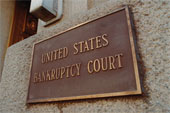
Bankruptcy Court: Destination for issuers in default
Credit or default risk: the risk that the issuer will default on the payments of the bond, which reduces the amount and value of “dollars in” relative to price paid, lowering the earned yield on the bond. Credit risk is frequently measured as the credit spread over like Treasuries, which are assumed to have zero credit risk. Credit risk includes downgrade risk, where a credit rating agency lowers the rating on an issuer as their ability to repay the debt is brought into question.
Call risk: the risk that a callable bond will be called by the issuer. Since a bond is typically called only when it’s in the best interest of the issuer, the call feature is systematically harmful to the bondholder. Prepayment risk reverses these risks: prepayment is good for the bondholder, and bad for the issuer.
Exchange rate risk (that the value of the repaid currency will be lower), inflation risk (that the value of the repaid dollar will be lower), and event risk (natural disasters, corporate restructurings, regulatory changes, sovereign or political changes) round out the list of broad types of risks that drive bond yields.
Next time: why the types and level of risks are so difficult to measure and predict.
An economics professor at a local college made a statement that he had never failed a single student before, but had once failed an entire class.
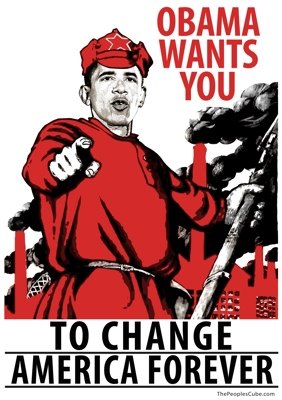
That class had insisted that Obama’s socialism worked and that no one would be poor and no one would be rich, a great equalizer.
The professor then said, “OK, we will have an experiment in this class on Obama’s plan“. All grades would be averaged and everyone would receive the same grade so no one would fail and no one would receive an A…
After the first test, the grades were averaged and everyone got a B. The students who studied hard were upset and the students who studied little were happy. As the second test rolled around, the students who studied little had studied even less and the ones who studied hard decided they wanted a free ride too so they studied little. The second test average was a D! No one was happy.
When the 3rd test rolled around, the average was an F. The scores never increased as bickering, blame and name-calling all resulted in hard feelings and no one would study for the benefit of anyone else.
All failed, to their great surprise, and the professor told them that socialism would also ultimately fail because when the reward is great, the effort to succeed is great but when government takes all the reward away, no one will try or want to succeed.
Looking more closely at the implications of changes in the Fed rate
Fed Funds rate influences consumer and business interest costs
Does the Fed Funds Rate, the rate charged by the Federal Reserve to make short-term loans to banks, directly influence the interest rate consumers and businesses pay on credit cards, mortgages, and consumer and business loans? If you took the word of the average business news commentator, you would think not. But the answer, of course, is yes.
One way to view the market rate of interest, although certainly not the only correct or useful way, is to think of it as a base rate that represents the risk-free rate, a rate that compensates the population for its impatience to consume the goods it would have consumed had it not lent the funds out in the first place. This risk-free rate is also influenced by the efficiency and functioning of the capital markets that bring borrowers and lenders together.
A risk premium is then added to this base rate of risk-free interest, one that varies depending on the degree of uncertainty of the lender getting repaid. The risk of default, the risk of prepayment, the risk of political uprising, exchange rate risk, and many other sources of uncertainty — including the risk of inflation — raise the level of the risk premium commanded by lenders in the market. As an example, over the last 100 years or so, the average annual risk-free rate in the U.S. has been about 4%, and the average annual risk premium for equity securities has been about 8%, bringing the average annual observed interest rate or rate of return to about 12% on these securities.
So what happens to the interest rate charged to consumers and businesses when the Fed raises the fed funds rate? Basically, the level of the risk-free rate in the economy rises and, as debt contracts expire or new lending takes place, this higher base rate gets factored into the market rate of interest charged.
Overall, the demand for loanable funds falls, the aggregate demand curve for the economy falls, and equilibrium output and employment fall, RELATIVE to where they would have been without the rate increase. The bright side is that a reduction in the money supply that accompanies an increase in the fed funds rate is absolutely essential to curtailing inflation, which drives the risk premium, and represents a much greater cost to the economy.
In a recent article, Moody’s announced that it may have to reduce the AAA rating of U.S bonds because of excess spending and historic debt levels of the U.S. government under President Obama.
Moody’s Investors Service Inc. said the U.S. government’s AAA bond rating will come under pressure in the future unless additional measures are taken to reduce budget deficits projected for the next decade.
The U.S. retains its top rating for now because of a “high degree of economic and institutional strength,” the New York- based rating company said in a statement today. The ratios of government debt to the U.S. gross domestic product and revenue have increased “sharply” during the credit crisis and recession. Moody’s expects the ratios to remain higher compared with other AAA-rated countries after the crisis.
What this means in practical terms is that the cost of borrowing by the U.S. government will rise, which will increase spending via more borrowing or higher taxes or more money creation to pay for the higher interest costs. Sound like a vicious cycle to you?
Has anyone noticed the absolute irony of the world capital market having a seat at the table that assesses the viability of Obama’s policies? Obama, who has spent the last year denigrating free markets and capitalism, and has laid the blame for the credit crisis squarely at the feet of those greedy capitalists, now has to deal with a rating agency, which plays a pivotal role in the functioning of those very capital markets, evaluating the creditworthiness of his policies and those of his budget director, Peter Orszag, pictured here.
Peter Orszag, Obama's Budget Director
How wonderfully ironic!
The U.S. would not be the first. Ireland was recently downgraded, and Japan lost its AAA rating from Moodys in November of 1998; both faced higher borrowing costs as a result.
There is currently a merry old ding-dong spat going on between the German and Swiss governments. Basically, someone has got hold of information about German citizens with bank accounts in Switzerland where they are hiding large sums on which they should pay German taxes.
This or these enterprising whistleblower(s) are offering to sell this data to the German government for a hefty fee. The German government is on the point of accepting to buy this “illegally-obtained” information from the (from the Swiss point of view) criminals who have stolen their secret bank data.
This story raises a large number of fascinating questions. It has long been common knowledge that Switzerland offers banking facilities with few questions asked. Any self-respecting criminal or tax evader has or had a secret, numbered Swiss account.
What has always amazed me is how they have got away with this for so long, stuck as they are in the centre of Europe. How is it possible that other countries have allowed Switzerland to become a haven for money obtained illegally in other countries?
For it is clearly immoral to profit from the illegal activities of foreign nationals, isn’t it? What exactly is the difference between this behaviour and “receiving stolen goods”? Worse, we have to remember that the largest sums come from drugs. Anyone willing to look after (or launder) drug money is complicit in the misery and deaths of millions of drug addicts worldwide. Yet the Swiss have pulled off this trick for decades. The Swiss banking (and government) fraternity has never shied away from shady dealings, being until the end of WWII covert supporters of the Nazis.
Well, Angela Merkel is going to do a deal with presumably Swiss “criminals” (according to the Swiss government) in order to recoup money it is owed by German criminals (according to Germany). What a merry old moral maze we have here. But in truth, the world is now too small and inter-connected to allow either tax evasion on a vast scale or the safeguarding of criminal funds.
Switzerland has to decide whether to remain as a supporter of tax evaders and gangsters (including of course African Presidents who have ripped their countries off in a big way) OR to join the real, civil, honest and inter-connected world.
The rest of us should stop tolerating this connivance with crime. “Client secrecy” is no excuse for condoning and profiting from crime.
More on the whole Nazi gold in Switzerland story is here.




 Learning from Dogs