Tag: Britain

The meaning of wildness?

“Reality is merely an illusion, albeit a very persistent one.”

So said Albert Einstein.

The reason I went searching for a quotation on reality was that our, as in humans, ability to see the world in grossly distorted ways jumped ‘off the page’ at me when I was reading a recent essay from George Monbiot.  Followers of Learning from Dogs will know that Mr. Monbiot has featured before; most recently just under a month ago in a post Returning to Nature.  Before then in April when George gave permission for the full republishing of his essay The Great Unmentionable.

“Comfort the afflicted, afflict the comfortable.”

Why the notion of humans seeing reality in grossly distorted ways?  Simply because in George Monbiot‘s following essay he challenges what we mean by the word ‘wildness’ and I immediately realised that my own idea of wildness was badly corrupted.

See if you react the same way as you read The Naturalists Who Are Terrified of Nature by George Monbiot, republished in full with the kind permission of George.

oooOOOooo

The Naturalists Who Are Terrified of Nature

July 16, 2013

A radical challenge to British conservation and its bizarre priorities.

By George Monbiot, published on the RSPB’s website, 15th July 2013

I’m writing this on the train home, after visiting two places in the north of England celebrated for their “wildness”. One of them is Ennerdale in the Lake District, now officially known as Wild Ennerdale, a valley in which the river has been allowed to move freely once more, and in which native trees are succeeding naturally up the hillsides(1).

The other is the Sheffield Moors (in the Peak District), from which most of the sheep have been removed and where the structure of the vegetation has been allowed to change a little. I found both visits fascinating, not least because of the eruditon and enthusiasm of the people who walked me through these places.

But sitting on the train, watching the chemical deserts of the English lowlands flash past, I’m struck by how pathetically grateful I feel. For what? For the fact that, in two small conservation areas, located in national parks, a few natural processes have been allowed to resume.

Were I to explain to a foreigner that these places are now celebrated by conservationists in Britain for their radical approach, he or she would think I had gone mad. “What?,” they would say, “you are telling me that this is the cutting edge of nature conservation in your country? Where have you been for the past 50 years?”

I don’t know if there is any other country in which people – including conservationists – are as afraid of nature as they are in Britain. I don’t know if there is anywhere else in which conservationists are so convinced that if they relax their intensive management of the natural world, something dreadful will happen.

Nowhere else do conservationists subscribe more enthusiastically to the biblical doctrine of dominion: that we have a holy duty to control and corral nature, in case it gets out of hand. Nowhere else does conservation look more like a slightly modified version of the farming which trashed the land in the first place.

In my view most of our conservation areas aren’t nature reserves at all. They are museums of former farming practices, weeded and tended to prevent the wilds from encroaching. The ecosystem’s dynamic interactions are banned. Animals and plants are preserved as if they were a jar of pickles, kept in a state of arrested development, in which little is allowed to change.

But nature is not just a fixed assemblage of species, maintained as if it were a collection in a museum. It is also the ever-changing relationships between them, the successional processes, the shifting communities: all of which, in many of our reserves, are prohibited.

The problem begins with designation. The “interest features” of a site of special scientific interest – its species and habitats – must be kept in “favourable condition”. Often this means the condition in which they happened to be when the reserve was created. In most cases that’s a condition of dire impoverishment and depletion: ecosystems missing almost their entire trophic structure, most of their large herbivores, all their large predators, in many cases even the trees. They have to be kept like this by extreme and intrusive management, in order to sustain the impacts which reduced them to this woeful state.

In Wild-ish Ennerdale and on the Sheffield Moors, there has been a partial relaxation of this draconian regime. But even in these places, there is much that I question.

On the Sheffield Moors, for example, cattle are kept: at much higher densities and for far longer periods than large herbivores would exist in a self-willed ecosystem. In many parts of the moors, trees, if they have the temerity to return, are cleared. The effort, even here, is to ensure that the landscape remains farmed, open and bare.

This is done partly to favour breeding populations of wading birds(2). It’s likely that these species are being maintained at artificially high populations(3). A tendency I’ve noticed among some groups is to try to make all their target species common, even if they were naturally rare. Perhaps some species ought to be rare. Those which lived in open habitats – which would have been small and occasional before people started cutting and burning the forests – are likely to have been rarest of all.

Think of the varying fortunes of grouse populations in Britain. The palaeontological evidence is extremely sparse, so this is guesswork, but during the Boreal and Atlantic phases, 9,000-5,000 years ago, when closed-canopy forest covered most of Britain, the commonent grouse species in this country might have been hazel hen. Perhaps the second commonest would have been capercaillie, followed by black grouse, followed by red grouse, which are likely to have been very scarce.

That likely sequence has now been reversed. Hazel hen is extinct, capercaillie extremely rare, black grouse are sparse and in severe decline and red grouse are bloody everywhere. The red grouse is the magpie of the uplands: it benefits from human intervention, which in this case means the clearing of land.

Arbitrarily, conservation groups in the uplands of England and Wales have decided that their priorities are, for example, dunlin and curlew, rather than capercaillie and pine martens. I’m not insisting that this is always the wrong decision. But it’s a decision that should be rigorously questioned, especially if this intensive management means the destruction of habitats which would have sheltered a much wider range of species.

Spend a couple of hours in an open upland nature reserve, and count the diversity and abundance of the birds you see. Then spend a couple of hours in a bushy suburban garden and do the same thing. In my experience you’re likely to see more birds of more species in the garden. That’s hardly surprising: most birds – indeed most wildlife – require cover to survive. Am I the only one who thinks that something has gone badly wrong here?

It’s not just common species I’m talking about. Many of those excluded by our brutal upland management are not just rare in Britain; they are extinct.

Whenever I meet a conservation manager, I find myself acting like a 3-year old: I keep asking “why?”. Why are you preserving this and not that? Why is this site designated for moorland flea beetle and pearl-bordered fritillary, rather than blue stag beetle and lynx? Why are you protecting the wretched scrapings of life that remain here, rather than reintroducing the species which would once have lived here, but have been excluded by the kind of interventions that you – the conservationists – have sustained?

When I worked in the Amazon, the conservationists I met were fighting to defend the rainforest against cattle ranching. In Britain the conservationists are – literally – defending cattle ranching against the rainforest. Britain was once covered by rainforest: woodland wet enough for epiphytes to grow. (Epiphytes are plants which root in the bark of trees). Our closed-canopy rainforest was likely to have been richer in species than any of our remaining habitats. Given half a chance, it would return. But it isn’t given half a chance, even in conservation sites, because conservationists keep clearing the land and running cattle on it, in case the wayward and irresponsible ecosystem does something that isn’t listed in the rules. In doing so, they preserve a burnt, blasted and largely empty land with the delightful ambience of a nuclear winter.

Conservation groups in this country are obsessed by heather. Heather is typical of the vegetation that colonises land which has been repeatedly deforested. You can see similar vegetation – low, scrubby, tough, thriving on burnt ground and depleted soils – covering deforested land all over the tropics. There, the dominance of these plants is lamented by ecologists, for it is rightly seen as a symptom of ecological destruction. Here it is fetishised and preserved.

Even in the Eastern Sheffield Moors management plan, published by the RSPB and the National Trust, “cutting and burning” are listed as the requisite tasks for managing heather(4). Imagine what a tropical ecologist would say if she saw that. “You people have been telling us for decades that we should stop cutting and burning. You’ve been sending us money and lobbying our governments to discourage us from doing it. And all the while you’ve been telling yourselves that cutting and burning are necessary for the protection of wildlife.” If she concluded that we are hypocrites, that we are unambitious, irrational, anally retentive and ecologically illiterate, she would not be far wrong.

The same plan reveals that these two august conservation bodies will maintain cattle on the moors at their current level, but keep them there for longer. “Their grazing and trampling will manage the vegetation in a way which should improve the condition of the habitats and benefit wildlife.”(5) What does this mean? Yes, it might benefit some wildlife, but only at the expense of other species. Yes, it might “improve the condition” of a habitat, if by improvement you mean a better representation of the state of arrested development you’ve chosen. It sounds uncomfortably close to the 19th Century agricultural meaning of “improvement”: which means draining and clearing land to make it more suitable for farming.

It astonishes me to see statements like this left unpacked. Asserted without qualification, they create the impression that all wildlife benefits from management of this kind. Of course, all interventions (including a complete cessation of management), are better for some species than for others. But in my view, the losses inflicted by cattle ranching – here, as in the Amazon – outweigh any gains.

An even starker example is provided by a report commissioned by the RSPB on changing livestock numbers. It contends that “undergrazing and loss of vegetation structure is now occurring in some areas, with adverse impacts for some species such as golden plover and other waders.”(6)

“Undergrazing” is an interesting concept. The report seems to be referring to “undergrazing” by sheep. How can a native ecosystem be undergrazed by an invasive ruminant from Mesopotamia? Is our wildlife underhunted by American mink? Are our verges underinfested by Japanese knotweed?

I would question what undergrazing by any domestic animal means. “Not farmed enough” is what the term appears to signify, “or not sufficiently damaged”. Sure, the golden plover is among a small group of species that benefit from scorched-earth policies, but a far greater number are harmed by them. So why is the golden plover the priority? And how can a report for a conservation organisation blithely use the term undergrazing without qualification or explanation?

Another RSPB report advocates “the eradication of invasive tree species” from the bare uplands of Wales and claims, without citing any evidence or explaining what this means, that “extensive grazing, ideally mixed grazing, is important in maintaining upland pastures in a state that benefits upland birds and other wildlife.”(7)

A document published by the Welsh government revealed something I have never seen in the RSPB’s literature: that the society advises farmers “to cut down trees to discourage buzzards which kill other birds.”(8)

I checked with the RSPB in Wales and it confirmed that it does “at times provide advice to landowners on the management of trees to reduce available vantage points and nest sites for some avian predators.”(9)

Isn’t that more or less what the British government wanted to do to protect pheasant shoots? And didn’t the society contest those efforts?(10)

I wonder whether, in their arbitrary choice of target species and target habitats, British conservationists are influenced by the legacy of hunting. Many of the birds on behalf of which this extreme and brutal simplification of the ecosystem takes place are those which, in the 19th Century, were pursued by gentlemen with guns. Perhaps we should see conservation efforts in Britain as a form of gamekeeping, which regards some of our native species as good and worthy of preservation, and others (such as trees and buzzards) as bad and in need of control.

Sometimes I receive coherent answers from the conservation managers I speak to, which are debatable but at least consistent. Sometimes the only answer I receive is “that’s what the rules say.” But isn’t it time we began to challenge the rules? Isn’t it time we began to question the way sites are designated, and to challenge the ecological blitzkreig required to maintain them in what is laughably called “favourable condition”? Isn’t it time we began asking why we have decided to privilege certain species over others? Isn’t it time we started wondering whether the collateral damage required to support them is worth it?

After all, how did nature cope before we came along? To judge by the actions of British conservation groups, it must have been in a pretty dismal state for the three billion years before humans arrived to look after it.

George Monbiot’s book Feral: searching for enchantment on the frontiers of rewilding is published by Allen Lane.

References:

1. http://www.wildennerdale.co.uk/

2. National Trust and RSPB, 2012. The Eastern Moors Management Plan summary, page 15. Eastern Moors Partnership, Curbar.

3. This, of course, is speculative, as palaeontology gives us few indications of numbers. But the circumstantial evidence seems powerful: the habitat required for breeding populations of these birds, many of which need to nest several hundred metres from the nearest woodland edge to avoid predation, was in short supply. See for example:

NJ Whitehouse and D Smith, 2010. How fragmented was the British Holocene wildwood? Perspectives on the ‘‘Vera’’ grazing debate from the fossil beetle record. Quaternary Science Reviews Vol. 29, nos. 3-4, pp539–553. doi.org/10.1016/j.quascirev.2009.10.010

FJG Mitchell, 2005. How open were European primeval forests? Hypothesis testing using palaeoecological data. Journal of Ecology Vol. 93, 168–177

JHB Birks, 2005. Mind the gap: how open were European primeval forests? Trends in Ecology & Evolution Vol. 20, pp154-156.

R Fyfe, 2007. The importance of local-scale openness within regions dominated by closed woodland. Journal of Quaternary Science, Vol.22, no. 6, pp571–578. doi: 10.1002/jqs.1078

JC Svenning, 2002. A review of natural vegetation openness in northwestern Europe. Biological Conservation Vol 104: 133-148.

RHW Bradshaw, GE Hannon, AM Lister, 2003. A long-term perspective on ungulate-vegetation interactions. Forest Ecology and Management, Vol. 181: 267–280.

4. National Trust and RSPB, 2012, as above, p16.

5. National Trust and RSPB, 2012, as above, p11.

6. http://www.rspb.org.uk/Images/Final_Report_tcm9-340975.pdf

7. http://www.assemblywales.org/6_rspb_formatted.pdf

8. Welsh Government, 2010. Glastir: frequently asked questions, Section 13. This document is no longer available on the government site, but you can read it here:  http://www.fuw.org.uk/glastir-faq-miscellaneous.html

9. Emma Roberts, RSPB Wales, 10th August 2011. By email.

10. http://www.rspb.org.uk/media/releases/316283-back-off-our-birds-of-prey

oooOOOooo

Will leave you with the following picture.

Ennerdale Lake, Cumbria

Returning to Nature

The power of serendipity!

Why the choice of this sub-heading?  Well, just because a number of quite separate articles and essays have come together to offer a powerful, cohesive argument for reconsidering the role of Nature in the future of mankind.

Of course, my use of words in that preceding sentence is completely ludicrous; the suggestion that ‘Nature’ is disconnected from ‘mankind’.  Yet millions of us, to a greater or lesser degree, do behave as if we are the masters of the world.

So let me dip into what has been ‘crossing my desk’ in recent times.

On May 28th, George Monbiot published in The Guardian newspaper an essay entitled A Manifesto for Rewilding the World.  (The link takes you to the article on the Monbiot blogsite.)  Here’s how that essay opened,

Until modern humans arrived, every continent except Antarctica possessed a megafauna. In the Americas, alongside mastodons, mammoths, four-tusked and spiral-tusked elephants, there was a beaver the size of a black bear: eight feet from nose to tail(1). There were giant bison weighing two tonnes, which carried horns seven feet across(2).

The short-faced bear stood thirteen feet in its hind socks(3). One hypothesis maintains that its astonishing size and shocking armoury of teeth and claws are the hallmarks of a specialist scavenger: it specialised in driving giant lions and sabretooth cats off their prey(4). The Argentine roc (Argentavis magnificens) had a wingspan of 26 feet(5). Sabretooth salmon nine feet long migrated up Pacific coast rivers(6).

During the previous interglacial period, Britain and Europe contained much of the megafauna we now associate with the tropics: forest elephants, rhinos, hippos, lions and hyaenas. The elephants, rhinos and hippos were driven into southern Europe by the ice, then exterminated around 40,000 years ago when modern humans arrived(7,8,9). Lions and hyaenas persisted: lions hunted reindeer across the frozen wastes of Britain until 11,000 years ago(10, 11). The distribution of these animals has little to do with temperature: only where they co-evolved with humans and learnt to fear them did they survive.

I’m not going to reproduce the bulk of the article; just hoped that I have tickled your curiousity sufficient for you to read it in full here. But will just show you how it closed:

Despite the best efforts of governments, farmers and conservationists, nature is already beginning to return. One estimate suggests that two thirds of the previously-forested parts of the US have reforested, as farming and logging have retreated, especially from the eastern half of the country(23). Another proposes that by 2030 farmers on the European Continent (though not in Britain, where no major shift is expected) will vacate around 30 million hectares (75 million acres), roughly the size of Poland(24). While the mesofauna is already beginning to spread back across Europe, land areas of this size could perhaps permit the reintroduction of some of our lost megafauna. Why should Europe not have a Serengeti or two?

Above all, rewilding offers a positive environmentalism. Environmentalists have long known what they are against; now we can explain what we are for. It introduces hope where hope seemed absent. It offers us a chance to replace our silent spring with a raucous summer.

Then further research for this post brought to light an interview with David Suzuki in February.  Widely reported, I picked the version published on Straight.com, from which comes:

In December, Canadian specialty TV channel Business News Network interviewed me about the climate summit in Copenhagen. My six-minute interview followed a five-minute live report from Copenhagen, about poor countries demanding more money to address climate change and rich countries pleading a lack of resources. Before and after those spots were all kinds of reports on the Dow Jones Industrial Average, the price of gold and the loonie, and the implications of some new phone technology.

For me, this brought into sharp focus the inevitable failure of our negotiating efforts on climate change. BNN, like the New York-based Bloomberg channel, is a 24-hour-a-day network focused completely on business. These networks indicate that the economy is our top priority. And at Copenhagen, money dominated the discussions and the outcome.

But where is the 24-hour network dealing with the biosphere? As biological creatures, we depend on clean air, clean water, clean soil, clean energy, and biodiversity for our well-being and survival. Surely protecting those fundamental needs should be our top priority and should dominate our thinking and the way we live. After all, we are animals and our biological dependence on the biosphere for our most basic needs should be obvious.

The economy is a human construct, not a force of nature like entropy, gravity, or the speed of light or our biological makeup. It makes no sense to elevate the economy above the things that keep us alive. But that’s what our prime minister does when he claims we can’t even try to meet the Kyoto targets because that might have a detrimental effect on the economy.

This economic system is built on exploiting raw materials from the biosphere and dumping the waste back into the biosphere. And conventional economics dismisses all the “services” that nature performs to keep the planet habitable for animals like us as “externalities”. As long as economic considerations trump all other factors in our decisions, we will never work our way out of the problems we’ve created.

Concluding:

Nature is our home. Nature provides our most fundamental needs. Nature dictates limits. If we are striving for a truly sustainable future, we have to subordinate our activities to the limits that come from nature. We know how much carbon dioxide can be reabsorbed by all the green things in the oceans and on land, and we know we are exceeding those limits. That’s why carbon is building up in the atmosphere. So our goal is clear. All of humanity must find a way to keep emissions below the limits imposed by the biosphere.

The only equitable course is to determine the acceptable level of emissions on a global per capita basis. Those who fall below the line should be compensated for their small carbon footprint while those who are far above should be assessed accordingly. But the economy must be aligned with the limits imposed by the biosphere, not above them.

Quite clearly, if we continue to turn our backs on Nature, the consequences won’t be long in tapping us on the shoulder.

So, going to close it today with this, seen nearly a month ago on the PRI website:

oooo

Plant a Tree

Trees — by Kristof Nordin May 27, 2013

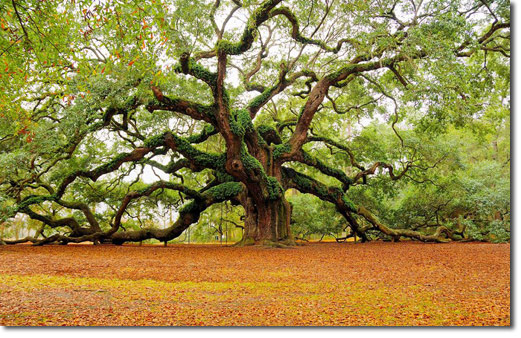
angel-tree

Imagine the type of world we could see
If instead of saying ‘pray,’ we said, ‘plant a tree’.
With this one little change so much more could be done
To protect all living things found under the sun.

We could ‘plant a tree’ for our troops sent away into war
So when they return they’d come home to find more.
We could ‘plant a tree’ at our churches with our husband or wife
To praise the Creator through a celebration of life.

We could ‘plant a tree’ for the needy and for those with no food
We could even plant in public without seeming rude.
The government would not have to introduce rules,
And most likely we could ‘plant a tree’ at our schools.

If we took it to task to ‘plant trees’ for the poorest,
We would all soon be reaping the wealth of a forest.
We could plant freely with those of all religions and creeds,
The improvement of earth would be based on these deeds.

We could plant with our neighbours, our family, and friends,
And ‘plant a tree’ with our enemies to help make amends.
If we ‘plant a tree’ for the sick to show them we care,
We would also be healing the soil, water, and air.

We could ‘plant a tree’ to observe when two people wed,
And plant one with our kids each night before bed.
Throughout the history of the whole human race
We find respect for the ‘tree’ has always had a place.

The great Ash of the Norse was their tree of the World,
And on a tree in the Garden is where the serpent once curled.
It was in groves of Oaks that the Druid priests wandered,
And under the Bodhi where the great Buddha pondered.

In the Bible it’s clear that we have all that we need:
‘All the trees with their fruits and plants yielding seed’.
Despite all these lessons that the past has taught
Now days, it seems, we cut our trees without thought.

This is confirmed by the Koran, for in it we read:
‘Many are the marvels of earth, yet we pay them no heed’.
We all have a duty, no matter what nation
To perform our part in protecting Creation.

Just think what we’d have if we had picked up a spade
Every time each one of us bowed our heads and prayed.

Further Reading:

oooOOOooo

The theme continues tomorrow.

From small acorns do great oaks grow.

Reflections on the launch of George Monbiot’s new book Feral.

In my recent post, Dealing with Madness, where I referred to the launch of this new book there were comments from Jules that included him saying:

George is appearing at the Hay Festival to sell his book and do a talk this Saturday and it is only a few miles away so may be I will pop in and buy the book.

all the best

Jules

Jules, who has his own blog Bollocks2012, did go across to the Hay Festival and most generously agreed to write up his visit as a guest post.

So I am delighted to offer you Jules’ report today.

oooOOOooo

George at Hay

by Jules Bywater-Lees, 1st June, 2013

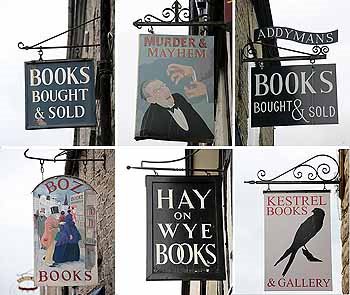
The small Welsh border town of Hay-on-Wye in Powys is just a few miles from where I live. It went from a little backwater with a failing rural economy to become, in the words of Bill Clinton, ‘the Woodstock of the mind’.  All through the vision of eccentrics!

Hay-on-Wye
Hay-on-Wye

The town of Hay-on-Wye is pretty.  It is set in the most beautiful Welsh countryside and even has its own tumble-down castle.  However, back in the 70’s, like so many other small market centres, the town was in decline.  That was until an eccentric bibliophile moved into the castle. The name of that eccentric was Richard Booth.

Richard Booth established a second-hand bookshop in town and, as a publicity stunt, on 1st April 1977 proclaimed himself King of Hay and Head of this new Independent Kingdom!  Hay-on-Wye subsequently became a magnet for the second-hand book lover and trader, and now every other shop is a bookshop giving the town a healthy economy serving the many visitors.

Books, books and more books!

The Hay Literary Festival was devised by Norman and Peter Florence in 1988 and had become sufficiently established internationally for the highlight of Bill Clinton being a speaking guest in 2001. It is rather a corporate festival now attracting big names but the town has developed fringe events, that are both cheaper and more fun.

The reason this back story is relevant is that Hay-on-Wye has always been a gateway town between the urban English and rural Welsh. It is only a few hours drive from London and the nearest ‘wilderness’ for day trippers and holiday makers. A few miles further west and the uplands, or mountains as we call them (few are higher than 1000 feet), are considered by most people to be wild.

George Monbiot lives another 60 miles away to the West on the coast in what is considered deepest Wales where the hills have a barren beauty and the locals speak Britain’s ancient first language. But it is not all that it seems; the moors and hilltops are not natural they are a product of over-grazing. They are the degraded shells of a natural ecosystem. A shadowland; a ghostly memory of a former landscape.

View from Hay Bluff
View from Hay Bluff, just a few miles from Hay-on-Wye, and a powerful example of a bald hill.

Back to this year’s Festival. I coughed up the £8 ticket price and went with friends to have a day of culture. Those friends who came to hear George Monbiot speak were sceptical; for them the hills are beautiful and it is the denuded ‘wildness’ and prancing Spring lambs that gives the landscape so much value.

George makes frequent appearances on television and is very much a leading commentator on the environment and climate change, and his Guardian articles, see postscript, cover his views well so I wasn’t expecting any surprises. If anything I felt sceptical! You see while in principle I agreed with Monbiot’s message of rewilding and supportive of his views on the wide range of subjects he covers, the concept of rewilding appeared to be woolly and vague and lacking the practicalities of how this vision would be achieved. I even prepared a question for the session after his presentation.

Britain is a little country and our national parks are not the same as those elsewhere in the world, a better description would be regulated areas of private ownership. There are a few parks in Wales notable Snowdonia, which amounts to 2,200 square Kilometres (850 square miles), Brecon Beacons, 1,300 Km2 (502 SqM) and larger ones in Scotland such as the Cairngorms of 4,500 Km2 (1,737 SqM). But all of these are tiny compared to Yellowstone National Park with its 9,000 km2 (3,475 SqM and about 100 wolves!). Is it possible to have viable populations of wild animals in such a small area?

My concern is that Britain actually does have a wild landscape of both international importance and scale, with mega fauna, diversity and rare ecosystems that put it on par with the rainforest. It is truly huge with a conservative estimate of 50 to 100 thousand Km2 in area (19,305 to 38,610 square miles) but it is hidden: It is the 31,000 Km (19,260 miles) of coastline and the waters that extend from it. Surely we should be concentrating on its protection rather than allowing the hill tops to grow pretty common native woodland that could support a few hundred wolves, Lynx and beavers at best?

George live, as it were, was a lot more engaging than his appearance on telly and his spoken words a lot more passionate than his written words. I was surprised, and interested.  Like all good story tellers he started off with a mystery. Why do British native trees appear to thrive when they are hacked about into hedges, why do blackthorn trees have thorns so tough and sharp they spike industrial leather gloves and why does the yew and holly have roots so extensive they could hold up a tree twice as big? The answer: Elephants!

Much of what he spoke about is found in his last three Guardian articles so I will spare you the detail but what struck me was his passion. Initially the cynic within wondered if George was just another celebrity seeking a cause.  But such thoughts were dispelled as soon as George started to speak. What was communicated resonated strongly with this idealistic former self who was sufficiently passionate about nature enough to have studied zoology and yearned a human desire for wilderness and, indeed, danger but whose life has otherwise been engaged in more civilised necessities.

Such was the passion expressed by Mr. Monbiot that even I could overlook the practicalities and details; they can be sorted out when they need to be. My friends were impressed and even they were able to see that letting the hills go wild or a least a few of them would enhance their appreciation of our countryside.

But I didn’t buy a signed copy of the book! At £20 for the hardback version I thought it best to order one from my local library or at least wait for the paperback edition on Amazon.

Postscript

Those Guardian articles mentioned are:

My manifesto for rewilding the world, Guardian Newspaper, 27th May.

Until modern humans arrived, every continent except Antarctica possessed a megafauna. In the Americas, alongside mastodons, mammoths, four-tusked and spiral-tusked elephants, there was a beaver the size of a black bear: eight feet from nose to tail. There were giant bison weighing two tonnes, which carried horns seven feet across.

Why Britain’s barren uplands have farming subsidies to blame, Guardian Newspaper, 22nd May

Even before you start reading the devastating State of Nature report, published today, you get an inkling of where the problem lies. It’s illustrated in the opening pages with two dramatic photographs of upland Britain (p6). They are supposed to represent the natural glories we’re losing. In neither of them (with the exception of some distant specks of scrub and leylandii in the second) is there a tree to be seen. The many square miles they cover contain nothing but grass and dead bracken. They could scarcely provide a better illustration of our uncanny ability to miss the big picture.

It’s time we challenged agricultural hegemony, Guardian Newspaper, 6th June

The dam is beginning to crack, faster than I would have believed possible. Britain, one of the world’s most zoophobic nations, is at last considering the return of some of its extinct and charismatic mammal species.

While wolves, lynx, bears, bison, moose, boar and beavers have been spreading across the continent for decades, into countries as developed and populous as ours, and while they have been widely welcomed in those places, here we have responded to this prospect with unjustified horror.

Why the lynx effect would send Scotland wild, Guardian Newspaper, 2nd June

As Edinburgh Zoo’s panda freakshow continues to captivate the witless and the infantile, a real Scottish animal has been allowed to die. Under the noses of Scottish Natural Heritage, which likes to be known as the nation’s leading conservation body, the Scottish wildcat has all but been extinguished from the Highlands. The importance of this news may be deemed worthy of a mere footnote on the schedule of important issues with which Scotland is grappling but it ought to rank much higher. For the wildcat’s demise seems to be part of the neutering and emasculating of our wildest places. That which was previously held to be a quintessential part of what Scotland was originally meant to look like and smell like and sound like is now, it seems, unimportant.

Britain’s paradise has been lost – but there’s still hope for our wildlife, Guardian Newspaper, 24th May

I never imagined being 52. As I grew up catching lizards and newts, rummaging through hedges to find birds’ nests, or prodding flattened hedgehogs with my scuffed Clarks lace-ups, the world was ripe with natural riches. Every scrap of wasteland revealed yet more gems: tadpoles, fox cubs and a confetti of butterflies. And when at the weekends the family Ford Anglia trundled off to the countryside, I strode in shorts into a wildlife nirvana, a utopia, and I explored what I imagined would be a never-ending world of beautiful and exotic creatures.

oooOOOooo

Finally, back to me and all I want to add is that the blogsite for more information on the book Feral is here.

So how to close?  Well having given this post the title of a well-known saying, let me close with one perhaps less familiar but, boy oh boy, so relevant.

“When the oak is felled the whole forest echoes with it fall, but a hundred acorns

are sown in silence by an unnoticed breeze.”

Thomas Carlyle

Dealing with madness!

“No excellent soul is exempt from a mixture of madness.”

So wrote Aristotle .

But it offers little comfort in response to some recent essays that I have been reading.  I closed yesterday’s essay from ‘Our unsustainable way of life‘ with the comment, “If it strikes you as utter, complete madness trust me, you are not alone.”  The madness is still coming!  Stay with me!

I have referred to George Monbiot before; most recently in a republication of his essay The Great Unmentionable.

Feral

George has a new book being published by Allen Lane today under the title of Feral: searching for enchantment on the frontiers of rewilding. I would offer you the link to the book on the Allen Lane website but at the time of writing this post that link is not functioning.  It’s certainly a book I want to read.  You may learn more here.

Anyway, some recent Monbiot essays in the UK Guardian newspaper have been setting the scene for his new book.

On the 22nd May, there was an essay published under the heading of What’s Missing from this Picture? (the link is to George Monbiot’s website).  The essay starts, thus:

Somehow almost all of us have missed the real story behind the disappearance of our wildlife.

By George Monbiot, published on the Guardian’s website, 22nd May 2013

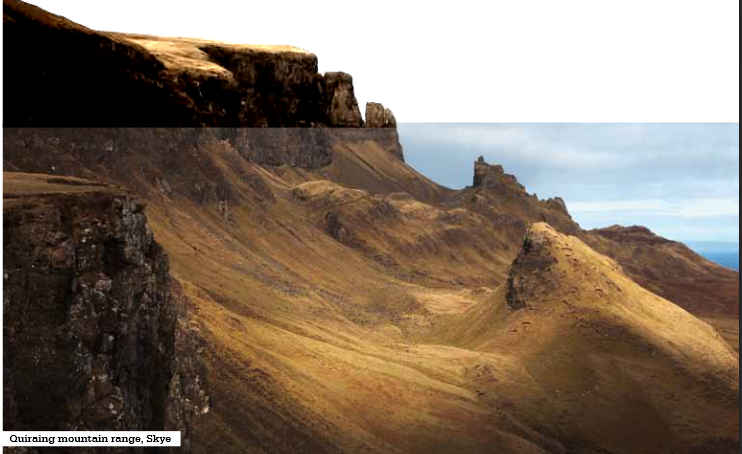
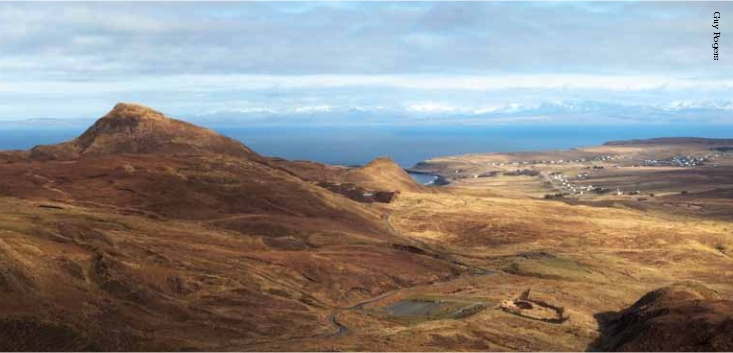
Even before you start reading the devastating State of Nature report, you get an inkling of where the problem lies. It’s illustrated in the opening pages with two dramatic photographs of upland Britain. They are supposed to represent the natural glories we’re losing. In neither of them (with the exception of some distant specks of scrub and leylandii in the second) is there a tree to be seen. The many square miles they cover contain nothing but grass and dead bracken. They could scarcely provide a better illustration of our uncanny ability to miss the big picture:

State of Nature - pic 1

State of Nature - pic 2

The majority of wildlife requires cover: places in which it can shelter from predators or ambush prey, places in which it can take refuge from extremes of heat and cold, or find the constant humidity that fragile roots and sensitive invertebrates require. Yet, in the very regions in which you might expect to find such cover (trees, scrub, other dense foliage) there is almost none. I’m talking about the infertile parts of Britain, in which farming is so unproductive that it survives only as a result of public money. Here, in the places commonly described as Britain’s “wildernesses”, almost nothing remains. And the “almost” has become radically smaller over the past 20 years.

Then a few paragraphs later, comes this:

The uplands of Britain are astonishingly unproductive. For example, 76% of the land in Wales is devoted to livestock farming, mostly to produce meat. But, astonishingly, by value Wales imports seven times as much meat as it exports. Six thousand years of nutrient stripping and erosion have left our hills so infertile that their productivity is miniscule. Even relatively small numbers of livestock can now keep the hills denuded.

Without subsidies, almost all hill-farming would cease. That’s not something I’m calling for, but I do believe it’s time we began to challenge the system and its outcomes. Among them is a policy that’s almost comically irrational and destructive.

So what was it that came at me as utter madness?

It was this:

The major funding that farmers receive is called the single farm payment, which is money given by European taxpayers to people who own land. These people receive a certain amount (usually around £200 or £300), for every hectare they own. To receive it, they must keep the land in what is called “Good Agricultural and Environmental Condition” (GAEC). It’s a term straight out of 1984.

Among the compulsory standards in the GAEC rules is “avoiding the encroachment of unwanted vegetation on agricultural land”. What this means is that if farmers want their money they must stop wild plants from returning. They don’t have to produce anything: to keep animals or to grow crops there. They merely have to prevent more than a handful of trees or shrubs from surviving, which they can do by towing cutting gear over the land.

Oh, and then we learn:

The government of Northern Ireland has been fined £64 million for (among other such offences) giving subsidy money to farms whose traditional hedgerows are too wide. The effect of these rules has been to promote the frenzied clearance of habitats. The system ensures that farmers seek out the remaining corners of land where wildlife still resides, and destroy them.

Leading to the bizarre (and that’s putting it kindly) situation where:

A farmer can graze his land to the roots, run his sheep in the woods, grub up the last lone trees, poison the rivers with sheep dip and still get his money. Some of the farms close to where I lived in mid-Wales do all of those things and never have their grants stopped. But one thing he is not allowed to do is what these rules call “land abandonment”, and what I call rewilding. For no good reason, public money is used both to engineer the mass destruction of habitats through grazing and clearing, and to prevent any significant recovery.

There’s nothing I can add.  Except this.  I am collecting ideas and essays that are going to focus on the positive aspects of this ‘new world order’. I’m going to offer some examples of the power of positive change because as Rebecca Solnit wrote recently there is a case for hope!

The end of an era, part one.

A review of David Kauder’s recently published book, The Greatest Crash.

Details of the availability of the book are included at the end of both parts of my review, part two is published tomorrow.

Extracts from the book included are with grateful thanks to Sparkling Books.

Personal introduction.

Back in the late 90s, when I was living in England, I attempted to bolster my self-employed income by investing and trading in equities. It was a frustrating game, game being the right word! One day I was lamenting this to a close friend and he gave me the name of David Kauders at Kauders Portfolio Management and suggested I might like to contact him.

I followed my friend’s recommendation and met with David. What he outlined at that meeting all those years ago was mind-blowing, no other way of putting it. Essentially, David predicted a financial and economic crisis of huge proportions. He convinced me of the likelihood of that crisis and in November 2001 I became a fee-paying client. As the world now knows that prediction came to fruition. My anticipated residency in the USA meant continuing to be a client was not possible, and I ceased being a client of Kauders Portfolio Management in June 2010.

Thus not only am I deeply indebted to my friend for referring me to David but also unable to write this review from an unprejudiced point of view.

The Greatest Crash

The book, released in paperback in England in October 2011, published by Sparkling Books, is subtitled ‘How contradictory policies are sinking the global economy‘. Frankly, that subtitle doesn’t do much for me. A clearer message that comes from the book is this: the economic world has reached a ‘systems limit’. Indeed, the term systems limit is used widely throughout the book.

In his introduction to the book, Professor D. R. Myddelton, Chairman of the Institute of Economic Affairs, writes,

Adam Smith said ‘There’s a deal of ruin in a nation’, and it would be a mistake to despair. But one of the things we need now is new thinking on the fundamentals. That is what David Kauders provides in his book ‘The Greatest Crash’.

Without doubt, David achieves that.

Starting with the first sentence, David sets out the core problem;

This book argues that it is impossible to expand the financial system much further.

expanding this a few paragraphs later,

This is the financial system limit: lack of new borrowing plus excessive weight of debt obligations from past borrowing combine to slow economies down. This is the barrier whichever way policy makers turn. It is like the lid on a boiling kettle. Enough steam can lift it for a while but it always snaps back into place. The financial system limit is a roadblock preventing growth.

A few pages later in this opening chapter ‘The roadblock preventing growth‘ this limit is explained thus,

Policy contradictions also show us that the financial system has reached a roadblock. The glaring conflict between bailout and austerity is at the core. Each bailout or stimulus requires creation of more credit, leading to false financial speculation, and for a short while markets recover their poise. The threat of inflation returns. Later, bad debts rise, the markets tumble again and a new crisis emerges. Austerity, the alternative policy, cuts spending thereby cutting the immediate level of economic activity and bringing economic decline more quickly than the stimulus alternative. Whichever way they turn, the authorities are damned.

In the next chapter, ‘Evolution by trial and error‘, David writes about economic cycles and reminds his readers that the long economic cycle is often “beyond the practical experiences of our working lifetimes“.  Then later suggesting that because we have seen the greatest period of inflation ever since the end of World War Two, ergo “the unwelcome lesson from history is that the greatest deflation should follow.

In Chapter 4, ‘An Era of Wishful Thinking‘, the spotlight is put on the horrific policy errors that have been made for decades, try these three examples (there is a longer list in the book),

  • Policy makers believed that debt could expand indefinitely, at no cost.
  • Nobody realised that interest rate rises would make existing borrowing unaffordable and cause a wave of defaults.
  • The world was swamped with so many detailed requirements and standards that nobody could understand how they all fitted together. It was assumed that ‘transparency’, i.e. extensive detail, would solve the inability to comprehend how the parts made the whole.

Part Two of the review, continuing with Chapter 5 is tomorrow.

Want to buy The Greatest Crash?  The ebook was published in October worldwide, the  paperback published in the UK on the 1st November UK, the hardcover being released any day now in the UK.  For North America both the paperback and hardcover versions are being published on 1st February, 2012.

Full details from the Sparkling Books webpage here.

Copyright © 2011 Paul Handover

Sold to the Devil, one Soul

The shame of modern foreign policies.

On 12th May 1997 former British Foreign Minister Robin Cook made a famous speech in which he outlined his intention to give Britain’s foreign policy an “ethical dimension.”

Here is an extract:

Burma

“Our foreign policy must have an ethical dimension and must support the demands of other peoples for the democratic rights on which we insist for ourselves. The Labour Government will put human rights at the heart of our foreign policy and will publish an annual report on our work in promoting human rights abroad.”

In truth this became something of an albatross since it is easier to pledge an “ethical foreign policy” than to actually deliver it, and sadly Robin Cook never lived to  see his brain-child through to maturity. [He died on the 6th August, 2005. Ed.]

However, many were inspired by this speech and felt that a new beginning was being made, one where national interests and economic greed might take second place to “ethics”. However, like many great ideas, it seems to have come to nothing when faced with the cold, hard light of day. And nowhere is the demise of this dream more clear than in the current British Prime Minster’s  recent trade mission to India.

Yes, the PM these days is as much a travelling salesman as moral, spiritual and practical leader ….. unfortunately, he chose to visit India the week after this great country had been graced with a visit from the leader of Burma, General Than Shwe.

This “leader” is of course in reality a gangster dictator who seized power after an election gave victory to the democratic opposition. He now rules over a police state from the middle of the jungle, rumouredly using astrology as one of his principal policy-making guides.

Senior General Than Shwe arrived in India on Sunday (25th July) to sign economic agreements. On the first day of his visit, he travelled to Bodh Gaya and Sarnath, two important pilgrimage sites related to the life of Gautama Buddha.

He also laid a wreath at the the site where the world’s most famous non-violent protester, Mahatma Gandhi was cremated; Rajghat in New Delhi. What Gandhi would of thought of that one can only imagine – two days earlier, the Burmese military wiped out a Christian village in Karen State, eastern Myanmar.

This was no great surprise, since this is one of the nastiest, most corrupt and oppressive regimes on Earth. This from Wikipedia: (This is a long extract from Wikipedia but please read it carefully.)

Human rights in Burma are a long-standing concern for the international community and human rights organisations. There is general consensus that the military regime in Burma is one of the world’s most repressive and abusive regimes.Several human rights organisations, including Human Rights Watch and Amnesty International, and the American Association for the Advancement of Science have reported on human rights abuses by the military government.[95][96] They have claimed that there is no independent judiciary in Burma. The military government restricts Internet access through software-based censorship that limits the material citizens can access on-line.[97][98] Forced labour, human trafficking, and child labour are common.[99] The military is also notorious for rampant use of sexual violence as an instrument of control, including allegations of systematic rapes and taking of sex slaves as porters for the military. A strong women’s pro-democracy movement has formed in exile, largely along the Thai border and in Chiang Mai. There is a growing international movement to defend women’s human rights issues.[100]

The Freedom in the World 2004 report by Freedom House notes that “The junta rules by decree, controls the judiciary, suppresses all basic rights, and commits human rights abuses with impunity. Military officers hold all cabinet positions, and active or retired officers hold all top posts in all ministries. Official corruption is reportedly rampant both at the higher and local levels.”[101]

Brad Adams, director of Human Rights Watch’s Asia division, in a 2004 address described the human rights situation in the country as appalling: “Burma is the textbook example of a police state. Government informants and spies are omnipresent. Average Burmese people are afraid to speak to foreigners except in most superficial of manners for fear of being hauled in later for questioning or worse. There is no freedom of speech, assembly or association.”[102]

Evidence has been gathered suggesting that the Burmese regime has marked certain ethnic minorities such as the Karen for extermination or ‘Burmisation’.[103] This, however, has received little attention from the international community since it has been more subtle and indirect than the mass killings in places like Rwanda.[104]

In April 2007, the U.S. Government Accountability Office (GAO) identified financial and other restrictions that the military government places on international humanitarian assistance. The GAO report, entitled “Assistance Programs Constrained in Burma”, outlined the specific efforts of the government to hinder the humanitarian work of international organisations, including restrictions on the free movement of international staff within the country. The report notes that the regime has tightened its control over assistance work since former Prime Minister Khin Nyunt was purged in October 2004. The military junta passed guidelines in February 2006, which formalised these restrictive policies. According to the report, the guidelines require that programs run by humanitarian groups “enhance and safeguard the national interest” and that international organisations coordinate with state agents and select their Burmese staff from government-prepared lists of individuals. United Nations officials have declared these restrictions unacceptable.

Burma’s government spends the least percentage of its GDP on health care of any country in the world, and international donor organisations give less to Burma, per capita, than any other country except India.[105] According to the report named “Preventable Fate”, published by Doctors without Borders, 25,000 Burmese AIDS patients died in 2007, deaths that could largely have been prevented by Anti Retroviral Therapy drugs and proper treatment.[105]

Here’s something very recent:

New Delhi (AsiaNews)Soldiers from the Burmese Army attacked Tha Dah Der, a Christian village in Karen State, eastern Myanmar, on 23 July, burning 50 homes, a school and a church. Over 600 villagers fled in the jungle as the army advanced, joining 300 more from neighbouring villages who had also abandoned their homes in fear.

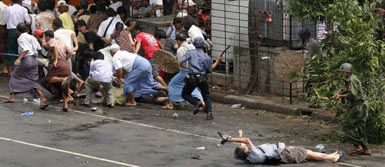
A Burmese photographer dies ....

Yes, we have got used to nasty regimes, and to states sucking up to their psychopathic gangster leaders, but there are limits, surely?

Why is the British Prime Minister grovelling to India (and by the way grossly insulting Pakistan at the same time) when India is laying out the red carpet for the Burmese murderer?

I don’t think “murderer” is too strong a word. Apart from all the usual and well-documented pogroms against minorities (remind anyone of Hitler?) the Burmese mafia government refused to allow international aid agencies to help after the catastrophic 2008 cyclone, the worst in Burma’s history. This condemned hundreds of thousands of Burmese citizens to heartless, needless suffering and certainly cost many lives.

Well, above I asked “why”?

Of course, it’s for selfish national interest. India wants access to Burma’s natural resources, especially oil, while Britain wants industrial contracts with India. Cynics would say Cameron succeeded; a follow-on deal for India to buy British Hawk trainer fighters has just been announced.

But why am I reminded of Goethe’s “Faust”? Is it really worth selling our soul to the Devil (indirectly condoning India’s sickening sycophancy to the Burmese Fuehrer) for the sake of some British jobs? A confirmative answer would seem to suggest that ethics in foreign policy is well and truly dead.

Once again, a vicious dictatorship flourishes by divide and rule. Where is the united international front that might help to put an end to our fellow-humans’ suffering? We managed this unity to help end South African apartheid; have our moral standards declined so much since then?

PS South Africa? Oh weep …. In January 2007, Russia and China vetoed a draft resolution before the United Nations Security Council calling on the government of Myanmar to respect human rights and begin a democratic transition. South Africa also voted against the resolution.

Still, they put on a good World Cup, so that’s all right then ……

By Chris Snuggs

The Dust Settles

Who dares, Wins!

The new British Conservative & Liberal-Democrat Cabinet

I can’t remember a more momentous week in British politics. It seemed silly to comment as events unfolded so swiftly – one would have risked being out of date before finishing the article – but it is perhaps time to summarize what has happened:

  • The outcome was in retrospect the best possible, even if none of the parties might think of it that way.
  • We have a stable government locked into a coalition that commands a large majority in the House of Commons and a considerable majority of the popular vote. Nobody can deny this coalition “the right to govern”, whichever way you regard the statistics.
  • The country’s finances are in a terrible mess and a stable government was essential to put things right and recover confidence.
  • Yes, there will be strains and stresses in each party, but both have now invested so much in this that  neither can afford to rock the  boat and risk another general election to let Labour back in under a new and more charismatic leader.
  • Both parties have shown a spirit of compromise and both have had to ditch some of their cherished (and more wacky) policies.
  • “First Past the Post” has taken a lot of stick and it seems the time of electoral reform has arrived. The Lib-Dems have a firm commitment to a referendum on the Alternative Vote (not optimal, but an improvement) plus other essential elements – long-delayed by the previous Labour dinosaur – such as fixed term parliaments, a redistribution of votes per constituency and a reduced number of MPs.
  • The country has seemed fragmented and divided in recent years, with much bitterness and a sense of drift and failure. The coalition has brought fresh hope, though it is born in very difficult times. But as a coalition it is perhaps better-placed than one single party to make the very difficult decisions needed. A single party would have had to make the same decisions but with the risk of losing a vote in the HOC and a lurch to the other side to start all over again.
  • The wretched previous government is gone. The most pleasing aspect of this is that those architects of spin and PR, the unelected Lord Mandelson and the unelectable Alistair Campbell, have seen their stars not only wane but disappear into a black hole. Their last-ditch attempt to stagger on in a Lib-Lab coalition was effectively torpedoed by their own back-benchers and party Grandees, who found the whole process undignified. It is indeed the end of Noo Labour, and few will regret its passing.
  • Last but not least, the Labour Party survives, whereas there was a time when it seemed it might be humiliated and destroyed. The extent of the defeat could not be spun – even if Mandelson et al had a go at it – but it survives as an essential part of the British political scene. Moreover, though Brown rightly had to go, he was not humiliated either and was able to depart with grace and dignity. One is far from sad to see him retire to the back benches, but the bad feeling that anything worse might have produced has been avoided.

The change has been momentous. Politics is unpredictable, so who can tell if this bold experiment will work. But “Who dares, Wins”, and they should have the best wishes of all who love their country.

By Chris Snuggs

UK Iraq Enquiry Update

The UK Iraq enquiry produces some odd insights

I found this on the BBC website last Sunday:

“Gordon Brown was ‘marginalised’ by Tony Blair in the build-up to the Iraq war”, former International Development Secretary Clare Short has said.

“The then chancellor neither opposed nor supported the invasion but was ‘preoccupied’ by other concerns,” she told the BBC’s Andrew Marr Show.

Frankly, it is surreally ludicrous. Is she really saying that while the country was preparing to go to war in extraordinarily-controversial circumstances, with hundreds of thousands marching in protest and all the rest, that

Clare Short

Brown had “other concerns”? And during the whole process these “other concerns” prevented him from AT ANY TIME having an input or indeed an opinion?

Is this some sort of attempt to disassociate him from responsibility? Whatever one thinks about the rights or wrongs of the invasion it was in the end a COLLECTIVE DECISION. Blair could NOT have done it without the support of the British Cabinet, especially Brown and Straw. If they had felt strongly enough about it, they could have resigned, or more likely have told Blair they WOULD resign if he pressed on, and thereby thwarted him.  Now, it isn’t easy to resign, or even threaten to – your bluff could always be called and your career go down the spout – but if you can’t do it when it is a matter of your country going to war when the hell CAN you do it?

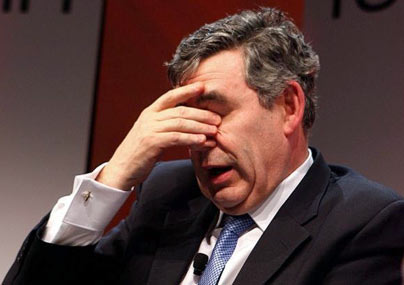
Gordon Brown

As for “neither supported nor opposed” the invasion, what a PATHETIC verdict on someone who went on (without an election) to “lead” the country.

“Well, I’m neither supporting nor opposing it since that way I can take either position later depending on how it pans out.”

I can’t recall having seen a more pathetic, fumbling, cowardly shambles. You may love or – more likely – hate Tony Blair, but as with Margaret Thatcher, you certainly knew where he stood.

By Chris Snuggs

News on a Sunday

A round up of this strange world that we all live in.

[In fact Chris wrote this on Sunday, 13th but due to the backlog of LfD posts to be published, it has been held until today, the 20th. The points are still as valid. Ed.]

BRITISH LABOUR PARTY WASTE ON FRIPPERY:

From the UK newspaper, The Daily Mail.

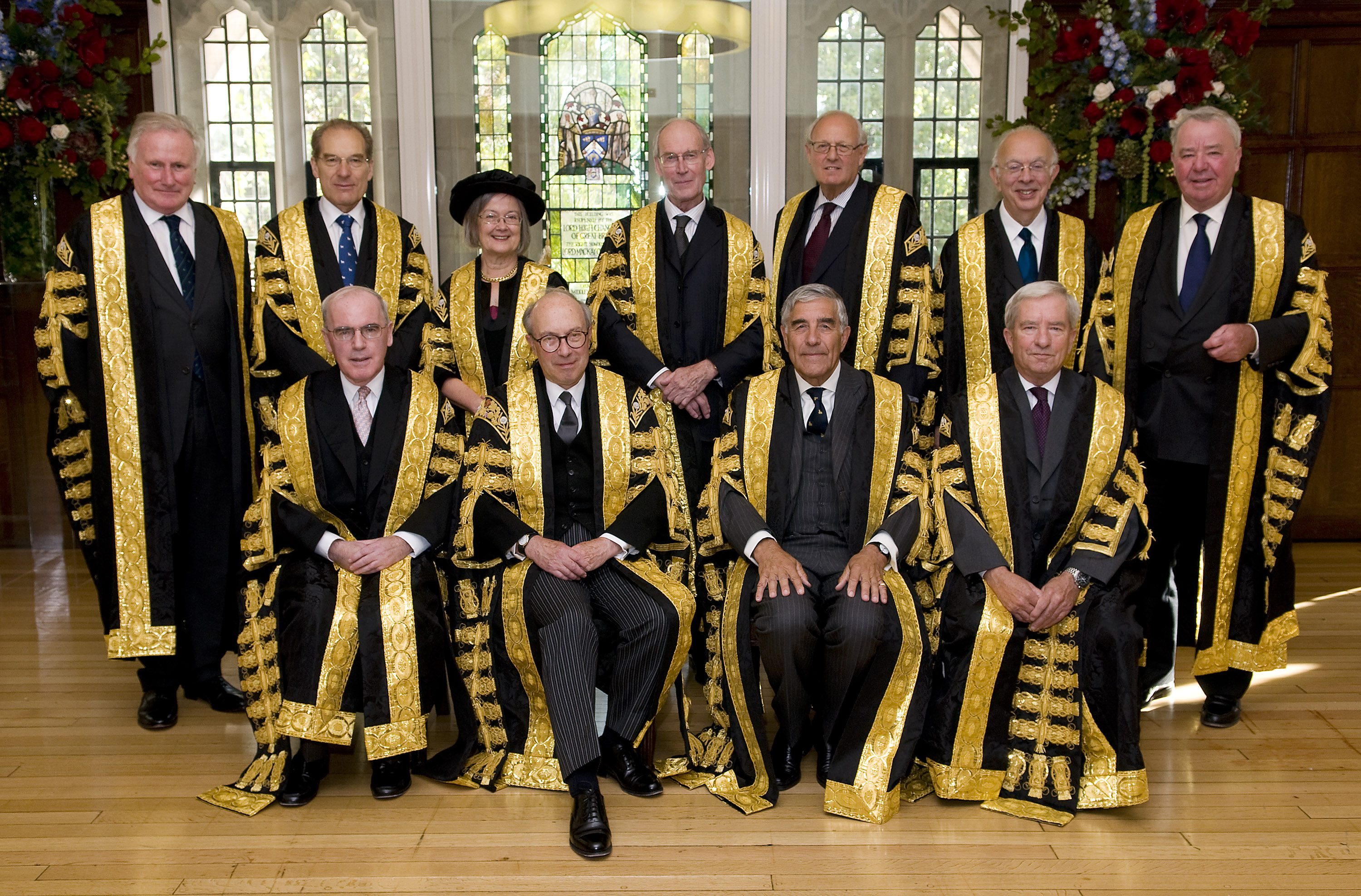
Judges in charge of Britain’s controversial new Supreme Court have been provided with robes they will hardly ever wear at a cost of £137,956 to the taxpayer.

The hand-crafted black brocade robes – embroidered with real gold thread – will not be worn by the 12 Supreme Court Justices in normal session.

They will be donned only perhaps twice a year for ceremonies such as the State Opening of Parliament or the beginning of the legal year. The rest of the time, the judges will wear everyday suits.

A snip at £140,000 ($224,000) Photographer – Ron Coello

It’s only money …. plenty more where that came from…

BRITISH POLITICS: Few things are more pathetic than the Liberals‘ current poll rating of 17%, with Labour on 26% That the worst government in the history of the world is still way ahead of the Liberals is of course a tribute to the lunacy of Labour voters, who seem not to understand the terrible damage this govt has done. Still, some of them have done very well under Labour: doctors, judges, high-ranking civil servants, consultants …. all more or less bribed with the people’s money.

Lib-Dems must be very depressed; if you can’t get a decent poll-rating when up against this motley bunch of venal, pompous, pretentious and incompetent misfits then you wonder really what the point of their party is.

Democracy?

Still, you get the government you deserve, so they say. Except that the British voting system is hopelessly undemocratic. In the next election a vote for the Lib-Dems is probably going to be wasted, risking the danger of letting Brown sneak in despite everything.

As for UKIP, it is a perfectly tenable position to want to get out of the EU. I’d guess that 30% of the electorate would want this, and that’s a very conservative estimate. Yet they have NO CHANCE WHATSOEVER of getting ANY representation in parliament.

This is not democracy, but of course it suits the two dinosaur parties very well indeed.

TIGER WOODS: what a pathetic, sordid saga this is. Not his bedroom antics, but the media obsession with it. People are dying all over the world of treatable diseases, of inhuman treatment at the hands of the North Koreans or others. Democracy is destroyed by religious nutters in Iran, millions more tons of ice melt, while politicians bleat uselessly (and expensively) in Copenhagen (I note they didn’t choose Scunthorpe! Might not have got such a good turnout!)

OIL: Oh, and on the climate front and the importance of reducing emissions I note that the Iraqi government is predicting oil output to rise to 12 million barrels a day within a few years – the same as Saudi Arabia.

That IS good news!!!!! … the British Labour government will hit us with every stealth and non-stealth tax you can imagine “to save carbon” and pay for yet more consultants and managers while the rest of the world greedily sups up billions more tons of oil.

Apparently, this has been a bumper year for oil discoveries …. you couldn’t make it up! An extra-terrestrial observer must be scratching his head wondering how the universe could have spawned up such a bizarre species.

Yet the press is full of Woods ….. and because he is good at golf … hitting a ball into a hole, a skill of such nanoscopically-sized irrelevance to the world’s problems. What sort of mentality is it that is even interested in yet another, crass, boring superstar who has failed to resist the temptations that money brings?

JFK was the great hero who would save the world but turned out to be just another, faithless, lying philanderer. Who can have any illusions since the days of Marilyn Monroe and the extinguished candle?

OBAMA PEACE PRIZE: The surreality of this obsession with over-sexed but hyper-boring celebrities is matched only by that involved in the award of the Nobel Peace Prize to Obama. What exactly has Obama actually DONE?

Nobel prize winner

Crucially, there is practically NO change in the Middle East (except the major change for the good brought by the reviled George Bush and Tony Blair! the world is nothing if not full of irony); the USA still cravenly supports Israel, which CONTINUES to build and/or enlarge settlements, which denies any possibility of ever putting right some of the wrongs of the past (Palestinian exiles, appropriation of their land, stealing of their capital and so on – even the West Bank roadblocks are mostly still in place.)

Yet even in the pathetic there can be humour, as when he said that to bring peace the USA had to make war, or words to that effect.

Yes, he is of course right, but it was still funny. I wonder what Mother Theresa would have said? And Nelson Mandela? He had to sweat out decades in prison preaching non-violence to earn his NPP, while Obama only had to get elected to get his. Truly the triumph of hope over reality.

Perhaps hope is all there is left. I nearly said “we have left”, but then I realized that I haven’t actually got much myself.

By Chris Snuggs

Update on the “British Solution”

The Credit Crisis in Britain

Following yesterday’s Post on this Blog about Goldman Sachs, here’s Britain in action.

Ministers yesterday (17th November) launched a £50 billion ($84 billion) bailout of Britain’s crippled banks – and warned there could be worse to come. State-controlled lenders Royal Bank of Scotland and Lloyds Banking Group will receive fresh injections of taxpayers’ money totalling £39 billion ($65.5 billion).

RBS – which has now received the biggest state rescue anywhere in the world – was also handed £11 billion ($18.5 billion) in tax breaks to help keep it afloat.

Source: The Daily Mail

Thanks for the Greed. Are the directors responsible still in place? Are the Great and Good who removed controls and oversaw the decade of binge-spending and easy credit still in place?

Britain's Global Giant!

Oh, I remember now. The very same person in Britain who was Chancellor throughout the 90s and is now Prime Minister is – according to John Prescott (former Labour Deputy-Leader and the person whose office sign was changed at a cost of £700 ($1,200)  when his job name was rebadged weeks before he left it anyway)  – a “Global Giant” who saved the world.

Oh, and let’s not forget, this is the same person who said that: “Britain is better placed than other countries in Europe to weather the crisis …..etc blah, blah, blah …”

The reality (which is in fairly short supply among Global Giants) is different:

Within hours of the Chancellor’s announcement, the European Commission issued a stark warning about the frayed state of Britain’s national finances, warning of an ‘extraordinary deterioration’ because of the cost of City rescues.

It estimates public debt will double as a share of the economy between 2007 and 2011, reaching 88 per cent of gross domestic product – the biggest rise of any leading EU economy.

The latest £50billion bank bailout is roughly equivalent to the annual schools budget and far exceeds the annual defence budget of £35billion. The new moves bring the total of public money lavished on Britain’s financial rescue to £1.2trillion – almost £20,000 for every man, woman and child living in the country.

… and the £ has sunk drastically against the euro ….

Still, let’s have a bit of positive spin …. the National Debt isn’t quite (yet) what is was just after WWII. A great achievement. Well done  Gordon Brown …. but you can do it …. just one more little push.

We could do with fewer spin-ridden “Global Giants” and more people with vision, courage and competence.

And rather than “saving the world” it might be nicer if Gordon Brown started with saving Britain.

By Chris Snuggs