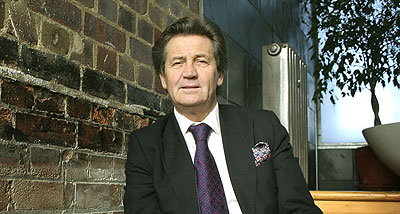
I am indebted to my son for dropping me an email with a link to a recent BBC Radio programme. It was from the long-running programme series In Our Time, presented by the consummate broadcasting professional Melvyn Bragg.
Melvyn Bragg
The WikiPedia entry details, The Rt. Honourable The Lord Bragg no less,
Melvyn Bragg, Baron Bragg, FRS, FBA, FRSA, FRSL, FRTS (born 6 October 1939), is an English broadcaster and author, best known for his work with the BBC and for ITV presenting the The South Bank Show (1978–2010). Since 1998 he has presented over 550 weekly episodes of the BBC Radio discussion programme In Our Time.
This particular episode was called Ice Ages; the link will take you to the programme page which includes the ability to listen to the 43 minutes long episode. (Alternatively, you can go straight to the recording via the BBC iPlayer.) The programme page explains:
ICE AGES
Jane Francis, Richard Corfield and Carrie Lear join Melvyn Bragg to discuss ice ages, periods when a reduction in the surface temperature of the Earth has resulted in ice sheets at the Poles. Although the term ‘ice age’ is commonly associated with prehistoric eras when much of northern Europe was covered in ice, we are in fact currently in an ice age which began up to 40 million years ago. Geological evidence indicates that there have been several in the Earth’s history, although their precise cause is not known. Ice ages have had profound effects on the geography and biology of our planet.
With:
Jane Francis
Professor of Paleoclimatology at the University of Leeds
Richard Corfield
Visiting Research Fellow in the Department of Earth Sciences at Oxford University
Carrie Lear
Senior Lecturer in Palaeoceanography at Cardiff University.
Now the programme requires careful listening as the conversation ranges rapidly about the number of ice ages, the intervening greenhouse periods and where we are at present. It would be easy to end up thinking that we are in a cooling phase (we are not) or that it’s only a matter of time before we are back in the next ice age (in geological terms, yes).
It was a close call. After the programme Jane Francis and Carrie Lear continued to talk about the climbing count of CO2 which was pumping up global warming, in their opinion, which would lead most dramatically to mass flooding. On the programme Richard Corfield did not join in very enthusiastically, pointing out that the CO2 count had been at least twice as high quite recently (geologically speaking) and even higher than that a bit before recently. The situation was beginning to develop into a relevant, contemporary conversation about climate change and the final bell was a merciful release. There was no thought of the ingenuity of men and women combating what would be a gradual increase (if it happens) of rising sea levels – we could have looked at the Dutch in the sixteenth century onwards. But I strayed from my task.
The grim conclusion of Jane Francis was never to buy or rent a house on a flood plain, always to buy or rent a house on a hill, or take a tent, or anything, as long as it’s on a hill and, I think Richard Corfield added, fortify it. Well, well. [my italics]
As I wrote yesterday, either Jane or Carrie, don’t recall whom, said on air just at the end that a CO2 level of nearly 400 ppm (January 2013: 395.55 ppm) is way above the range of levels where the Earth’s atmosphere has traditionally behaved in a stable manner.
In the end it really doesn’t matter geologically.
Our planet is approximately 4,540,000,000 years old. As WikiPedia explains,
There have been five known ice ages in the Earth’s history, with the Earth experiencing the Quaternary Ice Age during the present time. Within ice ages, there exist periods of more severe glacial conditions and more temperate referred to as glacial periods and interglacial periods, respectively. The Earth is currently in an interglacial period of the Quaternary Ice Age, with the last glacial period of the Quaternary having ended approximately 10,000 years ago with the start of the Holocene epoch.
This graph shows the history of ice ages and the fact that we are close to turning upwards towards a hotter geological period.
So we live on a planet that is 4.5 billion years old, towards the end of the current ice age that started 2.58 million years ago.
Early man evolved from hunting and gathering into the domestication of plants and animals, in other words farming, about 10,000 years ago. In these short years, from a geological perspective, we have lost total sight of the intimate relationship we had with the planet when our very survival depended on hunting and gathering.
In so little time!
Just reflect on the last 100 years of so-called modern agriculture. It has been characterised by enhanced productivity, the replacement of human labour by synthetic fertilizers and pesticides, selective breeding, and mechanisation. It has been closely tied to political issues such as water pollution, biofuels, genetically modified organisms, tariffs, and farm subsidies. All of which explains the backlash against the external environmental effects of mechanised agriculture, and increasing support for the organic movement and sustainable agriculture.
One might say that we have been farming the planet in the most broadest of senses; as if the planet is nothing more than a bottomless pool of resources.
Chief Jackie Thomas at the recent Forward-On-Climate rally talked about the toll that tar sands are already taking on her neighbors in Alberta, and promised that First Nations communities and their allies in Canada will never allow a pipeline to be built west to the Pacific.
Such peoples still in tune with their ancient heritage understand that humanity is first and foremost in and of the land.
I am incredibly grateful to be living in the USA as a legal resident. The circumstances that lead to Jeannie and me living here in Merlin, Southern Oregon are the stuff of dreams. Which is why writings on Learning from Dogs that could be seen as critical of a US administration leave me rather uncomfortable.
However, a recent news item on the BBC website struck me as so utterly incongruous that I couldn’t resist today’s post. As is said, “I can resist anything except temptation!” Here’s that item.
US Congress bans word ‘lunatic’ in federal legislation
6 December 2012
“Lunatic” is derived from the Latin word for moon, and the belief that it could affect mental health
The sharply divided US Congress has been able to agree on one thing at least – that the word “lunatic” should be banned.
The House of Representatives voted 398-1 on Wednesday to strike the term from all federal legislation, after the Senate did the same in May.
The measure is designed to remove language that has become outdated or demeaning from the US code.
The bill will now go to President Barack Obama for his signature.
Senator Kent Conrad, one of the sponsors of the measure, said: “Federal law should reflect the 21st Century understanding of mental illness and disease, and that the continued use of this pejorative term has no place in the US code.”
The only “no” vote came from Texas congressman Louie Gohmert, who said it was madness for lawmakers to waste time on such a measure when more high-profile issues loomed, such as the federal debt.
“Not only should we not eliminate the word ‘lunatic’ from federal law when the most pressing issue of the day is saving our country from bankruptcy,” said Rep Gohmert in a statement.
“We should use the word to describe the people who want to continue with business as usual in Washington.”
Now don’t get me wrong. In and of itself that measure is fabulous removing, as it does, any official labeling of those with mental health problems.
However, surely the following demonstrates that madness is still alive and well.
LAW PROHIBITS UNFAIR EU TAXATION OF U.S. AVIATION
November 27, 2012
Washington, DC – The President today signed into law a measure to stop the United States’ participation in a costly European Union (EU) scheme to impose an emissions tax on American and other nations’ aircraft operators and air carriers. Transportation and Infrastructure Committee Chairman John L. Mica (R-FL) and Aviation Subcommittee Chairman Tom Petri (R-WI) were among the primary sponsors of the bipartisan companion bill in the House of Representatives.
In 2011, Mica first led a Congressional delegation to the European Union to convey opposition to the EU’s plan. Mica also led a subsequent delegation to Montreal to meet with International Civil Aviation Organization (ICAO) leaders, representatives of the EU, and other officials regarding U.S. opposition to the ETS. The original “European Union Emissions Trading Scheme Prohibition Act of 2011,” authored by Mica, Petri, and other House leaders, overwhelmingly passed the House on October 24, 2011.
John Mica was quoted as saying “The law signed today is a clear signal that the United States will not accept the EU’s go-it-alone attempt to impose emissions taxes on other nations for activities far outside the EU’s own borders. This European emissions trading scheme is an unlawful infringement upon U.S. sovereignty, and the sovereignty of numerous other nations.”
Now I don’t know the rights and wrongs of this but one thing is clear to me. If trying to reduce carbon emissions represents ‘unlawful infringement upon U.S. sovereignty‘ then don’t even ponder on the infringement that not trying to reduce emissions would risk!
Which neatly leads to the Yale forum on Climate Change & The Media that recently reported,
Forget About That 2-Degree Future
SAN FRANCISCO, CA, Dec. 5, 2012 — Renowned British climate scientist Sir Robert Watson pulled few punches today during a talk about the warmer world humans will face in coming decades.
Watson, who was IPCC chair from 1997 to 2002, all but dismissed the possibility of keeping the rise in average global temperatures to 2 degrees Celsius above pre-industrial levels — a temperature rise that corresponds to an atmospheric concentration of CO2 of 450 parts per million. It now stands at about 390 ppm.
“Fundamentally, we are not on a path toward a 2 degree world,” Watson told a packed hall at Moscone Center for a talk entitled: “A World Where the Atmospheric Concentration of Carbon Dioxide Exceeds 450 ppm.”
If the international community wanted a world in which the rise in average global temperatures this century peaked at 2 degrees C above pre-Industrial levels, CO2 emissions in the developed world should have peaked in 2010, Watson said. Globally, they would need to peak by 2014.
Instead, CO2 emissions in 2010 were up 5.9 percent relative to 2009 — and that was in the midst of an economic downturn for most industrialized countries. Total carbon emissions as well as carbon intensity (often described as the amount of CO2 emitted per unit of a nation’s GDP) have gone up.
“It’s totally clear we’re changing the composition of the atmosphere …” [but] “politicians have not listened to the scientific message,” Watson said. [my emphasis]
Average global temperatures could rise 2 to 7 degrees C by the end of the century, driving a litany of environmental changes, Watson said. Already, the climate of the 2020s and 2030s is locked in, or as Watson put it, “pre-ordained.” “Therefore, we must adapt,” he said.
Science may just be starting to make some sense of this cruelest of diseases.
It used be to the dreaded ‘C’ word; cancer. But now that ‘C’ word has a companion, the dreaded ‘A’ word. The incidence of Alzheimer’s disease seems to be on a terrible rise. Indeed, my wife, Jean, lost her late husband to Alzheimer’s disease. My half-sister back in England is now very ill with the disease. Just chatting to some people here in Payson a few days ago revealed many who had friends or relations suffering.
So a recent item first seen on the website of The Permaculture Research Institute of Australia really jumped off the ‘page’! It was an article by George Monbiot entitled The Mind Thieves. I dropped Mr. Monbiot a quick email requesting permission to republish the article and very promptly received a positive answer. Thank you, Sir.
So before moving to the article, first a little background on George M. From his website, one quickly reads,
George Monbiot
I had an unhappy time at university, and I now regret having gone to Oxford, even though the zoology course I took – taught, among others, by Richard Dawkins, Bill Hamilton and John Krebs – was excellent. The culture did not suit me, and when I tried to join in I fell flat on my face, sometimes in a drunken stupor. I enjoyed the holidays more: I worked on farms and as a waterkeeper on the River Kennet. I spent much of the last two years planning my escape. There was only one job I wanted, and it did not yet exist: to make investigative environmental programmes for the BBC.
I’m not going to copy the full ‘About George‘ description but do urge you to pop across to here and read it yourself; George has had, trust me, a fascinating life journey that I suspect is far from over. This is how that About description closes,
Here are some of the things I love: my family and friends, salt marshes, arguments, chalk streams, Russian literature, kayaking among dolphins, diversity of all kinds, rockpools, heritage apples, woods, fishing, swimming in the sea, gazpacho, sprinting up the pitch in ultimate frisbee, ponds and ditches, growing vegetables, insects, pruning, forgotten corners, fossils, goldfinches, etymology, Bill Hicks, ruins, Shakespeare, landscape history, palaeoecology and Father Ted.
Here are some of the things I try to fight: undemocratic power, corruption, deception of the public, environmental destruction, injustice, inequality and the misallocation of resources, waste, denial, the libertarianism which grants freedom to the powerful at the expense of the powerless, undisclosed interests, complacency.
Here is what I fear: other people’s cowardice.
I still see my life as a slightly unhinged adventure whose perpetuation is something of a mystery. I have no idea where it will take me, and no ambitions other than to keep doing what I do. So far it’s been gripping.
The article was first published in the British Guardian newspaper (there’s an online link to it here) as the article mentions below. But I am republishing, in full thanks to George, the copy that appeared on George’s website on the 10th September last, including the references.
oooOOOooo
The Mind Thieves
September 10th, 2012
The evidence linking Alzheimer’s disease to the food industry is strong and growing.
By George Monbiot, published in the Guardian, 11th September 2012
When you raise the subject of over-eating and obesity, you often see people at their worst. The comment threads discussing these issues reveal a legion of bullies, who appear to delight in other people’s problems.
When alcoholism and drug addiction are discussed, the tone tends to be sympathetic. When obesity is discussed, the conversation is dominated by mockery and blame, though the evidence suggests that it can be driven by similar forms of addiction(1,2,3,4). I suspect that much of this mockery is a coded form of snobbery: the strong association between poor diets and poverty allows people to use this issue as a cipher for something else they want to say, which is less socially acceptable.
But this problem belongs to all of us. Even if you can detach yourself from the suffering caused by diseases arising from bad diets, you will carry the cost, as a growing proportion of the health budget will be used to address them. The cost – measured in both human suffering and money – could be far greater than we imagined. A large body of evidence now suggests that Alzheimer’s is primarily a metabolic disease. Some scientists have gone so far as to rename it. They call it diabetes type 3.
New Scientist carried this story on its cover last week(5): since then I’ve been sitting in the library trying to discover whether it stands up. I’ve now read dozens of papers on the subject, testing my cognitive powers to the limit as I’ve tried to get to grips with brain chemistry. While the story is by no means complete, the evidence so far is compelling.
Around 35 million people suffer from Alzheimer’s disease worldwide(6); current projections, based on the rate at which the population ages, suggest that this will rise to 100 million by 2050(7). But if, as many scientists now believe, it is caused largely by the brain’s impaired response to insulin, the numbers could rise much further. In the US, the percentage of the population with diabetes type 2, which is strongly linked to obesity, has almost trebled in 30 years(8). If Alzheimer’s, or “diabetes type 3”, goes the same way, the potential for human suffering is incalculable.
Insulin is the hormone which prompts the liver, muscles and fat to absorb sugar from the blood. Diabetes 2 is caused by excessive blood glucose, resulting either from a deficiency of insulin produced by the pancreas, or resistance to its signals by the organs which would usually take up the glucose.
The association between Alzheimer’s and diabetes 2 is long-established: type 2 sufferers are two to three times more likely to be struck by this dementia than the general population(9). There are also associations between Alzheimer’s and obesity(10) and Alzheimer’s and metabolic syndrome (a complex of diet-related pathologies)(11).
Researchers first proposed that Alzheimer’s was another form of diabetes in 2005. The authors of the original paper investigated the brains of 54 corpses, 28 of which belonged to people who had died of the disease(12). They found that the levels of both insulin and insulin-like growth factors in the brains of Alzheimer’s patients were sharply reduced by comparison to those in the brains of people who had died of other causes. Levels were lowest in the parts of the brain most affected by the disease.
Their work led them to conclude that insulin and insulin-like growth factor are produced not only in the pancreas but also in the brain. Insulin in the brain has a host of functions: as well as glucose metabolism, it helps to regulate the transmission of signals from one nerve cell to another, and affects their growth, plasticity and survival(13,14).
Experiments conducted since then appear to support the link between diet and dementia(15,16,17,18), and researchers have begun to propose potential mechanisms. In common with all brain chemistry, these tend to be fantastically complex, involving, among other impacts, inflammation, stress caused by oxidation, the accumulation of one kind of brain protein and the transformation of another(19,20,21,22). I would need the next six pages of this paper even to begin to explain them, and would doubtless get it wrong (if you’re interested, please follow the links on my website).
Plenty of research still needs to be done. But if the current indications are correct, Alzheimer’s disease could be another catastrophic impact of the junk food industry, and the worst discovered so far. Our governments, as they are in the face of all our major crises, appear to be incapable of responding.
In this country as in many others, the government’s answer to the multiple disasters caused by the consumption of too much sugar and fat is to call on both companies and consumers to regulate themselves. Before he was replaced by someone even worse, the former health secretary, Andrew Lansley, handed much of the responsibility for improving the nation’s diet to food and drinks companies: a strategy that would work only if they volunteered to abandon much of their business(23,24).
A scarcely-regulated food industry can engineer its products – loading them with fat, salt, sugar and high fructose corn syrup – to bypass the neurological signals which would otherwise prompt people to stop eating(25). It can bombard both adults and children with advertising. It can (as we discovered yesterday) use the freedoms granted to academy schools to sell the chocolate, sweets and fizzy drinks now banned from sale in maintained schools(26). It can kill the only effective system (the traffic light label) for informing people how much fat, sugar and salt their food contains. Then it can turn to the government and blame consumers for eating the products it sells. This is class war: a war against the poor fought by the executive class in government and industry.
We cannot yet state unequivocally that poor diet is a leading cause of Alzheimer’s disease, though we can say that the evidence is strong and growing. But if ever there was a case for the precautionary principle, here it is. It’s not as if we lose anything by eating less rubbish. Averting a possible epidemic of this devastating disease means taking on the bullies: those who mock people for their pathologies and those who spread the pathologies by peddling a lethal diet.
References:
1. Caroline Davis et al, 2011. Evidence that ‘food addiction’ is a valid phenotype of obesity. Appetite Vol. 57, pp711–717. doi:10.1016/j.appet.2011.08.017
2. Paul J. Kenny, November 2011. Common cellular and molecular mechanisms in obesity and drug addiction. Nature Neuroscience, Vol. 12, pp 638-651. doi:10.1038/nrn3105
3. Joseph Frascella et al, 2010. Shared brain vulnerabilities open the way for nonsubstance addictions: Carving addiction
at a new joint? Annals of the New York Academy of Sciences, Vol. 1187, pp294–315. doi: 10.1111/j.1749-6632.2009.05420.x
4. Ashley N. Gearhardt et al, 2010. Can food be addictive? Public health and policy implications. Addiction, 106, 1208–1212. ad. d_3301 1208..1212 doi:10.1111/j.1360-0443.2010.03301.x
5. Bijal Trivedi, 1st September 2012. Eat Your Way to Dementia. New Scientist.
6. Sónia C. Correia et al, 2011. Insulin-resistant brain state: The culprit in sporadic Alzheimer’s disease? Ageing Research Reviews Vol. 10, 264–273. doi:10.1016/j.arr.2011.01.001
7. Fabio Copped`e et al, 2012. Nutrition and Dementia. Current Gerontology and Geriatrics Research, Vol. 2012, pp1-3. doi:10.1155/2012/926082
8. See the graph in Bijal Trivedi, 1st September 2012. Eat Your Way to Dementia. New Scientist.
9. Johanna Zemva and Markus Schubert, September 2011. Central Insulin and Insulin-Like Growth Factor-1 Signaling – Implications for Diabetes Associated Dementia. Current Diabetes Reviews, Vol.7, No.5, pp356-366. doi.org/10.2174/157339911797415594
10. Eg Weili Xu et al, 2011. Midlife overweight and obesity increase late life dementia risk: a population-based twin study. Neurology, Vol. 76, no. 18, pp.1568–1574.
11. M. Vanhanen et al, 2006. Association of metabolic syndrome with Alzheimer disease: A population-based study. Neurology, vol. 67, pp.843–847.
12. Eric Steen et al, 2005. Impaired insulin and insulin-like growth factor expression and signaling mechanisms in Alzheimer’s disease – is this type 3 diabetes?. Journal of Alzheimer’s Disease, Vol. 7, pp.63–80.
13. Konrad Talbot et al, 2012. Demonstrated brain insulin resistance in Alzheimer’s disease patients is associated with IGF-1 resistance, IRS-1 dysregulation, and cognitive decline. The Journal of Clinical Investigation, Vol.122, No.4, pp.1316–1338. doi:10.1172/JCI59903.
14. Naoki Yamamoto et al, 2012. Brain insulin resistance accelerates Aβ fibrillogenesis by inducing GM1 ganglioside clustering in the presynaptic membranes. Journal of Neurochemistry, Vol. 121, 619–628. doi: 10.1111/j.1471-4159.2012.07668.x
15. Eg:
Wei-Qin Zhao and Matthew Townsend, 2009. Insulin resistance and amyloidogenesis as common molecular foundation for type 2 diabetes and Alzheimer’s disease.
Biochimica et Biophysica Acta, Vol.1792, pp.482–496. doi.org/10.1016/j.bbadis.2008.10.014,
16. Sónia C. Correia et al, 2011. Insulin-resistant brain state: The culprit in sporadic Alzheimer’s disease? Ageing Research Reviews Vol. 10, 264–273. doi:10.1016/j.arr.2011.01.001
17. T. Ohara et al, 2011. Glucose tolerance status and risk of dementia in the community, the Hisayama study. Neurology, Vol. 77, pp.1126–1134.
18. Karen Neumann et al, 2008. Insulin resistance and Alzheimer’s disease: molecular links & clinical implications. Current Alzheimer Research, Vol.5, no.5, pp438–447.
19. Eg: Lap Ho et al, 2012. Insulin Receptor Expression and Activity in the Brains of Nondiabetic Sporadic Alzheimer’s Disease Cases. International Journal of Alzheimer’s Disease, Volume 2012. doi:10.1155/2012/321280
20. Suzanne M. de la Monte, 2012. Contributions of Brain Insulin Resistance and Deficiency in Amyloid-Related Neurodegeneration in Alzheimer’s Disease. Drugs, Vol. 72, no.1, pp. 49-66. doi: 10.2165/11597760
21. Ying Liu et al, 2011. Deficient brain insulin signalling pathway in Alzheimer’s disease and diabetes. Journal of Pathology, Vol. 225, pp.54–62. doi: 0.1002/path.2912
22. Konrad Talbot et al, 2012. Demonstrated brain insulin resistance in Alzheimer’s disease patients is associated with IGF-1 resistance, IRS-1 dysregulation, and cognitive decline. The Journal of Clinical Investigation, Vol.122, No.4, pp.1316–1338. doi:10.1172/JCI59903.
Don’t know about you but the above is a fine example of investigative reporting. It deserves the widest circulation because if it is proved that there is a link between diet and Alzheimer’s disease then, once again, it shows how taking personal responsibility for our health has huge implications for us, our families and for society at large.
A stark reminder that more of the same will hurt us.
On the 14th August I published a post with the title of From feeling to doing. The post was a 15-minute video presented by David Roberts of Grist showing, in essence, how fundamentally simple was the issue of climate change and how profound the implications if we didn’t halt the rise in the temperature of Planet Earth.
I’m not going to insert that video in this post because you can click on the link above and do that yourself. What I will do is to draw your attention to the accompanying article on Grist under the title of Climate change is simple: We do something or we’re screwed. That article includes the slides that were in the video, such as this one:
So with that in mind, here’s what the BBC published on their news website yesterday morning,
Science advisor warns climate target ‘out the window’
By Pallab Ghosh, Science correspondent, BBC News
One of the Government’s most senior scientific advisors has said that efforts to stop a sharp rise in global temperatures were now unrealistic.
Professor Sir Robert Watson said that the hope of restricting the average temperature rise to 2C was “out the window”.
He said that the rise could be as high as 5C – with dire conseqences.
Professor Watson added the Chancellor, George Osborne, should back efforts to cut the UK’s CO2 emissions.
He said: “I have to look back (on the outcome of sucessive climate change summits) Copenhagen, Cancun and Durban and say that I can’t be overly optimistic.
“To be quite candid the idea of a 2C target is largely out of the window.”
As the BBC points out Professor Watson is a highly respected and world renown scientist on climate change policy and is currently Chief Scientist at the Department for Food and Rural Affairs (DEFRA) and a former Chair of the Intergovernmental Panel on Climate Change. Professor Watson was also with the World Bank and an advisor to former Vice President Al Gore. The BBC item goes on,
Professor Watson, who is due to step down from his role at Defra next month, suggested that the Chancellor, George Osborne, reconsider his opposition to tough measures to reduce carbon dioxide emissions.
Mr Osborne has said that the UK’s ambitious targets for CO2 should be relaxed so as not to drive businesses to countries which have set themselves much lower targets.
“I would say to George Osborne, ‘work with the public sector. Work with the public on behavior change. Let’s demonstrate to the rest of the world that we can make significant progress here” Professor Watson argues that the UK and Germany should continue to take the lead in driving efforts to reach an effective international treaty.
Hurt Poorest
“If we carry on the way we are there is a 50-50 chance that we will get to a 3 degree rise,” he said.
“I wouldn’t rule out a 5 degree world and that would be quite serious for the people of the world especially the poorest. We need more political will than we currently have”.
It shows that the impact on human health, the availability of food and water, the loss of coastlines becomes progressively worse as the average temperature of the planet rises.
The 2C target was agreed at the United Nations Framework Convention on Climate Change meeting in 2010.
The majority of countries though prefer a lower target of 1.5C.
Professor Watson added that deep cuts in CO2 emissions are possible using innovative technologies without harming economic recovery.
“This doesn’t take a revolution in energy technology, an evolution would get us there.”
What I would add to this report that has been widely circulated is that while it’s natural to assume, ‘We need more political will than we currently have‘, that political will flows from the will of the people.
Take the effect of a 4C rise, as David Roberts explains,
Which is described in the Grist article as,
Here’s the edition of the Royal Society journal that came out of the conference on 4 degrees C of warming. Read through it and see if you think “hell on earth” is an exaggeration. Desertification, water shortages, agricultural disruptions, rising sea levels, vanishing coral, tropical forest die-offs, mass species extinctions, oh my. Kevin Anderson, one of the lead scientists involved, was moved to say that “a 4 degrees C future is incompatible with an organized global community, is likely to be beyond ‘adaptation’, is devastating to the majority of ecosystems, and has a high probability of not being stable.”
So come on people, get real! Make sure that the democratic systems work and that our leaders know the sort of change that has to take place. As the wise Professor highlighted, ‘… deep cuts in CO2 emissions are possible using innovative technologies without harming economic recovery.’ Sort of makes sense to me. How about you?
I’m writing this as 5.40 am on the 6th. I let our ‘bedroom’ dogs out for their early-morning pee some 20 minutes ago and then jumped back in bed, turned on my Kindle and went to the BBC News website. There I read,
Nasa’s Curiosity rover successfully lands on Mars
The US space agency has just landed a huge new robot rover on Mars.
It will now embark on a mission of at least two years to look for evidence that Mars may once have supported life.
A signal confirming the rover was on the ground safely was relayed to Earth via Nasa’s Odyssey satellite, which is in orbit around the Red Planet.
The success was greeted with a roar of approval here at mission control at the Jet Propulsion Laboratory (JPL) in Pasadena, California.
As David Shukman, Science Editor of the BBC, wrote,
The day I watched Curiosity being built in a clean room at Nasa’s Jet Propulsion Laboratory in Pasadena last year, the rover’s six wheels were lying on one work bench while the chassis stood on another and it was hard to believe the white-suited engineers could make sense of the maze of tubes and cabling.
But what they’ve created now stands on the red soil of Mars – and it’s in one piece. In the hallway of a JPL building we were shown a full-size replica. Walking around it made me realise something difficult to grasp from the pictures and video: this is a beast of a machine, a kind of cosmic Humvee with instruments instead of weapons.
Sometimes Nasa public relations can appear bragging. Today it feels justified. Curiosity is all set to discover something remarkable about our strangest neighbour.
Well said and people from all around the world will echo those sentiments.
When I read what Patrice wrote in my Setting the scene post not so many hours ago,
Well, OK, keeping my fingers, and even my arms, crossed here. Seems to me the “sky crane” is over-complex, and I was not reassured when one of the physicist-engineers boasted that they had run the landing millions of time on simulator. Yeap, OK, how many times for real in Earth’s gravity?
I don’t see why they could not have landed normally, LEM style. Especially as they have wheels and could have rolled away to find undistrubed land.
There are no back-ups…
OK, let’s hope I’m wrong to be suspicious…
PA
I instinctively agreed and hoped his worries were misplaced. They were! The Curiosity rover is down! Good luck to the Rover and all those who made it possible. Well done, the team!
Like many people I had been aware of the hunt for this strange particle, the Higgs boson. Like many people as well, I suspect, I really didn’t comprehend what it was all about.
Then in The Economist print edition of the July 7th the newspaper’s primary story and leader were about the discovery of the Higgs announced on the 4th July. The leader, in particular, was both clear and compelling. I held my breath and asked for permission to republish that leader in Learning from Dogs.
Well the good people from the relevant department at The Economist promptly gave written permission for their leader to be available here for a period of one year. Thanks team!
oooOOOooo
The Higgs boson
Science’s great leap forward
After decades of searching, physicists have solved one of the mysteries of the universe
Jul 7th 2012 | from the print edition
HISTORICAL events recede in importance with every passing decade. Crises, political and financial, can be seen for the blips on the path of progress that they usually are. Even the horrors of war acquire a patina of unreality. The laws of physics, though, are eternal and universal. Elucidating them is one of the triumphs of mankind. And this week has seen just such a triumphant elucidation.
On July 4th physicists working in Geneva at CERN, the world’s biggest particle-physics laboratory, announced that they had found the Higgs boson. Broadly, particle physics is to the universe what DNA is to life: the hidden principle underlying so much else. Like the uncovering of DNA’s structure by Francis Crick and James Watson in 1953, the discovery of the Higgs makes sense of what would otherwise be incomprehensible. Its significance is massive. Literally. Without the Higgs there would be no mass. And without mass, there would be no stars, no planets and no atoms. And certainly no human beings. Indeed, there would be no history. Massless particles are doomed by Einstein’s theory of relativity to travel at the speed of light. That means, for them, that the past, the present and the future are the same thing.
Deus et CERN
Such power to affect the whole universe has led some to dub the Higgs “the God particle”. That, it is not. It does not explain creation itself. But it is nevertheless the most fundamental discovery in physics for decades.
Unlike the structure of DNA, which came as a surprise, the Higgs is a long-expected guest. It was predicted in 1964 by Peter Higgs, a British physicist who was trying to fix a niggle in quantum theory, and independently, in various guises, by five other researchers. And if the Higgs—or something similar—did not exist, then a lot of what physicists think they know about the universe would be wrong.
Physics has two working models of reality. One is Einstein’s general relativity, which deals with space, time and gravity. This is an elegant assembly of interlocking equations that poured out of a single mind a century ago. The other, known as the Standard Model, deals with everything else more messily.
The Standard Model, a product of many minds, incorporates the three fundamental forces that are not gravity (electromagnetism, and the strong and weak nuclear forces), and also a menagerie of apparently indivisible particles: quarks, of which protons and neutrons, and thus atomic nuclei, are made; electrons that orbit those nuclei; and more rarefied beasts such as muons and neutrinos. Without the Higgs, the maths which holds this edifice together would disintegrate.
Finding the Higgs, though, made looking for needles in haystacks seem simple. The discovery eventually came about using the Large Hadron Collider (LHC), a machine at CERN that sends bunches of protons round a ring 27km in circumference, in opposite directions, at close to the speed of light, so that they collide head on. The faster the protons are moving, the more energy they have. When they collide, this energy is converted into other particles (Einstein’s E=mc2), which then decay into yet more particles. What these decay particles are depends on what was created in the original collision, but unfortunately there is no unique pattern that shouts “Higgs!” The search, therefore, has been for small deviations from what would be seen if there were no Higgs. That is one reason it took so long.
Another was that no one knew how much the Higgs would weigh, and therefore how fast the protons needed to be travelling to make it. Finding the Higgs was thus a question of looking at lots of different energy levels, and ruling each out in turn until the seekers found what they were looking for.
Queerer than we can suppose?
For physicists, the Higgs is merely the LHC’s aperitif. They hope the machine will now produce other particles—ones that the Standard Model does not predict, and which might account for some strange stuff called “dark matter”.
Astronomers know dark matter abounds in the universe, but cannot yet explain it. Both theory and observation suggest that “normal” matter (the atom-making particles described by the Standard Model) is only about 4% of the total stuff of creation. Almost three-quarters of the universe is something completely obscure, dubbed “dark energy”. The rest, 22% or so, is matter of some sort, but a sort that can be detected only from its gravity. It forms a giant lattice that permeates space and controls the position of galaxies made of visible matter (see article). It also stops those galaxies spinning themselves apart. Physicists hope that it is the product of one of the post-Standard Model theories they have dreamed up while waiting for the Higgs. Now, they will be able to find out.
For non-physicists, the importance of finding the Higgs belongs to the realm of understanding rather than utility. It adds to the sum of human knowledge—but it may never change lives as DNA or relativity have. Within 40 years, Einstein’s theories paved the way for the Manhattan Project and the scourge of nuclear weapons. The deciphering of DNA has led directly to many of the benefits of modern medicine and agriculture. The last really useful subatomic particle to be discovered, though, was the neutron in 1932. Particles found subsequently are too hard to make, and too short-lived to be useful.
This helps explain why, even at this moment of triumph, particle physics is a fragile endeavour. Gone are the days when physicists, having given politicians the atom bomb, strode confidently around the corridors of power. Today they are supplicants in a world where money is tight. The LHC, sustained by a consortium that was originally European but is now global, cost about $10 billion to build.
That is still a relatively small amount, though, to pay for knowing how things really work, and no form of science reaches deeper into reality than particle physics. As J.B.S. Haldane, a polymathic British scientist, once put it, the universe may be not only queerer than we suppose, but queerer than we can suppose. Yet given the chance, particle physicists will give it a run for its money.
Before signing off on this very important step forward for physics, here are a couple of footnotes.
First, here’s a video of the announcement that was widely shown on the 4th.
Secondly, the BBC News website had a really good piece on the 12th July written by their science correspondent, Quentin Cooper, called Higgs: What was left unsaid.Here’s a flavour taken from the early part of the article,
So that’s it, search over, Higgs boson found. Almost 50 years after physicist Peter Higgs first theorised it was out there, public elementary number one has finally been captured in the data from two detectors at the Large Hadron Collider at Cern. Case closed. Champagne popped. Boson nova danced.
If only. That handily simplified and heavily fictionalised telling of the tale has helped transform a spectacular scientific success story into one that is also global front page news. Without it the 4 July announcement might not have generated such a frenzy of coverage and so many claims about it being a historic milestone for our species. One particle physicist only half jokingly told me that in future the date may come to be celebrated as Higgs Day, rather than anything to do with American independence.
Don’t get me wrong. What has happened at Cern represents a magnificent accomplishment; big science at its biggest and boldest. And it’s fantastic that it has been perceived and received as being of such importance. It’s just that there is more to the story from the very beginning right through to the, probably false, ending.
For starters, as Peter Higgs himself acknowledges, he was just one of several scientists who came up with the mechanism which predicted the particle which bears his name, but the others rarely get a mention*. As to the finish – well, as small children are fond of saying, are we there yet? There is very strong evidence that the LHC teams have found a new elementary particle, but while this is exciting it is far less clear that what they’ve detected is the fabled Higgs. If it is, it seems curiously lighter than expected and more work is needed to explain away the discrepancy. If it’s not, then the experimentalists and theorists are going to be even busier trying to see if it can be shoehorned into the current Standard Model of particle physics. Either way, it’s not exactly conclusive.
Do take the simple step of clicking here and read the BBC piece in full.
Well done, Mr. Peter Higgs and all those very persistent scientists associated with the Large Hadron Collider; I suspect we haven’t heard the last of this!
An original idea that shouldn’t be regarded as innovative.
We live in interesting times! Whenever I use that phrase, and it seems to slip from my lips too often these days, I am reminded of the ancient Chinese curse, “May you live in interesting times!”
There are a goodly number of countries that have legislation that ‘impose’ a minimum wage for employees. Here in the USA, the Federal level for 2012 is $7.25 per hour but it isn’t necessarily the same across all States. Based on a 40-hour working week, 50 weeks a year, that comes to a gross of $14,500 for the full year.
Let’s contrast that with a person who has been in the news recently, Mr. Bob Diamond, Chief Executive of Barclays.
Mr Diamond has said he will not take a bonus for this year as a result of the scandal.
It is not the first time the 60-year-old Boston-born former academic – he began his career as a university lecturer – has made the headlines.
Mr Diamond was previously best-known for his huge wealth: last year he topped the list of the highest-paid chief executives in the FTSE 100.
‘Unacceptable face’
In 2011 Mr Diamond earned £20.9m, comprising salary, bonuses and share options, and he is reported to have a personal wealth of £105m.
There has long been controversy about the amount he earns.
In 2010, Lord Mandelson described him as the “unacceptable face of banking”, saying he had taken a £63m salary for “deal-making and shuffling paper around”.
Barclays dismissed the figure as “total fiction” saying that his salary as head of Barclays Capital was actually £250,000.
BBC business editor Robert Peston said he believed Mr Diamond had earned £6m in 2009 from a long-term incentive scheme and £27m from selling his stake in a Barclays-owned business that had been sold.
So whether he earns £20.9m, £6m or even £250,000 frankly makes no difference to the fact that the gap between what the poorest may earn and the sorts of monies that are given to Mr. Diamond and his like is just plain wrong. [And since writing this on Monday, the news broke on Tuesday morning that Mr. Diamond is now unemployed.] Don’t often quote the bible in Learning from Dogs but 2 Corinthians 8:13-15 is irresistible (King James Version),
Our desire is not that others might be relieved while you are hard pressed, but that there might be equality. At the present time your plenty will supply what they need, so that in turn their plenty will supply what you need. The goal is equality, as it is written: “The one who gathered much did not have too much, and the one who gathered little did not have too little.” [my emphasis]
I subscribe to Naked Capitalism and the other day there was a deeply interesting article about France pushing for a maximum wage. Let me take the liberty of quoting all of it,
SUNDAY, JULY 1, 2012
France Pushing for a Maximum Wage; Will Others Follow?
A reader pointed out a news item we missed, namely, that the new government in France is trying to implement a maximum wage for the employees of state-owned companies. From the Financial Times:
France’s new socialist government has launched a crackdown on excessive corporate pay by promising to slash the wages of chief executives at companies in which it owns a controlling stake, including EDF, the nuclear power group.
In a departure from the more boardroom-friendly approach of the previous right-of-centre administration, newly elected president François Hollande wants to cap the salary of company leaders at 20 times that of their lowest-paid worker.
According to Jean-Marc Ayrault, prime minister, the measure would be imposed on chief executives at groups such as EDF’s Henri Proglio and Luc Oursel at Areva, the nuclear engineering group. Their pay would fall about 70 per cent and 50 per cent respectively should the plan be cleared by lawyers and implemented in full…
France is unusual in that it still owns large stakes in many of its biggest global companies, ranging from GDF Suez, the gas utility; to Renault, the carmaker; and EADS, parent group of passenger jet maker Airbus.
Of course, in the US, we have companies feeding so heavily at the government trough that they hardly deserve the label of being private, but the idea that the public might legitimately have reason to want to rein in ever-rising executive pay is treated as a rabid radical idea.
For those, however, receiving bailouts, deposit insurance, government guarantees, tax breaks, tax credits, other forms of public financing, government contracts of any sort – and so on – the top paid person cannot receive more than twenty-five times the bottom paid person. This ratio, by the way, is what business visionary Peter Drucker recommended as most effective for organization performance as well as society. It also echoes Jim Collins who, in his book Good To Great, found that the most effective top leaders are paid more modestly than unsuccessful ones. And, critically, it is a ratio that is in line with various European and other nations that have dramatically lower income inequality than the United States.
In other words, the French proposal isn’t that big a change from existing norms, at least in most other advanced economics (ex the UK, which has also moved strongly in the direction of US top level pay). But despite the overwhelming evidence that corporate performance is if anything negatively correlated with CEO pay, the myth of the superstar CEO and the practical obstacles to shareholder intervention (too fragmented; too many built in protections for incumbent management, like staggered director terms; major free rider problems if any investor tries to discipline extractive CEO and C level pay, which means it’s easier to sell than protest) means ideas like this are unlikely to get even a hearing in the US. Let the looting continue!
As Patrice Ayme commented on that Naked Capitalism article, “France will pass the 20 to 1 law, as the socialists control the entire state, senate, National Assembly, Regions, big cities, etc. Only the French Constitutional Court could stop it. That’s unlikely, why? Because one cannot have a minimum wage, without a maximum wage. It’s not a question of philosophy, but of mathematics.”
Let me go back and requote this,
…. the top paid person cannot receive more than twenty-five times the bottom paid person. This ratio, by the way, is what business visionary Peter Drucker recommended as most effective for organization performance as well as society. It also echoes Jim Collins who, in his book Good To Great, found that the most effective top leaders are paid more modestly than unsuccessful ones. And, critically, it is a ratio that is in line with various European and other nations that have dramatically lower income inequality than the United States.
Thus if society was to embrace this approach to fairness, in America the top paid person in 2012 in the USA would be on 25 times the minimum wage level of $14,500 a year or, in other words, $362,500 a year.
I’m not a raving liberal but I am bound to say that this sits pretty well with me. How about you?
As I opened, an original idea that shouldn’t be regarded as innovative.
Before going to a recent BBC report about this important subject, let me offer a personal anecdote.
A couple of months ago I had cause to be seen by a neurologist. I wanted to get a professional opinion as to whether a degree of forgetfulness that I was experiencing was normal for a person of my age (68 next birthday). Dr. G. not only confirmed that there was absolutely no sign of dementia but that my forgetfulness was perfectly normal for someone of my age who had been through some major life changes in the last few years.
Dr. G. stressed (probably not the best word but you know what I mean!) that me worrying about forgetting stuff and the resulting anxiety was a self-feeding issue. I had to stop being anxious. Indeed, Dr. G. said the following (and this I haven’t forgotten!):
Anxiety is the killer of good bodies and the killer of good brains!
So with those words ringing in your ears, have a read of this recent report from the BBC News website.
Role of stress in dementia investigated
By Michelle Roberts, Health editor, BBC News online
UK experts are to begin a study to find out if stress can trigger dementia.
The investigation, funded by the Alzheimer’s Society, will monitor 140 people with mild cognitive impairment or “pre-dementia” and look at how stress affects their condition.
The researchers will take blood and saliva samples at six-monthly intervals over the 18 months of the study to measure biological markers of stress.
They hope their work will reveal ways to prevent dementia.
The results could offer clues to new treatments or better ways of managing the condition, they say.
Dementia triggers
People who have mild cognitive impairment are at an increased risk of going on to develop dementia – although some will remain stable and others may improve.
And past work suggests mid-life stress may increase a person’s risk of Alzheimer’s disease.
A Swedish study that followed nearly 1,500 women for a period of 35 years found the risk of dementia was about 65% higher in women who reported repeated periods of stress in middle age than in those who did not.
Scottish scientists, who have done studies in animals, believe the link may be down to hormones the body releases in response to stress which interfere with brain function.
Prof Clive Holmes, from the University of Southampton, who will lead the study, said: “All of us go through stressful events. We are looking to understand how these may become a risk factor for the development of Alzheimer’s.
“Something such as bereavement or a traumatic experience – possibly even moving home – are also potential factors.
“This is the first stage in developing ways in which to intervene with psychological or drug-based treatments to fight the disease.
“We are looking at two aspects of stress relief – physical and psychological – and the body’s response to that experience.”
Dr Simon Ridley, of Alzheimer’s Research UK, said: “We welcome any research that could shed new light on Alzheimer’s disease and other causes of dementia.
“Understanding the risk factors for Alzheimer’s could provide one piece of the puzzle we need to take us closer to a treatment that could stop the disease in its tracks.”
The sad story of the death of Lonesome George, a giant tortoise.
When you’re gone, you’re gone, it is said. But in the case of this example of the beauty of Mother Nature, the idea of being gone is as final as it comes; George was the last of his species.
Staff at the Galapagos National Park in Ecuador say Lonesome George, a giant tortoise believed to be the last of its subspecies, has died.
Scientists estimate he was about 100 years old.
Park officials said they would carry out a post-mortem to determine the cause of his death.
With no offspring and no known individuals from his subspecies left, Lonesome George became known as the rarest creature in the world.
For decades, environmentalists unsuccessfully tried to get the Pinta Island tortoise to reproduce with females from a similar subspecies on the Galapagos Islands.
Park officials said the tortoise was found dead in his corral by his keeper of 40 years, Fausto Llerena.
While his exact age was not known, Lonesome George was estimated to be about 100, which made him a young adult as the subspecies can live up to an age of 200.
Lonesome George was first seen by a Hungarian scientist on the Galapagos island of Pinta in 1972.
Environmentalists had believed his subspecies(Chelonoidis nigra abingdoni) had become extinct.
Lonesome George became part of the Galapagos National Park breeding programme.
After 15 years of living with a female tortoise from the nearby Wolf volcano, Lonesome George did mate, but the eggs were infertile.
He also shared his corral with female tortoises from Espanola island, which are genetically closer to him than those from Wolf volcano, but Lonesome George failed to mate with them.
He became a symbol of the Galapagos Islands, which attract some 180,000 visitors a year.
Galapagos National Park officials said that with George’s death, the Pinta tortoise subspecies has become extinct.
They said his body would probably be embalmed to conserve him for future generations.
Tortoises were plentiful on the Galapagos islands until the late 19th century, but were later hunted for their meat by sailors and fishermen to the point of extinction.
Their habitat furthermore suffered when goats were introduced from the mainland.
The differences in appearance between tortoises from different Galapagos islands were among the features which helped the British naturalist Charles Darwin formulate his theory of evolution.
Some 20,000 giant tortoises of other subspecies still live on the Galapagos.
Continuing the tribute, Chris Mazzarella had some stunning photographs on his wonderful photographic blogsite Fast Forward. (Do take a look!) I held my breath and asked Chris for permission to republish his article and was delighted to be given his approval. Thanks Chris, thanks very much.
oooOOOooo
An Ode To George
To pay tribute to our late friend Lonesome George, I thought it would be appropriate to write a post in celebration of turtles. George was the last tortoise of the subspecies Chelonoidis nigra abingdoni from Pinta Island in the Galapagos. Sadly George passed yesterday at the tender age of 100 years. This could be considered middle aged for the tortoise who’s counterparts can live beyond 200 years.
This is easily the smallest one I’ve seen all year. To give you some perspective, this lily pad is about eight inches across.
In Vermont, we have seven species of turtles, and I run into many of them while kayaking around the state. The one I see most often is the painted turtle. I spot these guys by the dozen basking in the sun while I’m paddling throughout the northeast. They are very cooperative subjects, but will head for a swim if you get too close. I don’t like spoiling anyone’s sunbath so I do my best to keep a respectable distance out on the water.
You can check out the biggest turtle I’ve seen all year in an April post entitled Snappers.
I’ve read that snapping turtles are the most common turtle in Vermont, yet I do not see quite as many in my travels. When I do see them, they are usually trolling underwater, covered in algae.
I have encountered a few snappers above the surface this year. I found this old guy lounging on a log in Bradford, Vermont a few days ago.
One of the rarer species of turtle I encountered this spring was a wood turtle in Magalloway Brook. I didn’t have much time to prepare for this shot before he launched off the log and into the water. It was a brief meeting, but certainly a memorable one as this is the only wood turtle I’ve ever photographed.
While turtles are not known for their speed they do offer unique challenges for photographers, particularly when shooting in the sun. Their reflective carapace makes them easy to spot, but difficult to expose for. A polarizing filter is sometimes necessary to reduce the glare on their wet shells. While this will help, the ideal situation is to shoot them under overcast skies.
Another thing to keep in mind is the angle of your shot. The kayak makes a great vehicle for wildlife photography because it keeps you low on the water. I often try to shoot wildlife at eye level. This gives you the same perspective from which the animal views the world. It’s much more interesting than a bird’s eye view, for example, and embodies the subject with the sense of pride that it deserves.
George’s passing marks the end of an important legacy, as the Galapagos turtles played a very important role in the foundation of Darwin’s theory of Natural Selection.


 By Pallab Ghosh, Science correspondent, BBC News


 Learning from Dogs