(NB:For much of the next three days I am going to have my attention diverted elsewhere. So, apologies in advance if I am not as attentive as I try to be.)
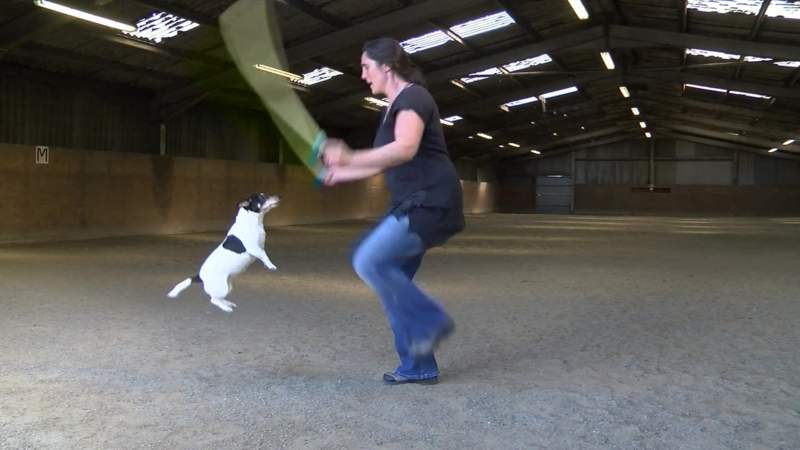
A skipping Jack Russell and her owner have set a new world record.
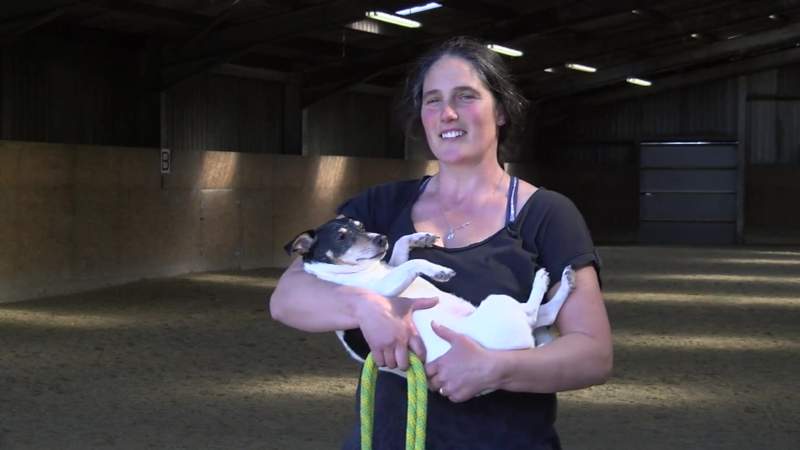
Eight-year-old Jessica and her owner Rachael Grylls, from Lewdown in Devon, clocked up 59 skips in one minute.
The owner of a skipping Jack Russell dog says she is “really, really, really pleased” she and her pet have set a new world record.
Rachael said: “It’s quite hard to keep jumping, talking and rewarding her at the same time. I think I’m more unfit than Jessica!”
Lovely to see this news item from my old County of Devon.
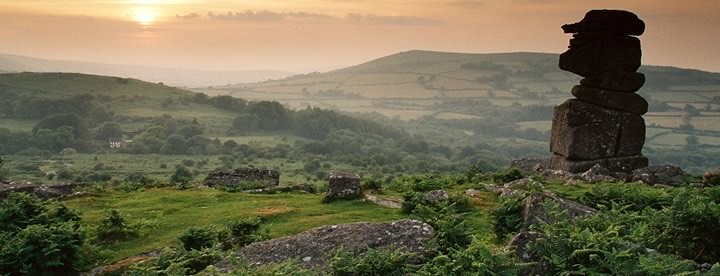
You see, I used to live just a few miles out of Totnes in Devon; in the village of Harberton. Lewdown is also in Devon, as the news item reported, but it is the other side of Dartmoor. In other words, North-West of Dartmoor as opposed to Totnes being to the South-East of Dartmoor.
But if any of you dear readers fancy a vacation in the UK you should make a point of going to see Dartmoor. It’s a very beautiful place. (Sue, you have probably been to Dartmoor? Yes?)
This will take us away from the daily beat of life!
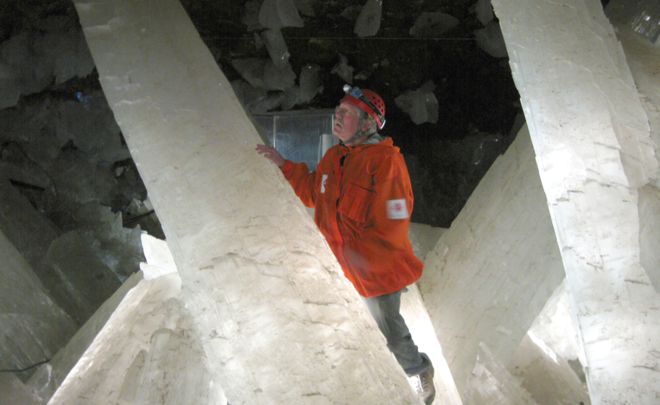
On the 18th. February the BBC News website carried an article that I found incredible. It was the story of Naica’s crystal caves in Mexico.
oooo
Naica’s crystal caves hold long-dormant life
By Jonathan Amos, BBC Science Correspondent, Boston, 18 February 2017.
The caves were discovered by miners 100 years ago. Picture credit: Penelope J. Boston
It is a remarkable discovery in an amazing place.
Scientists have extracted long-dormant microbes from inside the famous giant crystals of the Naica mountain caves in Mexico – and revived them. [Ed: my emphasis]
The organisms were likely to have been encased in the striking shafts of gypsum at least 10,000 years ago, and possibly up to 50,000 years ago.
It is another demonstration of the ability of life to adapt and cope in the most hostile of environments.
“Other people have made longer-term claims for the antiquity of organisms that were still alive, but in this case these organisms are all very extraordinary – they are not very closely related to anything in the known genetic databases,” said Dr Penelope Boston.
The new director of Nasa’s Astrobiology Institute in Moffett Field, California, described her findings here at the annual meeting of the American Association for the Advancement of Science (AAAS).
oooo
I was delighted to find more details in many other places on the ‘web’.
Creatures that thrive on iron, sulfur, and other chemicals have been found trapped inside giant crystals deep in a Mexican cave. The microbial life-forms are most likely new to science, and if the researchers who found them are correct, the organisms are still active even though they have been slumbering for tens of thousands of years.
If verified, the discovery adds to evidence that microbial life on Earth can endure harsher conditions in isolated places than scientists previously thought possible. (See “Life Found Deep Under Antarctic Ice for First Time?”)
“These organisms have been dormant but viable for geologically significant periods of time, and they can be released due to other geological processes,” says NASA Astrobiology Institute director Penelope Boston, who announced the find today at a meeting of the American Association for the Advancement of Science. “This has profound effects on how we try to understand the evolutionary history of microbial life on this planet.”
By Neil Shea, National Geographic Staff
In a nearly empty cantina in a dark desert town, the short, drunk man makes his pitch. Beside him on the billiards table sits a chunk of rock the size of home plate. Dozens of purple and white crystals push up from it like shards of glass. “Yours for $300,” he says. “No? One hundred. A steal!” The three or four other patrons glance past their beers, thinking it over: Should they offer their crystals too? Rock dust on the green felt, cowboy ballads on the jukebox. Above the bar, a sign reads, “Happy Hour: 8 a.m. to 9 p.m.”
This remote part of northern Mexico, an hour or so south of Chihuahua, is famous for crystals, and paychecks at the local lead and silver mine, where almost everyone works, are meager enough to inspire a black market. “Thirty dollars.” He leans in. “Ten.” It’s hard to take him seriously. Earlier in the day, in a cave deep below the bar, I crawled among the world’s largest crystals, a forest of them, broad and thick, some more than 30 feet long and half a million years old. So clear, so luminous, they seemed extraterrestrial. They make the chunk on the pool table seem dull as a paperweight.
Nothing compares with the giants found in Cueva de los Cristales, or Cave of Crystals. The limestone cavern and its glittering beams were discovered in 2000 by a pair of brothers drilling nearly a thousand feet below ground in the Naica mine, one of Mexico’s most productive, yielding tons of lead and silver each year. The brothers were astonished by their find, but it was not without precedent. The geologic processes that create lead and silver also provide raw materials for crystals, and at Naica, miners had hammered into chambers of impressive, though much smaller, crystals before. But as news spread of the massive crystals’ discovery, the question confronting scientists became: How did they grow so big?
It takes 20 minutes to get to the cave entrance by van through a winding mine shaft. A screen drops from the van’s ceiling and Michael Jackson videos play, a feature designed to entertain visitors as they descend into darkness and heat. In many caves and mines the temperature remains constant and cool, but the Naica mine gets hotter with depth because it lies above an intrusion of magma about a mile below the surface. Within the cave itself, the temperature leaps to 112 degrees Fahrenheit with 90 to 100 percent humidity—hot enough that each visit carries the risk of heatstroke. By the time we reach the entrance, everyone glistens with sweat.
That article continues here.
Finally, lose yourself in this video. (If the voice doesn’t get to you!)
How to close today’s post?
Both by embracing the power of the natural order of things, life and death, and by reminding us all that there are in the order of over two billion stars in this universe.
That universe must be teeming with life, current and dormant, and the day when we truly confirm that will put everything into perspective!
By Pallab Ghosh Science correspondent, BBC News
Scientists have discovered what they say could be fossils of some of the earliest living organisms on Earth.
They are represented by tiny filaments, knobs and tubes in Canadian rocks dated to be up to 4.28 billion years old.
That is a time not long after the planet’s formation and hundreds of millions of years before what is currently accepted as evidence for the most ancient life yet found on Earth.
The researchers report their investigation in the journal Nature.
As with all such claims about ancient life, the study is contentious. But the team believes it can answer any doubts.
The scientists’ putative microbes from Quebec are one-tenth the width of a human hair and contain significant quantities of haematite – a form of iron oxide or “rust”.
Matthew Dodd, who analysed the structures at University College London, UK, claimed the discovery would shed new light on the origins of life.
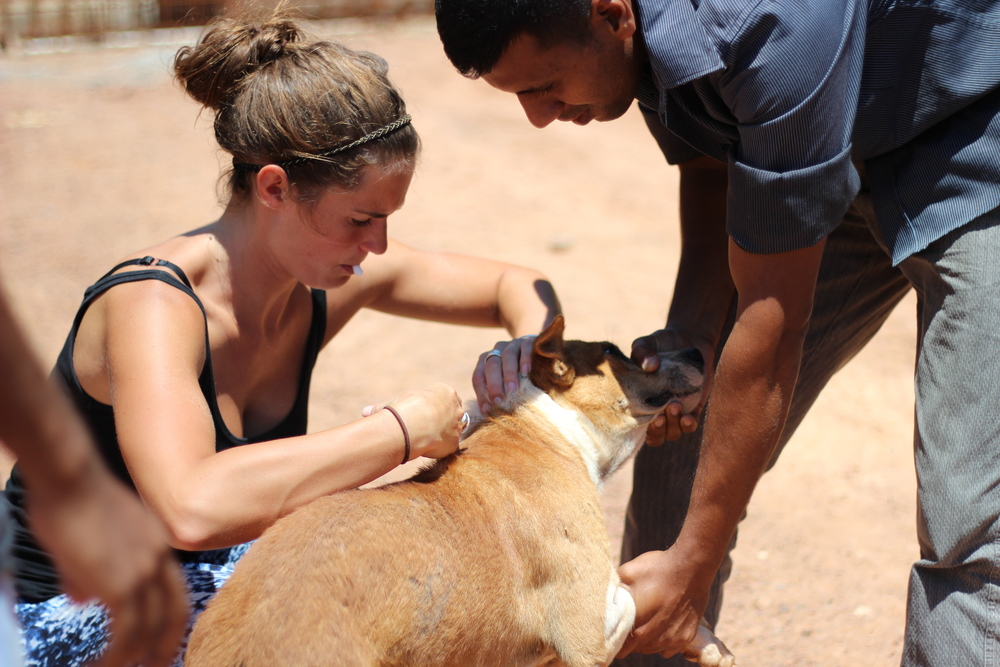
A vet has left behind her home in England to care for Sri Lanka’s street dogs.
Janey Lowes from Barnard Castle, County Durham, has spent the past two years caring for the neglected animals.
There are about three million street dogs on the island – about 60% of puppies born on the street do not survive to adulthood.
The 28-year-old set up charity WECare Worldwide to raise money to buy the equipment needed to treat the animals and to set up her own clinic in Talalla.
I am pleased that the video clip that was included in the BBC News story has found its way to YouTube.
Inevitably the charity WECare Worldwide has its own website: the home page is here. Then you can read on the charity’s ‘About’ page: (Note: CNVR is the acronym standing for catch-neuter-vaccinate-release.)
CNVR
CNVR is carried out as it is the most humane way to reduce roaming dog populations and reduce the number of unwanted puppies that are dumped on the streets at a very young age. It also allows the females that would inevitably spend their whole lives pregnant to only have to worry about number one when thinking about limited food resources and shelter options, which transforms their lives.
Vaccinating the dog population against Rabies is the most effective way to eliminate the disease in the human population. As an island nation, eradication of Rabies in the near future is a very real possibility and will change the future of both animals and humans here, allowing improved relationships between the two.
CNVR is the backbone of everything we are trying to achieve in Sri Lanka.
But that’s only one part of what they do. Again, as the website sets out:
We focus on 3 main areas here in Sri Lanka.
CNVR (catch-neuter-vaccinate-release)
Treatment of sick and injured animals
Education and training
I shall be making contact with the charity very soon .
Not only to pass on our respect and admiration for what she has accomplished but to see if there are other ways we can help them in what they are doing. I use the word ‘we’ to cover not only Jean and me but also all of you who are close to this blog and who, so frequently, show how much love you have for dogs!
WECare Worldwide will help by providing free veterinary treatment, alongside love, compassion and respectful care of the Ceylon dogs, who make up such a huge part of Sri Lankan heritage and culture, both in the past and the current day.
There was an item on the BBC News website that I saw over the weekend that prompted me to do a YouTube search for the film clip. This is what I read on the BBC website:
Until the 1970s, it was impossible to travel around Canada’s Yellowknife region in the winter if you weren’t travelling by dogsled.
Even though transportation options have increased, sled dogs are still prized and prominent in this Arctic region.
Matt Danzico of BBC Pop Up was invited to visit with some sled dogs during the team’s trip to Canada.
Film by Matt Danzico.
Unsurprisingly, that BBC video wasn’t available on YouTube. But I did find this:
So said Sir Winston Churchill. It applies equally to the price of power.
There was an essay recently written and published by Hariod Brawn over on her blog Contentedness.net that was incredibly thought-provoking and very beautiful besides. Hariod has given me permission to republish it and it follows shortly.
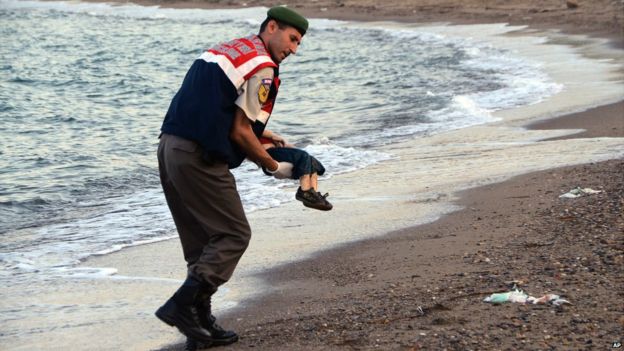
I have no doubt that Hariod’s essay was, in part, inspired by that terrible photograph that has been circulated and commented upon by thousands around the world.
In the words of the BBC, “The pictured boy is reported to be three-year-old Aylan, who drowned along with his five-year-old brother Galip and their mother, Rihan. Their father, Abdullah Kurdi, survived.”
The emotions created by this and other tragic photographs are disturbing, and I am no exception to having those same emotions. But as friend, Chris Snuggs, mentioned in a telephone call between us yesterday morning, what has been happening in Syria is no less terrible, perhaps even more so when one looks at the blood that is, metaphorically, on the hands of a number of western governments. The old saying of reaping what we sow comes to mind.
None of which takes away the intense beauty of Hariod’s essay: Empathetic apes.
ooOOoo
Empathic apes
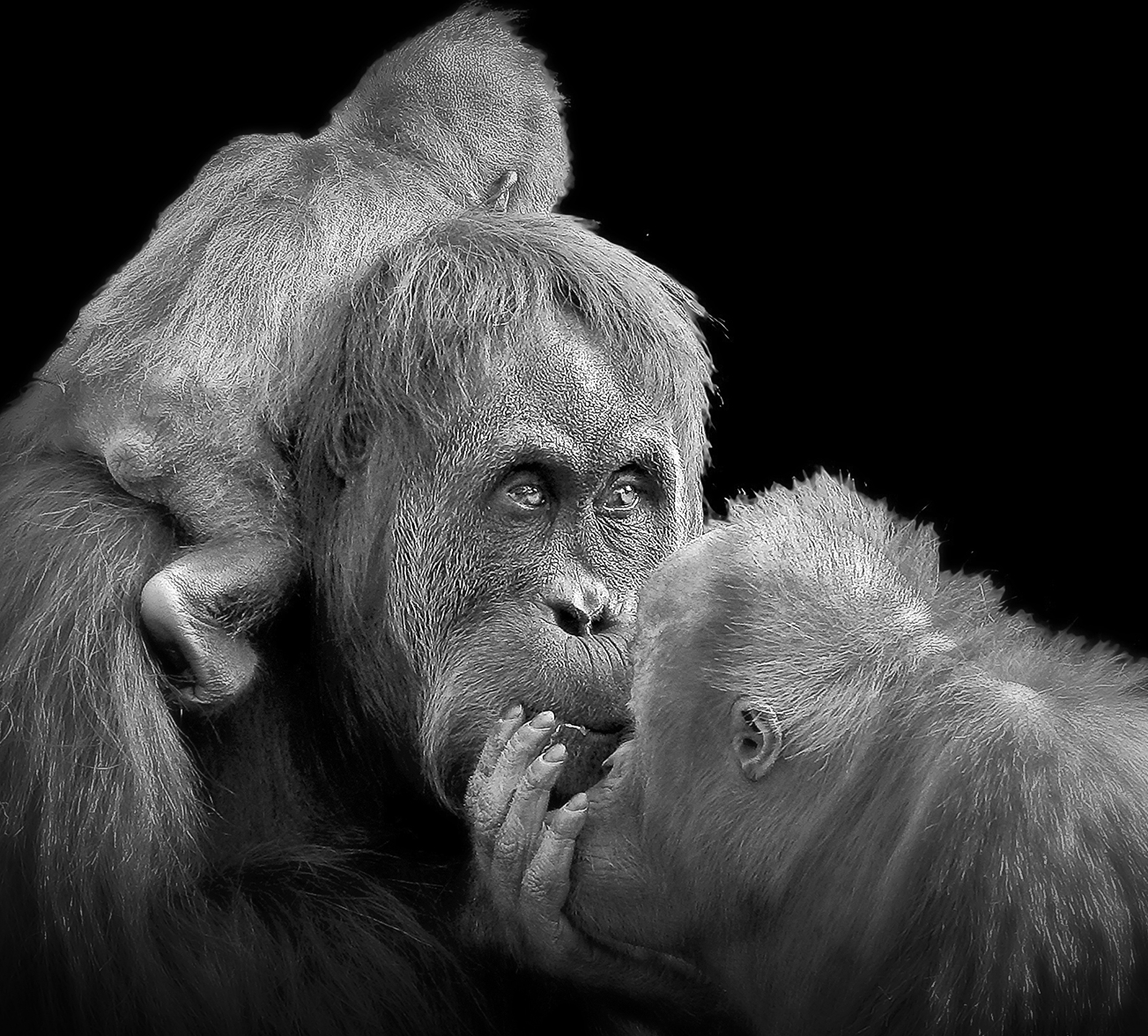
Orangutan mother and kids. By Patrick Bouquet, Chantilly.
The year is 1955, and far from the nearest village, somewhere within the Northwestern jungle region of Thailand, a 48 year-old Englishman and ordainee to the Buddhist monkhood sits quietly in studious attention. A few feet away, a female ape sits, arms carefully wrapped around some precious possession. The monk first chanced upon her the previous day, and due to the curiosity roused in observing her melancholic countenance, has remained respectfully nearby to her. A trust has developed, the ape sensing the monk’s gentle disposition and harmlessness. He really ought to be making his way to the village for alms, yet somehow senses that he should stay. A silent, palpable communication has developed between the two, and slowly, carefully and deliberately, the ape, her sadness still etched upon her face, finally unfolds her arms and offers a first sight of what she has been protecting. The monk slowly approaches to within a pace or two, sensing the invitation, only to catch sight of her lifeless and terribly deformed baby.
Two empathic apes, ancestrally and psychologically speaking, separated by little more in this moment than a distant, lineage-splitting, speciation event. Opposable thumbs, one hers and one his, in turn chase away a monk’s tear and a delicately mottled butterfly as it alights from the baby’s forehead, though cannot do the same for their conjoined feelings. Eyes meet, evincing as they do a deepening rush of sadness. Nothing can be done – is this what she is thinking in her way? In his unknowing, the saffron-robed wanderer radiates compassion, yet knows he has nothing to do with it; an offering from wisdom, not from the self. All that need be known arrives in the fullest of measures. What use now the venerable elder’s sagacity, his knowledge of emptiness, renunciation, equanimity, the void? She inhabits the void, is the void, her bleak knowing piercing its veils. Without turning, the monk slowly retreats, still reverently holding her gaze alongside a shared understanding. A slight suggestion of a bowing head betokens what passes between them.
It is the ability to empathise which in part distinguishes the psychopathic mind from its otherwise healthy state, and the primary orbit of empathy is that of feeling, not the mere gyrations of intellect. This is why many species of sentience can empathise, and we human animals are but one of them. We may erroneously presume that an ability to reflect upon others’ situations facilitates human empathic capacity; yet the state of those others and their situations need not be known as verbally abstracted objects in the mind – little stories packaged in words. We may just as well occupy others’ frames of reference by intuited means; and vitality, morbidity, distress and joy may all be recognised across species in differing ways; one need not indulge any anthropomorphisation, for clear evidence abounds. What is intuited here, or instinctively known, is the nature of the other’s felt emotional condition; and in this way, 60 years ago, the grieving mother ape and mendicant monk shared that intense experience – a wordless world of deep, primate feeling.
Engraving of Orangutan. By Willem Piso (1611-1678). Courtesy Wellcome Trust
Was the mother ape empathic? Well, she came to appreciate the monk’s amity; she felt able to extend trust; she intuited the monk’s concern for her as well as his desire for understanding as to the reasons for, and significance of, her sadness; and finally, she recognised that the monk would feel something of that sadness in revealing its causes to him. This is all to say that she significantly placed herself within the monk’s frame of reference and innately understood that emotions can be matched in shared experience – the personal does not expire at the boundary of the body. Her empathic appreciation was sophisticated, certainly moreso than any psychopathic human ape. Now, one way to cheat the system is to mimic expressions and gestures, which results in a like proprioceptive sense. This means our feelings echo the other’s, so affecting an emotional contagion of sorts, whether volitionally induced or not. Yet neither jungle dweller did so, their empathic link being forged in mind purely intuitively, and silently.
Empathy subsists in knowledge; it is in part to know the mind of the other, and whilst its currency is both cognitive (knowing) and emotional (feeling) in nature, it is the latter that strengthens the connective link to altruistic and prosocial leanings, as well as ameliorating aggressive traits. Primates’ mirror-neuron systems help forge innate empathic leanings, with research suggesting that empathy evolved in part as a survival mechanism. Right now, tens of thousands of refugees are fleeing war-torn regions of Africa and the Middle East so as to seek sanctuary, and survival, in Europe. A few hours ago, a three year-old Syrian boy, Aylan Kurdi, drowned and was washed up on the shores of the Greek island of Kos. Equally tragically, his five year-old brother met a similar fate. Whilst Europe’s politicians exhibit an ongoing empathy gap, innocent children are dying. We live, not literally, though metaphorically, in a jungle, sharing the empathic faculties of the monk and bereaved mother ape. Are we wise enough to nurture the same?
ooOOoo
We need leaders who understand the integrity that is required from them. We need leaders that accept and understand the responsibilities that they have embraced, indivisible from the power that society has lent to them. We need leaders that understand a different aspect of their power, the power of those unanticipated consequences from their actions.
Until we the people understand that electing leaders who do not embrace integrity then Aylan Kurdi and thousands of others in those ‘hot spots’ around the world will continue dying in vain.
Integrity equates to being truthful, to being honest. It doesn’t mean being right all the time, of course not, but integrity does mean accepting responsibility for all our actions, for feeling remorse and apologising when we make mistakes. Integrity means learning, being reliable, being a builder rather than a destroyer. It means being authentic. That authenticity is precisely and exactly what we see in our dogs.
The starting point for what we must learn from our dogs is integrity.
That very ancient relationship between man and dog.
The website Eye Witness to History has a lovely item on Mount Vesuvius:
On August 24, 79 Mount Vesuvius literally blew its top, spewing tons of molten ash, pumice and sulfuric gas miles into the atmosphere. A “firestorm” of poisonous vapors and molten debris engulfed the surrounding area suffocating the inhabitants of the neighboring Roman resort cities of Pompeii, Herculaneum and Stabiae. Tons of falling debris filled the streets until nothing remained to be seen of the once thriving communities. The cities remained buried and undiscovered for almost 1,700 years until excavation began in 1748. These excavations continue today and provide insight into life during the Roman Empire.
An ancient voice reaches out from the past to tell us of the disaster. This voice belongs to Pliny the Younger whose letters describe his experience during the eruption while he was staying in the home of his Uncle, Pliny the Elder. The elder Pliny was an official in the Roman Court, in charge of the fleet in the area of the Bay of Naples and a naturalist. Pliny the Younger’s letters were discovered in the 16th century.
If you are keen to read the full article then it may be found here.
My reason for quoting those opening paragraphs is because they offer a good historical introduction to another item from the BBC News website. That item is about a dog mosaic that is back on show after its restoration at Pompeii.
ooOOoo
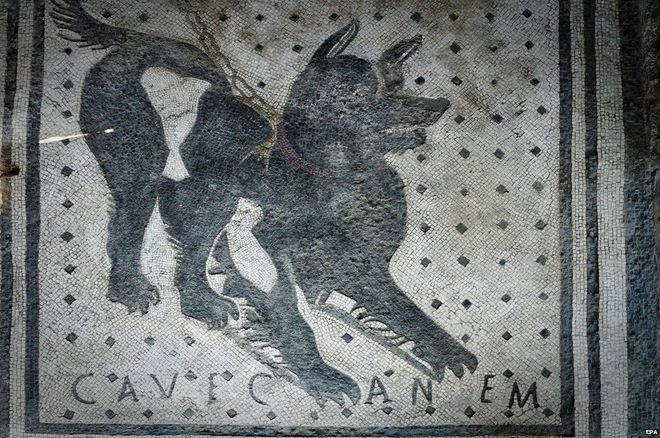
Pompeii guard dog mosaic back on show
One of Pompeii’s finest mosaics – a guard dog at the entrance to a villa.
A vivid Roman dog mosaic is back on show after restoration at Pompeii, despite Italy’s problems funding the historical site’s conservation.
A glass shield now protects the House of the Tragic Poet, where tourists can see the dog with the inscription “Cave Canem” – Latin for “Beware of the dog“.
Frescoes at the house’s entrance were also restored. Ash from a volcanic eruption buried Pompeii in AD79.
A staffing dispute caused long queues at Pompeii on Friday, in searing heat. Pompeii gives visitors an extraordinary insight into everyday life in ancient Rome because many buildings were protected from the elements under the thick blanket of ash from Mount Vesuvius.
The restored mosaic now has better protection.
The site, near the southern city of Naples, has suffered from funding problems for years. Staff unions at Pompeii have criticised a management reorganisation there.
The House of the Tragic Poet has some of Pompeii’s finest examples of interior decoration, including scenes from Greek mythology.
But the house’s owners remain unknown – they may have died in the eruption along with many other Pompeii citizens.
ooOOoo
Now we all know that the relationship between dogs and man goes way, way back before Pompeii but, nonetheless, it’s rather nice to see dogs commemorated in this way from 1,936 years ago.
Yesterday was heading to be a very hot day in Merlin, Oregon with top temperatures forecasted to be around the mid-90’s, or 34-36 deg. C in ‘new money’. The light westerly wind must have been generating some up currents, aided and abetted by the rising hot air, for there were a number of black ravens soaring in a thermal. Watching the birds circle and climb in the thermal current without needing to flap their wings took me back too many years.
It took me back to a June day in 1981 where I experienced my first glider flight (sailplane in American speak) at the Rattlesden Gliding Club in Suffolk, East Anglia. I’m delighted to see that the Club is still an active one, as their website confirms. Although I subsequently went on to gain my private pilot’s licence (PPL) there are still times when I miss the magic, the pure magic, of gaining altitude in a glider in a beautiful thermal.
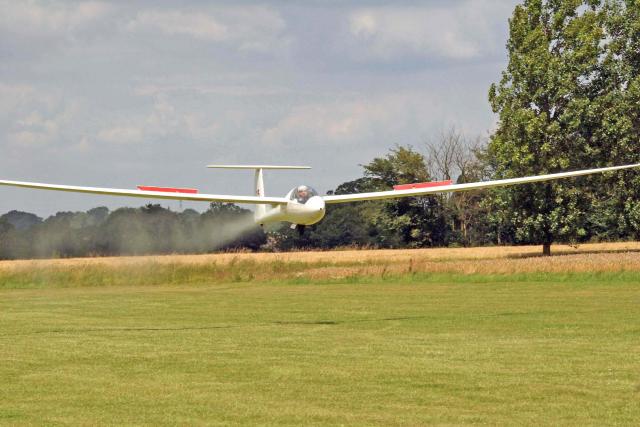
Modern fibreglass glider coming into land at Rattlesden G.C.
So what prompted this flood of flying nostalgia!! An item that was published on the BBC website earlier in the year.
ooOOoo
Fly like a bird: The V formation finally explained
By Victoria Gill, Science reporter, BBC News
The mystery of why so many birds fly in a V formation may have been solved.
Scientists from the Royal Veterinary College fitted data loggers to a flock of rare birds that were being trained to migrate by following a microlight. This revealed that the birds flew in the optimal position – gaining lift from the bird in front by remaining close to its wingtip.
A previous experiment in pelicans was the first real clue to the energy-saving purpose of V formations. It revealed that birds’ heart rates went down when they were flying together in V.
But this latest study tracked and monitored the flight of every bird in the flock – recording its position, speed and heading as well as every wing flap.
This was possible thanks to a unique conservation project by the Waldarappteam in Austria, which has raised flocks of northern bald ibises and trained them to migrate behind a microlight.
The aim of this unusual project is to bring the northern bald ibis back to Europe; the birds were wiped out by hunting, so the team is retraining the birds to navigate a migration route that has now been lost.
Fitting tiny data loggers to these critically endangered ibises showed that the birds often changed position and altered the timing of their wing beats to give them an aerodynamic advantage.
Lead researcher Dr Steven Portugal explained: “They’re seemingly very aware of where the other birds are in the flock and they put themselves in the best possible position.”
This makes the most of upward-moving air generated by the bird in front. This so-called “upwash” is created as a bird flies forward; whether it is gliding or flapping, it pushes air downward beneath its wings.
“Downwash is bad,” explained Dr Portugal. “Birds don’t want to be in another bird’s downwash as it’s pushing them down.” But as the air squeezes around the outside of the wings, it creates upwash at the wingtips.
“This can give a bit of a free ride for the bird that’s following,” said Dr Portugal. “So the other bird wants to put its own wingtip in the upwash from the bird in front.”
The other really surprising result, the researchers said, was that the birds also “timed their wing beats perfectly to match the good air off the bird in front”.
“Each bird [kept] its wingtip in the upwash throughout the flap cycle,” Dr Portugal explained.
oooo
In a sidebar to that BBC article there is this explanation about Flapping and Flying:
As a bird’s wings move through the air, they are held at a slight angle, which deflects the air downward. This deflection means the air flows faster over the wing than underneath, causing air pressure to build up beneath the wings, while the pressure above the wings is reduced. It is this difference in pressure that produces lift.
Flapping creates an additional forward and upward force known as thrust, which counteracts the weight and the “drag” of air resistance. The downstroke of the flap is also called the “power stroke”, as it provides the majority of the thrust. During this, the wing is angled downwards even more steeply.
You can imagine this stroke as a very brief downward dive through the air – it momentarily uses the animal’s own weight in order to move forward. But because the wings continue to generate lift, the creature remains airborne. In each upstroke, the wing is slightly folded inwards to reduce resistance.
ooOOoo
The BBC piece also included this wonderful short video:
This piece has nothing to do with dogs unless one extends the mindset to the magic of the complete natural world.
UPDATE
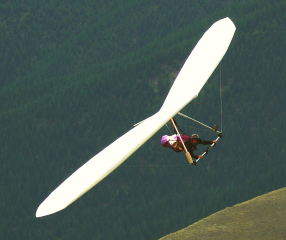
This is a photograph of George Ball hang-gliding – see his reply below.
Lack of sleep can have a role in obesity and diabetes.
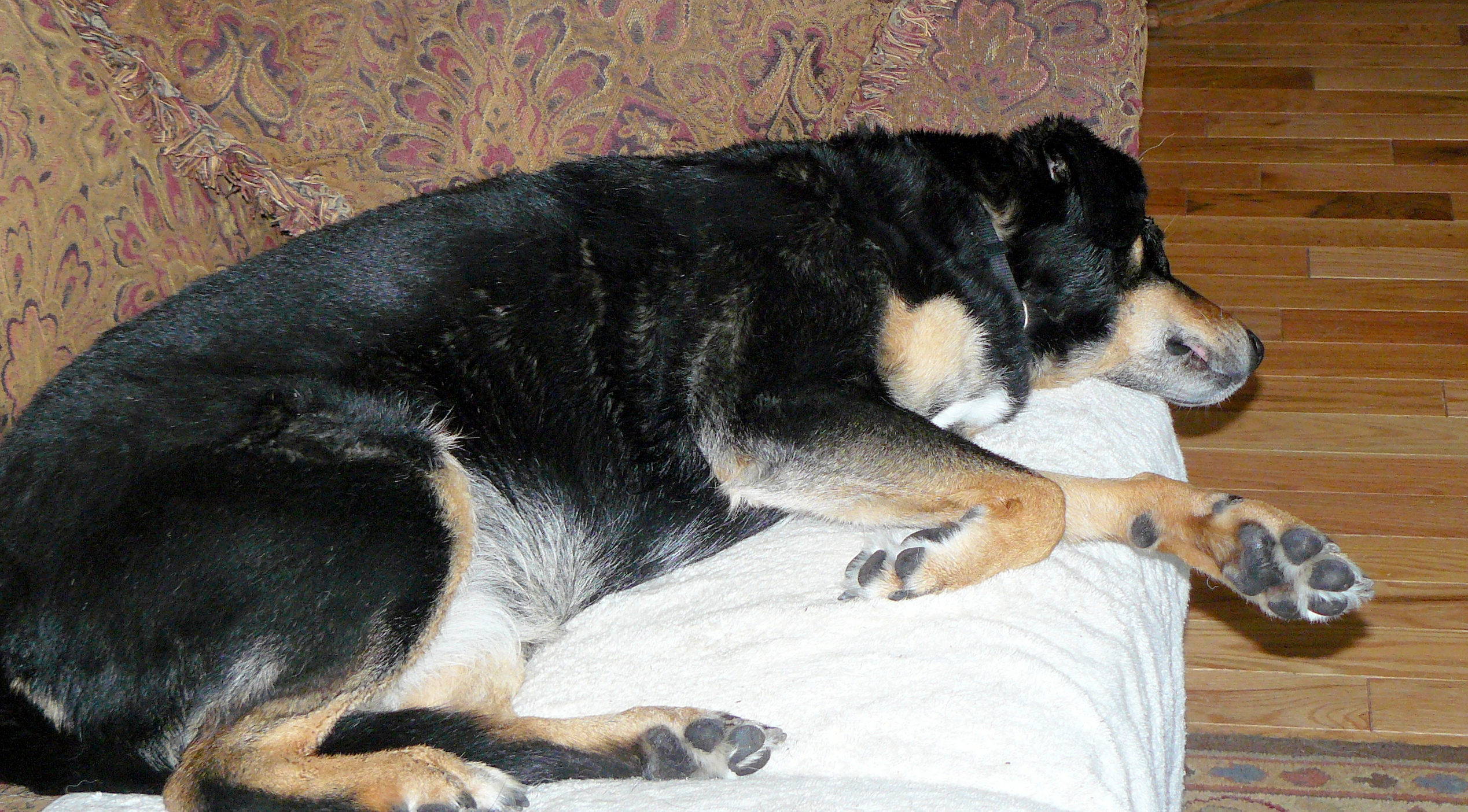
Hazel asleep on the living-room couch at 2pm yesterday.
The sub-heading is taken from an item on the BBC News website that I read yesterday morning. (I’m republishing it in full so that readers are fully informed.)
Lack of sleep can have role in obesity and diabetes, study says
By James Gallagher, Health editor, BBC News website, San Diego
If you need a lie-in at weekends to make up for lack of sleep in the week, you may be at risk of obesity and type 2 diabetes, a study suggests.
The sleeping habits of 522 people found those losing sleep on weekdays were more likely to develop the conditions.
The findings, shown at the Endocrine Society‘s annual meeting, suggested increasing sleep could help patients.
Experts said the findings were interesting and called for the idea to be tested in large trials.
Studies have already shown that shift work can rapidly put healthy people into a pre-diabetic state.
The action of throwing the body clock out of sync is thought to disrupt the natural rhythm of hormones in the body, leading to a host of health problems.
But the pressures of work and social lives mean many people cut their sleep during the week and catch up at the weekend. Researchers are investigating whether there is a health impact.
Widespread
The study, by a team at the University of Bristol in the UK and Weill Cornell Medical College in Qatar, assessed “sleep debt” – a measure of the difference in the nightly hours asleep on weekdays and at the weekend.
“We found that as little as 30 minutes a day sleep debt can have significant effects on obesity and insulin resistance,” said Prof Shahrad Taheri from Weill Cornell.
He added: “Sleep loss is widespread in modern society, but only in the last decade have we realised its metabolic consequences.
“Our findings suggest that avoiding sleep debt could have positive benefits for waistlines and metabolism and that incorporating sleep into lifestyle interventions for weight loss and diabetes might improve their success.”
The study was funded by the UK’s Department of Health, where 10% of healthcare budgets are already spent on treating diabetes.
The disease can lead to blindness, increase the risk of heart attacks and strokes, as well as damaging nerves and blood vessels – dramatically increasing the risk of a foot needing to be amputated.
What the researchers do not know is the impact of improving people’s sleep so they get more on a weeknight and do not need a weekend lie-in.
Dr Denise Robertson, a senior lecturer from the University of Surrey, commented: “This work is interesting and consistent with prospective data found in healthy individuals without type 2 diabetes.
“However, before this association between sleep length, obesity and metabolic status can be used in terms of public health we need the next tier of evidence.
“To date there have been no randomised controlled trials where sleep debt is addressed and a metabolic benefit is observed. However, the potential for such interventions to impact on health is great.”
So while it might be regarded as a little ‘tongue-in-cheek’ to say that we need to learn to sleep more effectively from dogs, the BBC item suggests that it’s not as silly as one might think.
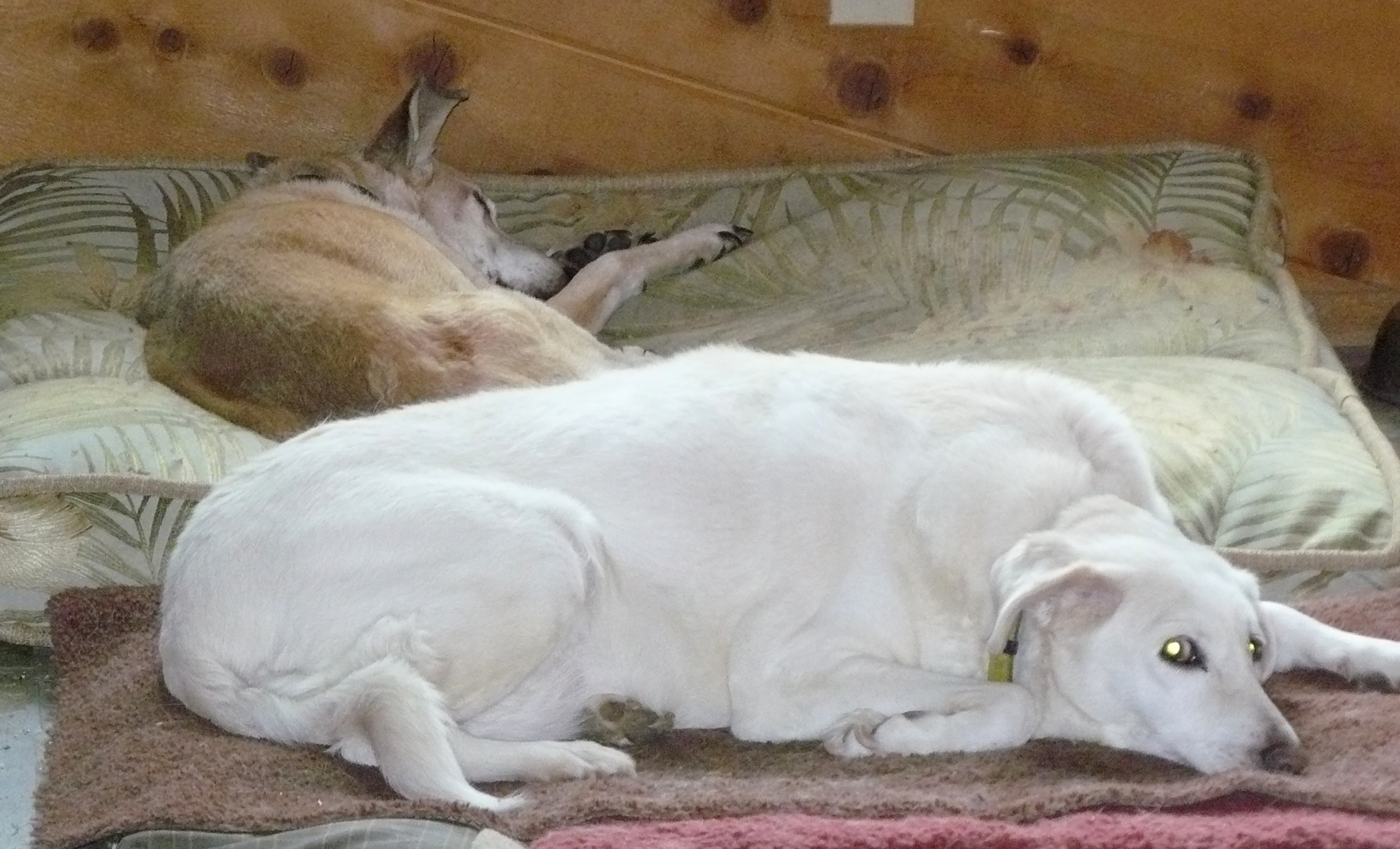
Lilly, to the rear of Paloma, sleeping soundly yesterday afternoon.
In the photograph above of Lilly and Paloma, both Mexican feral dogs rescued by Jean many years ago, sleep and a gentle life have allowed Lilly to achieve the grand old age of 17! In human terms that would be the equivalent of 136-years-old!
Jealous wags: Dogs show envy is ‘primordial’ emotion
By Matt McGrath – Environment correspondent, BBC News
These border collies inspired the study on jealousy in dogs.
Jealousy is not just a human condition according to researchers, as it appears to be hard wired into the brains of dogs as well.
Scientists in California found that canines succumbed to the green eyed monster when their owners showed affection to a stuffed dog in tests.
Some experts have argued that jealousy requires complex cognition and is unique to people.
But the authors say their work shows it may also come in a more basic form.
These findings probably won’t be a major surprise to anyone who’s ever owned a dog, but the team say this is the first experimental test of jealous behaviours in man’s best friend.
Human jealousy is a complicated emotion, requiring a “social triangle” and usually arising when an interloper threatens an important relationship.
It is said to be the third leading cause of non-accidental homicide across cultures.
Building on research that shows that six month old infants display jealousy, the scientists studied 36 dogs in their homes and video recorded their actions when their owners displayed affection to a realistic-looking stuffed canine.
Faux fido
Over three quarters of the dogs were likely to push or touch the owner when they interacted with the decoy.
The envious mutts were more than three times as likely to do this for interactions with the stuffed dog compared to when their owners gave their attention to other objects including a book.
Around a third tried to get between the owner and the faux fido, while a quarter of the put-upon pooches snapped at the dummy dog.
“Our study suggests not only that dogs do engage in what appear to be jealous behaviours but also that they were seeking to break up the connection between the owner and a seeming rival,” said Prof Christine Harris from University of California in San Diego.
“We can’t really speak to the dogs’ subjective experiences, of course, but it looks as though they were motivated to protect an important social relationship.”
The researchers believe that the dogs understood that the stuffed dog was real. The authors cite the fact that 86% of the dogs sniffed the toy’s rear end, during and after the experiment.
Jealousy, according to the authors, may have evolved in species that have multiple dependent young that concurrently compete for food and affection.
The argue that jealousy might give an advantage to a young animal that is not only alert to the interactions between its siblings and its parents but is motivated to intervene.
“Many people have assumed that jealousy is a social construction of human beings – or that it’s an emotion specifically tied to sexual and romantic relationships,” said Prof Harris.
“Our results challenge these ideas, showing that animals besides ourselves display strong distress whenever a rival usurps a loved one’s affection.”



 Learning from Dogs