Tag: Albert Einstein

The meaning of wildness?

“Reality is merely an illusion, albeit a very persistent one.”

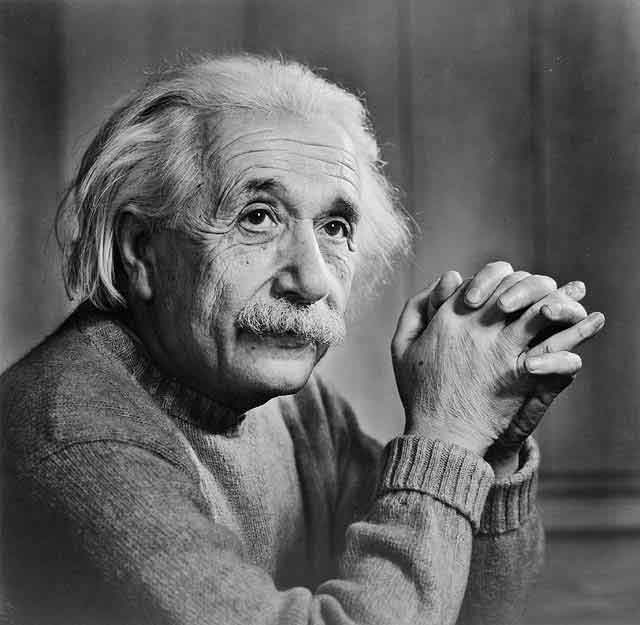
So said Albert Einstein.

The reason I went searching for a quotation on reality was that our, as in humans, ability to see the world in grossly distorted ways jumped ‘off the page’ at me when I was reading a recent essay from George Monbiot.  Followers of Learning from Dogs will know that Mr. Monbiot has featured before; most recently just under a month ago in a post Returning to Nature.  Before then in April when George gave permission for the full republishing of his essay The Great Unmentionable.

“Comfort the afflicted, afflict the comfortable.”

Why the notion of humans seeing reality in grossly distorted ways?  Simply because in George Monbiot‘s following essay he challenges what we mean by the word ‘wildness’ and I immediately realised that my own idea of wildness was badly corrupted.

See if you react the same way as you read The Naturalists Who Are Terrified of Nature by George Monbiot, republished in full with the kind permission of George.

oooOOOooo

The Naturalists Who Are Terrified of Nature

July 16, 2013

A radical challenge to British conservation and its bizarre priorities.

By George Monbiot, published on the RSPB’s website, 15th July 2013

I’m writing this on the train home, after visiting two places in the north of England celebrated for their “wildness”. One of them is Ennerdale in the Lake District, now officially known as Wild Ennerdale, a valley in which the river has been allowed to move freely once more, and in which native trees are succeeding naturally up the hillsides(1).

The other is the Sheffield Moors (in the Peak District), from which most of the sheep have been removed and where the structure of the vegetation has been allowed to change a little. I found both visits fascinating, not least because of the eruditon and enthusiasm of the people who walked me through these places.

But sitting on the train, watching the chemical deserts of the English lowlands flash past, I’m struck by how pathetically grateful I feel. For what? For the fact that, in two small conservation areas, located in national parks, a few natural processes have been allowed to resume.

Were I to explain to a foreigner that these places are now celebrated by conservationists in Britain for their radical approach, he or she would think I had gone mad. “What?,” they would say, “you are telling me that this is the cutting edge of nature conservation in your country? Where have you been for the past 50 years?”

I don’t know if there is any other country in which people – including conservationists – are as afraid of nature as they are in Britain. I don’t know if there is anywhere else in which conservationists are so convinced that if they relax their intensive management of the natural world, something dreadful will happen.

Nowhere else do conservationists subscribe more enthusiastically to the biblical doctrine of dominion: that we have a holy duty to control and corral nature, in case it gets out of hand. Nowhere else does conservation look more like a slightly modified version of the farming which trashed the land in the first place.

In my view most of our conservation areas aren’t nature reserves at all. They are museums of former farming practices, weeded and tended to prevent the wilds from encroaching. The ecosystem’s dynamic interactions are banned. Animals and plants are preserved as if they were a jar of pickles, kept in a state of arrested development, in which little is allowed to change.

But nature is not just a fixed assemblage of species, maintained as if it were a collection in a museum. It is also the ever-changing relationships between them, the successional processes, the shifting communities: all of which, in many of our reserves, are prohibited.

The problem begins with designation. The “interest features” of a site of special scientific interest – its species and habitats – must be kept in “favourable condition”. Often this means the condition in which they happened to be when the reserve was created. In most cases that’s a condition of dire impoverishment and depletion: ecosystems missing almost their entire trophic structure, most of their large herbivores, all their large predators, in many cases even the trees. They have to be kept like this by extreme and intrusive management, in order to sustain the impacts which reduced them to this woeful state.

In Wild-ish Ennerdale and on the Sheffield Moors, there has been a partial relaxation of this draconian regime. But even in these places, there is much that I question.

On the Sheffield Moors, for example, cattle are kept: at much higher densities and for far longer periods than large herbivores would exist in a self-willed ecosystem. In many parts of the moors, trees, if they have the temerity to return, are cleared. The effort, even here, is to ensure that the landscape remains farmed, open and bare.

This is done partly to favour breeding populations of wading birds(2). It’s likely that these species are being maintained at artificially high populations(3). A tendency I’ve noticed among some groups is to try to make all their target species common, even if they were naturally rare. Perhaps some species ought to be rare. Those which lived in open habitats – which would have been small and occasional before people started cutting and burning the forests – are likely to have been rarest of all.

Think of the varying fortunes of grouse populations in Britain. The palaeontological evidence is extremely sparse, so this is guesswork, but during the Boreal and Atlantic phases, 9,000-5,000 years ago, when closed-canopy forest covered most of Britain, the commonent grouse species in this country might have been hazel hen. Perhaps the second commonest would have been capercaillie, followed by black grouse, followed by red grouse, which are likely to have been very scarce.

That likely sequence has now been reversed. Hazel hen is extinct, capercaillie extremely rare, black grouse are sparse and in severe decline and red grouse are bloody everywhere. The red grouse is the magpie of the uplands: it benefits from human intervention, which in this case means the clearing of land.

Arbitrarily, conservation groups in the uplands of England and Wales have decided that their priorities are, for example, dunlin and curlew, rather than capercaillie and pine martens. I’m not insisting that this is always the wrong decision. But it’s a decision that should be rigorously questioned, especially if this intensive management means the destruction of habitats which would have sheltered a much wider range of species.

Spend a couple of hours in an open upland nature reserve, and count the diversity and abundance of the birds you see. Then spend a couple of hours in a bushy suburban garden and do the same thing. In my experience you’re likely to see more birds of more species in the garden. That’s hardly surprising: most birds – indeed most wildlife – require cover to survive. Am I the only one who thinks that something has gone badly wrong here?

It’s not just common species I’m talking about. Many of those excluded by our brutal upland management are not just rare in Britain; they are extinct.

Whenever I meet a conservation manager, I find myself acting like a 3-year old: I keep asking “why?”. Why are you preserving this and not that? Why is this site designated for moorland flea beetle and pearl-bordered fritillary, rather than blue stag beetle and lynx? Why are you protecting the wretched scrapings of life that remain here, rather than reintroducing the species which would once have lived here, but have been excluded by the kind of interventions that you – the conservationists – have sustained?

When I worked in the Amazon, the conservationists I met were fighting to defend the rainforest against cattle ranching. In Britain the conservationists are – literally – defending cattle ranching against the rainforest. Britain was once covered by rainforest: woodland wet enough for epiphytes to grow. (Epiphytes are plants which root in the bark of trees). Our closed-canopy rainforest was likely to have been richer in species than any of our remaining habitats. Given half a chance, it would return. But it isn’t given half a chance, even in conservation sites, because conservationists keep clearing the land and running cattle on it, in case the wayward and irresponsible ecosystem does something that isn’t listed in the rules. In doing so, they preserve a burnt, blasted and largely empty land with the delightful ambience of a nuclear winter.

Conservation groups in this country are obsessed by heather. Heather is typical of the vegetation that colonises land which has been repeatedly deforested. You can see similar vegetation – low, scrubby, tough, thriving on burnt ground and depleted soils – covering deforested land all over the tropics. There, the dominance of these plants is lamented by ecologists, for it is rightly seen as a symptom of ecological destruction. Here it is fetishised and preserved.

Even in the Eastern Sheffield Moors management plan, published by the RSPB and the National Trust, “cutting and burning” are listed as the requisite tasks for managing heather(4). Imagine what a tropical ecologist would say if she saw that. “You people have been telling us for decades that we should stop cutting and burning. You’ve been sending us money and lobbying our governments to discourage us from doing it. And all the while you’ve been telling yourselves that cutting and burning are necessary for the protection of wildlife.” If she concluded that we are hypocrites, that we are unambitious, irrational, anally retentive and ecologically illiterate, she would not be far wrong.

The same plan reveals that these two august conservation bodies will maintain cattle on the moors at their current level, but keep them there for longer. “Their grazing and trampling will manage the vegetation in a way which should improve the condition of the habitats and benefit wildlife.”(5) What does this mean? Yes, it might benefit some wildlife, but only at the expense of other species. Yes, it might “improve the condition” of a habitat, if by improvement you mean a better representation of the state of arrested development you’ve chosen. It sounds uncomfortably close to the 19th Century agricultural meaning of “improvement”: which means draining and clearing land to make it more suitable for farming.

It astonishes me to see statements like this left unpacked. Asserted without qualification, they create the impression that all wildlife benefits from management of this kind. Of course, all interventions (including a complete cessation of management), are better for some species than for others. But in my view, the losses inflicted by cattle ranching – here, as in the Amazon – outweigh any gains.

An even starker example is provided by a report commissioned by the RSPB on changing livestock numbers. It contends that “undergrazing and loss of vegetation structure is now occurring in some areas, with adverse impacts for some species such as golden plover and other waders.”(6)

“Undergrazing” is an interesting concept. The report seems to be referring to “undergrazing” by sheep. How can a native ecosystem be undergrazed by an invasive ruminant from Mesopotamia? Is our wildlife underhunted by American mink? Are our verges underinfested by Japanese knotweed?

I would question what undergrazing by any domestic animal means. “Not farmed enough” is what the term appears to signify, “or not sufficiently damaged”. Sure, the golden plover is among a small group of species that benefit from scorched-earth policies, but a far greater number are harmed by them. So why is the golden plover the priority? And how can a report for a conservation organisation blithely use the term undergrazing without qualification or explanation?

Another RSPB report advocates “the eradication of invasive tree species” from the bare uplands of Wales and claims, without citing any evidence or explaining what this means, that “extensive grazing, ideally mixed grazing, is important in maintaining upland pastures in a state that benefits upland birds and other wildlife.”(7)

A document published by the Welsh government revealed something I have never seen in the RSPB’s literature: that the society advises farmers “to cut down trees to discourage buzzards which kill other birds.”(8)

I checked with the RSPB in Wales and it confirmed that it does “at times provide advice to landowners on the management of trees to reduce available vantage points and nest sites for some avian predators.”(9)

Isn’t that more or less what the British government wanted to do to protect pheasant shoots? And didn’t the society contest those efforts?(10)

I wonder whether, in their arbitrary choice of target species and target habitats, British conservationists are influenced by the legacy of hunting. Many of the birds on behalf of which this extreme and brutal simplification of the ecosystem takes place are those which, in the 19th Century, were pursued by gentlemen with guns. Perhaps we should see conservation efforts in Britain as a form of gamekeeping, which regards some of our native species as good and worthy of preservation, and others (such as trees and buzzards) as bad and in need of control.

Sometimes I receive coherent answers from the conservation managers I speak to, which are debatable but at least consistent. Sometimes the only answer I receive is “that’s what the rules say.” But isn’t it time we began to challenge the rules? Isn’t it time we began to question the way sites are designated, and to challenge the ecological blitzkreig required to maintain them in what is laughably called “favourable condition”? Isn’t it time we began asking why we have decided to privilege certain species over others? Isn’t it time we started wondering whether the collateral damage required to support them is worth it?

After all, how did nature cope before we came along? To judge by the actions of British conservation groups, it must have been in a pretty dismal state for the three billion years before humans arrived to look after it.

George Monbiot’s book Feral: searching for enchantment on the frontiers of rewilding is published by Allen Lane.

References:

1. http://www.wildennerdale.co.uk/

2. National Trust and RSPB, 2012. The Eastern Moors Management Plan summary, page 15. Eastern Moors Partnership, Curbar.

3. This, of course, is speculative, as palaeontology gives us few indications of numbers. But the circumstantial evidence seems powerful: the habitat required for breeding populations of these birds, many of which need to nest several hundred metres from the nearest woodland edge to avoid predation, was in short supply. See for example:

NJ Whitehouse and D Smith, 2010. How fragmented was the British Holocene wildwood? Perspectives on the ‘‘Vera’’ grazing debate from the fossil beetle record. Quaternary Science Reviews Vol. 29, nos. 3-4, pp539–553. doi.org/10.1016/j.quascirev.2009.10.010

FJG Mitchell, 2005. How open were European primeval forests? Hypothesis testing using palaeoecological data. Journal of Ecology Vol. 93, 168–177

JHB Birks, 2005. Mind the gap: how open were European primeval forests? Trends in Ecology & Evolution Vol. 20, pp154-156.

R Fyfe, 2007. The importance of local-scale openness within regions dominated by closed woodland. Journal of Quaternary Science, Vol.22, no. 6, pp571–578. doi: 10.1002/jqs.1078

JC Svenning, 2002. A review of natural vegetation openness in northwestern Europe. Biological Conservation Vol 104: 133-148.

RHW Bradshaw, GE Hannon, AM Lister, 2003. A long-term perspective on ungulate-vegetation interactions. Forest Ecology and Management, Vol. 181: 267–280.

4. National Trust and RSPB, 2012, as above, p16.

5. National Trust and RSPB, 2012, as above, p11.

6. http://www.rspb.org.uk/Images/Final_Report_tcm9-340975.pdf

7. http://www.assemblywales.org/6_rspb_formatted.pdf

8. Welsh Government, 2010. Glastir: frequently asked questions, Section 13. This document is no longer available on the government site, but you can read it here:  http://www.fuw.org.uk/glastir-faq-miscellaneous.html

9. Emma Roberts, RSPB Wales, 10th August 2011. By email.

10. http://www.rspb.org.uk/media/releases/316283-back-off-our-birds-of-prey

oooOOOooo

Will leave you with the following picture.

Ennerdale Lake, Cumbria

Bird Seed.

Solutions to present times: A guest post.

John Hurlburt writing as ‘an old lamplighter‘ has been a regular contributor to Learning from Dogs.  Indeed, just last Friday in my rather introspective post, Maybe home is found in our quietness, I included John’s beautiful Evening Meditation.  The day before that post, John sent me the following (the picture below is my contribution to John’s essay!)  It’s a reflection on both the absurdity of modern times and the simplicity of the answers.

oooOOOOoo

Our interconnected world.

Bird Seed!

In return for a local pet store patronage, today’s cost savings included free bird seed. Meanwhile, our economic system squanders our common wealth.

The agendas of rich and powerful people who don’t want anything to change are reflected by FAUX News. What we have on our hands is an absurd interpretation of reality, which is made up as they go along. Politics has become a game of “Can You Top This”; with no limits. There’s a question about our collective level of sanity.

Our shared crisis mounts as our demographic increases and our natural resources are depleted accordingly. The fact is that we’re beyond the carbon limits the atmosphere requires to maintain the inclusive well-being of life on earth. And we’re damaging the surface layer of the planet that sustains us all in the process.

The answers are simple and natural. Here are five quick examples and a conclusion of sorts.

1. Diesel fuels run the majority of the world’s heavy machinery. Switching from carbon-based diesel fuels to natural bio-fuels, as per the original design by Rudolf Diesel, would have a profound effect on carbon pollution as well as fostering green innovation and industry. No modification of any on-line diesel engines would be required. As a matter of fact, they’d probably run more efficiently.

Solution: Economic advantage of using bio-fuels.

2. Re-establishing human rights may be best accomplished through increased awareness of our fragile unity as a species. The openness, honesty and integrity of Creation lights the way each day and lends serenity to our reflections.

Solution: Accept that deliberate human war and related destruction of the earth is empty, has no future, and is contrary to the purpose of human life.

Incidentally, when we put a natural floor under the global economy we’ll save our collective bacon in the process. Transitioning military forces to support green economic development opportunities might be a possibility if we decide to take life seriously enough to make a real difference.

3. Re-establishing a realistic base for a global economy that’s swollen 25 times beyond any material planetary resource foundation may best be accomplished by transitioning to green industries that benefit our planet, nations, communities and the sanctity of life in general. A modification to our technically driven financial system is needed.

Solution: Isaac Asimov; “I Robot” (the laws of robotics)

4. Re-establishing common law with inclusive equality and justice may be best accomplished by an in-depth examination of personal beliefs values, motives and actions in terms of respect for whatever Higher Power we may believe there to Be, compassion for Creation and the realization that we’re all living in and on the same life boat.

Solution: Education, formation and transformation based upon the facts of reality that we know in our present state of development and the far greater Reality which transcends our being and our current understanding based upon reason alone.

For example, Einstein’s General and Special Theories of Relativity tell us that we are in the process of turning inside out without breaking. A phrase that comes to mind is “transrational reality”. When we step beyond “self” we see the world through new eyes.

5. Agreeing on an equitably interactive and enforceable world-wide corporate, government, labor, and service organization wage scale may best be accomplished by listening to the voices of economic reason which tell us that money is only a symbol.

Rationale: Everything fits together. Change is constant. Life needs to adapt to survive. In Unity there is strength. At our best, we care for the earth and each other.

Inclusive solution: Surrender to Reality. The global system is broken, Resources are limited. It’s time to wake up. It’s time to change. A sustainable and growing green economy benefits everyone on earth.

Bottom Line

Love lights the way
Faith is stronger than fear
Hope springs Eternal

an old lamplighter

oooOOOooo

A mathematical approach to the demise of the Neanderthals.

Pure mathematics is, in its way, the poetry of logical ideas. Albert Einstein.

I have never been proficient at mathematics. But that doesn’t mean that I am not fascinated by the field of maths.

Hold that in your thoughts as I mention the name of blogger: Patrice Ayme.  It’s a non-de-plume but so what!  What blows me away, to use the vernacular, is the depth of thought expressed through the keyboard of Mr. Ayme (even the gender is an assumption).  The sub-heading on the home page of his blog is “Intelligence at the core of humanism“.  Just run your eye down the list of Recent Posts to the right-hand side of the home page to get a feel for the topics covered in the last few months.  Impressive is an understatement!

Anyway, five days ago Patrice published a post proposing how the Neanderthals were outbred, under the title of Math Extinguished Neanderthals.  It fascinated me and Patrice was gracious in allowing me permission to republish it on Learning from Dogs.

oooOOOooo

Math Extinguished Neanderthals

HOW NEANDERTHALS WERE OUTBRED:

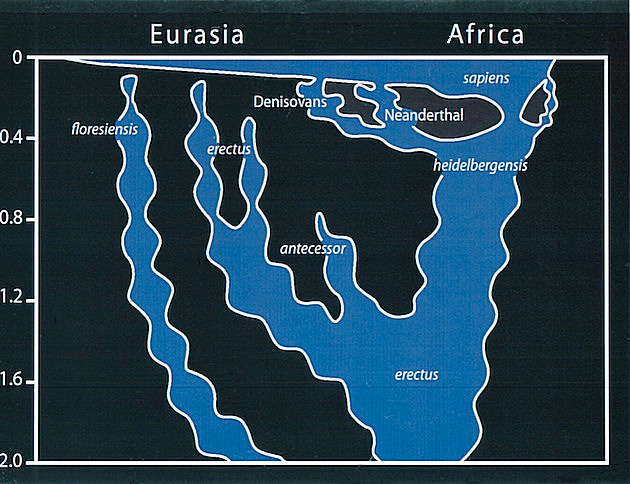
Zillions of theories about the “disappearance” of Neanderthals. The latest one, from Oxford University, claims that Neanderthals’ big, beautiful eyes, and their big muscles caused their demise. They were too busy looking at things, and flexing their muscles. The idea is that significantly larger eyes would have crowded the Neanderthal brain out, making them relatively stupid. In particular it made them incapable of having social groups as large as those of Homo Sapiens Sapiens.

Big Eyes Do Not Kill

Big Eyes Do Not Kill

Sapiens girl on the left, Neanderthal girl on the right (reconstitution published in Science Magazine a few years ago).

I have long argued that the strength of democracy came from having many brains working in parallel. There is little doubt that larger social groups bring a higher cultural intelligence, hence higher individual intelligence. So I agree about that bit of logic. Yet, ironically, to reach the conclusion that Neanderthals’ social group were less numerous, the simple fact that Neanderthals were bigger, is enough. There is no need for hazardous demeaning allegations about Neanderthals’ brains.

That big eyes made Neanderthals stupid contradicts some facts that were thought to be established:

1) Sapiens Neanderthalis’ brains were significantly larger to start with. See Wikipedia.

2) Many very clever Homo Sapiens Sapiens have small brains. Famously Anatole France, an intellectual, had only a 1,000 cubic centimeters brain. Homo Floresiensis, the “hobbit” species living on the island of Flores, Indonesia, until it was wiped out recently, was extremely intellectually capable, although it had really small (and completely different) brains.

3) In the Middle East, Neanderthals and Sapiens went back and forth through the same large caves over 50,000 years. So whatever happened, it was not in evidence for 50,000 years.

So, of course, I have my own theory. That’s what philosophy is all about: trying to guess what really matters most, and how that most significant data logically articulate. Then scientists, politicians and writers can swoop, figure out the details, and attribute themselves the glory.

What could have happened by around 28,000 years ago that caused the demise of Neanderthals? At the time, the last fierce glaciation was gaining ground. (It reached its maximum 25,000 years ago.) Some have argued, absurdly, that the Neanderthals could not take it. That’s beyond silly, as Neanderthals had evolved, from half a million years ago, precisely to handle extreme cold.

Neanderthals were stocky, powerful, and they had thrived through hundreds thousands years of glaciation, mostly on a meat diet, hunting big game. But they also knew how to cook plants, and eat them.

50,000 years ago, Neanderthals exterminated Cave Bears, a huge animal who lived in caves, prime real estate Neanderthals craved for. Could the disappearance of Cave Bears be logically linked to the disappearance of Neanderthals? Yes. That’s a consequence of my theory. More advanced technology played a direct role.

How did Neanderthals kill Cave Bears? With technology. We do not know exactly what weapons Neanderthals had at their disposal. However, technology had improved, and kept improving. Recently it was found that Sapiens Sapiens (Homo SS; I hope one gets the joke) in Africa had invented bows and arrows 80,000 Before Present (BP).  (About 60,000 years earlier than previously thought!) Before bows and arrows, the propeller had been invented, and was used in Europe. The propeller took advantage of angular momentum to send a sort of mini lance further and stronger than by hand.

Why did the Neanderthals and Denisovans (another human species from Central Eurasia) lose their edge? Advancing technology is the obvious answer. When technology of clothing and weapons was sufficiently advanced, the physiological advantage that the Neanderthals genetically had, disappeared. Homo Sapiens Sapiens could thrive just as well through winter.

At that point, Homo Sapiens Sapiens from Africa could be as successful as the Neanderthals through the freezing wastelands of Europe. OK.

But the Homo SS outbred the Neanderthals, so they became genetically more successful. How do I explain that?

Simple. However, the explanation involves the exponential function, the same function found all over, and that the mathematician Rudin called “the most important function in mathematics”. The exponential also explains the plutocratic phenomenon, and that is why it’s so dangerous. The exponential always rules extinction events, that’s why one day a species is all over, like the American Pigeon, or the Tasmanian Tiger, and the next day, it’s gone.

So visualize this. Neanderthals were bigger than Homo SS, just like the Polar Bear is bigger than the Black Bear. Bigness is an adaptation to cold. Southern Europe’s Brown Bears are smaller than those found in Kamchatka, or Alaska (also known as Grizzlies: the Grizzly is an emigrated European Brown Bear!) Bigger makes warmer inside. That’s why the most massive animal that ever was, the Blue Rorqual, at up to 180 tons, is nearly twice the mass of the largest dinosaur (it’s not just that it’s floating, but also that water is cooler than Jurassic air, I hold).

To simplify, let’s use a bit of exaggeration (that’s reasoning by exaggeration, one of my preferred tactic of thought; the one humor exploits, and why joking helps thinking). Let’s assume Neanderthals were twice more massive than Homo SS.

Now let’s consider an habitat where Homo SS and Neanderthal bands roamed. They will tend not to mix, for obvious racist reasons. The racial hatred between Neanderthals and Homo SS has got to have been colossal. People who look too different are not even sexually attracted to each other (and where Neanderthals and Homo SS were in contact in the Middle East, for 50,000 years, there is no evolution of an interbred species, an indirect proof that there was no love lost there!)

The density of human mass is going to be roughly the same all over, because that density depends only upon the resources available (mostly meat on the hoof, and fur in burrows in glaciating conditions).

Thus, there would have been apartheid. But the Homo SS would have been twice more numerous, where they reigned (from my assumption of twice the mass). So now graft on this a catastrophe; a drought, a flood, a very tough winter, a volcanic super disaster, whatever. The climate was highly variable, starting about 40,000 years ago, just when Homo SS appeared. Some have stupidly argued that Neanderthals were too stupid to adapt to this changing circumstances. Like this paralyzing stupidity struck them just when Homo SS were around. My explanation is more subtle.

After a catastrophe in said habitat, say one of these numerous habitat in Europe isolated by glacial mountain ranges, or seas and lakes, most of the human population would be wiped out, Homo SS, just as Neanderthals. There would tend to be always a small remaining population, because the greatest limit on man is man himself: as a population gets wiped out, resources rebound, and life of the survivors tend to get much easier (that’s what happened in Europe after the Black Death of 1348 CE; if nothing else, survivors could ask for higher salaries from their plutocratic masters, and they did).

So say 90% of the population of the habitat was wiped out. As suddenly resources are now not limited, the human population will rebound exponentially. The equation is: N(t) = N(0) exp(Rt). “R” is the “Malthusian” parameter, the rate of growth. Now it’s going to require twice the resources to feed a Neanderthal to sexual maturation (under our outrageously simplifying assumption that Neanderthals are twice the mass). Thus one may assume that R(Homo SS)/R(Neanderthal) is 2. The end result is that the quotient:

Number Homo SS/ Number Neanderthal = A exp(2t). (Where A is the ratio of the populations H SS/Neanderthal after the catastrophe.)

Thus the population of H SS would exponentially grow relative to that of the Neanderthals, resulting in a quick extinction. And in no way this is happening because Homo SS were superior. Just because they were more gracile.

Hence the mystery of the evolution of contemporary man is smoothly explained. Just a bit of math. QED.

Europeans & Asians: Not Just African

Europeans & Asians: Not Just African

***

Patrice Ayme

***

Note 1: what of the mentally deliquescent and racist article in the Proceedings of the Royal Society? First, they sank so low as tousing orbit size as a proxy, that Neanderthals had larger visual systems than contemporary AMH [Anatomically Modern Humans]. That’s about as intelligent as saying that, because special forces use night vision goggles, they have got to have bigger visual systems.

The main woman author also found the same physiological feature, bigger eyes, in the past, about people presently living at high latitude. She contentedly asserted that, because light levels are lower in the north, people living in the north (40,000 years at least for Homo SS) have bigger eyes. Amusingly, she did not draw, in that case the conclusion that Norwegians and the English are therefore more stupid. Somehow, though, in her lack of smarts, she applies that controversial reasoning to Neanderthals. Does she have giant eyes?

Seriously the Oxford study rests on a central fact that contradicts one of established facts about Neanderthals. Indeed it claims Neanderthals’ brains were not any larger than Homo SS.

***

Note 2; what catastrophes am I talking about? Well the climate fluctuated wildly, to start with. Second, A Campanian ignimbritevolcanic super-eruption around 40,000 years ago, followed by a second one a few thousand years later, certainly crashed Neanderthal populations (based on logic, and evidence fromMezmaiskaya cave in the Caucasus. Mitochondrial DNA analysis of a specimen there is C14 dated 29,000 years BP, one of the latest living pure Neanderthals). After such a catastrophe, the exponential rebounds of populations would have advantaged Homo SS, as explained above.

***

Note 3: OK, I exaggerated with the mass ratio. (Mathematicians often do this, considering an exaggerated case to understand the mean, through the tails.) But the real mass ratio would be aggravated because, Neanderthal was built in such a way, relative to gracile Homo SS, that they consumed more calories per day (some paleontologists have come up with 300). So there is no doubt that the effect above will play a role, even if the mass ratios were not as bad. Notice the mechanism above would tend to extinguish the Neanderthal traits that were most characteristic of the subspecies.

***

Note 4: A preferred trick of Neanderthals’ haters is to exhibitArchaic Neanderthals‘skulls, and compare them to those of modern men. The skull of an Archaic Neanderthal of 400,000 years ago should not be compared to a modern human, less than 40,000 year old! All the more since Neanderthals’ brain size augmented faster than the brain size of Homo Sapiens Sapiens.

***

Note 5: Part of the mechanism above generalizes for other species in competition. It provides with a disappearance mechanism after ecological turbulence, according to species’ ecological footprint.

oooOOOooo

So hope that others shared my pleasure at reading the essay.

Going to close with another quotation from Mr. Albert Einstein: “As far as the laws of mathematics refer to reality, they are not certain, and as far as they are certain, they do not refer to reality.”

On quietness.

Out of the quietness comes clarity

In yesterday’s post Sanity Anchors, I opened by saying, “A few days ago, I exchanged emails with Jon Lavin.  In the early days of Learning from Dogs, Jon used to write the occasional post, one of which seems highly relevant some three years later.  I will republish it tomorrow.”

So here it is, first presented on the 15th July, 2010.

oooOOOooo

On coming of age

It’s been a partly exhilarating and very scary 12 months since the launch of Learning from Dogs. I can’t remember a time when there has been so much change and uncertainty that hits right down to the foundations of everyone.

Twelve months ago these changes were merely hinted at, and then only to a few in the upper strata of the finance world, from my point of view anyway. How everything seems to have changed now!

Where lies ahead?

Warnings abound about our use of our world’s resources. Our seeming need to procreate without self imposed limit is leading us to a place that coupled with climate change, we will be unable to sustain the current world’s population, let alone the projected increase within 20 years or so. Water is becoming scarce in many parts of the world and so is food.

For those who are awakening from a media-induced slumber which distorts and bends reality to suit who can apply the greatest financial influence and weighting, the reality of the situation we are facing as a planet, is rapidly catching us up.

We still have choices – all is not lost and they will require a highly integrous group of people and thinkers to guide us through the next hundred years or so. In other words, in our children’s or children’s, children’s lifetimes. People who are not driven by the ego, but to serve the highest good.

So what can we do as individuals? Enjoy what we have, perhaps? I think, work on ourselves through awareness and expose ourselves to everything positive and integrous.

Most of our problems lie within, from that thing called an ego, that would rather drive us to death, rather than admit it might be wrong. The world would be an even more positive place if we worked on ourselves and our awareness rather than looking for all the answers ‘out there’, with somebody or something else.

So, how do we work with that? Well, no surprises there really – by bringing in awareness and coming out of the dream state, or nightmare state, depending on how you see things at the moment, and into the Present or Now, as some writers have called it.

How do we do that? It can simply begin by remembering to breathe! So by bringing our awareness to the breath, we come back into our bodies and out of the trance going on in the mind. Approximately 95% of our time is spent in this self-induced trance-like state, by the way.

Think you can’t survive without ‘your mind’ or ‘your thoughts’. There’s no such thing really. By coming out of the mind and back into the body, slowly, with practice and awareness, the noise gently starts to subside and we become aware of spaces of silence or no thought. That is where the answers lie, not in thinking.

The intellect and what we have learned kicks in after the quiet, to allow us to put into action what has come up through the silence.

Most of us have such a huge investment in ‘our thoughts’ or ‘our ideas’. If we could just make the time to sit still, in peace and quiet, so much more would be revealed to us.

So in this brave, new world going forward, to badly quote Einstein, we must aspire to move onto a higher level than the one that triggered this road we are relentlessly pursuing. We need to start becoming aware of the interconnectedness of all beings and focus on activities that are for the highest good, that benefit everyone, rather for the benefit of the few, to the detriment of the many.

By Jon Lavin

oooOOOooo

So let’s make this new year the year where we all slow down, embrace the peace and quiet, so that a clear world is revealed.

From feeling to doing!

Each of us must understand there is no choice – we have to change. So let’s do it!

This timely video from The Evergreen State College conference, another contribution from David Roberts, was brought to my attention by a recent post on Christine’s excellent blog, 350 or bust.

It so perfectly carries on from yesterday’s Learning from Dogs post, You have to feel it.

So please, promise yourself to watch this video now!  It’s just 15 minutes of very plain speaking by David.  Watch it not just for yourself but for the children and the children’s children across this beautiful world.

David Roberts is staff writer at Grist.org. In “Climate Change is Simple” he describes the causes and effects of climate change in blunt, plain terms.

On April 16, 2012, speakers and attendees gathered at TEDxTheEvergreenStateCollege: Hello Climate Change to reflect on the ability — and responsibility — of formal and informal education to inspire and empower action in this era of climate change.

Watch, be inspired and be empowered as a person that is taking personal responsibility for doing!

As dear old Albert said, (as in Albert Einstein) “You cannot solve a problem from the same consciousness that created it. You must learn to see the world anew.”

The mystery of telepathy

Just a bit more science about that sixth sense.

Yesterday, I wrote about how science was coming up with some pretty strong evidence that humans do have the ability to communicate in a way that might be called ‘telepathic’.

If (and that’s a big ‘if’) I have any understanding of the science, I believe it has much to do with quantum physics.  So I thought it fun to take a small diversion in today’s Post and give you some material on this very strange world of the very, very small.

From A Lazyman’s Guide to Quantum Physics,

What is Quantum Physics?

That’s an easy one: it’s the science of things so small that the quantum nature of reality has an effect. Quantum means ‘discrete amount’ or ‘portion’. Max Planck discovered in 1900 that you couldn’t get smaller than a certain minimum amount of anything. This minimum amount is now called the Planck unit.

Why is it weird?

Niels Bohr, the father of the orthodox ‘Copenhagen Interpretation’ of quantum physics once said, “Anyone who is not shocked by quantum theory has not understood it“.

To understand the weirdness completely, you just need to know about three experiments: Light Bulb, Two Slits, Schroedinger’s Cat.

Two Slits

The simplest experiment to demonstrate quantum weirdness involves shining a light through two parallel slits and looking at the screen. It can be shown that a single photon (particle of light) can interfere with itself, as if it travelled through both slits at once.

Light Bulb

Imagine a light bulb filament gives out a photon, seemingly in a random direction. Erwin Schroedinger came up with a nine-letter-long equation that correctly predicts the chances of finding that photon at any given point. He envisaged a kind of wave, like a ripple from a pebble dropped into a pond, spreading out from the filament. Once you look at the photon, this ‘wavefunction’ collapses into the single point at which the photon really is.

Schroedinger’s Cat

In this experiment, we take your pet cat and put it in a box with a bottle of cyanide. We rig it up so that a detector looks at an isolated electron and determines whether it is ‘spin up’ or ‘spin down’ (it can have either characteristic, seemingly at random). If it is ‘spin up’, then the bottle is opened and the cat gets it. Ten minutes later we open the box and see if the cat is alive or dead. The question is: what state is the cat in between the detector being activated and you opening the box. Nobody has actually done this experiment (to my knowledge) but it does show up a paradox that arises in certain interpretations.

To conclude I will offer this quotation reputed to be from the great master himself, Albert Einstein,

The more success the quantum theory has, the sillier it looks.

Beautiful minds, today Stephen Hawking

The second of two fascinating films about two very beautiful minds, Hugh Everett III and Stephen Hawking.

I am slightly hesitant in pursuing this, after my article about Hugh Everett on the 19th.  Said slightly tongue-in-cheek following a fascinating, as always, exchange of comments with Patrice Ayme.  Here’s a taste of Ayme’s writings, and here’s the exchange,

Patrice first wrote,

The question is: what happened? The multiverse answer is that, whatever it is, it happened in one universe, and it did not happen, in another universe. And if it is not a matter of discrete choice, as in a 2 slit experiment, an uncountable number of universes will be created. In other words, if one wants a proof of the insanity of some of today’s physicists, the multiverse is all we need. According to this lamentable spasm of the mind, during every single, smallest amount of time imaginable, an uncountable infinity of universes appear.

OK, the inflationary universe has the same problem, and is about as insane. But being surrounded by mad men does not excuse one’s own insanity. So we shall laugh.

To which I replied,

Dear Patrice, the challenge presented at this end, in terms of how to evaluate your comment, is that your anonymous profile (that is truly respected, by the way) makes it impossible to determine your academic and social backgrounds. Therefore are you replying from the position of a great thinker, or of a great thinker with significant scientific and philosophical accreditations? Your writings are powerful and impressive but nonetheless to assume (as I read into your approach) that the world of quantum physics is a ‘done deal’ is not something I can share. I anticipate that you will feel similarly ready to laugh on Thursday when I publish some words on Stephen Hawking. ;-)

Eliciting a further very thoughtful reply from PA,

Thoughts have to learn to stand on their own. The authority fallacy (if you forgive this neo sentence) is no ersatz for truth. Some (previously) immensely respected physics Nobel prizes were member of the Nazi party before Hitler. That did not make their physics any less insane.

Most top thinkers of the scientific revolution in the 17C were not respected tenured professors at the university (although Galileo and Newton were, not so for Kepler, Bruno,Descartes, Fermat, Pascal, Leibnitz…). We have no historical distantiation to judge what’s going on now.

I respect some of the work of Hawking. And certainly respect him tremendously as a person (although he dumped his wife for his nurse).

I appreciate the fact you tease me with Quantum Mechanics as a “done deal”. I actually believe that QM is the most precise theory we have, but it’s most certainly false or crazy as Newton basically said about his own theory of gravitation, and pretty much for the same reasons… This shows that I have to express myself more clearly…

In any case QM got no traction with the Quantum computer, so far. To say the least, many questions have been found to not be answered…

As far as accreditations are concerned, I will refer to the PhDs of Qaddafi’s children, and the movie “Ghostwriter”. Speaking of Harvard, what about Huntington’s “Clash of Civilizations”, of an incredibly low scholarly level, and the numerous professors there on Qaddafi’s payroll? Does that mean they were accreditated by Qaddafi?

I am quite familiar with academia, and I think too much credit is given, quite often.

I am going to put a more extended version of my various remarks on my site, insisting on the fact QM, however impressive, is no deal. The multiverse was a desperate attempt to make it a deal, precisely, as it was made to eschew the problem of the non existence of a detailled mechanism of wave packet collapse. [Ironically I was once punished on a “philosophy” site for saying that QM was a live subject of research; I never went back to that site, which has academic pretentions: they had told me they checked with physics professors…]

Best wishes to you too, and I look forward chewing on Hawking very slowly… meanwhile I shall put my anti-multiverse blast on my site…

So here goes!

Prof. Hawking

Professor Stephen William Hawking was born in 1942 in Oxford, England.  His own website has a nice summary of his life which may be read here.  There is a huge amount that could be written about this most amazing man.  His book A Brief History of Time has sold in the millions which for a man who deals with some pretty big personal challenges, is no small feat.  Here’s a relatively recent talk (2008) from TED2008,

But like the Hugh Everett posting, I wanted to draw your attention to the 48 minute programme, originally from the BBC Horizon series, that explores some of the challenges that are starting to appear to Hawking’s long-held theories about the start of the universe.

The film may be watched from here.

David Bohm and the Implicate Order

I was much taken by Patrice’s guest post of yesterday and have managed a short break from the travails of my Master’s degree to post an article by David Pratt, that has been part of my research.  Jon.

David Bohm and the Implicate Order

By David Pratt
David Bohm

The death of David Bohm on 27 October 1992 is a great loss not only for the physics community but for all those interested in the philosophical implications of modern science. David Bohm was one of the most distinguished theoretical physicists of his generation, and a fearless challenger of scientific orthodoxy. His interests and influence extended far beyond physics and embraced biology, psychology, philosophy, religion, art, and the future of society. Underlying his innovative approach to many different issues was the fundamental idea that beyond the visible, tangible world there lies a deeper, implicate order of undivided wholeness.

David Bohm was born in Wilkes-Barre, Pennsylvania, in 1917. He became interested in science at an early age, and as a young boy invented a dripless teapot, and his father, a successful businessman, urged him to try to make a profit on the idea. But after learning that the first step was to conduct a door-to-door survey to test market demand, his interest in business waned and he decided to become a theoretical physicist instead.

In the 1930s he attended Pennsylvania State College where he became deeply interested in quantum physics, the physics of the subatomic realm. After graduating, he attended the University of California, Berkeley. While there he worked at the Lawrence Radiation Laboratory where, after receiving his doctorate in 1943, he began what was to become his landmark work on plasmas (a plasma is a gas containing a high density of electrons and positive ions). Bohm was surprised to find that once electrons were in a plasma, they stopped behaving like individuals and started behaving as if they were part of a larger and interconnected whole. He later remarked that he frequently had the impression that the sea of electrons was in some sense alive.

In 1947 Bohm took up the post of assistant professor at Princeton University, where he extended his research to the study of electrons in metals. Once again the seemingly haphazard movements of individual electrons managed to produce highly organized overall effects. Bohm’s innovative work in this area established his reputation as a theoretical physicist.

In 1951 Bohm wrote a classic textbook entitled Quantum Theory, in which he presented a clear account of the orthodox, Copenhagen interpretation of quantum physics. The Copenhagen interpretation was formulated mainly by Niels Bohr and Werner Heisenberg in the 1920s and is still highly influential today. But even before the book was published, Bohm began to have doubts about the assumptions underlying the conventional approach. He had difficulty accepting that subatomic particles had no objective existence and took on definite properties only when physicists tried to observe and measure them. He also had difficulty believing that the quantum world was characterized by absolute indeterminism and chance, and that things just happened for no reason whatsoever. He began to suspect that there might be deeper causes behind the apparently random and crazy nature of the subatomic world.

Bohm sent copies of his textbook to Bohr and Einstein. Bohr did not respond, but Einstein phoned him to say that he wanted to discuss it with him. In the first of what was to turn into a six-month series of spirited conversations, Einstein enthusiastically told Bohm that he had never seen quantum theory presented so clearly, and admitted that he was just as dissatisfied with the orthodox approach as Bohm was. They both admired quantum theory’s ability to predict phenomena, but could not accept that it was complete and that it was impossible to arrive at any clearer understanding of what was going on in the quantum realm.

It was while writing Quantum Theory that Bohm came into conflict with McCarthyism. He was called upon to appear before the Un-American Activities Committee in order to testify against colleagues and associates. Ever a man of principle, he refused. The result was that when his contract at Princeton expired, he was unable to obtain a job in the USA. He moved first to Brazil, then to Israel, and finally to Britain in 1957, where he worked first at Bristol University and later as Professor of Theoretical Physics at Birkbeck College, University of London, until his retirement in 1987. Bohm will be remembered above all for two radical scientific theories: the causal interpretation of quantum physics, and the theory of the implicate order and undivided wholeness.

In 1952, the year after his discussions with Einstein, Bohm published two papers sketching what later came to be called the causal interpretation of quantum theory which, he said, “opens the door for the creative operation of underlying, and yet subtler, levels of reality.” (David Bohm and F. David Peat, Science, Order & Creativity, Bantam Books, New York, 1987, p. 88.) He continued to elaborate and refine his ideas until the end of his life. In his view, subatomic particles such as electrons are not simple, structureless particles, but highly complex, dynamic entities. He rejects the view that their motion is fundamentally uncertain or ambiguous; they follow a precise path, but one which is determined not only by conventional physical forces but also by a more subtle force which he calls the quantum potential.The quantum potential guides the motion of particles by providing “active information” about the whole environment. Bohm gives the analogy of a ship being guided by radar signals: the radar carries information from all around and guides the ship by giving form to the movement produced by the much greater but unformed power of its engines.

The quantum potential pervades all space and provides direct connections between quantum systems. In 1959 Bohm and a young research student Yakir Aharonov discovered an important example of quantum interconnectedness. They found that in certain circumstances electrons are able to “feel” the presence of a nearby magnetic field even though they are traveling in regions of space where the field strength is zero. This phenomenon is now known as the Aharonov-Bohm (AB) effect, and when the discovery was first announced many physicists reacted with disbelief. Even today, despite confirmation of the effect in numerous experiments, papers still occasionally appear arguing that it does not exist.

In 1982 a remarkable experiment to test quantum interconnectedness was performed by a research team led by physicist Alain Aspect in Paris. The original idea was contained in a thought experiment (also known as the “EPR paradox”) proposed in 1935 by Albert Einstein, Boris Podolsky, and Nathan Rosen, but much of the later theoretical groundwork was laid by David Bohm and one of his enthusiastic supporters, John Bell of CERN, the physics research center near Geneva. The results of the experiment clearly showed that subatomic particles that are far apart are able to communicate in ways that cannot be explained by the transfer of physical signals traveling at or slower than the speed of light. Many physicists, including Bohm, regard these “nonlocal” connections as absolutely instantaneous. An alternative view is that they involve subtler, nonphysical energies traveling faster than light, but this view has few adherents since most physicists still believe that nothing-can exceed the speed of light.

The causal interpretation of quantum theory initially met with indifference or hostility from other physicists, who did not take kindly to Bohm’s powerful challenge to the common consensus. In recent years, however, the theory has been gaining increasing “respectability.” Bohm’s approach is capable of being developed in different directions. For instance, a number of physicists, including Jean-Paul Vigier and several other physicists at the Institut Henri Poincaré in France, explain the quantum potential in terms of fluctuations in an underlying ether.

In the 1960s Bohm began to take a closer look at the notion of order. One day he saw a device on a television program that immediately fired his imagination. It consisted of two concentric glass cylinders, the space between them being filled with glycerin, a highly viscous fluid. If a droplet of ink is placed in the fluid and the outer cylinder is turned, the droplet is drawn out into a thread that eventually becomes so thin that it disappears from view; the ink particles are enfolded into the glycerin. But if the cylinder is then turned in the opposite direction, the thread-form reappears and rebecomes a droplet; the droplet is unfolded again. Bohm realized that when the ink was diffused through the glycerin it was not a state of “disorder” but possessed a hidden, or nonmanifest, order.

In Bohm’s view, all the separate objects, entities, structures, and events in the visible or explicate world around us are relatively autonomous, stable, and temporary “subtotalities” derived from a deeper, implicate order of unbroken wholeness. Bohm gives the analogy of a flowing stream:

On this stream, one may see an ever-changing pattern of vortices, ripples, waves, splashes, etc., which evidently have no independent existence as such. Rather, they are abstracted from the flowing movement, arising and vanishing in the total process of the flow. Such transitory subsistence as may be possessed by these abstracted forms implies only a relative independence or autonomy of behaviour, rather than absolutely independent existence as ultimate substances.

(David Bohm, Wholeness and the Implicate Order, Routledge & Kegan Paul, London, Boston, 1980, p. 48.)

We must learn to view everything as part of “Undivided Wholeness in Flowing Movement.” (Ibid., p. 11.)

Another metaphor Bohm uses to illustrate the implicate order is that of the hologram. To make a hologram a laser light is split into two beams, one of which is reflected off an object onto a photographic plate where it interferes with the second beam. The complex swirls of the interference pattern recorded on the photographic plate appear meaningless and disordered to the naked eye. But like the ink drop dispersed in the glycerin, the pattern possesses a hidden or enfolded order, for when illuminated with laser light it produces a three-dimensional image of the original object, which can be viewed from any angle. A remarkable feature of a hologram is that if a holographic film is cut into pieces, each piece produces an image of the whole object, though the smaller the piece the hazier the image. Clearly the form and structure of the entire object are encoded within each region of the photographic record.

Bohm suggests that the whole universe can be thought of as a kind of giant, flowing hologram, or holomovement, in which a total order is contained, in some implicit sense, in each region of space and time. The explicate order is a projection from higher dimensional levels of reality, and the apparent stability and solidity of the objects and entities composing it are generated and sustained by a ceaseless process of enfoldment and unfoldment, for subatomic particles are constantly dissolving into the implicate order and then recrystallizing.

The quantum potential postulated in the causal interpretation corresponds to the implicate order. But Bohm suggests that the quantum potential is itself organized and guided by a superquantum potential, representing a second implicate order, or superimplicate order. Indeed he proposes that there may be an infinite series, and perhaps hierarchies, of implicate (or “generative”) orders, some of which form relatively closed loops and some of which do not. Higher implicate orders organize the lower ones, which in turn influence the higher.

Bohm believes that life and consciousness are enfolded deep in the generative order and are therefore present in varying degrees of unfoldment in all matter, including supposedly “inanimate” matter such as electrons or plasmas. He suggests that there is a “protointelligence” in matter, so that new evolutionary developments do not emerge in a random fashion but creatively as relatively integrated wholes from implicate levels of reality. The mystical connotations of Bohm’s ideas are underlined by his remark that the implicate domain “could equally well be called Idealism, Spirit, Consciousness. The separation of the two — matter and spirit — is an abstraction. The ground is always one.” (Quoted in Michael Talbot, The Holographic Universe, HarperCollins, New York, 1991, p. 271.)

As with all truly great thinkers, David Bohm’s philosophical ideas found expression in his character and way of life. His students and colleagues describe him as totally unselfish and non-competitive, always ready to share his latest thoughts with others, always open to fresh ideas, and single-mindedly devoted to a calm but passionate search into the nature of reality. In the words of one of his former students, “He can only be characterized as a secular saint.” (B. Hiley & F. David Peat eds., Quantum Implications: Essays in Honour of David Bohm, Routledge & Kegan Paul, London, 1987, p. 48.)

Bohm believed that the general tendency for individuals, nations, races, social groups, etc., to see one another as fundamentally different and separate was a major source of conflict in the world. It was his hope that one day people would come to recognize the essential interrelatedness of all things and would join together to build a more holistic and harmonious world. What better tribute to David Bohm’s life and work than to take this message to heart and make the ideal of universal brotherhood the keynote of our lives.

(Reprinted from Sunrise magazine, February/March 1993. Copyright © 1993 by Theosophical University Press)

And for a fascinating insight into Bohm and his beautiful brain, watch this:

By Jon Lavin

Managing in a mad world.

Even in the midst of great pain, we must think through our choices

The last week has been really mad.  I have been working in different companies and organisations and having to be part of redundancies, power struggles and people rebuilding their lives.

For example, I was in a company that had just let its second lot of people go in as many months. It’s gone past losing ‘dead wood’ and now people with valuable skills needed for recovery are going. I’ve noticed previously that good, employable people with key skills start to get concerned and will often take voluntary redundancy rather than hanging around to see how things pan out.

End of job!

It’s the shocking way that it’s done as well that’s unbelievable. No warning, just a phone call to attend a meeting, no hint as to what the meeting is about, then an envelope slid across the table and then a rapid escort off site. All done and dusted in 5 minutes.

Having been through this myself some years ago, it’s not something you forget in a hurry. Lots of feelings of rejection and feeling unvalued and unwanted are what I remember. Perhaps its part of being bought up in a job-for-life culture and then having that illusion shattered.

Working with people in this situation is literally quite shocking and traumatic because it clearly affects them and their lives and the lives of their families, and it affects me because the work we started comes to an abrupt end usually with little or no warning, and so does a source of income to be brutally honest. I don’t even have chance to say good-bye in many cases.

Every Thursday I become a trainee psychotherapist and work with people who mostly struggle to hold down any sort of job. The reasons for this are generally because of upbringings that are awful beyond description. The shock and trauma that is in the air when working with these people is amazing, and so scary for them that the idea of being present in the room with me and is virtually impossible.

So that brings us to managing in a world where lots of mad and non-integrous things happen. I believe that mindfulness can provide a key to these situations; being present for another does more than any instruction manual!

Being present means we make ourselves available at many levels to someone who is suffering. By avoiding the subtle invitation to join someone in their shock and trauma but by being there for them, to the best of our ability and listening to them at depth, we can provide an environment where real reflection can take place. Then options may be chosen which are not born of panic and reaction but come from reflection and response.

I believe that this approach gets us out of the ‘noise machine in our heads‘ (that is forever churning and worrying, in my case) that we have no control over, and creates space for more subtle things to come through the quiet and calm.

Most people I’ve met in my engineering work like to assume that they think their way out of tight situations but I’m not convinced that this process is actually effective. I have heard and practised many times the activity of ‘sleeping on something’ and then being able to decide on a course of action the following morning with relative ease. My psychotherapy clients can’t think their way out the awfulness because thinking about things has got them into a spiral

Albert Einstein

process which is highly addictive, predictable and virtually impossible to break without the intervention of a higher level of awareness. I think it was Einstein who said something like, “you can’t use the same intelligence that created a problem to solve it“!  In other words, a different approach or level must be used.

I believe that this different approach or level can be used to solve most problems we have. By bringing a different level of awareness to a challenge, whether it is redundancy or some other sort of deeper problem always gives different results and provides more options. It’s just that initially it needs to be facilitated, until we can do it under our own steam. I am heartened that even in the depths of a recession that there are still companies out there that support this approach and the work I do.

By Jon Lavin [This article from the BBC is worth reading in conjunction with Jon’s excellent Post. Jon may be contacted via learningfromdogs (at) gmail (dot) com]