Tag: Alain de Botton

Living in the present.

Cherishing the here and now.

Over a week ago there was a fascinating and very thought-provoking BBC radio broadcast by Mr. John Gray, the political philosopher and author of the book False Dawn: The Delusions of Global Capitalism, .
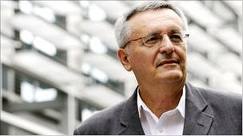
Mr. John Gray

The BBC website then carried a further article by John Gray.  But before quoting from that article, I do recommend that you put aside just 14 minutes to listen to that broadcast.  If you click here you will be taken to the BBC podcast page for the Point of View series and then scroll down to the item that is headlined: The End, yet again? 26 Dec 2011.

There will see that a simple ‘right click & save target as’ allows you to download the audio file so you can listen at your pleasure.

Indeed, having listened to Point of View over the many years when living in England, I can thoroughly recommend them.  Described on the website, “Weekly reflections on topical issues from a range of contributors including historian Lisa Jardine, novelist Sarah Dunant and writer Alain de Botton.”

Here are some extracts from the John Gray article that appeared on the BBC website.

A Point of View: The endless obsession with what might be

If we can stop thinking about what the future might bring and embrace the present for what it is, we would be a lot better off, writes John Gray.

It’s been some time now since history didn’t end. Twenty-odd years ago, when the Berlin Wall was coming down, there were many who believed that there would be no more serious conflicts.

The American writer Francis Fukuyama, who promoted the idea of the end of history in the autumn of 1989, declared that the chief threat in future would be boredom. A new era, different from any before, had arrived.

Of course it hadn’t. The end of the Soviet Union was followed by conflicts and upheavals of the sort that happen when empires fall apart – war in the Caucasus and economic collapse in Russia, for example.

In any realistic perspective the idea that a single event – however large – could mark the end of human conflict was absurd. But those who were seduced by the idea were not thinking in realistic terms.

They were swayed by a myth – a myth of progress in which humanity is converging on a universal set of institutions and values. The process might be slow and faltering and at times go into reverse, but eventually the whole of humankind would live under the same enlightened system of government.

When you’re inside a myth it looks like fact, and for those who were inside the myth of the end of history it seems to have given a kind of peace of mind. Actually history was on the move again. But since it was clearly moving into difficult territory, it was more comfortable to believe that the past no longer mattered.

Then later on in the article, John writes,

Life’s framework

The implication is that sudden shifts are relatively rare in history. But consider continental Europe over the past 70 years – until recently a normal human lifetime. Unless they were Swedish or Swiss, an ordinary European man or woman lived during that period under several quite different systems of government.

Nearly all of Europe, some of it democratic, succumbed for a time to Nazism or fascism. Half of Europe moved from Nazism to communism with only a brief interval of democracy. Most of that half, though not Russia, became functioning democracies after the end of the Cold War.

Not only have political forms changed during a normal lifetime, systems of law and banking have come and gone along with national currencies. The entire framework in which life was lived has changed not once, but several times. In any longer historical perspective discontinuities of these kinds are normal.

The article then concludes, thus,

We seem to be approaching one of those periods of discontinuity that have happened so often in the past. It may seem unthinkable that the European banking system could implode, or that a global currency like the euro could dissolve into nothing.

Yet something very much like that was the experience of citizens of the former Soviet Union when it suddenly melted down, and there is nothing to say something similar could not happen again.

For believers in progress it must be a dispiriting prospect. But if you can shake off this secular myth you will see there is no need to despair. The breakdown of a particular set of human arrangements is not after all the end of the world.

Surely we would be better off if we put an end to our obsession with endings. Humans are sturdy creatures built to withstand regular disruption. Conflict never ceases, but neither does human resourcefulness, adaptability or courage.

We tend to look forward to a future state of fulfilment in which all turmoil has ceased. Some such condition of equilibrium was envisioned by the American prophet of the end of history with whom I began.

As Fukuyama admitted, it’s not an altogether appealing vision. But living in fear of the end is as stultifying as living in hope of it. Either way our lives are spent in the shadow of a future that’s bound to be largely imaginary.

Without the faith that the future can be better than the past, many people say they could not go on. But when we look to the future to give meaning to our lives, we lose the meaning we can make for ourselves here and now.

The task that faces us is no different from the one that has always faced human beings – renewing our lives in the face of recurring evils. Happily, the end never comes. Looking to an end-time is a way of failing to cherish the present – the only time that is truly our own.

I have extracted more than perhaps I ought, and there was so much more to read than is presented here.  So please go to the BBC website and read it in full; it’s a very powerful essay.

You may also be interested in learning more about John Gray’s pivotal book: False Dawn: The Delusions of Global Capitalism

Finally, let me take you back to a piece that I wrote back in September about Transitions.  I closed that piece thus,

There is significant evidence, real hard evidence, that the patterns of mankind’s behaviours of the last few decades cannot continue.  Simply because mankind will go over the edge of self-extinction.  Darwin’s evidence and all that!  We have to accept that humans will see the bleedin’ obvious before it is too late.  We have to keep the faith that our species homo sapiens is capable of huge and rapid change when that tipping point is reached, so eloquently written by Paul Gilding in his book, The Great Disruption, reviewed by me here.  We have to embrace the fact that just because the world and his wife appears to be living in total denial, the seedlings of change, powerful change, are already sprouting, everywhere, all over the world.

So let’s welcome those changes. Let’s nurture those seedlings, encourage them to grow and engulf our society with a new richness, a new fertile landscape.

Let’s embrace the power of now, the beauty of making today much better and letting go of tomorrow.

For today, I am in charge of my life,

Today, I choose my thoughts,

Today, I choose my attitudes,

Today, I choose my actions and behaviours.

With these, I create my life and my destiny.

It’s very difficult to make predictions, especially when they involve the future!

Searching for something

Maybe less is more is really at the heart of our thirst for something more

A number of disparate recent experiences seem to have an underlying common thread.

See if these strike you in a similar fashion.

Yesterday, Joelle Jordan wrote about joy, about the wonderful relationship that dogs have with the world around them.  As Joelle wrote,

Joy is a difficult commodity to come by these days. I don’t mean entertainment, I don’t mean a good laugh, I mean pure joy, where, even just for a single moment, all worries and doubts, frustration and anger are lifted as though by Atlas.

Like so many other humans in our world, I often find myself in a constant state of stress. There always seems to be something to worry about, whether it’s money, job fulfilment, the state of my relationships, getting the house cleaned, finding time to get to the market, and more. If given the chance, I know we all could spend nearly all of our waking hours (and some of our sleeping hours, too) worrying about something. We spend so much time on the many things that inevitably work themselves out, and so little time on things that will create a memory and a crystal moment of joy.

My little dog Charlie spends his time in the completely opposite fashion; spending his waking hours seeking joy, and committing less time to things that worry him.

Charlie seems to exist normally in three states of being; content, happy and utterly joyful.

How many of us can echo Charlie’s existance in our own lives?

Then last Sunday, Father D’s sermon spoke about our tendency to develop habitual behaviours and rarely challenge the point of them.

The truth is that we get used to doing things a certain way and keep doing them without ever thinking of what we are doing.  We say things in the liturgy without even thinking of what we are saying.  I’m sure many people utter the words in the Book of Common Prayer without thinking of the theology behind the words, or the relationship between church and state that they express.

Later on,

There was a desire for “something more” but it was hard to put a finger on what it was.  I realized from these conversations that we are involved today in a time of intense searching.  Few of us are satisfied with what the church and society have served up.

The honest among us will readily admit we lead fractured lives – with a disembodied spirituality on one side, and a soulless daily existence on the other.  We are desperate for something more, for a faith with the power to transform both ourselves and our world.

“….  we are involved today in a time of intense searching“!  That smacked me right in the eye!

These are clearly challenging times with mankind facing increasing odds of an ecological disaster of Old Testament proportions, and much of the western world on the cusp of a long and difficult recession.  It is so easy to go on “doing things a certain way and keep doing them without ever thinking of what we are doing” while we wait for the leaders of our societies to fix our problems.

The truth is that we have to be the first to change, to question what we do on a daily basis and amend it if it is not truly healthy for us and for the planet.  As was said in that sermon, “It means bringing forth each day the fruits of the Spirit: Love, joy, patience, kindness, generosity, faithfulness, gentleness and self-control.”

Go back and read yesterday’s Post and reflect on how many of those ‘fruits’ are the ways of dogs.

My final connection with the theme of today’s essay is with a recent series from the BBC called ‘Status Anxiety’.  The programmes are still on YouTube and the first 10 minutes is below,

Status Anxiety discusses the desire of people in many modern societies to “climb the social ladder” and the anxieties that result from a focus on how one is perceived by others. De Botton claims that chronic anxiety about status is an inevitable side effect of any democratic, ostensibly egalitarian society. De Botton lays out the causes of and solutions to status anxiety.

Or if you prefer, all 2 hours 23 minutes may be watched on Top Documentary Films, described thus,

De Botton's book

Why doesn’t money (usually) buy happiness? Alain de Botton breaks new ground for most of us, offering reasons for something our grandparents may well have told us, as children.

It is rare, and pleasing, to see a substantial philosophical argument sustained as well as it is in this documentary. De Botton claims that we are more anxious about our own importance and achievements than our grandparents were. This is status anxiety.

Alain quotes philosophical writings, such as Democracy in America, a report by Alexis de Tocqueville on his visit to the USA in 1831. De Tocqueville noted that American equality, notable in those times, was accompanied by a climate of envy.

We jump to present-day USA, and see what, to de Botton, are some awful examples ofThe American Way. A Christian preaches get rich. A steelworker tells of his insecure life in an industry being closed down through others’ love of money.

Our protagonist points out the advantage of high status: those with high status will enjoy the care and attention of the world. Then joins this advantage with the illusion, orattempt at meritocracy in the USA, mentioning Jefferson’s notion of an aristocracy of talent.

Some of the messages towards the end of the programme are very thought-provoking indeed.  Let me draw this all together.

If you own a dog, or a cat, or any pet, stop a while today and see how their simplicity of life brings them so much more.  Naturally, we can never live life in the same way that our pet does but there are strong metaphors that carry equally strong messages for us.  Less is more.

Now watch the last part of Status Anxiety even if you didn’t watch the first segment above,  Reason?  Watch and it will become clear.


A self-affirmation

For today, I am incharge of my life.

Today, I choose my thoughts.

Today, I choose my attitudes.

Today, I choose my actions and behaviours.

With these, I create my life and my destiny.

Socrates and self-confidence

A presentation by Alain de Botton.

On April 12th, I introduced to you, dear reader, the philosopher, Alain de Botton. I promised that I would soon give you more.

On Top Documentary Films, there are links to all six parts of a series on philosophy presented by this popular British philosopher  featuring six thinkers who have influenced history, and their ideas about the pursuit of the happy life.

The first part is about Socrates; Socrates and self-confidence.  But before linking to that specific programme, a little about this enigmatic man, Socrates, who lived about 2,500 years ago (469–399 B.C.E).  Here’s an extract from the Stanford Encyclopaedia of Philosophy.

The philosopher Socrates remains, as he was in his lifetime (469–399 B.C.E.), an enigma, an inscrutable individual who, despite having written nothing, is considered one of the handful of philosophers who forever changed how philosophy itself was to be conceived. All our information about him is second-hand and most of it vigorously disputed, but his trial and death at the hands of the Athenian democracy is nevertheless the founding myth of the academic discipline of philosophy, and his influence has been felt far beyond philosophy itself, and in every age. Because his life is widely considered paradigmatic for the philosophic life and, more generally, for how anyone ought to live, Socrates has been encumbered with the admiration and emulation normally reserved for founders of religious sects—Jesus or Buddha—strange for someone who tried so hard to make others do their own thinking, and for someone convicted and executed on the charge of irreverence toward the gods. Certainly he was impressive, so impressive that many others were moved to write about him, all of whom found him strange by the conventions of fifth-century Athens: in his appearance, personality, and behavior, as well as in his views and methods.

Full entry may be read here, and very interesting it is, by the way.

Anyway, back to the programme from Alain de Botton.  The part on Socrates is introduced thus,

Why do so many people go along with the crowd and fail to stand up for what they truly believe? Partly because they are too easily swayed by other people’s opinions and partly because they don’t know when to have confidence in their own.

You can either watch the video by clicking here, or view it as three sections from YouTube, as follows.

Alain de Botton

An excursion into the nature of self!

I had not heard of Alain de Botton before coming across a series of his TV programmes via Top Documentary Films.  But, clearly, that has been my loss because he appears to have quite a following.  So over the next 10 days or so, I’m going to include some of his material in upcoming articles in the hope that you enjoy them as much as we have.

But first, an introduction to Alain de Botton from a TED Talks video from July 2009.  Enjoy.