I would not have believed this had I not read it with my own eyes.
I have been an atheist all my life. My mother and father were all those years ago when being an atheist was not something one promoted.
But a recent article from The Conversation told a very surprising account: “These spiritual caregivers can be found working in hospitals, universities, prisons and many other secular settings, serving people of all faiths and those with no faith tradition at all.“
Here’s the full article.
ooOOoo
Religious leaders without religion: How humanist, atheist and spiritual-but-not-religious chaplains tend to patients’ needs
Chaplains talk with anyone, regardless of whether or not the patient has a religious affiliation – and some chaplains themselves are not religious. Jacob Wackerhausen/iStock via Getty Images Plus
In times of loss, change or other challenges, chaplains can listen, provide comfort and discuss spiritual needs. These spiritual caregivers can be found working in hospitals, universities, prisons and many other secular settings, serving people of all faiths and those with no faith tradition at all.
Yet a common assumption is that chaplains themselves must be grounded in a religious tradition. After all, how can you be a religious leader without religion?
Thirty percent of Americans are religiously unaffiliated. Research suggests that people who are atheists or otherwise nonreligious sometimes reject a chaplain out of wariness, or shut down a conversation if they feel judged for their beliefs. But this research has not accounted for a new, increasingly likely situation – that the chaplain might also be nonreligious.
No national survey has been done, so the number of nonreligious chaplains is unknown. But there is plenty of reason to think that as more Americans choose not to affiliate with any particular religion, so too do more chaplains.
Nonreligious chaplains have been a part of hospital systems and universities for years, but they came into the national spotlight in August 2021 when Harvard University’s organization of chaplains unanimously elected humanist and atheist Greg Epstein as president. Humanists believe in the potential and goodness of human beings without reference to the supernatural.
Other recent reporting on humanist chaplains has also focused on school campuses, but nonreligious chaplains are not limited to colleges and universities. Eighteen of the 21 nonreligious chaplains we spoke with in our study work in health care, including hospice. The Federal Bureau of Prisons allows nonreligious chaplains, but we were unable to find any of them to participate in the current study.
Humanist chaplain Bart Campolo, center, and his wife, Marty, right, mingle with students at the University of Southern California in 2015. AP Photo/Jae C. Hong
The idea of a “call” from God is central to many religious vocations: a strong impulse toward religious leadership, which many people attribute to the divine.
Chaplains who are atheists, agnostics, humanists or who consider themselves spiritual but not religious also can feel called. But they do not believe that their calls come from a deity.
Joe, for example, an atheist and a humanist whom we interviewed, has worked as a chaplain in hospitals and hospices. He says that his “light bulb moment” came after a history professor told him that beliefs are the source of a community’s power. While atheists do not believe in God or gods, many do have strong beliefs about ethics and morality, and American atheists are more likely than American Christians to say they often feel a sense of wonder about the universe. Joe’s call was not “from a divine source,” but nonetheless, he says this experience “kind of filled me with a sense of control, and confidence, and presence” in his life that grounded his sense of a calling.
Sunil, another chaplain our team interviewed, was inspired by his college chaplain, whom he calls “a really influential presence.” The chaplain helped Sunil answer questions about identity and values without “necessarily having any religious or spiritual leanings to it,” and encouraged him to go to divinity school.
Today, Sunil tries to help others answer those same questions in his work as a health care chaplain – and to offer deeply thoughtful, meaningful spiritual care to people who aren’t religious.
Education and training
Most chaplaincy jobs require a theological degree. Along with coursework in sacred scriptures and religious leadership, chaplaincy training usually involves clinical pastoral education, where students learn about hands-on, care-oriented aspects of their profession. This involves learning to provide care to everyone, regardless of their religious background.
Although coursework is broadly the same for all students, religious or nonreligious, the actual experience of earning a degree is very different for nonreligious students. In the United States, Christian students are easily able to enroll in a seminary or divinity school that shares their faith identity and spend their years of study learning about their own tradition.
Chaplaincy programs that focus on non-Christian traditions are available, but scarcer, and our team does not know of an overtly nonreligious chaplaincy program. In recent years, more seminaries have welcomed nonreligious students, but nonetheless, nonreligious students often find themselves focusing their study on traditions to which they have no personal connection.
Yet there is a surprising bright side.
‘I am here to support you’
Being deeply immersed in traditions that are not one’s own is one of the reasons that nonreligious chaplains can be so effective.
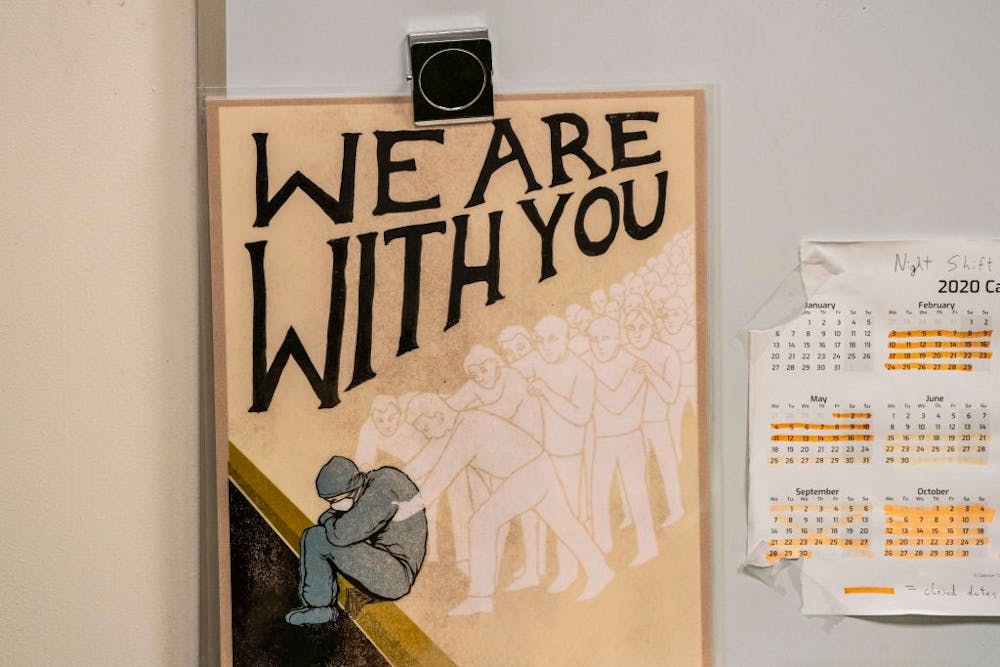
Artwork posted by a chaplain in a break room in the trauma surgery ICU at Harborview Medical Center in Seattle. David Ryder/Getty Images
For example, our team asked Kathy, a health care chaplain, how she approaches prayer with religious and nonreligious patients. “My goal is to try to meet that person where they are and pray in a way that’s helpful and comforting for them, or meets whatever the need is that’s arisen during the conversation that we’ve had,” she said. Like all chaplains, Kathy is there to accompany, not proselytize. While she herself prays to the “great mystery,” she is comfortable facilitating whatever prayer is needed.
Claire, a chaplaincy student, agreed with Kathy and described her own first experience meeting an evangelical Christian patient. It was easy, she said, because “you’re not trying to fix anything. You’re just trying to meet them where they are. So that’s it.”
Nonreligious chaplains are used to thinking outside the box. Having learned about major world religions, many of them can find overlapping values and beliefs with their patients, such as finding beauty and meaning in the natural world or finding strength in their conviction that human beings are inherently good.
Cynthia works in the palliative care department in a hospital and tells her patients, “I am here to support you in whatever is meaningful to you right now and whatever is most important in your life in this moment.” She asks patients: “What are you struggling with right now? What are your goals? What do you hope for? What are you afraid of?” – trying to “unpack that with a spiritual lens rather than a medical lens.”
Cynthia is an example of why spiritual care by nonreligious chaplains may be surprising, but is likely here to stay. Based on our research, nonreligious chaplains are as capable as religious chaplains of meeting a person in their darkest hour and taking them by the hand.
That last sentence may be opened up even more. In that the article speaks of chaplains, both religious and nonreligious. But as someone who was a counsellor with the Prince’s Youth Business Trust some years ago, now The Prince’s Trust, it is my opinion that anyone who is an active listener can undertake the role.
The article has many fine points including one that I had not considered before. “That American atheists are more likely than American Christians to say they often feel a sense of wonder about the universe.” I am certain that this isn’t confined to Americans.
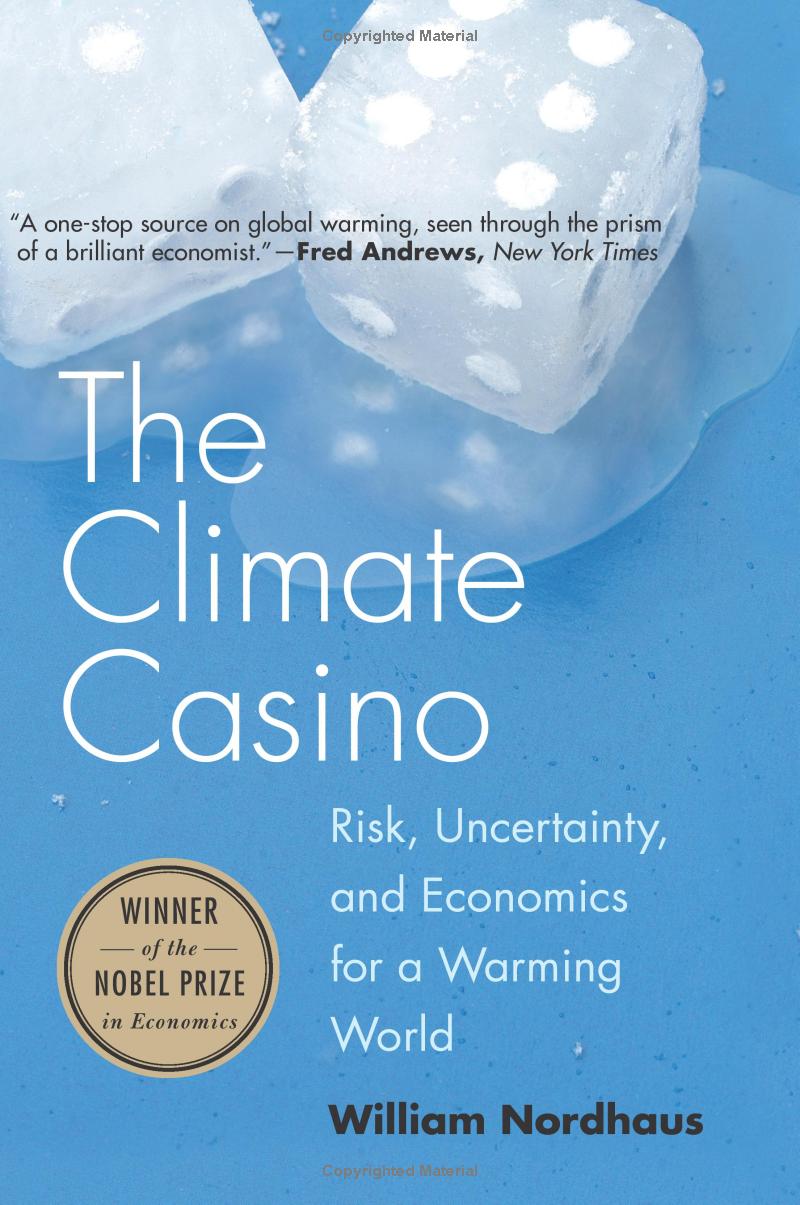
I bought this book from Thriftbooks and was so fired up that I sat down and started reading it almost immediately. For as the back cover explains:
Climate change is profoundly altering our world in ways that pose major risks to human societies and natural systems. We have entered the Climate Casino and are rolling the global-warming dice, warns William Nordhaus. But there is still time to turn around and walk back out of the casino, and in this book the author explains how.
William Nordhaus
William Nordhaus is a brilliant economist as Fred Andrews describes above. Indeed he is the Sterling Professor of Economics at Yale University and he has his website here.
Now I am going straight to two videos.
The first is William Nordhaus receiving the Nobel Prize in 2018.
And the second is that lecture given at the same venue in 2018.
Let me quote from a post on Ugly Hedgehog because it will make a good introduction to today’s Picture Parade.
We made our way to get a new pup. Before I could get to the litter to choose, one of them decided to walk over to me and sit right between my feet. Clearly he was telling me that he was the one. From the start he was comfortable with anything and anyone around him. No matter what the situation, it was his pleasure and he made it ours. He loved strangers and playmates of all kinds – even taking selfies with them. You could hide his toys anywhere and he had an amazing sense to find them. He was a gentle soul who enriched our hearts for nearly 14 years. Brady surrendered to a medical condition he endured for a couple of years without ever showing an ounce of complaint. Some days its tough to walk without him by my side, but no sympathy is needed because he left us with too much joy. Instead, give your pets the unconditional love they give you for as long as you are so blessed.
I was very short of time yesterday so my apologies for going straight into this post. Plus, it is a post that talks about the learning process for dogs and, as such, looking more thoroughly will discover more material.
ooOOoo
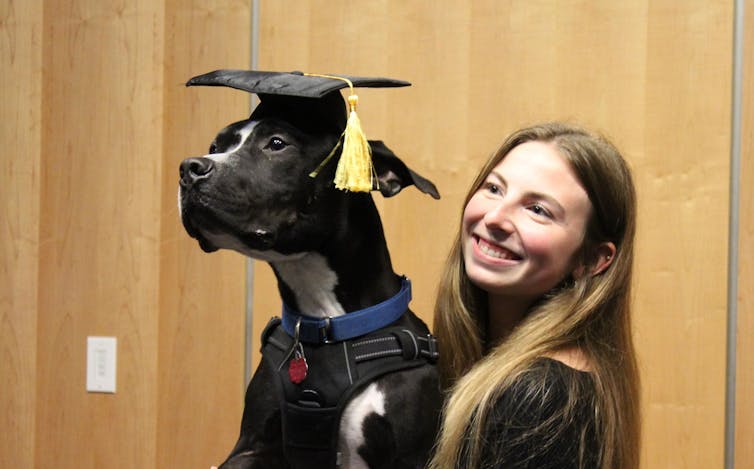
Canines go to college in this class that seeks to give shelter dogs a fresh start
Associate Professor of Psychology, Saint Francis University
Published August 24th, 2023
Shelter animals often display problematic behaviors. Can they be retrained? Shlomit Flaisher-Grinberg
What prompted the idea for the course?
When I was growing up, my love for animals led me to volunteer at animal shelters. But it wasn’t until I started teaching psychology that I found another way to support the well-being of shelter animals. During my first year of teaching a psychology course about learning, I realized that the course’s content could be used to train shelter dogs.
Since some shelter dogs display problematic behaviors, such as fearfulness, destructiveness and disobedience, they are less likely to get adopted. I wanted my students to use their knowledge, passion and care to train shelter dogs and improve their chances of finding a permanent home.
What does the course explore?
The course teaches students how to apply behavioral analysis and modification techniques toward the training of shelter dogs. Students work with dogs on learning to follow cues such as “sit,” “down,” “stay” and “come”; perform tricks such as “high-five,” and “roll over”; and complete agility courses made of tunnels, hoops and weaving poles.
The course also explores the emotional, psychological and physiological benefits of the human-animal bond, such as reduced stress, by integrating the dogs into educational and therapeutic environments. For instance, the students train the dogs to sit by them calmly for the entire duration of a lecture. This skill may be important for future adopters who work within an educational setting or need their dog to accompany them into the classroom.
The students also train the dogs to visit our clinical educational facility, the Experiential Learning Commons, which was built as a mock hospital. Within our simulated emergency room, intensive care room, patient room, maternity room and exam room, students train the dogs to walk next to simulated patients’ wheelchairs, sit by patients’ beds and provide them with affectionate and nurturing companionship.
Finally, the course instructs students on how to apply for grants for nonprofits, with the idea being to secure funding to support animal shelters.
Why is this course relevant now?
This course creates a collaborative and reciprocal partnership between a university and the community in which it is located. Focusing on the care for shelter dogs, it allows for faculty, students and a shelter’s staff and volunteers to exchange knowledge and resources. As such, it uses an instructional approach known as community engagement.
What’s a critical lesson from the course?
Working alongside our animal shelter community partners, and under the direction of my co-instructor, talented dog trainer Megan Mills, students learn that they can make a true and visible impact on society, one dog at a time.
Students will learn to use psychological learning principles to work effectively with shelter dogs – and this knowledge can later be translated to other domains of their lives. I believe that by training shelter dogs and learning to write nonprofit grant proposals, my students will develop into ethical and responsible citizens – both locally and globally.
Three promising developments in Parkinson’s research.
As I am sure most of you know Jean was diagnosed in having Parkinson’s Disease (PD) in late 2015 and from that moment on I have taken more than a superficial interest in PD. Especially as my best friend in England, Richard M. was similarly diagnosed in late 2015 – “the fickle finger of fate“.
So a recent Neuro Talk from the Parkinson’s Foundation is my contribution for today.
ooOOoo
Three Promising Developments in Parkinson’s Research
Every year, the Parkinson’s Foundation funds the most exciting and promising research ideas in the Parkinson’s disease (PD) field.
In our latest Neuro Talk, Chief Scientific Officer James Beck, PhD, is joined by three researchers whose studies were funded by the Parkinson’s Foundation. Their projects, which range from investigating environmental factors to understanding cognition, explain how research is helping us further our understanding of Parkinson’s.
What is the Parkinson’s Foundation? The Parkinson’s Foundation makes life better for people with Parkinson’s disease (PD) by improving care and advancing research toward a cure. In everything we do, we build on the energy, experience and passion of our global Parkinson’s community. Learn more on our website: https://www.parkinson.org/
ooOOoo
For those that wish to understand PD in a scientific manner, here is a quote from the PD:
What is Parkinson’s disease? Parkinson’s disease (PD) is a neurodegenerative, progressive disorder that affects predominately dopamineproducing neurons in a specific area of the brain called substantia nigra






























 Learning from Dogs