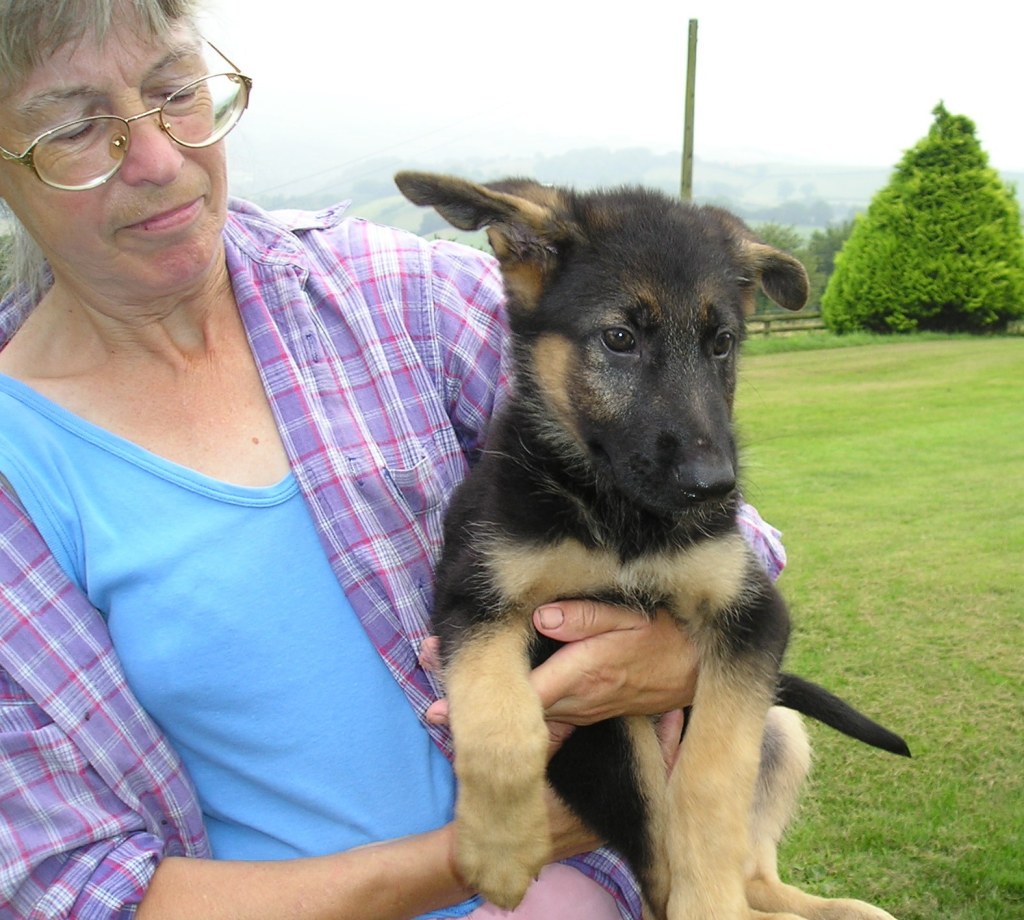
Hug a pet and extend your life!

With seventeen pets here at home Jean and I should live forever!

Another Saturday and another gentle post about the power of our wonderful pets. (Oh, and who, as I did, missed the fact that yesterday was not only a Friday the Thirteenth but the third one this year!)

Anyway, back to the plot!

Last Monday, Mother Nature Network published an item about how good pets are for our health. It seemed the perfect item to share with all of you this Saturday.

ooOOoo

11 studies that prove pets are good for your health

Check out the ways your 4-legged friends enhance your physical and emotional health.

By: Sidney Stevens, November 9, 2015.
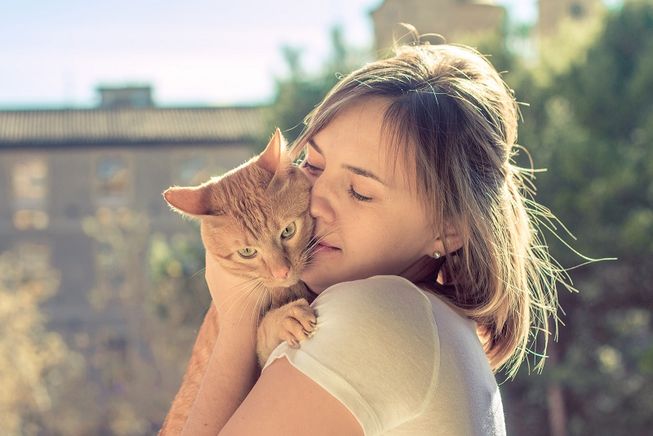
Pets strengthen our hearts, calm our nerves and a whole lot more. (Photo: Juanedc.com /flickr)

If you have pets you already know the joy and love they bring to your life. Now science is confirming just how good they really are for you — both mentally and physically.

How do they help? One theory is that pets boost our oxytocin levels. Also known as the “bonding hormone” or “cuddle chemical,” oxytocin enhances social skills, decreases blood pressure and heart rate, boosts immune function and raises tolerance for pain. It also lowers stress, anger and depression.

PHOTO BREAK: 12 astonishing facts about horses

No surprise then that keeping regular company with a dog or cat (or another beloved beast) appears to offer all these same benefits and more. Read on to discover the many impressive ways a pet can make you healthier, happier and more resilient.

1. Pets alleviate allergies and boost immune function

One of your immune system’s jobs is to identify potentially harmful substances and unleash antibodies to ward off the threat. But sometimes it overreacts and misidentifies harmless stuff as dangerous, causing an allergic reaction. Think red eyes, itchy skin, runny nose and wheezing. You’d think that having pets might trigger allergies by kicking up sneeze-and-wheeze-inducing dander and fur. But it turns out that living with a dog or cat during the first year of life not only cuts your chances of having pet allergies in childhood and later on but also revs up your immune system and lowers your risk of eczema and asthma. In fact, just a brief pet encounter can invigorate your disease-defense system. In one study, petting a dog for only 18 minutes raised immunoglobulin A (IgA) levels in college students’ saliva, a sign of robust immune function.

2. Pets up your fitness quotient

This one applies more to dog owners. If you like walking with your favorite canine, chances are you’re fitter and trimmer than your non-dog-walking counterparts and come closer to meeting recommended physical activity levels. One study of more than 2,000 adults found that regular dog walkers got more exercise and were less likely to be obese than those who didn’t walk a dog. In another study, older dog walkers (ages 71-82) walked faster and longer than non-pooch-walkers, plus they were more mobile at home.
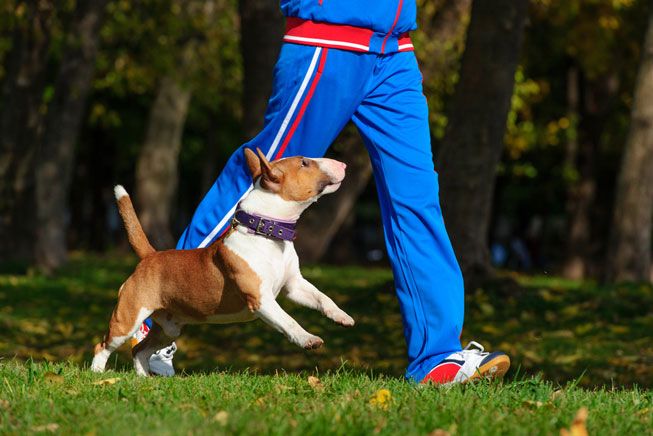
Dog owners who take their canine companions on walks tend to be trimmer and fitter than their fellow dog-less peers. (Photo: AMatveev/Shutterstock)

3. Pets dial down stress

When stress comes your way, your body goes into fight-or-flight mode, releasing hormones like cortisol to crank out more energy-boosting blood sugar and epinephrine to get your heart and blood pumping. All well and good for our ancestors who needed quick bursts of speed to dodge predatory saber-toothed tigers and stampeding mastodons. But when we live in a constant state of fight-or-flight from ongoing stress at work and the frenetic pace of modern life, these physical changes take their toll on our bodies, including raising our risk of heart disease and other dangerous conditions. Contact with pets seem to counteract this stress response by lowering stress hormones and heart rate. They also lower anxiety and fear levels (psychological responses to stress) and elevate feelings of calmness.

4. Pets boost heart health

Pets shower us with love so it’s not surprising they have a big impact on our love organ: the heart. Turns out time spent with a cherished critter is linked to better cardiovascular health, possibly due to the stress-busting effect mentioned above. Studies show that dog owners have a lower risk of heart disease, including lower blood pressure and cholesterol. Dogs also benefit patients who already have cardiovascular disease. They’re not only four time more likely to be alive after a year if they own a dog, but they’re also more likely to survive a heart attack. And don’t worry, cat owners — feline affection confers a similar effect. One 10-year study found that current and former cat owners were 40 percent less likely to suffer a heart attack and 30 percent less likely to die of other cardiovascular diseases.

5. Make you a social — and date — magnet

Four-legged companions (particularly the canine variety that pull us out of the house for daily walks) help us make more friends and appear more approachable, trustworthy and date-worthy. In one study, people in wheelchairs who had a dog received more smiles and had more conversations with passersby than those without a dog. In another study, college students who were asked to watch videos of two psychotherapists (depicted once with a dog and once without) said they felt more positively toward them when they had a dog and more likely to disclose personal information. And good news for guys: research shows that women are more willing to give out their number to men with a canine buddy.
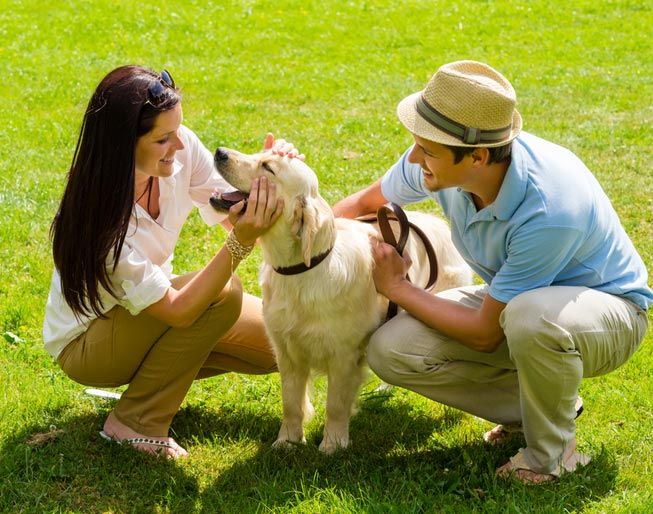
A dog can make you appear friendlier and more approachable to others. (Photo: CandyBox Images/Shutterstock)

6. Provides a social salve for Alzheimer’s patients

Just as non-human pals strengthen our social skills and connection, cats and dogs also offer furry, friendly comfort and social bonding to people suffering from Alzheimer’s and other forms of brain-destroying dementia. Several canine caregiver programs now exist to assist at-home dementia patients with day-to-day tasks, such as fetching medication, reminding them to eat and guiding them home if they’ve wandered off course. Many assisted-living facilities also keep resident pets or offer therapy animal visits to support and stimulate patients. Studies show creature companions can reduce behavioral issues among dementia patients by boosting their moods and raising their nutritional intake.

7. Enhances social skills in kids with autism

One in nearly 70 American kids has autism (also known as autism spectrum disorder, or ASD), a developmental disability that makes it tough to communicate and interact socially. Not surprisingly, animals can also help these kids connect better to others. One study found that youngsters with ASD talked and laughed more, whined and cried less and were more social with peers when guinea pigs were present. A multitude of ASD animal-assisted therapy programs have sprung up in recent years, featuring everything from dogs and dolphins to alpacas, horses and even chickens.
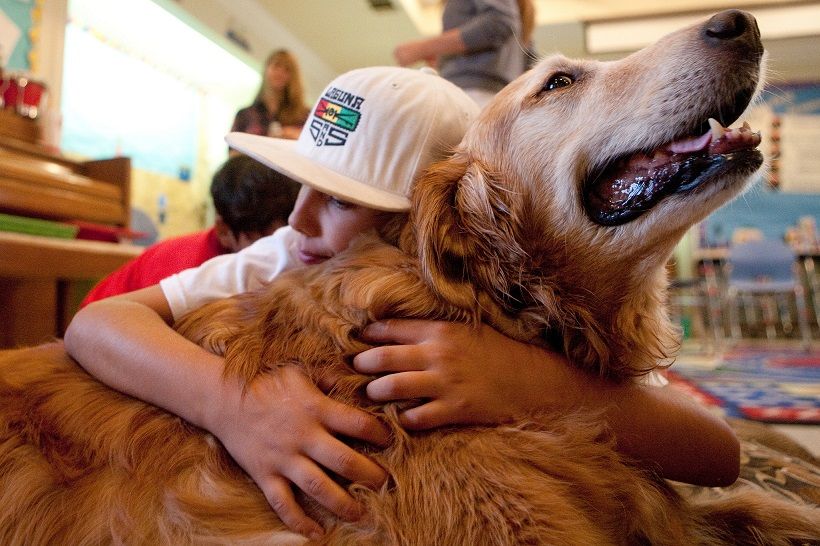
Animal-assisted therapy helps kids with autism and other developmental disabilities learn social skills. (Photo: UCI UC Irvine/flickr)

8. Dampens depression and boosts mood

Pets keep loneliness and isolation at bay and make us smile. In other words, their creature camaraderie and ability to keep us engaged in daily life (via endearing demands for food, attention and walks) are good recipes for warding off the blues. Research is ongoing, but animal-assisted therapy is proving particularly potent in deterring depression and other mood disorders. Studies show that everyone from older men in a veterans hospital who were exposed to an aviary filled with songbirds to depressed college students who spent time with dogs reported feeling more positive.

9. Defeats PTSD

People haunted by trauma like combat, assault and natural disasters are particularly vulnerable to a mental health condition called post-traumatic stress disorder (PTSD). Sure enough, studies show that the unconditional love — and oxytocin boost — of a pet can help remedy the flashbacks, emotional numbness and angry outbursts linked to PTSD. Even better, there are now several programs that pair specially trained service dogs and cats with veterans suffering from PTSD.

10. Fights cancer

Animal-assisted therapy helps cancer patients heal emotionally and physically. Preliminary findings of an on-going clinical trial by the American Humane Association shows that therapy dogs not only erase loneliness, depression and stress in kids fighting cancer, but canines can also motivate them to eat and follow treatment recommendations better — in other words participate more actively in their own healing. Likewise, new research reveals a similar lift in emotional well-being for adults undergoing the physical rigors of cancer treatment. Even more astounding, dogs (with their stellar smelling skills) are now being trained to literally sniff out cancer.

11. Puts the kibosh on pain

Millions live with chronic pain, but animals can soothe some of it away. In one study, 34 percent of patients with the pain disorder fibromyalgia reported pain relief (and a better mood and less fatigue) after visiting for 10-15 minutes with a therapy dog compared to only 4 percent of patients who just sat in a waiting room. In another study, those who had undergone total joint replacement surgery needed 28 percent less pain medication after daily visits from a therapy dog than those who got no canine contact.

ooOOoo

When I was setting this post up and copying across all the many links I was aware that there was a mountain of information out there. You may want to take some time and explore those links. For example, the link to HABRI- Human-Animal Research Initiative looks incredibly interesting. Then there was the link to the work being undertaken by the American Humane Association, that link being to this video that I am presenting here to close off today’s post.

Wherever you are in the world look after yourself and care for all those lovely pets out there. Love them so dearly!

Having fun with history.

Nothing to do with dogs but, nonetheless, a neat way to finish the week.

I was looking at a recent George Monbiot essay and getting myself all wound up about it, thinking that it should be today’s post. Then I thought, “Come on, Paul, end the week on a gentle tone.”

So with that in mind, let me offer you an item on British history that Su sent me a week ago. I can’t authenticate the details but my instinct is that everything mentioned is correct.

ooOOoo

There is an old Pub in Marble Arch, London, which used to have a gallows adjacent to it. Prisoners were taken to the gallows (after a “fair” trial of course) to be hanged. The horse-drawn dray, carting the prisoner, was accompanied by an armed guard, who would stop the dray outside the pub and ask the prisoner if he would like ”ONE LAST DRINK.” If he said YES, it was referred to as ONE FOR THE ROAD. If he declined, that prisoner was ON THE WAGON.

So there you go … On with some more history.

They used to use urine to tan animal skins, so families used to all pee in a pot and then once a day the pot was taken and sold to the tannery. If you had to do this to survive you were “piss poor”, but worse than that were the really poor folk, who couldn’t even afford to buy a pot, they “didn’t have a pot to piss in” and were the lowest of the low. The next time you are washing your hands and complain because the water temperature isn’t just how you like it, think about how things used to be.

Here are some more facts about the 1500s:

Most people got married in June, because they took their yearly bath in May and they still smelled pretty good by June. However, since they were starting to smell, brides carried a bouquet of flowers to hide the body odor. Hence the custom today of carrying a bridal bouquet when getting married.

Baths consisted of a big tub filled with hot water. The man of the house had the privilege of the nice clean water, then all the other sons and men, then the women and finally the children. Last of all came the babies. By then the water was so dirty you could actually lose someone in it. Hence the saying, “Don’t throw the baby out with the bath water!”

Houses had thatched roofs, thick straw piled high on the rafters, with no wood underneath. It was the only place for animals to get warm, so all the cats and other small animals (mice, bugs) lived in the roof. When it rained it became slippery and sometimes the animals would slip and fall off the roof. Hence the saying “It’s raining cats and dogs.” There was nothing to stop things from falling into the house.

This posed a real problem in the bedroom, where bugs and other droppings could mess up your nice clean bed. Hence, a bed with four big posts and a sheet hung over the top afforded some protection. That’s how canopy beds came into existence.

The floor was dirt. Only the wealthy had something other than a dirt floor. Hence the saying, “dirt poor.” The wealthy had slate floors that would get slippery in winter when wet, so they spread thresh (straw) on floor to help keep their footing. As the winter wore on they added more thresh until, when you opened the door, it would all start slipping outside. A piece of wood was placed in the entrance. Hence: a threshold.

In those old days, they cooked in the kitchen with a big kettle that always hung over the fire. Every day they lit the fire and added things to the pot. They ate mostly vegetables and did not get much meat. They would eat the stew for dinner, leaving leftovers in the pot to get cold overnight, then start over the next day. Sometimes stew had food in it that had been there for quite a while. Hence the rhyme: ”Peas porridge hot, peas porridge cold, peas porridge in the pot, nine days old.” Sometimes they could get pork, which made them feel quite special. When visitors came over they would hang up their bacon, to show off.

It was a sign of wealth that a man could, “Bring home the bacon.” They would cut off a little to share with their guests and would all sit around talking and ”chew the fat.”

Those with money had plates made of pewter. Food with high acid content caused some of the lead to leach onto the food, causing lead poisoning and death. This happened most often with tomatoes, so for the next 400 years or so, tomatoes were considered poisonous.

Bread was divided according to status. Workers got the burnt bottom of the loaf, the family got the middle, and guests got the top, or ”The Upper Crust.”

Lead cups were used to drink ale or whisky. The combination would sometimes knock the imbibers out for a couple of days. Someone walking along the road would take them for dead and prepare them for burial. They were laid out on the kitchen table for a couple of days and the family would gather around and eat and drink and wait and see if they would wake up. Hence the custom of ”Holding a Wake.”

England is old and small and the local folks started running out of places to bury people, so they would dig up coffins and would take the bones to a bone-house and reuse the grave site. When reopening these coffins, 1 out of 25 coffins were found to have scratch marks on the inside and they realised they had been burying people alive. So they would tie a string on the wrist of the corpse, thread it out through the coffin and up through the ground and tie it to a bell. Someone would have to sit out in the graveyard all night (the graveyard shift) to listen for the a bell; thus someone could be, ”Saved by the Bell ”or was considered a ”Dead Ringer.” And that’s the truth.

Now, whoever said history was boring ! ! !
So ….. get out there and educate someone!

ooOOoo

Just out of curiosity, I did a web search on that Pub in Marble Arch. Quickly came across this, from which I quote, in part:

The site of the Tyburn Tree is said to be at what is now Marble Arch, at the north-east corner of Hyde Park. Some historians give a more precise location as slightly to the north-west at Connaught Square. In fact, many bodies were found there when the square was being built in the 1820s, so it’s possible that some Tyburn victims were buried right where they died.

Mass executions took place on Mondays, when prisoners were transported from Newgate Prison to Tyburn in an open wagon, often in their finest clothes. The procession, which was watched by a large and enthusiastic crowd, wound down Snow Hill, across Holborn Bridge into Holborn, down Broad St Giles into Oxford Street and on to Tyburn.

And it was but a moment to find a photograph of the place.

Tyburn

 You all have a wonderful, relaxing week-end and don’t lose your head over anything!

Our caring dogs.

Staying with the theme of our lives being “rebooted” by our dogs.

Again, as so often occurs, a thought or reply left by someone to a previous post kicked off a new post for me.

So it was yesterday when Hariod commented: “This is the organisation that brought dogs into the care home my father lived in: http://www.petsastherapy.org/

That website is full of great information and any readers living in the UK who have not come across them before are highly recommended to have a good browse. One item that caught my eye was the Precious Memories link.

The loss of a pet is always a devastating and traumatic experience but even more so for the owner of a PAT dog or cat who has brought much love and companionship to many people, as well as to their owners.

This page contains lasting memorials to some PAT dogs and PAT cats who have given much to society by regularly visiting in Hospitals, Hospices, Residential homes or Day Care Centres.

PETS AS THERAPY

They will not be forgotten.

Here is one of those memories:

Baggy

Baggy

Baggy was a Finnish Lapphund and a wonderful and loving companion. She enjoyed taking part in many canine events including passing the KCGC Bronze, Silver & Gold awards, agility, showing and heel work to music, Baggy loved to go on a camping trip in the caravan or a trip down the river in our boat.

Baggy had two litters of puppies and two sons one from each litter are PAT dogs and her grand daughter is also a PAT dog. Baggy was my first PAT dog and she loved to go visiting in our local Residential home bringing joy and love to many people.

We love and miss Baggy so much our special sweet little friend.

Sheila Hall

The last aspect of the Pets As Therapy site that I want to refer to is their blog: Dog Dog Dog. Do drop in there and read some of the wonderful stories of those caring dogs.

That very nicely leads on to two videos that I quickly came across.

The first is described, thus:

Published on Dec 19, 2013
Follow Fraser, a black lab-golden mix, who has been a part of HCA Virginia’s unique Pet Therapy program since 2007. For several years, Fraser has spread comfort, compassionate care and joy to the faces of countless patients and staff at Chippenham and Johnston-Willis Hospitals from Tucker Pavilion and the Thomas Johns Cancer Hospital to many other areas. Catch a glimpse of how pet therapy is a source of alternative care for those in need.

While the second is about the therapy dog test.

Published on Dec 16, 2012
Achilles, my German Shepherd Dog, taking the Therapy Dog International test for certification.

Having this certification will allow Achilles and I to visit people in the hospital and other health care facilities.

Achilles is an AKC Obedience trained competitor and was able to pass the TDI test using that training and experience rather than special training for the test.

If you are interested in making your dog a TDI Therapy Dog go to their web site for information on how to accomplish that.

Here is the website for Therapy Dogs International, who are based in New Jersey, USA.

Can’t get those words from Per out of my mind: It is all about those huge small things. The huge consequences that flow from a small, adorable puppy.

Puppy Pharaoh in the arms of Sandra Tucker of Jutone Breeders in Devon, UK. September, 2003.


Rebooting an inmate’s life

This is no conundrum: a direct contrast to yesterday.

The benefits of having a dog or two (or nine) are boundless and have been documented for thousands of years. Indeed, a quick web search revealed that Alexander Pope, the 18th-century English poet, is the attributed author of the quote, “Histories are more full of examples of the fidelity of dogs than of friends.”

Nevertheless, it was still a joy to come across the documentary film Dogs On The Inside.

Filmed in a Massachusetts prison, DOGS ON THE INSIDE follows the birth of a relationship between abandoned rescue dogs and prison inmates as they work together toward a second chance at a better life. Giving a voice to a forgotten dog and a forgotten man, the film is a life-affirming testament to the power of second chances.

The film was released in February 2014, and here is the trailer.

In general, it seems to have gathered good reviews with this one from Amazon being typical of what I have seen.

I had tears in my eyes during several segments of this film. Such a lovely connection between the rescue workers and the dogs. Then, the inmates and the dogs. And, finally, the photos of their forever homes and families. Bravo to all at Don’t Throw Us Away. People like you, who work to save and rehab these animals, are amazing.

You are also recommended to read the review that is on the Ecorazzi website. Here’s a flavour of that review:

Two parties neglected and forgotten become the powerful emotional center of an uplifting new documentary, Dogs on the Inside.

We’re taken to Massachusetts, where there exists a unique, mutually-beneficial rehabilitation program that finds rescue dogs paired with prison inmates.

This documentary, from directors Brean Cunningham and Douglas Seirup, follows a handful of inmates at a correctional facility involved in Don’t Throw Us Away, a program that partners them with neglected dogs. For the animal, benefits include exercise, attention, and care while shelters remain crowded. For the prisoners, they have a chance to form connections and work towards parole.

It’s fascinating throughout watching both sides – scared dogs and (emotionally) guarded inmates – warm to one another, seemingly leaving their past behind.

That’s at the heart of this illuminating, heartwarming film: second chances. Early on, it’s easy to see the parallels between these two groups – with the comparisons handled tactfully throughout a film that never strays from its simple, honest goal. Dogs never preaches or calls for political or social change; it more so asks the viewer to be willing to forgive and welcome in those which have been cast aside. When an inmate says, ‘they come from a bad life, they haven’t seen love in while,’ he isn’t necessarily talking just about the dog.

Let me close with this heart-stirring photograph that was included in the above review.

Candido2-1

So much to learn from our precious, gorgeous dogs!

Rebooting the program of life!

Interesting conundrum!

Some of you may have noticed a reply left by Marg (aka MargfromTassie) to my post yesterday. In part, this is what Marg wrote:

By the way Paul, you’re 71 now. If you reverse it, and were 17 again – what is the major thing, if any, that you would do differently with your life – knowing what you know now? ( or is this just too difficult?)

In turn, I replied:

What would I do differently? What a fascinating question. Rather than dump the first thing that comes to mind, let me reflect on the question for a while. Who knows? Maybe make it tomorrow’s post?

At first it was very clear what I would have done differently. Namely, had I had the awareness at a much earlier age of the psychological and emotional impact of my father’s death back in December 1956, just six weeks after I had had my twelfth birthday, I would have been a much more emotionally settled person and, in time, a better father to my son and daughter.

Then almost immediately I recognised the conundrum in what I was thinking.

For that subconscious fear of rejection that I carried all the way through my life until 2007, when a local Devon psychotherapist exposed that fear (thank you, J), had both strong positive and negative consequences. The positive consequences far outweighed the negative ones, that were mainly to do with uncertainty over relationships with women.

Because if my previous wife hadn’t announced in December 2006, fifty years to the day after my father died, that she had been unfaithful, I wouldn’t have sought J’s help, wouldn’t have gained the self-awareness that is so vital for all of us, and wouldn’t have met Jean in December 2007. And that has been a positive consequence of unimaginably beautiful measure.

So dear Marg, thank you for your fascinating question but, in the end, if I had the chance I would repeat my life exactly the same way again.

With apologies to any readers who have regarded the above as excessive navel-gazing! But my justification for writing this is to underline the supreme importance of knowing oneself!

There’s another year gone!

Yesterday was my 71st birthday.

Consequently, writing a blog post for today wasn’t high on my list of things to do.

So this is to offer my thanks to everyone who sent me greetings; it was wonderful to hear from so many friends, old and new.

Thus my post today is to share three items that came from family back in England.

First, my mother, who is still teaching piano and oboe at the age of 95, sent me this:

Secondly, my son, Alex, and his long-term partner, Lisa, sent me this in an card chosen from the Friends of the Earth selection:

dog cake
(All dog owners know, I’m sure, that dogs must never eat chocolate.)

Lastly, my grandson, Morten, who despite being just five-years-old, is already a dab hand with an iPhone and sent me the following picture of himself with Dad in the background:

photo

Finally, my love and gratitude to Jeannie for making me feel special yesterday, as she has done every day since we first met.

Picture parade one hundred and twenty-one.

The second welcome to the season of mists and autumnal colours.

With thanks to Mother Nature Network where these wonderful photographs were published. Last week’s set are here.

mix8
Photo: Scott Kinmartin/flickr

oooo

Photo: Tanya Uralova/Shutterstock

oooo

Photo: Tanya Uralova/Shutterstock
Photo: AJU_photography/flickr

oooo

Photo: Kichigin/Shutterstock

oooo

Photo: Josh McGinn/flickr

oooo

Photo: otsphoto/Shutterstock

oooo

Photo: Mark Jones/flickr

The third and final welcome will be in a week’s time.

You all take care out there.

Saturday smile

Just think what it would be like if all our nine dogs were as helpful as this!

Please, all of you dear readers, have a happy and relaxed weekend.

Friday frolics.

Let’s end the week on a light-hearted note.

There have been some pretty serious posts in recent days and I wanted to close off the week with something completely different!

The following was sent to me from Dan earlier on this week. It is socially incorrect and, for the sake of clarity, I don’t subscribe to this form of gender bias in any way.

But it sure is funny!

Why Some Men Have Dogs And Not Wives:

dogs1

1. The later you are, the more excited your dogs are to see you.

dogs2

2. Dogs don’t notice if you call them by another dog’s name.

dogs3

3. Dogs like it if you leave a lot of things on the floor.

dogs4

4. A dog’s parents never visit.

dogs5

5. Dogs agree that you have to raise your voice to get your point across.

dogs6

6. You never have to wait for a dog; they’re ready to go 24 hours a day.

dogs7

7. Dogs find you amusing when you’re drunk..

dogs8

8. Dogs like to go hunting and fishing.

dogs9

9. A dog will not wake you up at night to ask, “If I died, would you get another dog?”

dogs10

10. If a dog has babies, you can put an ad in the paper and give them away.

dogs11

11. A dog will let you put a studded collar on it without calling you a pervert.

dogs12

12. If a dog smells another dog on you, they don’t get mad. They just think it’s interesting.

dogs13

13. Dogs like to ride in the back of a pickup truck.

And last, but not least:

14. If a dog leaves, it won’t take half of your stuff.

To test this theory:

Continue reading “Friday frolics.”

Thoughts about the future.

“Predictions are so difficult – especially when they concern the future.”

That witticism in the sub-title is not my invention, far from it, but, nonetheless, it seemed appropriate for today’s post. For today’s post is the republication of a recent essay that appeared over on TomDispatch. Tom Engelhardt, as with George Monbiot, gave me blanket permission to republish his essays some time ago and his latest essay, or rather the essay from TomDispatch regular Michael Klare, seemed worthy of being shared with the many dear readers of this place.

So with no further delay, let me offer you: Are Resource Wars Our Future? (NB: there were too many links to carry across in the essay so I have indicated each link by changing the text colour to red. If you skip across to the TomDispatch page, you can link through to the relevant item.)

ooOOoo

Tomgram: Michael Klare, Are Resource Wars Our Future?

Posted by Michael Klare at 7:24am, November 3, 2015.
Follow TomDispatch on Twitter @TomDispatch.

These days, all you have to do is look around if you want your hair to stand on end on the subject of our future on this planet. Here’s just a little relatively random list of recent news on climate-change-related happenings.

Mexico was recently hit by the most powerful hurricane ever recorded in the Western Hemisphere. According to the National Oceanic and Atmospheric Administration, average global temperatures for September ran off the rails. (“This marks the fifth consecutive month a monthly high temperature record has been set and is the highest departure from average for any month among all 1,629 months in the record that began in January 1880.”) It was the seventh month of 2015 to be “record shattering” and the year itself looks as if it might cumulatively be the same. (By now, this story is considered so humdrum and expectable that it didn’t even make the front page of my hometown newspaper!) The cataclysmic civil war, terror war, and international conflict in Syria is being reclassified as the first climate-change war based on the staggering drought that preceded it. That, in fact, has been called “the worst long-term drought and most severe set of crop failures since agricultural civilizations began in the Fertile Crescent many millennia ago.” Turning to colder climes, ice in Antarctica is melting so unexpectedly quickly that, according to the latest research, the continent’s ice shelves might be heading for collapse by 2100, guaranteeing a future rise in sea levels of potentially staggering proportions. Meanwhile, last week you could go online and watch dramatic video evidence of the melting of Greenland — rivers of water raging across a dissolving ice shelf that, one of these decades, will raise sea levels by an estimated 20 feet globally. And oh yes, for those of you curious about the hotter regions, a new study indicates that heat waves in the Persian Gulf may be so fierce before or by the end of this century that, in some of parts of the oil heartlands of the planet, they might quite literally endanger human survival.

Need I go on? Need I mention why the upcoming climate change confab in Paris in a few weeks matters big time? Need I add that, whatever agreements may be reached there, they are essentially guaranteed not to be enough to bring global warming truly under control. And in that context, if you think that a Greater Middle East with five failed states in it since 2001 is already a nightmare, consider TomDispatch regular Michael Klare’s vision of a resource-war-torn planet in a “record-shattering” future of abysmal heat and climate tipping points. If you want to know what’s at stake for our grandchildren and great-grandchildren, read this article. Tom

Why the Paris Climate Summit Will Be a Peace Conference Averting a World of Failed States and Resource Wars

By Michael T. Klare

At the end of November, delegations from nearly 200 countries will convene in Paris for what is billed as the most important climate meeting ever held. Officially known as the 21st Conference of the Parties (COP-21) of the United Nations Framework Convention on Climate Change (the 1992 treaty that designated that phenomenon a threat to planetary health and human survival), the Paris summit will be focused on the adoption of measures that would limit global warming to less than catastrophic levels. If it fails, world temperatures in the coming decades are likely to exceed 2 degrees Celsius (3.5 degrees Fahrenheit), the maximum amount most scientists believe the Earth can endure without experiencing irreversible climate shocks, including soaring temperatures and a substantial rise in global sea levels.

A failure to cap carbon emissions guarantees another result as well, though one far less discussed. It will, in the long run, bring on not just climate shocks, but also worldwide instability, insurrection, and warfare. In this sense, COP-21 should be considered not just a climate summit but a peace conference — perhaps the most significant peace convocation in history.

To grasp why, consider the latest scientific findings on the likely impacts of global warming, especially the 2014 report of the Intergovernmental Panel on Climate Change (IPCC). When first published, that report attracted worldwide media coverage for predicting that unchecked climate change will result in severe droughts, intense storms, oppressive heat waves, recurring crop failures, and coastal flooding, all leading to widespread death and deprivation. Recent events, including a punishing drought in California and crippling heat waves in Europe and Asia, have focused more attention on just such impacts. The IPCC report, however, suggested that global warming would have devastating impacts of a social and political nature as well, including economic decline, state collapse, civil strife, mass migrations, and sooner or later resource wars.

These predictions have received far less attention, and yet the possibility of such a future should be obvious enough since human institutions, like natural systems, are vulnerable to climate change. Economies are going to suffer when key commodities — crops, timber, fish, livestock — grow scarcer, are destroyed, or fail. Societies will begin to buckle under the strain of economic decline and massive refugee flows. Armed conflict may not be the most immediate consequence of these developments, the IPCC notes, but combine the effects of climate change with already existing poverty, hunger, resource scarcity, incompetent and corrupt governance, and ethnic, religious, or national resentments, and you’re likely to end up with bitter conflicts over access to food, water, land, and other necessities of life.

The Coming of Climate Civil Wars

Such wars would not arise in a vacuum. Already existing stresses and grievances would be heightened, enflamed undoubtedly by provocative acts and the exhortations of demagogic leaders. Think of the current outbreak of violence in Israel and the Palestinian territories, touched off by clashes over access to the Temple Mount in Jerusalem (also known as the Noble Sanctuary) and the inflammatory rhetoric of assorted leaders. Combine economic and resource deprivation with such situations and you have a perfect recipe for war.

The necessities of life are already unevenly distributed across the planet. Often the divide between those with access to adequate supplies of vital resources and those lacking them coincides with long-term schisms along racial, ethnic, religious, or linguistic lines. The Israelis and Palestinians, for example, harbor deep-seated ethnic and religious hostilities but also experience vastly different possibilities when it comes to access to land and water. Add the stresses of climate change to such situations and you can naturally expect passions to boil over.

Climate change will degrade or destroy many natural systems, often already under stress, on which humans rely for their survival. Some areas that now support agriculture or animal husbandry may become uninhabitable or capable only of providing for greatly diminished populations. Under the pressure of rising temperatures and increasingly fierce droughts, the southern fringe of the Sahara desert, for example, is now being transformed from grasslands capable of sustaining nomadic herders into an empty wasteland, forcing local nomads off their ancestral lands. Many existing farmlands in Africa, Asia, and the Middle East will suffer a similar fate. Rivers that once supplied water year-round will run only sporadically or dry up altogether, again leaving populations with unpalatable choices.

klarepbk2012As the IPCC report points out, enormous pressure will be put upon often weak state institutions to adjust to climate change and aid those in desperate need of emergency food, shelter, and other necessities. “Increased human insecurity,” the report says, “may coincide with a decline in the capacity of states to conduct effective adaptation efforts, thus creating the circumstances in which there is greater potential for violent conflict.”

A good example of this peril is provided by the outbreak of civil war in Syria and the subsequent collapse of that country in a welter of fighting and a wave of refugees of a sort that hasn’t been seen since World War II. Between 2006 and 2010, Syria experienced a devastating drought in which climate change is believed to have been a factor, turning nearly 60% of the country into desert. Crops failed and most of the country’s livestock perished, forcing millions of farmers into penury. Desperate and unable to live on their land any longer, they moved into Syria’s major cities in search of work, often facing extreme hardship as well as hostility from well-connected urban elites.

Had Syrian autocrat Bashar al-Assad responded with an emergency program of jobs and housing for those displaced, perhaps conflict could have been averted. Instead, he cut food and fuel subsidies, adding to the misery of the migrants and fanning the flames of revolt. In the view of several prominent scholars, “the rapidly growing urban peripheries of Syria, marked by illegal settlements, overcrowding, poor infrastructure, unemployment, and crime, were neglected by the Assad government and became the heart of the developing unrest.”

A similar picture has unfolded in the Sahel region of Africa, the southern fringe of the Sahara, where severe drought has combined with habitat decline and government neglect to provoke armed violence. The area has faced many such periods in the past, but now, thanks to climate change, there is less time between the droughts. “Instead of 10 years apart, they became five years apart, and now only a couple years apart,” observes Robert Piper, the United Nations regional humanitarian coordinator for the Sahel. “And that, in turn, is putting enormous stresses on what is already an incredibly fragile environment and a highly vulnerable population.”

In Mali, one of several nations straddling this region, the nomadic Tuaregs have been particularly hard hit, as the grasslands they rely on to feed their cattle are turning into desert. A Berber-speaking Muslim population, the Tuaregs have long faced hostility from the central government in Bamako, once controlled by the French and now by black Africans of Christian or animist faith. With their traditional livelihoods in peril and little assistance forthcoming from the capital, the Tuaregs revolted in January 2012, capturing half of Mali before being driven back into the Sahara by French and other foreign forces (with U.S. logistical and intelligence support).

Consider the events in Syria and Mali previews of what is likely to come later in this century on a far larger scale. As climate change intensifies, bringing not just desertification but rising sea levels in low-lying coastal areas and increasingly devastating heat waves in regions that are already hot, ever more parts of the planet will be rendered less habitable, pushing millions of people into desperate flight.

While the strongest and wealthiest governments, especially in more temperate regions, will be better able to cope with these stresses, expect to see the number of failed states grow dramatically, leading to violence and open warfare over what food, arable land, and shelter remains. In other words, imagine significant parts of the planet in the kind of state that Libya, Syria, and Yemen are in today. Some people will stay and fight to survive; others will migrate, almost assuredly encountering a far more violent version of the hostility we already see toward immigrants and refugees in the lands they head for. The result, inevitably, will be a global epidemic of resource civil wars and resource violence of every sort.

Water Wars

Most of these conflicts will be of an internal, civil character: clan against clan, tribe against tribe, sect against sect. On a climate-changed planet, however, don’t rule out struggles among nations for diminished vital resources — especially access to water. It’s already clear that climate change will reduce the supply of water in many tropical and subtropical regions, jeopardizing the continued pursuit of agriculture, the health and functioning of major cities, and possibly the very sinews of society.

The risk of “water wars” will arise when two or more countries depend on the same key water source — the Nile, the Jordan, the Euphrates, the Indus, the Mekong, or other trans-boundary river systems — and one or more of them seek to appropriate a disproportionate share of the ever-shrinking supply of its water. Attempts by countries to build dams and divert the water flow of such riverine systems have already provoked skirmishes and threats of war, as when Turkey and Syria erected dams on the Euphrates, constraining the downstream flow.

One system that has attracted particular concern in this regard is the Brahmaputra River, which originates in China (where it is known as the Yarlung Tsangpo) and passes through India and Bangladesh before emptying into the Indian Ocean. China has already erected one dam on the river and has plans for more, producing considerable unease in India, where the Brahmaputra’s water is vital for agriculture. But what has provoked the most alarm is a Chinese plan to channel water from that river to water-scarce areas in the northern part of that country.

The Chinese insist that no such action is imminent, but intensified warming and increased drought could, in the future, prompt such a move, jeopardizing India’s water supply and possibly provoking a conflict. “China’s construction of dams and the proposed diversion of the Brahmaputra’s waters is not only expected to have repercussions for water flow, agriculture, ecology, and lives and livelihoods downstream,” Sudha Ramachandran writes in The Diplomat, “it could also become another contentious issue undermining Sino-Indian relations.”

Of course, even in a future of far greater water stresses, such situations are not guaranteed to provoke armed combat. Perhaps the states involved will figure out how to share whatever limited resources remain and seek alternative means of survival. Nonetheless, the temptation to employ force is bound to grow as supplies dwindle and millions of people face thirst and starvation. In such circumstances, the survival of the state itself will be at risk, inviting desperate measures.

Lowering the Temperature

There is much that undoubtedly could be done to reduce the risk of water wars, including the adoption of cooperative water-management schemes and the introduction of the wholesale use of drip irrigation and related processes that use water far more efficiently. However, the best way to avoid future climate-related strife is, of course, to reduce the pace of global warming. Every fraction of a degree less warming achieved in Paris and thereafter will mean that much less blood spilled in future climate-driven resource wars.

This is why the Paris climate summit should be viewed as a kind of preemptive peace conference, one that is taking place before the wars truly begin. If delegates to COP-21 succeed in sending us down a path that limits global warming to 2 degrees Celsius, the risk of future violence will be diminished accordingly. Needless to say, even 2 degrees of warming guarantees substantial damage to vital natural systems, potentially severe resource scarcities, and attendant civil strife. As a result, a lower ceiling for temperature rise would be preferable and should be the goal of future conferences. Still, given the carbon emissions pouring into the atmosphere, even a 2-degree cap would be a significant accomplishment.

To achieve such an outcome, delegates will undoubtedly have to begin dealing with conflicts of the present moment as well, including those in Syria, Iraq, Yemen, and Ukraine, in order to collaborate in devising common, mutually binding climate measures. In this sense, too, the Paris summit will be a peace conference. For the first time, the nations of the world will have to step beyond national thinking and embrace a higher goal: the safety of the ecosphere and all its human inhabitants, no matter their national, ethnic, religious, racial, or linguistic identities. Nothing like this has ever been attempted, which means that it will be an exercise in peacemaking of the most essential sort — and, for once, before the wars truly begin.

Michael T. Klare, a TomDispatch regular, is a professor of peace and world security studies at Hampshire College and the author, most recently, of The Race for What’s Left. A documentary movie version of his book Blood and Oil is available from the Media Education Foundation. Follow him on Twitter at @mklare1.

Follow TomDispatch on Twitter and join us on Facebook. Check out the newest Dispatch Book, Nick Turse’s Tomorrow’s Battlefield: U.S. Proxy Wars and Secret Ops in Africa, and Tom Engelhardt’s latest book, Shadow Government: Surveillance, Secret Wars, and a Global Security State in a Single-Superpower World.

Copyright 2015 Michael T. Klare

ooOOoo

Thank goodness I offer a change of scenery, so to speak, tomorrow.