Yet more about Mindfulness

I am returning to this subject.

Simply because it is so important to us humans. For the world we live in has changed, and changed drastically. Now we are ‘wired up’ and that means less time to do nothing.

In 2010 I presented a book review Mindfulness by Ellen Janger.

Now I want to share an article presented by The Conversation.

ooOOoo

Mindfulness won’t burn calories, but it might help you stick with your health goals

Meditation exists on a spectrum, from mindful moments and bursts of mindfulness to building up to a formal meditative practice. d3sign/Moment via Getty Images

Masha Remskar, Arizona State University

Most people know roughly what kind of lifestyle they should be living to stay healthy.

Think regular exercise, a balanced diet and sufficient sleep. Yet, despite all the hacks, trackers and motivational quotes, many of us still struggle to stick with our health goals.

Meanwhile, people worldwide are experiencing more lifestyle-associated chronic disease than ever before.

But what if the missing piece in your health journey wasn’t more discipline – but more stillness?

Research shows that mindfulness meditation can help facilitate this pursuit of health goals through stillness, and that getting started is easier than you might think – no Buddhist monk robes or silent retreats required.

Given how ubiquitous and accessible mindfulness resources are these days, I have been surprised to see mindfulness discussed and studied only as a mental health tool, stopping short of exploring its usefulness for a whole range of lifestyle choices.

I am a psychologist and behavioral scientist researching ways to help people live healthier lives, especially by moving more and regulating stress more efficiently.

My team’s work and that of other researchers suggests that mindfulness could play a pivotal role in paving the way for a healthier society, one mindful breath at a time.

Mindfulness unpacked

Mindfulness has become a buzzword of late, with initiatives now present in schools, boardrooms and even among first responders. But what is it, really?

Mindfulness refers to the practice or instance of paying careful attention to one’s present-moment experience – such as their thoughts, breath, bodily sensations and the environment – and doing so nonjudgmentally. Its origins are in Buddhist traditions, where it plays a crucial role in connecting communities and promoting selflessness.

Over the past 50 years, however, mindfulness-based practice has been Westernized into structured therapeutic programs and stress-management tools, which have been widely studied for their benefits to mental and physical health.

Research has shown that mindfulness offers wide-ranging benefits to the mind, the body and productivity.

Mindfulness-based programs, both in person and digitally delivered, can effectively treat depression and anxiety, protect from burnout, improve sleep and reduce pain.

The impacts extend beyond subjective experience too. Studies find that experienced meditators – that is, people who have been meditating for at least one year – have lower markers of inflammation, which means that their bodies are better able to fight off infections and regulate stress. They also showed improved cognitive abilities and even altered brain structure.

But I find the potential for mindfulness to support a healthy lifestyle most exciting of all.

A senior couple sitting on the beach, pressing their feet together as the woman pulls the man's arms forward in a stretch.
Mindfulness meditation may enhance the psychological skills needed to follow through on exercise and other health habits. Maria Korneeva/Moment via Getty Images

How can mindfulness help you build healthy habits?

My team’s research suggests that mindfulness equips people with the psychological skills required to successfully change behavior. Knowing what to do to achieve healthy habits is rarely what stands in people’s way. But knowing how to stay motivated and keep showing up in the face of everyday obstacles such as lack of time, illness or competing priorities is the most common reason people fall off the wagon – and therefore need the most support. This is where mindfulness comes in.

Multiple studies have found that people who meditate regularly for at least two months become more inherently motivated to look after their health, which is a hallmark of those who adhere to a balanced diet and exercise regularly.

A 2024 study with over 1,200 participants that I led found more positive attitudes toward healthy habits and stronger intentions to put them into practice in meditators who practiced mindfulness for 10 minutes daily alongside a mobile app, compared with nonmeditators. This may happen because mindfulness encourages self-reflection and helps people feel more in tune with their bodies, making it easier to remember why being healthier is important to us.

Another key way mindfulness helps keep momentum with healthy habits is by restructuring one’s response to pain, discomfort and failure. This is not to say that meditators feel no pain, nor that pain during exercise is encouraged – it is not!

Mild discomfort, however, is a very common experience of novice exercisers. For example, you may feel out of breath or muscle fatigue when initially taking up a new activity, which is when people are most likely to give up. Mindfulness teaches you to notice these sensations but see them as transient and with minimal judgment, making them less disruptive to habit-building.

Putting mindfulness into practice

A classic mindfulness exercise includes observing the breath and counting inhales up to 10 at a time. This is surprisingly difficult to do without getting distracted, and a core part of the exercise is noticing the distraction and returning to the counting. In other words, mindfulness involves the practice of failure in small, inconsequential ways, making real-world perceived failure – such as a missed exercise session or a one-off indulgent meal – feel more manageable. This strengthens your ability to stay consistent in pursuit of health goals.

Finally, paying mindful attention to our bodies and the environment makes us more observant, resulting in a more varied and enjoyable exercising or eating experience. Participants in another study we conducted reported noticing the seasons changing, a greater connection to their surroundings and being better able to detect their own progress when exercising mindfully. This made them more likely to keep going in their habits.

Luckily, there are plenty of tools available to get started with mindfulness practice these days, many of them free. Mobile applications, such as Headspace or Calm, are popular and effective starting points, providing audio-guided sessions to follow along. Some are as short as five minutes. Research suggests that doing a mindfulness session first thing in the morning is the easiest to maintain, and after a month or so you may start to see the skills from your meditative practice reverberating beyond the sessions themselves.

Based on our research on mindfulness and exercise, I collaborated with the nonprofit Medito Foundation to create the first mindfulness program dedicated to moving more. When we tested the program in a research study, participants who meditated alongside these sessions for one month reported doing much more exercise than before the study and having stronger intentions to keep moving compared with participants who did not meditate. Increasingly, the mobile applications mentioned above are offering mindful movement meditations too.

If the idea of a seated practice does not sound appealing, you can instead choose an activity to dedicate your full attention to. This can be your next walk outdoors, where you notice as much about your experience and surroundings as possible. Feeling your feet on the ground and the sensations on your skin are a great place to start.

For people with even less time available, short bursts of mindfulness can be incorporated into even the busiest of routines. Try taking a few mindful, nondistracted breaths while your coffee is brewing, during a restroom break or while riding the elevator. It may just be the grounding moment you need to feel and perform better for the rest of the day.

Masha Remskar, Psychologist and Postdoctoral Researcher in Behavioral Science, Arizona State University

This article is republished from The Conversation under a Creative Commons license. Read the original article.

ooOOoo

Moments of rest are essential, grounding moments as written in the article. The article is great and has great motivation to abide by the recommendations.

Please read carefully the article and change your ways.

Looking for No Man’s Land

Looking closely at our planet!

An amazing radio programme from the BBC.

Here is the link: https://www.bbc.co.uk/programmes/m002jscf/episodes/player

More information: http://www.parkrangerdoug.com/cave-formations

The series, broadcast on BBC Radio 4, is whether there is any spot, or place, that has not been subject to man’s effects. The series consist of five fifteen-minute programmes that were broadcast last Monday to Friday.

They are still available on BBC Sounds and if you can please listen to them.

Picture Parade Four Hundred and Ninety

Last Picture Parade for September, 2025.

Again, the photos are downloaded from Unsplash.

Photo by Aldo Houtkamp on Unsplash

oooo

Photo by Monika Simeonova on Unsplash

oooo

Photo by C Perret on Unsplash

oooo

Photo by Oskar Kadaksoo on Unsplash

oooo

Photo by Marie Martin on Unsplash

oooo

Photo by Abhinav Anand on Unsplash

oooo

Photo by Aldo Houtkamp on Unsplash

Wonderful, beautiful animals!

Bark & Bond

A terrific set of videos!

John Zande sent me an email yesterday. It contained a link that when clicked on took me to a series of videos.

Here is the first one I looked at:

That link sent by John is here: https://www.youtube.com/@BarkBondOfc

Into the Autumn

Yesterday was the autumn equinox.

The exact time was Mon, Sep 22, 2025, 11:19 AM. This is for the Northern Hemisphere and is Pacific Time.

Hope this finds a home with some of you!

Welcome to the fall Equinox or September Eqinox Meditation on September 22nd. Autumn is a time of change – Welcome to this guided autumn meditation for letting go, renew & cleanse – recharge your inner core, find balance and prepare for the new start. Autumn Equinox in September is a season of change. Fall Equinox is a great opportunity to let go of unnecessary burdens and to self heal and prepare for the new start in the spring.

Picture Parade Four Hundred and Eighty-Nine

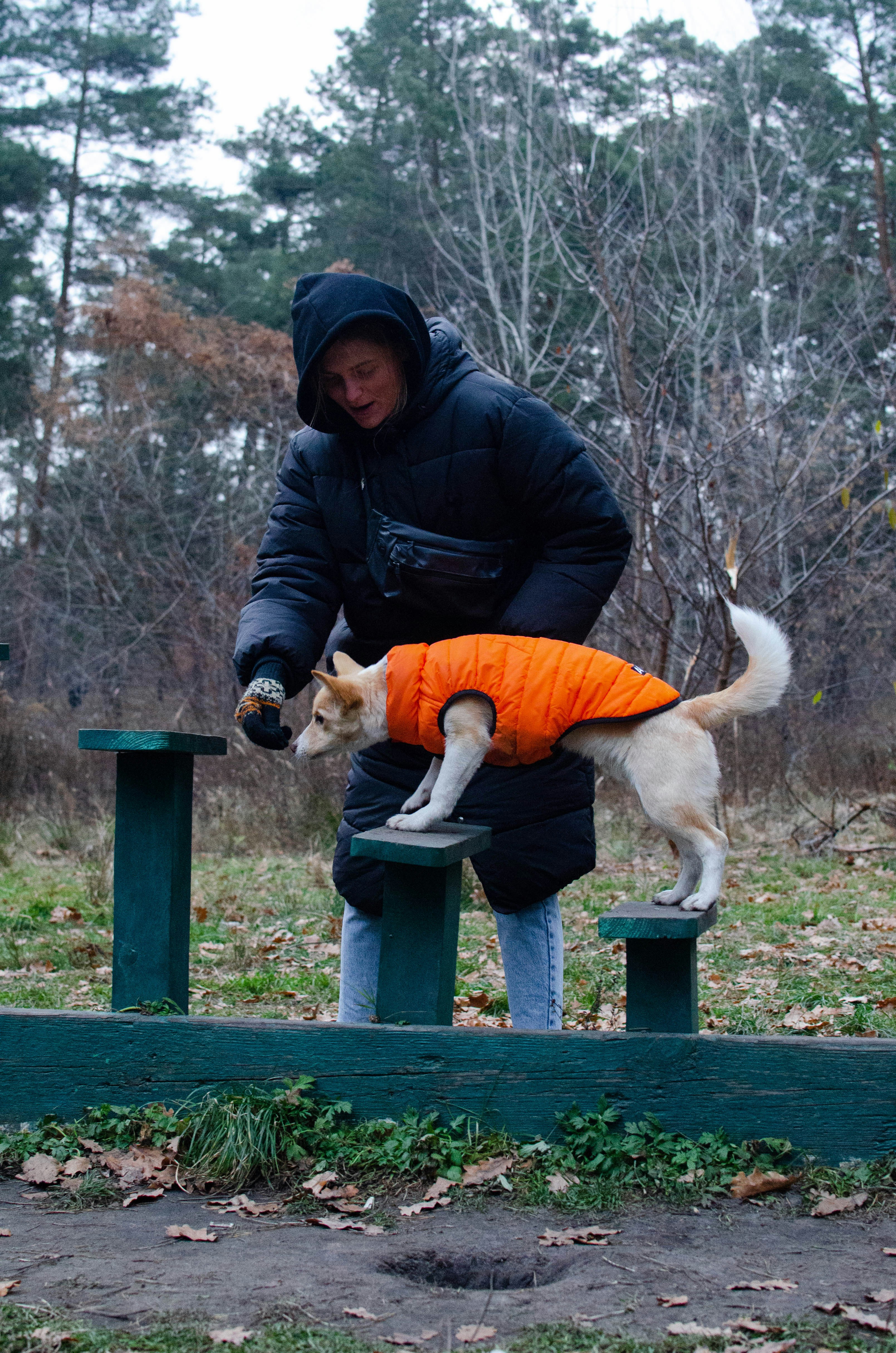
Back to dogs; this time dogs being trained.

Still with Unsplash. And apologies for any duplications.

Photo by John Tuesday on Unsplash

oooo

Photo by Reed Shepherd on Unsplash

oooo

Photo by Murilo Viviani on Unsplash

oooo

oooo

Photo by Oleksandr Horbach on Unsplash

oooo

Photo by Jamie Street on Unsplash

oooo

Photo by Rémy Penet on Unsplash

More photographs in a week’s time.

Technology, and Scamming

The title says it all!

We live in a world that is rapidly becoming more and more digital. But we also live in a world where the criminals are becoming better at carrying out their crimes. So a recent article in The Conversation seemed appropriate to republish.

ooOOoo

Scams and frauds: Here are the tactics criminals use on you in the age of AI and cryptocurrencies

Scammers often direct victims to convert cash to untraceable cryptocurrency and send it to them. Joe Raedle/Getty Images

Rahul Telang, Carnegie Mellon University

Scams are nothing new – fraud has existed as long as human greed. What changes are the tools.

Scammers thrive on exploiting vulnerable, uninformed users, and they adapt to whatever technologies or trends dominate the moment. In 2025, that means AI, cryptocurrencies and stolen personal data are their weapons of choice.

And, as always, the duty, fear and hope of their targets provide openings. Today, duty often means following instructions from bosses or co-workers, who scammers can impersonate. Fear is that a loved one, who scammers also can impersonate, is in danger. And hope is often for an investment scheme or job opportunity to pay off.

AI-powered scams and deepfakes

Artificial intelligence is no longer niche – it’s cheap, accessible and effective. While businesses use AI for advertising and customer support, scammers exploit the same tools to mimic reality, with disturbing precision.

Deepfake scams use high-tech tools and old-fashioned emotional manipulation.

Criminals are using AI-generated audio or video to impersonate CEOs, managers or even family members in distress. Employees have been tricked into transferring money or leaking sensitive data. Over 105,000 such deepfake attacks were recorded in the U.S. in 2024, costing more than US$200 million in the first quarter of 2025 alone. Victims often cannot distinguish synthetic voices or faces from real ones.

Fraudsters are also using emotional manipulation. The scammers make phone calls or send convincing AI-written texts posing as relatives or friends in distress. Elderly victims in particular fall prey when they believe a grandchild or other family member is in urgent trouble. The Federal Trade Commission has outlined how scammers use fake emergencies to pose as relatives.

Cryptocurrency scams

Crypto remains the Wild West of finance — fast, unregulated and ripe for exploitation.

Pump-and-dump scammers artificially inflate the price of a cryptocurrency through hype on social media to lure investors with promises of huge returns – the pump – and then sell off their holdings – the dump – leaving victims with worthless tokens.

Pig butchering is a hybrid of romance scams and crypto fraud. Scammers build trust over weeks or months before persuading victims to invest in fake crypto platforms. Once the scammers have extracted enough money from the victim, they vanish.

Pig-butchering scams lure people into fake online relationships, often with devastating consequences.

Scammers also use cryptocurrencies as a means of extracting money from people in impersonation scams and other forms of fraud. For example, scammers direct victims to bitcoin ATMs to deposit large sums of cash and convert it to the untraceable cryptocurrency as payment for fictitious fines.

Phishing, smishing, tech support and jobs

Old scams don’t die; they evolve.

Phishing and smishing have been around for years. Victims are tricked into clicking links in emails or text messages, leading to malware downloads, credential theft or ransomware attacks. AI has made these lures eerily realistic, mimicking corporate tone, grammar and even video content.

Tech support scams often start with pop-ups on computer screens that warn of viruses or identity theft, urging users to call a number. Sometimes they begin with a direct cold call to the victim. Once the victim is on a call with the fake tech support, the scammers convince victims to grant remote access to their supposedly compromised computers. Once inside, scammers install malware, steal data, demand payment or all three.

Fake websites and listings are another current type of scam. Fraudulent sites impersonating universities or ticket sellers trick victims into paying for fake admissions, concerts or goods.

One example is when a website for “Southeastern Michigan University” came online and started offering details about admission. There is no such university. Eastern Michigan University filed a complaint that Southeastern Michigan University was copying its website and defrauding unsuspecting victims.

The rise of remote and gig work has opened new fraud avenues.

Victims are offered fake jobs with promises of high pay and flexible hours. In reality, scammers extract “placement fees” or harvest sensitive personal data such as Social Security numbers and bank details, which are later used for identity theft.

How you can protect yourself

Technology has changed, but the basic principles remain the same: Never click on suspicious links or download attachments from unknown senders, and enter personal information only if you are sure that the website is legitimate. Avoid using third-party apps or links. Legitimate businesses have apps or real websites of their own.

Enable two-factor authentication wherever possible. It provides security against stolen passwords. Keep software updated to patch security holes. Most software allows for automatic update or warns about applying a patch.

Remember that a legitimate business will never ask for personal information or a money transfer. Such requests are a red flag.

Relationships are a trickier matter. The state of California provides details on how people can avoid being victims of pig butchering.

Technology has supercharged age-old fraud. AI makes deception virtually indistinguishable from reality, crypto enables anonymous theft, and the remote-work era expands opportunities to trick people. The constant: Scammers prey on trust, urgency and ignorance. Awareness and skepticism remain your best defense.

Rahul Telang, Professor of Information Systems, Carnegie Mellon University

This article is republished from The Conversation under a Creative Commons license. Read the original article.

ooOOoo

That last paragraph really spells out how it is in the modern world. I repeat that last sentence: “Awareness and skepticism remain your best defense.

What a beautiful account!

From the find of the six puppies to the fantastic conclusion.

I subscribe to The Dodo. On September 5th Maeve Dunigan wrote an article that is so beautiful. I have permission to republish the story.

ooOOoo

Rescuers Hear Cries In Open Field — Then See Faces Peeking Out Of A Drain.

“[They] were friendly and very social.”

By Maeve Dunigan

Published on Sep 5, 2025

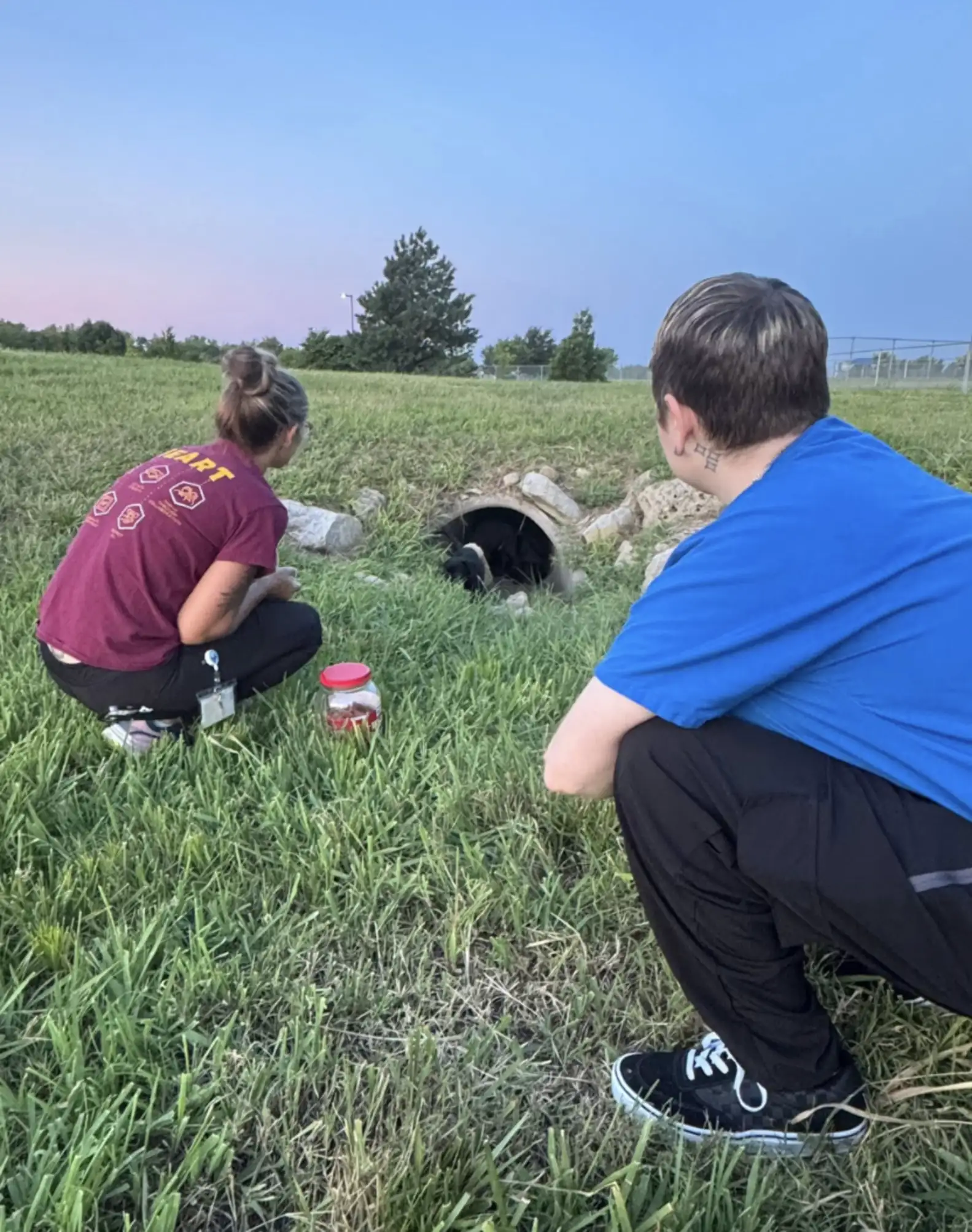
In a field near the Kansas Humane Society’s Murfin Animal Care Campus, a concrete storm drain peeks out of the green grass, its circular opening extending into a black tunnel below. One morning this past July, humane society team members arrived at work and heard a heartbreaking sound echoing from within this drain — the sound of animals crying for help.

Kansas Humane Society

The rescuers hurried over and found the source of the noise. There, cowering inside, were six little puppies left to fend for themselves.

puppy in drain
KANSAS HUMANE SOCIETY 

Using treats as a tasty incentive, the team coaxed each puppy out from the hole. The pups served a mandatory stray hold at the Wichita Animal Shelter next door. Then they returned to the Kansas Humane Society for further care.

woman helping dog
KANSAS HUMANE SOCIETY 

Staff members gave the pups a comfortable place to recover. They named the dogs Abby, Ellie, Greg, Lev, Mike and Tommy, and made sure each of them received the necessary vaccines and medical attention needed to grow up healthy and strong.

puppies in backseat
KANSAS HUMANE SOCIETY

“The puppies were very wiggly, especially Ellie,” a representative from Kansas Humane Society told The Dodo. “All were friendly and very social.”

Local news stations soon began covering the amazing rescue, urging community members to adopt or foster the pups. Within two days, every puppy was either adopted or put on hold for adoption.

puppies
KANSAS HUMANE SOCIETY 

Today, Abby, Ellie, Greg, Lev, Mike and Tommy are all safe in their forever homes, and rescuers couldn’t be happier.

“We hope their futures are full of love, cuddles and treats,” the representative said.

To help other animals like these puppies, you can make a donation to the Kansas Humane Society.

ooOOoo

It is stories like this one that provide the incentive for not engaging in politics. Period!