We are not going away until the 23rd. We are taking Brandy with us!
But it seems as though getting our ducks in a row is going to become a high priority this week.
Plus, I am pleased to say that I am writing my second book. I had a meeting with H. Ní Aódagaín during the week and she has set me on the straight and narrow, so to speak.
H. Ní Aódagaín
She has her website here and although she promotes herself as a writer she is quite an editor and writing counsellor. I had over 20,000 words already written but had got myself completely lost and confused. Under her guidance I believe I got myself sorted.All of which is to say that the blog is taking a slightly backward step between now and the 14th October. I’m not saying that nothing will be published but at the present time I don’t have a clue as to what I shall do!
Hope you understand!
Finally, there should be plenty of photographs to share with you at some time after we are back.
It’s not exactly a ball of fun growing old. But while somethings inevitable decline writing isn’t one of them. This is a fascinating article from The Conversation.
When Toni Morrison died on Aug. 5, the world lost one of its most influential literary voices.
But Morrison wasn’t a literary wunderkind. “The Bluest Eye,” Morrison’s first novel, wasn’t published until she was 39. And her last, “God Help the Child,” appeared when she was 84. Morrison published four novels, four children’s books, many essays and other works of nonfiction after the age of 70.
Morrison isn’t unique in this regard. Numerous writers produce significant work well into their 70s, 80s and even their 90s. Herman Wouk, for example, was 97 when he published his final novel, “The Lawgiver.”
Such literary feats underscore an important point: Age doesn’t seem to diminish our capacity to speak, write and learn new vocabulary. Our eyesight may dim and our recall may falter, but, by comparison, our ability to produce and to comprehend language is well preserved into older adulthood.
In our forthcoming book, “Changing Minds: How Aging Affects Language and How Language Affects Aging,” my co-author, Richard M. Roberts, and I highlight some of the latest research that has emerged on language and aging. For those who might fear the loss of their language abilities as they grow older, there’s plenty of good news to report.
Language mastery is a lifelong journey
Some aspects of our language abilities, such as our knowledge of word meanings, actually improve during middle and late adulthood.
One study, for example, found that older adults living in a retirement community near Chicago had an average vocabulary size of over 21,000 words. The researchers also studied a sample of college students and found that their average vocabularies included only about 16,000 words.
In another study, older adult speakers of Hebrew – with an average age of 75 – performed better than younger and middle-aged participants on discerning the meaning of words.
On the other hand, our language abilities sometimes function as a canary in the cognitive coal mine: They can be a sign of future mental impairment decades before such issues manifest themselves.
In 1996, epidemiologist David Snowdon and a team of researchers studied the writing samples of women who had become nuns. They found that the grammatical complexity of essays written by the nuns when they joined their religious order could predict which sisters would develop dementia several decades later. (Hundreds of nuns have donated their brains to science, and this allows for a conclusive diagnosis of dementia.)
While Toni Morrison’s writing remained searingly clear and focused as she aged, other authors have not been as fortunate. The prose in Iris Murdoch’s final novel, “Jackson’s Dilemma,” suggests some degree of cognitive impairment. Indeed, she died from dementia-related causes four years after its publication.
Toni Morrison published her last novel, ‘God Help the Child,’ when she was 84 years old. AP Photo/Michel Euler
Don’t put down that book
Our ability to read and write can be preserved well into older adulthood. Making use of these abilities is important, because reading and writing seem to prevent cognitive decline.
Keeping a journal, for example, has been shown to substantially reduce the risk of developing various forms of dementia, including Alzheimer’s disease.
Reading fiction, meanwhile, has been associated with a longer lifespan. A large-scale study conducted by the Yale University School of Public Health found that people who read books for at least 30 minutes a day lived, on average, nearly two years longer than nonreaders. This effect persisted even after controlling for factors like gender, education and health. The researchers suggest that the imaginative work of constructing a fictional universe in our heads helps grease our cognitive wheels.
Language is a constant companion during our life journey, so perhaps it’s no surprise that it’s interwoven into our health and our longevity. And researchers continue to make discoveries about the connections between language and aging. For example, a study published in July 2019 found that studying a foreign language in older adulthood improves overall cognitive functioning.
A thread seems to run through most of the findings: In order to age well, it helps to keep writing, reading and talking.
While few of us possess the gifts of a Toni Morrison, all of us stand to gain by continuing to flex our literary muscles.
Richard M. Roberts, a U.S. diplomat currently serving as the Public Affairs Officer at the U.S. Consulate General in Okinawa, Japan, is a contributing author of this article.
Roger J. Kreuz and Richard M. Roberts are the authors of:
A sobering article about the unacceptable face of dogs!
Jim Goodbrod recently sent me an email that included a copy of a recent article in the Washington Post.
Here’s what Jim wrote:
Hey Paul…..
I read this article in the Washington Post a couple weeks ago: it’s not something we want to hear or admit to, but I thought you’d find it interesting nonetheless.
Regards, Jim
Jim got it in one when he said that it’s not something we want to admit to.
But it deserves sharing with you.
ooOOoo
The dog is one of the world’s most destructive mammals. Brazil proves it.
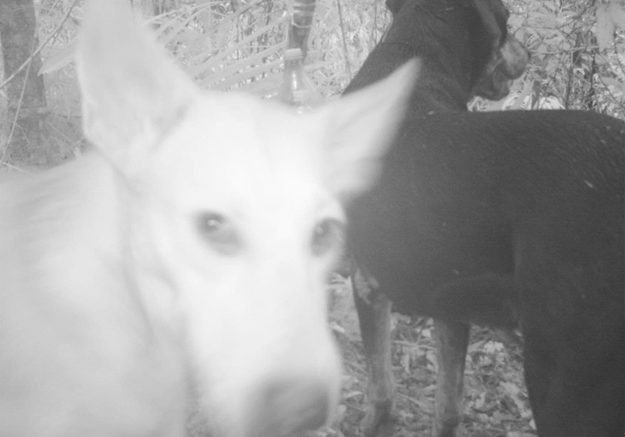
Surveillance cameras placed by researchers in Brazil’s Tijuca National Park capture a pair of dogs. (Courtesy of Katyucha Silva)
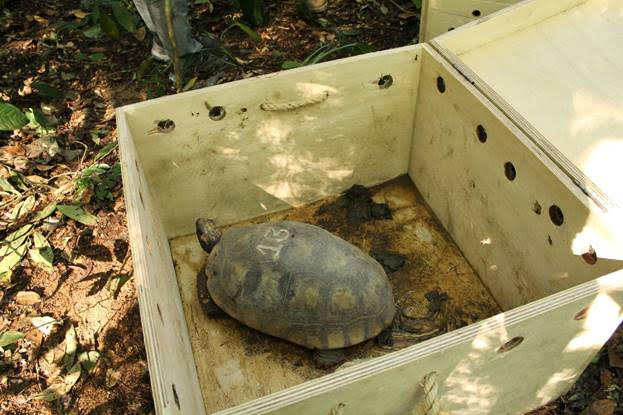
RIO DE JANEIRO — High above this Brazilian city, in a jungle blanketing a mountain, the turtles were out, and the scene was hopeful.
Scientists were reintroducing 15 mud-caked tortoises to this urban forest where they had once been plentiful. Children were running around. People were oohing and aahing. A stern-looking security guard appeared to briefly smile.
But not government biologist Katyucha Silva. She was thinking about dogs.
What would they do to these turtles? What were they doing to Brazil?
It’s a question more researchers are beginning to ask in a country where there are more dogs than children — and where dogs are quickly becoming the most destructive predator. They’re invading nature preserves and national parks. They’re forming packs, some 15 dogs strong, and are hunting wild prey. They’ve muscled out native predators such as foxes and big cats in nature preserves, outnumbering pumas 25 to 1 and ocelots 85 to 1.
Every year, they become still more plentiful, spreading diseases, disrupting natural environments, goosing scientists who set up elaborate camera systems to photograph wild animals, only to come away with pictures of curious canines.
“It’s a difficult thing for people to hear,” said Isadora Lessa, a Rio de Janeiro biologist who wrote her doctoral dissertation on domestic dogs causing environmental mayhem. “They love dogs too much.”
How the dog became one of the world’s most harmful invasive mammalian predators is as much a global story as a Brazilian one. Over the last century, as the human population exploded, so did the dog population, growing to an estimated 1 billion.
That has been great for people — and even better for dogs — but less so for nature, according to a growing body of academic research implicating canines, particularly the free-roaming ones, in environmental destruction.
“The global impacts of domestic dogs on wildlife are grossly underestimated,” researchers concluded in a 2017 study published in the journal Biological Conservation. The researchers, based in Australia, convicted dogs in the extinction of 11 species and declared them the third-most-damaging mammal, behind only cats and rodents.
The International Union for Conservation of Nature maintains a list of animals whose numbers dogs are culling. There are 191, and more than half are classified as either endangered or vulnerable. They range from lowly iguanas to the famed Tasmanian devil, from doves to monkeys, a diversity of animals with nothing in common beyond the fact that dogs enjoy killing them. In New Zealand, the organization reported, a single German shepherd once did in as many as 500 kiwis — and that was the conservative estimate.
“Unfortunately, we have a big problem,” said Piero Genovesi, chair of the agency’s invasive species unit. “There is a growing number of dogs.”
People all over the world are — begrudgingly — beginning to take note.
In Chile, stray dogs were the top concern among city dwellers surveyed this year, topping deteriorating sidewalks and theft. In New Zealand, some communities moved last year to restrict the movement of dogs in a gambit to save little blue penguins. In India, farmers are complaining about stray dogs killing their livestock, just as other predators once had.
And in Brazil, atop a mountain outside of Rio de Janeiro, 15 tortoises were nestling into the forest floor, oblivious to the danger of the forest’s leading predator.
‘A complex problem’
And in Brazil, atop a mountain outside of Rio de Janeiro, 15 tortoises were nestling into the forest floor, oblivious to the danger of the forest’s leading predator.
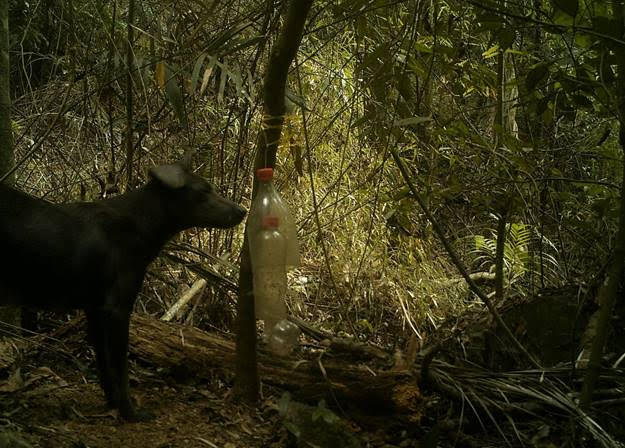
Researchers estimate there are more than 100 dogs in Tijuca National Park outside Rio de Janeiro, where they hunt and kill wild animals in packs. (Courtesy of Katyucha Silva)
Brazil is home to an estimated 52 million dogs, according to the most recent government statistics — more than anywhere in Latin America — but their lives vary widely. In a nation defined by inequality, where the rich fly in helicopters over the poor in the favelas below, the dog has become one more way of understanding the divide.
In wealthy cities, the dog is everywhere, strolling through fancy shopping malls, sitting in the laps of restaurant patrons, even riding paddle boards out on the surf. Some people wheel their dogs around in little strollers.
“The dog brings to Brazilians some things that Brazilians appreciate in themselves,” said Alexandre Rossi, a television personality more commonly known as Dr. Pet. “To be friendly, to want to socialize with everyone . . . and be there and be close to your family. These are perceived as very good Brazilian qualities.”
On the streets of trendy Ipanema one recent afternoon, few people could believe that a dog — or at least their dog — could be much of predator.
“The dog is a friend!” sputtered Philipe Soares, the furball Bobby at his feet. “No, I’ve never thought of him that way.”
“Difficult to imagine,” said Carlos Alberto Vicente, peering down at his own pooch.
“In her case,” said Flavio Vilela, a shirtless man striding through a park with a small mutt named Nicoli, “they’d hunt her.”
The problem, researchers say, isn’t these dogs, who lead the coddled lives of European or American pets.
The problem is the dogs in poorer and more rural communities, where the life of the dog is more frequently the life of hunger. They prowl the streets day and night with neither a collar nor an owner, looking for food wherever it can be found — in trash heaps, alongside roads, and in forests and fields, where they form packs to hunt and kill.
“It’s a very complex problem,” said Silva, the government biologist.
A stunning discovery
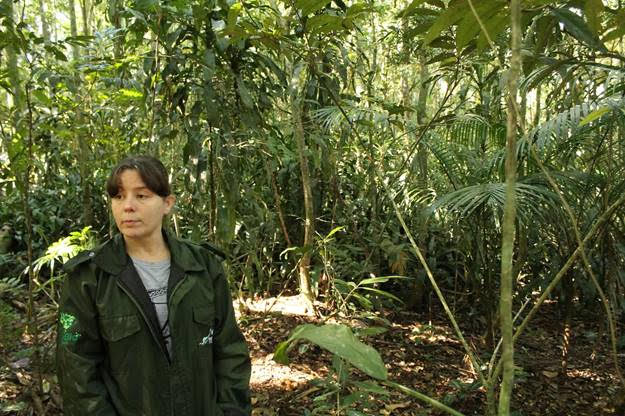
Katyucha Silva, a government researcher, has discovered dozens of dogs in Tijuca National Park. (Terrence McCoy/The Washington Post)
Ana Maria Paschoal, a researcher at the Federal University of Minas Gerais, remembers when she first started thinking about the dog differently. She was out in the Atlantic Forest in Southeast Brazil around a decade ago when she noticed there were an awful lot of them.
She wondered: How many dogs are using the protected areas? Are these feral or domestic dogs? Is their presence changing the occurrence of wild species?
So she set up cameras across 2,400 acres of forest to find out. What she discovered, published in 2012 in the scientific journal Mammalia, stunned her.
“The presence of the domestic dog is a threat,” Paschoal and her co-authors concluded.
The research, subsequently confirmed in a larger survey, laid the groundwork for a growing field of study here. One researcher linked Brazil’s dogs to the spread of diseases. Another accused the dogs in the National Park of Brasilia, where they hunted in massive packs, of scaring off natural predators. It was found that the closer humans lived to a nature preserve, the more likely dogs had penetrated it.
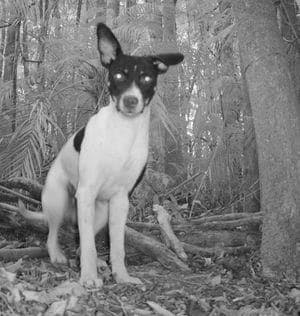
The International Union for Conservation of Nature has counted 191 species whose numbers dogs are culling. More than half are endangered or vulnerable. (Courtesy of Katyucha Silva)
But perhaps most striking? The dogs were neither feral nor domestic — but somewhere in between.
“All the dogs we detected had an ‘owner’ or a person that the animal has a bond with,” Paschoal said. “The species population increases following human populations, exacerbating their potential impact on wildlife.”
It was something Fernando Fernandez, an ecology professor at the Federal University of Rio de Janeiro, learned the hard way. For the last decade, he has been reintroducing native animals to the Tijuca forest, one of the world’s largest urban woodlands, which spills across Rio de Janeiro’s mountains.
First came the agouti, a squirrel-like rodent. Then followed a problem: “Dogs.”
They started killing the agouti, and not for food. It was just for fun.
Fernandez and Silva wanted to learn more. They set up cameras and discovered dozens of dogs in the forest. They estimated more than 100 dogs were in the park — not residents, it turned out, so much as frequent visitors, tracking in from nearby favelas.
“These are people who are very poor,” said Silva, who has six dogs at home. “They don’t have money to build walls. . . . When the owners leave for work, the dog leaves, too, and only returns when the owner comes back to the house from work.”
The owners often have no idea what their dogs are up to. Even if they were told, Rob Young said, they almost certainly wouldn’t believe it.
Young, chairman of wildlife conservation at the University of Salford in Britain, witnessed the psychology at work after seeing dogs kill flightless birds in the state of Minas Gerais.
“We’d do interviews with the farmers: ‘Have you seen these dogs?’
“And they’d say, ‘Yeah, but my dogs aren’t the problem; it’s my neighbor’s dogs.’
“Every farmer would say the same thing.”
These factors — inability to see aggression in dogs, intractable inequality, the rapid expansion of humanity — left Silva feeling apprehensive as she watched the tortoises being reintroduced into the Tijuca forest.
In the long term, she didn’t know how the problem of dogs laying waste to the world’s environments would realistically improve.
And in the short term: Could dogs kill these tortoises, just as they’d dispatched a few agouti?
“Yes,” she said. “They could.”
Silva worries that tortoises reintroduced in the park could fall prey to dogs. (Terrence McCoy/The Washington Post)
ooOOoo
It’s a tough read and there doesn’t appear to be a solution, not in the short-term at least.
As was reported in the article it is as much a global problem with something of the order of a billion dogs roaming the planet.
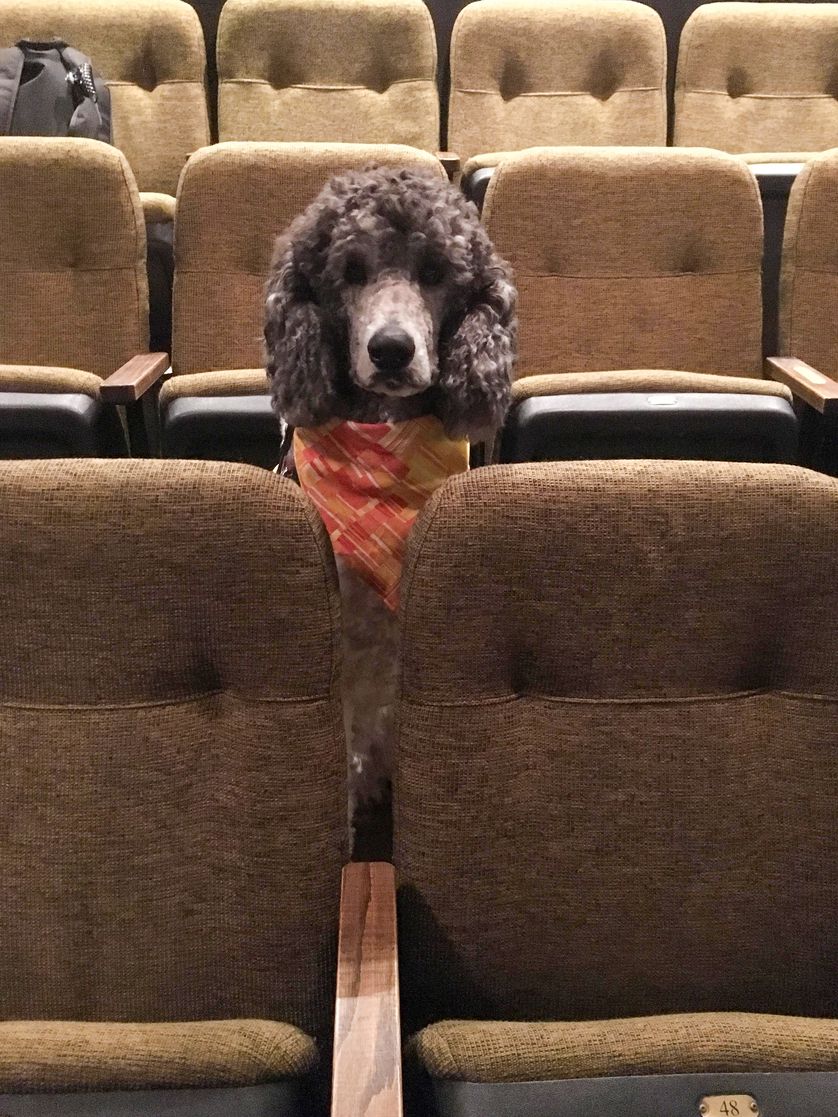
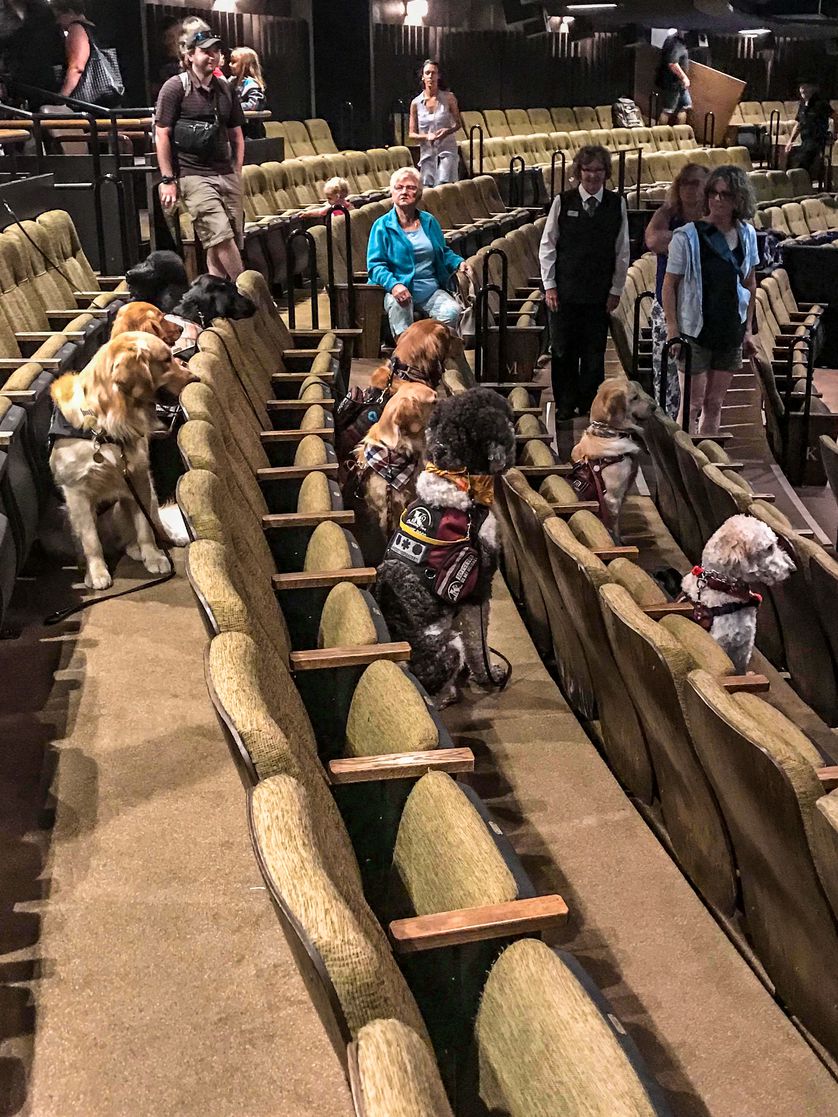
Service dogs from K-9 Country Inn Working Service Dogs attend a ‘relaxed’ performance at the Stratford Festival, and by all accounts, they loved it. (Photo: K-9 Country Inn Working Service Dogs & Co.)
oooo
The outing was more about training than culture. (Photo: K-9 Country Inn Working Service Dogs)
oooo
While the relaxed performance was an ideal environment in which to train these dogs, the festival welcomes service animals at all performances. (Photo: K-9 Country Inn Working Service Dogs)
oooo
Elvis is ready for the play to begin. (Photo: K-9 Country Inn Working Service Dogs & Co.)
oooo
Audience members enjoy seeing how focused the dogs are during the play. (Photo: K-9 Country Inn Working Service Dogs & Co.)
oooo
Some of the dogs rested on the floor between the seats. (Photo: K-9 Country Inn Working Service Dogs & Co.)
oooo
It just goes to show that there’s no end to the pleasure a dog gets!
Berkley Jensen Pig Ear Dog Chews Sold at BJ’s Wholesale Club Recalled
September 3, 2019 — Dog Goods USA is expanding its recent recall to include all 30-packs of Berkley Jensen brand pig ear dog chews sold at BJ’s Wholesale Club stores due to possible contamination with Salmonella.
The previous recall is being expanded after testing by Rhode Island Department of Health found Salmonella bacteria in Berkley Jensen brand pig ear pet chews.
What’s Being Recalled?
Dog Goods USA LLC of Tobyhanna, PA, has been contacted by the FDA and is conducting a voluntary recall of the following products: non-irradiated bulk and packaged pig ears branded Chef Toby Pig Ears with the lot codes indicated below.
The affected products were distributed nationwide in retail stores.
What Caused the Recall?
According to the company, Dog Goods USA purchased the affected treats from a single supplier in Brazil from September 2018 through August 2019.
The U.S. Food and Drug Administration, together with the Centers for Disease Control and Prevention and State partners, is investigating a link between pig ear pet treats and human cases of salmonellosis.
About Salmonella
Healthy people infected with Salmonella should monitor themselves for some or all of the following symptoms: nausea, vomiting, diarrhea or bloody diarrhea, abdominal cramping and fever.
Rarely, Salmonella can result in more serious ailments, including arterial infections, endocarditis, arthritis, muscle pain, eye irritation, and urinary tract symptoms.
Consumers exhibiting these signs after having contact with this product should contact their healthcare providers.
Pets with Salmonella infections may be lethargic and have diarrhea or bloody diarrhea, fever and vomiting.
Some pets will have only decreased appetite, fever and abdominal pain.
Infected but otherwise healthy pets can be carriers and infect other animals and humans.
If your pet has consumed the recalled product and has these symptoms, please contact your veterinarian.
The following statement has been provided by the company:
Dog Goods has also launched an internal investigation to determine, when and where the Products may have been contaminated.
To date, this internal investigation has not indicated any vulnerability in the company’s practices, including but not limited to the inspection, handling and storage of the Products.
Nonetheless, Dog Goods will continue to investigate the matter, collaborate fully with the FDA and the CDC, and provide further information to its customers and the public as appropriate.
What to Do?
Consumers who have purchased the products are urged to return them to the place of purchase for a full refund.
Consumers with questions may contact the company at 786-401-6533 from Monday to Friday, 9 AM ET through 5 PM ET.
U.S. citizens can report complaints about FDA-regulated pet food products by calling the consumer complaint coordinator in your area.
A Vancouver, Washington dog survives a month in the wilderness.
Niko is a Vancouver family’s dog. He is also adventure partner to 16-year-old Caden Alt.
On July 26th, Niko went camping with Caden’s father, David Alt, in the Gifford Pinchot National Forest. Located in South-West Washington it encompasses well over a million acres.
Dog Survives 31 Days In Woods After Being Hit By Car
By LINDSAY NADRICH, KGW-TV
VANCOUVER, Wash. (AP) — Niko, a Vancouver family’s dog, survived 31 days in the wilderness after getting hit by a car.
Niko is 16-year-old Caden Alt’s adventure partner.
“He’s always fun to have around,” Caden told KGW-TV. “He’s right there at your side walking around and yeah, he’s just awesome.”
On July 26, Niko went camping with Caden’s father, David Alt, in the Gifford Pinchot National Forest. Later that night, Niko wandered over to the road and got hit by a car. David ran from the campsite just in time to see Niko sprint off into the woods.
“A lady jumped out of the car immediately and said, ‘I don’t know how he could’ve survived that,'” he said.
He searched all night, but could not find Niko. He said it was devastating.
For the next 31 days, he and Caden spent as much time as they could going back to look.
“Every weekend we went up there, we searched, that was pretty hard, coming back every day not finding anything,” Caden recalled.
Then last weekend, they got a call from two men who had seen a post about Niko on Facebook and spotted him about 100 yards from where he disappeared.
“That was, just like, my heart dropped for a second, like, is this happening?” Caden asked.
The Good Samaritans canceled their own trip and drove Niko straight to Vancouver.
“So, yeah, my son and I were just crying, it was, it was unbelievable, yeah, and then of course when we’re in the driveway and they bring him up, Caden and I are crying, those two grown men are crying, four guys crying, it was great,” David said.
Niko lost about 15 pounds but is otherwise doing well.
“Skin and bones and one eye shut, he had lost 30% of his body weight, but he immediately was eating and drinking,” David said.
Niko seemed pretty happy to be back by Caden’s side.
“It’s been amazing,” Caden said. “I’m so glad to have him back. He’s not like perfect, energetic back up to himself, but he’s getting there, better every day. He’s just as cute as ever, the house is filled again.”
So what did Niko do for 31 days alone in the woods?
“As far as trying to recap, only Niko knows the story right, too bad he couldn’t tell it,” David said.
During the month Niko was missing, David and Caden said they got a lot of support from people on social media, as well as a lot of tips that helped with the search. They said they are so thankful for everyone who kept them going.
Specifically Aunt Jeni’s Home Made frozen raw pet food.
Here are the details.
ooOOoo
FDA Warning: Do Not Feed Certain Lots of Aunt Jeni’s Dog Food
August 30, 2019 — The U.S. Food and Drug Administration is warning pet ownersnot to feed their pets certain lots of Aunt Jeni’s Home Made frozen raw pet food.
That’s because 2 samples collected during an inspection of the company’s product tested positive for Salmonella and/or Listeria monocytogenes.
FDA is issuing this warning since these lots of Aunt Jeni’s Home Made frozen raw pet food represent a serious threat to both human and animal health.
Because the products are sold and stored frozen, FDA is concerned that people may still have them in their possession.
No product images have been provided by the FDA or the company.
Which Products Are Affected?
The affected products include:
Aunt Jeni’s Home Made Turkey Dinner Dog Food
Package size: 5 pounds (2.3kg)
Lot number: 175199 JUL2020
Aunt Jeni’s Home Made Chicken Dinner Dog Food
Package size: 5 pounds (2.3kg)
Lot number: 1152013 JUL2020
Aunt Jeni’s Home Made pet foods are sold frozen both online and through various retail locations. Lot codes are printed on the lower right corner of the front of each bag.
About Salmonella
Salmonella is a bacterium that can cause illness and death in humans and animals, especially those who are very young, very old, or have weak immune systems.
According to CDC, people infected with Salmonella can develop diarrhea, fever and abdominal cramps.
Most people recover without treatment. However, in some people, the diarrhea may be so severe that they need to be hospitalized.
In some patients, the Salmonella infection may spread from the intestines to the blood stream and then to other body sites unless the person is treated promptly with antibiotics.
Consult your health care provider if you have symptoms of Salmonella infection.
Pets do not always display symptoms when infected with Salmonella.
However, signs can include vomiting, diarrhea (which may be bloody), fever, loss of appetite and/or decreased activity level.
If your pet has these symptoms, consult a veterinarian promptly.
You should also be aware that infected pets can shed the bacteria in their feces and saliva without showing signs of being sick, further contaminating the household environment.
About Listeria
Like Salmonella, Listeria monocytogenes is another bacterium that can cause illness and death in humans and animals, especially those who are pregnant, very young, very old, or have weak immune systems.
According to CDC, listeriosis in humans can cause a variety of symptoms, depending on the person and the part of the body affected.
Symptoms can include headache, stiff neck, confusion, loss of balance, and convulsions in addition to fever and muscle aches.
Pregnant women typically experience only fever and other flu-like symptoms, such as fatigue and muscle aches.
However, infections during pregnancy can lead to miscarriage, stillbirth, premature delivery, or life-threatening infection of the newborn.
Pregnant women and their newborns, adults age 65 and older, and people with weakened immune systems are more likely to get sick with listeriosis.
Anyone with symptoms of listeriosis should contact a health care provider.
Listeria infections are uncommon in pets. However, they are still possible.
Symptoms may include mild to severe diarrhea, anorexia, fever, nervous, muscular and respiratory signs, abortion, depression, shock and death.
Pets do not need to display symptoms to be able to pass Listeria on to their human companions.
As with Salmonella, infected pets can shed Listeria in their feces and saliva without showing signs of being sick, further contaminating the household environment.
What to Do?
If you have any of the affected product, stop feeding it to your pets and throw it away in a secure container where other animals, including wildlife, cannot access it.
Consumers who have had this product in their homes should clean refrigerators and freezers where the product was stored.
Clean and disinfect all bowls, utensils, food prep surfaces, pet bedding, toys, floors, and any other surfaces that the food or pet may have had contact with.
Because animals can shed the bacteria in the feces when they have bowel movements, it’s important to clean up the animal’s feces in yards or parks where people or other animals may become exposed.
Consumers should thoroughly wash their hands after handling the affected product or cleaning up potentially contaminated items and surfaces.
U.S. citizens can report complaints about FDA-regulated pet food products by calling the consumer complaint coordinator in your area.
A massive cull of pet cats and dogs in the UK during WW11.
Out of the blue the other day Margaret from Tasmania sent me an email.
Hi Paul,
I happened to come across this rather sad but interesting story.
Thought you might like to read it.
Warm regards
– Margaret (from Tasmania)
The email contained a link to this very sad information.
ooOOoo
The little-told story of the massive WWII pet cull
By Alison Feeney-Hart
BBC News Magazine
12th October, 2013
This dog was treated by a vet, but many were put down at the outbreak of WWII
At the beginning of World War II, a government pamphlet led to a massive cull of British pets. As many as 750,000 British pets were killed in just one week. This little-discussed moment of panic is explored in a new book.
The cull came as the result of a public information campaign that caused an extraordinary reaction among anxious Britons.
In the summer of 1939, just before the outbreak of war, the National Air Raid Precautions Animals Committee (NARPAC) was formed. It drafted a notice – Advice to Animal Owners.
The pamphlet said: “If at all possible, send or take your household animals into the country in advance of an emergency.” It concluded: “If you cannot place them in the care of neighbours, it really is kindest to have them destroyed.”
The advice was printed in almost every newspaper and announced on the BBC. It was “a national tragedy in the making”, says Clare Campbell, author of new book Bonzo’s War: Animals Under Fire 1939 -1945.
Campbell recalls a story about her uncle. “Shortly after the invasion of Poland, it was announced on the radio that there might be a shortage of food. My uncle announced that the family pet Paddy would have to be destroyed the next day.”
After war was declared on 3 September 1939, pet owners thronged to vets’ surgeries and animal homes.
An RAF serviceman delivers a stray to Battersea
“Animal charities, the PDSA, the RSPCA and vets were all opposed to the killing of pets and very concerned about people just dumping animals on their doorsteps at the start of the war,” says historian Hilda Kean.
Battersea Dogs and Cats Home opened its doors in 1860 and survived both wars. “Many people contacted us after the outbreak of war to ask us to euthanise their pets – either because they were going off to war, they were bombed, or they could no longer afford to keep them during rationing,” a spokesman says.
“Battersea actually advised against taking such drastic measures and our then manager Edward Healey-Tutt wrote to people asking them not to be too hasty.”
But Campbell cites an Arthur Moss of the RSPCA who, “gloomily pronounced that the primary task for them all would be the destruction of animals”.
In the first few days of war, PDSA hospitals and dispensaries were overwhelmed by owners bringing their pets for destruction. PDSA founder Maria Dickin reported: “Our technical officers called upon to perform this unhappy duty will never forget the tragedy of those days.”
In Memoriam notices started to appear in the press. “Happy memories of Iola, sweet faithful friend, given sleep September 4th 1939, to be saved suffering during the war. A short but happy life – 2 years, 12 weeks. Forgive us little pal,” said one in Tail-Wagger Magazine.
The first bombing of London in September 1940 prompted more pet owners to rush to have their pets destroyed.
Many people panicked, but others tried to restore calm. “Putting your pets to sleep is a very tragic decision. Do not take it before it is absolutely necessary,” urged Susan Day in the Daily Mirror.
But the government pamphlet had sowed a powerful seed.
“People were basically told to kill their pets and they did. They killed 750,000 of them in the space of a week – it was a real tragedy, a complete disaster,” says Christy Campbell, who helped write Bonzo’s War.
Historian Hilda Kean says that it was just another way of signifying that war had begun. “It was one of things people had to do when the news came – evacuate the children, put up the blackout curtains, kill the cat.”
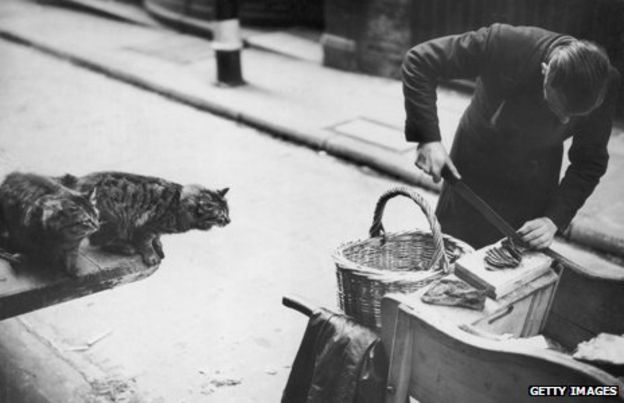
It was the lack of food, not bombs, that posed the biggest threat to wartime pets. There was no food ration for cats and dogs.
As war approached, families increasingly worried about feeding their animals
But many owners were able to make do. Pauline Caton was just five years old at the time and lived in Dagenham. She remembers “queuing up with the family at Blacks Market in Barking to buy horsemeat to feed the family cat”.
And even though there were just four staff at Battersea, the home managed to feed and care for 145,000 dogs during the course of the war.
In the middle of the pet-culling mayhem, some people tried desperately to intervene. The Duchess of Hamilton – both wealthy and a cat lover – rushed from Scotland to London with her own statement to be broadcast on the BBC. “Homes in the country urgently required for those dogs and cats which must otherwise be left behind to starve to death or be shot.”
“Being a duchess she had a bit of money and established an animal sanctuary,” says historian Kean. The “sanctuary” was a heated aerodrome in Ferne. The duchess sent her staff out to rescue pets from the East End of London. Hundreds and hundreds of animals were taken back initially to her home in St John’s Wood. She apologised to the neighbours who complained about the barking.
But at a time of such uncertainty, many pet owners were swayed by the worst-case scenario.
“People were worried about the threat of bombing and food shortages, and felt it inappropriate to have the ‘luxury’ of a pet during wartime,” explains Pip Dodd, senior curator at the National Army Museum.
“The Royal Army Veterinary Corps and the RSPCA tried to stop this, particularly as dogs were needed for the war effort.”
Ultimately, given the unimaginable human suffering that followed over the six years of the war, it is perhaps understandable that the extraordinary cull of pets is not better known.
But the episode brought another sadness to people panicked and fearful at the start of hostilities.
The story is not more widely known because it was a difficult story to tell, says Kean.
“It isn’t well known that so many pets were killed because it isn’t a nice story, it doesn’t fit with this notion of us as a nation of animal lovers. People don’t like to remember that at the first sign of war we went out to kill the pussycat,” she says.
It’s very difficult to make one’s mind up. As was written there were no food ration cards for pets.
But at the same time this huge pet cull was too much, too soon.
As was written, “The story is not more widely known because it was a difficult story to tell, says (Hilda) Kean.
“It isn’t well known that so many pets were killed because it isn’t a nice story, it doesn’t fit with this notion of us as a nation of animal lovers. People don’t like to remember that at the first sign of war we went out to kill the pussycat,” she says.”
It was a most interesting link albeit a very sad one.
This story comes from Mexico, a country renowned for being a hot place. Even in Northern Mexico it can be flipping hot (and that’s putting it nicely). Let’s face it I met Jeannie in San Carlos, Mexico in 2007. San Carlos is in the county of Sonora, just along the coast from Guaymas and about 270 miles South from Nogales on the Arizona border.
Recently, on a scorching hot day in northern Mexico, Adolfo Pazzi Ahumada witnessed love in its purest form.
After noticing he was out of milk at home, Ahumada decided to brave the 104°F weather to make a quick stop at his local market. When he arrived, he saw sweet scene unfolding out front.
“A stray dog was being fed and getting water from the [store] clerk,” Ahumada told The Dodo. “Then I saw they let the dog inside.”
Google Maps
Once Ahumada entered the store, he decided to ask the clerk about the dog. Ahumada recounted that conversation to The Dodo: “He has been here the past [few] days. We suspect he was left behind by his owner. He came to us for help,” the clerk told Ahumada. “We could only provide him with food, water and some toys from the store that we paid with our money.”
But the shop’s kindness doesn’t end there.
“We let him inside because the temperature outside is really hell-like. We feel bad for him, but he looks happier around the store,” the clerk said.
Peeking down one of the aisles, Ahumada observed that firsthand:
Adolfo Pazzi Ahumada
The downtrodden dog had found people who cared.
In the time he’s been there, the dog has shown kindness to the clerks and customers in return. The store hopes perhaps a shopper will see fit to adopt him into their home.
Unable to be that person, Ahumada paid for his milk and bought a treat for the dog to enjoy after his nap — resting assured the pup was in safe and caring hands until that day comes.
Adolfo Pazzi Ahumada
“I felt bad for what the dog has passed through,” Ahumada said. “But he is now receiving the love he deserves.”
ooOOoo
I find myself staggered at what this dog has endured yet at the same time how very quickly he settled in at the store. Well done to all the staff at the OXXO store. It would have been so easy to let the dog suffer and in all probability die in the heat.
Please, let the sweet dog find a loving home as soon as possible!
Because they have the potential to be contaminated with Salmonella bacteria.
Yet another recall.
ooOOoo
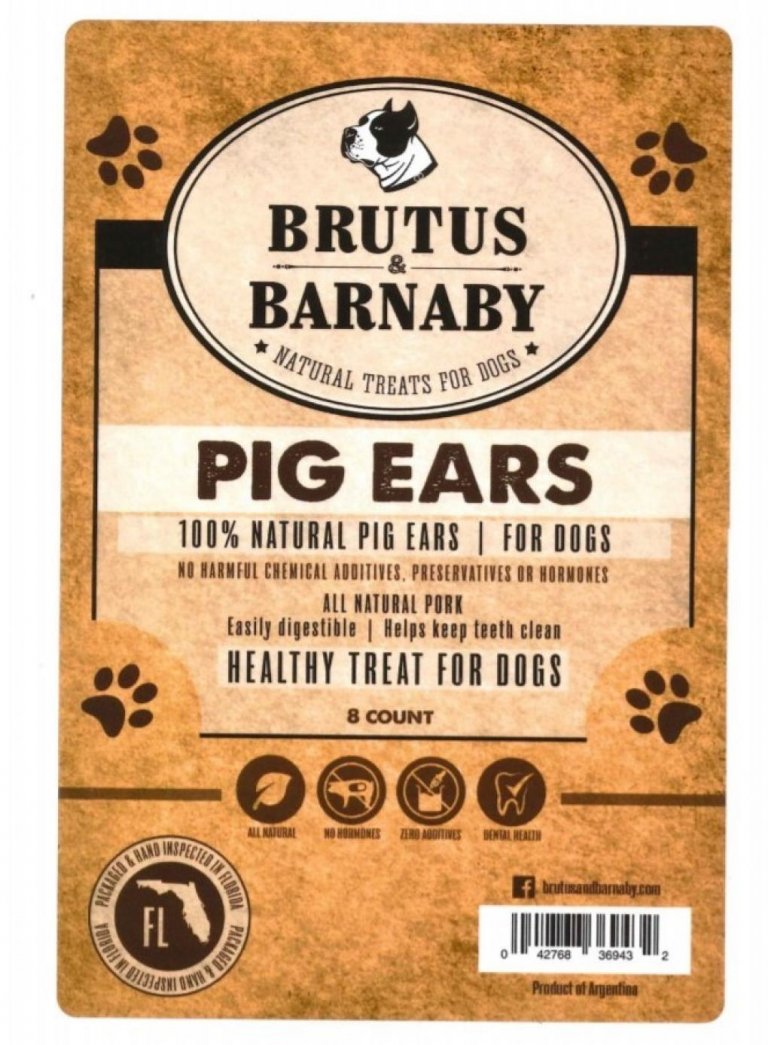
Brutus & Barnaby Pig Ears Dog Treats Recall
August 27, 2019 — Brutus & Barnaby LLC of Clearwater, Florida, is recalling all size variations of its Pig Ears for Dogs because they have the potential to be contaminated with Salmonella bacteria.
What Products Are Recalled?
Bags of Brutus & Barnaby Pig Ears were distributed throughout all states via Amazon.com, Chewy.com, Brutusandbarnaby.com and the brick and mortar Natures Food Patch in Clearwater, Florida.
The product label is identified by the company’s trademarked logo and reads “Pig Ears 100% Natural Treats for Dogs”.
The affected products were available in 4 sizes:
Brutus & Barnaby Pig Ears (8 Count)
Brutus & Barnaby Pig Ears (12 Count)
Brutus & Barnaby Pig Ears (25 Count)
Brutus & Barnaby Pig Ears (100 Count)
Brutus & Barnaby has ceased the production and distribution of the product as FDA and the company continue their investigation as to what caused the problem.
About Salmonella
Salmonella can affect animals eating the products and there is risk to humans from handling contaminated pet products, especially if they have not thoroughly washed their hands after having contact with the products or any surfaces exposed to these products.
Healthy people infected with Salmonella should monitor themselves for some or all of the following symptoms: nausea, vomiting, diarrhea or bloody diarrhea, abdominal cramping and fever.
Rarely, Salmonella can result in more serious ailments, including arterial infections, endocarditis, arthritis, muscle pain, eye irritation, and urinary tract symptoms.
Consumers exhibiting these signs after having contact with this product should contact their healthcare providers.
Pets with Salmonella infections may be lethargic and have diarrhea or bloody diarrhea, fever, and vomiting.
Some pets will have only decreased appetite, fever and abdominal pain.
Infected but otherwise healthy pets can be carriers and infect other animals or humans.
If your pet has consumed the recalled product and has these symptoms, please contact your veterinarian.
What to Do?
Consumers who have purchased Brutus & Barnaby pig ears are urged to destroy any remaining product not yet consumed and to contact the place of purchase for a full refund.
Consumers with questions may contact the company at 800-489-0970 Monday through Friday, 9 am to 5 PM ET.
U.S. citizens can report complaints about FDA-regulated pet food products by calling the consumer complaint coordinator in your area.




















 Learning from Dogs